







Abstract
“Most non-fatal drowning-related ED visits occurred among children aged one through four years and in swimming pools.”
Introduction
Annually, there are an estimated 4400 unintentional drowning deaths and 9000 non-fatal drowning-related visits to the Emergency Department (ED) in the United States. 1 Drowning is the leading cause of death for children between the ages of 1 to 4 years, and the second leading cause of unintentional injury death for children aged 5 to 14 years. 1 For every fatal childhood drowning, an estimated 7 to 8 children receive ED care for non-fatal drowning. 1 Non-fatal drowning occurs when a person survives a drowning event. Non-fatal drowning can have different outcomes ranging from minimal injuries to serious consequences including long-term disabilities like brain damage. 2 A better understanding of drowning risk factors and the circumstances that contribute to these incidents can inform prevention strategies.
Factors that contribute to fatal and non-fatal drowning in children and adolescents include lapses in guardian supervision, lack of barriers such as fences around pools, not knowing how to swim, not wearing a lifejacket while boating, alcohol use in and around water, and certain health conditions. 3 The most common locations of drowning differ by age group. For example, relative to other age groups, infants younger than 1 year have a higher drowning rate in bathtubs, children aged 1 to 4 years have higher drowning rates in swimming pools, and people 15 years and older have higher rates in natural water like lakes, rivers, or oceans. 4 Data pertaining to the circumstances and other risk factors of non-fatal drowning are often lacking, 3 and there has been a call for a stronger emphasis on non-fatal drowning research especially to inform interventions that can prevent drowning. 5
Understanding the circumstances of non-fatal drowning is essential to reducing drowning risk. The purpose of this study was to assess the usability of the narrative field available in the National Electronic Injury Surveillance System All Injury Program (NEISS-AIP) data in describing circumstances of non-fatal drowning and to use these narratives to describe the circumstances of non-fatal drowning in the United States from 2013 to 2022.
Methods
Sample
We used data from the 2013-2022 National Electronic Injury Surveillance System - All Injury Program (NEISS-AIP) where NEISS-AIP is an extension to the NEISS system. NEISS monitors consumer-product related injuries while NEISS-AIP expands on NEISS to include all non-fatal injuries within United States hospital emergency departments, even if they are not associated with consumer products. 6 NEISS data is a nationally representative sample of U.S. hospital emergency departments while NEISS-AIP uses a subsample of those emergency departments. NEISS-AIP data were collected at 66 hospital emergency departments which reports about 500 000 injuries annually from 2013 to 2021. For 2022, the full NEISS sample was used, which was approximately 80 hospital emergency departments.
Inclusion Criteria
The criteria used for non-fatal drowning ED visits in NEISS-AIP and presented on the CDC WISQARS platform is an ED visit that must be unintentional intent, non-fatal, considered an injury, and the cause of visit is “drown/near drown.” Drowning ED visits are underreported in WISQARS compared to other data sources such as the National Syndromic Surveillance Program. To be included as an unintentional non-fatal drowning incident for this study, we expanded the criteria to include parts of definitions from other researchers using NEISS-AIP to capture additional ED visits that are likely related to drowning (Figure 1).7,8 This included a separate search of ED visits by using the diagnosis of the incident and using key words within the narrative field such as “drown” and “submersion” instead of using the cause of visit. Flow chart of identifying unintentional non-fatal drowning incidents.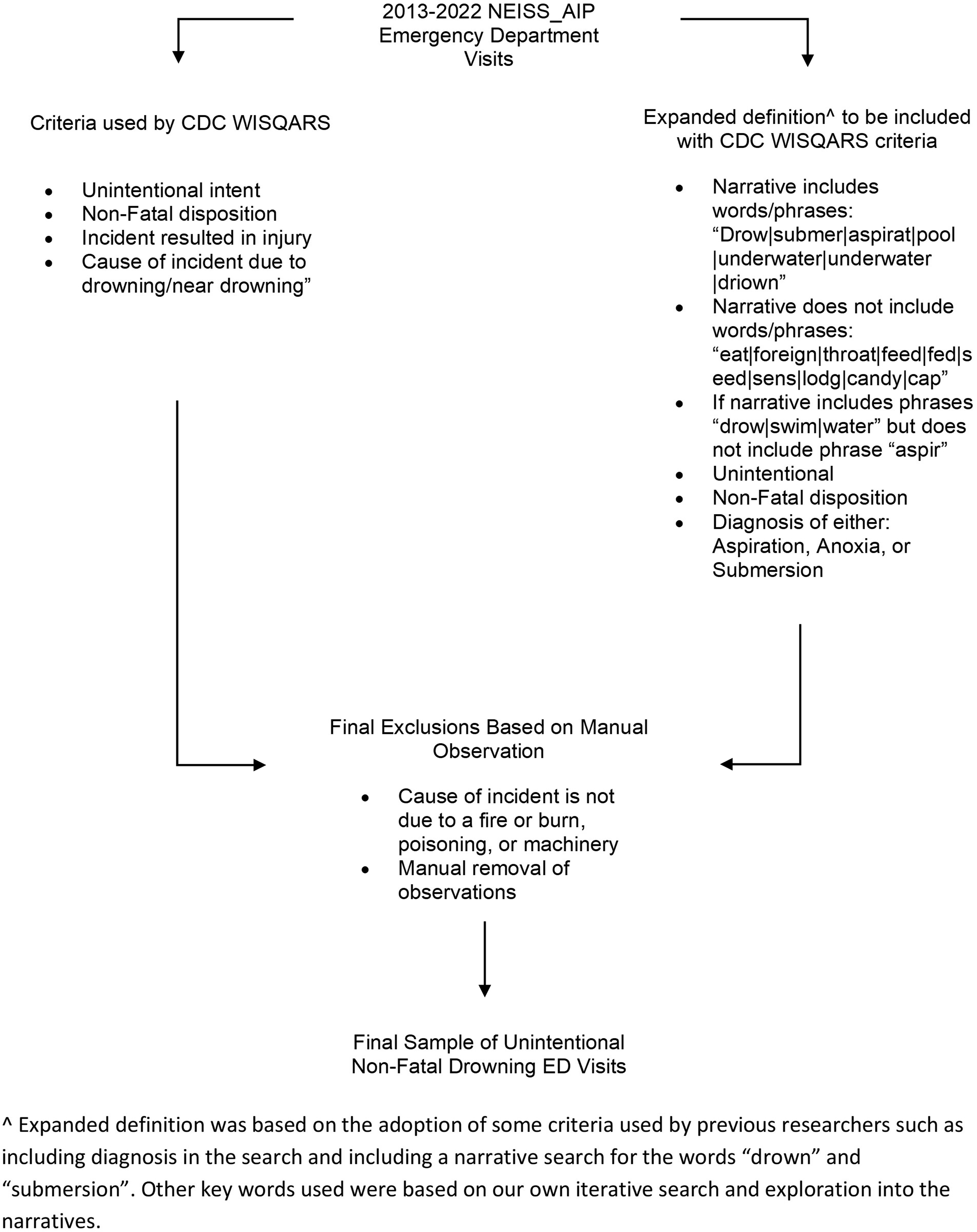
The NEISS-AIP narratives are open text fields containing comments from the ED staff, usually around 400-characters (2-3 sentences), that describe the ED visit and other information such as the intention of the injury, the final disposition of the incident, and the diagnosis of the incident. This additional search was created based on an iterative process that included testing key words or phrases, including certain diagnoses, and manually reviewing observations. First, the incident had to be unintentional, non-fatal, and the diagnosis was either “aspiration,” “anoxia,” or “submersion.” We then used keywords to keep or remove observations. We started with simple keywords such as “drown” and “submersion” based on part of a definition of a previous researcher. 8 Additional keywords were identified by an iterative exploration of the narratives and discussion among the authors of the possible synonyms of words or phrases for certain circumstances. If the narrative included one of several indicators of drowning in the narrative and did not include wording regarding aspiration of foods or items, then it was considered an unintentional non-fatal drowning. Some of the keywords or phrases we used to identify drowning incidents were deliberately vague, intentionally added spaces, and sometimes were intentionally misspelled such as “driown-” to accommodate words or phrases within the narratives that were accidently spelled incorrectly. After combining the definition used by CDC WISQARS and the expanded search of narratives and the use of diagnoses, specific observations were further filtered out if upon review the observation was not a drowning incident. This was done by separating observations that had the cause of the visit defined as “fire/burn,” “poisoning,” and “machinery” or by manually reviewing observations. See Appendix A for a more detailed explanation of the process and what specific variables and phrases were used in identifying drowning incidents.
Text Analysis
In our analysis, we used the narrative field included within the NEISS-AIP dataset to identify additional variables that could be used to describe the drowning incident. The narrative field usually includes age and sex of the person, main details of the incident (who, what, when, why, and how), and the diagnosis. The variables we identified included: body of water, location of swimming pool, alcohol use, child left alone, lifeguard or instructor present, other safety precautions, and inability to swim. Some of the variables identified through the narrative field were predetermined to be included in the analysis such as body of water, lifejacket use, and presence of lifeguard. Other variables were included based on exploration of the data and the usage of unigrams, bigrams, and trigrams which help identify commonly used words and phrases. Unigrams, bigrams, and trigrams are methods to extract and treat each word or group of words from an open field individually to determine the most common words or phrases in all narratives. Other safety precautions included wearing a lifejacket, pool fence present, locks on pool gate/door, and pool cover present. All variables created were coded as yes, no, or unknown except for body of water and location of swimming pool. Body of water was categorized into pool, ocean, lake/pond, river/creek/canal, bathtub, other, and unknown. The “location of swimming pool” variable was categorized as residential, public area, multiple unit dwelling (multi-unit), and unknown. See Appendix A for key terms used to identify variables.
Statistical Analysis
We created unigrams, bigrams, and trigrams for the drowning incidents identified to understand what type of information was most often reported and what type of information we could expect from this data. We calculated weighted rates and 95% confidence intervals (CI) for all unintentional non-fatal drowning-related emergency department visits overall and by sex, age group (ages <1, 1-4, 5-14, 15-24, 25-44, 45-64, and ≥65), and year. Weighted percentages and 95% CI were also calculated for body of water, as identified through narrative text analysis, by sex and age group. Weighted percentages and 95% CI were calculated for all unintentional non-fatal drowning-related emergency department visits variables identified through the text analysis which included: location of swimming pool, alcohol use, child being alone, lifeguard or instructor present, safety precautions, and inability to swim. The sample weights were based on the variables weight, PSU, and stratum to be representative of all U.S. hospital emergency departments. This analysis was done in Rstudio using R 4.4.0.
Ethical Considerations
When working with data that includes text narratives and text analysis, ethical considerations should be reviewed. 9 Responsible stewardship, which is the ability to reproduce and share results, is the first consideration and is an important ethical component of our analysis. 9 Within the methods section, we have detailed the steps in identifying incidents for other researchers to use and reproduce the findings. However, the last portion of this text analysis included manually reviewing certain observations and removing them due to not being drowning-related. The other major ethical consideration was “Justice as Fairness.” 9 When identifying incidents, there was no discrimination of any certain population. However, the data itself were sampled from less than 100 emergency departments and although intended to be nationally representative, may not represent certain regions across the United States.
Results
Descriptive Statistics for Non-Fatal Drowning Emergency Department Visits, National Electronic Injury Surveillance System All Injury Program, United States 2013-2022.
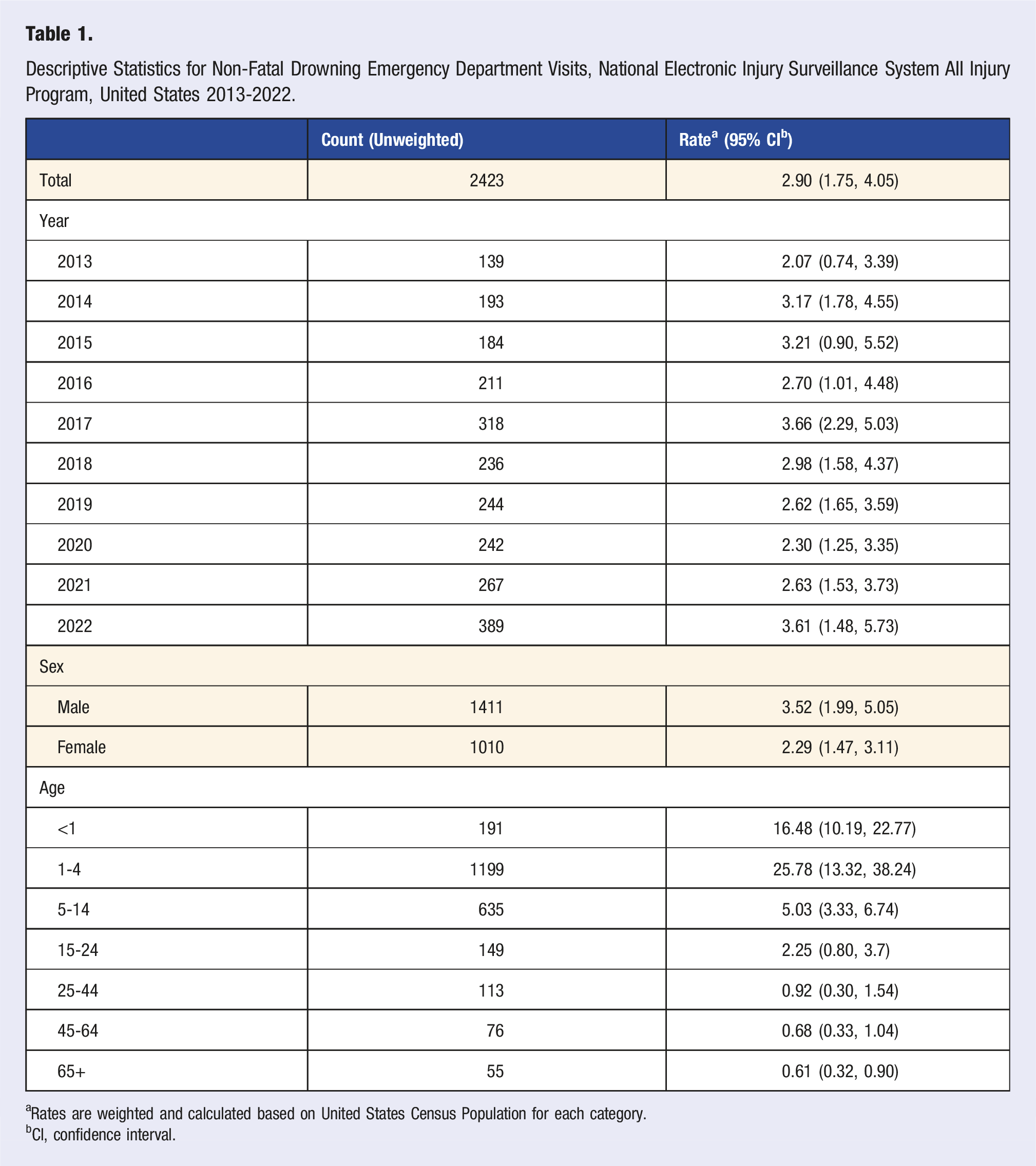
aRates are weighted and calculated based on United States Census Population for each category.
bCI, confidence interval.
Descriptive Statistics of Non-fatal Drowning Emergency Department Visits by Body of Water, National Electronic Injury Surveillance System All Injury Program, United States 2013-2022.
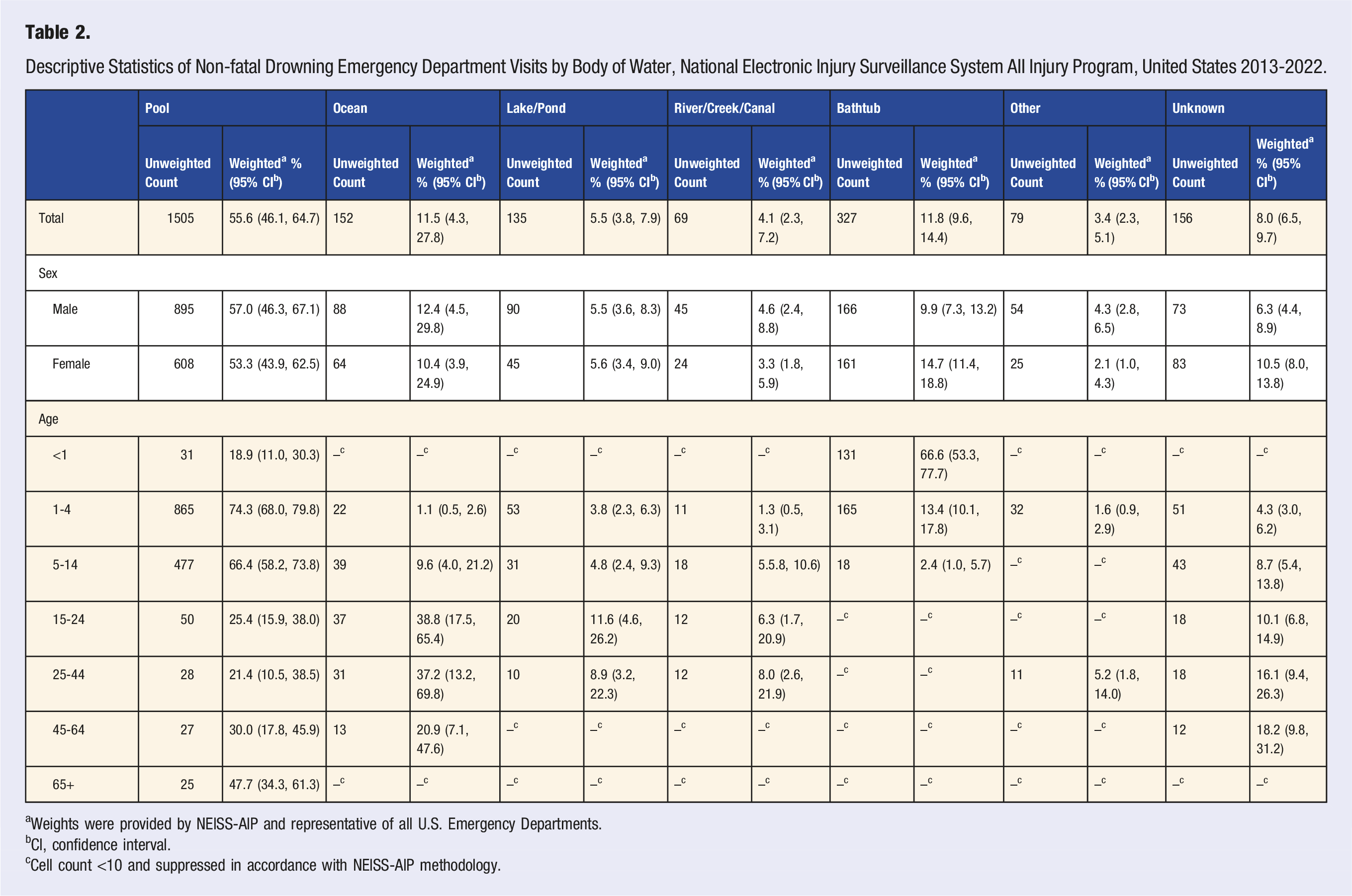
aWeights were provided by NEISS-AIP and representative of all U.S. Emergency Departments.
bCI, confidence interval.
cCell count <10 and suppressed in accordance with NEISS-AIP methodology.
Characteristics of Non-fatal Drowning Emergency Department Visits, National Electronic Injury Surveillance System All Injury Program, United States 2013-2022.
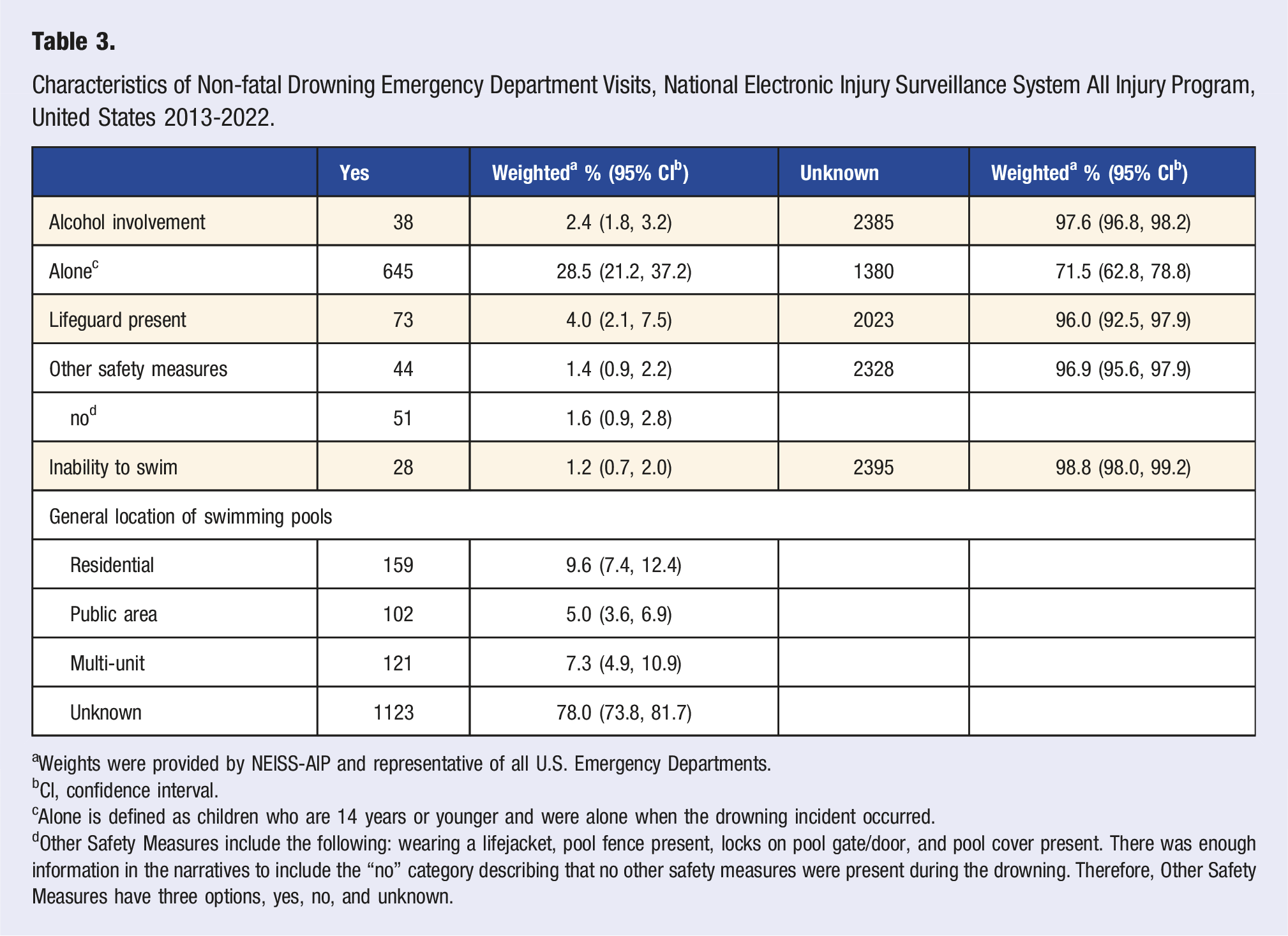
aWeights were provided by NEISS-AIP and representative of all U.S. Emergency Departments.
bCI, confidence interval.
cAlone is defined as children who are 14 years or younger and were alone when the drowning incident occurred.
dOther Safety Measures include the following: wearing a lifejacket, pool fence present, locks on pool gate/door, and pool cover present. There was enough information in the narratives to include the “no” category describing that no other safety measures were present during the drowning. Therefore, Other Safety Measures have three options, yes, no, and unknown.
Descriptive Statistics of Non-fatal Drowning Emergency Department Visits That Occurred Among Children ≤14 Years Who Were Alone, National Electronic Injury Surveillance System All Injury Program United States 2013-2022 (n = 645).
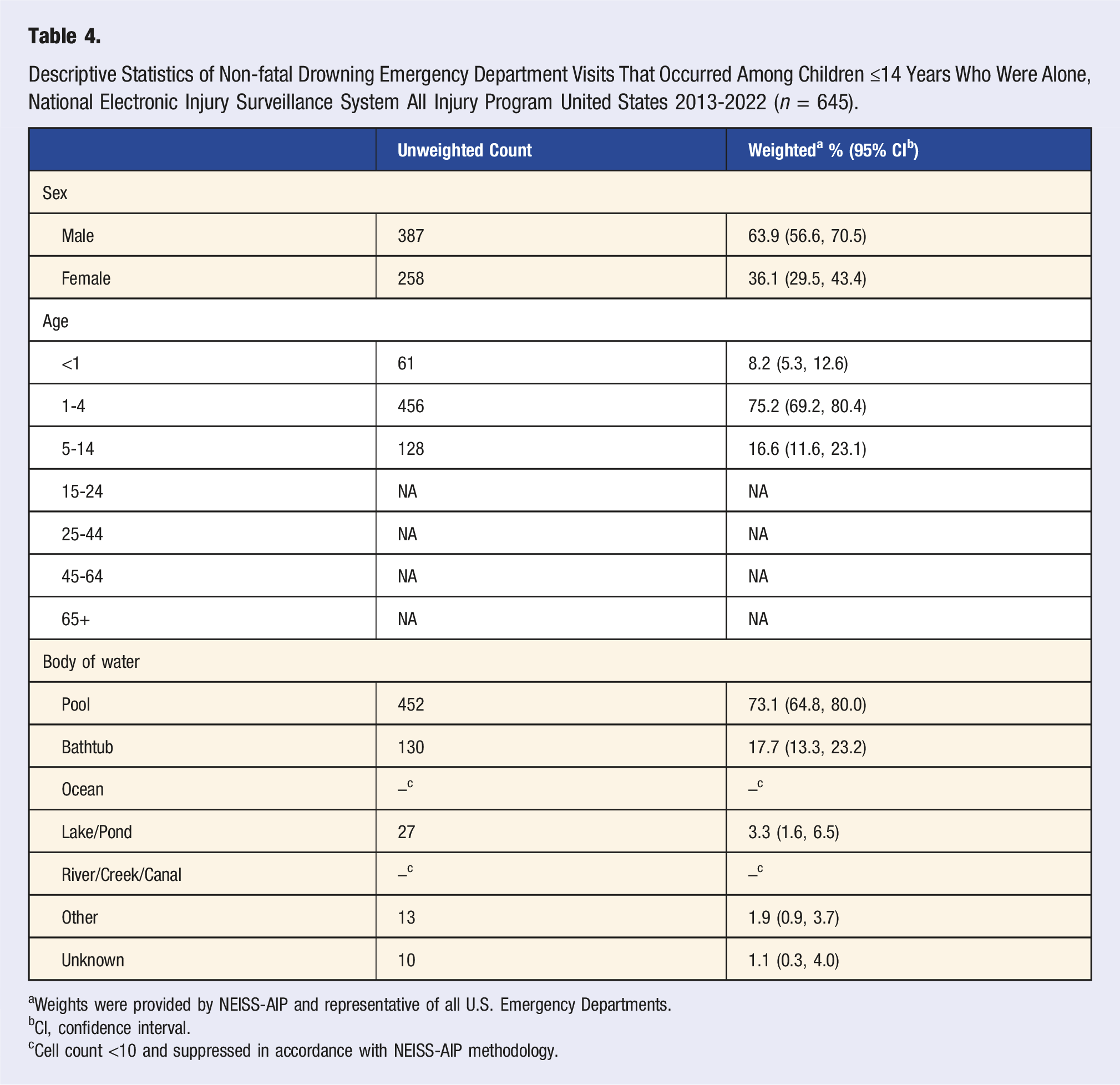
aWeights were provided by NEISS-AIP and representative of all U.S. Emergency Departments.
bCI, confidence interval.
cCell count <10 and suppressed in accordance with NEISS-AIP methodology.
Discussion
There were 2.90 non-fatal drowning-related ED visits per 100 000 people in the United States from 2013 to 2022. Children aged one through four years and males had the highest rate of non-fatal drowning-related ED visits, which is similar to what is seen in fatal drowning data 10 and other sources of ED data such as syndromic surveillance data. 11 Although there are several national data sources that have been used to provide information on drowning-related ED visits,11,12 what makes NEISS-AIP unique is the text narrative describing the circumstances around each ED visit. From these narratives, the body of water of drowning incidents were available for most (92%) ED visits. This information is more detailed than drowning location information currently obtained from other fatal and non-fatal data sources that rely primarily on international classification of disease 10th revision (ICD-10) and ICD-10 clinical modification codes. Although ICD-10 codes can be used to determine whether drowning deaths occurred in pools, bathtubs, or natural water,4,13 they are not detailed enough to determine the types of natural water (lakes, rivers, ocean, etc.) or the types of swimming pools where drowning deaths occur. Syndromic surveillance ED data also includes limited narrative information in the chief complaint field. 11 However, the text is shorter and less detailed than narrative text from NEISS-AIP, limiting researchers ability to gain information about body of water and circumstances of non-fatal drowning from syndromic surveillance data.
In our study, drowning incidents most frequently occurred in swimming pools followed by bathtubs, and the ocean. This may be due in part to the large number of drowning-related ED visits among children aged one through four years, 11 who most often fatally drown in swimming pools. 13 Additionally, natural water has the highest percentage of drowning deaths, 14 which would have been excluded in our data. One study reporting on pediatric drowning in swimming pools in Harris County, Texas using data from the county fire department, local pediatric hospitals, and county fatality data found that children living in multifamily housing with pools had a higher risk of drowning than children living in single family housing with pools. 15 Unfortunately, the location of swimming pools (residential, public, or multi-unit) was largely unknown (78% of cases) in our analysis. Knowing which bodies of water drowning-related ED incidents are occurring in overall and by age group is essential for informing prevention strategies. This study provides new information on the prevalence of oceans and lakes as the most frequent natural water drowning locations among ED visits for non-fatal drowning. Increased implementation and evaluation of coastal drowning prevention strategies, such as providing trained lifeguards at public swimming areas, using life jackets while boating and swimming in natural water, and educating on the unique risks of the ocean and other large natural water bodies (e.g., rip tides), may be warranted.
Although the narratives provided detailed information about the location of drowning incidents, other information about the circumstances of non-fatal drowning incidents including alcohol use, swim ability, presence of lifeguard, and other safety measures was largely unknown. Information indicating children were alone at the time of the incident was available for 28.5% of ED visits among children under 15 years of age. We were able to identify that children aged 1 to 4 years, males, and drowning incidents that occurred in pools were most often associated with being alone. However, this information was unknown for about 72% of ED visits among children aged less than 15 years. Other studies have shown over 40% of children who drowned were not supervised indicating our study may have underestimated due to limited narrative space.16,17 To include more information on each incident, NEISS may consider increasing the word limit on the narrative field to be able to provide more information that could be vital to determining the cause of each incident regardless of their diagnosis. Future research opportunities could include advanced natural language processing (NLP) to help identify these factors and extract more information from these narratives.
The results of this study highlight the importance of implementing effective prevention strategies to reduce drowning, particularly among children. Non-fatal drowning frequently occurred in pools and bathtubs when children were left unattended, underscoring the need for close, constant, and attentive adult supervision of children when they are in or near water. 18 Further, supervision should be competent, meaning adults supervising children should have the knowledge and attentiveness required to prevent drowning, and to safely rescue a child who gets into trouble in the water. 19 Public health interventions for expecting parents and parents of newborns and children could include drowning prevention education related to water exposure. 19 To prevent drowning during lapses in supervision, other layers of protection could be implemented such as pool fences that completely surround the swimming pool. Although NEISS-AIP narratives did not provide sufficient detail to explore the characteristics of pools where non-fatal drowning occurred, including fence presence, four-sided isolation fencing with self-closing and self-latching gates that prevents a child from entering the pool area, including directly from the home, is an effective prevention measure for child drowning in pools. 18
Limitations
This study has several limitations. First, the NEISS-AIP dataset is based on a small sample of U.S. hospitals and data are nationally representative of ED visits. However, drowning varies by state; therefore, results may not generalize fully. In addition, since this analysis is based on non-fatal drowning that resulted in an ED visit, other non-fatal drowning incidents can occur that did not require or did not use an ED. Therefore, an underestimate of non-fatal cases is likely. Second, although we created an expanded definition with the guidance of previous works, additional steps were taken for the variable definitions including the use of the narrative section which is subjective and reproducibility will require the exact words/phrases shown in Appendix A to accurately reproduce results. Third, we identified drowning incidents two ways, using text analysis and using the CDC WISQARS definition. The text analysis approach could have included a few ED visits that were not related to drowning even with manually reviewing the majority of identified drowning incidents. This could be due to broad statements provided in the narrative field. Fourth, circumstantial data (e.g., presence of alcohol, child supervision, lifeguard availability) are limited, restricting further analysis of circumstances and risk factors. This is possibly due to limited narrative space meaning circumstance information may have only been considered when it was strongly relevant to the incident. The circumstance data we did recover and analyzed described in table three which have over 75% of missing may not be reliable because with the exception of age, sex, and diagnosis present in the majority of these narratives, no specific details are required to be stated in the narrative field. Datasets that specifically include drowning elements, such as the Cardiac Arrest Registry to Enhance Survival (CARES) database, which includes novel drowning elements such as body of water, activity, precipitating events, etc., may be needed to provide additional detail on the characteristics of non-fatal drowning and be able to provide more complete findings. 20 Fifth, identifying drowning and drowning circumstances could be limited due to not using all of the possible keywords in the narratives. Therefore, the number of drowning incidents by circumstance could be inaccurate and underreported.
Potential bias may also affect the results. Reporter and sampling biases could have occurred, as medical professionals interpreted and recorded patient narratives. Interpretation bias may have arisen due to misspelled or unclear narratives that require coders to categorize ED visits based on their best judgment. These biases could contribute to misclassification, potentially impacting the reliability of the findings. While basic demographic variables such as age and sex are included, the dataset lacks information on race/ethnicity and socioeconomic status. These factors are critical for understanding the risk factors associated with unintentional drowning and for informing drowning prevention strategies.
Conclusion
Analyzing ED narratives from NEISS-AIP provided detailed information on the body of water where non-fatal drowning incidents occurred and limited information about non-fatal drowning risk factors, such as lack of adult supervision. Most non-fatal drowning-related ED visits occurred among children aged one through four years and in swimming pools. Of children who were known to be left alone at the time of a drowning incident, most were male, aged one through four years, and most drowned in swimming pools. Drowning is preventable. Understanding the circumstances and bodies of water where most non-fatal drowning occurs by demographic characteristics such as sex and age can provide insight into how best to implement drowning prevention strategies.
Footnotes
Acknowledgments
This project was support in part by an appointment to the Research Participation Program at the Centers for Disease Control and Prevention administered by the Oak Ridge Institute for Science and Education through an interagency agreement between the U.S. Department of Energy and the Centers for Disease Control and Prevention.

Ethical Consideration
Ethical approval was not required for this study.
Author Contributions
Study concept and design: All. Analysis of data/ Statistical analysis: DD, PH. Drafting of the manuscript: DD, BM, PH, TC. Critical revision of the manuscript for important intellectual content: All. Final review and approval of manuscript: All.
Funding
The authors received no financial support for the research, authorship, and/or publication of this article.
Declaration of Conflicting Interests
The authors declared no potential conflicts of interest with respect to the research, authorship, and/or publication of this article.
Disclaimer
The findings and conclusions in this report are those of the authors and do not necessarily represent the official position of the Centers for Disease Control and Prevention.
Data Dictionary
Variable
Values
Definition
Drowning
Yes
Required 1 or 2 definitions:
1 Based on WISQARS filter: Intent (Intent_C) = unintentional, Cause (PCAUSE_C) = “drown/near drown,” Disposition (DISP) = “non-fatal,” and Injury (Injury_C) = injury
2 The narrative variable (CMT) has to: include the words/phrases “drow|submer|aspirat|pool|under water|underwater|driown,” does not include “eat |foreign|throat|feed|fed|seed|sens|lodg|candy|cap,” unintentional (Intent_C), has a diagnosis (DIAG) of aspiration, anoxia, or submersion AND narrative had to include the words/phrases “drow|swim|water” and not include the phrase “aspir” AND the cause of the incident (PCAUSE_C) is not “fire/burn,” “poisoning,” or “machinery” AND not one of the manually selected observations that was not identified as drowning
Sex
Male
Using variable SEX (From NEISS-AIP Dataset (Not Narrative Variable))
Female
Age
<1
Using variable AGEYR_C (From NEISS-AIP Dataset (Not Narrative Variable))
1 to 4
5 to 14
15 to 24
25 to 44
45 to 64
65+
Years
2013
(From the different datasets combined)
2014
2015
2016
2017
2018
2019
2020
2021
2022
Drowning body of water
Pool
Words/Phrases used: “pool|p ool|friend house|poool|diving board|hotel swimming|swimming at home|vacuum|chlorine|waterpark|water park|YMCA|Spa|Daycare|slide|school”
Ocean
Words/Phrases used: “ocean|sea|beach|gulf|surf|shore|coast guard|pier|riptide|rip tide”
Lake/Pond
Word/Phrases used: “lake|pond|reservoir”
River/Creek/Canal
Words/Phrases used: “river|creek|Canal|stream”
Bathtub
Words/Phrases used: “bath|tub”
Other
Words/Phrases used: “hot spring|hot tub|hotub|jacuzzi|septic tank|Container|water fountain|raft|boat|kayak|canoe|jet|bucket|abucket|bay|dock|well|Fish Tank|bowl|Shower|culvert|flood|hurricane|aquarium|sink|basin”
Unknown
Alcohol involvement
Yes
Words/Phrases used: “alcohol|drunk|tipsy|bottles|beer|ETOH|liquor|spirits|ethanol|BAC |intox|ethyl alcohol|intoxicated” and not “cocaine intox’d”
Unknown
Narratives that did not include selected words/phrases
Alone (< 15 years old)
Yes
Words/Phrases used: “left|alone|found|stepped away|turned away|not present|turned back” and not
“without being|left w/o” and person has to be younger than 15 years old
Unknown
Narratives that did not include selected words/phrases and who are younger than 15 years old
NA
Narratives that included people who are 15 years or older
Lifeguard present
Yes
Words/Phrases used: “life guard|lifeguard|instructor” and drowning not occurring in a bathtub
Unknown
Narratives that did not include selected words/phrases and did not occur in a bathtub
NA
Narratives that occurred in a bathtub
Other safety measures
Yes
Words/Phrases used: “floaty vest|life vest|lifevest|life jacket|lifejacket|floatation|floatie|fence|gate|locks|pool cover” and not “no floaties on|ungated|no fence|unlocked|opened|took off|taking off|floaties off|jacket off|floaty off|came off|without|with out|w/o|fallen out|removed|left the gate open|gate was open|not wearing|didnt have”
No
Words/Phrases used: “floaty vest|life vest|lifevest|life jacket|lifejacket|floatation|floatie|fence|gate|locks|pool cover” and “no floaties on|ungated|no fence|unlocked|opened|took off|taking off|floaties off|jacket off|floaty off|came off|without|with out|w/o|fallen out|removed|left the gate open|gate was open|not wearing|didnt have” OR
Unknown
If narrative did not include the previous words or if the narrative has the following words/phrases: “snorkel device|on float|fell off|slipped off|slipping off|placed on”
Inability to swim
Yes
Words/Phrases used: “unable to swim|cant swim|can’t swim|can not swim|does not know how|doesn’t know|doesnt know”
Unknown
Narratives that did not include selected words/phrases
General location of swimming pools
Residential
A pool and the following words/phrases used: “house|home”
Multi-unit
A pool and the following words/phrases used: “Hotel|Motel|Apartment|Condo”
Public area
A pool and the following words/phrases used: “Community|Public|Park”
Unknown
Narratives that included a pool but did not include selected words/phrases