







Abstract
Glass strength in plate glass was measured using the Quasi-static method to investigate its mechanical properties. New findings concerned with stress relaxation phenomena being generated at once after loading and time dependent fracture were seen even at room temperature. Load reduction phenomenon at room temperature has gone unnoticed for many years, because its value was 2–4.5 N in Caustics method, although measurement error approximately was 5 N in ordinary 4-point bending test method. Fracture in plate glass was inferred to be caused not only by applied stress to glass but also through complex behavior involving several factors. The concept of stress relaxation phenomenon under strain points that do not occur or occur over a lengthy period of several decades at least will be necessary to reconsider. Almina ceramics showed fracture characteristics closer to plate glass than silicon carbide which also called a ceramics.
Keywords
Introduction
Glass is said to be the first substance created by humans about five thousand years ago and is a wonderful material that can be a variety of properties, by combining the constituent composition factors. Plate glass is commonly composed of soda-lime silica, 9 with float glass produced by the float method serving as a prime example of plate glass. Also, plate glass can be said to be a clean material being recycled during manufacturing as a glass cullet. 12
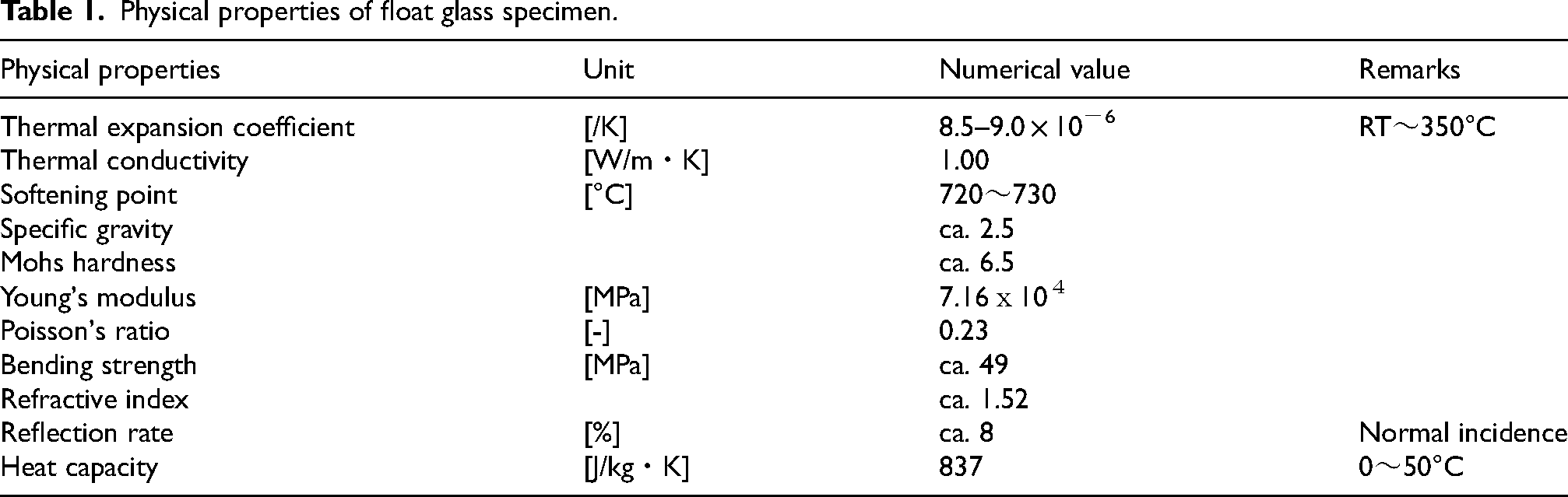
Physical properties of plate glass are shown in Table 1.
6
It is said to have following characteristics as the general concept of plate glass:
① Liquid state at hot temperatures but solid at room temperature, ② Brittle properties at room temperature, ③ Homogeneous material at microscopic level.
Physical properties of float glass specimen.
① indicates that viscous flow does not occur at room temperature and is related to the characteristic of ②. Also, feature of ② is closely related to that of ③.
Both the strength of glass itself and stress that exists inside the glass make a major contribution to the glass strength. Most glass fractures originate from surface defects like Griffith flaws 8 and the presence of water. 17
It is said that glass will fracture when the stress applied due to bending load, thermal load etc. exceeds a certain limit value, and the value obtained is generally taken as the glass strength. Glass fracture occurs due to the crack propagation instantaneously in general strength measurements.
Glass is produced through an annealing process after melting, fining and molding process at high temperature. As cooling is done from the surface layer in the annealing process, compressive stress always stays in the glass surface layer. On the other hand, large compressive stress is intentionally applied to the surface layer like tempered glass or chemically strengthened glass. Thus, the relationship between internal stress that always exists, and applied stress has an enormous influence on glass strength.
From the above standpoint, stress relaxation phenomenon in which stress being reduced is especially important in deciding glass strength. The characteristic temperature as a guideline for the corresponding viscosity is known. Annealing point which is at the upper limit of strain removal and remove in 15 min, and strain point that viscous flow stops are representative. 15 It is understood as an absolute meaning, although the characteristic temperature is supposed to be a guideline. On the other hand, there is also the idea that a stress relaxation phenomenon occurs even under strain point. Stress relaxation was said to occur over a prolonged period and would take several decades at the shortest in conventional thinking.
As glass is a typical material that shows brittle fracture, reliability in strength and safety is never high. Although many reports have been conducted on fracture of plate glass, there are many unknown points. Glass is not socially recognized as structure parts, but its use is also limited. Glass has a strength like that of general structural materials, its uses have the potential to expand greatly by considering glass strength and fracture mechanism in detail.
New findings have been obtained due to the development of new measuring devices and advances in measurement technology in recent years. Some of these results differ from conventional mentality. Traditional mentality and new findings concerned with fracture and strength of plate glass are introduced focusing on our experiments.
Experimental procedures
Specimens
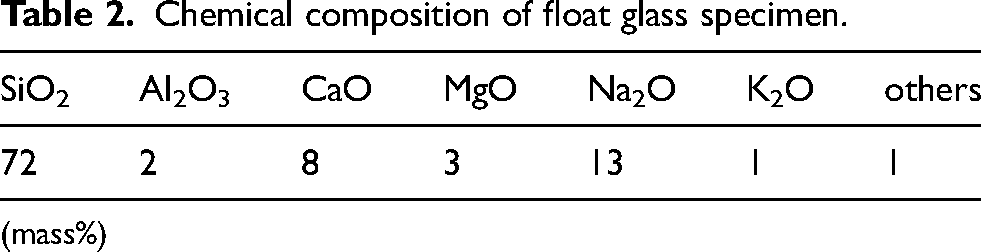
Ordinary soda–lime–silicate glass plate which manufactured by Central Glass Co. Ltd, using float method was used as a specimen. The chemical composition is shown in Table 2. The size of the specimens was 50 × 10 × 4 mm(about 3.7 mm of actual thickness). Float glass has two surfaces of distinctive characteristics caused by the production process. One side is called the “tin side” or “bottom side,” which is produced using the tin's surface tension. Another side is called “non-tin side” or “top side,” produced by using the glass’ surface tension. In this study, only glass strength of non-tin side could be measured, considering the subtle differences in both sides.
Chemical composition of float glass specimen.
(mass%)
Edge conditions of the glass specimen were controlled with a seaming treatment of ♯1000 roughness. The number of specimens was 20 pieces per experimental condition.
Test equipment and method
Quasi-static loading-test method
Quasi-static loading method18–20 is characterized by loading pattern of holding displacement for a certain time and load increments, and by repeating until the glass breaks. The basic condition was that the displacement increment was 0.02 mm and the holding time was 60 s as shown in Figure 1. As the load pattern was assigned manually, there may be an error in the displacement increment. In this test, the supporting condition of an ordinary 4-point bending test (2-point loading and 2-point supporting) was used, where the supporting span was 30 mm, and the loading span was 10 mm. The first load condition in which the displacement was increased from the start of the experiment was called “first step”. The load condition with an increased displacement of 0.02 mm was named as “second step” and was also called hereafter.
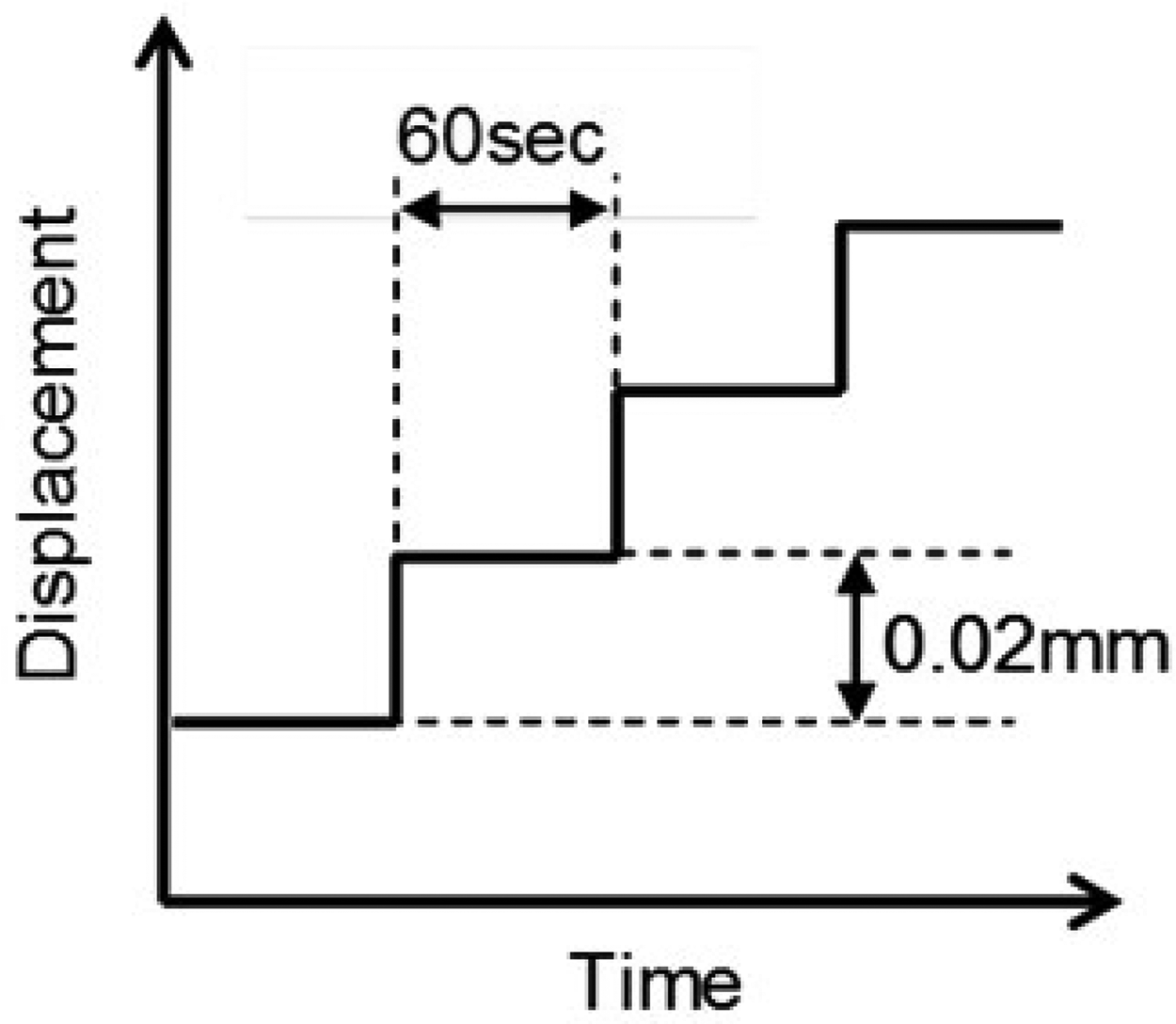
Experimental condition of Quasi-static method.
Glass cutting experimental
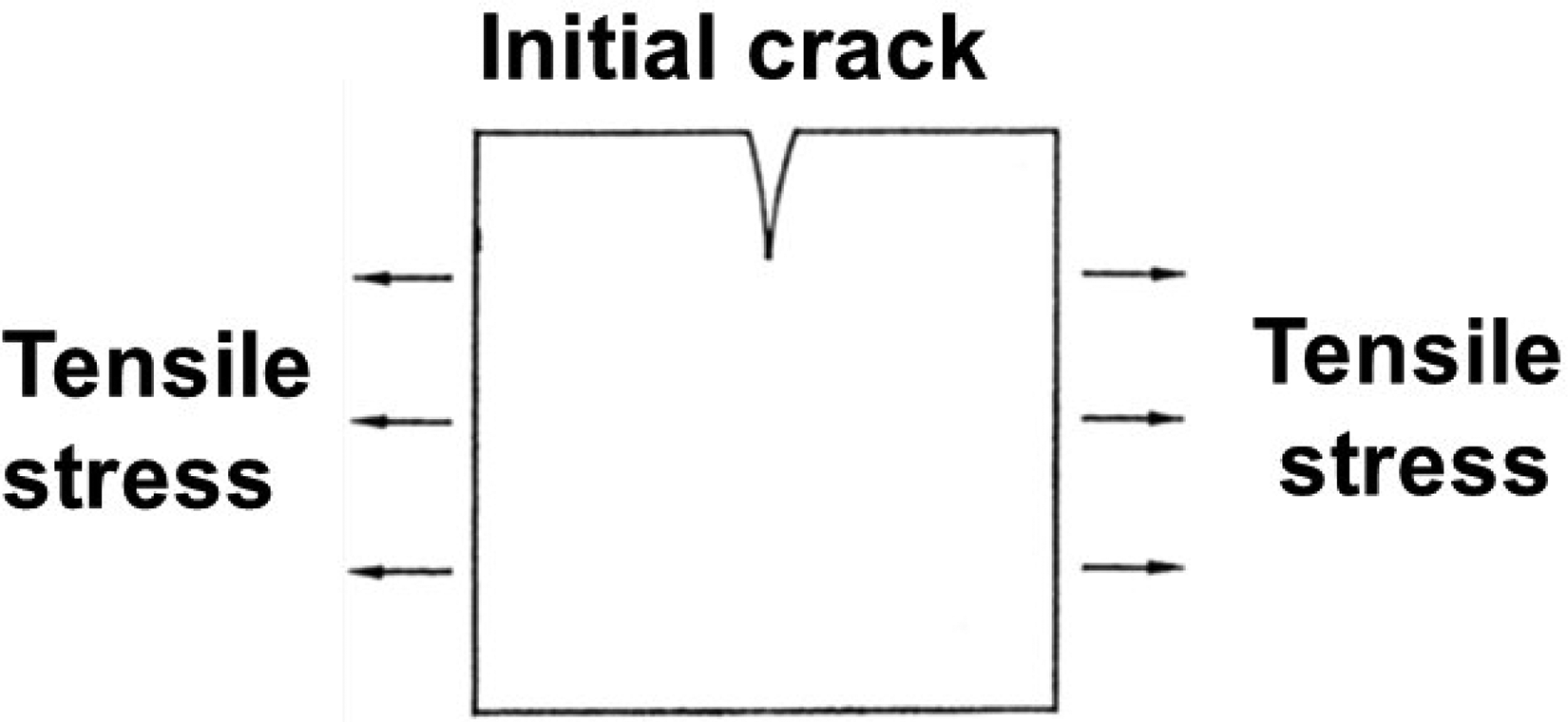
The experimental equipment 4 used for the glass cutting test was a self-made device shown in Figure 2. Initial crack was scratched on sample glass surface using a glass cutter of wheel type in first step, and it was sandwiched between two pieces of dummy glass in second step. Load weight was used to make the load values as uniform as possible, and a device called a slide rail was used to make sure moving parts being smooth and having little vertical movement. After creating an initial crack with the mentioned device, the breaking load for propagate was measured using a standard strength testing machine.
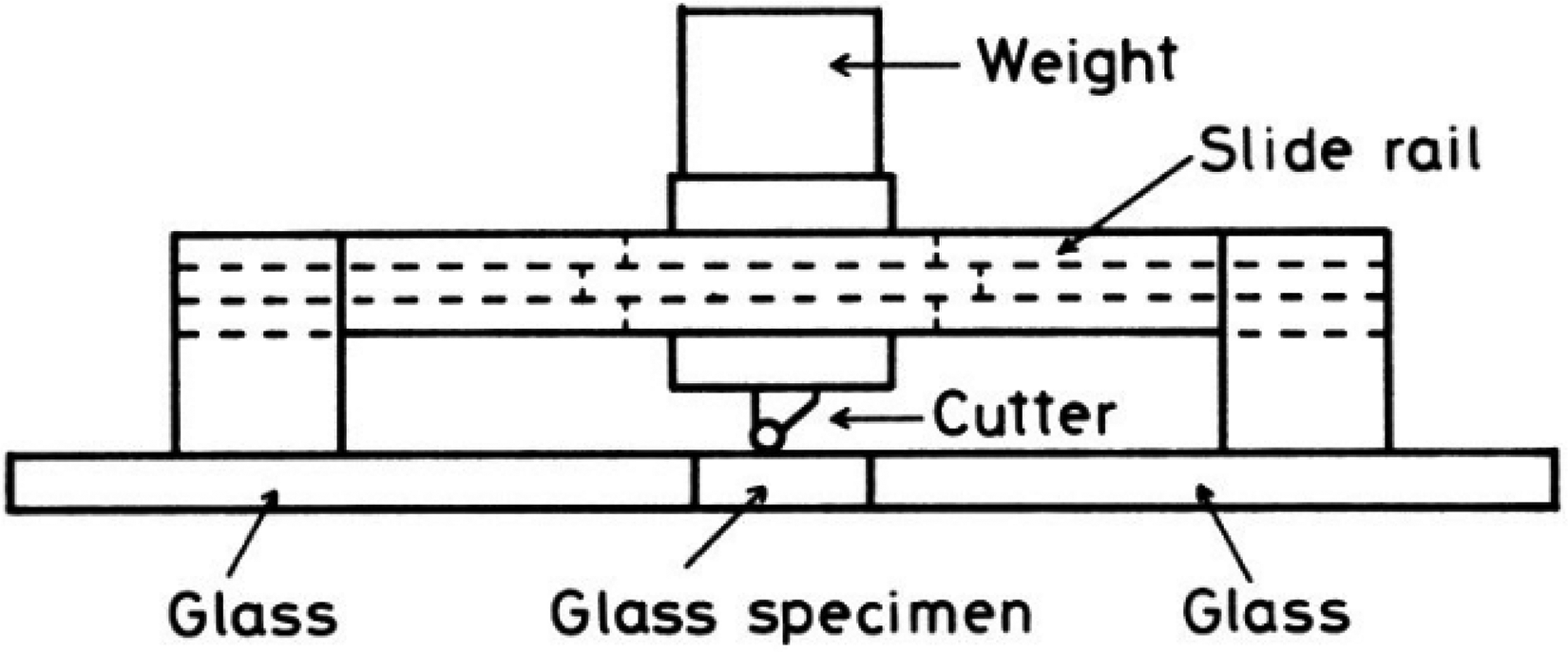
Experimental equipment for glass cutting.
Results and discussion
Stress relaxation phenomena at room temperature
The temperatures of significance to consider are those at the strain point. It has been said that strain point which viscosity log η=14.5 15 (or 14.6, 11 ) is the temperature at which viscous flow stops. It is also said that “as glass does not cause viscous flow under strain point, strain cannot be removed even if held at this temperature for long time” for the definition or explanation. There are reports that the strain in tempered glass is alleviated even below the annealing range, 1 however, this is a consideration at a temperature 100 K lower than the transition point. As strain point of plate glass is about 770 K, viscous flow often recognized that almost never occurs.
In contrast, there is an idea that viscous flow occurs over prolonged periods of hundreds to thousands of years. The main way of mentality is based on gravity acting on glass composition or stabilization phenomenon of structural factors in glass. However, the conventional mentality was that it would take over prolonged periods of hundreds to thousands of years, at least three decades.
It is known “thermometer effect” 10 that glass gradually shrinks when kept for a long time even at room temperature. This comes from the fact that zero point has shifted by about 0.6 K over a decade at room temperature as shown in Figure 3. If kept for a long time even at temperatures below the glass transition point, glass shall shrink gradually. It is thought that the unstable structure frozen at hot temperatures changes to a more stable structure in glass. In other words, the structure of glass changes over time even at room temperature, however, this phenomenon is a change over a lengthy period of decades.
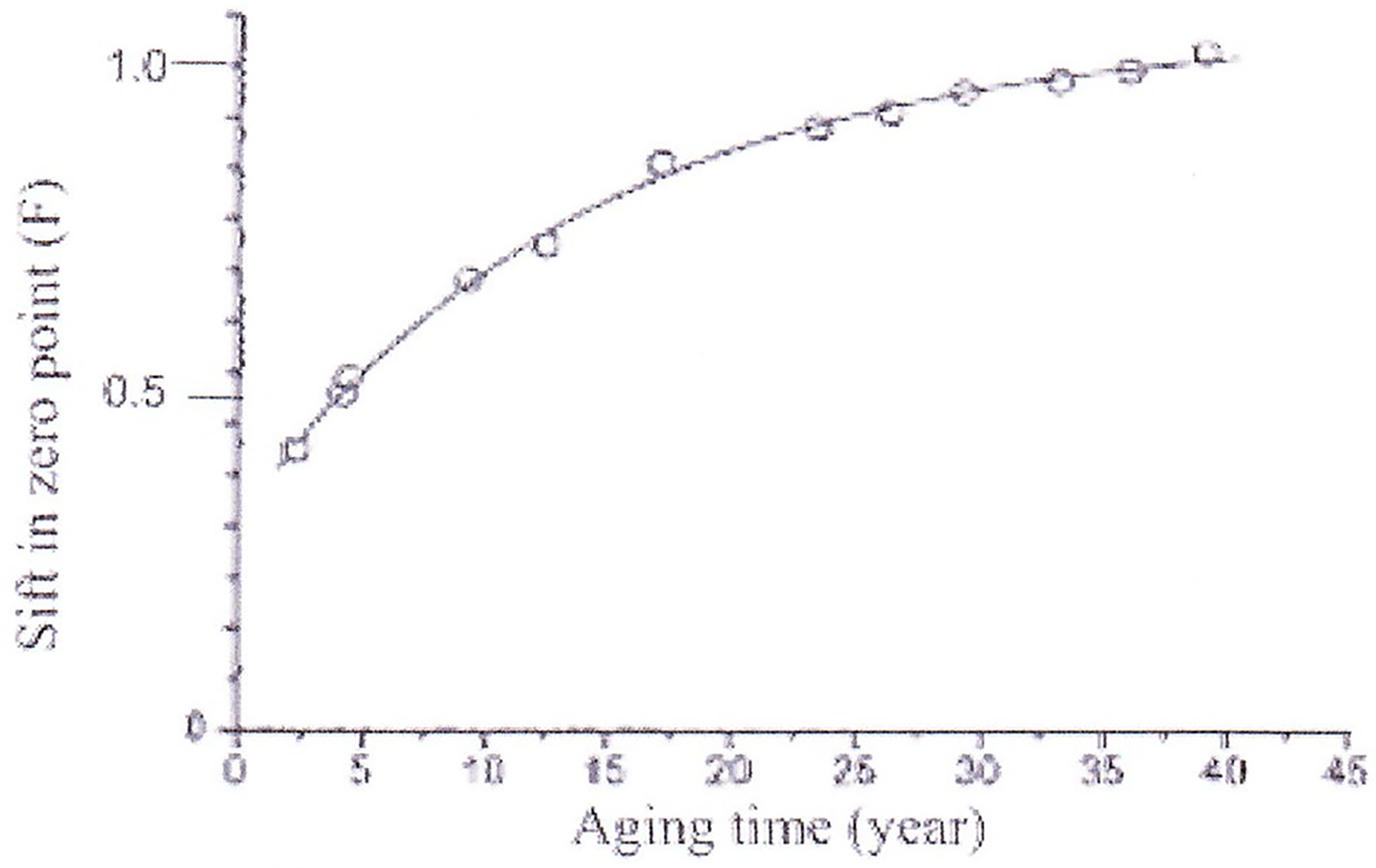
Thermometer effect.
A decrease in bending load was seen at once after the measurement started, when measured using the Quasi-static test method.2,3 Figure 4 shows an example of the results measured using the quasi-static test method. This is the measurement result in the atmosphere of the 11th step, which is the earlier step of 12th step that glass specimen fractured. The bending load's change can be seen even in 12th step, while displacement is constant as shown in Figure 4. It was common to all that the bending load tended to decrease in all steps of all samples of glass samples of 20 specimens under atmospheric conditions and 20 specimens under water environment. The phenomenon where bending load decreases while keeping displacement is not a unique phenomenon that occurs when special conditions come together but also a general phenomenon that occurs both in water environments and in the atmosphere.
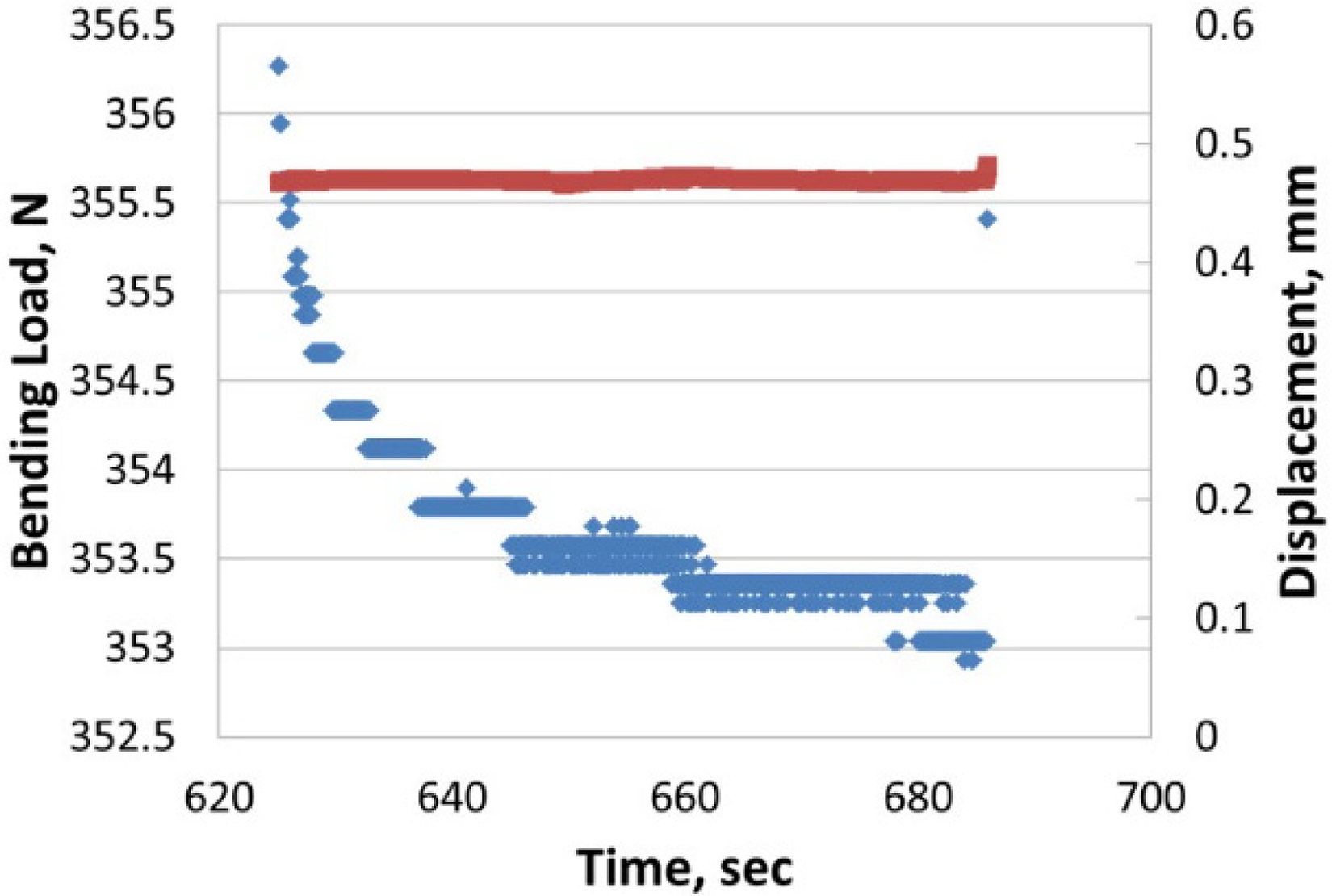
Chang of bending load and displacement with time.
Fracture strength was measured from the applied load at fracture by increasing displacement and load at a constant speed. Figure 5 shows an example of the results measured using the conventional glass strength test method. 7 Since “Load” which width is approximately 5N, the measurement error can be considered about 5N. In contrast to this, the value was which value of applied load reduction seen in Quasi-static test were about 2–4.5N, smaller than 5N. Above phenomenon is possible that it has gone unnoticed for last 100 years. To put it another way, it can also be said that this is a phenomenon that has not been identified if Quasi-static test method was not used. Experimental results by Quasi-static test method were quite different from the conventional mentality.
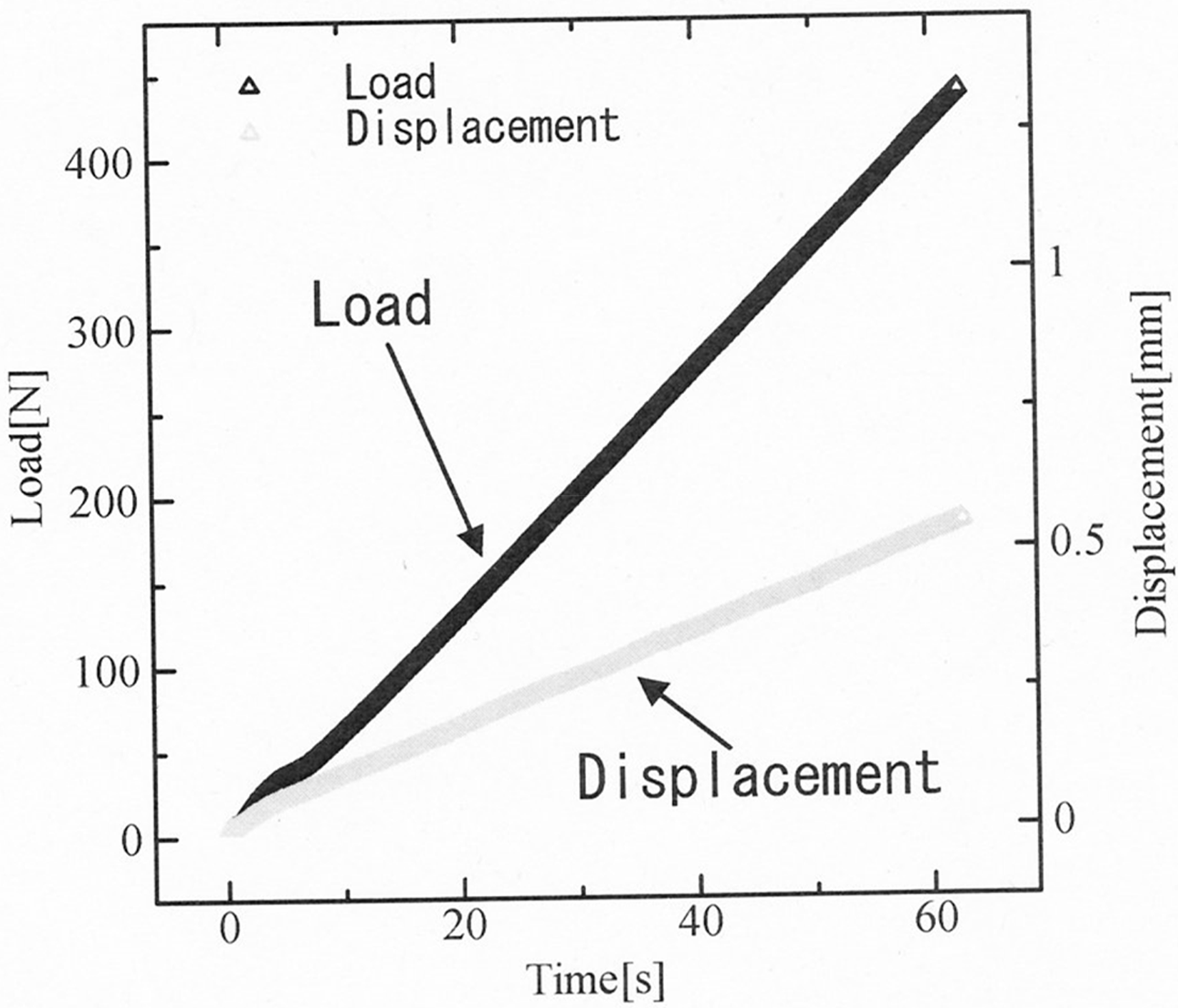
Example of 4-point bending test result.
Tempered glass placed in an atmosphere of approximately 350°C has been confirmed that the fracture strength and surface compressive stress decrease after 2–3 years, even though the temperature is approximately 150 K lower than the strain point. Stress relaxation phenomenon has occurred even if the temperature is lower than the strain point. There is a lack of precision in the definition or explanation of the strain point that has been stated so far.
Figure 6 shows the value of reduction in bending load in the 11th step. Vertical axe shows difference of bending load at once after displacement increment and that at the end of the step approximately 60 s later, and horizontal axe shows the bending load value at the start of the step. Although the bending load values are slightly different under air and water environments, the difference in bending load was extremely similar for both.
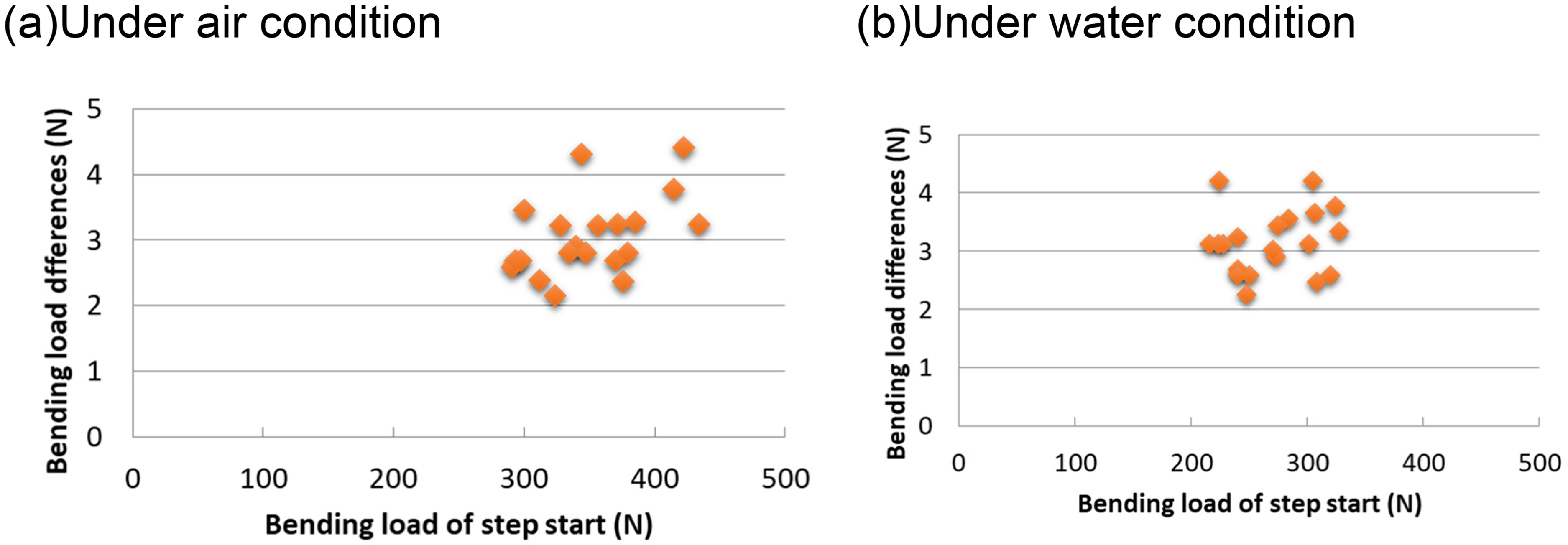
Bending difference maximum load and final load value at 11 steps. (a) Under air condition, (b) Under water condition.
The above results mean that stress relaxation is a phenomenon that affects the entire sample and the condition of the surface layer or the influence of moisture near the surface layer does not contribute significantly.
Time-dependent fracture phenomenon in float glass
Strength of plate glass has been conventionally measured by 4-point bending method and ring method. As fracture of plate glass occurs instantly without internal deformation, glass strength has been calculated using the bending load value that leads to the stress generated at the time of fracture. It seems to depend on the concept that fracture of glass occurs when its maximum strength is exceeded, and cracks propagate instantly to reach fracture. Also, the concept of brittle fracture that no internal deformation occurs.
It was not fractured with maximum value, however, but with a value smaller than maximum value by Quasi-static method. Figure 7 shows an example of bending load curve at the 12th step fractured. Glass specimens were fractured in condition that the displacement is almost constant, but the bending load decreases. In the example of Figure 7, the bending load gradually decreased from the peak of approximately 388.6 N, and glass specimen was fractured when it decreased to 385.9 N. Glass fracture did not occur at maximum load but occurs when the bending load decreases by approximately 0.8%.
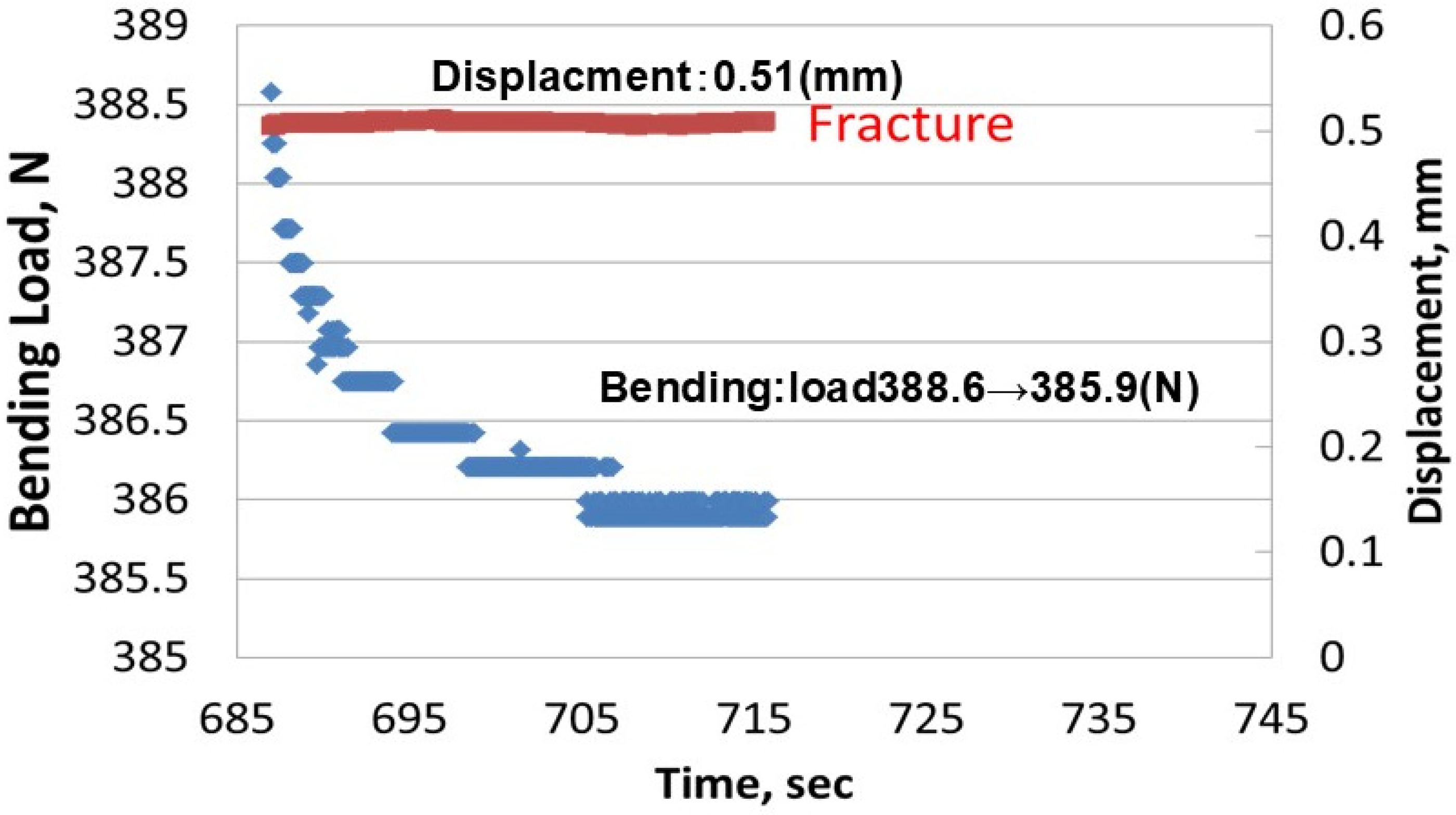
Example of bending load and displacement at fracture step.
Figure 8 shows image of load change and fracture. 2 A shows the target load for each step, B the largest load and C the breaking point. Out of 40 samples, 39 specimens showed similar fracture behavior except 1 specimen which fractured when stepping up. In other words, glass specimens were not broken at the largest load point, but at a load smaller than the value that showed the largest load.
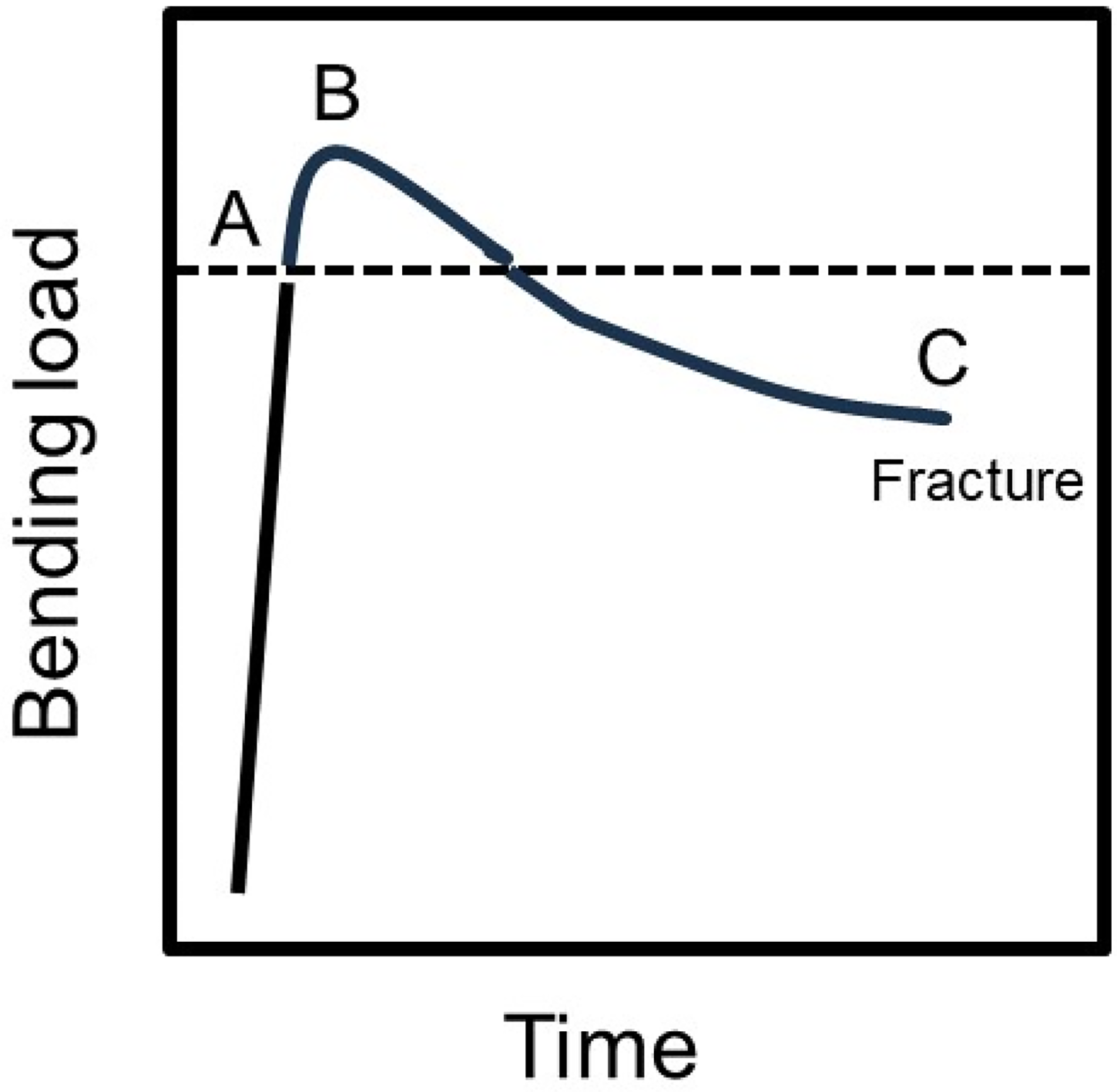
Image of bending load and time at fractured step.
Fracture occurs at A while the load is increasing or at B at the largest load point according to the concept of linear fracture mechanics, neither A nor B was destroyed. As float glass at room temperature is an elastic body, it is known that compressive and tensile stresses occur in case of bending deformation. The critical tensile stress has the greatest effect on glass strength, and the glass fractures when the generated tensile stress reaches a certain value A. However, experimental result was most of the glass samples being fractured at C which was smaller than the maximum bending load B. Above result means that glass does not fracture depending only on the value of tensile stress. The mechanism is thought to involve the following steps:
Applying bending deformation to glass Changes in glass structure Changes in the state of the glass surface layer Formation of fracture starting point
Glass strength has been generally measured by applying bending stress. This load by loading seems to cause irreversible viscous deformation or changes in glass structure. Although changes in the glass structure will affect the entire glass, the fact that in the glass surface layer are more pronounced than in the inner layer, because the glass surface layer has a larger bending value. Also, it is affected by various atmospheres, especially moisture at or near the glass surface. This structural change in the surface layer greatly influences the formation of the fracture point.
It was reported that the variation by repulsive force test5,13 was significantly reduced compared to the ordinary bending test method. The bending deformation by repulsive force test is small because the load is caused by thermal stress. The above result supports the above speculation that bending deformation affects the fracture mechanism.
The decrease in applied load and glass fracture after load reduction which were observed by Quasi-static method seem likely that structural changes and changes in the stress field are caused. However, details of fracture mechanism need to be considered further in the future whether the above changes directly reduce the bending load value, or it leads to a reduction in bending load as a result.
Load speed dependance
It is known that the fracture of glass is influenced by the surface condition. Figure 9 shows the results of glass strength in atmosphere and dry nitrogen. 14 While load speed dependance is observed in the atmosphere, it is not observed in the dry nitrogen. It has been thought that the difference between the two is due to the water in the atmosphere. 17 Also, Figure 10 shows the results of glass strength in atmosphere and water including by Quasi-static method. 3 While load speed dependance is observed in the atmosphere, it is not observed in the water and its value is smaller than that in the atmosphere. These results show that load speed dependance is observed in the atmosphere, and they are not observed in the dry nitrogen and water and show that moisture affects glass strength.
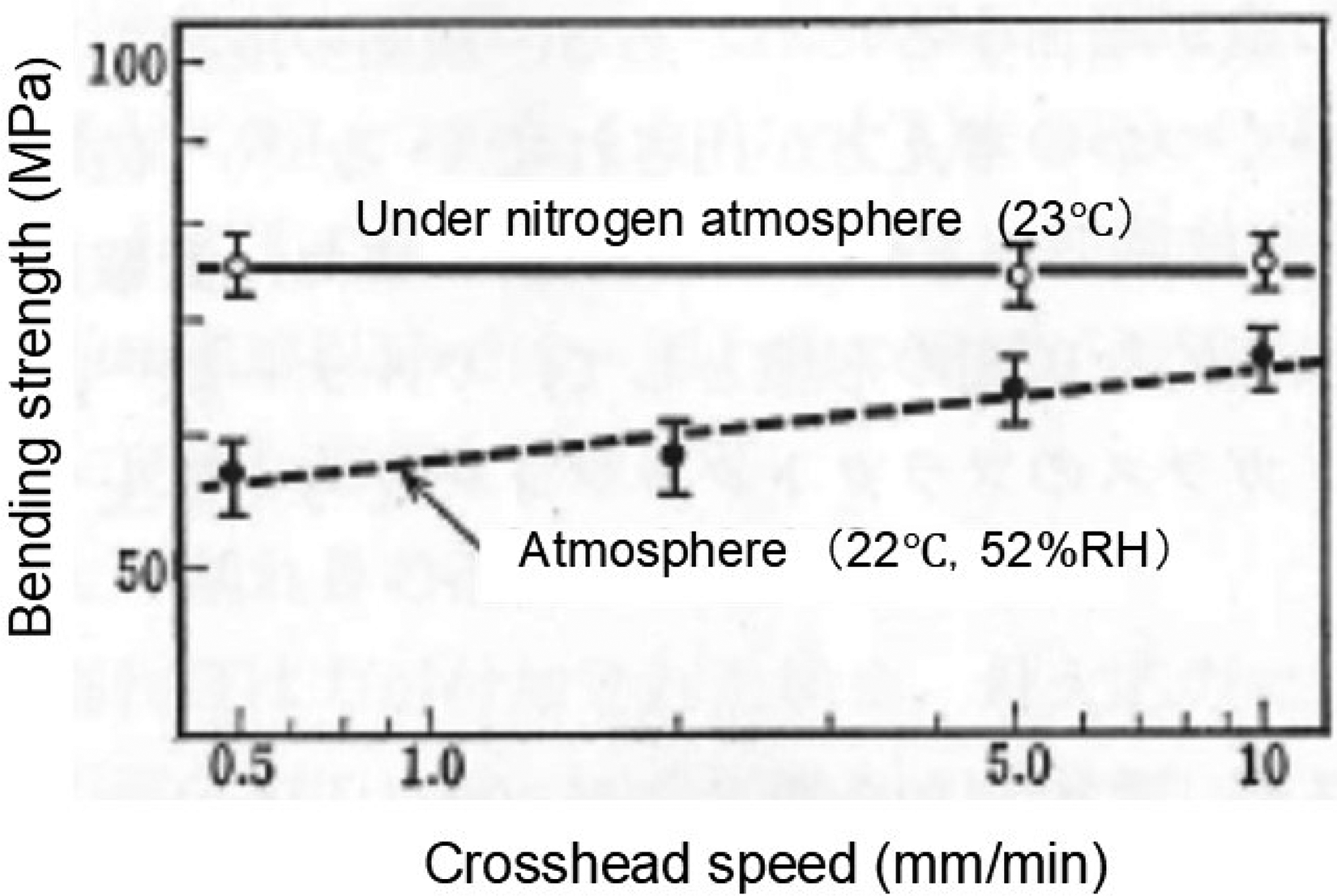
Relation between glass strength and loading rate under air conditioning.
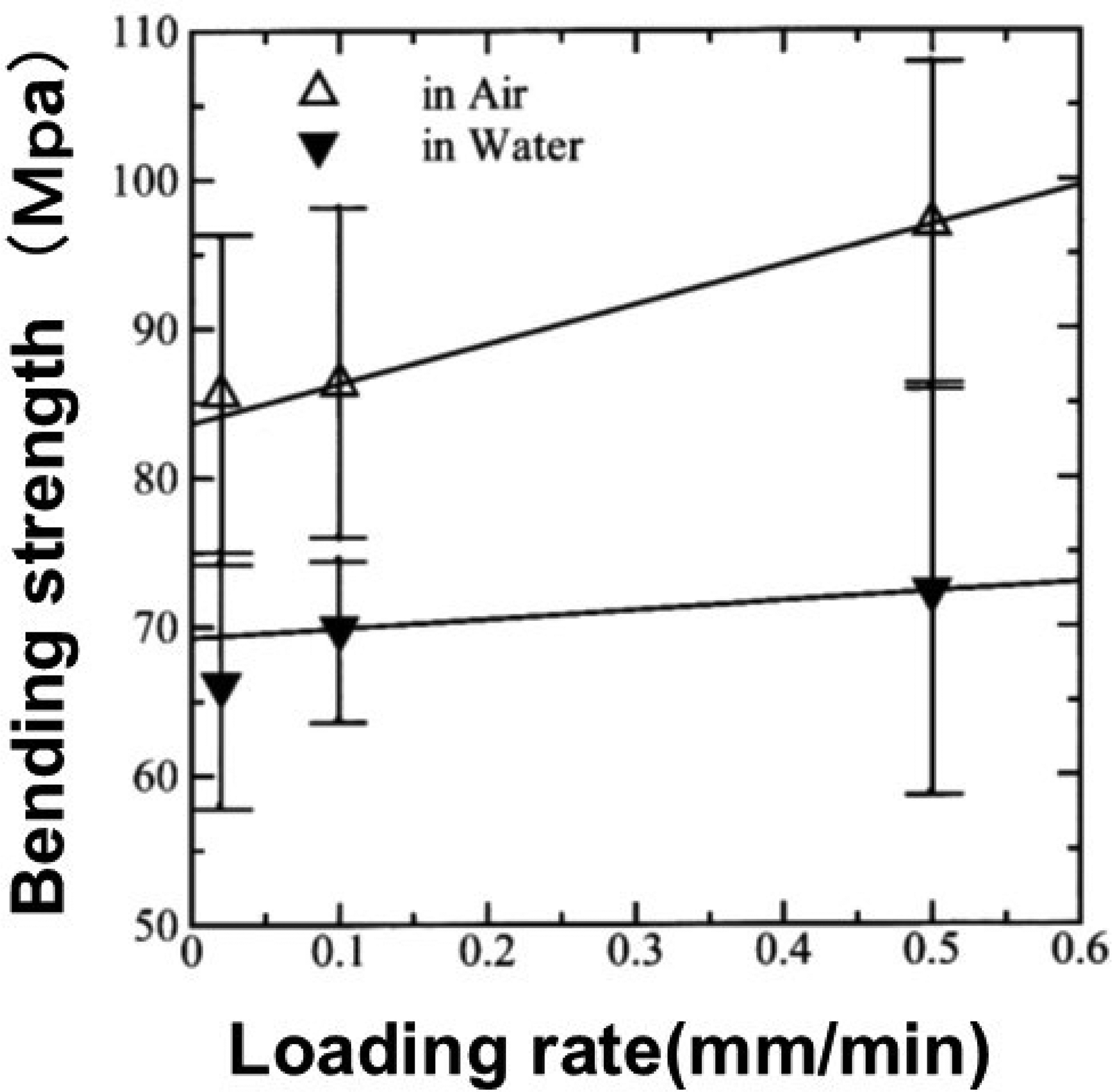
Relation between glass strength and loading rate under water conditions.
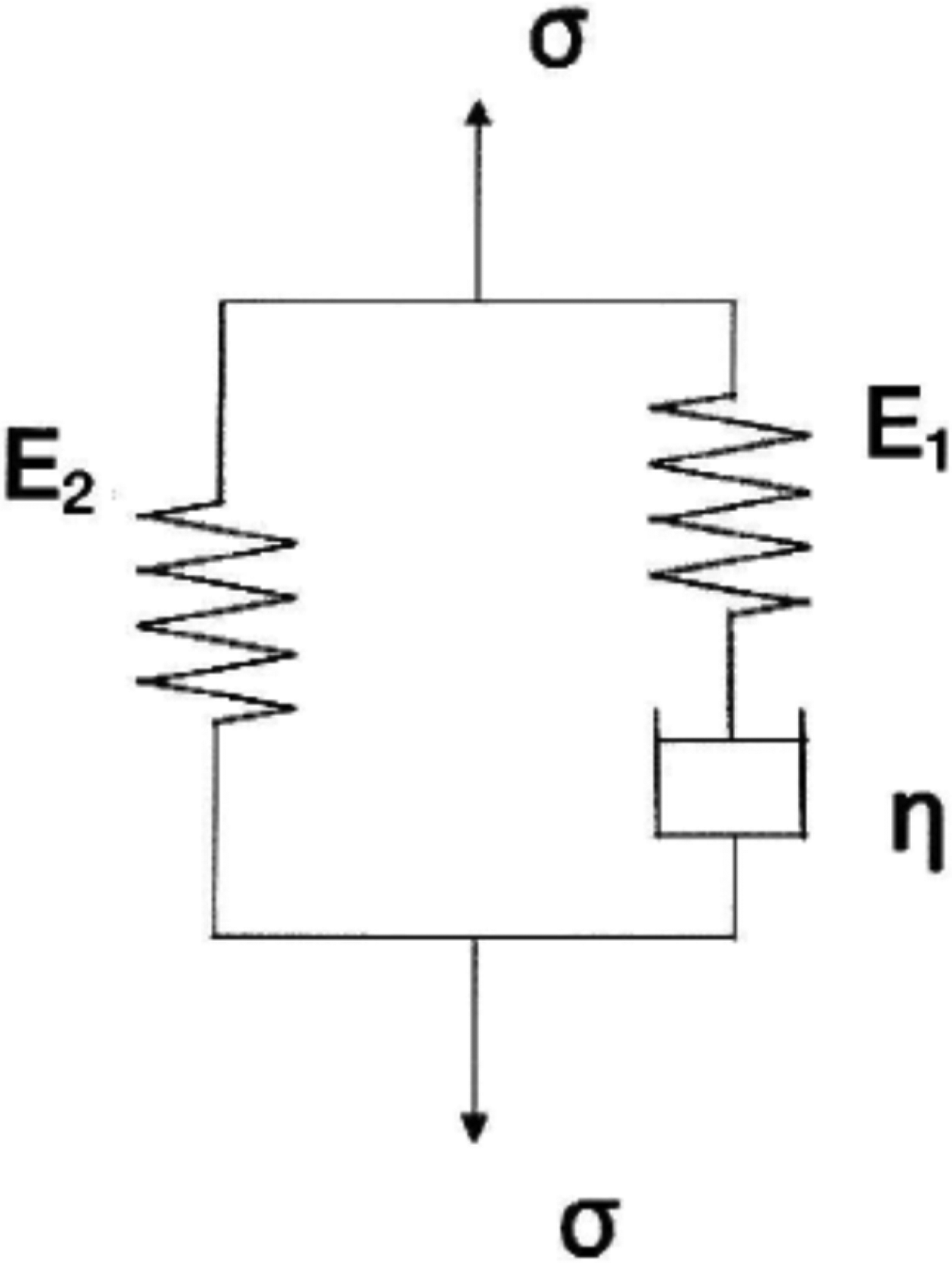
Authors3,4 explained the dependance of stress loading rate on glass strength by using the viscoelastic model shown in Figure 11. Under a constant strain rate, ε’ = C, the basic equation is given by the following equation:
Visco-elastic model.
Here, E1 and E2 are the Young's moduli, η is the viscosity, σ is the stress, and ε is the strain. This measurement result which shows linear changes in logarithmic time seems the validity of Eq. (1).
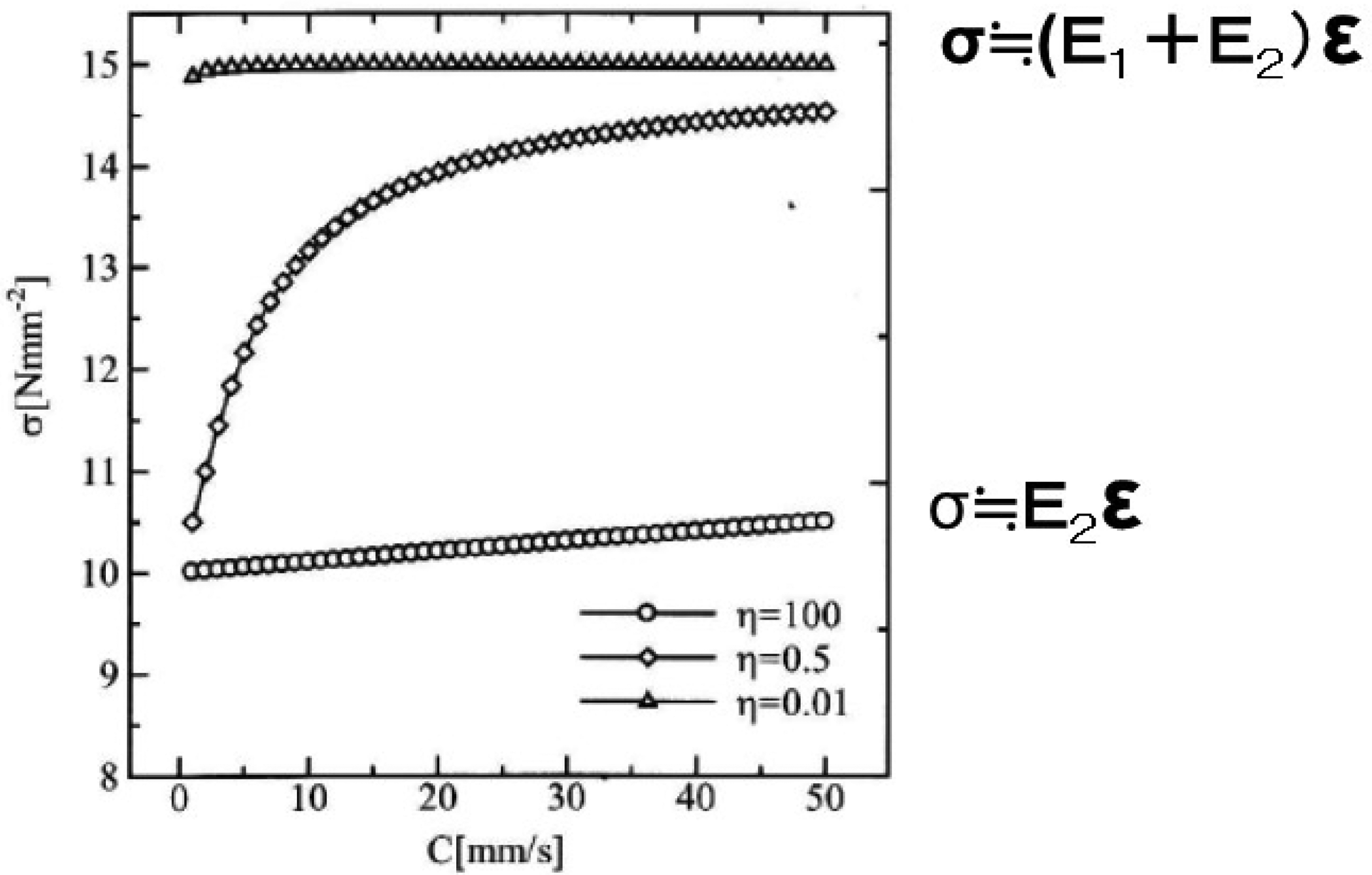
Figure 12 shows an analysis example of loading rate dependance using the viscoelastic model of bending strength on glass plate. Loading rate dependance becomes smaller when η is large and small, and a large loading rate dependance was confirmed when the viscosity is intermediate. Namely, loading rate dependance is smaller under liquid nitrogen or water, and it is larger in an atmosphere that holds a moderate amount of moisture. The loading rate dependance of plate glass and the trend of the viscoelastic model matched, and this shows that it is extremely likely that viscoelastic properties exist even at room temperature levels due to the influence of water. As irreversible viscous deformation of the E-η system progresses in the viscoelastic model, analysis of stress relaxation phenomena including stress corrosion and crack growth would be effective (Figure 13).
Numerical simulation result by viscosity-elastic model.
Initial crack of glass cutting.
The possibility of irreversible viscous deformation of the E-η system in glass at room temperature was shown by using equation (1). It is thought that the progress of this irreversible viscous deformation does not affect only the stress loading rate dependance, but also the variation in the fracture strength of glass. Namely, when bending deformation is applied to the glass, the state as glass changes with time because irreversible viscous deformation occurs. As bending deformation is generally larger in the glass surface layer than in the internal area, irreversible viscous deformation is thought to be larger in the glass surface layer than in the internal area. The occurrence of this irreversible viscous deformation always changes with the state of the glass surface layer and shows that even brittle materials such as glass can exhibit time-dependent fracture. Even if the tensile stress required for fracture is applied, it does not always lead to fracture, and even lower values can lead to fracture.
This means that even brittle materials such as glass can exhibit time-dependent fractures, by using quasi-static loading method. The mechanism is considered to have gone through the following steps,
Effect of moisture on crack growth
Glass strength under water showed a lower value than that in atmosphere, adding to the stress loading rate dependance as mentioned in the previous section. However, glass cutting experiments have also yielded the opposite result. Adding force of tensile stress to propagate the initial crack for splitting, after introducing an initial crack into the glass surface layer in glass cutting process. If the force required for this splitting is large, the glass strength will be judged by a large value.
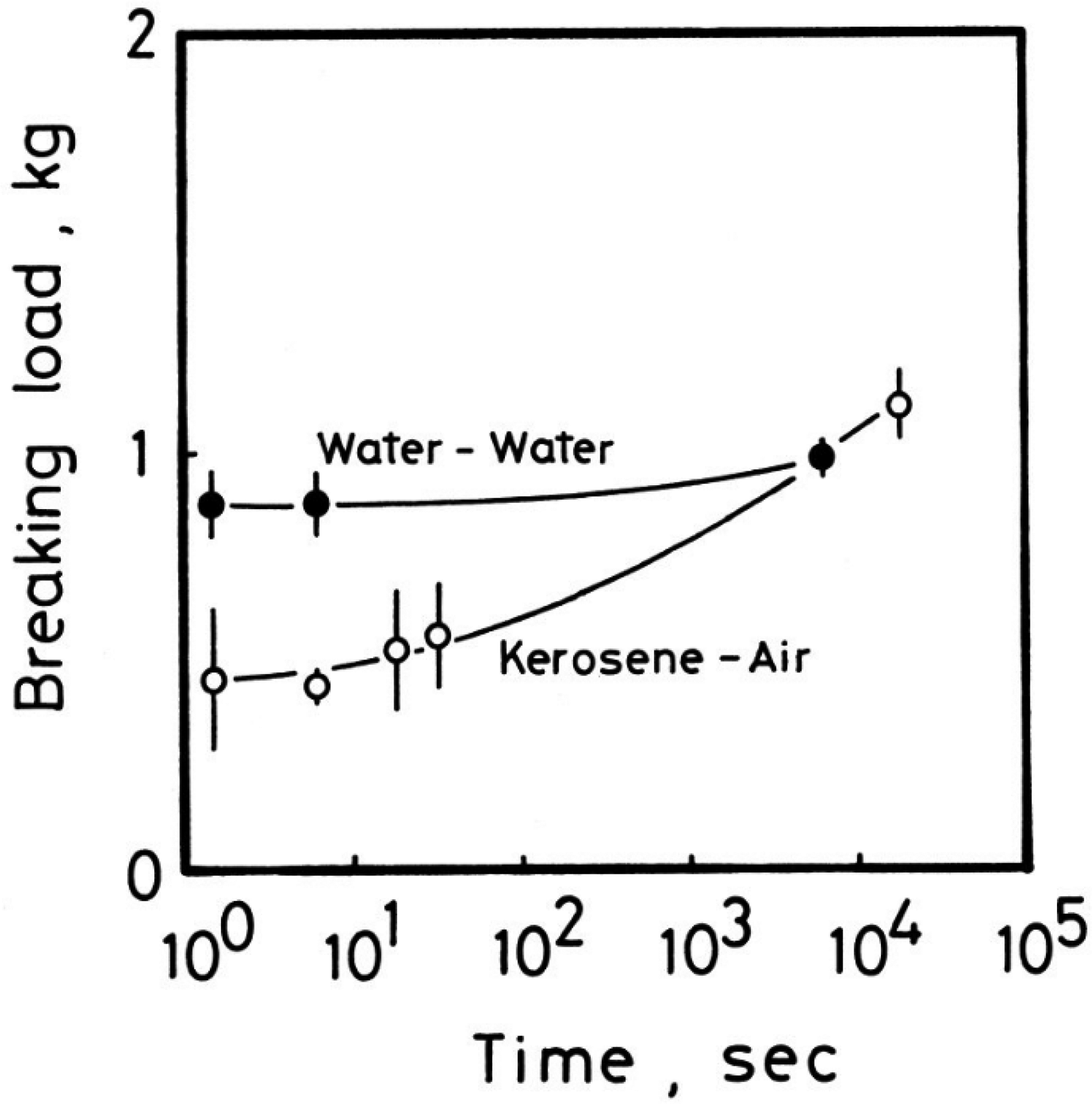
Figure 14 shows change of breaking load at glass cutting with time. The breaking load becomes a large value, when water is used as cutting fluid than when using kerosene. 4 The above result means that more energy is required when the presence of water causes cracks to develop. The more time it takes to split, the more the breaking load increases in actual glass cutting work. Also, glass cutting workers are experiencing an increase the breaking loads on a rainy day. This means that water increases the breaking strength of glass and is the opposite of the earlier result that water reduces fracture strength.
Change of breaking load at glass cutting with time.
This shows that the fracture of glass is not determined only by applied stress. Hair cracks develop over time when generating hair cracks in glass with a Vickers diamond indenter. The crack propagation does not occur uniformly over time; however, crack growth is observed almost instantly after a period of little propagation. There are long periods of time after the last propagation, and the next propagation has a little time. This is thought to be because the atmosphere is mainly composed of moisture and takes a lot of time to change the glass condition at the tip of the crack.
It seems likely that silica dissolution has a large influence on the relationship with glass strength and atmosphere composed of moisture. It has long been known that sodium in glass dissolves in water. However, silica which is representative network former in glass has become clear that also begins to dissolve in water. 16 Although this concept was proposed around 1970, it has received particular attention in recent years.
This phenomenon is thought to be caused by the following mechanism.
Contact of glass and water Cation exchange in glass and water Diffusion of sodium ion in glass onto the glass surface Increased concentration of Na+ and OH− Attack of OH- ions and break Si-O-Si Silica dissolution


It can be inferred based on the above mechanism that the glass surface layer undergoes complex changes due to the influence of water. Sodium ion in glass diffuses onto the glass surface, and silica dissolution after breaking silicon and oxygen. It is thought that alkaline earth metals also leach into water. As the above-mentioned temporal changes occur by water contact, its constituent factors will also change with time at glass surface.
Similarities and differences in the fracture of glass and ceramics
Glass is a type of inorganic nonmetallic material collectively known as ceramics and has been said that there are many similarities with ceramics, e.g., such as damage characteristics of mechanical properties. Glass has a structure of microscopically amorphous, the analysis of glass requires a quite unfamiliar perspective from ceramics when discussing strength. On the other hand, glass is discussed with a narrower definition than ceramics. As glass can be assumed that quality isotropy is supported down to a microscopic region, evaluated as a brittle material and elastic continuum. Glass and ceramics have been treated as materials that show different mechanical properties due to structural differences.
Figure 15 shows strength results measured using 4-point bending test by Yokobori et.al.,18–20 and the vertical axis is the bending strength, and the horizontal axis is the loading rate. The dependance on stress loading rate is significantly different between silicon carbide shown in Figure 15(a) and alumina ceramics shown in Figure 15(b). Strength of silicon carbide exhibits complex behavior with respect to stress loading rate, whereas that of alumina ceramics was observed with a certain relationship. Also, the results of alumina ceramics showed a similar tendency to the measurement results for plate glass in Section 3.3. Namely, even ceramics may exhibit mechanical properties very similar to glass.
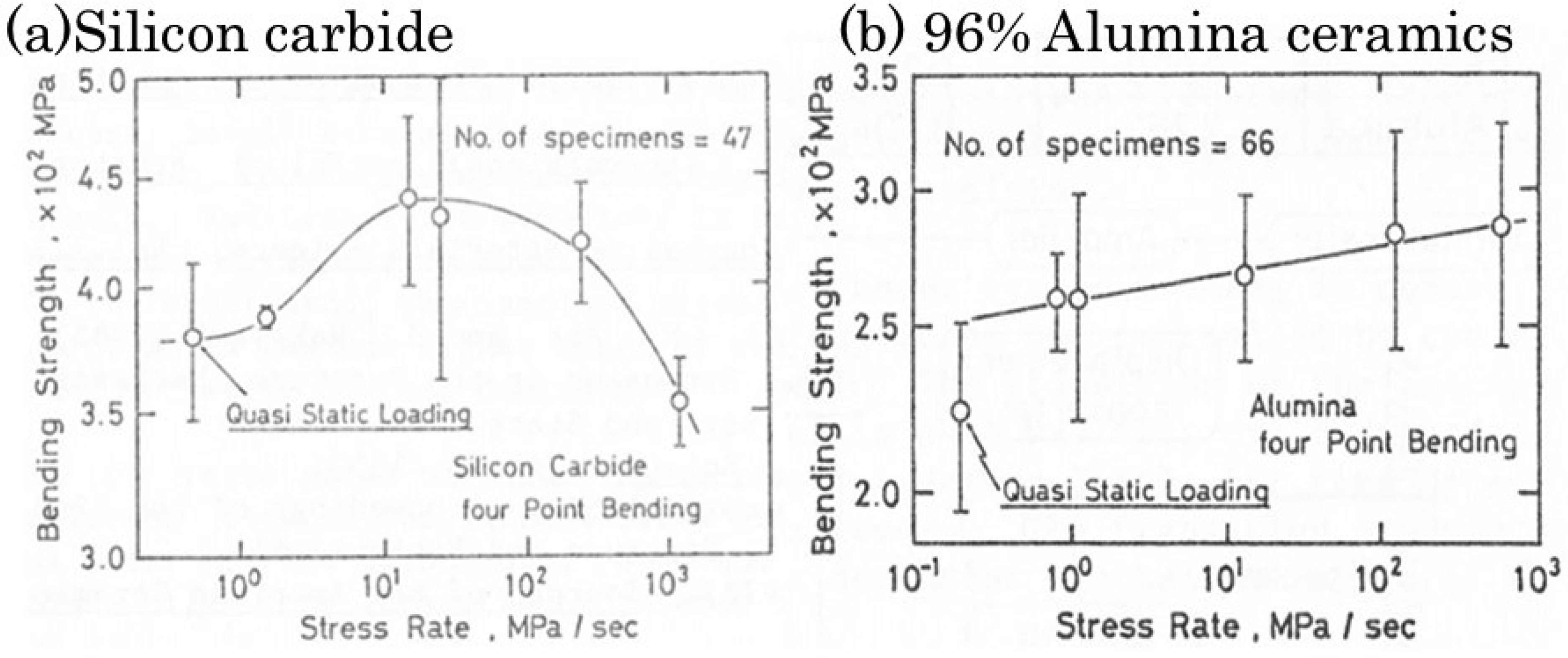
Change of bending strength with stress rate: (a) silicon carbide, (b) 96% alumina ceramics.
The above results are inferred that the presence or absence of a glass phase has an effect. It has been experimentally confirmed that there is a difference between 96% alumina and 92% alumina that there are differences for glass phase. From this point of view, the “viscoelastic effect'‘ that exists in alumina ceramics proposed by Yokobori et.al.18–20 can be extended to glass as well. Alumina is more likely to have mechanical properties closer to glass than silicon carbide which is called the same ceramics.
It has been important to recognize the structural differences between ceramics and glass when evaluating strength. However, it is important to consider the structural similarities between alumina and plate glass. Mechanical properties of loading rate and strength measurement by Quasi-static method are considered useful for structural analysis and understanding of the mechanical properties of ceramics and glass.
Conclusion
The following new findings, which differ from conventional mentality based on linear fracture mechanics concepts, stress relaxation and effect of moisture were obtained in plate glass.
A decrease in bending load was seen immediately after the measurement started, when measured using the Quasi-static test method. Since “Load” which width is approximately 5N, the measurement error can be considered about 5N. In contrast to this, the value was which value of applied load reduction observed in Quasi-static test were about 2–4.5N, smaller than 5N. Above phenomenon is possible that it has gone unnoticed for many years. In strength measurement using the Quasi-Static test method, the results showed an appearance of time-dependent fracture with a value smaller than its maximum value. Plate glass has viscoelastic properties even at room temperature and is likely to exhibit irreversible viscous deformation, because the load rate results are consistent with the analysis by viscoelastic model. It is necessary to reconsider the concept of strain point that has been said that stress relaxation phenomenon does not occur or over a lengthy period of several decades or more below the strain point. Water on the glass surface was caused by complex changes, because increase and decrease in strength were seen as water effects. It is presumed that instantaneous fracture in plate glass will lead through complex behavior involving various factors, instead of causing by only a load exceeds the limit value. It is thought that the mechanical properties of plate glass and ceramics will be necessary to review, because Almina ceramics showed fracture characteristics closer to plate glass than silicon carbide.
Footnotes
Acknowledgment
The author is grateful to Professor Emeritus A. Toshimitsu Yokobori, Jr of Tohoku University, and would like to thank Central Glass Co., Ltd for providing glass specimen.

Funding
The author received no financial support for the research, authorship, and/or publication of this article.
Declaration of conflicting interests
The author declared no potential conflicts of interest with respect to the research, authorship, and/or publication of this article.
Disclaimer
This article has previously been published in Japanese in the Journal of the Japanese Society for Strength and Fracture of Materials, 58(3,4) (2025), 1–10.