







Abstract
Introduction
Social media serves as a way for patients to post about their condition online, as well as for healthcare providers to disseminate information. Intrinsic bias exists exist when patients are given surveys by physicians or healthcare providers. We aim to investigate patient-centered social media posts regarding cerebral aneurysms on Instagram, Twitter, and TikTok.
Methods
Posts that included “brain aneurysm”, “#brainaneurysm”, “#brainaneurysmsurvivor”, and “#aneurysmsurvivor” were queried on Instagram, Twitter, and TikTok. Any posts unrelated to the patient experience were excluded. Five hundred and fourteen Instagram posts, fourty tweets, and five hundred seventy three TikTok posts about the patient experience were identified. Posts were coded for the relevant themes related to their experience with the disease.
Results
Most posts made online were by women (892, 82.1%). Patients made the post most of the time (776, 67.5%), while other individuals posted less often (420, 36.5%). The most common themes on Instagram were survival (475, 87.3%), spreading positivity (385, 70.77%), and recovery/rehabilitation (329, 60.5%). TikTok users most often referred to survival (573, 97.1%), raising awareness (464. 78.6%), and spreading positivity (414, 70.2%). Patients were more likely to discuss pre-operative pain (p = 0.0382), postoperative pain (p < 0.0001), invisible illness (p = 0.0130), humor (p = 0.0028), recovery (p < 0.0001), angiograms (p < 0.0001), and resiliency (p < 0.0001) when compared to other individuals posting about a patients' experience.
Conclusion
Patients often focus on different aspects of their care than do other individuals. This may be useful for physicians discussing treatment plans and prognoses with the patient and their families.
Introduction
Social media has an ever-growing role in modern society and healthcare, as over 70% of Americans use it daily. 1 Patients often use social media to enhance their mental wellbeing by forming quasi-support networks. 2 It allows individuals and their families to discuss their experiences online, and reach out to other individuals for support regarding their treatment. 2 Patients often report feeling lonely when no one in their personal life has the same condition, and social media allows patients with rarer conditions to reach out to one another, and find an online support system.2,3 It is also used widely among healthcare organizations to advertise their services, disseminate research, and educate patients, medical students, residents, and fellows. 4 Both the Congress of Neurological Surgeons and the American Association of Neurological Surgeons have vibrant social media platforms. Social media is also widely used among many academic neurosurgeons, such as the Chairs of notable institutions such as the Mayo Clinic, University of Toronto, Massachusetts General Hospital, and more. 4 Medical journals such as the Journal of Neurosurgery, Neurosurgery, Journal of NeuroInterventional Surgery, and Interventional Neuroradiology disseminate research to physicians and patients via social media. The widespread usage of social media in the healthcare field makes it an essential tool for practitioners to properly understand the modern health landscape.
Physicians often obtain feedback from their patients through surveys administered in an outpatient clinic or during a patient's stay in a hospital.5,6 Patients may have a social desirability bias, where they minimize their negative feelings to be seen as more likable by their care team. 6 Additionally, the limited time spent between the patient and their physician may not be enough for the patient to fully disclose their feelings regarding their condition and care. 6 However, social media has been seen to serve as a platform for patients to discuss their condition online. Studies have shown that patients have utilized social media to discuss a broad array of health conditions they may have, such as cerebral cavernous malformations, brain tumors, scoliosis, and more.5,7–9 This study aimed to investigate patient-centered social media posts regarding cerebral aneurysm treatment.
Methods
Social media outlets were queried to find posts relating to patient experience of cerebral aneurysm treatment. Instagram, TikTok, and Twitter were selected as social media platforms to obtain posts. The increased privacy settings with Facebook limited its utilization for data collection.
Social media outlets were searched for posts that included “brain aneurysm”, “#brainaneurysm”, “#brainaneurysmsurvivor”, or “#aneurysmsurvivor”. Only posts about a patient's experience of having a cerebral aneurysm were included. The identity of the poster was not a cause of elimination, as friends and family of a cerebral aneurysm patient suffering from a cerebral aneurysm were included. However, posts not directly about a patient's experience, such as general cerebral aneurysm education, or research were excluded. These three platforms have various standard forms of posting. Instagram allows for photos and videos, TikTok is exclusively for videos, and Twitter is primarily text with occasional photos and videos. The media format from social media platforms was noted as there is a crossover between media types between both platforms.
This Instagram search resulted in slightly over 30,000 posts for the stated above criteria. The elimination procedure yielded 514 Instagram posts from September 2016 to January 2022. TikTok does not indicate how many posts come up for a particular hashtag. Five hundred seventy-three TikTok posts from January 2019 to January 2022 were included. Twitter yielded 64 relevant tweets.
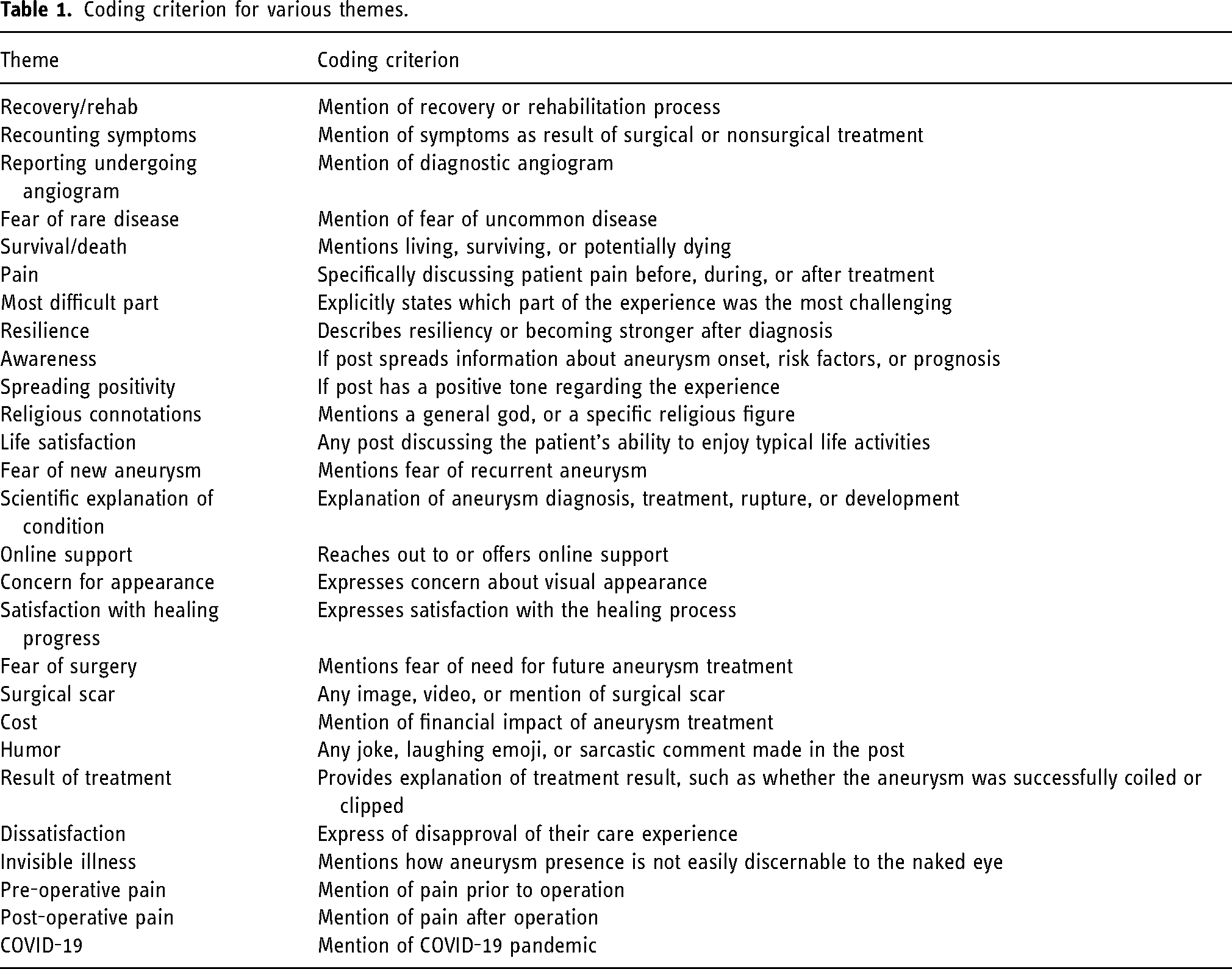
All posts were then categorized into various themes using the criteria shown in Table 1. A single post is eligible for none, one, or multiple themes. The profile of patients’ posts was searched to determine if the post was made pre-operatively or postoperatively. Postoperative posts that included a description of the experience preoperatively as well, were classified as “Both”. Statistical analysis to determine differences in theme prevalence by platform, gender, and identity of the individual posting was conducted using STATA v17.0 (StataCorp, College Station, TX).
Coding criterion for various themes.
Results
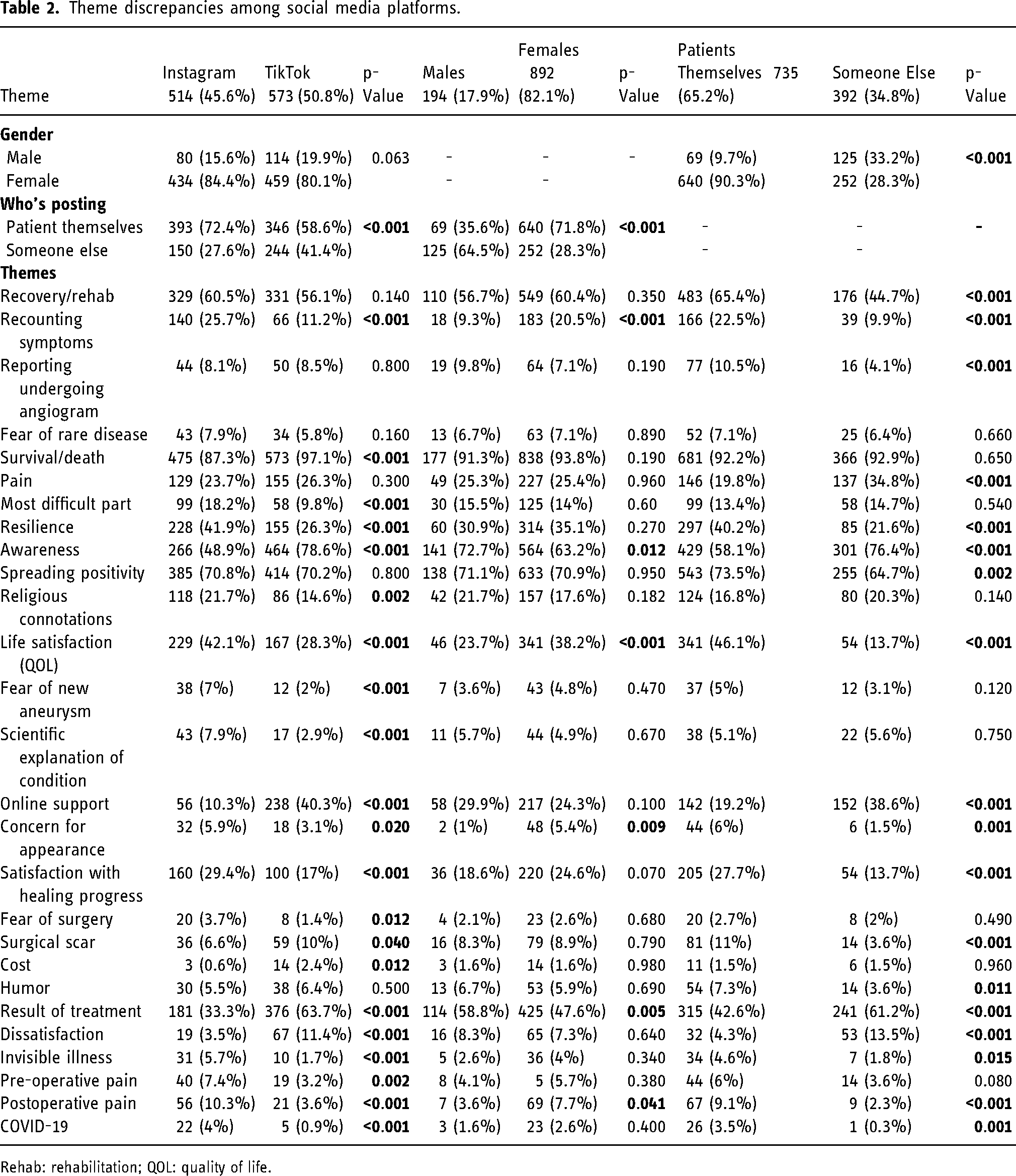
Analysis of various social media platforms yielded 514 (47.3%) Instagram posts, 573 (50.8%) TikTok posts, and 40 (3.5%) Tweets. Women made 82.1% of the social media posts, while patients themselves made 65.2% of the posts (Table 2). No statistically significant gender differences were found between platforms. TikTok posts were more likely to be made by someone else than a patient, and more likely to have been shared postoperatively (p < 0.001). Additionally, TikTok posts were more likely to discuss survival/death, spread awareness, online support, and the result of the treatment than Instagram posts (p < 0.001). Instagram posts were more likely to mention symptoms, description of the most difficult part, life satisfaction, and discuss satisfaction with the healing process than TikTok users (p < 0.001).
Theme discrepancies among social media platforms.
Rehab: rehabilitation; QOL: quality of life.
Gender differences in what themes were most often mentioned were also found (Table 2). Women were more likely to discuss symptoms (p < 0.001), quality of life (p < 0.001), concern for appearance (p = 0.009), and postoperative pain (p = 0.041) than men. Men were more likely to discuss raising awareness (Figure 1, p = 0.012) and the result of the aneurysm treatment (p = 0.005). Patients were more likely to discuss recovery/rehab, symptoms, angiogram, resiliency, quality of life, satisfaction with the healing process, and postoperative pain than other individuals posting about aneurysm treatment (p < 0.001). Additionally, patients were more likely to express concern about appearance (p = 0.001) and have a more humorous tone toward their treatment than other individuals posting (p = 0.011). On the contrary, posts made by individuals who were not the patient themselves were more likely to raise awareness (Figure 2), mention online support, and express dissatisfaction with their loved one's treatment.
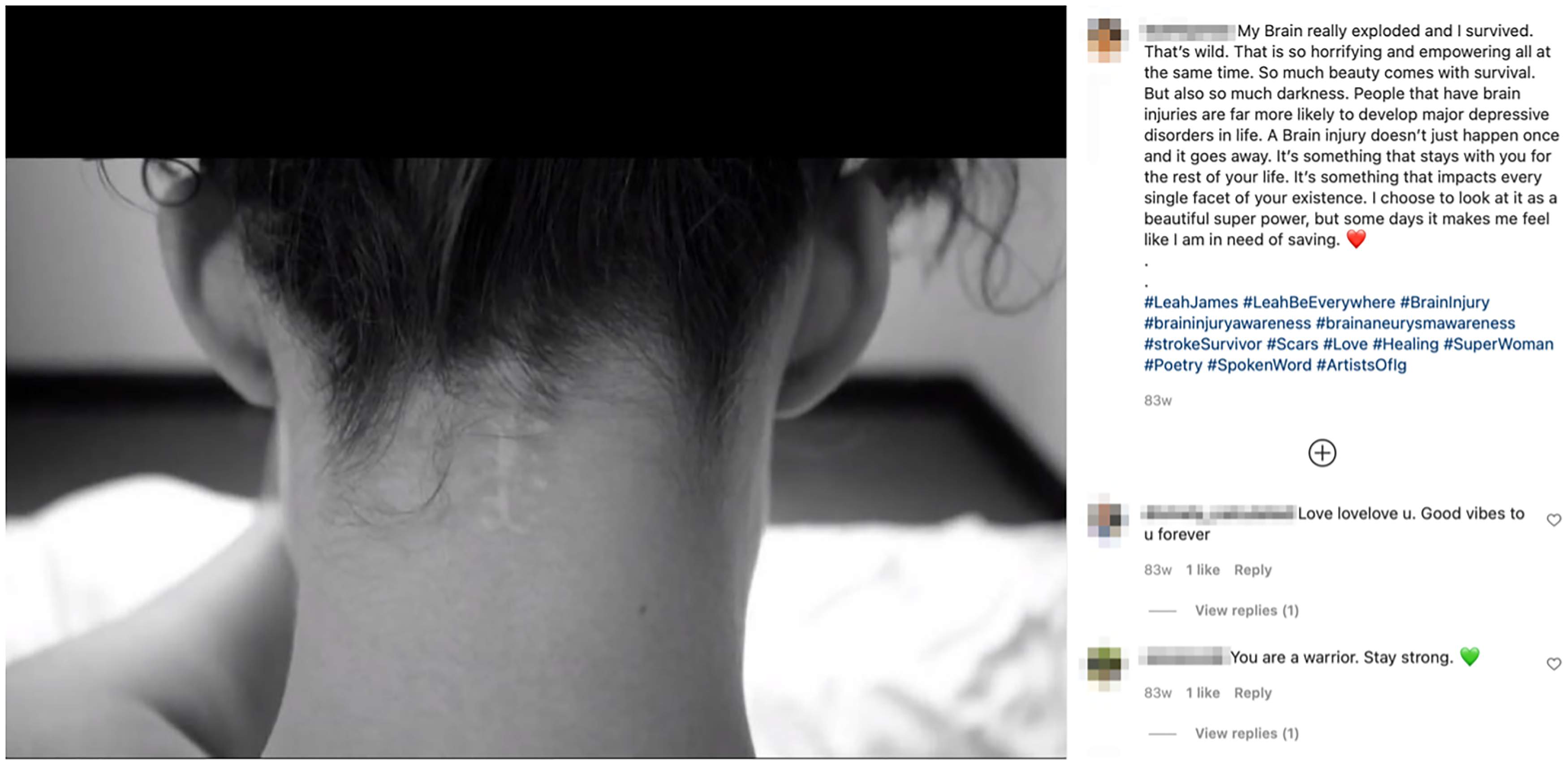
Instagram post demonstrating the themes of fear, empowerment, resiliency, and awareness.
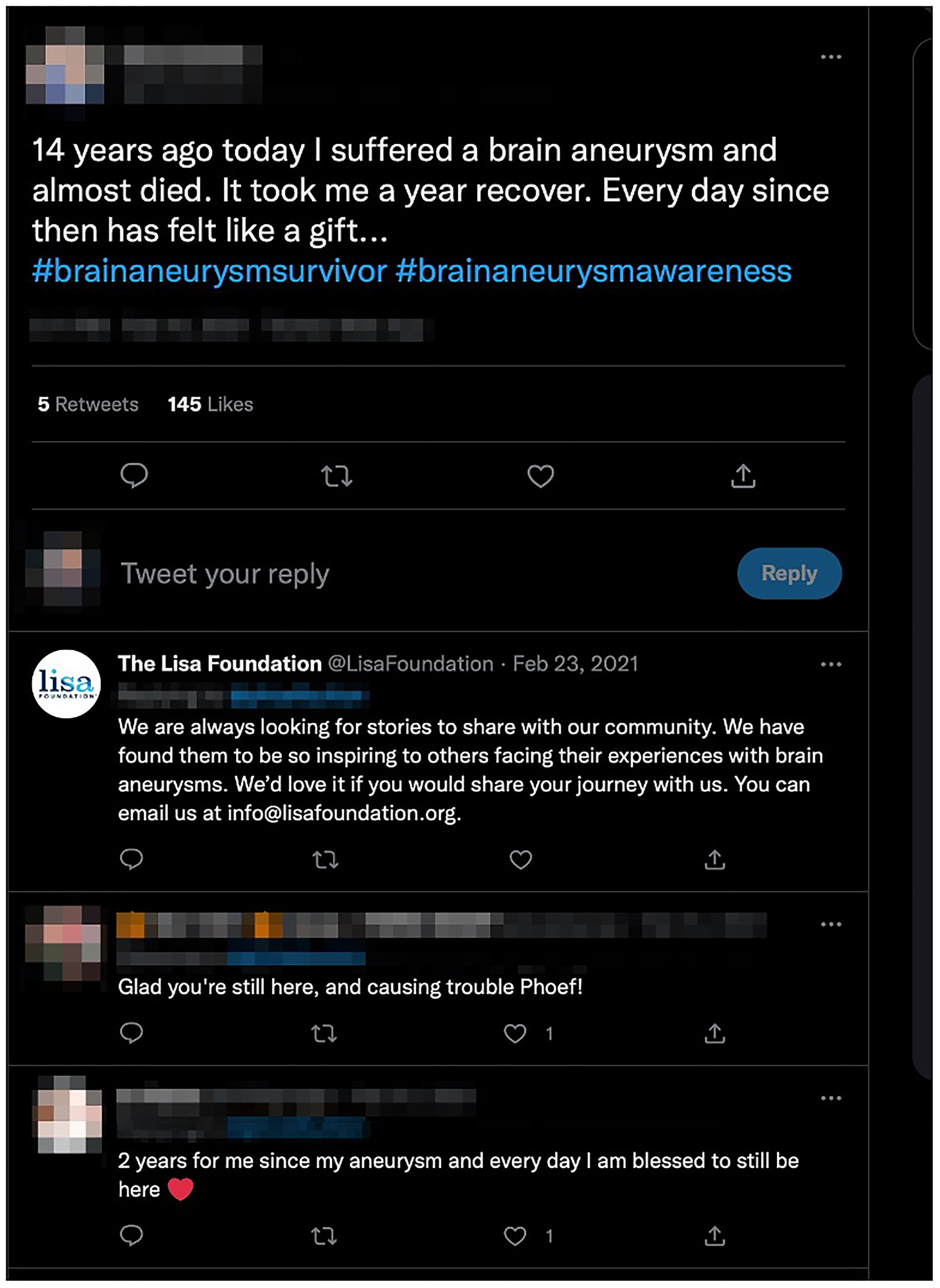
Twitter tweet mentioning patient survival and spreading positivity. Replies by an aneurysm foundation and friends providing support and raising awareness.
Discussion
Social media was shown to serve as a way for patients and their families to discuss the treatment experience online. It is useful for physicians to better interpret patient feedback for those undergoing cerebral aneurysm treatment. This study successfully identified key themes expressed by patients and their families through various social media platforms.
Identity of poster
Patients were found to have a different focus than their family or friends when describing their experience. Patients were more likely to focus on the recovery process, quality of life, postoperative pain, and express concern for appearance than other individuals. Additionally, patients are more likely to describe resiliency and have a humorous tone. This information allows physicians to better focus on the pain and recovery process while having a positive, light-hearted tone with their patients. On the contrary, other individuals posting were more likely to express dissatisfaction with their loved one's treatment course, as well as discuss online support and raise awareness. For physicians speaking to the family of a patient, an emphasis on support and awareness groups, such as the Bee Foundation and the Brain Aneurysm Foundation, would be beneficial, as the families are likely to be more receptive to helping increase aneurysm awareness.
Gender analysis
Women made 82.1% of posts while men made 17.9% of the social media posts. This is to be expected, as women use social media at a higher rate than men. 10 Gender influences focus of posts, as women are more likely to discuss symptoms, quality of life, concern for appearance, and postoperative pain than men. The higher prevalence of intracranial aneurysms in women indicates that for physicians treating female aneurysm patients, the results from this study information can better help them steer their conversation into surgical scar healing and symptom management for women. Men were more likely to discuss raising awareness and the clinical result of aneurysm treatment. Certain studies have shown that patients have limited knowledge regarding their aneurysm treatment. King et al. 11 demonstrated that 14% of successfully eliminated cerebral aneurysms inaccurately believe that they still had an aneurysm. Additionally, one of three patients were even unaware that they even had an aneurysm. 11 Physicians treating male aneurysm patients may be better served by highlighting the clinical result of their treatment. Additionally, physicians can also provide resources to aneurysm awareness groups, such as The Bee Foundation for these patients. 12
Platform differences
TikTok users are more likely to be use their platform to raise awareness and provide online support to patients. Additionally, posters are more likely to be someone besides the patient discussing the condition. As TikTok is seen as a “showier” platform, it is unsurprising that individuals used it to discuss someone else's condition. TikTok has also been shown to be used by neurosurgeons to spread awareness regarding educational programs; a program instituted by Northwell Health to increase medical student recruitment into neurosurgery found that most students enrolled in the program heard about it via TikTok. 13 This study reinforces that TikTok has evolved to become a more commonly used platform for individuals to discuss health conditions.
Limitations
This study is not without limitations. Firstly, social media has a representation bias toward younger individuals. Older patients and their families are less likely to be utilizing social media and are likely to be excluded from this study. There is no way to verify the clinical accuracy of the posts. Individuals are sometimes mistaken about their treatment course, which will reflect in their social media postings. The age of the individuals posting on various social media platforms was unknown. Social media also has a representation bias toward extremely positive or negative treatment experiences. An “average” experience is less likely to be discussed on social media, and these experiences are likely excluded from the analysis. Further research is necessary to determine how the age of the individual posting affects theme prevalence.
Conclusions
Social media serves as a way for cerebral aneurysm patients and their families to discuss the experience online. It allows for free-flowing conversation regarding a patient's aneurysm treatment, without the limitations of a survey administered in a clinical setting. This study revealed that the platform, gender, and profile of the person posting lead to focusing on different aspects of their care. This information better equips neurointerventionalists to better tailors their conversation to their patients and families.
Footnotes
Declaration of conflicting interests
The authors declared no potential conflicts of interest with respect to the research, authorship, and/or publication of this article.
Funding
The authors received no financial support for the research, authorship, and/or publication of this article.
