






Abstract
This paper examined the ethical challenges of conducting qualitative research in a Bangladeshi context. It engages with debates on Indigenous Knowledge production and community access, emphasizing reflexivity and cultural sensitivity in research practice. Using a hermeneutic phenomenological design, semi-structured interviews were conducted with 11 mother–grandmother dyads in Dhaka. Key challenges included negotiating researcher–participant boundaries and ensuring privacy during individual interviews within multigenerational households. Commensality, the practice of sharing meals, emerged as central to participant engagement. Contradictions among ethical guidelines, cultural norms, and research practices were analyzed through cultural-historical activity theory and a decolonial lens, exposing epistemic justice concerns and limitations of Western frameworks. The paper argues for incorporating cultural traditions into methodology and developing regionally grounded ethical standards.
Keywords
Introduction
Research on child development in Bangladesh remains dominated by quantitative methods, with few qualitative studies—particularly in parenting—limiting contextually grounded inquiry. An integrative review found that from 2006 to 2018, only three qualitative studies and one book chapter specifically examined parenting, while the rest addressed it tangentially through topics such as nutrition, psychosocial stimulation, and parent-child interaction and play (Jasmine & Nduna, 2022). These studies, largely shaped by the World Health Organization's (WHO) child development agendas, neglected the integration of local cultural values and norms, leaving a limited understanding of contextual parenting practices in Bangladesh. Besides, none of these studies reported methodological or ethical challenges. This scarcity leaves the challenges of adapting international ethical frameworks to local socio-cultural contexts unexamined. Although institutions such as the Bangladesh Medical Research Council (BMRC) oversee ethical standards through the National Ethical Committee (NEC), capacity building and consistent application of ethics remain insufficient in low-income contexts (Islam & Hossain, 2020).
Critical debates on Global North–South collaborations emphasize epistemological concerns, particularly the dominance of Western approaches that marginalize local knowledge systems and historical contexts (Kamruzzaman, 2024; Msoroka & Amundsen, 2018; Santos, 2014). Besides, standard ethics guidelines are built upon Western individualism and undermine the essence of communal culture. A similar experience is reflected by researchers in Global South contexts (Kukeba et al., 2023; Mavhandu-Mudzusi, 2023; Posel & Ross, 2014). These arguments contest the notion that Western frameworks of knowledge production are ‘universal’ and ‘objective’ (Msoroka & Amundsen, 2018; Santos, 2014).
In Bangladesh, challenges include reconciling scientific rigor with cultural sensitivity—an area poorly defined in national guidelines—and navigating the absence of contextually grounded ethical frameworks. These gaps necessitate that researchers engage deeply with local customs, employ reflexivity to remain aware of their positionality, and adapt ethically to situational dynamics (Arifin, 2018; Takyi, 2015; Taquette & Borges da Matta Souza, 2022).
Reflexivity in Qualitative Studies
When research protocols overlook environmental contexts, researchers face challenges in balancing setting-specific demands with ethical integrity and participant well-being (Taquette & Borges da Matta Souza, 2022). Reflexivity and sensitivity are thus crucial for safeguarding ethics, addressing participants’ needs, and enhancing trustworthiness (Muthanna & Alduais, 2023). Reflexivity involves attentiveness to social cues, interactions, and cultural practices during interviews (Reissner, 2018) and requires “interrogating the interrogation” to critically examine the research process (Bourdieu, 2017, p. 28). Sensitivity, though less theorized, is conceptualized as responsiveness to interviewees’ needs, preferences, and interests within ethical boundaries (Muthanna & Alduais, 2023). Distinguishing between contextual and cognitive needs, and reflexively addressing them, is key to generating reliable knowledge. Studies in communal societies underscore this, noting that while researchers must uphold ethical principles, procedures must also align with participants’ contextual realities, often creating dilemmas (Mavhandu-Mudzusi, 2023; Meadows et al., 2003).
Epistemic Challenge in the Global South
Debates on epistemic injustice highlight the exclusion of Indigenous Knowledge and the marginalization of Global South perspectives, subordinating their personhood to Western frameworks. A striking example is covert socio-legal research in Western Sahara, where informed consent and voluntary participation were disregarded under claims of serving the oppressed population (Kaur et al., 2023). Scholarship advocating Indigenous epistemologies challenges such inequities and calls for intercultural ethics. This discourse is especially pertinent to Bangladesh, where Western ethical models similarly constrain context-sensitive research practices.
Challenges for Scholars in Academia in Bangladesh
The Bangladesh Medical Research Council’s (BMRC) ethics guidelines, adapted from Euro-Western biomedical frameworks such as the Nuremberg Code, Helsinki Declaration, the Belmont Report, and CIOMS–WHO standards, focus primarily on physiological and biospecimen research, leaving qualitative and culturally specific contexts inadequately addressed. This gap is particularly problematic in Bangladesh, where socio-cultural realities diverge from Western norms and Indigenous needs are frequently overlooked (Turner et al., 2024). Weak institutional support—evident in the dominance of quantitative methods, limited ethics training, ambiguous definitions of “cultural sensitivity,” and absent best practices—further constrains qualitative inquiry. Donor-driven North–South collaborations also prioritize external agendas over national needs (Van der Veken et al., 2017). Strengthened reflexivity, culturally grounded ethical frameworks, and institutional ethics capacity are essential to advance credible scholarship (Rashid, 2006), alongside clear norms to manage the inherent variability of qualitative research.
Research Aim and Objectives
Drawing on a study of parenting practices in Dhaka, this paper examines fieldwork challenges arising from tensions with standard ethics guidelines and the strategies used to navigate access to research participants and data collection. Thereby, it advocates for the development and application of contextually relevant ethical principles to embrace diverse Bangladeshi contexts, and highlights congruent ethical approaches guided by relational ethics. Besides, it aims to support future researchers by documenting ethical dilemmas and methodological adaptations in participant recruitment, rapport building and data collection that respond to contextual needs and respect participants’ culture, thereby fostering a culture of shared knowledge within this community. This paper contributes to Indigenous Knowledge by reflecting on contextual research challenges, engaging with debates on knowledge production, and highlighting the role of reflexivity in ensuring methodological and ethical appropriateness. More broadly, it advances discussions on culturally sensitive methodologies and the need for context-specific ethics guidelines in Bangladesh.
Theoretical Framework
The third-generation cultural-historical activity theory (CHAT) has been used to frame this study. In the third-generation activity theory, Engeström (2015) emphasizes the centrality of activity. He conceptualized activity as a process in which individuals engage with community members and cultural tools within specific contexts and practices. Social rules, norms, and values shape the roles of individuals while individual participation simultaneously transforms both the outcomes of activity and the participants themselves (Vygotsky, 1987).
In this study, both the researcher and participants functioned as subjects within a complex activity system shaped by social rules and norms (e.g., shared identity, privacy, food practices, blurred personal–professional boundaries, and ethics guidelines) and mediated by cultural tools such as language, food, questionnaires, and methodology. The cultural norms also influenced the Bangladeshi community, with all its hierarchy in it (for example, parents, children, extended family members, younger and older members of the community), and division of labor (subjects’ actions, dual roles, collective participation in food sharing, acts to preserve shared privacy), which further structured the activity. These dynamics ultimately served the objective of generating rich data on parenting and producing scientific knowledge. Consistent with CHAT, such processes are interventionist and transformative (Stetsenko, 2008), driven by contradictions within and across activity systems to meet the needs of the research context. Figure 1 captures the activity system of the CHAT framework, compiling the phenomena of discussion from this study. Cultural-historical activity system (CHAT) framing a parenting study conducted in a communal cultural setting in Bangladesh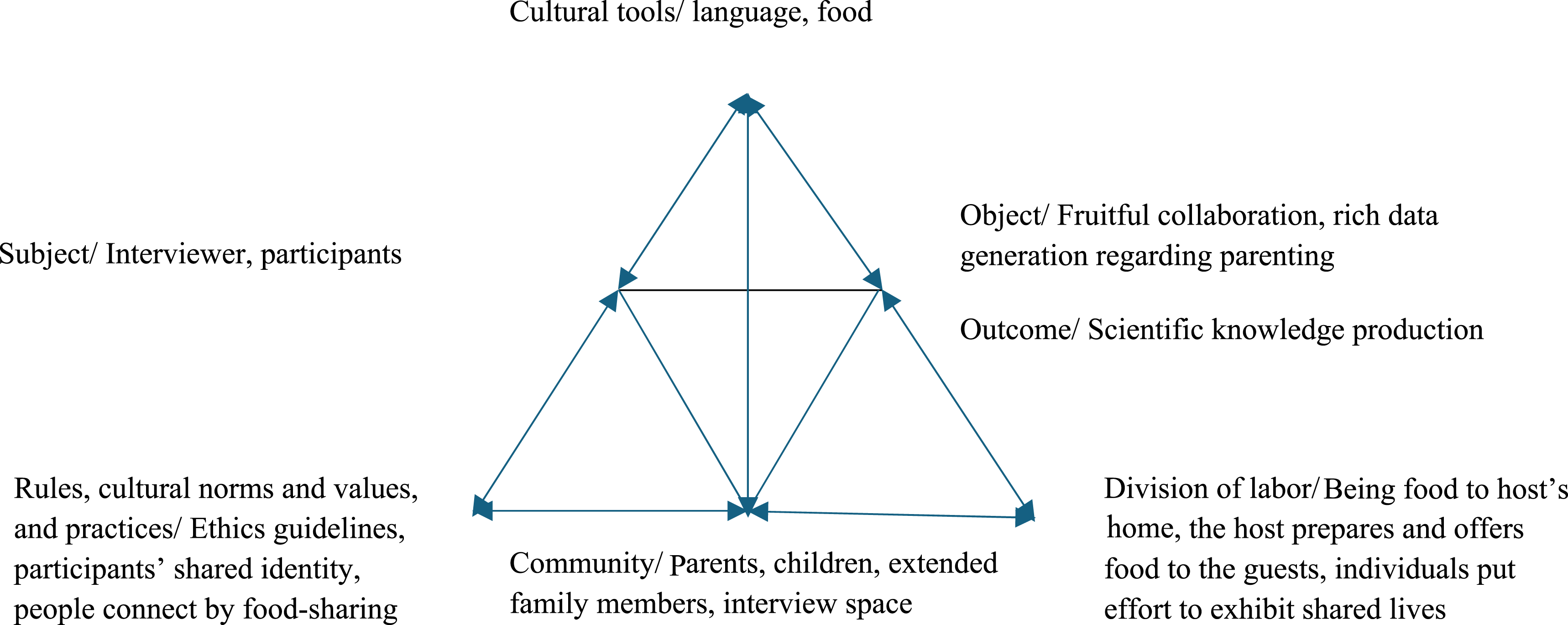
This study also resonates with Quijano’s (2000) theorization of coloniality, which posits that the coloniality of power continues to shape social relations even in postcolonial contexts. In Bangladesh, this is reflected in ethics frameworks that privilege Euro-Western models while neglecting cultural specificities and contextual variations, thereby reinforcing Eurocentric knowledge systems and marginalizing diverse ontologies of human existence. Addressing this requires developing contextually grounded ethical frameworks, which would mark a step toward decolonizing epistemology through de-Westernization (Mignolo, 2011) and re-indigenization (Mendoza, 2020).
Positioning the Authors’ Interests
The first author’s (UHJ) cultural-historical background is rooted in Bangladesh. Being shaped by their upbringing, socialization, academic and professional experience, this background provided unique insights into cultural sensitivity while researching the parenting experience of Bangladeshi mothers in Mirpur, a middle-class residential area in Dhaka City. The first author’s academic interest in researching intergenerational continuity of parenting practices is grounded both in their scholarly background and native connection to Mirpur. The co-authors’ interest in this study was grounded in their effort to build the Global South knowledge system and ethical standards.
Methodology
The study employed a qualitative methodology with a hermeneutic phenomenological design grounded in social constructivism. Hermeneutic phenomenology provided a reflexive framework suited to examining parenting practices, repurposing Ricoeur’s (1981; 2016) text-focused philosophy to explore lived experience through rigor, reflexivity, and interpretive depth. Since parenting practices are often habitual and culturally variable (Bornstein & Cheah, 2006), this approach offered a contextually appropriate means of investigating both routine practices and underlying beliefs (Gadamer, 1993; Habermas, 1984). One substantial challenge while designing the study was the lack of contextual studies on parenting practices in Bangladesh, which limited the available literature to guide the research design and inform contextually appropriate best practices.
Sampling
Socio-Demographic Characteristics of Participants
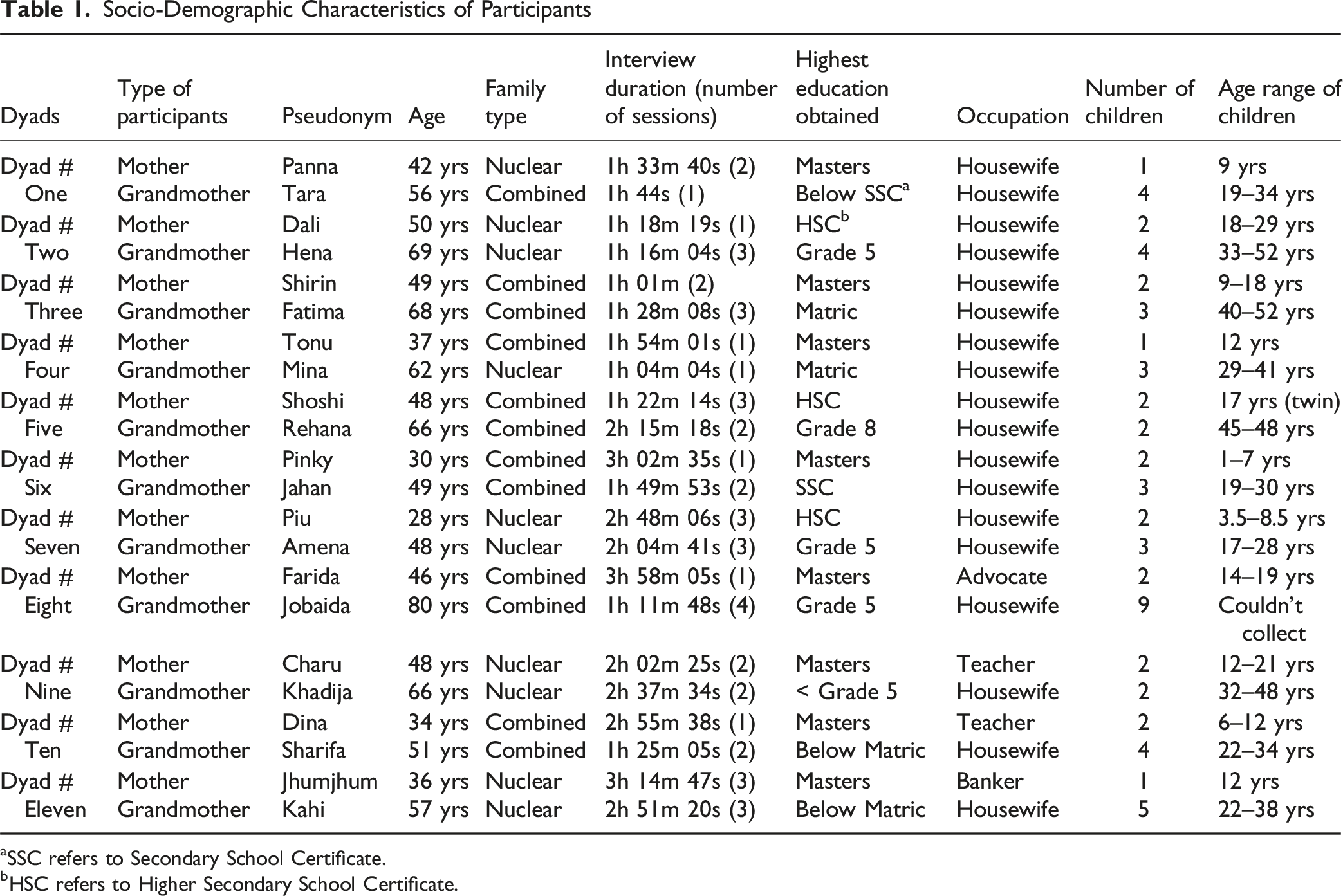
aSSC refers to Secondary School Certificate.
bHSC refers to Higher Secondary School Certificate.
Recruitment
Despite its multicultural diversity, the region retains patriarchal norms such as gendered parenting—seen as women’s responsibilities—and the expectation that newlywed women reside in the husband’s family home (Chen, 1986; Kandiyoti, 2002). These practices complicated the identification of mother–grandmother dyads living nearby. Drawing on the first author’s familiarity with the area, recruitment was facilitated through a women-only cooperative society in Mirpur, a trusted local institution. With the support of Ms. Rabi 1 , a key member of the cooperative, participant recruitment was successfully achieved, underscoring the importance of local collaboration in field research.
Ethics Compliance
Ethical clearance was granted by the Human Research Ethics Committee (non-medical) of the University of the Witwatersrand, South Africa (Protocol number: H16/06/38) and the Ethical Review Board of the University of Dhaka, Bangladesh (Project number: PH160603). Written informed consent was obtained from all participants except one grandmother participant, who provided verbal consent due to distrust of signing formal documents; this was accommodated in accordance with ethical considerations and cultural context. Her verbal consent was audio-recorded. Pseudonyms were assigned to all participants, and any identifiable information was concealed when reporting the data to maintain confidentiality.
Voluntary Participation
The local resource person, Ms. Rabi, facilitated initial contact by phoning prospective participants and connecting them to the first author (UHJ), who explained the study, addressed questions, clarified voluntary participation that their participation (or non-participation) had no bearing on the affiliation with the cooperative, and assessed eligibility, including grandmother accessibility. Rapport building began at this stage, and interviews were scheduled by phone. In line with cultural norms of chaperoning (Jasmine, 2025b), Ms. Rabi accompanied the first author to referred participants’ homes for initial interviews, while referees in snowball sampling often did the same to facilitate rapport and to ensure UHJ’s safety in participant’s family environment. Missed appointments were considered voluntary withdrawal after three unsuccessful attempts, reflecting local communication practices (Bari et al., 2021). This process underscores the significance of gatekeepers and cultural sensitivity in ethical recruitment and participation in Dhaka.
Research Setting and Data Collection
During the pilot phase, participants declined invitations to a formal interview setting, possibly due to financial and time constraints. Consequently, UHJ conducted home-based interviews, which aligned with cultural expectations of hospitality and enabled participants to balance family duties while engaging in the study.
Data were collected over a one-year period through semi-structured interviews with 22 participants (11 mother–grandmother dyads). Four other dyads were excluded from the study due to participants' availability constraints or health-related considerations. Interviews lasted between 1.5 to 4 hours and were scheduled flexibly, sometimes spanning over multiple days, to accommodate participants’ routines and availability. Participants granted consent for interviews to be recorded, and the interviews were conducted in the native language, Bengali. The semi-structured format allowed exploration of parenting across generations, while acknowledging potential recall limitations, particularly among grandmothers (G1). Sharing language and culture enabled the interviewer to recognize subtle, culturally embedded brief or truncated responses, termed research silences (Hofstede, 1991; Kawabata & Gastaldo, 2015). Field notes documenting interview environment, preliminary hunches, and connections further supported data analysis.
Fieldwork Experience
This reflection elucidates the tensions between the researchers’ ethical obligations and participants’ resistance to the application of universal ethical principles in urban Bangladesh, highlighting how ethical practice was negotiated through relational approaches. Reflexivity played a role in navigating ethical and methodological decisions, particularly in adapting broad ethical provisions to the Bangladeshi contexts, where local norms often conflict with global standards. Flexibility and cultural mindfulness were essential to balance ethical integrity with respect for local customs. The study underscores reflexivity as critical to ensuring research that is both globally accountable and culturally sensitive, while safeguarding participants and researchers.
The Need for Gaining Trust of the Participants’ Family Members
Although the study received ethics approval requiring privacy and confidentiality of interview sessions, participants did not view parenting as a private matter, creating tension with conventional ethical standards. In Bangladesh’s collectivist context, UHJ had to engage with the participants and their family members, unlike Western practices where the interviewer only deals with the participants. During pilot interviews, initial attempts at closed-door sessions caused suspicion—particularly from a mother-in-law, who later declined referral of a potential participant. After the interviews, both the participants and UHJ faced extensive questioning from members of the extended family regarding the interview topics. Therefore, to respect collectivist norms, interviews were conducted with the door half-open, enabling family members to enter freely, a gesture aligned with cultural practices of courtesy and group cohesion. Sometimes, the family members entered the room only to greet the interviewer as their visitor. The interviewer did not restrict them from intruding on the interview session to eavesdrop, offer an opinion, or whisper something to the respondent.
This compromise balanced individual privacy with cultural expectations, preserved rapport, and enabled the collection of rich data. Although the study participants were initially open to having family members present during the interview sessions, 10 (four grandmothers and six mothers) were noticeably hesitant to discuss certain aspects of their experience without privacy. They managed this by briefly suspending discussion or by strategically sending family members out of the interview room. From an ethical consideration, the unanticipated family contributions were not incorporated into the dataset. When the information concerned the participants and parenting, the interviewer engaged the participants in discussion and incorporated their input as data. Following this means, UHJ aspired to an equilibrium in protecting the participants’ and the researcher’s dignity, minimizing elements of harm to the participants’ family relationships, and maximizing public benefit from the advancement of knowledge of contextual parenting practice (Mero-Jaffe, 2011). The approach exemplifies how contextual ethics and reflexivity can reconcile global standards with local realities.
Importance of Gender-Matched Interviews
In Bangladesh, cultural norms regulating interactions between non-related men and women (Jasmine, 2025a; Jasmine et al., 2025) complicate cross-gender interviews. Within this community, parenting is predominantly delegated to women, whose social value is closely tied to perceptions of mothering, rendering the topic particularly sensitive. Gender-matched interviews are thus recommended in such contexts (Jewkes et al., 2006; Nduna et al., 2016). Accordingly, this study employed women-to-women interviews, which fostered a sense of sisterhood, alignment with cultural expectations, and enhanced openness. This approach facilitated honest sharing, thereby enriching the depth of data (Mitchell & Oakley, 1976).
Understanding Participant Consents
None of the participants perceived signing the informed consent as valuable, stating that their verbal agreement was sufficient. Nonetheless, they complied with the interviewer’s request to sign. One participant, who had previously been deceived by her son into signing away her land without her knowledge, refused to sign the consent form but agreed to provide oral consent for audio recording, allowing the interviewer to adhere to research ethics principles. The lack of awareness about the significance of informed consent placed participants in a vulnerable position where their rights might be exploited. Participants raised in a communal social environment were often unfamiliar with individual rights to consent.
Impact of Researcher Positionality on Data Collection
The interviewer’s (UHJ) cultural background, gender, and expectant-mother status shaped field accessibility, rapport, and data generation. Their positionality as both a native and an expectant mother enhanced participant openness, while reflexive engagement and willingness to learn fostered a participatory, non-hierarchical environment conducive to the generation of rich, contextually grounded data.
Shared Meaning of Motherhood
In this community, similar to other contexts, bearing children is seen as the ultimate bond confirming the marital status of husband and wife (Morison & Macleod, 2015). During data collection, UHJ’s visible pregnancy often prompted participants to begin with advice on pregnancy and infant care, creating familiarity and shared experience that facilitated the interviews. While her clinical psychology training might have reinforced hierarchical boundaries, asserting them would have been both impractical and culturally inappropriate. Instead, her impending motherhood necessitated a flexible and humble stance that enabled the co-creation of knowledge through shared meanings, rather than rigid polarization between the researcher and participant (Turner et al., 2024).
Establishing Rapport Through Positionality
Although UHJ’s younger age would traditionally confer a subordinate social status, their professional background and role as a researcher elevated their position. By drawing on the shared meaning of motherhood and demonstrating openness to learning from participants, UHJ fostered a respectful, participatory environment. This relational approach encouraged participants to share personal and sensitive experiences, including accounts of premarital relationships—topics typically regarded as taboo. A more rigid researcher–participant boundary would likely have constrained such disclosures, whereas the relational, non-hierarchical relationships between the researcher and participants, indulging in shared meanings, proved more appropriate for this context (Gervais et al., 2018; Oakley, 1981).
Dual Relationships Reduced Distance
During one interview, a participant (Dina, a 34-year-old mother) became distressed and began to cry while talking about intense and stressful life events, prompting UHJ to provide emotional support and guided the participant through breathing relaxation techniques. While this constituted psychological first aid (Canadian Red Cross, 2019), it created a dual role as both psychological first aider and fieldworker; a position ethically discouraged in research. Although participants had been informed about free psychotherapeutic services during consent process, none pursued them, reflecting limited community interest in formal psychological care, likely linked to stigma (Dutta et al., 2022). Instead, participants actively sought informal advice from UHJ, reflecting cultural expectations of reciprocity and shared resources in collectivistic traditional societies where the community members hold a shared sense of self and resources. Similar ethical dilemmas have been documented between mental health professionals and clients in rural contexts where dual roles blur professional boundaries (Burgard, 2013; Gonyea et al., 2014; Selby-Nelson et al., 2022). Notably, three participants shared concerns about their children’s sibling jealousy and some other ‘difficult, strange, or unusual’ (on participants’ accounts) behaviors, and requested guidance. In response, UHJ provided behavioral advice after data collection to honor participants’ trust and avoid perceptions of research as an extractive activity. These exchanges illustrate the inevitability of dual relationships in collectivistic settings (Hofstede, 1991) and the limitations of international ethics frameworks that privilege individualistic principles while overlooking communal practices. It is noteworthy that transference, often associated with dual researcher–participant roles, was not observed; none of the participants attempted to contact the interviewer after the interviews. Learning about participants’ struggles, hopes, and aspirations for their children’s careers sparked the interviewer’s interest in following up on their children’s progress. After data collection, the interviewer occasionally inquired about updates when meeting Ms. Rabi in the community and even contacted one participant directly. The participant expressed happiness and appreciation for the interviewer’s attentiveness and ‘care to remember them.’ This suggests the possibility of countertransference. Future research should, therefore, explore the dynamics of transference and countertransference within the research process in communal social contexts.
Commensality in Research
The Latin proverb, “When in Rome, do as the Romans do,” underscores the importance of adhering to local customs. In Bangladesh, hospitality is closely tied to food, and sharing meals symbolizes hospitality and goodwill (Ahmed, 2007; Mookherjee, 2008; Sahlins, 1972). Unlike Western contexts—where bringing wine to a host is a typical gesture and the sharing of meals with a stranger is reserved for designated occasions—commensality in Bangladesh occurs more spontaneously and is deeply embedded in cultural norms (Jönsson et al., 2021). Cultural norms, rules, and traditions shape the research space and interactions among interviewers, participants, and others; disregarding them risks compromising research outcomes.
Initially, UHJ, guided by Westernized local and international ethical protocols, overlooked this practice. Participants would often offer meals, implicitly expecting UHJ to partake due to shared cultural background. This presented a professional dilemma: declining could risk offending participants and making the interview settings unpredictable, while accepting blurred boundary between researcher and guest, and complicating adherence to ethical research standards. At the beginning of the research process, UHJ had not anticipated how much of a role food would play.
After a few interviews during the pilot phase, UHJ embraced this local custom, reciprocating with token offerings of traditional Bangladeshi snacks (worth BDT 100–150, equivalent to USD 1.18-1.76). While a deviation from the original protocol, this gesture facilitated meaningful engagement, respected local norms, and posed minimal risk of undue influence given its modest value (Bangladesh Medical Research Council, 2020; Jewkes et al., 2012). The gesture was a way of improving the sense of mutual respect and recognizing a local custom. The experience raises questions about whether earlier interactions, when the custom was not observed, may have created any antagonism and affected participants’ openness.
Discussion
This paper analyzes fieldwork experiences from a parenting study in Dhaka, Bangladesh, highlighting the challenges of conducting contextually grounded research. It engages with debates on ethical and methodological appropriateness, emphasizing the need for culturally sensitive research methodology and ethics guidelines. Key challenges included navigating dual researcher roles, maintaining interview privacy, and accommodating collective participation in local cultural practices.
Ethical Conundrum Around Privacy
Privacy is a core principle of human dignity (Mero-Jaffe, 2011) and a central ethical concern in research, yet full privacy is often unattainable in qualitative studies (Allmark et al., 2009). In communal societies, local norms shape research methodology by informing permission for conducting research, participant interactions, and responses, sometimes conflicting with universal ethical guidelines (Mavhandu-Mudzusi, 2023). The research field expectations might also lead to a change of study settings and/or topics (Mavhandu-Mudzusi, 2023). Flexible, context-sensitive ethics are therefore essential, particularly in Bangladesh, where adherence to strict privacy is culturally inappropriate. This approach aligns with the Belmont Report’s principles of respect and beneficence and the Declaration of Helsinki’s principles of non-maleficence and justice, illustrating how familial beneficence can supersede strict privacy.
Universalist assumptions about interview privacy fail to account for culturally contingent practices; the extent to which individuals seek and are afforded privacy is contingent upon cultural and historical contexts (Rothe, 2022). While prior research addresses privacy of data sharing, data preservation, and reporting (for example, Allmark et al., 2009; Mero-Jaffe, 2011; Viberg Johansson et al., 2022), little examines privacy challenges from surrounding actors. This limits the conversation about the need for technical and ethically compliant data collection solutions.
By reporting the challenges of granting complete privacy of the interview space from surrounding actors, this study points to the need to adapt research methodology and ethical standards according to the cultural and historical background of the research sites and the research population. Participants’ implicit negotiation in sharing their lived experiences challenges colonial assumptions of privacy and power. Similar dynamics have been reported in India and Johannesburg, where interviews involved family presence, reflecting communal values (Manyatshe & Nduna, 2014; Sivakami & Rai, 2019). These findings underscore the importance of integrating indigenous philosophies of interrelationship, collective norms, and local traditions into ethical research practices, ensuring both respect and contextual appropriateness.
Ethics of the Dual-Role
Ethical debates in qualitative research frequently highlight the dilemma of researchers assuming multiple roles, particularly those of scientist and therapist (Allmark et al., 2009; Taquette & Borges da Matta Souza, 2022). Building rapport fosters honest disclosure, yet this trust can prompt participants to share personal issues beyond the study’s scope, positioning the researcher as confidant or therapist. During fieldwork, UHJ's dual role as a researcher and psychologist arose when participants sought guidance on their children's behavioral issues.
Global North guidelines prescribe referral and strict maintenance of researcher–participant boundaries (Murray, 2003, cited in Taquette & Borges da Matta Souza, 2022). By contrast, communal contexts emphasize reciprocity and mutual sharing of resources (Burgard, 2013; Taquette & Borges da Matta Souza, 2022). In this case, UHJ’s professional expertise was perceived as a community resource, which could be expected to be shared as part of reciprocity and mutual sharing when UHJ was also sharing participants’ experience as a community resource. In cases, where participants’ concerns were minor, UHJ provided interim relief strategies, an ethically debatable but supported practice in the literature that suggests accepting deferring advice after the interview (Corbin & Morse, 2003; Eide & Kahn, 2008; Sivell et al., 2015). Such reciprocity aligns with the principle of beneficence (Meara & Schmidt, 1991) and helps to avoid perceptions of exploitation (Gervais et al., 2018; Gottlieb, 1993; Oakley, 1981).
During an exceptional moment of participant distress, UHJ administered psychological first aid (Canadian Red Cross, 2019) and empathetic listening to personal stories, although beyond the study’s scope. Although dual roles (as a psychological first aider and as a fieldworker) are generally discouraged, based on long-standing arguments and sensitizing about contextual factors requiring multiple relationships, American Psychological Association (APA) guidelines allow them if they do not compromise objectivity or cause harm (American Psychological Association, 2017). In this case, intervention appeared urgent and ethically defensible (Taquette & Borges da Matta Souza, 2022). Yet, despite longstanding debates and available decision-making models (Bourdeau, 2000; Gottlieb, 1993; Matocha, 1992; Mfecane, 2014; Posel, 2014), Bangladeshi ethics guidelines remain silent on dual or multiple researcher–participant relationships, underscoring the need for culturally sensitive frameworks.
Inadequacies of Current Ethical Guidelines
Beyond safeguarding participants’ rights, dignity, and well-being, regulatory bodies such as the BMRC exercise influence over research design through ethical oversight. Nevertheless, its 89-page guidelines provide no explicit framework for conceptualizing cultural sensitivity in the Bangladeshi context regarding informed consent, privacy, and researcher-participant relationships, leaving its interpretation and application largely to individual researchers. Although global standards emphasize the necessity of ethical protocols for the protection of participants, such guidelines often remain overly broad and generic, offering limited practical guidance for implementation in real-world research settings (Arifin, 2018). Especially in the case of informed consent to protect participants, contextualized ethical frameworks should emphasize educating participants about their consent rights, the implications of violating these rights, and the actions available when such breaches occur. Framing these ethical challenges through the lenses of CHAT and decolonial theory underscores the epistemic value of Indigenous Knowledge systems and the importance of incorporating them in regionalizing ethical regulations.
Directionality from CHAT Framework
Western epistemologies often position researchers’ dominance over the participants, imposing strict boundaries that prohibit personal sharing, and thereby undermine trust, and rapport with the participants’ community in collectivist cultures. In contrast, collectivist norms cancel distanciation and emphasize reciprocity - I will speak about us if you speak about yourself. CHAT underscores that interviews are social situations shaped by collective participation, requiring researcher sensitivity and reflexivity.
CHAT highlights parenting and interviewing as social activities that require collective participation within the community. To respect this, UHJ kept doors semi-open during interviews to balance participants’ privacy with family inclusion. Besides, UHJ obliged to the cultural norms of bringing food to the participant’s home, honored them as hosts, and accepted their hospitality from the role of a guest. UHJ did these as part of the collective participation and division of labor where they prepared and offered UHJ food, and UHJ put the effort of buying and bringing food to the participant’s home. These practices functioned as psychological and technical tools, transforming initial distance into trust and rapport that enabled meaningful knowledge co-construction.
Analyzing UHJ’s fieldwork experience in the CHAT framework directs us to four contradictions (represented with bolt signs in Figure 2): (1) Between research tools (ethics guidelines) and cultural norms, (2) Research tools (ethics guidelines) and division of labor/ dual role of researcher, (3) Research tools (ethics guidelines) and outcome (scientific knowledge construction around parenting activity system), (4) Outcome of researcher-activity system (scientific knowledge construction) and outcome of participant-activity system (living a harmonious life). These contradictions illustrate tensions between universalist ethics, which privilege rigid boundaries, and collectivist expectations of reciprocity and relational care. Flexibility and adaptation proved necessary to preserve rapport and avoid superficial data. Contradictions in the data collection activity system in a communal cultural setting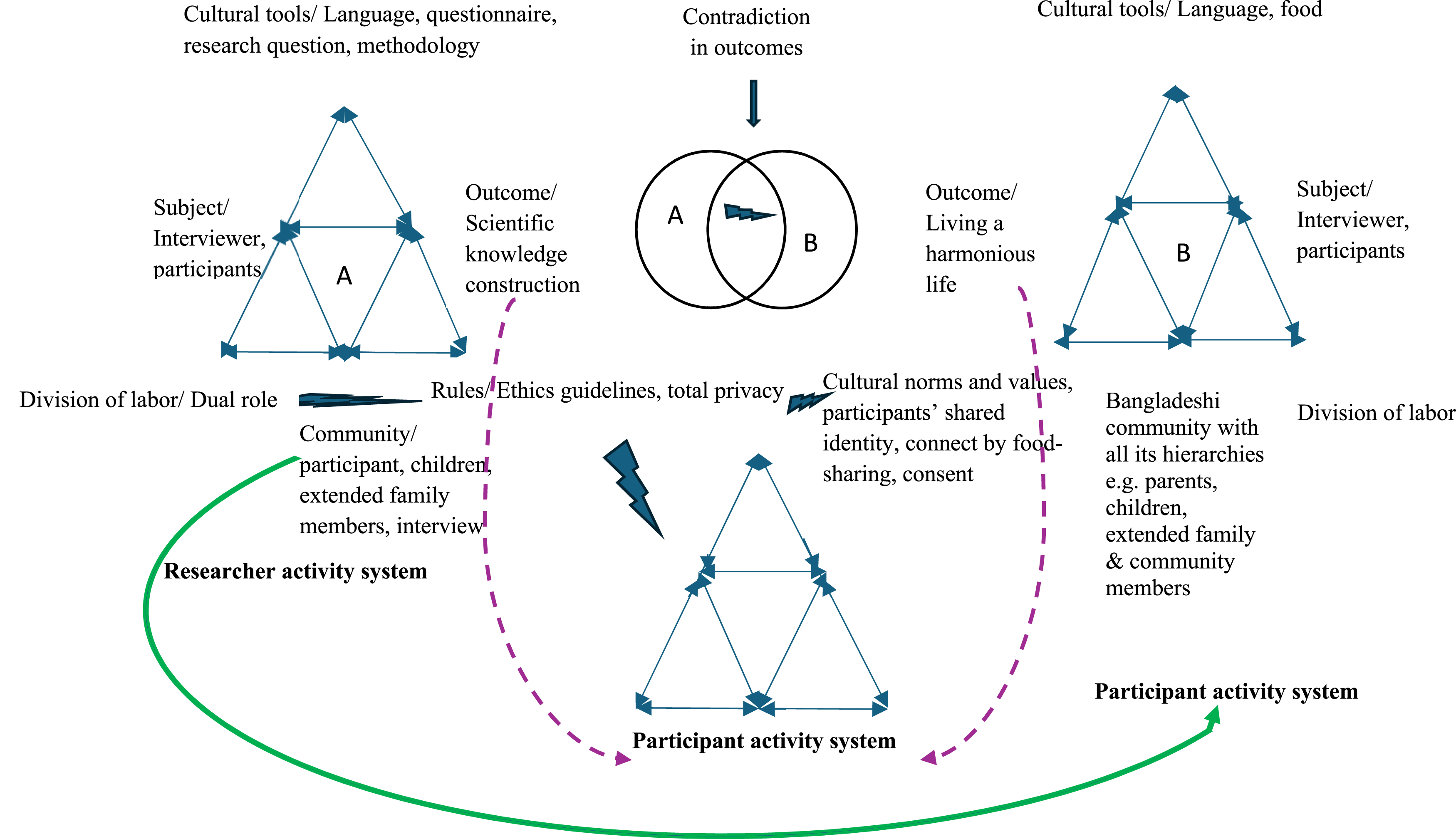
Through Bourdieusian reflexivity, researchers engaged in “interrogating the interrogation” (Bourdieu, 2017, p. 28), examining how their professional identity, cultural embeddedness, and motherhood intersected with participants’ expectations. This reflexive stance illuminated how such positionalities shaped interactions, as researchers negotiated consent and relational spaces where knowledge was co-constructed through reciprocity, shared meanings, and ethical sensitivity.
Conclusion and Recommendation
Analysis of fieldwork through the CHAT framework and decolonial lens calls for transforming Westernized ethical principles into regionally grounded frameworks that balance universal ethical principles and research methods with cultural norms, values, practices, and traditions. Future research should build on this attempt by documenting ethical dilemmas encountered in the field, critically examining their dynamics, and further exploring the cultural dimensions of transference, countertransference, informed consent, rapport building, dual or multiple relationships, and issues of privacy and confidentiality. Cultural adaptation of ethics would promote epistemic decolonization by challenging universalist claims embedded in Western ethical frameworks and foster global citizenship rooted in ethical sensitivity. After analyzing the contradictions between activity systems, Global South literature, and debates on epistemic injustice, we conclude by posing a critical question: Should researchers strictly adhere to Western-informed ethical standards at the cost of data quality, when beneficence and non-maleficence could still be preserved through regionally grounded guidelines that integrate local traditions and cultural values?
Footnotes
Acknowledgments
The support of the DST-NRF Centre of Excellence in Human Development at the University of the Witwatersrand, Johannesburg, in the Republic of South Africa, towards this research is hereby acknowledged. Opinions expressed and conclusions arrived at are those of the author and are not to be attributed to the CoE in Human Development. We thank the research collaborator, Ms. Rabi, for their assistance with sampling, and the research participants for their valuable time and for sharing personal experiences. We also thank Livhu Manyatshe for assistance with proofreading.

Funding
The authors disclosed receipt of the following financial support for the research, authorship, and/or publication of this article: UHJ has received grants from the DST-NRF Centre of Excellence in Human Development, University of the Witwatersrand, South Africa, for their PhD program from which this paper was produced. Grant number: D20190006 & D2020006. UHJ also received a research grant from the Ministry of Science and Technology, Bangladesh, under the Research and Development (R&D) Project 2019 # 39.00.0000.012.002.05.19- (Serial# 158). The funders were not involved in research design, data collection, analysis, or publication decisions.
Declaration of Conflicting Interests
The authors declared no potential conflict of interest with respect to the research, authorship, and/or publication of this article.
Data Availability Statement
Data are archived by Jasmine, U. H. (2025). Coded Interview Excerpts about Protective Parenting Practices in Dhaka, Bangladesh. Qualitative Data Repository. https://doi.org/10.5064/F6BBLHIM. QDR Main Collection. V1 (Jasmine, 2025c).
Statements and Declarations
Pseudonyms have been used for the participants and research collaborators.