






Abstract
Photographic arts-based methods (PABM) hold significant potential in substance use research, as they can support visual expression, participatory engagement, and nuanced understandings of lived experience. However, the methodological and ethical literature on PABM in substance use contexts remains fragmented, and the challenges associated with their implementation have not been systematically reviewed. In this scoping review, we addressed this gap by examining (1) the goals, study designs, and methodological approaches used in PABM studies on substance use; (2) the methodological, ethical, and practical challenges reported in this literature; and (3) the benefits and opportunities associated with the use of PABM in substance use research. We systematically searched MEDLINE, CINAHL, PsycINFO, Scopus and Google Scholar from 2000 onwards for peer-reviewed articles regarding substance use mobilizing PABM and thematically analyzed their content. From 3766 initial entries, we included 60 articles. Across studies, researchers used PABM to explore lived experiences of substance use, foster participants’ reflection and empowerment, and support advocacy and knowledge mobilization efforts. PABM were reported to facilitate engagement with sensitive and complex topics, overcome barriers to participation, and generate rich and contextualized data. At the same time, studies highlighted important methodological and ethical tensions, including navigating researcher-participant power dynamics, protecting participant safety and confidentiality, and ensuring responsible dissemination of images without decontextualization or harm. Attention to these issues emerged as central to the integrity and transformative potential of PABM. By mapping current practices, strengths and limitations, this review provides guidance for future research design, methodological rigor, and the responsible use of PABM in substance use research and policy.
Keywords
1. Introduction
Arts-based research (ABR) has been widely used to explore social phenomena, deepen understandings of human experience, challenge conventional academic norms, and engage communities, for example, through participatory and knowledge mobilization activities such as exhibitions (Coemans & Hannes, 2017; Greenwood, 2019; Wang et al., 2017). ABR encompasses a broad range of qualitative approaches (Wang et al., 2017), including visual arts, performance, creative writing, and photography. Among these, researchers have extensively mobilized photography through methods such as photo-elicitation, photovoice and photo-essay. Collectively, these approaches constitute photographic arts-based methods (PABM), which we define here as methodological and data collection tools involving the creation and interpretation of still images. PABM rest on the premise that human experience spans sensory, emotional, and intellectual dimensions and that photographs can support individuals in articulating and representing these complex layers of experience (Greenwood, 2019; Leavy, 2018).
Researchers have frequently used PABM with marginalized and structurally disadvantaged communities due to their potential to foster empowerment and promote social change (Wang et al., 2017). By placing image-making in participants’ hands, PABM create opportunities for individuals to document their realities, highlight strengths, and engage in critical dialogue. When paired with intentional dissemination strategies such as exhibits, these methods can extend knowledge mobilization beyond academia and reach broader audience, including policy makers (Wang & Burris, 1994). Research further suggests that participation in PABM can enhance self-awareness (Banyard et al., 2022; Budig et al., 2018), support the development of practical and research-related skills (e.g., photography, communication; Graham et al., 2013), and strengthen community connections (Budig et al., 2018; Li et al., 2025).
Central to PABM is the recognition that participants are experts of their own experiences and are uniquely positioned to generate knowledge that can inform practices, interventions and policies (Catalani & Minkler, 2010). Researchers have therefore used PABM to explore a wide range of complex and often stigmatized topics, including suicide (Ferlatte et al., 2019), sex work (Capous-Desyllas, 2014; Cheng, 2017), gender-based violence (Brännström et al., 2020), intimate partner violence (Banyard et al., 2022), sexual and gender minorities identity (Christensen et al., 2020), disabled women’s sexuality (Payne et al., 2016), living with HIV (Teti et al., 2021), and racism (Sethi, 2016). By combining visual and narrative elements, PABM can facilitate the exploration of experiences that are socially marginalized or difficult to articulate verbally (Zhang & Hennebry-Leung, 2023).
These strengths make PABM particularly relevant to substance use research. Complex social contexts often shape substance use in ways that may be difficult to capture through conventional research methods. Yet, the use of PABM in this field raises distinct methodological and ethical challenges. For example, obtaining genuine, voluntary consent can be challenging when participants are under the influence or navigating withdrawal, raising questions about their voluntariness (Ryan et al., 2019; UNODC, 2004). The visual nature of PABM also creates risks related to privacy and confidentiality, particularly in contexts where substance use is stigmatized or criminalized (Lloyd, 2013; Room, 2005; Ryan et al., 2019). Moreover, images that are disseminated without adequate context may be misinterpreted or sensationalized potentially reinforcing harmful stereotypes and contributing to further marginalization.
Despite a growing body of empirical studies using PABM in substance use research, the methodological literature examining their use in this field remains fragmented. To our knowledge, no review has systematically examined how researchers have mobilized PABM in substance use contexts, what benefits and opportunities these methods offer, and what methodological and ethical challenges they raise. We therefore conducted a scoping review to systematically map the existing literature on PABM in substance use research. Specifically, our objectives were to 1) describe how PABM have been used in substance use research, 2) describe benefits and challenges specific to using PABM in substance use research, and 3) examine the potential of PABM in advancing knowledge on substance use. By synthesizing this literature, we aim to support the development of ethically grounded, methodologically rigorous, and culturally responsive research practices.
2. Method
Guided by Arksey and O’Malley’s (2005) scoping review framework, the review addressed the following research questions: (1) What are the goals, study designs, and methodological approaches used in PABM to investigate substance use?; (2) What methodological, ethical, and practical issues and challenges have been reported when utilizing PABM in substance use research?; (3) What benefits and opportunities are afforded by the use of PABM in substance use research?
2.1. Search Strategy
A systematic literature search strategy was developed and executed in collaboration with the Université de Montréal public health librarian. The search strategy was designed to capture studies at the intersection of two key concepts: PABM and substance use. A combination of keywords and descriptors related to these two concepts was used across databases. Full search terms for each database are provided in Supplemental file 1.
The review included an electronic search of four research databases (MEDLINE, CINAHL, PsycINFO, Scopus) and a manual search of the first 10 results pages of Google Scholar, as relevance markedly declined beyond this point. Additionally, the reference lists of all included articles were manually reviewed for additional sources.
2.2. Eligibility Criteria
Studies were eligible for inclusion if they met the following criteria: 1) peer-reviewed primary research articles, 2) published in English or French from 2000 onwards, 3) focused primarily on substance use, and 4) involved the creation of photographic visual art by participants. We excluded studies that used PABM for therapeutic rather than research purposes, employed non-visual or non-arts-based methods or did not involve participants in producing photos. We also excluded nicotine from the list of substance use related key terms to reduce the high volume of results and refine the study given its distinct social meanings, patterns of use, regulatory frameworks, and harm-reduction paradigms. Motion-based image capture methods (e.g., film and video) and grey literature were excluded to maintain a manageable and conceptually coherent focus on PABM due to the volume and heterogeneity of eligible publications and challenges in systematic identification and appraisal.
2.3. Screening and Study Selection
Based on eligibility criteria, EG and MP or MG independently screened titles and abstracts using Covidence software for systematic reviews, followed by full-text review. In cases of disagreement, the reviewers discussed their interpretations of the article in relation to the inclusion criteria until they reached a consensus. OF acted as a third party if a consensus was not possible.
2.4. Data Extraction
Data extraction involved the identification and assessment of several study variables deemed relevant to the aims of the scoping review, including general study information (author(s), publication year, title, abstract); study context (country, setting); study characteristics (study’s aim/goal, objectives, theoretical framework, research questions, design, substance(s)); sample characteristics (population, eligibility criteria, recruitment and sampling method, sample size, age, gender, relationship to substance(s)); methodological information (description of PABM, rationale for using PABM, data sources, description of data analysis approach, reflexivity); benefits of arts-based methods, and challenges and limitations of PABM (methodological challenges, ethical challenges, study limitations); and knowledge mobilization (production and use of research knowledge that includes knowledge transfer, knowledge translation, and knowledge exchange). EG and MP reviewed each included article to extract the aforementioned information into a data extraction table. Both team members reviewed and validated one another’s data extraction tables for comprehensiveness and accuracy.
Following the stance that quality assessment is neither necessary nor possible in scoping reviews (Arksey & O’Malley, 2005; Peters et al., 2015, Peters et al., 2021), we did not conduct a quality assessment of the included articles. This scoping review focuses primarily on providing an overview of PABM use in substance use research.
2.5. Data Analysis
Data analysis was conducted by EG based on thematic analysis techniques. Using NVivo14 software, data extracted in categories a) rationale for using arts-based methods, b) aim of study, c) benefits of using the chosen methodology, d) methodological challenges, e) ethical challenges, f) study limitations, have been respectively and inductively coded. For study aims, rationales, and limitations, codes were organized into descriptive categories, whereas for reported benefits and challenges, codes were iteratively refined and grouped into interpretive themes. All codes and categories were discussed with MP and OF and finalized through consensus. Results were presented to the research team and during academic conferences for feedback and further refinement.
3. Results
3.1. Search Results
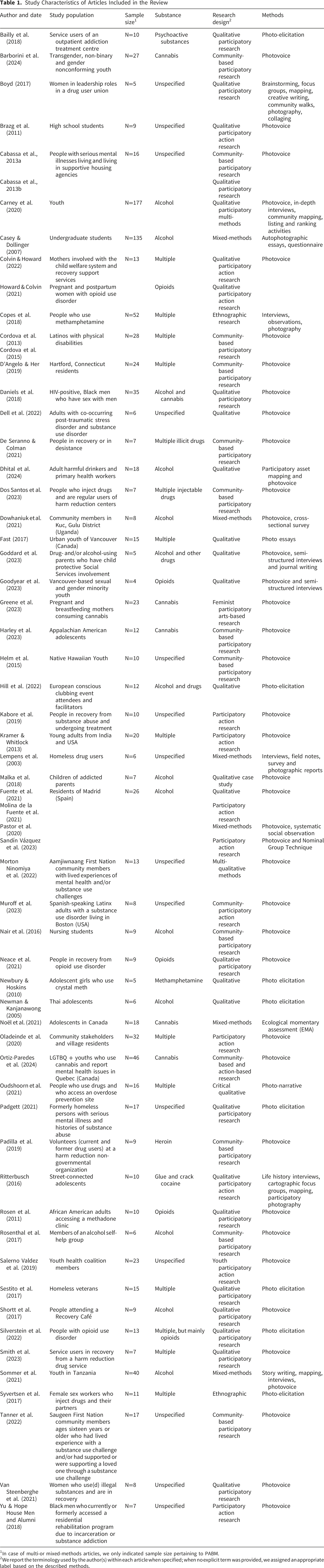
The search strategy yielded a total of 3,767 articles eligible for appraisal. Of these, 3,630 were excluded based on title and abstract screening and an additional 77 articles were excluded during full-text review based on the inclusion/exclusion criteria. Overall, the screening process resulted in a final pool of 60 included articles as shown in the PRISMA Flow Diagram (Figure 1). Table 1 presents some summarized characteristics of the included studies, drawn from the extraction table. PRISMA Flow Diagram Study Characteristics of Articles Included in the Review 1In case of multi-or mixed-methods articles, we only indicated sample size pertaining to PABM. 2We report the terminology used by the author(s) within each article when specified; when no explicit term was provided, we assigned an appropriate label based on the described methods.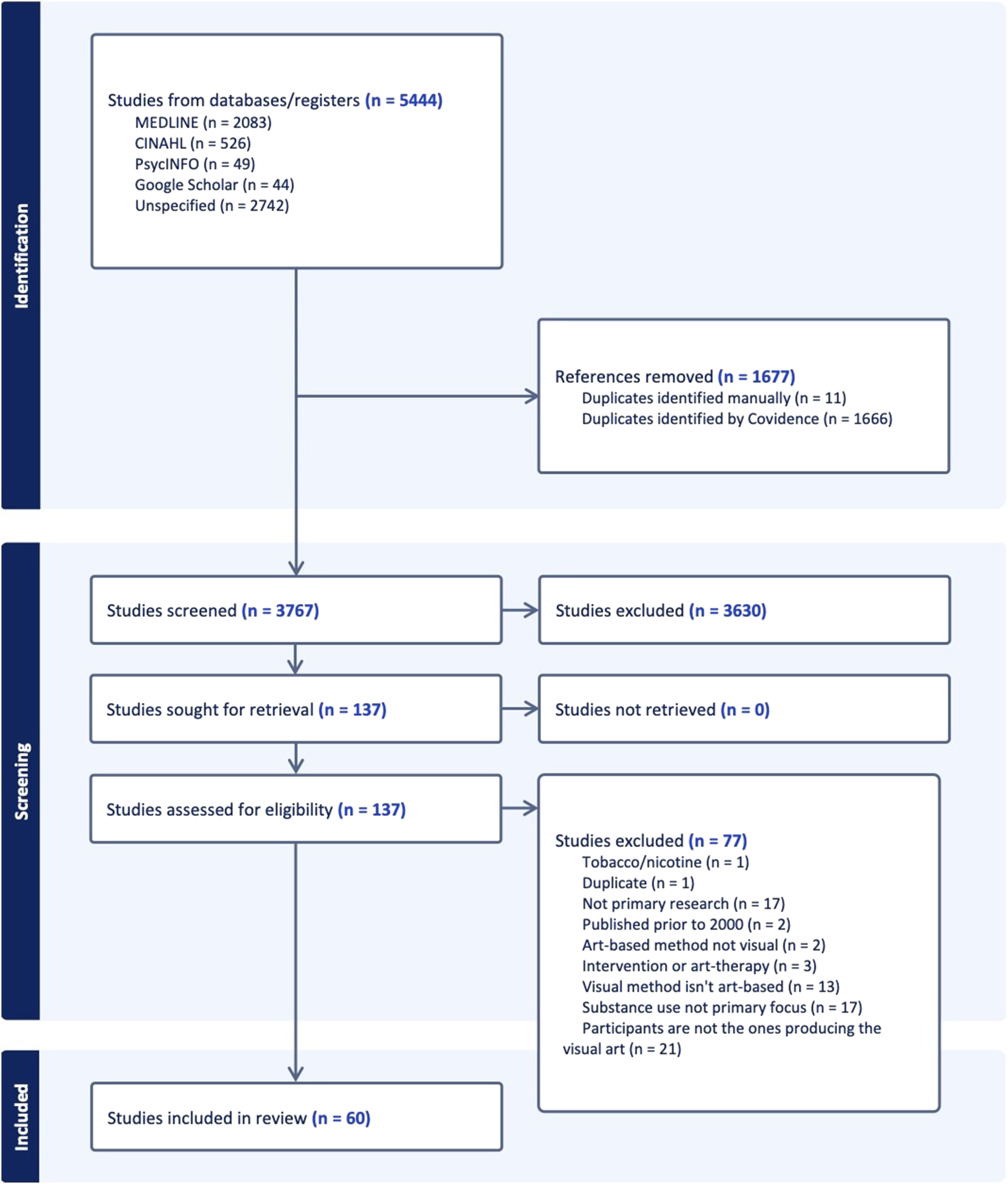
3.2. Studies’ Rationales
The authors of the included articles mobilized PABM for three main reasons. First, as a research tool, PABM were mobilized for their methodological and epistemic advantages, offering an innovative lens on substance use. Authors reported that PABM enabled the exploration of complex questions (Bailly et al., 2018; Dell et al., 2022; Helm et al., 2015) and integration of diverse perspectives (Fast, 2017; Newman & Kanjanawong, 2005). According to the authors, these methods allowed for deeper, situated understandings and critical insights into the studies’ specific topics (e.g., substance use experiences or service provision; Dos Santos et al., 2023; Cabassa et al., 2013a; Goodyear et al., 2023; Muroff et al., 2023; Newman & Kanjanawong, 2005; Padgett, 2021; Padilla et al., 2019; Silverstein et al., 2022; Smith et al., 2023; Syvertsen et al., 2017; Van Steenberghe et al., 2021), complemented existing data (Casey & Dollinger, 2007; Newman & Kanjanawong, 2005; Padgett, 2021; Pastor et al., 2020; Smith et al., 2023; Sommer et al., 2021), reduced biases in conventional methods (e.g., documenting experiences as they occur rather than relying solely on retrospective reporting; Noël et al., 2021), and circumvented limitations of verbal-based approaches (Barborini et al., 2024; Dowhaniuk et al., 2021; Fuente et al., 2021; Goddard et al., 2023; Goodyear et al., 2023; Muroff et al., 2023; Ortiz-Paredes et al., 2024; Padgett, 2021; Padilla et al., 2019). PABM also facilitated access to otherwise difficult cultural or social contexts, allowing researchers to engage marginalized or hard-to-reach populations who might alternately be excluded from research due to stigma, criminalization, or structural barriers (Goddard et al., 2023; Goodyear et al., 2023; Harley et al., 2023; Helm et al., 2015; Muroff et al., 2023; Padilla et al., 2019; Smith et al., 2023; Tanner et al., 2022).
Second, PABM were mobilized to foster participants’ empowerment (Cordova et al., 2013, 2015; D'Angelo and Her, 2019; Dowhaniuk et al., 2021; Goodyear et al., 2023; Greene et al., 2023; Helm et al., 2015; Howard & Colvin, 2021; Kramer & Whitlock, 2013; Padgett, 2021; Sandín Vázquez et al., 2023; Sestito et al., 2017; Shortt et al., 2017; Smith et al., 2023). Empowerment strategies included engaging marginalized participants as active research leaders (De Seranno & Colman, 2021; Dos Santos et al., 2023; Harley et al., 2023; Oudshoorn et al., 2021; Shortt et al., 2017), recognizing participants’ lived expertise (Bailly et al., 2018; Howard & Colvin, 2021; Morton Ninomiya et al., 2022; Rosenthal et al., 2017; Van Steenberghe et al., 2021), and positioning participants as co-constructors of knowledge rather than passive data sources (Barborini et al., 2024; Salerno Valdez, 2019; Tanner et al., 2022). Centering participants’ priorities (Barborini et al., 2024; Brazg et al., 2011; Cabassa et al., 2013a; Fuente et al., 2021; Rosen et al., 2011; Tanner et al., 2022) was described as giving them greater control over the focus and conduct of the research process (Goddard et al., 2023; Goodyear et al., 2023; Helm et al., 2015; Malka et al., 2018; Padgett, 2021; Sandín Vázquez et al., 2023), and as challenging existing power dynamics between researchers and participants (Greene et al., 2023; Muroff et al., 2023; Tanner et al., 2022).
The third rationale reported by authors was to use PABM as advocacy tools, motivating participants to engage in action research on their realities (Dos Santos et al., 2023; Fast, 2017; Fuente et al., 2021; Kabore et al., 2019; Molina-de la Fuente et al., 2021; Rosen et al., 2011; Sommer et al., 2021) and, in some cases, taking ownership of the resulting knowledge (Greene et al., 2023). PABM were mobilized to amplify participants’ voices (Colvin & Howard, 2022; Dos Santos et al., 2023; Dowhaniuk et al., 2021; Goddard et al., 2023; Howard & Colvin, 2021; Kramer & Whitlock, 2013; Shortt et al., 2017) and diversify the depiction of their realities (Dos Santos et al., 2023; Rosen et al., 2011; Smith et al., 2023). This use of PABM was reported to generate compelling data (Casey & Dollinger, 2007; Dos Santos et al., 2023; Sestito et al., 2017) to support dialogue with policymakers (Boyd, 2017; Brazg et al., 2011; Colvin & Howard, 2022; Dell et al., 2022; Dos Santos et al., 2023; Molina-de la Fuente et al., 2021; Morton Ninomiya et al., 2022; Rosen et al., 2011; Sommer et al., 2021), and to catalyze action and dialogue for social change (Boyd, 2017; Dell et al., 2022; Dos Santos et al., 2023; Kramer & Whitlock, 2013; Muroff et al., 2023; Ritterbusch, 2016; Rosen et al., 2011; Sandín Vázquez et al., 2023).
3.3. Studies’ Goals
Included studies had practical, exploratory, descriptive, critical, or transformative aims. Studies with practical aims complemented other data types (Sommer et al., 2021), triangulated findings (Padilla et al., 2019; Pastor et al., 2020), informed other methods (Newman & Kanjanawong, 2005), or replicated past findings related to substance use (Casey & Dollinger, 2007). Authors of studies with exploratory aims examined elements, determinants, perceptions, and relationships within the lived realities of people using substances (Bailly et al., 2018; Barborini et al., 2024; Cabassa et al., 2013b; Carney et al., 2020; Copes et al., 2018; Dhital et al., 2024; Goddard et al., 2023; Goodyear et al., 2023; Greene et al., 2023; Harley et al., 2023; Hill et al., 2022; Muroff et al., 2023; Oudshoorn et al., 2021; Padgett, 2021; Shortt et al., 2017; Silverstein et al., 2022; Smith et al., 2023). Studies with descriptive goals reportedly aimed to provide detailed accounts of participants’ views, experiences, and attitudes toward specific topics in substance use (Colvin & Howard, 2022; Dell et al., 2022; Dos Santos et al., 2023; Kabore et al., 2019; Lempens et al., 2003; Morton Ninomiya et al., 2022; Nair et al., 2016; Ortiz-Paredes et al., 2024; Padilla et al., 2019; Ritterbusch, 2016; Rosen et al., 2011; Rosenthal et al., 2017; Salerno Valdez et al., 2019). Studies with critical goals aimed to critically reflect on research topics and processes (Boyd, 2017; D’Angelo & Her, 2019; Howard & Colvin, 2021; Kramer & Whitlock, 2013; Silverstein et al., 2022), while transformative studies aimed to promote social change (Ritterbusch, 2016), engage participants in advocacy (Brazg et al., 2011; Cabassa et al., 2013a; Howard & Colvin, 2021; Oladeinde et al., 2020), and identify strategies for action (D’Angelo & Her, 2019; Sandín Vázquez et al., 2023; Tanner et al., 2022).
3.4. Benefits
3.4.1. Therapeutic Effect
Several authors noted the therapeutic benefits associated with participation in PABM (Fast, 2017; Lempens et al., 2003; Muroff et al., 2023). The process of creating photographic representations of their realities enabled participants to externalize personal narratives (Dos Santos et al., 2023; Lempens et al., 2003; Yu & Hope House Men and Alumni, 2018) and gain emotional distance from difficult and distressing topics (Malka et al., 2018), and facilitate open discussion (Cabassa et al., 2013a). Accordingly, photography supported the expression of experiences that are often inaccessible through words (Boyd, 2017; Cabassa et al., 2013b; De Seranno & Colman, 2021; Goddard et al., 2023) and fostered embodied engagement by making sensory and effective dimensions of experience more present (Boyd, 2017; Fast, 2017). This introspective, private space (Dos Santos et al., 2023) gave participants–often marginalized and rarely offered opportunities to speak openly–a chance to voice emotions and experiences (Barborini et al., 2024; Colvin & Howard, 2022; Dos Santos et al., 2023; Newbury & Hoskins, 2010). According to Rosen et al.(2011), photo-taking could also evoke meaningful memories, strengthening connections with people, places, and objects.
3.4.2. Community Connection
Research teams using group-based formats, as is often the case in photovoice, reported affirming and relational benefits, noting that these approaches fostered connection within safe, stigma-free environments (Kramer & Whitlock, 2013). Authors reported that sharing photos and stories helped participants see their experiences as less isolated (Newman & Kanjanawong, 2005; Van Steenberghe et al., 2021), promoting openness, validation, and much needed solace (Lempens et al., 2003; Malka et al., 2018; Van Steenberghe et al., 2021). The group dynamic further encouraged belonging and community building (Dos Santos et al., 2023; Rosen et al., 2011; Van Steenberghe et al., 2021).
3.4.3. Improved Engagement
Some authors framed PABM as an intervention with transformative potential (Colvin & Howard, 2022; Ritterbusch, 2016). Reflecting on how to visually capture lived experiences was described as temporarily diverting attention away from substance use (Van Steenberghe et al., 2021), while developing photography skills and engaging in creative expression could support self-esteem (Malka et al., 2018). Multi-session projects offered structure, fostering commitment and a sense of accomplishment (Padilla et al., 2019). Many authors reported PABM was enjoyable and motivating for participants, aiding engagement of hard-to-reach populations like people using substances (Boyd, 2017; Brazg et al., 2011; Cordova et al., 2013; De Seranno & Colman, 2021; Helm et al., 2015; Kramer & Whitlock, 2013; Rosen et al., 2011).
3.4.4. Enhanced Agency
Beyond engagement, some authors described agency as a key benefit of PABM participation. Sommer et al. (2021) and Van Steenberghe et al. (2021) explained how creative and expressive modalities enabled participants to articulate experiences, exercise self-determination, and develop greater self-awareness. Incidentally, Oladeinde et al. (2020) reported improvements in practical skills and reflective capacities, contributing further to participants’ critical consciousness and self-concept. This control over photographic content and self-representation supported participants’ agency (De Seranno & Colman, 2021).
3.4.5. Fostering Participants’ Empowerment
Building on the exercise of agency, authors suggested that empowerment emerged through the process of knowledge co-construction (Colvin & Howard, 2022; D’Angelo & Her, 2019; Harley et al., 2023; Howard & Colvin, 2021; Nair et al., 2016; Ortiz-Paredes et al., 2024; Sandín Vázquez et al., 2023; Tanner et al., 2022; Van Steenberghe et al., 2021), in which participants are recognized as experts of their own reality (Howard & Colvin, 2021; Kramer & Whitlock, 2013; Ritterbusch, 2016; Shortt et al., 2017). Retaining control over what to photograph, discuss, and share (Padgett, 2021) ensured participant-centered knowledge (Copes et al., 2018; Rosen et al., 2011; Salerno Valdez, 2019) and genuine collaboration across all research stages (Dhital et al., 2024; Ortiz-Paredes et al., 2024; Smith et al., 2023; Tanner et al., 2022). Authors reported that this participatory control fostered a sense of freedom (Harley et al., 2023; Kramer & Whitlock, 2013; Newman & Kanjanawong, 2005) and empowerment, expressed through participants’ ability to decide how experiences were represented, guide discussions, and take active roles in knowledge generation (Bailly et al., 2018; Cabassa et al., 2013b; Cordova et al., 2015; De Seranno & Colman, 2021; Harley et al., 2023; Padilla et al., 2019; Ritterbusch, 2016; Sommer et al., 2021). Through these processes, PABM positioned people who use substances, who can usually be socially marginalized (Cordova et al., 2013), as central actors in both research (Cabassa et al., 2013b; Dos Santos et al., 2023; Ortiz-Paredes et al., 2024) and knowledge mobilization (Greene et al., 2023; Morton Ninomiya et al., 2022; Tanner et al., 2022).
3.4.6. Challenging Dominant Narratives
By controlling how their lives were represented, authors suggested that participants could counter stigmatizing portrayals of substance use (Boyd, 2017; Fast, 2017; Syvertsen et al., 2017) and present more authentic self-representations, moving away from sensationalist depictions of deviance (Boyd, 2017; Dos Santos et al., 2023; Ritterbusch, 2016). Sharing self-produced images could thus disrupt normative narratives, humanized people who use substances, and reduced stigma (Boyd, 2017; Copes et al., 2018; Ritterbusch, 2016; Silverstein et al., 2022).
Authors described how replacing hegemonic representations with nuanced, participant-driven visual narratives could contribute to public awareness and, in some cases, informed policymaking (Dos Santos et al., 2023; Muroff et al., 2023; Padilla et al., 2019; Shortt et al., 2017). Visual narratives were also reported to inspire other substance users (Tanner et al., 2022) and support calls for action. They could also contribute to destigmatization (Brazg et al., 2011), with PABM being described as a platform for personal expression and collective activism (Greene et al., 2023; Muroff et al., 2023; Tanner et al., 2022).
3.4.7. Participant-Driven Research Process Leading to Novel Results
Researchers mobilizing PABM often reported centering participants throughout the research process, from defining objectives to findings dissemination (Muroff et al., 2023). Unlike some traditional qualitative approaches, which may produce abstract or disconnected findings even when relying on direct quotations (Copes et al., 2018), researchers described PABM as affording participants greater control over the research agenda (Dos Santos et al., 2023; Oladeinde et al., 2020; Rosen et al., 2011). This redistribution of power was reported to generate unanticipated insights related to substance use that might not otherwise have emerged (Rosen et al., 2011; Smith et al., 2023).
3.4.8. Trust Relationship
By disrupting the hierarchical researcher-participant dynamic, authors argued that PABM could foster more equitable, trusting relationships (Barborini et al., 2024; De Seranno & Colman, 2021; Ortiz-Paredes et al., 2024; Ritterbusch, 2016; Sommer et al., 2021). This openness could encourage participants to embrace their role as experts and knowledge co-constructors (De Seranno & Colman, 2021), enabling deeper exploration of substance use and the collection of more authentic nuanced data. Such trust could recalibrate power dynamics and promote equality within substance use research initiatives (De Seranno & Colman, 2021; Ritterbusch, 2016).
3.4.9. Complexity of Research Inquiries
Authors suggested that PABM could effectively address intricate, multidimensional research questions about complex topics like substance use. For instance, cross-referencing participants’ photos with their narratives could add intertextual richness beyond what approaches relying solely on words can achieve (Boyd, 2017). In contrast to traditional methods heavily relying on verbal skills—which can limit participation and intimidate those uncomfortable with such expression—PABM were considered by researchers as offering a less restrictive medium, capturing nuances difficult to express verbally, which may also reflect embodied aspects of participants’ experiences, while also supporting subsequent discussion (Boyd, 2017; Cabassa et al., 2013a, 2013b; De Seranno & Colman, 2021; Harley et al., 2023; Malka et al., 2018; Newman & Kanjanawong, 2005).
3.4.10. Overcoming Barriers
Authors noted that PABM helped reduce obstacles commonly encountered in substance use research. Visual media created a degree of distance from lived experience (Malka et al., 2018), easing discussions of complex or contradictory feelings related to substance use (Syvertsen et al., 2017). Acting as a communication aid, photographs were reported to allow sensitive topics to be approached less directly compared to interviews (Dhital et al., 2024; Malka et al., 2018; Padgett, 2021), which was especially useful given the criminalization and stigma surrounding substance use. Images could thus be easier to share than verbal accounts, encouraging openness and engagement (Cabassa et al., 2013a; Harley et al., 2023).
3.4.11. Complementary to Other Types of Data
Authors emphasized how photographic data can validate self-reported information, supplement other sources (Casey & Dollinger, 2007; Silverstein et al., 2022), and support data triangulation (De Seranno & Colman, 2021; Dowhaniuk et al., 2021; Newman & Kanjanawong, 2005; Padilla et al., 2019). Researchers mobilizing multi- or mixed-method designs stated that combining PABM with other methods enabled deeper immersion in participants’ realities, revealing new conceptualizations and relationships between concepts related to substance use (Newman & Kanjanawong, 2005). Dos Santos et al. (2023) reported that PABM allowed for new forms of knowledge highlighting several intersecting perspectives, while Smith et al. (2023) considered it can strengthen analysis by clarifying conceptual connections. Overall, authors described how PABM provided creative, intimate space for marginalized individuals using substances, facilitating insights into individual and collective realities while accounting for structural influences on substance use (Sommer et al., 2021).
3.5. Challenges
3.5.1. Methodological Challenges
3.5.1.1. Organizational Challenges
Authors often reported practical constraints such as limited funding and high project costs (e.g., cameras, photo development, public display; Boyd, 2017; Cabassa et al., 2013a; Cordova et al., 2013; Sommer et al., 2021), lack of equipment (e.g., meeting rooms, cameras; Dowhaniuk et al., 2021; Silverstein et al., 2022), and the considerable time required to complete PABM projects (Cordova et al., 2013; Fast, 2017; Shortt et al., 2017). Logistical difficulties varied by health and cultural contexts (Greene et al., 2023; Ortiz-Paredes et al., 2024; Smith et al., 2023; Van Steenberghe et al., 2021). Recruiting and retaining participants was mentioned as particularly challenging given the unstable living conditions, traumatic experiences, and basic needs insecurity common among people using substances (De Seranno & Colman, 2021; Fuente et al., 2021), as well as substance effects that impaired focus (Padilla et al., 2019). These factors contributed to attrition and communication issues (Muroff et al., 2023; Yu & Hope House Men and Alumni, 2018).
Flexible and adaptable protocols helped address such issues (D’Angelo & Her, 2019; Muroff et al., 2023; Padilla et al., 2019; Tanner et al., 2022), but could also reduce data richness (e.g., replacing group with individual interviews eliminated collective dialogue; Howard & Colvin, 2021) or give an impression of improvised, less rigorous work (Fast, 2017). Critically, Smith et al. (2023) highlighted the lack of practical guidance for analyzing PABM data.
3.5.1.2. Power-Sharing Issues
PABM required researchers to facilitate rather than control discussions about participants’ photographs. Facilitation was complicated when participants under the influence forgot the meaning of their images (De Seranno & Colman, 2021), strayed from the research topic (Helm et al., 2015), or when group discussions were dominated by certain voices (Cordova et al., 2015; Oladeinde et al., 2020). Balancing clear instructions with leeway for participants to direct the process, without shaping content, was noted as essential yet difficult (De Seranno & Colman, 2021; Sandín Vázquez et al., 2023). Authors recommended guiding participants with optional prompts (Barborini et al., 2024) and supporting critical reflection without inducing distress (Shortt et al., 2017). This tension is particularly acute in substance use contexts, where participants can hesitate to photograph painful or vulnerable aspects of their realities to avoid retraumatization, leading to positively skewed portrayals (Sestito et al., 2017). Conflicting experiences, such as enjoying substance use while in recovery, were also described as challenging to represent. Researchers therefore had to navigate between idealized images, participants’ lived realities, and their own interpretations (Dowhaniuk et al., 2021).
3.5.1.3. Decontextualization
The polysemic nature of photographs made interpretation challenging, as images are inherently open to multiple meanings (Copes et al., 2018; Smith et al., 2023). When removed from their contextual narratives, photographs risked reinforcing harmful stereotypes or misrepresenting participants’ experiences (Copes et al., 2018). To mitigate this, authors emphasized discussing image meanings and their interpretations with participants and ensuring accurate representation in research outputs. While images reflected lived realities, research teams often shaped final representations for various dissemination processes, making co-construction and validation with participants essential for maintaining authenticity.
3.5.2. Ethical Challenges
3.5.2.1. Involvement Vs. Participation
Ritterbusch (2016) highlighted the ethical distinction between procedural participation (e.g., limited to data collection) and genuine involvement throughout the research process. PABM position participants as experts of their own realities that should be engaged beyond data generation (Ritterbusch, 2016). Yet, when participation is reduced to a set of techniques, tokenistic inclusion—such as symbolic consultation without decision-making power—risks reinforcing existing power imbalances. Genuine involvement was described as requiring tangible commitments, including adequate compensation (Oladeinde et al., 2020) and, in some cases, attributing knowledge ownership to participant communities (Dos Santos et al., 2023; Helm et al., 2015; Tanner et al., 2022). While Ritterbusch (2016) emphasized that participants should be included in analysis, review and dissemination to ensure that final outputs reflect their perspectives, few studies detailed how this was operationalized in practice.
3.5.2.2. Physical and Psychosocial Safety
Photo-taking in high-risk environments, as can be the case with substance use research, can expose participants to physical danger. Some teams restricted photographs of people, illicit activities, or unsafe spaces (Salerno Valdez et al., 2019), though this was perceived as limiting creative freedom and suppress participants’ voices by others (Dell et al., 2022; Rosenthal et al., 2017; Silverstein et al., 2022). Other strategies for navigating participants’ safety put forward by researchers included providing disposable cameras to deter theft (Sommer et al., 2021) or, conversely, encouraging the use of personal smartphones to align with common social practices and reduce reactivity among photographed subjects (Nair et al., 2016).
Authors similarly highlighted psychological safety, noting that sharing intimate aspects of life could foster connection but also trigger vulnerability, emotional distress, or substance cravings (De Seranno & Colman, 2021; Van Steenberghe et al., 2021). Authors reported that confronting stagnant circumstances through accumulated images could be discouraging (Dos Santos et al., 2023; Fast, 2017). They also noted that sustained, trusting relationships with participants allowed researchers to identify distress and offer support or referrals (De Seranno & Colman, 2021).
3.5.2.3. Confidentiality
Protecting privacy was a recurring challenge throughout articles, as photographs could expose participants and others (Dos Santos et al., 2023; Hill et al., 2022). This ethical challenge was especially sensitive in substance use contexts where illegal or stigmatized activities were depicted (Rosen et al., 2011). Strategies for increasing confidentiality included obtaining consent from photographed individuals (Harley et al., 2023; Smith et al., 2023), focusing on symbolic inanimate objects (Dos Santos et al., 2023; Fast, 2017), providing confidentiality training (Barborini et al., 2024; Colvin & Howard, 2022; Dell et al., 2022; Dos Santos et al., 2023; Goodyear et al., 2023; Nair et al., 2016; Smith et al., 2023), refraining from photographing illegal activities (Nair et al., 2016), and removing identifying features (e.g., altering photos; Malka et al., 2018). Yet, anonymization could obscure authorship and diminish recognition, a criticism raised by Fast (2017) of institutional ethics requirements.
Authors pointed out that photographs could also create “hypervisibility” (Barborini et al., 2024) or foster voyeurism, potentially reinforcing substance use stigma (Syvertsen et al., 2017). Several participants feared that taking photographs about their experiences might expose private or stigmatized aspects of their lives (Dos Santos et al., 2023; Malka et al., 2018). Some even declined to participate, fearing that the exposure of their substance user status might affect their access to services (Cordova et al., 2015). Still, Smith et al. (2023) stressed that restricting image sharing risked paternalism and undermined participant agency.
3.5.2.4. Researchers’ Responsibilities
PAMB researchers carried ethical responsibilities to maximize participant benefits, minimize risks, and advance social justice (Malka et al., 2018). While researchers may be tempted to showcase striking visuals as calls to action, several authors stressed the importance of representing diverse and lesser-acknowledged realities and avoiding reliance on dominant narratives (De Seranno & Colman, 2021), ideally through collaborative selection with participants (Syvertsen et al., 2017). Few studies reported knowledge mobilization strategies, leaving image sharing and its ethical implications largely unexamined.
3.6. Limitations of Included Studies
Some limitations reported by authors of the included studies mirrored those found in quantitative research, despite their contested relevance to arts-based approaches, including the absence of control variables (Cordova et al., 2013) or control design (Malka et al., 2018), limited generalizability (Barborini et al., 2024; Cabassa et al., 2013a; Colvin & Howard, 2022; Cordova et al., 2015; Daniels et al., 2018; De Seranno & Colman, 2021; Fuente et al., 2021; Harley et al., 2023; Helm et al., 2015; Kramer & Whitlock, 2013; Molina-de la Fuente et al., 2021; Morton Ninomiya et al., 2022; Nair et al., 2016) or replicability (Helm et al., 2015), small or skewed samples (Cabassa et al., 2013a; Harley et al., 2023; Nair et al., 2016; Noël et al., 2021; Oudshoorn et al., 2021; Sestito et al., 2017; Shortt et al., 2017; Van Steenberghe et al., 2021; Yu & Hope House Men and Alumni, 2018), and sampling bias through convenience or purposive recruitment (Barborini et al., 2024; Cabassa et al., 2013a; Colvin & Howard, 2022; Cordova et al., 2013, 2015; D'Angelo and Her, 2019; Dell et al., 2022; Dhital et al., 2024; Molina-de la Fuente et al., 2021; Muroff et al., 2023; Nair et al., 2016; Pastor et al., 2020; Rosenthal et al., 2017; Sestito et al., 2017; Van Steenberghe et al., 2021).
Other limitations were common to other types of qualitative research in substance use, such as social desirability bias (Cordova et al., 2013, 2015; Lempens et al., 2003; Muroff et al., 2023), incapacity to reach data saturation (Goodyear et al., 2023; Sestito et al., 2017), subjectiveness of the analysis (Cabassa et al., 2013a; Colvin & Howard, 2022; Lempens et al., 2003; Morton Ninomiya et al., 2022; Muroff et al., 2023; Padgett, 2021), and contextual disruptions (i.e., COVID-19 pandemic; Dhital et al., 2024; Goodyear et al., 2023; Oudshoorn et al., 2021; Smith et al., 2023; Tanner et al., 2022).
Some limitations were specific to visual ABR. Authors reported that PABM could not easily capture abstract or immaterial experiences (Shortt et al., 2017) and often represented only a single point in time (Smith et al., 2023). Participants sometimes hesitated to share images or their meanings (Kramer & Whitlock, 2013), while group formats common to PABM risked constraining individual perspectives (Daniels et al., 2018). PABM were also described as less convenient (Casey & Dollinger, 2007), more costly and time-consuming than other methods (Harley et al., 2023; Rosen et al., 2011; Yu & Hope House Men and Alumni, 2018), and, despite its rich data, unlikely on its own to substantially influence policy or decision-making (Dos Santos et al., 2023).
4. Discussion
The integration of PABM into substance use research offers considerable promise for deepening understanding and addressing entrenched stigma. Despite a growing body of empirical studies, the methodological literature examining the use of PABM in the field remains limited and fragmented. Until now, this intersection had not been systematically reviewed. This scoping review addresses this gap by mapping the existing literature, identifying methodological strengths, challenges, and limitations of PABM in substance use contexts, and highlighting underexplored populations, settings, and specific substance use issues.
Our scoping review compiles several key benefits of PABM. Participant-produced photographs were reported to complement other data sources, enable data triangulation, and capture the depth of lived experiences of substance use. Importantly, PABM were described as redistributing power toward participants by recognizing their experiential expertise, fostering trust, and supporting collaborative relationships—an especially critical consideration in substance use research, where people who use substances are frequently marginalized, surveilled, or excluded from knowledge production. The introspective and participatory components of PABM can have therapeutic effects, strengthen community bonds, and foster collective action as participants work together to highlight shared concerns and advocate for change. Given the pervasive stigma, criminalization and moralization surrounding substance use, PABM appear particularly well suited to examining these experiences in ways that are ethically responsive, relational, and socially grounded.
These benefits have also been reported in other types of ABR and community-based and participatory research (CBPR; Flicker, 2008; Fontaine, 2006; Minkler, 2005; Minkler & Wallerstein, 2011) allowing researchers to address complex inquiries and generate novel insights. What distinguishes PABM, however, is their visual and democratic character, which strengthens the ethical case for accessibility in research. Unlike methods that rely on forms of written or verbal communication, PABM allow participants to express themselves beyond words, capturing the multifaceted nature of substance use. The use of symbolism in PABM creates a distanced yet powerful representation of reality, allowing participants to express vulnerability without the constraints of verbal articulation. This distancing can be particularly important in substance use research, where direct narration may feel risky due to shame, fear of judgment, or concerns about legal or social repercussions. Through visual expression, participants can convey emotions and experiences—such as pleasures, harm, ambivalence, or recovery—that might have been difficult to articulate verbally. By taking photos, participants’ perspectives and stories take on a concrete and tangible form, making it easier to ascribe meaning to their experiences.
In contemporary digital contexts, taking or interacting with pictures has become commonplace, as most personal devices used daily (phones, tablets, computers, etc.) have cameras. Photography requires minimal training or artistic skill, making PABM more accessible to broaden participation, including among those uncomfortable with other art forms. Additionally, PABM offer creative strategies for knowledge dissemination through impactful images. These can be widely shared to raise awareness and promote social change, while also generating ethical tensions related to privacy, consent, and control beyond the research context.
PABM’ promises of empowerment and social change—concerns that are particularly salient in substance use research—are neither automatic nor inherently guaranteed. Critical scholars have been raising concerns about the rigor and misuse of PABM, the disregard of theoretical underpinnings and related ethical issues, particularly in photovoice (Gubrium et al., 2016; Liebenberg, 2018, 2022; Wang & Redwood-Jones, 2001). In substance use contexts—marked by stigma, criminalization, surveillance, and social exclusion—efforts to promote empowerment are both ethically imperative and methodologically challenging. PABM require participants to visually represent aspects of their lives rather than solely describe them verbally, a process that can feel intrusive and may reactivate trauma or emotional distress (Creighton et al., 2018; Wang & Redwood-Jones, 2001). These risks are heightened when research teams lack the necessary training or commitment to provide a trauma-informed approach (i.e., prioritizing participant safety and autonomy through ongoing consent, flexibility around disclosure, and safeguards against emotional and social harm). Without robust ethical reflexivity and participant-centered protections, PABM risk reproducing harm by re-traumatizing participants or exploiting their vulnerability for academic or advocacy purposes, rather than supporting meaningful empowerment or social change.
Empowerment is often named as key to PABM, but it cannot be reduced to simply offering participants the means to tell their stories. Drawing on Paulo Freire’s concept of critical consciousness (1970, 1974), genuine empowerment must involve fostering collective reflection on the structural, social, and political forces that shape substance use and the conditions surrounding it, such as criminalization, stigma, poverty, racism, and barriers to care. To achieve this, researchers must carefully plan their studies to foster critical thinking, meaningfully collaborate with communities, and maintain commitment to advocacy (Freire, 1970, 1974), all of which can be constrained by funding, time, and academic priorities. Without this critical engagement PABM can become performative rather than transformative, i.e., centering the visual aspect of photos without challenging the underlying structural issues. As a result, PABM participants might create powerful visual narratives without developing capacities to translate them into social change.
We were surprised by the scarcity and sometimes total absence of knowledge mobilization activities in the articles included in our review, as they are an essential part of PABM and CBPR (Jull et al., 2017). Only a few articles described their knowledge mobilization strategies and how they served the community. The strategies outlined were frequently broad and generic, raising questions about their potential to reach policymakers or other stakeholders and to foster social change. Several articles merely asserted that their findings could inform decision makers and policies, a phrasing that seemed clichéd and performative. We acknowledge, however, that our focus on primary peer-reviewed research potentially excluded literature solely on knowledge mobilization efforts. Knowledge mobilization initiatives might also not have made it in the final version of the published manuscript. Knowledge mobilization activities might also have taken place after the publication of the article. Researchers should plan, implement, report, and evaluate knowledge mobilization initiatives to enhance transparency, accountability, and real-world impact. However, post-dissemination follow-ups often receive insufficient attention, leaving participants at risk of feeling disillusioned, tokenized, or disempowered when findings are not translated into action or integrated into policy (Mitchell et al., 2018).
This scoping review reveals several recommendations and implications for future research. Researchers should incorporate strategies to cultivate participants’ critical consciousness, explicitly reflecting on the ethical dimensions of PABM in substance use research. Ethical protocols should address informed consent at multiple stages, participants’ autonomy, and their active role in decision-making—including when under the influence of substances. Surprisingly, the included articles did not interrogate participants’ capacity to consent in such contexts, representing an important limitation of documented ethical procedures. Future studies should clearly report how these considerations are addressed and how participants’ expertise and agency are integrated, as PABM are well suited to support reflection on consent and ethical decision-making. Future research could examine the role of technology in data collection, analysis, and dissemination, including the use of smartphones and social media to enhance engagement and broaden the reach of findings. These approaches must also address related ethical issues, such as digital literacy, privacy, and the secure storage and sharing of sensitive data.
Overall, our review highlights the broad applicability of PABM beyond substance use, extending to other populations and issues. The populations represented in the included articles experience overlapping vulnerabilities, such as homelessness and mental health issues. This breadth illustrates the versatility of PABM in capturing the interconnected social, cultural, economic, and political factors influencing substance use and, more broadly, individuals’ lives. Attending to these overlapping identities and structural conditions may further deepen understanding of lived experiences of vulnerability.
5. Conclusion
PABM hold substantial potential to engage marginalized communities and contribute to social change within substance use research. However, this potential is neither automatic nor guaranteed. The effectiveness of PABM depends critically on how power relations are negotiated, how critical consciousness is fostered, how ethical risks are anticipated and managed, and how knowledge dissemination is deliberately planned and executed. When these dimensions are insufficiently addressed, PABM risk becoming superficially participatory—producing compelling visuals without disrupting entrenched hierarchies or meaningfully empowering participants. To realize their transformative promise, researchers must engage in sustained methodological reflexivity, confront the limitations of their approaches, and commit to genuine, accountable collaboration with communities throughout all stages of the research process.
Supplemental Material
Supplemental Material - Photography-Based Methods in Substance Use Research: A Scoping Review
Supplemental Material for Photography-Based Methods in Substance Use Research: A Scoping Review by Emmanuelle Gareau, Maxi Gaudette, Jennifer Thompson, Michelle Pang, Phillip Joy, Rod Knight, Olivier Ferlatte in International Journal of Qualitative Methods.
Footnotes
Acknowledgements
The authors would like to thank Sylvie Fontaine, health sciences librarian at Université de Montréal, for their valuable assistance with the development of the search strategy.
ORCID iDs

Ethical Considerations
This study is a scoping review of previously published research and did not involve the collection of new data from human participants. As such, ethical approval and informed consent was not required.
Funding
This research was made possible thanks to a grant from the Canadian Institutes for Health Research (grant number 184593). OF is supported by a Junior 2 scholar award from the Fonds de recherche du Québec.
Declaration of Conflicting Interests
The authors declared no potential conflicts of interest with respect to the research, authorship, and/or publication of this article.
Data Availability Statement
All data included in this scoping review are publicly available in previously published, peer-reviewed literature.
Supplemental Material
Supplemental material for this article is available online.
References
Supplementary Material
Please find the following supplemental material available below.
For Open Access articles published under a Creative Commons License, all supplemental material carries the same license as the article it is associated with.
For non-Open Access articles published, all supplemental material carries a non-exclusive license, and permission requests for re-use of supplemental material or any part of supplemental material shall be sent directly to the copyright owner as specified in the copyright notice associated with the article.
