






Abstract
Increasing mental health challenges among young people call for support that is accessible, flexible, and tailored to their needs. Although digital health interventions (DHIs) present a promising approach, engagement in such interventions depends on users’ perceptions of the interventions’ credibility, trust, and relevance. Young people’s active involvement in co-creating DHIs designed for them is therefore essential; however, literature on digital health often inconsistently describes or critically reflects on such co-creation processes as well as choices for facilitating them. In response, this method-focused article contributes to implementation-oriented knowledge about using future technology workshops (FTWs) with young people and adult stakeholders in upper secondary schools in Norway, where developing DHIs served as the context of application, not the primary outcome. We report the implementation of four FTWs structured around three phases—critique phase, utopian phase, and implementation phase—and provide practice-based guidance on facilitating FTWs, including facilitator positionality, group dynamics, accessibility, safeguarding, and producing actionable workshop outputs. Our reflections draw on documentation generated during the facilitation process, comprising post-workshop audio reflections, planning and debrief meeting notes, iterative action plans, and the first author’s research diary. The workshops involved 55 pupils 15–19 years old, 14 adult stakeholders, and seven facilitators. Guided by hermeneutic phenomenology and informed by collaborative autoethnography and structured team reflection, we synthesized recurring methodological issues and traced how they generated adaptations across workshops. We highlight five methodological recommendations for implementing FTWs in school-based youth mental health contexts: (1) practicing humble facilitation, (2) promoting radical reflection, (3) designing for diversity, (4) ensuring emotional security, and (5) producing structured output. Together, the recommendations support meaningful youth participation and offer transferable guidance for facilitators conducting participatory, action-oriented research in sensitive settings. Further research should explore how FTWs function across different cultural, institutional, and thematic settings.
Keywords
Introduction
Increasing mental health challenges among young people call for support that is accessible, flexible, and tailored to their needs (Norwegian Ministry of Health and Care Services, 2023; World Health Organization [WHO], 2022). Digital health interventions (DHIs) present a promising approach by offering accessible, innovative ways to support young people with managing their mental health challenges (Liverpool et al., 2025). However, many digital health interventions (DHIs) for mental health struggle to sustain user engagement. This has partly been linked to limited end-user involvement in development, as interventions that are insufficiently shaped by lived experience may be perceived as less relevant, acceptable, or useful in the contexts of users’ everyday lives (Kopka et al., 2023; Weirauch et al., 2024). A participatory design is therefore recommended as a means to engage young people early and meaningfully in shaping DHIs (Bevan Jones et al., 2020). In this article, we explore future technology workshops (FTWs) as a participatory design method that facilitates ideation led by young people for future-oriented digital (mental) health interventions. This method-focused article reports what we learned about implementing FTWs with young people and adult stakeholders in secondary school settings. Although the workshops were conducted in the context of developing DHIs, the article’s primary contributions are methodological insights, not the outcomes of interventions.
Co-Creating Digital Health Interventions (DHIs) With Young People
In digital contexts, users’ participation can increase the relevance and credibility of the resulting solutions (Ito-Jaeger et al., 2023). Nevertheless, young people are rarely involved in the early ideation and conceptual development of those solutions, even though their lived experience can most strongly shape the direction of designing solutions during those stages of their development (Hopkins et al., 2025). Indeed, according to a recent scoping review, of 114 studies on smartphone apps for youth mental health, only 14 (12.1%) involved young people in the early stages of their development, and 56 studies (48.2%) reported no adult stakeholders’ involvement whatsoever (Figueroa et al., 2026).
Improving engagement and trust in DHIs for young people requires involving young people as well as relevant adult stakeholders early and meaningfully in design-related decisions. Such co-creation has become an important approach in health innovation that highlights the active involvement of users and stakeholders in shaping services and interventions. Related terms such as “co-design,” “co-ideation,” “co-production,” and “co-evaluation” are often used interchangeably, though each refers to different stages and depths of participation (Pearce et al., 2020). Building on Pearce et al.’s idea that co-creation seeks to produce actionable knowledge based on end users’ perspectives, in this article we use the term “co-creation.”
Research on youths’ participation in the UK has highlighted the importance of reflexivity, facilitator positionality, and the inherent messiness of collaborative processes (e.g., Kennelly et al., 2024; Khawaja et al., 2024). At the same time, evidence from digital health research indicates that co-creation activities and the extent of participants’ involvement are often inconsistently reported, which limits the transparency about how such processes are enacted in practice (Kilfoy et al., 2024). Conducting co-creation processes authentically, particularly with young people, requires deliberate facilitation and ongoing reflection in order to recognize assumptions, negotiate power relations, and ensure accountability for participants’ contributions—all work that can be supported by structured reflection-oriented tools for documenting facilitation and learning processes (Emke et al., 2024; Luguetti et al., 2023). Because enabling co-creation requires access to experiential knowledge on how to succeed in enabling people to create together, codifying and sharing experiential knowledge with others is a legitimate form of knowledge contribution.
For method-focused reflections to be practically useful, they need to be anchored in a participatory approach that both supports inclusive participation and produces outputs that can be carried forward. Youth participatory approaches span a range of formats, from youth advisory councils and human-centered design, co-design workshops to participatory arts, and youth-led participatory action research, differing in the degree of youth decision-making power and the kinds of outputs they are designed to produce (Ozer et al., 2020). We selected FTWs because they offer a structured, time-bounded participatory format that accommodates the constraints of schools while supporting mixed youth–adult participation and producing design-relevant output for future-oriented technology (Dauscher & Maleh, 2019; Vavoula & Sharples, 2007).
Future Technology Workshops (FTWs)
Die Zukunftswerkstatt (‘the future workshop’) is a structured design process originally intended to bring together individuals with shared concerns and/or interests to collaboratively address societal challenges, while also enabling them to negotiate the kinds of power differentials frequently experienced in groups (Jungk & Müllert, 1987). A key goal is to enhance the public’s participation in decision-making, particularly by empowering minoritized groups to actively engage in work to develop solutions, instead of leaving such decisions exclusively to politicians, civil servants, and/or experts (Vavoula & Sharples, 2007). Keeping with their political roots, they have become a valuable tool in design research, often situated in research through design framework (Frayling, 1993).
Used in various areas of research, future workshops are a form of critical utopian action research meant to inspire democracy (Egmose et al., 2020). They are often applied to explore what Rittel and Webber (1973) have dubbed “wicked problems”—that is, complex, value-laden challenges that resist clear definitions and simple solutions—including urban development and management (Dauscher & Maleh, 2019), the social sciences (Almine & Warning, 2020; Suh et al., 2024), and human–computer interaction (Zimmerman et al., 2007), in which they are often called “FTWs” (Vavoula & Sharples, 2007). Especially in Denmark, such future workshops, often called “future creating workshops” or “future creation workshops” (Egmose et al., 2020; Tofteng & Bladt, 2019), have been used to integrate the perspectives of children and youth in research on sensitive and/or unspoken topics (Alminde & Warming, 2020). More recently, in Germany, the digital adaption of FTWs on topics related to social inequality demonstrate their flexibility across different contexts and multiple platforms (Suh et al., 2024).
Phases of Future Workshops (Alminde & Warming, 2020; Jungk & Müllert, 1987)

Proceeding through those phases together affords participants in future workshops the opportunity to collaboratively listen to each other’s lived experiences and a space for social imagination (Egmose et al., 2020). In duration, a single future workshop can span 3 hours to 5 days depending on the theme and the participants, with the ideal group having 20 people but at least 10, for even smaller groups tend to lack the collective drive required for the overall process (Kuhnt & Müllert, 2006).
This article aims to contribute to implementation-focused methodological knowledge about using FTWs with young people and adult stakeholders in school settings in the context of developing DHIs. Practically, we provide guidance on choices about facilitating FTWs that support participation, accessibility, safeguarding, and actionable outputs. Because we explore digital mental health support—a field that lies within human–computer interaction—we draw on Zimmermann et al. (2007) and Vavoula and Sharples (2007) in calling the workshops “FTWs.”
Methods
Context
We conducted our study as part of the NEON Young Norway Study, an interdisciplinary mixed-methods project in Norway designed to explore the understanding and uses of recovery narratives by young people and their possible future technological applications in social impact games, interactive animation, and DHI. Undertaken in 2025 in collaboration with three educational institutions in central Norway, the four FTWs conducted in the study involved students 15–19 years old as well as adult stakeholders (e.g., teachers, mental health professionals, and politicians). Our study’s aim was twofold: to explore young peoples’ experiences with mental health challenges, help-seeking, and digital support and to inform the co-creation of a DHI.
Design
Given our interest in young people’s lifeworlds and experiences with digital tools, especially what they perceive to be missing and how they envision solutions based on their lived experience, we approached our study from a hermeneutic phenomenological perspective: a perspective that generally seeks to understand lived experience as it is interpreted and given meaning by participants within their everyday contexts (Laverty et al., 2003). Although our framework is rooted in Edmund Husserl’s idea of the lifeworld as the taken-for-granted background of experience (Gorichanaz, 2017), we chose to adopt a more interpretive stance aligned with Martin Heidegger’s notion of being-in-the-world (Gendlin, 1979), which emphasizes how relationships with technology and mental health are fundamental to how people exist and make meaning. We also drew on Hans-Georg Gadamer’s concept of the fusion of horizons (Gadamer, 1960; cited in Delanty & Strydom, 2003), which highlights how shared understanding emerges through dialogue that integrates different perspectives.
Each FTW, collaboratively planned as a one-day workshop, was organized by our planning team. A one-day format was chosen to strike a balance between thematic depth and participants’ ability to remain fully engaged. The planning team included the project leader from the overarching project, two researchers, and a doctoral student, all with clinical backgrounds in mental health and some with additional background in theater and the arts. Some team members also had lived experience with mental health challenges, whether personally and/or concerning relatives and/or friends, including their children. The team also maintained close communication with each school to ensure that their needs and their pupils were considered. Those efforts were formalized in an action plan that guided each workshop (see Supplementary File 1). On the day of the workshop, one or two members of the planning team were supported by one to four facilitators. Facilitators from municipal partners, all with extensive experience in mental health work, were included in three of the workshops.
Recruitment and Participants
To be eligible for the study, participants needed to be pupils, 15–19 years old, or adults with a background working with that age group and/or in information technology, innovation, or policymaking. All participants were also required to currently live in Norway and be proficient enough in Norwegian to engage in group discussions and reflective activities, which involved expressing ideas and understanding others’ perspectives.
Because the DHI being developed primarily targeted a youth population, we prioritized involving young people as participants in the co-creation process. Adult stakeholders were also included to contribute complementary insights based on their professional expertise and broader systemic perspectives.
To enable full-day participation (i.e., 4–6 hours) and ensure logistical feasibility, we recruited one to two school classes per workshop through the Norwegian school system. We contacted different upper secondary schools in central Norway, after which an informational meeting with the school administration or a teacher was held. To recruit adult participants, the project team contacted health care and municipal workers near the schools. The pupil populations of the schools ranged from less than 100 to approximately 1,000 pupils. One of the schools is located in a bilingual Sámi area and thus represents one of Norway’s indigenous populations. Workshops 3 and 4 were conducted at the same school.
Because the entire school class was recruited, attendance at the workshop was mandatory, whereas participating in the research was voluntary; pupils who did not consent to participate in the research still took part in the workshop activities, but no data was collected from them.
In the week before the workshop, an informational briefing was held that covered the project, what it means to participate in research, and a review of the information letter, after which each participant decided whether they wanted to participate in the workshop or in both the workshop and the research. To simplify the information letter’s content, we also offered a video explanation for Workshops 2–4. Participants less than 18 years old were encouraged to discuss participation with their legal guardians. For participants who were unavailable at the informational briefing, we offered information both via email and in person on the day of the workshop.
Overview of Participants by Workshop
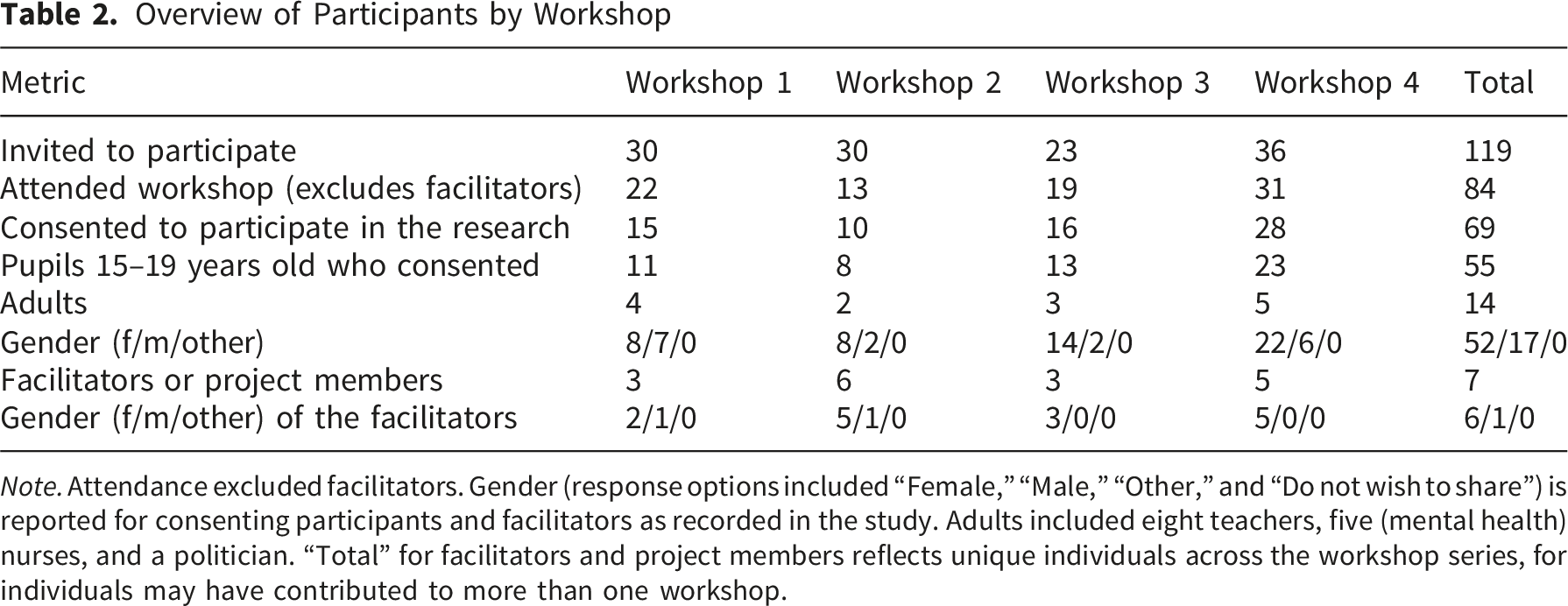
Note. Attendance excluded facilitators. Gender (response options included “Female,” “Male,” “Other,” and “Do not wish to share”) is reported for consenting participants and facilitators as recorded in the study. Adults included eight teachers, five (mental health) nurses, and a politician. “Total” for facilitators and project members reflects unique individuals across the workshop series, for individuals may have contributed to more than one workshop.
Despite initial confirmation, some adults and some pupils were absent due to illness or other commitments.
Materials
Each workshop was hosted in a room prepared with tables for small-group work, chairs, a welcome-and-registration table, a food-and-beverage station, and an arts-and-crafts station. The arts-and-crafts station, provided to support multimodal participation, enabled participants to externalize ideas visually (e.g., posters) and contribute without relying solely on verbal expression.
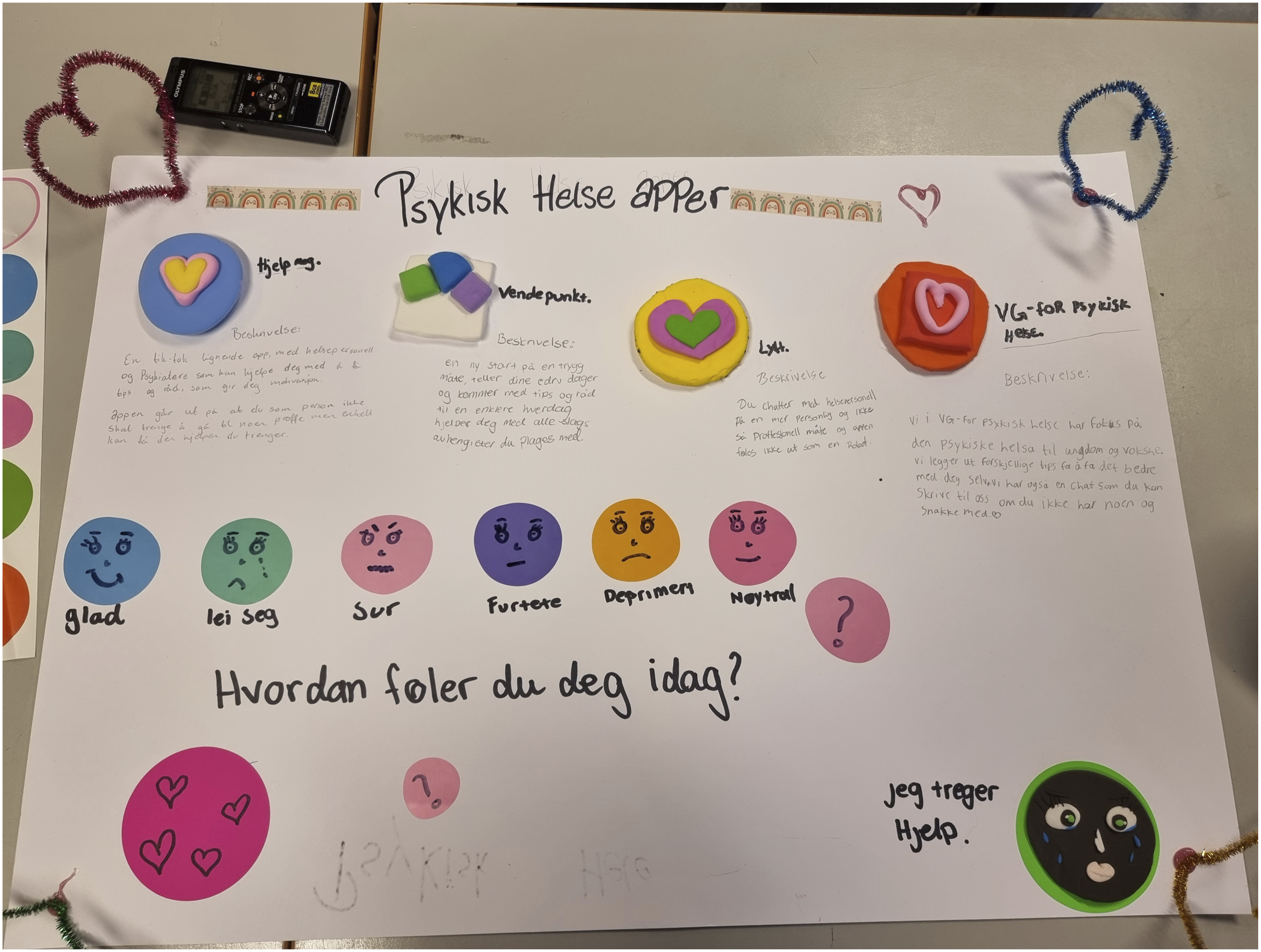
Workshop 1 was held in a nearby community center, whereas Workshops 2–4 were held in the schools. The community center was chosen due to practical and logistical constraints, including limited access to suitable rooms in the school at the time (e.g., availability and space requirements for small-group workstations). Holding Workshop 1 outside the school also helped create a setting that felt distinct from regular classroom activities (Figures 1 and 2). The arts-and-crafts station A poster from the utopian phase using various materials. The poster shows logos and functions for different digital mental health tools, including a “How do you feel today?” function and an “I need help” button
Procedures
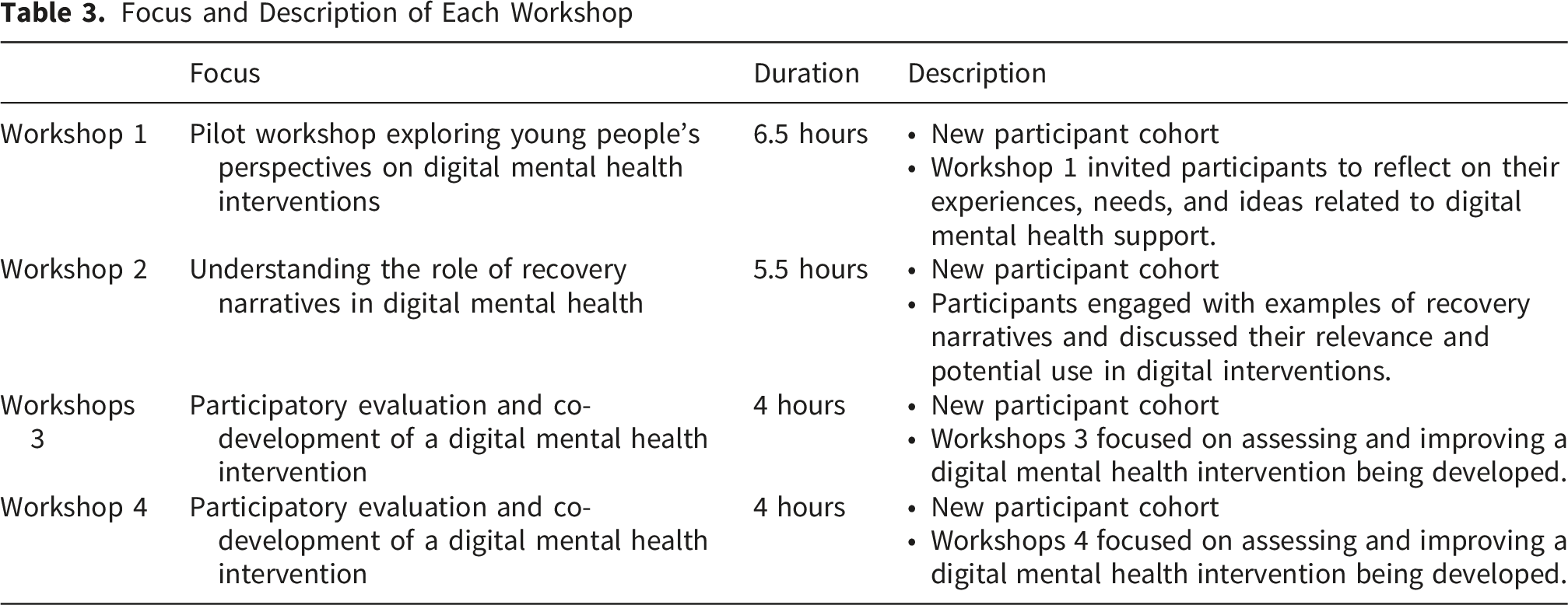
Focus and Description of Each Workshop
Upon arrival, all participants were registered, and their consent was verified. Next, seated in a circle, the participants were asked to state their names in order to introduce themselves and to lower the threshold for speaking up later in the workshop. We again informed participants about the overarching project before beginning different warm-up activities to acquaint everyone with each other (Lewrick et al., 2020). We subsequently divided the participants into small groups. To prevent accidental data collection from non-consenting pupils, pupils who had not consented to participate were placed in a separate small group. The other groups in Workshop 1 were decided at random; in Workshops 2 and 3, we had teachers help with creating workable groups; and in Workshop 4, the pupils chose their own groups.
Although all workshops followed a similar overall structure, Workshop 1 differed considerably in its level of facilitation and support materials and was treated more as a pilot workshop; it had fewer structured tools such as worksheets, and not every group had a dedicated facilitator. Those differences were addressed in Workshops 2–4 by including additional support materials and providing a dedicated facilitator for each group. A detailed overview of the activities in each phase across the four workshops can be found in Supplementary File 2.
During each workshop, we provided food and beverages. We ended each day with an evaluation and an expression of our appreciation to the participants.
Analysis
We conducted a structured reflective synthesis of the materials used to facilitate the workshops, including the facilitators and coauthors’ meeting overview log documenting meeting minutes, attendance, topics addressed, and successive iterations of the workshop action plans (see Supplementary File 2). The log shows repeated orientation, planning, and post-workshop debrief and reflection meetings, including same-day debriefings following each workshop.
Post-workshop reflections and debriefings, guided by consistent prompts aligned with Gibbs’s (1988) reflective cycle (i.e., description, evaluation, interpretation, and action), supported comparable reflection across repeated practice. All facilitators involved in delivering a workshop participated in the same-day debriefing or reflection meeting, which enabled shared interpretation across facilitator roles and perspectives.
We documented how those discussions informed changes in revisions of subsequent action plans, which yielded a trail of decision-related documents across the four workshops. Our analytic approach was informed by collaborative autoethnography, which emphasizes the collaborative sensemaking of researchers’ experiences through shared reflection and joint interpretation (Chang et al., 2013).
Ethics Approvals
Our public-interest study was designed to strengthen digital mental health services for young people in Norway. The Norwegian Agency for Shared Services in Education and Research confirmed compliance with data protection requirements (Ref. No. 545210). Ethics approval was obtained from the National Research Ethics Committee (Ref. No. 664616), and Sámi Health Research provided collective consent for Sámi participants (Ref. No. 1119960). The study also followed the Act on the Organization of Research Ethics Work [Lov om organisering av forskningsetisk arbeid](forskningsetikkloven) [Research Ethics Act] (LOV-2017-04-28-23), 2017 and the guidelines of the National Research Ethics Committees (2024).
Given the topic’s sensitive nature, participants were invited to contact the facilitators after the workshop if they had any concerns and/or emotional responses. We also shared the national hotline for mental health support.
Findings
In what follows, we discuss key methodological insights (e.g., the facilitator’s role, group dynamics, and the method’s accessibility) and offer reflections on conducting participatory research on a sensitive topic with a vulnerable group and on the utility and output of the workshops.
The Facilitator’s Role
Decisions About Explaining the Theoretical Foundations of FTWs
Entering the process, we were unfamiliar with the method and unsure how it would unfold in practice. Workshop 1 thus afforded many opportunities to learn. To begin, despite careful planning, we quickly realized how much we did not know about the method, the dynamics of facilitation, our own team dynamic, and how young people would respond in a school-based setting. In Workshop 1, we wanted to ensure that participants understood each phase of the method, its background, and the rationale behind the activities. Such necessary objectives created a somewhat rigid atmosphere, driven by our desire to optimize the process as well as legitimize it by stressing its transparency. For example, the pre-workshop briefing became a 45-minute PowerPoint presentation in which we walked students through the methodological background, explained each phase of the FTW step-by-step, and detailed the information and consent materials at length. Several students appeared to lose focus, and we received almost no spontaneous questions, which suggests that our emphasis on transparency may have increased cognitive load instead of reducing uncertainty.
However, as the workshops progressed, the facilitation-focused approach became more relaxed and responsive. It became clear that participants did not need to fully grasp the method’s theoretical underpinnings to engage meaningfully. For many, the workshop simply represented a “different kind of day” at school, so to speak, and an opportunity to explore ideas through creative, supported activities. The shift in perspective allowed for a more enjoyable, authentic experience, both for facilitators and participants, which highlighted the importance of trusting the process instead of overexplaining it. In turn, we reduced the pre-workshop briefing to approximately 15 minutes and focused especially on the value of participants’ expertise and on clarifying participation in the research.
Decisions Shaped by the Role and Responsibilities of Facilitators and Trust in the Team
In participatory workshops, the role of facilitators is shaped by their positionality, their experience, and the setting’s dynamics. Positionality was not uniform within the team of facilitators. Differences in professional background, our own upbringing and experiences as youth, confidence with the FTW method, comfort in working and speaking with young people, and communication styles meant that we did not enter the room with the same authority or ease. Positionality was also produced within the team; configurations of relationships and roles (e.g., project lead–master’s student), age differences, and different levels of familiarity with the workshop setting shaped how we coordinated, supported, and challenged one another during facilitation. In addition, some facilitators occupied overlapping roles in relation to the workshop context (e.g., a mental health professional already known to some pupils), which could have strengthened rapport but also raised questions about boundaries, expectations, and how facilitation was interpreted by participants. Such relational dynamics made reflexivity a practical necessity, not just an abstract principle.
As facilitators, we were not neutral observers; on the contrary, we were active participants in shaping the process, guiding discussions, and creating space for young people’s and adults’ stakeholders’ contributions. Such a multifaceted role repeatedly raised questions about how much to steer the process: when to intervene, when to step back, and how to balance the different personalities in the small groups that we were responsible for. Our inexperience with the method and, for some of us, to research itself added a layer of complexity. Although we brought professional experience from mental health and (creative) youth work, we were still learning how to navigate and balance the dual roles of facilitator and researcher within the method. As a result, tensions sometimes arose between wanting to support participants and needing to collect data, as well as between encouraging creativity and adhering to the workshop structure.
We had to ask ourselves, “Who are we in this space? How do our identities, our lived experiences, and our role in the workshop setting shape how we are perceived and how we perceive the participants? How do we ensure that all voices are heard, especially the voices of people who may be less confident or less engaged?” Reflecting on those questions became part of the research process and reminded us that facilitation is not a neutral guiding act but a relational, situated practice that requires continued reflexivity. In Workshop 1, the team of facilitators was still in the early stages of building trust and clarifying individual roles in the group and in the workshop setting. As a consequence, instead of being shaped and supported by the full team of facilitators, Workshop 1 was largely conducted by one facilitator, which proved to be exhausting for them. On that basis, we decided that subsequent workshops would be both created and conducted by the entire team of facilitators, which afforded a more balanced, collaborative process of facilitation in which each facilitator could contribute their unique strengths, perspective, and style. The shift enhanced the quality and depth of the workshops and strengthened the sense of team unity and mutual trust.
The team’s unity and mutual trust also supported us when, on an especially difficult workshop day, we struggled to engage participants. Team-based reflection, which we had established earlier in the process, then served as a way to decompress and identify challenges to adapt our approach in future sessions. In practice, we created a short check-in round with each other at the start of the day to acknowledge how every facilitator was doing and whether anybody had specific logistical or emotional needs that day. Other team-based reflection consisted of short check-ins during breaks and a post-workshop debriefing in which we each shared our impressions of the workshops, including what was demanding, what seemed to support or hinder engagement, and what we would change next time. We reflected not only on our practice but also on the conditions, power relations, and assumptions that produced it. For example, when engagement was low, we first reflected on the activity itself and subsequently examined the setting and our potential role in producing it. As we became more confident and coordinated as a team, we could celebrate our successes together more genuinely.
To create a safe environment in which mental health conversations could be understood and handled with care, we also ensured that all facilitators had backgrounds in either (youth) mental health or teaching. However, meeting young people in the workshops often forced us to confront our own biases, thereby making it crucial to create space for reflection and open dialogue about those conflicts. For example, before Workshop 2, we were alerted by the teacher and mental health workers to social difficulties in the class and therefore increased the number of facilitators. Although we anticipated that students might respond differently to the workshop format versus regular classroom activities, the level of engagement and enjoyment observed throughout the day reassured us that the workshop did not confirm the concerns raised in advance.
Language and accent also played a role in how we experienced facilitating the workshops. One facilitator, a German speaker with a noticeable accent, encountered occasional challenges in communication. Their accent sometimes made understanding instructions difficult for certain pupils, particularly ones with immigrant backgrounds who were used to the local accent only. At the same time, being an immigrant also helped the facilitator to connect with those same participants. The experience underscored the importance of using clear, simple language, as well as visual aids and co-facilitation strategies, to ensure that all participants could follow along and contribute meaningfully. Such strategies informed practical design-oriented decision-making to reduce reliance on spoken instructions by adding written prompts and structured worksheets.
We responded to those challenges in designing the other three workshops, especially by introducing more written materials and structured worksheets. Those tools supported clearer communication and allowed participants to engage more independently with the tasks, which cultivated a more inclusive, self-guided workshop environment.
The most crucial adjustment between Workshop 1 and the other workshops was the decision to assign one facilitator per small group. That adjustment allowed facilitators to forge closer connections with participants, respond more flexibly to group dynamics, and better support pupils who were not confident and/or needed guidance. Unlike in Workshop 1, in which all groups worked in a single large room with fewer facilitators, the setup in Workshops 2–4 created a more contained, manageable environment for both participants and facilitators. It also helped to mitigate challenges related to language, communication, and power, because each facilitator could adapt their personal style to their group’s specific needs.
Group Dynamics
Decision to Recruit Through Schools: Building on Existing Relationships and Group Dynamics
Recruitment via upper secondary schools presented specific challenges for participation, engagement, and group dynamics. Because participation was mandatory due to the educational setting, students who did not consent to the research component were present nevertheless, which created an imbalance in engagement. The imbalance may not have directly related to the workshop or the research but instead reflected broader disengagement with school activities. If so, then it raises questions about voluntariness and how to create a research environment that supports meaningful participation, even for participants who do not want to engage in the research. Such was especially the case in Workshop 1, which took place entirely in a large room. In response, the subsequent workshops, with larger groups, were held either in two smaller rooms, which allowed the groups to work with fewer distractions, or with a smaller group of participants in a single room. To support group dynamics and inclusive participation, we assigned one facilitator to each group.
Recruiting from a population with a preexisting class dynamic presents both benefits and challenges. In the classroom, preexisting social hierarchies may influence not only who feels empowered to contribute during workshops but also how they contribute. That dynamic can facilitate engagement among confident participants but also stifle the expression of less dominant ones. The presence of peers can encourage participation through shared understanding but also lead to self-censorship, especially when discussing sensitive topics such as mental health. In Workshop 1, we used randomly assigned small groups but soon learned that the teacher’s knowledge about the class dynamics can be applied to promote each group’s workflow. We thus decided to merge one group into other groups after the critique phase in order to enhance the workflow and stabilize group dynamics. In Workshop 2, meanwhile, we were warned that one of the classes experienced social difficulties and included pupils struggling with mental health themselves. We attempted to adjust to those circumstances by asking the teacher to create safe groups with participants who would work well with each other and provided mental health care workers from the area as additional facilitators to support the groups. Last, in Workshop 4, the students were combined from two classes and invited to form groups among themselves, which enriched the general atmosphere in the classrooms and enhanced interaction, trust, and creativity during the workshop.
Decisions to Facilitate Mixed Groups: Creating Space for all Voices
When combining adult stakeholders and young people in workshops, the group dynamic is shaped by differences in age, authority, and lived experience. We observed groupwork consisting of only young people who worked very well with little support from the facilitator, as well as one group that could not perform any work together, which we thus merged into other groups. Meanwhile, a mixed group of immigrant youth and adult stakeholders initially seemed dominated by adults, which influenced the flow of conversation and limited the youths’ contributions. Over time, however, the dynamic shifted, and the youth began to assert their perspectives more confidently. Another group struggled with unclear role expectations, such that adult participants were unsure whether to act as experts, facilitators, or co-learners. That balancing act shaped the group dynamic in subtle ways and occasionally resulted in hesitation or overcompensation, which subsequently affected the flow of dialogue and co-creation. All those observations were made in Workshop 1, in which facilitators were shared between the groups. In Workshops 2–4, however, each small group was supported by the same facilitator, and we thus remained wary of possible power imbalances due to, for example, institutional hierarchy and/or class dynamics.
Across all workshops, the adult stakeholders approached the space with caution and care and actively attempted to create room for young people’s voices. Including the main teacher of each class in the workshops supported the facilitators both in creating safety and assuming authority for the class, although some teachers struggled with relinquishing their role as teachers during group work and presentations. The direct support from facilitators in Workshops 2–4 better allowed the adult stakeholders to contribute as equal participants.
Accessibility and Barriers
Decisions to Simplify the Informed Consent Process
The ways in which participants participate in workshops are shaped long before the workshops begin, especially by how the organizers invite, frame, and prepare the workshop spaces. In Workshop 1, we observed that some young participants consented to the research before fully understanding what participating would entail, possibly due to language barriers, inattentiveness during the informational meeting, or peer pressure. Others chose not to participate because they could not grasp what it entailed. In response, we implemented strategies to streamline the informed consent process—for instance, by simplifying the language of the information letter, offering a video version of it, and maintaining ongoing dialogue during the day of the workshop. Moreover, all participants were informed that they could withdraw from the study at any time.
Decisions for Inclusive Framing: Inviting Expertise and Designing Welcoming Spaces
In all four workshops, some pupils chose not to attend school that day. One told their teacher that the prospect of an uncertain workshop day frightened them. Following the informational meeting with participants in the week before the workshops, we decided to be less specific about each workshop day and humbler in inviting them to participate. We made it abundantly clear that the young people were the experts, that we needed their expertise, and that, as facilitators, we were interested in what they had to offer. Shifting from “We’re doing research on you” to “We need your expertise” helped to reduce pressure and drove engagement.
We also aimed to create a welcoming, creative environment that fostered curiosity, expression, and a deep sense of appreciation for the young participants’ contributions. To that end, we held the workshop in their usual classroom or an often-used multifunction room, which ensured a safe, well-known space that nevertheless felt distinct and meaningful for the occasion. Entering the space, participants found a welcome-and-registration table, as well as a food-and-beverage station and an arts-and-crafts station, all arranged to be aesthetically pleasing. The food-and-beverage station was supplied with homemade cakes, cookies, fresh fruits, and chips, and we served pizza during the break. All efforts intended to communicate that we valued the participants’ time and contributions, with the goal of making the day a pleasant experience for everyone. We also made it clear at the informational meeting that we would provide food and a fun day for all workshop participants, regardless of whether they consented to participate.
Added to some language barriers for facilitators, language difficulties within the multicultural groups sometimes caused uneven participation, misunderstandings, and/or a reliance on nonverbal cues and/or the support of adult stakeholders and facilitators. In one of the groups not participating in the research, we frequently relied on tools such as Google Translate or a classmate who translated. In that case, the arts-and-craft materials offered a nonverbal way to ideate together, despite also revealing that FTWs work more efficiently with shared language proficiency.
In the classroom dynamic, various needs became apparent. Some students needed more breaks, whereas others needed more movement despite the breaks. To accommodate different learning styles, we offered time-outs and the possibility to walk around during small-group work.
Co-creating a digital tool benefited from a certain amount of digital literacy among the participants. In our workshops, the adult stakeholders and facilitators had less digital literacy than the youth participants, such that the youths’ expertise became essential. That understanding helped to straighten out potential power imbalances due to adult stakeholders’ different professional roles and expertise, as well as fostered a more collaborative atmosphere in which participants could contribute based on their strengths, not their status.
Decisions to Use Low-Threshold Creative Tools and Games
Having a workshop day that builds on co-creation means having the chance to explore one’s creativity. To include individuals who did not consider themselves to be creative, we offered a range of arts-and-craft materials and openly stated that everyone was welcome to use whatever they wanted to whatever end. Many pupils expressed appreciation for the variety of creative materials, and every group’s work likewise included a range of materials, thereby demonstrating their curiosity and willingness to experiment with unfamiliar creative tools. Surprisingly, the most-used material was Play-Doh, which the pupils decorated their prototype posters with, used to create logos, used to visually support functions that they wanted in their DHIs, and often just played with in their hands. The same applied to the use of various types of stickers among the creative materials.
In each workshop, we included physical group-based games to lighten the atmosphere and foster group connections, all while remaining mindful of participants who may have felt uncomfortable with such activities. In that context, accessibility meant designing a workshop for diverse preferences and emotional needs while not assuming that playfulness is universally welcomed. We chose games that were brief, low-pressure, and adaptable and that allowed each participant to choose how much they wanted to engage. We also prioritized games focused on group-level interaction instead of individual performance in order to ensure that no one felt singled out for a long time or obliged to participate in the games beyond their comfort zone.
Working on a Sensitive Topic With a Vulnerable Group
Our overall reflections on balancing innovation and ethics in our youth-focused mental health research project (Ørjasæter et al. 2026) include safeguarding measures taken against harm while enabling meaningful participation. In this article, we have reflected on numerous decisions influenced by working with a vulnerable group on a sensitive topic. This section therefore focuses on decisions made to keep the co-creation processes trustworthy, especially from the perspective of participating youth.
Decisions that Foster Trust, Respect, Value, and Transparency in Participation Processes
In conducting the workshops, we followed the core principle of ensuring that every facilitator understood and communicated that participants’ perspectives were central, which we called “practicing humble facilitation.” We consistently reinforced the idea that participants’ voices were the foundation of our co-creation process and acknowledged that their lived experience outweighed our own and that their input was essential for making the DHI a meaningful intervention. We also emphasized that all feedback was valued and invited constructive criticism, for we knew that such feedback would teach us the most. We also clearly stated that agreement was not required, that all perspectives were equally valuable, but also that not all ideas would end up in the final version of the DHI. To build trust, we explained how previous workshops had shaped the DHI and offered to return to share our progress.
Another important principle was showing gratitude and giving positive feedback as facilitators. We were incredibly thankful for the participants’ input. We wanted their expertise and sought to learn from them, and we dedicated time and effort to verbalize our gratitude in the small-group work, during presentations, and at the end of the day, as well as in actions such as providing snacks, pizza, and beverages.
Utility and Outputs of the FTWs
Along with informing ways to refine the facilitation and delivery of the workshops, the FTWs generated outputs that were applied directly to developing the DHI. Through workshops, participants’ contributions shaped the intervention’s content, features, structure, language, and safeguarding. Outputs included (a) proposals for engaging and psychoeducational content, (b) preferred formats and topical framing for recovery narratives, (c) functionality and interaction features (e.g., diary/mood tracking, avatar-based elements, and music), (d) support and escalation options (e.g., help chat, emergency button, and clearer routes to human contact), and (e) recommendations to improve accessibility, safety, and credibility (e.g., language, sensitive framing, and transparency).
Discussion
Drawing on four school-based FTWs and a structured reflection record, this method-focused article examines how the FTW approach unfolded in practice and was adopted across workshops. We have reflected on four clusters of methodological learning: facilitators’ roles and positionality, group dynamics, barriers to accessibility, and facilitating sensitive mental health topics with young people. We have also reflected on the utility and output of the FTWs.
Recommendations for Planning and Facilitating FTWs
Based on our reflections, we have five recommendations to guide facilitators in co-creation processes in school settings. Although the recommendations are relevant for all participatory action research with young people or in educational settings, they are particularly useful when implementing FTWs on sensitive topics: 1. Practice humble facilitations: Facilitators should adopt an attitude of humility and recognize participants as the primary experts in the process. The facilitators’ role is to enable and support creative exploration, not to judge or direct ideas. Facilitators should maintain openness and respect for the perspectives shared. 2. Promote radical reflections: In radical self-reflection before, during, and after facilitation, facilitators should critically examine how their personal history, relationships, values, and moods shape their role and influence workshop dynamics. Facilitators should use those insights to adjust their approach and share responsibilities in ways that align with their strengths and limitations. 3. Design for diversity: Facilitators should plan and facilitate with flexibility because all participants have diverse needs, expectations, and ways of engaging. They should also prepare adjustable structures and resources in advance while remaining open to spontaneous adaptations during the workshops. Beyond that, they should bring different creative materials and give participants the freedom to decide whether, what, and how they want to use them during the workshop. 4. Foster emotional security: Facilitators should design according to the chosen theme, facilitate sensitivity to it, and recognize that even small elements may evoke strong reactions. They should prepare low-threshold activities (e.g., games and crafts), use familiar spaces, and facilitate groups that foster comfort. They should also prioritize listening and value participants’ contributions to ensure that they feel genuinely heard and respected. 5. Producing structured output: Last, facilitators should use structured worksheets with guiding prompts (e.g., “help questions”) to increase the usefulness of workshop outputs by supporting focus, reducing ambiguity about what to produce, and making outputs easier to consolidate across groups.
Relationship to Earlier Work
Our findings suggest that FTWs can be meaningfully adapted to support co-creation with pupils in schools, even about sensitive topics. We observed that an essential part of FTWs and critical utopian action research is what Tofteng and Bladt (2019) have called “upturned participation,” meaning giving participants the power of being the experts and asking the facilitators and researchers to stay humble, step back, and accept what they are not. Our reflections on the facilitator’s role, or what we call “radical reflection” in our recommendations, echo Emke et al. (2024), who have underscored how facilitators in action research need to critically examine their own role and behavior and the ways in which they may influence dynamics and outcomes. At the same time, our insights into creating a safe atmosphere and designing welcoming spaces add to Emke et al.’s findings by highlighting the importance of emotional security when co-creating around a sensitive topic. As classrooms become increasingly cultural and linguistically diverse (Tavares, 2023) and as recognition of neurodiversity in classrooms grows (Cook, 2024), the tools and methods used in schools and with young people in general need to acknowledge and respond to diversity. FTWs can offer a flexible framework, but inclusivity is not automatic. Instead, it depends on how workshops are designed and facilitated.
Strengths, Limitations, and Directions for Future Research
Among our study’s strengths, we shared reflections that traced our methodological development over a 10-month period while working with different groups and different themes. Another strength was the ability to access a large, diverse sample of both young participants and adult stakeholders, which enhanced the richness and relevance of our reflections. Having six facilitators reflect collectively on their experiences as facilitators and adapting the workshops in response was another strength.
As for limitations, although our recommendations are grounded in our rich empirical reflections, they are also shaped by the specific context of school-based workshops in Norway, Norwegian digital literacy, and the facilitator’s dual role as researcher and practitioner. The group of participants was predominantly female, which may have shaped group dynamics and the transferability of our recommendations to more gender-balanced or male-dominated groups. Those factors may influence the generalizability of our findings. In any case, further research is needed to explore how FTWs function across different cultural, institutional, and thematic settings.
Implications
Our findings have several implications for practice and research. First, educators, mental health care practitioners, and researchers can adapt FTWs to promote inclusive, creative engagement around sensitive topics in school. Second, our recommendations regarding humble facilitations and radical reflection highlight the need for training facilitators in reflexive, inclusive practices. Our work also contributes to an underexplored area on action research in Norwegian schools by illustrating how FTWs as a critical utopian action method can be applied in school settings.
Conclusion
This article contributes to the methodological literature on participatory design by critically examining the use of FTWs in the co-creation of digital mental health interventions with youth. The methodological insights offered—to practice humble facilitation, promote radical reflection, design for diversity, ensure emotional security, and produce structured output—provide a foundation for adapting FTWs in ways that make youths’ participation genuinely meaningful. Those insights can also inform the training of facilitators and guide future adaptations of participatory methods in school settings.
Supplemental Material
Supplemental material - Future Technology Workshops as an Approach for Co-Creating Digital Mental Health Technology: Methodological Reflections
Supplemental material for Future Technology Workshops as an Approach for Co-Creating Digital Mental Health Technology: Methodological Reflections by Malle Vogelsang, Stefan Rennick-Egglestone, Victor Valderaune, Ingunn Anita Kulstad, Siv Anita Aasum, Unn Kristin Vedal, Helga Dis Isfold Sigurdardottir, Cathrine Fredriksen Moe, and Kristin Berre Ørjasæter in International Journal of Qualitative Methods.
Supplemental Material
Supplemental material - Future Technology Workshops as an Approach for Co-Creating Digital Mental Health Technology: Methodological Reflections
Supplemental material for Future Technology Workshops as an Approach for Co-Creating Digital Mental Health Technology: Methodological Reflections by Malle Vogelsang, Stefan Rennick-Egglestone, Victor Valderaune, Ingunn Anita Kulstad, Siv Anita Aasum, Unn Kristin Vedal, Helga Dis Isfold Sigurdardottir, Cathrine Fredriksen Moe, and Kristin Berre Ørjasæter in International Journal of Qualitative Methods.
Supplemental Material
Supplemental material - Future Technology Workshops as an Approach for Co-Creating Digital Mental Health Technology: Methodological Reflections
Supplemental material for Future Technology Workshops as an Approach for Co-Creating Digital Mental Health Technology: Methodological Reflections by Malle Vogelsang, Stefan Rennick-Egglestone, Victor Valderaune, Ingunn Anita Kulstad, Siv Anita Aasum, Unn Kristin Vedal, Helga Dis Isfold Sigurdardottir, Cathrine Fredriksen Moe, and Kristin Berre Ørjasæter in International Journal of Qualitative Methods.
Supplemental Material
Supplemental material - Future Technology Workshops as an Approach for Co-Creating Digital Mental Health Technology: Methodological Reflections
Supplemental material for Future Technology Workshops as an Approach for Co-Creating Digital Mental Health Technology: Methodological Reflections by Malle Vogelsang, Stefan Rennick-Egglestone, Victor Valderaune, Ingunn Anita Kulstad, Siv Anita Aasum, Unn Kristin Vedal, Helga Dis Isfold Sigurdardottir, Cathrine Fredriksen Moe, and Kristin Berre Ørjasæter in International Journal of Qualitative Methods.
Supplemental Material
Supplemental material - Future Technology Workshops as an Approach for Co-Creating Digital Mental Health Technology: Methodological Reflections
Supplemental material for Future Technology Workshops as an Approach for Co-Creating Digital Mental Health Technology: Methodological Reflections by Malle Vogelsang, Stefan Rennick-Egglestone, Victor Valderaune, Ingunn Anita Kulstad, Siv Anita Aasum, Unn Kristin Vedal, Helga Dis Isfold Sigurdardottir, Cathrine Fredriksen Moe, and Kristin Berre Ørjasæter in International Journal of Qualitative Methods.
Footnotes
Acknowledgements
We would like to thank all participants and all people at the different schools that supported this project. Additionally, we would like to thank the whole NEON Young Norway Study Project Group, and the members of the research group mental health at FSH, Nord University, Norway-for their feedback on both the writing process and the conceptualization of this project. The first author would also like to acknowledge the support of a professional English editing service.
ORCID iDs

Ethical Considerations
On behalf of Nord University, the data protection services at Sikt – Norwegian Agency for Shared Services in Education and Research, have assessed that the processing of personal data in the NEON Young Norway Study complies with data protection regulations (reference number: 545210). The Regional Committees for Medical and Health Research Ethics (REK) have conducted an ethical review and approved the project (reference number: 664616). Sámi Health Research has also conducted an ethical review and granted Sámi collective consent to carry out the research project (reference number: 1119960). The study was conducted in accordance with the local legislation and institutional requirements.
Consent to Participate
Written informed consent for participation in this study was provided by the participants. Pupils under the age of independent consent, consented orally, while written informed consent was obtained by their parents.
Funding
The authors disclosed receipt of the following financial support for the research, authorship, and/or publication of this article: The NEON Young Norway study is financed by the Research Council of Norway (Project Number: 344226).
Declaration of Conflicting Interests
The authors declared no potential conflicts of interest with respect to the research, authorship, and/or publication of this article.
Data Availability Statement
The participants of this study did not give written consent for their data to be shared publicly, so due to the sensitive nature of the research supporting data is not available. You will find the translated action plan for each workshop, and examples of the cases and worksheets in the supplemental materials.
AI Usage Disclaimer
The first author wishes to acknowledge using Microsoft Copilot (based on GPT-5) as a writing aid for brainstorming, improving the academic tone and clarity of sentences, identifying potential sources, and translating Norwegian and German into English. Microsoft Copilot was not used to generate original research content or analyze data. All AI-generated suggestions were critically reviewed, verified by the first author, and often improved. The first author takes full responsibility for the accuracy, integrity, and originality of all content in this manuscript, including any output derived from AI tools. All uses of AI adhered to Nord University’s 2025 guidelines on generative AI.
Supplemental Material
Supplemental material for this article is available online.
References
Supplementary Material
Please find the following supplemental material available below.
For Open Access articles published under a Creative Commons License, all supplemental material carries the same license as the article it is associated with.
For non-Open Access articles published, all supplemental material carries a non-exclusive license, and permission requests for re-use of supplemental material or any part of supplemental material shall be sent directly to the copyright owner as specified in the copyright notice associated with the article.
