






Abstract
Fe2O3–GNP (graphene nanoplate) hybrid nanofluids were fabricated, optimized, and evaluated to address the challenge of enhancing thermal conductivity while maintaining stability. The nanofluids were synthesized using a one-step ultrasonication method by dispersing Fe2O3 nanoparticles and GNPs in a water–ethylene glycol base fluid. High stability was achieved, as confirmed by zeta potential values above 40 mV and no observable sedimentation over 4 weeks. Optimization was conducted using response surface methodology (RSM). Compared with the base fluid, thermal conductivity and electrical conductivity increased by more than 27% and 440%, respectively, while density and dynamic viscosity increased only by 0.6% and 11%. These findings demonstrate the synergistic effect of Fe2O3 and GNP nanoparticles and highlight the novelty and effectiveness of the proposed hybrid nanofluids for high-performance heat transfer applications.
Introduction
Fluid cooling and heating are essential in many industrial processes, including heat sources, production processes, transportation, and electronics. 1 To enhance heat transfer rates in these processes, numerous methods have been proposed. 2 Industrial applications commonly employ techniques that involve modifying the apparatus structure, such as increasing thermal surface area (e.g. using vanes), inducing thermal surface vibrations, injecting fluid or applying pressure, and utilizing electromagnetic currents.3–5 However, literature suggests that these methods may struggle to meet the escalating demands for heat transfer and cooling in devices like electronic chips, laser systems, and high-energy systems. 6 In recent decades, researchers and industrialists have focused on enhancing heat transfer efficiency by improving the thermal properties of fluids. Traditional heat transfer fluids, such as water, ethylene glycol, and oil, 7 often exhibit limited heat transfer coefficients compared to metals and metal oxides. To address this challenge, researchers and industry have turned to innovative approaches to improve heat transfer coefficients and system efficiency. Nanotechnology, with its ability to manipulate matter at the nanoscale, has emerged as a promising solution.8,9 By incorporating nanoparticles into fluids, it is anticipated that these nanofluids will exhibit superior thermal properties compared to conventional fluids. 10 The increasing demand for high-intensity heat transfer in short timeframes has driven researchers to explore nanotechnology-based approaches for developing novel fluids. 11 Nanofluids, which typically consist of metal or metal oxide nanoparticles dispersed in a base fluid, have the potential to significantly enhance heat transfer coefficients. This enhancement is influenced by various factors, including nanoparticle shape, size distribution, volume fraction, temperature, and the thermal conductivities of both the nanoparticles and the base fluid.12,13 Additionally, the small size of nanoparticles can mitigate issues such as corrosion, impurity, and pressure drop, while improving the stability of the nanofluid against sedimentation. 14
Graphene nanosheets, with thicknesses ranging from 3.0 to 7.0 nm, are a type of novel carbon particle characterized by unique properties such as high surface area, porous structure, flexibility, and chemical stability. These properties make graphene a promising candidate for various applications. 15 Due to its planar structure and neutral state, graphene’s surface can be readily modified, making it a versatile material for the synthesis of graphene composites. 16
Meanwhile, magnetic iron oxide nanoparticles (Fe2O3 NPs) have gained significant attention in recent years due to their ease of magnetic separation. 17 Advances in composite materials have raised hopes for combining the advantages of different materials. In this context, the combination of magnetic particles and graphene’s high absorption capacity offers the potential to create a nanocomposite with enhanced properties. 18
Numerous studies have investigated nanofluids containing graphene or carbon derivatives, as well as metal oxide nanoparticles. Evans et al. 19 employed equilibrium molecular dynamics simulations to examine the thermal conductivity of graphene nanoribbons. Yu et al. 20 studied the thermophysical properties of nanofluids comprising graphene nanosheets dispersed in distilled water, propylene glycol, and liquid paraffin. Their results demonstrated an increase in thermal conductivity with increasing graphene loading from 1 to 5% v/v. Mehrali et al. 21 explored the thermal conductivity of water-based graphene nanofluids and observed a maximum thermal conductivity enhancement of 27.64% at a graphene concentration of 0.1% w/w.
Ghozatloo et al. 22 investigated the impact of graphene functionalization on nanofluid thermal conductivity. They observed that alkali-treated graphene nanofluids exhibited higher thermal conductivity compared to acid-treated nanofluids. Additionally, thermal conductivity increased with both temperature and nanofluid concentration. Singh et al. 23 proposed alumina-graphene nanohybrids as nanofluid fillers. They found that viscosity decreased with increasing temperature and filler concentration. Optimal nanofluid performance was observed at filler concentrations between 0.25 and 1.25% v/v.
Graphene grafted with Fe2O3 nanoparticles has potential applications in various fields, including data storage, drug delivery systems, and nanofluids.24,25 This nanocomposite has demonstrated improved charge storage capacity in lithium-ion batteries. 25 Jian et al. anchored Fe2O3 nanoparticles onto graphene nanosheets and utilized the resulting composite as an anode material in sodium-ion batteries, achieving enhanced electrochemical performance and rate capability. 26 Zhao et al. explored the microwave absorption properties of graphene-coated iron nanocomposites. 27 They reported that the synergistic effects between graphene and Fe2O3 prevented particle aggregation, thereby increasing the surface area of the active material and enabling various applications.
Several challenges hinder the widespread adoption of graphene-based nanofluids, including high cost, stability and dispersion issues, increased density and viscosity, and potential environmental impacts of graphene nanoparticles (GNPs). 28 To address these issues, this study involved a one-step ultrasonic-assisted process to graft iron oxide nanoparticles onto graphene sheets. This approach significantly improves nanofluid stability and facilitates the separation and environmental remediation of graphene. Key parameters influencing nanofluid stability include nanoparticle size, shape, volume fraction, sonication time, surfactant concentration, solution pH, and nanofluid temperature.24,25,28–31
Experimental investigations have demonstrated that the addition of nanoparticles can significantly enhance convective heat transfer performance in practical thermal systems. For instance, Mozaffari et al. 32 reported a noticeable improvement in heat transfer using Al2O3 nanofluids in tubes equipped with twisted tape inserts, while Fard et al. 33 showed that carbon nanotube-based nanofluids substantially increased heat transfer rates in helically coiled tubes, despite an associated rise in pressure drop. These studies highlight the strong potential of nanoparticle-enhanced fluids for advanced heat transfer applications.
This study presents a practical solution for improving heat transfer performance in advanced thermal management systems, where conventional base fluids often exhibit limited efficiency. The proposed Fe2O3–GNP hybrid nanofluid demonstrates enhanced thermal conductivity along with satisfactory colloidal stability, leading to improved and reliable cooling performance. These characteristics make the hybrid nanofluid a viable working fluid for various thermal applications, including electronic cooling, solar thermal systems, and energy storage technologies. Moreover, the Fe2O3–GNP hybrid nanofluid exhibits improved electrical conductivity in addition to its enhanced thermal properties, extending its applicability to advanced heat transfer and electrothermal systems. The magnetic nature of Fe2O3 nanoparticles further enables the potential application of this hybrid nanofluid in magnetically assisted cooling techniques, allowing active control of heat transfer processes. Overall, the combined thermal, electrical, and magnetic properties of the Fe2O3–GNP hybrid nanofluid indicate its strong potential for practical implementation in next-generation heat exchangers and multifunctional thermal management systems.
In this study, nanoparticle volume fraction and pH were selected as independent variables, while sonication time was fixed at 20 min for all samples. A hybrid nanofluid comprising graphene nanoparticles (GNPs) and Fe2O3 nanoparticles (Fe2O3 NPs) was synthesized, and its thermophysical properties, including thermal conductivity, electrical conductivity, viscosity, density, and stability, were investigated. The performance of the hybrid nanofluid was compared to that of nanofluids containing a single nanoparticle type. To optimize nanofluid thermal conductivity and reduce experimental time and costs, a response surface methodology (RSM) was employed. Independent variables, such as the volume ratio of ethylene glycol, amounts of Fe2O3 NPs and GNPs, and solution pH, were investigated using Design-Expert software (V. 11). The properties of nanofluids prepared under optimal conditions, both with and without nanoparticles, were characterized and compared.
Experimental
Chemicals
The ethylene glycol (Merck, Germany) was applied as base fluid along with deionized water. Iron (III) oxide nanoparticles (Fe2O3NP, 99.9%, 40 nm, metal, from US Research Nanomaterials Inc) and graphene nanoplates (Nanolab, USA) were used to modify fluids. Phosphoric acid (85%, Merck, Germany) and sodium hydroxide (analytical grade, Merck, Germany) were used to prepare the phosphate buffer solution and stabilize the pH of the solutions to reach the favorite pH.
Preparation of hybrid nanofluids
The proposed fluid was prepared based on the optimized conditions as follows. To make 100 mL of fluid, 40 mL of ethylene glycol is added to the volumetric flask, then 5 mL of pre-prepared phosphate buffer with a pH of 8.0 is added to it and it is brought to volume with distilled water, then 0.75 g of GNP and 1.32 g of Fe2O3NP are added to the mixture of water and ethylene glycol and placed in an ultrasonic bath (Euronda Eurosonic 4D, Germany) for 20 min to homogenize the mixture.
Measurement of nanofluid thermal conductivity
Thermal conductivity coefficient of prepared nanofluids was assessed by the KD2 Pro thermal analyzer. This device is usually used to determine the thermal conductivity of the fluid in the range of 0.02–2 W m C−1. The probe of the device is made of stainless steel and has an accuracy of 5%, its length and diameter are about 60 and 1.27 mm, which is placed in the nanofluid. To approve the precision of the measurements.
Measurement of electrical conductivity of nanofluid
Electrical conductivity of nanofluid was measured using a HANNA HI8633 digital conductivity meter based on ASTM D1125 standard. This device has the ability to simultaneously measure temperature (°C) and electrical conductivity (µµS/cm). Each nanofluid was transferred to a special container and the electrode was immersed in the sample and its conductivity value was read.
Investigating the stability, viscosity and density of nanofluids
The viscosity of manufactured nanofluids was evaluated using the XP2W viscometer. The volume density of nanofluids was also determined with the help of accurate measurement using volumetric flask method. The stability of nanofluids was studied based on zeta potential measurement using Zeta Check (Particle-Metrix Gmbh, Germany).
Investigating the microstructure of nanofluids
To investigate the microstructure of the nanofluids, electron microscopy imaging techniques were employed. Field emission scanning electron microscopy (FESEM) was performed using a TESCAN MIRA3 microscope under 10−5 Torr pressure at ambient temperature. An accelerating voltage of 10 kV was applied during imaging. To prepare the samples for FESEM, the nanofluids were dried to remove the solvent, and the solid residue was placed on a conductive carbon adhesive tape. A thin layer of gold was then sputtered onto the samples. Transmission electron microscopy (TEM) using a Zeiss-EM10C microscope was used to observe the morphologies and surfaces of the metal nanoparticles and graphene plates.
Measurement repeatability and uncertainty
All experimental measurements, including thermal conductivity, electrical conductivity, viscosity, and density, were repeated at least three times for each sample. The reported values represent the average of the measurements, with standard deviations within ±2–5% for thermal conductivity, ±4% for electrical conductivity, ±3% for viscosity, and ±1% for density. These low deviations confirm the repeatability and reliability of the experimental results.
Applicability of effective property correlations
The correlations adopted for evaluating the effective dynamic viscosity and thermal conductivity were selected based on their established applicability in dilute to moderate nanoparticle concentration ranges, consistent with the experimental conditions of this study. Although more advanced models have been proposed in recent literature, many require additional fitting parameters or detailed microstructural information that is not readily available for hybrid nanofluids. Therefore, the selected correlations provide a reasonable and consistent approximation for analyzing the thermophysical behavior of the prepared Fe2O3–GNP hybrid nanofluids.
Result and discussion
Material selection
The selection of nanoparticles for nanofluid synthesis is crucial. Graphene, a form of carbon with a unique lamellar structure, offers high thermal conductivity, a large specific surface area, and a low density compared to metal nanoparticles like alumina and copper oxide. These properties contribute to reduced friction and increased heat transfer coefficients.34–37 In addition to carbon-based nanostructures, metal oxide nanoparticles, such as iron oxide and zinc oxide, have been extensively studied for their potential to enhance energy absorption properties and improve fluid viscosity.38,39 Iron oxide nanoparticles (Fe2O3 NPs) are particularly attractive due to their ability to increase viscosity, chemical stability, biocompatibility, and relatively simple synthesis process.40–42 The advancement of technology and innovative research has driven the development of multifunctional composite materials, which are increasingly being utilized in diverse scientific fields. 43 One such example is the creation of carbon composites modified with metal particles to enhance phase separation and improve energy absorption and storage efficiency. Iron oxide is a common core material for magnetic nanoparticles due to its low cost, abundance, and environmental friendliness.44–47 To further improve heat exchange rates and energy efficiency, researchers have explored the development of colloidal fluids based on composite particles.
In the present study, Fe2O3 nanoparticles are grafted onto the surface of graphene nanoplatelets (GNPs), forming a non-homogeneous, core–shell-like hybrid nanostructure, rather than a simple dispersion of two separate nanoparticles. This structure prevents aggregation of graphene sheets, improves nanofluid stability, and enhances thermal and electrical properties due to synergistic effects. Similar non-homogeneous hybrid nanofluids have been reported in the literature.25,27,48
This research focuses on the preparation and characterization of a hybrid nanofluid composed of graphene nanoparticles (GNPs) and Fe2O3 nanoparticles (Fe2O3 NPs). The study investigates the thermal conductivity, electrical conductivity, viscosity, and density of the synthesized nanofluid.
Studying of the structure of nanoparticles and nanofluids
Figure 1 shows images the scanning electron microscope and transmission electron microscope of GNP, GNP/Fe2O3 NP, and the FESEM image of the fluid containing GNP and Fe2O3NP. Before imaging using a SEM, the dissolved part of the nanofluid has been dried and the remaining solid has been examined. In this figure, it can be seen that Fe2O3 NP are accumulated on GNP. In addition, TEM image of single graphene layer and Fe2O3NP accumulated on GNP are shown. The spherical shape of Fe2O3 NP on the GNP is clearly recognizable.
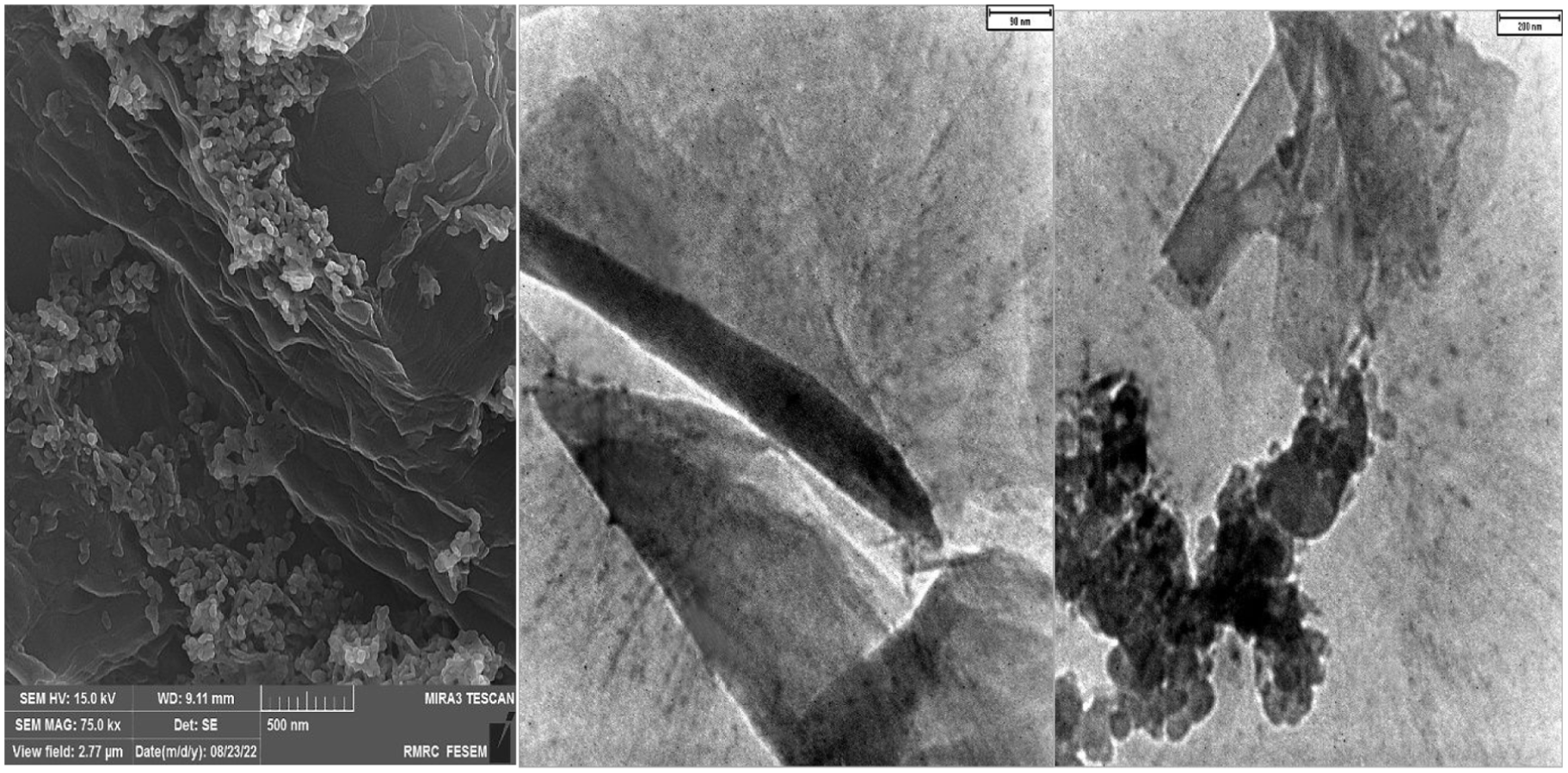
FESEM image of (a) GNP Fe2O3/water-ethylene glycol Nanofluid. TEM Images from (b) GNP, and (c) Fe2O3 nanoparticle loaded on GNP.
Optimizing parameters affecting hybrid nanofluid
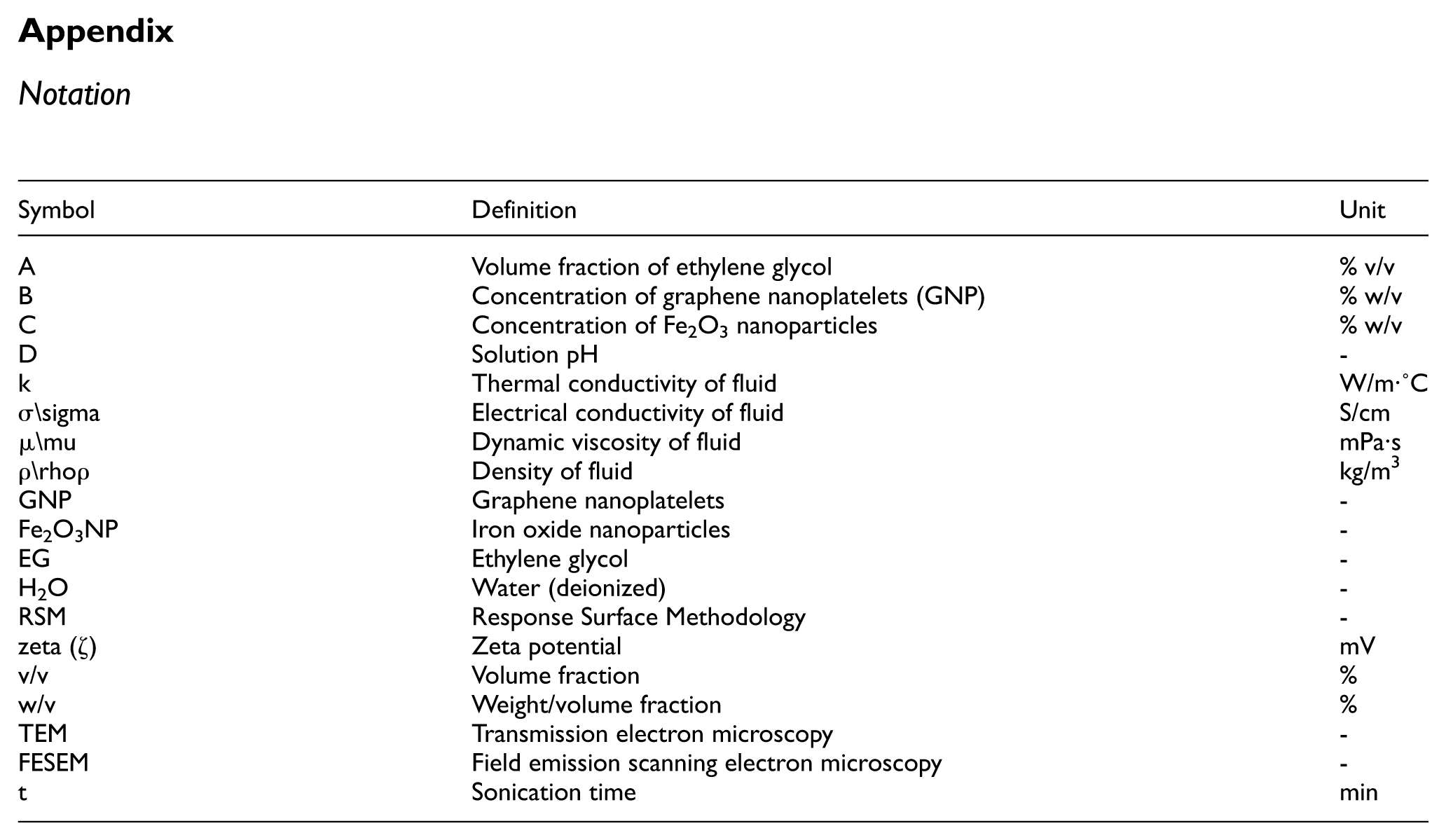
Optimizing the manufacturing conditions and obtaining as much productivity as possible from the values of independent parameters by using test design software have the advantage that the effect of different parameters in a test stage can be investigated simultaneously and comprehensively, while this allows using three-dimensional diagrams and Statistical tables of the effect of each parameter in each of the observed values and the significance of the effect of that parameter on the response. As mentioned, in order to obtain a nanofluid with the highest coefficient of thermal conductivity, independent variables such as volume-volume percentage of ethylene glycol to water (with the symbol A) (30–70% v/v), values of GNP (B) (0.01–1% w/v), amounts of Fe2O3NP (C) (0.1–2% w/v) and the pH of the solution (D) (3–10) were selected and their effect on the thermal conductivity of the prepared nanofluid was investigated. The levels of the selected variables are given in Table 1. The preparation conditions of nanofluids were optimized based on the response surface statistical method, and with the help of the results, a mathematical equation was modeled to predict the thermal conductivity coefficient. This statistical method of the minimum number of tests and the simultaneous investigation of the influence of all four independent affecting variables and their interaction on the thermal conductivity of prepared nanofluids in a comprehensive way helps to reduce the time, cost and materials used. 49
Examined variables and their studied domain.

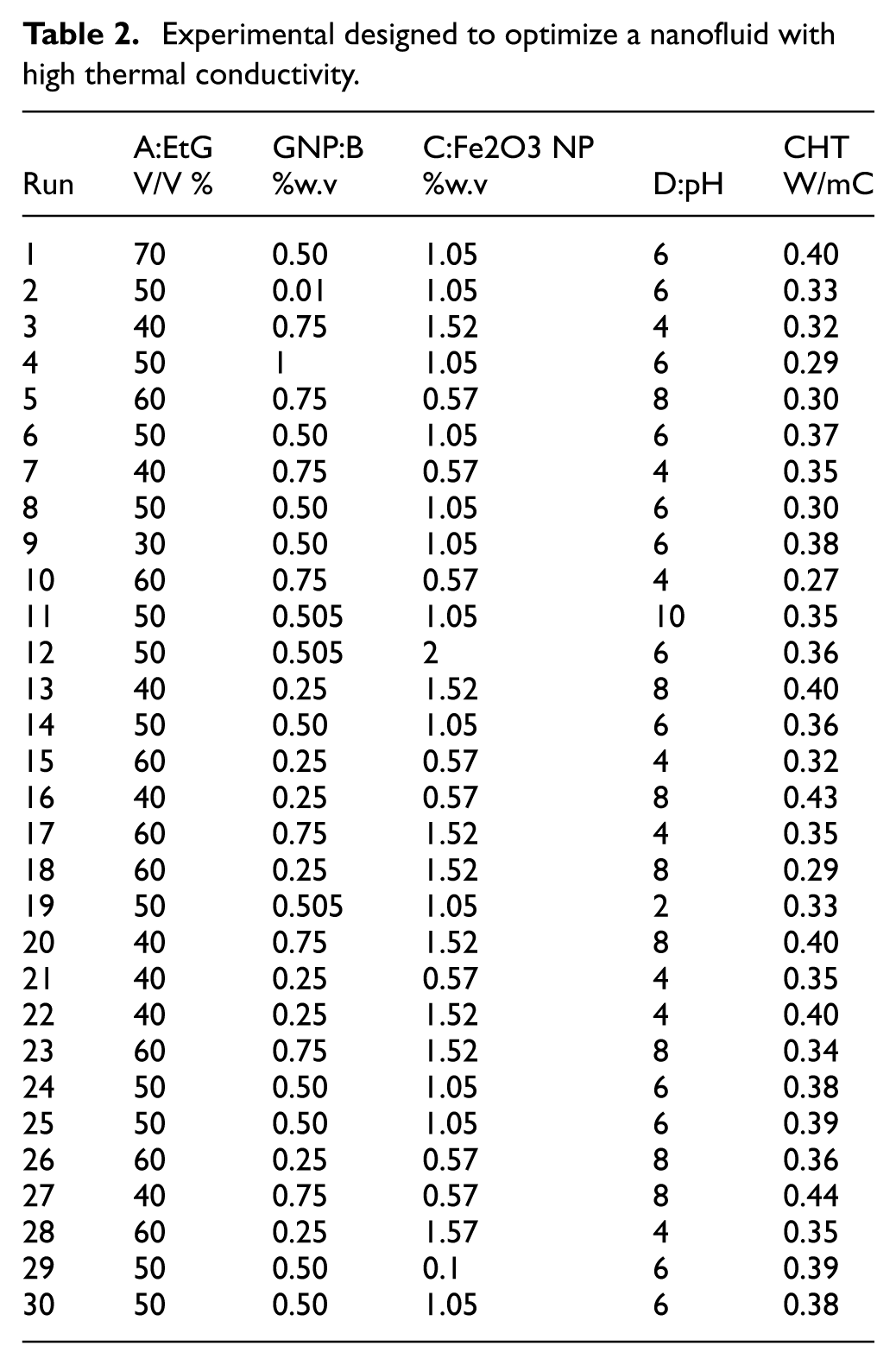
All stages of experimental design, data analysis, and statistical modeling were performed using the Design-Expert software package (Version 11). By defining the independent variables and their corresponding levels in the Design-Expert environment, a total of 30 experimental runs were generated for nanofluid preparation and thermal conductivity evaluation, as summarized in Table 2. The nanofluid samples were prepared according to the designed conditions (Table 2) and subsequently subjected to ultrasonic treatment for 30 min to ensure homogeneous dispersion. Ultrasonic waves facilitate the breakdown of nanoparticle agglomerates and promote the formation of stable nanofluids.
Experimental designed to optimize a nanofluid with high thermal conductivity.
During the RSM optimization process, nanoparticle concentrations were carefully controlled within low-to-moderate ranges. No significant agglomeration was observed within this concentration range, as confirmed by TEM and FESEM images (Figure 1), which reveal uniform dispersion of Fe2O3 nanoparticles on the surfaces of graphene nanoplatelets. The combined use of ultrasonic treatment and a phosphate buffer at the optimal pH enhanced electrostatic repulsion between nanoparticles, thereby preventing clustering even at higher loadings within the investigated range. Consequently, the observed enhancement in thermal conductivity can be primarily attributed to the intrinsic thermophysical properties and synergistic interactions of the well-dispersed hybrid nanoparticles.
After reading the thermal conductivity coefficient of the fluid sample, it is analyzed, modeled and the effect of each parameter was presented by the software. In continue, the effect of each independent variable and the interaction between them are shown in three-dimensional shape in Figure 2.
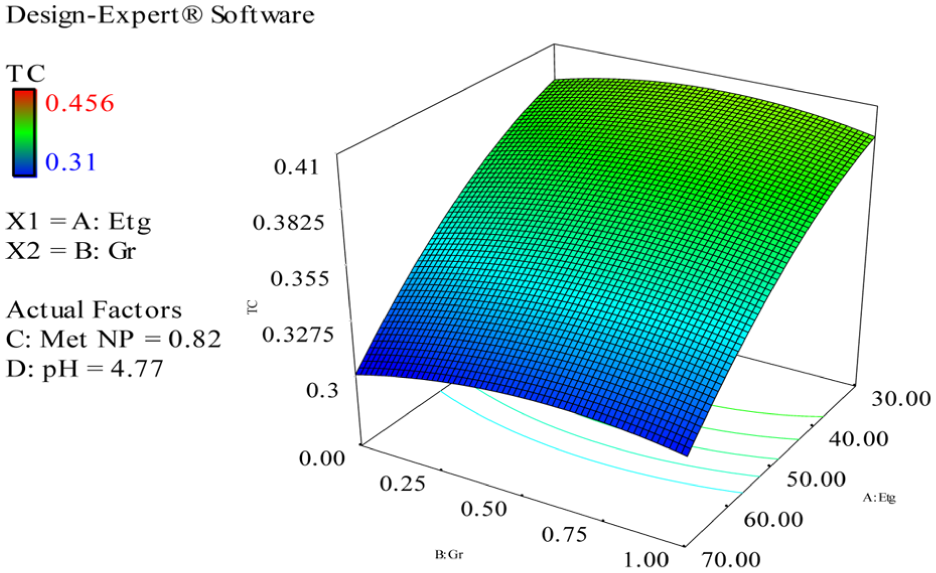
The three-dimensional diagram of the simultaneous effect of the amount of GNP and ethylene glycol on the thermal conductivity of the nanofluid at constant amount of metal nanoparticles of Fe2O3 NP (0.82% w/v) and pH of the solution 4.77.
In Figure 2 are shown in 3D graphs the simultaneous effectiveness of amount of ethylene glycol and GNP on thermal conductivity coefficient of nanofluid when the pH and Fe2O3NP are constant in the values of 4.7 and 0.87% w/v. In this graph, it can be seen that the thermal conductivity is improved by increasing the amount of GNP up to 0.7% w/v and then, it is slightly falls. Graphene, one of the carbon allotropes, can help to improve fluid properties due to its sheet shape through the sliding of layers and the ability to transfer electrons and energy in the extra-surface space and between layers. 50 Many researchers have reported that with the increase of conductive nanoparticles in the solution, the quantity of suspended particles in the solution rises, which leads to a growth in the surface-to-volume ratio and a proliferation in the number of collisions between particles.51,52 Furthermore, the existence of GNP in the fluid can cause the formation of conductive chains of particles in the base fluid, therefore the improvement of heat exchange is facilitated. 53 Aggregate the amount of GNP up to 0.7% w/v has a positive outcome on the thermal conductivity and from then on it seems that due to the accumulation of these graphene sheets on top of each other in the solution, their effective surface did not increase significantly and therefore the thermal conductivity coefficient of the prepared fluid is approximately constant.
Alternatively, it can be seen that the thermal conductivity coefficient declined from 0.41 to 0.3 W/mC by increasing the amount of ethylene glycol in the range of 30–70% v/v in the fluid. Ethylene glycol has a lower thermal conductivity (0.267 W/mC) compared to water (0.715 W/mC), it is obvious that by adding amounts of ethylene glycol to the water, the thermal conductivity coefficient of the water/ethylene glycol base fluid will also fall. Other authors have reported similar results.53,54
Figure 3 illustrates the influence of Fe2O3 NP concentration and solution pH on the thermal conductivity of the nanofluid, while keeping the ethylene glycol volume fraction (56% v/v) and GNP concentration (0.56% w/v) constant. As the Fe2O3 NP concentration increases, the thermal conductivity also increases. This is attributed to the increased number of conductive particles in the solution, leading to more frequent particle collisions and an expanded contact surface, which enhances heat transfer.48,55 However, excessive nanoparticle concentrations can lead to particle aggregation and agglomeration, which can hinder heat transfer.44, 45
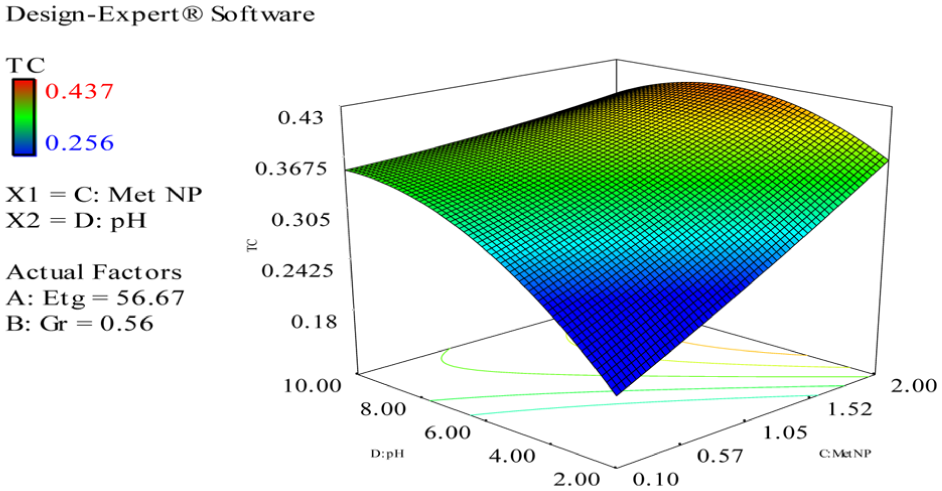
The simultaneous effect of the amount of Fe2O3 NP and pH of the solution on the thermal conductivity of the nanofluid in constant ethylene glycol amount (56.67% v/v) and GNP (0.56% w/v).
The effect of solution pH on thermal conductivity is also evident in Figure 3. Thermal conductivity increases in the pH range of 2.0 to 6.0 and then decreases at higher pH values. It’s important to note that the thermal conductivity of a fluid is generally unaffected by the addition of electrolytes, acids, or alkali salts. The observed increase in thermal conductivity is primarily due to changes in nanoparticle surface properties.56,57
At the optimal pH, the surface charge of the nanoparticles increases due to the adsorption of carboxyl and phenyl sulfonic groups. This increased electrostatic repulsion between particles prevents agglomeration, leading to improved particle dispersion and enhanced heat transfer.58–60 In alkaline environments, the increasing concentration of hydroxyl ions (OH-) reduces the electrostatic repulsion between particles, leading to agglomeration and decreased thermal conductivity. 61
The surface charge of nanoparticles plays a crucial role in determining the thermal conductivity of nanofluids. As reported by Frikha et al., when the pH exceeds the isoelectric point, the high surface charge of the particles increases interparticle repulsion, leading to improved dispersion and higher thermal conductivity. 62 Optimal pH conditions can enhance heat transfer efficiency by facilitating photon transfer. However, at higher pH values, the loss of surface charge stabilization can lead to particle agglomeration and reduced thermal conductivity.
Statistical analysis with ANOVA
The results of the statistical and the regression analysis on acquired data from trials was applied for determine of the proposed model coefficients for predicting the thermal conductivity coefficient of the nanofluid according to the variables of ethylene glycol (A), the amount of GNP (B), the amount of Fe2O3NP (C) and the pH of the solution (D) according to the coded values, so is given in Table 3. Statistical analysis of variance based on p-value <0.05 in the Table 3 shows the appropriateness of the proposed model statistically at the confidence level of 95%. Besides, the F test displays the statistical importance of all terms in the polynomial equation with a confidence level of 95%.
Results of variance analysis on data obtained from thermal conductivity modeling of nanofluid containing GNP and Fe2O3 NP.

The F-value for proposed model is 3.29, which expresses the ratio of mean squares related to model regression and errors. The F values of the variables that are greater than the F value of the model indicate a significant influence of the variable on the response. The F values reported for each parameter show that the coded parameters A (with an F value equal to 20.14), B (3.33), C (9.23) and D (7.55) have a significant effect on the conductivity coefficient. In addition to that, the coefficient of the inter-factor interaction parameter, namely AB and CD, have statistically significantly influenced the thermal conductivity coefficient. The results of this test also indicate that parameter A (volume ratio of ethylene glycol), C (amount of Fe2O3NP), D (solution pH) and B (amount of GNP) have a higher effect on the coefficient of thermal conductivity of nanofluid respectively.
In addition to statistical modeling and confirming the significance of the variables on the response, the mentioned software based on statistical modeling and data analysis gives a semi-empirical equation of the thermal conductivity coefficient under the influence of the four mentioned parameters, as follows:
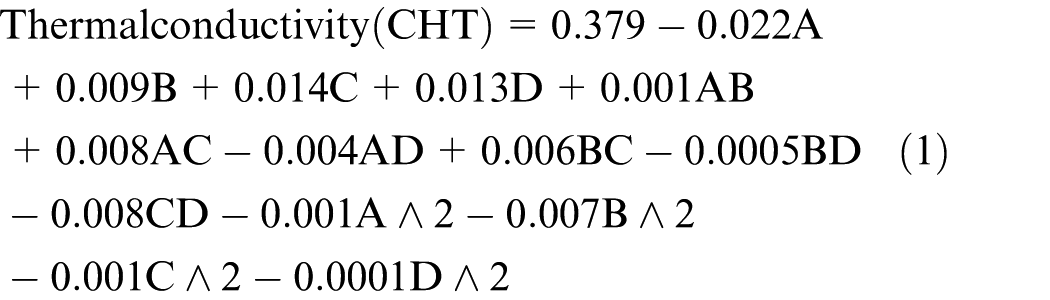
After confirming the statistical model and understanding the effect value of each parameter on the thermal conductivity coefficient, the optimal values of the variables to obtain the maximum thermal conductivity were determined using the model obtained from the experimental data. Based on the obtained data and choosing the best model that can be applied for forecast the thermal conductivity coefficient, the DOE software proposed the conditions for defining the maximum value of the thermal conductivity coefficient. Therefore, it is expected that the thermal conductivity in nanofluid containing 40% v/v ethylene glycol, 0.75% w/v GNP, 1.32% w/v Fe2O3 NP and pH equal to 8.0 equal to 0.475 (W/mC) is obtained. In order to check the model and confirm the correctness of the obtained conditions, a fluid sample was prepared in optimal conditions and its thermal conductivity coefficient was determined based on the mentioned conditions. The result of this test stated that the coefficient of thermal conductivity of the fluid prepared in optimal laboratory conditions is equal to 0.464 (W/mC), which is close to the predicted value of 0.475 (W/mC). Therefore, these conditions are used for the next tests.
Comparison of thermal conductivity of hybrid nanofluid with fluid containing a single nanoparticle
In order to check the accuracy of the presented model in a practical way and also to study the effect of adding each nanoparticle to the fluid on the amount of thermal conductivity, an experiment was designed and carried out in optimal conditions. In this experiment, the optimal amounts of GNP or Fe2O3 NP were separately dispersed to the fluid containing 40% w/v ethylene glycol in water, and after the nanoparticles were completely dispersed in the ultrasonic bath in the water/ethylene glycol solution, the thermal conductivity of the fluid was determined by KD2 Pro thermal analyzer. In this series of experiments, 5 readings have been done. In Table 4 presented characteristics of the nanofluids prepared in this study include water, ethylene glycol and fluid composed of water/ethylene glycol (40–60 % v/v), nanofluid containing single particle (GNP/EG-Water and Fe2O3 nanoparticles/EG-Water) and hybrid nanofluid GNP/Fe2O3 nanoparticles/EG-Water and a comparison has also been made with the nanofluids prepared by other authors.
Results of measurement of thermal conductivity, electrical conductivity, viscosity and density of base fluids and nanofluids containing a nanoparticle and combined nanofluid containing GNP and iron oxide nanoparticles.

w: water; EG: ethylene glycol; GNP: graphene; CHTC: convective heat transfer coefficient; EC: electrical conductivity; ENH: enhancement.
The data in the table shows that the thermal conductivity of the water-ethylene glycol fluid (0.363 W/mC) increases up to 25% when 0.75% w/v GNP are added to base fluid. However, with the addition of Fe2O3NP lead to increasing 15% thermal conductivity of the fluid. The difference in this increase can be attributed to the high surface-to-volume ratio and high thermal conductivity of GNP relative to Fe2O3NP.
Conversely, the simultaneous presence of both nanoparticles in the base fluid can improve thermal conductivity up to 27%; which is more than the thermal conductivity of fluids containing GNP or Fe2O3 NP alone, so that each of these fluids has increased by 15% and 25% compared to the water-ethylene glycol base fluid. This synergistic effect can be due to the creation of more effective surface and less formation of larger graphene clumps due to the presence of Fe2O3 NP in the base fluid, as a result, the thermal conductivity of the fluid has improved significantly. To validate the present results, the measured thermophysical properties of the hybrid nanofluids, including thermal conductivity, viscosity, and density, were compared with previously published experimental studies. Consistent trends between the present findings and earlier reports confirm the reliability of the experimental results. Similar behavior was reported by Afrand in their study on nanofluids containing functionalized multi-walled carbon nanotubes and magnesium oxide nanoparticles. 48 Furthermore, a detailed comparison between the results of the present study and other reported hybrid nanofluids is summarized in Table 4. For ease of comparison, the percentage enhancement in thermal properties relative to the base fluid (water–ethylene glycol mixture) is presented. The table also includes selected studies on hybrid nanofluids composed of similar nanoparticle materials. It should be noted that in most of the referenced studies, pre-synthesized composite or conjugated nanoparticles were added to the base fluid at fixed mass or volume fractions. For example, Balaga et al. used 0.2 wt.% of a hybrid nanostructure composed of Fe2O3 nanoparticles and functionalized MWCNTs with a 1:1 ratio. 67 Similarly, Kishore et al. reported maximum thermal conductivity enhancement using 19 wt.% of GNP/CuO/Al2O3 hybrid nanoparticles with a 1:1:2 ratio. 66
In contrast, the present work independently investigates the effects of Fe2O3 nanoparticles and graphene nanoplatelets within selected concentration ranges, rather than employing a fixed composite nanoparticle structure. This approach allows greater flexibility in evaluating the influence of individual nanoparticle concentrations and their synergistic interactions, which is limited in studies employing pre-synthesized hybrid nanostructures. It is important to mention that the addition of a buffer solution with a favorable pH to the base fluid played a significant role in improving the thermal conductivity and other studied properties. This point has been less discussed in other studies and has not been mentioned much. As mentioned before, adding ionized buffer solution in the fluid helps a lot to increase the repulsive forces between particles, improve fluid stability, increase particle mobility, and intermolecular collisions. For example, it was observed in the experiments that the thermal conductivity of the nanofluid consisting of 75 mg of GNP and 1.3 g of Fe2O3 NP in the presence of a buffer solution is 0.464 W/mC, and it was 0.411 W/mC without the presence of a buffer solution.
The electrolyte nature of a fluid changes after adding of the nanoparticles to the solution. Here, besides thermal conductivity, the electrical properties of hybrid nanofluid and nanofluid containing single nanoparticle were investigated and the results are presented in Table 4. The electrical conductivity of base fluids, that is, deionized water and ethylene glycol, were determined as 6 and 1.07 µS/cm. The results show that the electrical conductivity of water has increased by adding a nanoparticle and combining both nanoparticles. After the nanoparticles are distributed in the water/ethylene glycol, surface charges are created on the surface of the nanoparticles. So that, similar charges will repel each other and as a result the they will be suspended in the fluid. 54 Subsequently, any surfactant has been not added to the solution, thus, the improvement of the electrical conductivity of nanofluids containing a nanoparticle will only be ascribed to the existence of suspended particles with an electrical double layer. 48
Amount of electrical conductivity of sample containing GNP is higher than that of one containing Fe2O3 NP. This higher value can be related to the superior properties of GNP versus metal oxide nanoparticles. In addition, the electrical conductivity of the hybrid nanofluid is also greater than the nanofluid containing single nanoparticles. As discussed above, this is due to the synergistic effect of the adding of both nanoparticles of GNP and Fe2O3 nanoparticles in the base fluid. Adjacency of Fe2O3 nanoparticles in the vicinity of GNP prevents the accumulation of GNP in the fluid and this will lead to better immovability in the base fluid. As a result, the uniform scattering of nanoparticles in the base media will increase electrical conductivity. 48
Table 4 shows a comparison between the data obtained from measuring the viscosity and density of the studied fluids. As expected, the characteristics of studied nanofluids include viscosity and density increased by adding nanoparticles to the fluid. Asadikia et al. stated in their study that adding solid particles of carbon nanotubes and zinc oxide to fluids will increase the density. The mass of the fluid increases by adding particles to the solution, although its volume increases slightly. The most important reason for the reduction of the apparent volume of the nanofluid is that part of the solution will be trapped in the clumps (or bundles) of nanomaterials. 64 In another study, Kumar et al. about the viscosity of nanofluids reported that by dispersing multi-walled carbon nanotubes in the base fluid, the surface interfaces between them proliferation due to the intertwined structure of the nanotubes, as a result, the viscosity of the nanofluid will increase. 70
One of the limitations of making nanofluids is their stability, in fluids containing nanoparticles, especially carbon nanoparticles, these nanoparticles tend to agglomerate and aggregate. 24 Variuos factors such as the surface nature of particles, dose of particles, in addition to the interaction between same or non-identical nanoparticles are can affect the accumulation of nanoparticles in the fluid, as a result, stability of the nanofluids. 22 In this study, a one-step preparation method, that is, simultaneous addition of nanoparticles in the base fluid was chosen, and the prepared fluids were exposed to ultrasound radiation for 20 min. In literature, these two methods can greatly help the stability of the fluid. 24 The stability of nanofluids was evaluated by using zeta potential values. The absolute zeta potential value higher than 30 mv indicate physical stability and long suspension of particles in nanofluids. 30 The results of the study on the optimized sample are as follows (Table 5):
Zeta Potential Results of GNP- Fe2O3 -EG:W.

The negative zeta potential value indicates proper stability of nanofluid and stable suspension of nanoparticles in water-ethylene glycol based fluid, this can be related to the surface charge induced on the graphene surface by the surrounding buffer environment, the presence of Fe2O3 NP on the surface of the GNP, and charge creates electrostatic repulsion between nanocomposite particles which prevents from accumulation and cluster of nano-hybrids and produces the stable suspension of prepared GNP- Fe2O3. These are in line with the report of Torkashvand and Sarlak. 25 They acknowledged that γ- Fe2O3 encapsulated on GO-g-PCA that showed excellent stability, extra dispersibility, and good superparamagnetic properties.
Conclusion
In accordance with the objective of this study, which focuses on the synthesis, optimization, and evaluation of the thermophysical performance of Fe2O3–GNP hybrid nanofluids, the thermal and electrical conductivity, viscosity, and density of ethylene glycol–water based nanofluids containing Fe2O3–GNP nanostructures were systematically investigated. The hybrid nanofluids were prepared using a one-step ultrasonic-assisted method combined with response surface methodology (RSM) to identify optimal operating conditions. The results demonstrate that the addition of Fe2O3–GNP nanoparticles significantly enhances thermal conductivity, while only modest increases in viscosity and density are observed, confirming the suitability of the proposed hybrid nanofluids for heat transfer applications. Optimal thermal performance was achieved by controlling pH, Fe2O3 nanoparticle concentration, GNP concentration, and ethylene glycol volume fraction. Consistent with the study objectives and the central theme of the work, the findings confirm that the synergistic interaction between Fe2O3 nanoparticles and graphene nanoplatelets plays a key role in improving nanofluid stability and heat transfer performance. Enhanced electrostatic repulsion suppresses agglomeration, increases particle mobility, and leads to higher thermal conductivity. Compared to pure water, water–ethylene glycol mixtures, and single-particle nanofluids, the proposed Fe2O3–GNP hybrid nanofluids exhibit superior thermal and electrical conductivity, highlighting their potential as advanced heat transfer fluids.
Footnotes
Appendix
Notation
| Symbol | Definition | Unit |
|---|---|---|
| A | Volume fraction of ethylene glycol | % v/v |
| B | Concentration of graphene nanoplatelets (GNP) | % w/v |
| C | Concentration of Fe2O3 nanoparticles | % w/v |
| D | Solution pH | - |
| k | Thermal conductivity of fluid | W/m·°C |
| σ\sigma | Electrical conductivity of fluid | µS/cm |
| μ\mu | Dynamic viscosity of fluid | mPa·s |
| ρ\rhoρ | Density of fluid | kg/m3 |
| GNP | Graphene nanoplatelets | - |
| Fe2O3NP | Iron oxide nanoparticles | - |
| EG | Ethylene glycol | - |
| H2O | Water (deionized) | - |
| RSM | Response Surface Methodology | - |
| zeta (ζ) | Zeta potential | mV |
| v/v | Volume fraction | % |
| w/v | Weight/volume fraction | % |
| TEM | Transmission electron microscopy | - |
| FESEM | Field emission scanning electron microscopy | - |
| t | Sonication time | min |
Handling Editor: Divyam Semwal
ORCID iDs

Funding
The authors received no financial support for the research, authorship, and/or publication of this article.
Declaration of conflicting interests
The authors declared no potential conflicts of interest with respect to the research, authorship, and/or publication of this article.
Data availability statement
All data generated or analyzed during this study are included in the manuscript. The data that support the findings of this study are available from the corresponding author [N. Nasirizadeh], upon reasonable request.*