






Abstract

In the mid-19th century, the herbal tradition in medicine found an enemy in the rapidly expanding trade in patent medicines. While there were faint rumblings opposed to this trade among the public, apothecaries, and the medical establishment at the time, 1 it was not until just prior to the US Pure Food and Drug Act (1906) and the Canadian Patent and Proprietary Medicine Act (1909) came into being that the fraudulent practices of the patent medicine industry were fully revealed to the North American public. While the patent medicine falsities, in terms of fraudulent, extravagant claims and false lists of ingredients, began to tarnish legitimate herbal products, there were still many manufacturers of herbal medicines who strove to produce high-quality products. The first head of Canada's Central Experimental Farm began his career as a druggist, and as Canada's first large-scale manufacturer of herbal extracts. He also played a part in revealing fraudulent herbal products in this country over 100 years ago.
William Saunders (Figure 1) emigrated from England with his family in 1848. Young William became the apprentice of Dr. Salter, an early physician and druggist in London, Ontario, but by the time he was 19, he had his own drugstore in that city. 2 Saunders joined the American Pharmaceutical Association in 1860, at the age of 24, and became president of the Association in 1875. In 1867, the Canadian Pharmaceutical Society was formed, with Saunders as a founding member. 3 Eventually, in 1871, the Ontario College of Pharmacy was founded, again with Saunders as a founding member. He held the position as vice-president for eight years, followed by a three-year run as president, 3 remaining for sometime thereafter a member of the council. 4 In 1876, he became the Chairman of the American Pharmaceutical Association's Committee on the Drug Market. 2
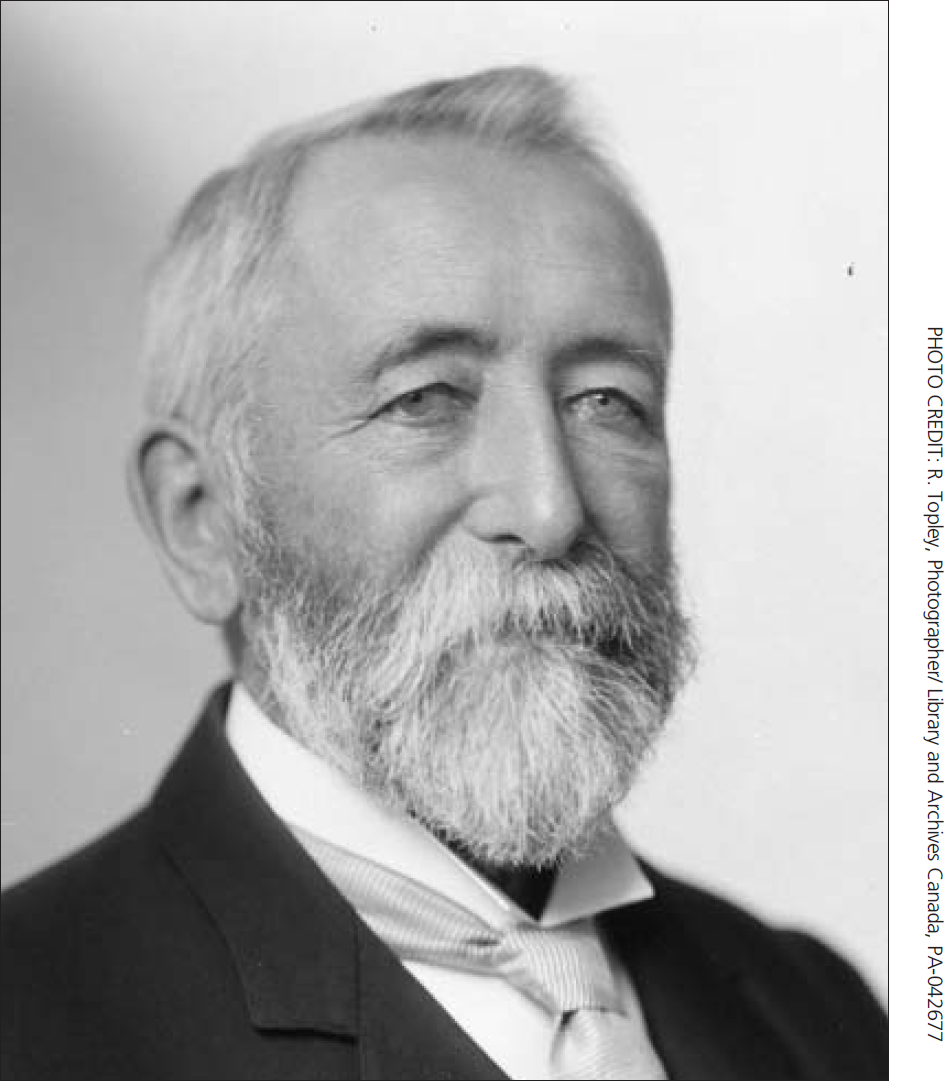
Dr. William Saunders, October, 1910.
While still a druggist in London, William Saunders became well known for producing fluid extracts of medicinal plants. According to some literature, as well as his own advertising, Saunders was the first in Canada to undertake this activity to any large-scale degree. 2,5 As early as 1862, Saunders was manufacturing herbal medicines and extracts, and in that same year he exhibited a “very ample collection of medicinal herbs and an assortment of fluid extracts” at the 17th annual exhibition of the Ontario Provincial Agricultural Association. 6,7 In 1870, Saunders addressed the American Pharmaceutical Association with a presentation entitled “On Some Medicinal Plants of Canadian Growth” 2 (later published in the Canadian Pharmeutical Journal in August 1871), and as president of this Association, he gave a lecture on the “botanical drugs of the New World” (1875). 2 Later, he began the wholesale manufacture of botanical extracts, supplying them to wholesale drug companies, and he exhibited his wares internationally, including the 1878 World's Fair held in Paris, where he was awarded a bronze medal. 6 Saunders became so renowned for his efforts in the manufacture of plant-based medicines that he was the first lecturer in this area at the newly formed University of Western Ontario in 1881, often illustrating his lectures in materia medica with samples of drugs from his own store. 2
Saunders was involved in many other scientific pursuits. In 1863, he founded the Entomological Society of Canada and later, from 1875 to 1886, he was president of the Entomological Society of Ontario (formed in 1870). He was a prolific contributor to the journals published by both of these societies. In addition to running his drugstore and herbal extract business, Saunders analyzed stomach contents collected during autopsies and even made contributions to public health, giving two addresses to London's Health Committee on the city's water supply and on disinfectants, in 1883. 2 At home, Saunders experimented with the hybridization of fruits, developing several new varieties. 2
Saunders became the Public Analyst for Western Ontario in 1882 and it was his responsibility to analyze various commodities such as milk, cheese, and canned goods for purity. 2 In this capacity, however, Saunders analyzed more than just foods. He was mandated to analyze a variety of commercially available products, including patent medicines. In 1883, he analyzed “John Bull Bitters.” 8 This particular product was widely advertised throughout Canada in the 19th century, and was claimed to be “a wholesome vegetable compound for all diseases of the stomach and nervous system … being free from the deleterious effects of alcoholic drinks, for which it is an antidote.” 9 A clue as to the true contents of this medicine lay in the fact that the product was sold in a type of bottle traditionally used to hold gin. Indeed, despite the claims on the label, Saunders found John Bull Bitters to contain “22.8% alcohol, 6% sugar, and 71.2% water” with “a small amount of a vegetable bitter and … flavoured with oil of gaultheria.” 9 (This finding did not seem to curtail the advertising of the product; in fact, the trademark for the brand name was sold from one Montreal firm to another, in 1886, with the new purchaser being a large Montreal liquor firm. 13 )
From Cannabis to vaccines
The types of herbal extracts produced by Saunders in the early days of his business are unknown; however, in 1930 the company he founded was selling just over 100 different extracts derived from plants ranging from aconite root, to Cannabis, and yerba santa.
The highest-priced extract was produced from Hydrastis, at $15.00/pound. Under the title “Specialties,” the company sold its own multi-ingredient products' including “Expectorans,” with the listed ingredients including wild cherry, Sanguinaria, horehound, white pine, squills, and ipecac. 5 By the 1930s, W.E. Saunders & Co. were selling a wide range of medical products besides what we would, today, call natural health products. These other medical products included vaccines.
The company made not only its own brand of products but also advertised that it would prepare clients' own products. In order to protect these private formulations, the company noted that its clients could “rely upon the absolute protection of their formulae when entrusted to us, as all correspondence and data relating to such work are kept absolutely confidential.” 5
Tasteful packaging
Despite the man seeming larger than life, it is important to note that the early bottles Saunders used to package his herbal extracts were nondescript and plain. These containers were only marked with his name and address. 10 It seems somewhat unusual that a person of William Saunders' obvious talent and renown would not have had a “splashier” container in which to package his botanical extracts. In fact, his containers stand in stark contrast to those used for patent medicines in the same era, where bottles were often colourful or of odd shapes to provide consumer, and thus sales, appeal. After all, the latter part of the 19th century was the heyday of the patent medicine frenzy, a time when advertising and product packaging were in-your-face, and outright scandalous in many cases. 11 It seems that Saunders was striving to produce high-quality pharmaceutical products, not fraudulent patent medicines; thus the plain bottle. In fact, the simplicity of the bottle is important: no hype, no catchy name or advertising which, in a way, reflects dedication to science. When we look back on the accomplishments of William Saunders and his work for the welfare of others, whether in dealing with public health issues in London, adulterated foods and fraudulent medical products, or aiding agriculture in the developing Prairie provinces, how could we think otherwise?
In some ways, history is repeating itself, with preposterous claims often made today for certain herbal products, and with some currently marketed products not containing the stated ingredients. 12 These factors act to the detriment of legitimate products and the herbal industry as a whole, as John Bull Bitters did 120 years ago. At the time, William Saunders stood out as a manufacturer devoted to the science behind the products he was producing, rather than a concocter of fraudulent products with extravagant claims.
Patent medicine advertising
Despite his activities in analyzing patent medicines and producing herbal extracts, Saunders was not opposed to selling patent medicines in his drugstore. Figure 2 shows a patent medicine advertising card bearing the text “Wm. Saunders, Druggist, 188 Dundas St., London.” 14 This particular card is typical of those handed out in drugstores in the late 19th century, with attractive pictures on one side and advertising on the reverse. The card advertises two products of a well-known 19th century patent medicine manufacturer, G.G. Green, who had offices in Toronto as well as the main office in Woodbury, New Jersey. “Boschee's German Syrup” was touted as having ”the largest sale of any medicine in the world” and was claimed to be a “cure” for consumption (tuberculosis), as well as all other diseases of the throat and lungs. “Green's August Flower” was marketed for gastrointestinal disorders as well as palpitation of the heart and “symptoms of paralysis.” The text for August Flower states that all of the hundreds of other remedies for the same conditions failed to meet “that certain success and praise that every druggist and dealer in medicines over the entire civilized world, give to Green's August Flower.” This is quite a statement, but is typical of advertising written for other similar products of the era. The card in question was printed with the calendar for 1883, and was thus produced, and likely distributed, in the latter part of 1882, just prior to Saunders' analysis of John Bull Bitters. It is possible that August Flower was a legitimate herbal remedy; however, given the abundance of fraudulent products for sale at the time, this is an unlikely prospect. Saunders likely sold such products for purely financial reasons, and not because he endorsed their potentially fraudulent claims. In all practicality, no 19th century Canadian drugstore owner could afford not to sell patent medicines, the sales of which often amounted to one-third of a store's business. 15
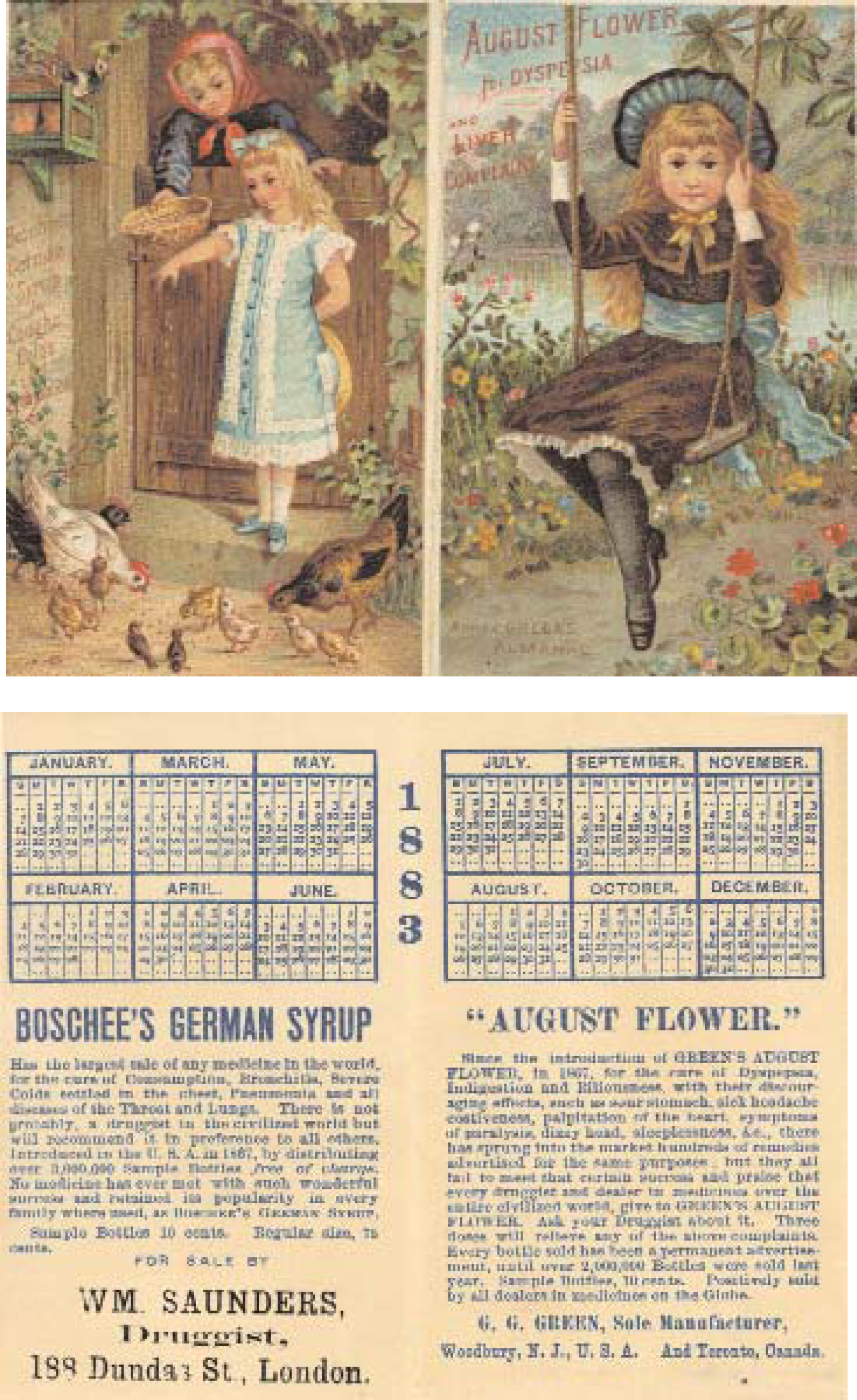
19th century advertising card with imprint of William Saunders. Collection of the author.
Evolution of regulations
Today, regulations are in place to provide pre-market review and authorization for health products in Canada. The Canadian Food and Drugs Act and Regulations require evidence to be submitted to substantiate claims, efficacy, and safety of pharmaceutical drugs. In addition, there are advertising guidelines for non-prescription products. Before 2004, however, there was no set of regulations in Canada specifically for herbal (and other natural) products. This situation resulted in the presence of products on the market having misleading claims and/or poor quality. On January 1, 2004, the Canadian Natural Health Products Regulations came into force. 18 These new regulations were developed to authorize quality products which are safe and effective, while recognizing the uniqueness of this product category. Some problems will continue to persist for the foreseeable future, such as misleading advertising for herbal products on the Internet; however, many of the problems associated with herbal products in the 19th century will be rectified by these regulations.
Experimental farms
William Saunders' fame spread and he gradually became recognized as a force in Canadian science and agriculture. In 1880, he was considered a leading authority in agriculture and horticulture, and in 1882 he was elected a Fellow of the Scientific Section of the Royal Society of Canada for his many accomplishments. It was, indeed, fitting that when the Canadian government formed the Canadian Experimental Farm System in 1886, William Saunders was appointed the first Head. 2 In order to take up his duties in Ottawa, Saunders left his wholesale and retail drug business in London in the hands of his sons Will and Henry, who had been involved in the business at least as early as 1881. 16
Throughout his tenure at the experimental farms, William Saunders travelled extensively, dealing with agricultural issues wherever he went. It was through the efforts of Saunders and two of his sons, Percy and Charles (later to become Sir Charles), that a new cross of wheat was produced in 1903. This wheat was termed Marquis and it matured earlier than other wheat strains. Because of this quality, and the fact that it surpassed other strains of wheat in other respects, Marquis wheat was to revolutionize agriculture in Canada, especially in the Prairies. 17 The fame of this wheat eventually spread throughout the world, and in 2003 a commemorative coin was struck by the Royal Canadian Mint to mark the centenary of its discovery. Following his adventures in agriculture, William Saunders retired back to London, Ontario, and it was there that he died on September 13, 1914.
While William Saunders is best remembered for his accomplishments in Canadian agriculture, he should not be forgotten as one of the people who helped to set the stage for the appropriate manufacture of herbal products in Canada. His efforts in exposing those products which were fraudulent revealed the need to have regulations in place to ensure quality products that are both safe and effective. It is very likely that Saunders would have endorsed the new Canadian Natural Health Products Regulations as a major step in putting aside the troubles associated with fraudulent herbal products.
Footnotes
Acknowledgements:
The author is deeply grateful to Dr. D. Vu and Dr. J. Griffiths for their support of this endeavour, and their helpful comments.