






Abstract
“My husband was not faithful to me. I Tested [for HIV] TO save my life for my children,” recounts ‘Me Lerato, age 35. Universal HIV testing is seen as essential for slowing the spread of HIV. Those who are positive will practice safe sex to avoid infecting others; those who are negative will take measures to remain so.
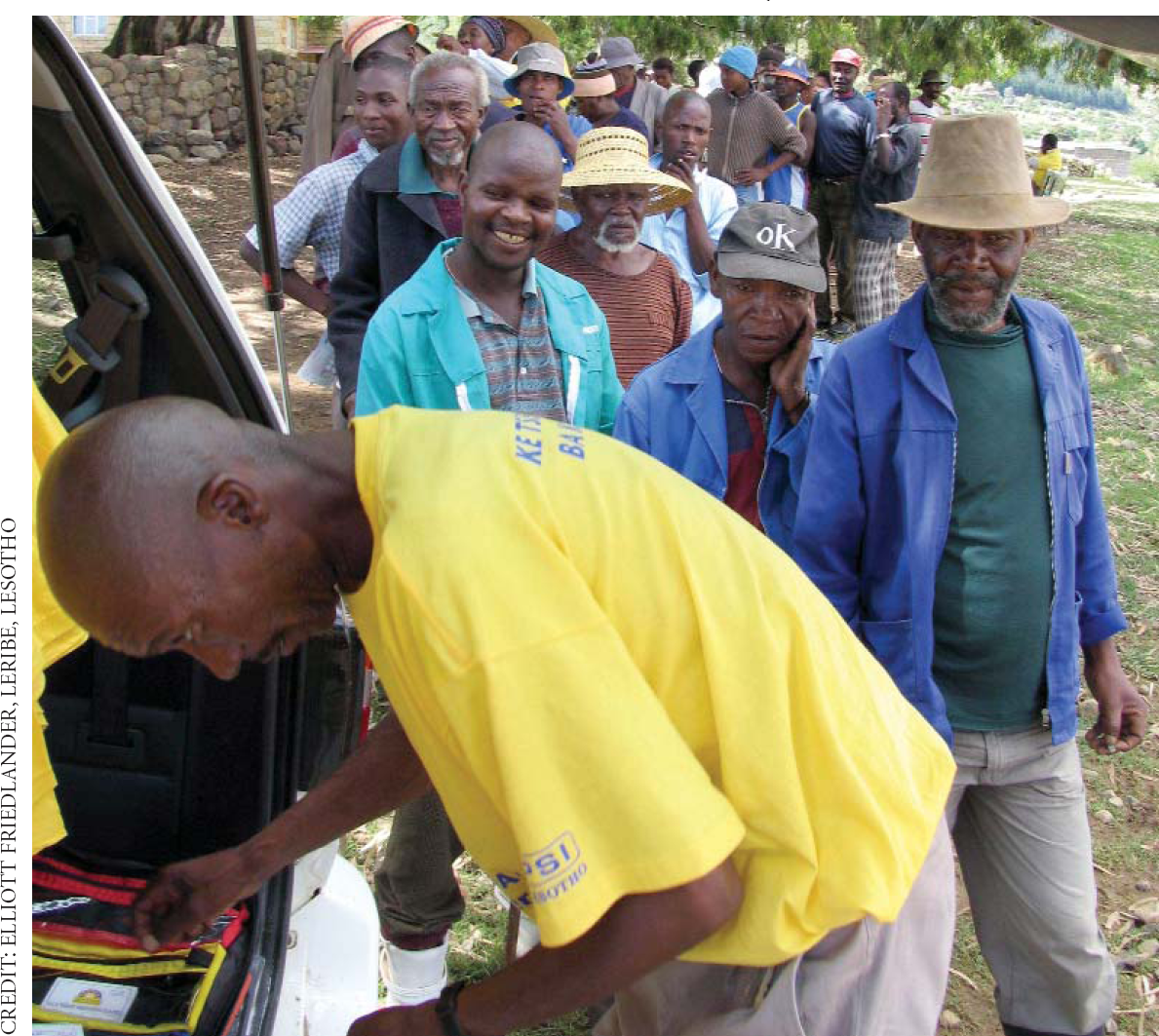
Despite high-profile government efforts, convincing the Basotho to test has not been an easy task. Family members who attend to sick patients in the clinic, despite seeing the ravages of HIV up close, still refuse to test.”Why should I test? I'm not sick,” I was told today by the brother of a very wasted patient. HIV-positive women tell me, “My husband won't test because he doesn't want to use a condom. If he tests positive, he will have to.” Others don't disclose to their partners or family at all, fearing stigma's reprisal.
‘Me Lerato, an HIV-positive translator at Tŝepong Clinic in Lesotho, needed only the opportunity to know her status, but she is a rarity. In 2004, she was working in a factory when the owners offered free transport for each employee to receive a confidential HIV test. Of 2000 employees, she was one of only four women who accepted. The national rates are slightly better; about 1% of the country tested in the last year.
‘Me Lerato campaigns her family and friends to test, but most of them refuse.”They think that after they know their status, they will get confused. My relative's husband is running around, but she still won't test. She says she would rather kill herself than know she has HIV.” Moreover, many of her friends disbelieve ‘Me Lerato is positive, since she is still healthy. Some even accuse her of lying in exchange for a higher salary from Tŝepong. Consequently, she firmly believes in mandatory testing, fearing that HIV will decimate the Basotho and that the nation “might be captured by another country.”
This fear is not unfounded. When upwards of one-third of productive adults are expected to die within 10 years, the economy, infrastructure, and operations of a nation will undoubtedly suffer. Others, with more influence, agree with ‘Me Lerato that a high uptake of testing is essential. Recently, Jim Yong Kim, the head of the HIV/AIDS department at the World Health Organization, was in Lesotho to discuss other possibilities for dramatically boosting the numbers who know their status.
While Kim affirms the voluntary nature of HIV testing, he encouraged the Minister of Health to offer testing as a door-to-door service. Rather than waiting for patients to gather the courage to visit a clinic, the counsellors would go to them. Minister Phooko supported this bold model and launched the “Lesotho Know Your Status” campaign on World AIDS Day, December 1, 2005. The plan: 3600 trained community health workers will offer household testing to every person over 12 years of age in Lesotho by the end of 2007.
‘Me Tebello Sentŝo, an HIV counsellor in Lesotho, anticipates the campaign will be a huge success. Having offered door-to-door testing herself, she knows that the Basotho are receptive to this approach.
Simultaneously, the value of testing continues to be advanced through more conventional approaches. Today, one of Tŝepong's long-standing patients brought in her neighbour, seeing her suffer from classic signs of HIV. Last week, a teacher attended the clinic with her child, following a talk by ‘Me Lerato at a local school. After realizing that it was from her efforts that this teacher decided to know her status,‘Me Lerato laughed and exclaimed, “It's working!”