






Abstract
Background/Aims
Pain is a major concern of patients with advanced cancer and their caregivers. There is strong evidence that pain coping skills training interventions based on cognitive-behavioral principles can reduce pain severity and pain interference. However, few such interventions have been tested for patients with advanced cancer and their family caregivers. This study aims to test the efficacy of a caregiver-guided pain coping skills training protocol on patient and caregiver outcomes.
Methods
A total of 214 patients age ≥18 with Stage III–Stage IV cancer and moderate to severe pain, along with their family caregivers, are being identified and randomized with a 1:1 allocation to the caregiver-guided pain coping skills training intervention or enhanced treatment-as-usual. Dyads in both conditions receive educational resources on pain management, and the caregiver-guided pain coping skills training intervention includes three weekly 60-min sessions conducted with the patient–caregiver dyad via videoconference. Measures of caregiver outcomes (self-efficacy for helping the patient manage pain, caregiver strain, caregiving satisfaction, psychological distress) and patient outcomes (self-efficacy for pain management, pain intensity and interference, psychological distress) are collected at baseline and post-intervention. Caregiver outcomes are also collected 3 and 6 months following the patient’s death. The study is enrolling patients from four tertiary care academic medical centers and one free-standing hospice and palliative care organization. The primary outcome is caregiver self-efficacy for helping the patient manage pain.
Results
This article describes challenges in the design and implementation of the CaringPals trial. Key issues for trial design include the identification and recruitment of patients with advanced cancer and pain, and the follow-up and collection of data from caregivers following the patient’s death.
Conclusion
The CaringPals trial addresses a gap in research in pain coping skills training interventions by addressing the unique needs of patients with advanced cancer and their caregivers. Findings from this study may lead to advances in the clinical care of patients with advanced cancer and pain, as well as a better understanding of the effects of training family caregivers to help patients cope with pain.
Introduction
Pain is a major concern of patients with advanced cancer and their family caregivers.1–3 Among patients with advanced cancer, pain is one of the most frequent and distressing symptoms.1,3,4 Pain is a multidimensional experience that negatively impacts and is impacted by patients’ thoughts, feelings, and behaviors, 5 impedes their ability to maintain independence and perform valued activities, and increases their risk for psychological distress.6,7 Despite advances in medical approaches for treating cancer pain, many patients with advanced cancer experience inadequate pain management.3,4,8–10 There is growing recognition of the limitations of medical approaches to managing cancer pain and heightened interest in the role of self-management interventions. 11 While there is strong evidence that psychological and cognitive-behavioral treatments can improve pain and pain-related outcomes, interventions are rarely tested in patients with advanced disease. 12 Given the persistence of pain-related distress in advanced cancer, there is an urgent need for trials of behavioral pain management interventions in this population.1,4
While pain coping skills efforts typically focus on the individual with pain, there is growing recognition of the importance of involving caregivers in interventions for cancer pain.11,13,14 Caregiver involvement may be particularly important for patients with advanced cancer whose functional decline may impair their ability to manage pain alone. Caregivers of patients with advanced cancer and pain face multiple demands including monitoring symptoms, administering medications, dealing with side effects, communicating with health professionals, and providing non-drug interventions such as support, distraction, and help with positioning.13,15–17 These tasks can lead to caregivers feeling overwhelmed, frustrated, and helpless. 18 Caregivers who report high levels of strain or dissatisfaction with their caretaking abilities during the patient’s last months of life experience higher levels of distress following the patient’s death.19,20 Caregivers whose loved ones experienced unmanaged pain during their last months of life also have poorer adjustment during bereavement. 21 These findings point to the importance of including both patients and caregivers together in learning to better manage pain.
To date, there have been few randomized studies testing pain coping skills interventions that have included caregivers. The studies conducted have primarily focused on educational rather than behavioral approaches, 2 and none have examined caregiver outcomes assessed after the patient’s death. We therefore designed a novel caregiver-guided pain coping skills intervention for patients with advanced cancer and conducted a pilot test with hospice-eligible cancer patients. 22 The intervention integrated educational information about cancer pain and its management with training in pain coping skills including relaxation, imagery, and activity pacing. Results of the pilot study indicated that the intervention led to significant improvements in caregiver self-efficacy for helping the patient manage pain. There were also trends for improvements in caregiver strain, patient pain, and patient quality of life. While promising, these results were limited by a small sample size (n = 78 dyads), attrition due to patient death, and lack of follow-up to assess longer-term benefits for caregivers. Challenges in delivering the intervention to patients at end of life, such as impaired cognitive status, were also noted.
The current study builds on and extends these findings by (a) conducting a multi-site trial with a target of 214 dyads; (b) delivering the intervention via videoconference to increase access and distribution; and (c) assessing the impact of the intervention on caregiver adjustment after the patient’s death. To address challenges associated with delivering an intervention to patients in the terminal stage of illness, the study targets patients with advanced cancer who may not yet be hospice eligible. The primary hypothesis is that caregivers who receive the intervention will report significantly higher levels of self-efficacy for pain management (e.g. confidence in their ability to help the patient manage pain) than caregivers in the control condition. Secondary aims focus on improvements in short-term caregiver adjustment, caregiver adjustment following the patient’s death, and improvements in patient outcomes including pain severity and interference, self-efficacy for pain management, and psychological distress.
In this article, we present the study design and challenges faced in conducting this trial. This single-blinded, randomized clinical trial has been funded by the National Institute for Nursing Research and is being conducted in collaboration with the Palliative Care Research Cooperative Group. Upon completion of the study, results will be reported in accordance with the Consolidated Standards for Reporting Trials guidelines 23 including recommendations for reporting of patient-reported outcomes. 24
Methods
Participants and setting
Patient inclusion criteria include (a) clinical diagnosis of Stage IV solid or hematologic malignancy, or Stage III unresectable gastrointestinal cancer; (b) worst pain in the past 2 weeks ≥4 (e.g. moderate pain); 25 and (c) identified caregiver, defined as a person whom they rely on for support with activities such as getting to medical appointments and taking medications, and emotional support. If there is more than one caregiver, the patient is asked to nominate the person most likely to provide care and to be available to participate in the study. 26 Patient exclusion criteria include (a) life expectancy <1 month; (b) Palliative Performance Scale rating <40 (e.g. bed bound, unable to do any activity); and (c) current radiation therapy that is significantly affecting pain. Patients and caregivers must be age ≥18 years, able to read and speak English, and able to provide consent and complete study procedures.
Inclusion criteria pertaining to pain and performance status were intended to maximize the likelihood of enrolling patients who (a) met a minimum threshold of pain and would therefore likely benefit from the intervention and (b) would live long enough to complete the study. Given that function is one of the greatest predictors of survival, 27 patients with a Palliative Performance Scale score <40 may be less likely to live long enough to complete the study and/or benefit from the intervention.
Participants are recruited at the outpatient oncology clinics at four university medical centers (Duke, University of North Carolina, University of Pittsburgh, and University of Colorado at Denver) as well as Four Seasons Compassion for Life, a free-standing hospice and palliative care organization. Eligible patients are introduced to the study by their health care provider, either in person or via an introductory letter. If they agree, the site clinical research coordinator meets with the patient and caregiver to confirm eligibility and obtain written consent. All recruitment and consent procedures received approval from the Institutional Review Boards at each of the study sites.
Procedure
Figure 1 depicts the study flow. Patients and caregivers complete the baseline evaluations and are then randomly assigned to one of two interventions: (a) caregiver-guided pain coping skills training (CG-CST) or (b) enhanced treatment-as-usual. Randomization is stratified by study site and patient sex and occurs in blocks, which guarantees that after a given number of assignments, the study arms will have equal numbers. Randomization was performed using Research Electronic Data Capture (REDCap), a secure web-based tracking and online data acquisition system. 28 At the start of the study, the statistician generated random allocation tables that were uploaded into REDCap. After a dyad completes the baseline assessment, the research coordinator enters the participant’s REDCap record and clicks the “Randomize” button, triggering REDCap to check the allocation table and display the group to which the dyad should be randomly assigned. This assignment is permanent and not editable within the participant record nor modifiable in the audit log.
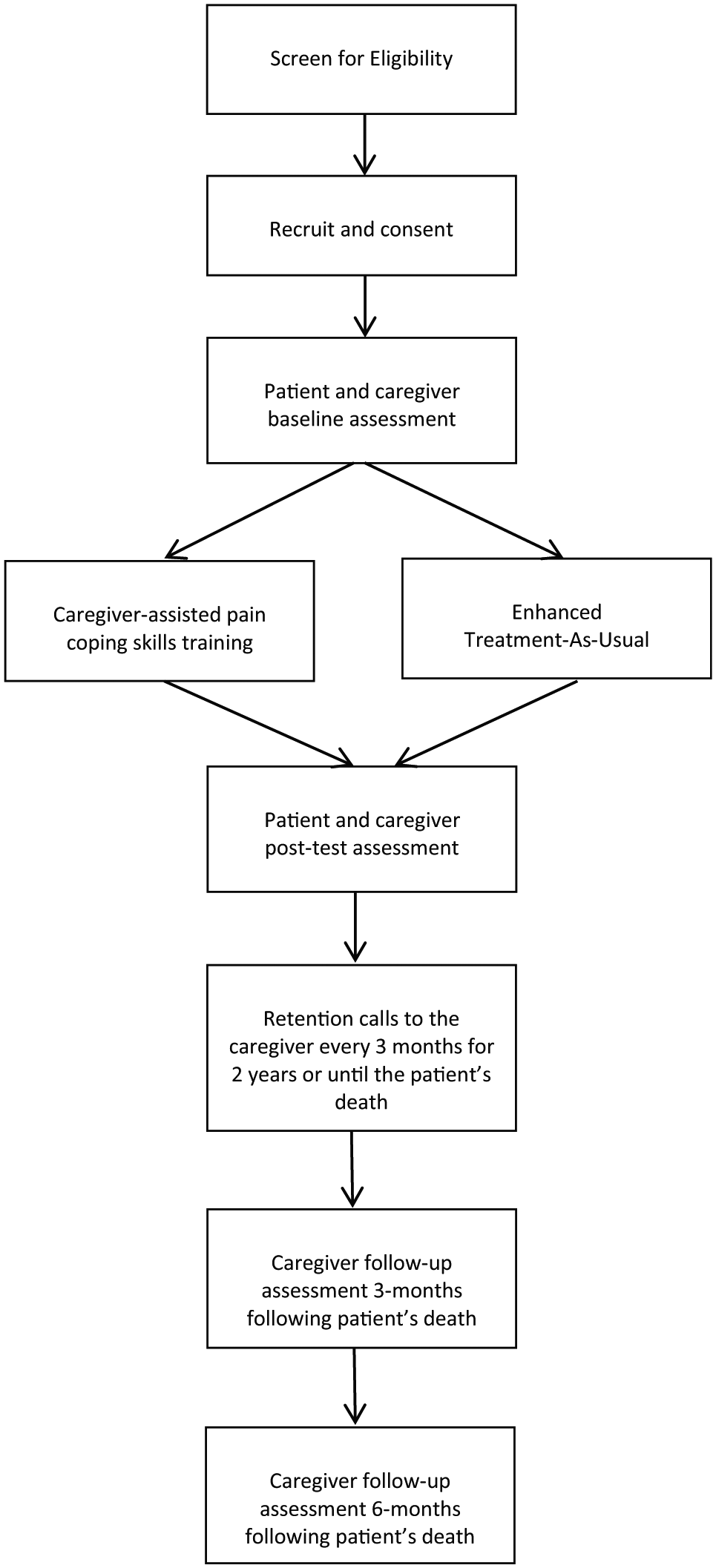
Study flow.
Patients and caregivers are assessed at baseline (T1) and 1-week post-treatment (or 4 weeks following baseline for dyads in treatment-as-usual) (T2). Caregivers are also assessed 3 months (T3) and 6 months (T4) after the patient’s death. Following the T2 assessment, retention calls are made to caregivers every 3 months for 2 years or until the patient’s death (see Figure 1). If a patient is alive at the 2-year mark, the caregiver’s study participation is considered complete and T3 and T4 surveys are not administered.
Each dyad receives a tablet computer (iPad) with Internet access for use during the intervention phase of the study. iPads were chosen based on our previous experience indicating their ease of use with similar patient/caregiver populations. 29 Internet access is provided via 3G data plans. The research coordinator instructs participants in the use of the iPads and provides written instructions and contact information for technical support.
Measures
Outcome measures are shown in Table 1. Measures were chosen based on their strong psychometric properties, utility in previous studies with similar populations, and brevity to reduce participant burden. Patient medical data including extent of disease, degree of medical co-morbidity, concomitant therapies, and performance status are recorded from the medical record at the time of enrollment. Demographic information including patient and caregiver age, sex, race and ethnicity, and the caregiver’s relationship to the patient are collected at baseline.
Measures and schedule of administration.
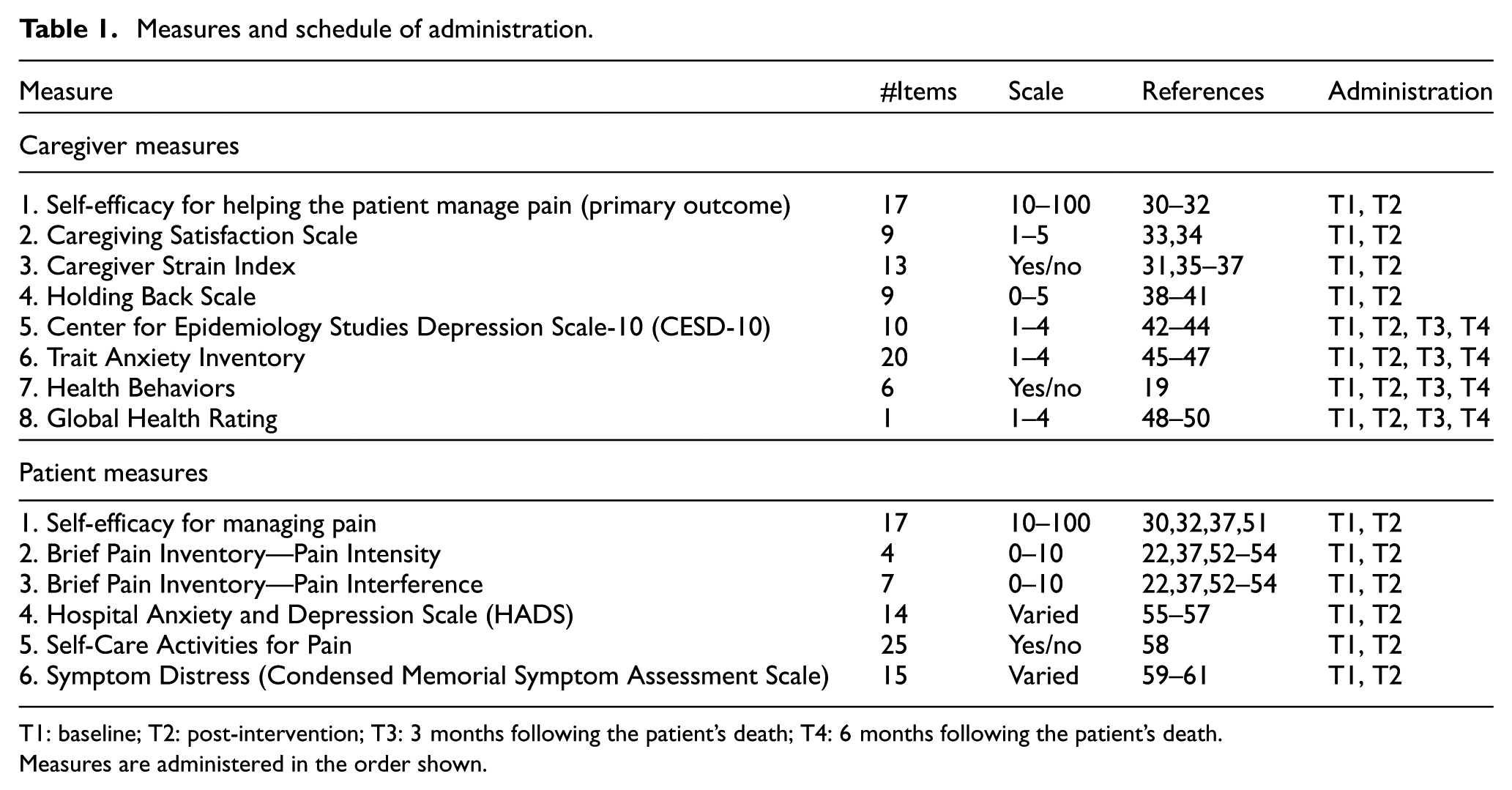
T1: baseline; T2: post-intervention; T3: 3 months following the patient’s death; T4: 6 months following the patient’s death.
Measures are administered in the order shown.
In addition, during the interval between T1 and T2 assessments, the patient and caregiver record the following on a Qualtrics survey using the iPad: (a) the patient’s usual and worst pain ratings over the past 24 h and (b) the patient’s analgesic intake (prescription and over-the-counter). Patients and caregivers are asked to complete the pain and medication survey together at the same time each day, usually in the evening. The patient provides the pain ratings, and either the patient or caregiver record the pain ratings and medication information. Data are monitored for completeness on a weekly basis. Pain medication data will be processed at a central data management site after study completion. Doses of opioids will be converted to morphine equivalents per 24 h.62–64 Total analgesic intake (i.e. opioids, non-opioids, and co-analgesics) will be evaluated using the Medication Quantification Scale. 65
Intervention and control conditions
CG-CST
Patient–caregiver dyads receive three weekly 60-min sessions for training in pain coping skills. The three-session protocol was modeled after that tested by Keefe et al. 66 with cancer patients at end of life. Given that the current study also targeted patients with advanced cancer who (along with their caregivers) are experiencing high levels of illness-related demands, we thought a three-session intervention would minimize burden while maximizing the likelihood that patients would be able to complete and benefit from the intervention. Sessions are conducted by licensed doctoral and master’s level therapists (psychologists, social workers, and professional counselors) via videoconference. Therapists received initial training in the protocol by the study investigators (L.S.P., J.L.S., and F.J.K.) and ongoing supervision every other week. They follow a detailed treatment manual which provides flexible guidelines for implementing components of the intervention protocol. Therapists are encouraged to use their own therapeutic style and training to implement the protocol and adapt it to the participants’ symptoms, relationships, and their life situations. All sessions are audio recorded for purposes of intervention fidelity and supervision. The sessions are supplemented with written materials, an educational videotape, and audio recordings of relaxation and imagery exercises.
In Session 1, the therapist introduces pain coping skills training as a method to help patients and their caregivers better manage cancer pain, provides an overview of the training program and materials, and shows the dyad a brief segment of a video that provides basic information on a variety of topics related to the medical management of cancer pain including types of treatment, common side effects, and communication with health care providers.67,68 The video also addresses common barriers to the use of pain medication such as fears of tolerance or addiction, reluctance to report pain, and fatalistic beliefs about cancer pain. 69 The therapist elicits the dyad’s reactions to the video and addresses any specific issues of concern such as challenging side effects or reluctance to report pain to their doctor. Participants who have questions or concerns regarding medical management of pain are encouraged to talk with their physician. Also in this session, the therapist introduces relaxation as an effective tool for reducing pain, stress, and anxiety.12,70 The therapist guides the dyad through a brief relaxation exercise and recommends daily practice using the audio recording on the iPad.
During Session 2, the therapist discusses the importance of patient–caregiver communication in coping with pain and other illness-related challenges to enhance problem-solving and increase understanding and support. Guidelines for effective speaking and listening skills are provided. 71 This session also includes training in (a) relaxation mini-practices, very brief relaxation exercises that help decrease pain and tension in situations in which a longer relaxation is not possible, and (b) pleasant imagery, an effective strategy for decreasing cancer pain and negative emotion. 12 Finally, the therapist assists the dyad in identifying how best to apply the skills to cope with pain, including how the caregiver can effectively coach the patient in using the skills during pain flares and recommendations for home practice using the audio recordings.
During Session 3, the therapist introduces the use of an activity pacing method (activity–rest cycling) 72 to reduce pain. Many patients with advanced cancer either overdo activities, leading to extreme pain and fatigue, or avoid activities to prevent pain flares. In activity–rest cycling, patients identify activities which they tend to overdo or have trouble tolerating and learn to break them up into periods of activity and rest. The therapist also introduces pleasant activity scheduling as an effective method of coping with pain and stress and improving mood. The therapist guides the dyad in identifying pleasant and valued activities and setting goals for engaging in these activities on a regular basis. At the end of the session, the therapist reviews the coping skills, identifies those the participants found most useful, and helps them develop a maintenance plan for continued use of the skills. 73 The therapist helps the dyad identify potential obstacles and strategies for coping with them to maintain the benefits of the intervention.
Enhanced treatment-as-usual
Patients and caregivers in this condition receive the same educational video on cancer pain and its management that is used as part of the CG-CST intervention. They also receive iPads with icons linked to reputable websites that provide educational information on cancer, including cancer pain (e.g. American Cancer Society, National Cancer Institute), and are encouraged to utilize them for information and support.
Data management and analysis
Participants complete paper and pencil assessments, and data are entered by study staff into a REDCap database located on a secure, encrypted network. Data are reviewed for completeness and accuracy at each study site. Data files will be exported to SAS version 9.4 74 for statistical analysis.
Analysis of pre-treatment differences among groups
Baseline demographic (e.g. patient and caregiver age, sex, race/ethnicity, education, relationship status) and clinical variables (e.g. patient diagnosis, comorbidities, performance status, pain medication use) will be summarized for the two treatment groups. If there are significant demographic and clinical differences between the two groups, these variables will be included as covariates in the models examining treatment outcomes.
General considerations
The critical elements of the study design are the two treatment groups, the distinction between patients and caregivers, and the longitudinal follow-up. There are two time points available for patients (i.e. baseline and post-treatment) and four for caregivers (i.e. baseline, post-treatment, and 3 and 6 months after the patient’s death). Because patients will have varying lengths of survival relative to baseline, the final two observations from caregivers will also occur at varying times relative to baseline.
The basic statistical approach will be hierarchical linear modeling (HLM), 75 implemented using the HLM statistical package 75 and the SAS MIXED procedure. This approach allows incorporation of within-person correlations implied by the data structure and the irregular spacing of the last two observations for the caregivers. It also accommodates a more detailed analysis of dyads.
Primary outcome
The analysis of treatment outcome effects for caregiver self-efficacy will use a two-level mixed linear model with fixed and random coefficients. At the within-subject level (Level 1), the outcome will vary within participants over time as a function of a person-specific growth curve. At the between-subject level (Level 2), the person-specific change parameters will be viewed as varying randomly across participants as a function of a dichotomous variable representing the participant’s treatment condition. The person-specific parameters will correspond to a random intercept and random slope for each subject. The effect of treatment condition would be demonstrated by significantly different slopes across treatment conditions over time.
Because both patient and caregiver are included in the intervention, the caregiver’s report may be influenced by the patient’s report. Thus, supplemental analyses will be conducted including potentially relevant patient variables in the model as covariates (e.g. patient pain, patient self-efficacy). The inclusion of these covariates and interaction terms in the model may identify subgroups of caregivers in whom greater or lesser changes occurred.
Secondary outcomes
A similar approach to HLM will be conducted to evaluate the effect of CG-CST on short-term caregiver outcomes, caregiver outcomes following the patient’s death, and patient outcomes. For the latter, we will also conduct supplemental analyses including potentially relevant caregiver variables in the model as covariates (e.g. caregiver self-efficacy), as the patient’s reports may be influenced by the caregiver’s reports.
Missing data
We will apply standard methods to the treatment of missing data.76,77 Because of the short time window, we anticipate relatively little missing data for the first two time points, with up to 20% of data missing for the final two time points. Data will not necessarily be missing at random; for example, participants in the CG-CST arm who fail to participate in sessions might be more likely to be missing the corresponding outcome data (due to illness, death, and dropout). Although we will endeavor to obtain data for participants who discontinue sessions, we will also use statistical methods that are appropriate when missing data may be informative, for example, the Pattern-Mixture Model. 78
Sample size and statistical power considerations
Power calculations were made with the simplifying (and conservative) assumption that the primary hypothesis will compare the study groups between pre- and post-intervention, on the outcome of caregiver self-efficacy, using two-sample paired t-tests. Assuming alpha = .05 and applying the methods of Cohen, 79 with n = 196 dyads having complete data, we will have approximately 80% power to detect a small-to-moderate effect size of 0.4. Assuming a 20% attrition rate, our original projected sample size was 236 dyads. Due to challenges encountered in enrollment (described below), we subsequently revised our target sample to 214 dyads. With 20% attrition, this yields 171 effective dyads; at this N with an effect size of 0.4, the power is approximately 74%.
Results and discussion
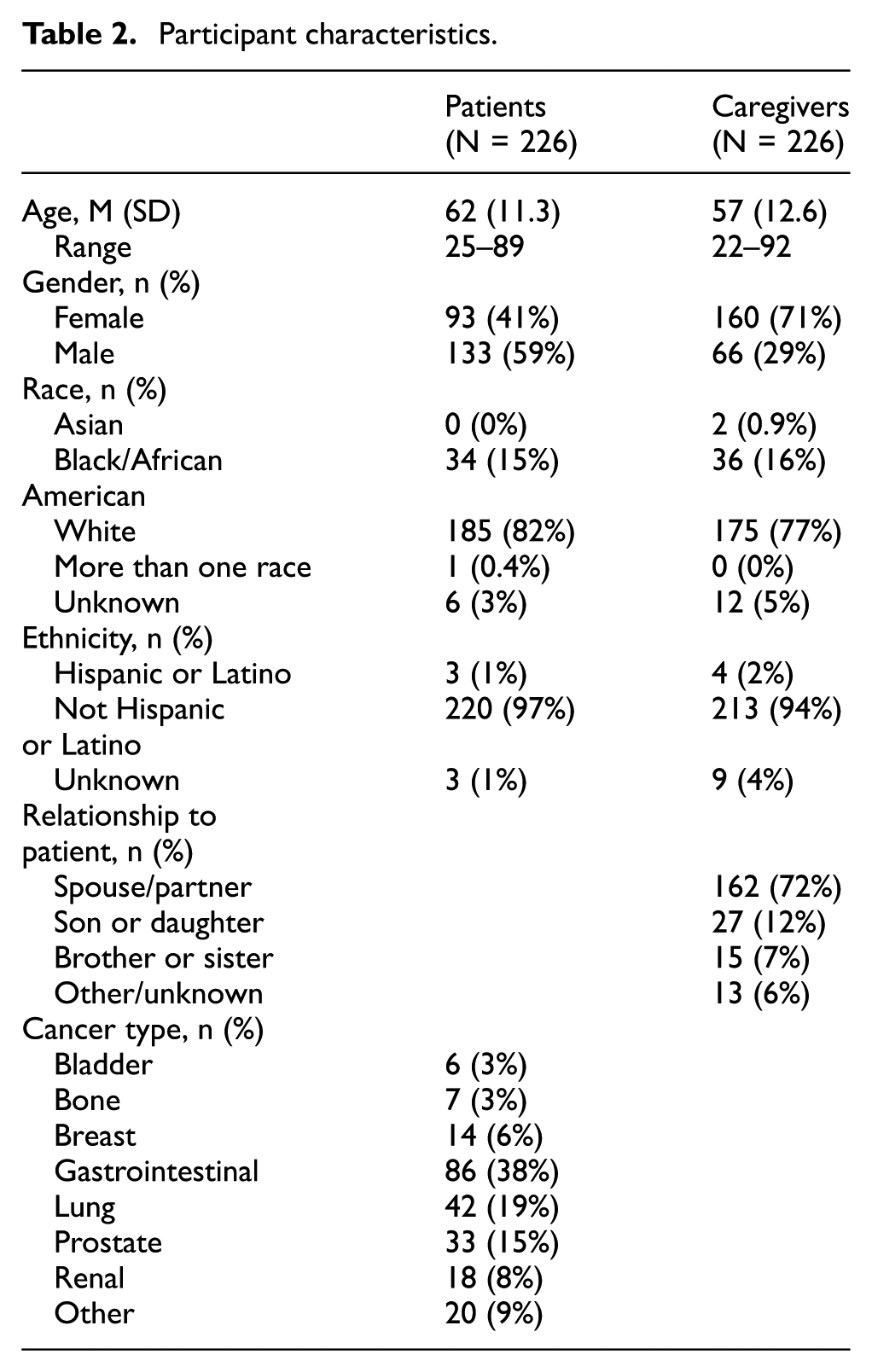
To date, we have enrolled 226 dyads and randomized 208. Participant characteristics are shown in Table 2. The major challenge has been the recruitment of patients with advanced cancer and pain. These challenges have varied somewhat between recruitment sites. Recruitment has been most successful at one medical center where researchers have the ability to recruit patients from multiple outpatient oncology clinics, maximizing the pool of potential participants. Other sites were restricted to recruiting from just a few clinics, due to both logistical issues (e.g. research staffing) and institutional policies. Recruitment from the free-standing palliative care and hospice site was particularly challenging as the patients identified there tended to be very close to death. There were, however, several common challenges which led to changes in the eligibility criteria and study protocol and design. These are described below. Each of these changes was approved by the funding agency prior to implementation.
Participant characteristics.
One original eligibility criterion was a high likelihood of shortened life expectancy, as assessed via the oncologists’ negative response to the “surprise” question (“Would you be surprised if the patient died in the next 12 months?”). 80 Many patients were excluded because oncologists responded “yes” to this question, even those with Stage IV cancers typically associated with poor prognosis. We discussed this issue extensively with referring oncologists who noted that prognosis is increasingly challenging in part due to use of new targeted immunotherapies that can extend survival significantly for some patients. 81 We also reviewed eligibility criteria used in other palliative care studies and found that recent notable examples used disease site and stage rather than prognosis.82,83 Based on these findings, we decided to target all patients with Stage IV cancer and pain—a population who will likely have poor prognosis—and eliminate the surprise question as an eligibility criterion.
While original eligibility criteria restricted participation to patients with Stage IV cancers, we also decided to expand the eligibility criteria to include patients with unresectable Stage III gastrointestinal cancers. Referring physicians at one site noted that they often see patients with Stage III pancreatic, hepatocellular, and cholangio carcinomas who have significant pain and a high likelihood of early mortality. Therefore, we opened the study to these patients.
Another challenge was that patients were being excluded because they reported worst pain levels <4. This was unexpected given the literature indicating that two-thirds of patients with advanced cancer experience pain and 38% report pain ≥5. 84 This raised suspicions that patients might be underreporting their pain severity. Based on guidelines for assessing pain in older adults, 85 we developed more detailed pain assessment guidelines which include normalizing the pain experience, using a variety of descriptors of pain (e.g. aches, discomfort), and asking about pain during movement. We trained study staff at all sites to implement these updated assessment strategies, which has led to the exclusion of fewer patients due to under-reported pain.
In addition to enrollment, there are challenges associated with collecting assessments during the bereavement period, including identifying when patients die, and maintaining contact with caregivers in the interim between the post-intervention assessments and the first bereavement assessment. To maintain contact with caregivers, the site research coordinator calls them at 3-month intervals following the post-intervention assessment and asks three questions regarding the patient’s pain and the caregiver’s self-efficacy. Prior to making these calls, the research coordinator checks the patient’s medical record and online obituaries to determine whether the patient has died. Upon learning of a patient death, a member of the study staff familiar to the caregiver conducts a brief, scripted condolence call to the caregiver to acknowledge the loss, express sympathy, and ask permission to re-contact the caregiver to conduct the 3- and 6-month surveys. We have found that caregivers are receptive to both the condolence calls and the opportunity to complete the bereavement assessments. Our experience is consistent with evidence from prior research indicating that relatives of palliative care patients view research participation favorably, as an opportunity for altruism and positive growth. 86
With regard to intervention delivery, the primary challenge has been completing sessions in a timely fashion. In some cases, this is because a patient is hospitalized. Alternatively, when patients are feeling well, they may capitalize on what may be a time-limited opportunity to engage in meaningful activities (such as travel) and be unavailable for sessions. Caregivers may also be limited in availability, often due to work responsibilities. At enrollment, study staff attempt to anticipate barriers to scheduling sessions and problem-solve solutions. Sessions are offered on evenings and weekends to accommodate participants’ schedules. Nonetheless, at times, it is necessary to extend the intervention period beyond 3 weeks. While not ideal methodologically, it is likely unavoidable when conducting behavioral interventions with patients with serious illness. We will examine time to completion in relation to treatment outcomes and accommodate unequal spacing of assessments through use of HLM analyses.
Summary
Given the burden of pain among patients with advanced cancer and their family caregivers, it is critical to develop and test novel interventions for helping them manage pain and pain-related distress. While there is strong evidence for the efficacy of pain coping skills training interventions in other patient populations, few such interventions have been tested in patients with advanced cancer or systematically involved family caregivers. This is the first multi-site randomized controlled trial to test a caregiver-guided pain coping skills intervention in this population. The intervention is brief and delivered via videoconference, features that enhance access and potential dissemination and scalability. The assessment of caregiver outcomes following the patient’s death is a novel feature that may lead to a better understanding of interventions that can ease caregiver strain and promote healthier bereavement. Findings from this study may lead to significant advances in our knowledge of how best to meet the needs of patients with advanced cancer and pain, and their family caregivers.
Footnotes
Acknowledgements
This project is being supported by the Palliative Care Research Cooperative Group U24NR014637. Trial registration: ClinicalTrials.gov NCT02430467.
Declaration of conflicting interests
The author(s) declared no potential conflicts of interest with respect to the research, authorship, and/or publication of this article.
Funding
This project is funded by the National Institute of Nursing Research (NINR) (NR015348).
