







Abstract
Background:
Randomised controlled trials are widely accepted as the gold standard research methodology for the evaluation of interventions. However, they often display poor participant retention. To prevent this, various participant interventions have been identified and evaluated through the use of studies within a trial. Two such interventions are participant short message service reminders (also known as text-messages) and personalised participant short message service reminders, designed to encourage a participant to return a study questionnaire. While previous studies within a trial have evaluated the effectiveness of these two retention strategies, trialists continue to spend both time and money on these strategies while the evidence remains inconclusive.
Methods:
This systematic review and meta-analysis compared the use of short message service reminders with no short message service reminder and personalised short message service reminders with non-personalised short message service reminders, on participant retention. Eligible studies were identified through advanced searches of electronic databases (MEDLINE, EMBASE and Cochrane Library) and hand-searching of alternative information sources. The review primary outcome was the proportion of study questionnaires returned for the individual study within a trial primary analysis time points.
Results:
Nine eligible studies within a trial were identified, of which four compared short message service versus no short message service and five compared personalised short message service versus non-personalised short message service. For those that compared personalised short message service versus non-personalised short message service, only three were deemed appropriate for meta-analysis. The primary outcome results for short message service versus no short message service concluded that short message service led to a statistically non-significant increase in the odds of study questionnaire return by 9% (odds ratio = 1.09, 95% confidence interval = 0.92 to 1.30). Similarly, comparison of personalised short message service versus non-personalised short message service concluded that personalised short message service caused a statistically non-significant increase in odds by 22% (odds ratio = 1.22, 95% confidence interval = 0.95 to 1.59).
Conclusion:
The effectiveness of both short message service and personalised short message service as retention tools remains inconclusive and further study within a trial evaluations are required. However, as short message services are low in cost, easy to use and generally well accepted by participants, it is suggested that trialists adopt a pragmatic approach and utilise these reminders until further research is conducted. Given both the minimal addition in cost for studies already utilising short message service reminders and some evidence of effect, personalisation should also be considered.
Background
Randomised controlled trials (RCTs) are considered the gold standard research methodology to evaluate the effectiveness of both healthcare and social care interventions; 1 however, they often display poor participant retention.2,3 When designed for use within research and clinical practice, the response rate for patient-reported outcome measures (PROMs) often falls below 50%. 4 This is true for remote questionnaires, by which PROMs are commonly administered. 5 The non-return of questionnaires may introduce bias, reduce statistical power or jeopardise a study’s internal and external validity.6–9 Consequently, trials may be prematurely terminated or require additional funding and resource to counteract the impact of poor retention, thus contributing to research waste.10–12
One strategy often employed within RCTs to increase the return of participant questionnaires is the use of short message service (SMS) reminders.13,14 As a retention tool, SMS reminders (also known as text-message reminders) are relatively low in cost, easy to implement, rapid to send and can be both automated and personalised.15,16 They are also widely accessible and inclusive, with a report published in the year 2020 evidencing that 95% of all UK adults use a mobile telephone. 17 However, the evidence for their effectiveness as a retention tool remains both inconclusive and inconsistent.
Previous systematic reviews of retention methods concluded the use of electronic prompts and reminders to have either a small, positive impact or no impact on participant retention, with no statistical significance.12,18,19 Furthermore, authors of the most recently published Cochrane review, 12 considered the evidence to be either low or very low GRADE. While four studies within a trial (SWATs) were found to compare the impact of SMS reminders versus no reminder (independent of other retention strategies), a meta-analysis of theses SWATs does not appear to have been performed.20–22 For the use of personalised SMS reminders specifically, the evidence is far less abundant. Two previous studies reported conflicting findings, with personalised SMS reminders increasing and decreasing participant retention, neither of which showed statistical significance.23,24
In addition to this, working as a member of the research team for the PROMoting THE Use of SWATs (PROMETHEUS) programme 25 highlighted additional SWATs, which had both evaluated the use of SMS reminders and were not included in previous reviews. This programme was led by York Trials Unit and was designed to pump prime host trial teams with the funding and support to conduct a recruitment or retention SWAT. 25 Therefore, to update the limited evidence with that of additional SWAT evaluations, we undertook a systematic review and meta-analysis to evaluate the effectiveness of SMS reminders versus no reminders and personalised SMS reminders versus non-personalised SMS reminders on participant retention.
Methods
The protocol was prospectively pre-registered on PROSPERO, registration ID: CRD42020227342.
Inclusion and exclusion criteria
Eligible studies were randomised SWAT design, which were embedded within a host RCT, with an adult population (aged ≥ 18 years) and which collected PROMs data using study questionnaires, for which the proportion returned was evaluated as the study’s primary outcome. Due to the nature of the review, two different interventions and their corresponding comparators were eligible for inclusion (see Table 1).
Summary of the review eligibility and ineligibility study criteria.
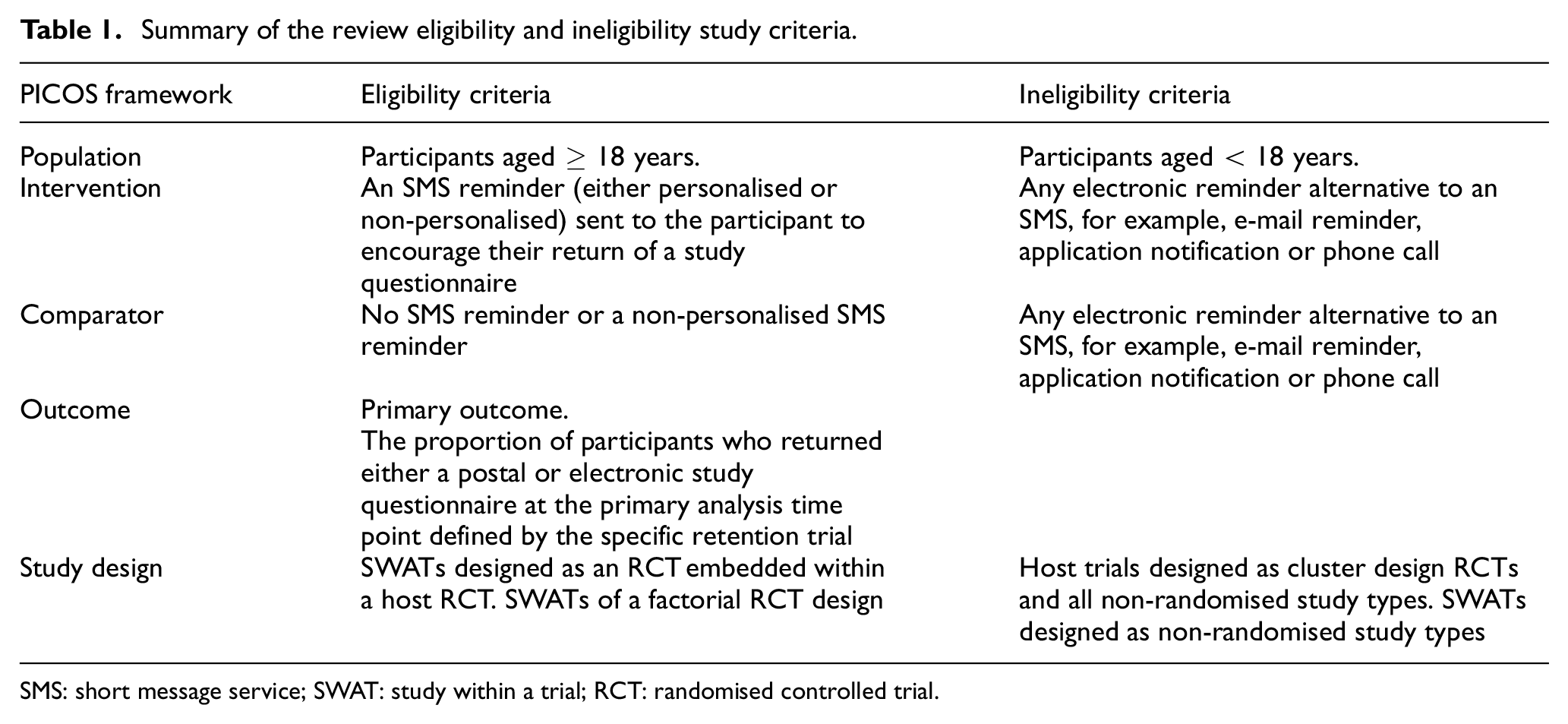
SMS: short message service; SWAT: study within a trial; RCT: randomised controlled trial.
Information sources
An advanced online search of the Cochrane Library, MEDLINE and EMBASE databases was performed from inception to June 2023 (see Supplemental material – Appendix 1). The following information sources were hand-searched by one reviewer: Trial Forge website, F1000 Research – Open Research Platform, The Northern Ireland Network for Trials Methodology Research SWAT Repository and the reference lists of both review-included studies and relevant systematic reviews identified through searching (see Supplemental Appendix 2). Members of the PROMETHEUS programme were also contacted to identify any relevant SWATs. This programme was led by York Trials Unit and was designed to pump prime host trial teams with the funding and support to conduct a recruitment or retention SWAT, therefore, being deemed as a relevant information source. 25
Screening and data extraction was performed by two independent reviewers, for which a third independent reviewer resolved any discrepancies. Data were collected using a pre-piloted data extraction tool (see Supplemental Appendix 3) to capture the key information of individual studies (including the population type, intervention, comparator, study design) and their measured outcomes.
Review outcomes
The primary outcome was the proportion of participant study questionnaires returned at the SWAT primary analysis time point, reported as the number of questionnaires returned, of the total to be returned (provided as an odds ratio (OR) and 95% confidence interval (CI)). Where a corresponding OR and 95% CI were not reported, they were calculated by the review primary author.
Secondary outcomes were the proportion of participants who returned a study questionnaire at other study time points and the cost-effectiveness of the intervention, defined as the cost of retaining one additional participant.
Data synthesis
Narrative synthesis and meta-analysis compared the use of SMS reminders versus no reminder and personalised versus non-personalised reminders. As aspects of text messaging dependency have been shown to decline with increasing age, 26 subgroup analysis for age was also performed (both < and ≥ 65 years). The age of 65 years was chosen as adults of this age and older are often considered ‘older adults’. 27 With previous research also evidencing participant response to both postal and electronic questionnaires to be significantly greater for shorter, rather than longer, questionnaires, a subgroup analysis of questionnaire page length was deemed important to explore. 14 Aligned with the review by Partha Sarathy et al., 18 short and long questionnaires were categorised as both < and ≥ 10 pages, respectively. In addition, as the impact of participant attrition is greatest for trials with long-term follow-up, 28 subgroup analysis of the duration of time between enrolment of SWAT participants to the host trial and the SWAT primary analysis time point (both ≤ and > 6 months) was undertaken. These subgroups were chosen as trial participation of > 6 months has been observed as a strong barrier to participation. 29
A post hoc subgroup analysis compared the intent for a reminder to be received either before, or after, a retention time point, defined as both a prompt and reminder, respectively, by Gillies et al. 13
All analyses used a fixed effects model. Funnel plots were generated to assess for publication bias and the Cochrane Risk of Bias 2 tool was completed by two independent reviewers to evaluate the quality of included studies.
Factorial SWATs with at least one eligible intervention and comparator arm were included. The data from ineligible SWAT arms were not extracted or included within the analysis. For factorial SWATs with more than one eligible intervention or comparator arm, the data from the arms were combined assuming that no evidence of interaction between the review eligible intervention and additional intervention had been reported by the authors.
The cost-effectiveness analysis, as detailed in Supplemental Appendix 4, derived the cost of retaining one additional participant through use of the intervention.
Results
Eight studies, which reported a total of nine SWATs, were deemed eligible for inclusion (see Figure 1).20–24,30–32 Keding et al. sequentially embedded two independent SWATs within the same host trial. 21 Four SWATs compared the use of SMS versus no SMS20–22 and five compared personalised versus non-personalised SMS23,24,30–32 (see Table 2).
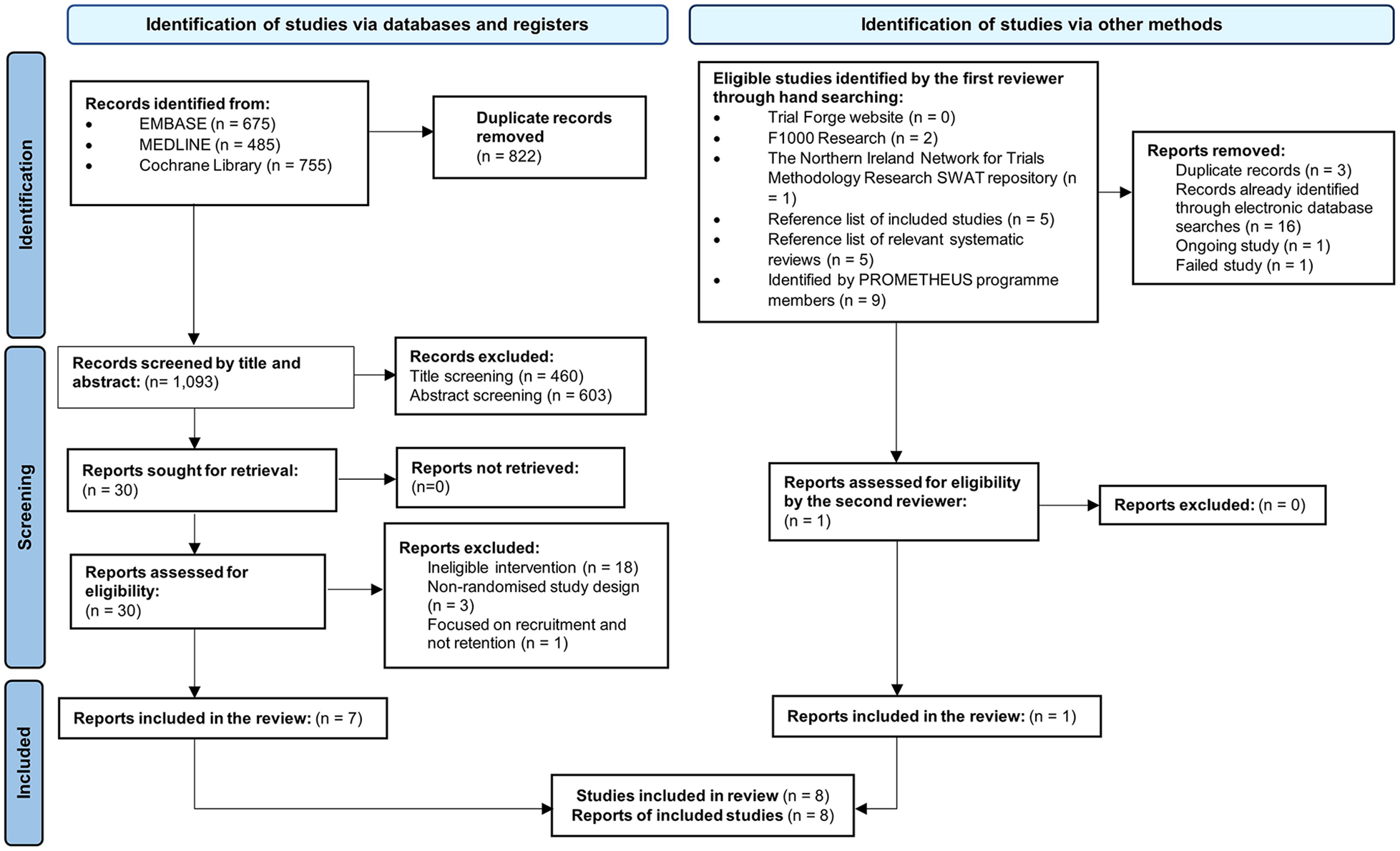
The PRISMA 2020 flow diagram of the studies identified, screened and included within the review.
The PICOS summary table for all studies included within the review.
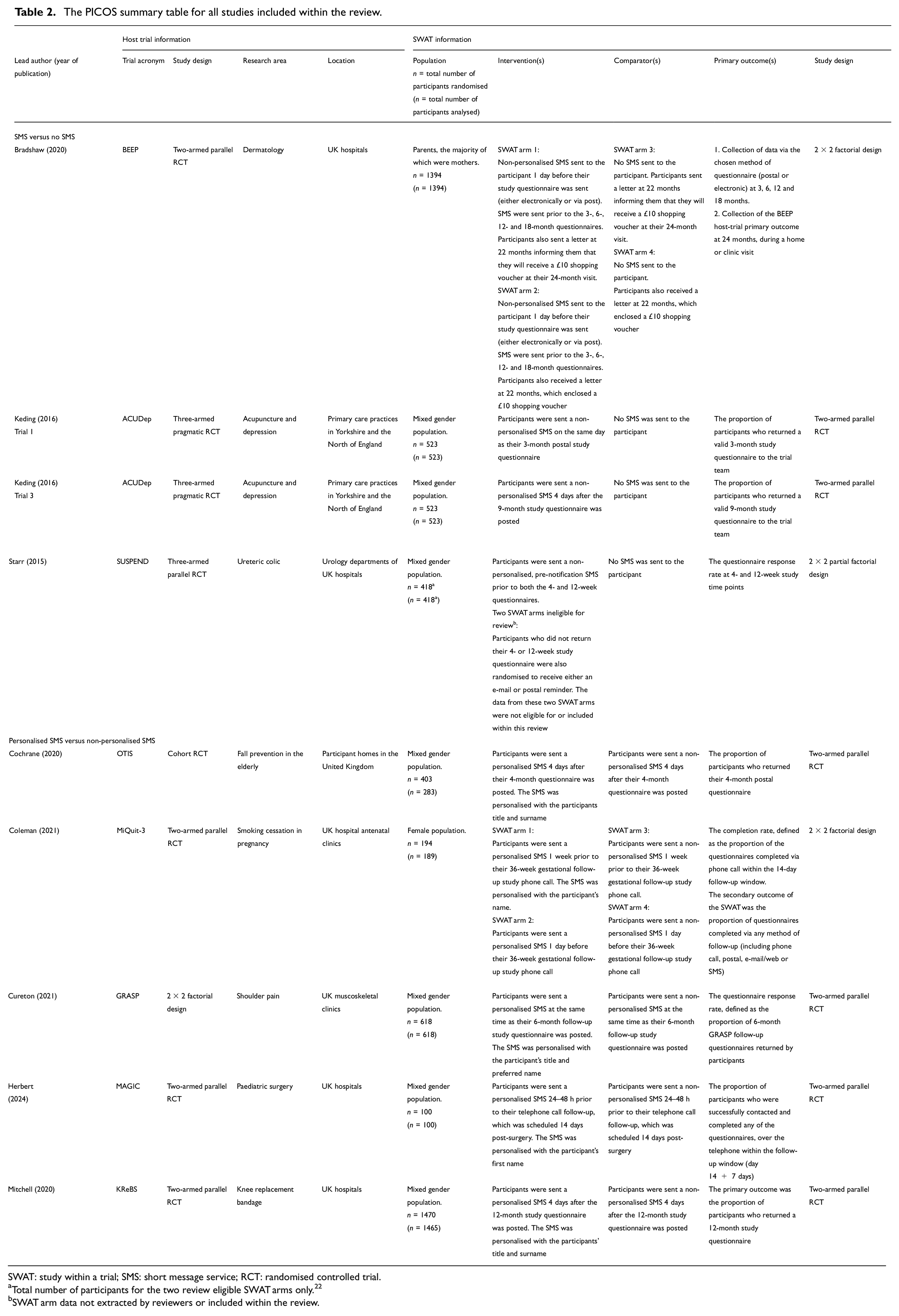
SWAT: study within a trial; SMS: short message service; RCT: randomised controlled trial.
Total number of participants for the two review eligible SWAT arms only. 22
SWAT arm data not extracted by reviewers or included within the review.
Narrative synthesis
SMS versus no SMS
Of the four SWATs, either a two-armed parallel RCT (n = 2), 2 × 2 factorial (n = 1), or partial factorial (n = 1) design was used (see Table 2). In addition to SMS reminders, Bradshaw et al. evaluated the impact of a participant monetary incentive but reported no interaction between interventions meaning the SWAT data could be appropriately combined to compare SMS versus no SMS exclusively. 20 Starr et al. 22 also evaluated the use of a postal/email reminder, which was ineligible for review; therefore, only the data from the two SWAT arms comparing SMS and no SMS was extracted. In light of this, the SWAT authors reported no evidence of interaction between the use of SMS reminders and postal/email reminders.
Collectively the SWATs studied a mixed gender population of similar age (mean ages 31.3 to 41.0 years old) and recruited from UK-based hospitals (see Supplemental Appendix 5). However, the SWAT population size varied considerably (range of 418 to 1394 participants; see Table 2). The SMS intervention for all four SWATs were non-personalised and sent only once per follow-up time point used. Each included the host trial acronym, reference to the arrival of the study questionnaire and it’s return or completion. All SMS were sent prior to the study questionnaire, except for Keding et al. Trial 3 (see Table 2). 21 Each SWAT sent questionnaires primarily via post (see Supplemental Appendix 5), excluding Bradshaw et al. which utilised both electronic and postal questionnaires dependent on participant preference. 20 Where reported, questionnaire page length varied considerably (ranging from 4 to 12 pages; see Supplemental Appendix 5).
Two of the four SWATs provided a measure of the participants socioeconomic status. Bradshaw et al. 20 reported similar median values for the English Index of Multiple Deprivation (IMD) across the four SWAT arms (reported as 6 for those who received an SMS and monetary incentive, 5 for an SMS and no monetary incentive and 6 for no SMS, either with or without a monetary incentive). Therefore, across the arms, the overall median decile for the English IMD was 5, suggesting that for this SWAT, the participants were generally from areas of average depravity. For the SWAT by Keding et al., 21 the mean age of participant’s leaving education was 18.1 years (SD = 3.89). The participant employment status was also reported as 214 (41%) working full time, 100 (19%) working part time, 65 (12%) looking after home, 61 (12%) unable to work, 21 (4%) in full-time education, 18 (3%) retired, 30 (6%) ‘other’ and 14 (3%) provided no information. None of the four SWATs reported on race or ethnicity.
The two SWATs by Bradshaw et al. and Starr et al. were the only two to evaluate the return of questionnaires at subsequent time points to the SWAT primary end point.20,22 Across the SWATs, the primary end point varied considerably (ranging from 4 weeks post-randomisation to 9 months; see Supplemental Appendix 5). Data from the return of questionnaires at 24 months studied by Bradshaw et al. 20 was deemed irrelevant as it was collected via a face-to-face visit and not a remote data collection method – and as such was not extracted.
For the two SWATs by Keding et al., the primary OR and corresponding 95% CI was calculated by the review primary author. 21 This showed the return to be greater for the control group, than the intervention group (ORs = 0.87 and 0.92, respectively). Whereas Bradshaw et al. and Starr et al. found the proportion of returned questionnaires at the SWAT primary analysis time point was greater for the intervention group (ORs = 1.17 and 1.24).20,22 All results were not considered statistically significant. At subsequent time points, these findings showed the opposite for Starr et al. (OR = 0.97) and fluctuated for Bradshaw et al. (ORs = 1.02, 0.87 and 1.03).
Personalised SMS versus non-personalised SMS
Across the SWATs, either a two-armed parallel RCT (n = 4) or 2 × 2 factorial design (n = 1) was used (see Table 2). Coleman et al. evaluated the timing and personalisation of SMS factorially; 30 however, as there was no evidence of interaction between interventions, the SWAT data were combined to evaluate personalisation exclusively. For all five SWATs, the number of recruited participants (range of 100 to 1470 participants), the mean participant age (range of 27.1–77.8 years) and research area varied considerably (see Table 2 and Supplemental Appendix 5). However, most recruited a mixed gender population from either a hospital or clinic within the United Kingdom.
SMS interventions across all five SWATs were sent only once per follow-up time point used; however, the timing in which they were sent varied (see Table 2). The intervention and comparator SMS included the host trial acronym, reference to the arrival or phone call receival of the questionnaire and the return or completion of it. They were issued at the same time and frequency; however, personalised SMS included the participant’s name. The method of questionnaire delivery and page length (range of 4.5 to 15 pages) varied considerably (see Supplemental Appendix 5).
Of the five SWATs, only Coleman et al. provided a measure of the participant’s ethnicity. 30 In this SWAT, 168 participants (88.9%) self-reported their ethnicity as Caucasian. This finding was similar for each of the SWAT arms (92.4% for those who received the personalised SMS and 85.6% for those who received a non-personalised SMS). None of the five SWATs reported on the participant’s socioeconomic status.
Each SWAT evaluated the primary outcome at one time point only (see Supplemental Appendix 5). For Coleman et al. 30 and Herbert et al., 32 the duration of time between host trial enrolment and the SWAT primary analysis time point differed for each participant due to the nature of the studies (see Supplemental Appendix 5). Coleman et al. was also the only SWAT to place a time restriction on questionnaire completion (14 days). For Cureton et al., 31 Herbert et al. 32 and Mitchell et al., 24 the proportion of returned questionnaires was greater for the intervention group (ORs: 1.63, 1.49 and 1.09, respectively, see Table 2). The opposite was true for Cochrane et al. 23 and Coleman et al. 30 (ORs: 0.64 and 0.61, respectively). The OR and corresponding 95% CI for Cureton et al. was calculated by the review primary author and had a CI, which could be considered statistically significant (95% CI = 1.01–2.63).
Meta-analysis
Studies by Coleman et al. and Herbert et al. were not included in the meta-analysis as their questionnaires were completed via phone call.30,32 It is possible that the introduction of human-to-human interaction may stimulate a different response to that of either postal or electronic remote data collection.
SMS versus no SMS
The primary analysis, which included all four SWATs that compared SMS versus no SMS, favoured the use of SMS for the return of participant study questionnaires (OR = 1.09, 95% CI = 0.92 to 1.30, I2 = 0%, see Figure 2). Subgroup analysis of the two SWATs with a questionnaire length of 10 pages or greater (Keding et al. 21 ), favoured the use of no SMS (OR = 0.90, 95% CI = 0.66 to 1.23, I2 = 0%). In contrast, the three studies with a duration of 6 months or less between participant enrolment to the host trial and the SWAT primary analysis time point (Bradshaw et al., 20 Keding et al. 21 Trial 1 and Starr et al. 22 ), favoured the use of SMS (OR = 1.13, 95% CI = 0.93 to 1.37, I 2 = 0%). The results of this analysis were identical to that for the use of an SMS ‘prompt’ rather than ‘reminder’. The influence of mean participant age could not be evaluated as this was below 65 years for all four SWATs.
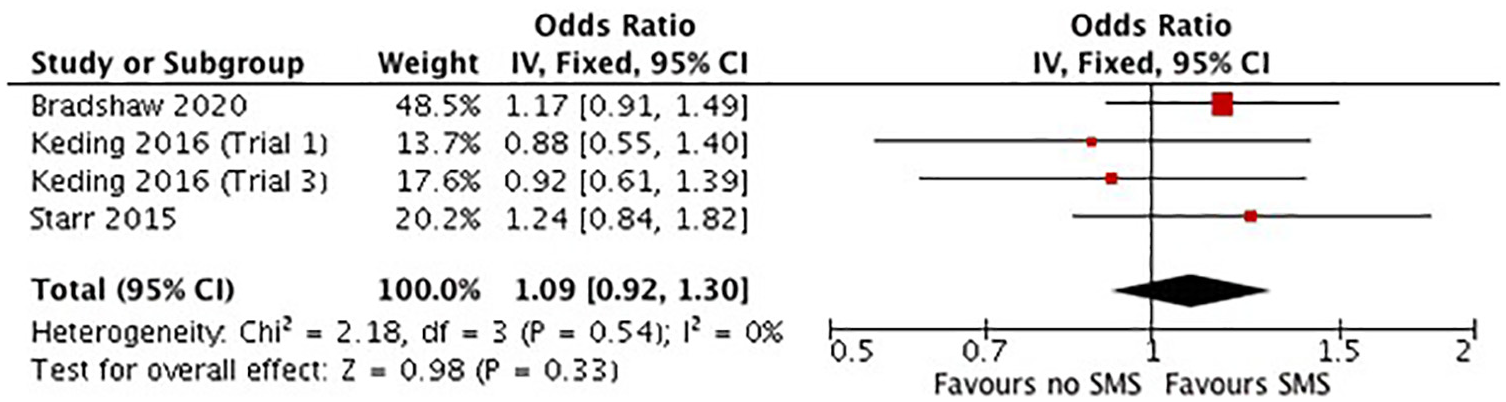
Meta-analysis of studies evaluating SMS versus no SMS on the return of study questionnaires at the individual SWAT primary analysis time points.
Personalised SMS versus non-personalised SMS
Primary analysis of the three SWATs that compared personalised versus non-personalised SMS favoured the use of personalised SMS on participant questionnaire return (OR = 1.22, 95% CI = 0.94 to 1.59, see Figure 3); however, there was heterogeneity (I2 = 16%). Subgroup analysis of the two SWATs with a mean participant age of 65 years or older (Cochrane et al. 23 and Mitchell et al. 24 ) favoured the use of personalised SMS (OR = 1.07, 95% CI = 0.78 to 1.47, I2 = 0%). The results of this analysis were identical to that for the use of an SMS ‘prompt’ rather than ‘reminder’. Similarly, subgroup analysis of Mitchell et al. 24 and Cureton et al., 31 which used questionnaires of 10 pages or more, favoured personalised SMS (OR = 1.24, 95% CI = 0.95 to 1.62); however, with moderate heterogeneity (I2 = 46%). Again, for SWATs with 6 months or less between participant enrolment to the host trial and the SWAT primary analysis time point (Cochrane et al. 23 and Cureton et al. 31 ), personalised SMS were favoured (OR = 1.53, 95% CI = 0.96 to 2.63, I2 = 0%).
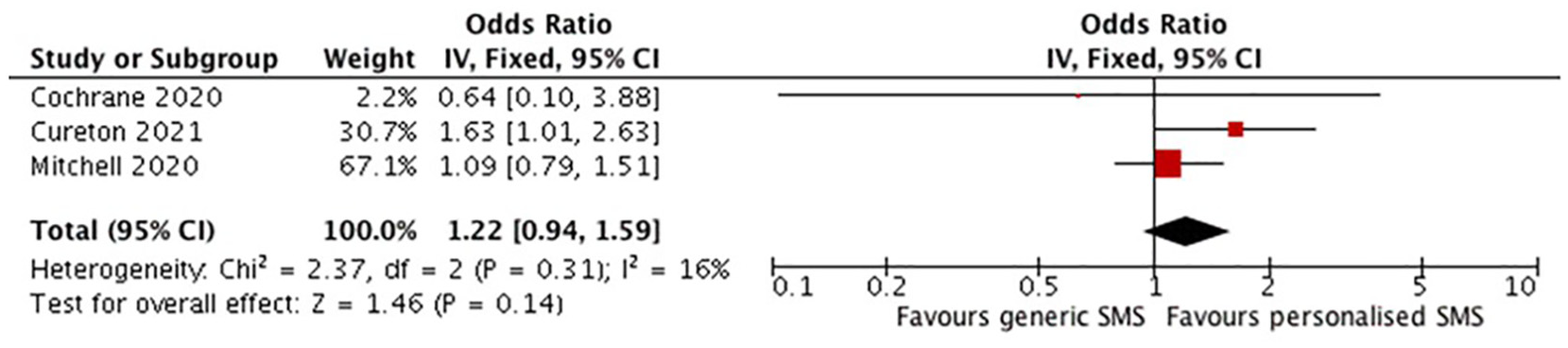
Meta-analysis of studies evaluating personalised SMS versus non-personalised SMS on the return of study questionnaires at the individual SWAT primary analysis time points.
Publication bias and risk of bias
Funnel plots for SWATs comparing SMS versus no SMS and personalised versus non-personalised SMS suggested the review primary analyses suffered very little and some publication bias, respectively. The Cochrane Risk of Bias 2 tool (see Supplemental Appendix 6) concluded that all eight of the nine SWATs showed ‘some concern’; however, no SWAT had a rating of ‘high risk’ for any domain.
Cost-effectiveness analysis
The only SWAT to report the cost of both a personalised and non-personalised SMS was Cochrane et al. 23 (£0.096 and £0.048, respectively). Therefore, these values informed the cost-effectiveness analysis. Analysis showed the cost to retain an additional participant when using an SMS compared with no SMS is £4.80. The cost to retain an additional participant when using a personalised compared with a non-personalised SMS is £1.60, in addition to the cost of sending a non-personalised SMS, resulting in a total of £1.65.
Discussion
When comparing the use of SMS versus no SMS, SMS favoured a non-significant increase in the return of participant questionnaires (see Table 3), as aligned with the findings of previous reviews. Similarly, when compared with non-personalised SMS, personalised SMS favoured a non-significant increase in participant questionnaire return (see Table 3). As the increase in odds was much greater for the latter comparison, it should be considered that personalisation, rather than the medium of personalisation, has a greater impact on retention. Therefore, it could be useful to incorporate personalisation for other retention tools.
The pooled OR (95% CI) for the primary, subgroup and post hoc analyses for both the comparison of SMS versus no SMS and personalised versus non-personalised SMS.
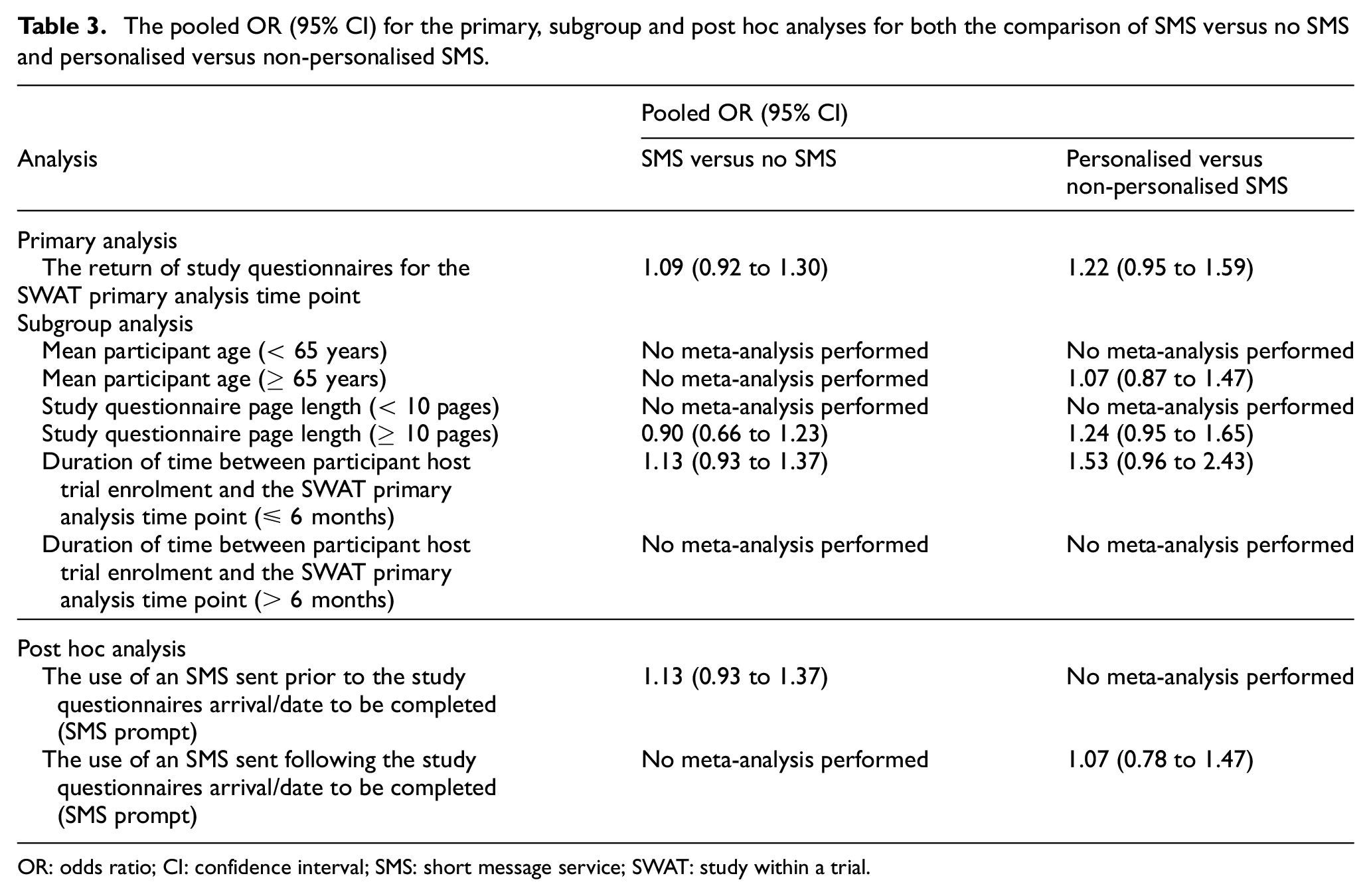
OR: odds ratio; CI: confidence interval; SMS: short message service; SWAT: study within a trial.
While the review findings provide an important contribution to the existing research, they are not conclusive. Aligned with Trial Forge Guidance 2, the inconsistency in the direction of the intervention’s effect for the individual studies, suggests that further SWAT evaluations are required. 33 Therefore, as informed by this same guidance, 33 we suggest that trialists adopt a pragmatic approach of utilising personalised SMS as a low cost, easy to use intervention, until further research suggests otherwise. This is superior to using interventions (of potentially higher cost) that have no evidence of a positive effect on retention.
As the impact of retaining one additional study participant can vary between studies, there is no uniform measure for the clinical significance and impact of a retention tool. Therefore, trialists should consider the use of an intervention such as SMS reminders on a study-specific basis.
Strengths and limitations
In contrast to previous research, this review evaluated the use of SMS (both personalised and non-personalised), independent of other electronic retention tools, therefore, answering a more specific research question. In addition, the review included three newly published SWATs, which were not included in the review by Gillies et al. No study presented a ‘high’ risk of bias and the review’s primary analyses displayed either none or minimal heterogeneity. While the review is susceptible to language bias, due to including only English reported studies, the advanced electronic database search, which was not restricted by language, returned no further relevant studies.
For this review, a wide range of both published and unpublished information sources were searched, mostly by two independent reviewers. The host trials within which the SWATs were embedded mostly studied mixed gender populations and spanned a diverse collection of research areas, increasing the results generalisability. The minimally reported socioeconomic information appears to align with that for the UK population, with UK residents leaving education aged 19.3 years on average (as reported in 2018) 34 and 52.7% of residents in England and Wales recorded as either employed or self-employed in 2021. 35 Similarly, a Median Decile of English IMD value of 5 suggests an average deprivation status for England. 36 However, as seven SWATs did not report socioeconomic information, this cannot be confidently determined for the review findings overall.
The review findings are only applicable to studies within the United Kingdom, which utilise questionnaires completed via remote data collection methods and for comparison of SMS versus no SMS specifically, a narrow participant age range. Of the nine SWATs, only one reported on participant ethnicity, jeopardising the generalisability of the review findings to the wider UK population. For the one SWAT that did report on ethnicity, the 2021 Census data, which report 81.7% of residents in England and Wales to be White, 37 suggests that a greater percentage of Caucasians were included in the SWAT compared to the UK population. However, this should be improved for most research as ethnic minorities are commonly under-represented in trials. 38
It was also not considered that the individual host trials measured the return of study questionnaires by their own definition, which may have differed in completeness and time of receival. It is also possible that the host trials implemented additional SWATs, or retention strategies, which were not accounted for. The review may have suffered some publication bias and some subgroup analyses presented heterogeneity. In addition, the ORs calculated by the review primary author may be less accurate than those reported by SWAT authors, as the latter have access to raw data and may adjust for covariates.
Conclusion
Although not statistically significant, the use of an SMS increases participant retention and retention can be further increased when SMSs are personalised. Therefore, as SMSs are low in cost, easy to implement and generally well accepted by participants, it is suggested that future trials adopt a pragmatic approach and use personalised SMS to potentially increase participant retention. Future evaluations of both personalised and non-personalised SMS in populations outside of the United Kingdom or evaluations of SMS compared with no SMS within populations aged either below 30 or above 40 years of age, remain useful.
Supplemental Material
sj-docx-1-ctj-10.1177_17407745251320888 – Supplemental material for Evaluating the use of text-message reminders and personalised text-message reminders on the return of participant questionnaires in trials, a systematic review and meta-analysis
Supplemental material, sj-docx-1-ctj-10.1177_17407745251320888 for Evaluating the use of text-message reminders and personalised text-message reminders on the return of participant questionnaires in trials, a systematic review and meta-analysis by Laura Doherty, Catherine Arundel, Elizabeth Coleman, Ailish Byrne and Katherine Jones in Clinical Trials
Supplemental Material
sj-docx-2-ctj-10.1177_17407745251320888 – Supplemental material for Evaluating the use of text-message reminders and personalised text-message reminders on the return of participant questionnaires in trials, a systematic review and meta-analysis
Supplemental material, sj-docx-2-ctj-10.1177_17407745251320888 for Evaluating the use of text-message reminders and personalised text-message reminders on the return of participant questionnaires in trials, a systematic review and meta-analysis by Laura Doherty, Catherine Arundel, Elizabeth Coleman, Ailish Byrne and Katherine Jones in Clinical Trials
Supplemental Material
sj-docx-3-ctj-10.1177_17407745251320888 – Supplemental material for Evaluating the use of text-message reminders and personalised text-message reminders on the return of participant questionnaires in trials, a systematic review and meta-analysis
Supplemental material, sj-docx-3-ctj-10.1177_17407745251320888 for Evaluating the use of text-message reminders and personalised text-message reminders on the return of participant questionnaires in trials, a systematic review and meta-analysis by Laura Doherty, Catherine Arundel, Elizabeth Coleman, Ailish Byrne and Katherine Jones in Clinical Trials
Supplemental Material
sj-docx-4-ctj-10.1177_17407745251320888 – Supplemental material for Evaluating the use of text-message reminders and personalised text-message reminders on the return of participant questionnaires in trials, a systematic review and meta-analysis
Supplemental material, sj-docx-4-ctj-10.1177_17407745251320888 for Evaluating the use of text-message reminders and personalised text-message reminders on the return of participant questionnaires in trials, a systematic review and meta-analysis by Laura Doherty, Catherine Arundel, Elizabeth Coleman, Ailish Byrne and Katherine Jones in Clinical Trials
Supplemental Material
sj-docx-5-ctj-10.1177_17407745251320888 – Supplemental material for Evaluating the use of text-message reminders and personalised text-message reminders on the return of participant questionnaires in trials, a systematic review and meta-analysis
Supplemental material, sj-docx-5-ctj-10.1177_17407745251320888 for Evaluating the use of text-message reminders and personalised text-message reminders on the return of participant questionnaires in trials, a systematic review and meta-analysis by Laura Doherty, Catherine Arundel, Elizabeth Coleman, Ailish Byrne and Katherine Jones in Clinical Trials
Supplemental Material
sj-docx-6-ctj-10.1177_17407745251320888 – Supplemental material for Evaluating the use of text-message reminders and personalised text-message reminders on the return of participant questionnaires in trials, a systematic review and meta-analysis
Supplemental material, sj-docx-6-ctj-10.1177_17407745251320888 for Evaluating the use of text-message reminders and personalised text-message reminders on the return of participant questionnaires in trials, a systematic review and meta-analysis by Laura Doherty, Catherine Arundel, Elizabeth Coleman, Ailish Byrne and Katherine Jones in Clinical Trials
Footnotes
Declaration of conflicting interests
The author(s) declared the following potential conflicts of interest with respect to the research, authorship, and/or publication of this article: L.D., C.A. and E.C. declare that they have previously received funding from the PROMETHEUS programme (MR/R013748/1) and an NIHR CTU infrastructure grant (NIHR132547). All other authors declared no potential conflicts of interest with respect to the research, authorship, and/or publication of this article.
Funding
The author(s) received no financial support for the research, authorship, and/or publication of this article.

Supplemental material
Supplemental material for this article is available online.
References
Supplementary Material
Please find the following supplemental material available below.
For Open Access articles published under a Creative Commons License, all supplemental material carries the same license as the article it is associated with.
For non-Open Access articles published, all supplemental material carries a non-exclusive license, and permission requests for re-use of supplemental material or any part of supplemental material shall be sent directly to the copyright owner as specified in the copyright notice associated with the article.
