







Abstract
Background
Generic substitution has become a common practice in several countries, primarily because of a major cost-minimizing strategy without compromising healthcare quality.
Objective
The study was carried out to assess the knowledge and perception of generic medication among final year pharmacy and medical students in the University of Sharjah.
Method
A cross-sectional survey was designed, pre-validated, and distributed during the period of September to November 2019 in the University of Sharjah, United Arab Emirates. The study research covered various aspects on knowledge and perception of generic medicines. It was distributed to 180 final year pharmacy and medicine students. Data were analyzed using SPSS, and Chi square test was used to determine the level of significance at p < 0.05.
Result
A total of 171 of 180 questionnaires were returned back including 87 and 84 surveys from pharmacy and medical students respectively producing a response rate of 95%. The majority of respondents in both collages were females, Arabs, and with parents of non-health care professions. Significantly more pharmacy than medical students agreed that cost-effective therapy and generics were covered in their study courses, generics are bioequivalent to brands and must contain the same amount of active ingredients like brands, that they are confident of their knowledge and more easily recall drugs by their generic names. Again more pharmacy students agreed that pharmacists should have the right to perform substitution but disagreed to the statement that generics takes longer time to produce therapeutic effects than brands.
Conclusion
Overall, Final-year students of pharmacy had better level of knowledge and perception of generic medicines and their right to perform generic substitution. Medical students seem to have limited knowledge of certain important aspects. Therefore, improvement of educational courses of future health-care professionals should be implemented early to enhance students’ awareness toward generic substitution.
Keywords
Introduction
In the 1960s through 1990s, the role of pharmacists has been expanding in the medical field in which they became more involved in direct patient care. Pharmacists’ duty is now more than simply preparing and distributing medications. 1 Pharmacists are drug experts and should be equipped with skills to identify, properly address, and prevent drug-related problems, they should also advise patients about cost-effective therapy. 2 Recent investigations have proved that although pharmacists generally support the promotion of generic medication use to their patients, many pharmacists have inaccurate or limited knowledge of the standards used in the evaluation and registration of generic medicines by their respective country’s drug regulatory bodies. 2 Due to the rising cost to both the government and the patients, pharmacists are encouraged to advise both physicians and patients on the availability of cheaper alternatives. Generic drugs contain the same chemical formula as brand product in which they have the same active ingredient that treat the same disease. 2 The food and drug administration (FDA) mandated that generic and brand drugs can be interchangeable with the expectation that the patient will have the same clinical results. 3 Generics are products that are designed to have the same dosage form, strength, performance, and quality as the original brand product. 2 The World Health Organization defined generic medicines as pharmaceutical products which are intended to be interchangeable with the comparator products. Moreover, the medicine’s name, appearance (such as color or shape), packaging size, and excipient ingredients can differ from the reference medicine’s name. 4 It should be noted that generics are typically 20–70% less costly than their counterpart products, according to the FDA estimates, because they are not expected to go through pre-clinical and clinical trials. 5 Due to the rising costs of healthcare systems, efforts are focused on reducing those costs to make medications accessible to everyone. It should be stated that low-income patients and those without medical insurance coverage may not comply with their prescribed drugs if they are unable to afford their price as a result compliance cannot be achieved, this would have a negative effect on therapeutic results. 6 The use of generic drugs can play an important role in reducing costs, and the savings could be used for other purposes such as purchasing new and more effective medicines.7,8 In the developing world, one-third of the population has no access to medicines. 2 Accessibility is often obstructed by the high prices of brand drugs. One of the solutions is to encourage the use of generic medicines by healthcare providers. 4 Generic substitution practice is strongly supported by healthcare authorities in several countries around the world. Globally, the use of generic drugs has gradually increased as a consequence of financial pressure on drug budgets.8,9 The improper use of pharmaceutical products in health care facilities is a common problem not only in developing countries, but also in developed countries. 10 In recent years, the use of generic prescription and substitution remains controversial, the adoption and promotion of generic medicines by healthcare professionals continues to be questioned. It is proven that not only physicians but also pharmacists have negative views and they are hesitant toward generic prescribing and dispensing due to their limited knowledge and misconceptions. Several studies have reported that patients have doubts regarding generics because they believe that they are less effective, of lower quality, and unsuitable to treat major diseases compared to their branded equivalents. 6 Patients may also ask the healthcare provider for a specific drug by name, which is usually branded and expensive, either because of past medical experience or because of the influence of commercial activity. 6 Since they are cheaper than brand medicines, patients perceive generics as less effective than the brand product. For instance, in Australia, a study was carried out to determine differences in knowledge and perceptions of generic medicines among final-year medical students and pharmacy pre-registrants, both groups admitted having insufficient knowledge about the quality, safety, and effectiveness of generic medicines. 2 In the United Arab Emirates (UAE), there is a lack of research on generic prescribing and patient awareness, understanding, and attitude toward generic drugs, therefore this research was conducted to determine the level of knowledge, perception, and attitude toward generics among final-year medicine and pharmacy students. Examining such aspects among those students who are soon to become professional practitioners is important to assess their knowledge on generic medicines and increase their awareness through various effective interventions to equip them with the skills needed for them to make a positive impact on therapeutic outcomes in their patients.
Methods
Study setting
The study was conducted in the medical campus at the University of Sharjah which includes in addition to pharmacy and medicine the colleges of dentistry and health sciences. The study was conducted from 15 September to 30 November 2019.
Study design
A pre-piloted cross-sectional questionnaire was prepared through an extensive review of available literature on knowledge and perception of pharmacy and medical students regarding generic medicines. The survey was conducted to assess the level of knowledge and perception of generic medicines among final year pharmacy and medical students at the University of Sharjah, UAE.
Variables
Independent variables: socio-demographic characteristics of students (gender, age, ethnicity, college, accommodation, and parent’s profession).
Dependent variables: knowledge and perception toward generic medicine.
Sample size determination
The targeted number in each college was calculated using the online Raosoft sample size calculator. Inclusion criteria comprised final year students of both colleges. Exclusion criteria included non-final year students, master and PhD students, and non-pharmacy and non-medical students.
Data collection process
The questionnaire contains socio-demographic profiles of the participants followed by questions that assess their knowledge and perception on generic medicines. The researchers obtained approval of the deans of the respective colleges and approached students at the end of their classes where they briefed them on the purpose of the study and obtained a signed written consent of those who voluntarily agreed to participate in the study. The questionnaire took 15–20 min to fill and the researchers collected the filled in surveys back. The total number of surveys distributed was 180.
Statistical analysis
The participants’ responses were encoded, and the data were analyzed using Statistical Package for the Social Sciences (version 20 SPSS, Chicago, IL, USA). The data were summarized as frequencies and percentages. Descriptive analysis was used to calculate the proportion of each group and significant association between demographic characteristics of the participants who respond to each statement in the questionnaire and their responses was determined at a level of significance set at p-value < 0.05 by Chi square test. The test was also used to assess association of the independent variables with participants’ knowledge and perception about generics with a level of statistical significance at a p value < 0.05.
Ethical approval
The study was approved by the Ethical Committee of the University of Sharjah with reference number REC-19-09-29-02-S.
Results
Demographic characteristics of the participants
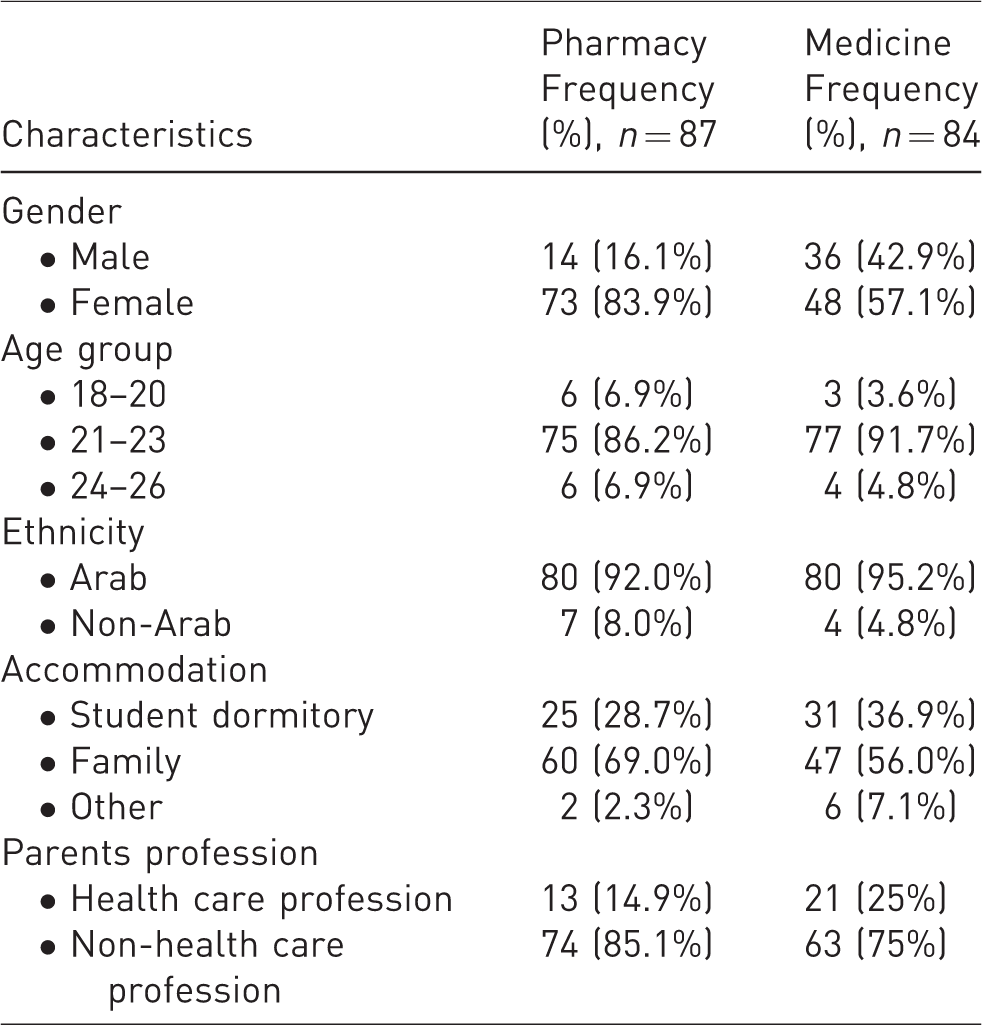
A total of 171 completely filled in surveys were received back comprising 87 and 84 from pharmacy and medical students, respectively, and producing a total response rate of 95%. In the college of pharmacy, the majority (73, 83.9%) of students were females, while medical students were of comparable percentages. The majority (above 85%) of participants in both colleges were within the age group of 21–23 years and most (above 90%) of them were of an Arab origin. Most of the students live with their families with less than one-third (28.7%) of pharmacy and more than two-thirds (36.9%) of medical students living in the dormitory. Only 13 (14.9%) and 21 (25%) of the parents of students in the colleges of pharmacy and medicine, respectively, were healthcare professionals (Table 1).
Demographic characteristics of the participants.
Knowledge of pharmacy and medical students about generic medicines
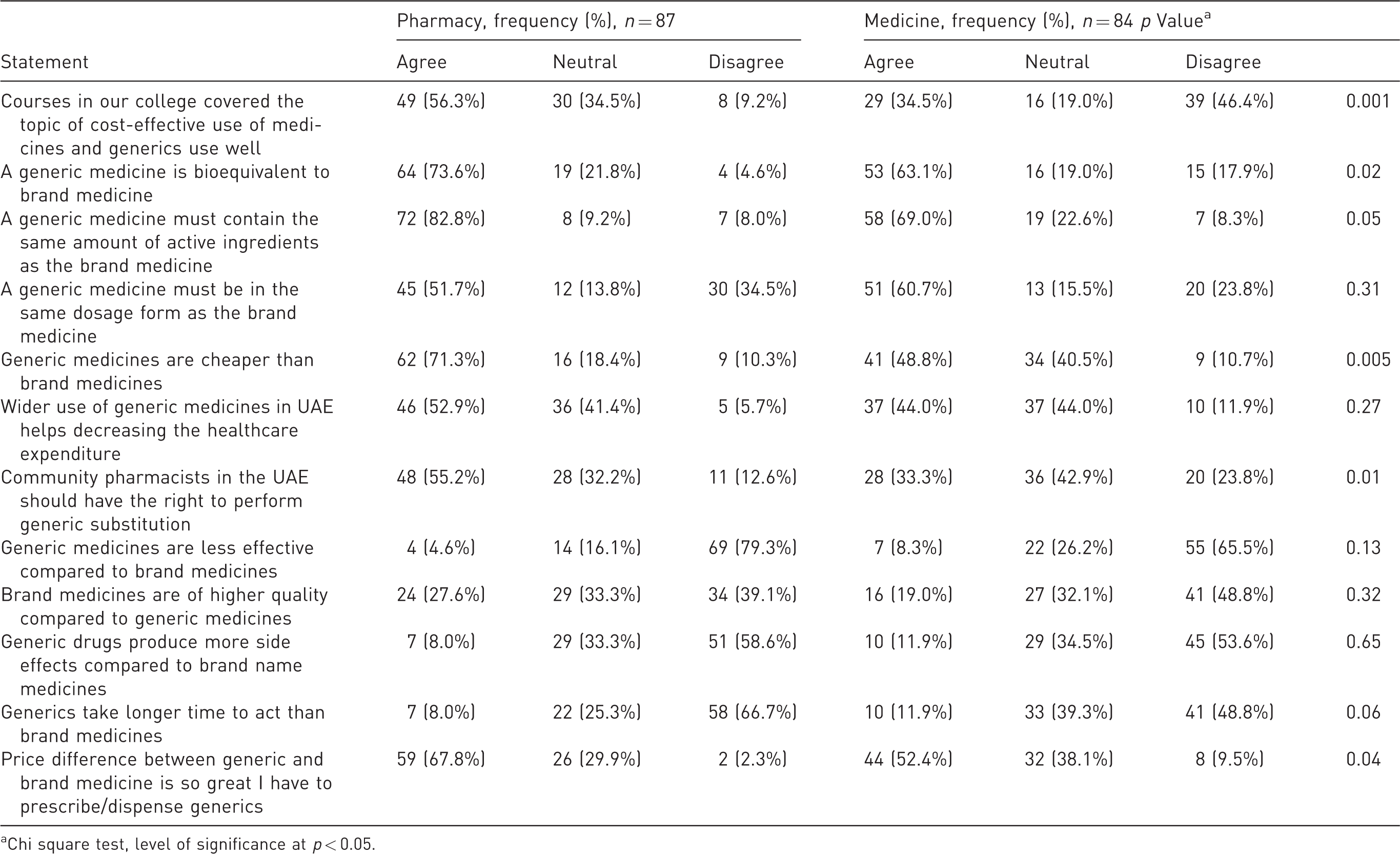
Significantly (p < 0.02) more pharmacy students agreed that generics are bioequivalent to and cheaper (p < 0.00) than their counterpart brands. Again significantly (p < 0.01) more pharmacy than medical students agreed to the right of community pharmacists in UAE to practice generic substitution. Similarly, more (p < 0.04) of pharmacy than medical students agreed that there is a price difference between brand and generic medicines. Also, a large percentage of both groups of students agreed to the fact that a generic medicine must be in the same dosage form as a brand and that increased use of generics reduces the escalating expenditure of health authorities on brands. Correct disagreement was observed regarding the negative statements that generic is less effective, of lower quality, produces more side effects, and take longer time to give a response their counterpart brands (Table 2).
Knowledge of generic medicines among final year pharmacy and medical students.
Chi square test, level of significance at p < 0.05.
Comparison of perception of generics among pharmacy and medical students
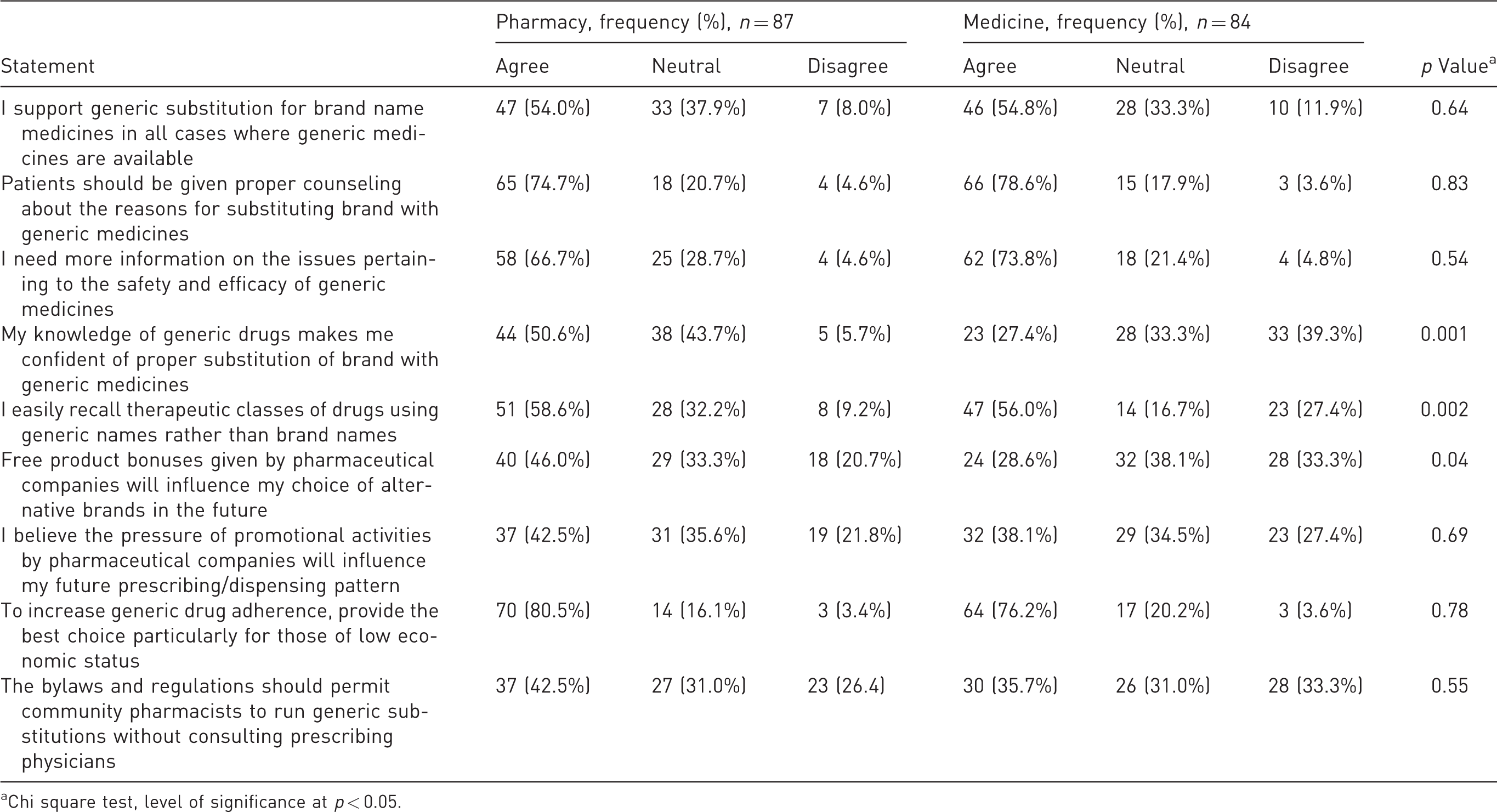
Regarding their perception of generic medicines, significantly (p < 0.00) more pharmacy than medical students agreed that their respective courses covered the topic of cost-effective use of medicines including generics and that their knowledge of generics makes them confident of their ability to practice rational generic substitution. Moreover, significantly (p < 0.002 and p < 0.04) more pharmacy than medical students agreed that it is easier for them to recall therapeutic classes of drugs using generic rather brand names and free bonuses of pharmaceutical products distributed by drug companies will influence their choice of alternative brands respectively. High percentage of both groups agreed that to increase adherence to medications, patients must be provided with generics particularly for those of low economic status. Less than 50% of each group agreed to the statement that the bylaws and regulation should permit the community pharmacist to practice generic substitution without consulting the prescribing physician and to the statement that promotional activities of pharmaceutical companies would influence their prescribing or dispensing (Table 3).
Perception of generic medicines among final year pharmacy and medicine students.
aChi square test, level of significance at p < 0.05.
Significant association of some demographics with aspects of generic medicines
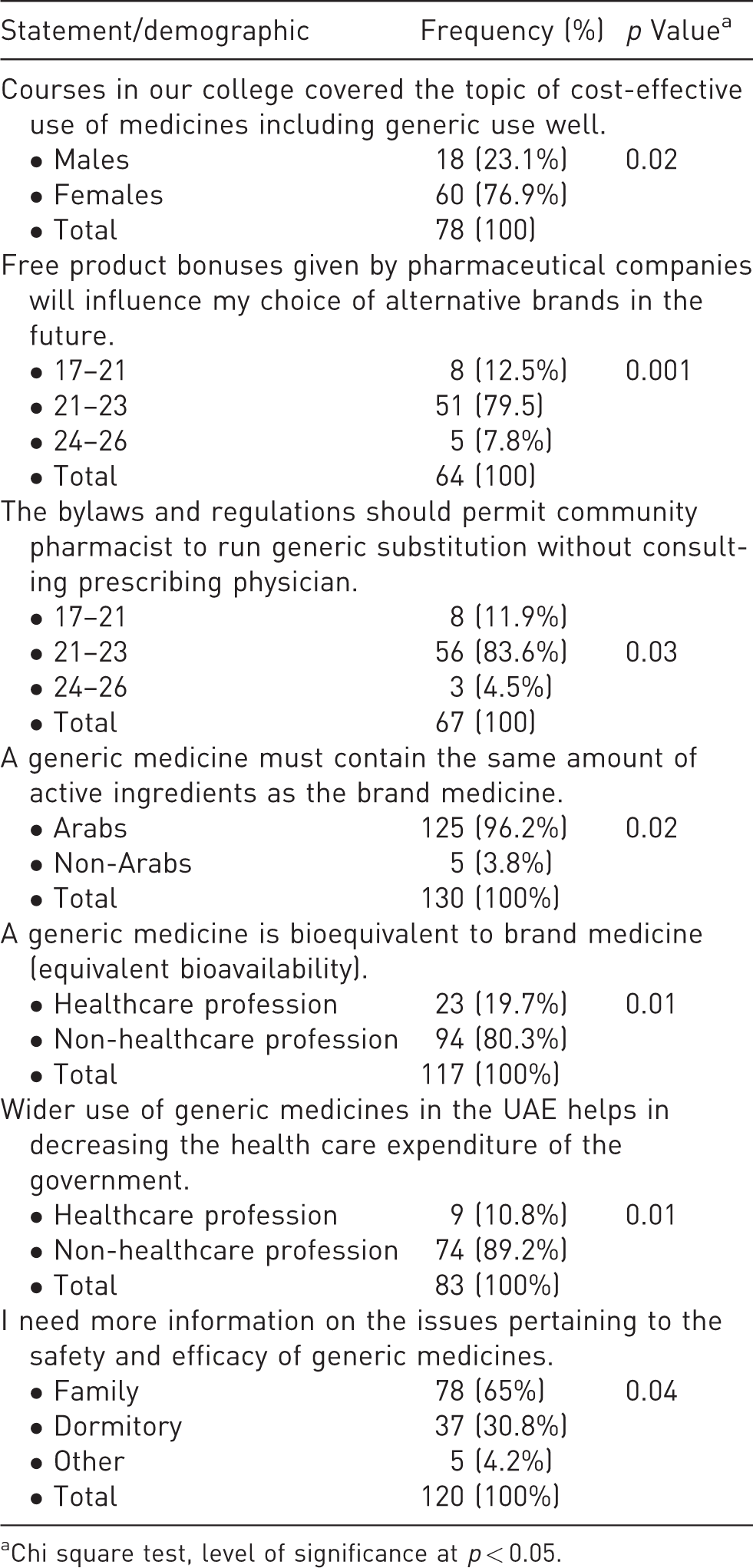
Some demographics were significantly associated with agree responses of students in both colleges. More Arab (p < 0.02) students believed that both a generic and a brand must contain the same amount of active ingredients and more females than males (p < 0.02) agreed that their courses extensively covered the topic on generics and cost-effective use of medicines. Again, significantly more students of the 21–23 age group agreed to the influence of free product (p < 0.00) bonuses on their future choice of brands and bylaws (p < 0.03) and regulation should permit pharmacist to perform non-consulted substation of brand with generic medicine. Students living with their families were significantly (p < 0.04) in need for information on safety and efficacy of generics more than others. Moreover, more (p < 0.01) students whose parents are in a non-healthcare profession than those with parents in the healthcare sector agreed that increase in use of generics would reduce healthcare expenditure (Table 4).
Association of gender, age, ethnicity, accommodation, and parent’s profession with various aspects on generic medicines.
aChi square test, level of significance at p < 0.05.
Results of the present study also demonstrated significant association between the major of students and their responses, where significantly (P < 0.001 and 0.002, Table 5) more pharmacy than medical students had a good coverage and a better confidence conferred by their knowledge of generics, can easily recall drugs in therapeutic classes by generic rather than brand names, and ascertain that their future choices of brands would be influenced by free bonuses from pharmaceutical companies.
Association of major with various aspects on generic medicines.
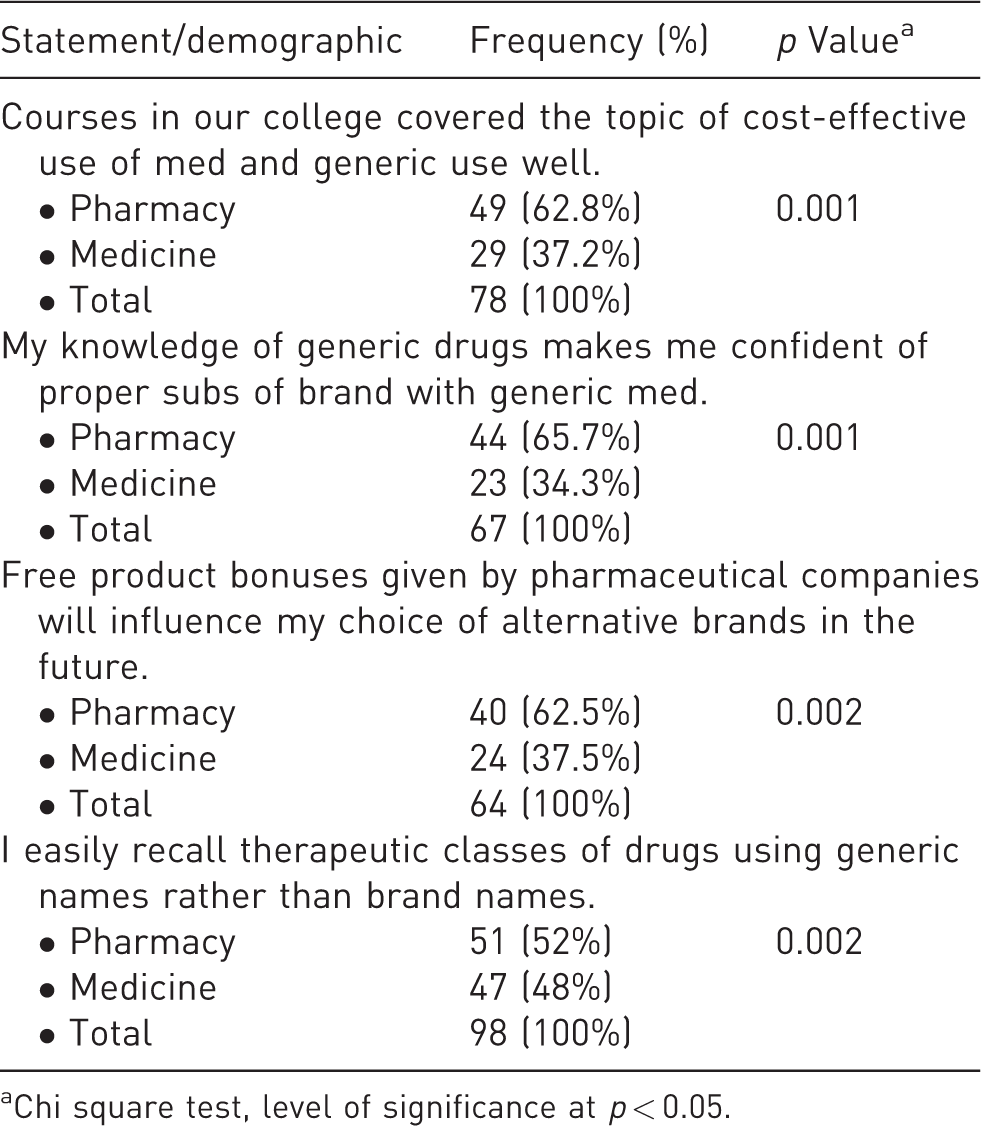
aChi square test, level of significance at p < 0.05.
Discussion
Brand medicines are usually highly expensive and wide use exhausts the health budget. This imposes serious financial and clinical problems in economically poor countries. Therefore, approving their substitution with generic medicines reduces healthcare expenditure and increases access and adherence of public to essential drugs.8,9 It has been reported that not only physicians but also pharmacists favor dispensing brand drugs.11,12 Moreover, patients have poor knowledge and misconception of generic medicines.6,13
In the present study, we assessed the knowledge and perception of generic medicines among final year medical and pharmacy students. Pharmacy students’ knowledge and perception of generic medicines, though not ideal but it, seemed better than that of medical students. This must be attributed to the fact that significantly more pharmacy students agreed that they received good coverage of the topic of cost-effective use of drugs and generics being bioequivalent to their counterpart brands. Deficiencies in medical curricula with regard to aspects of generics and substitution of brands with generics were evident as significantly more pharmacy students agreed that generics must contain the same active ingredients as brands, and they are also cheaper. In addition, more pharmacy students were in favor of the community pharmacists’ right to perform brand substation with generics. Our results are in good agreement with the results for medical and pharmacy students in Yemen 14 and Bangladesh. 15 Less than 50% of both the groups of medical and pharmacy students disagreed to the statements that brands are more effective or of higher quality than their generic counterparts. Moreover, the majority (80.5% of pharmacy and 76.2% of medical students) agreed that to increase generic drug adherence, patients must be provided with the best choice, particularly those of low economic status. However, a high percentage of each group approved the right of patients for proper counseling about the reasons for substituting a brand with generic medicine. Regarding their attitude toward prescribing and dispensing generics in their future practice when considering the price difference, significantly more pharmacy than medical students agreed to dispensing generics. About 40% of medical students were not sure whether to consider the cost difference in their future prescribing. An earlier study reported that both pharmacy and medical students agreed that generics use reduces the pharmaceutical expenses as compared to high-priced brand name medicines. 16 In the present study, more than two-thirds of students in both groups expressed their need for more information on issues pertaining to safety and effectiveness of generic medicines. This can be achieved through the incorporation in pharmacy and medical curricula of topics on cost-effective use of medicine and the advantages of prescribing generics. Similar interventions have been suggested by earlier studies.16,17 This is an important intervention to equip future healthcare professional with knowledge that imparts on their confidence in prescribing and dispensing generic medicines as well as performing generic substitution. The results of the earlier studies in Yemen 14 and in Bangladesh 15 are in support of the benefit of stressing on aspects of generic medicines in medical and pharmacy curricula. Significantly more pharmacy (50%) compared to medical (25%) students agreed that their knowledge of generics makes them more confident of performing proper substitution of brands with generics. Similarly, more pharmacy students find it easier to recall drugs in therapeutic classes by their generic names. On the other hand, we observed that slightly more than 50% of all students support substitution when generics are available and even larger numbers (74% and 78%) of pharmacy and medical students agreeing to the statement of patient’s right for proper counseling on substitution of brand medicines with generics. The latter will certainly improve and increase awareness of patients toward generic drugs. Earlier studies have clearly documented poor knowledge and misconception of generic medicines among the patients in UAE.6,13
In recent years, prescribing generics in governmental hospitals in UAE has remarkably improved; however, the situation in both private clinics and community pharmacies is far from ideal. This is because of, among other factors, the influence of promotional activities on both the prescribing physician and the dispensing pharmacist. Pharmacists’ dispensing of brands is influenced by the free bonuses they receive of pharmaceutical companies and by the increase in sales they look for to please owners and managers of community pharmacies. On the other hand, some prescribers are influenced by the twisted benefits offered to them by pharmaceutical firms in order to prescribe their brand medicines.
Some demographics were significantly associated with agree responses of students in both colleges. More Arab (p < 0.02) students believed that both a generic and a brand must contain the same amount of active ingredients and more females than males (p < 0.02) agreed that their courses extensively covered the topic on generics and cost-effective use of medicines. Again, significantly more students of the 21–23 age group agreed to the influence of free product (p < 0.00) bonuses on their future choice of brands and bylaws (p < 0.03) and regulation should permit pharmacist to perform non-consulted substation of brand with generic medicine. Students living with their families were significantly (p < 0.04) in need for information on safety and efficacy of generics more than others. Moreover, more (p < 0.01) students whose parents are in a non-healthcare profession than those with parents in the healthcare sector agreed that increase in use of generics would reduce healthcare expenditure.
Results of the present study indicated a significant association between the major of students and their responses, where significantly (p < 0.001 and 0.002) more pharmacy than medical students had a good coverage and a better confidence conferred by their knowledge of generics, can easily recall drugs in therapeutic classes by generic rather than brand names, and ascertain that their future choices of brands would be influenced by free bonuses from pharmaceutical companies.
It has been clearly demonstrated that generic substitution can significantly reduce the burden on health budget.18,19
Taken together, results of the present study demonstrated that though the knowledge of pharmacy students is better than that of medical students, there are still areas for improvement in the knowledge and perception of both groups of students. This can be achieved by inclusion of the curricula of topics on various aspects of generic medications and the cost-effective use of medicines, increase adherence, and obtain the best therapeutic outcomes. There is also a need to increase the knowledge of the public toward the efficacy, safety, and reduced cost of generics. This is an ethical and moral obligation of both the prescribing physician and the dispensing pharmacist as forefront healthcare providers.
Limitations
Lack of time and the pressure of classes did not allow us to conduct the study in other universities. As such, results of the present study cannot be generalized.
Conclusion
The findings of our study illustrated that final year pharmacy students had knowledge and perception that was somewhat more satisfactory as compared to medical students at the University of Sharjah and those of other studies reported elsewhere. Misconceptions and the low level of knowledge of various aspects of generic medicines may be a consequence of a deficient coverage of the topic in their medical courses. It seems important to include, among others, a topic on generic medicines in the curricula of both pharmacy and medical colleges. Moreover, we suggest the introduction of an elective course covering this topic in addition to other topics that may help in increasing awareness of students of various majors to important health issues.
Footnotes
Authors’ contribution
All authors state that they had complete access to the study data that support the publication.
Acknowledgements
The authors are greatly indebted to all the students for their participation in the survey.
Declaration of conflicting interests
The author(s) declared no potential conflicts of interest with respect to the research, authorship, and/or publication of this article.
Funding
The author(s) received no financial support for the research, authorship, and/or publication of this article.
