







Abstract
Liposomes have become one of the most widely and clinically important nanocarrier systems of the new drug delivery. Their distinct structural characteristics, in the form of phospholipid bi-layers that are able to encapsulate both hydrophilic and hydrophobic drugs, facilitate increased therapeutic efficacy, lesser systemic toxicity and enhanced compliance in the patients. The basic principles of liposomal drug delivery, namely physicochemical determinants, lipid composition, particle size, surface charge, and stability factors are pointed out in this review. It also discusses how liposomes can be classified as conventional, stealth, targeted and stimuli-responsive systems. The traditional and advanced techniques of preparation (thin-film hydration, reverse phase evaporation, sonication, ethanol injection, dual centrifugation and supercritical fluid-assisted) are given, their pros and cons, and the possibility of scaling to large scale are highlighted. Applications in clinical fields especially oncology, infectious diseases, and biotechnology are discussed as well as emerging applications in the food and cosmetic industries. Taken together, this review highlights the critical importance of liposomes as flexible nanocarriers and suggests future developments which can address the current limitations to increase their translational effectiveness.
Keywords
Introduction
Drug delivery systems can be defined as the sophisticated technologies that can carry out the transportation of therapeutic agents to certain areas in the body with accuracy and precision. This area has experienced phenomenal advancement over the years dramatically changing the way drugs are introduced and controlled in the human body. The therapeutic effectiveness, safety, and patient compliance are the main goals of these systems which include a broad spectrum of technologies, such as nanoparticles, liposomes, implants, and controlled-release formulations. All these methods are designed to solve different problems, including low bioavailability, uncontrolled targeting, and systemic side effects of conventional ways of drug administration. 1 Of these, liposomal drug delivery systems have a number of significant benefits compared to the conventional methods. The earliest reference to lipid-based self-assembling vesicles was authored in 1961, and it was published in 1964, by Dr Alec D. Bangham, at the Babham Institute, Cambridge, UK. These vesicles that were named in his honor Bangasomes were later named liposomes and the name was coined by combining lipo (fat) and soma (body) which are words in Greek. 2 Liposomes are biocompatible, biodegradable, and vesicles that are spherical in nature and consist of one or more layers of phospholipids. They are very versatile due to their unique structure that enables them to entrap hydrophilic and hydrophobic drugs efficiently.3–5 It is possible to engineer liposomes to be targeted, sustained and site-directed to address therapeutic performance and reduce systemic toxicity by changing lipid composition, size and surface modification.4–7 The other point of concern regarding the design of liposomal is stability. This is because the components like cholesterol are important in ensuring the integrity of the membrane and in the sale of the kinetics of drug release.3,8 Liposomal preparations have reached a significant clinical success, and currently are employed in treating cancer, fungi, and viral infections. Other well-known ones are Doxil, AmBisome, which is used in food and cosmetic industries, not as a pharmaceutical, to enhance the bioavailability and stability of bioactive substances.5,9 Generally, liposomes are a versatile and dynamic drug delivery and other biomedical system, and current research is focused on enhancing their optimization, stability, and clinical capabilities.4–7,10
Lipid drug delivery systems: Physicochemical basis: Necessary determinants and mechanisms
Physicochemical factors and their impact on drug delivery.

The mechanisms underlying lipid-based drug delivery systems
Combined together, these physicochemical determinants dictate the functioning of lipid-based drug delivery systems at each stage of the process, including encapsulation of the drug, release behavior, cellular uptake and stability, as will be described below. The hydrophilic-hydrophobic equilibrium of the lipid matrix is a determining factor of the type of drug that can be effectively absorbed and the release kinetics that follows, either an immediate or a sustained one.6,11 In these systems, hydrophilic drugs are usually confined to the aqueous core, and the hydrophobic drugs are localized in the lipid bi-layer, therefore, determining the interaction between these systems and biological membranes. Also, the physicochemical properties of lipid carriers determine the cellular uptake and biodistribution of these systems, hence, their interaction with the biological membrane. The stability of lipid carriers and the prevention of aggregation as well as premature release of drugs depend on the optimization of lipid composition and the use of surface modifications, including PEGylation, to confer steric stability and prolong the systemic circulation time. 6 Together, they demonstrate the interdependence of particles size, surface charge, and lipid composition, as well as the ability of lipid-based carriers to undergo efficient targeting, stable distribution, and avoid uptake by the immune system.
Chemical and physical properties
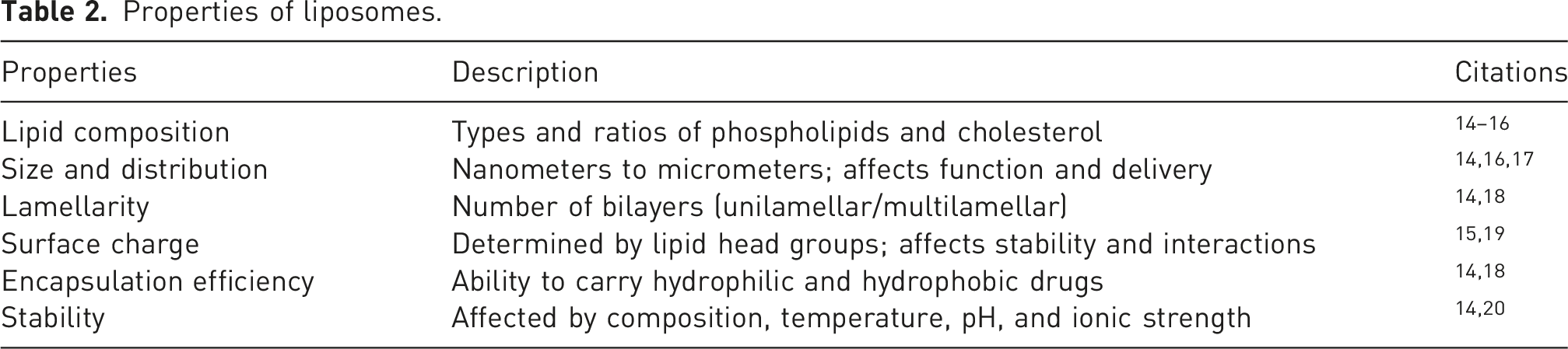
Properties of liposomes.
Chemical structure
The liposomes are made up mostly of phospholipids such as phosphatidylcholine, phosphatidylserine, phosphatidylethanolamine with cholesterol which is also essential in maintaining the physical behavior of the lipid bilayer. These phospholipids spontaneously form one or more bilayers with the hydrophilic groups orienting toward the watery interior and exterior as well as the hydrophobic fatty acid groups orienting internally to create a nonpolar core. Cholesterol increases the rigidity of membranes, fluidity regulation and stability that avoids leakage and phase changes in different physiological conditions. 14 The chemical properties of liposomes, such as membrane permeability, surface charge and biological molecule interactions are determined by lipid composition, namely type and molar ratio of phospholipids and cholesterol. These parameters are used to define the ability of liposomes to encapsulate and release therapeutics, cell membrane interactions, and stability in challenging biological conditions.14–16
Physical structure
Physically, liposomes are vesicles that are spherical and lamellar (which can be either a single lipid bilayer (unilamellar vesicles) or compound (underlying a series of concentric lipid bilayers) (multilamellar vesicles). Depending on how they are formulated and their lipid composition they may have a diameter ranging between tens of nanometers and several micrometers. The size and polydispersity index (PDI) have a considerable impact on drug-loading capacity, circulatory lifetime, and cellular absorption efficiency, with smaller and more homogenous vesicles tending to have better pharmacokinetic advantages.14,16,17 The bilayers also not only impact the volume of the liposome but also its capacity to entrap drugs, hydrophilic molecules tend to be trapped in the aqueous core, whereas hydrophobic drugs are incorporated into the lipid bilayer.14,18 Besides, the lipid head groups play a critical role in regulating surface charge, colloidal stability, and cellular or molecular interactions and, consequently, the biodistribution and the efficiency of membrane fusion.15,19 Lastly, liposomal formulations are also determined to be stable due to the chemical composition of the formulation as well as the environmental factors such as temperature, pH, and ionic strength. Aggregation, leakage, or degradation of encapsulated drugs may occur due to deviations of optimal physicochemical conditions, and the control of formulation is thus important.14,20
Liposome classification: Primary classifications and divisions
Classification by lamellarity and Size.

Preparation methods
The liposomes preparation process can be divided into conventional and novel strategies and each has certain benefits and drawbacks based on the required liposomal properties, the type of encapsulated drug, and the volume of production. Conventional methods like thin-film hydration, reverse-phase evaporation, sonication and ethanol injection have gained wide application in academics and industries, owing to their practicability and simplicity, but each of them has its challenges that need to be cautiously handled. As one of them, the thin-film hydration method is one of the most commonly used techniques due to its simplicity of implementation and affordability. Nevertheless, it can easily lead to heterogeneous size distribution and low encapsulation efficiency especially of hydrophilic drugs. Contrarily, reverse-phase evaporation technique enjoys a higher encapsulation efficiency, although the use of organic solvents may complicate the process of solvent removal and pose a problem of toxicity and product safety. The sonication technique, commonly employed to produce small unilamellar vesicles (SUVs), has good control over particle size, but can lead to the destruction of heat- or shear-laborious drugs since much energy is necessary. Equally, ethanol injection technique has been reported to be fast, reproducible, and somewhat safe, however, low encapsulation of hydrophilic drugs with the technique and complete elimination of remaining ethanol to purify the product is a requirement.27–29 Over the last few years, a number of superior and environmentally friendly preparation technologies have cropped up in order to address these shortcomings. Among others, the superiority of control of particle size distribution and encapsulation efficiency, and reduction or eradication of toxic solvents, have been shown with the use of supercritical fluid-assisted methods and dual centrifugation. The solvent-free supercritical fluid methods are also highly beneficial because they allow clean processing and high reproducibility, as they operate in an environmentally sustainable manner. Nevertheless, they demand professional equipment that is expensive and might encounter difficulties in changing production into commercial production. 30 Dual centrifugation, conversely, is a promising method in the aseptic preparation of sensitive compounds, particularly allowing the preparation of extremely small, homogeneous batches to be prepared under controlled conditions. In spite of these advantages, the low scaled nature of the method is still a major limitation of the technique in industrial applications. 31 The approach to simplify and optimise the liposome preparation has also resulted in single-step and controlled assembly techniques, which combine lipid hydration, mixing, and size reduction in a single streamlined process. Although these more modern techniques enhance reproducibility and control over process these techniques also have problems associated with uniformity of vesicle size and scalability.32,33 To sum up, the choice of a proper preparation technique is determined by the required liposome properties, future use, and the scale of the production. Both traditional and innovative methods have a distinct efficiency, safety, scaling, and cost-effectiveness of each approach, which highlights the significance of selecting an approach that resonates with the particular demands of pharmaceutical or biotechnological needs.27–30
Thin film hydration method of liposome preparation: Procedures, strengths and weaknesses
One of the most recognized and the most common methods of liposome preparation is the thin-film hydration method used in both research and pharmaceutical Medicare. It consists in evolution of a thin film of lipid, further hydration by an aqueous solution, and manipulation of the resulting vesicles to obtain the required size, lamellarity, and homogeneity. In this method, the lipids (and any lipophilic drugs that are to be introduced) of interest are initially dissolved in an organic solvent, usually in a round-bottom flask as illustrated in Figure 1. This is then followed by evaporating the solvent (typically in reduced pressure, typically with a rotary evaporator) to leave behind a thin, dry film of lipid on the inside of the flask. This lipid layer is then hydrated by the addition of an aqueous solution that can contain hydrophilic drugs and continuous stirring is done to ensure that the lipids assemble into multilamellar vesicles (MLVs). To produce smaller and uniform vesicles, the formed vesicles can be subjected to sonication or extrusion through polycarbonate membranes to generate large unilamellar vesicles (LUVs) or small unilamellar vesicles (SUVs) depending on the intended aim.34–37 Moreover, several variants of the approach have been created like the modified thin-film hydration (MTFH) technique to enhance scalability and satisfy Good Manufacturing Practice (GMP) standards, and it can be used for large-scale or industrial manufacturing.
38
Regardless of popularity, the method has some limitations that may influence the reproducibility and encapsulation performance. The liposomes formed at first are usually multilamellar and non-uniform in size, and more processing procedures, like extrusion or sonication, are required to achieve homogeneity.34–36 Also, hydrophilic drugs may be less encapsulated because they may not be as easily partitioned into the lipid bi-layer as other preparation methods35,36 because of their hydrophilicity. The batch-to-batch reproducibility of the method can also be problematic once large-scale production is required since manual procedures are likely to cause variation in large-scale production.
39
The other issue is the leftover residues of organic solvents, which in case of not removing them fully would render this final product unsafe and biocompatible.
38
All in all, the thin-film hydration method will continue to be among the foundations of liposome formulation following its operational simplicity, flexibility and affordability, although there are some limitations to encapsulation efficiency, reproducibility and solvent management. Its further streamlining with the help of the recent adjustments and the system of control over the process guarantee its applicability in the academic research as well as in the sphere of pharmaceutical production. Thin-film hydration method for liposome preparation.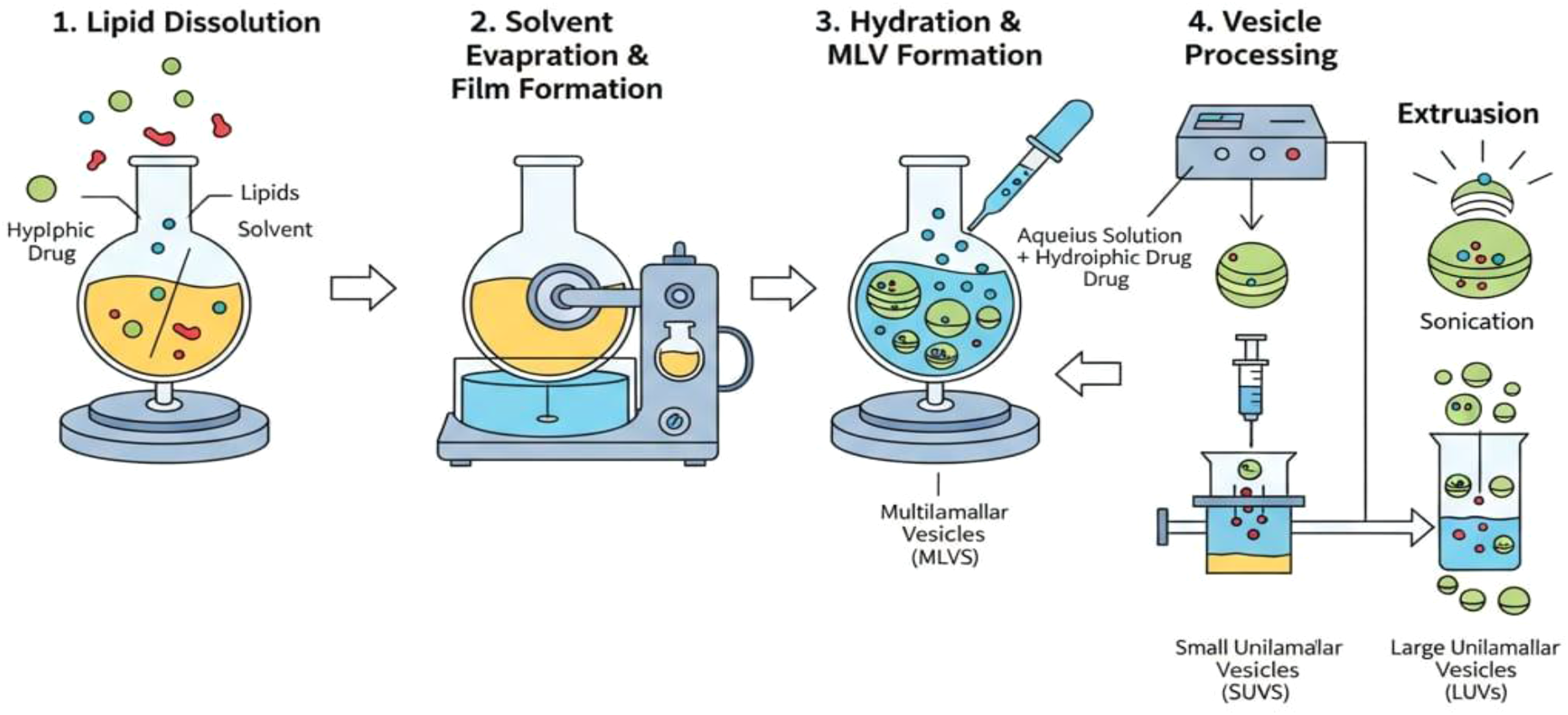
Reverse phase evaporation
Reverse-phase evaporation is one of the widely used methods of preparation of liposomes, especially when high encapsulation efficiency of the hydrophilic drugs is required. Using this method lipids are dissolved in an organic solvent and mixed with an aqueous drug solution to create a water-in-oil (W/O) emulsion as illustrated in Figure 2. When the solvent is removed under reduced pressure in a slow manner, the emulsion will shift to a viscous gel phase, and then finally become a liposomal suspension in water. The products of this process are large unilamellar vesicles (LUVs) or multilamellar vesicles (MLVs), which can be further resized by extrusion through polycarbonate membranes to obtain uniform distribution of the particles.40–42 The main benefits of the reverse-phase evaporation method are its capability of encapsulating a large percentage of hydrophilic drugs, in some cases up to 90% encapsulation efficiency. This technique has also been successfully used to form large, stable unilamellar vesicles and enables close control over the size of the vesicles and entrapment efficiency through manipulation of the process conditions, including lipid composition, solvent choice, and number of extrusion cycles.40–43 Moreover, the contemporary versions of this process, such as substituting traditional organic solvents with supercritical carbon dioxide (CO2), have been produced in order to increase the stability of the liposomes and reduce the solvent toxicity levels, which are more environmentally friendly and biochemical.44,45 Although it has benefits, reverse-phase evaporation method has a number of weaknesses that limit its general use. Organic solvents also raise some issues about the unavoidable toxicity left, environmental risks and safety of the manufacturing process.
43
It is also more likely to take up more time than more straightforward technologies like thin-film hydration, and the vesicles formed can also need further processing to gain homogeneity in size and lamellarity. Also, the efficiency of encapsulation and physical properties of the formed liposomes may be batch-dependent as they strongly depend on the lipid composition, the type of solvent, and the conditions of the experiment.40–42 Reverse-phase evararation method for liposome preparation.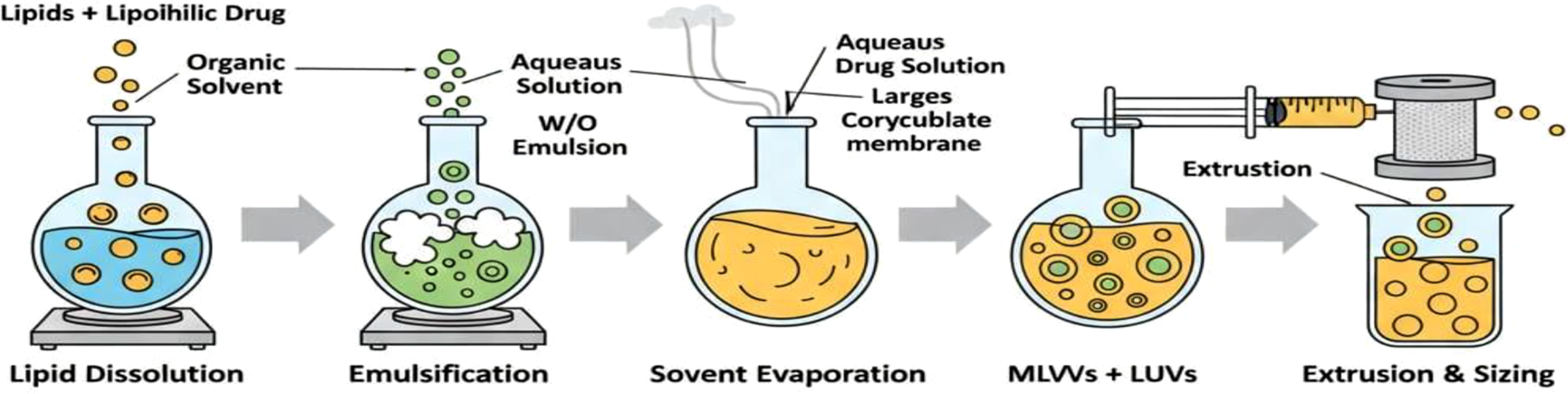
Sonication technique of liposome preparation: Protocols, strengths and limitations
Sonication method is among the most commonly used procedures of liposome-size reduction and generation of small unilamellar vesicles (SUVs) which are required in drug delivery and biomedical studies because of their uniformity and nanosize. Here, the breakage of large multilamellar vesicles (MLVs) into smaller and more homogeneous liposomes that are more dispersible and have increased bioavailability of the contained compounds is performed by sonication, where the lipids are first pre-hydrated by incubation in an aqueous solution to create multilamellar vesicles that are the sonication precursors as illustrated in Figure 3. A probe-tip sonicator or a bath sonicator is then applied to the resulting lipid suspension in order to produce the required lipid suspension. Although probe-tip sonication is better at producing smaller size vesicles, it may produce a lot of heat and it is necessary to control temperatures and intermittently cool initially to prevent lipid oxidation or degradation.46,47 Such parameters like sonication time, temperature, power intensity play a significant role in the final size and homogeneity of the vesicles. As an example, sonication at 60°C/30 min can produce liposomes with a diameter less than 100 nm.
48
Sonication is followed by centrifugation to eliminate metallic debris (e.g., titanium particles in the probe) and unbound lipid residues, which makes the liposomal dispersion purer and, therefore, more stable.
47
The method has some significant benefits, in particular, it produces small and homogeneous liposomes (20−120 nm), which are most appropriate to implement in parenteral administration and targeted delivery systems.46,48,49 In addition, sonication does not require organic solvents, which severely limits the toxicity of the procedure and makes the purification procedures much easier.
49
It is also quite simple and inexpensive to implement, flexible in a laboratory scale and thus, an accessible technique to research academically and preclinically.47,48 Nevertheless, the technique has its drawbacks. A key disadvantage is that local heating and oxidative stress during sonication may result in lipid degradation and encapsulated drug degradation, which may affect liposome integrity, and drug stability.47,50 Also, there are metal contaminants of the sonicator probe (especially titanium particles), and they will require post-sonication cleaning processes.
47
The other notable weakness is the constrained scalability of the procedure; although suitable with small-scale or laboratory preparation, large-scale manufacturing needs different means of processing like extrusion or microfluidics to enhance the process of control and re-producibility.
50
Sonication technique for liposome preparation.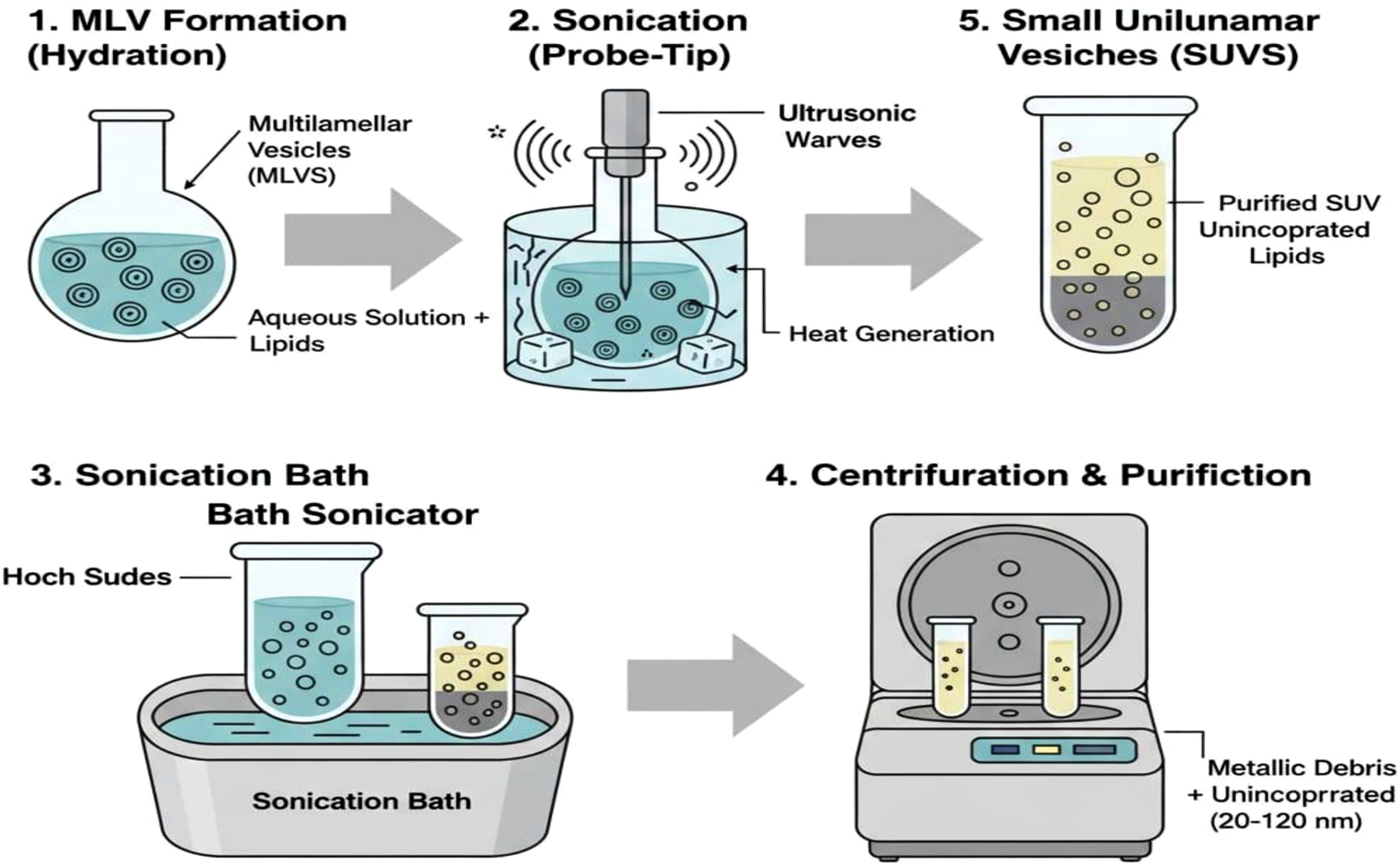
Liposome preparation by ethanol injection method: Procedures, benefits and drawbacks
Among the most common and simplest procedures in the preparation of liposomes is the ethanol injection technique which is mostly used in laboratory scale and small scale pharmaceutical manufacturing. It consists in injecting a lipid-ethanol solution into an aqueous phase so that liposomes are formed spontaneously as the ethanol is dispersed and the lipids self-assemble to form bilayered vesicles as illustrated in Figure 4. This technique is appreciated due to its simplicity, speed and reproducibility as it is among the favorite methods of preliminary formulation studies and optimization of any process based on lipids and other lipophilic drugs. This process involves dissolving lipids and any other drugs of interest in ethanol to produce a homogenous lipid solution. This solution is then quickly injected or added to an aqueous phase which can also contain hydrophilic drug molecules. When in touch with water the lipid molecules form spontaneously into liposomes as the ethanol diffuses outwards, being attracted by hydrophobic interactions and the polarities of the solvents. Liposomal suspension formed is more often than not filtered/extruded with polycarbonate membranes to refine the size and distribution of particles and any remaining ethanol is removed by evaporation or dialysis to preserve the safety and stability of the product. This method has a number of unique benefits. It is rapid, easy, and requires no specific equipment, thus available to the majority of labs.51,52 The size and uniformity of the liposomes can be successfully managed through the control of the factors of operation including the needle diameter, the concentration of lipids, the rate of injection, as well as the speed at which they are mixed. Recent microfluidic modifications of the ethanol injection technique have continued to increase size control, reproducibility, and scalability such that the process can be performed at room temperature, which reduces the possibility of thermal degradation.
51
Also, the technique is highly compatible with temperature sensitive compounds since the procedure can be conducted at room temperature, and so the risk of thermal degradation is reduced. It is also adaptable to continuous flow and microfluidic systems, which facilitates research as well as industrial use, connecting the gap between the laboratory experimentation and scalable manufacturing.51,52 Nevertheless, EI method also has a number of limitations. The encapsulation efficiency of hydrophilic drugs is comparatively low since a large fraction of the aqueous phase will not be entrapped into the liposomes and more purification processes like dialysis or evaporation are mandatory to eliminate residual ethanol and prevent cytotoxicity.
51
Furthermore, the residual ethanol content will not be eliminated and additional purification steps will need to be utilized to eliminate residual ethanol like dialysis or evaporation which can increase the processing time and complexity.
51
The other disadvantage is that the size distribution of the particles can be more extensive than other methods of control such as microfluidics or extrusion particularly when no subsequent size-homogenizing step is taken.
52
Ethanol injection method for liposome preparation.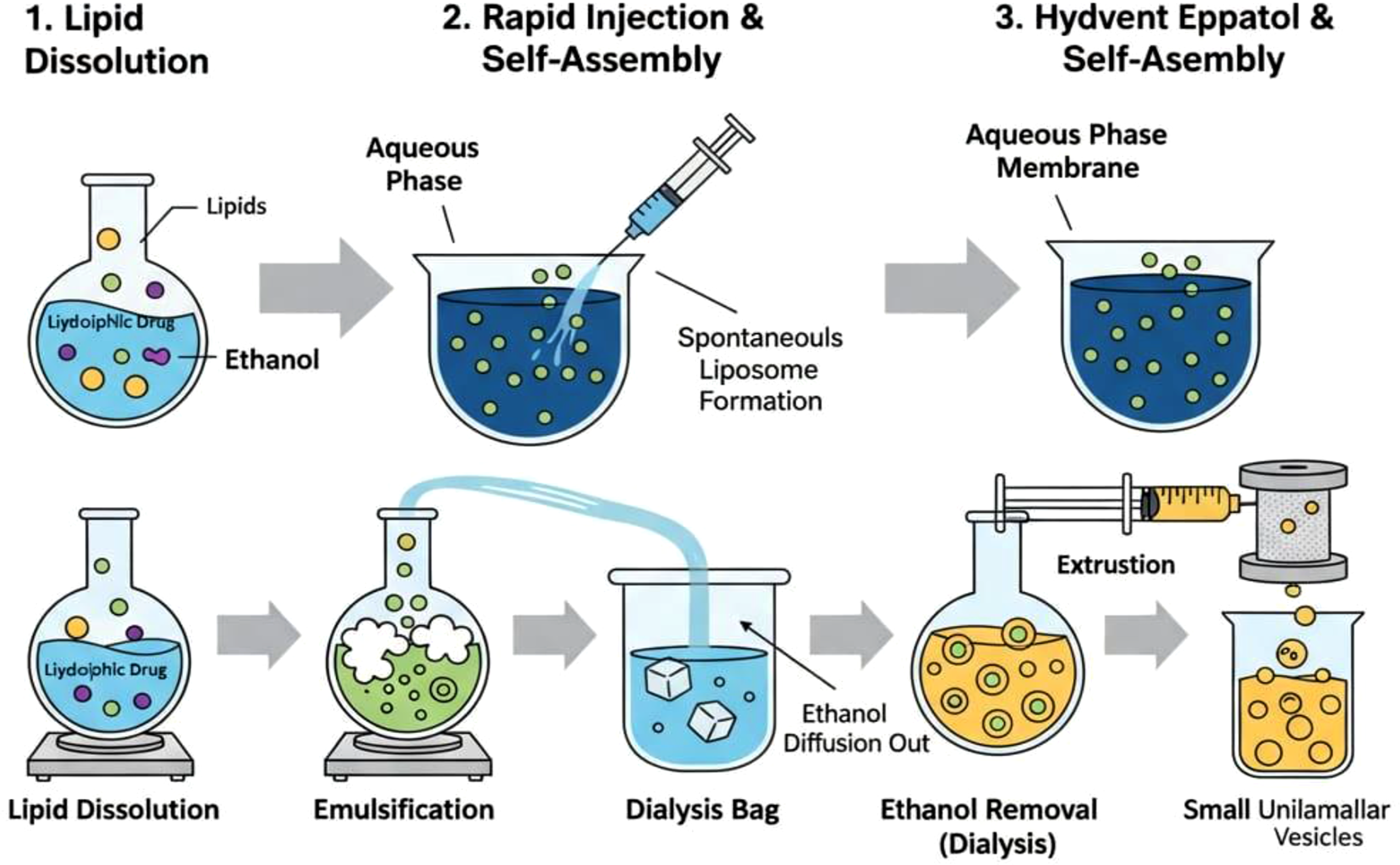
The dual centrifugation (DC) method
The dual centrifugation (DC) procedure is a framework of liposome preparation that has received growing interest in research and in clinical practice, demonstrating a high level of flexibility and efficiency as well as being a modern method. In contrast to the conventional liposome preparation techniques, DC implies the homogenization of lipid mixtures with water in the vials, which are then rotated at once in two rotation axes. The dual-motion centrifugation provides strong mixing and nano-milling forces, and allows the creation of liposomes of a given size, lamellarity and high encapsulation efficiency, even with very small batch volumes as illustrated in Figure 5.31,53,54 The approach has a number of major benefits compared to traditional approaches. It is also a solvent-free, fast, and aseptic technique, which serves it well with sensitive biological molecules, but also with clinical-grade liposome formulations, where lipid concentration and processing conditions can be optimized to obtain desired liposome characteristics (e.g., particle size, polydispersity and lamellarity).31,54 One of the strengths of DC, in particular, is its versatility: at higher lipid concentrations, small multilamellar vesicles (SMVs) of about 100 nm and low polydispersity are commonly obtained, whereas unilamellar vesicles (ULVs) are preferred at lower concentrations.
54
DC process can also be used to preserve the integrity and biological activity of fragile and sensitive molecules, for example, small interfering RNA (siRNA) and other nucleic acids, and keep them intact against degradation. It was demonstrated that encapsulation efficiencies of more than 50% of water-soluble compounds can be attained without affecting the stability of the compound.31,53,55 In addition, dual centrifugation is capable of screening and optimization of formulations particularly easily, eliminating the use of pre-assembled lipid films or organic solvents and can process up to 40 samples at once, which can be assembled into vesicular phospholipid gels (VPGs), a stable intermediate or depot formulation.53,54 To summarize, the dual centrifugation method is a fast, reproducible, and scalable liposome production method that boasts impressive sterility, efficacy, and formulation flexibility benefits. DC is an innovative method with high potential in personalized medicine, in research, and in the future pharmaceutical production as it removes the requirement of organic solvents, reduces sample handling, and allows the researcher to control liposomal properties precisely.31,53–55 Dual contrifuration (DC-assisted isthod for liposome preparation.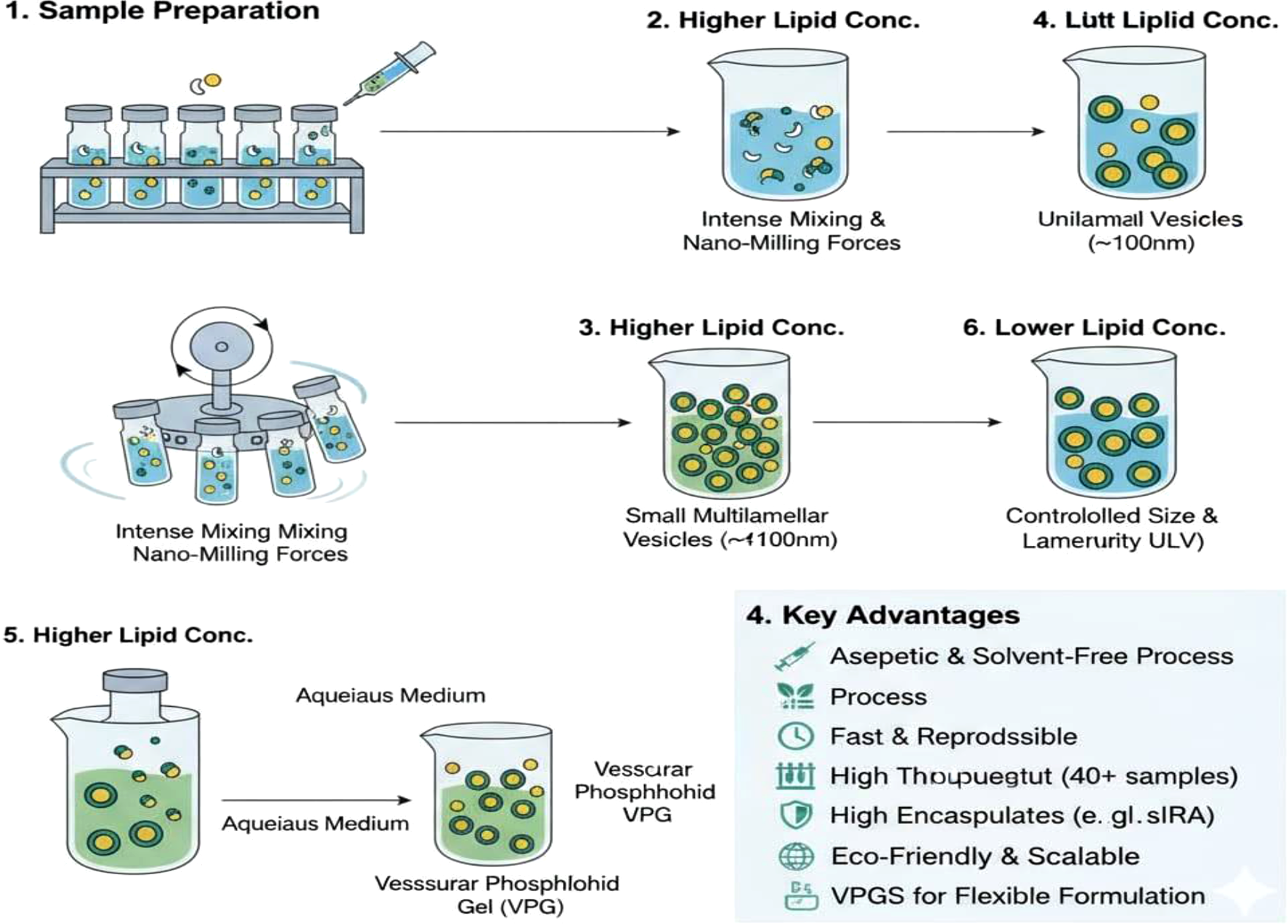
Supercritical fluid assisted technology of preparation of liposomes: The procedures, pros, and cons
SCF-assisted technology is a recent, greener and very effective technique of producing the liposomes that has solved most of the problems encountered with the traditional solvent-based technology. This superior method allows the creation of liposomes under solvent free, scalable, and controllable conditions in supercritical fluids (most commonly, supercritical carbon dioxide, scCO2) as the main medium. Due to the values of its green chemistry and the capabilities to obtain liposomes characterized by a narrowly defined set of properties, the SCF technique has become a potentially useful alternative to laboratory and industrial applications. A variety of methodological variations of SCF-assisted liposome preparation have been generated, with each being aimed to optimize various formulation requirements. Under supercritical fluid as solvent/co-solvent technique, lipids are first dissolved in scCO2 (occasionally containing ethanol as a co-solvent) and aqueous phase is added at high pressure as illustrated in Figure 6. Liposome formation spontaneously happens upon the application of depression, which is commonly accompanied by the generation of unilamellar vesicles of a controlled size and narrow distribution30,45,56,57 when this happens. Another variation of the reverse-phase evaporation technique is the supercritical reverse-phase evaporation (SRPE) method where the solubilization of lipids and drugs is carried out in scCO2 followed by emulsification with an aqueous phase. This process has high encapsulation efficacy, especially in hydrophilic drug, under pressurized conditions, owing to an increased lipid-drug interaction.45,58,59 Alternatively, the supercritical anti-solvent (SAS) method replaces the use of organic solvents with SCFs, which precipitate lipids to carrier particles, which are then hydrated to create liposomes.
60
Finally, continuous or expansion techniques utilize atomization or expansion of SCF-lipid mixtures into water, leading to the formation of submicron or nanometric sized liposomes being uniform in size and more stable.61,62 The SCF-assisted technologies have several benefits compared to the traditional liposome preparation technologies. First, they substantially lower or completely avoid using toxic organic solvents and improve environmental sustainability and product safety.30,45,56,57,63 Also, large-scale and continuous production are well-suited, which is why SCF techniques can control the size and distribution of liposomes precisely and provide stable and uniform vesicles with high reproducibility.30,56,61,64 Moreover, the technique is also compatible with the Good Manufacturing Practice (GMP) requirements, and they can also be used with both hydrophilic and lipophilic drugs providing a range of options to encapsulate a variety of therapeutic agents.45,58,61,63 Irrespective of these advantages, SCF-aided technology has a number of weaknesses which restrict its accessibility. Besides, the temperature, pressure, and equilibrium time are also to be optimized, which can be done only with the help of specialized high-pressure equipment and trained staff knowledgeable in the technical and safety considerations of the work under supercritical conditions.30,56,57 Also, the degree of encapsulation and liposomes may be different based on the physicochemical properties of the drug and conditions of the individual process.58,62,63 Supercetical fluid (SCF-assisted technology for liposome preparation.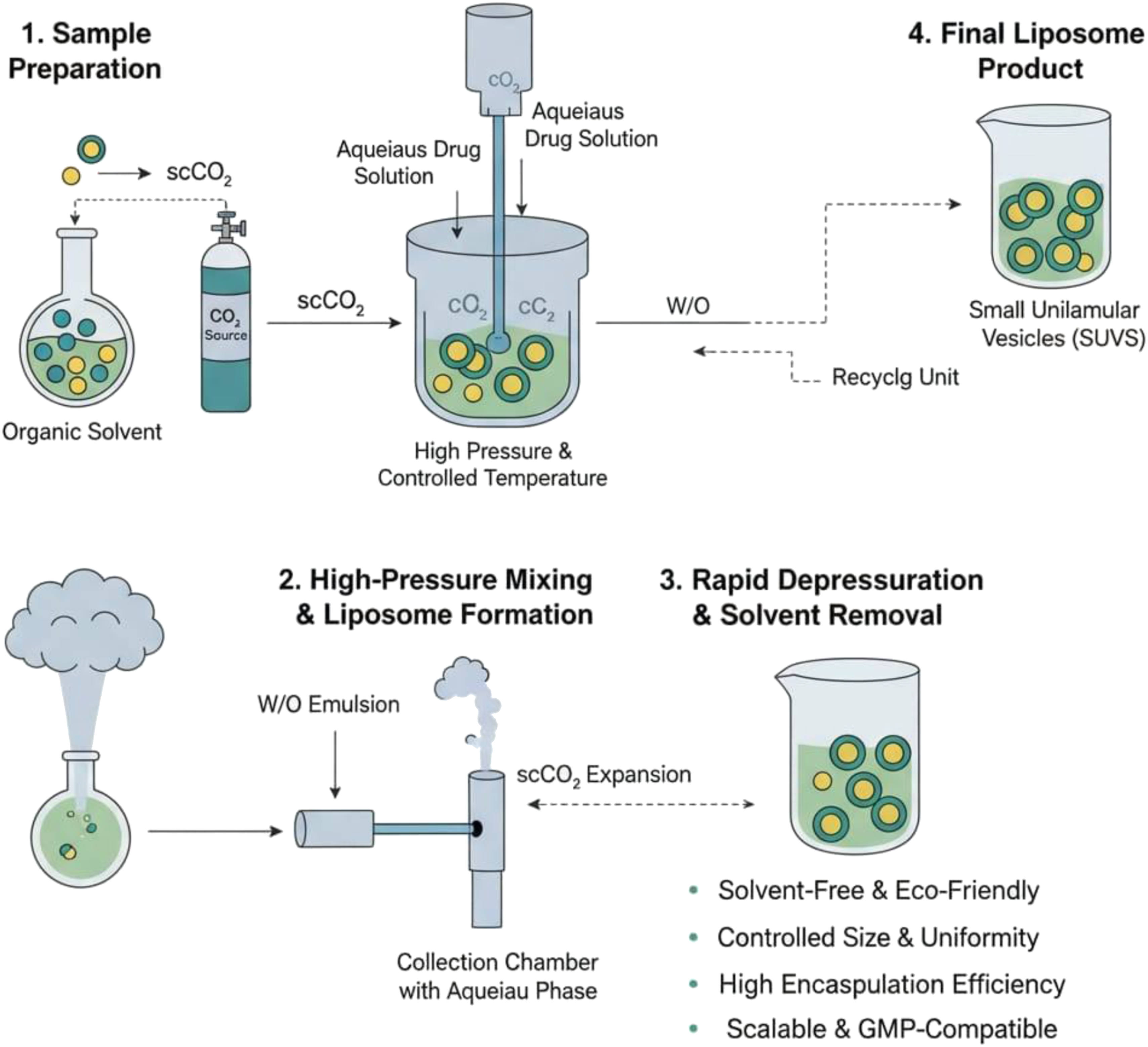
Evaluation parameters
The testing of liposomal formulations is a complex of physicochemical, structural and functional parameters which predetermine their quality, performance and applicability in therapeutic practice. The combination of these parameters has a direct impact on the most important characteristics of the liposome, including circulation time, stability, drug encapsulation, and biological activity, and thus, systematically characterizing them is a mandatory step in the development of liposomes and its quality control. Particle size and size distribution are one of the most significant evaluation parameters, and can be measured by such analytical methods as dynamic light scattering (DLS), turbidity, or flow cytometry, among others. Circulation time, tissue distribution, cellular uptake, and drug release behaviour directly depend on particle size, and smaller vesicles tend to have a longer systemic circulation and higher permeability.65–69 Polydispersity index (PDI) is a measure of the homogeneity of the vesicle size distribution - a smaller PDI indicates a more homogenous population, which is desirable to reproducibility and consistent pharmacokinetic performance.67,68 The other important parameter is the zeta potential that indicates the surface charges of liposomes and determines their colloidal stability, propensity to aggregate, and association with biological membranes. High positive or negative zeta potential liposomes are usually more likely to be stable because of electrostatic repulsion, whereas liposomes with neutral charges are of interest because of better biocompatibility and decreased toxicity.68,70 The lamellarity, or the number of lipid bilayers is another property of importance and can be analysed using nuclear magnetic resonance (NMR), fluorescence quenching or electron microscopy. This characteristic dictates inner structure of liposomes and has a direct impact on drug-loading ability and release properties.65–67,71 To determine structural stability and ensure uniformity, the morphology of liposomes such as their shape as a vesicle, bilayer integrity, and surface texture can be studied by electron microscopy (EM) or atomic force microscopy (AFM).65,68,72 Regarding encapsulation and stability, the encapsulation efficiency (EE%) is the percentage of drug or marker that successfully remains enclosed. The leakage or release profile is essential in determining the desired therapeutic dose and reducing drug wastage, by observing the profile of release of the drug through the liposomes under varying physiological conditions.68,72,73 The leakage or release profile is a characteristic that determines the release of the drug through the liposomes in the distinctions of varying physiological conditions, which advance understanding of formulation stability. The composition and performance of the formulation is further confirmed by chemical and functional evaluations. Chemical analysis is done through chromatographic or spectroscopic means to ascertain whether the lipids were incorporated correctly or not and whether there are degradation products or impurities present.67,74 To be sure liposomes attain the target desired characteristics of a targeted or long-circulating delivery system, surface modification analysis should be done, like PEGylation assessment or ligand conjugation evaluation. 75 Lastly, in vitro and in vivo testing is evaluated on biological performance parameters in cellular uptake, cytotoxicity, pharmacokinetics, and therapeutic efficacy which are necessary to prove the clinical applicability and safety of the liposomal formulation.68,75
Therapeutic uses
Liposomes are biodegradable, biocompatible, and very versatile nanocarriers which have attracted vast interest in therapeutics because of its special properties of being able to encapsulate both hydrophilic and hydrophobic drugs. This ability to carry drugs increases drug absorption, biological half-life, and reduces systemic toxicity and adverse side effects.76–78 They can be functionalized on their surface with different targeting ligands including antibodies, peptides, or polysaccharides which can be used to deliver drugs only to the diseased tissues or cells. This is especially useful in the treatment of cancer in which liposomal preparations enhance selective accumulation of drugs in malignancy through passive or active targeting mechanisms and minimise off-target effects and systemic toxicity.74,79,80 Outside the field of oncology, liposomes have been recognized to be used in gene therapy and vaccine delivery because of their capacity to carry nucleic acids and shield them against enzymatic degradation. Liposomes are used in vaccine preparations as carriers and adjuvants, as they have been shown to promote antigen presentation, immunogenicity, and the overall therapeutic effect.79,81,82 Moreover, liposomal systems have also shown potential in the treatment of neurological diseases, including ischemic stroke because they have the potential to deliver drugs across the blood-brain barrier. 83 In topical drug delivery, they have been used in dermatology to increase skin penetration and retention of active ingredients and in diagnostics, they have been used as vectors of imaging agents, they are more sensitive and specificity. Moreover, liposomes are also used in the pharmaceutical and cosmetic sector in the application of sustained drug release and increased solubility of poorly water-soluble drugs.76,77,81 Recent developments have provided special liposomal systems like long-circulating (PEGylated), thermosensitive, pH-sensitive and ligand-targeted liposomes, enhancing accuracy and efficiency in drug delivery. 80 Whether or not such innovations take place, however, clinical translation is still hampered by such challenges as large-scale production, stability issues, and regulatory hurdles.78,79 However, liposomes are an essential part of the contemporary treatment system, and the future research is focused on addressing the existing limitations and extending their usage to more clinical problems.76–79 Liposomes are intelligent nanocarriers that have been used as targets to deliver therapeutic drugs, imaging agents or immunomodulators to tumor tissues in a controlled and site-specific manner in the context of tumor targeting. Passive targeting becomes possible with the help of their amphiphilic nature as liposomes can be loaded with hydrophilic and lipophilic agents and increase dramatically both the solubility of drugs, the increased bioavailability, and the stability of liposomes.84–87 In order to be even more specific, active targeting therapies entail expanding the liposomes with ligands like antibodies, peptides, folate, or glucose molecules which identify tumor-specific receptors and lead to receptor-mediated endocytosis and enhanced intracellular drug delivery.84–86,88
Applications in cancer therapy and diagnosis
Liposomes usage in tumors.

Liposomes in nucleic acid delivery for gene therapy and DNA vaccination
Nucleic acids (DNA, mRNA, siRNA) are well encapsulated and safeguarded by liposomes (cationic liposomes, in particular), and delivered into target cells to target gene therapy and DNA vaccination with high efficiency.92–100,102 A positive charge of cationic liposomes facilitates high affinity to negatively charged nucleic acids, allowing these liposomes to bind to cells and escape endosomes, which are essential to high-efficiency gene delivery.96,98,99,101 The effectiveness and specificity of delivery can also be increased by liposome composition (e.g., the addition of helper lipids, such as DOPE, or cholesterol) and surface modification (e.g., mannosylation to target dendritic cells).96,99,100,102
Liposomes as vaccine adjuvants and immunogenicity enhancers
Liposomes are not only used to deliver DNA vaccines but also as adjuvants which facilitate humoral and cellular immune responses.93,95,100,102 DNA in liposomes is resistant to nucleases as well as enhances penetration of antigen-presenting cells (APCs), resulting in more robust and prolonged immune reactions in relation to naked DNA.93,95,100,102 Increased antigen presentation, cytokine production, and T-cell stimulation have been demonstrated on liposome-based platforms (e.g., VacciMax, DepoVax) and cationic lipid formulations (increased immunogenicity and therapeutic efficacy).95,100,102,103
Limitations
Liposomes have suffered several limitations that despite their full potential in drug delivery and vaccine development they have a number of limitations that are critical and cannot be clinically translated and applied on a large scale. To conduct additional studies on safer, more effective liposomal therapeutics, one needs to better comprehend those limitations. The immunogenicity of liposomes is one of the critical limitations because liposomes have the tendency to induce immune reactions like hypersensitivity reactions or immunosuppression. Opsonization, which means adsorption of plasma proteins to the surface of the liposome, can quickly clear the liposome of the systemic circulation of the reticuloendothelial system (RES), reducing the circulation time of the liposome and its therapeutic effects on the body.78,104 In addition to this, it has a challenging regulatory approval and limits homogenous clinical performance. Other than this, physical and chemical stability has been a thorn in the flesh. The classical liposomes are likely to aggregate or fuse or releases drugs carried into the inside of the liposomes prematurely, thereby affecting its controlled and prolonged release before it gets to the target site. This instability is especially bad in the case of molecules which cannot be effectively encapsulated through pH or ion gradients.105–107 Moreover, they cannot be produced in large-scale because of problems with their industrial feasibility. This is not easy to be maintained over batch-to-batch reproducibility of particle size, lamellarity and encapsulation efficiency because liposomes are extremely sensitive to mechanical and chemical stress. Other barriers to commercial production include sterilization, storage, and quality control particularly degradation control or microbial contamination.106,108,109 The other weakness is ineffective active targeting and restricted penetration through biological barriers. Surface alteration like PEGylation or conjugation of ligands enhance targeting, but there is a major challenge in specific and effective delivery to the specific tissues, in particular through the blood-brain barrier or the skin. Such imprecision and decreased bioavailability usually render the laboratory successes ineffective in clinical translation.105,107 In general, the limitation highlights that the further development of liposomes should be innovated, such as approaches to the improvement of their stability, scaling, and targeting. It is these issues that will be overcome by using new technology in formulations and new manufacturing technology in order to achieve the full therapeutic potential of the liposomal drug delivery systems.
Liposomes: Future perspectives in drug delivery and beyond
The multifunctional and biocompatible characteristics of liposomes, combined with their astonishing capacity to encapsulate and stabilize an outstanding variety of therapeutic molecules, maintain their further and growing significance in medicine, biotechnology, and other areas. The current research and technological development is currently resolving the current challenges and thus expanding the application of the liposomes in the clinical and industrial application. Liposomes are also being considered as a further advancement in drug delivery, gene therapy, diagnostics and theranostics, where they are not only delivered by liposomes but also used as dual therapy and real-time imaging agents. The future generation of liposomes will be multifunctional or smart, having the ability to respond dynamically to certain biological stimuli - for example, pH, temperature, enzyme activity, and so on - and release therapeutic agents in a controlled and targeted manner, which may be applied in a diverse spectrum of industries. 110
Combined with nanotechnology and personalized medicine, liposomal platforms can transform precision therapeutics, allowing patient-specific treatment to cause the minimum side effects in the system and the maximum efficacy especially in treating cancer and chronic diseases. 78 Future research is also placed on the aspects of increasing the stability of liposomes, better large-scale production, and targeting accuracy. Liposomes are expected to have a future in lipid composition innovations, surface engineering, and tissue-specific delivery, among other things, enhancing shelf-life, reducing immune system elimination, and maximizing liposome delivery.111,112 All these developments are signs of the bright future of liposomes becoming not the usual drug carriers but the smart, versatile, and personalized delivery machines, which will enter the history of biomedical research and nanotechnology.
Conclusion
Liposomes have no longer been an experimental vesicle but a clinically-proven nanocarrier that has a transformational potential in medicine and related disciplines. They offer benefits of tunable composition, structural flexibility, and enhancement of the pharmacodynamics and pharmacokinetics of therapeutic agents, therefore, making them a pillar of advanced drug delivery. Although classical approaches, including thin-film hydration, continue to be basic in terms of their use in research, emerging technologies like dual centrifugation and supercritical fluid-assisted methods are dealing with the shortcomings of scalability, reproducibility, and safety. Although they are already established in their products such as Doxil and Ambisome, they still face problems and issues concerning stability, mass production, and standardization of regulations. It is necessary that future studies consider ways of incorporating the elements of precision targeting, stimuli-responsiveness and cost-effective production strategies in order to utilize the clinical and industrial potential of liposomes to the utmost limit. Finally, liposomes are not just a proven technology, but also an ever-changing platform that will form the next generation of precision therapeutics.
Footnotes
Acknowledgement
The authors thank the Dr Muhammad Fahad who guided and monitor in overall process of writing this manuscript. The authors also express their heartfelt gratitude to each other that contributed to research have made this review possible. Their role in advancing scientific knowledge is appreciated and will not be forgotten.

Author contributions
Maham Akram Khan contributed in designing figures and originally drafted the paper; Muhammad Umar Javaid monitored every step of editing and writing and analyzed the data; Misbah wazir and Muhammad Fahad guided in data alinement and peer reviewed the article; all authors have read and approved the final manuscript.
Funding
The authors received no financial support for the research, authorship, and/or publication of this article.
Declaration of conflicting interests
The authors declared no potential conflicts of interest with respect to the research, authorship, and/or publication of this article.