







Abstract
This article examines the role of leadership in the development of academic talent in higher education from a social exchange and organizational support perspective. Drawing from a sample of academic staff at a large South African university, the study investigates the extent to which a quality leader–member exchange relationship versus a formal organizational resource perspective contributes to academic staff perceptions of organizational investment in academic talent development. The study found new evidence of the ways in which relationship resources embodied in the leader–member exchange relationship between supervisors (leaders) and employees (followers) influence employees’ perceptions of investment in their development. The results also demonstrated how the leader–member exchange theory, combined with theoretical work on organizational development support, could help to explain the critical role of department heads as leaders in developing academic staff (as followers).
Keywords
Introduction
The need for academic talent is now more than ever a strategic priority for academic institutions around the globe. This is mainly driven by increased pressure to deliver both quality education and be recognized as leading academic institutions among others. South African universities are no exception and they face the additional challenges of responding to critical skills shortages in the country and dealing with an ageing academic workforce, a decline in younger talent entering the academic arena and less attractive academic career conditions (Geber, 2009; Pienaar and Bester, 2008). Research in South Africa suggests these challenges have had a negative impact on academic staff morale (De Villiers and Steyn, 2009). Additionally, it has placed demands for increased attention to academic staff development to enhance academic skills as universities in the country strive to improve their global stature (HESA, 2011).
However, existing research on academic talent development is generally limited and focuses mostly on the impact organizational resources (training and development opportunities regulated through formal policies and procedures) have on the development of academic talent (Sturges et al., 2002). Very little attention has been paid to the relationship between academic leadership and academic talent development.
Furthermore, a recent study conducted at seven leading higher education institutions, which included the universities of Harvard, Yale and Duke in the USA, found that academic leaders were largely unaware of their role in academic talent development. These leaders placed more emphasis on managing day-to-day operations (recruitment and selection, curriculum design and development, tuition and research) than on taking responsibility for academic talent development (Heuer, 2003; Potgieter et al., 2011). Likewise, Lynch (2007) found that institutions that produced knowledge also fell short in assisting their own staff in developing the skills required in a knowledge economy. Moreover, academic leaders find themselves in the midst of a complex, multi-dimensional environment (Koen and Bitzer, 2010: 7) characterized by dynamic leader-follower relationships. At universities, leaders are seen as ‘first among equals’ 1 (Tucker, 1984: 4), and leader–follower relationships do not merely depend on authoritative interaction but rather on mutual respect for and understanding of each other’s intellectual capacity and growth. Salopek (2000: 25) emphasizes that this relationship is distinctive and vital to the development of academic talent. To sum up, these challenges suggest a need to further understand academic talent development, and in particular the role of department leaders in developing this talent.
Purpose
The purpose of this article is to report on the findings of a study that investigated the relationship between the quality of the leader–member exchange between department heads (as leaders) and academic staff (as followers) and the perceptions of academic staff of the organization’s investment in their development. Specifically, the
The Leader–Member Exchange Theory
The LMX theory, underpinned by the broader social exchange theory, formed the theoretical foundation of the research in this study. Social exchange theory has been used extensively to better understand relationships that involve an exchange between two individuals. For instance, it has been used to understand psychological contracts between employer and employee, the quality of the relationship between a leader and a follower (Graen and Uhl-Bien, 1995) and supervisor–subordinate working relationships (Dansereau et al., 1975). According to LMX theory, a high quality leader–member relationship is one in which there is positive interaction between the leader and subordinates. High quality leader–member exchanges are marked by mutual trust, respect, liking and reciprocal influence (Northouse, 2013: 164). As a result, in a high quality relationship, subordinates receive more opportunities and support from their leaders (Harris et al., 2009). In a low quality leader–member relationship, subordinates receive less support and opportunities.
LMX theory also distinguishes between in-group versus out-group employees based on this relationship. In-group employees are likely to receive more attention and support from their leader in a variety of interactions than out-group employees (Scaduto et al., 2008). LMX association with antecedents, characteristics and outcome follower behaviour is also well documented. Outcomes associated with high quality LMX behaviour include aspects such as providing more challenging work assignments, employee learning goal orientation and more rapid career progress (Jansen and Van Yperen, 2004); receiving more development opportunities (Wilson et al., 2010); opportunity by subordinates to develop new skills and to gain confidence in their own abilities (Walumbwa et al., 2009).
Although LMX has been generally associated with supportive outcomes for employee development (Kraimer et al., 2011), the research in this article lies specifically in understanding and examining the relationship between the leader–member exchange relationship, supervisory support for staff development, organizational support for development, and perceived investment in employee development (PIED).
Organizational Support Theory
Organizational support theorists Eisenberger et al. (2002) have suggested that organizational support for development is not based on a single construct but rather on two types of development resources, namely: organizational support through development policies and programmes offered by an institution; and a relationship resource between a subordinate and a supervisor, which can also affect development support opportunities (Kraimer et al., 2011). The first resource (in the form of training opportunities received from an institution) may be viewed as tangible, objective support in that it comprises formal policies and actual programmes, as well as development activities that employees can access (Sturges et al., 2002). The second resource (the relationship resource) may be viewed as less tangible; nevertheless, it contributes to an employee’s development. Gaining access to these resources depends on employees’ relationships with their supervisors (Sparrowe and Liden, 1997). Simply put, employee development support comprises an objective component (that is, organizational development resources) and a component that can be described as intangible (that is, relationship resources). The notion that a hiqh quality leader–member exchange relationship results in more opportunities being made available to subordinates suggests supervisors can have an important role in the form of relationship resources compared to formal organizational support mechanisms.
Conceptual Model and Hypotheses
The theoretical model for the research is shown in Figure 1. The research first examined LMX as a predictor of supervisory support for development. The role of the immediate leader (department head) in supporting these developmental efforts cannot be underestimated (Maurer and Lippstreu, 2008). Maurer and Lippstreu (2008: 333) have suggested that support from a supervisor takes on many forms and can include being supportive of efforts to improve work skills by helping employees develop career plans, providing relevant and useful performance appraisal and ongoing skill feedback, facilitating participation in learning activities and building confidence of employees to become competent through appropriate learning and improved opportunities. Dubin (1990), Hazucha et al. (1993), Eisenberger et al. (2002), Maurer and Tarulli (1994) and Noe and Wilk (1993) have all noted the importance of supervisors in supporting developmental efforts of subordinates.
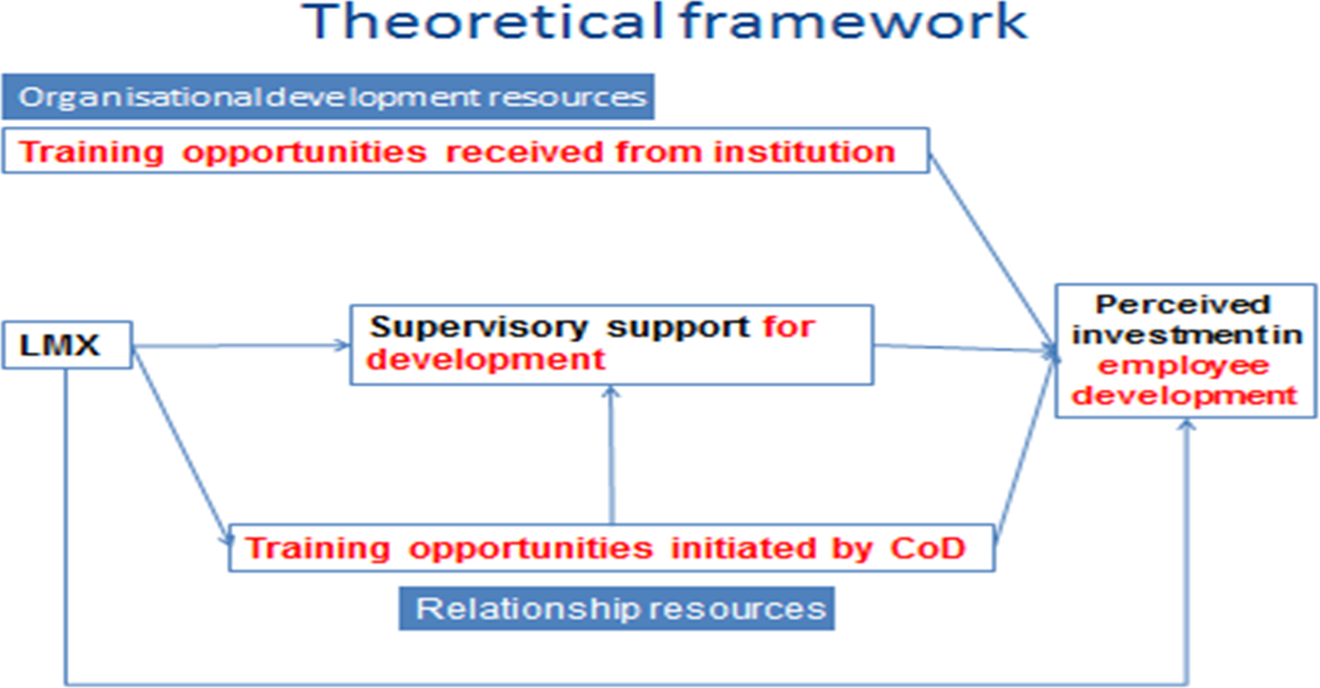
Theoretical model based on organizational development and relationship resources.
Therefore, from a social exchange perspective and with a view to gaining a better understanding of the relationship between LMX and the provision of supervisory support for staff development, the following hypothesis was tested:
A second aspect of this research considered the notion that once a high-quality LMX relationship had been established, employees tend to receive better social support and more resources from their leader (Lam et al., 2007). In the context of this study, training and development opportunities initiated by the immediate leader (supervisor) were seen as an important resource variable for training and development. Although it is recognized that training and development opportunities are available for all academic staff, it was of particular interest to establish if the first-line supervisor (chair of department [CoD]) initiated some of these opportunities as this would be an indication of his or her support in developing certain staff. Hence the following hypothesis was tested:
As indicated previously, supervisors (CoDs) can support staff development in different ways, for instance, by providing guidance and support through performance management discussions, coaching and mentoring (Maurer and Lippstreu, 2008: 333). In addition, resources in the form of training and development opportunities provided by a supervisor can be a clear indication that the supervisor is committed to supportive staff development. To test this notion the following hypothesis was formulated:
A central premise of the inclusion of PIED in the model was the perception of employees that organizations did invest in their development. PIED is known to facilitate employees’ feelings of greater obligation and commitment towards their organizations and a willingness to work hard and improve their organizations’ effectiveness (Arthur, 1994; Woods and De Menezes, 1998). In addition, creating positive perceptions among employees that the organization wants to invest in their development is of critical importance to other affective employee outcomes.
Previous research has suggested that general supervisory support alone does contribute to these positive perceptions (Kuvaas and Dysvik, 2010). It was, therefore, of interest to determine if employees had positive perceptions of their organizations’ development focus and, if so, to what extent these positive perceptions were affected by the quality of the relationship with their supervisors/CoDs and the supervisory support for development they received (Baldwin and Magjuka, 1997). In addition, it was important to determine if a positive and quality relationship with a supervisor could on its own contribute to these positive perceptions, even though the supervisor was not intentionally involved in the employees’ development. PIED was, therefore, measured as an outcome variable in this model. In light of these factors contributing to PIED the following two hypotheses were tested:
As supervisors are also seen as agents of the organization (Eisenberger et al., 2002) it was of interest to determine if supervisors (CoDs) provided resources in the form of training and development opportunities to their staff because such positive support behaviour could also contribute to positive perceptions of perceived employee investment in their development. Hence the following hypothesis was formulated:
Given the notion that organizational support for development is also based on the objective (fair and equal) amount of organizational resources set aside and made available for employee development, the number of training and development opportunities available to employees to grow and develop could have an impact on perceived organizational investment in employee development. Academic institutions provide many training and development opportunities for their staff. The majority of these opportunities are self-administered and regulated by organizational policies and procedures. Of particular interest in this study was to test if the provision of these self-initiated employee training and development programmes itself contributed to positive perceptions of perceived investment in employee development as predicted in the following hypothesis:
Research Methodology
Quantitative research in the form of an online survey was conducted. Based on the data obtained from the survey, four statistical techniques were applied to investigate the research hypotheses empirically. Namely, exploratory factor analysis (EFA), Pearson’s correlations, multiple regression analysis and path analysis as a subset of structural equation modelling (SEM) were used for the analysis.
Sample
This research was carried out at a large comprehensive South African university that has six main colleges covering different disciplines. The university offers both undergraduate and postgraduate degrees, has an approximate staff complement of 4500 (which include 1423 academic staff members) and there are 68 academic departments. The majority of the academic members of staff report to their formally appointed CoD, who in turn reports to directors of the different schools at the university. The span of control of these departments differs across the spectrum and is mostly determined by the number of students each department is responsible for. It was decided to obtain the views and perceptions of academic staff who reported to CoDs. It was important to determine staff/followers’ perceptions of the quality of the relationship with their CoDs/leaders and whether these perceptions influenced the way they perceived supervisory support for development and the organization’s PIED.
Measurement Instruments
In this study three measures were used, namely LMX 7 (Van Dam et al., 2008), supervisory support for development (Maurer and Lippstreu, 2008) and perceived investment of employee development (Kuvaas and Dysvik, 2010: 138). The LMX scale has been developed to measure the exchange relationship between the leader and the follower (Graen and Uhl-Bien, 1995). The scale, which consists of seven items, has been extensively used in various studies (Van Dam et al., 2008). The measures have been shown to have high internal reliability with a Cronbach’s alpha of α = 0.92 (Van Dam et al., 2008). A five-point Likert-type scale was used to record responses ranging from 1 = rarely to 5 = very often. A high score indicates a high quality leader–member exchange. The Cronbach’s alpha for this study was α = 0.91.
The supervisory support for staff development scale has been developed to determine to what extent respondents believe that their supervisor supports their development (Maurer et al., 2003: 712). Two previous studies using this measurement indicated an internal reliability of α = 0.90 and α = 0.94 (Maurer and Lippstreu, 2008). The instrument consisting of 11 items was scored by participants by rating each of the questions against a five-point Likert-type scale ranging from 1 = disagree strongly to 5 = agree strongly. The Cronbach’s alpha was α = 0.93. The PIED scale was initially used by Lee and Bruvold (2003) and then partly adapted by Kuvaas and Dysvik (2010). The Cronbach’s alphas for this scale in two different studies were α = 0.85 and α = 0.92 respectively (Lee and Bruvold, 2003). A recent study done by Kuvaas and Dysvik (2010) revealed a reliability index of α = 0,94. The instrument consisting of sixitems was scored by participants by rating each of the questions against a five-point scale, namely: disagree strongly, disagree, neutral, agree strongly and agree. The Cronbach’s alpha was α = 0.89 for the present study.
A single-item question was used to measure the number of training and development opportunities an employee received from the institution to determine if the employee was making use of the institutional resources available for training and development. Finally, an additional single-response item was used to determine the number of training and development opportunities that had been initiated by the respondent’s CoD. This number would either be lower than or equal to the number of training and development opportunities received from the institution. The aim of this question was to determine the involvement of the respondent’s CoD in his/her development. Sample items for the measures are provided in the Appendix at the end of this article.
Data Collection
An online survey (inclusive of three main measurements) was designed and developed. This survey was reviewed and evaluated by three independent specialists in the field, after which adjustments were made to the layout, structure and terminology. The survey was also administered to a pilot group similar to the target sample group. The online survey was administered to six academics in exactly the same way as it was intended to be administered to the bigger sample group. After minor adjustments, the online questionnaires were distributed on two occasions over a period of three weeks to all academic departments targeting 1413 academic staff members.
After the first round of distribution, 188 questionnaires were received back, accounting for a response rate of 13.3%. The second round of distribution targeted those members who had not participated in the first round. After the second round a total of 301 questionnaires (response rate of 21.3%) had been received. Ten questionnaires that had formed part of the original sample from a particular college were omitted because the CoDs of this newly established college had been appointed fairly recently and responses were perhaps not a true reflection of the relationship between CoDs and staff. The total sample after the omission of the 10 respondents resulted in an effective response rate of 20.8%. After surveys had been distributed to and received back from the different groups, completed surveys were reviewed to make sure that a cross-section of the population had been covered based on equal representation in respect of the set demographic criteria (De Vos et al., 2007: 207). In terms of gender, 64.26% females participated in the study compared to 35.74% males. The majority of the participants in this study (79.73%) were employed in relatively lower academics ranks in the institution, and this explained the high percentage of female participants since women were normally appointed to these positions. The periods of time that participants had been working under a CoD (tenure) ranged from one month to 32 years.
Data Analysis
Factor analysis was performed prior to the inclusion of LMX, supervisory support for staff development, and PIED as variables in the path analysis model. A scree test confirmed the loading for each factor (Costello and Osborne, 2005). Eigen values were used to determine the number of factors that needed to be retained (Velicer and Jackson, 1990). A Pearson correlation matrix was also performed to test the assumption of linearity between variables. Path analysis examined the causal relationships between variables proposed and hypothesized in the model (Ullman, 2001). Fit indices were used to determine goodness of fit of a structural model (Schreiber et al., 2006: 327).
Results
The exploratory factor analysis confirmed that the three measures in the study (LMX, supervisory support for development and perceived investment in employee development) were separate, single constructs that measured what they were designed for. The amount of variance explained in regard to each factor is provided in Table 1. Out of the three instruments, the scale for supervisory support for development reflected the most variance, namely 6.4026. These results from the factor analysis indicated that all three instruments measured only one dominant construct each (unidimensional), and further suggested that the intercorrelation between items comprising each scale was likely due to the working of a single latent factor.
Factor analysis – variance explained.
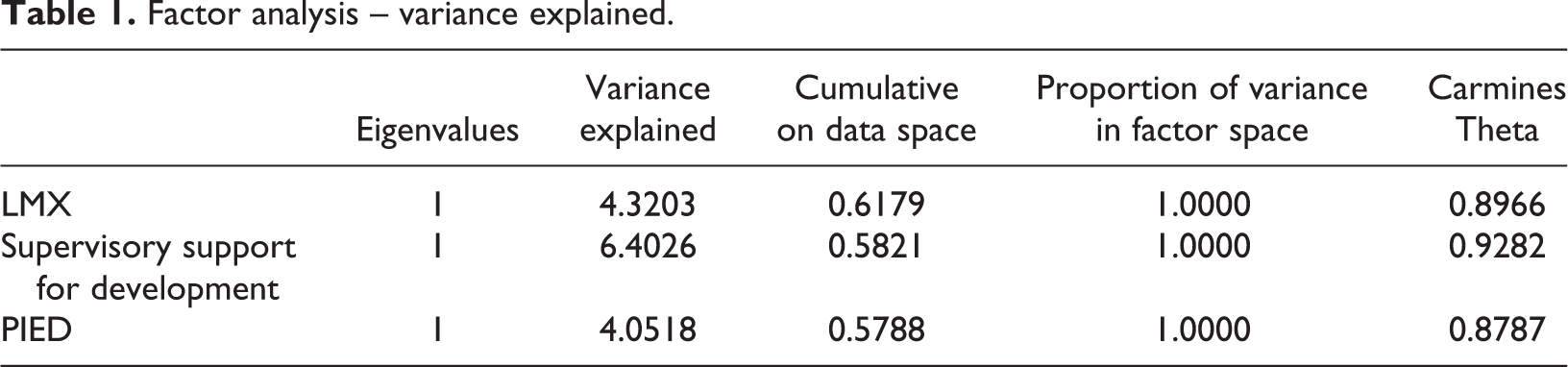
Notwithstanding this confirmation and that previous studies treated these two construct as separate measures, the researchers concede there could be some domain overlap between LMX and supervisory support for development. However, this is based on the nature of the two measures used. LMX measured the quality of a relationship between the leader and the follower and supervisory support for development measured employees’ perception of the development support that is received based on this relationship. Therefore, an interrelationship between the two constructs could occur as a high quality LMX relationship implies that the supervisor provides more support for development (Walumbwa et al., 2009).
Descriptive Statistics
Table 2 presents the means, standard deviation and Pearson correlation among all key variables used in this study.
Means, standard deviation and Pearson correlation among variables.
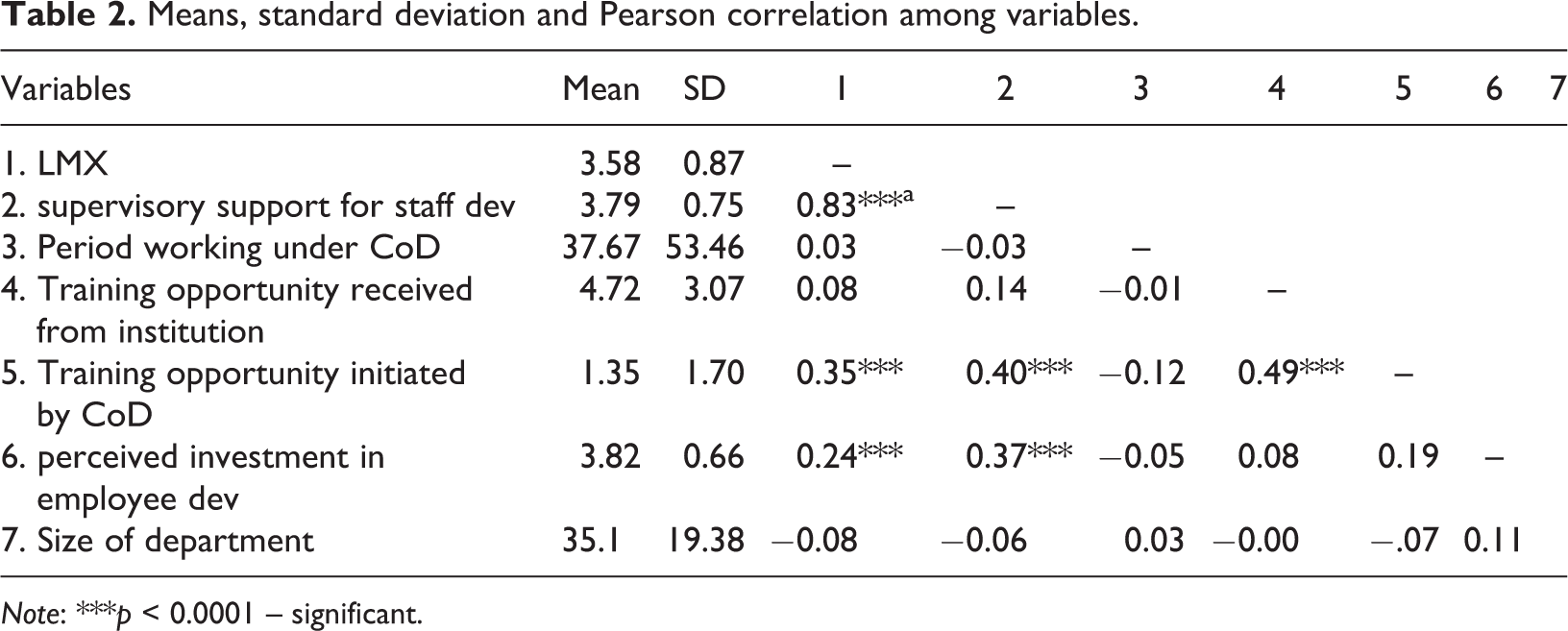
Note: ***p < 0.0001 – significant.
As the data in Table 2 indicates, different bi-variate correlations existed among certain variables. First, a strong positive correlation between LMX and supervisory support for development (r = 0.83, p < 0.0001) existed. Of further interest to this analysis is that LMX positively correlated with perceived investment in employee development but with a related low effect size (r = 0.24, p < 0.05). Of further relevance is that the significant positive correlation (r = 0.49, p < 0.05) between training and development opportunities initiated by CoDs and training and development opportunities received from the institution reflected a contradiction in that these two variables appeared to function totally independently. Two control variables (size of department and period working as CoD) had no meaningful correlation with either LMX or supervisory support for staff development.
Furthermore, LMX positively correlated with training and development opportunities initiated by CoDs at r = 0.35, p < 0.05 and training and development opportunities initiated by CoDs also positively correlated with supervisory support for staff development (r = 0.40, p < 0.05). No significant correlation existed between training and development opportunities received from the institution and perceived investment in employee development, theorized as an organizational resource.
Testing of Hypotheses
Path analysis as an extension of regression analysis was performed to test the hypothesized model (Kline, 2004). The choice to conduct a path analysis was further informed by the use of observed (measured) variables used in this study, such as training and development opportunities initiated by CoDs and training and development opportunities received from the institution (which represented a single item). Multi-variate normality was tested by performing a one-sample Chi-square and Kolmogorov-Smirnov test, and linearity was tested using a correlation matrix.
In addition, covariance among the disturbance terms was assumed to be zero and indicated in the structural model as error terms (e). To ensure the goodness of fit of a structural model, standard practice supports the use of fit indices that contribute to the rigour and validity of the model (Joreskog and Sorbom, 1993; Kline, 2004). Goodness-of-fit indices are indicated in Table 3 and provide an indication of fit indices reflecting the degree of congruence between the theoretical model and the hypothesized model.
Goodness-of-fit indices – original model.
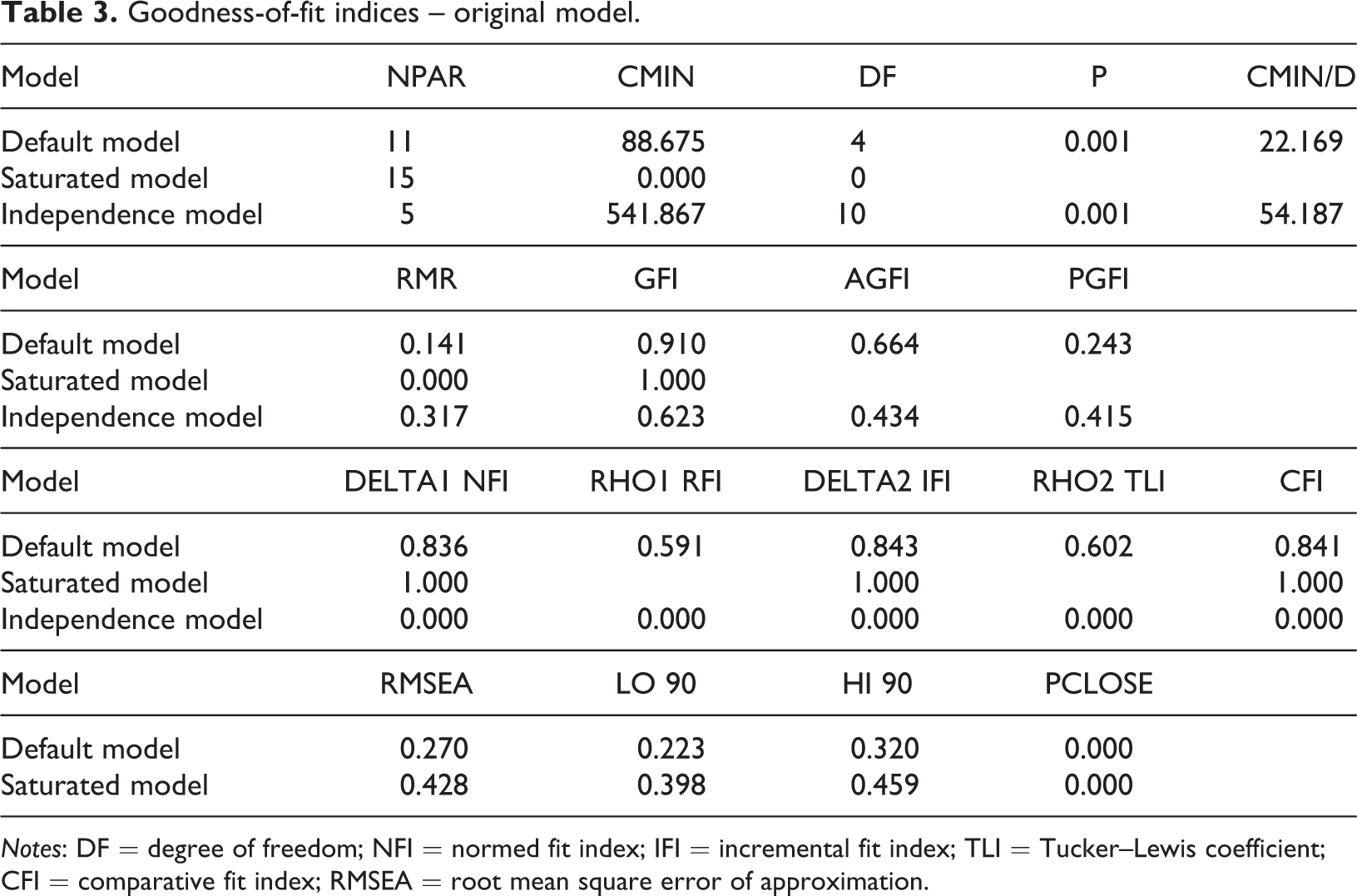
Notes: DF = degree of freedom; NFI = normed fit index; IFI = incremental fit index; TLI = Tucker–Lewis coefficient; CFI = comparative fit index; RMSEA = root mean square error of approximation.
The results of the original structural model indicated fit indices of NFI = 0.836; IFI = 0.843; TLI = 0.602; CFI = 0.841; and RMSEA = 0.270. Based on the mentioned criteria the model did not seem to fit the data well.
An illustration of the original model (path diagram model) that was performed is provided in Figure 2. To create standardized scores from the different measurement scales used in this study, all the items values of these scales were collapsed into composites and then transformed into Z-score. 2 All the linear relationships as hypothesized in the model were included; supervisory support for staff development (support), perceived investment in employee development, training opportunities initiated by CoD (see q19b in Figure 2), were regressed on LMX in the model. However, perceived investment in employee development (endogenous, dependent variables) was only regressed with training and development opportunities received from the institution (see q19a in Figure 2), an exogenous, observed variable serving as an organizational resource.
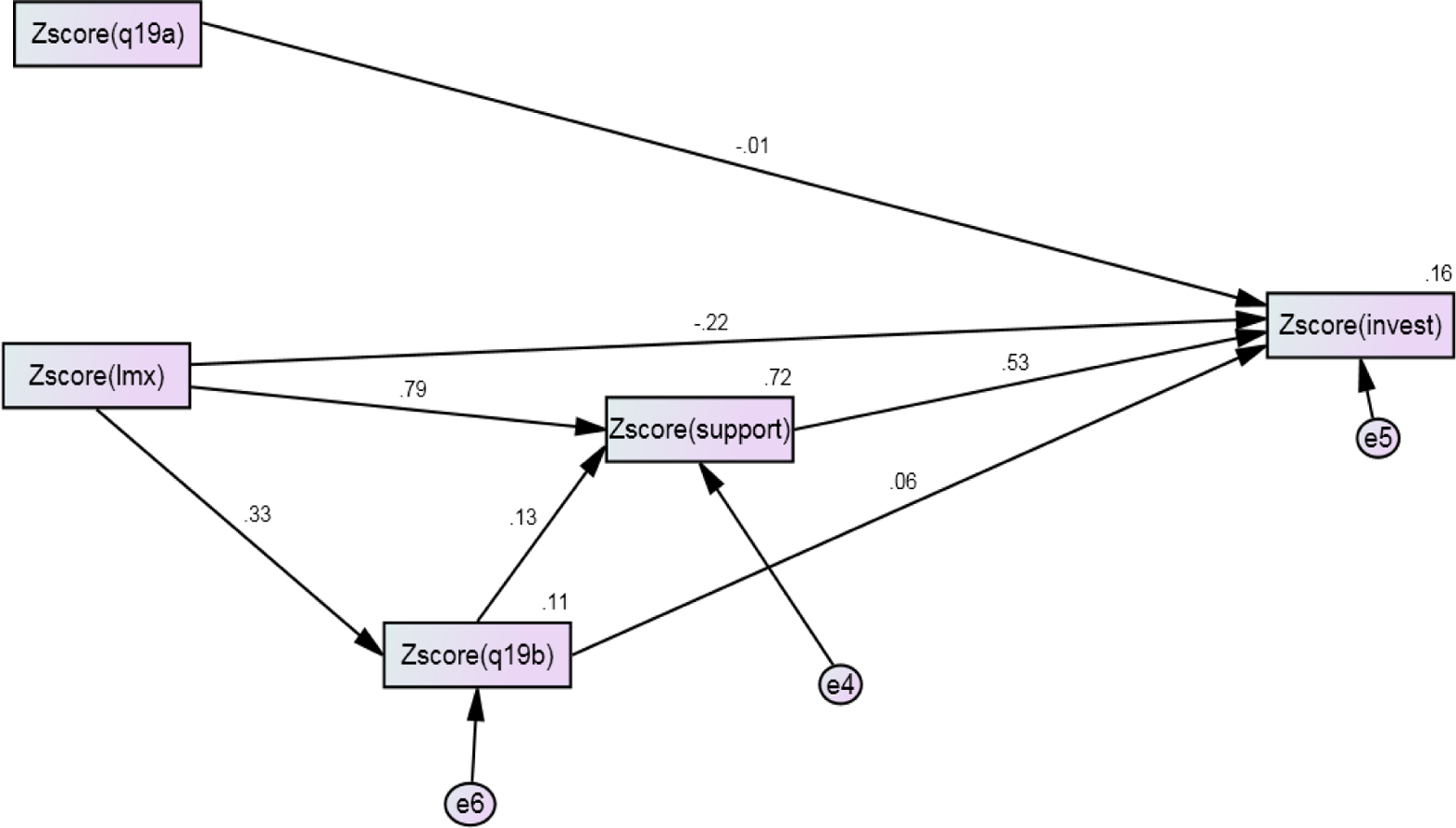
Original diagram model.
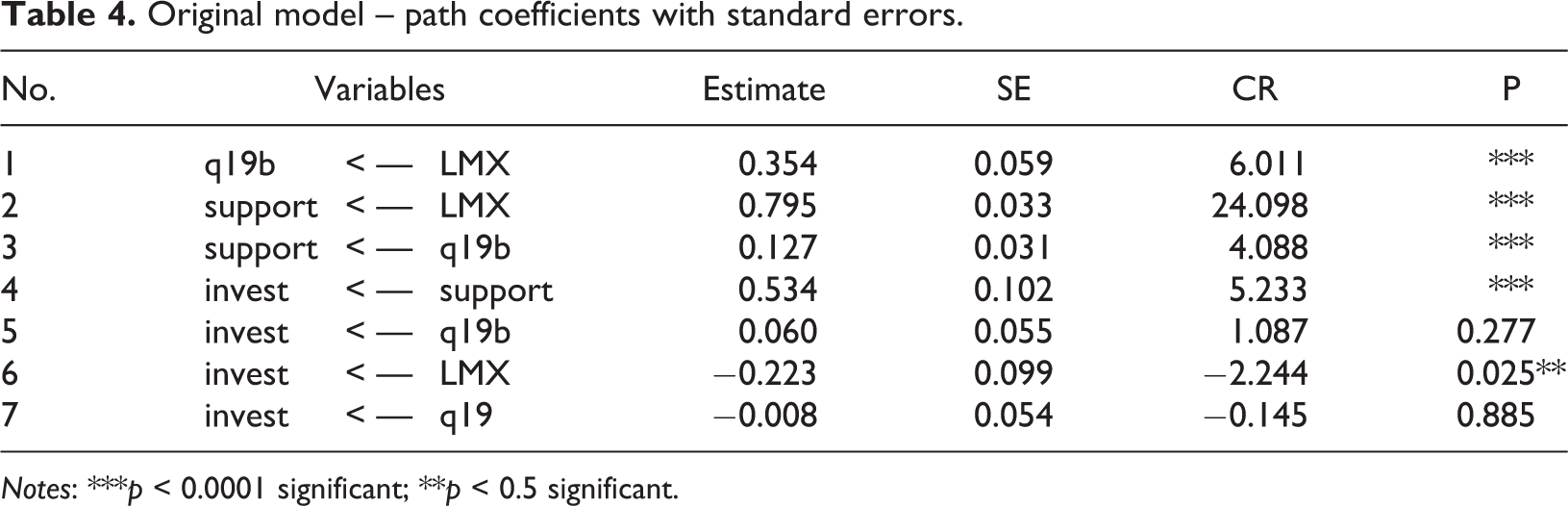
The individual regression weights and p values of the respective paths between variables are provided in Table 4. The p values indicate the significance of relationships. As indicated in Table 4, at least five standardized regression paths (1, 2, 3, 4 and 6) were statistically significant and meaningful. Parameter estimates were used for each element in the model, and tested estimates indicated effect sizes (standardized regression weights/coefficients) between all the variables in the model.
Original model – path coefficients with standard errors.
Notes: ***p < 0.0001 significant; **p < 0.5 significant.
The results of the path analysis provided empirical evidence for the support or the rejection of certain hypotheses in this study. A relatively strong, positive and statistically significant relationship (β = 0.794, (p < 0.0001)) existed between LMX and supervisory support for staff development, which supported hypothesis 1. A relatively strong and positive, statistically significant relationship existed between LMX and the amount of training and development opportunities initiated by CoDs (β = 0,333, (p < 0.0001)), confirming hypothesis 2. A relatively strong and positive, statistically significant relationship (β = 0.135, (p < 0.0001)) existed between training and development opportunities initiated by CoDs and supervisory support for staff development. Therefore, hypothesis 3 was confirmed.
In accordance with hypothesis 4, a moderately strong, statistically significant relationship existed between LMX and employees’ perception of investment in their development (β = −2.22, (p < 0.05)); however, this relationship was shown to be negative. Therefore, hypothesis 4 was rejected. In terms of supervisory support for development, the results indicated a strong and positive, statistically significant relationship (β = 0.534, (p < 0.0001)) between supervisory support for development and perceived investment in employee development, which supported hypothesis 5. No statistically significant relationship was found between training and development opportunities initiated by CoDs and perceived investment in employee development; therefore, hypothesis 6 was rejected. Training opportunities received from the institution as an organizational resource had no direct effect on perceived investment in employee development; therefore hypothesis 7 had to be rejected.
Firstly, the results of this analysis provided overall support that LMX and supervisory support for staff development are positively related. That is, the higher quality of leader–member relationship, the more likely the supervisor supports the development of subordinates. Second, the quality of LMX relationships and training opportunities initiated by CoDs were positively related while training opportunities initiated by CoDs and supervisory support for staff development were also positively related. With respect to LMX and employees’ perceptions of investment in their development, the quality of the relationship between the CoD and his or her staff was negatively related to the staff’s overall perceptions of investment in their development. It was, however, noticeable that this relationship changed (turned positive) if facilitated through a process of supervisory support for development. Thus, this notion also implies that an unknown aspect of LMX has a negative impact on PIED in the presence of supervisory support. It was also important to note that employees’ perceptions of investment in their development did not change when employees initiated their own training (training and development opportunities received from the institution) or when training and development was initiated by their CoDs only.
Post Hoc Model
Owing to the mediocre fit of the original theoretical model, an adjustment was made to the original model. During the process of fitting the original a priori model, it became apparent that a key linkage had been overlooked in the theorizing phase. This linkage was between the positive relationship between training opportunities initiated by the CoD (see 19b in Figure 2) and the training opportunities received from the institution (see 19a in Figure 2). An adjustment to the model was made by treating both these variables as two dependent mechanisms (by subsuming covariance) rather than by treating them as separate entities. However, this did not change the fundamental theorizing underlying the model. Although the researcher did not initially theorize that the amount of training and development opportunities received from the institution (see 19a in Figure 2) could also be shaped by the amount of training and development opportunities initiated by the CoD (see 19b in Figure 2), the modification indices indicated a significant improvement in fit if this path was freely estimated. Therefore, it made theoretical sense to include this path in the model. One reason for this inclusion was that in fact, both these measurements had been constructed to reflect on training and development opportunities received. Although it was initially intended to distinguish between these two measurements it was likely that they would impact on one another. Furthermore, the number of training and development opportunities staff members received from their CoDs could also impact on the total amount of training and development opportunities staff members perceived the institution to provide. These opportunities could be ascribed to the CoDs’ involvement in the whole process of training and development. The modification indices between q19a and q19b (see Figure 3) and the parameter change of an additional path between these variables is indicated in Table 5. No outliers in the first analysis were removed and the sample size was the same for both the original and post-hoc models. In addition, no variables and factors were added or omitted in this second constructed post-hoc model (Quintana and Maxwell, 1999).
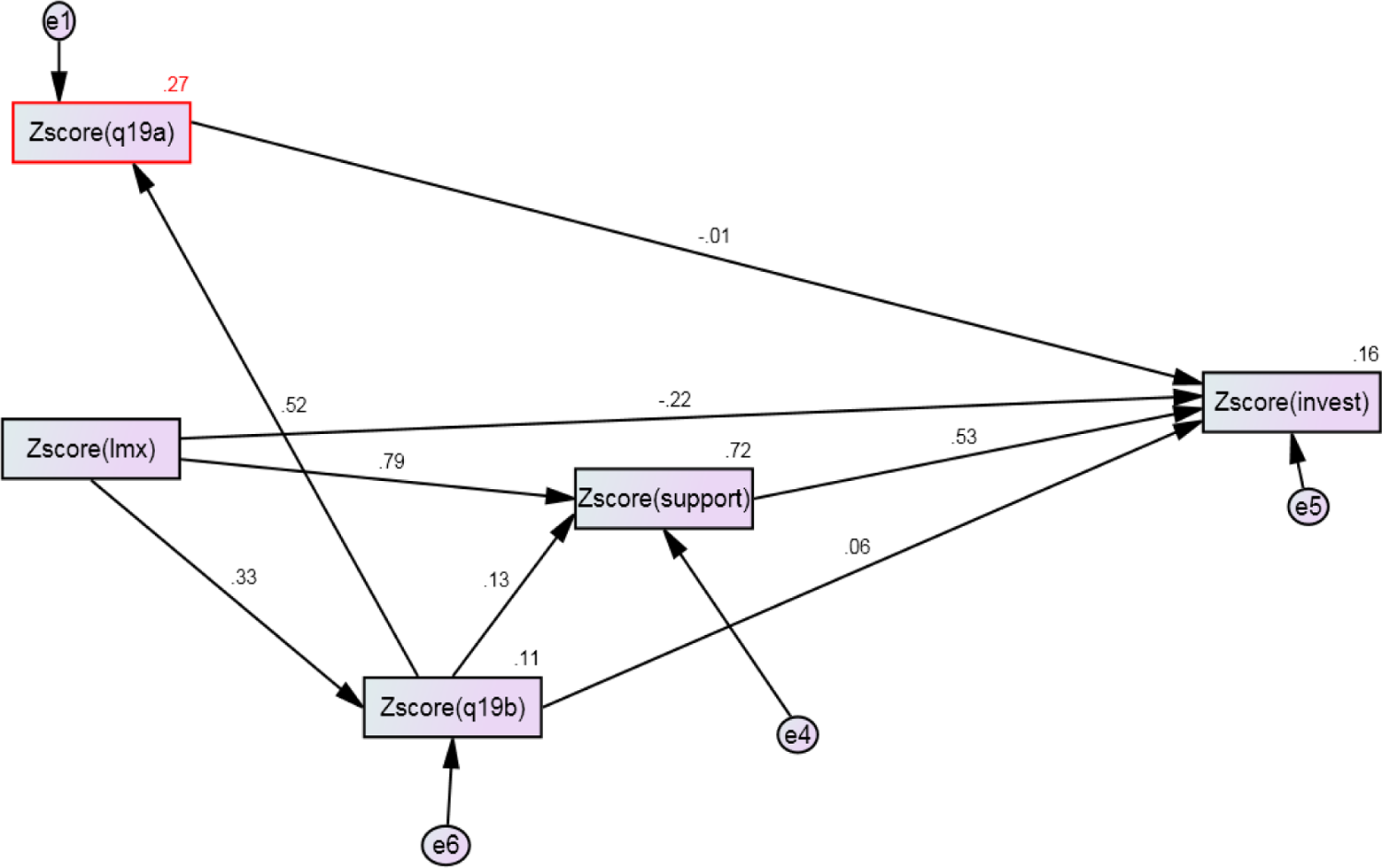
Post hoc diagram model.
Post-hoc model modification indices – standardized regression weights.

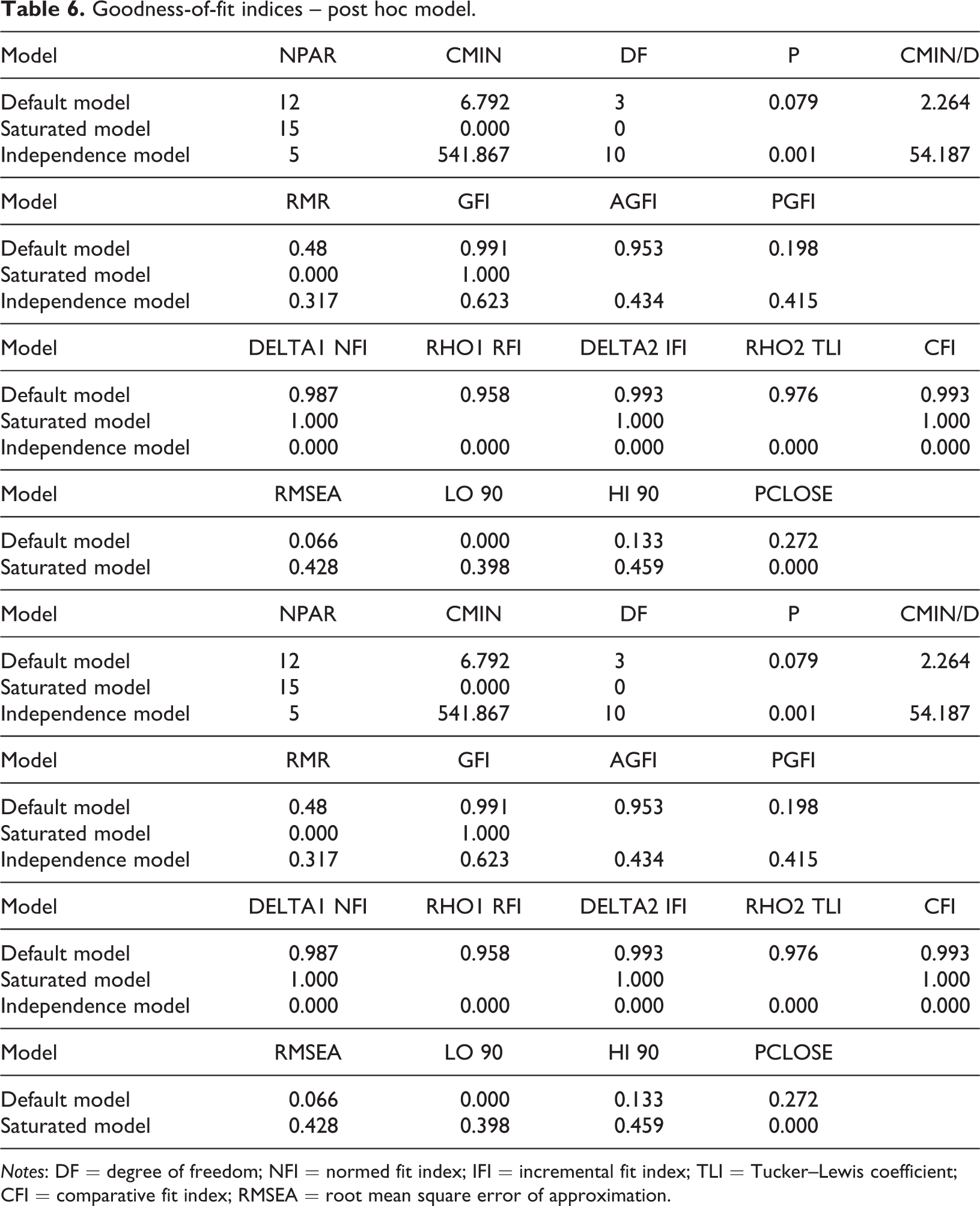
Goodness-of-fit indices for the post-hoc model are indicated in Table 6.
Goodness-of-fit indices – post hoc model.
Notes: DF = degree of freedom; NFI = normed fit index; IFI = incremental fit index; TLI = Tucker–Lewis coefficient; CFI = comparative fit index; RMSEA = root mean square error of approximation.
The results of the post-hoc model indicated fit indices of NFI = 0.987; IFI = 0.993; TLI = 0.976; CFI = 0.993; and RMSEA = 0.066, compared to the results of the original structural model with fit indices of NFI = 0.836; IFI = 0.843; TLI = 0.602; CFI = 0.841; and RMSEA = 0.270. The post hoc model, therefore, provided much better goodness-of-fit indices and strong evidence of statistical and practical significance. 3
A diagram of the post-hoc model is depicted in Figure 3. This diagram model indicates training opportunities initiated by CoDs (q19b) and training opportunities received from the institution (q19a) as the only additional path.
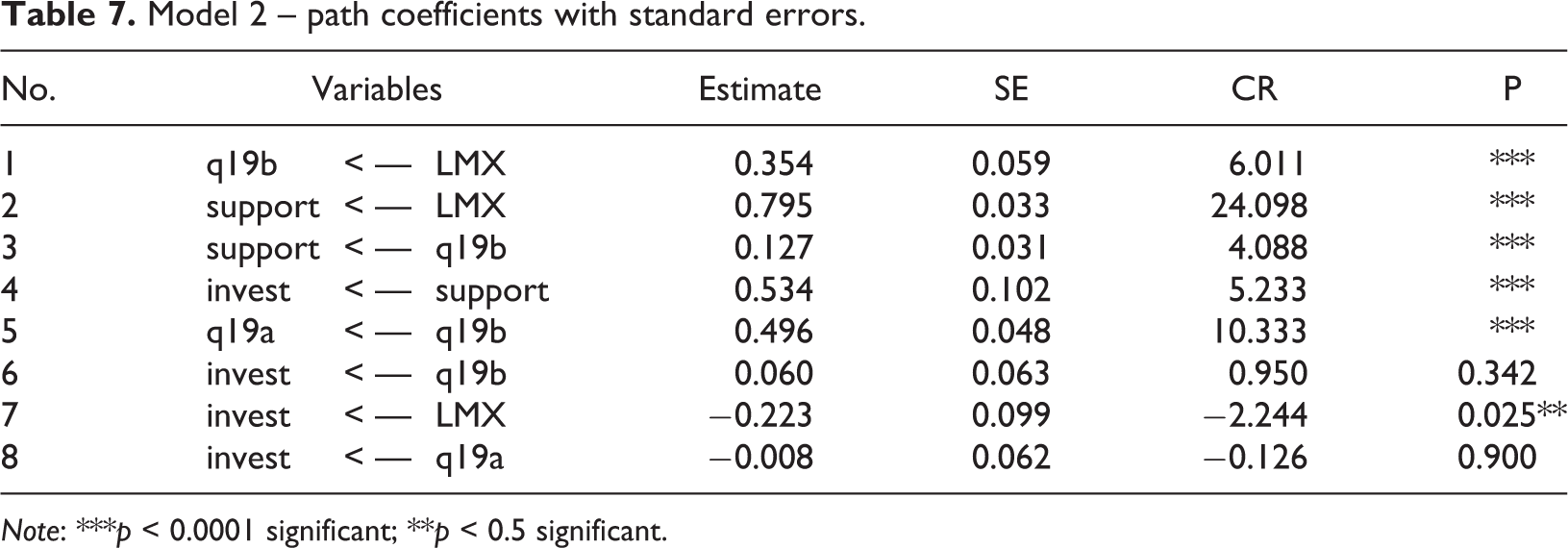
The individual regression weights and p values of the respective paths between the variables of the post-hoc model are provided in Table 7. Based on these p values, significant relationships existed for five paths at a confidence level of p < 0.0001, and for one path at a confidence level of p < 0.05, implying the existence of an additional path (q19a to q19b) in the post-hoc model (see Figure 3), which was significant.
Model 2 – path coefficients with standard errors.
Note: ***p < 0.0001 significant; **p < 0.5 significant.
Compared to the original model, tested estimates for all the paths in the post-hoc model did not change. The only change was the additional path beta weight of β = 496, at p < 0.0001 indicating a strong, positive, significant relationship between training opportunities received from the institution (q19a) and training and development opportunities initiated by the CoD (q19b) (see Table 7).
Discussion
The purpose of this research was to examine how the leader–member exchange relationships between department heads and academic staff influenced academic staff perceptions of support for development and organizational investment in their development.
The results indicated that the quality of the relationship between CoDs and their staff had a significant impact on the amount of support for development that employees perceived they receive from their supervisors. This result is quite relevant in an academic environment, considering the potential benefits and positive outcomes associated with supervisory support (Dysvik and Kuvaas, 2012). Previous research has associated certain supportive supervisory behaviour with employee learning and development. Existing literature has also associated LMX with increased subordinate learning and development (Walumbwa et al., 2009) and the provision of role emergence through job growth opportunities and potential (Graen and Scandura, 1987). The current study provided empirical evidence to justify the notion that there is an important link between LMX, supervisory support for development and the employee’s perception of organizational investment in development.
Furthermore, it was confirmed that the nature of the LMX relationship not only impacted on follower development initiatives (such as increased learning and development, job growth and learning assignments) but also impacted significantly on the amount of supervisory support provided by leaders (CoDs) for development.
Results also suggested that the quality of the relationship between the CoD and academic staff effects the amount of training and development opportunities initiated by the CoDs and received by their staff. This result was consistent with the finding of previous LMX research that a high-quality LMX relationship was associated with supervisors’ willingness to provide extra resources and opportunities (in this case, training and development opportunities). These studies suggest that the quality of the relationship between the leader and followers does have an impact on the amount of resources the leader is prepared to use and provide to the followers (Kim et al., 2010; Lam et al., 2007). Based on these findings it is clear that LMX serves as an important relationship resource component between CoDs and their staff and that it plays a vital role in an academic context in empowering and developing academic staff and building their intellectual academic capacity.
The tested model provided a unique empirical contribution towards employee perceptions of investments in their development and shed more light on further positive outcomes of LMX. LMX as a single key relationship factor affected perceived investment in employee development positively but, in the presence of supervisory support for development, this relationship between LMX and PIED turned negative. This combination of LMX and supervisory support for development is essential to establish positive followers’ perceptions of investment in their development and that centrally the introduction of supervisory support for development, LMX as a social exchange theory alone, is not sufficient to create positive PIED. Therefore, the results of this study makes a contribution by illustrating that positive employee perceptions of the organization’s investment in employee development is more likely to occur if academic staff receives adequate supervisory support for their development. The conclusion that can be drawn is that the existence of a positive LMX relationship is not sufficient in itself but that a supervisor must be viewed as being actively (and not only passively) involved in employee development.
It is clear that the role of a supervisor cannot be underestimated, and existing literature has provided much insight into this role and function (Eisenberger et al., 2002; Kotte and Sharafinski, 1988; Stinglhamber and Vandenberghe, 2003). Stinglhamber and Vandenberghe (2003) have pointed out that employees seem to interpret managers’ actions and behaviours as representative of the organization. Therefore, the role of a supervisor in supporting a subordinate’s development has significant implications in that the general perception of an organization’s support for development is created based on the supervisory support given in the organization.
The notion that training and development opportunities received from the institution did not impact on perceived investment in employee development was reversed in the sense that there was an impact on perceived investment in employee development when these training and development opportunities were initiated by CoDs. Thus, training and development opportunities did indeed contribute towards perceived investment in employee development as long as the supervisor was actively involved in providing these opportunities. These results once again reiterate the important role that supervisory support plays in employee perceptions of organizational support for development. This implies that if the quality of an LMX relationship between a CoD and his or her staff member improves, it is likely that the staff member will benefit by receiving more support in the form of training opportunities initiated by the CoD.
Limitations
This research, like any other study, has its limitations. Although evidence of a direct link was found between LMX, supervisory support for staff development and perceived investment in employee development, the use of longitudinal studies can provide additional evidence of the linkages (Bauer and Green, 1996). Longitudinal research could also clarify the ways in which the dynamics of the LMX relationship might influence supervisory support for development. Ideally research using LMX theory should investigate both perspectives of the dyad, the quantitative data was obtained only from subordinates. Achieving this ideal appears to be challenge for other researchers as well (Avolio et al., 2009). Nevertheless, future research should measure the LMX relationship from the perspectives of both the supervisor and the employee. Applying a qualitative approach for this purpose (for example, interviews\focus groups with heads of department and academics) could also reveal more specific leader behaviours associated with LMX and supervisory support for development as well as how academics perceive it. While a 20,8% response rate for this research falls within acceptable range, future research, should attempt to obtain a higher response rate (De Vos et al., 2007). The sample was, however, statistically adequate to test the hypothesized relationships. Additional studies including more South African universities as well as replicating the study in other contexts can further test the robustness of the hypothesized model.
Finally, the general concern that examining different variables at the same time and using the same sample can affect the quality of results, commonly referred to as common method variance (CMV), is also applicable to this research (Harris et al., 2009). However, the risks associated with following this method did not outweigh the benefits. The risk that the researcher was most concerned about was the potential impracticality of the approach. It could have been a problem to get the participation of the same respondents for multiple measurements at different times.
Practical Implications
First, the research demonstrates the value of leader–member exchange theory in an academic context, particularly its relevance to understanding academic talent development and the role of CoDs. LMX should be introduced as an enabling staff development mechanism to assist CoDs in acting as agents of the institution to fulfil their all-important task and obligation of developing and growing academic talent in higher education. LMX should, therefore, be included in existing capacity development training for CoDs. During this training CoDs should be exposed to the LMX theory as a supervisory framework supporting the development of academic talent in conjunction with an understanding of the benefits and advantages associated with establishing quality, mature relationships with staff in support of development. Additionally, organizational factors beyond the control of the CoD, such as the size, structure and proximity of staff in departments impacting on the leader–follower dyad should be introduced as a potential limitation when implementing this framework. Second, LMX should not be introduced as an alternative mechanism and process to develop staff but rather as an enabling mechanism to facilitate existing constructive development practices, such as career conversations and performance management within an institution. Finally, this research has important implications for institutions that invest heavily in the development of their staff. The relationship that exists between supervisors and staff, and the support that staff receives from their supervisors for their development is of utmost importance to the creation of positive perceptions of overall organizational support for development. It is important to recognize that organizational development opportunities alone will not necessarily contribute to these positive perceptions.
Conclusion
Although the findings of past empirical studies indicate support for LMX and related learning and development aspects, such as training motivation and setting learning goals (Xander et al., 2010), empirical studies have not examined the relationship between LMX and overall supervisory support for talent development. The positive relationship indicated in this study between LMX and supervisory support for development provides additional empirical evidence of the importance of a supervisor’s role in developing subordinates (Maurer and Lippstreu, 2008). Notwithstanding the existing realization that academics tend to work in isolation (Ewell and Wellman, 2007) the results obtained in this study suggest LMX theory can be useful in understanding the role of the supervisor in the development of academic talent (Graen and Uhl-Bien, 1995). Understanding the relationship between a head of department and an academic staff member is of particular importance in an academic context where the importance of collegial relationships rather than pure hierarchical relationships for growth and development of academic talent have been recognized (Middlehurst, 1993).