






Abstract
Globally, there is increasing pressure on schools to enact change, and the literature indicates that transformational leadership is positively associated with school leaders’ effectiveness at implementing positive reforms. Here, we report on a study conducted in the United Arab Emirates (UAE) within the current context of intense educational restructuring in the K–12 system. The purpose was to investigate whether school principals in the UAE practise transformational leadership, and whether they and their teachers perceived principals’ leadership styles differently to their western counterparts. This study adopted a mixed methodology, and revealed variation in perceptions between principals and teachers related to whether principals were practising transformational leadership. However, when analysed using Hofstede’s cultural framework, this variation may be related to cultural differences between the western orientation of the leadership model adapted by Emirati principals and the Islamic orientation of the population. Therefore, a new model of transformational leadership is proposed, based on a paradigm that may be more appropriate for Middle Eastern/Islamic contexts. This Modified Transformational Model may be useful to those leaders who wish to adopt transformational leadership with cultural accommodations.
Introduction
The United Arab Emirates (UAE) includes Abu Dhabi (the capital), Ajman, Dubai, Fujairah, Ras al-Khaimah, Sharjah and Umm al-Quwain, each of which is governed by a separate but absolute monarch. While the president of the UAE is chosen from the group of monarchs, political power generally resides in the Abu Dhabi Emirate. Islam is the official religion, and Arabic is the official language, although English is frequently used as a second language by many expatriates, who comprise approximately 80% of the country’s population. Because the UAE controls the world’s fourth largest oil reserve, it also possesses a great deal of practical power and a solid economic base. However, the emirates have endeavoured to allow greater public participation in governance, as well as to provide a broader base of education and opportunity to residents in order to avoid the political unrest experienced in much of the region (CIA, 2015).
Education in the UAE: a context of change
The 40-year history of public education in the UAE is short and unsettled. As recently as the 1950s, education throughout the UAE mirrored that of many Gulf countries in that it was mainly limited to village elders teaching the Quran. Later in the same decade, the first non-religious school opened in Abu Dhabi, and this has been described as basic in structure and content, comprising a six-room building with no electricity or teaching resources (Al-Fahim, 2006). In fact, no real culture of modern schooling existed until the early 1970s, when the formal educational system was established. Since then, massive changes have occurred as the UAE has endeavoured to take its place as a world power.
Mass education, supported in part by the rise of Sheikh Zayed in 1971 and the subsequent backing of substantial oil revenues, necessitated a reliance on expatriates primarily from other Middle Eastern and North African regions, as well as India and Pakistan. This massive influx of expatriate teachers and the rapid expansion of K–12 schools and post-secondary educational institutions nationwide not only had a profound effect on the country (Burden-Leahy, 2009), but also resulted in what has popularly been described as an education crisis (Macpherson et al., 2007). Recently reported problems include inadequate curricula, low student achievement, poor teaching standards, insufficient numbers of Emirati teachers, poorly trained school management and a lack of professionalism (Gaad et al., 2004; Macpherson et al., 2007; Ridge, 2009; Thorne, 2011). Additionally, many schools continue to experience issues with organisational culture and poor infrastructure (Gaad et al., 2004; Ridge, 2009). Thus, the UAE rulers have begun to scrutinize the overall underperformance of the entire education system, and have released a far-reaching development plan to raise education to international standards (Macpherson et al., 2007; Thorne, 2011).
At the national level, this education plan includes five strategies for change: clarifying policy, setting new standards, utilising a 10-year development plan, restructuring educational management and mobilising resources. In this way, the education system should align more closely with the expectations of educational attainment in many western nations (Macpherson et al., 2007).
At the emirate level, educational change is also underway. Entities such as the Knowledge and Human Development Authority (KHDA) and Abu Dhabi Education Council (ADEC) have been established to assist in ensuring successful policy implementation (Al-Amiri, 2012). The government has developed a series of technology-rich model schools and public–private partnerships with local businesses nationwide, efforts have intensified to recruit Emirati teachers, universities have been encouraged to improve school quality (Lewis and Bardsley, 2008; Macpherson et al., 2007; Stringer and Hourani, 2015), and an increasing number of trained and qualified Emiratis are acting as catalysts for change and improvement by taking up posts as school leaders (Stringer and Hourani, 2015). Key performance indicators (KPIs) have also been developed, and standardised testing has been instituted in the form of exit exams such as the Common Educational Proficiency Assessment (CEPA).
Additionally, a transition away from rote learning to active teaching approaches is underway, and there has been an increased focus on overhauling out-dated curricula (Lewis and Bardsley, 2008; Macpherson et al., 2007) to create a bilingual (i.e. English and Arabic) education system wherein English is the medium of delivery for all math, science and English courses in some emirates. This has necessitated the recruitment of large numbers of English Medium Teachers (EMTs) from countries such as the United States, Ireland, the United Kingdom, South Africa, Canada, Australia and New Zealand, as well as new regulations requiring non-native English-speaking math/science and English language teachers to attain IELTS band scores of at least 5.5 and 6.5, respectively (Baker and Blaik-Hourani, 2014; Zaman, 2012). Moreover, the government has mandated that schools adopt a program to improve basic skills, enforce discipline, require attendance, help students prepare for exams, and focus on enhancing teachers’ and principals’ overall skills (Abu Dhabi Education Council, 2012). The expansion of learning outcomes, provision of additional classroom resources, enhancement of professional development and mentoring programs, enactment of new professional standards, and establishment of higher levels of support and autonomy for teachers and school leaders are among the ways to accomplish the aforementioned goals (Abu Dhabi Education Council, 2012).
In sum, the modern UAE educational context has been profoundly shaped by societal development, economic growth and extraordinary reform. Moreover, the changes faced by UAE schools are similar to those faced by many developing nations (Leithwood and Jantzi, 2006); that is, raising all school facilities, curricula, pedagogy and outcomes to international standards, clarifying educational policy, restructuring educational management, boosting leadership capacities in school communities, and mobilising appropriate resources and supports.
The works of Hoy and Hoy (2013), Leithwood et al. (2004) and Mulford (2008) reflect the way that effective leadership is necessary to achieve positive change through (co)creating a shared vision, improving effectiveness, creating higher standards and building instructional capacity. Transformational leadership focuses on results and emphasises success (Huber, 2004). The adaptation of transformational leadership can help the emirates to meet many modern educational challenges. This current study investigated the cultural relevance and implications of using the transformational model of leadership in the context of a Middle Eastern, Muslim nation (the UAE) based on the conceptual framework of change theory, transformational leadership and cultural considerations (see Figure 1).
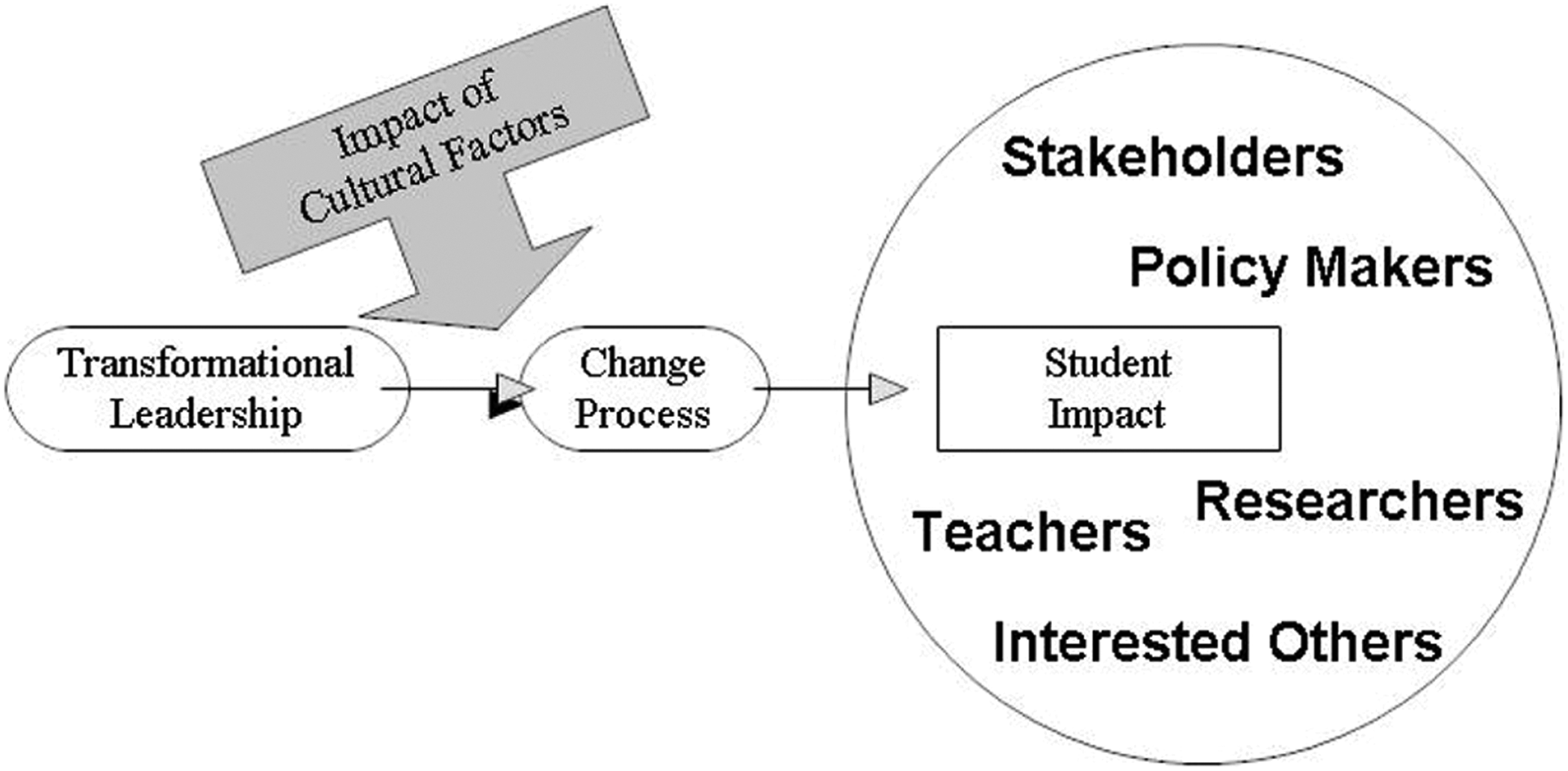
Conceptual framework.
Transformational leadership
In this study, Kouzes and Posner’s (2002, 2003, 2007) theoretical framework for leadership was utilised. Their framework evolved from a comprehensive collection of managers’ memories of their own most positive leadership experiences, based on five components that closely reflect the ethos of many modern definitions of a transformational leader. These components are also positively associated with exemplary leadership that has been shown to correlate well with aspects of transformational leadership paradigms (Abu-Tineh et al., 2008; Carless, 2001; Ehrhardt, 2008; Puccio et al., 2006; Slater et al., 2002). Kouzes and Posner’s dimensions of transformational leadership include: Modelling the way. Leaders must share their personal and professional values with those in their organisation, serve as role models and set the ethical tone for an organisation. Inspiring a shared vision. Leaders must understand people’s hopes and dreams and bring people together towards common goals; they must be able to communicate these goals effectively. Challenging the process. Leaders must embrace change and continual improvement. Their primary contribution is to recognise and nurture the good ideas of others. Enabling others to act. Leaders must gradually build trust and enable others to excel, in addition to nurturing teamwork. Encouraging the heart. Leaders must be uplifting and create a culture of celebration and camaraderie (Ehrhardt, 2008; Kouzes and Posner, 2003, 2007).
Transformational leadership, as developed by Burns (1978), was perceived as a process in which leaders transform an organisation by increasing the achievement and motivation of their followers. They establish change through hard work with their followers, who must be motivated to achieve success (Bass, 1985, 2000). Additionally, change theory, wherein the ability to change is grounded in knowledge of human behaviour, explains the process whereby organisations can gradually evolve so that transformational leadership becomes the norm (Burke, 2013).
To grow and survive, organisations must cope with change (Westover, 2010) by recognising that change needs to occur (i.e. initiation), implementing the change (i.e. implementation) and cementing the change in place (i.e. institutionalisation) (Wallin, 2010). Change is central to the goal of transformational leaders, which is to effect positive change in organisations (Burns, 1978). Additionally, transformational leadership is the bridge for organisational change because it facilitates a better relationship between leaders and followers, which can then lead to positive action.
Developed in the West, the transformational leadership paradigm has evolved and become popular in the Middle East due to the region’s focus on development and change (Alsaeedi and Male, 2013; Rees and Althakhri, 2008), but the question is whether this paradigm has universal applicability (Bass, 1997). Leadership models tend to be culturally bound (Duchatelet, 1998), so identifying the impact that culture would have on the transformational model is important in determining its overall efficacy in educational systems such as the UAE’s. Hofstede’s dimensions (1980, 1993) are also relevant in this regard, and Hofstede et al. (2010) have shown that Emirati cultural values differ profoundly from those of western nations. The question is, then, can the western values-based transformational leadership model work in the UAE educational context?
Educational change
Behaviours can be interpreted quite differently by people from varied cultures and contexts, resulting in several approaches to leadership (Huber and West, 2002). Transactional leadership approaches prevail in countries that demonstrate strong centralised control structures. As decentralisation occurs, the transformational model becomes more useful and relevant because the focus shifts from managing processes and administration to leading people and change processes. Research on transformational leadership has shown it is particularly applicable to educational change (Huber, 2004; Huber and West, 2002; Mulford, 2008). Leithwood (1992) suggests that transformational leadership is well suited to education because it helps empower instructors and gives them hope, optimism and energy, as it defines the mission of how to accomplish goals.
Transformational leaders
Effective transformational leaders influence shared beliefs and values to create a complete and comprehensive level of change, and are more likely than transactional leaders to take risks and engender trust (Bass and Avolio, 1990). They also aim to nurture a school culture oriented towards learning, wherein leaders seek to expand the abilities of the average employee, ways of thinking and individual ambition (Senge, 1990). In this way, learning becomes a shared responsibility.
Developing change
Developing a change movement is one of the main functions of a transformational leader (Cameron and Green, 2009). The UAE plans to survive and prosper within a competitive international market, and change is necessary to do so. Transformational leadership also has an impact on the psychology of followers. Leaders are committed, press for development and control, and have enhanced satisfaction (Leithwood et al., 1999).
Within an effective transformational change environment, teachers’ attitudes change, and they begin to adhere to regulations because they buy into the change approach and feel empowered within its aegis (Leithwood et al., 1999; Stewart, 2006). The net effect is an increase in vision building, meeting of performance expectations, ability to develop consensus and intellectual stimulation (Leithwood et al., 1999; Stewart, 2006).
Leadership and culture
The literature indicates that global leaders have certain traits (Caligiuri and Tarique, 2012), including the ability to be less ethnocentric, greater cultural flexibility (Shaffer et al., 2006) and a high tolerance for ambiguity (Judge et al., 1999). The main problem with transformational leadership is that different cultures regard effective leadership through varied cultural lenses (Javidan et al., 2006).
According to Hofstede (1980, 1993) and Hofstede et al. (2010), culture is a set of underlying assumptions, norms, behaviours and beliefs that are shared by members of a group. Cultural values are inflexible and unique to various contexts, and thus must be considered within the leadership framework (Hofstede et al., 2010). Hence, it is preferable to adopt the management style of the culture rather than attempting to demand that the culture change (Hofstede, 1980, 1993; Hofstede and Hofstede, 2005; Hofstede et al., 2010).
Hofstede identified five main cultural values through his initial research at IBM between 1967 and 1974. He gathered data from more than 70 countries (including the UAE), beginning with the 40 countries that had the largest group of respondents. The study was initially expanded to 50 countries in three regions. Eventually, the following groups were added: commercial airline pilots in 23 countries, civil service managers from 14 countries, students from 23 countries, upmarket consumers from 15 countries and an ill-defined group of ‘elites’ from 19 countries (Hofstede, 1980, 1993; Hofstede and Hofstede, 2005). According to Hofstede et al. (2010), although the study took place years ago, national cultures typically change so slowly that they are still considered up to date. One caveat exists, however: no studies have determined if cultural changes are accelerating due to the forces of globalisation. Thus, it is possible that changes in cultural values have the potential to occur more quickly than previously believed, and further research is certainly warranted in this area.
All cultural values are measured with the Hofstede Value Survey Module (VSM) and have scores from 1–100, with 100 being the highest (Hofstede, 1980, 1993). Power distance refers to the acceptance of unequal distribution of power and wealth. At 90, the UAE’s power distance score is very high, meaning that they accept the notion that the ‘boss’ is completely in charge. Cultures are also measured in terms of their respect for individualism or collectivism. The UAE’s individualism score of 25 is very low; that is, people act as a collective and do not expect to be treated as individuals (Hofstede et al., 2010). A society can also be masculine or feminine. Masculine societies favour assertiveness, while feminine societies favour caring and compassion (Hofstede, 1980, 1993). The UAE’s score of 50 means that neither set of attributes dominates (Hofstede et al., 2010). Uncertainty avoidance defines the level at which a society feels threatened by uncertain circumstances. The UAE’s score of 80 is very high, and indicates that UAE society favours regulations to lower the chance of a random incident occurring (Hofstede et al., 2010). Lastly, long-term orientation refers to the Confucian idea of the search for virtue. It contrasts the long-term orientation of a nation to those with a short-term, immediate focus, and was added after the original dimensions in order to identify the differences in thinking between East Asian societies and the West (Hofstede et al., 2010). This factor has not yet been calculated for the UAE. Moreover, Hofstede’s recent studies conducted with Minkov (Hofstede et al., 2010) have examined the concept of indulgence or restraint in behaviours as a cultural dimension. This score has also not been calculated for the UAE, but the majority of Muslim nations examined to date have been shown to approach life with higher levels of restraint, which is defined simply as approaching life with strict social controls versus approaching life indulgently.
From these characteristics, the differences between the UAE and western nations become clearer. Hence, when considering the potential viability of transformational leadership, as a largely western construct, it was important to explore how principals and teachers perceived this form of leadership within a Middle Eastern context.
Purpose of the study
The study aimed to determine how closely school principals in the UAE align with transformational leadership approaches, and how well teachers accept that style of leadership. Very few studies have been conducted on the impact of the UAE change agenda, especially using transformational leadership as the lens for exploration. Determining the efficacy and appropriateness of transformational leadership in the Middle East within a predominantly Muslim culture was perceived to be informative to scholars and practitioners in other non-western nations or varied cultural settings.
Research questions
The following research questions framed the study: How do principals in the UAE align their leadership actions with transformational leadership? Do teachers and principals perceive that transformational leadership is practised in Emirati schools? Is transformational leadership relevant to Emirati schools? What factors in the UAE influence how principals enact transformational leadership?
Methodology
A mixed methodological approach of both qualitative and quantitative methods was used following a sequential process. By triangulating the results of various data sets, emergent themes could be compared and legitimised. The research employed a questionnaire, followed by individual, in-depth semi-structured interviews to obtain more detailed information regarding stakeholders’ perceptions of transformational leadership in UAE schools.
Participants
A purposive expert sample of 247 individuals was invited to participate in the research, of which 130 agreed (27 principals and 103 teachers). The population comprised graduate students (all qualified educators) enrolled in faculties of education in the UAE. These English-proficient volunteers freely provided their informed consent. The sample attended Abu Dhabi University, the British University of Dubai, UAE University and Zayed University, all of which consented to the study. Twenty-seven principals and 103 teachers completed the questionnaire. Sixteen of these individuals (12 teachers, four principals) participated in follow-up interviews.
The study’s expert sample was selected for several reasons. First, it was regarded as fairly representative of teachers and administrators in the UAE, as all participants were employed for a minimum of one year in the school system; moreover, they possessed the level of English proficiency required by federal educational authorities (i.e. IELTS band scores between 5.5–6.5). As graduate students enrolled in educational administration and leadership programs, they also had sufficient background knowledge to understand complex subject matter and discuss their opinions and perceptions of transformational leadership. Additionally, it was assumed that the participants’ level of expertise regarding the research topic would affect the overall results in a positive manner, as these subjects would likely provide a greater level of insight than other individuals in the UAE school system.
In terms of participant demographics, two principals were male and 25 were female; the majority were in their mid (n = 13 / 48%) or late (n = 10 / 37%) careers. Most principals came from Abu Dhabi (n = 12 / 44%), with the second largest group coming from Dubai (n = 7 / 26%); the majority worked in Abu Dhabi (n = 12 / 44%) or Dubai (n = 10 / 37%). The largest group supervised primary grade levels (n = 11 / 41%), while the second largest group supervised preparatory or middle levels (n = 8 / 30%). Their school leadership experience was fairly evenly divided.
The vast majority of the teachers were females (n = 89 / 86%) who were young (25–34 years) (n = 39 / 38%) to middle aged (35–44 years) (n = 35 / 34%). Most came from Abu Dhabi (n = 49 / 48%) or Dubai (n = 23 / 22%), and likewise worked in Abu Dhabi (n = 54 / 52%) or Dubai (n = 25 / 24%). The majority taught at the primary (K–6) level (n = 40 / 39%), with the second largest group teaching at the secondary level (n = 28 / 27%). Their years of experience were fairly evenly divided, and the majority of the teachers were mid-career (n = 32 / 31%). The teachers’ sample was demographically very similar to the principals’ sample.
Instrumentation
Initial data collection in the quantitative phase of the study was conducted using web-based survey software, with a 30-item English language version of Kouzes and Posner’s (2002, 2003, 2007) Leadership Practices Inventory (LPI). The LPI-Observer was used with teachers, and an aligned LPI-Self questionnaire was used with school leaders; Kouzes Posner International permitted the use of the instruments. The LPI not only assesses five practices associated with successful leadership, but also identifies and correlates these with transformational leadership traits (Abu-Tineh et al., 2008; Ehrhardt, 2008; Puccio et al., 2006).
Additionally, Kouzes and Posner (1988, 1993, 2002) examined the psychometric properties of the LPI, and the instrument has been shown to have strong reliability against measurement errors. Regarding internal consistency estimates, scores tended to range between .70–.85 for the LPI-Self, and between .81–.92 for the LPI-Observer according to Cronbach’s alpha measurements in several US-based studies (Albin, 2008). The LPI has also undergone rigorous testing for reliability and validity in a variety of non-western settings. Lam (1998), for instance, tested the instrument on middle managers in Hong Kong. Using factor analysis, the researchers were able to determine distinct factors that contributed to the findings of the study. Moreover, internal consistency for the LPI was calculated and resulted in a Cronbach’s alpha range of .74–.83, which was very similar to values published by Kouzes and Posner (1988, 1993). Another study concerning higher education leaders that used a Mongolian version of the LPI reported that the response options of the LPI were clear and straightforward, and did not reflect American cultural values that could potentially confuse respondents (Kouzes and Posner, 2002). Finally, an Arabic version of the LPI was tested; using Cronbach’s alpha, the researchers determined that the validity ranged between .77–.89, which is also very similar to the findings of Kouzes and Posner (Abu-Tineh et al., 2008). Thus, the instrument was deemed to have a high degree of accuracy.
In this case, participants were asked six questions that related to four transformational leadership domains (i.e. Model, Inspire, Challenge, Enable and Encourage), and rated each question on a 10-point Likert-type scale from 1 (Almost Never) to 10 (Almost Always). Each domain had a possible score range from 6 to 60.
Interviews
The qualitative stage of data collection included semi-structured interviews, allowing for focused, time-efficient and easy-to-analyse conversations (Patton, 2015). Interviews took place on participants’ respective home campuses, were conducted in English and lasted approximately 30–40 minutes. In addition, all interviews were recorded, transcribed, coded and analysed. Both principals and teachers were asked about the change initiatives in their schools. Principals were asked about their own leadership activities, while teachers were asked about the principals’ actions and their impact on the school. Teachers and principals were also invited to report on ways in which principals inspired a shared vision, challenged the process, enabled others to act, modelled the way or encouraged the heart. Finally, participants were invited to discuss the school’s organisational culture, and how transformational leadership approaches could be applied within the current context of change in the UAE education system. Examples of interview questions included: In what ways does your principal (do you) provide your school with a vision of the future? In what ways does your principal (do you) encourage teachers to collaborate with each other? In what ways does your principal (do you) take ownership of the educational program? In what ways does your principal (do you) model professionalism? In what ways does your principal (do you) celebrate success?
Analysis
The transformational leadership practices of the principals were examined by gathering responses from Kouzes and Posner’s LPI about the recent school leadership experience of the participating principals from both their own (LPI-Self) and teachers’ perceptions (LPI-Observer). First, statistical analysis was used to summarise the frequency distribution and measures of central tendency of the LPI instrument. This determined how closely UAE school principals’ leadership approaches aligned with conceptualisations of transformational leadership, and the extent to which transformational leadership is being practised within UAE schools.
The final phase of the research comprised semi-structured interviews. These complimented the LPI, and provided additional information about the research questions. The interview sample was divided into two groups: (a) principals and (b) teachers. Each interview was recorded, transcribed, coded and analysed. The researchers followed an iterative thematic coding approach in the analysis of qualitative data; the data were segregated, grouped, regrouped and reordered into themes in order to consolidate meaning and explanation prior to display (Patton, 2015).
Results
Several themes emerged from the study. The most dramatic was the difference in perception of leadership between the principals and teachers. In general, principals felt that they practised many aspects of transformational leadership, while teachers disagreed. A summary of the key findings is presented in the next section.
Model domain
Modelling the way entails leaders understanding their ‘values, beliefs, and assumptions’, and being honest about the principles that influence their actions and approaches (Kouzes and Posner, 2003: 18). Many of the principals believed that they modelled the way for staff, as evidenced by their higher agreement rates (shown in Figure 2) than those of teachers, who felt that principals modelled the way only occasionally.

Model domain: Perceptions of teachers and principals.
Most principals felt that being the best at their job and setting an example were the most important factors in their leadership. Teachers felt that principals should have high expectations and set examples, but indicated that many were in fact unprofessional. With respect to the contextual/cultural applicability of modelling the way, principals’ responses alluded to the importance of modelling best practices in an educational setting that is increasingly characterised by significant change and policy implementation; however, they also emphasised the continued prevalence of top-down approaches. Most teachers reiterated that this was not being practised.
As can be seen from the qualitative data, one principal focused on the personal presentation aspect of professionalism. A kandura is a traditional form of Arabic male clothing: A nice pressed kandura every day. I wear a nice suit when I have to go to travel in Europe, America. I look good…I expect my teachers also to wear nice, good clothes, and students to wear their uniform outfits every day with care. I arrive on time. I send e-mails. I keep on top of things. I have regular meetings and these sorts of things. I try to walk around and drop in from time-to-time to see what’s going on. I think all of these things are a good way to model professionalism. She always had high performance expectations…you know she expected that. But I think where she lacked…I don’t know if she – sometimes, you know whether the principals are sometimes qualified enough sometimes to understand what it takes. For example, she may not have had enough knowledge about certain subjects…or even the methodologies of education, of how teachers are supposed to teach. I think what my principal does is actually bringing down the level of professionalism. Because of the way he interacts with the workers, other people in the administration and leadership positions assume it’s okay to act the same way.
Inspire domain
Principals believed that they inspired their teachers, whereas teachers generally did not agree. This difference is reflected in Figure 3, and also emerged in the interviews. For example, one principal stated: We have meetings and we talk about our goals and why it’s important, and I try to give them support…we can tell them what we want and then help them to join us.

Inspire domain: Perceptions of teachers and principals.
While some teachers agreed that principals had meetings, they also stated that the principal’s vision and implementation were inconsistent. He talks the talk but he doesn’t [walk the walk] – what he says to one group of people – it’s different from another, so then when they’re trying to collaborate in reaching whatever the common goal is, people don’t really know what the common goal is, because he’s just been inconsistent in his message.
Challenge domain
Figure 4 displays the difference in agreement for items related to ‘challenging the process’, whereby principals’ responses demonstrated greater agreement than teachers’.
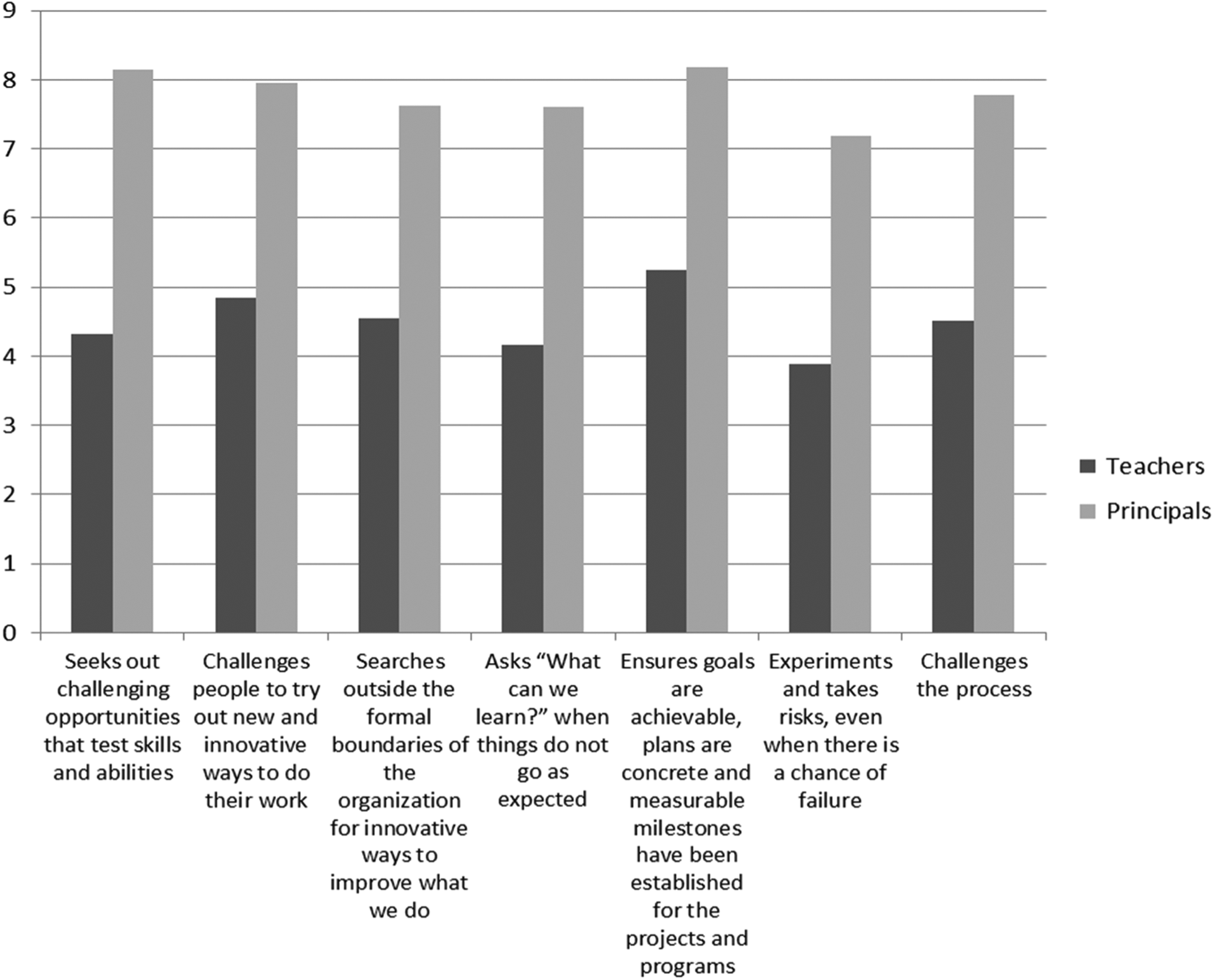
Challenge domain: Perceptions of teachers and principals.
Principals’ accounts revealed the importance of professional development, maintaining accountability, setting a good example and achieving results. For example, one principal said: ‘I’m always telling the teachers to learn new things and do professional development. We give them time to do that’. These principals indicated that professional development was important in challenging old and out-dated practices. Alternatively, teachers indicated that principals did not take ownership of decisions and stressed the importance of recognition and feedback, as well as the fact that controlled freedom and authoritative leadership were the norm. With respect to the contextual/cultural applicability of ‘challenging the process’, principals highlighted the significance of achieving results, continuous performance assessment and utilising a top-down approach. Teachers stated that the emergence of this domain would take time, that leadership remains authority-based and that autonomy is important when trying new things. Once again, there was some conflict between teacher and principal perspectives. Nevertheless, despite this difference in rate of agreement, one teacher spoke about engaging in professional development to improve the conditions of the school: Everyone in the school, we’re taking workshops and we all have professional development every week. Before, we never had this…Some of it is for pedagogy, but also some for individual skills for computers and information technology…Also, they are providing us with classes on some leadership and other things like this.
Enable domain
There were differences between principals’ and teachers’ perceptions of principals’ capacities to ‘enable their staff to act’ (see Figure 5).
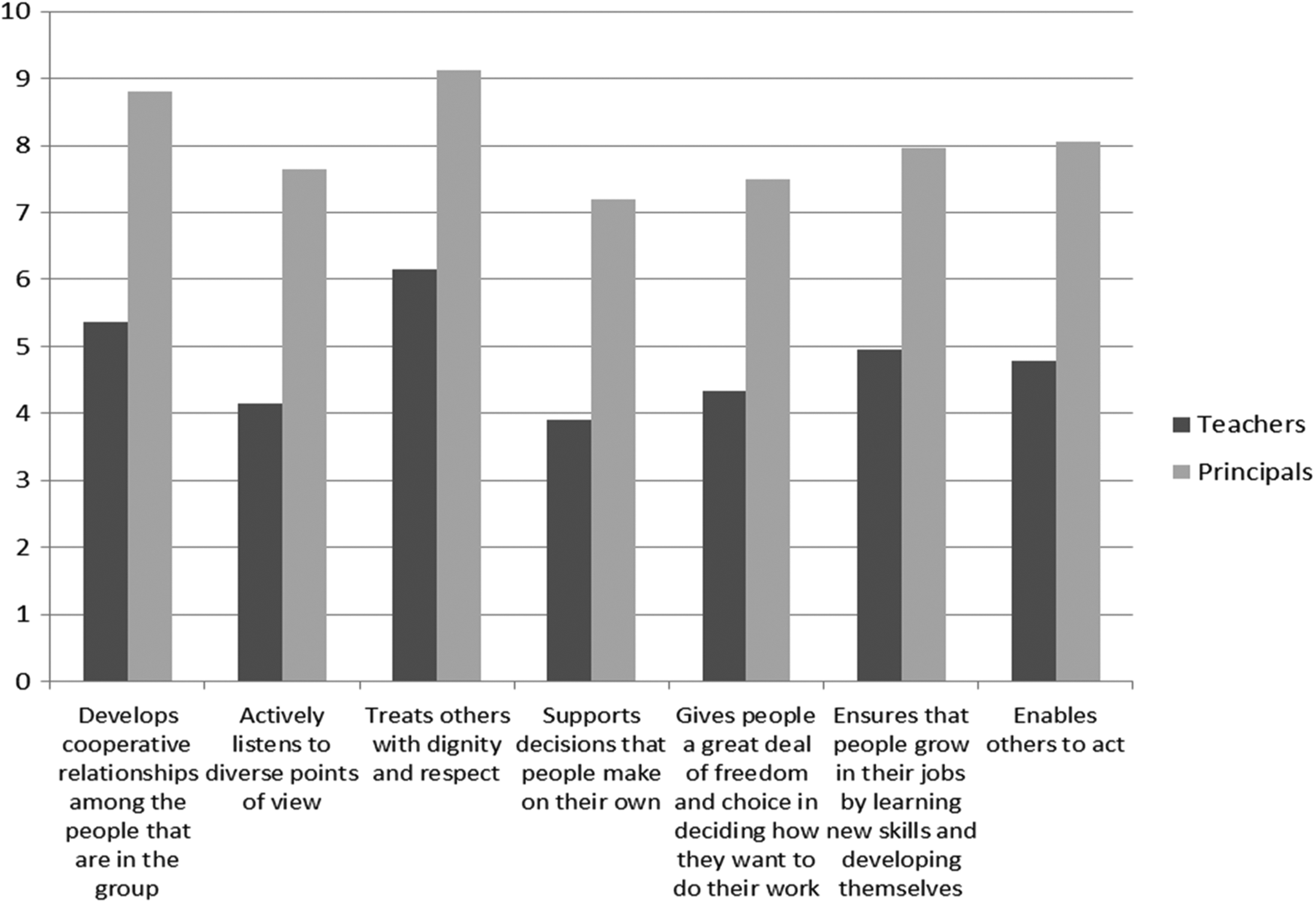
Enable domain: Perceptions of teachers and principals.
Some principals indicated they were open to collaboration, suggestions, utilising committees and staff meetings, promoting extra-curricular activities and fostering a caring, trusting and supportive work environment. Teachers stated that they believed in the significance of collaboration, meetings and team building, as well as the importance of providing some freedom, but expressed concern about the lack of encouragement from principals. They also stressed how some principals’ approaches fostered competitiveness rather than a collaborative and caring work environment. In terms of the contextual/cultural applicability of ‘enabling others to act’, principals emphasised the need to continue the practice of a transactional relationship in the workplace, the involvement of experts from other countries and collaboration. Teachers believed that this domain was not being implemented, and stressed the necessity of modifications to western leadership models, further training and gradual long-term implementation. None of them agreed with the principals.
One principal’s comments were representative. He felt that by listening to the teachers, he was enabling them to develop and do their jobs. However, his comments reflect a more conservative view of leadership: Well, respect is important. They respect me; I respect them. They must respect the boss, of course. Sure, it’s important. You have to have a hierarchal structure in organisations. But it is a two-way street. I listen. I’m open. My door is always open. I love to sit and have tea and chat with my teachers. Sometimes we have lunch…Sometimes staff meetings are very good. I think these are some things that I do. …and it’s often not done in a voluntary way; it’s done in a mandated way that is not necessarily respected or appreciated by the staff. So the collaboration exists, but not in a – it’s not again done in a very positive sense.
Encourage domain
The difference between principals’ and teachers’ responses remained consistent in this domain, where principals rated themselves more highly than teachers (see Figure 6).
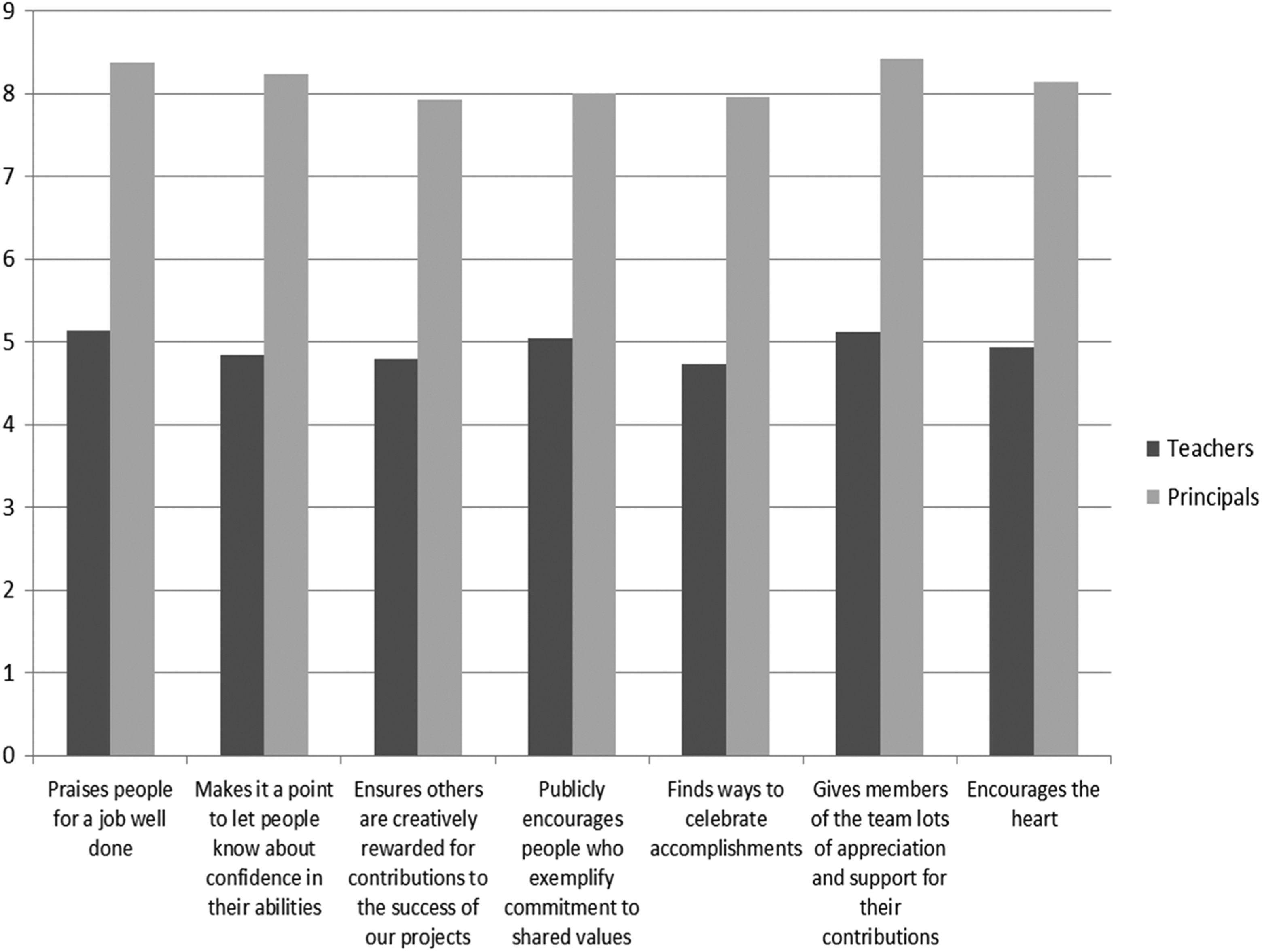
Encourage domain: Perceptions of teachers and principals.
Principals believed they encouraged subordinates regularly by treating them as family, providing excellent services, being open and utilising rewards. Teachers indicated that their principals offered commendations in private and facilitated after-school activities, daily interaction and team empowerment. However, some suggested that school leaders sometimes relied on intimidation, lacked encouragement or were inconsistent in their leadership styles. Both groups felt that principals used celebrations and ceremonies as a primary form of encouragement. In terms of the contextual/cultural applicability of the ‘encouraging the heart’ domain, several relevant themes emerged. For example, some principals spoke about the fast-paced and competitive nature of the UAE and the need for effective ideas, planning, motivation and positive attitudes toward teaching. Alternatively, teachers stressed the need for trusted leadership, hard work and coordination.
Interestingly, some teachers reported feeling encouraged, and most principals felt that they were very encouraging. Both teachers and principals reflected the greatest awareness of change in the encourage domain, whether it was required to keep up with the information age and a new way of doing things, or whether it was a need for internal change. For example, one principal commented that: We’re a changing country, so we need to move fast with good leaders, and we need to have good ideas and to let everyone know that we’re all working together and that we’re building a country. We’re already changing and trying to be as innovative as possible by bringing in teachers from foreign countries and tailoring the education system and improving the education system by watching standards.
Discussion
The most significant finding was that teachers’ and principals’ opinions differed considerably with regard to what type of leadership was in evidence and what was being accomplished in their schools. Principals believed they were utilising transformational leadership while teachers disagreed. Some notable points of alignment between principals and teachers were that various forms of collaboration (e.g. meetings) enabled and inspired teachers, professional development opportunities challenged teachers, and parties and ceremonies were used to encourage. However, teachers reported that they only occasionally felt enabled, inspired, challenged or encouraged.
The findings underscored the contentions in the literature regarding the divergence between principals’ and teachers’ perceptions concerning transformational leadership; however, the literature does not always offer clear indications as to why this phenomenon occurs. One explanation could be the unique culture of the UAE, which makes transformational leadership difficult for teachers to receive. The literature indicates that cultural value orientation has an impact on how transformational leadership will be received and perceived by followers, underscoring the possible culture-sensitive nature of transformational leadership (Walumbwa et al., 2007). Another curious finding was that participants believed that transformational leadership could work in the UAE, but alluded to the fact that top-down and transactional approaches remained prevalent, and that modifications to leadership approaches would need to be made with respect to the local culture and context, both in terms of the community and school.
In terms of the principals’ actual practice of transformational leadership, some participants believed that inspiring a shared vision was applicable in the UAE; this was consistent with Hofstede’s findings on the collectivist nature of UAE culture, and endorsed by the fact that both stakeholder groups felt that group meetings were an essential component in creating a shared vision. As such, having a shared vision appeared to be an important part of the transformational model, and highly applicable to the UAE educational environment. In enabling others to act, principals indicated their openness to suggestions and collaboration, but typically did not accept ownership of some decisions. Similarly, many teachers felt uncomfortable approaching principals with ideas, as this may be discouraged in top-down, hierarchical educational contexts. Thus, as the change process begins, it might be more appropriate to use a transactional technique in this domain and then gradually transition into transformational leadership approaches.
In this study, professional development, accountability, setting a good example and achieving results were examples of actions that enabled principals to challenge the process. The findings showed that principals also felt that setting the best examples for teachers modelled the way. This was consistent with some of the literature on transformational leadership; however, it was a limited perspective within this dimension. Additionally, principals encouraged teachers’ hearts by recognising successes through parties, celebrations and ceremonies, and teachers and principals’ accounts aligned in this aspect despite teachers feeling that their leaders could do more.
In summation, although transactional leadership was still utilised in some contexts, the findings were consistent with transformational leadership, albeit limited in some schools. Principals practised both transactional and transformational leadership, aligning with Bass and Avolio’s (2000) assertion that the two models are not mutually exclusive. Furthermore, the findings showed that transformational leadership could be utilised in Middle Eastern nations, but adaptations to the model are advisable for the best impact and outcomes. Moreover, the findings indicated that transactional leadership is more prevalent in the UAE than transformational leadership, and that principals believed they were practising transformational leadership to a greater extent than teachers felt to be the case. This disparity may have resulted from the teachers’ cultural value orientation (i.e. their discomfort with some transformational aspects of their principals’ leadership). It may also have been an issue of human nature, where principals’ self-reports were skewed in favour of their preferred form of leadership. Another possible explanation could be that teachers were largely unaware of what principals were doing on a day-to-day basis; hence, teachers’ perceptions were skewed. Alternatively, either stakeholder group may have had misconceptions or lacked knowledge about transformational leadership models and approaches, which would have implications for the accuracy of their judgments of principals’ actions.
Implications for leadership
Transformational leadership is a viable model of leadership for the UAE, but the findings indicate that modifications must be made to account for cultural differences, which influence perception and behaviour. In addition, transactional leadership remains prevalent throughout Emirati society; however, with effort and awareness, this can gradually shift to more transformational orientations, a process that has already commenced. Since transactional and transformational leadership have been shown to complement each other, leaders may be able to balance the two leadership styles. It appears that UAE school leaders may intend to make transformational leadership more dominant without abandoning some of the older practices that were readily accepted in this cultural setting and consistent with transactional leadership. Finally, the discrepancies in perceptions could be explained by the prevailing educational culture, which tends to expect leaders to be authoritative rather than respectful of, and consultative with, teachers. Due to differences in perception between teachers and principals, principals may need to be more explicit with their transformational leadership approaches in order to communicate their vision to teachers. However, simultaneously, teachers must be slowly introduced to the necessary changes and to the concept of a school culture that differs from the prevailing national or local culture. Moreover, principals must become more aware of the impact of social and religious culture on their schools, particularly among teachers, who were all from the UAE, but varied in terms of their home emirate and whether they hailed from rural or urban locations.
Transformational leadership is not yet widely accepted in UAE schools. While some aspects of transformational leadership are practised, such as fostering collaboration, promoting professional development, having a shared vision, and encouraging success and achievements, others are not; most principals continue to rely on hierarchical approaches while attempting to be culturally and emotionally more receptive than in the past. Communicating change in an open and informed way, allowing feedback and adding professional development specifically related to the transformational process for teachers is a positive first step towards institutionalising this leadership approach. However, it is important to note that although some aspects of transformational leadership are seen in virtually all cultures and that the concept generally remains identical everywhere, its incarnation may vary between societies, and specific models might not be entirely applicable in every context. As such, it is essential to incorporate local norms, customs, etc. into any future school leadership development program in the UAE.
Introducing the cross-cultural transformational leadership model
The findings from this research led us to create a modified model of transformational leadership: the Cross-cultural Transformational Leadership Model (see Figure 7). The model was developed not only for use in the UAE, but in other developing nations as well, particularly those that have a predominantly Muslim culture.
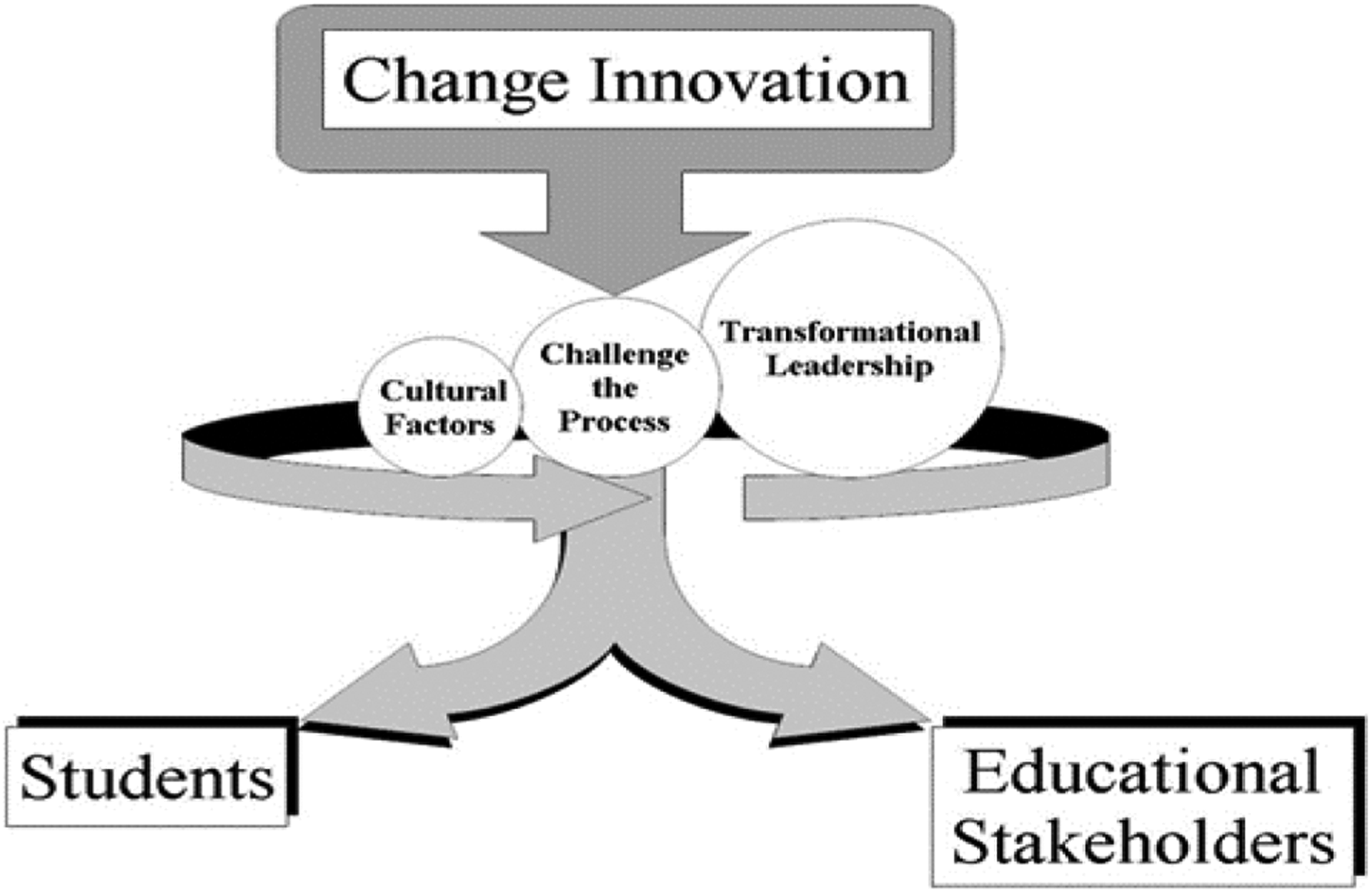
Proposed cross-cultural transformational model.
The proposed model reflects four facets. The first facet involves accepting unique and enshrined ‘cultural factors’, such as traditional inclinations towards collectivism, top-down (i.e. hierarchal) supervision, the upholding of existing working (i.e. transactional) relationships and avoiding the uncertainty of untried or unknown outcomes (Hofstede et al., 2010) that may impact the model’s implementation, particularly with respect to its adaptation to Islamic culture. The second facet, ‘challenge the process’, relies on Kouzes and Posner’s original construct; however, the proposed model greatly expands on the notion of challenging the process (i.e. challenging the status quo) as it represents a positive springboard for change. It includes aspects such as setting good examples, acknowledging and celebrating staff efforts and achievements, establishing more transparent teacher accountability, professional development, providing and accepting feedback, promoting collaboration, and achieving results. All of these aspects currently exist in UAE schools, but not all are well understood and/or consistently practised. If school leaders and senior administrators continue to build upon these characteristics, a more successful, effective and positive form of ‘transformational leadership’ may ultimately develop. Once this occurs, the necessary leadership conditions will be in place, and meaningful educational change can consistently occur through innovation.
Recommendations
The UAE government has established ‘change through innovation’ as a primary goal of the educational system. An inherent premise is that failure is not an option in the globalising context of the Middle East. Thus, the UAE will support innovations that drive positive change to ensure their agenda is successful. As such, three recommendations for further research are proposed. First, there is a need to expand the research on transformational leadership in non-western contexts in order to obtain a deeper understanding of the implications of culture on leadership approaches. For example, the complementary nature of transactional leadership and transformational leadership in the UAE could be examined to understand the prevalence of each leadership style in this context. Second, the results of this study should be expanded to encompass explorations related to discrepancies in perception regarding leadership that exist between teachers and principals in the UAE. The results show that teachers tend to perceive principals as not practising transformational leadership effectively. Large-scale longitudinal and qualitative studies, as well as grounded approaches, could expand upon the findings, and subsequently extend the literature concerning the practice and applicability of transformational leadership in non-western settings. Third, further research ought to be conducted regarding leadership from the perspective of cross-cultural leadership in the UAE and other Arab nations, as well as on the implementation and impact of the proposed cross-cultural transformational leadership model. By examining the applicability of transformational leadership in the entire region, the study results could be placed within a larger context. Examining transformational leadership in various cultural settings, particularly in non-western cultures, is a necessary aspect of improving overall understandings of the theoretical foundations of transformational leadership.
Conclusion
The overriding conclusion of the paper is that one size (or leadership approach), no matter how worthy, does not fit all cultures. Thus, while the concept of transformational leadership allows for a great deal of flexibility, contemporary and contextualised models need to be adapted for Islamic nations. Effecting positive change in Emirati schools will be a challenge, as it is in most schools; however, it is possible to meet that challenge by devising a transformational leadership approach that will encourage and promote change and innovation, while also respecting and retaining the unique cultural nuances and needs of the organisation within the national culture.
Rigidly applying rules, expecting obedience and displaying uncertainty towards reform may be part of the UAE’s overall culture; nevertheless, it negatively impacts school cultures and school change initiatives. Therefore, leadership must be distributed among the levels of education, and teachers should be given a stake in the outcome in order to empower and motivate them to engage in the change agenda. Changing the culture of the school and beyond that, the school system, will allow change to develop within the school setting itself. Encouraging teachers to adapt to new and emerging leadership styles will inevitably be difficult; however, by placing emphasis on gradually modifying the organisational culture and context with full participation and transparency, teachers will most likely engage in the process and evolve with the changes expected of them.
Footnotes
Declaration of Conflicting Interests
The author(s) declared no potential conflicts of interest with respect to the research, authorship, and/or publication of this article.
Funding
This research received no specific grant from any funding agency in the public, commercial or not-for-profit sectors.