







Abstract

Introduction
Whitt et al. (2015) maintained that superintendents have an influence on instructional behaviors at the school building level. This is important in light of the observation that No Child Left Behind (NCLB) placed a spotlight on school improvement efforts designed to increase achievement for all students (Williams et al., 2009: 437). It is also important to understand how superintendent behavior meets students’ instructional needs in classrooms in the districts they lead. With this in mind, the Interstate School Leaders Licensure Consortium (ISLLC) crafted six standards that are used in higher education for the preparation of effective educational leaders.
This research extends on the work of Decman et al. (2010) which explored ISLLC Standard One and superintendent perceptions and practices; however, this work focuses on the Educational Leadership Constituents Council (ELCC) standards.
ELCC and ISLLC standards are generally interchangeable. The ELCC standards are based on the ISLLC standards (Council of Chief State School Officers, 2008) and offer ‘a global, proactive philosophy of school leadership’ (Wilmore, 2002: xii). The primary difference is the ELCC’s addition of a seventh standard for internship (Cunningham, 2009). The purpose of this research is to describe the connectedness between ELCC Standard Three, a nationally created standard of leadership practice related specifically to the management and operations of school districts, and superintendent perceptions of the demands and responsibilities of the role of district executive leadership. Use of the ELCC standards is largely a construct that applies to education in the USA, but the challenges to school leaders that are addressed by these standards are much more global in nature. According to The Organisation for Economic Co-operation and Development (OECD), school leaders in many countries in the world face increasing challenges that relate to rising expectations and factors such as migration, technology integration and globalization (OECD, 2009). Moreover, Earley (2013) claimed that the ‘discourse about leadership has grown in importance both in the UK and globally and reflects the significance policy-makers accord to…educational leaders as key drivers of school improvement’. Cranston (2013), in an appeal to the professionalism of school leadership, referred to issues of standards and centralized agendas for educational leaders specifically in Australia and New Zealand.
The ISLLC Standards were written by representatives from state and professional associations in partnership with the National Policy Board for Educational Administration. The Standards were published in 1996 and have been used by most states in developing administrative standards (Council of Chief State School Officers, 1996). Each of the six standards includes knowledge, disposition, and performance components. ELCC Standard Three states: A building-level education leader applies knowledge that promotes the success of every student by ensuring the management of the school organization, operation, and resources through monitoring and evaluating the school management and operational systems; efficiently using human, fiscal, and technological resources in a school environment; promoting and protecting the welfare and safety of school students and staff; developing school capacity for distributed leadership; and ensuring that teacher and organizational time is focused to support high-quality instruction and student learning.
A brief literature review examined key components of the ELCC Standard Three and superintendent practice; and, from this review, three research questions were generated. The research questions were probed using an interview protocol in which the interviewers elicited responses to address each research question. The interview questions were created with consideration for ELCC Standard Three and related research questions. In addition, each interview question was classified according to the research question to which it most directly applied, thereby becoming a probing question for the overarching research question. Research questions were framed on the basis of expectations and outcomes that arose from the literature review. In this way the review of the literature provided the guiding framework for the research.
The research questions which emerged from the review of the literature follow: Q#1: In which processes and activities do practicing superintendents engage for the purpose of ensuring that fiscal resources of the district are managed responsibly, efficiently, and effectively? Q#2: How do practicing superintendents employ group-process and consensus-building skills to involve stakeholders in decision-making? Q# 3: How do practicing superintendents recognize and study emerging trends and facilitate and engage in processes that support continuous improvement in the school districts they lead?
Research question #1
Understanding the priority of a clearly defined and articulated budget and the factors that affect decision-making processes is important in order to comprehend why superintendents employ specific processes and activities. In a study conducted by Bredeson and Kose (2007), superintendents reported budget and school finance as the most time-consuming tasks related to the position. According to Bird (2010), systemic change in school districts is tied to many things, one of which is the budget. Bird continued by stating that because superintendents are in an organizational position which allows them broad oversight and control they can use the budget as a tool to focus the school district on its vision and mission.
A superintendent must also engender trust in the community by using the budget-making process as a communication tool. According to Bird et al., management of school finance provides the superintendent with ‘a unique opportunity to exert effective leadership and to build trust among stakeholders’ (Bird et al., 2009: 141). Levin and Fullan (2008) articulated the importance of transparency and the need for frequent, honest, two-way communication about successes and challenges. Reinforcing this statement, Levin and Fullan spoke to the importance of effective utilization of existing resources (Levin and Fullan, 2008).
Correspondingly, superintendents can tap into community support through partnering with various stakeholder groups as decisions about the allocation of resources are made. Shared governance of schools can be supported by many and varied representative groups including, but not limited to, groups of teachers, parent organizations and boards that include teachers, students, and members of the local community (Gessler and Ashmawy, 2016). According to Gessler and Ashmawy, these groups support the process of creating a clear vision and discussing budgetary goals among other functions. Such a practice supports transparency in fiscal decision making.
Marino (2007) echoed the importance of transparency, discussing the concept of measuring what is important. Marino argued that the practice of relying on lagging high-stakes assessment results to make decisions is little more than an ‘autopsy’ (Marino, 2007: 11). Rather than leaving educators ‘scratching their heads as they try to determine how to change the trajectory to the next data point’ (Marino, 2007: 11), Marino advised leaders to communicate student performance data in easily understood forms – such as graphical formats. This type of communication would allow educators to observe key indicators of achievement and, in real time, make budgetary decisions.
Bredeson and Kose (2007) articulated another aspect of how trust influences budgetary decision making. As democratic representatives of the community (Allen and Plank, 2005), the school board is an extension of the interests of the community. According to Bredeson and Kose, superintendents frequently stated their school boards expect them to be accountable for district budget and finances (Bredeson and Kose, 2007).
Other factors impacting decisions in financial planning are legal requirements. According to Johnson and Uline (2005), ‘effective leaders learn the nuances of federal, state, and district funding mechanisms and apply these resources flexibly to provide a greater quantity and quality of instruction designed to ensure each student’s academic success’ (Johnson and Uline, 2005: 49).
In order to explore superintendent perceptions about the factors that influence decision-making processes, the following questions were asked by researchers in structured interviews. What processes do you use to manage the district’s school budget and how have those processes changed over time? How do you build transparency into your budget building process? (In other words, how do you keep the budget building process student centered, not subject to political tides or special interests, and welcome to scrutiny?)
By exploring the responses of practicing superintendents to these questions, the researchers found consistent themes that identify processes and activities employed by practicing superintendents when they are ensuring that fiscal resources of the district are managed responsibly, efficiently and effectively.
Research question #2
Effective superintendents engage the broader community in the decision-making process (Sherman, 2008). Jenkins (2007) discussed superintendent success related to decision making through the lens of community values and perspectives. He revealed the interactive role of the rural superintendent with the community. While the Jenkins’ study focused on rural superintendents, the interaction between the superintendent and the community is a focus elsewhere. According to Sanaghan (2011), ‘Relationships are the “currency” in school districts and need to be built and maintained if a superintendent is going to take their district to a better place’. A Wallace Foundation-sponsored report (Farkas et al., 2003) indicated that superintendents should focus on, amongst others, connection, communication, collaboration and community building, all interactive processes, in order to lead to academic progress. Kowalski (2005) stressed the relationship between communication and superintendent effectiveness. He argued the top-down decision-making structure is no longer an effective approach for organizational decision making in school districts. Relationship-enhancing approaches are much more relevant to the culture.
Miller et al., (2009) discussed the importance of shared leadership. They showed that superintendents use different types of power in order to be effective, the types of power being reward, coercive, legitimate, referent and connectional. Specifically, they considered the effect of exercising these various types of power on school improvement, development of democratic communities, and districts’ sense of social justice.
Crippen (2004) emphasized a different type of leadership. Discussing the idea of servant leadership, Crippen focused on how, through serving, the individual is perceived as a leader. Among the characteristics of the servant leader listed by Crippen are listening, empathy, and foresight. McClellan et al., (2008) focused on service in another vein. Their work emphasized an understanding of the role of the superintendent as a learner. In their study of 50 superintendents in eight focus groups, McClellan et al. found a belief among superintendents that they can learn from other stakeholders during the decision-making process. This belief promotes service through an open attitude that allows others to add value to the decision-making conversation.
Another important area of superintendent leadership in shared decision making is the ability to cultivate a culture where shared decision making is valued. The cultivation of such a culture is one that requires reflection, preparation and intentionality. In their study of project management by middle managers in an elementary school, Ho and Ng (2016) discussed power sharing that happens when organizational subordinates are given project management roles wherein they provide direction to their organizational superiors. Ho and Ng’s findings recognized inherent tensions found when subordinates give direction to others, including organizational superiors; however, they also found that leaders who were willing to support and reinforce the authority of subordinates to make decisions could help foster a culture where shared leadership was valued and effective. Joseph (2009) discussed the idea of developing a program for principals which would cultivate desired attributes in leadership candidates. By supporting this type of program, superintendents ensure that the culture of their districts will build capacity for and reinforce the value of broad stakeholder input in decision making.
In order to explore superintendent perceptions about the factors that influence their decision-making processes, the following questions were asked in structured interviews. In your opinion, what are the top three challenges you face as a leader and how do you ensure that you will achieve your goals despite these challenges? As the superintendent, how is your style or philosophy of leadership reflected in the leadership structure in your school district? What correlations exist between the managerial tasks of a superintendent and student achievement?
By exploring the responses of practicing superintendents to these questions, the researchers found consistent themes that provide some answers to the research question concerning the involvement of stakeholders in decision-making through trust, shared responsibility, and accountability.
Research question #3
According to Mertkan (2014), school leadership is connected to organizational change and improvement in both the work of building capacity in the organization and in the management of financial and human resources. Willis and Petersen (1992) researched strategies employed by superintendents in managing change for the purpose of ensuring improvement in school districts. Looking at decision-making processes for change, Cook and Johnston (2008) found the need for connection and communication between the superintendent, administrators and teaching staff in order for the desired change to occur. Because conflict can impede change, Cook and Johnston suggested that leaders need to be aware of five areas where conflict occurs: data-based, interest-based, relational-based, structure-based, and values-based.
Kowalski et al., (2009) focused on the need for academic preparation programs to encourage leaders to use practice-based research when planning for change and trying to solve problems. Kowalski et al. believed that, in school administration, several factors prevent evidence-based practice (EBP) from occurring. Among these factors are practitioner indifference and low quality or poorly constructed research that does not address the problems that are encountered by administrators.
There were other factors presented in the literature as affecting how superintendents cultivate a culture where continuous improvement is valued in the organization. For instance, a study conducted by Lamkin (2006) found factors such as rural isolation from others, limited resources, and community resistance to change can have a different impact on the process by which continuous improvement is pursued by superintendents in rural districts as compared with processes employed by superintendents in urban or suburban districts.
In order to explore superintendent perceptions about emerging trends and processes which facilitate continuous improvement, the following question was asked by researchers in structured interviews: Change is ever present in education and is sometimes received with resistance from a variety of stakeholders within the organization. Please give an example of a situation in which you had resistance to a change you were making and how you were able to move forward with the change despite initial resistance. (In other words, how do you navigate change when you meet resistance?)
By exploring the responses of practicing superintendents to these questions, the researchers found consistent themes that address the research question concerning the study of emerging trends and engagement in processes that support continuous improvement.
Method
A comprehensive literature review examined existing research regarding key components of ELCC Standard Three and superintendent practice. From this literature review, three research questions were generated. Each of the questions was then tested, using an interview instrument in which individual prompts elicited responses to address, in part, each research question. The interview questions were designed to elicit responses from the superintendents that would describe superintendents’ perceptions of their own current practices.
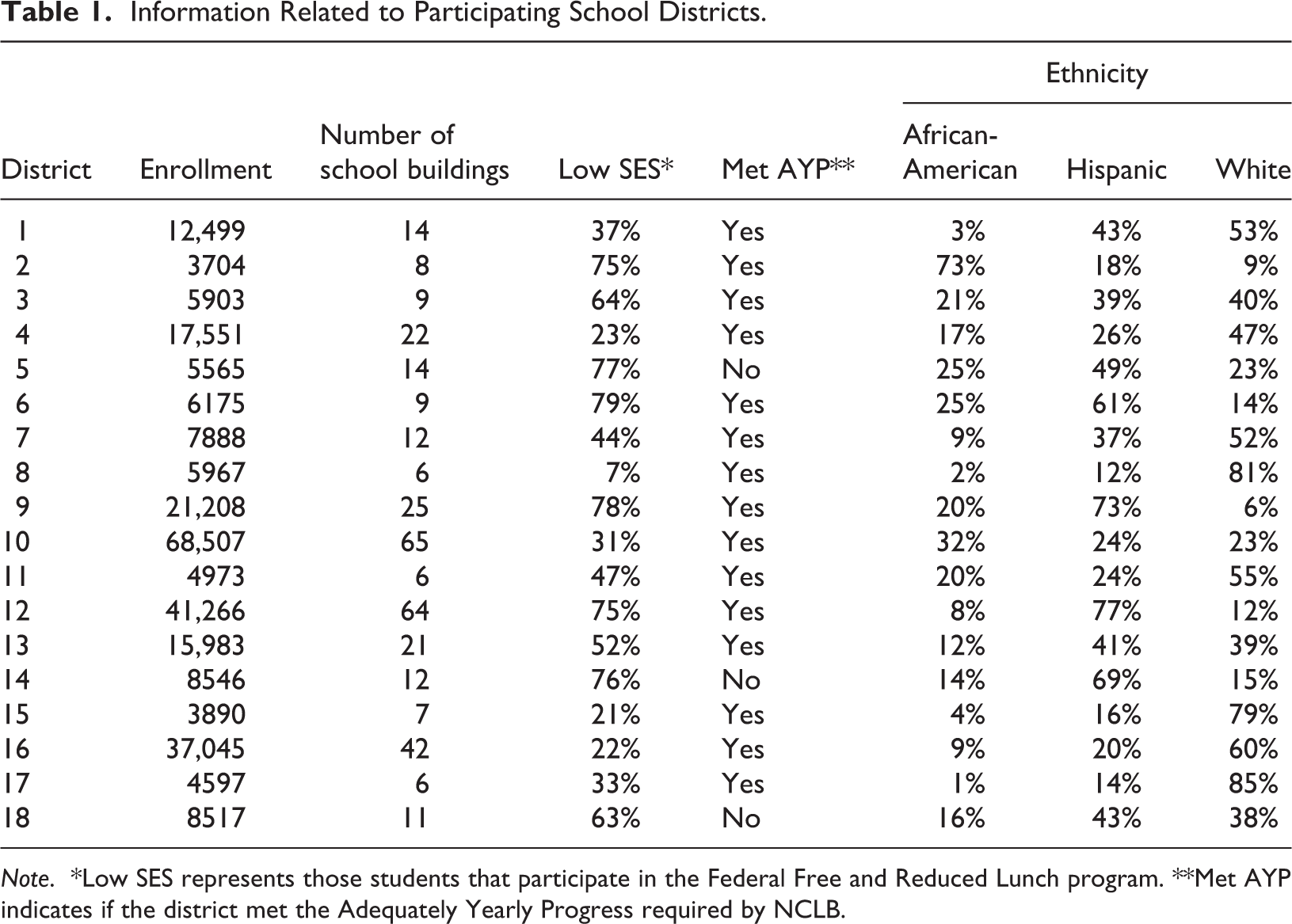
The 18 subjects for the interviews were practicing superintendents in the Houston, Texas area. While participants for the study were selected based on convenience, location and access, the researchers confirm that superintendents in this area are representative of a broad range of demographics, experiences and perspectives (See Appendix A). School superintendent vacancies in Houston are typically filled through the use of professional search firms and the incorporation of national searches. The city of Houston itself is characterized by great diversity. According to data available at Census.gov, Houston is a majority–minority city, with 42% of its population identifying as Hispanic or Latino, 31% as White, non-Hispanic, and 6% identifying as Black. Because the researchers interviewed school district leaders throughout the Houston area, there was also great diversity in the socio-economic and socio-cultural experiences and perspectives of the communities those school leaders serve. For these reasons, the core values and practices of those filling the superintendent vacancies are not limited to geography and, thus, their experiences and perceptions are instructive for a diverse, international audience.
The individual interviews were recorded, transcribed, coded and prepared for analysis. A team of researchers analyzed and coded the data using the constant comparative method, a continuous process in which newly collected data are compared with previous data to enhance, confirm or discount existing theories (Glaser and Strauss, 1967). Once all data were coded, the researchers constructed themes, both within and among the questions, for analysis. Any differences in coding were discussed and collaboratively agreed upon in order to increase reliability and validity.
Results
Analysis of research questions
For the purpose of analysis, results will first be organized by research questions. Major and minor themes will be considered for each research question. Major themes identified in superintendent responses to interview questions are those commented on by at least 50% of respondents. Minor themes, in contrast, required comments from a minimum of three superintendents. An analysis follows in order to show common themes across the research questions. This arrangement will allow the reader to distinguish between emergent themes within responses to interview questions related to each individual research question and those themes that emerged across all research questions.
Research question one analysis
Major themes
The first question sought to identify processes and activities that practicing superintendents viewed as effective for the purpose of ensuring the fiscal resources of the district are managed responsibly, efficiently and effectively. This research question and the related interview questions enabled the researchers to explore superintendent self-reported perceptions of how they manage fiscal responsibilities addressed in ELCC 3.0. Major themes identified in superintendent responses to interview questions related to the first research question included the importance of communication and the impact of personnel on fiscal decision making. Other relatively minor themes will be explored later.
Consistent with Marino’s (2007) insistence that the budget process must be handled with transparency, the superintendents’ responses revealed a belief that anything related to the budget should be made available to the public. One superintendent in particular articulated the importance and impact of transparency stating, So many times there is a natural mistrust when it comes to money. There is a natural tendency to think that we have a stash or we are hiding something. The more transparent we can be the better.
According to Crampton et al., (2004), public education is in competition with other entities for state funding. Unfortunately, financial resources affect how and what student needs are met. Limited means leads to limited service. Lamenting the nature of this reality, another superintendent stated, …most personnel has a lot to do with kids. But you start [employee furloughs] by looking at the personnel places or staff that does not directly impact kids. You do what you can.
Minor themes
In addition to the two major themes previously discussed, superintendents also articulated other factors as influencing their fiscal decision making process(es). Those factors were the school district’s goals and vision; politics; and the importance of confidence and credibility. The findings of this research, therefore, necessitate a brief exploration of each.
Concerning the impact of a district’s goals and vision on fiscal decision making, one thread that ran through superintendent responses emphasized the importance of supporting fiscal decision making with a solid standard. Most of the time that standard was broader organizational goals and a student-first philosophy. Illustrating this, one superintendent stated ‘you really need a strong sense of common vision that permeates decision making that places the child first’.
The world of professional education is not immune to political influence (McDonnell, 2009). While the political reality in school districts may be positive or neutral, participants noted they can threaten to compromise decision making based on organizational priorities. Though there were only superficial references to the impact of the legislature and the legislative process on fiscal decision making, superintendents spent time addressing the issue of the local politics of pleasing people. Recognizing this reality, one superintendent shared the view that, ‘the political part of it is you try to make everybody happy…but in end you’ve got to look at what your goals are and what you are trying to accomplish and you have to prioritize’.
Superintendent credibility and the public trust were cited as vital for ensuring board support of the superintendent in decisions related to spending money. Speaking to the impact of public confidence, one superintendent stated it is important to ‘…make sure there is trust and credibility throughout the district…so you will pass bond issues’. Highlighting the importance of confidence, another superintendent explained, ‘you want them (the board)…very trusting and, so if something like that (miscommunication) happens, then the fear is that you are going to start questioning or losing confidence’.
According to ELCC 3.0, school leaders should be aware of and able to evaluate district fiscal resources. They are further expected to use those resources efficiently. The responses revealed superintendents who are aware of the human resource and human dynamic context in which they operate. Such an awareness, and the ability to plan with consideration for the implications of that context, is certainly an asset to superintendents as they strive to execute this dimension of their role effectively.
Research question two analysis
Major themes
The second question sought to elicit understanding of what practicing superintendents view as effective with group-process and consensus-building skills to involve stakeholders in decision-making. This question, and the related interview questions, allowed the researchers to explore how they address the aspects of ELCC 3.0 that emphasize the importance of effectively coordinating human, fiscal and material resources and the development of school capacity for distributed leadership. Three major themes emerged in response to interview questions related to this Research Question. These emergent themes described participants and the content of collaborative conversations rather than specifics related to how stakeholders were engaged. The major themes included the impact of the financial reality of school funding, the paramount importance of a student-first focus, and the importance of effectively including and working with a school district’s board of trustees.
Finances affect superintendent behavior (Bredeson and Kose, 2007). Superintendents’ responses to interview questions revealed that how finances are managed can be a driver in superintendent relationships with stakeholders. Recognizing this fact, one superintendent spoke to the importance of involving others in the process of planning for the use of financial resources when they stated ‘Well the finances is plan, plan, plan. Make sure you have a plan for the best day and the worst day, and you gotta work that plan, and you gotta get people involved.’
Superintendents interviewed consistently maintained having a plan for the effective use of finances is vital and demonstrated an appreciation for the systemic nature of how budget is tied to and influences district operations (Bird, 2010). Speaking to the systemic interconnectedness of budget decisions and district operation, one respondent emphasized the importance of ‘being very strategic on where you place your money and how you spend it, and how it all works together’ and that ‘we want to do for our students and for our teachers and still be able to balance our budget and not go into the red. That’s a big challenge.’ Regarding the ‘necessary evil’ of finances, another superintendent stated ‘Finance has got to be number one, and I hate that’.
The superintendents’ responses consistently communicated that this aspect, more than any other, affects relationships with the stakeholders and drives communication in a school district. However, there was also a clear understanding that the management of finances is not an end unto itself. According to respondents, everything that happens in a school district should be done with the purpose of supporting student achievement.
Participants in the study also focussed in their responses to interview questions related to the second research question, on the importance of making decisions through a lens of how those decisions affect students. Recognizing the shared and deliberative context in which decisions are made (see Gessler and Ashmawy, 2016; Joseph, 2009), superintendents consistently spoke of the importance of reminding stakeholders of where their focus should be placed. Illustrating this, one superintendent stated, ‘Keep people focused on that and constantly remind folks that whatever we do, we have to keep kids first’. Another superintendent, when speaking of the tendency for emotions to run high, revealed he keeps stakeholders focused on kids, first stating ‘Hey, time out here, time out. Here is what it does for kids.’ Reflecting on the importance of keeping students first in the vision of a district’s stakeholders, one superintendent reminded the researchers about ‘…achievement: that’s our cars. I say, you know GM makes cars, we made graduates’, while another articulated the bottom line with the assertion ‘I think every single thing I do has direct correlations to student achievement. If it does not, I probably don’t need to be doing it.’
The last frequently recurring theme in superintendent responses to interview questions related to the second research question was that, as democratic representatives of the community (Bredeson and Kose, 2007), school boards play an important role in the educational process. Superintendents communicated an appreciation for the practical and political importance of including school boards in decision-making processes related to change and the direction of the district. Open and honest discussion related to the normal operation of a school district can cultivate a relationship of trust between a school board and a district’s superintendent and can foster the kind of shared decision making that is central to relationship-enhancing approaches to building organizational capacity (Kowalski, 2005). One superintendent articulated this in saying, ‘I’ve always felt I had a better relationship with the board of trustees…because I talk to them’.
A subtheme related to board involvement was the multiple types of communication that must happen in order to nurture an effective board–superintendent relationship. In addition to transparency and the importance of consistently providing factual information, the superintendent must be prepared to listen, learn and educate. According to one respondent, …any time you are working with a group of seven people who are not educators, who do not live in our education world every day with us, when you have to start over with a majority, or even with two, you are really kind of starting over, helping to educate them and bring them to a point where you can move forward as a district because they understand enough to be able to help you move forward. And so I think the board is always going to be a challenge.
Minor themes
In addition to these major themes, several minor themes emerged in the analysis of the superintendents’ responses; these included the idea that accountability drives decision making. As one superintendent stated, ‘Take a look at scores and see what the obvious needs are. That is a good start so let’s address that.’ The general importance of collaborative decision making and an understanding that the most effective decision making processes are interactive (Education Writers Association, 2003) was also consistently reaffirmed in superintendents’ recognition of the need for ‘pulling together all the stakeholders and directing the vision and direction pieces. They help mold what we want to create, what we are all about, what our system wants to produce.’ Superintendent respondents also showed an understanding of the importance of avoiding inconsistent decision making. The need for a constant philosophical framework for decision making was articulated in discussing whether or not you yourself have an operational definition of leadership, whether or not you yourself have an operational definition of effective leadership, and whether or not you have developed an ethical construct for making decisions. …and so I think what happens is you build the leadership capacity whenever you realize that you got leaders in custodian staff, you’ve got leaders in cafeteria staff. You got leaders in classroom teachers and counselors. And don’t squelch that, don’t try to get so autocratic, so dictatorial that everybody feels like they just have to do everything that the boss says. I want everybody to think that, to a certain extent, they’re part of the boss.
ELCC 3.0 emphasizes the importance of managing resources and developing school capacity for distributed leadership in a way that focuses on high-quality teaching and learning. Responses to these questions and the themes that emerged in those responses reveal superintendents who are thinking through and able anecdotally to speak to how they are meeting this challenge.
Research question three analysis
Major themes
The third question was designed to clarify how practicing superintendents recognize and study emerging trends and facilitate and engage in processes that support continuous improvement in the school districts they lead. In other words, interview questions related to this research question were designed to develop an understanding of how sitting superintendents shepherd a cooperative change process that results in improving the educational organizations they lead with the support of many and varied stakeholder groups. This research question and its associated interview question allowed the researchers to explore how superintendents perceived their own experience with change, their efforts to manage change, and the conflict that can impede improvements (see Cook and Johnson, 2008) thereby promoting ‘the success of every student’ (ELCC 3.0) through effective monitoring and evaluation of the school management and operational systems (ELCC 3.1).
Superintendents’ responses showed an understanding of the uncomfortable nature of the change. Illustrating this reality, superintendents consistently addressed the notion that change is uncomfortable and can be met with resistance. One major driving theme consistently emerged in superintendent responses to the interview question related to this research question: that is, that communication which supports effective change efforts occurs in two ways.
First, superintendents need to do work on the front end of change. By involving stakeholders in the process of studying current trends and making collaborative decisions related to the direction of a district, a superintendent can mitigate some of the consternation that often accompanies the change process. One superintendent displayed an understanding of the importance of involving multiple and varied stakeholders in this fashion when stating, ‘I sent them to effective schools conferences and we did a book study on it and even though we had already done those things (the background work), we hadn’t done that as a district-wide team’.
While the involvement of multiple and varied stakeholders supports the development of a comprehensive change process, involving those stakeholders also helps ensure a smoother change process (Cook and Johnston, 2008; Kowalski, 2005). One respondent shared the unfortunate results of a change that occurred in the presence of insufficient collaboration. He lamented, ‘I really butchered it. I didn’t do a very good job of involving people. Got a lot of backlash, a lot of backlash, because I did not do enough involvement of the community.’ Another respondent suggested that the value of including others in the decision-making process includes system-wide help in design and implementation. This respondent shared success in engaging diverse stakeholders in systemic change by gathering together ‘…all the different stakeholders and then making sure they understand the vision the rationale for it and then helping, getting them to help design how it was implemented’. Another superintendent warned that district leaders should include stakeholder groups in decisions because members of a community have so much emotion invested in their school district. Many community members have deep roots, with strong ties to the heritage of a district, and change is difficult for them. Reflecting on a particular change event which encountered community resistance, one superintendents shared how change can foster resistance stating ‘these are schools that have been here forever, that’s very resistant people’.
The second aspect of effective communication, which consistently emerged in the superintendents’ responses related to the third research question, dealt with the rarer need to manage stakeholder resistance when decisions were necessary or already made. The reality of decision making in the superintendence function is such that consultation with all stakeholders cannot occur for every decision, or even every important decision, prior to that decision having to be made. This can be attributable to different factors including, but not limited to, urgency or contextual and policy constraints. As illustrated by Lumby (2013), organizational power is exercised by an individual or individuals as representatives of a community. In such a role, authority exercised or delegated comes with limits.
When found in circumstances where decisions had been made without consultation, respondents offered some insight. According to one superintendent, ‘When the concerned teachers, themselves, came to me I explained the rationale, explained the opt-out and asked for their suggestions on how to accomplish the same goal in a different manner’. Individuals want to know they are heard when they have something to add to a conversation (Clark, 1999). Speaking to the community frustration expressed relative to one controversial district decision, a different superintendent stated, ‘just explain what you’re doing, understand the emotion, say I know that it’s going to be difficult’, while another expressed a belief that the next step was to ‘clearly explain the change, or the benefit of the change, I think that’s going to help with resistance’.
Recognizing that change will at times take place without adequate input from various stakeholders, one superintendent shared some sound advice. ‘One way to navigate change’, according to this respondent, ‘is always start with…the worst thing that can happen, and respond to that. Make sure you can answer that. Or make sure you are trying to present it in a way that refutes that one bad thing.’
While participants shared their perception that decisions must sometimes be made in the absence of comprehensive contributions from other stakeholders, they also expressed caution about the need for transparency, accessibility and honest communication once those decisions were made. Thus, even in rare circumstances when decisions were made without input, these superintendents communicated the importance of the stakeholder community and their input.
Minor themes
In addition to these major themes, three minor themes emerged in the analysis of the superintendents’ responses. The first of these was the importance of data-based decisions. Change should be made strategically and only when the data support a clear need for the change. One superintendent illustrated this theme by stating, Bottom line, to navigate change when you meet resistance you make certain the change is defensible, justifiable and desirable, then calmly, rationally, professionally explain over and over and over and ask their suggestions and alternatives to solve the problem.
The third emergent minor theme was the value of delayed implementation. At times resistance to a vital and necessary change can be anticipated. Being able to anticipate the resistance can allow a district’s leadership time to prepare stakeholders for what is coming. As one respondent reported, ‘We gave them some time for implementation, which was on our side, and that was a good thing, and I think that all in all, we’re ok’.
According to ELCC 3.0, school leaders need to monitor and evaluate the school management and operational systems effectively. Part of such an effort requires managing change. Responses to this question and the themes that emerged in those responses reveal superintendents who are not only anticipating change, but who are also engaging stakeholders in that process and reflecting on mistakes in order to manage new challenges better.
Shared themes
An analysis of the superintendents’ responses to interview questions across all three research questions revealed four major recurring themes related to ELCC Standard Three. The four themes in order of frequency were: The importance of communication; The importance of organizational decision making through the lens of how those decisions will impact students; The importance of decision making based on a strategic and constant framework of organizational values and vision; and The reality of politics in a school district.
We offer a brief analysis of each of these themes and how they relate to ELCC Standard Three.
Communication
ELCC Standard Three promotes safe, effective, and efficient use of resources for the purpose of ensuring student success. In any organization, regardless of size, communication between key parts of the whole is necessary to ensure the coordination of each part’s efforts (Kowalski, 2005). One superintendent shared the value of ensuring consistently open and clear communication of the district’s plans and priorities. Regarding the value of open, public discussion of district plans and needs, this respondent stated, ‘It’s a good discussion and it’s wide open. That part of it is healthy. I think that’s healthy.’
Decision making with respect to impact on students
The second most frequently emerging theme throughout the interviews was the importance of decisions made through the lens of how those decisions will impact students and meet their needs. ELCC Standard Three articulates the purpose behind managing organizational resources and operations is to create a desirable learning environment for students. As such, decisions made with any other focus are contrary to principles proposed in Standard Three. Expressing the importance of student-centered decisions, one superintendent stated, And all the goals are student centered. Every one of our board goals and every one of our campus (school building) goals are student centered, so we keep that process and all of our financial decisions…all of our pieces student centered and focused on those goals then it’s naturally centered on the students.
Decision making based on a consistent philosophical framework
Third, superintendents consistently expressed the belief that in order to be effective district leaders must make decisions based on a consistent philosophical framework. Their message carried the sense that disjointed decision making is ineffective and irresponsible. According to one superintendent, district leaders should ‘…first of all…look at your strategic plan. You look to see what your goals are and what you need to accomplish those goals.’ Another asserted that, ‘you really need a strong sense of common vision that permeates decision-making…’ Provided the philosophical framework is based on shared values, such a practice is consistent with Jenkin’s (2007) findings that superintendent success is related to decision making through the lens of community values and perspectives. Furthermore, this is consistent with the ELCC Standard Three call for superintendents to lead in a way that coordinates resources and operations for the purpose of cultivating a desirable learning environment.
Reality of school district politics
The final theme that appeared in responses related to multiple research questions was the inevitable impact of politics on a district’s decision making process. Decman et al. (2010) asserted that superintendents must be aware of the political undercurrents that influence organizational decision making in a school district. Everyone involved in the educational process has some kind of dream or expectation inexorably tied to the outcome of a school district’s efforts. An awareness of this reality can prepare the educational leader with the frame of mind and perspective necessary to position a district to encourage and facilitate participation and involvement from many and varied stakeholders. Participation for those interested parties in the process of structuring the educational organization to meet collective and lofty goals is at the heart of ELCC Standard Three when it states A school administrator is an educational leader who promotes the success of all students by ensuring management of the organization, operations, and resources for a safe, efficient, and effective learning environment (Missouri Department of Elementary and Secondary Education, n.d.). ‘the political part of it is you try to make everybody happy. You really do. You try to support every organization you try to make everybody happy but in the end you’ve got to look at what your goals are and what you are trying to accomplish and you have to prioritize.
Summary, significance and future research
If school districts are to rise to the challenge articulated in ELCC Standard Three, any decisions made must be made with an understanding of how those decisions affect students (Crampton et al., 2004), inclusive of many and varied stakeholders during all stages of implementation (Education Writers Association, 2003), and made through a consistent and guiding strategic framework of organizational values, mission and vision (Jenkins, 2007). Politics will inevitably influence a district’s leadership because so many are affected by the decisions and direction of a school district; consequently, superintendents must be effective in building relationships with the community. Those interviewed seemed to believe that these politics can be navigated successfully. In short, the conclusion of these researchers is that practicing superintendents in the greater Houston area believe the call of ELCC Standard Three can be answered successfully if district leaders allow the preceding concepts to inform and guide their decision making.
While we would argue that this research is significant with regard to understanding the reported perceptions of practicing superintendents, the research cannot offer any conclusions related to how superintendents practice what they have proposed. In order to understand more fully the connectedness of superintendent perceptions and practices, more research is needed. Observations of superintendent practice could shed more light on the existence, or the lack, of, a connection between superintendent practice and perceptions. Exploring superintendent perceptions related to other ELCC standards could also shed light on superintendent perceptions by providing for a research-based comparison of superintendent responses.
We believe this research is significant for those involved in the preparation of future superintendents as well as those who are engaged in the professional development of sitting superintendents. By considering the perceptions of practitioners, preparation and continuing education programs are able to better prepare candidates with relevant and current information and experiences. Further, superintendent preparation programs should work to cultivate relationships with currently sitting superintendents. A cooperative relationship between preparation programs and local school districts could be of mutual benefit to those involved. This might include, for example, the provision of creative energy from superintendent candidates to further the accomplishment of district goals and provide more real-world, relevant experiences that will equip future superintendents better for district executive leadership.
This research bears out several valuable considerations for future research and has identified multiple areas where more research is needed. Future research should consider the effectiveness of collaborative efforts: questions to consider related to collaborative efforts include ascertaining the degree to which both parties are open to collaborative relationships and which aspects of those relationships are beneficial and effective. Future researchers should also consider creating a replication of this study to include superintendents outside the Houston area. Such a study would allow practitioners and preparation programs to acquire a deeper understanding of leadership needs in today’s school districts. Finally, more observations are needed in order to generate a more complete understanding of the degree of connectedness between superintendent perception and practice.
Footnotes
Declaration of Conflicting Interests
The author(s) declared no potential conflicts of interest with respect to the research, authorship, and/or publication of this article.
Funding
The authors disclosed receipt of the following financial support for the research, authorship, and/or publication of this article: This research received no specific grant from any funding agency in the public, commercial or not-for-profit sectors.
Appendix A
Information Related to Participating School Districts.
| Ethnicity | |||||||
|---|---|---|---|---|---|---|---|
| District | Enrollment | Number of school buildings | Low SES* | Met AYP** | African- American | Hispanic | White |
| 1 | 12,499 | 14 | 37% | Yes | 3% | 43% | 53% |
| 2 | 3704 | 8 | 75% | Yes | 73% | 18% | 9% |
| 3 | 5903 | 9 | 64% | Yes | 21% | 39% | 40% |
| 4 | 17,551 | 22 | 23% | Yes | 17% | 26% | 47% |
| 5 | 5565 | 14 | 77% | No | 25% | 49% | 23% |
| 6 | 6175 | 9 | 79% | Yes | 25% | 61% | 14% |
| 7 | 7888 | 12 | 44% | Yes | 9% | 37% | 52% |
| 8 | 5967 | 6 | 7% | Yes | 2% | 12% | 81% |
| 9 | 21,208 | 25 | 78% | Yes | 20% | 73% | 6% |
| 10 | 68,507 | 65 | 31% | Yes | 32% | 24% | 23% |
| 11 | 4973 | 6 | 47% | Yes | 20% | 24% | 55% |
| 12 | 41,266 | 64 | 75% | Yes | 8% | 77% | 12% |
| 13 | 15,983 | 21 | 52% | Yes | 12% | 41% | 39% |
| 14 | 8546 | 12 | 76% | No | 14% | 69% | 15% |
| 15 | 3890 | 7 | 21% | Yes | 4% | 16% | 79% |
| 16 | 37,045 | 42 | 22% | Yes | 9% | 20% | 60% |
| 17 | 4597 | 6 | 33% | Yes | 1% | 14% | 85% |
| 18 | 8517 | 11 | 63% | No | 16% | 43% | 38% |
Note. *Low SES represents those students that participate in the Federal Free and Reduced Lunch program. **Met AYP indicates if the district met the Adequately Yearly Progress required by NCLB.