







Abstract
Organizational scholars have vigorously and long studied being prosocial in defining ‘prosociality’ as motivation, behavior, and impact to help or benefit others. This study attempts to provide an overview of previous studies that have approached the elements of being prosocial in educational leadership contexts. However, most of the prosocial elements in education are not explicitly defined as prosociality and have not yet been systematically studied. Thus, this study explored the research questions: (a) What elements could be involved in prosociality within educational leadership? (b) Who could be involved in the process of prosociality in educational leadership? The final corpus of this study was 83 articles published between 1993 and 2016. The reviewed concepts were categorized into three themes proposed in organizational studies: prosocial motivation, prosocial behavior, and prosocial impact. Moreover, the multiple educational actors related to prosocial elements were identified. The findings provide an outline of possible directions for future research according to the three themes.
Being prosocial has attracted growing attention because it brings about meaningful work life and organizational effectiveness (Grant, 2007; Grant and Berg, 2011). Prosociality, in which people are motivated to engage in actions intended to benefit others, is well known to make a difference in the lives of others (Bolino and Grant, 2016). A narrative review of being prosocial in organizational contexts (Bolino and Grant, 2016) revealed that studies on being prosocial have explored three themes: prosocial motives (the desire to benefit others or expand effort out of concern for others), prosocial behaviors (acts that promote or protect the welfare of individuals, groups, or organizations), and prosocial impact (the experience of making a positive difference in the lives of others through one’s work). As to the growing body of research in emphasizing sharing in changing educational contexts (Fullan, 2016), it is suggested important to examine the conceptualization of prosociality also within this area. There, we concentrate on educational leadership that is widely considered the main actor in coping with the change of today (Fullan, 2016).
In educational leadership studies, many researchers emphasize that interaction, sharing, cooperation, and collaboration are increasingly required in today’s educational leadership (Hallinger and Heck, 2010; Jäppinen et al., 2015). This is because people in educational organization are benefitting and helping others in order to solve problems and achieve goals (Benoliel and Somech, 2010; Somech, 2010). Thus, there are many prosocial elements existing in educational leadership studies. However, they are scattered in educational leadership studies under the umbrellas of, for example, servant leadership, empathy, and caring, and do not form a coherent entity. It is suggested that the concept of prosociality allows to put together many kinds of educational leadership conceptualizations and models that emphasize prosocial aspects. As shown in a conceptualization in Figure 1, this is an attempt to compress diverse studies under the umbrella of the concept of prosociality.
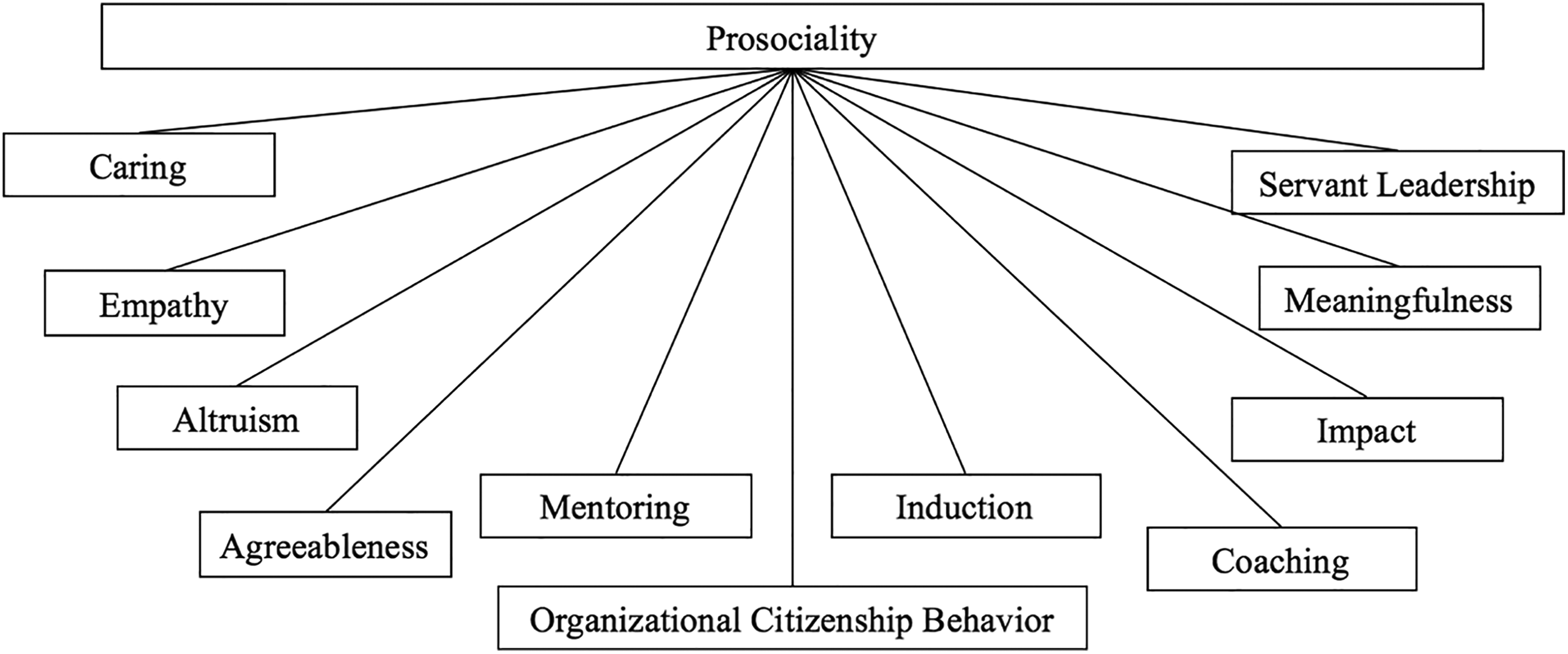
Conceptual model of prosocial elements in educational leadership.
To explore prosocial elements for this overview, we adopted a systematic narrative review approach (Collins and Fauser, 2005). This systematic review was based on two assumptions, applied from organizational studies (Bolino and Grant, 2016). First, prosociality in educational leadership contexts was studied under three sub-concepts: motive, behavior, and impact. Second, we considered educational leadership as a process by which individuals influence a group of individuals to achieve shared goals (Jäppinen et al., 2015; Northouse, 2013). Therefore, this review includes prosociality of not only educational leaders but also other educational professionals, such as teachers.
Defining prosocial
We will define prosociality according to general organizational studies due to a lack of rigorous research in educational leadership contexts. To begin, Bolino and Grant (2016) found that in an organizational context, prosociality can be described using three closely connected but distinct concepts: motivation, behavior, and impact. Unlike traditional types of motivation that focus on the self or the task, such as intrinsic or extrinsic motivation, prosocial motivation places the focus on social aspects of work by emphasizing individuals’ interest in how their actions can affect or promote others’ welfare (Grant, 2007). Prosocial motivation refers to the desire to expand effort to benefit others (Batson, 1987). Research has revealed that individuals can be motivated to engage in their work not only for self-advancement or wages but also, more importantly, for the opportunity to benefit others or promote their welfare (Grant, 2007, 2008).
Prosocial behavior is behavior that is achieved by organizational members with the intention or expectation that such behavior will benefit the individuals, group, or organization at which they are directed (Brief and Motowidlo, 1986). Hence, prosocial behavior can be regarded as helpful and can be either role-prescribed or discretionary extra-role behavior (George and Bettenhausen, 1990). Furthermore, engaging in prosocial behavior may or may not be rewarded (Organ et al., 2006).
Prosocial impact describes the experience or feeling of making a positive difference in the lives of others (e.g. customers, colleagues, or other stakeholders) through one’s work (Grant, 2007; Grant and Sonnentag, 2010). Prosocial impact is related to prosocial motivation in that people who possess prosocial motivation tend to be more interested in benefitting others through their work; however, prosocial impact refers not to motivation itself, but to the realization that one’s efforts at work are making a difference for others (Bolino and Grant, 2016).
Method
To draw an overview of prosociality in educational leadership, this review attempts to answer the following research questions. What elements could be involved in prosociality within educational leadership? Who could be involved in the process of prosociality in educational leadership?
Data analysis: literature search procedure and inclusion and exclusion criteria
In order to answer the research questions, we chose a systematic narrative review approach that is best suited to comprehensive topics (Collins and Fauser, 2005). The first step was to collect data on the extensive publications in peer-reviewed journals concerning educational leadership, in using keywords related to prosociality and educational leadership (Berkovich, 2015; Bolino and Grant, 2016). The authors mined the Education Resources Information Center (ERIC) database for peer-reviewed articles published using combinations of educational leadership keywords (e.g. leadership, principal, head teachers, superintendent, administrator, deputy principal, educational leader, vice principal) and prosociality keywords (e.g. prosocial, servant, altruism, empathy, benevolence, collectivism, agreeableness, caring, organizational citizenship behavior (OCB), mentoring, knowledge sharing, compassion, empowerment, meaningfulness). Furthermore, we carried out a search with the same keywords in Google Scholar for peer-reviewed articles. The initial search produced more than 6000 articles.
The second step was to find the most representative articles using inclusion and exclusion criteria. For this purpose, electronic searches in ERIC were used to identify the peer-reviewed journals that frequently published articles in English on educational leadership. We identified 12 such peer-reviewed educational journals: Journal of Educational Administration, Educational Administration Quarterly, Educational Management Administration & Leadership, Journal of School Leadership, School Leadership & Management, International Journal of Leadership in Education, International Journal of Educational Management, Leadership and Policy in Schools, School Effectiveness and School Improvement, Journal of Educational Change, Teaching & Teacher Education: An International Journal of Research and Studies, and Teachers and Teaching: Theory and Practice.
Third, the initial search results of articles were filtered using the identified journals. Consequently, 623 articles were obtained from the journals. Fourth, the corpus was narrowed to 87 articles by reading and assessing the abstracts of all the articles the authors had identified based on the following inclusion criteria: (a) relevance to prosocial topics, (b) relevance to educational leadership topics, (c) empirical or conceptual nature (data or theory reported on the topics), and (d) publications of more than five pages. Then, we excluded articles if they did not elaborate theoretical constructs or methods, which would have hampered inferences pertaining to the contribution of the results to understanding prosocial phenomena in the context of educational leadership (i.e. lack of clear definition of components, insufficient explanation of measurement tools). In addition, four articles were not within the scope of our study purposes. As a result, the final corpus consisted of 83 articles: 35 qualitative, 34 quantitative, five mixed-methods, and nine conceptual or review. As seen from Figure 2, our final corpus of research included articles from 1993 to 2016.
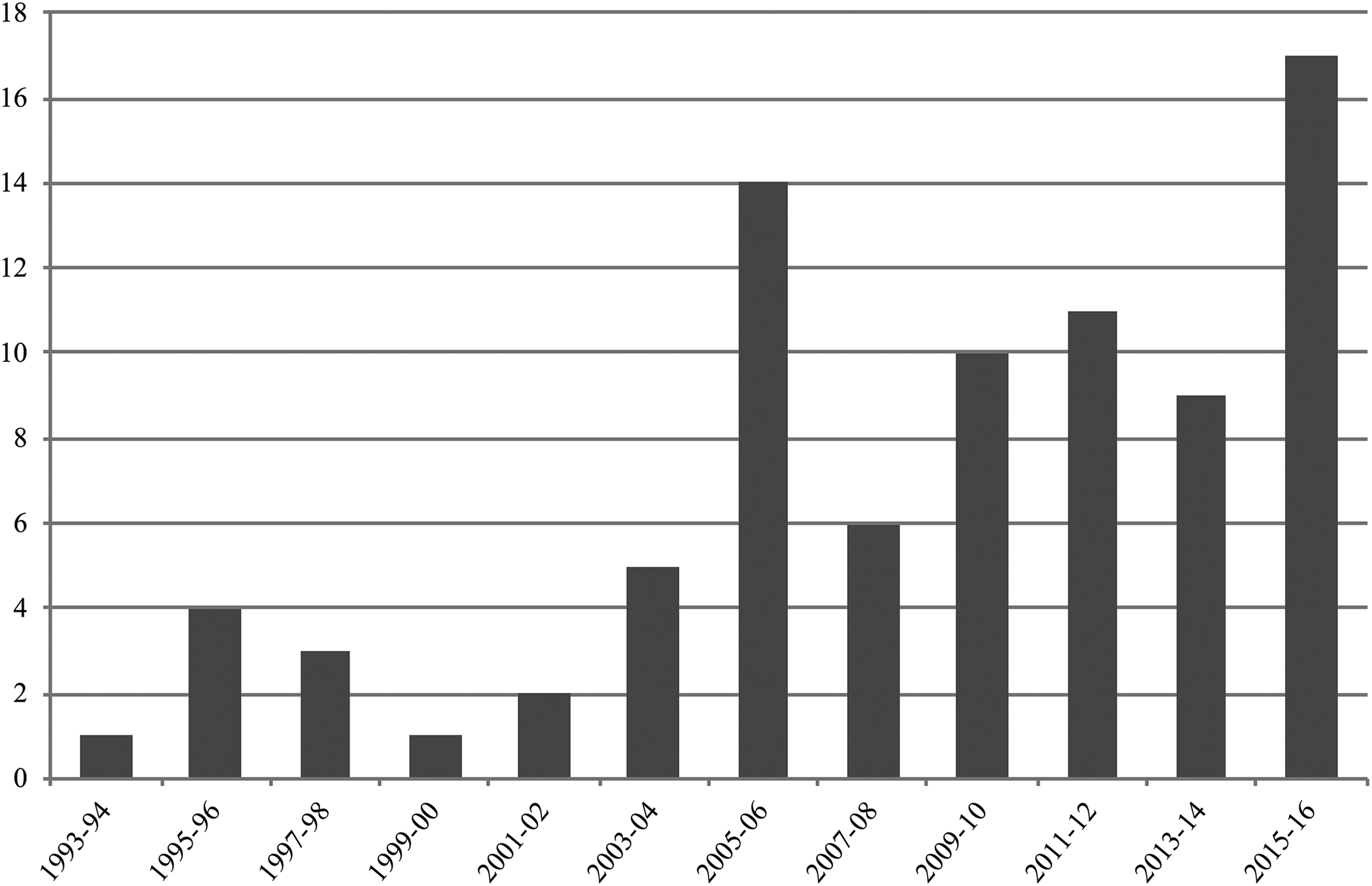
Number of selected articles on being prosocial in educational leadership contexts published biyearly, 1993–2016.
Findings
We found that many concepts concerning helping others and promoting others’ welfare have been discussed in different educational leadership journals, as presented in Table 1. The numbers of articles in each concept in the table are not congruent with the total numbers of articles in each journal because certain articles include several concepts.
Distribution of articles concerning prosocial elements by concept and journal.
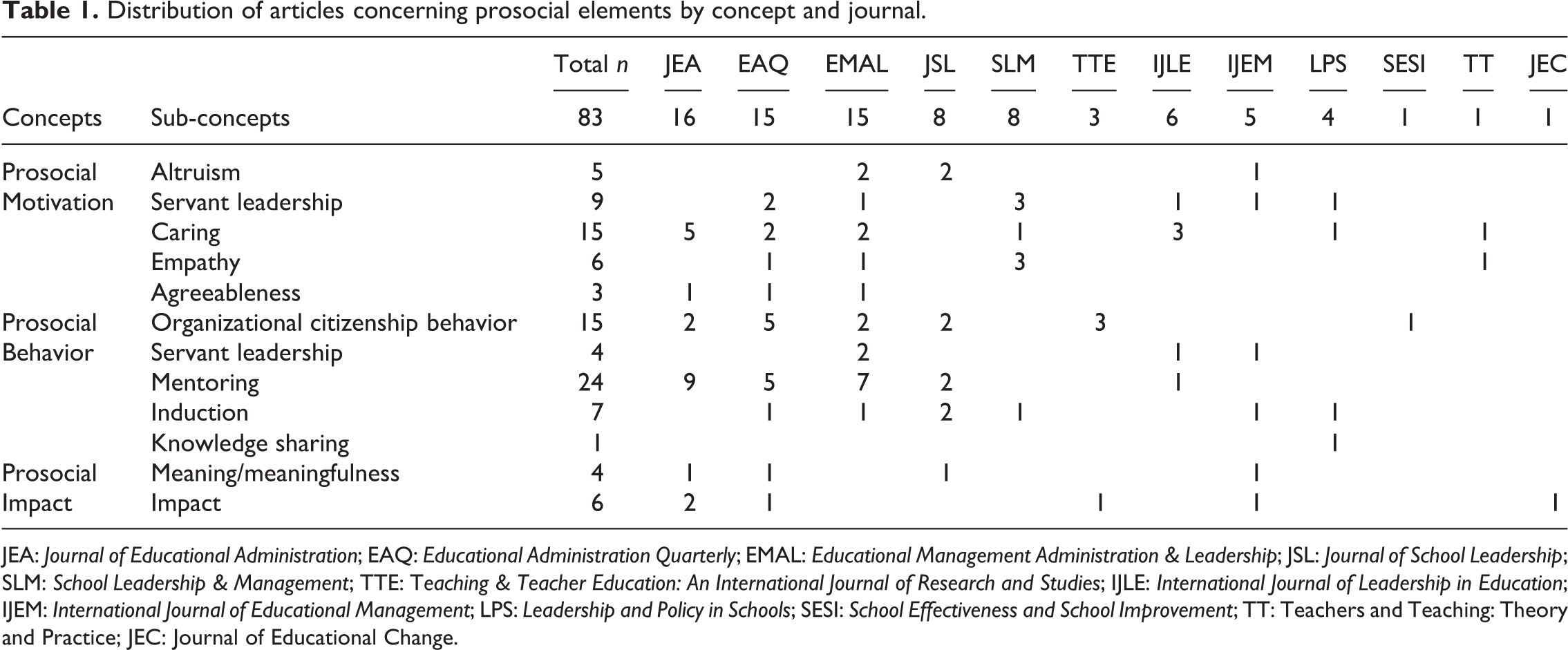
JEA: Journal of Educational Administration; EAQ: Educational Administration Quarterly; EMAL: Educational Management Administration & Leadership; JSL: Journal of School Leadership; SLM: School Leadership & Management; TTE: Teaching & Teacher Education: An International Journal of Research and Studies; IJLE: International Journal of Leadership in Education; IJEM: International Journal of Educational Management; LPS: Leadership and Policy in Schools; SESI: School Effectiveness and School Improvement; TT: Teachers and Teaching: Theory and Practice; JEC: Journal of Educational Change.
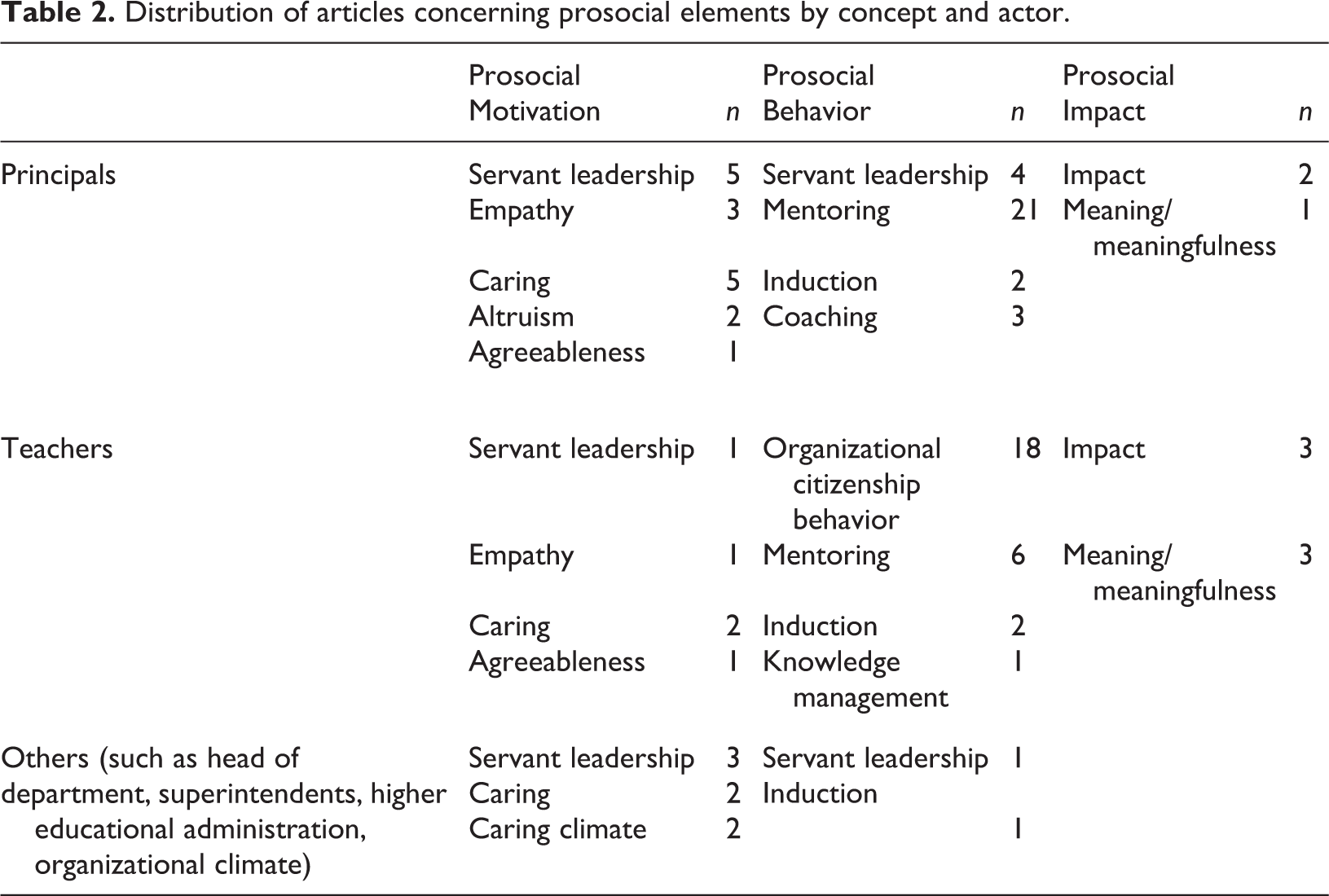
In addition, our review identified different educational actors taking the position of leadership in diverse contexts and situations, such as principals, teachers, and superintendents who hold, exert, or experience prosociality, as shown in Table 2.
Distribution of articles concerning prosocial elements by concept and actor.
Prosocial motivation
We identified a number of prosocial components related to motivation that are not explicitly defined as ‘prosocial’. In this section, we discuss the following topics: (a) What elements could be involved in prosocial motivation within educational leadership? and (b) Who could have prosocial motivation in educational leadership?
What elements could be involved in prosocial motivation within educational leadership?
Elements of prosocial motivation or value of helping others, although not directly referred to, were found in many approaches concerned with servant leadership, altruism, empathy, caring, and agreeableness.
Servant leadership was found to be a starting point for thinking about prosocial motivation because it has been discussed as leaders’ personal identity or a world view, and concerned how to help others to utilize their potential (Stewart, 2012). Servant leadership stems from Greenleaf’s (1977) critique of the dehumanizing effect that mechanistic hierarchies have on our lives and an ardent belief that people carry an intrinsic will to help others (Stoten, 2013). Next, we consider four emotional aspects that are often connected to servant leadership.
Prosocial leaders are driven by altruism or the importance of the value of others (Cerit, 2009) and may hold empathy (Gurr et al., 2006). Altruism refers to a leader’s desire to make a positive difference in others’ lives by putting others’ professional development ahead of one’s own self-interest or cost (Cerit, 2009; Xu et al., 2015). Empathy refers to an awareness of others’ feelings, needs, and concerns (Aas and Vavik, 2015). Empathy or other-centeredness to appreciate circumstances from another’s perspective helps leaders understand an individuals’ need for emotional support that, in turn, cultivates creativity and performance in educational organizations (Gurr et al., 2006; Stewart, 2012).
In contrast to the review in general organizational studies (Bolino and Grant, 2016), caring was found as a form of prosocial motivation. Caring has been widely explored because it is characterized by motivational displacement or desire to help others (Noddings, 2006) and go into the other person’s world to understand what he or she is going through (Kroth and Keeler, 2009). Furthermore, agreeableness, which refers to getting along with others in pleasant and cooperative relationships (Lazaridou and Beka, 2015; Somech, 2010), may overlap with prosocial motivation. Highly agreeable people may tend to be prosocial and cooperative with others; in contrast, less agreeable people tend to be self-centered, skeptical of the others’ intentions, and competitive (Benoliel and Somech, 2010).
Who could have prosocial motivation in educational leadership?
Since prosocial motivation in general organization studies has been argued to be the leading value (Oplatka, 2012; Shapira-Lishchinsky and Rosenblatt, 2010; Taylor et al., 2007), this review found many educational professionals who display prosocial motivation.
First, many studies have reported on principals’ prosocial motivation. Wilson (2016) maintained that principal’s prosocial motivation or caring is crucial in leading schools, especially in racially minoritized contexts. In fact, principals themselves seem to understand the importance of prosocial values and at least try to present themselves as caring persons (Van der Vyver et al., 2014). Taylor et al. (2007) corresponded and found that when principals regard themselves as an ‘other-centered servant leader’, their practices were highly regarded by teachers. Principals’ caring about teachers’ needs was found to be likely to increase teacher OCB (Oplatka, 2006, 2013), contribute to students’ academic support, and encourage teacher collaboration, thereby leading to academic achievement (Louis et al., 2016). This is because such values and beliefs are conducive to capacity building such as teaching and learning of school staff (Gurr et al., 2006). Prosocial values are also sometimes developed by religious belief, such as compassion (McClain et al., 2010), or even by leadership preparation programs (Gerstl-Pepin et al., 2006).
Second, prosocial motivation among teachers has been discussed. For example, socially allocentric teachers generate high job satisfaction and provide excellent performance when they engage in leadership for a common goal (Benoliel and Somech, 2010). Interestingly, one study showed that prosocial orientation can be developed through service-learning in teacher training (Stewart, 2012).
Third, superintendents have also been found to clearly exhibit prosocial orientation, although they serve at the district and community levels. Alston (2005) found that black female superintendents are deeply caring from their spirituality in their mission to serve and lead people into making meaning of their lives. Crippen and Wallin (2008) realized that superintendents were more influenced by their mentors, especially regarding inner characteristics such as building community, commitment to the growth of people, and foresight, as compared to outer characteristics such as listening, healing, empathy, and persuasion because of the role of the superintendent, who remains at a distance and does not face the day-to-day dilemmas of schooling.
Fourth, some studies referred to prosocial motivation of the other educators such as heads of departments and higher education administrators. Brown and Rutherford (1998) found that heads of departments hold other-orientation in a much more mundane way. For example, when arranging the ‘staffing request’ (who teaches what to which class) for the next year, the head would try to take the wishes of the teachers and the best interests of the students into consideration. Uusiautti (2013) argued that other-orientation among higher education administrators leads to positive work experiences.
Finally, the prosocial climate of organizations has been explored. For example, a caring climate is one in which the employees are genuinely interested in each other’s welfare (Shapira-Lishchinsky, 2012b). A caring climate in schools, in the long term, is likely to lead to a collaborative and supportive school culture, thereby mitigating anxiety, stress, and less withdrawal behavior (Menon, 2012; Shapira-Lishchinsky, 2012b).
Prosocial behavior
In this section, the following topics are discussed: (a) What elements could be involved in prosocial behavior within educational leadership? and (b) Who could exhibit prosocial behavior in educational leadership?
What elements could be involved within prosocial behavior in educational leadership?
In addition to the motivational aspects, servant leadership behavior has also been discussed in terms of leadership behavior or style (e.g. Alonderiene and Majauskaite, 2016; Cerit, 2009, 2010; Chikoko et al., 2015). According to the definition of servant leadership of Laub (1999: 23), ‘servant leadership is an understanding and practice of leadership that places the good of those led over the self-interest of the leader.’ Therefore, the prosocial behavior of servant leadership is oriented toward individuals as well as organizations (Cerit, 2009, 2010; Chikoko et al., 2015).
As in organizational studies, OCB is one of the most explored constructs considered as prototypical prosocial behavior. According to the definition of Brief and Motowidlo (1986: 711), prosocial organizational behavior is (a) performed by a member of an organization, (b) directed toward an individual, group, or organization with whom he or she interacts while carrying out his or her organizational role, and (c) performed with the intention of promoting the welfare of the individual, group, or organization toward which it is directed.
In educational leadership studies, teacher OCB has mostly been discussed as voluntary behavior (DiPaola and Tschannen-Moran, 2001; Shapira-Lishchinsky and Tsemach, 2014) or extra-role behaviors (e.g. Oplatka, 2006, 2013; Oplatka and Stundi, 2011; Vigoda-Gadot et al., 2007) because the teaching profession cannot be exactly prescribed by teachers’ job descriptions (DiPaola and Hoy, 2005; DiPaola and Mendes da Costa Neves, 2009). Schools cannot anticipate the complete pattern of behavior necessary to achieve goals through formally stated in-role job descriptions (Belogolovsky and Somech, 2010). Therefore, the term extra-role behavior is interchangeably used with OCB (Belogolovsky and Somech, 2010; Somech and Drach-Zahavy, 2000).
As teacher OCB is unprescribed and includes a wide range of behavior, it can be seen through different dimensions. For example, Vigoda-Gadot et al. (2007) supported a two-dimensional model toward the individual or organization. In addition, many researchers follow a three-orientation model: (a) OCB toward the students (e.g. staying an extra hour, helping disadvantaged students); (b) OCB toward the team (e.g. orienting a new teacher, assisting a teacher with a heavy workload); and (c) OCB toward the school as a unit (e.g. making innovative suggestions to improve the school) (Belogolovsky and Somech, 2010; Somech and Drach-Zahavy, 2000). Furthermore, Oplatka (2006) suggests four dimensions of teacher OCB orientation: individual pupil, classroom, staff, and school organization.
Also, mentoring has been identified as prosocial behavior because it has been described as a series of behaviors aimed at the professional development of mentees that provide various types of support (Boerema, 2011; Enomoto and Gardiner, 2006; Kirkham, 1995; Southworth, 1995). Traditionally, a more experienced person as a mentor provides a less experienced person as a mentee with guidance (Hansford and Ehrich, 2006; Walker et al., 1993). However, the current trend mirrors a shift in the basic understanding of educational leadership to more socially interactive or negotiated models (Boerema, 2011; Bush and Coleman, 1995; Jones, 2010; Shapira-Lishchinsky and Levy-Gazenfrantz, 2016) in order to sustain effective schools (Msila, 2016). For example, an effective mentoring relationship requires all partners (e.g. mentor, mentees, principal) to be ready to engage in the mentoring process (Shapira-Lishchinsky, 2012a) or in ‘a collaborative partnership in which individuals share and develop mutual interests’ (Tillman, 2005: 612).
There are also other types of prosocial behavior, such as induction, coaching, and knowledge sharing. Induction aims at ushering the new teacher, who needs greater support, into the career (Bickmore and Bickmore, 2010; Menon, 2012). Coaching focuses on the practice of providing deliberate support to another individual to help someone clarify and achieve goals, while mentoring is a process-oriented, career-development measure (Aas and Vavik, 2015; Yirci et al., 2014). Knowledge sharing is also considered as prosocial because it is aimed at facilitating organizational members’ own learning and practice, and creating common understanding and trust (Edge, 2013).
Who could exhibit prosocial behavior in educational leadership?
This review found that educational leaders and teachers as subjects of prosocial behavior are pertinent to educational leadership.
Educational leaders’ prosocial behaviors
First, we found servant leadership of educational leaders as prosocial behavior. Servant leadership behaviors are likely to promote teachers’ trust (Chikoko et al., 2015), job satisfaction (Al-Mahdy et al., 2016; Alonderiene and Majauskaite, 2016; Cerit, 2009), and teachers’ school commitment by valuing and developing people (Cerit, 2010).
The other major topic related to the prosocial behavior of educational leaders is mentoring and induction. Studies on mentoring or induction for educational leaders, including principals and superintendents, were arranged according to three types of beneficiaries, explained in the following.
First, a new educational leader or novice teacher as mentee is a beneficiary who embraces the benefits of mentoring when provided with opportunities to have privileged access to experienced professionals. The benefits of mentoring are, for example, improving leadership and management skills, instilling professional values, and psychological support (Tahir et al., 2016). Moreover, providing social support and feedback about performances reduces professional isolation and instills confidence during change and uncertainty of early career stages (Bush and Coleman, 1995; Ehrich et al., 2004; Kirkham, 1995). Méndez-Morse (2004) found that when educational leaders have difficulties in finding formal mentors, they set a role model – for example, previous principals or parents, as informal mentors. Notably, principals influence the mentoring or induction processes of novice teachers directly or indirectly through direct mentoring, mentor selection, training, and support (Youngs, 2007).
Second, mentoring relationships have been described as mutually beneficial relationships, whereby the career enhancement, personal development, and emotional fulfillment of each partner are addressed (Browne-Ferrigno and Muth, 2004; Creasap et al., 2005; Loy and Boon, 1998; Walker et al., 1993). Thus, the benefits of mentoring are not limited to mentees. Bush and Coleman (1995) noted that the gains of mentors are the opportunity to discuss professional issues with an equal partner; improved problem analysis; valuable insight into current practice; and insight into the nature of different approaches to leadership.
Third, the mentoring process also provides benefits to schools as organizations (Daresh, 2004; Walker et al., 1993). For example, mentoring works as a means of transmitting school culture (Bush and Coleman, 1995; Tillman, 2005), instructional growth (Pogodzinski, 2015), and a climate of collegial support. This is because mentees are grateful for having received support from mentors, and they may volunteer to serve as mentors in the future (Daresh, 2004).
The last type of prosocial behavior that the review identified was coaching. Aas and Vavik (2015) reported that peer coaching among school leaders enables to develop their context-based identity through group coaching, which is understood as a learning relationship within a group of school leaders who are committed to promoting mutual leadership development and well-being.
Teachers’ prosocial behaviors
Teachers’ OCB was found the most typical in the review. This review is organized according to three types of determinants of OCB: personal elements, principals’ leadership, and organizational factors.
As for personal elements, researchers have reported that job satisfaction (Somech and Drach-Zahavy, 2000), self-efficacy (Bogler and Somech, 2004; Somech and Drach-Zahavy, 2000), status (Bogler and Somech, 2004), perceived supervisor support (Somech and Ron, 2007), and acceptance of absenteeism (Shapira-Lishchinsky and Raftar-Ozery, 2016) were positively related to teacher OCB while negative affectivity was negatively related (Somech and Ron, 2007). Interestingly, Somech and Drach-Zahavy (2000) indicated that while teacher self-efficacy was positively related to teacher OCB toward team and organization, their job satisfaction was positively related to teacher OCB toward individuals, team, and organization. Namely, personal elements are likely to be related to different levels of beneficiaries.
Regarding leadership as a determinant of teachers’ OCB, the first issue to be noted is participation in leadership. Researchers agree that participative leadership and shared responsibility promote greater job autonomy and encourages and facilitates teacher OCB (Bogler and Somech, 2004; Khasawneh, 2011; Oplatka and Stundi, 2011; Somech, 2010). Bogler and Somech (2005) explain that opportunities for teachers to participate in the decision-making process enhance their sense of empowerment, whereby teachers are, in turn, encouraged to engage in OCB. The second issue to promote prosocial behavior is principals’ prosocial values, such as caring about teachers’ needs. Oplatka (2013) found that when the principal is perceived as a person who goes beyond the formal role expectations and is caring about the staff, teachers are likely to engage in OCB since such principals simply become a behavioral model. The third issue is the perception of leadership, such as transformational and authentic leadership. Some studies showed that these types of other-orientated leadership had an impact on teacher OCB (Nasra and Heilbrunn, 2016; Nguni et al., 2006; Shapira-Lishchinsky and Tsemach, 2014).
The third determinant of teacher OCB was organizational factors. Researchers agree that other-oriented climates are likely to promote teacher OCB. For example, positive collegial interactions and a sense of belonging (Oplatka, 2006), collegial leadership (DiPaola and Tschannen-Moran, 2001), and ethical climate (Shapira-Lishchinsky and Raftar-Ozery, 2016) were explicitly connected to teacher OCB. This is because their personal goals are congruent with the organization’s mission (Somech, 2010; Somech and Drach-Zahavy, 2000).
Next, mentoring and induction were found to belong to teachers’ prosocial behaviors. These kinds of behaviors are required not only from teachers at the beginning of the leadership level (Heilbronn et al., 2002) but also from novice teachers (Menon, 2012). Beginning teachers pointed to the need for organizational measurements such as induction programs (Bickmore and Bickmore, 2010; Menon, 2012) because early-career teachers often struggle with classroom management issues as well as with curriculum and pedagogical skills (Jimerson et al., 2015; Menon, 2012). In terms of leadership, mentoring works as a catalyst of leadership when new teachers view mentoring as an integral part of their socialization into the school culture (Clarke et al., 2015), while personal benefits for mentees include support, sharing ideas, and professional development (Hansford and Ehrich, 2006).
Furthermore, knowledge sharing was also identified as teacher’s prosocial behavior. When a knowledge-sharing infrastructure is built, it provides opportunities that encourage voluntary tacit-to-tacit knowledge sharing, build school-level knowledge, and develop expertise-creating synergies across a district (Edge, 2013).
Prosocial impact
As with the general organizational research (Bolino and Grant, 2016), the current study found that very little attention has been paid, so far, to the role of prosocial impact in educational leadership contexts. Prosocial impact refers to the judgment that one’s actions benefit others and make a positive difference in their lives (Grant and Campbell, 2007; Grant and Sonnentag, 2010). For the people involved in educational leadership, positive experiences of success are related to activities aimed at fostering a greater good that benefits the whole organization, employees, students, and people connected to the organization. Therefore, people involved in educational leadership experience prosocial impact. For example, meaningful experiences among teachers play an important role in their job satisfaction (Winter et al., 2006). Mentors of educational leaders get positive experiences in mentoring that causes them to be productive and cohesive team members (Playko, 1995) and to derive satisfaction from helping colleagues (Walker et al., 1993) and from seeing the values of a school system handed over to a new generation (Daresh, 2004). These prosocial experiences may also play as intangible rewards, not as monetary rewards (Guramatunhu-Mudiwa and Scherz, 2013).
What elements could be involved in prosocial impact within educational leadership?
This review found only a few concepts that are closely connected with the idea of prosocial impact. Some studies have investigated the aspect of impact in psychological empowerment, which partially explains prosocial impact. Impact is defined as the degree to which employees experience that their performance makes a difference (Spreitzer, 1995). In addition to impact, the aspect of meaning in psychological empowerment refers to the employees’ feeling that their work is worthwhile (Spreitzer, 1995). In the teaching profession, the professional respect and appreciation that teachers expect to receive from colleagues for their knowledge and expertise are considered meaningful (Shapira-Lishchinsky and Rosenblatt, 2010).
Who could experience prosocial impact in educational leadership?
Regarding teachers’ prosocial impact, Moye et al. (2005) showed that teachers who find their work important and meaningful (i.e. meaning) and who perceive they have a great deal of influence on what happens in the work environment (i.e. impact) report higher levels of trust in their principals. Further, teachers’ prosocial impact is likely to mediate between teachers’ perception of leadership and their behavior. Shapira-Lishchinsky and Tsemach (2014) found that when principals are perceived as authentic leaders, the teachers are likely to have a prosocial experience of impact and meaning at work; these feelings of impact and meaningfulness caused more OCB and less absence, respectively. Bogler and Somech (2005) argued that teachers’ opportunities to participate in the process of decision-making enhance their sense of teacher empowerment that includes an impact aspect, which in turn spurs them to engage in OCB.
Finally, the prosocial impact of educational leaders were also found. Schermuly et al. (2011) found that when vice principals felt that their jobs were meaningful, their job satisfaction was enhanced. Interestingly, they indicated that prosocial impact may alleviate emotional exhaustion indirectly through job satisfaction. Moreover, prosocial impact may play an important role in leadership effectiveness. Rose (2007) showed that the greater the psychological empowerment the principals felt, the more their assistant principals felt that the principals exhibited transformational leadership.
Discussion
Despite not including all published or unpublished articles and books on prosociality and educational leadership, this review provided a broad overview of prosocial phenomena and showed an increasing interest in prosociality in educational leadership contexts (Figure 2). Moreover, in line with what the general organizational review (Bolino and Grant, 2016) suggested, we confirmed the same structure in educational leadership research consisting of prosocial motivation, behavior, and impact. However, we did not review some important areas – for example, the dark side of prosociality (e.g. Kruse and Louis, 1997), because the studies we reviewed had a limited range of research foci in this topic.
In answering who could be involved in the process of prosociality in educational leadership, we suggest that it is not enough that only single principals could have an effect on prosociality. People from different positions, levels, and sectors in educational leadership are needed for a richer, deeper, and wider prosocial process that goes beyond the limits of one school or organization and into the surrounding society. We further suggest that this kind of enlarged process might enable to reach better, more diverse stakeholders, such as teachers, students, their parents, and other community members, according to the variety of elements of prosociality in education, introduced in Figure 1. Many of these elements are not solely directed to formal leaders but can touch working places, families, and district administration.
Implications for future research on prosocial motivation
We found that the will to help others was found to play a critical role for educational leadership that enables to make educational organizations more effective. However, studies of educational leadership on prosocial motivation have been focusing on the individual level and mainly on educational leaders such as principals, superintendents, and heads of departments (e.g. Alston, 2005; Brown and Rutherford, 1998; Crippen and Wallin, 2008; Gerstl-Pepin et al., 2006; Oplatka, 2013; Taylor et al., 2007). Therefore, the prosocial motivation of other actors, such as teachers and staff, could be further explored because the will to help others or promote the welfare of organizational members has been shown to be an important key for successful leadership processes and organizational effectiveness (Hu and Liden, 2015).
Although the importance of the will to help others has been emphasized, little research has been carried out to answer the question towards whom prosocial motivation is directed. This may be due to the fact that the reviewed studies regard constructs related to prosocial motivation as stable dispositional tendencies that educational professionals could carry across time and situations. However, the beneficiary of prosocial motivation can vary from individual to whole organization depending on the time and the situation. For example, principals in inclusive education settings are forced to make decisions in dilemma situations when the decisions have controversial effects on the individual and/or the collective best interests of students (Frick et al., 2012). Thus, we still do not know with whom and when educational professionals become prosocial or whether they are consistently prosocial.
Finally, it might be interesting to explore the relationship between cultures and prosocial motivation. One clue to revealing cultural effects on prosocial motivation may be autonomous regulation (Deci and Ryan, 2002). Although education is a service occupation and the core goals and objectives of people in educational institutions are defined in terms of helping others (Grant and Campbell, 2007), one study suggested that prosocial motivation can be based on different levels of autonomous regulation (Grant, 2008). In a certain culture, educational professionals may be forced to hold prosocial values due to a prevalent culture of peer pressure or a collectivist culture (e.g. Cerit, 2010). On the other hand, in another culture, the ethical and humanistic dimensions of education may frequently act as a source of teachers’ autonomous will (e.g. Belogolovsky and Somech, 2010; De Dreu and Nauta, 2009; Grant and Berry, 2011).
Implications for future research on prosocial behavior
As many researchers have noted, the border of behavior between being prosocial or not is unclear. For instance, OCB is considered a prototypical prosocial behavior (Bolino and Grant, 2016) since OCB consists of constructs that range from highly to not very prosocial (Organ et al., 2006). In addition, the question of the ambiguous border between in-role and extra-role prosocial behavior remains. For example, in mentoring and induction, whether such practices are formal or informal may influence their effectiveness. Some researchers have argued that informal relationships are more effective, although it is difficult for organizations to track their effectiveness (Méndez-Morse, 2004; Pogodzinski, 2012; Walker et al., 1993). Furthermore, informal mentoring may be more prosocial than the formal type because of mentors’ initiative and greater openness in relationships. One study reported that preschool teachers are likely to provide more mentoring when they have more autonomy (Waaland, 2016). Therefore, we recommend exploring in-role and extra-role prosocial behavior and their effectiveness.
Implications for future research on prosocial impact
As with general organizational research, this study found that prosocial impact was the least-explored prosocial topic. We suggest that psychological empowerment may be a comprehensive concept. However, the measures used in the reviewed studies do not necessarily refer to the targets of meaning and impact. That is to say, it does not necessarily mean that one’s job should benefit others. Since organizational research has found that prosocial impact is a key component for organizational effectiveness, with implications for leadership as well as employee performance, and emotional well-being (e.g. Bellé, 2013; Grant, 2008, 2012), we suggest that future research should pay more attention to the roles of prosocial impact in contexts of educational leadership.
In addition, it might be important to investigate toward whom educational leaders and teachers most effectively direct prosocial impact. Essentially, teachers wish to benefit their students and receive satisfaction in the classroom (Klassen and Chiu, 2010; Oplatka, 2012). However, educators may feel prosocial impact toward students, colleague, or even the entire organization when the effectiveness of educational organization enhances. Although some studies have investigated how messages on prosocial impact from beneficiaries and leaders affect employees’ prosocial impact (Bellé, 2013; Grant and Hofmann, 2011), little is known about the targets of prosocial impact.
Therefore, future research could be undertaken to explore the relationship between prosocial impact and leadership processes that attempts to explain prosocial impact in relation to collaboration. Some studies have inferred that participation in leadership processes at the decision-making level may enhance prosocial impact (Benoliel and Somech, 2010; Bogler and Somech, 2005). Furthermore, when leadership is shared through consultation with other colleagues to achieve school goals, the process may foster teachers’ sense of value and self-worth since teachers feel that they not only performed for themselves but also colleagues (Guramatunhu-Mudiwa and Scherz, 2013; Podsakoff and Mackenzie, 1994). On the contrary, while making a collective decision, people feel cared about and welcomed when their input is required and welcomed; that is, in caring workplaces, people tend to collaborate with colleagues as well as work autonomously (Green and Tucker, 2011). Thus, in collaborative environments, it seems that prosocial impact may play an important role both in profiting from and bolstering the collaborative leadership process. However, the relationship between these two aspects has not yet been explored.
Conclusion
The current review enhanced the understanding of being prosocial and the concept of ‘prosociality’ in educational leadership contexts and provided a framework for future studies. Although the findings were incisive, this review contained some limitations. First, we principally utilized keywords used by Bolino and Grant (2016) in general organizational studies. Further research could extend the list of keywords or consider further educational concepts to get a broader or deeper understanding regarding prosociality in the field (Figure 1). Second, it might have occurred that some inadequate generalizations were made during the analysis phase. However, we believe that despite the limitations, our work was able to introduce a general view of the importance of being prosocial in educational leadership and we wish that it paves the way for future research of this important topic.
