







Abstract
This exploratory case study investigated the link between morale and burnout in an Australian public school. Qualitative data was collected from 8 focus groups involving 47 participants. In analysing the qualitative data, an objective content analysis using the software program Leximancer was conducted. The findings indicated that a lack of support and poor systems (particularly in relation to behavioural management) were central to staff burnout and lower morale. A socio-technical systems framework including people, systems and tools was developed and applied to explain the results. It was argued that the attributional process of blame and a lack of perceived empathy (for poor systems) from leaders in the school was adding to feelings of low morale. The findings suggest that without empathy in leadership, attempts to improve morale in a workplace may actually increase burnout risk. The case study also highlights the buffering effect that ‘pod-synergy’ can have in mitigating burnout risk among teachers when there is a lack of involvement and empathy in the way decisions are made by leaders. Finally, a balance between the people and the systems is recommended so that there is enough autonomy for teachers to make situation-based decisions using their own skills and training without the demands of too much ‘red tape’.
Introduction
The purpose of this paper is to explore the occurrence of burnout and its relationship with morale among teachers working in an Australian school. This exploratory case study draws out related explanatory themes using a socio-technical systems (STS) framework. This approach has enabled the identification of systemic factors that are perceived by teachers to influence their morale and potentially reduce burnout risk in schools. The paper provides insights into the type of strategies management may use to reduce burnout and improve morale within the Australian educational context and more broadly.
The paper introduces an STS approach and then develops this in such a way that more appropriately targets the sources of strain within the workplace. In this instance threading out the people issues, the systems issues and the tools issues (PST) sharpens the focus on problematic areas. The framework introduced in the paper is both a model and a methodology. The PST model (see Figure 1) can explain why there are morale issues in workplaces generally but more specifically in Australian schools. The research component of this paper goes on to apply the methodology and reveal the extent to which people feel accused, blamed and reprimanded for issues that are the result of system failures. Furthermore, the model can be used to predict that when an individual worker is blamed for a system failure, considered not within their control, this will undermine morale. As morale levels in schools have been reported to be a concern over many decades (Bottery, 2003; Evans, 1997; Hart, 1994; Kyriacou and Sutcliffe, 1979) this model provides insight into how to potentially arrest and remedy this trend.
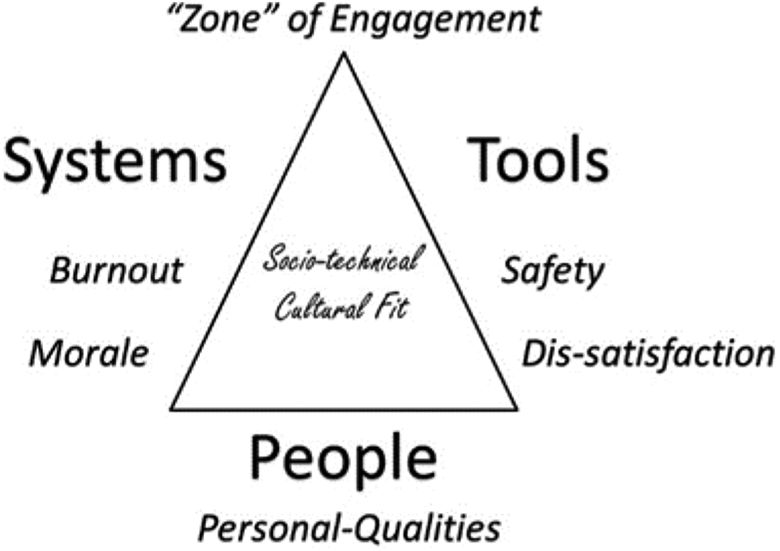
A socio-technical systems theoretical model for examining burnout.
One of the central findings of this research is that without empathy in leadership, attempts to improve morale in a workplace may actually increase burnout risk. Furthermore, a lack of empathetic leadership and involvement in decision-making is found to reduce morale and increase the burnout risk of the teachers in this study. The results also highlight the buffering effect that ‘pod-synergy’ can have in mitigating burnout risk among teachers when there is a lack of involvement and empathy in the way decisions are made by leaders. Ideas for future research are also provided that may have broader implications for other organisations. The paper is structured as follows. It begins by describing the background literature on burnout and morale and this is followed by an explanation of how an STS approach can be used to understand burnout in schools. The methodology and results are then provided. The discussion explores the implications of the findings and provides related future research directions.
Burnout
Recently the World Health Organization (2019), in the 11th edition of the International Classification of Diseases, recognised ‘burnout syndrome’ as an official medical diagnosis. The new diagnosis is defined as a ‘syndrome conceptualized as resulting from chronic workplace stress that has not been successfully managed’ (World Health Organization, 2019). This recent addition highlights the significance of this issue and the need for organisational leaders to be more responsible for ensuring that their workplace is successfully managing worker burnout.
For a long time, academic researchers have also considered burnout as an important topic of interest. The related literature defines burnout as a state of chronic exhaustion felt by employees and is found to be associated with a reduction in performance, increased fatigue and reduced employee engagement (Bakker et al., 2002; Hills, 2018; Maslach et al., 2001; Mealer et al., 2016; Van Emmerik and Euwema, 2001). A number of studies have also argued that burnout is related to and affects workplace morale (Bailey and Marz, 2016; Campbell et al., 2009; Iserson, 2018; Maslach, 1993; Maslach and Jackson, 1981; Yanchus et al., 2015).
It is often claimed that teaching is a highly stressful profession (Kyriacou, 2001; Yong and Yue, 2007) where staff are known to be at high risk of burnout (Aloe et al., 2014; Hakanen et al., 2006; Maxwell and Riley, 2016; Wang et al., 2015b). Further, low morale has been found to be linked to increased levels of stress and burnout specifically among teachers (Chang, 2009; Schwarzer and Hallum, 2008; Skaalvik and Skaalvik, 2017). Tschannen-Moran and Tschannen-Moran (2014) claim that building and sustaining school morale are essential functions of school leadership. They also state that bolstering school morale is a crucial school improvement strategy. Thus, the teaching profession appears to be an appropriate environment to explore the relationship between burnout and morale more closely.
In the well-known job-demands resources (JD-R) model (Bakker and Demerouti, 2017; Demerouti et al., 2001), burnout is found to be buffered by various job resources and impacted by various job demands. In their review article of JD-R theory, Bakker and Demerouti (2017) cite a wide range of research papers that confirm the value of managing job demands and resources to support burnout (Bakker et al., 2003; Bakker et al., 2010; Demerouti, 2009; Hakanen et al., 2008; Schaufeli and Bakker, 2004). They also described the role of the individual in modifying the impact of job demands and resources through personal resources, job-crafting and self-undermining. While there is no reference to morale in that paper, Yanchus et al. (2015) point out that in JD-R theory, morale is not a job demand or job resource but a state. Bakker and Demerouti (2017) suggest that future research may explore the psychological and physiological processes involved in the health impairment and motivational processes of JD-R theory. Therefore, because the link between co-worker support (a job resource) and morale is not clearly made as a potential motivational construct, this appears worthy of additional research attention. Morale may be a potential buffer against burnout in schools and if this is the case, then it may be a remedial opportunity not yet fully realised. In the next section, background research on morale is provided.
Morale
Like burnout, low levels of morale have been identified as a long-standing problem within the Australian teaching profession (Mackenzie, 2007a; Mockler, 2018; Shields and Kilgour, 2018). More than 10 years ago, Mackenzie (2007a) reported that teacher morale was considered to be low in New South Wales schools and had been in decline for more than 30 years. Hicks (2003) reported a general crisis in teacher morale in Australia with teachers feeling undervalued, frustrated, unappreciated and demoralised (Mackenzie, 2007a; Smyth, 2001). More recently, Polesel et al. (2014) referred to the possible consequences of the National Assessment Program – Literacy and Numeracy (NAPLAN) results on morale as being a concern for teachers. This situation requires attention and even with consistent calls in the literature that morale should be enhanced in schools the strategic interventions needed seem to be elusive.
An issue limiting the development of the morale literature may be that it is argued to be plagued by inconsistent application, inconclusive research, and a lack of consensus on what morale is and what it is not (Britt and Dickinson, 2006; Manning, 1991; Peterson et al., 2008). Britt et al. (2013: 95) suggest morale is a positive construct that combines feelings of energy with feelings of enthusiasm for accomplishing salient tasks. However, there is some intersection with this definition and the definition of employee engagement (Bakker et al., 2008; Schaufeli et al., 2002). Recently, Ivey et al. (2015) investigated the degree of overlap between morale and work engagement. In this study involving 1224 Canadian armed forces personnel it was concluded that morale (measured with Britt and Dickinson’s (2006) six-item Military Morale Scale) and worker engagement (measured with Schaufeli et al.’s (2006) UWES-9 scale) are highly positively correlated but they were not interchangeable terms. It was found that morale was a better predictor of psychological distress, and worker engagement was a stronger predictor of turnover intention. This suggests that morale may provide additional insights into worker behaviour beyond that of simply considering morale to mean staff are more engaged (and then less likely to experience burnout).
In the school setting many assertions regarding the positive implications of high morale can be found. Robinson (2010) states that teachers develop trusting relationships with their colleagues if morale is high, and teacher absenteeism decreases. Further, it is claimed that morale and the associated issues of stress and burnout drive teacher attrition, a problem that is recognised across economically developed countries including Australia (Arnup and Bowles, 2016; Shields and Kilgour, 2018). However, the research evidence here is somewhat limited and additional research is needed to help improve the predicament in Australian schools.
Morris et al. (2019) investigated strategies useful to increase morale and staff well-being. They concluded that a change in leadership style is a key factor in increasing school morale. Specifically, appraisal and recognition, participative decision-making, professional growth and supportive leadership all contribute to improved staff morale. For a long time, supportive leadership has been thought to be critical for good morale among teachers (Rempel and Bentley, 1964).
More recently, the qualitative evidence from a study by De Nobile et al. (2016) suggested that encouragement from school leadership can be morale-boosting in that it can give teachers a sense that they are not alone in dealing with behaviour issues (Lambersky, 2016).
The research that does exist on how to manage morale suggests that overall morale of teachers is claimed to be enhanced by role clarity, recognition, participative decision-making, a reasonable workload, effective disciplinary policies, successful students, a coherent curriculum and the opportunity for professional growth (Anderson, 1953; Black, 2001; Hart et al., 2000; Helsby and McCulloch, 2002; Houchard, 2005; Huysman, 2008; Lambersky, 2016; Mackenzie, 2007a, 2007b; Wadesango, 2012; Wentworth, 1990).
Burnout continues to be a challenging workplace issue despite many years of research. The academic literature indicates that morale and burnout are potentially related (Maslach and Jackson 1981); however, morale is not explicitly featured in the JD-R theory even though burnout is considered a key outcome of this theory. In addition, morale and burnout continue to be problematic concerns in Australia schools and there are many calls to improve the state of affairs. Further, definitional issues that are arguably limiting for the development of the field. This paper attempts to address these concerns combining a case study approach and an STS framework explore teacher perceptions of the causes of burnout and morale in an Australian school.
Using an STS approach to understand burnout
The use of an STS approach for developing organisational interventions is well supported (Appelbaum, 1997; Coghlan and Shani, 2013; Murphy et al., 2018). Importantly, given the context of this paper, a central aim of STS is to identify ways to make work fulfilling to satisfy the individual needs of workers (Appelbaum, 1997). Accordingly, a model, including PST, was developed based on the principles of STS, which involves analysing an organisational problem by separating out key organisational subsystems that, in reality, are interrelated (Moskal et al., 2016).
The model (see Figure 1) identifies three organisational subsystems that are relevant to understanding morale in school settings. These are the people, systems and tools. Employing this theoretical framework supports an approach that independently looks at each element in the model. As such, the high risk of burnout and low morale evident in this case can be interpreted and predicted through this tri-focal lens.
The people component of the model focusses on interpersonal dynamics and the culture of the organisation. The zone of engagement (ZE) shown at the apex in Figure 1 can be considered on a continuum from low to high. It is the outcome of the interaction of the people and their personal-qualities with the organisational systems and tools to which they have access. ZE is conceptualised as an individual’s global capacity to find for themselves an environment in which they can thrive and be in the zone of engagement more often. However, this is highly influenced by the context of the work environment. For example, people have needs, feelings and goals that are sometimes not in good alignment with the systems and this would lead to lower ZE.
The systems are processes and schemas that direct and support the work. These are the processes that exist to help run the organisation most efficiently and effectively. Some of these are formal (e.g. performance review, funding allocations, behavioural management policy) others are more tacit (e.g. approach to marking, lesson development, behavioural management response, management or leadership decision style). When alignment is lacking between the demands of the job and the systems and tools available this can lead to job strain, which has an impact on burnout (Bakker and Demerouti, 2017).
The model in Figure 1 would also predict that when systems fail and the attribution for failure is directed at the people, they can become cynical and this contributes to low morale among the work group. A sequence of events can cascade from an individual experience of discouragement and burnout into a sense of group disillusionment which ultimately lowers workplace morale. On the other hand, when there is more positive alignment (usually through more supportive and empathetic systems) this can create a better socio-technical cultural fit. The model would also predict if the workplace tools are sub-standard or not ‘fit for purpose’; this can create an imbalance that would likely lead to a lower socio-technical cultural fit.
The workplace tools are the tangible resources workers require to be productive. In the case of teaching, the physical elements of a classroom and access to appropriate technology (e.g. computers and audio-visual equipment) are examples of tools. When tools are limited, productivity is likely to be impeded, and dissatisfaction is likely (e.g. Herzberg et al., 1959). In extreme cases, the lack of appropriate tools may become a safety (psychological and/or physical) issue. In the school setting, the tools element of the model is often not highly problematic unless the resources required to perform the work are well below expectations. This was not the case in the current investigation and a general satisfaction with the workplace ‘tools’ was observed. Even so, these data showed many concerns from the participants that directly described issues associated with morale and burnout. This puts the focus on the potential cause of low morale and burnout on a poor alignment between the people and the systems. This is explained next using the qualitative data.
Methodology
A qualitative design, according to Zikmund et al. (2012), is useful when smaller sample sizes are involved, and the researcher needs to go more in-depth with each individual in the study cohort. Qualitative techniques described by Zikmund et al. (2012) include the use of case studies, in-depth interviews and focus groups. This approach allows the researcher to develop a richer understanding of the issues under investigation. In this research a case study approach was seen appropriate to provide instrumental insights into understanding the specific nature of the relationship between burnout and morale (Creswell, 2013). In this case study, focus groups and interviews were conducted with staff from an Australian public school situated in South East Queensland.
The school in this case study was a large public school with more than 1000 students. The school is co-educational with primary, secondary and special education classes. The school is well established and has over 100 full-time teachers and is located in a thriving regional area of South East Queensland, Australia. This school is representative of many other schools of its size to be found across the country.
The transcriptions obtained from the focus groups were thematically analysed using Leximancer. Leximancer is a text analysis software program that is actively used as a research tool in published literature (Harwood et al., 2015). It is a qualitative text content system that automates analysis and employs proximity values to conduct analysis of transcript data (Smith and Humphreys, 2006; Sotiriadou et al., 2014).
Research design
An exploratory research design was utilised in order to be able to develop an inductive model to help explain and predict dynamics with the school following an amalgamation of departments. The design allows the researcher to make observations and find insights into the different dimensions interacting in that specific workplace environment.
A single experienced facilitator generated a discussion by asking focus group participants the initial open-ended question: ‘What it is like to work at the school?’ Additional probe questions were used to explore morale, engagement, burnout, satisfaction with leadership, communication and performance management. Focus group sessions were recorded and then transcribed, with sessions lasting approximately 60 minutes and attended by between 4 and 7 participants. Based on these qualitative data, an objective content analysis was conducted using the raw focus group transcripts.
Participants
The school self-referred to the researcher to assess the culture of the school after a recent amalgamation of administrative layers within the bureaucracy of management. Recruitment for the study involved asking teaching staff to voluntarily participate in a research project that focussed on improving the experience of working in Australian schools. There were 47 volunteers (n = 30 female; 64% of sample) who attended one of 8 focus group sessions. Participants included teachers from all areas of the school. To ensure anonymity, no additional demographic data were collected. However, the sampling across the three programs was considered representative of the whole organisation and consistent with what would be expected in the community at large.
Results
Figure 2 presents the results obtained from the Leximancer analysis of more than 27,000 words of text.
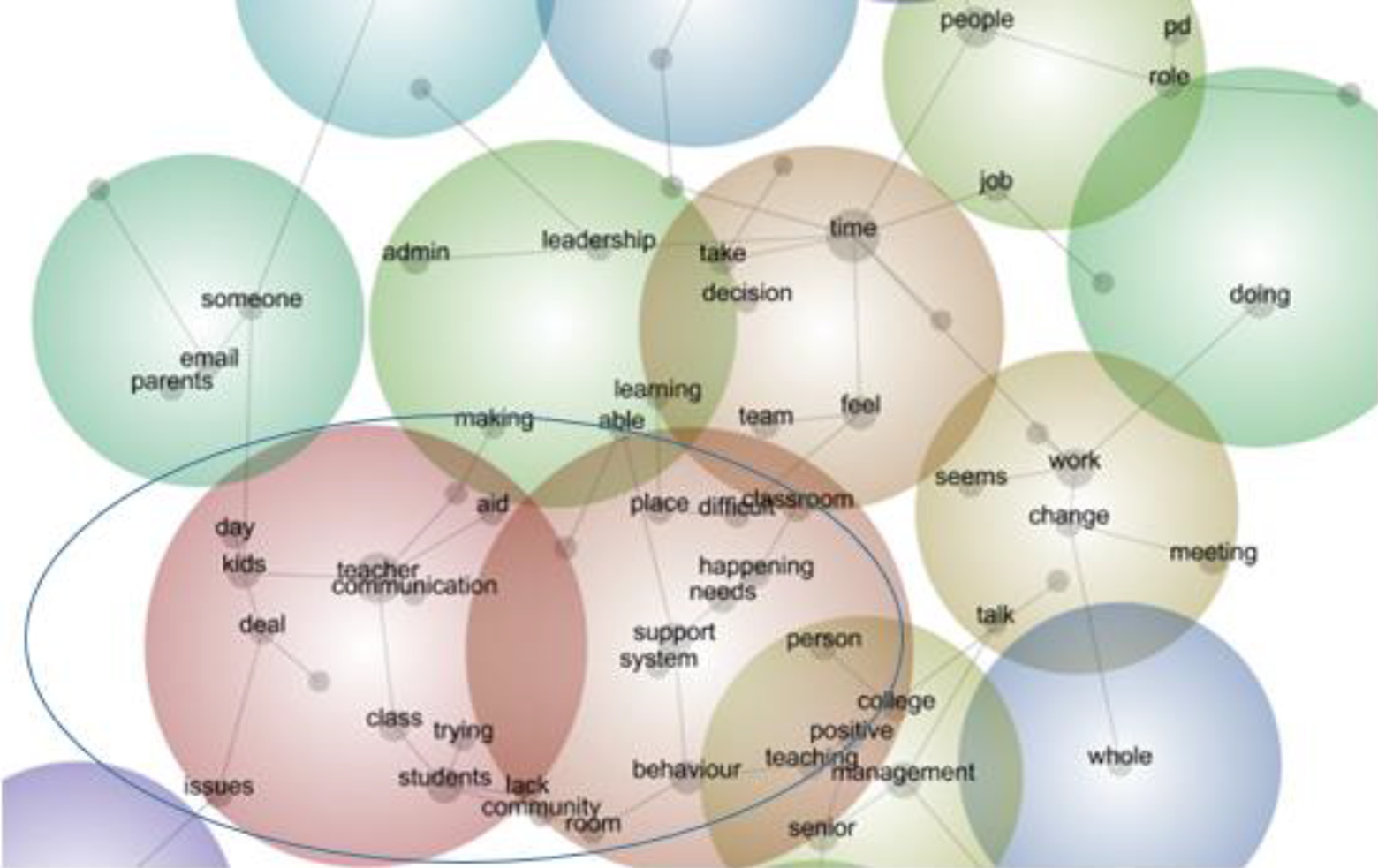
Thematic map produced by Leximancer analysis.
The Leximancer analysis is included in this study as it helps to create rigour by limiting possible predispositions to prior knowledge gained in the data collection phases and it enables the analyst to probe for any missed avenues of theoretical exploration (Harwood et al., 2015). Leximancer is designed to take a global perspective on the themes and concepts to increase the objectivity, hence decreasing the preconceptions of manual content analysis (Smith and Humphreys, 2006).
In examination of the Leximancer results, the two central areas of the heat map (circled in Figure 2) highlight several pertinent issues confronting teachers in doing their work. The results indicate that a lack of support and poor systems were considered to be associated with behavioural management problems. A difficult classroom environment (because of behavioural issues) was also thought to be impacting student learning outcomes. Further, the participants identified issues associated with communication from management and highlighted dealing with the ‘kids’ as being a concern. Less prominent but still a ‘warm’ theme in the map were other issues that included a lack of time to complete work appropriately and the decision-making process of leadership and administration (also considered leadership in this group). The key findings of the thematic analysis identified here are argued to be responsible for low morale and increased risk of burnout among teachers.
A review of transcripts found that comments consistently reflected the frustration being experienced by teachers in relation to a lack of empathy from some areas of the school leadership and non-supportive systems. For example, when a teacher is shaken by a traumatic encounter with a student’s behaviour, the system requires more ‘paperwork’ input from the teacher that can add to their feelings of strain. If this step is not managed well, the teacher under duress can feel blamed for the whole event. These data also show that a lack of empathy from leadership is, in some cases, compensated through their collegial relationships and the related support and empathy experienced from co-workers. The co-worker support is vital for teachers in this circumstance, but the reporting demands compete with the opportunity to seek collegial support during breaks.
These results suggests that collegial support can give rise to a sense of engagement among the teachers that creates a positive level of synergy within their close group or pod. This type of pod-synergy is discussed later in the paper as being an important buffer for teachers who are at risk of burnout. Finally, the content analysis shows that a lack of involvement in decision-making, limited feedback and a feeling of efforts being unappreciated all contribute to lower morale and a higher risk of burnout among teachers. Next, each of these meta-themes is described in more detail.
Staff being burnt out or at risk of burnout was frequently raised as a pertinent issue in the focus groups. For example, statements included: ‘we can’t function on a daily basis’; ‘even the more experienced staff are getting quite jaded’; ‘some people are burnt out’; ‘there are issues of burnout in the teachers’; ‘I know I’m getting burnt out’; ‘some teachers need to retire’; and ‘some teachers are burnt out and jaded’.
A few participants indicated the seriousness of the issue when discussing burnout; for example, ‘I have put myself in hospital due to stress.’ Another described their concerns: ‘at the end of last term, I had more concern over people’s mental health on staff than I have ever had in the past 10 years that I have been here’; and it was the view of one participant that ‘we need a psychologist on staff’.
The participants often related burnout to morale and brought up issues associated with negative morale when describing the workplace. Examples of comments describing morale included: ‘morale is being influenced negatively in the school because of student behavioural issues’; ‘truly worse then what I have witnessed anywhere’; and ‘has fallen over the last number of years’. Others labelled the morale as ‘stressed’; ‘very low’; ‘not where it should be’; ‘having slipped down over the last few years’; ‘mixed’; ‘tired’; and ‘it’s not as high as it has been’. Specific examples provided included: ‘teachers are spending all their lunch hours dealing with *&#!’ and ‘as far as teacher morale, we don’t get to the teacher room. We have a central teacher room, but we don’t have time to go. We spend our time in our classroom at our desk and we work through lunch hours.’
Noteworthy concerns were raised among the participants regarding the well-being of other staff members. The general view was that morale and burnout were connected to stress and these terms were often used interchangeably. When referring to the theme of stress, the participants would often describe system frustrations as being associated with feeling burnout and then describe this as low morale as though they were both synonymous with stress. This is captured in the following example:
[M]orale in the school is stressed, low. It goes up and down due to expectations. It’s the stress and pressure, you have to do this and have to do that, and you come to have a what’s going to be dumped on me today feeling. I know I’m getting burnt out.
The STS model described here provides a useful framework for examining the interaction between people, systems and tools. This also affords the basic tenet of this paper, that when tools fail it can be a safety issue or can create feelings of dissatisfaction. However, when the systems fail or let down the best efforts of the worker it is likely to become a burnout and/or morale issue. This can occur through a process of negative attribution (a ‘blame the victim’ mentality) that is directed at the teachers required to use the systems, which are perceived as faulty, that creates a sense of a lack of support and empathy coming from the school leadership. This is expanded on next.
A lack of empathy and support
Research suggests that a more democratic and participative decision-making style may contribute to higher levels of morale (Brown et al., 2002; Jago, 1982; Morris et al., 2019; Wadesango, 2012). In this study, the decision-making style of the leadership was found to be likely impacting morale and burnout. For example, many participants provided stories of where they or their colleagues were not given enough support from leadership. Examples of these included: ‘I really don’t feel supported often at all’; ‘it’s basically wanting that support from above, when it’s required, when you need it. It needs to be there and it’s not there’; and ‘I think there needs to be more emotional and mental support for staff given the high volume of stress we face.’
Burnout was occurring as some teachers were feeling overwhelmed by the workload and other system expectations. The following comments are consistent with the view of many participants: ‘we feel busy and overloaded all the time’ and ‘we are feeling unsupported or stressed because of the workload…I think that is where morale is an issue.’ Due to a lack of perceived support from the system (and leaders) these teachers were not able to manage and were experiencing high levels of stress.
Furthermore, it was regularly communicated that the senior management of the school did not use a collaborative enough decision-making style. Comments reinforcing this view included: ‘It is basically top down’; ‘we need to have more information and feel like we are part of the decision making’; ‘a lot of us think the decision making is basically done but they pretend to consult with staff’; ‘there is not even an opportunity to speak up, that’s the problem, nobody says what you are thinking’; and ‘management make closed door decisions that are handed down to staff with little or no reasoning or discussion’. This all translates to a deeper sense of disillusionment that impacts morale.
The lack of empathy exposed in this research manifested in a feeling of teachers being blamed for system failures. For example, it was uncovered in the analysis that if teachers did raise an issue of student misbehaviour they may implicitly be labelled as ‘not a good teacher’ and that it was considered, by some management, to be ‘their fault because they were not able to manage the situation’. The following comment exemplifies the theme: ‘some leaders in the school are very quick to blame the teacher involved and I don’t think that’s fair and the teachers are starting to get very sick of that’.
A lack of peer and management support has been shown to contribute to the development of burnout (e.g. Aziz Nejad and Hosseini, 2006; Salanova et al., 2006; Sarmiento et al., 2004). This study supports these findings and adds to the literature by showing how the participants regularly linked the level of morale they experienced to the support the received from their colleagues. In one example, it was said that while morale was down in parts of the school, it was not in their area because ‘there is usually at least two people here and they work collaboratively and well together’. Other examples included: ‘at times the workload can feel overwhelming however I always feel supported by those I work closely with’; ‘while I feel ignored and unvalued as a teacher my supportive and friendly co-workers make the working environment a great place to be’; ‘in our school the people I work with are very supportive’; ‘the teaching staff are very supportive of each other’; ‘most people get on and that’s how we cope’; and ‘the way we function so well as a team is because we are all in it together’. The type of support provided by colleagues appeared in this study as crucial in tempering the day-to-day challenges the teachers were experiencing and was very important for their general well-being and morale. This is described here using the term ‘pod-synergy’. Groups that have developed high pod-synergy create a mechanism to help each other stay closer to the ‘zone engagement’ (Whiteoak, 2015) because they are likely to have better morale in their area at work. Pod-synergy is developed when there is a perception that close members of one’s work group are supportive and caring. Pod-synergy can be considered as the cumulated effect and benefit of experiencing positive dynamics within the work group or ‘pod’. It is totally dependent on the characteristics of sentient beings and when pod-synergy is high it can potentially create a buffer against unsupportive systems and leadership and is likely to enhance morale and reduce burnout risk among workers.
Discussion and recommendations
This paper has taken an STS thinking approach in exploring burnout and morale among school teachers. The model presented and the findings highlight that when systems fail, and people perceive they are to blame, this is detrimental to morale. There is a message here for administrators in schools. They should not underestimate the importance of their role in being empathetic leaders and creating supportive systems as a key element in boosting the levels of morale and reducing burnout risk.
Morale was also found to be positively influenced by experiencing care and support from colleagues that can lead to a concept described as pod-synergy (i.e. the cumulative effect and benefit of experiencing positive dynamics within the work group or ‘pod’). This paper recommends using a systems approach to manage, improve and leverage these issues as a way to enhance morale and reduce burnout in a workplace.
The results of this study showed that lack of support and poor systems were considered to be associated with behavioural management problems in the school case study. Previous research has suggested that classroom management and a lack of support are significant factors in predicting teacher turnover (Black, 2001; Briggs and Richardson, 1992; Buchanan, 2010; Houchard, 2005; Lambersky, 2016; Wang et al., 2015a). Briggs and Richardson (1992) found that low morale was impacted by a lack of support for good discipline. According to Jao-Nan (2013), a leadership style that lacks empathy and care is a significant cause of low morale. More recently, Skaalvik and Skaalvik (2018) described discipline problems as a job demand that may add to a teacher’s workload and was found to correlate moderately with teacher well-being. This study confirms the salience of these findings and that these issues are continuing to negatively impact teachers today. However, this study expands the current research by taking a systems view of morale and burnout in a school. The application of the PST approach reveals that in many instances the main contributor to job stress is not necessarily a people or tools problem, but a systems failure.
In this study it was found that the attributional process of blame and a lack of perceived empathy (for not managing discipline) from leaders in the school was adding to feelings of low morale. In this study, consistent examples were provided where a perceived systems failure had led to a situation where the teachers felt they were held responsible or not supported following a break-down in the system. These findings point to the idea that when the systems fail, the attribution of blame is too eagerly placed with the workers and this impacts morale negatively. Together, this can magnify a teacher’s feeling of not being supported, which can also influence burnout risk. This theme featured in the feedback reported with many references describing teachers most burnt out as not feeling supported by school leaders. Furthermore, it also seems that without empathy, leadership attempts to improve morale in a workplace may actually increase burnout risk. The knock-on effect of this is to reduce the confidence in the genuineness and authenticity of management when any remedial action directed at a ‘people-fix’ is put forward. These actions are then brought into question, and leadership is perceived as uncaring and fuels further cynicism.
Several examples were provided in the feedback that indicated that staff felt they were being held responsible for what they consider to be a system failure. If administrators and managers continue to blame staff for poor system design or execution this is toxic for the levels of ZE of the overall unit (the school). Lowered morale will compound disengagement as highly engaged and conscientious staff have less positive motivational experiences to buffer against the emotional strain of being blamed for outcomes over which they have no control.
Because of this, it is recommended that systems-focussed leaders should attempt to take a more empathetic (systems) view of a situation and understand that blaming people for systems problems can destroy morale and likely drives staff toward burnout. As pointed out by Evans (1997: 299), ‘the nature of teachers’ working lives within the social and administrative structure of the school is very leader dependent’. Therefore, before making an internal casual attribution about a teacher’s ability, consider the possibility of a broader systems failure (the relative consistency or consensus around an issue). Other research has shown that the way that teachers personally attribute cause to the experience of stress at work has been shown to be important. The benefits of controllable attributions in teachers has been found to predict their well-being. For example, Wang et al. (2015a) found in a sample of Canadian school teachers that teachers who attributed their stress simply to internal factors reported significantly higher levels of emotional exhaustion. These teachers also showed a notably higher likelihood of quitting the teaching profession.
In the current study it was found that a negative internal attribution applied by leaders to a teacher, when the teacher considered the issue to be caused by an unsupportive system, was directly impacting their stress and morale. This is a potential area for future research.
The STS thinking approach recommends a balance between the people and the systems so that there is enough autonomy for teachers to make situation-based decisions using their own skills and training without the demands of too much ‘red tape’. This was a recurring theme in this study. Feedback about the decision-making process was that it is basically done within the leadership team and they pretend to consult with other. It has been argued that the effect of morale on productivity increases with the degree of autonomy (Johari, 2018; Weakliem and Frenkel, 2006). Furthermore, JD-R theory (Bakker and Demerouti, 2017) proposes that through a process of job-crafting, the proactive changes employees can make can create the difference in the balance between their job demands and resources (Tims et al., 2012) and lead to higher levels of worker motivation. This study encourages future research that explores autonomy and job-crafting as a strategy to improve morale and reduce burnout.
The current study findings indicate that if teachers are too bound up with the demands of ‘red tape’, the reduction in autonomy and lack of capacity for job-crafting can reduce the opportunity for challenge. Participants in the study regularly noted feelings of frustration around their inability to make decisions without management approval. This detracts from the morale-boosting rewards that can come through the successful negotiation of difficult playground or classroom situations that can boost self-efficacy. The impact of higher self-efficacy on improved teaching outcomes is well established (Abernathy-Dyer et al., 2013; Tschannen-Moran et al., 1998; Wang et al., 2015a). Self-efficacy in teachers has also been linked to lower levels of burnout (Skaalvik and Skaalvik, 2010). This study suggests that system leaders need to build flexibility and autonomy into policies (systems), so teachers have a certain amount of discretion or autonomy in the way the systems are implemented, and this, when managed well, will likely lift morale and self-efficacy.
A common theme in this study was that many systems (and some leaders) were viewed as unsupportive and ineffectual, and, due to this, burnout and morale were being impacted negatively. However, these effects were found to be tempered through supportive colleagues. The participants regularly noted how much of a difference it made when colleagues were empathetic and understood the circumstances and difficulty associated with making some decisions. The importance of this should not go unnoticed as this finding is consistent with previous research (Dugguh and Dennis, 2014; Landis et al., 2015; Minor et al., 2014; Patterson-Silver Wolf et al., 2013). The term ‘pod-synergy’ has been introduced to describe this result.
Positive and supportive social relations, both with colleagues and the school administration, are important job resources that may work as a buffer against burnout and negative affect (Skaalvik and Skaalvik, 2018). In their study, Skaalvik and Skaalvik (2018) describe positive and supportive relations with colleagues as a job resource and found that this was significantly (and independently) related to teacher well-being. Collegiality, described by Evans (2001) as influencing teacher morale and satisfaction, encompasses the degree and quality of teamwork, cooperative ways of working, consultation, and interdependence and support among colleagues. In another study conducted in Belguim, Van Maele and Van Houtte (2015) found collegial trust relationships played an important role in teachers’ feelings of depersonalisation and they argued that this indicates that school principals can affect teacher burnout and prevent emotional exhaustion by nurturing trusting relationships in a school. This type of social support has been described here as ‘pod-synergy’ and it is suggested that formalised procedures that encourage pod synergy may provide a way to offset the stressors that contribute to low morale (see Whiteoak, 2015; Whiteoak and Mohamed, 2016). Pod-synergy is potentially a potent job resource for workers. Future research could explore this more closely.
Pod-synergy may be developed when a teacher experiences participative decision-making that is supportive. When the process of decision-making is well understood at a socio-technical level then the elements required for effective and participative decision-making are all considered. Participative decision-making means that the whole teaching team utilises the processes and the tools available to engage in more effective decision-making. Understanding the concepts and the language in multi-stage decisions provide a framework for improved communication and trust. While the decision-making is in process, one of the outcomes of this, beyond making more effective decisions, is that the process of decision-making provides the vehicle for more improved teaching-team dynamics. When small teams become well versed in this process, a special pod-synergy can develop.
On the other hand, if the locus of control for multi-process decisions rest on one school administrator, the synergy of the pod can lapse. One of the features of high-performing pods is the capacity and sensitivity to watch out for each other (physically and emotionally). One of the benefits of this is that high-performing pods with good synergy will always outperform one ‘burnt-out’ administrator.
In conclusion, this paper applies a socio-technical framework and a qualitative methodology, to examine, from the perspective of teachers, the potential of co-worker morale to act as a buffer against burnout syndrome. The overarching recommendation of the paper is to apply the PST model as a way of diagnosing systems problems so as to avoid blaming people for systems issues. The paper suggests that a school leader with low empathy may blame people for systems problems and this has an undesirable impact on morale and burnout. On the other hand, when systems issues are correctly managed this can help remedy declining morale and reduce burnout risk.
The paper also recommends that teachers be given the autonomy to ‘craft their jobs’ rather than be confronted with inflexible rules that hamper effective decision-making. In other words, policies should be created that allow for making ‘bottom-up’ rather than ‘top-down’ decisions where appropriate. This should be done via the development of pod-synergy. In this context, pods are considered to be small autonomous teams that are comprised of teachers with high levels of skill in being able to craft their immediate job environment
While this research has the strengths associated with qualitative approaches, it has some specific limitations that included self-selection sampling bias in that participants had volunteered. The lack of generalizability due to the relatively small sample size could be followed up by using quantitative methods such as a survey across many schools. As the link between decision-making in morale is something that may apply across a range of workplaces other than schools a much broader study could be initiated to investigate this connection.
The paper offers a framework (people, systems, tools) for understanding the concerns of Australian public-school teachers in relation to burnout and morale. It is suggested that through the appropriate consideration of the elements in the PST model to make the culture of the school the objective, then the other elements will fall into line. Finally, a noticeably missing element of this paper is a discussion about the quality of teaching experienced by students. It is argued that the upshot of applying the PST approach is a school where staff experience higher ZE more regularly and this benefits not only the staff, but the students as well.
Footnotes
Declaration of conflicting interests
The author declared no potential conflicts of interest with respect to the research, authorship and/or publication of this article.
Funding
This research received no specific grant from any funding agency in the public, commercial or not-for-profit sectors.
