







Abstract
The ignorance of the role of middle leaders as a ‘key broker’ between school principals and teachers in the literature has motivated this study to investigate the effects of middle leaders’ learning-centred leadership on teacher professional learning through teacher mastery goals and their self-efficacy with the moderating effect of the quality of communication between middle leaders and teachers. A total of 453 data were collected from 24 primary and secondary school teachers in six districts in Kedah. This study employed partial least squares structural equation modelling approach. Findings revealed that learning-centred leadership has a significant and positive effect on teacher professional learning. Teacher mastery goals and teacher self-efficacy have significant mediating effects on teacher professional learning. The effect of learning-centred leadership on teacher professional learning is stronger when the levels of quality of communication between leaders and teachers are higher compared to their counterparts. Hence, future principal preparation programmes should equip future principals with the knowledge of learning-centred leadership that could facilitate teacher learning happening and flourishing.
Keywords
Introduction
Teacher professional learning has gained considerable attention in school effectiveness and school improvement research as high-quality teaching serves as one of the important factors in improving student learning (Bellibaş and Gümüş, 2021; Hammad et al., 2021; Liu and Hallinger, 2021). Literature convinces that teacher engagement in professional learning has a positive impact on their content knowledge, attitudes, and skills, which could enhance their teaching quality and thus improve student learning (Ding and Thien, 2022; Kilinc et al., 2020).
There is sufficient empirical evidence to support principal leadership as an important factor in explaining teacher professional learning (Hallinger and Liu, 2016; Hallinger et al., 2017; Liu and Hallinger, 2017, 2021). However, a singular leadership is incapable of handling the complexity of school leadership (Bush and Ng, 2019; Thien and Chan, 2022). A solo principal is not able to enhance school improvement (Shen et al., 2020). Thus, it is expected that empowering more leaders could increase leadership capacity (Bush and Glover, 2014).
With this concern, middle leaders who have been acknowledged as the ‘key brokers’ between principals and teacher colleagues (Lipscombe et al., 2020) have a far greater impact on teaching and learning (Leithwood, 2016; Shaked, 2021). Middle leaders are commonly referred to as those who hold formal positions, including curriculum, subject, and pedagogical leadership positions, with responsibilities predominantly at the team and school levels (Lipscombe et al., 2020). In Malaysia, middle leaders refer to the heads of departments at secondary schools and heads of subjects at primary schools (Ghavifekr, 2022).
There is growing research evidence to support that middle leaders have more influence on teacher teaching and learning than the principals as they work directly with teachers (Grootenboer et al., 2015; Nguyen et al., 2020). Specifically, literature evidenced that secondary school principals are likely to rely on their middle leaders such as the heads of subjects to directly supervise and provide feedback on teachers’ teaching feedback (Nguyen and Ng, 2014). This is because middle leaders are believed to have more content and pedagogical knowledge than principals in secondary schools.
Middle leaders are influential in the teaching and learning processes by developing strong professional learning communities where teachers can enquire and improve their teaching and learning together (Harris and Jones, 2017; Nguyen et al., 2020). Nguyen et al. (2020) iterated that future studies should consider an investigation into the relationship between learning-centred leadership and teacher-level outcomes from the middle leaders’ perspective as they work directly with school leaders and academic teachers. Therefore, it is expected that middle leaders’ learning-centred leadership could influence teacher professional learning. Middle leadership scholars have urged to increase contemporary middle-level leadership studies (Gurr and Drysdale, 2013; Lipscombe et al., 2020). However, comprehensive empirical studies on middle leaders’ learning-centred leadership and teacher professional learning are less explored compared to principal leadership (Harris and Jones, 2017).
Besides, the literature reveals that the relationship between learning-centred leadership and teacher professional learning is undoubtedly indirect (Liu and Hallinger, 2021). Viewing from the theoretical perspective, the achievement goal theory explains that teachers with mastery goals tend to improve their professional teaching competence (Butler, 2007; Butler and Shibaz, 2008). Teacher mastery goals refer to teachers’ efforts to improve their professional competence through their previous tasks or outcomes (Butler, 2007). Meanwhile, Bandura's (1977) social cognitive theory underlines teacher self-efficacy as the outcome of a cognitive process based on their belief in their teaching capability. Teacher self-efficacy is conceptualised as teachers’ confidence and belief in their ability to persevere and complete instructional tasks successfully, which may influence student engagement in classroom learning (Tschannen-Moran and Woolfolk Hoy, 2001).
The theoretical perspective of leader-member exchange (LMX) by Graen and Uhl-Bien (1995) has emphasised that when middle leaders practised the learning-centred leadership, it would promote teacher self-efficacy and mastery goals by supporting, guiding, supervising, and inspiring teachers, and thus increased their professional learning. More prominently, teacher mastery goals and self-efficacy are closely related to teaching and learning practices and the development of student learning (Heck and Hallinger, 2009). Despite the theoretical support, comprehensive studies involving both teacher mastery goals and teacher self-efficacy as the mediators between middle leaders’ learning-centred leadership and teacher professional learning in a structural model remain scarce in the literature.
On the other hand, the quality of communication between middle leaders and teachers is conceived as a dynamic process through which school leaders and teachers seek to inform and create shared understanding (Lijuan and Hallinger, 2016). As evident in the literature, the quality of leader-teacher communication has a significant impact on school improvement (Lijuan and Hallinger, 2016). However, it is arguable that the role of quality of communication between leaders and teachers could be further investigated from the perspective of its moderating effect. This is because the relationship between middle leaders’ learning-centred leadership and teacher professional learning is expected to be stronger or weaker if the quality of communication between leaders and teachers is higher or lower for its counterparts. This assertion is supported by the path-goal theory proposed by Evan (1970). Theoretically, communication skills are crucial to assist middle leaders in motivating teachers to achieve a desired goal. That is, if middle leaders and teachers are exposed to proper communication, learning-centred leadership will in turn lead to increased teacher professional learning. Thus, it could be hypothesised that communication may exert a moderating effect on the relationship between learning-centred leadership and teacher professional learning. However, this is a missing piece in the literature.
In Malaysia, the unsatisfactory student performance in a few cycles of large-scale international assessments such as the Programme for International Student Assessment (PISA) serves as a wake-up call for local authorities to improve and enhance teacher professional learning (Thien et al., 2021). A local project of Inquiry into Malaysian Classroom Educational Practices (IMCEP) identified that the predominant teaching practices in classrooms are unlikely to cultivate students’ critical thinking skills and ‘learning-to-learn’ abilities (Tee & Samuel, 2017). As reported by the Ministry of Education Malaysia (2013), classroom teaching tends to use ‘passive lecture format’ and was exam-oriented. As an initiative to improve student performance, one of the important agendas in the Malaysian Education Blueprint (MEB) 2013–2025 is to enhance the quality of middle leaders and improve teacher professional learning (Ministry of Education, 2013). However, the local studies are narrowed to investigate middle leaders’ instructional roles (Ghavifekr, 2022), middle leaders’ leadership styles and their characteristics (Illawati, 2012), as well as teaching leadership practices of middle leaders and the consequences on teacher outcomes (Wan Roslina, 2011). Most of these local studies seem to be lacking of methodological sound with the application of simple descriptive statistics. As teacher attitudinal-based variables and personality traits are crucial to promote teacher professional learning (Liu and Hallinger, 2017), it is time to conduct a comprehensive empirical study involving teacher mastery goals, teacher self-efficacy and quality of communication between middle leaders and teacher professional learning in the Malaysian school context.
The above-mentioned extant research and contextual gaps have prompted the current study to examine the effect of middle leaders’ learning-centred leadership on teacher professional learning through teacher mastery goals and teacher self-efficacy as the mediators, and communication between middle leaders and teachers as a moderator in a structural model. This study attempts to answer the following research questions.
Is there any significant direct effect of middle leaders’ learning-centred leadership on teacher professional learning? Do teacher mastery goals mediate the relationship between middle leaders’ learning-centred leadership and teacher professional learning? Does teacher self-efficacy mediate the relationship between middle leaders’ learning-centred leadership and teacher professional learning? Is the effect of middle leaders’ learning-centred leadership on teacher professional learning stronger when the levels of quality of communication between leaders and teachers are higher compared to their counterparts?
The current study contributes to providing new knowledge in the middle leadership literature by identifying teacher attitudes that school leaders should prioritise to promote teacher professional learning. This study provides a detailed empirical investigation into the direct, mediating, and moderating effects among middle leaders’ learning-centred leadership, teacher mastery goals, teacher self-efficacy and the quality of communication in a developing non-Western society that supports a growing literature of educational leadership studies.
Theoretical perspectives and hypothesis development
The theoretical foundation of the study is the leader-member exchange (LMX) by Graen and Uhl-Bien (1995) integrated with the path-goal theory (Evan, 1970). LMX theory concentrates on the quality of the leader-member exchanges (Graen and Uhl-Bien, 1995). LMX theory describes that leaders provide developmental chances, mentoring, support and other benefits to the followers. Hence, followers demonstrate behaviours such as greater levels of voluntary behaviours and loyalty. In this study, middle leaders’ learning-centred leadership and teacher professional learning were based on exchanges, which reciprocate in kind. For instance, Fromm and Anderson (2017) expounded that teacher self-efficacy is a potential mediator to explain the relationship between learning-centred leadership and teacher professional learning. In addition, teacher mastery goals are an endeavour by teachers to develop their professional competence (Butler, 2007). Therefore, LMX theory stresses that when middle leaders practise learning-centred leadership, it would enhance teacher self-efficacy and mastery goals; thus, they would increase their level of teacher professional learning.
Moreover, path-goal theory states that a leader's behaviour depends on the followers’ motivation, performance and satisfaction (Evan, 1970). It is the leader's responsibility to support followers in achieving their goals and to provide the necessary direction and assistance to ensure that their goals are aligned with the organisational goal. Therefore, leaders’ communication skills are important to motivate their followers to attain goals. In this current study, communication as a moderator has strengthened the relationship between middle leaders and teacher professional learning. It corroborated the findings by Northouse (2019), which claimed that leaders and followers use communication to build, foster, and support useful exchanges. In summary, the LMX and path-goal theories have explained the hypothesised relationships among middle leaders’ learning-centred leadership, teacher self-efficacy, mastery goals, communication, and teacher professional learning.
Teacher professional learning
Teacher professional learning is defined as continuous learning and consists of practices or activities that happen with the learning orientation, employment, collaboration in teaching and learning that involves individuals in the school as well as collective learning contexts towards professional learning (Liu et al., 2016). There are four dimensions to assess teacher professional learning, namely (a) collaboration, (b) reflection, (c) experimentation, and (d) reaching out to the knowledge base. Collaboration implies that teachers work together to complete the assigned tasks; reflection means the teachers observe what is happening around them and assess whether the incident happened was due to their actions, feelings or related to others; experimentation indicates that the teachers conduct an experiment to explain the nature of reality such as teaching and learning, and last but not least, reaching out to the knowledge base explains that teachers collect the feedback from students to improve their teaching and learning (Evers et al., 2015; Liu et al., 2016).
Learning-centred leadership
Learning-centred leadership is defined as a combination of instructional and transformational leadership that highlights school leaders’ behaviour and ‘technical core’ knowledge, which create positive change in the school (Hallinger, 2011; Leithwood et al., 2011). According to Stewart (2006), instructional leadership is concerned with school goals, instruction, curriculum and assessment, while transformational leadership is concerned with reorganising the school by changing conditions. In order to adapt to the shifting expectations for a school leader, Stewart (2006) proposed that transformational leadership will develop conceptually within the school reform. Furthermore, Hallinger (2003) claimed that school principals must integrate the instructional and transformational leadership in order to be effective in leading a school. This corroborated the research findings by Marks and Printy (2003), which expounded that schools with integrated leadership, namely instructional and transformational leadership, have greater academic achievements and pedagogical quality compared to other schools. Hence, as Hallinger (2011) stated, learning-centred leadership has implied school leaders’ deliberate efforts to inspire, support, guide, and supervise teacher learning in ways that improve school development and student learning outcomes.
In addition, learning-centred leaders improve teacher learning by establishing and conveying a vision for learning in their schools, as well as fostering school environments that encourage teachers to participate in professional learning activities and provide necessary resources to conduct a practical professional learning activity (Robinson et al., 2008; Thoonen et al., 2012). This is similar to a study conducted by Kilinc et al. (2020), which mentioned that learning-centred leaders improve school performance by adopting leadership practices that enhance teacher professional learning.
Grounded on the conceptualisation of learning-centred leadership by Liu et al. (2016), middle leaders’ learning-centred leadership in this study is conceptualised as the level of leadership practised by the middle leaders in schools to inspire teachers to improve their teaching and learning as well as to develop instructional knowledge and skills to accomplish the expected outcomes in schools. Adapting from Liu et al. (2016), there are four dimensions to evaluate the middle leaders’ learning-centred leadership in schools, namely (a) building a learning vision, (b) providing learning support, (c) managing learning programmes and (d) modelling. Building a vision of learning indicates the ability of middle leaders to articulate the school vision and motivate teachers’ engagement to attain the school's learning goals (Hallinger, 2011; Leithwood et al., 2017). Providing learning support refers to the encouragement given by middle leaders to improve the learning process or activities that occur in several forms involving the acquisition and change of skills, knowledge, beliefs, approaches and behaviours. Managing learning programmes refers to the ability of middle leaders to implement programmes for improving learning practices among teachers. Meanwhile, modelling implies that the behaviour, attitude and success of the middle leaders can be learnt by teachers (Hallinger et al., 2017).
Learning-centred leadership and teacher professional learning
Several empirical studies have examined the influence of learning-centred leadership on student achievement and teacher learning in the past two decades. Learning-centred leadership is a strategy which leaders could apply in mastering the contexts in the schools (Day et al., 2011; Hallinger, 2011; Leithwood et al., 2017). Robinson et al. (2008) expounded that the average influence of learning-centred leadership on student outcomes is three to four times higher than transformational leadership. Therefore, studies related to school leadership and teacher professional learning should be conducted to expand the knowledge of leadership and learning practices (Leithwood et al., 2020; Li et al., 2016; Liu et al., 2016).
Hammad et al.'s (2021) quantitative study found that learning-centred leadership contributed about 34% of the variance on teacher professional learning in an Omanian school setting. The two dimensions of learning-centred leadership, namely provide learning support and build a learning vision, had a significant effect and contributed about 23% and 17%, respectively, of the variance explained on teacher professional learning. Meanwhile, the middle leadership that has supported and fostered teacher professional learning using the combination of bureaucratic and professional leadership approaches was evident in the school context of China (Zhang et al., 2021). The earlier study by Liu et al. (2016) reported that learning-centred leadership has a direct and moderate impact on teacher professional learning in the school context of China (β = 0.411, p < .001). These empirical studies have emphasised that leadership is an important element in shaping engagement and teacher professional learning, which is consistent with previous studies (Hairon and Dimmock, 2012; Qian and Walker, 2013; Zheng and Yu, 2018). Significantly, a local study conducted by Premavathy (2010) revealed that middle leaders in Malaysian schools are responsible for enhancing teachers’ professional learning. Such previous findings were well-explained by the LMX theory, where the leaders and followers form exclusive relationships based on their social interactions, and these quality interactions have influenced follower outcomes (Graen and Uhl-Bien, 1995; Liden et al., 1997). Therefore, we hypothesised that middle leaders’ learning-centred leadership has a positive effect on teacher professional learning.
H1: There is a significant direct effect of middle leaders’ learning-centred leadership on teacher professional learning.
Teacher self-efficacy as a mediator
Self-efficacy is a belief in an individual's ability to carry out the actions required to achieve specified performance goals (Bandura, 1977, 1986, 1997). Ashton (1984) defined teacher self-efficacy as the extent to which teachers have confidence in their influence on students’ performance and achievements. Besides, from a social cognitive perspective, teacher self-efficacy is the teachers’ belief in their ability to produce the desired outcomes in student learning (Klassen et al., 2011). In this study, teacher self-efficacy refers to the teacher's ability and confidence to carry out their responsibilities and duties as a teacher (Hairon et al., 2020).
Research over the past two decades has shown that there is a positive relationship between self-efficacy and school leaders’ leadership behaviours (Leithwood and Jantzi, 2008). Mohammad Yusof et al. (2011) noted that there is a significant positive relationship between principal instructional leadership practices and teacher self-efficacy for the three dimensions, namely climate nurturing teaching and learning of environmental education (r = 0.277, p = .000), defining the school and the environmental goal (r = 0.185, p = 0.003), and instructional management programmes and environmental programmes (r = 0.150, p = 0.015). As school middle leaders are situated at a better position in the school organisation to cultivate teacher self-efficacy in sustaining teacher professional learning (Spillane et al., 2002), it can be hypothesised that middle leaders’ learning-centred leadership is likely to impact on teacher self-efficacy. Besides, Thoonen et al. (2012) reported that teacher self-efficacy in primary schools has a positive relationship with teacher involvement in professional learning and constructivist teaching practices. Such sequential effect could be explained by the LMX theory where employees’ emotional state of energy such as their self-efficacy would be sequentially linked to a high level of involvement in teacher professional learning activities (Marion, 2012). Hence, hypothesis 2 was postulated.
H2: Teacher self-efficacy mediates the relationship between middle leaders’ learning-centred leadership and teacher professional learning.
Teacher mastery goals as a mediator
Teacher mastery goals are an endeavour by teachers to increase their professional competence (Butler, 2007). Teachers can evaluate their competence through their previous tasks or outcomes and they tend to display preferences when facing any challenges. Teachers who have a goal will put effort into their teaching (Senko and Freund, 2015) improvement while mastery-avoidance goal emphasises failure to learn or skill deterioration.
Based on the achievement goal theory, teachers who have mastery goals are driven by the development of professional competence and they are more likely to find ways to improve their skills. Teachers take on the challenge as an opportunity to improve their competence (Butler, 2007; Butler and Shibaz, 2008). Previous studies showed that teacher mastery goals have a relationship with adaptive teacher outcomes, including assistance in improving the practices (Butler, 2007), involvement in teacher professional learning (Runhaar et al., 2010), job engagement, teacher commitment, and job satisfaction (Skaalvik and Skaalvik, 2014).
Several researchers expounded that teacher mastery goals play a mediator role between school leadership, professional learning development and teacher effectiveness (Butler, 2007). However, studies in this research domain are extremely limited. One of the relevant studies has only focused on transformational leadership and teacher engagement in professional learning with mastery goals as a significant mediator but a weak mediating effect (β = 0.09, p < .01) (Luo et al., 2020). Therefore, LMX and path-goal theories underpin the current study. This is because LMX theory has displayed a significant relationship between work performance and engagement when leaders establish a goal to achieve. Employees will be more interested in their work when a leader uses path-goal theory to create a high-quality relationship among them. This high-quality relationship, which is achieved through path-goal theory, would allow middle leaders to assist teachers in generating motivation by giving clear directions for success and concentrating on the individual's requirements (Breevaart et al., 2015). Thus, hypothesis 3 was postulated.
H3: Teacher mastery goals mediate the relationship between middle leaders’ learning-centred leadership and teacher professional learning.
Communication as a moderator
Communication strengthens the ability of people, teams, and organisations to achieve their goals (Dwyer, 2005). It is parallel with the path-goal theory, which aims to help middle leaders in motivating teachers to accomplish a desired goal with communication skills. According to Grill et al. (2014), leadership requires the ability to communicate effectively. Leadership only happens with effective communication. The primary goal of communication is to build a common meaning to explore and manage the information (Terek et al., 2015).
Previous literature has remarked on the importance of communication in leadership. Leithwood and Beatty (2008) reiterated that communication is a quality of emotional intelligence that allows school leaders to maintain relationships with students, staff and communities. Specifically, communication skills are partly necessary to determine the organisational change (Schaufeli, 2013), hence the school leaders are required to expand their influence in a meaningful way by enhancing a high quality of communication with teachers. According to the social exchange theory, leaders who have good communication with the subordinates will gain trust and loyalty from the followers (Yao et al., 2020), which could engender a positive impact on teacher commitment to professional learning. This assertion was supported by Lijuan and Hallinger (2016). These authors confirmed that there is a significant relationship between principal leadership and teacher professional learning with the mediating effect of communication (β = 0.136, p < .001). As middle leaders are more influential in teacher teaching and learning compared to the principals (Grootenboer et al., 2015; Nguyen et al., 2020), it can be inferred that middle leaders’ learning-centred leadership has a significant relationship with teacher professional learning communication between middle leaders and teachers as a mediator. However, it can be argued that good communication between leaders and teachers can strengthen the relationship between middle leaders’ learning-centred leadership and teacher professional learning compared to low-quality leader-teacher communication. Therefore, as an exploratory attempt, this study hypothesised the quality of leader-teacher communication as a moderator between middle leaders’ learning-centred leadership and teacher professional learning.
H4 The effect of middle leaders’ learning-centred leadership on teacher professional learning is stronger when the levels of quality of communication between leaders and teachers is higher compared to their counterparts.
Grounded on both LMX and path-goal theories, coupled with the support from the previous empirical findings as discussed earlier, Figure 1 depicts the conceptual framework that underpinned the current study. The middle leaders’ learning-centred leadership was hypothesised to have a direct effect on teacher professional leadership through the mediating effects of teacher self-efficacy and mastery goals with quality of communication between leaders and teachers as a moderator.
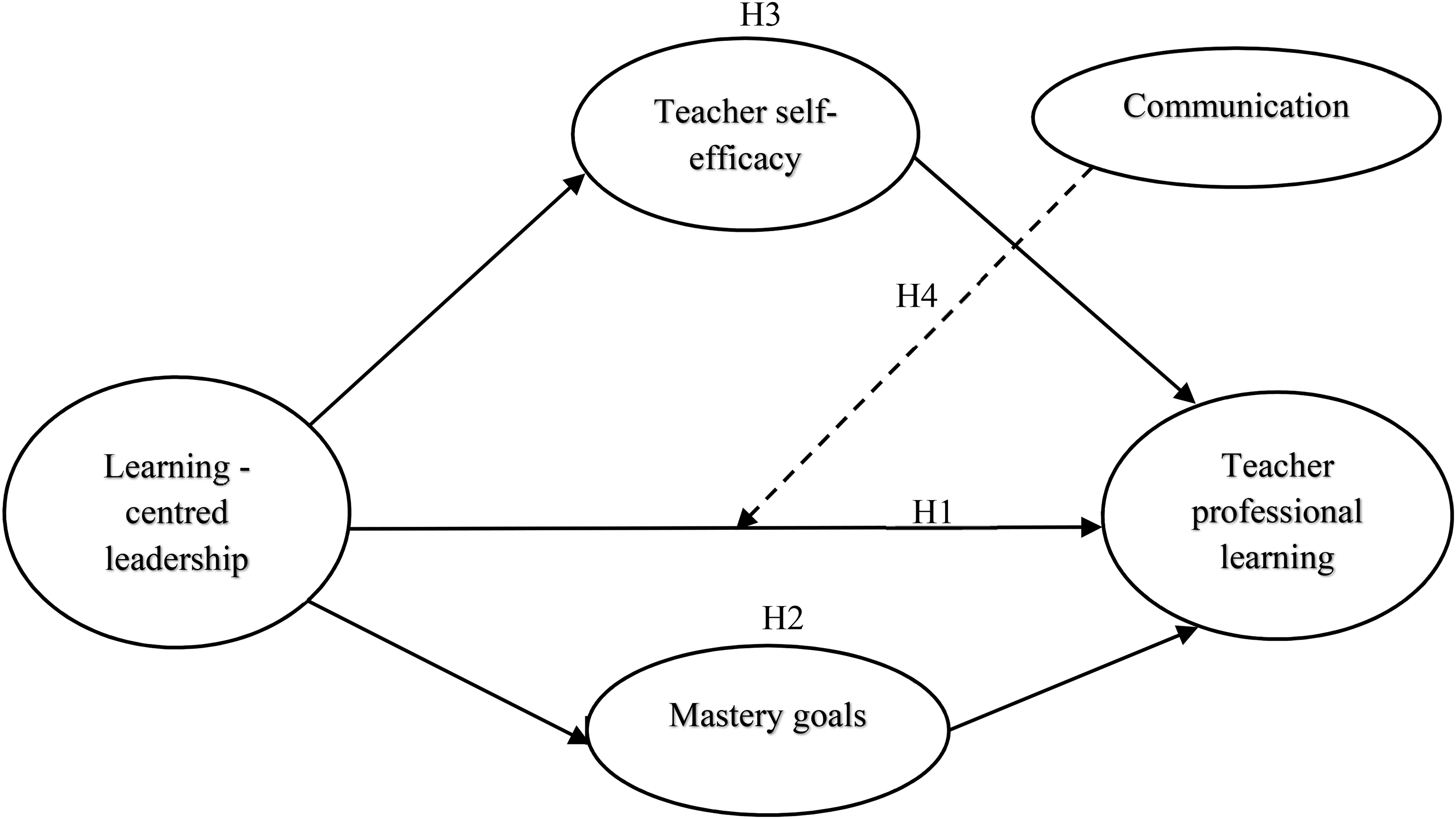
Research model.
Methods
Participants
This study employed a quantitative cross-sectional survey research design. The targeted population was the primary and secondary school teachers who were currently working in the state of Kedah. We used a stratified sampling procedure for data collection. There are six districts in Kedah. We selected two primary schools and two secondary schools from each district. We then selected 20 teachers from each school using convenience strategies. This made up a total of 480 teacher samples (4 × 6 × 20 = 480). A total of 453 online questionnaires were returned. The response rate was 94.4%.
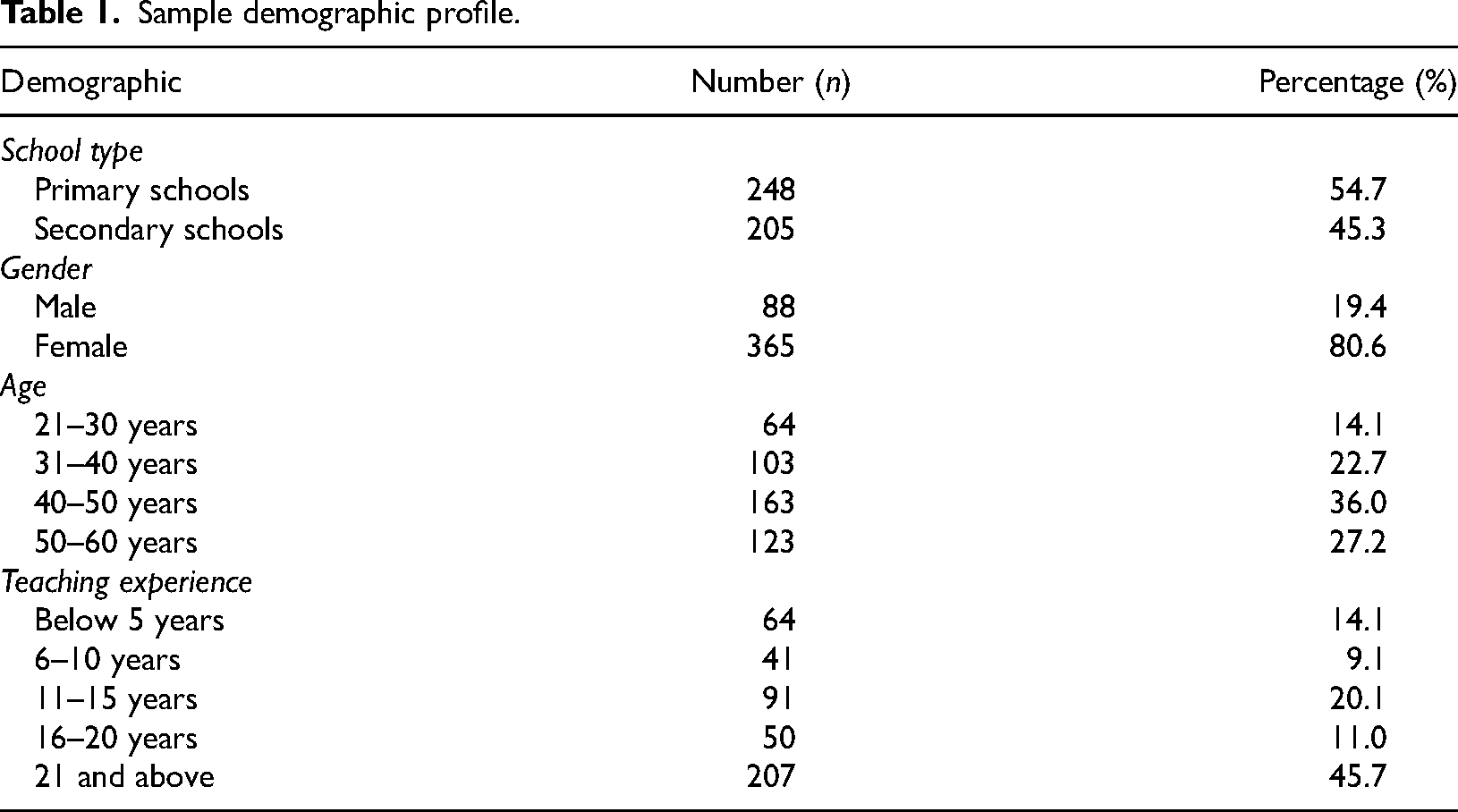
Table 1 shows that the number of primary schools (54.7%) involved in the study is higher than secondary schools (45.3%). Female teachers are the dominant group (80.6%) compared to male teachers (19.45). About 14% of the teachers are at early career, 23% are at middle career, and about 63% are at late career. About 57% have teaching experience of 16 years and above, about 20% have teaching experience of 11–15 years, whereas 23% of the sample have teaching experience of 10 years and below.
Sample demographic profile.
Instrumentation
This study adapted Liu et al.'s (2016) learning-centred leadership and teacher professional scales to measure the middle leaders’ learning-centred leadership. The original learning-centred leadership scale has a total of 24 items with four dimensions: (a) building a learning vision (6 items,
The teacher professional learning scale consists of 27 items with four dimensions: (a) collaboration (6 items), (b) reflection (10 items), (c) experimentation (5 items) and (d) reaching out to the knowledge base (6 items). The reliability in terms of Cronbach's alpha of these four dimensions lied between 0.840 to 0.850. The respondents rated on the five-point Likert scale regarding their engagement in teacher professional learning.
We have adapted Luo et al.'s (2020) scale to measure teacher mastery goals. The Rasch reliability of Luo et al.'s (2020) four items of mastery goals was 0.76. The respondents have rated on a five-point Likert scale ranging from strongly disagree (1) to strongly agree (5). We have also used Luo et al.'s (2020) scale to measure teacher self-efficacy. The teacher self-efficacy consists of five items rated on a five-point Likert scale ranging from strongly disagree (1) to strongly agree (5). The Rasch reliability of Luo et al.'s (2020) scale was 0.83. We have adapted two dimensions of Yao et al.'s (2020) communication management scale, namely providing information (5 items,
Data collection and data analysis procedures
This study secured consent from the Ministry of Education Malaysia and school authorities for data collection. The researchers of the current study administered the online questionnaires using a Google Form. Participation in the survey was strictly voluntary and confidential as stated on the cover page of the online questionnaire.
This study employed partial least squares structural equation modelling (PLS-SEM) using SmartPLS 3.0 software to perform the data analysis. PLS-SEM has its superiority to examine the direct and indirect effects between multiple variables in a structural model simultaneously (Hair et al., 2021). Furthermore, PLS-SEM is capable of analysing the second-order constructs of a structural model. In this study, learning-centred leadership, teacher professional learning and communication are second-order constructs with their respective dimensions as first-order constructs. PLS-SEM has the superiority to transform the raw data of first-order constructs into latent variable scores for follow-up analyses.
We used the two-stage approach involving the assessment of the measurement model and structural model for PLS-SEM analysis (Hair et al., 2021). We first evaluated the convergent validity and discriminant validity of the first-order constructs of the measurement model. The parameter estimates of the convergent validity include loadings, composite reliability (CR) and average variance extracted (AVE). The thresholds are 0.70, 0.80, and 0.50 respectively (Hair et al., 2021). We evaluated the heterotrait-monotrait (HTMT) ratio of correlations to assess the discriminant validity of the first-constructs (Henseler et al., 2015). The same procedure was applied to the second-order constructs. Next, the significance of the path coefficients was evaluated in the structural model by examining the path coefficients (β), t values and p values by performing bootstrapping with 5000 resamplings (Nitzl et al., 2016). We interpreted the results of a moderation analysis by assessing the significance of the interaction term using a bootstrapping procedure.
Results
Preliminary analysis
Table 2 shows that the mastery goals construct has the relatively highest mean value (M = 4.503, SD = 0.519). This is followed by the middle leaders’ learning-centred leadership construct (M = 4.276, SD = 0.660). Meanwhile, teacher professional learning (M = 4.237, SD = 0.549) and teacher self-efficacy (M = 4.238, SD = 0.590) have similar mean values. In contrast, communication between middle leaders and teachers has the lowest mean value (M = 4.153, SD = 0.693). All the five undertaken constructs are positively correlated with each other and significant at the level of.01.
Descriptive statistics and correlation.
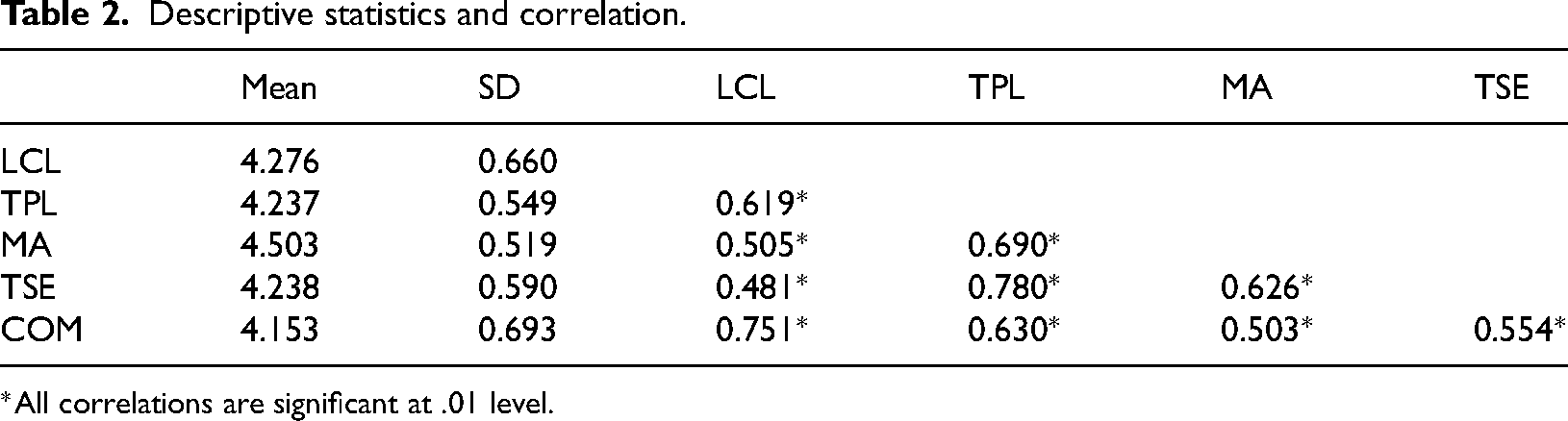
*All correlations are significant at .01 level.
Assessment of measurement model (first-order constructs)
For the assessment of the measurement model of the 12 first-order constructs, Table 3 shows that all the loading values are above the threshold of 0.70 except item LV3. However, the CR and AVE are found above the threshold of 0.50 and 0.80, respectively. Thus, we retained item LV3 for further analysis. Similarly, the remaining 11 first-order constructs appeared with the loading values, and AVEs and CRs were above the thresholds of 0.50, 0.50, and 0.80, respectively. The findings showed that the convergent validity of the first-order construct was established.
Assessment of measurement assessment (first-order constructs).
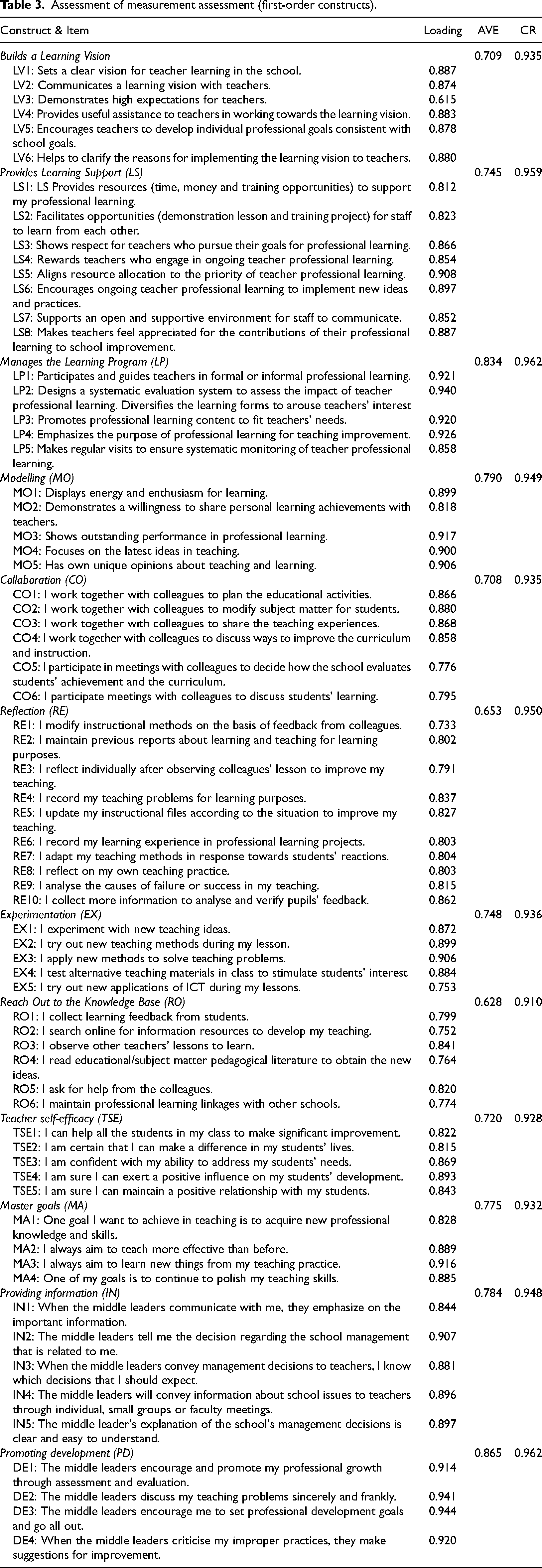
Table 4 shows that the HTMT values are below the threshold of 1.0 (Franke and Sarstedt, 2019). The 95% confidence interval between any pair of the first-order constructs did not contain the value of one based on the complete bootstrapping. The findings affirmed that all the first-order constructs were empirically distinct. Thus, the discriminant validity of the first-order constructs was established.
Discriminant validity (HTMT.90).
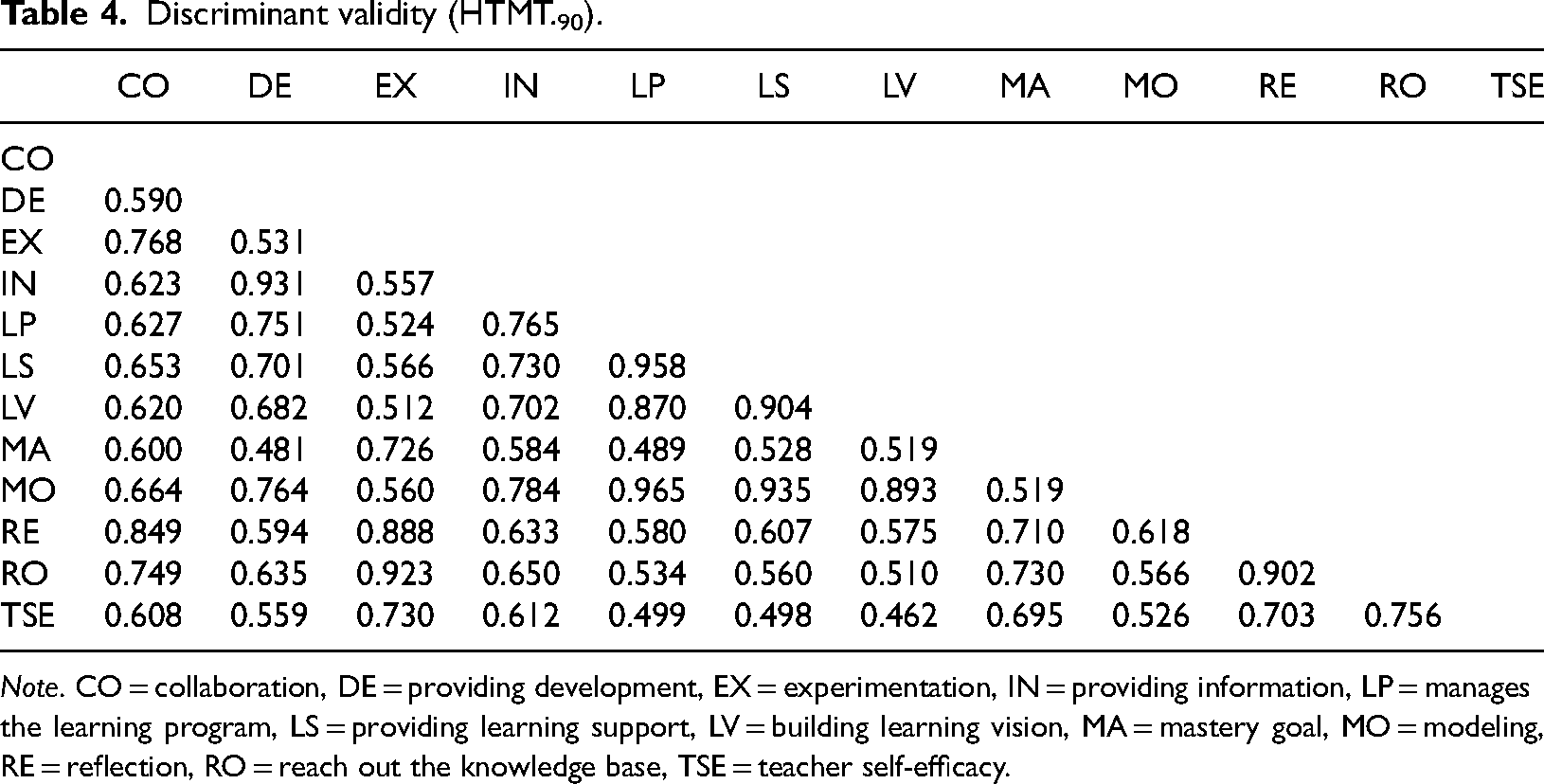
Note. CO = collaboration, DE = providing development, EX = experimentation, IN = providing information, LP = manages the learning program, LS = providing learning support, LV = building learning vision, MA = mastery goal, MO = modeling, RE = reflection, RO = reach out the knowledge base, TSE = teacher self-efficacy.
Assessment of measurement model (second-order constructs)
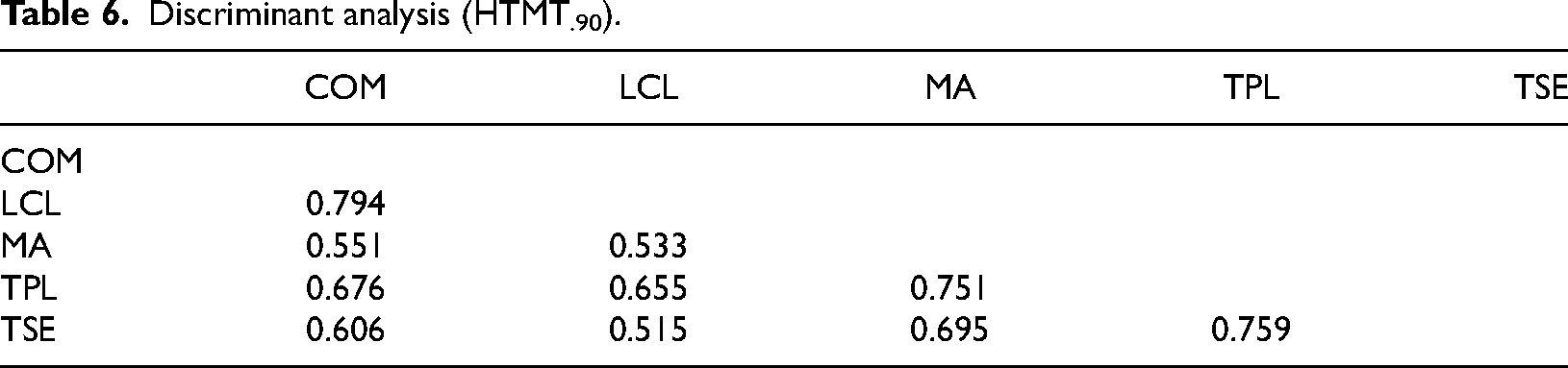
Table 5 shows that all the loadings of the first-order constructs of the respective second-order construct are above 0.70. The AVE and CR values of the second-order constructs (learning-centred leadership, teacher professional learning, and communication) were above the thresholds of of 0.50 and 0.80, respectively. The findings implied that the convergent validity was established for the three undertaken second-order constructs. Table 6 shows that the HTMT values are below 0.90 (Henseler et al., 2015). The findings indicated that the discriminant validity of the second-order constructs was established.
Assessment of measurement model (second-order construct).
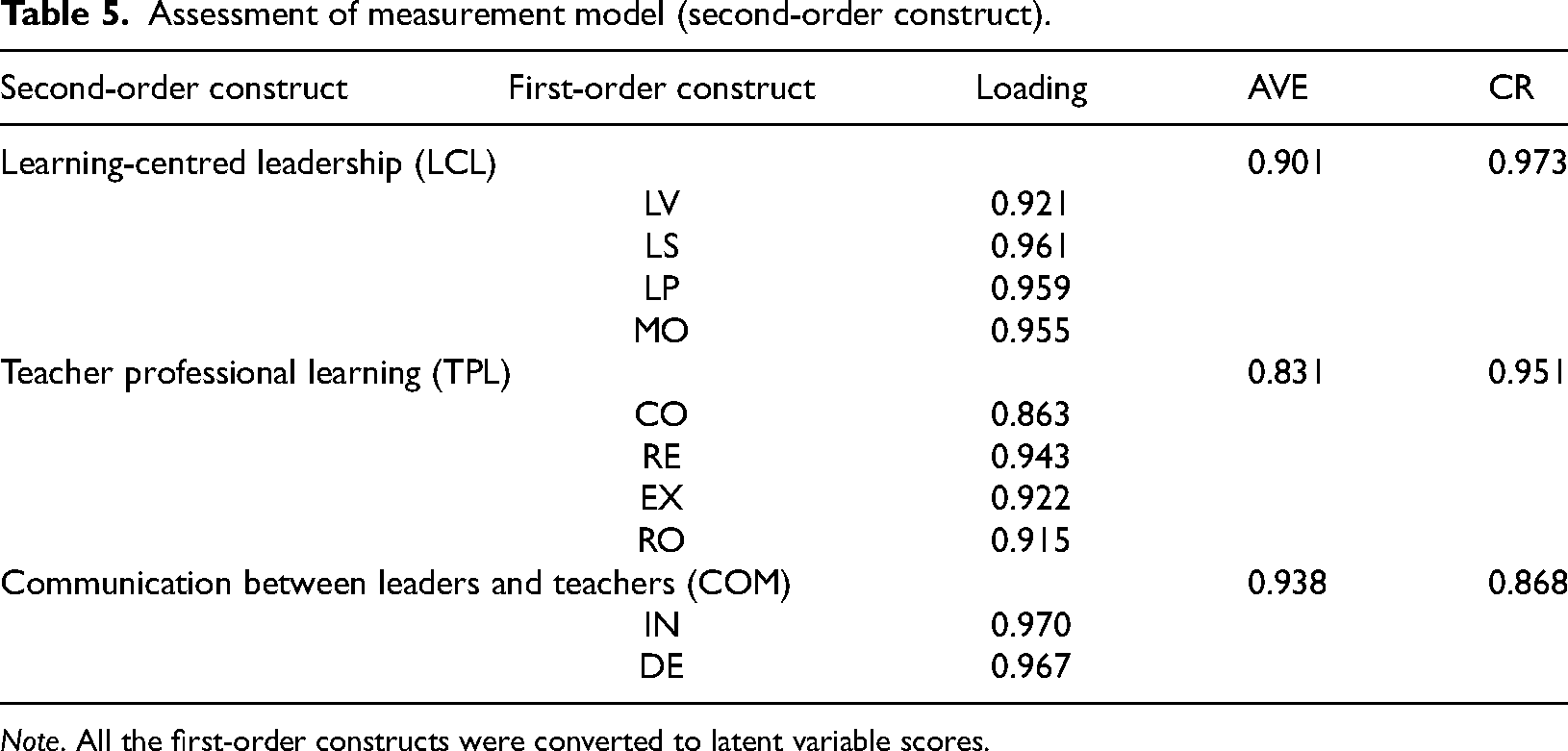
Note. All the first-order constructs were converted to latent variable scores.
Discriminant analysis (HTMT.90).
Assessment of structural model
Figure 2 illustrates the assessment of the structural model of the study. Table 7 shows that the direct effect of learning-centred leadership on teacher professional learning is significant (
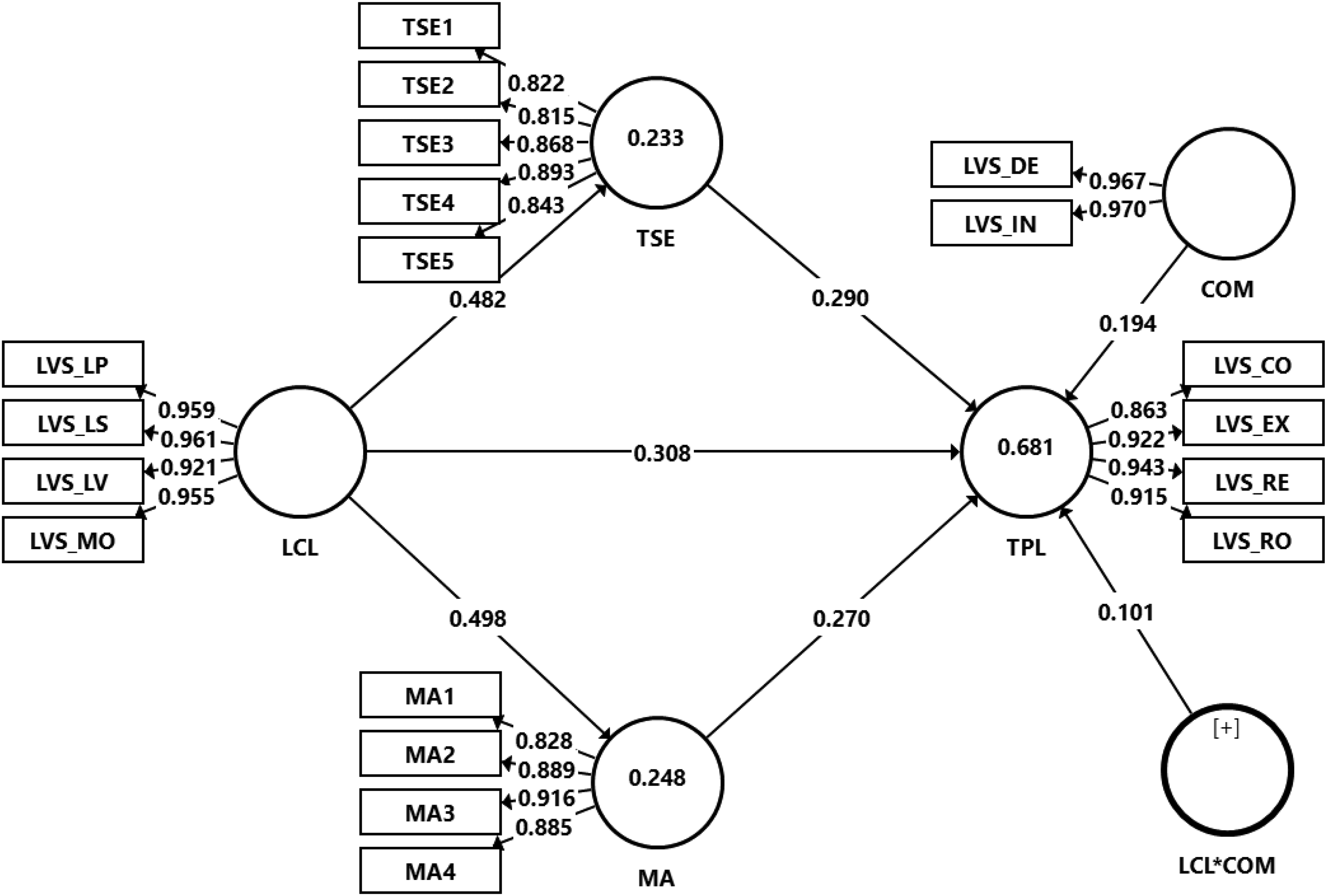
Structural model.
Hypothesis testing.
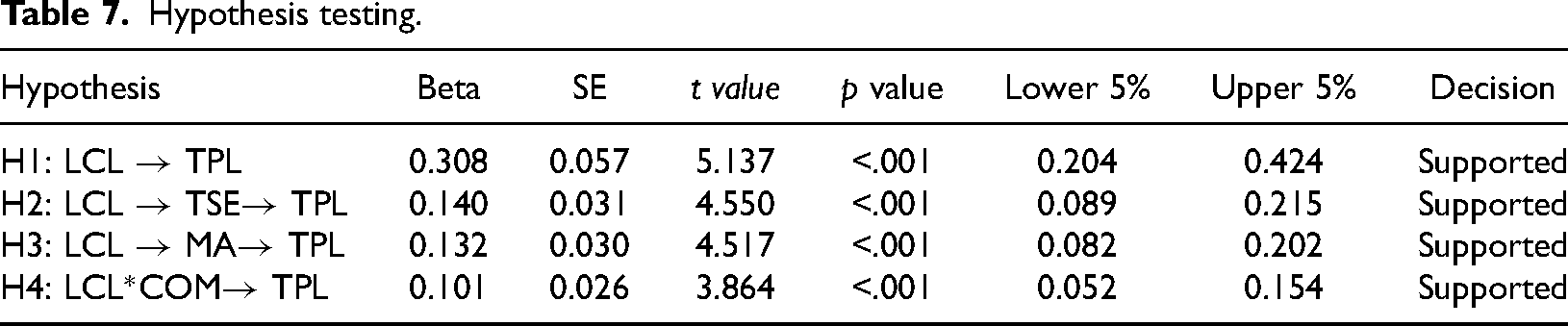
Effect size
Figure 2 has depicted that the interaction term (LCL*COM) has a positive effect on teacher professional learning of 0.101 at p < .001. The finding implied that for higher levels of quality of communication between leaders and teachers (COM) (for every standard deviation unit increase of COM), the effect of learning-centred leadership on teacher professional learning increases by 0.409 of the interaction term (0.308 + 0.101 = 0.409). In contrast, for lower levels of quality of communication between leaders and teachers (for every standard deviation unit decrease of COM), the relationship between learning-centred leadership and teacher professional learning decreases by 0.207 of the interaction term (0.308–0.101 = 0.207). Figure 3 shows a simple slope analysis of the two-way interaction effect between learning-centred learning and communication (LCL*COM) on teacher professional learning (TPL).
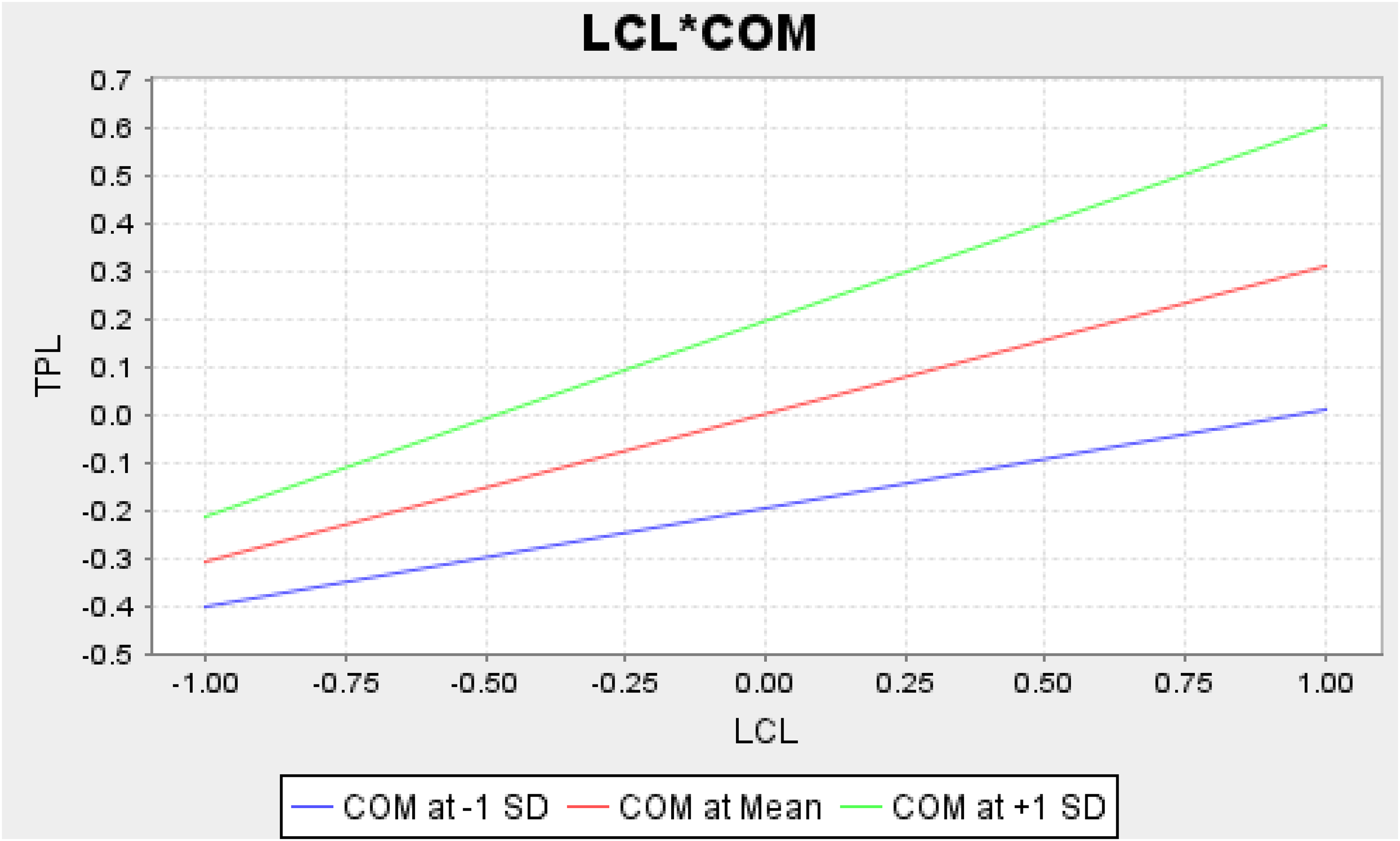
Slope plot of moderation effect.
Figure 3 represents the effect of learning-centred learning on teacher professional learning as depicted by the positive slopes. The effect of learning-centred leadership on teacher professional learning is stronger when the levels of quality of communication between leaders and teachers are higher compared to their counterparts. In other words, the effect of learning-centred leadership on teacher professional learning is weaker, at lower levels of quality of communication between leaders and teachers. Thus, H4 was supported.
Discussion
The findings of the study showed that there is a significant effect of middle leaders’ learning-centred leadership on teacher professional learning. The results were similar to the study by Lee et al. (2011), which noted that school leaders who support teaching and learning practices would increase teachers’ readiness to be interdependent and share information with their colleagues to create professional learning. Instead of school principals, the current study has extended the previous quantitative studies from Oman (Hammad et al., 2021), Turkey (Karacabey et al., 2020), Hong Kong (Li et al., 2016), and China (Liu et al., 2016) by providing evidence that an emphasis of middle leaders on learning would create an environment to cultivate teachers to engage in the professional learning.
According to Darling-Hammond et al. (2017), middle leaders facilitate teachers’ professional learning practices in the schools. Teacher professional learning requires teachers to work together in observing the classroom, sharing ideas, practices, and materials, as well as providing feedback such as coaching and peer guidance. Therefore, middle leaders who are involved in management activities also need to ensure better teaching and learning practices among teachers (Bryant, 2019; Gurr and Drysdale, 2013).
Second, teacher self-efficacy mediated the relationship between middle leaders’ learning-centred leadership and teacher professional learning. Similar researches by Künsting et al. (2016) and Tschannen-Moran and Hoy (2007) have indicated that teacher self-efficacy is an important psychological condition for predicting teacher professional learning. Furthermore, the results corroborated the findings of Huang et al. (2020), which indicated that teacher self-efficacy has significantly mediated the effects of both learning-centred leadership and cultural barriers on teacher professional learning.
Third, mastery goals mediated the relationship between middle leaders’ learning-centred leadership and teacher professional learning. With the learning-centred leadership practices, teachers are more likely to set mastery goals to improve their efficiency of professional practices. They will find ways to improve their professional competences and development and see the challenges as an opportunity to improve their skills in their jobs. Thus, it would enhance their teachers’ professional learning (Han et al., 2016; Skaalvik and Skaalvik, 2014). Moreover, Leithwood et al. (2020) mentioned that teacher mastery goals are the important mediators between leadership practices and teacher learning. This occurs because teachers focus on learning to acquire new knowledge and master new pedagogical skills.
Lastly, the effect of middle leaders’ learning-centred leadership on teacher professional learning is stronger when the levels of quality of communication between leaders and teachers is higher compared to their counterparts. The findings are consistent with the study of Yao et al. (2020), which found that good communication management between school leaders and teachers has a positive and significant impact on teacher commitment to professional learning. Furthermore, Sparks (2003) believed that every school leader plays an important role in developing communication skills and promoting productive relationships between staff. Hence, the content and style of communication are crucial for every middle leader to analyse their daily communication among staff, in which the quality of communication would influence the teacher professional learning.
Specifically, the influential impact of middle leaders’ learning-centred leadership through the mediating effects of teacher self-efficacy and mastery goals with leader-teacher communication as the moderator has contributed two times higher of variance explained (68%) on teacher professional learning compared to an Omanian study conducted by Hammad et al. (2021). This finding signified that the relationship between middle leaders’ learning-centred leadership was indirect with the substantial mediating effects of teacher self-efficacy and mastery goals. Quality of communication is another significant factor that the middle leaders should handle with caution as it could strengthen or weaken the enforcement of teacher professional learning.
Conclusion
This study has enriched the knowledge base of learning-centred leadership in the Malaysian education, where the middle leaders are also capable of being quality learning-centred leaders. It has contributed to the instructional leadership theory in terms of learning support and the development of a positive school learning climate. Furthermore, the ability of middle leaders in promoting teacher professional learning through the practices of reflection, social interaction and collaboration has shown that learning-centred leadership is parallel with the situated learning theory by Lave and Wenger (1991), which emphasises the authenticity of learning, social interaction and collaboration.
The findings of the study have practical implications, especially with the role played by the middle leaders. The role of the principals is important to share leadership practices with middle leaders, especially in terms of learning-centred leadership. As suggested by Dowling (2007), a teacher who holds the position of a middle leader can be considered as an individual who has received basic leadership training and also as a starting point to achieve a higher level of school management. Moreover, middle leaders themselves are aware of the role of learning-centred leadership that needs to be implemented to improve school achievement and goals. When middle leaders practise learning-centred leadership, it can increase their self-confidence and self-esteem to become efficient leaders in the future. Therefore, principals should have confidence that middle leaders in schools can perform responsibilities as learning-centred leaders and they need to share joint responsibilities with middle leaders.
This study has its knowledge implications by contributing to new knowledge production in school leadership and teacher professional learning, especially in a non-Western country with a centralised education system such as Malaysia. The principals can empower the duties of their learning-centred leadership role with middle school leaders. This can improve the leadership qualities of middle leaders. In turn, policymakers can conduct continuous professional development activities for middle leaders as well as teachers to ensure that they are constantly updated with knowledge. At the school level, the principals must provide resources for teachers to work collaboratively in developing professional learning practices. It is also important to ensure that middle leaders are aware of the mastery goals, teacher self-efficacy and communication as important elements in ensuring the development of teacher professional learning.
In conclusion, the present study confirmed that middle leaders’ learning-centred leadership has a significant direct effect on teacher professional learning. Besides, findings showed that teacher mastery goals and teacher self-efficacy mediated the relationship between middle leaders’ learning-centred leadership and teacher professional learning. This study has also revealed that the effect of learning-centred leadership on teacher professional learning is stronger when the levels of quality of communication between leaders and teachers are higher compared to their counterparts. However, the study was limited to a quantitative survey approach. As cross-sectional quantitative survey studies might not be capable of investigating the complexities of human behaviour or explore contradictions in depth, mixed-method or qualitative studies are the future direction of the research in this domain.
Footnotes
Author’s note
Lei Mee Thien, College of Education, Polytechnic University of the Philippines, Manila, Philippines.
Declaration of conflicting interests
The author(s) declared no potential conflicts of interest with respect to the research, authorship and/or publication of this article.
Funding
The author(s) received no financial support for the research, authorship and/or publication of this article.
