







Abstract
What motivates leaders to feel confident in their ability to lead is a relatively unexplored theme, particularly during their induction, which lasts for one to five years after their appointment. This study qualitatively examines the antecedents of leadership efficacy development among Malaysian novice school principals. The data were obtained using a phenomenological design. Twenty-one such principals participated in this study. The phenomenological interview model developed by Bevan was adapted for data collection. The findings revealed three main domains of antecedents that influence leadership efficacy, namely self-reference, internal support, and external support. Each domain comprises several antecedents derived from empirical data and analyses using sources of leadership efficacy, as discussed in previous studies. This study also puts forth recommendations for enhancing the leadership efficacy of novice school principals.
Introduction
Leaders are frequently referred to as heroes in organizations (Ford et al., 2021). This is due to their significant role as agents of change when faced with the challenges of an unpredictable environment (i.e. socio-politics and economy) to improve and sustain organizational achievements (Ford et al., 2021; Iannotta et al., 2020). In the context of Malaysian schools, the delegation of leadership responsibilities is executed by a collaborative group of individuals who operate under the guidance and supervision of a headmaster in primary schools or a principal in secondary schools. The distinction between primary and secondary schools is chiefly determined by their core organizational structure, instructional focus, and the extent of bureaucratic or decentralized coordination. As a result, secondary education may require the adoption of specific methodologies to improve leadership effectiveness (Gedik and Bellibas, 2015).
Previous studies identified some important leadership characteristics that effective leaders exhibit, including personality traits and skills, such as cultural awareness and communication, and leadership styles, such as human-task orientation, participation, and empowerment (Ababneh, 2016). Additionally, the effectiveness of leadership depends on leadership efficacy, which is related to leaders’ internal locus of control and self-confidence (Bandura, 1997; Murphy and Johnson, 2016; Sean et al., 2008). Leadership efficacy refers to individuals’ internal beliefs about their ability to achieve goals as leaders (Anderson et al., 2008; Murphy and Johnson, 2016). High leadership efficacy promotes positive psychological states that provide internal guidance and drive leaders to pursue challenging tasks and opportunities (Sean et al., 2008). Thus, in research on leadership efficacy, “efficacy” is commonly associated with positive psychological conditions that contribute to increasing the effective involvement of leaders, their flexibility, and their adaptability when they encounter real-world challenges (Dwyer, 2019).
While leadership efficacy plays a crucial role in leadership effectiveness (Anderson et al., 2008; Dwyer, 2019; McCormick, 2001), there is limited empirical research in this area (Sean et al., 2008; Bellemans and Devos, 2021), especially concerning educational leadership with a focus on novice principals. Most studies on novice school leaders emphasize leadership preparation training, personal and professional socialization (Bysik et al., 2015; Spillane and Lee, 2014), and leadership coaching and mentoring (Gimbel and Kefor, 2018; Hayes, 2019; Lochmiller, 2014). Themes like “what motivates novice leaders to feel confident in their ability to lead” and “how that confidence impacts novice leaders in various leadership circumstances” remain relatively less explored (Bellemans and Devos, 2021; McCormick, 2001) particularly during their induction phase, which lasts for one to five years from their date of appointment (Spillane and Lee, 2014). This phase is crucial because many empirical studies have revealed that during induction, novice school leaders experience a “reality shock” as they begin undertaking real responsibilities as the main leader (Spillane and Lee, 2014). For novice school principals, this stage is also a “difficult period” (Yii et al., 2022), as they must adapt to their newly assigned role that entails transitioning from being classroom teachers to organization leaders (Brown, 2006). This induction phase is crucial for developing leadership styles; therefore, novice school principals need high leadership efficacy to be effective leaders. Nonetheless, it's worth noting that the studies mentioned were carried out in various countries, potentially resulting in differences in the approach to appointing principals when compared to the Malaysian context. In Malaysia, the selection process for principals mandates that candidates meet specific qualifications, including prior experience as middle leaders and the successful completion of a leadership preparation course.
Despite undergoing a rigorous selection process, novice school leaders in Malaysia, as highlighted by Ramnun et al. (2015) and Lokman et al. (2021), continue to grapple with a myriad of challenges in fulfilling their roles. These challenges encompass dealing with legacies left by their predecessors, lacking essential knowledge in school leadership, bearing heavy workloads, possessing limited experience in problem-solving, and facing difficulties in adapting to new school cultures. Given the disruptive nature of these obstacles, which hinder leadership effectiveness, this study aims to explore the key factors that foster leadership efficacy among novice leaders in Malaysia. The identification of these factors can streamline the process of preparing new leaders for the educational system. This is significant because possessing knowledge about these aspects can assist relevant stakeholders, particularly the Ministry of Education in Malaysia and other countries, in improving their efforts to establish a platform for developing leadership efficacy in novice principals, thereby enabling them to become effective leaders. Furthermore, it enriches the existing literature on leadership efficacy and establishes a framework for leadership efficacy development among novice school principals in Malaysia.
Research questions
This study specifically seeks to answer the following questions:
What are the antecedents that influence the development of leadership efficacy among novice principals in Malaysia? How have the antecedents influenced the development of leadership efficacy of novice principals in Malaysia?
Literature review
Induction phase of school principals
According to Bush (2018), there are six critical phases in the journey of becoming a school leader: talent management, leadership preparation, recruitment and selection, induction, mentoring, and professional development. The induction phase refers to the tenure range of one to five years (Spillane and Lee, 2014) post appointment, and it is considered a challenging phase for novice principals. As aforementioned, it is a period of transition from teaching a classroom to leading an organization. According to Brown (2006), changes in tasks alter the role of novice school principals and increase their responsibilities toward developing the schools they lead. Consequently, they need support to adapt to their new responsibilities, especially as instructional leaders (Lochmiller, 2014). They must adapt to the new work culture, which includes different procedures, expectations of their superiors, and the fact that the teachers and the rest of the community closely observe non-verbal cues during this phase (Arieta and Ancho, 2020). They must be confident in their ability to lead despite the many challenges and expectations they encounter. Based on the insights from Kilinc and Gumus (2021), prior research has highlighted various significant challenges encountered by novice principals. These challenges include the effective management of time and financial resources, navigating the diverse expectations of different stakeholders, including teachers, parents, and policymakers, and handling the substantial administrative workload. Novice principals also frequently grapple with feelings of isolation and loneliness, in addition to the need to adapt to or transform the existing school culture, which are commonly recognized as major obstacles in their roles. Therefore, many researchers suggest that professionalism support programs can boost leadership effectiveness during induction, enhancing leadership efficacy and competence (Arieta and Ancho, 2020; Bush, 2018).
Novice principals in Malaysia
The selection of principal candidates in Malaysia is not solely dependent on their seniority and performance; a list of requirements set by the Ministry of Education of Malaysia must be met; these include experience as a middle leader and senior leader in a school or an administrative role held in any institution under the Ministry of Education (Ministry of Education Malaysia, 2013). In the administration structure of the Malaysian school, middle leaders refer to the head of each subject's committee, whereas senior leaders refer to vice principals in three distinct portfolios: Administration, Co-curricular, and Student Affairs. This stage has become a platform for hands-on training to prepare principals (Gurmu, 2020; Kwan, 2009). Essentially, the Malaysian appointment procedures reflect the opportunities for aspiring principals to develop their knowledge and leadership abilities while serving as middle and senior leaders (Ministry of Education Malaysia, 2013).
Additionally, candidates must apply for and successfully complete the National Professional Qualification of Educational Leaders (NPQEL), which is the “license” for being appointed as school principals in Malaysia. The program was initiated by the Institute Aminuddin Baki (IAB), which serves as Malaysia's school leaders training center, in 1999 with the introduction of the National Professional Qualification for Headship (NPQH). This program was modeled after the NPQH program in England. Over time, the program has undergone several modifications to effectively address the evolving leadership needs of educational institutions. In 2007, the NPQH was rebranded, transforming into the NPQEL.
Participants in this program are carefully selected from a pool of senior teachers who meet the rigorous criteria set by the Ministry of Education in Malaysia. These criteria include demonstrating excellence in their professional performance, maintaining good health, holding the position of Assistant Principal or Headmaster for a minimum of three years, and receiving a positive recommendation from their immediate superior, typically the Principal or Headmaster.
In tandem with the NPQEL programme, the State Education Department (SED) introduced a mentoring system called School Improvement Partners (SIP+) to provide training and professional development opportunities for aspiring school leaders (Ministry of Education, Malaysia, 2012). Nevertheless, it is important to note that this particular system does not constitute a formal and mandatory leadership training programme. Instead, it is an endeavor undertaken by individual SED offices to develop and execute a mentoring programme. This initiative encompasses various aspects, including the selection process for mentors and mentees (Lokman et al., 2016). According to the findings of the study, headteachers reported that their participation in mentoring programmes had resulted in notable enhancements to their professional values as school leaders. Additionally, these programmes fostered the development of a culture of knowledge sharing, which in turn enhanced their confidence and enriched their practical understanding of school leadership. Nevertheless, it was disclosed by headteachers that the limited amount of time available had an adverse effect on the successful execution of mentoring (Lokman et al., 2016).
Besides, Lokman et al. (2016) stated that novice principals require on-the-job training in order to enhance their efficacy in leadership. Moreover, it is imperative for educational leaders to possess a strong sense of self-assurance while assuming the role of school leadership, as the duties and obstacles they face differ substantially from those encountered during their previous positions as middle-level leaders. The challenges encountered by Malaysian principals, as identified in previous studies (Lokman et al., 2021; Ramnun et al., 2015), necessitate the development of confident principals who can effectively address these challenges.
Self-efficacy theory
Self-efficacy is the belief that an individual can execute the actions necessary to achieve a valued goal (Gallagher, 2012). Bandura (1977) first introduced this concept based on the premise that expectations of personal mastery (efficacy expectations or self-efficacy) and success (outcome expectations) determine whether individuals will engage in their behavior (Bandura, 1997; Van der Bijl and Shortridge-Baggett, 2001). Many scholars have extended this concept to the leadership domain (Bellemans and Devos, 2021; Dwyer, 2019). There are four sources of self-efficacy.
Mastery experience
Mastery experience is related to the repeated success experienced by an individual of the task that they execute (Bellemans and Devos, 2021; Cansiz and Cansiz, 2019). Bandura (1997) referred to this situation as self-appraisal to achieve performance. However, failures that are sometimes encountered may undermine efficacy. Individual experiences of overcoming obstacles through effort and perseverance can increase the resilient sense of self-efficacy (Bellemans and Devos, 2021).
Vicarious experience
In addition to one's own experience, learning from the success of others also contributes to the development of an individual's leadership efficacy (Bandura, 1997; Cansiz and Cansiz, 2019). According to Panglis (2010), observing a model positively affects the observer's judgment of his or her own abilities.
Verbal/social persuasion
Verbal or social persuasion refers to the encouragement or discouragement of others who shape beliefs about one's capabilities. The extent to which social persuasion is effective varies according to numerous social antecedents, such as the closeness of the relationship, credibility, expertise, trustworthiness, and prestige of the person who is persuading (Bellemans and Devos, 2021).
Physiological and emotional state
People use physiological and emotional states to judge their capabilities (Van der Bijl and Shortridge-Baggett, 2001). The extent to which people are emotionally or physiologically aroused can have minor effects on the level and strength of their self-efficacy (Gallagher, 2012). Emotional states, such as fear, anxiety, stress, and depression, can be identified as signs of personal deficiency that influence how people judge their self-efficacy and may hinder their abilities (Bellemans and Devos, 2021).
Other source of self-efficacy
Individual and contextual characteristics are among the sources of leadership efficacy mentioned by researchers (Bellemans and Devos, 2021; Panglis, 2010; Van der Bijl and Shortridge-Baggett, 2001). The other previously-mentioned characteristics by authors include knowledge (Bellemans and Devos, 2021), emotional intelligence (Villanueva and Sanchez, 2007), developmental readiness (Murphy and Johnson, 2016), and learning goal orientation (LGO) (Hendricks and Payne, 2007).
Contextual characteristics refer to aspects of the environment in which leaders contemplate leadership, such as job autonomy, the availability of resources (e.g. funds, staff, and equipment), and the extent to which the culture is open to change. However, contextual antecedents remain underexamined (Dwyer, 2019).
Previous empirical studies on leadership efficacy
Although leadership efficacy has not received much attention in past research, several studies have been conducted involving the quantitative and qualitative investigation of institutional and student leaders. Dwyer (2019) examined studies on leadership efficacy from 1994 to 2019 (25 years) in a meta-analysis, which demonstrated a variety of leadership efficacy construct developments and measurement techniques. It also revealed how numerous studies indicated a positive correlation between leadership efficacy and the components of leadership effectiveness, such as potential, performance, and behavioral ratings. Some of the Big Five personality traits and leadership efficacy have been discussed in earlier studies. Moreover, according to Dwyer (2019), contextual antecedents should receive attention and may present promising areas for further research.
Additionally, leadership efficacy in the context of school leaders was studied by Baroudi and Hojeij (2020). They compared the levels of self-efficacy of public and private school leaders in Mount Lebanon's governorate and revealed the significant role of self-efficacy in principals’ leadership regardless of the type of school they lead. It recommended contextual issues as an aspect for future research on leadership efficacy. A study by Bellemans and Devos (2021) in Belgium revealed that mastery experiences were the most powerful source of principal self-efficacy, although they were mainly small successes and did not refer to extraordinary achievements or excellent results. These findings also emphasized the importance of verbal or social persuasion as well as gaining knowledge as antecedents of leadership efficacy (Bellemans and Devos, 2021).
Methodology
Design
This study adopted a phenomenological design. This design was suitable for this study because phenomenology is a form of qualitative research that focuses on the study of an individual's lived experiences in the world (Neubauer et al., 2019). In the context of this study, the questions related to the antecedents of the development of the leadership efficacy of novice school principals could be identified through research on the experiences shared by the participants.
Research participants
Twenty-one novice principals participated in this study using purposive sampling method. They were selected based on the following criteria:
The participant should have been a principal for less than five years, tailored to the definition of the leadership induction stage (Spillane and Lee, 2014). The participants should have served in Malaysian public secondary schools.
The selection process was advised by the SED of each state involved in this study (Penang, Kedah, Perak, and Perlis). Every participant was required to complete the informed consent forms required by the ethical board of the researchers’ university. Table 1 presents the participants’ details.
Background of participants.
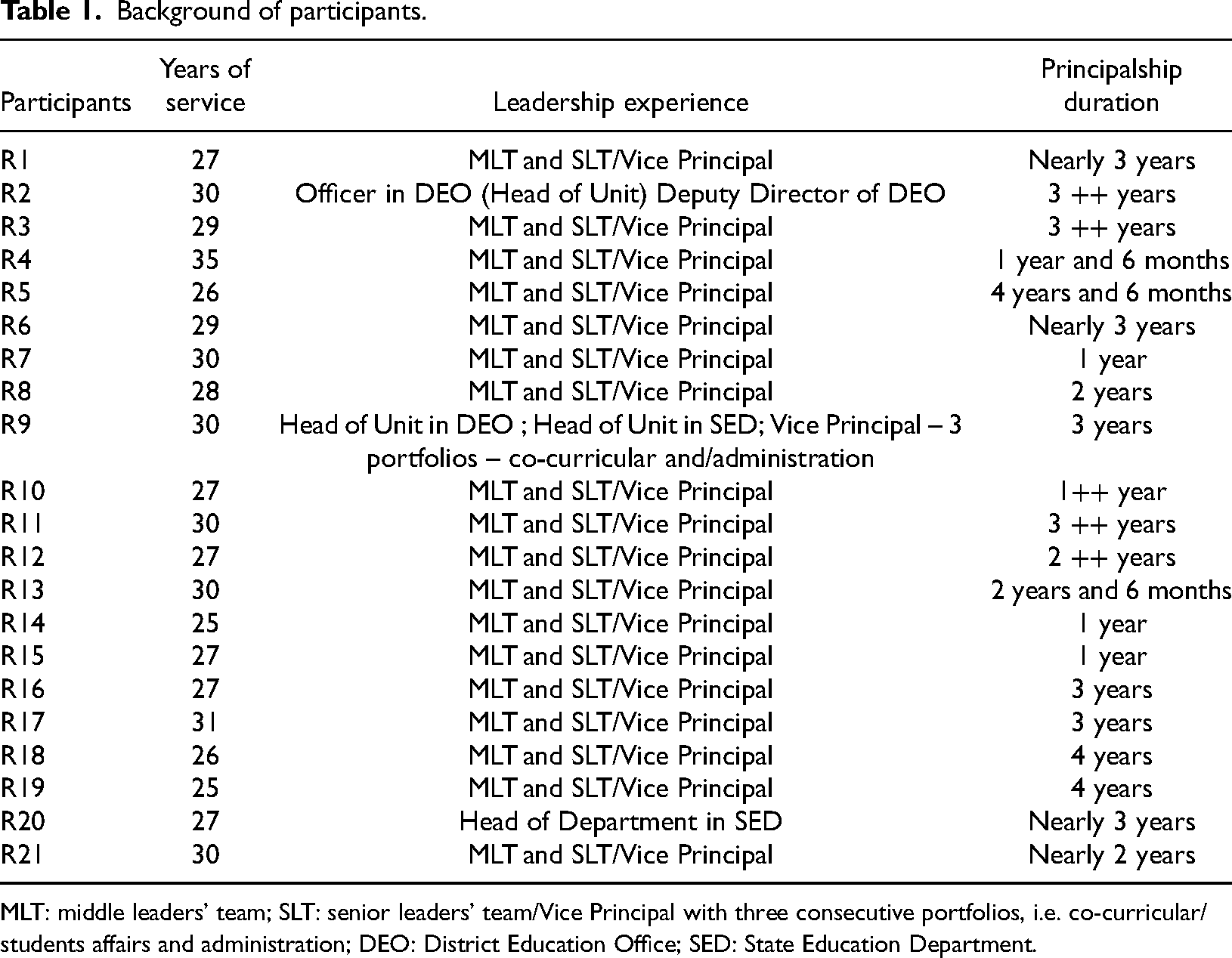
MLT: middle leaders’ team; SLT: senior leaders’ team/Vice Principal with three consecutive portfolios, i.e. co-curricular/students affairs and administration; DEO: District Education Office; SED: State Education Department.
As shown in Table 1, all the participants had seniority in their teaching profession, which is 25 years and above, and had experience in middle leaders’ team (MLT) and senior leaders’ team (SLT) (Vice Principals in three portfolios: Co-curricular, Students’ Affairs, and Administration). However, three of them had slightly different leadership experience as the former Head of Unit in the SED and District Education Office (DEO). One of them was the former Deputy Director of the DEO.
Data collection and analysis
Interviews are by far the most dominant method of data collection in phenomenological research (Bevan, 2014; Hoffding and Martiny, 2015). The phenomenological interviewing model developed by Bevan (2014) was chosen and adapted for data collection; it has three main domains, namely contextualization (natural attitude and lifeworld), apprehending the phenomenon (modes of appearing, natural attitude), and clarifying the phenomenon (imaginative variation and meaning). A semi-structured interview protocol was developed as a guide that covered three categories of questions based on Bevan's (2014) model and administered to a group of five novice principals who are not participating in the interview procedure. The purpose of this pilot study is to conduct a preliminary test or trial of the research instrument (Malmqvist et al., 2019) (Table 2).
Model of phenomenological interview (adapted from Bevan, 2014).
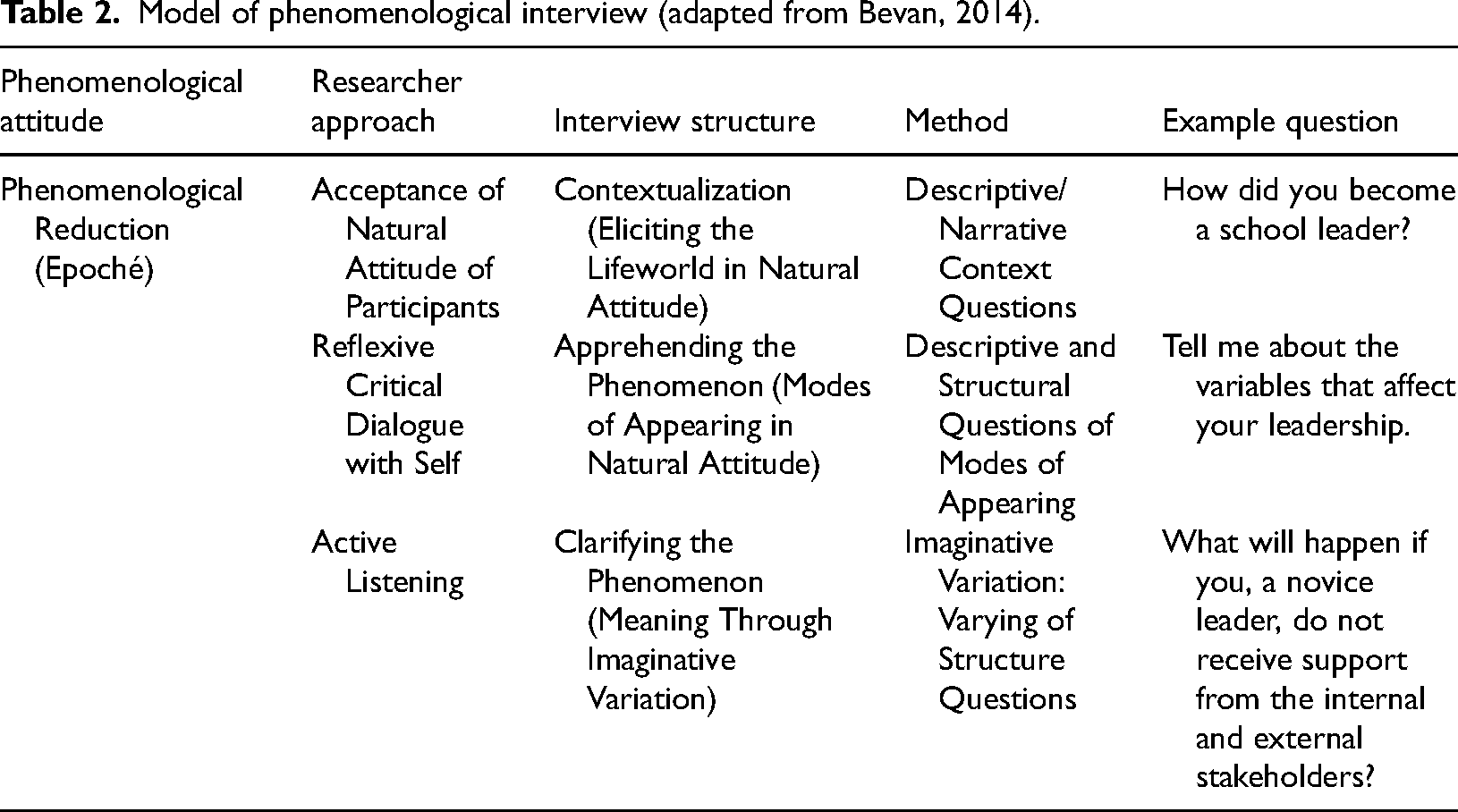
In this model, the phenomenological reduction concept was utilized to remain faithful to the descriptions of the experiences of the people interviewed and accepted that this was how they described their world, which maintains a fundamental level of validity (Bevan, 2014). After each session, interview data was transcribed for analysis. Manual transcribing was done by researchers. Braun and Clarke (2006) listed four data analysis steps. At the start, sketch notes and interview recordings were compared to find any errors or omissions. The second phase comprised data selection to distribute and categorize the data based on the individuals’ declared meanings. After that, data was coded. At this point, codes were compared to create many themes. Examining interview data meanings for commonalities helped compare themes. The final phase involved significance and interpretation analysis to draw conclusions. Interview report writing and arrangement is the final phase. Triangulation, member checking, and audit trail were the foundations on which themes and subthemes were established for the validation method (Creswell and Miller, 2000). Five experts—three in the field of leadership, one in sociology, and one in the field of psycho-counseling—participated in the member-checking process.
Findings
The findings of this study were based on interviews conducted with 21 novice school principals in Malaysia. The results of the analysis were presented based on Bandura's (1997) self-efficacy model and categorized into the three domains mentioned in previous studies: self-reference (Van der Bijl and Shortridge-Baggett, 2001), internal support, and external support (Dwyer, 2019; Van der Bijl and Shortridge-Baggett, 2001).
Self-reference
The domains encompassed within self-reference pertain to the individual's acquired experience and knowledge that serve as their point of reference. The extent to which respondents are receptive to utilizing the information also plays a significant role in this regard. The antecedents of the participants’ self-reference were mainly their mastery experience, vicarious experience, and individual characteristics. In general, they mentioned that these antecedents provided them with two important aspects, namely leadership knowledge and experience; they claimed that these two aspects were interrelated and could not be separated in terms of their contribution toward their confidence to lead.
Mastery experience
The participants considered leadership experiences as MLT providing first-hand knowledge of leadership and becoming the main self-reference. This explanation is based on the hierarchy of Malaysian schools, as illustrated in Figure 1.
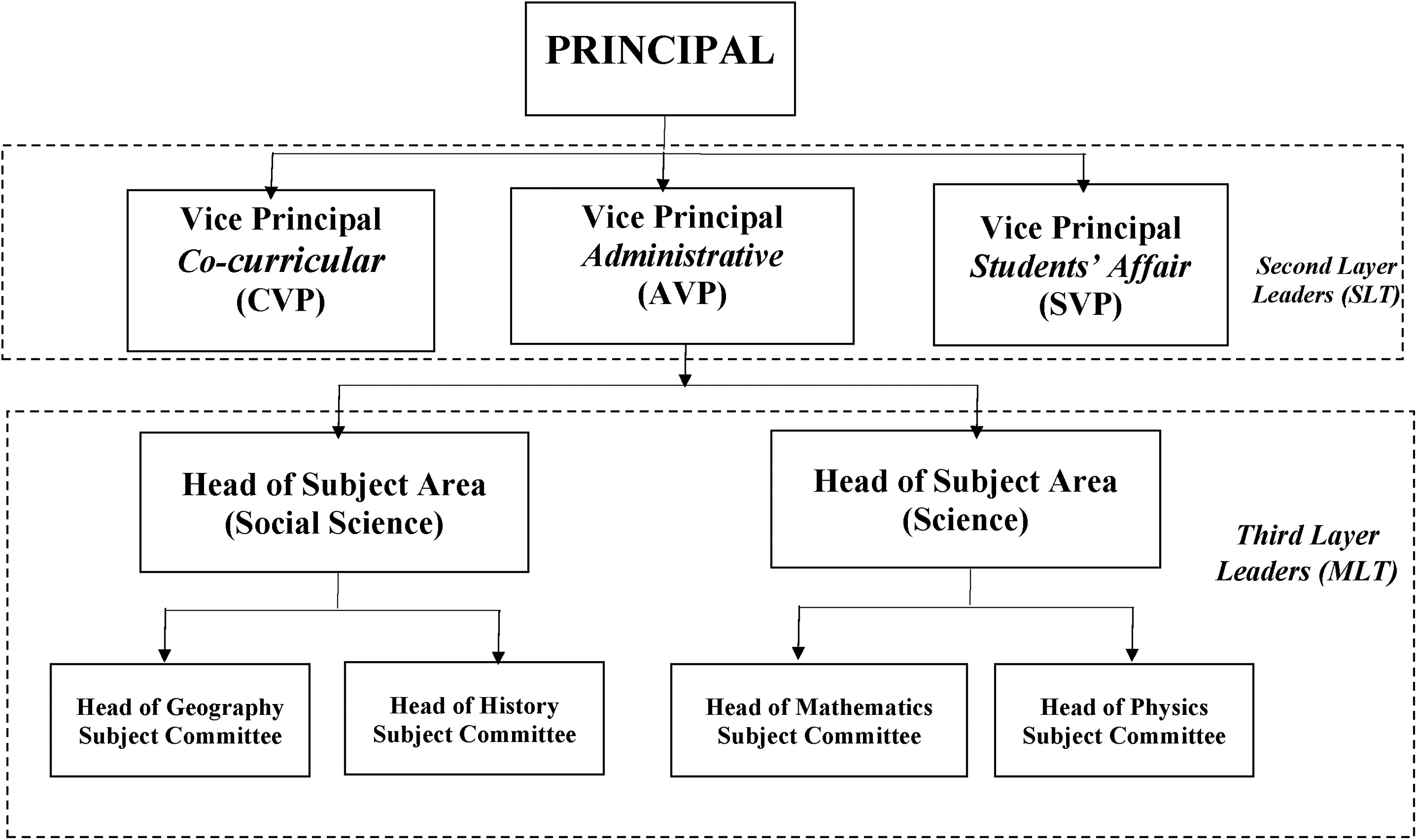
Illustration of administration hierarchy in Malaysian public schools. (Source: Research interview.)
According to the participants, the experiences of MLT and SLT were important in building their confidence to become effective principals (see Figure 1) by facilitating their adaptation to the leadership role. They referred to this process as “on-the-job training” and “learning by doing.” For instance, R7 stated the following: … while holding the position of MLT, the middle leaders need to be ready to gain enough knowledge, especially about policies in our education system, and how to master something or solve a problem with tools (strategies, techniques) that can be used as a reference.
The interviews also revealed that the Administrative Vice Principal (AVP) is an important position because it is very close to the principal's position. According to the participants, the responsibilities and tasks of the AVP were similar to those of the principals; for instance, dealing with the aspects of curriculum, co-curricular activities, and human resource management. However, in terms of the decision-making process, the organization still depended on the principal's consent. This is reflected in the following statement by R17: Actually, my 14 years of experience as AVP helped me a lot. That is why I agree when the Institute of Aminuddin Baki (IAB), the ministry, and the director say that if an individual wants to be a principal, they must become an AVP first. They need to experience this role because this position is nearly 80% similar to the principal's duty. It takes care of everything … manages the teachers … teachers on vacation, teachers coming to class, distribution of timetables, human resources, all these are part of the AVP's responsibilities.
Vicarious experience
Most participants agreed that the knowledge of leadership depended not only on their own experience but also on learning from others, especially from senior leaders and other principals. Further, experienced leaders have “leadership environment context” that offers various leadership experiences as well as enhances and broadens their knowledge and perspectives on leaders’ responsibilities: I learned much in a hands-on manner. For instance, when I was the Head of Humanities at XYZZ school, the senior teachers and principals taught me about many aspects of academic management. My former principal taught me a lot about planning and management processes. She always told me that if we wanted to do a program for students, we needed to plan based on valid data (R17). The former and new principal can sit together, share, and discuss school matters, like how to solve problems. I think this is enough. In schools, it is better if the former principal can advise the new principal. After all, every school's culture is different, and former principals are the most familiar with the specific school's culture (R14).
Individual characteristics
Along with experience, the participants did not doubt that the leadership preparation training they underwent—the NPQEL before being appointed principal—played a substantial role in their ability to learn about leadership, particularly in the areas of theory, models, and approaches. They claimed that the leadership training improved their understanding of their roles as middle and senior leaders. Additionally, they believed that the training sessions might aid in understanding the varied school contexts that are the primary antecedents in leadership decision-making (R12, R14, and R15).
Furthermore, the attitude of the novice leader as a lifelong learner aids in the acquisition of new leadership skills. The mindset of those who think positively by interpreting the challenges they experience when performing leadership responsibilities as valuable information, also contributes to the development of their leadership efficacy. According to the participants, their experience offered insight into leadership from various perspectives. Clearly, every challenge helps people develop leadership skills and their perspectives on leadership. Consequently, they must be willing to address any difficulties that arise when implementing leadership.
Internal and external support
Support was a key antecedent for the participants to feel confident about assuming a leadership role. They claimed that support from internal and external stakeholders was crucial to them as novice principals.
Internal support
Internal support encompasses the provision of support by key stakeholders within the school's organization the respondent lead, including SLT, MLT, teachers, and other members of the school community. This support encompasses various aspects, such as the dissemination of school-related information and the provision of social support. This domain acted as a contextual antecedent to the participants’ positive emotions in terms of leadership. As novice principals, they required support from the teachers, administrative staff, and second- and third-level leaders (R1, R8, and R20). This kind of support instills enthusiasm and confidence in a novice leader to lead the school. Thus, receiving such support made the participants feel more at ease and content in performing their leadership responsibilities. Moreover, implementing any initiative to improve the school requires cooperation, which is challenging without the support of school members (R8).
Furthermore, sharing authentic and important school information and data, which the novice principal should be aware of, is a key component associated with the support provided by the school staff, particularly SLT and MLT. For the respondents to plan further actions in building the school, the MLT and SLT become sources of background information about the school (R1 and R7). This is significant given that the information is “in context information.” The information aided the novice and new principals in deepening their understanding of the school's history and shaping their leadership style to lead the organization: They (SLT and MLT) become feeders to the baseline information of the school I shall lead. Because the information is “in context,” I must be aware of it before making any plans or actions for the schools (R11). I listened to the information from the AVP first because there are three VPs with different portfolios. They provide information about the school, which in turn provides me with a clearer picture. I also obtained information from teachers during meetings (R20).
Additionally, some participants stated that the attitudes of the teachers they led contributed to their confidence in leading. They claimed that teachers needed to understand their duties and responsibilities, be sensitive to the changing demands of the current educational environment, and develop knowledge and skills to improve themselves. As I said earlier … teachers have to understand the data they are dealing with. When a new principal arrives, the teachers can share this information, which can be important to the new principal, especially to a novice principal, to act. We need to have a culture of knowledge sharing in the school, as we cannot remember all the information by ourselves (R7).
According to the results discussed above, novice principals’ ability to lead effectively is not solely reliant on their prior leadership experience and knowledge but also on the support they receive from their subordinates.
External support
This study revealed that novice principals also require external stakeholder support. The participants explained that the support obtained mainly from the DEO provided a vicarious experience for them to carry out their leadership responsibilities effectively. The participants provided information about the support they received from the DEO after they were appointed as principals (at the novice level).
Advice and consultation
I will consult the DEO if we are unable to reach an agreement and have arrived at an impasse (R1). Each principal has their own purpose, vision, right, and general direction. They usually need guidance from the DEO in planning and aims according to the needs of the ministry (R20).
The participants claimed that when they encountered difficulties in making decisions on a particular issue, the DEO became their primary source of information for opinions and recommendations. Experienced officers in the DEO shared their opinions with the participants since they have a “helicopter view” of the schools in the districts they oversee and are knowledgeable about the current laws and policies governing education in Malaysia. This is reflected in the following:
Additionally, the participants received support from the High School Principals’ Council through peer-mentoring sessions. Monthly meetings are typically organized by the Council to assist novice principals. Thus, the principals constantly feel that they have a place to seek assistance with problems and issues that arise in their leadership. This is reflected in the following: There is a High School Principals’ Council at the DEO level, which consists of 14 principals from all over the XYZ District. They frequently assist new principals and meet monthly, as necessary. Excellent principals also support us (R4). The High School Principals’ Council is present at the district, state, and national level. In this district, we are constantly in touch, so if a problem emerges, particularly one involving the new principal, we meet and talk about it to support them. This council is crucial (R6).
School visit for assistance (visit-and-assist services)
The DEO also has a direct responsibility to assist schools with issues that have a significant impact on student achievement: I saw that the North-East DEO provides the service of visit-and-assist, so they will go to school, observe, and have a discussion, try to understand the situation and assist the school leader. For me, in certain situations, principals, especially novice principals, need help from DEO officers (R8).
This visit-and-assist service is available only to schools identified as having serious issues; thus, not all novice principals experience it.
School improvement partners+
There are times when the SIP+ comes to share with us … in general the sharing helps us to understand more about the school leadership strategies and action, but we need to tailor the strategies to our school's context and situation before implementing them (R1). If there is a new appointment, the advice from the SIP+ might be suitable … for example, if a vice principal is appointed as the principal … without experience … it may be necessary to have SIP+ in the context of this particular person … (R20).
SIP+ are a team of mentors selected by Malaysia's Ministry of Education with the mandate to advise boards of school administrators on how to enhance the effectiveness of school administration to improve school performance. SIP+ is managed by the DEO, and according to the respondents, SIP+ mentoring programs are highly beneficial for school leaders, particularly for novice principals, to improve their leadership effectiveness. This is evident from the following:
The advice provided to novice principals is not permanent assistance that can be continuously obtained. The SIP+ guidance program is tailored to the needs of the school and not to those of the novice principals. This implies that it concentrates more on assisting schools that are addressing serious challenges. This might be because it has only a small number of officers qualified as advisors in school improvement. The participants mentioned the following: But this year … the SIP+ is busy or there are other schools that need their assistance so … I think I only got two advise sessions from the SIP+ this year compared to last year … I have many sessions with them (R1). The SIP+ has to help in areas that are not progressing … such as academics. Like XYZ secondary school … native children. All efforts made still yielded 0% success. The principal is very patient when dealing with situations. Therefore, the DEO presents an SIP+ officer or an experienced principal with expertise in indigenous academics as a mentor (R2).
Although the SIP+ guidance service is offered in the DEO, novice principals may not fully receive the service, as its main responsibility is to support schools struggling with issues that impede their ability to progress. The SIP+ guidance services are therefore not always available to novice leaders.
Trust of the stakeholders
Perhaps this is because everyone can see who I am. Even if I call the department (DEO), they will respond … hmm … what about you … you can manage it yourself … The officers in the DEO also said … do you not want to inform us? … It is possible that I already have experience in performing many tasks … the administrative tasks, they give me full authority because they trust my capabilities. For me, that becomes my support system and motivates me to do the best as a leader (R2).
Some participants believed that in addition to the assistance mentioned above, the DEO should provide support by empowering novice principals to take the lead and implement change. R2 explained the following:
The background of personal excellence prior to being chosen as the principal is considered, although such occurrences can be characterized as isolated cases. For instance, the DEO believes in granting R2 freedom to plan the improvement of the school he leads because of “his efficient and professional record as an officer at the DEO and his extensive knowledge in managing many matters relating to school administration.”
Professional and local community
All parties influence, and the DEO is very helpful, including the local community, council, community leader, and the Department of Islamic Religion, XYZ branch. (R4)
This study also found that local communities play a role in supporting novice principals. Support from these external stakeholders encourages novice principals to practice effective leadership and feel more self-assured about their ability to lead schools:
Discussion and recommendation
Previous studies identified leadership efficacy as a key antecedent in enhancing principals’ confidence in their leadership. This study revealed that novice principals in Malaysia experienced growth in leadership efficacy through self-reference, internal support, and external support. Figure 2 demonstrates that there are antecedents that become self-references for the development of novice principals’ leadership efficacy in Malaysia, such as the acquisition of mastery through their experience as middle and senior leaders, vicarious experience through the coaching and mentoring processes, and the personal qualities of novice principals, such as lifelong learning and positive thinking, that strengthen their knowledge.
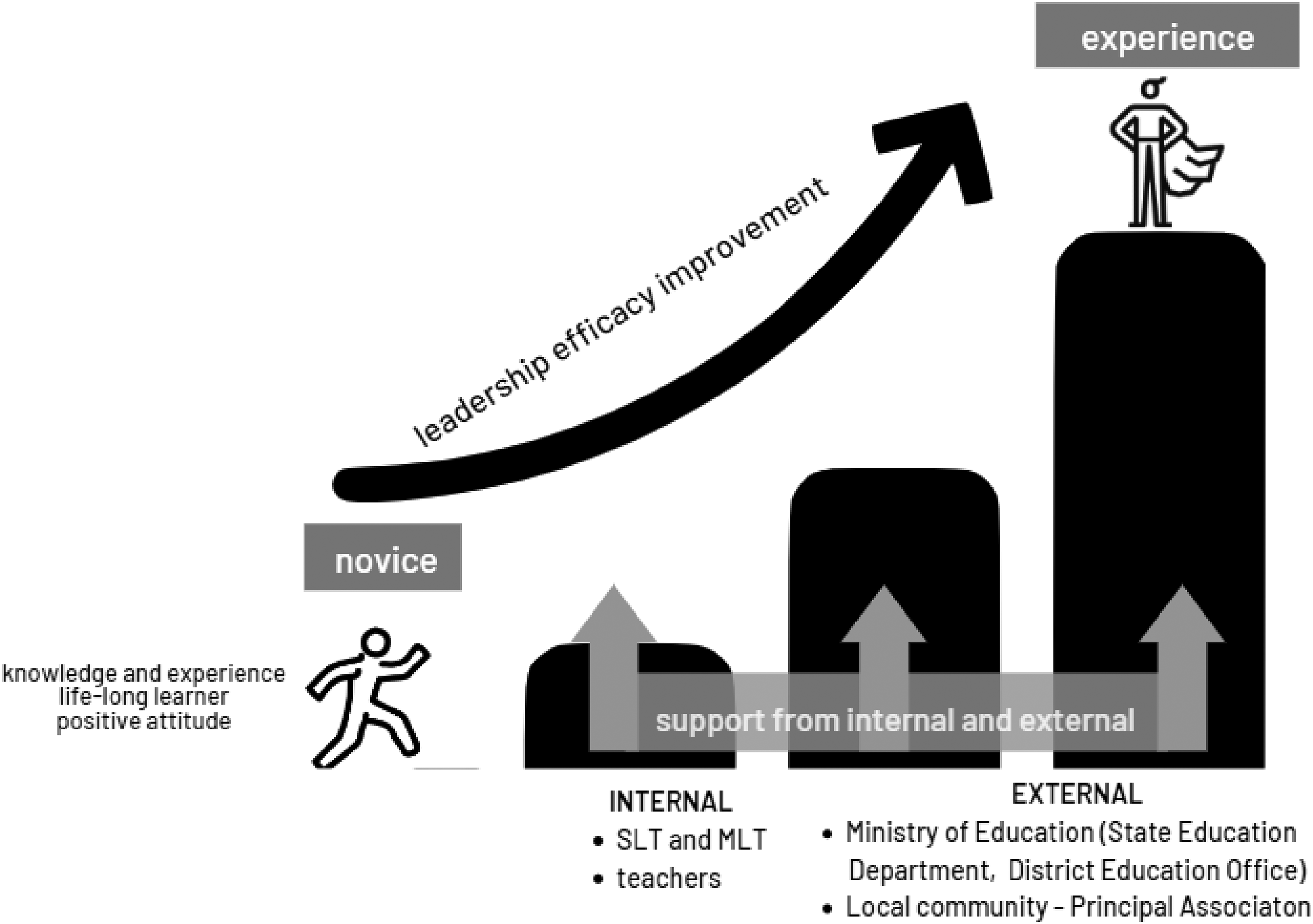
Antecedences of leadership development of Malaysian novice principals.
According to the findings, the mastery experience of novice principals in Malaysia and leads to their success in leading assigned units. Bellemans and Devos (2021) also explained that mastery experience refers to small successes and not extraordinary accomplishments or outstanding results (Bandura, 1997). On this basis, novice principals in Malaysia begin their mastery experience since becoming senior and middle leaders (second layer and third layer leaders). This stage is referred to as the talent management phase (Bush, 2018). It is a platform for aspiring principals in Malaysia to receive informal training in school leadership and management issues (Gurmu, 2020; Kwan, 2009). Informal leadership training in the form of “learning by doing” is crucial (Bysik et al., 2015) because the contextual aspect of leading extends value to the knowledge and leadership skills acquired by novice leaders during the training process.
The process of coaching and mentoring by experienced leaders serves as an antecedent to vicarious experiences, enabling novice principals to increase their leadership efficacy (Cansiz and Cansiz, 2019). The results of the study indicated that mentoring and coaching during the SLT and MLT stages play a significant role in enhancing the leadership knowledge and skills of individuals, particularly novice principals who rely on these experiences as a point of reference for their own development. However, novice principals lacking lifelong learning and leadership enthusiasm cannot benefit from these experiences. According to Murphy and Johnson (2016), these traits contribute to leaders’ readiness to acquire knowledge and leadership skills, which are crucial for ensuring the sustainability of effective leadership (Bellemans and Devos, 2021; Panglis, 2010).
This study also explained the role of support from the internal and external environments of the organization as a precursor to the development of novice principals’ leadership efficacy in Malaysia during the induction phase (Bush, 2018). Inexperienced principals encounter a wide range of responsibilities and tasks that seek support in implementing their leadership (Arieta and Ancho, 2020; Beam et al., 2016; Bush, 2018). In this aspect of support, the role of antecedents is significantly different, with self-referential antecedents occurring more prominently before they are appointed as principals.
This study identified antecedents that can be classified as internal and external support for novice principals in the form of professional and social support from an inner-circle group of school leaders (MLT and SLT) and teachers. Principals require school members, particularly SLTs and MLTs, to act as resources for governance and school administration issues, which individual leaders must understand when planning and leading schools to achieve their goals. Teachers are also expected to play the role of teacher leaders, which requires a deep understanding of their assigned responsibilities. According to Panglis (2010), this type of school environment can help novice principals develop confidence and enhance leadership skills. Further, this internal support serves as an antecedent of the physiological and emotional state of Malaysian principals during their initial years of service. Subordinates’ support invigorates novice principals to lead schools with confidence. Thus, the participants were more at ease and satisfied with their leadership responsibilities.
Meanwhile, antecedents that serve as external support for the development of leadership efficacy consist of vicarious experiences gained by advisory and consultancy services with officers knowledgeable about the policy and administration of Malaysian education and schooling systems. Novice principals’ confidence in their ability to lead is reinforced by the assistance they receive, particularly in challenging school environments that require guidance from experienced parties (Yii et al., 2022). Numerous past studies corroborate this assertion, revealing that support in the form of advice and referrals is primarily related to rules and policies as well as addressing leadership challenges in difficult school contexts (Gimbel and Kefor, 2018; Hayes, 2019; Lochmiller, 2014). If their superiors (SED and DEO) and the local community have faith in them, novice principals feel energized and confident in their ability to lead. However, the findings of this study indicate that the SIP+ mentoring system has a limited impact on enhancing the leadership efficacy of novice principals in Malaysia. This is primarily due to the system's reliance on a limited pool of experts, resulting in SIP+ services being predominantly allocated to schools facing challenges. The present study diverges slightly from the research conducted by Lokman et al. (2016) regarding the impact of SIP+ on novice school leaders in Malaysia.
Although this study provided significant information related to the development of novice leaders’ leadership efficacy in schools, it has some limitations. First, the backgrounds of the novice principals in this study were not homogeneous, particularly in terms of the duration; they had served as middle leaders and principals, which could potentially influence the participants’ responses. Second, this study used a cross-sectional design and relied solely on interviews, which makes the findings less exhaustive. These cannot explain in detail the experiences of novice principals at each stage in the process of improving their leadership efficacy. Therefore, longitudinal studies should be conducted to determine the evolution of the leadership efficacy of novice school leaders over time. The third limitation relates to the organizational context in which the novice leaders served. The organizational context as an antecedent to the development of novice principals’ leadership efficacy is only briefly discussed in this study. Using a case study, it is possible to determine the contextual antecedents that influence the leadership efficacy of novice school leaders, which is an important component of the analysis. The fourth limitation of this study pertains to its exclusive reliance on a qualitative approach, which is attributed to the limited number of participants and the resulting inability to generalize findings. Hence, research endeavors employing a quantitative or mixed methodological framework can yield a more comprehensive understanding of leadership efficacy within the context of novice leaders.
In addition to suggestions based on methodological aspects, this study provides several recommendations for enhancing the leadership efficacy of novice school principals.
The primary contributor to the antecedents that become the novice leader's self-reference is the leadership experience in the middle leadership stage. Therefore, every aspiring school leader should be given the opportunity to serve as a middle leader and enhance their knowledge and leadership skills. Additionally, formal leadership training should be provided to middle-level leaders to complement the knowledge and skills acquired through on-the-job training. It is imperative that comprehensive modules encompassing leadership knowledge and skills be made available to all school leaders in order to facilitate effective succession planning. This initiative aims to support the principal and senior leaders in each school in formulating strategies to cultivate future school leaders during the early stages. Professional and social assistance from authorities, the DEO, and SED play an essential role. In this regard, mentoring and coaching are required from the parties involved and need to be planned and implemented meticulously. Furthermore, novice school leaders should receive professional advisory services such as SIP+. In schools, it is important to cultivate certain aspects of teacher leadership. In addition to being one of the steps in talent management, the cultivation of leadership qualities in each teacher, particularly when it comes to conducting the core responsibilities in teaching profession, enables them to always be aware of the needs of education, including important and up-to-date data, thus enabling them to serve as resources for novice principals leading schools. Additionally, a school's leadership capacity can be enhanced to serve as a solid foundation for new school leaders to lead effectively. The administration of schools cannot be separated. Both professionals and local communities must support the leadership of novice school principals. Consequently, a novice leader cannot be isolated into a “one-man show” in leading and administering a school.
Footnotes
Acknowledgements
This work was part of the Fundamental Research Grant Scheme (FRGS) project (ID: 16021; reference code: FRGS/1/2018/SSI09/USM/02/9), supported by the Ministry of Higher Education Malaysia.
Declaration of conflicting interests
The author declared no potential conflicts of interest with respect to the research, authorship, and/or publication of this article.
Funding
The author disclosed receipt of the following financial support for the research, authorship, and/or publication of this article: This work was supported by the Kementerian Pendidikan Tinggi Malaysia (grant number FRGS/1/2018/SSI09/USM/02/9).
