






Abstract
Despite growing studies on distributed leadership, significant gaps persist in understanding how it manifests in higher education, particularly within Asian hierarchical institutional settings. Limited research has examined middle leaders’ lived experiences in enacting distributed leadership. This study examines distributed leadership practices of middle leaders in a Singapore polytechnic, exploring their perceived experiences, affordances, and constraints within a higher education setting. Using phenomenological methodology, semi-structured interviews were conducted with 12 Course Leaders. Findings revealed that middle leaders enacted distributed leadership through informal role assignments based on expertise, networking with stakeholders to create leadership development opportunities, facilitating shared decision-making, and fostering collective engagement. Key affordances included domain knowledge proficiency, stakeholder relationships, and operational familiarity, whilst key constraints encompassed inadequate leadership preparation, complex stakeholder management and administrative burdens. The study reconceptualises distributed leadership as a pragmatically bounded practice shaped by hierarchical institutional structures and cultural values, rather than diminished by them.
Introduction
Senior leaders in higher education institutions face increasingly complex responsibilities amid rapid technological, economic, and social changes (Floyd and Fung, 2017; Wolstencroft and Lloyd, 2019), making it challenging to lead effectively as solo leaders. Consequently, leadership practice has shifted towards greater reliance on other leaders to co-lead to achieve institutional goals, including advancing vision, promoting a positive climate, supervising teaching practices, and encouraging professional development (Harris, 2008; Lumby, 2017). This shift is commonly referred to as distributed leadership (Marshall, 2012; Thornton et al., 2018), reflecting the growing recognition that leadership is not confined to individuals in formal roles but emerges through interactions among multiple leaders, including middle leaders.
Distributed leadership has attracted sustained scholarly attention due to its normative, representational, and empirical strengths (Harris and Spillane, 2008). Its normative strength lies in its consistency with democratic participation and shared responsibility, extending leadership beyond a single leader. This brings representational strength, as more and more educational institutions adopt distributed forms of leadership as an alternative approach to managing leadership demands. Finally, its empirical strength is supported by growing research linking distributed leadership to school improvements and positive outcomes (Harris et al., 2022). Hence, distributed leadership has been positioned as a significant leadership approach that enables higher education institutions to navigate uncertainty and institutional change (Hickey et al., 2022; Jones, 2014; Maddock, 2023).
However, three notable gaps remain in the literature. First, research has predominantly examined K-12 schools, with comparatively limited attention to higher education institutions (Floyd and Preston, 2017; Harris, 2013). Second, although distributed leadership emphasises the involvement of multiple leaders, studies have often focused on senior leaders and underexamined middle leaders despite their substantial leadership influence (Bennett et al., 2003; Harris, 2008; Harris et al., 2019). Third, most existing research has been conducted within Western contexts (Youngs, 2017), limiting its applicability to Asian settings, where cultural factors shape leadership practices differently (Hairon and Dimmock, 2012; Harion and Goh, 2015).
Addressing these gaps necessitates not only an examination of distributed leadership, but also contextualising the enabling and inhibiting conditions that mediate leadership enactment. This is important as higher education institutions differ significantly from K-12 schools in their organisational structures, curriculum, and student demographics (Lumby, 2003). In particular, polytechnics occupy a distinctive space between schools and universities, operating under a unique centralised–decentralised model (Ng, 2017). Like schools, middle leaders in polytechnics operate within structured hierarchies characterised by accountability and alignment to institutional goals. However, similar to universities, middle leaders exercise professional autonomy in areas such as programme development and industry collaboration. These characteristics make polytechnics a unique setting for investigating how distributed leadership is enacted within a higher education context that combines school-like management structures with university-oriented objectives.
Therefore, this study examines the distributed leadership of middle leaders in a local polytechnic in Singapore, situated within a hierarchical Asian higher education context, and explores the affordances and constraints shaping distributed leadership. It adopts Spillane's (2006) framework of leadership practice, which provides a conceptualisation of leadership as arising from daily interactions between leaders and followers within organisational contexts. This framework is applied to examine the interactions between middle leaders and their lecturers in the context of leading diploma programmes. To operationalise distributed leadership, this study adopts Hairon and Goh (2015) four dimensions – bounded empowerment, developing leadership, shared decisions, and collective engagement, to analyse how middle leaders enact distributed leadership.
Literature review
Distributed leadership
Distributed leadership has emerged as an influential concept in educational leadership over the last two decades (Bennett et al., 2003; Hickey et al., 2022). However, considerable ambiguity surrounds its definition and interpretation (Bennett et al., 2003; Lumby, 2017). Scholars have difficulty defining distributed leadership, as related concepts, such as dispersed leadership and shared leadership, are used interchangeably despite their conceptual distinctions (Bolden, 2011; Gosling et al., 2009; Lumby, 2013).
One influential framework is that of Spillane (2006), who conceptualises leadership practice as emerging from interactions among leaders, followers, and situations, drawing on distributed cognition and activity theory. From this perspective, leadership is not vested in formal roles but is constituted through social interactions that shape organisational practice. Distributed leadership is a collective practice enacted through collaboration and interdependence (Spillane, 2006). Spillane (2006) further distinguishes between additive and holistic forms of distributed leadership. The additive form refers to leadership activities performed by multiple individuals independently, in which leadership responsibilities are dispersed across actors without deliberate coordination. In contrast, the holistic form emphasised coordinated and collective leadership, where individuals work interdependently, and their combined efforts generate outcomes that exceed what could be achieved alone.
Harris (2008) provides empirical evidence supporting distributed leadership as a practical and responsive approach. She conceptualises it as broad-based and flexible, involving multiple formal leaders (e.g. heads of department) and informal leaders (e.g. teachers leading project groups). Harris (2008) also highlights that distributed leadership enables multiple individuals to exercise leadership through collaborative interactions, take on responsibilities, and leverage their expertise. This reinforces that distributed leadership is not confined to formal roles but emerges through practice.
Extending these perspectives, Hairon and Goh (2015) empirically examined distributed leadership within Singapore schools and identified four key dimensions of distributed leadership – bounded empowerment, developing leadership, shared decision-making, and collective engagement. These dimensions operationalise distributed leadership by offering a framework for understanding how distributed leadership is enacted in practice.
In summary, these theorisations illuminate varied but interrelated interpretations of distributed leadership, highlighting the need for further research to examine how it is enacted within specific contexts.
Distributed leadership in Singapore's cultural context
Singapore's educational institutions are influenced by Confucian cultural values, shaping distributed leadership in ways that differ from Western democratic and participative models (Hairon and Goh, 2015; Goh et al., 2019). Tan (2024) argues that Singapore's sociocultural values such as meritocracy, strategic pragmatism, respect for authority, and hierarchical dependency shape leadership practices in educational institutions.
Similarly, Ho et al. (2016) contend that Confucian ideology reinforces hierarchical leadership structures, in which distributed leadership is mainly enacted through formally appointed leaders, constraining participation to individuals with recognised authority. Hairon and Goh (2015) further characterise Singapore's distributed leadership as pragmatic and bounded. Although individuals are empowered to participate in decision-making, such empowerment remains constrained by senior leaders’ directives. Consequently, leadership is enacted within defined organisational boundaries rather than through fully autonomous decision-making.
Distributed leadership in higher education
Although studies on distributed leadership in higher education contexts are limited (Floyd and Preston, 2017), the concept has gained increasing attention as a potential leadership approach for improving institutional outcomes (Bolden et al., 2009). Notably, distributed leadership has been explored as an appropriate leadership model, particularly in countries such as Australia, New Zealand, and the United Kingdom (Bolden et al., 2009; Harris, 2012; Jones et al., 2014; Lumby, 2003; Youngs, 2017).
Bolden et al. (2009) examined distributed leadership across 12 higher education institutions and identified two forms – devolved and emergent. The devolved form is top-down, originates from hierarchical interactions between leaders and followers, and aims to coordinate efforts with institutional goals. In contrast, the emergent form is bottom-up and involves horizontal influence among leaders across different areas of an institution. Similarly, Gosling et al. (2009) found that stakeholders in higher education institutions could relate distributed leadership to their own lived experiences, though concerns remain about whether it may function rhetorically rather than substantively.
Studies highlight both the potential and limitations of distributed leadership in higher education. Youngs (2017) found that distributed leadership enhances collaboration among wider groups of leaders, leading to effective organisational change and development. However, concerns exist that distributed leadership faces constraints in application due to reluctance to relinquish authority (Jones et al., 2014; Lumby, 2003). These mixed findings highlight the need for further empirical investigation into how distributed leadership is enacted in practice.
Distributed leadership of middle leaders
Despite the growing distributed leadership literature, research focused on middle leaders remains comparatively limited (Harris, 2012; Hickey et al., 2022). Nonetheless, Spillane's (2006) framework positions middle leaders as central actors whose leadership emerges through interactions with followers within specific contexts. Furthermore, the leader-plus aspect acknowledges that leadership responsibilities are distributed across multiple leaders, including middle leaders.
Moreover, Bennett et al.'s (2003) conceptualisation of distributed leadership is highly relevant to middle leaders through three aspects – emergence through interactions, openness of boundaries, and leadership based on expertise. Emergence reflects the dynamic nature of leadership among middle leaders and their lecturers; openness of boundaries refers to the distribution of leadership responsibilities; and leadership based on expertise highlights the specialised knowledge held by middle leaders. These principles reinforce the importance of middle leaders’ specialised knowledge and their contribution to distributed leadership.
Multiple studies have demonstrated that middle leaders enacted distributed leadership in higher education. Marshall (2012) and Cardno (2013) identified this implementation through engaging teams in problem-solving and decision-making, while Lizier et al. (2024) and Thornton et al. (2018) examined how middle leaders distribute responsibilities by delegating tasks and workloads. However, Youngs’ (2017) review revealed that most distributed leadership studies on middle leaders were situated in Western institutions, highlighting limited research within Asian contexts.
Affordances and constraints of distributed leadership
As context influences leadership in general, context also influences how leadership is distributed. Accordingly, the literature identifies both enabling and inhibiting conditions influencing middle leaders’ enactment of distributed leadership, summarised as institutional support, influence dissonance, and individual capacity.
Institutional support is a critical enabler, with senior leaders providing conditions for middle leaders to lead effectively through resource allocation, decentralisation of authority, and access to leadership development opportunities (Jones et al., 2014). Formal appointments similarly enhance middle leaders’ capacity by conferring legitimacy, role clarity, and authority within institutional hierarchies (Floyd and Preston, 2017; Lizier et al., 2024).
Influence dissonance refers to the gap between the influence required for effective leadership and the actual influence middle leaders possess, contingent upon senior leaders’ willingness to share decision-making power (Floyd and Preston, 2017; Lumby, 2013) and middle leaders’ ability to negotiate staff cooperation (Ho et al., 2021). This tension is illustrated by Thompson and Wolstencroft (2015), who found that middle leaders experienced constraints in their roles, including limited decision-making power and a lack of support from senior leaders.
Lastly, distributed leadership requires middle leaders to possess individual capacity. Bryman (2007) argues that middle leaders require a wide range of competencies spanning institutional (strategic vision and advocacy), personal (decision-making and task allocation), and team dimensions (motivation and collegiality). Likewise, Corbett (2023) conceptualises this capacity in three categories, including conceptual skills to strategise and manage change, interpersonal skills to motivate and communicate effectively with staff, and technical skills in planning and organising. To strengthen middle leaders’ capacity, targeted professional development, sustained engagement in communities of practice, and structured cross-functional collaboration are frequently advocated as mechanisms for capability enhancement (Jones et al., 2014).
In summary, distributed leadership enactment by middle leaders is shaped by the interplay among institutional support, formal appointments, delegation of power, and individual capacity. While current scholarship offers valuable insights, there remains a notable gap in the exploration of middle leaders’ lived experiences, particularly within higher education and non-Western settings. Although the Singapore education system has been characterised as a hybrid decentralised–centralised model (Ng, 2017), its educational institutions are also shaped by broader sociocultural and institutional norms commonly observed across many Asian contexts, such as an emphasis on collective responsibility, professional legitimacy, and respect for formal organisational structures. These norms may influence how distributed leadership is interpreted, negotiated, and enacted within polytechnic settings. Taken together, this gap hinders a more holistic understanding of how distributed leadership is practised by middle leaders across diverse educational contexts, particularly in Asia.
Accordingly, this study addresses the following research objectives. First, it aims to examine middle leaders’ perceptions of how they enact distributed leadership within a higher education setting. Second, it seeks to explore perceived affordances and constraints shaping middle leaders’ enactment of distributed leadership within a higher education setting.
Methodology
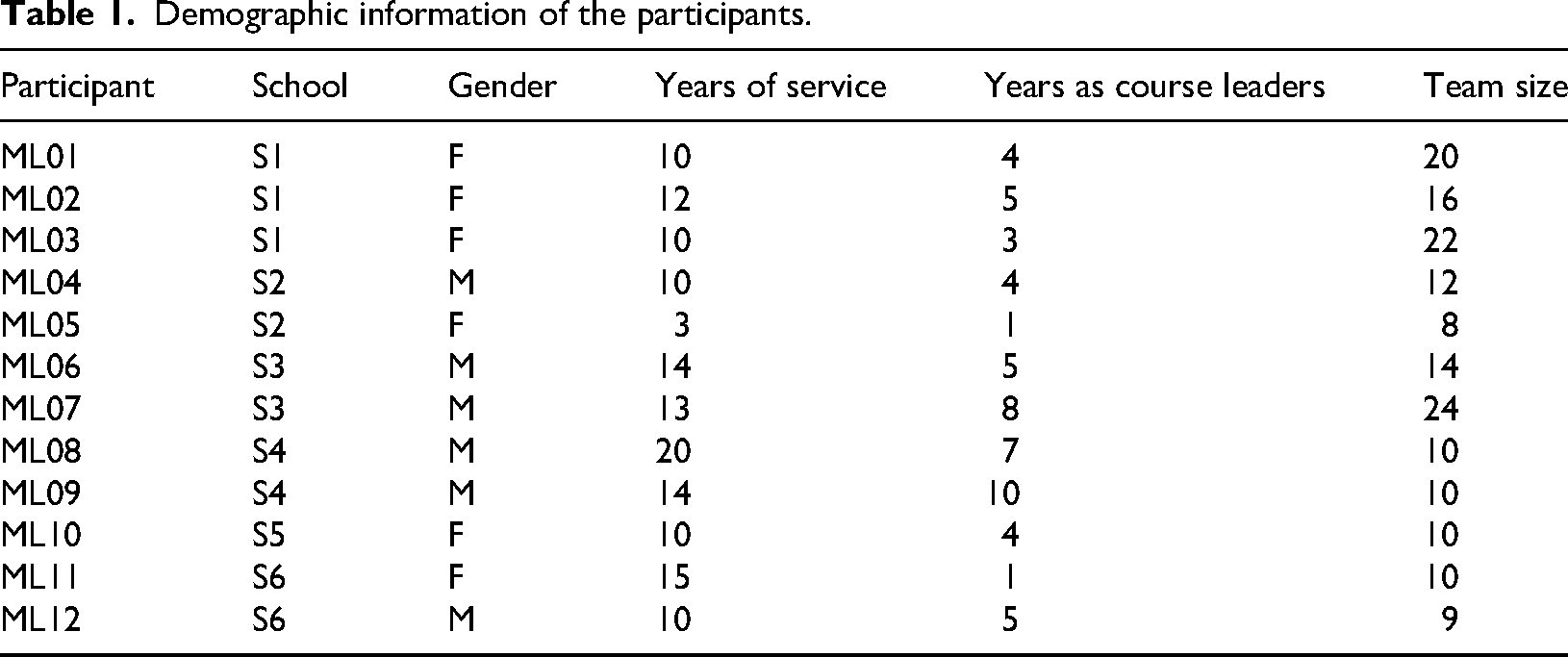
This phenomenological study explores middle leaders’ lived experiences of distributed leadership in a Singapore polytechnic. This approach was selected to capture participants’ subjective interpretations of leadership enactment within their institutional context. In alignment with Creswell and Poth's (2017) recommendations for phenomenological studies, 12 Course Leaders (approximately 30% of the population) were selected through purposive sampling. The selection was guided by predetermined criteria established prior to sampling, including representation across different schools, gender balance, variation in years of service, diversity in team sizes, and range of leadership experience. Each selected participant met all inclusion criteria, namely holding a formal Course Leader appointment and having at least one year of leadership responsibility. These criteria ensured that participants had direct and rich experience with the phenomenon of middle leadership as Course Leaders in polytechnic contexts and were able to articulate their experiences meaningfully. The sample of 12 Course Leaders is shown in Table 1.
Demographic information of the participants.
Semi-structured interviews conducted via online video call were used to accommodate participants’ diverse schedules and ensure consistency in data collection. Each session lasted between 60 and 90 min. The interview protocol focused on participants’ experiences of enacting distributed leadership, including specific practices, enabling conditions, and constraints encountered in their roles.
This study utilised Creswell and Poth's (2017) data analysis framework, which involved preparing and transcribing interview data, followed by multiple readings to develop familiarity and identify significant statements related to leadership practices. Codes were generated through a systematic and iterative analysis of verbatim interview transcripts. This involved repeated reading and comparison across the dataset to identify similarities and differences in participants’ accounts. These codes were subsequently refined and grouped into themes through an iterative process of pattern recognition, with themes formed where consistent patterns of meaning were evident across multiple participants and supported by repeated instances. The lead researcher's background as a former middle leader in higher education created potential for both insider knowledge advantages and interpretive biases. To mitigate reflexivity, strategies, including peer debriefing and member checking, were employed to ensure analytical objectivity while leveraging insider knowledge for contextual understanding.
Findings
Perceived enactments of distributed leadership
The findings indicate that most Course leaders did not explicitly identify with the term ‘distributed leadership’. Nonetheless, their leadership practices reflected key principles and enactments of distributed leadership, as evidenced by their actions and approaches. Four themes emerged from qualitative analysis of middle leaders’ perceptions of their leadership practices:
Bounded Empowerment
Course leaders empowered others in curriculum matters through allocating roles and appointments. However, this empowerment was granted to selected lecturers who held limited authority. Developing Leadership
Course leaders networked with key stakeholders to expand platforms for leadership development of lecturers. Shared Decision-Making
Course leaders involved lecturers to participate and contribute their perspectives to influence decisions. Collective Engagement
Course leaders engaged lecturers in collaborative participation through regular routines, such as discussions with the whole team or smaller sub-groups.
Participant quotations were selected as illustrative exemplars.
Empowerment through informal roles
As middle leaders, Course Leaders adopted a strategic approach to curriculum management by delegating responsibilities to lecturers, particularly through the appointment of lecturers as Module Leaders, who had the primary role of ensuring assigned academic modules ran smoothly. These appointments were typically informal, characterised by rotation of roles according to programme requirements. Leadership responsibilities were distributed among lecturers rather than being attached to institutional titles (e.g. Lecturer or Senior Lecturer). This delegation enabled lecturers to take on leadership roles, particularly in making decisions on curriculum matters. I empowered Module Leaders to take charge of curriculum coverage within their respective modules. (ML05) I would leave it to my Module Chairs to decide the curriculum for their respective modules. (ML09)
Several Course Leaders also extended empowerment to peripheral yet critical programme functions (e.g. coordinating student development efforts and managing industry partnerships) by assigning informal leadership roles (e.g. Year Lead, Student Development Lead, and Industry Lead). These roles enabled Course Leaders to manage the complexity of diploma programmes while extending leadership opportunities to lecturers, demonstrating pragmatism that prioritised effectiveness and efficiency in resource allocation to advance institutional goals.
Selective empowerment in leadership roles
Lecturers were empowered selectively for leadership based on their subject-matter expertise and pedagogical proficiency. Those with strong disciplinary knowledge, often gained through academic or industry experience, were assigned to lead modules due to their specialised competencies and experience. Similarly, lecturers with recognised pedagogical credentials (e.g. Certificate in Lesson Design, a certification programme that recognised proficiency in pedagogical practices across polytechnics) were entrusted to supervise curriculum quality and assessment. This merit-based approach reflects Asian cultural values of meritocracy, wherein leadership roles are allocated based on demonstrated expertise and competency. Colleagues who are Lesson Design certified are assigned to be part of the Curriculum Review Unit, because the certification ensures that they are proficient with pedagogy and have the credentials to approve curriculum materials. (ML06) My lecturers take ownership on curriculum matters (such as module outcomes, lesson material) since they are subject matter experts. (ML12)
This selective empowerment indicates that Course Leaders had discretion over whom to delegate to and the scope of authority granted. However, leadership is distributed within certain parameters, such as the extent to which Course Leaders were consulted, adherence to institutional guidelines and policies, and maintenance of prerogative control (e.g. Course Leaders retained final say or overriding power). This bounded approach, characterised by conditional empowerment while maintaining strategic control over key decisions, highlights the hierarchical nature that required middle leaders to balance empowerment of lecturers with accountability to higher authority.
Developing leadership through networking
Course Leaders sought platforms to facilitate leadership development opportunities for lecturers through both internal and external networks. Internally, they collaborated with colleagues across schools and corporate offices to identify leadership platforms, such as work groups or institutional projects. These initiatives exposed lecturers to complex institutional issues to support the development of leadership skills. I interact with different stakeholders within my polytechnic to source collaborative platforms to develop my staff. (ML04)
Externally, most Course Leaders engaged with industry partners to create leadership opportunities for lecturers beyond their institutional context (e.g. collaboration on industry projects and sourcing opportunities for lecturers). Such collaborations were perceived to enable lecturers to develop competencies in project management, problem-solving, and team coordination, thereby ensuring their development remained aligned with industry needs. I interact with industry partners and curate suitable collaboration projects. After establishing projects, I involve my lecturers to take over and lead. (ML08)
These practices indicate that Course Leaders viewed networking as a strategic mechanism for creating leadership development opportunities for their lecturers, reflecting their limited ability to create leadership platforms independently. Course Leaders fostered trust by demonstrating confidence in lecturers’ capabilities while expecting them to take ownership of responsibilities. As ML06 explained, “I trust those whom I allocated leadership tasks, that they would do their best.” This approach exemplifies Asian cultural values of collectivism and relational harmony, wherein Course Leaders prioritised team development and harmonious networks.
Facilitating collective engagement
Course Leaders implemented varied approaches to facilitate collective engagement through different participation structures, such as routine meetings and brainstorming sessions. These platforms provided opportunities for lecturers to interact and contribute their diverse expertise and align their work with strategic objectives.
Collective engagement manifested through coordinated interactions at multiple levels. At the team level, they involved all lecturers to ensure comprehensive participation and that all perspectives were considered. Course Leaders also engaged lecturers in smaller, focused groups to address specific concerns such as module content and assessment strategies. This varied approach demonstrates that leadership practice emerged from the interactions between middle leaders and lecturers according to task complexity and scope. Through team meetings in smaller groups, I interact with my module leaders on their decision-making for curriculum, such as module design, deliverables, and assessments. (ML03) My team collaborates and checks-in with each other on how they want things to work and supports each other on arrangements that would achieve the common goals. (ML06)
Course Leaders recognised several benefits from collective engagement practices. They reported that collective engagement fostered synergy and facilitated knowledge sharing. Through collective engagement, lecturers leveraged each other's strengths, eliminated duplication, and co-constructed more cohesive curricula, thereby reflecting a commitment to relational harmony as a core value. The leadership enactment of fostering collective engagement sets the conditions from which shared decisions can materialise.
Fostering shared decisions
Course Leaders fostered shared decisions in curriculum matters by delegating decision-making authority to lecturers, granting them autonomy over curriculum development and assessment design initiatives. Moreover, they implemented rotation systems so that lecturers were given opportunities to assert influence across different modules, thereby ensuring tasks were accomplished efficiently while maintaining shared ownership. I identify similarities across different lecturers and organise them into smaller teams to facilitate collaboration on curriculum matters. (ML03) I rotate different lecturers across the sub-team so that they can collaborate with different people and pick up new competencies. This is important to my diplomas as the skills competencies are inter-related. (ML08)
Two main practices supported the shared decision-making approach. First, Course Leaders recognised lecturers’ expertise and empowered them to make decisions in their areas of competence. Second, they emphasised timely information-sharing and open communication, providing lecturers with the necessary information for informed decisions. The emphasis on collective coordination and mutual support demonstrates collectivism, evident in how the team collaborates and coordinates efforts towards achieving common goals.
Summary
The findings highlight that middle leaders enacted distributed leadership by empowering lecturers to take ownership of modules and contribute to decision-making. Leadership is mainly distributed informally, with middle leaders encouraging lecturer involvement in curriculum leadership while retaining oversight. In addition, they supported leadership development by creating platforms through networking with relevant stakeholders. Middle leaders also promoted collective engagement and shared decision-making through team meetings and committees, enabling lecturers to contribute their expertise towards programme outcomes.
Perceptions on enabling and inhibiting factors of distributed leadership
Course Leaders identified a range of conditions that shaped their enactment of distributed leadership. These included domain and pedagogical proficiency, stakeholder relationships, and operational knowledge, alongside challenges related to insufficient leadership preparation, complex stakeholder management, and extensive administrative demands. Collectively, these conditions framed the context within which distributed leadership is enacted by middle leaders in a higher education setting.
Proficiency in domain knowledge
Course Leaders indicated that domain knowledge proficiency is a fundamental affordance to distributed leadership. They perceived that possessing specialised knowledge and expertise enabled them to make informed decisions about distributing leadership responsibilities, such as determining to whom and how tasks should be delegated. For instance, ML10 noted that her familiarity with healthcare operations enabled her to better assess the strengths of lecturers and inform decisions regarding role assignment and task delegation based on their capabilities. As Course leaders, I should be knowledgeable about my diploma. You may not need to be content subject matter expert for all modules, but you must know how each module is built up toward the diploma programme, so that you can be answerable and give guidance to your team. (ML10)
In addition, multiple Course Leaders recognised that domain knowledge strengthened their credibility as leaders among colleagues and directors. They perceived that domain expertise enhanced their authority to delegate responsibilities and empower others, as lecturers were more likely to accept arrangements when they trusted the Course Leader's competence. For example, ML10 noted that her peers’ and director's confidence and trust stemmed from her comprehensive understanding of domain knowledge, which legitimised her authority to delegate academic responsibilities. Likewise, ML02 related her extensive subject-matter knowledge, which positioned her as a credible leader capable of making sound judgements about leadership distribution.
Relationship with key stakeholders
The second affordance identified is the cultivation of strategic relationships with key internal and external stakeholders. These relationships served as critical enablers of leadership development by providing platforms for lecturers to exercise leadership. Internally, Course Leaders established connections with colleagues from other teams, across departments and corporate offices to identify leadership roles for lecturers at the institutional level. Externally, they networked with industry stakeholders to expand access to collaborative projects. Collectively, these relationships provided middle leaders with diverse platforms to facilitate leadership development across different settings.
The findings reveal that stakeholder relationships served two purposes. First, they served as channels for extending collaborative opportunities to lecturers. For instance, ML04 emphasised the importance of cultivating relationships with corporate offices that enabled lecturer participation in institution-wide leadership roles and shared decisions. Similarly, ML02 and ML05 highlighted how strong relationships with other middle leaders facilitated opportunities for their lecturers to take on leadership responsibilities in collaborative projects.
Moreover, stakeholder relationships allowed Course Leaders to involve their teams in strategic alignment processes. Through ongoing communication with different stakeholders, several Course Leaders positioned themselves as connectors by ensuring lecturers could contribute to shared decisions. For instance, ML04 noted that stakeholder relationships played a pivotal role in curriculum alignment, with lecturers’ feedback being integrated into programme-level outcomes. This ensured that decisions were informed by and aligned with both institutional priorities and industry needs.
Familiarity with operational information
The third affordance is familiarity with operational information – that is, knowledge of institutional systems (e.g. student information systems and learning management platforms) and administrative processes (e.g. enrolment and timetabling) that shaped what could be decided and by whom. Many Course Leaders regarded their comprehensive knowledge of operational systems and processes as instrumental, enabling them to facilitate shared decisions and collective engagement. Their proficiency in this area could be further delineated into two domains – internal systems and procedures (e.g. staff scheduling and class allocation) and academic policies (e.g. curriculum approval and assessment regulations).
Course Leaders reported that their understanding of systems and administrative procedures enabled them to involve lecturers in curriculum matters by providing required information for discussion, thereby facilitating collective engagement. For example, ML04’s knowledge of internal platforms allowed him to retrieve student progress reports, which enabled him to engage lecturers in discussions on student support and academic progression.
Across participants, a recurring perception was that their knowledge of academic policies enabled better interpretation and communication of institutional policy requirements, thereby facilitating shared decisions. For example, ML09 and ML12 articulated that their understanding of academic frameworks and changes supported lecturers in curriculum development and assessment design, while ensuring alignment with institutional standards and educational quality.
Lack of leadership preparation
The first constraint is the perceived lack of adequate leadership preparation. Course Leaders reported that they felt insufficiently prepared to undertake their leadership responsibilities, such as delegating responsibilities and offering guidance with minimal supervision. This indicates that prior professional experience alone may not equip individuals with the necessary skills for distributed leadership, highlighting the importance of targeted leadership training for middle leaders. When I first took on the Course Leaders role, all learning occurred through practical experience. The transition required a significant learning effort. It was assumed that Course Leaders would understand the necessary duties without explicit instruction regarding administrative requirements. (ML01)
Although some Course Leaders mentioned the existence of institutional leadership training, closer examination revealed that these sessions were designed for newly appointed reporting officers and covered limited scopes of the middle leader role. Furthermore, these sessions were infrequent and typically lasted only a few days, which participants perceived as inadequate to develop the skills required for leadership demands associated with their role.
This constraint was particularly evident among less experienced Course Leaders. For instance, both ML05 and ML11, who had been in the Course Leader role for under two years, tended to limit delegation and retained responsibility for module-related decisions. Despite expressing a desire to empower others, both faced challenges in striking a balance between delegation and maintaining appropriate boundaries. This hesitation may be attributed to limited leadership experience and insufficient preparation. Conversely, ML02, with over five years of experience as a Course Leader, exhibited greater confidence in delegating tasks within defined boundaries.
Managing Multiple Stakeholders
The second constraint concerned the complexities of managing multiple stakeholders. Although Course Leaders valued stakeholder relationships as sources of leadership development opportunities for lecturers, the need to balance divergent stakeholder priorities constrained their capacity to focus on leadership development.
This constraint manifested in two aspects – managing hierarchical relationships and navigating cross-departmental interactions. Many Course Leaders experienced role strain, attempting to meet senior management expectations, while addressing their immediate teams’ needs. The competing objectives across the hierarchical structure generated tensions and limited their ability to delegate authority and empower lecturers, as they needed to maintain control to manage accountability to senior leaders. As described by ML02, the middle leadership role was situated between senior management and staff, making it challenging to account for the divergent needs of each group.
Moreover, multiple Course Leaders faced challenges in managing the requirements from various corporate departments. They indicated that the requirement to meet key performance indicators and fulfil reporting obligations from multiple offices created overlapping demands, which hindered their ability to support lecturers’ leadership development. For instance, ML01 and ML06 felt overwhelmed by the diverse requests from different corporate offices, which constrained their capacity to engage lecturers in leadership development initiatives.
Multifaceted administrative tasks
The third constraint involved the demands associated with multifaceted administrative tasks, including monitoring attendance, tracking academic performance, supervising colleagues, and coordinating course modules. Course leaders considered these administrative tasks constrained their ability to distribute leadership, as the time-consuming and routine nature of the tasks limited opportunities for meaningful delegation and collaborative engagement.
Several factors contributed to their inability to distribute these administrative responsibilities through collective engagement or shared decision-making. First, several administrative tasks were considered routine, offering limited scope for meaningful leadership development. Second, the time-sensitive nature of requirements, such as data reporting, necessitated swift action and reduced opportunities for collaborative engagement. Third, the confidential nature of sensitive information limited the possibility of broader involvement in decisions. Finally, because Course Leaders bore ultimate accountability, they often had to undertake a considerable portion of the workload themselves rather than distributing it effectively. There is a long list of administrative processes that are taking up a lot of time. For example, Course Leaders are required to look at the module arrangement for students, such as module packing and selection. Some of these processes are manual. (ML01)
Course Leaders derived satisfaction when engaging lecturers in curriculum-related work due to its clear link to meaningful outcomes, particularly students’ successful completion of programmes. In contrast, routine administrative tasks, such as chasing fees or responding to requests, were less fulfilling. While both entail administrative responsibilities, those detached from student outcomes function as constraints by consuming time and reducing opportunities for delegation and interaction, thereby diminishing Course Leaders’ willingness to facilitate collective engagement and shared decision-making.
Summary
The findings demonstrate that middle leaders’ enactment of distributed leadership is shaped by an interplay of enabling and constraining conditions. Leadership practices were supported by domain and pedagogical expertise, stakeholder relationships, and familiarity with institutional systems. These enabling conditions were moderated by limited leadership preparation, competing stakeholder demands, and extensive administrative responsibilities.
Discussion
Bounded Empowerment
The findings identified three aspects of bounded empowerment among middle leaders. First, middle leaders relied primarily on informal rather than formal leadership appointments. While senior leaders held authority over official institutional appointments, middle leaders possessed limited institutional power, restricting them to exercising leadership within programme-level boundaries. Although both involve multiple individuals in leadership practices (Harris, 2013), the concentration of authority at senior levels meant that middle leaders were constrained by limited authority, reflecting the influence of high power distance within hierarchical educational institutions that maintained clear distinctions between different leadership levels and limited the extent to which authority could be distributed.
Second, empowerment was bounded insofar as leaders delegated authority but retained the prerogative to intervene when decisions were deemed significant. This extends Hairon and Goh (2015) three forms of boundedness – establishing a clearly defined scope, requiring middle leaders to remain informed, and ensuring that decisions are aligned with institutional goals. This indicates that while middle leaders empowered others to take on leadership roles, they maintained strategic control over key decisions to ensure accountability. Further, while distributed leadership literature distinguishes between devolved and emergent forms (Bolden et al., 2009), the findings in this study predominantly reflected a devolved and bounded form of distributed leadership, where leadership responsibilities were distributed within hierarchical and programme-level parameters rather than emerging organically across institutional boundaries.
Third, expertise served as a key consideration for distributed leadership. Middle leaders were appointed to leadership positions based on their demonstrated domain expertise, with competency as a prerequisite for leadership roles. Similarly, they empowered lecturers based on demonstrated specialised knowledge and skills. This approach aligns with the literature, which advocates that effective distributed leadership is contingent upon individuals in leadership roles possessing the requisite expertise to manage their responsibilities (Harris, 2012; Spillane, 2006).
Developing leadership
The findings demonstrate that middle leaders contributed to developing leadership through delegating responsibilities, facilitating collaboration, and fostering trust. These practices reflect Harris's (2012) argument that principals develop leadership capacity in others through three aspects – relinquishment of power and authority, shift from leadership as position to leadership as interaction, and fostering of reciprocal trust. Thus, this study extends existing literature by showing that middle leaders similarly engage in leadership development as a component of their distributed leadership practice.
Moreover, the findings offer a nuanced perspective on middle leaders’ roles in developing leadership. Unlike senior leaders, who facilitate leadership development through formal authority and institutional resources (Harris, 2012), middle leaders instead advance leadership development through professional networks and collaborative opportunities within and across institutions. However, this raises concerns that developing leadership may become dependent on middle leaders’ capacity to create relevant leadership opportunities (Jones et al., 2014), potentially resulting in inequitable opportunities across schools.
Notably, middle leaders’ efforts to foster leadership opportunities among lecturers extended to encompass diverse stakeholders, including industry partners. This contrasts with mainstream schools, which are confined within the internal school community (Hairon and Dimmock, 2012). These findings highlight the expansive role of middle leaders in promoting leadership development that transcends institutional boundaries within higher education settings.
Shared decisions
In terms of shared decisions, the findings elucidate how middle leaders operationalise the division of labour, which Gronn (2000) conceptualises as the allocation of institutional work into discrete tasks and responsibilities. This study builds upon Gronn's framework by illustrating how middle leaders implement structured task allocation within their teams, employing strategies such as team formation and role rotation. This approach divided work while ensuring responsibilities were systematically coordinated across interdependent teams. Such coordination aligns with distributed leadership principles, as it allows individuals at various organisational levels to contribute meaningfully (Bolden et al., 2009).
However, shared decision-making was confined within individual diploma programmes, with limited cross-programme or cross-school involvement. While this does not indicate a deficiency in middle leaders’ practices, it reflects structural conditions that shape shared decisions and raises questions about middle leaders’ ability to enact distributed leadership across institutional boundaries.
Collective engagement
Middle leaders fostered collective engagement among lecturers through structured routines, including regular team meetings and group discussions. Their practices encouraged collaboration, sharing of ideas, and alignment with broader institutional objectives. The deployment of both small group and whole team approaches enabled middle leaders to tailor engagement to specific tasks. Small group strategies were utilised for deeper, subject-focused discussions, facilitating detailed feedback and engagement. Conversely, whole-team approaches addressed broader issues, built consensus, and aligned staff with institutional policies. This finding aligns with Hairon and Goh (2015) two recommendations for collective engagement – effective rule utilisation and allocation of resources. Rule utilisation involves applying organisational procedures, manifested through systematic use of different meeting configurations to enhance collective engagement. Resource allocation is illustrated through purposeful planning that varies with task size and complexity.
Nevertheless, collective engagement remained limited across different schools within the institution. This could be attributed to their distinct focuses, which presented barriers to broader collaboration. While cross-school collaboration occurred for leadership development or institution-wide initiatives, it remained infrequent. These findings highlight opportunities for higher education institutions to develop strategies that enhance collective engagement across institutional boundaries.
In summary, this study contributes to the literature by challenging assumptions that distributed leadership is incompatible with hierarchical organisational contexts. Distributed leadership is often associated with flatter organisational structures where leadership responsibilities are shared across levels (Spillane, 2006). Conversely, hierarchical institutions are characterised by centralised authority and top-down decision-making that may impede distributed leadership (Harris, 2004; Harris et al., 2022; Lumby, 2017).
However, this study provides empirical evidence that distributed leadership and hierarchical structures can complement each other with appropriate adaptations as demonstrated in similar Asian contexts (Goh et al., 2019). The findings show that middle leaders in a higher education institution enact distributed leadership by empowering lecturers within defined boundaries, engaging them in shared decisions, fostering collective participation, and facilitating leadership development, despite the presence of hierarchical organisational structures. Notably, this nuanced understanding extends distributed leadership scholarship by demonstrating that it can be enacted pragmatically within hierarchical higher education institutions.
Affordances and constraints of distributed leadership
The findings illuminate the affordances and constraints middle leaders perceived to enable or inhibit their distributed leadership practices within a higher education institution. The findings are synthesised into three overarching themes, each consisting of one affordance and constraint, which are (1) competency disparity – that is, bridging diverse competencies and leadership preparedness, (2) relational dynamics – that is, navigating relationships with multiple stakeholders for opportunities while managing competing demands, and (3) operational efficiency – that is, managing complexity in curricular programmes including operations and processes, while handling multifaceted administrative tasks and competing priorities.
Competency Disparity
Middle leaders are expected to possess diverse competencies. However, empirical evidence from this study indicates a sense of unpreparedness for their leadership roles. This indicates a disconnect between the competencies expected of middle leaders and the institutional support available for their role enactment. Such findings complicate the perspectives advanced by Bryman (2007) and Corbett (2023), which associate leadership effectiveness with the possession of competencies.
This finding aligns with literature highlighting the mismatch between the training needs of middle leaders and the preparation provided (Corbett, 2023; Thompson and Wolstencroft, 2015; Thornton et al., 2018). Page (2013) similarly identified three sources of stress among middle leaders, managers in higher education, namely role overload arising from competing demands, interpersonal stress stemming from unprepared managers attempting to negotiate the interdependencies required of their role, and operational stress. These pressures resonate with middle leaders in this study, particularly less experienced ones, where insufficient preparation compounded challenges in aspects associated with distributed leadership, including delegation, developing lecturer capacity, and facilitating shared decision-making.
To address these constraints, educational institutions could adopt continuous professional development encompassing on-the-job development through cross-functional teams, peer interactions including mentoring and networking, and formal structured training programmes addressing specific competencies. This comprehensive approach aligns with international scholars’ call for continuous development (Hairon, 2017; Maddock, 2023; Thornton et al., 2018).
Relational Dynamics
Middle leaders are required to manage complex relational dynamics with multiple stakeholders, creating both collaboration opportunities and tensions. This complexity involves mediating between competing expectations from senior management directives and team advocacy, spanning upward (senior leaders), horizontal (other middle leaders), downward (lecturers), and external (industry partners) relationships (Branson et al., 2015; Lipscombe et al., 2023). This highlights the importance of middle leaders having comprehensive knowledge of key stakeholders to identify and establish appropriate contacts to create leadership development opportunities for lecturers. The study illuminates that middle leaders are expected to extend networks beyond the institution to include external partnerships with industry, underscoring the value of external collaboration in enriching leadership and professional development opportunities.
Although distributed leadership promotes relational approaches (Bolden et al., 2008; Jones et al., 2014), managing multiple relationships can create dilemmas and conflicts that inhibit its enactment, particularly when middle leaders face competing demands from various stakeholders’ expectations. Thus, it is crucial for educational institutions to provide administrative support and balanced workload distribution, enabling middle leaders to focus on strategic relationship cultivation rather than operational burdens (Author, 2017; Jones et al., 2017; Thornton et al., 2018).
Operational Efficiency
Operational efficiency reflects the importance of familiarity with operational information whilst managing substantial administrative responsibilities. Being familiar with operational information enables middle leaders to make informed decisions and provide effective guidance. For example, understanding academic processes and institutional policies allows middle leaders to define the parameters within which lecturers can exercise leadership, thereby facilitating shared decisions and collective engagement. Moreover, the findings emphasise the significance of being updated on policy changes through information-sharing sessions to provide insights into institutional decisions. This aligns with Ho and Ng (2017), who highlight the importance of information exchange in fostering coordinated leadership approaches, particularly in complex educational settings.
However, familiarity with operational information often increased administrative workload, as colleagues frequently delegated additional tasks to Course Leaders as key contacts. They expressed frustration with administrative duties characterised as mundane, repetitive, time-consuming, and overwhelming. The issue is not their lack of ability to manage multifaceted administrative tasks, but rather the accumulation of competing demands, which constrained middle leaders’ capacity to focus on core leadership functions (e.g. relating to curriculum, assessment, and capacity building). This aligns with the literature, which posits that conflicting priorities create tensions that impede the enactment of distributed leadership (Thornton et al., 2018). Given these challenges, it is not surprising that scholars recommend providing institutional support through workload reduction and eliminating unnecessary reporting requirements to enable middle leaders to focus on leadership (Marshall, 2012).
Influence of cultural values on distributed leadership
This study reveals that middle leaders’ enactment of distributed leadership is influenced by Asian cultural values (Hairon & Dimmock, 2012; Hairon & Goh, 2015; Goh et al., 2019; Jones et al., 2014; Tan, 2024), specifically pragmatism, meritocracy, collectivism, and high power distance. The value of pragmatism manifests in how middle leaders focus on effectiveness in their resource allocation (Tan, 2024). Similarly, meritocracy is reflected in how leadership roles are delegated based on demonstrated expertise (Chong, 2014).
Furthermore, the emphasis on leadership development of lecturers exemplifies the value of collectivism, while the coordination of shared decisions demonstrates collegiality. High power distance is evident in how middle leaders retain certain decision-making authority whilst empowering lecturers within defined boundaries. Collectively, these findings contribute to an understanding of how cultural values shape nuanced forms of distributed leadership within different sociocultural settings in the wider international literature.
Conclusion
This study foregrounds middle leaders’ lived experiences in enacting distributed leadership. It demonstrates that hierarchical institutional structures do not diminish distributed leadership but pragmatically shape its enactment through informal appointments, networking with stakeholders, shared decision-making, and collective engagement.
It advances distributed leadership scholarship by showing how cultural values of pragmatism, meritocracy, collectivism, and high power distance shape leadership enactment in the Asian context, thereby providing a framework for future studies investigating cultural values’ influence on distributed leadership.
The study indicates that higher education institutions should provide supportive structures and foster collaborative relationships to better enable middle leaders to navigate complex roles and enact distributed leadership effectively. Looking ahead, as this study was limited to a single polytechnic with perspectives from only middle leaders, future studies could involve additional perspectives, such as those of senior leaders and lecturers, or explore different contexts beyond Singapore to enable comparison across diverse cultural and institutional settings.
Footnotes
Acknowledgements
The authors would like to thank the Course Leaders who participated in this study for generously sharing their time and experiences. Appreciation is also extended to colleagues who provided feedback during the development of this manuscript.

Ethical Approval and Informed Consent
This study received ethical approval from the National Institute of Education, Nanyang Technological University, Singapore, Institutional Review Board (approval IRB-2023-475) on 8 August 2023. Respondents gave written consent for review and signature before starting interviews.
Funding
The authors received no financial support for the research, authorship, and/or publication of this article.
Declaration of conflicting interests
The authors declared no potential conflicts of interest with respect to the research, authorship, and/or publication of this article.
Data Availability Statement
The data that support the findings of this study are available from the corresponding author upon request.