






Abstract
This paper explores how leaders from a single organisation experience an appreciative coaching intervention. Using a case study design, three participants described their experiences regarding wellbeing, work engagement, and managing change. Findings indicate that appreciative coaching can enhance leaders’ wellbeing and engagement, support the definition of individual success pathways, and increase self-appreciation. The study advances coaching theory by showing how appreciative, strengths-based coaching enhances leaders’ wellbeing, engagement, and self-perception, while offering a replicable framework and practical guidance for leadership coaches aiming to support leaders through change.
Keywords
Introduction
In today's volatile and complex business environment, organisations must respond swiftly and effectively to both internal and external changes, a complex process critical for organisational survival (Stacey, 1996). Within this context, organisational change places significant psychological and relational demands on leaders and employees alike, and up to 93% of organisational change programmes fail (Decker et al., 2012). In response to these challenges, positive psychology and positive organisational scholarship have emerged as effective approaches to organisational development and change management (Cooperrider & Godwin, 2011) by focusing on strengths, meaning, wellbeing, and engagement, thereby supporting individuals’ and organisations’ capacity to adapt and sustain performance during change.
While change can present opportunities, it often increases workload and reduces role clarity, job security, and control, potentially leading to elevated stress and deteriorating employee health (Tvedt et al., 2009). Such conditions can also reduce work engagement and sustained performance over time, thereby jeopardising organisational goals. Leaders play a critical role in shaping how change is experienced by both the organisation and its employees. They are responsible for practical tasks such as creating and communicating the vision and plan for change, holding people accountable, and aligning processes and systems with the change. Moreover, leaders who provide support for coping and stress management can protect and enhance employees’ psychological wellbeing and engagement during periods of uncertainty, while also reinforcing their own capacity to manage change effectively (Terry & Jimmieson, 2003). Encouraging a positive environment can also transform a negative climate, fostering wellbeing and engagement across teams and potentially increasing the likelihood of successful change implementation (Higgs, 2013).
To effectively manage change, leaders need to be well-equipped, not only in terms of skills and performance, but also in their capacity to sustain their own wellbeing and engagement. Evidence-based coaching provides a structured approach to achieving this. It has been shown to be effective in leadership development by discovering and developing the strengths of leaders themselves (MacKie, 2014), while also enhancing their ability to support and develop the strengths of employees at all levels. Furthermore, coaching supports personal growth, improves work performance, and helps leaders better handle the pressures and challenges of change (Hauser, 2009; Passmore et al., 2019; Skews et al., 2019). When grounded in positive psychology, coaching targets leaders’ wellbeing, engagement, and resilience alongside performance outcomes, with benefits that can cascade through the organisation to enhance team wellbeing, engagement, and satisfaction (Biswas-Diener, 2010; Green & Palmer, 2019). Thus, this paper argues that leaders’ wellbeing and engagement are critical to successful organisational change, and that evidence-based coaching offers a practical, positive psychology-informed mechanism to support leaders while generating positive outcomes across teams and the wider organisation.
This qualitative case study examines the experiences of three leaders impacted by organisational change due to the COVID-19 pandemic and a total reorganisation of the human resources (HR) function into value streams. These leaders participated in an appreciative coaching intervention: an evidence-based, four-stage coaching process grounded in positive psychology and based on the appreciative coaching model described by Orem et al. (2007). The intervention uses strengths-based inquiry, focusing on what is working well and building from success. Structured stages guide participants from discovery through action and growth, helping them co-create practical strategies to sustain their wellbeing, engagement, and leadership effectiveness, providing a model that can be replicated by professional coaches. The participants, who are members of the global HR leadership team at a software systems and service provider, have team-lead responsibilities. Although their organisation offers various wellbeing support services—including virtual workshops, wellbeing calls, psychologist services, and an Employee Assistance Program—none of the participants had previously engaged in coaching specifically aimed at enhancing their wellbeing or work engagement.
Despite extensive research on appreciative inquiry and positive psychology coaching (PPC) in contexts such as sport, education, and broader organisational development, there is limited understanding of how leaders experience appreciative coaching in the workplace, particularly during periods of organisational change, and how such coaching affects their wellbeing, work engagement, and capacity to manage change. This study thus contributes to applied positive psychology and coaching scholarship by providing empirical evidence on leaders’ experiences of appreciative coaching during organisational change and demonstrating how such interventions can strengthen wellbeing and work engagement. In addition, it offers a structured, replicable methodology that can guide professional coaches in implementing appreciative coaching in workplace contexts. Specifically, the study seeks to understand leaders’ experiences of the coaching intervention in three key areas: (i) participants’ wellbeing, (ii) participants’ work engagement, and (iii) participants’ capacity to manage organisational change. As such, the overarching research question guiding this study is: “In times of change, what is the experience of leaders from a software organisation of an appreciative coaching intervention, with respect to their wellbeing, work engagement, and ability to manage change?”
Literature Review
This review of literature will outline the concept of wellbeing in the workplace and its links to work engagement. The impact of PPC, appreciative inquiry, and appreciative coaching on leaders and subsequently their organisations will also be reviewed, and appreciative coaching will be discussed as a possible effective intervention that can be applied within organisations to maintain wellbeing and engagement levels during times of change.
Wellbeing
Wellbeing is particularly critical during periods of organisational change, as leaders’ and employees’ psychological resources are tested, and reduced wellbeing can undermine performance, engagement, and the successful implementation of change initiatives. Maintaining wellbeing can help leaders remain resilient, make more effective decisions, and model positive behaviours that cascade through teams. It is reasonable to utilise Seligman's (2011) PERMA model as a multidimensional framework for defining wellbeing in this study, as it captures core aspects of wellbeing that are directly relevant to organisational contexts. Engagement and health are central pillars of PERMAH that align closely with positive organisational scholarship, which emphasises strengths, flourishing, and sustainable performance in the workplace. According to Seligman (2011), the individual pillars of Positive Emotions, Engagement, Relationships, Meaning, and Accomplishment are measurable components that shape wellbeing, and an additional pillar of Health has been suggested by McQuaid & Kern (2017) to enhance the framework.
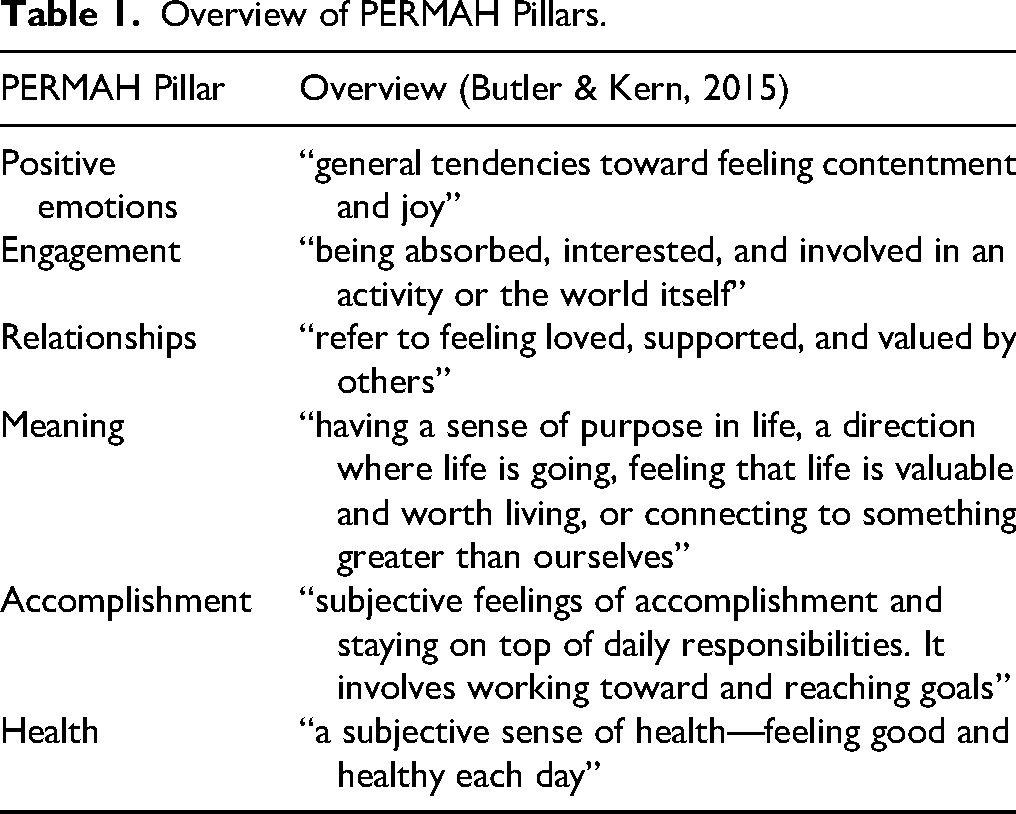
Together, these six elements of PERMAH (see Table 1 for an overview) provide a comprehensive description of wellbeing, supporting individuals to feel good, cope effectively with challenges, and pursue meaningful goals. Given that wellbeing can help individuals manage the demands of organisational change, applying the PERMAH framework as either a preventative or reactive tool can support leaders and employees to maintain optimal performance, thereby contributing to the success of organisational change initiatives (McQuaid & Kern, 2017; Seligman, 2011).
Overview of PERMAH Pillars.
Even though the PERMAH model was originally focused on the individual, academic interest in applying the model to institutions and communities has increased (Cameron & Dutton, 2003), allowing opportunities for organisations to implement multifaceted approaches to complement individual coaching.
Characteristics of Work Engagement
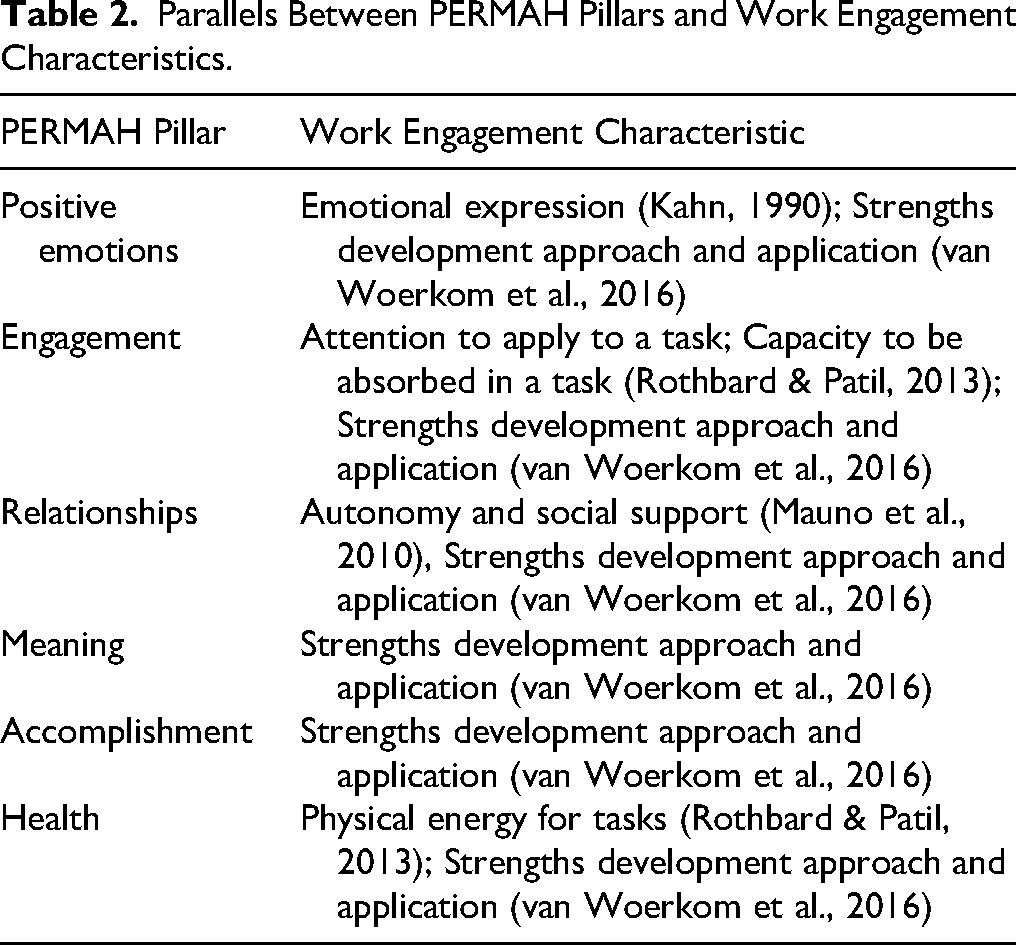
Work engagement, originally described by Kahn (1990, p. 694) as how “people employ and express themselves physically, cognitively, and emotionally” at work, relates to being authentic on the job. Rothbard and Patil (2013) identify three dimensions of work engagement: physical energy, attention, and absorption in tasks. Key predictors of engagement include inquiry into potential (Bakker et al., 2008), as well as autonomy and social support (Mauno et al., 2010). Additionally, van Woerkom et al. (2016) found that consciously applying strengths at work, along with a strengths development approach by line managers, is positively associated with work engagement. When viewing the characteristics of work engagement through the PERMAH wellbeing framework lens (McQuaid & Kern, 2017), several parallels emerge (see Table 2).
Parallels Between PERMAH Pillars and Work Engagement Characteristics.
Chen et al. (2020) highlight the importance of employee wellbeing for work engagement. They found that less conscientious or emotionally unstable individuals who exert high engagement, for example, during high-pressure change initiatives, are at risk of emotional exhaustion, which can reduce productivity and increase absenteeism. To mitigate this, organisations can offer preventative wellbeing education programmes that encourage employees to take responsibility for their own wellbeing. Leaders should also consider the psychological differences and wellbeing states of their team members to adjust expectations appropriately. Additionally, they can collaborate with employees to redesign tasks and responsibilities, focusing on activities that energise rather than deplete them. Coaching strategies can further support this process by helping leaders and employees identify strengths, set goals, and develop personalised approaches to maintain engagement and wellbeing (McQuaid & Lawn, 2014). In this context, wellbeing and engagement are important for all employees to sustain performance and resilience, while for leaders, maintaining their own wellbeing is also critical as it affects decision-making, models positive behaviours, and enables them to foster engagement and wellbeing across their teams.
PPC
PPC's inherent focus is on what is working (Hefferon & Boniwell, 2011) and on strengths, which Biswas-Diener (2010, p. 21) defines as “our pre-existing patterns of thought, feeling and behaviour that are authentic, energising and which lead to our best performance.” PPC has also been linked to increased work engagement, not only for the coachee (Minhas, 2010) but also for their team members (van Woerkom & Meyers, 2015), as leaders who are more engaged, energised, and aware of their strengths can model positive behaviours, provide better support, and create work environments that facilitate team engagement. By enhancing leaders’ wellbeing, clarity, and strengths use, PPC can thus have a cascading effect, boosting the engagement and performance of their teams during periods of organisational change. In view of the positive evidence, it can be argued that PPC is therefore an appropriate intervention with which to support wellbeing and engagement in times of change.
Appreciative Inquiry
Appreciative inquiry is a process based on positive psychology and positive organisational scholarship (Orem et al., 2007) and is defined as “a positive, strengths-based operational approach to change” (Gordon, 2008, p. 20). It is an approach that shifts away from deficits and through the use of appreciative and positive questions within summits, interviews, and coaching, explores potential, opportunity, and the best of people and organisations (Cooperrider & Godwin, 2011) and can be an effective methodology in supporting successful organisational and individual change. The positive climate (Higgs, 2013) and energy generated by an appreciative approach (Cooperrider & Godwin, 2011) can create an emotional contagion effect throughout an organisation, in which cooperative relationships, as well as improved performance, have been found to occur (Barsade, 2002). Cooperrider and Sekerka (2006) posit that this increase of positive emotion is an essential first step in ensuring successful change, which as stated, can also be generated from wellbeing programmes.
Appreciative Coaching
One method of applying appreciative inquiry is through individual coaching. The appreciative coaching framework is derived from the 4D cycle of inquiry: Discovery, Dream, Design, and Destiny (Orem et al., 2007) and is utilised to methodically query the positive resources that a client possesses, including their strengths, previous successes, resources, and capabilities.
Although appreciative coaching has its evidence-based merits, with improved performance of leaders and organisations being reported (Gordon, 2008; Orem et al., 2007), there is concern that the fundamentally positive focus may lead to biased or incomplete views of the individual (Bushe, 2012; Bushe & Kassam, 2005; Reed, 2007) and does not consider potential beneficial learnings from failures (Yin et al., 2019). This may be difficult for the coach of a more pessimistic or cynical client to manage, as evidenced within Orem et al.'s case study from 2005, where they share that this methodology was not particularly easy for the coaches in their study, with a reportedly frequent “pull toward negativity (at times sustained), on the part of the clients” (Orem et al., 2005, p. 6). Finally, a stark warning comes from a paper by Bachkirova and Borrington (2020), who share their concern that an overly positive and indiscriminate approach to the use of positive psychology and coaching by the practitioner—a “one-stop answer” (Bachkirova & Borrington, 2020, p. 17)—may place excessive pressure on the client perpetually (and unrealistically) chasing perfection, which could potentially result in serious mental health problems.
There is a significant body of knowledge available regarding the application of appreciative inquiry interventions in both the fields of sport (e.g., Bertram et al., 2016) and education (e.g., Cockell & McArthur-Blair, 2020), as well as in the organisational context (e.g., Lewis et al., 2016), for example, for stress management (Ravalier et al., 2019) or for responsible innovation and leadership (Beveridge et al., 2020). PPC is also a popular literature topic: a recent systematic review by van Zyl et al. (2020) identified 2,252 positive psychological coaching records in academic databases from 2000.
In contrast, there has been very limited research on the experience of appreciative coaching in the workplace. Apart from the Orem et al.’s (2005) case study, which was conducted in an organisational context and contributed to an enhancement of the process and a handbook for practitioners (2007), and papers by Gordon (2008) and Sloan and Canine (2007) who have outlined the principles and process, scant academic studies have been published about the impact and experience of Appreciative Coaching in the workplace. As it has been ascertained that positive psychology and appreciative coaching will likely have a positive impact on wellbeing and engagement, and can support leaders to manage change—both for themselves and their teams—and particularly considering the turbulence brought to most workplaces due to COVID-19, this study is timely in its exploration of appreciative coaching as a replicable tool to support leaders’ wellbeing and engagement in times of change.
Methods
Design
To understand the participants’ experiences regarding their wellbeing, work engagement, and managing change, a qualitative case study design was selected. This design examines real-life situations within their organisational context (Yin, 2018), aligning with the constructivist ontological and interpretivist epistemological positions that reality is constructed through individual interactions within social systems, such as organisations (Burr, 2015). The social constructivist framework of appreciative coaching supports participants in exploring their reality and envisioning their desired world (Gordon, 2008). By interpreting each individual's experience within the same organisation, common underlying meanings may be revealed.
Participants
For detailed, genuine, and rigorous portrayals (McLeod, 2003), a small and purposeful sample of three participants was selected to provide a thorough representation of their experiences (McLeod, 2003; Yin, 1994) and offer rich, deep insights into the themes investigated (Patton, 2002). The participants, nominated by the organisation's People Director, received no compensation for their participation. All are members of the HR leadership team, are both male and female, aged between 25 and 45, hold at least a bachelor's degree, are based in Portugal, and speak English fluently. Each manages up to 23 employees and has experienced significant organisational change in the past year.
Procedure
The researcher first contacted participants via email, introducing herself and obtaining consent for participation. She then sent the participant invitation, information letter and consent form outlining the research project, participation details, confidentiality, and data usage. After receiving the signed consent forms, the researcher held initial calls via Microsoft Teams to address any questions. To prepare for the coaching intervention, each participant completed a client information form detailing their current challenges and goals. This form was used in the first session. Each participant then underwent four 90-min coaching sessions conducted every 7–10 days via Microsoft Teams.
Coaching Intervention
Appreciative coaching has been chosen for this study, as it taps into the innate resources and strengths that the participant already has, and focuses on inspiring a positive and empowering view of themselves, which can be argued is valuable in times of change. The coaching intervention used Orem et al.'s (2007) appreciative coaching framework. Participants selected a broad and positive topic and envisioned its successful resolution, helping them set relevant goals and focus on positive aspects rather than problems. The first session, the Discover stage of the 4D cycle, built participants’ confidence to manage future change by reflecting on past successes and identifying strengths and sources of energy. In the Dream stage, participants explored possibilities to create a meaningful vision of their future. The Design stage involved planning the steps to achieve their preferred future, considering activities and habits that could move them towards their goal. In the final Deliver stage, participants took meaningful action and personal responsibility for their desired change.
To support goal achievement, inter-session tasks were assigned. Participants completed the PERMAH survey (The Wellbeing Lab, n.d.) before sessions began and discussed it in the first meeting to provide a wellbeing framework. For the Dream stage, the Best Possible Self exercise (King, 2001) helped participants envision their ideal future. The VIA Character Strengths survey (VIA Institute on Character, n.d.) introduced an evidence-based strengths approach for future sessions. Before the Design session, participants completed the Hope Map (Lopez, 2013) to consider different pathways and potential obstacles.
Data Collection
Following best practice in case study methodology (McLeod, 2003; Punch, 1998), multiple data sources were gathered to reveal valuable insights into how participants experience appreciative coaching during change and its effects on their wellbeing and work engagement (Yin, 1994). Brief feedback discussions, under 5 min, were conducted after each coaching session, audio recorded, and transcribed, mirroring methods used in similar coaching case studies by Fogg (2019) and Woodhead (2011). These discussions captured insights at different points in the intervention.
Additionally, 90-min semi-structured interviews were conducted after the coaching engagement, audio recorded within a month, and based on six open-ended questions related to the research question:
Tell me about your experience of the coaching. Tell me what wellbeing means to you. Tell me your experience of coaching with relation to your wellbeing. Tell me what work engagement means to you. Tell me about your experience of coaching with relation to your work engagement. Tell me about your experience of coaching and how you manage changes at work.
If required, other questions to derive deeper meaning included the following:
What else? What happened? How did you manage that?
These questions were asked in a non-leading manner to explore the participants’ perceptions of coaching's effect on their wellbeing, work engagement, and change management. Participants received a debrief letter explaining data usage and providing mental health resources, and a copy of the final report was sent to them.
Organisational information regarding employee wellbeing programmes and significant changes from the previous year was provided to contextualise the case study. This information offered a background on how the organisation supports its leaders’ wellbeing and engagement.
The combination of qualitative data methods was chosen to capture different perspectives at various stages, enhancing insights into the research question. Triangulating multiple data sources strengthened the validity of the outcomes and mitigated potential biases (Oades et al., 2019).
Ethics
This study received ethics approval from the University of East London's Ethics board, and the researcher adhered to the European Mentoring and Coaching Council's Global Code of Ethics (European Mentoring and Coaching Council, n.d.). Although the study focused on a wellbeing coaching intervention, the researcher recognised that vulnerabilities and emotions could arise during or after the coaching sessions. No adverse effects have been reported by participants. Nonetheless, the debrief letter included contact details for the researcher's supervisor and mental health support organisations. To ensure participants’ anonymity, pseudonyms were used.
Reflexive Account
The researcher in this case study held dual roles as both coach and researcher, necessitating a focus on reflexivity to mitigate potential biases. A journal was maintained to reflect on how personal views, experiences, beliefs, and expectations might influence the research process (McLeod, 2003; Watt, 2007).
Regarding the coaching intervention, the researcher's experience echoed findings by Orem et al. (2005) that appreciative coaching could be challenging for practitioners. The structured nature of the intervention—four sessions with predefined themes, a positive approach, and set objectives—limited flexibility to adapt based on participants’ needs. Despite these challenges, the reflective journaling process enabled the researcher to set aside prior coaching experiences and approach appreciative coaching with openness and a willingness to experiment with a new methodology. Journaling also helped ensure that interview questions were asked in an open, consistent, and unbiased manner.
Data Analysis
Thematic analysis (TA) using Braun and Clarke's structured method (2012) was chosen for its flexibility and employed to elicit rich insights into participants’ experiences, emotions, and the meanings they attributed to them (Oades et al., 2019), aligning with the study's constructivist approach. Braun and Clarke's method involves six phases: (1) data immersion, (2) code generation, (3) theme exploration, (4) theme review, (5) theme definition and labelling, and (6) report production. The researcher opted for manual analysis rather than using qualitative analysis software due to the manageable data volume and to gain a deeper understanding of the TA process.
After transcribing the short feedback sessions and interviews, each participant's data were merged and analysed using both inductive and deductive approaches. Deductive analysis focused on theoretical constructs such as Seligman's PERMAH wellbeing model (2011; McQuaid & Kern, 2017), work engagement, and PPC, to identify whether these frameworks were reflected in participants’ experiences. Inductive analysis, in contrast, allowed new and unexpected themes to emerge directly from the data, capturing participants’ own perspectives and contextual nuances beyond the theoretical models.
Transcripts were reviewed multiple times: initial observations were noted, and Braun & Clarke's guiding questions, such as “How does this participant interpret their experiences?” (2012, p. 61), were used to extract deeper insights. Relevant codes were identified and noted in the margins of the transcripts. Once overarching themes related to the research question emerged across all participants’ data, they were compiled in a new Word document. Compelling participant quotes were included to illustrate each theme (Braun & Clarke, 2012) and validate the themes through cross-checking.
Findings
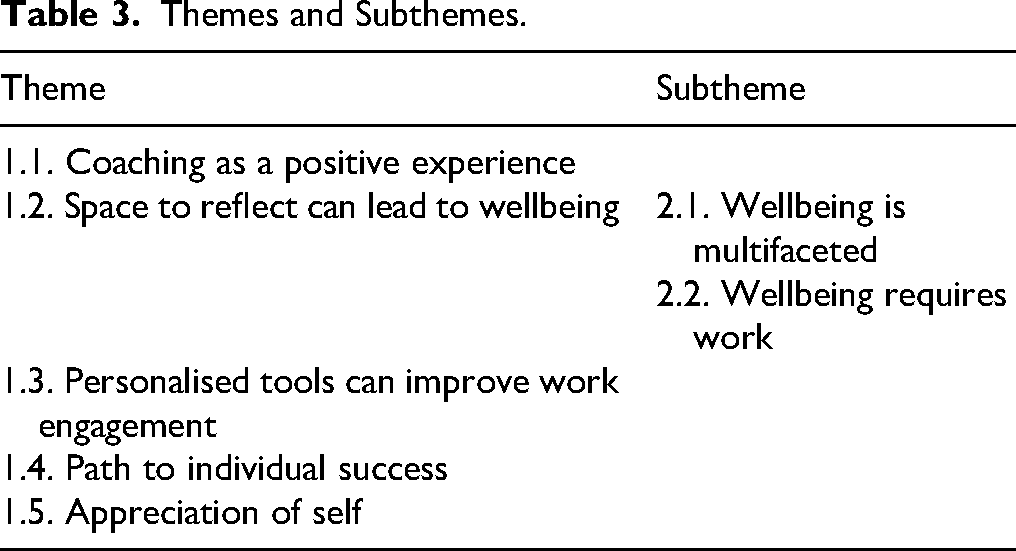
From the data, five themes and two sub-themes were identified. These represent how the participants experienced the coaching in general, as well as the impact that the coaching had on their wellbeing, work engagement, and how they manage change (Table 3).
Themes and Subthemes.
Theme 1: Coaching as a Positive Experience
All participants stated that the experience of the coaching engagement was positive. “I think it was a very positive experience” “It was a good experience” “This has been great”
Two of the participants were doubtful about coaching at the beginning of their engagement, but slowly saw the value in the process and increased their trust in coaching. “I was a little bit sceptical on this coaching approach, but I enjoyed it and I think it gave me some interesting insights about myself and the way I interact with others” “I started out quite sceptical about this … I’m at a completely different place since we started”
The relationship that developed between coach and participant was also mentioned as a positive impact. “With the work of Kelly … I’ve been embracing it, and I’ve been seeing the benefits” “It was funny to understand that we can create a relationship with a coach very fast if the coach is approachable as Kelly is”
Theme 2: Space to Reflect Can Lead to Wellbeing
The coaching provided the opportunity for the participants to reflect, particularly with a neutral party. “I think it's always interesting for us to be able to have this sort of reflection with another person that doesn’t really know us … I think it's more truthful”
As a result, they each recognised a key ingredient of their wellbeing. Structuring thoughts within coaching led to one participant realising that anticipating and managing obstacles would support his wellbeing. “This coaching … structured … a little bit my thoughts so I can understand what obstacles are in front of me and how to tackle them. And this gave me some peace of mind and that reflects in my overall wellbeing”
Another participant recognised that the new habits he identified from the coaching conversations would improve his wellbeing. “Those two aspects that I’ve already put into practice, I think they will make a big, big, big, big change in the way that I feel, in the way that I approach work”
Having space to talk helped Participant 2 to improve her wellbeing: “Talking about my goals and frustrations and defining plans to achieve those goals or address any feelings that I was not really comfortable with, for instance … clearly had an impact on my wellbeing … a positive impact.”
Theme 2.1: Wellbeing Is Multifaceted
The participants recognised that wellbeing has different aspects, and they had different views of these aspects— it can be split into several areas. “Physical, health, global satisfaction” “I think it has a lot of dimensions, like probably a physical one, mental one, the motivational one” “It's feeling good with everything around me”
One participant perceived wellbeing as being a balance of different roles that he sees in himself you’re not just one person. “You’re not just at work. And you are not just a husband, not just a dad, you’re all of those and you have to keep it balanced”
Theme 2.2: Wellbeing Requires Work
All participants feel that wellbeing requires work. “It doesn’t come naturally or without any work on yourself” “It's something that you build and that you work on” “I understand what obstacles are in front of me and how to tackle them”
Theme 3: Personalised Strategies Can Improve Work Engagement
Within the coaching engagement, the participants developed strategies to address different factors, that they felt would lead to increased work engagement. “What these sessions allowed was to stop that (self-recurring spiral which didn’t leave me as engaged in my work), to break that into understand maybe what was causing that and to develop tools” “I became even more engaged with my work because the sessions provided me with some tools to do better at work”
The third participant already considered himself highly engaged, but nevertheless remarked, “if I was in a more unstable situation probably this coaching would give me more ideas”
Theme 4: Path to Individual Success
The process of defining goals, and foreseeing what potential obstacles could prevent them from reaching their goals supported participants in finding their own individual pathways to success. Participant 1 found that gaining clarity on potential obstacles that may prevent him achieving his goals was useful. “I’d rather think and know that I have some obstacles than just face them once they happen and I won’t be prepared…. The way to get to our goals has obstacles and identifying those obstacles is very, very useful.”
Participant 3 recognised that seeing himself more positively would help him meet his goals. “I need to see myself as through positive eyes, as it is one of my goals, because this will also be important for everything else that I’m defining as I want to achieve.”
Participant 2 reported that ensuring her goals were correct was important. “It was interesting to redefine some of my goals … I wasn’t really focusing on the … cause of the problem. And now that's identified, I’m happier with the goal.”
Theme 5: Appreciation of Self
Finally, the participants all developed a more appreciative view of themselves. “I understand I have some strengths” “It was a productive session for me to see … what skills I already have in me” “I’ve also slowly come to realise that I have to be … grateful for what I have, what I am”
Participant 1 chose to develop a new habit to ensure he retains his appreciative perspective. “One of the things I will do … some of the things we identified in coaching … focus a little bit on me and giving myself positive feedback and reinforce my belief that I can do things well.”
Participant 2 found that feedback given from the coach during a session was positive reinforcement. “I like to think of myself as someone who cares about others, but the fact that from the experience I’ve shared with you, you mentioned kindness … about me … it was a positive and interesting point to me.”
After the coaching, Participant 3 now sees himself differently. “I’m a completely different place since we started … I have a better view of myself.”
Discussion
This study examined how leaders experience an appreciative coaching intervention with respect to wellbeing and work engagement during organisational change. The three objectives were to explore participants’ wellbeing, work engagement, and change management experiences.
The appreciative coaching model (Orem et al., 2007) guided participants through four structured stages—Discovery, Dream, Design, and Destiny—emphasising strengths, past successes, and purposeful goal setting. While other coaching models adopt similar staged processes, the constructivist and appreciative foundations of this approach specifically support the development of a positive self-view and heightened awareness of personal strengths and capabilities (Sloan & Canine, 2007). This aligns closely with PPC literature, which foregrounds strengths-based inquiry and building on what is already working well (Gordon, 2008; Hefferon & Boniwell, 2011). Participants reported increased awareness of their capabilities, which appeared to support both their wellbeing and their capacity to sustain work engagement and performance, consistent with PERMAH and work engagement frameworks (McQuaid & Kern, 2017; Seligman, 2011; van Woerkom et al., 2016).
Regarding wellbeing, coaching offered a safe space to explore habits and strategies beneficial to participants’ future wellbeing. This echoes research highlighting the importance of leader wellbeing for managing change and modelling behaviours that cascade through teams (Chen et al., 2020; Terry & Jimmieson, 2003). Participants acknowledged the ongoing effort required to sustain wellbeing, with individual differences, such as balancing multiple life roles, reflecting Biswas-Diener's (2010) observation that structured models may not capture every perspective.
In terms of work engagement, participants reported an improvement through identified coaching strategies, including VIA character strengths assessment and exercises. These findings reinforce literature linking leader strengths use to enhanced work engagement and team performance (van Woerkom & Meyers, 2015). High engagement was managed effectively, mitigating burnout risks, consistent with organisational wellbeing research (Chen et al., 2020).
For change management, participants highlighted that while immediate outcomes were difficult to assess, coaching supported reflection, planning, and preparedness—extending the practical application of appreciative coaching in organisational contexts (Orem et al., 2007; Sloan & Canine, 2007).
Overall, the study provides empirical evidence that appreciative coaching can enhance leader wellbeing and engagement. By offering a structured, replicable methodology, this research addresses a gap in the literature on workplace-based appreciative coaching and provides guidance for evidence-based coaching practice during periods of change.
Implications for Practice
The findings highlight appreciative coaching as an effective, evidence-based approach to support leaders’ wellbeing, work engagement, and goal setting during times of organisational change. The four-stage Orem et al. (2007) framework provides a structured yet strengths-oriented process that supports leaders to reflect on past success, clarify future aspirations and translate insight into action. Its appreciative and constructivist foundation provides coaches with a replicable methodology that can be applied across organisational contexts, making it particularly useful for supporting leaders navigating complex change.
Coaches should recognise that effective strengths-based interventions require experience, flexibility, and a solid understanding of positive psychology. Overly prescriptive approaches can overlook individual needs or increase pressure to perform perfectly. Adapting strategies to each client's context and mindset fosters genuine growth, resilience, and sustainable engagement (Bachkirova & Borrington, 2020; Bushe, 2012).
Using the PERMAH framework provides a shared vocabulary and evidence-based lens for discussing wellbeing, helping coaches reduce variability in how leaders and employees perceive and articulate their wellbeing. This can enhance clarity in coaching conversations, guide goal setting, and enable measurement of progress across multiple dimensions of wellbeing. Similarly, assessments such as the VIA Character Strengths inventory offer practical tools to identify and leverage individual strengths, enabling both leaders and their teams to sustain engagement and performance during organisational change (van Woerkom & Meyers, 2015). Integrating these assessments into appreciative coaching can help practitioners balance a focus on strengths with awareness of potential challenges, ensuring interventions are grounded in both theory and the unique context of each client.
Finally, findings underscore the importance of tailoring coaching to each leader's perspective and organisational reality, avoiding overly generalised interventions. By combining the structured guidance of appreciative coaching with the shared frameworks of PERMAH and VIA, coaches can offer interventions that are both systematic and flexible, supporting leaders’ wellbeing and engagement while cascading positive effects throughout teams and the wider organisation.
Limitations and Future Research
Regarding the research focus on participants’ experiences with coaching interventions in managing change, a significant limitation emerged due to the timing of the final interview. Participants were asked about their coaching experience and how it impacted their management of changes at work 2 days after their final session. Their responses indicated it was too soon to discern substantial effects: “I don’t think I already had the experience of using these coaching sessions and what I gained from them and apply them at my work” (Participant 2), and “This was just one month. It's hard to evaluate how things changed in my behaviour due to coaching” (Participant 1). Therefore, future studies should allow for a longer interval post-coaching to explore its effects on managing change.
Another limitation surfaced in the recruitment process where participants were appointed rather than having applied voluntarily. Initially sceptical, two participants’ doubts about coaching diminished over time, with all eventually finding the experience positive. However, readiness for coaching has been linked to its success (McKenna & Davis, 2009), suggesting that participants who self-select for coaching may be more prepared and motivated. Future research should consider recruiting participants who actively seek coaching opportunities.
Given the case study's focus on an HR department, its findings are context-specific and cannot be generalised broadly. Future studies could explore the impact of appreciative coaching across different industries or specific contexts like managing change during events like the COVID-19 pandemic.
Lastly, for future research, integrating qualitative case study methodologies with quantitative assessments like PERMAH and the Utrecht Work Engagement scale would provide a comprehensive understanding of the impacts and mechanisms of coaching interventions. This mixed-methods approach would elucidate not only the extent but also the reasons behind any changes observed.
Conclusion
The results of this study address a gap in the literature by providing an in-depth understanding of leaders’ experiences of appreciative coaching in the workplace and the multiple ways it can positively influence wellbeing and work engagement. The findings demonstrate that appreciative coaching not only supports leaders in setting meaningful goals and designing actionable pathways, but also fosters enhanced self-awareness and a more positive self-perception, supporting resilient and psychologically safe leadership.
By articulating the structured four-stage process and its practical application, this research offers replicable insights for coaching practitioners, highlighting how evidence-informed approaches can systematically support leaders’ growth, wellbeing, and work engagement. Moreover, it contributes to the broader coaching literature by illustrating how appreciative, strengths-based methods can be integrated into organisational leadership development, promoting sustainable behavioural change and reflective practice.
Although this case study focused on a single organisation, the findings suggest that appreciative coaching, delivered by an experienced practitioner using a structured framework, has the potential to enhance leaders’ capacity to navigate change, foster engagement, and contribute to positive organisational cultures. This reinforces the model's scalability and adaptability, indicating its relevance for diverse organisational contexts. Future research could build on these findings by exploring the wider organisational and team-level impacts of appreciative coaching, including its role in managing complex change initiatives, cultivating high-performing teams, and supporting systemic leadership development.
Footnotes
Funding
The author received no financial support for the research, authorship, and/or publication of this article.
Declaration of Conflicting Interests
The author declared no potential conflicts of interest with respect to the research, authorship, and/or publication of this article.