







Abstract
National guidelines for routine ultrasound quality assurance include the measurement of transducer sensitivity using the in-air reverberation pattern generated from a transducer operating in air. The in-air reverberation method has been compared with other well-known measures of transducer sensitivity, such as the Sonora FirstCall probe tester (Sonora Medical Systems Inc, Longmont, CO, USA) and phantom-based images. There is good agreement between the in-air reverberation images and the Sonora FirstCall probe data for individual crystal sensitivity. However, the in-air reverberation approach is cheaper and easier to implement for linear and curvilinear transducers. The methods used for measuring the in-air reverberation pattern and the influence of scanner parameters such as gain and output power have been investigated. In general, reliance on a visual assessment of reverberation depth can lead to inconsistencies in the measurement of reverberation depth, when taken over a period of several months. The value of scanner parameters, in particular scanner gain, is also important when trying to measure changes in reverberation depth due to changes in transducer performance. A more accurate assessment of changes in transducer sensitivity, using the in-air reverberation method, is found by measuring the peak pixel grey scale values within a chosen reverberation band in the image. This quantitative approach can be taken a step further by assessing changes within the whole in-air reverberation pattern, by applying a two-dimensional cross correlation between two reverberation images to assess changes in transducer performance.
Introduction
Quality assurance of medical ultrasound systems has been in place for many years and guidance on methods of quality assurance has dated back to at least the 1980s in the UK.1–3 The measurement of relative transducer sensitivity has been an important part of quality assurance programs. Here, the sensitivity can be defined as the ability of the transducer elements to detect weak returning echoes from background noise in the image-scanner system. One of the early methods of measuring sensitivity was to use a Perspex block. 2 With this method, the transducer is coupled to the Perspex block. The far side of the block forms an interface with air, producing a large impedance mismatch at this end of the Perspex block. Multiple reflections of the transmitted acoustic pulses from the Perspex–air interface are displayed on the scanner monitor. These reflections appear progressively deeper in the image plane, with a reduction in amplitude as the echoes are attenuated during their back and forth transmission through the Perspex. Measuring the depth to which the deepest reverberation can be imaged is a measure of the ultrasound system sensitivity.
More recently, it has been demonstrated that the transducer can be operated in air. 4 The operation of modern transducer arrays allows the generation of a reverberation image which is based on the passage of the ultrasound pulse through the various transducer layers (the matching layers and lens) with a reflection back to the transducer array due to the large impedance mismatch between the front face of the transducer (composed of the protective layer) and air. The distance to the last whole reverberation band is measured by visual means and taken as a parameter of system sensitivity. This methodology has been proposed by IPEM and is recommended as a front-line routine assessment of scanner performance. 3 Furthermore, ANSYS® modelling 5 of a simple multi-layer transducer arrangement has shown that changes in the piezoelectric properties of the transducer crystal, or changes in the properties of the matching layers or transducer lens, can all lead to changes in a simulated reverberation pattern,6,7 providing further support to this method of quality assurance.
This paper explores the use of the in-air reverberation method and suggests some changes to the methodology used in performing and interpreting the results. 3 The paper presents a series of studies and their results. The first study compares the air reverberation method with the Sonora FirstCall probe tester method (Sonora Medical Systems Inc, Longmont, CO, USA) for assessing transducer performance. The next study looks at the implementation of the in-air reverberation method (as outlined in IPEM report 102) in a hospital environment. Following on from this the next two studies investigate alternative methods for interpreting the results of the in-air reverberation test. The in-air reverberation method is a measure of transducer sensitivity and therefore a measure of the transmission and reception properties of the transducer. Studies 3 and 4 attempt to mimic the effects of changes in the transmission and reception properties of the transducer by varying the output power and gain settings used on the scanner. The implications of the results from the four studies are explored in the discussion section.
Study 1: Comparison of the reverberation image with the Sonora FirstCall probe tester
The Sonora FirstCall transducer element tester provides a measure of sensitivity for individual piezoelectric crystals for a range of medical transducers. The system is based on electrically exciting individual transducer crystals and using the same crystals to detect the reflected echo from a steel plate (both transducer and steel plate are placed in a water tank). The size of the received signal, relative to the excitation pulse, is a measure of crystal sensitivity. We have compared the results of the Sonora FirstCall sensitivity measurement with the in-air reverberation pattern measurements for an L9-3 Philips (Philips Healthcare, Eindhoven, Netherlands) linear array transducer, a B&K Medical (BK Medical, Herlev, Denmark) Biplane and Endfire transducer, Model 8818S and a C5-1 Philips curvilinear array. The results are shown in Figures 1, 2 and 3, respectively. Figures 1 and 3 contain four graphs and Figure 2 has three graphs. In each case, graph (a) shows the in-air reverberation pattern obtained with the stated transducer. Graph (b) for each transducer shows the individual crystal sensitivity in volts. For the L9-3 transducer and the C5-1 transducer, the sensitivity was measured using the Sonora FirstCall probe tester (these tests were conducted by DP Medimaging, 15 Carnarvon St, Manchester, UK). For Figure 2(b), the crystal sensitivity measurements were provided by the transducer manufacturer (BK Medical). In graph (c), in each figure, data from the results in graphs (a) and (b) are plotted. The x-axis represents the transducer elements. The y axis represents a normalised parameter. The blue curve in each graph (c) is a plot of the individual crystal voltages, normalised by the maximum voltage for each transducer. The red curve is a plot of the normalised grey level values taken from the in-air reverberation images. The grey level values are taken along a lateral line, across the transducer, in each reverberation image. The lateral lines chosen are shown in the reverberation images in Figures 1(a), 2(a) and 3(a). Figures 1(d) and 3(d) contain images taken of Gammex-RMI (Gammex-RMI, Nottingham, UK) 404GSLE and 403GSLE tissue equivalent ultrasound phantoms, using the L9-3 and C5-1 transducers.
Philips L9-3 linear array transducer. (a) An air reverberation pattern obtained with the transducer. (b) The individual crystal sensitivities in volts obtained using a Sonora FirstCall probe tester. (c) A plot of the data from graph (a) and graph (b). The Sonora data and the grey value data have been normalised. The grey value data are taken across the yellow line shown in (a). (d) An image taken of a Gammex RMI 404 GSLE phantom with the L9-3 transducer. The red arrows correspond to regions where the air reverberation pattern in graph (a) is broken B&K Medical 8188S Biplane and Endfire transducer. (a) An air reverberation pattern obtained with the transducer. (b) The individual crystal sensitivities in volts. The data were supplied by the manufacturer BK Medical. (c) A plot of the data from graph (a) and graph (b). The transducer voltage data and the grey value data have been normalised. The grey value data are taken along the yellow line shown in (a) Philips C5-1 curvilinear array transducer. (a) An air reverberation pattern obtained with the transducer. (b) The individual crystal sensitivities in volts obtained using a Sonora FirstCall probe tester. (c) A plot of the data from graph (a) and graph (b). The Sonora data and the grey value data have been normalised. The grey value data are taken along the yellow line shown in (a). (d) Two images taken of a Gammex RMI 403 GSLE phantom with two different C5-1 transducers. The left image is taken with a good C5-1 transducer and the right image is taken with the C5-1 transducer used in (a) to (c)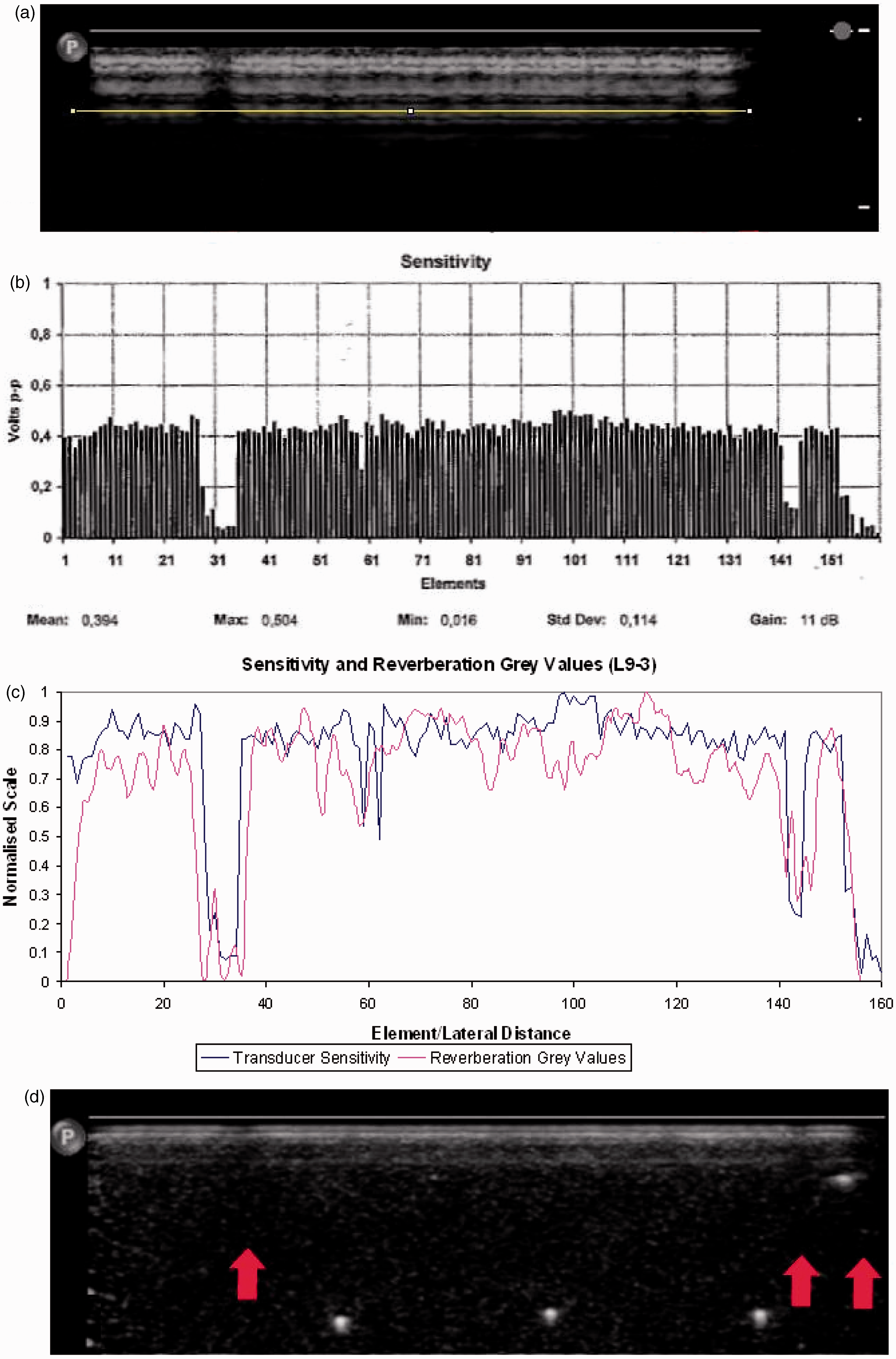
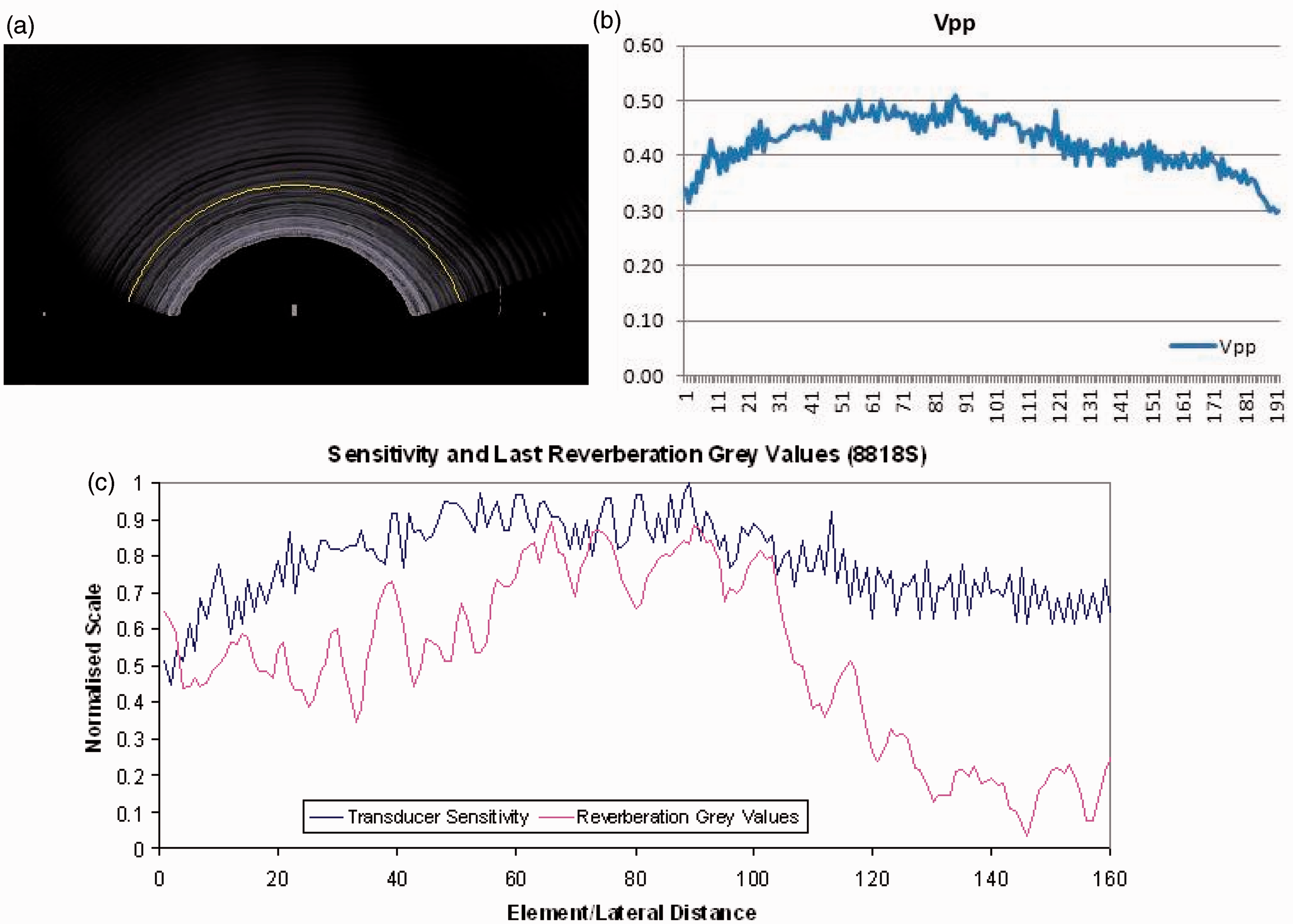
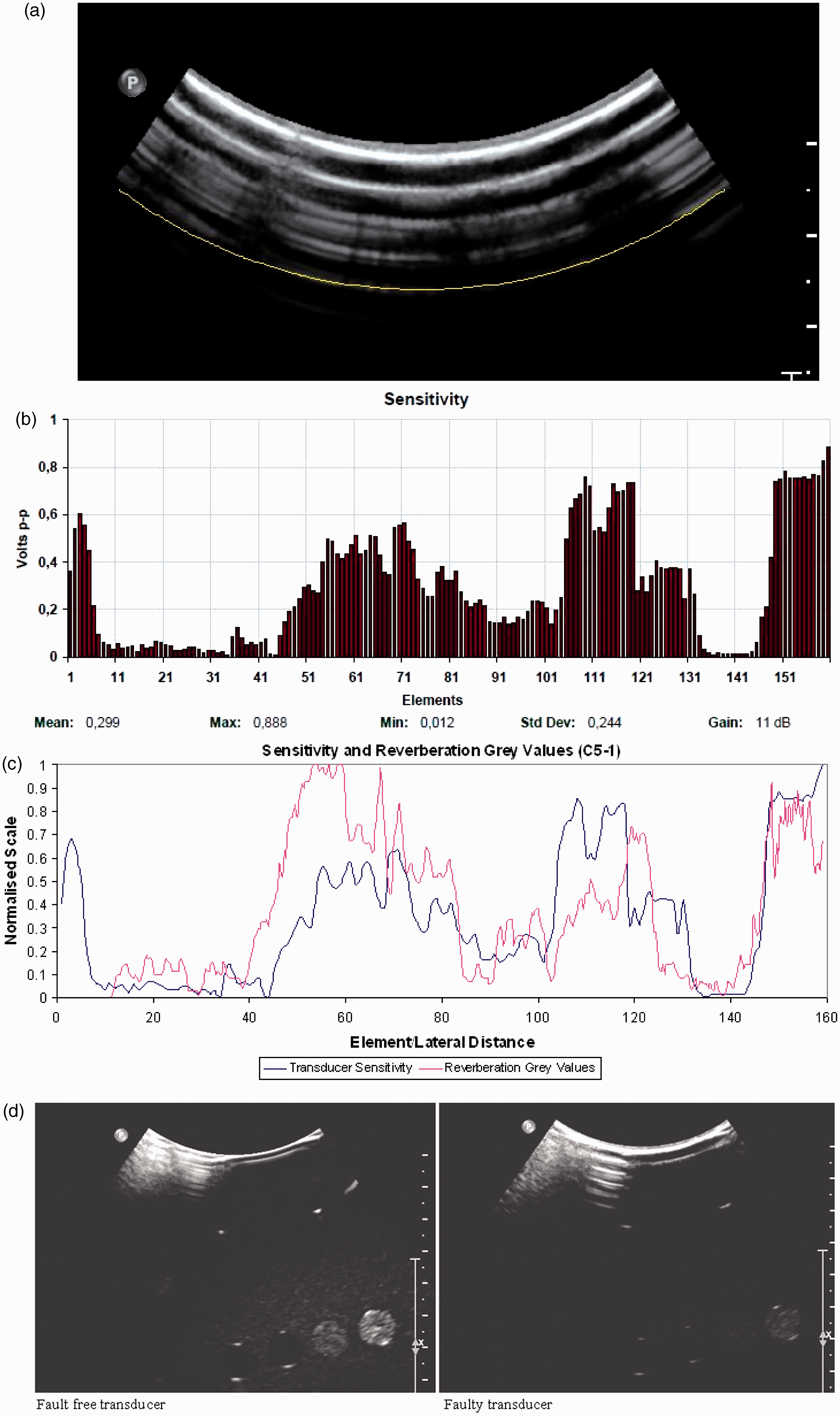
In Figure 1(a) the reverberation image of the L9-3 transducer shows three dark axial regions where the reverberation pattern is broken, presumably due to either transmission or reception problems with the crystals in those areas of the transducer. The corresponding Sonora FirstCall crystal sensitivity test, in Figure 1(b), shows that in the same regions of the transducer, the crystal sensitivity has fallen. A similar relationship between in-air reverberation pattern and crystal sensitivity measurement is observed for the 8188S transducer in Figure 2 and for the C5-1 transducer in Figure 3. The curves in graphs (c), for all three figures, bear out this observation. A cross-correlation analysis between the normalised measured crystal sensitivity and the normalised greyscale value of the in-air reverberation line shows a high level of correlation for all three transducers. For the L9-3 and the 8188S transducers, the cross correlation at zero lag is above 0.95, and for the C5-1 transducer it is 0.84. The ultrasound phantom images in graphs (d) for the L9-3 and the C5-1 transducers support the observations of the in-air reverberation images and the crystal sensitivity tests. For the L9-3 transducer, it can be seen that the regions highlighted by the arrows in Figure 1(d) correspond to three dark axial bands. These regions correspond spatially to the dark bands in the reverberation image and to the areas of low crystal sensitivity in the Sonora FirstCall data. In Figure 3(d), there are two phantom images, one taken with the C5-1 transducer in question and another image taken with a C5-1 transducer that did not register any concern from clinicians using this transducer. The scanner set-up for both images is identical. The difference in the visibility of the four greyscale contrast targets between the two transducers is apparent. With the ‘faulty’ C5-1 transducer, only the +20 dB contrast target is visible, and even this is only just visible. The other three contrast targets are not visible. With the normal C5-1 transducer (left image), the two high-contrast targets are easily visible and the two targets below background contrast are also discernable. The right image (with the ‘faulty’ C5-1) does show the alignment dots on the high-contrast target, ruling out any alignment issues as a cause for the difference between the images.
Study 2: Visual measurement of reverberation depth
The in-air reverberation sensitivity user test in IPEM report 102
3
was implemented in ultrasound departments within our region in South Yorkshire. Each scanner tested was first set-up with quality assurance presets so that the tester did not have to adjust any scanner settings before making an in-air reverberation measurement. Local sonographers were asked to perform the user tests and suitable training was supplied. During the monthly measurements, the users selected the preset, visually inspected the reverberation pattern and then measured the depth to the last full reverberation line. The measurement was made down a central line in the image. All the images were saved to PACS for retrospective analysis. Four ultrasound departments were chosen for this study. Figure 4 represents our findings; in hospitals 3 and 4, one sonographer was responsible for performing the monthly user tests, and in hospitals 1 and 2, the user tests were performed by a small pool of available sonographers. The results of the sensitivity measurements, including the images, were sent to our department for further analysis. We have retrospectively looked at the digital images and analysed the consistency with which the last reverberation depth was chosen. Only transducers that had not changed their sensitivity performance were selected for this aspect of our study.
The consistency in manually choosing the same in-air reverberation band at four different hospitals in our region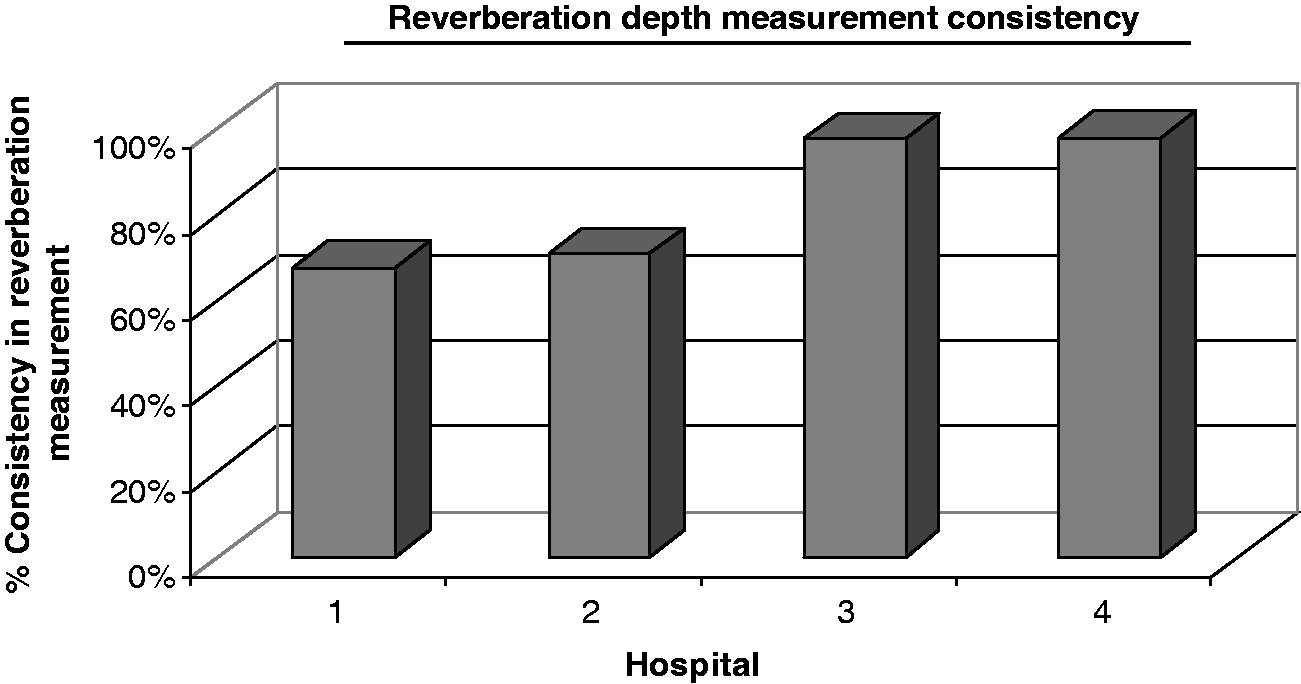
Figure 4 is a bar chart of the results from the four sites. The data for hospital 1 include seven transducers over 5 months, giving 35 entries; hospitals 2, 3 and 4 include 45 entries each. The height of the bar chart shows the level of consistency in choosing the same reverberation depth. This was gauged by viewing monthly reverberation depth images, side by side, and assessing whether the user chose a different reverberation depth, despite having a similar image to the previous month. As can be seen, there is a clear difference in the level of consistency when measuring the depth of the last reverberation. The margin of error, when considering a measurement consistent, was the thickness of a full reverberation. This difference is somewhat dependent on whether the measurement is done by one person or a group of people. From the results it seems that one single user is far more likely to select the same correct reverberation depth from month to month, with the proviso that transducer performance has remained the same. There did not seem to be any bias with respect to the model or brand of scanner used.
Study 3: Influence of scanner parameters on reverberation depth
IPEM report 102 suggests performing the in-air reverberation sensitivity test with the scanner set to maximum GAIN and maximum POWER. We have investigated the relationship between the change in the depth of the last reverberation line with changes in GAIN and POWER settings. Here, the GAIN is defined as the overall scanner GAIN and the POWER is defined by the displayed Mechanical Index (MI) value. The MI value is altered by changing the acoustic output from the scanner using the standard output power controls.
Figure 5 illustrates the results for a Philips iu22 scanner with an L17-5 transducer and a Toshiba Xario (Toshiba Medical Systems Ltd, Crawley, UK) scanner with a 6C1 transducer. The graph plots the percentage reduction in reverberation depth as the POWER is reduced. The solid curves on each graph represent the change in reverberation depth under a maximum GAIN setting and the dashed curves represent the change in reverberation depth under a clinical GAIN setting. The depth of the last reverberation has been determined using a manual visual method using the scanner callipers. Because the images could be analysed side by side, it was possible to ensure the correct reverberation line was selected for each series of images.
The influence of scanner POWER and GAIN setting on the visual measurement of in-air reverberation depth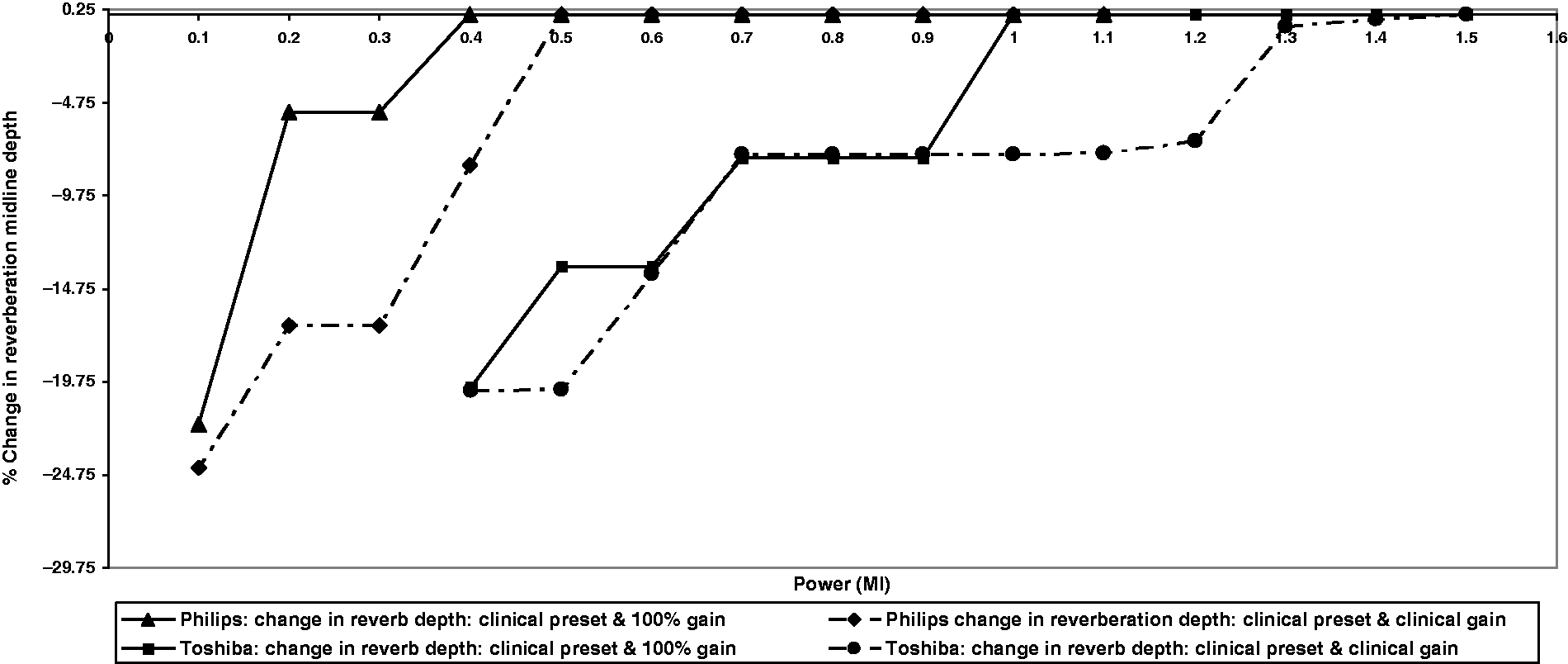
As can be seen, when a maximum GAIN setting is used, there is no drop in the depth of the last reverberation until the POWER has dropped significantly for both scanners. The situation is improved when the lower clinical GAIN setting is used. In these cases, the percentage drop in depth of the last reverberation is more pronounced as the POWER is reduced. The rate at which the reverberation depth decreases is also slightly higher when a clinical GAIN setting is used. This observation suggests that employing a preset with clinical gain, for reverberation depth measurement, is more sensitive than the equivalent preset at 100% gain, for detecting a drop in power.
Study 4: Use of the reverberation pattern to obtain other measures of sensitivity
Two other methods to assess transducer sensitivity have been investigated. A Philips iu22 scanner with an L9-3 transducer and a Toshiba Xario scanner with a 10C3 transducer were used for these measurements. The scanners were set to an appropriate clinical preset for the transducer that was tested. At each POWER setting the reverberation pattern was assessed by plotting the grey values down a central line of the image plane. Figure 6(a) shows the grey values plotted down the central line of the reverberation image. As can be seen, this curve consists of a series of peaks and troughs representing the bands of bright and dark intensity. The last reverberation band is represented by the last peak. The axial distance to the end of the last reverberation band has been determined by measuring the distance at which the grey values either reach values similar to those of noise in the image or when the grey values are zero. This is our first method of assessing transducer sensitivity.
The influence of scanner POWER and GAIN setting on the measurement of in-air reverberation using pixel grey values. (a) A typical in-air reverberation image. The corresponding pixel grey values, down the central line (yellow) of the image, have been plotted alongside. (b) The change in reverberation depth with output POWER using both pixel grey value methods for a Philips L9-3 transducer. The figure also plots the change in LCP depth with the same changes in output POWER. (c) The corresponding result for a Toshiba scanner with a 10C3 transducer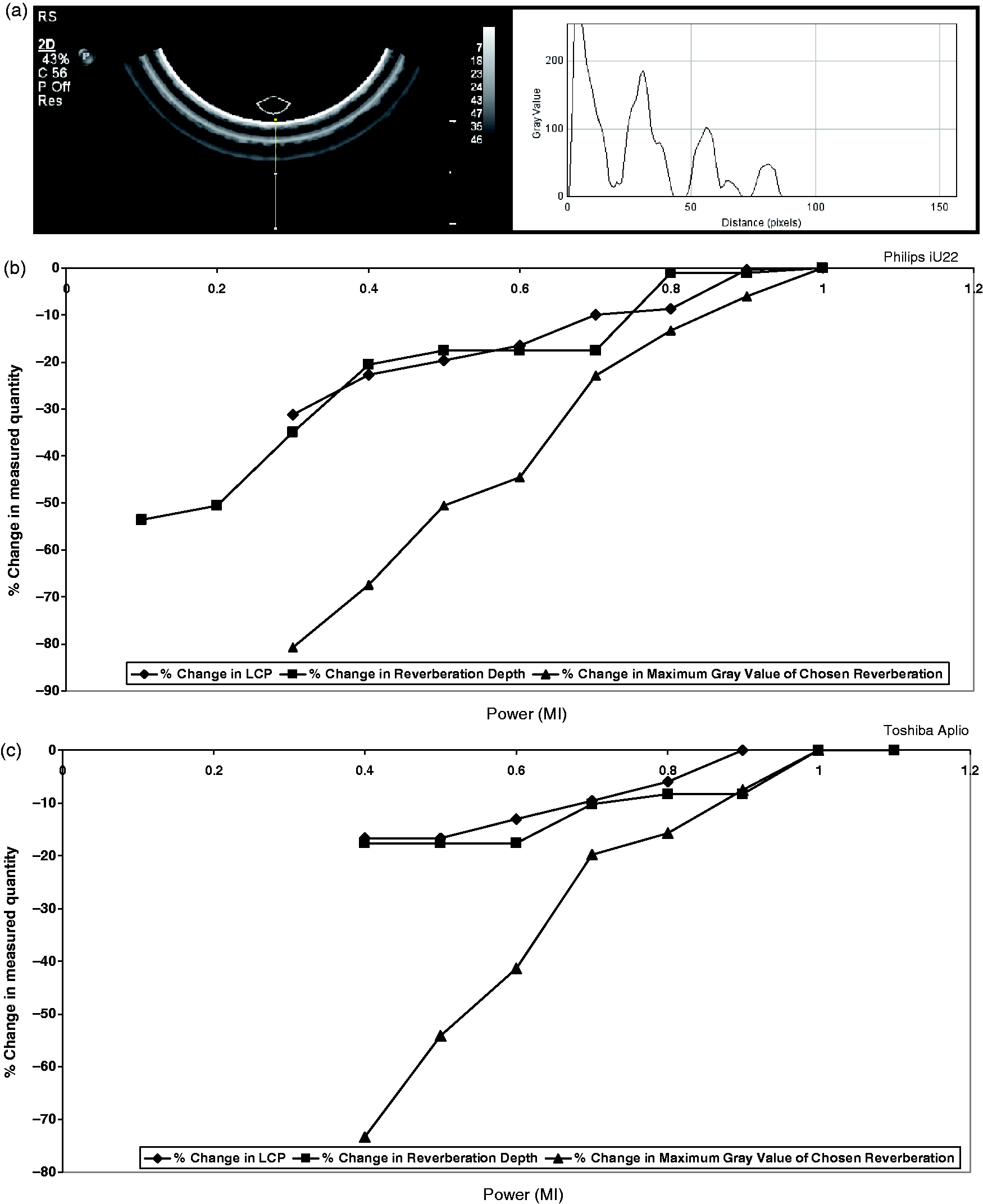
Using a second method to measure sensitivity, the maximum grey value in a chosen reverberation band has been measured. Although one could choose the last reverberation band for this measurement, it is not always the best band to choose. As the POWER setting is reduced, the last reverberation band can disappear and the peak intensity of the next reverberation band may be larger than the previous value, recorded from the reverberation band that has disappeared.
Figure 6(b) and (c) shows results for the Philips and Toshiba transducers, respectively. There are three curves on each graph and in both graphs the x-axis represents the scanner output power as measured by the MI value. The curves with the square data markers plot the percentage change in the distance to the last reverberation band (as determined by the pixel grey level). The curves with the triangular data markers plot the percentage change in peak grey level at a chosen reverberation band. Finally, the diamond data markers plot the percentage change in the low contrast penetration (LCP) depth as the power output is reduced. The LCP depth has been measured using a Gammex RMI 403 GSLE tissue equivalent ultrasound phantom. The LCP depth was measured using the scanner callipers and determined by visually inspecting the phantom image, and looking for the depth at which the image speckle pattern merged with noise in the image. At all POWER settings, the TGC and focus of the scanner were optimised to give the most representative value of LCP. As can be seen, all the curves vary in a relatively linear way with decreasing output POWER. This is in contrast to the results in Figure 5, where it was shown that the visual measurement of the last reverberation band was not very sensitive to scanner output power. This indicates that measurement of reverberation parameters, such as the grey level of reverberation bands, can provide information related to the LCP depth measured using a tissue mimicking phantom.
Measurement of sensitivity, using grey level profile down the central axial line of the reverberation image, allows changes in transducer performance to be monitored more accurately than the simple visual measurement of the depth of the last reverberation band. However, this method still suffers from the disadvantage that it only considers the central line down the image. In order to encapsulate the whole reverberation image and monitor changes in the in-air reverberation pattern, a cross correlation between two images is considered.
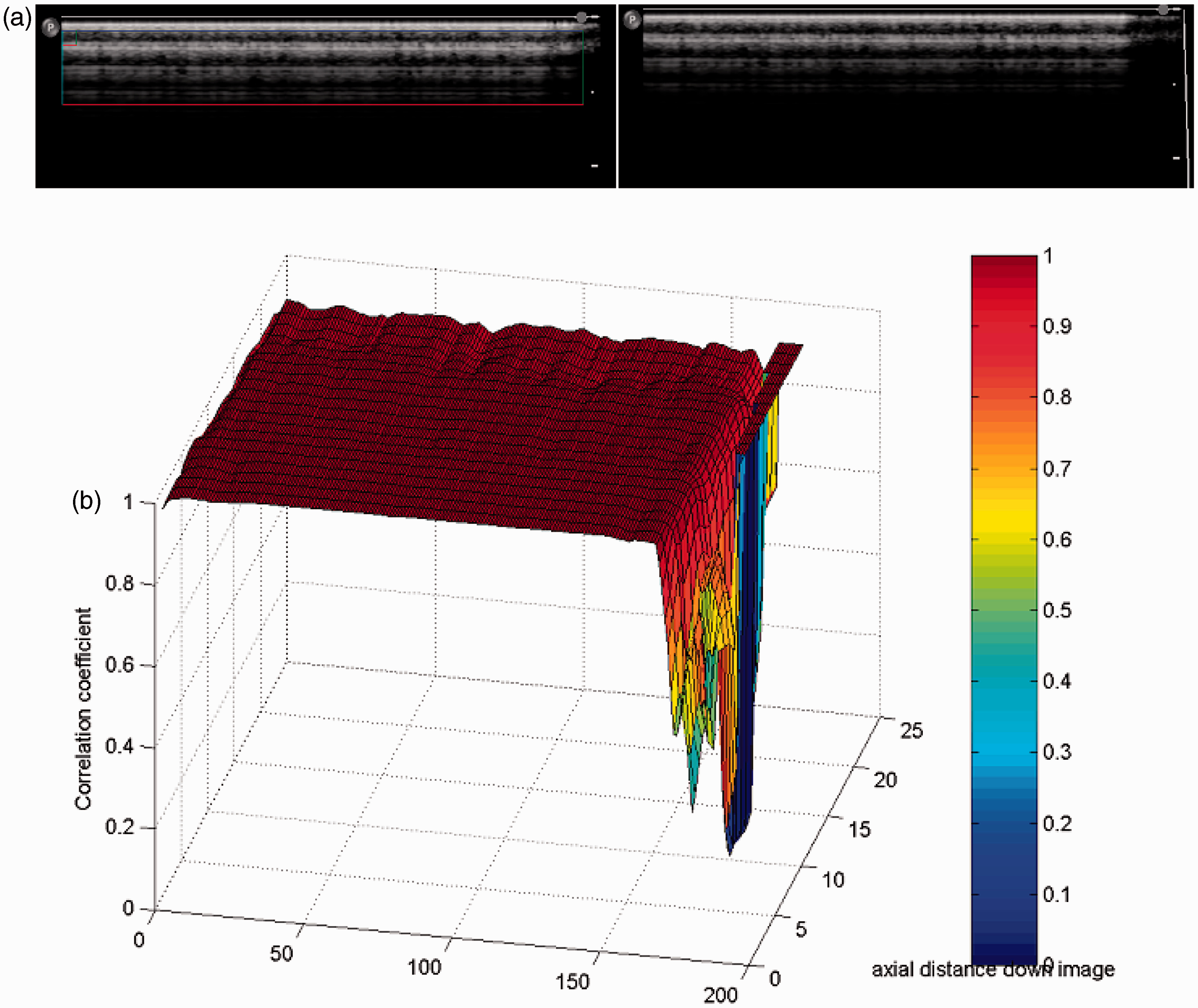
Figure 7(a) shows a pair of reverberation images taken from an L9-3 Philips transducer under identical preset conditions. The two images were taken at different times, with a separation period of several months. As can be seen, there is no obvious visual difference between the two images. A cross correlation between the images was performed. A rectangular section covering the main portion of the imaging area was selected. The rectangular section is seen in the first reverberation image in Figure 7(a). A smaller correlation box, within the rectangular section, is defined and in this example its size is 1 mm. This box is displayed in Figure 7(a). A running cross correlation between the two images, using the correlation box, is performed over the whole rectangular section using a four pixel step size. Figure 7(b) illustrates the two-dimensional cross-correlation map. From the correlation map we can see two features. Firstly, as one moves axially down the imaging plane, the cross correlation is decreasing, starting from nearly 1, down to a value approaching 0.2. This implies that the fainter reverberation bands, further down the imaging plane, are not as well correlated as those reverberation bands near the top of the imaging plane. There is also an undulating structure to the correlation map, again moving down the imaging plane. The undulating structure is due to changes in the thickness of the reverberation bands between the two images. Figure 8 shows some results for a different Philips L9-3 linear array transducer. Figure 8(a) displays two reverberation images taken several months apart. As can be seen in both images, there is a region on the right-hand side of the transducer where the reverberation pattern is diminished as a result of a sharp drop in sensitivity in that region. In the second image, the low sensitivity region appears to have extended further across the transducer. Figure 8(b) displays the cross-correlation map between the two reverberation images using the same method described above. From the figure one can see that over the majority of the imaging plane the correlation between the two images is close to 1, showing there is little difference between the two images. On the right-hand side though one can see a sharp drop in correlation, this corresponds to the region where the sensitivity of the transducer has changed. From these results, it appears that the cross-correlation map can provide an indication of changes in the reverberation image over the whole image field.
Cross correlation of the in-air reverberation images from an L9-3 Philips transducer. (a) The in-air reverberation pattern for the L9-3 transducer. The two reverberation images were taken several months apart. There is no visually obvious difference between the images. The left-hand image shows a rectangular region over which a cross-correlation is performed and also displays the size of the correlation box that was used in the correlation calculation. (b) The 2-D cross correlation map between the two images Cross correlation of the in-air reverberation images from an L9-3 Philips transducer. (a) The in-air reverberation pattern for the L9-3 transducer. The two reverberation images were taken several months apart. There is a visually apparent difference in the reverberation pattern on the right-hand side of the images. The left-hand image shows a rectangular region over which a cross correlation is performed and also displays the size of the correlation box that was used in the correlation calculation. (b) The 2-D cross correlation map between the two images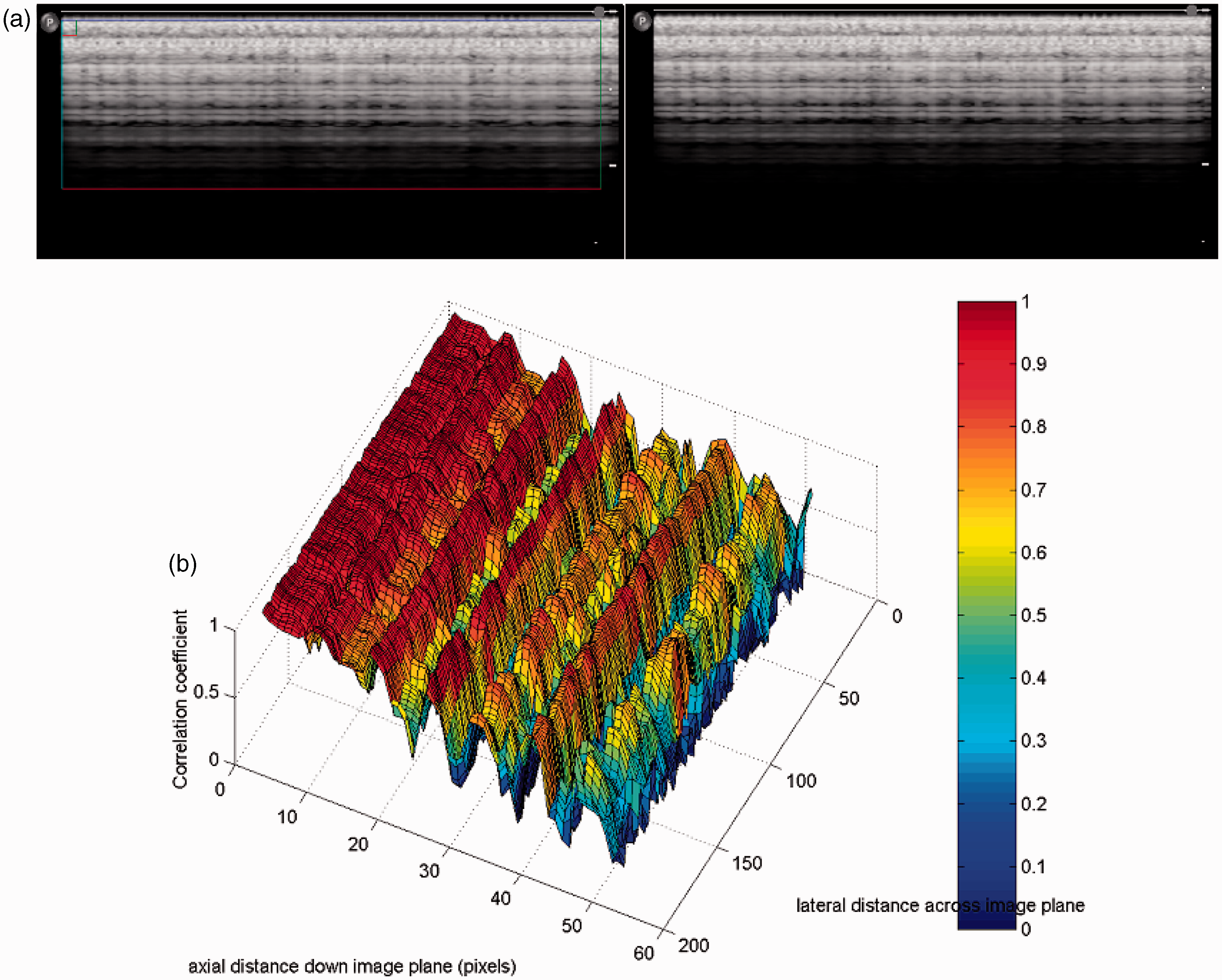
Discussion
The results in Figures 1, 2 and 3 demonstrate that the reverberation pattern, generated by a transducer operating in air, produces an image that has good agreement with other measures of transducer sensitivity. In particular, the reverberation pattern is similar in profile to the individual crystal sensitivity results produced by the Sonora FirstCall probe tester. The in-air reverberation method can be thought to provide a cheap alternative method for checking overall transducer sensitivity. However, it should be noted that the FirstCall system does provide other measures of transducer performance.
Measurement of sensitivity using the in-air reverberation method does, however, require good management of the measurement procedure. In an ideal situation, the reverberation images should be digitally archived so that measurement of reverberation depth can be checked with the measurement made by the operator during the quality assurance test. A single operator is best for performing the measurement on a regular basis, so that the judgement and interpretation of the reverberation pattern is consistent. It is important for the measurement to be made visually (as well as a digital assessment) because changes in the reverberation image can also be due to change in the performance of the visual display used with the scanner.
The results from Figure 5 show that setting the scanner to a maximum GAIN value (as suggested in IPEM Report 102) when performing reverberation measurements may not be the best condition for detecting changes in the reverberation depth. Certainly, with a Philips iu22 scanner and some linear array transducers, a GAIN setting of 100% produces a saturated reverberation pattern and no change in the reverberation depth is observed until the output power setting is reduced to less than half its maximum value. If the reverberation depth is to be regarded as a measure of sensitivity, and therefore a measure of the transducer’s transmitting or receiving performance, then using such a high GAIN setting is counter productive. Figure 5 shows that the situation can be somewhat improved by using a lower GAIN value (similar to values used clinically). At the lower GAIN setting, the reverberation depth decreases earlier as the POWER is reduced. The reverberation depth also continues to decrease more smoothly as the POWER is further reduced. The results would suggest that when assessing sensitivity, using the in-air reverberation methodology, it is worth finding the optimum GAIN and POWER settings, so that a maximum change in reverberation for a minimum change in POWER or GAIN can be produced.
It is now very common for ultrasound images to be stored digitally and access to these images is also relatively straightforward using a hospitals PACS. The digital images can be analysed using more quantitative methods that can measure the image pixel grey values. The results in Figure 6 imply that, using such methods, changes in the in-air reverberation pattern are sensitive to changes in output power. Furthermore, Figure 6 also shows that, when the POWER is reduced, changes in chosen reverberation image pixel value can closely follow changes in the LCP depth. The results in Figure 6 suggest that the most sensitive indicator of output power changes can be found by measuring the peak pixel value in a suitable reverberation band. The advantage of measuring the reverberation depth is that it follows the LCP depth. The LCP is widely recognised as an important parameter in the evaluation of transducer performance. Figure 6(b) and (c) suggests that measuring the peak grey value is more sensitive than the other two methods (discussed in study 4) to changes in output power, but more data are needed in order to compare the methods thoroughly.
When assessing the change in depth of the last reverberation as a function of POWER and GAIN, care needs to be taken with interpreting the value of the GAIN setting. On some scanners, the GAIN setting may be a percentage of the POWER setting. So, although one may be only physically changing the POWER setting, the scanner may be internally altering the GAIN to maintain the same percentage relationship. It is important to evaluate whether the scanner is performing an internal re-adjustment of the GAIN setting. If the GAIN is being changed internally (when the POWER is reduced) then this will influence the measurement of reverberation depth or peak pixel value in a chosen reverberation band. The effect of any internal re-adjustment of GAIN can be checked by measuring the change in noise in the image as a function of POWER and GAIN.
Figure 9 plots the mean noise with standard deviation in each reverberation image as a function of POWER for the Philips iu22 scanner with an L9-3 transducer and a Toshiba Xario scanner with a 10C3 transducer. The mean and standard deviation of the noise was measured using a rectangular area at the bottom of the image, where there were no reverberation lines. From Figure 9, for the Philips scanner, the noise level is constant from maximum to minimum POWER setting. With the Toshiba scanner, the noise level is fairly constant until the very low power settings. The important point is that the noise level is constant over the POWER setting region, where the depth of the last reverberation starts to change. Figure 9 also shows the noise variation with POWER setting, using a GAIN value of 100% (dashed line) for the Toshiba 10C3 transducer. Here, the noise levels start to increase more rapidly as the POWER setting is reduced. This will imply that either the internal GAIN value is being modified as the POWER is reduced, or that the mapping of received signal voltage to grey level is modified as the maximum and minimum signal levels change. In any case, it demonstrates that for this model of Toshiba scanner, using a clinical GAIN setting (rather than a GAIN setting of 100%) offers an added advantage, as the reverberation pattern is less influenced by the noise level in the system.
The variation in noise with output POWER measured in the distal part of in-air reverberation images. The mean and standard deviation of the grey values were calculated by identifying a reasonably sized box in the distal part of the image, where image noise was apparent. The results are for Philips and Toshiba scanners with L9-3 and 10C3 transducers, respectively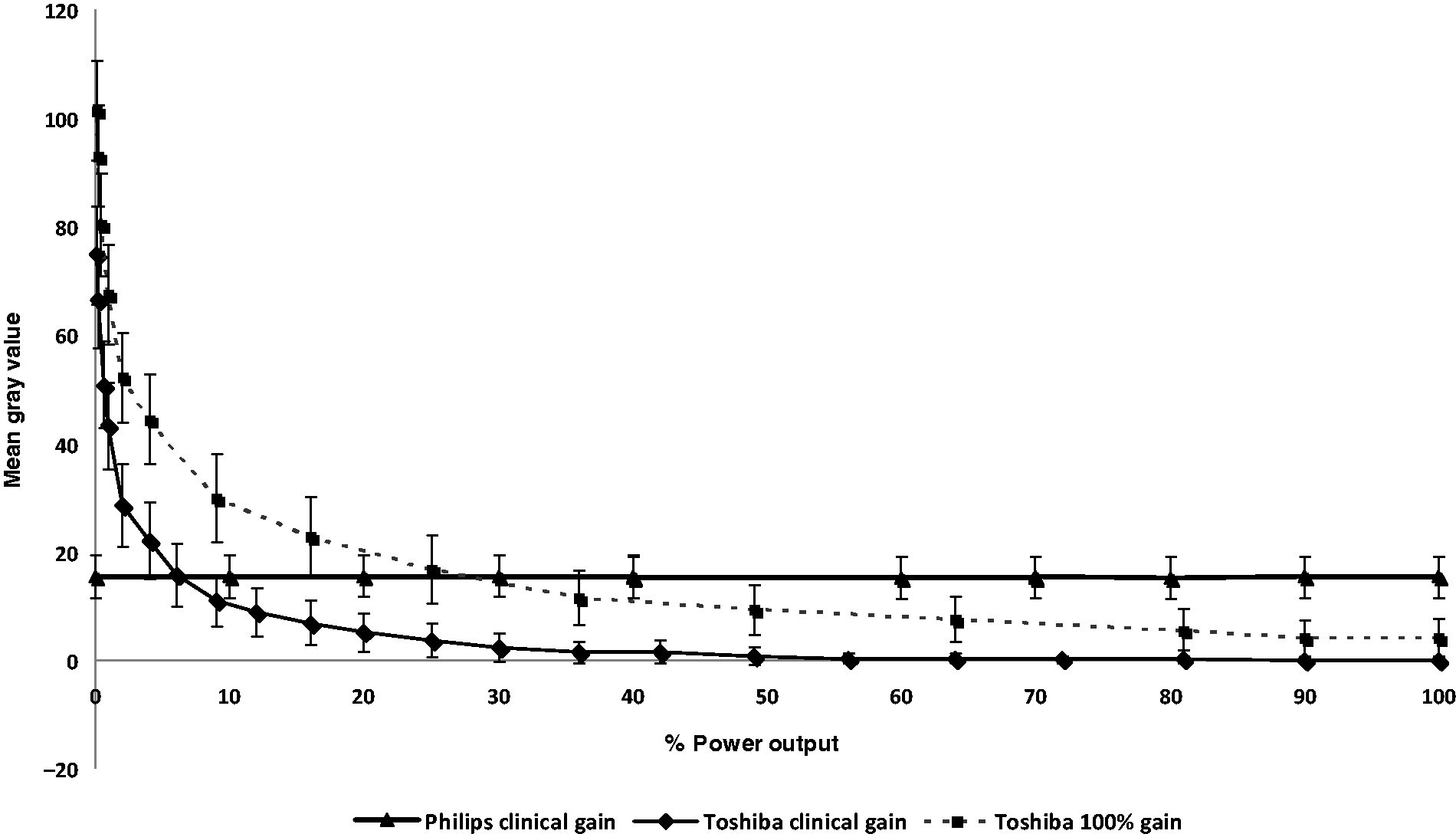
Although measurement optimisation of scanner parameters and the measurement of pixel values improve the analysis of the in-air reverberation image, they do not provide information relating to the whole reverberation image and therefore the whole transducer. The correlation maps in Figure 7(b) and Figure 8(b) attempt to overcome this limitation by considering the whole reverberation image. The two examples considered in the results section cover a case of possible degradation in transducer sensitivity and a case of significant localised reduction in transducer sensitivity. The cross-correlation map method can be implemented by taking a baseline image and then subsequent monthly in-air reverberation images can be correlated against this image and the correlation map analysed for changes. A single metric of correlation for the whole image could be considered, but this would probably need some type of weighting in both the axial and lateral directions. A Welch type weighting function could be applied laterally across the transducer so that changes in reverberation at the edges of the transducer have less bearing on the overall correlation value. Axially, a sigmoid weighting function could be applied such that very small changes in the region of the last reverberation would also have less bearing on the final correlation value between the baseline image and subsequent images.
Conclusions
The in-air reverberation image profile, produced by medical ultrasound transducers, has been shown to exhibit a similar sensitivity pattern to the transducer crystal sensitivity results obtained by the Sonora FirstCall probe tester. For two of the transducers tested, breaks in the in-air reverberation pattern also corresponded to regions of poor image quality in ultrasound phantom images. It has also been shown that when the output power of a transducer is altered, changes in the in-air reverberation pattern can closely follow changes in the measured LCP depth, measured using a tissue-equivalent ultrasound phantom.
Current guidelines 3 on measuring the in-air reverberation pattern suggest operating the scanner at maximum output POWER and GAIN settings. The in-air reverberation methodology could be improved by operating the scanner at POWER and GAIN settings which offer greater changes in the reverberation pattern with corresponding changes in output POWER. If in-air reverberation methods are used for monitoring changes in transducer performance, then it would be better for the measurements to be performed by one trained person in order to decrease any variability in choosing a consistent reverberation band. Quantitative analysis of the digital reverberation images, by measuring the grey level of the pixels in a central region of the image, offers added sensitivity to changes in transducer performance and also removes the effects of user variability on the results. Alternatively, where image processing facilities exist, the cross correlation between baseline and subsequent regular in-air reverberation images can be measured in order to assess the changes in transducer sensitivity over the whole imaging plane of the transducer.