







Abstract
High-resolution ultrasound is the first line examination for parotid gland diffuse disease and focal lesions, normally using grey-scale and colour-Doppler ultrasound. Unfortunately, grey-scale and colour-Doppler ultrasound features of benign and malignant salivary gland lesions may overlap, particularly with benign tumors, where pleomorphic adenomas are often indistinguishable from malignant lesions. With atypical lesions, contrast-enhanced magnetic resonance imaging is usually the second level imaging modality requested. The introduction of ultrasound contrast agents has opened further possible perspectives to improve the interpretation of parotid diseases, particularly the differentiation between benign and malignant lesions. We present a review of the current literature on contrast-enhanced ultrasound for the assessment of parotid gland lesions, considering all characteristics of the technique, evidence of usefulness, future perspectives and limitations.
Introduction
Salivary gland neoplasms are uncommon, with a reported incidence of between one and five cases per 100,000 per year and constitute 2–6% of the neoplasms in the head and neck region. The parotid gland is the most affected major salivary gland, accounting for 85% of cases. Although pleomorphic adenoma (PA) is the most common benign neoplasm of the parotid gland (70–80% of benign salivary tumors), this tumour may infrequently recur and show malignant transformation. 1 Pleomorphic adenomas occur more often in women than in men, in the fifth decade and in the superficial lobe. The second most common benign tumor of the parotid gland is the Warthin tumour (WT, also called papillary cystadenoma lymphomatosum) with an incidence of between 5 and 12% of all tumours of the salivary glands. 2 They usually occur in the elderly (sixth decade), with male predilection; tumors can be bilateral and multicentric (20%) and tend to favour the parotid tail region. 3 Other benign tumors consist of a heterogeneous and rare group of lesions, including oncocytomas, haemangiomas, lipomas and facial nerve schwannomas. Often a diagnosis can be reached with imaging, obviating the need for fine needle aspiration cytology (FNAC) or biopsy. Characteristic appearances are seen with infantile haemangiomas and in childhood lipomas, whereas in other cases, radiologic diagnosis is not easy, such as in oncocytomas and schwannomas, and FNAC is required. 4
Salivary gland carcinomas are rare, representing about 0.5% of all malignancies and less than 5% of all head and neck cancers. The parotid gland is the most affected, with a mucoepidermoid carcinoma the most frequent entity, followed by squamous cell carcinoma, acinic cell carcinoma, lymphoma and metastases. 5
Imaging plays a pivotal role in the evaluation of patients with parotid glands lesions in order to decide a prompt and tailored treatment program. The most appropriate and cost-effective imaging modality for assessment of salivary gland abnormalities is ultrasonography (US). When the evaluation is inconclusive at US, the patient may be referred for further imaging, entailing magnetic resonance (MR) or Computed Tomography (CT) imaging, which allows for an accurate assessment of malignant and benign characteristics of parotid tumors, and the extent of extra-capsular spread and distant lymph node involvement. However, US, coupled with various recently developed innovative techniques, termed multi-parametric ultrasound (MPUS) 6 including tissue elastography and contrast enhancement ultrasound (CEUS), may prove to be more accurate in US assessment generally and also in parotid gland lesions.
The purpose of this review article is to describe the CEUS features that may be used to characterize benign and malignant tumours of the parotid gland in clinical practice, based on a comprehensive review of the current literature.
Appearances on ultrasonography
Ultrasonography is the first option for imaging major salivary gland tumors, especially when occurring in the parotid gland, as 90% of the tumours arise in the superficial lobe. As a low-cost, non-invasive modality, US provides excellent localization of the tumour in the gland and enables differentiation from cystic masses. Among the most common benign tumors, PAs are usually well defined, lobulated hypoechoic lesions with posterior acoustic enhancement; a certain homogeneity is often described as an additional variable. They may contain focal calcification and are usually poorly vascularized, although increased vascularization is recognized. Warthin tumours are well-defined, oval, hypoechoic tumours, frequently containing anechoic areas and are hypervascularized. US can show features suggesting less common tumours, such as a heterogeneous appearance with calcifications representing phleboliths in haemangiomas, or oval and hypoechoic appearance with hyperechoic linear structures in lipomas. 7
With malignant lesions, these are usually described on US as hypoechoic, inhomogeneous structures with irregular and poorly defined margins, local invasion into surrounding soft tissues and pathologic lymph nodes.8,9 Pathologic cervical lymph nodes can be readily detected on US, but deeper lymph nodes require MR or CT imaging.
10
Colour and spectral Doppler US visualization of tumour macro-vascularity is useful with some tumours. WT, carcinoma and occasionally monomorphic adenomas demonstrate strong capsular and/or internal vessels. In contrast, PA are usually poorly vascularized by capsular and/or internal vessels.
11
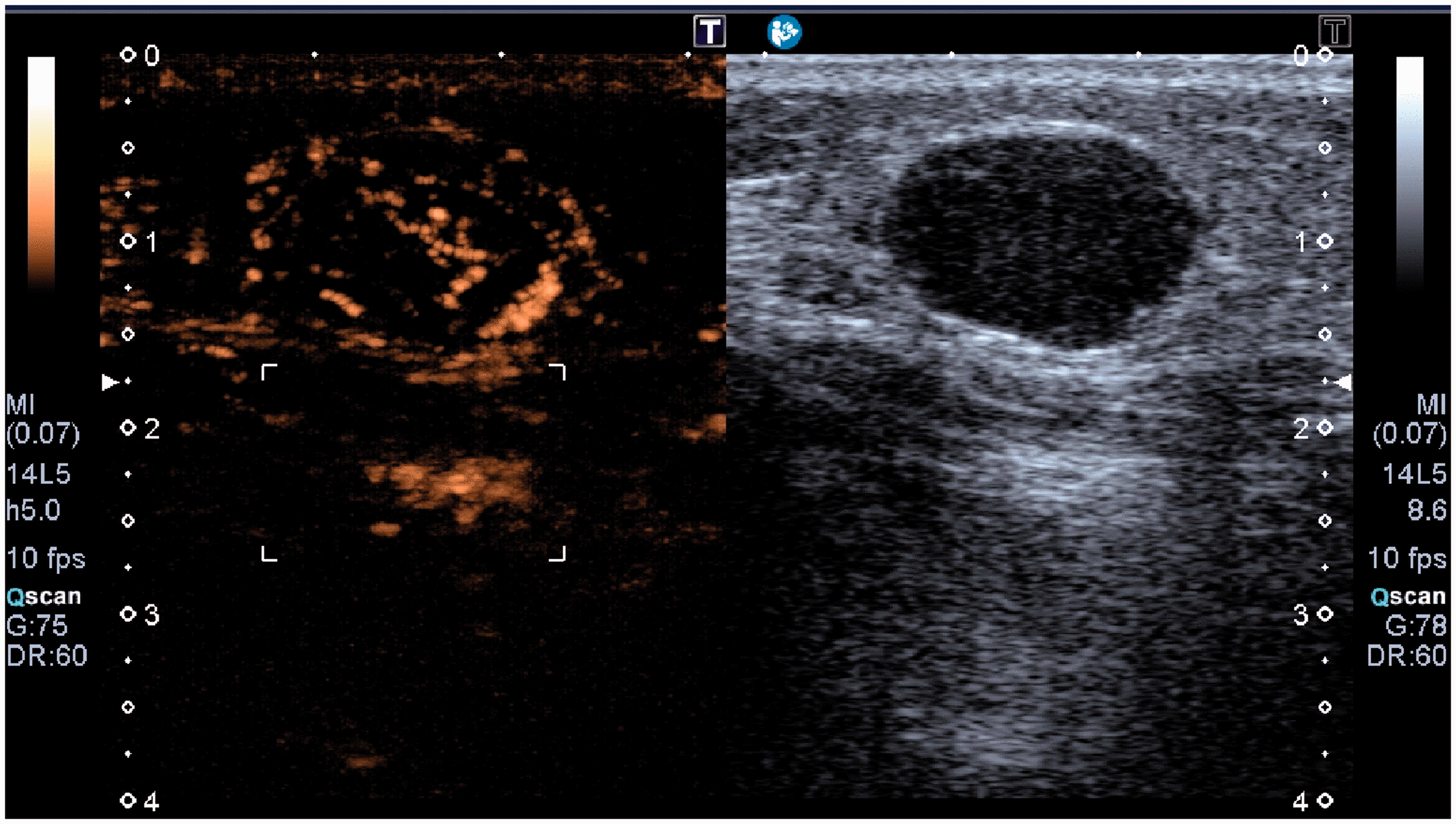
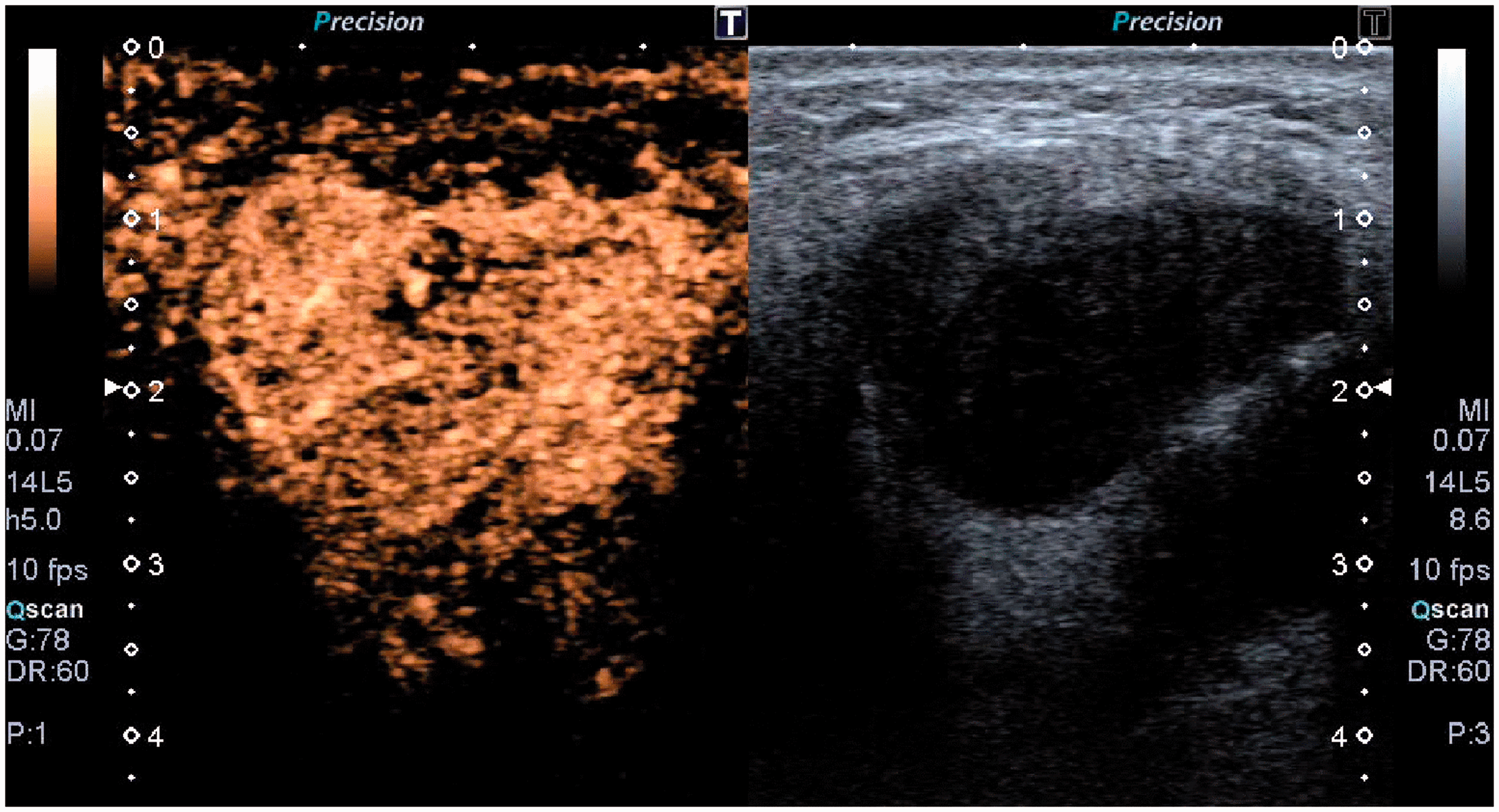
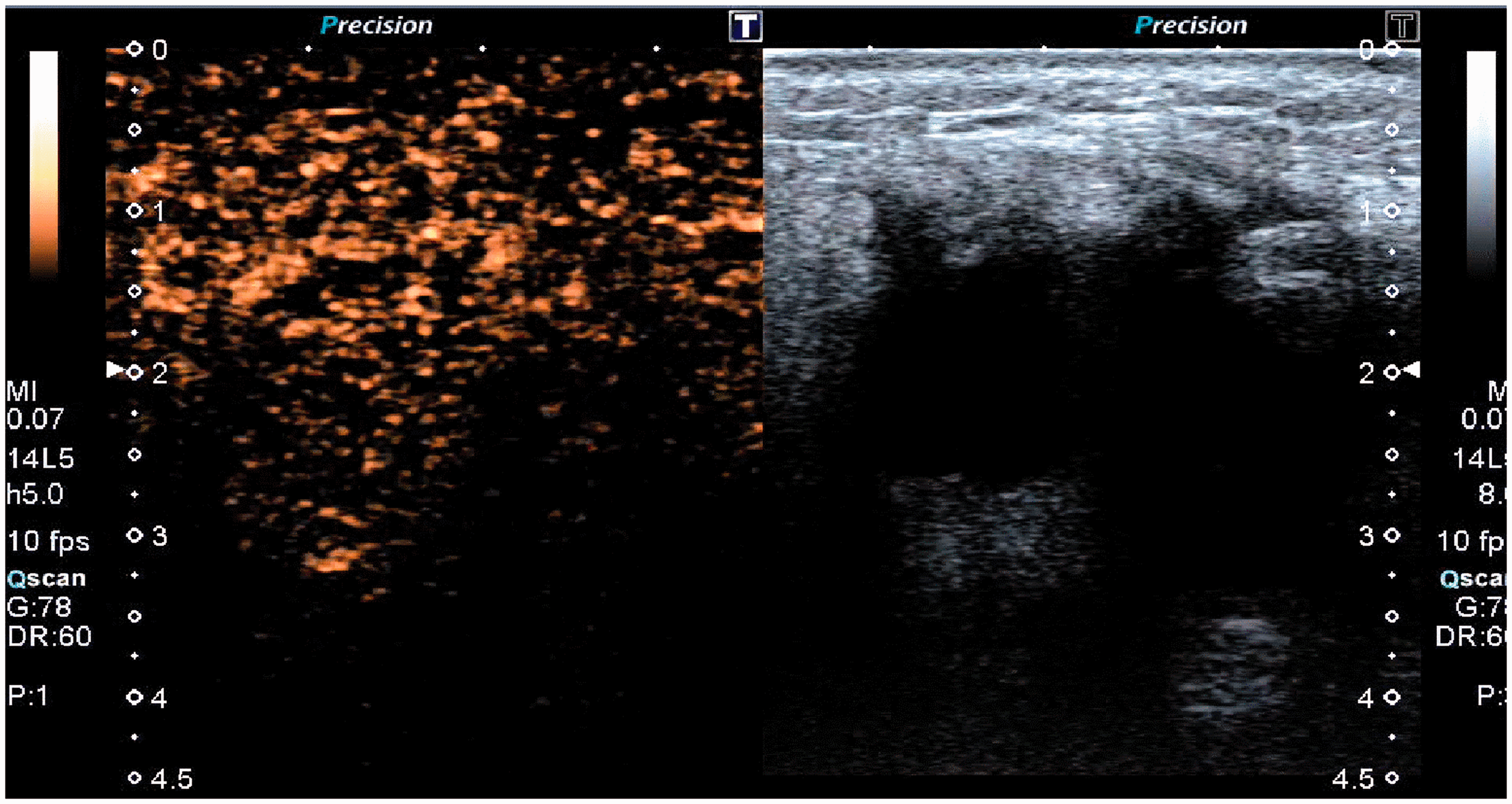
Although B-mode and Doppler US can show features suggestive of a specific diagnosis, there remains considerable overlap between imaging features of the different tumours, especially benign and low-grade malignant neoplasms. It is thought that assessment of the resistance index (RI) may distinguish malignancy from benign disease, with high values of RI documented in malignancy; however, there is no evidence in the literature that this has been investigated. A more accurate and detailed representation of vascularization patterns of different lesions may be achieved with CEUS, which can assess the lesion micro-vascularization more precisely (see Figures 1–4).
12
Hypoechoic lesion of the parotid gland with acoustic posterior enhancement and poor vascular signals at CDUS. Image obtained following the administration of a contrast agent: the tumor appears poorly vascularized. It was a pleomorphic adenoma. Image obtained following the administration of a contrast agent. Early arterial phase: the tumor appears widely and early vascularized. Image obtained following the administration of a contrast agent: early wash out of the lesion after about 1 minute. It was a squamous cell carcinoma.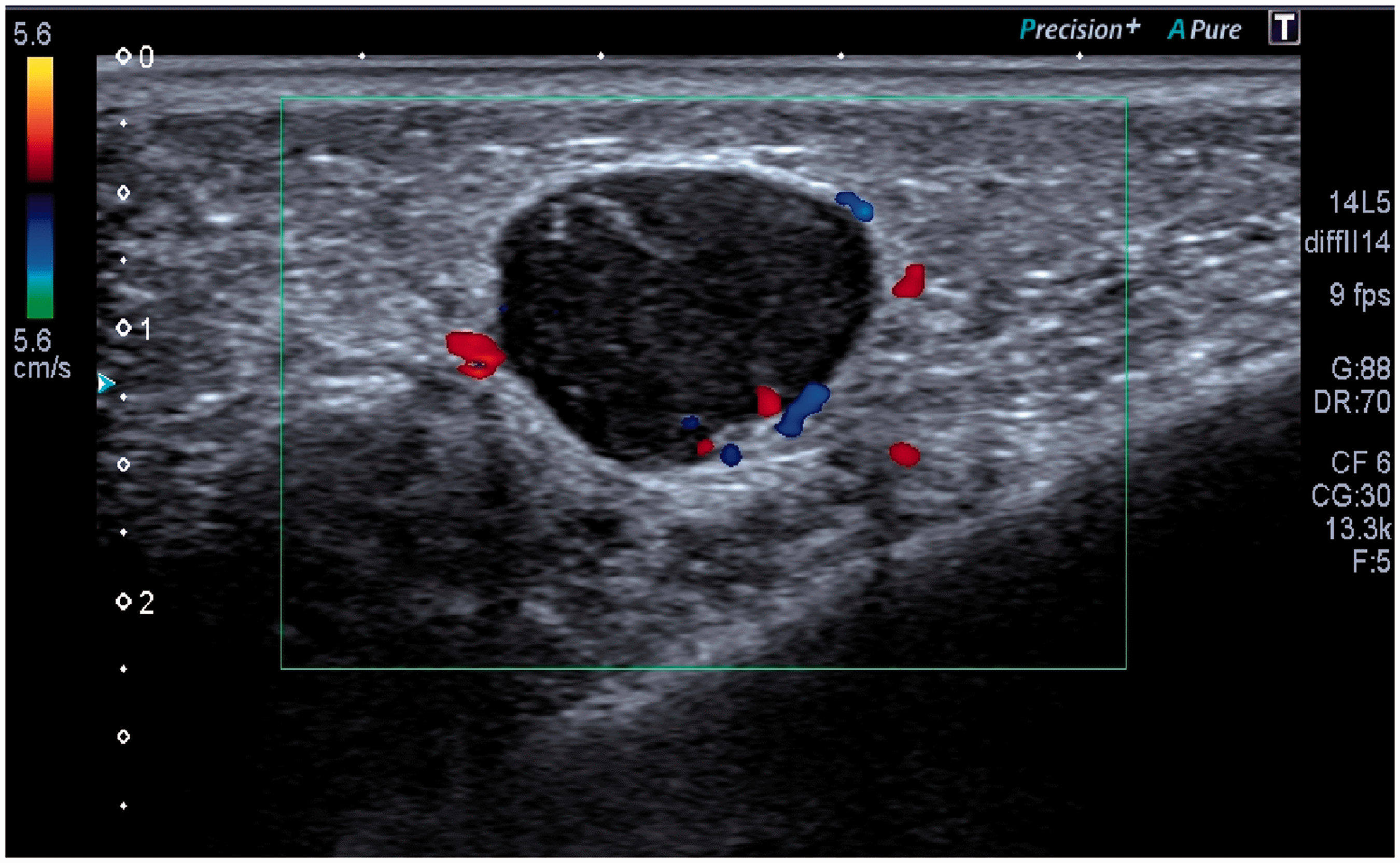
Contrast-enhanced ultrasound in the salivary glands
In recent years, CEUS has been established as a valid diagnostic tool, allowing a quantitative analysis of microvascular perfusion in solid tumour tissue, with uses well documented in liver and non-liver applications.13–15 Importantly, CEUS is performed with no ionizing radiation, with the added standard benefits of US, including safety, portability, wide availability and high patient acceptance. 16 CEUS is easily performed and contrast injections may be repeated, as the micro-bubbles have a strong safety profile with a low risk of adverse events, approximately equal to that for commonly used analgesics and antibiotics, and lower than that for the contrast agents used for either CT or MR imaging. 17 With no renal excretion, microbubble contrast agents may be administered in patients with renal compromise; the micro-bubbles agents are primarily excreted through the respiratory tract (Sulphur hexafluoride gas) and metabolized in the liver (phospholipid shell). 18 The microbubbles are small, in the same range as a red blood cell, a purely intravascular agent, and as such can be used to measure blood flow as a reflection of neo-angiogenesis in response to tumor or inflammation. The dynamic performance of the contrast agent can be monitored over time with enhancement behaving in a uniform manner to allow assessment of time–intensity curves, in particular for noninvasive diagnosis of solid organ tumours.19,20
The micro-bubble agent commonly used in Europe (SonoVue™, Bracco, Milan, Italy), consists of sulfur hexafluoride encapsulated in a phospholipid shell. It is prepared extemporaneously and injected into the cubital vein, followed by a bolus injection of 10 mL of saline solution. The CEUS examination follows a standardized procedure regime, as previously described; 4.8 mL is generally administered for small parts investigations as this dose seems to perform best with the high-frequency transducers. 13 Normally, the screen is ‘split’ into two sections, displaying the baseline grey scale image with the contrast-enhanced examination side-by-side to develop a full understanding of the contrast enhancement of the abnormality. The examination is normally conducted continuously from the time of injection for about 120 s, but may need to be prolonged if needed by the development of enhancement patterns. A low mechanical index of 0.10 is normally used, with the focus placed beyond the tumor, which is the region of interest (ROI). 21
Review of the literature
With regard to CEUS in parotid gland evaluation, we have performed a PubMed search by using the following keywords: contrast-enhanced ultrasound (CEUS), parotid gland, salivary glands, microbubbles.
Steinhart et al. in 2003 analysed the role of contrast enhanced sonography in 26 patients with tumours of the parotid gland, consisting of pleomorphic adenomas (n = 11), adenolymphomas (n = 8), squamous cell carcinomas (n = 2), lymph nodes (n = 2), and one each of adenoma, neurinoma of the facial nerve and non-Hodgkin's lymphoma. The assessment was limited to the increase in colour Doppler signal, and was not using the newer low mechanical index techniques. Before the administration of micro-bubble contrast agent, the adenolymphomas showed a significantly stronger Doppler signal compared to the pleomorphic adenomas. The maximum colour Doppler signal after administration of contrast agent showed no difference between both groups. Considering the relative change in the Doppler signal before and after applying the enhancing agent, however, a significantly stronger enhancement of perfusion (increase in Doppler signal area) was noted within pleomorphic adenomas. The authors concluded that significant Doppler signal changes were observed after micro-bubble contrast agent administration, differentiating the different tumor histology. 22
Fischer et al. in 2010 reported a pilot study to evaluate a US technique for differentiating parotid cystadenolymphoma (CL) from pleomorphic adenoma using CEUS. A total of 27 patients presenting with a palpable lesion of the parotid gland were examined following administration of a microbubble contrast agent. Intratumoral time-to-peak was determined in cystadenolymphoma (n = 9) and pleomorphic adenoma (n = 9), with intratumoral time-to-peak in the PA group markedly longer than in the CL group. 23
Knopf et al. in 2012 determined that parotid gland lesions could be distinguished by following a multimodal diagnostic pathway and demonstrated the usefulness of CEUS in Sjoegren’s syndrome. Multiple manifestations with more than six lesions in one parotid gland occurred exclusively in Sjoegren’s syndrome, with these lesions poorly vascularized both on colour Doppler and on CEUS, but better delineated on CEUS. Colour Doppler US provided a rough breakdown of tumour macro-vascularization and distinguished carcinoma, monomorphic adenoma and Warthin’s tumour from pleomorphic adenoma. CEUS demonstrated shortened perfusion kinetics for Warthin’s tumours compared to monomorphic adenoma. Pleomorphic adenomas showed a slight vessel formation in colour Doppler US, resulting in poor perfusion in CEUS. All Warthin’s tumours showed a strong internal vessel formation on colour Doppler US and increased enhancement with CEUS. Malignant lesions demonstrated chaotic vessel formation on colour Doppler US with increased enhancement with CEUS or with strong, but organized vessel formation combined by slight enhancement on CEUS. Monomorphic adenomas showed vascularization patterns of all other entities. 11
Xi Wei et al. 24 in 2013 defined the usefulness of CEUS in the assessment of the lesion micro-vascularization. Concordant with macroscopic findings after tumor section, CEUS visualized vascularization in echo-free areas and therefore excluded cystic/necrotic compartments. There were also specific characteristics for Sjoegren’s syndrome, i.e. some echo-free areas do not show any contrast enhancement, representing cystic parts, whilst other echo-free areas showed a weak enhancement indicating the myoepithelial lesion. Normalized time-to-peak and normalized mean transit time in Warthin’s tumour were significantly shorter than in pleomorphic adenoma or carcinomas. No significant differences between pleomorphic adenomas and other benign lesions or carcinomas were identified.
According to the morphologic and distribution features of micro-vascularity, CEUS imaging of the lesions can be classified into three types:
Type 1: diffuse homogeneous enhancement.
Type 2: heterogeneous enhancement:
more than 50% enhanced areas with well-defined margin; dotted or splattered vessels or less than 50% enhanced areas with well-defined margin; heterogeneous enhanced lesions with ill-defined margin.
Type 3: no enhancement and iso-enhancement:
no enhancement in lesions; iso-enhancement between lesions and surrounding tissues.
24
Types 1 and 3 are suggestive of benign tumours; Type 2 can indicate the presence of a malignant lesion, especially Type 2c.
Klotz L et al. in 2013 demonstrated that lesions of the parotid gland can be divided into different benign and malignant lesions by using specific parameters quantified from CEUS measurements. Area under the time–intensity curve (AUC) and mean transit time (MTT) showed significantly higher values for malignant lesions. Malignancies usually show a hypervascularized vessel network. AUC and MTT show calculated values of tissue perfusion which might be increased due to the circulation of contrast medium in the abnormal and confused vessel structure in cancer tissue. Their results indicate that benign lesions in general are less perfused; this might be due to the regular vessel structure of the non-cancerous and slowly growing tumor tissue. The authors assert that perfusion characteristics of benign and malignant parotid gland tumors can be evaluated by CEUS, which has the potential to differentiate parotid gland lesions preoperatively. 12
Klotz et al. in 2014 demonstrated that significant differences in AUC, peak enhancement (PE), wash-in-rate (WiR) and wash-in perfusion index (WiPI) were observed in malignant compared to benign tumours (p < 0.05) and in pleomorphic adenoma compared to cystadenolymphoma. 25
Badea et al. in 2013 assessed 20 patients with solid parotid tumors (12 benign, 8 malignant), examined by ultrasound: real-time grey scale ultrasound, Doppler ultrasound, elastography and with CEUS. The study focused on tumor morphology and circulation with observational analysis of the results, enhanced by statistical methods and artificial intelligence (decision trees). The authors concluded that characterization and discrimination of solid parotid tumors require a multimodal and multi-criteria approach. Ultrasound criteria can be divided into criteria of certainty and criteria of diagnosis probability. CEUS examination of parotid tumors did not reveal significant differences between benign and malignant circulatory beds. 21
Mansour et al. in 2015 investigated 202 patients with parotid lesions, documenting medical history, clinical examination, high-resolution B-mode US, strain elastography, colour Doppler US and CEUS. They concluded that there was a beneficial assessment of lesion micro- and macro-vascularization by colour Doppler US and CEUS, but the predictive value of each singular technique was poor. A multimodal ultrasonographic pathway comprising clinical data, strain elastography, colour Doppler US and CEUS was needed to differentiate between parotid gland lesions to avoid uncertain resection margins, repeat surgery, and higher risk for facial palsy. By augmenting the multimodal ultrasonographic pathway, the specificity and positive predictive value of malignant parotid gland lesions and the sensitivity of pleomorphic adenomas and Warthin’s tumors can be increased. 26
Costache et al. in 2015 described the steps for a proper US examination of the patient, illustrating the following anatomical areas: submandibular gland, thyroid gland, parathyroid glands, oropharynx, larynx, parotid glands, etc. and emphasized the differential diagnosis that should be taken into account when examining pathology in these regions. In their evaluation, they consider the role of elastography and CEUS crucial for the future, reporting an ability to increase the specificity and sensitivity of this diagnostic method. 27
Limitations of the studies in the literature
The present studies have limitations related to the small number of papers present in the literature, which are based on limited and selected patient populations. The results should therefore be interpreted with caution. Newer studies, based on larger numbers of patients, are warranted. A further limitation of the studies is the use of a wide range of equipment, but this may be mitigated by the standard of modern day equipment and the more uniform examination processes. 21
Discussion
Pre-operative diagnosis of parotid gland tumours plays an important role in surgical planning since malignant tumors require an aggressive treatment approach, whereas it is important to avoid unnecessary surgery in patients with benign tumours, as there may be considerable morbidity in poor surgical candidates, and cosmetic disfiguration should not be under-estimated.
High-resolution US, as an easily available, cost-effective and safe technique, is the first line examination for salivary gland lesions as US provides detailed information regarding lesional size, shape, echogenicity, relation to circumjacent tissue, and acoustic effects. Color Doppler US depicts lesional macro-vascularity. Unfortunately, the interpretation of ultrasonographic findings depends on personal clinical expertise rather than measurable evidence. US cannot replace other imaging procedures such as CT or MR imaging because of its well-known limitations. These include different basic design principles, dependence on the operator and equipment, lack of standardization of sections and hence the variability of information from one examination to another, US attenuation during propagation and difficult or impossible access to the deep structures of the neck. 28
CEUS describes lesional micro-vascularity, in particular providing measurable and comparable perfusion kinetics (rise time, time to peak, mean transit time, area under the curve). 29 The strong criteria for the diagnosis of malignancy are: unclear delineation of the gland, inhomogeneous structure, the presence of large cervical lymphadenopathy, inhomogeneous vascularization and uneven distribution of the circulatory bed. The criteria for the diagnosis of benign masses are: clear delineation, moderately inhomogeneous structure, lack of cervical lymphadenopathy, homogeneous vascularity and homogeneous distribution of the circulatory bed. In addition, a Warthin tumour usually appears more vascularized at CEUS than a pleomorphic adenoma.
Fine-needle aspiration biopsy or cytology (FNAB/FNAC), which are simple to perform and relatively risk-free, currently represents the reference standard for lesion characterization, although they are not always conclusive, with a non-diagnostic specimen in up to 10% of cases despite repeated attempts. 30 Considering the inconclusive ability of FNAB or FNAC to assess the specific tumor histology, a more comprehensive use of imaging techniques in the pre-surgical management of salivary tumors is appealing. In particular, the most appropriate and cost-effective imaging modality is ultrasonography with a multiparametric approach (MPUS) which includes CEUS and elastography. When the evaluation is inconclusive at MPUS, the patient may be submitted to MR imaging, whose role in the differential diagnosis between malignant and benign parotid tumors has been reported.31,32
Footnotes
Declaration of conflicting interests
The author(s) declared the following potential conflicts of interest with respect to the research, authorship, and/or publication of this article: Vito Cantisani was formerly a lecturer for Bracco, Toshiba and Samsung.
Funding
The author(s) received no financial support for the research, authorship, and/or publication of this article.
Ethical approval
Not applicable
Guarantor
F. D’Ambrosio
Contributorship
ED, VC, SM, MT, FMD, DM, SG, AR, DF, DF and FF researched literature; ED, VC, MDeV, PSS, AG and SD'A conceived the study; ED and VC wrote the manuscript. All authors reviewed and approved the final version of the manuscript