







Abstract
Background
Transcranial Doppler ultrasound is used to screen and assess the intracranial arteries of children with sickle cell disease. Recent findings suggest that extracranial internal carotid artery (eICA) stenosis is also a contributing factor to silent cerebral infarction. Stenosis has been measured using phased array transducers with no beam/flow angle correction and linear arrays with angle correction.
Methods
A total of 124 children undergoing TCD assessment were investigated for eICA velocities. Manual measurements of peak systolic velocity and TCD mean velocity were made with phased and linear array transducers.
Results
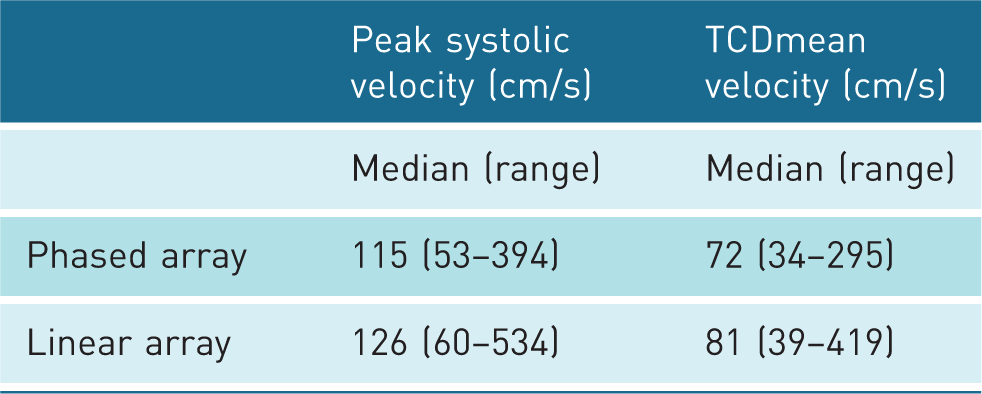
Peak systolic velocities ranged from 60 to 534 cm/s (median 126 cm/s) using the linear array and 53 to 394 cm/s (median 115 cm/s) using the phased array transducers. TCD mean ranged from 39 to 419 cm/s (median 81 cm/s) using the linear array and 34 to 295 cm/s (median 72 cm/s) using the phased array transducers.
Conclusions
There are advantages and disadvantages of each method, but stenoses were readily identified as focal velocity increases. We suggest thresholds for each transducer and recommend that imaging of the eICA forms part of screening for this group of children.
Introduction
Children with sickle cell disease (SCD) have a high risk of ischaemic stroke in early years, predominantly as a result of intracranial arteriopathy. Stenoses are most commonly found in the terminal internal carotid artery (dICA), proximal middle cerebral artery (MCA) and the A1 segment of the anterior cerebral artery (ACA). The STOP (Stroke Prevention Trial in Sickle Cell Anemia) study 1 showed that transcranial Doppler (TCD) ultrasound is effective in identifying elevated velocities in at-risk children, enabling transfusion therapy to reduce stroke risk. TCD screening has been established in UK centres using imaging and non-imaging methods.
When TCD imaging was started at our centre, imaging of the extracranial internal carotid (eICA) and vertebral arteries was incorporated as part of the exam to aid understanding of the intracranial velocities, especially in children with advanced arteriopathy. Extracranial ICA stenosis was seen in some children. Early findings were published 2 showing association of eICA stenoses with incidence of stroke, some associated with intracranial lesions and in two cases, without intracranial anomalies. Imaging of the extracranial arteries was done using a linear array and measurements of peak systolic velocity were made similar to those done for adult carotid artery disease. Velocities are higher in children than in adults and are markedly higher in children with sickle cell disease. Our threshold for a stenosis was a peak systolic velocity (PSV) of 300 cm/s or greater, with a localised two-fold velocity increase.
A contemporary study 3 found stenoses in the eICAs of patients with SCD using a non-imaging 2 MHz pulsed wave Doppler (PWD) TCD probe. A subsequent study 4 examined the Doppler characteristics of extracranial carotid arteries in 435 stroke-free children with SCD using imaging with a phased array TCD probe. In these two studies, angle correction was not used and the velocity measurement used was TCD mean. This is the mean of the maximum velocity envelope over a number of complete cardiac cycles and is equivalent to time-averaged maximum velocity in duplex ultrasound terminology. It is widely used for TCD applications, including the STOP study. TCD mean velocities ≥160 cm/s in at least one carotid artery were found in 45 children and were highly predictive of stenoses imaged with Magnetic Resonance Angiography (MRA). An advantage of using the phased array probe is that the same transducer can be used to image the intracranial and extracranial arteries. A report from the same group 5 identified these lesions as being an independent risk factor for silent cerebral infarction identified by Magnetic Resonance Imaging (MRI). They recommended that examination of the extracranial ICA should be an essential part of the evaluation of children with SCD.
Since our own studies had used a different methodology to other groups, we sought to compare measurements using linear and phased array transducers to establish equivalent values and to examine the benefits and disadvantages of each.
Methods
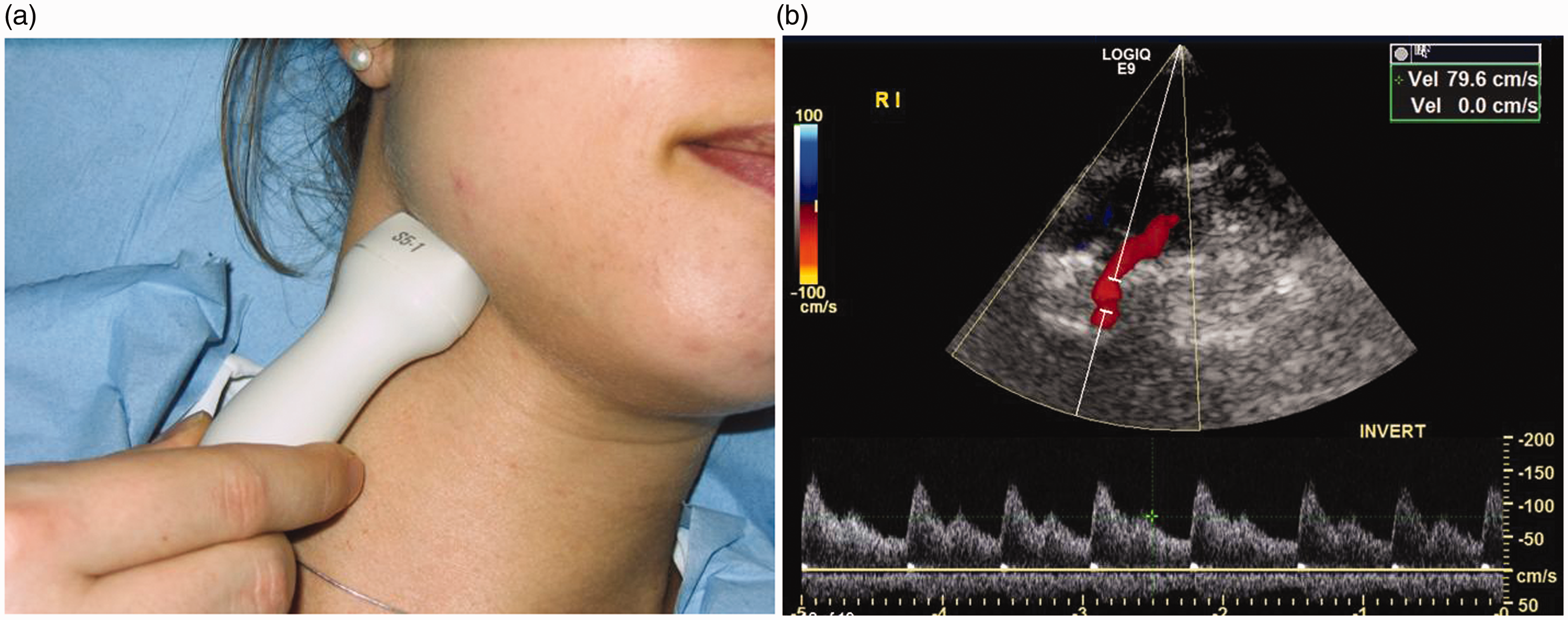
The study was conducted on 124 children with SCD undergoing routine TCD examinations for screening or follow-up (123 HbSS, 1 HbSC). The children’s ages ranged from 23 months to 17 years (mean 9.4 years). The operator had over 10 years of vascular ultrasound and TCD imaging experience. In addition to assessment of the intracranial arteries, velocities in the eICAs were examined using a phased array and then a linear array transducer. For each transducer, manual estimates of maximum peak systolic velocity and time averaged maximum (TCD mean) velocity were made from sonograms of the right and left ICA. For the linear array, angle correction was used; for the phased array, no angle correction was made (Figures 1 and 2). Acuson Sequoia (Siemens, Mountain View, CA, USA), Philips iU22 (Philips, Bothell, WA, USA), GE LOGIQ E9 (GE, Wauwatosa, WI, USA) and Zonare Z-one (Zonare, Mountain View, CA, USA) scanners were used. Linear array frequencies were from 3 to 9 MHz and phased array transducers were typically 2–4 MHz. The study was permitted by the local Ethics Committee as an audit of clinical practice.
Scanning approach (1a) and image (1b) of extracranial ICA using a linear array with angle correction used to measure velocities. The calliper is placed to estimate the time averaged maximum velocity. Scanning approach (2a) and image (2b) of extracranial ICA using a phased array. No angle correction is made.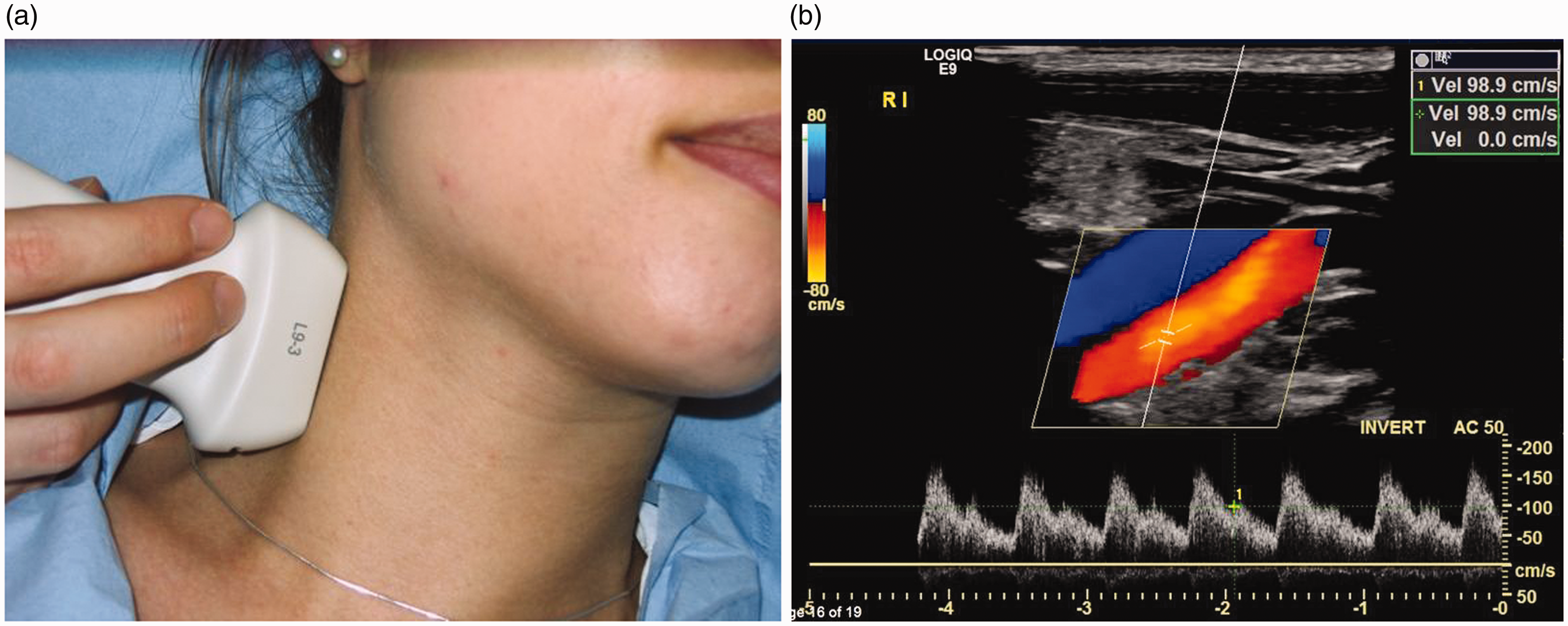
Results
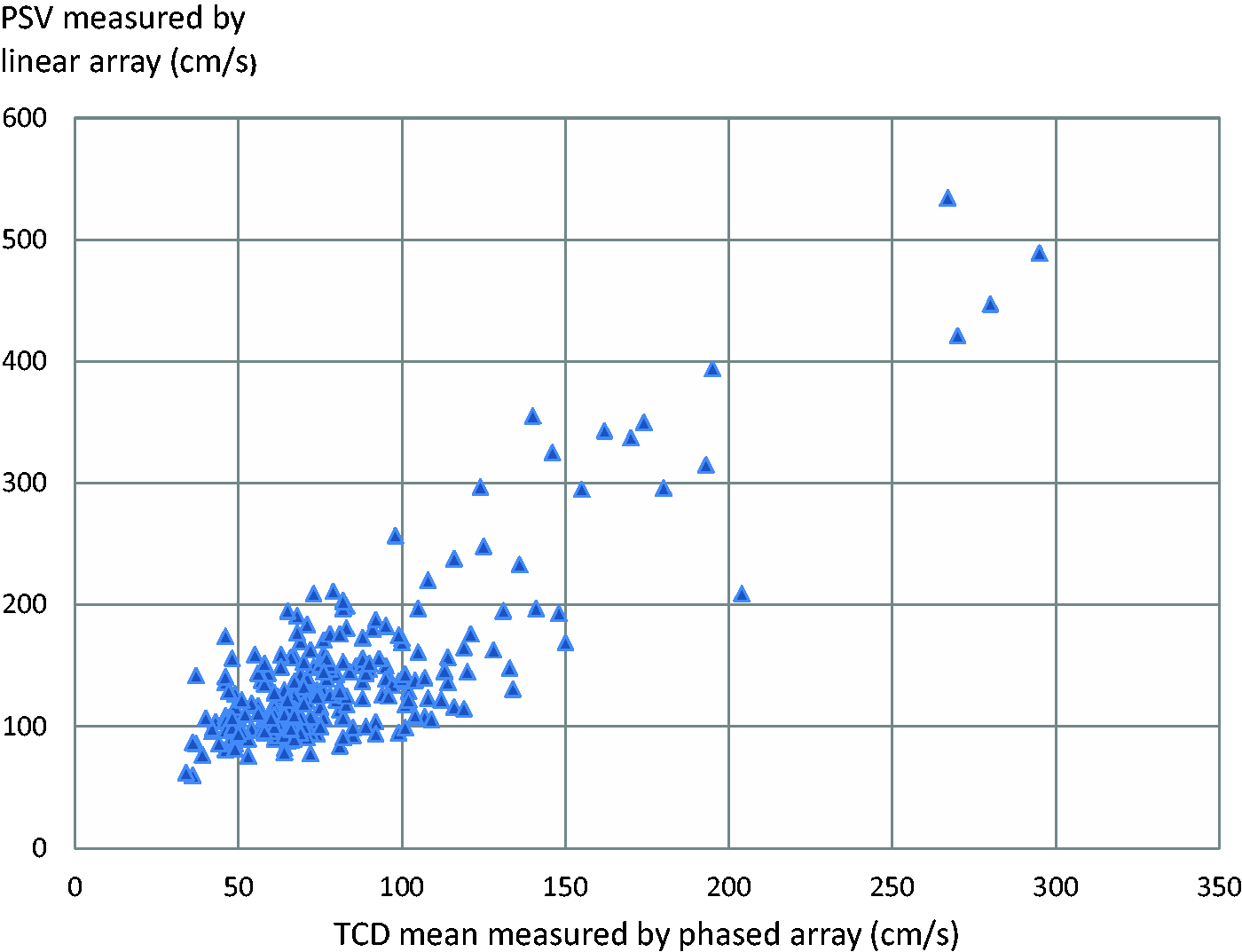
The median and range of velocities measured by each transducer are shown in Table 1. Figure 3 shows a comparison of peak velocities measured by the two techniques. Figure 4 shows a comparison of PSV measured by the linear array with the TCD mean measured by the phased array. Data are shown in scatter plots since some measurements are not direct comparisons of velocities at the same anatomical location (see below).
Scatterplot of peak velocities measured using a phased array and linear array. Scatterplot showing TCD mean velocity measured using a phased array and peak velocities of the same vessels using a linear array. Thresholds for stenosis are 160 cm/s and 300 cm/s. Summary of measurements of peak systolic and TCD mean velocity measured using linear and phased array transducers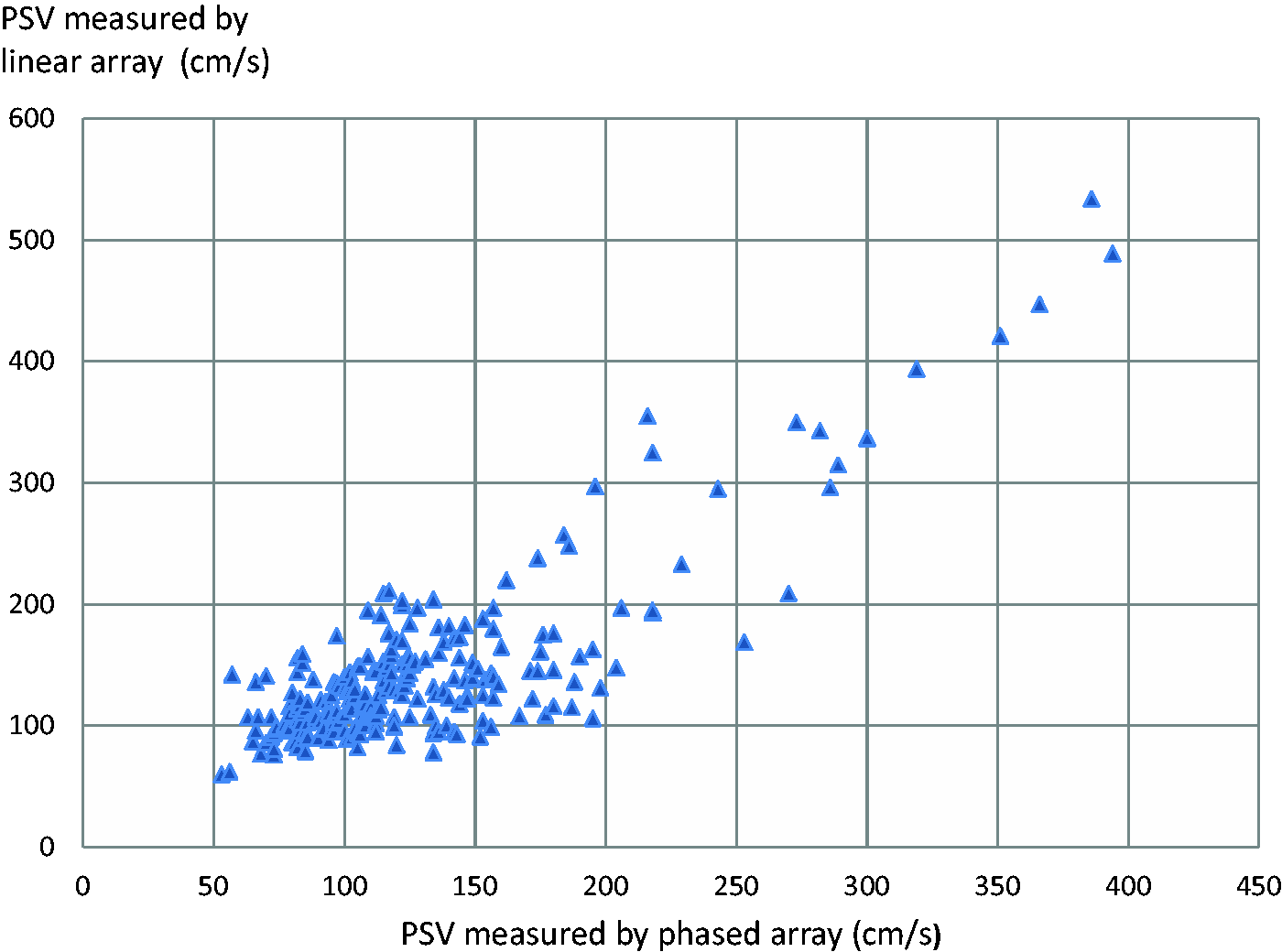
Stenoses
Using a threshold of LA PSV of 300 cm/s, or PA TCD mean of 160 cm/s, eight children had evidence of stenosis (three had bilateral stenoses) by both measurements; two stenoses were identified by the LA threshold but not PA (PA values of 140 cm/s and 146 cm/s); and two stenoses were identified by the PA but not the LA (LA PSVs 296 cm/s and 209 cm/s – see the Discussion section).
Discussion
This was a limited study intended to improve our own clinical practice. All measurements were made by one operator as part of the routine examination. There was sometimes a substantial difference between velocity measurements in an artery when measured with the two transducers. There are several possible reasons for the disparity as follows:
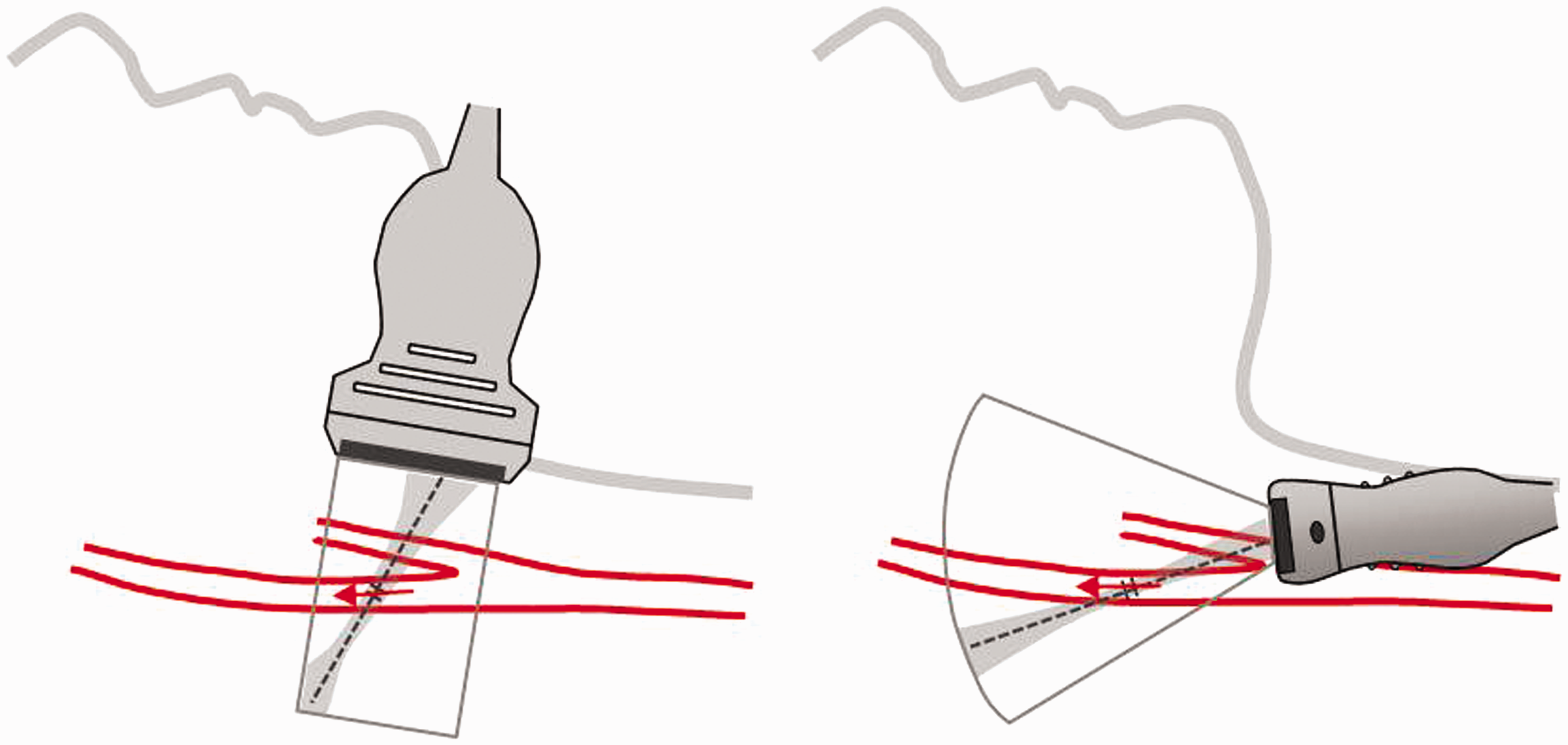
No beam/flow angle correction is made with the phased array. Operators of non-imaging TCD do not make beam/flow angle corrections; they cannot since there is no indication of the vessel direction. The same limitation is deliberately used for submandibular phased array imaging in this application in order to replicate non-imaging practice. This approach is justified if the artery remains closely aligned to the beam direction; even with a 30° deviation, velocities will be underestimated by around 13%. However, in several cases the artery was tortuous and beam/flow angle misalignment (Figure 5) leads to underestimation of velocities. In conventional linear array imaging of internal carotid arteries, angle correction is required. In this study, angle correction ranged from 0 to 60° (median 49°). Although errors occur, especially in tortuous arteries (see below), this allows for some correction of deviation of flow from the beam direction. Spectral broadening. Although the pulsed Doppler beam is portrayed as a dotted line, it has a width dependent on the number of elements used to steer and focus the beam at the required sample volume depth. This produces several Doppler frequencies from the range of beam/flow angles rather than the single angle portrayed (Figure 6). This effect is increased with higher beam/flow angles. Velocity measurements made with beam/vessel angles of 40–60° with the linear array are significantly higher than those made in line with a vessel using the phased array. The phenomenon is a well-known limit to Doppler ultrasound velocity measurement accuracy.
6
Recommendations for measuring PSV to assess carotid artery stenosis in adults include guidelines for beam/flow angle ranges to limit variation from this cause.
7
Swedish standards for velocity values for adult carotid artery stenoses acknowledge this source of error by giving different values depending on the beam/flow angle used.
8
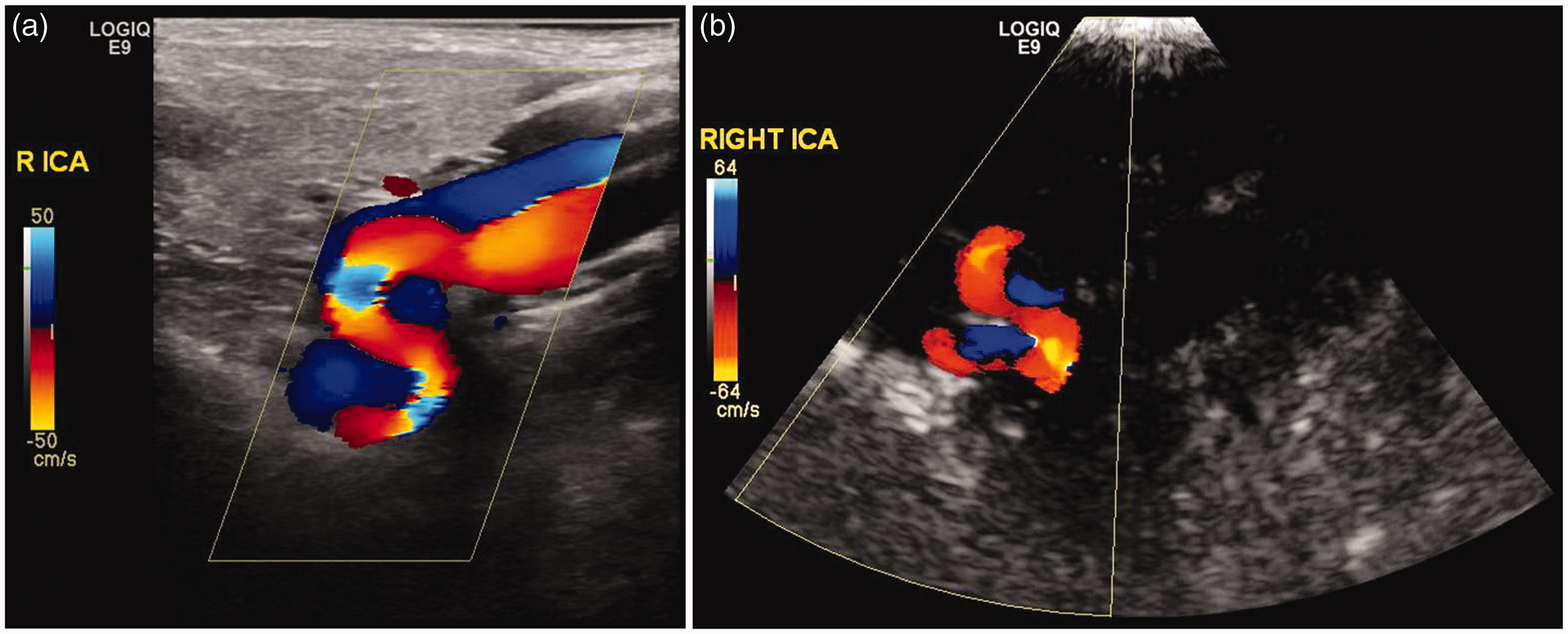
Tortuosity of vessels. In some children there was tight curvature of the ICA with raised velocities. This makes accurate velocity measurement difficult. For the phased array method, a larger sample volume (5–7 mm dependent on the scanner) was used to be sensitive to the highest velocity along the beam. However, no angle correction is made when it might be needed, thereby causing velocities to be underestimated. For linear arrays, making angle correction in a tightly curved sample can lead to overestimation or underestimation of velocities. A smaller sample volume (typically 2–3 mm) was used so as to measure velocities at specific local sites in curved arteries. Tortuosity can itself lead to locally raised velocities and has been shown to be associated with the development of stenosis.
5
A tortuous extracranial ICA imaged with linear (5a) and phased array (5b) transducers. Diagram of the effect of spectral broadening when scanning with linear array (L) and phased array (R). The grey outline of the beam shows several beam/vessel Doppler angles from the direction of flow (red arrow). The effects on velocities in the linear array are more marked than for the phased array since the beam/vessel angle is low for the phased array. The range of angles produces a lower range of variation in cosine used in the Doppler calculation of velocities than for the linear array. The site of measurement of maximum velocity sometimes differed. LAs image the proximal eICA better, although by using a posterior–lateral approach the entire cervical portion of the ICA can be imaged. The PA is better suited to the distal eICA; the proximal ICA is not in the area of best elevation focus. Stenoses were found at every level of the eICA. The measurements assume that the vessel and flow directions are in the plane of the image. No correction is made for angle correction in the elevation plane. The colour image itself is used to make a beam/vessel angle correction, but since the beam width in elevation varies throughout the image, velocities may be underestimated. Learning curve. While the operator had considerable experience of using the linear array to image carotid arteries, he had less experience using the phased array for this application.
Measuring stenoses
If the B-mode image of a stenosis is clear and the lumen well defined, then accurate measurement of the severity of a stenosis is possible using direct measurement (Figure 7). However, the location of a stenosis and ultrasound characteristics of arterial disease often lead to poor B-mode images.
B-mode image of a stenosis in the extracranial carotid artery of a child with sickle cell disease. The appearance is of a short hyperplasia-like lesion. The MRA image (7b) shows a stenosis (arrow) of the distal cervical ICA.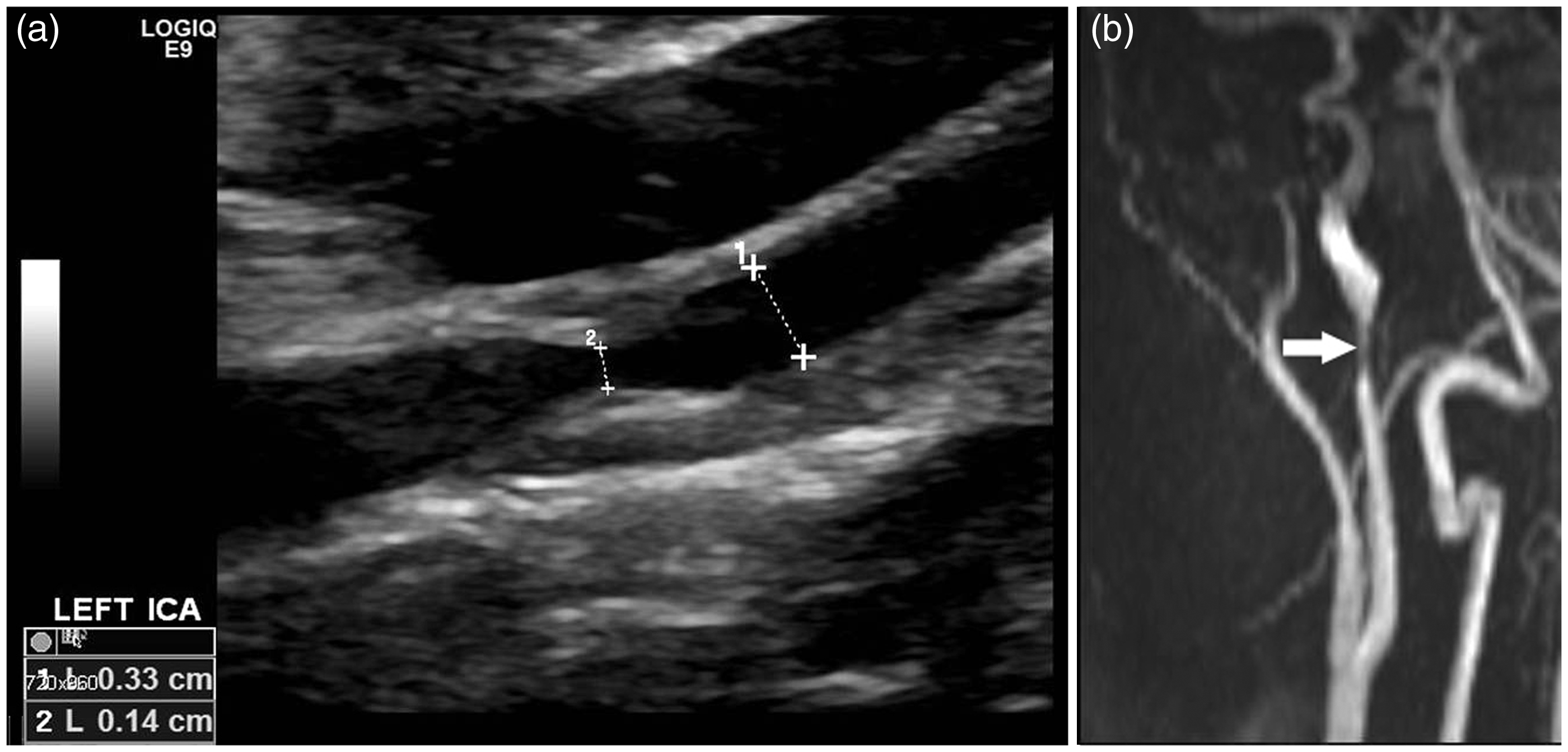
The use of Doppler ultrasound velocities to determine the presence and severity of stenosis is well established in vascular ultrasound diagnosis. It can reveal changes in diameter where the B-mode image is unclear. For haemodynamic analysis, the peak velocity and velocity ratios provide an estimate of the pressure loss, which is useful, for example, in renal artery stenosis and peripheral arteries. In adult extracranial carotid disease, Doppler ultrasound is a pragmatic, but imperfect, complementary imaging technique to assess the severity of disease.
The accuracy of Doppler measurement of stenoses is limited by physiological variations and technical considerations, some of which have been shown in the current study. Velocities depend on the flow through the stenosis; physiological effects can alter flow and therefore velocities. Velocities vary between individuals; the velocity range in children in this study without stenosis was large. Velocities in children with sickle cell disease are dependent on haemaotocrit level; lower haematocrit may lead to vasodilation and higher cardiac outputs to compensate for the lower haemoglobin levels. This may increase velocities through the cerebral arteries. The same velocity thresholds were used across all ages of children. While younger children might be expected to have higher cerebral artery velocities, TCD screening of intracranial arteries uses the same velocity thresholds across all ages of children with sickle cell disease. The same was done for extracranial stenosis in this study.
The accuracy of the measured velocity is also dependent on scanner settings, for example gain, beam/flow angle, spectral broadening and position and depth in the image.
Which velocity?
The Doppler spectral display offers a range of measurements including peak systolic velocity (PSV), end diastolic velocity (EDV), time-averaged maximum velocity (TAMV) and several measures of flow waveform shape. The TCD community has used TAMV, usually described as TCD mean, as a robust measure of velocity for TCD applications.
9
Non-imaging TCD devices feature envelope tracking software to calculate this automatically. This measurement is available in most duplex scanners as TAMV although its precise nomenclature and calculation vary between manufacturers. For example, the Philips iU22 scanner used calculates the TCD mean as 1/3 PSV + 2/3 EDV from the automated trace but also provides a separate measure of TAMV, described as TAMMX. For many TCD applications, the change in the automatically traced spectral envelope is a sensitive measure of subtle velocity changes in response to stimuli and physiological changes. In children with SCD, tight stenoses lead to high velocities with a weak spectral outline, possibly as a result of a lower number of scatterers in the sample volume. The extracranial carotid arteries often move in the cardiac cycle so that the clarity of the spectrum differs appreciably in systole and diastole (Figure 8). This can prevent accurate automated spectral envelope tracing. In these cases, manual positioning of a cursor or manual tracing of the spectrum outline provides a better estimate of TCD mean and peak velocity.
Movement of the artery causes loss of clarity in the measurement of peak systolic velocity in this eICA stenosis. The outline of the time averaged maximum (TCD mean) velocity is poor, precluding use of automated envelope measurement.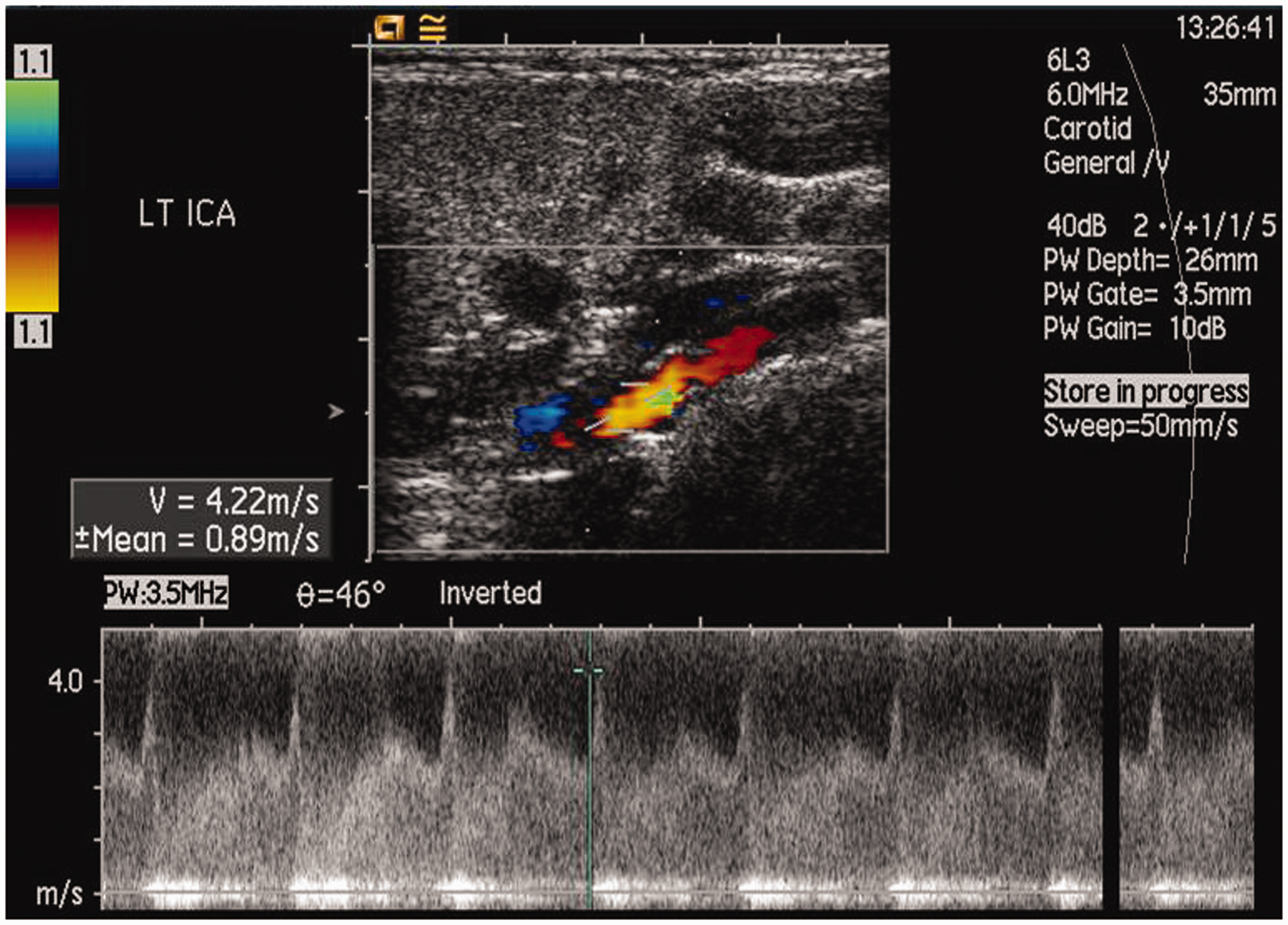
What value?
The TCD mean velocity averaged 64% of peak measured by the linear array and 63% using the phased array. Mean velocities measured by the linear array were overall 12.5% higher than those for the phased array. Thus, a TCD mean velocity of 160 cm/s measured with a phased array is approximately equivalent to a peak systolic velocity of 285 cm/s measured by a linear array. Early studies2–4 into extracranial ICA stenoses show broad agreement for the threshold at which stenosis was identified, even though the methodology was different. Had we used a threshold of 285 cm/s for a linear array stenosis, we would have classified another stenosis identified by phased array as having an eICA stenosis (180 cm/s) and another two arteries with PA mean velocities below the stenosis threshold (155 cm/s and 124 cm/s). Our initial threshold for a stenosis was a PSV of 300 cm/s measured by a linear array. Following this study we have set a threshold of 285 cm/s to best match other groups using a TCD mean threshold of 160 cm/s.
Conclusion
In practice, results of the intracranial and extracranial Doppler ultrasound measurements form part of the overall clinical assessment and are weighed with previous medical history, haemoglobin levels and assessment of development and well-being. Abnormal extracranial findings are further investigated by MRA and MRI. 5 Treatment is offered where clinically indicated.
It was instructive to compare the ease of use of the two ultrasound techniques in this study. The stenotic lesions in children with SCD differ from those in the adult stroke population where disease in and around the bifurcation dominates. In children with SCD, lesions were found at different levels of the eICA. The phased array was a rapid means to detect elevated velocities at all levels. The linear array permitted more detailed examination of lesions. We also occasionally used, though did not report as part of the study, high frequency curvilinear arrays to image these lesions more effectively. For all transducers, lesions were characterised by short rapid increases in velocity, often with distal turbulence. The colour flow characteristics are familiar to those undertaking vascular ultrasound and the velocity measurements confirmed the severity of the lesion.
We advocate that assessment of the extracranial arteries should form part of the ultrasound examination of the cerebrovasculature of children with SCD. Transducer choice will depend on availability, operator expertise and familiarity, but operators should acquaint themselves with probes that can image the entire length of the cervical ICA. The additional time spent on each examination was typically 2–3 minutes. Compared with the effort to provide comprehensive screening for this group of children, the additional time and resource during the scan is negligible. As the risk of eICA stenosis and the treatment pathways becomes more refined, velocity levels at which to expedite treatment may become clearer. However, we believe that the published evidence to date shows that imaging of the extracranial ICA should be implemented as part of screening for stroke risk in children with SCD.
Footnotes
Declaration of conflicting interests
The author(s) declared no potential conflicts of interest with respect to the research, authorship, and/or publication of this article.
Funding
The author(s) received no financial support for the research, authorship, and/or publication of this article.
Ethical approval
This study was permitted by the local Ethics Committee as an audit of clinical practice.
Guarantor
CD
Contributorship
CD and BF devised the study. CD undertook the study and wrote the manuscript. SH and DR advised on the medical aspects of the study and manuscript. All authors reviewed, edited and approved the manuscript.