






Abstract

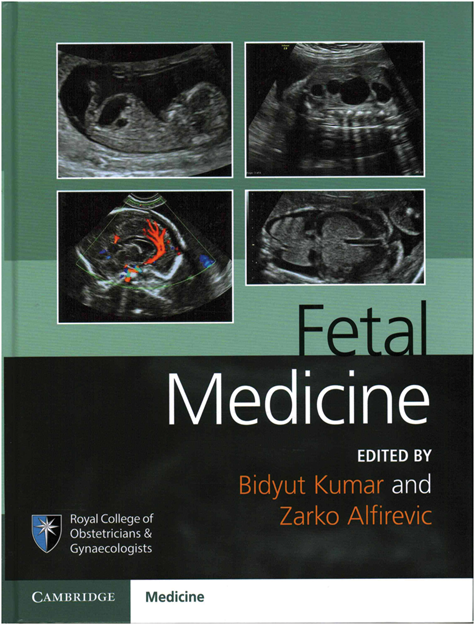
The plethora of books about high-risk pregnancy and fetal medicine attests to the growing need for consultant obstetricians with skills in screening and diagnostic ultrasound. The UK is unique in terms of its training infrastructure, recognising the need to train and ‘credential’ doctors who will work outside of the specialised centres by completion of the Royal College of Obstetricians and Gynaecologists’ (RCOG) Advanced Training Skills Module (ATSM) in Fetal Medicine. It is noteworthy that the book, published by Cambridge University Press (CUP), is endorsed by the RCOG. The Editor’s aim was to provide a ‘one-stop source of knowledge’ for this ATSM. Despite their concerns that some contributors were ‘overenthusiastic’ in their contributions, I think the content is entirely fit for purpose and their aim has been achieved.
All the key elements of the curriculum are included under nine sections (genetics and antenatal screening, embryology, fetal anomalies, fetal disease, termination of pregnancy, fetal growth and wellbeing, multiple pregnancy, placenta and amniotic fluid and invasive procedures). As with all books, there are some contributions that are excellent – specifically from related specialists (e.g. Fryer on genetics and Sebire on fetal pathology) –and some that are less valuable. The largest section unsurprisingly focuses on fetal anomalies where there is less consistency in the depth of literature reviewed; some authors failing to appreciate the more detailed knowledge required for the specific anomalies the intended reader needs to be able to manage independently without specialised consultation. The book is exceptionally well illustrated given its size – a good example of this is the excellent chapter on congenital heart disease.
The hardback book is listed on the CUP website as costing £64.99. I think this represents good value as, whilst it’s not pocket size, the book would be an easy carry and a valuable asset for a trainee to take to clinics. Whilst part of a RCOG advanced skills series and written for the UK market, trainees and consultants in other countries who want to update their knowledge about fetal medicine would get real value from the book.
Reviewed by SC Robson
Institute of Cellular Medicine, Medical School, Newcastle University, UK Email: