







Abstract
Objectives
The study aimed to determine the multidimensional impact of pruritus, to define the impact on quality of life and to identify the experiences of patients with the symptom.
Methods
A mixed-methods study with sequential quantitative and qualitative method with 57 patients experiencing pruritus in the hepatology and internal medicine clinics.
Results
A pruritus prevalence of 37.7% was found, with a mean score of 19.4 ± 3.4 (0–25) and the daily duration was 18–23 h/day (43.9%). The mean total score of the Liver Disease Symptom Index 2.0 was 66.57 ± 9.13 (0–96). A correlation was found between elevated GGT levels and pruritus. The qualitative content analysis consisted of three main themes: the meaning of pruritus and scratching; impact on quality of life; and ways of coping/dealing with pruritus symptom.
Discussion
The study shows that quantitative and qualitative results concurred that pruritus impairs patient's quality of life in regards to sleep, social isolation, daily living activities, and eating habits.
Summary statement
What is already known about the topic?
Pruritus is a common symptom in chronic liver disease.
Patients with chronic liver disease-associated pruritus significantly impairs daily activity and sleep.
Pruritus management and assessment are very important in liver disease because is very important in liver disease as pruritus may be a major problem in patients’ quality of life.
Considering that there is a scarcity of available clinical protocols or evidence-based assessment methods for the management of liver disease patients, this paper provides nurses with information about evidence-based and multidimensional itching assessment.
What does this paper adds?
Itching is the most common complication among patients with liver disease, and evidence-based and multidimensional assessment is the cornerstone of sustainable nursing care and symptom management.
A few detailed studies have examined the liver disease-associated pruritus characteristics. This study provides a scientific information on the quantitative characteristics of pruritus and the qualitative perspectives of patients
Patients with pruritus report lower quality of life, and it is necessary to express experiences from the point of view of a patient. There are a few studies that address quality of life in liver disease with pruritus, and even fewer that examine patients' qualitative perspectives on pruritus.
The implications of this paper:
Considering the scarcity of available clinical protocols and evidence-based assessment methods, this paper provides nurses with information about evidence-based and multidimensional evaluation of itching in liver disease patients.
The results of our study show that the healthcare system in general and nurses in particular could help manage pruritus and the other liver disease-associated symptoms because of the effects and hindrance to patients' sleep quality and daily living activities.
Introduction
Pruritus is known as an uncomfortable sensation that causes the skin to scratch and is associated with chronic liver disease, cirrhosis, primary biliary cholangitis (PBC), and obstructive jaundice. 1 In a study by Oeda et al., 2 the prevalence of pruritus was reported to be 40.3%, with the most common underlying conditions being overlap syndrome (60%), PBC (51.4%), and chronic hepatitis C virus (HCV) infection (44.7%). The exact pathophysiology of pruritus in chronic liver disease is not known, but several hypotheses, such as bile salt accumulation, high histamine levels, endogenous opioids, and serotonin, have been proposed. Recently, elevated lysophosphatidic acid and autotoxin levels have been found to correlate with pruritus.3,4
Pruritus affects patients’ quality of life by interfering with sleep, activities of daily living, and personal relationships, and it exacerbates fatigue and deterioration in mental health.5,6 Although scratching provides little to no relief, in the Martin et al. (2019) study, half of PBC patients (55%) reported “itching and scratching” as the second most important factor in how symptoms affect their lives. 7 Itching is described as localized or diffuse and can be exacerbated by heat or certain textiles with a circadian rhythm that worsens in the evening. 8 Accompanied by sleep deprivation, skin injury, social isolation, nervousness, and depressive symptoms, pruritus leads to an increase in suicidal ideation.9,10
As recent studies have shown, the troublesome, inconvenient nature and unclear mechanism of pruritus pose a challenge to clinicians seeking to develop more effective palliative and moderating management techniques.11–13 Practice guidelines from the American Association for the Study of Liver Diseases and the European Association for the Study of the Liver recommend screening for symptoms by interviewing patients, quantifying the impact of symptoms, developing self-management approaches for symptoms, and following up to reassess the response to treatment. 14 Nurses play a critical role in symptom management through the cycles of assessment, diagnosis, care, and treatment. They need to describe the experience from the patient's symptom perspective and the patient's needs to develop tailored, individualized care plans.15,16 Few studies address patients' qualitative perspectives on pruritus.17,18 Multidimensional assessment of pruritus and mixed-methods design promote a comprehensive understanding of the nature of the pruritus symptom. In light of previous studies aimed at improving the quality of life of patients with liver disease, a mixed-methods design was adopted. The aim is to determine the extent, characteristics, and impact of pruritus in a range of conditions (using the 5-D Itch Scale) and to improve understanding of how patients experience and understand the condition.
Methods
Design
A sequential mixed-methods study design was used. Quantitative data were collected and analyzed first, and then qualitative data were collected to complement this data. This design helped to fully understand the patient experience and explanations for the effects, and to validate the quantitative and qualitative outcomes of the pruritus symptom.19,20
Sample participants
This study was conducted with 57 patients with liver disease in the hepatology and internal disease clinics of a university and a public hospital. The inclusion criteria for the quantitative phase were: over 18 years of age, pruritus in the last two weeks, and the ability to communicate. The inclusion criteria for the qualitative phase were: patients who suffered from severe itch (with a score of three or more on the 5-D Itch Scale) and agreed to participate in the survey. Patients receiving pharmacological treatment for itch were exclusion criteria for the study. Of the 151 patients approached for the study, 80 had not reported itching in the last two weeks, five had communication problems such as hearing and mental illness, and nine did not agree to participate. The quantitative part of the study was thus conducted with 57 patients. Of the 45 patients with severe and intolerable itching, 12 agreed to participate in the qualitative phase. In the qualitative phase with 12 patients, the study explores living with itch and delves deeply into the experiences of patients with severe itch according to the degree dimension of the 5-D Itch Scale (Figure 1).
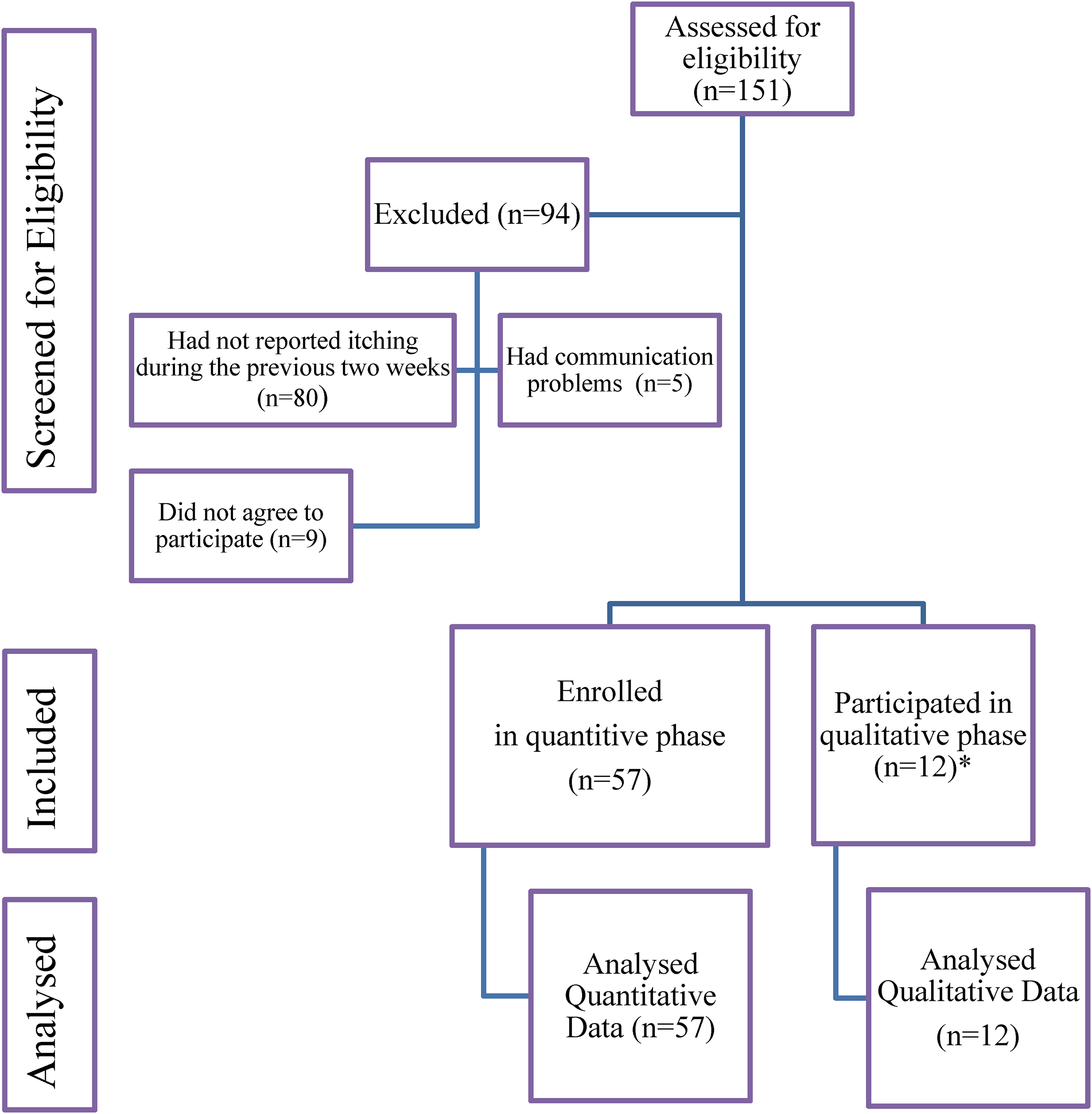
Study flow- diagram. *12 of 57 patients in quantitative phase.
Data collection
Data were collected using a sociodemographic questionnaire, the 5-D Itch Scale, and the Chronic Liver Disease Quality of Life Scale 2.0. The researchers conducted face-to-face data collection with 57 hospitalized patients in the inpatient hepatology and internal medicine clinics. The patients had given their consent to participate in the study. Each data collection interview lasted 30–32 min.
Quantitative phase
This phase of the study was conducted between March 2017 and August 2018 to answer three research questions:
What is the degree of pruritus observed in patients? What are the characteristics of pruritus in terms of duration, degree (severity), direction (progression), disability (impact on activities of daily living), and distribution in patients? How do the symptoms affect the patients’ activities and quality of life?
Qualitative phase
The second aim of this study was to maximize our understanding of how patients experience symptoms. The qualitative phase was conducted according to the Consolidated Criteria for Reporting Qualitative Research (COREQ) guidelines. The interview questionnaire was administered by the researcher (NAE, PhDc, research assistant, female, with experience in pruritus research with hemodialysis patients) to 12 patients in the inpatient hepatology and internal medicine clinics, on a one-to-one basis. The interviews lasted 20–25 min. The researcher took notes during the interviews, used leading questions, and gave examples. During the interview, the researcher repeated the notes to the participants to confirm their accuracy.
Measures
The socio-demographic questionnaire
The socio-demographic questionnaire was prepared after reviewing the literature. It included questions on age (years), sex, height (cm), weight (kg) (to calculate body mass index (BMI)), education level, occupation, duration of illness (years), medications, laboratory parameters and skin assessment.9,21–23 Laboratory parameters included hematological parameters, coagulation profile, liver enzymes, body proteins, bilirubin and blood glucose levels were recorded in the last shift. BMI and the Model for End-Stage Liver Disease (MELD) score were also recorded in the patient records. The MELD score includes dialysis at least twice in the past week, creatinine, bilirubin, INR and sodium levels of the patients. The skin was assessed by inspection and palpation by the researcher for erosions, lichenification, hyperpigmentation and nodules.
The 5-D itch scale
The 5-D Itch Scale was developed by Elman et al. (2010) to measure the duration, degree, direction, distribution and obstruction of itching over the past two weeks. The total scale score ranges from 5 points (no itching) to 25 points (maximum severity). A Turkish validity and reliability study conducted by Ersoy and Akyar (2018) with hemodialysis patients showed a Cronbach's alfa coefficient of 0.608 (p > 0.05) Inter-Class Correlation Coefficient-ICC 0.936 (p > 0.05). 24
The Liver Disease Symptom Index 20
The Liver Disease Symptom Index 2.0 (LDSI v.2) was developed by Van der Plas et al. in 2004. 25 The scale consists of 24 sub-items (“Symptoms and Effects of Symptoms”), which are scored for the previous week using a Likert scale (where “0 points” is the lowest score and “4 points” is the highest score). High scores on the scale mean an increasing impact of the symptom on life activities and a decrease in quality of life. 25 A Turkish validation and reliability study of this scale was conducted with a Cronbach's alfa coefficient of 0.908 (p > 0.05). 26
The semi-structured interview form
A semi-structured interview form was constructed by the researchers from the literature.9,21–23 The questionnaire contained four open-ended questions to collect information about pruritus, scratching habits, the impact of pruritus on daily life and ways of coping with pruritus:
- How would you describe pruritus from your personal experience? - What words best describe your pruritus and scratching behavior? - How does pruritus affect you and your life? - How have you tried to deal with your pruritus symptoms?
Ethical considerations
Written permission was granted by the hospital administration. Ethical approval was obtained from the University Institutional Review Board (GO 17/205-42). Signed informed consent was obtained from the patients.
Data analysis
Data were analyzed using IBM Statistical Package for Social Sciences (SPSS), version 23 (Armonk, NY: IBM Corp). Descriptive data were presented in the form of numbers, percentages, means and standard deviations. Statistical analysis of data from 57 patients (n > 30) was performed using parametric and non-parametric tests (the Kolmogorov-Smirnov coefficient was 0.122 (0.034/0.949 for the 5-D itch scale total score). An independent-samples t-test was used to test the difference between two independent groups; when there were more than two independent groups, ANOVA was used. Linear relationships between two continuous variables were tested with the Pearson correlation coefficient, and the Mann-Whitney U and Kruskal Wallis test was used for non-parametric data. A p-value of <0.05 was considered significant.
For qualitative data analysis, the researchers used content analysis as described by Graneheim and Lundman, 2004. 27 The length of the texts varied from half a page to a full page. The analysis steps were as follows: a thorough review of the open-ended responses, dividing all written texts into units of meaning, condensing the units of meaning and labelling them with codes, distributing the codes into categories, and analyzing the subthemes and grouping them into three main themes. To strengthen trustworthiness, both authors discussed the codes, subthemes and themes throughout the analysis process until agreement was reached. 27
Validity and reliability/rigour
All scales used in the study showed acceptable internal consistency. The Cronbach's α of the 5-D Itch Scale and the LDSI 2.0 were 0.608 and 0.908, respectively. Interview notes were confirmed and repeated by the researcher with participants, increasing the validity of the results. To strengthen trustworthiness, both authors discussed the codes, subthemes and themes throughout the analysis process until agreement was reached.
Results
Quantitative phase
Characteristics of the sample
A total of 57 patients participated in the study, with a mean age of 51.51 ± 3.12 years (ranging from 27 to 80 years). Of them, 63.2% were female, 54.4% had completed primary school and 54.3% were unemployed. The mean BMI of the patients was 27.14 ± 4.53 cm2 / kg.
Almost half of the patients (40.4%) were diagnosed with cirrhosis, 29.8% with biliary obstruction, 19.3% with PBC and 10.5% with liver failure, with a mean duration of diagnosis of 4.76 ± 3.78 years. The mean MELD score was 12.68 ± 5.69. 10.5% of patients were in the process of planning liver transplantation, while 80.7% were not. Patients had normal values for red blood cells, hemoglobin, hematocrit, MCV, MCH, RDW, coagulation profile and platelets. Elevated serum levels ALT, AST, GGT, bilirubin and fasting glucose were observed in most patients, and hyperproteinemia and hypoalbuminemia were seen in 54% and 68% of patients, respectively. Almost all (96.4%) of the patients had erosion, 73.6% had lichenification, 84.2% had hyperpigmentation and less than half of the patients had nodules and papules.
Itching characteristics
The prevalence of pruritus was 41.6% (57 patients reported pruritus out of 137 patients approached). The mean total score of the 5-D pruritus scale was 19.4 ± 3.4 (min.9.2-max.25). The itch lasted (duration) 18–23 h per day in 43.9% of patients and all day in 15.8% of patients. The degree (severity) was mostly reported as severe (56.2%). The direction of symptoms was reported as “a little bit better, but still present” by 64.9% of patients. Regarding sleep disturbance, pruritus affected sleep in 56.1% of patients, as it “delays falling asleep and frequently wakes patients up”. Pruritus was distributed over 6–10 anatomical regions on the body (33.3%). The most frequently mentioned anatomical regions for itching were the chest, palms, groin, and abdomen (Table 1). Female patients had higher scores on the 5-D itch scale than males (p: 0.002) and a correlation was found between elevated GGT levels and pruritus (p: 0.020). Furthermore, no statistically significant difference was found between MELD score, age, skin status parameters, diagnosis and pruritus (Table 3).
Descriptive findings of 5-D itch scale (n = 57).
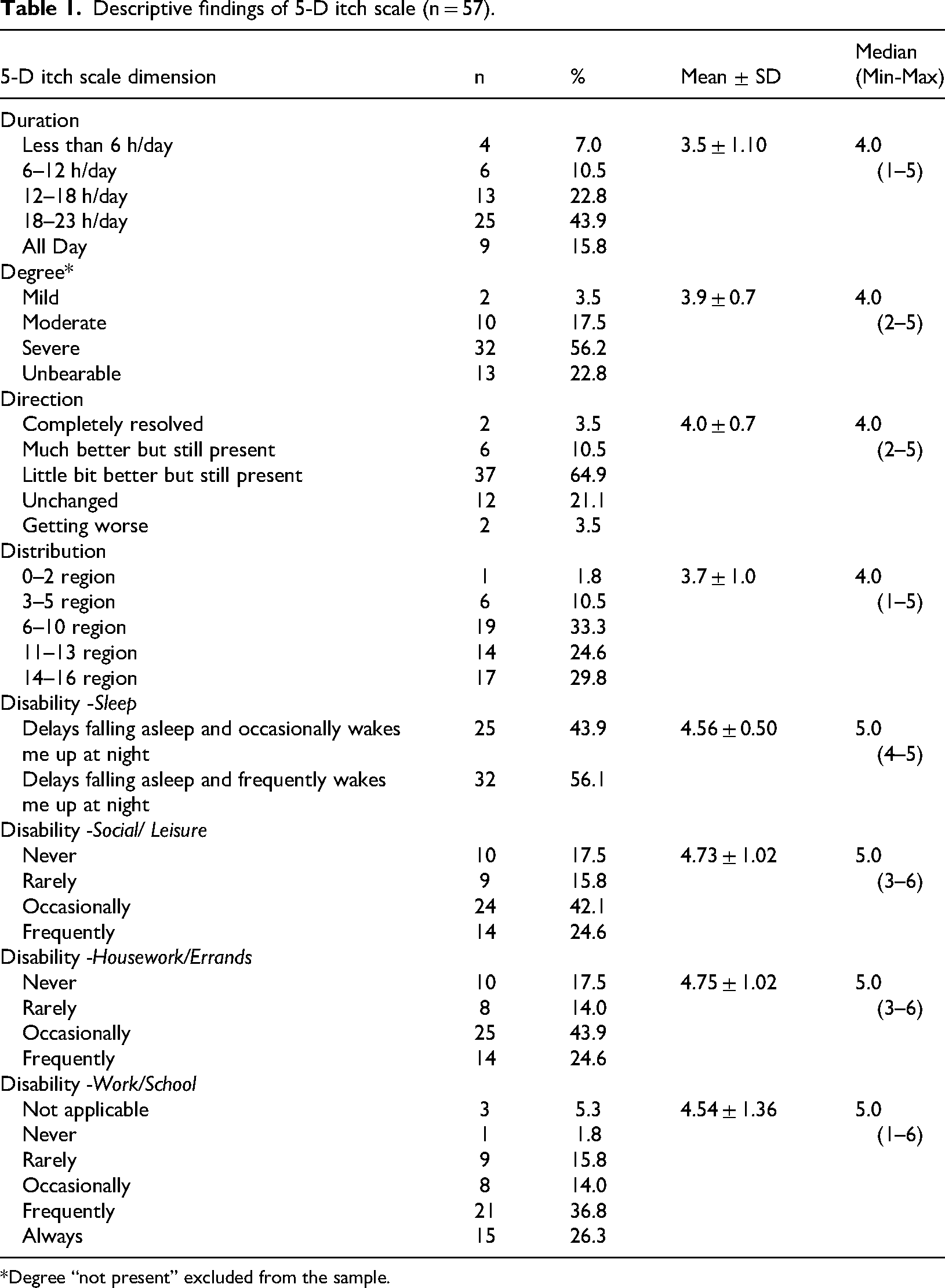
*Degree “not present” excluded from the sample.
Quality of life characteristics
The mean total LDSI 2.0 score was 66.57 ± 9.13 (0–96). In the previous week, 47.4% of patients had “frequent” pruritus symptoms. 49.1% of patients slept and 45.6% of patients had their daily work activities “frequently” interfered with by the pruritus symptom. Half of the patients “frequently” had joint pain (50.9%), and joint pain “frequently” (52.6%) interrupted the patients’ daily or work life. Sixty-five percent of patients had pain in the right upper abdomen, and this affected the lives of more than half of the patients “frequently” (63.2%). Almost all patients (98.2%) suffered from daytime sleepiness, and 57.9% of patients reported being “frequently” sleepy during the day. Jaundice was observed in half of the patients (50.9%) and “always” affected the daily or professional life of 28.1% of the patients. Almost half of the patients (45.6%) reported depression and this situation “often” affected the daily or professional life of 38.6% of the patients. More than a quarter of patients (36.8%) reported memory problems since the diagnosis of liver disease. Almost half of the patients were afraid of complications of liver disease such as infections, inflammation, bleeding and coma. In addition, 43.9% of patients “often” had a decreased appetite and 45.6% of patients felt disabled by lack of appetite. Patients reported that their personality “often” changed due to their liver disease. In addition, 42.1% of patients reported that their liver disease was “often” an obstacle in their financial affairs, while 38.6% reported that they “often” worried about the impact of liver disease on home and family life, and 54.4% found that this situation “often” interfered with their daily or professional life. Less than a quarter of patients reported decreased sexual interest and activity since learning about their liver disease (Table 2). In addition, a correlation was found between MELD and LDSI scores (p: 0.033) (Table 3).
Descriptive findings of LDSI 2.00 (n:57).
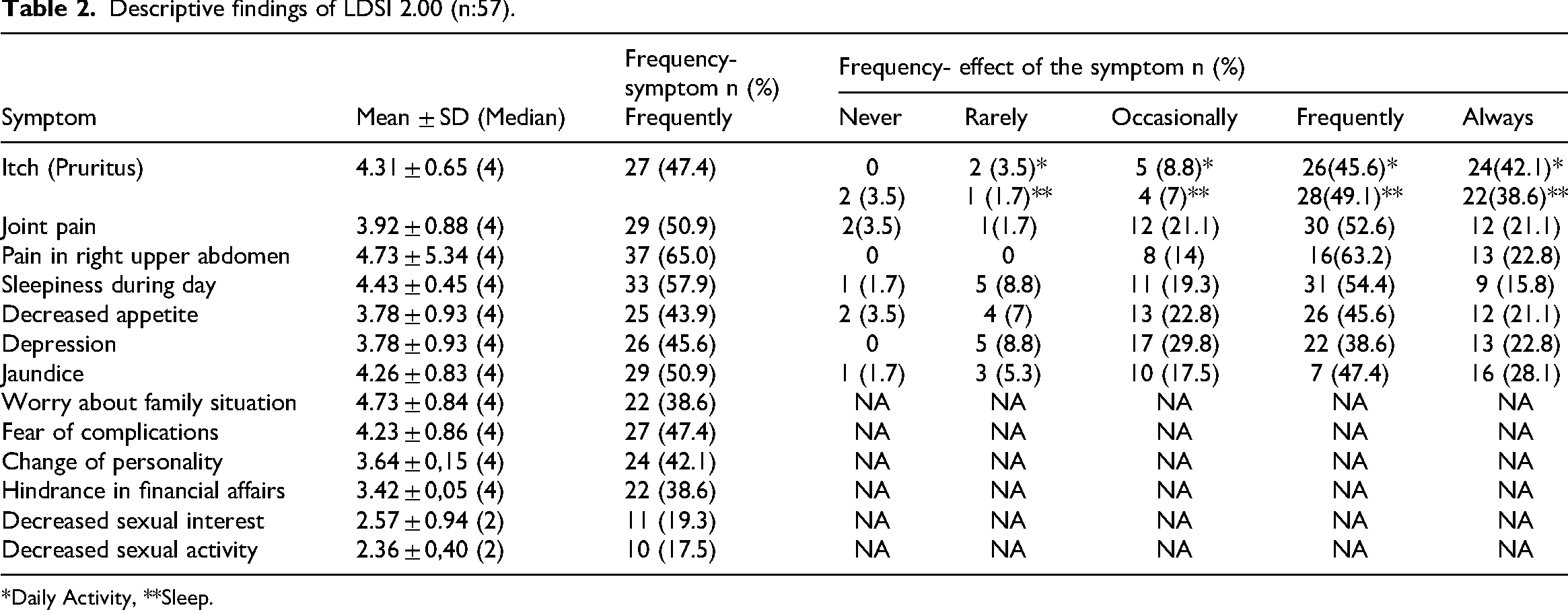
*Daily Activity, **Sleep.
The relation between clinical features and itching & quality of life characteristics.
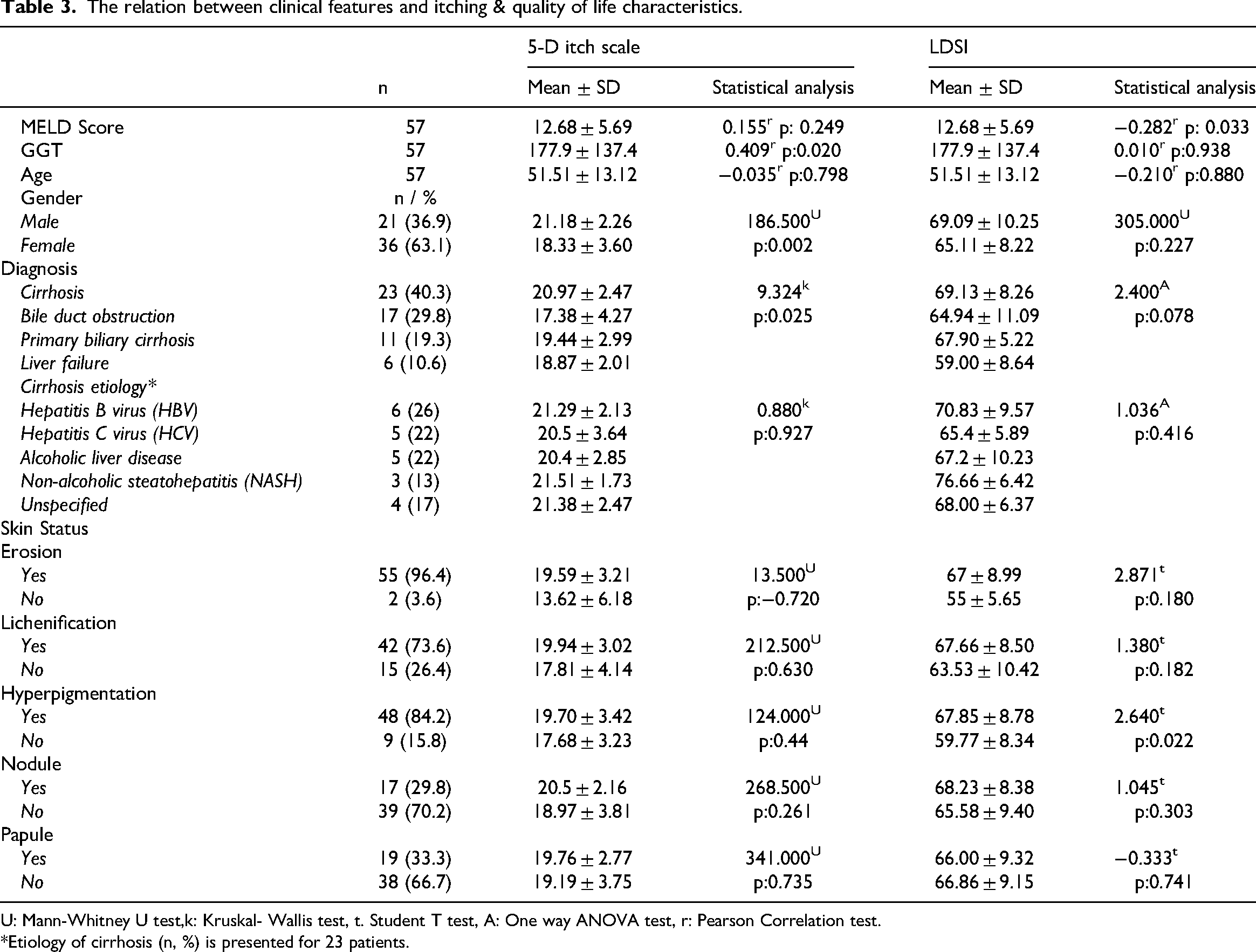
U: Mann-Whitney U test,k: Kruskal- Wallis test, t. Student T test, A: One way ANOVA test, r: Pearson Correlation test.
*Etiology of cirrhosis (n, %) is presented for 23 patients.
Qualitative phase
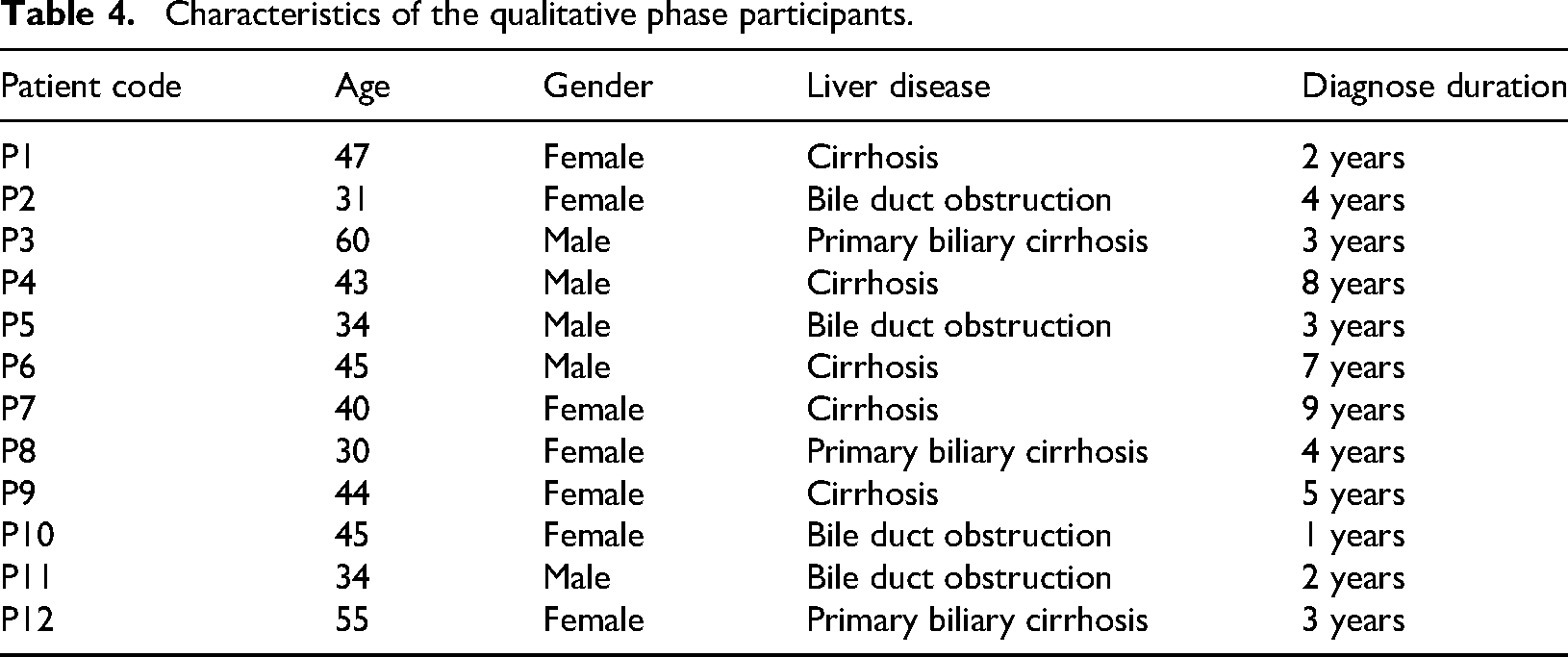
Qualitative data were collected from 12 patients with severe and unbearable itching, with a mean age of 42.33 ± 9.22 (between 30 and 60 years), of whom 58.3% were female. Almost half of the patients (41.7%) were diagnosed with cirrhosis, 33.3% with biliary obstruction and 25% with PBC, with a mean duration of diagnosis of 4.25 ± 2.52 years (Table 4).
Characteristics of the qualitative phase participants.
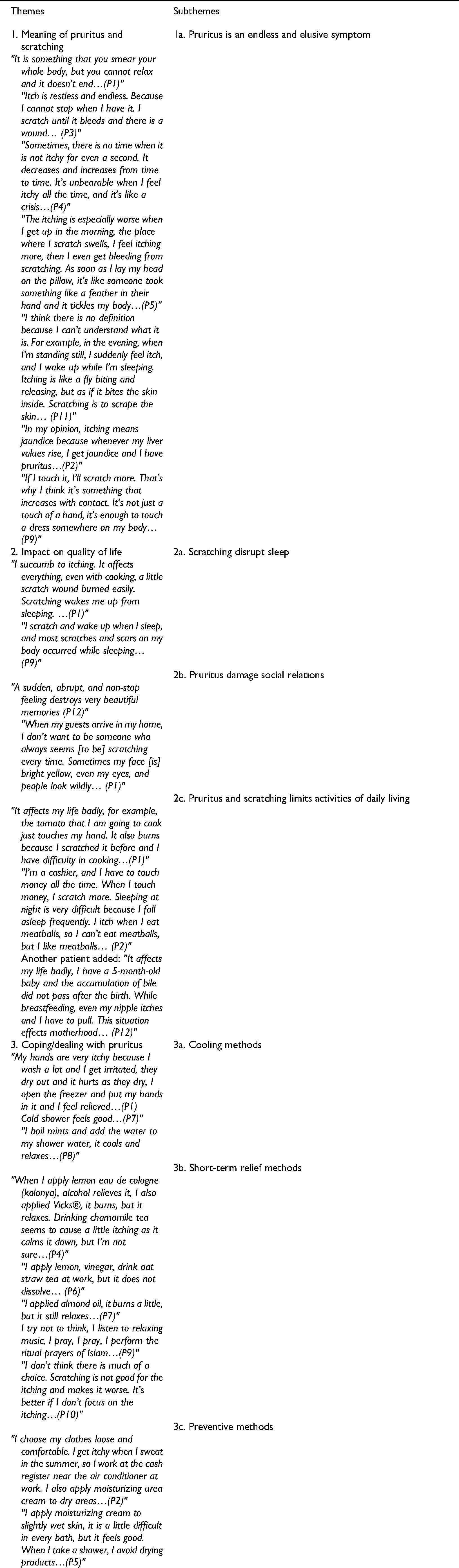
The content analysis included three main themes: (1) meaning of itching and scratching, (2) impact on quality of life, and (3) coping with itching (Box 1).
Interview Themes –Subthemes and Patient Statements.
Theme 1: meaning of itching and scratching
Subtheme 1: pruritus is an endless and elusive symptom
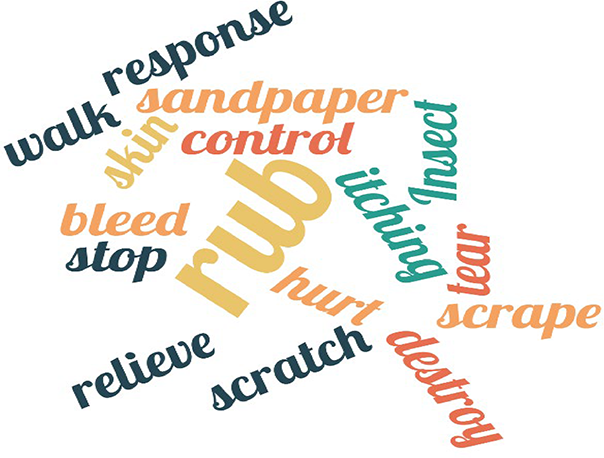
Patients were asked about the meaning of the sensation of pruritus in their own experiences and words. The words most commonly used by patients for pruritus were incessant, never and intractable. Half of the patients who stated that it was an incessant symptom scratched and tore their skin until they bled. Some patients stated that itching was an elusive symptom because they had difficulty understanding and defining it (Box 1). In addition, in this study, the most consistent words for scratching used by patients were rubbing, tearing, making a scratch to get into the deep skin, controllable, as shown in the Word Cloud.
Theme 2: effects on quality of life
When patients were asked about the impact of pruritus on quality of life, they mostly mentioned negative and significant situations or experiences. Pruritus affected patients’ quality of life in terms of sleep, social isolation, activities of daily living and eating habits (Box 1).
Subtheme 1: scratching disturbs sleep
Almost every patient had sleep problems due to pruritus (Box 1).
Subtheme 2: pruritus interferes with social relationships
Some patients stated that pruritus even spoiled good experiences in life (Box 1):
Subtheme 3: itching and scratching limit activities of daily living
Itching and scratching interfere with patients in certain activities of daily living (Box 1).
Theme 3: ways to manage and cope with pruritus symptoms
Patients were asked about the ways they try to manage pruritus symptoms (Box 1).
Subtheme 1: cooling methods
More than a quarter of patients reported using cooling methods to relieve itching, such as sitting near an air conditioner, rubbing or washing the itchy area with cold water or under a cold shower, or bathing in a mint tincture (Box 1).
Subtheme 2: short-term relief methods
Almost all patients reported that they had tried short-term relief methods, such as rubbing with damp cloths, lemon or vinegar, using a rub of almond oil and baby oil, wiping with a tea solution, cologne, alcohol and Vicks®, drinking chamomile, mixed herbal tea and oat straw tea, applying toothpaste, listening to relaxation music and praying.
Two of the patients reported that they had used distraction methods to cope with the pruritus symptom and scratching (Box 1).
Sub-theme 3: preventive methods
Less than a quarter of patients reported that they had used preventive strategies, such as applying lotion to the skin after showering, choosing loose clothing, avoiding scratching and not thinking about the scratching or itching. Two of the patients reported that nothing made their itching better (Box 1).
Discussion
Pruritus is a common symptom of liver disease that can be distressing and affect quality of life. Pruritus was observed in 41.6% of 137 patients in this study. In 2018, results from a large cohort and multicentre study showed an overall prevalence of pruritus of 40.3%. 2 Even studies found conflicting results in relation to gender; in this study, female patients had higher pruritus scores than males (p:0.002). Studies reported higher pruritus and concluded that female patients may have the worst pruritus due to female sex hormones. 28 GGT levels and pruritus scores showed a positive moderate correlation. Elevated GGT levels are associated with biliary system obstruction and stasis, and the accumulation of bile salts is the cause of pruritus according to the bile salt theory.29,30 A correlation was found between the MELD score and the LDSI score. The increase in MELD score indicates the need for transplantation, which also increases the frequency and disability of symptoms.
In this study, almost half of the patients suffered from itching between 18 and 23 h per day, most patients reported that the itching was severe (56.1%) and 64.9% of patients reported that their itching was “somewhat improved but still present”. In addition, half of the patients had experienced itch symptoms “frequently” in the week before the study according to the LDSI. In Yagi et al.'s (2016) study of 180 patients, 33.9% of patients with liver disease reported pruritus of mild degree. 31 Oeda et al. (2018) found that pruritus lasted longer than six months in 38.3% of patients. 2 The pruritus was distributed across 6–10 anatomical regions, and in this study more than half of the patients (65.2%) reported feeling it mainly in the chest, palms, groin, and abdomen. Many studies in the literature have found that itching in liver disease affects the limbs, soles and palms.28,32 One study reported that the most common sites in patients with liver disease were the back, abdomen, calf, upper arm and thigh. 2 In this study, during the qualitative phase of the study, patients used words to describe itching that does not last, spreads all over the body and does not heal, incessant, never unrelievable, sudden, uncontrollable, insect walk, etc. for scratching; rubbing, tearing, uncontrollable etc. Rishe et al. (2008) found similar statements in their qualitative study in relation to itching, including bugs crawling, deep and relentless, wants to tear my skin off, prickly/needly, deep itching and burning. 18 The incomplete healing of the itch causes patients to use different coping methods. In this study, patients used cooling methods, short-term relief methods and preventive methods.
In this study, more than half of the patients had sleep problems in the form of difficulty falling asleep, sleep interruptions and daytime sleepiness, as assessed by the 5-D Itch Scale, the LDSI and qualitative findings. Kremer et al. (2011) reported that the majority of patients with liver disease experience their worst itching in the late evening and early night. 28 In another study, nocturnal pruritus was found in half of the patients studied, and severe pruritus was overall observed less during the day than at night. 2 In the quantitative findings, patients reported that pruritus interfered with social life, housework and work or school life, and in the qualitative findings, they complained of social isolation and disability in activities of daily living. Yoshikawa et al. (2021) reported that pruritus limits activities of daily living and even causes fatigue, depression and suicidal thoughts. 6
This study focused on the impact of pruritus on activities of daily living; in addition, the other symptoms due to liver disease were considered via the LDSI scale scores. The mean total Liver Disease Quality of Life Scale score was higher than the mean total scale score, indicating an impact of symptoms on activities of daily living (66.57 ± 9.13 out of a total of 96 points). Approximately 50% of patients reported that itching, pain in the upper abdomen and joints, depression, decreased appetite, jaundice and personality changes and symptoms affected activities of daily living. Most patients living with the symptoms reported that the symptoms interfered with their daily or professional life, which is consistent with our qualitative findings, such as itching, pain, jaundice, etc. Van der Plas et al. (2004) used an LDSI and stated that more than 50% of the patients they studied suffered from joint pain, were sleepy during the day and worried about their family situation because of their liver disease. 25
Marchesini et al. (2001) reported a significant association between pruritus and physical limitations, physical pain, general health, vitality and role limitation in emotional domains in SF −36 (quality of life scale) in patients with liver disease. 17 Madan and colleagues (2012) found that more than half of patients with liver disease experienced pain within 24 h. 33
Study limitations
The potential limitations of this study should be noted. First, only 12 patients have recruited for the qualitative part of the study; the results of those who did not want to participate in the study may be more stunning, so the study repeated the unwilling liver disease patients who experienced pruritus with motivational encouragement. Second, in this study, itching was measured once; studies with repeated measures might be useful for comprehensive and continuous assessment.
Conclusions and implications
This mixed methods study showed that female patients suffer from pruritus more often than males and that there is a correlation between elevated GGT levels and pruritus, MELD and LDSI score. Pruritus affects patients’ quality of life in terms of sleep, social isolation, activities of daily living and eating habits. Based on the qualitative results and literature, patients with liver disease have a negative attitude towards pruritus; this finding is also supported by quantitative and qualitative data. Our interviews and the scale results are in agreement regarding the impact of pruritus on sleep and activities of daily living. Considering that there is neither a clinical protocol nor evidence-based assessment methods suitable for the management of patients with liver disease, this article provides nurses with information on an evidence-based and multidimensional assessment of pruritus and a basis for further research and standardization of assessments.
Footnotes
Acknowledgments
We thank the patients who participated in this study for sharing their experiences.

Author contributions
Study conception and design: NAE and IA, Data collection: NAE, Data analysis and interpretation: NAE and IA, Drafting of the article: NAE and IA, Critical revision of the article: NAE and IA.
Funding
The authors received no financial support for the research, authorship, and/or publication of this article.
Declaration of conflicting interests
The authors declared no potential conflicts of interest with respect to the research, authorship, and/or publication of this article.