







Abstract
Tribally owned American Indian enterprises provide a unique cross-cultural setting for emerging Native American business leaders. This article examines the manner in which American Indian leaders negotiate the boundaries between their indigenous organizations and the nonindigenous communities in which they do business. Through a series of qualitative interviews, we find that American Indian business leaders fall back on a strong sense of “self,” which allows them to maintain effective leadership across boundaries. This is highly consistent with theories of authentic leadership. Furthermore, we find that leaders define self through their collective identity, which is heavily influenced by tribal affiliation and tribal culture. We add to the literature on authentic leadership by showing the role that culture and collective identity have in creating leader authenticity within the indigenous community.
Keywords
History is replete with stories about American Indian 1 leaders; many are honored in American culture. For example, Osceola is popular in Florida for his efforts to protect his territory from colonists (Hatch, 2012). Crazy Horse is well known for his bravery in battle and his diligence in protecting his identity (Marshall, 2005). Geronimo is famous for using a deep knowledge of his homeland to confuse the US cavalry and stave foreign settlement into his tribal territory (Debo, 1976). Sitting Bull is known for his political skill and military prowess (Utley, 2014). Chief Seattle of the Duwamish cautioned the new settlers in his homeland about the necessity of showing respect for the environment (Furtwangler, 2012). The Nez Perce leader Chief Joseph was well known for eloquently speaking in favor of racial equality and freedom for Native Americans (Gunther, 2010). One of the dominant guiding principles of his actions was tribal loyalty (Humphreys et al., 2007).
Native American leadership today has evolved to reflect contemporary challenges faced by Native people that have been confined to rural enclaves, controlled by federal government agencies, and subjected to policies aimed at destroying their cultures (Edmunds, 2004). Today, new Native American leaders have emerged; responding to these challenges and seizing opportunities to create better lives for their people.
Native Americans are geographically dispersed throughout the United States, linguistically diverse, and culturally varied. The hundreds of tribal nations are politically distinct and separately recognized as sovereign by the federal government. Native Americans have to “build bridges across linguistic, cultural, regional, class, and even color differences” (Nagel, 1997: 8) to interact in dominant US culture. Native American community leaders exhibit flexibility in order to create synergies between their tribes’ and the dominant US culture. A push for tribal sovereignty, a tribal community’s ability “to control its own political, social, economic, and religious life” (Edmunds, 2004: 6), ushered in the self-determination era. A shift in US policy toward tribal sovereignty in the 1970s provided opportunities for Native economic business development to enhance tribal economies (Grant and Taylor, 2007). This new sovereign era has led to business leaders emerging within the broader Native American community.
Business leaders navigating across and between cultures
Corporate leadership concerns in a Native American context differs because not only does an American Indian business leader need to effectively run a company, he or she also needs to bridge the divide between two cultures—his or her Native culture and that of the dominant US (business) culture.
While there are different definitions of culture, most researchers tend to accept Hofstede’s definition (Myers and Tan, 2003). People share a collective character that constitutes their cultural mental programming, and shapes their values, beliefs, assumptions, expectations, perceptions, and behavior (Hofstede, 1980). Thus an individual’s national culture influences societal rules for behavior and the primary differences between different national cultures stem from national values (Hofstede and Hofstede, 2005).
The importance of national culture with respect to management leadership is described by Hofstede (1980), Dorfman and House (2004), and House et al. (2004). The general consensus from this research is that national cultural identity and societal demands affect how people from that culture think about leadership style and that cultural beliefs and values influence a society’s definition of effective leadership. The Global Leadership and Organizational Behavior Effectiveness (GLOBE) studies (House et al., 2004) are a collection of longitudinal studies in 62 countries that examine the influences of national and organizational culture on organizational leadership. The GLOBE studies highlight the differences across cultures on nine cultural values and document that national culture and leadership are interdependent organizational dimensions where culture influences leadership.
Dorfman and House (2004) argue that cultural influences on leadership influence expected leader behaviors. Research suggests that national cultures create different views on desired leadership qualities and these differences are tightly coupled to cultural characteristics rather than being universal (Dorfman et al., 2012). Consistent with Hofstede’s cultural model, Redpath and Nielson (1997) found that Canadian Native cultures are very different than the dominant Canadian culture and tend to be more collectivist, tolerant, egalitarian, and adaptive. As US Native American tribes are sovereign nations within a nation and their cultures differ markedly from US national culture, it is likely that differences are reflected in Native American management leadership behaviors as well.
The study of leadership often has a Western cultural bias (House and Aditya, 1997; Hofstede, 1993). Scholars have preferred to study leadership behavior from a Western perspective while focusing on organizational performance as a key driver. The management literature documents the value of leadership in the development of human capital, implementation of change, and successful performance within organizations (Deming, 1992). Management scholars have also studied leaders for example, transformational leaders, who help implement change by maximizing the talents of others and being sensitive to the needs of individuals (Burns,1978), servant leaders who value helping others (Greenleaf,1977; Wilkes, 1996); and authentic leaders who follow their values (Luthans and Avolio, 2003).
We contend that USA Native American cultural values affect leadership style, especially when practiced in a Native American business context. As Redpath and Nielson (1997) observe, Canadian Native American management of a criminal justice facility reflects the core values of Native culture in managerial practices, even though the organization utilizes dominant cultural management, accounting and legal structures, systems, and procedures. Cultural differences, derived from Native values and culture explain these unique management practices and unique organizational structures (Redpath and Nielson, 1997). There is a need to examine this bridge between two cultures in US Native American tribal enterprise leadership.
There have been few empirical studies of Native American leaders, and none focus exclusively on top level Native American business executives. Julien et al. (2010) interviewed both Canadian aboriginal community and business leaders. They found distinctions in how Canadian Native Americans view leadership and behave as leaders. In particular, Canadian Native American leaders tend to be more holistic, spiritual and less profit driven; have a future-oriented, long-term perspective rather than focus primarily on short term results; and work to serve the needs of the community (Julien et al., 2010). They see themselves as embedded 2 in a community and the entire community matters, not just the entity where they are a leader. In addition, business leaders are concerned with employee–employer relationships and are interested in the overall well-being of their employees (Julien et al., 2010).
This article focuses on the effects of American Indian cultures on the collective (social) identity of leaders who work across cultural boundaries, interplay between Native American identity and leadership. Collective identity is a subjective claim of a shared common characteristic such as race or ethnicity (Ashmore et al., 2004). Because tribal businesses operate, in some respects, as multinational/multicultural companies, it is necessary for tribal business leaders to be able to bridge the divide between tribal expectations and those of the dominant, nonindigenous culture in order to be successful.
There are many research questions this raises. For example, how do these business leaders negotiate their identities as Native American people in the context of tribal enterprises? Do they bring their American Indian identities to work? If so, how do they express that identity? Alternatively, do they step in and out of their Native identities, being Indian at times and not being Indian at other times? Do they adopt Western notions of leadership? When is Native American culture a positive resource for their leadership? A liability? What leadership theory, if any, best explains their leadership styles? These questions led to this research.
Methods
In order better understand Native American business leadership we conducted a qualitative multiple case study. Stake (1995) argues that case studies are intrinsic, instrumental, and collective as well appropriate for unique situations. Yin (2003) contends that multiple case studies can be used to either, “(a) predict similar results or (b) predict contrasting results but for predictable reasons” (p.47). Also, case studies allow researchers to achieve high levels of conceptual validity, are advantageous in conducting field work, and in exploring causal mechanisms (George and Bennett, 2005).
We use a qualitative approach in our analysis, which is considered to be an appropriate method for conducting case study analysis (Patton, 1990; Yin, 2003). Moreover, for purposes of this study, we chose to primarily focus on Native American leaders who are responsible for managing aspects of tribally owned enterprises. These individuals were chosen due to their direct interactions with the tribe and more intimate knowledge of tribal practices. By examining various Native Americans working in tribally owned enterprises, our goal is to provide a better understanding of Native American leadership practices and enhance the data credibility (Patton, 1990; Yin, 2003).
This study took place over a one-year time period from 2013 to 2014, and was conducted by researchers of Native American status. In endeavoring to locate subjects, our initial research found that non-Native business executives run many of the tribal owned enterprises. Moreover, we were unable to find female leaders within our population, which is a limitation of this study. Nevertheless, we located and interviewed six self-identified male Native Americans who all hold top-level leadership positions in tribal enterprises. Of the participants, Two respondents currently hold leadership positions as the Chief Executive Officers (CEOs) of their respective tribes’ holding companies (companies that own a portfolio of businesses); another recently left a Chief Operating Officer (COO) position to become President of a portfolio company; the fourth is a Chief Financial Officer (CFO) of such a holding company; the fifth directs business and property development for his tribe; and the sixth is the recent Chairman of the Board for his tribe’s economic development company.
Participants.
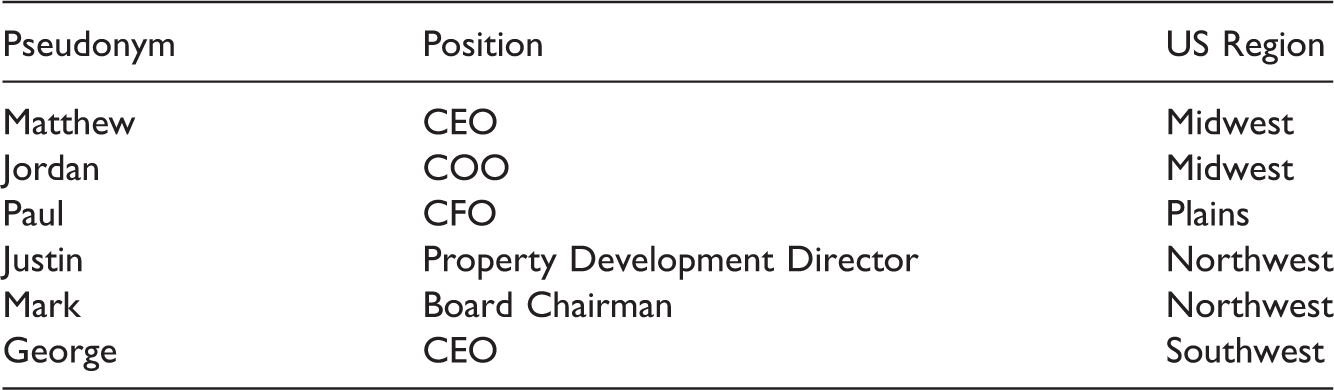
We interviewed the leaders in person or by telephone, asking 12 open-ended questions that pertain to identity, leadership, and their careers. 3 The questions are set forth in Appendix 1. The goal of the open-ended questions is to identify the extent to which the collective identity as an American Indian ties into leadership in tribally-owned business enterprises. Researchers used a recording device and then transcribed the data. Recordings were erased immediately after transcription to protect participant identities and ensure the confidentiality of the interviews.
In the data analysis, the research team integrated a process of reflection whereby the researchers conducted a peer examination of the data to insure credibility and consistency of the findings (Krefting, 1991).
Native American identity: being Indian and not being Indian
We began by investigating the extent to which a Native American identity ties into leadership practiced by American Indians in tribally owned business enterprises. By confining our research to those who (1) are members of a US American Indian tribe, and (2) work as leaders in tribally owned business ventures, we did not broach the topic of how identity is constructed. We are more focused on the psychological rather than sociological aspects of identity.
Theoretical approaches to social identity assume that an individual constructs identity through interpretive processes, and that these constructions have important implications for how individuals feel, behave, and evolve (Howard, 2000). Ashmore et al. (2004) define collective identity as a psychological concept of an identity that is shared with a group of others who have some common characteristic such as gender or ethnicity, and that identity is “a subjective claim or acceptance by the person whose identity is at stake” (p. 81). Collective identity is the term that Ashmore et al. (2004), among others, advocate providing a better characterization than “social identity” (Tajfel and Turner, 1979; Thoits and Virshup, 1997). They ascribe the following elements to collective identity: self-categorization, evaluation (both public regard and private regard), importance (implicit and explicit), attachment and sense of interdependence, social embeddedness, behavioral involvement, and content and meaning (consisting of self-attributed characteristics, ideology, and narratives). Across our interviews with Native American business leaders, each of these elements is apparent.
Self-categorization is “identifying self as a member of, or categorizing self in terms of, a particular social grouping” (Ashmore et al., 2004: 84). All of our participants identified themselves as American Indian. It should be noted that each of the leaders interviewed has membership in a different tribe, and that of the 567 federally recognized US tribes (Bureau of Indian Affairs, 2016), and, as sovereign nations, each of them has established its own criteria for membership. 4 And, a few of our interviewees mentioned that they are of mixed blood, but identify strongly as Native American.
The collective identity element of evaluation was present when we asked each participant to identify traditional American Indian values including what makes a person an Indian. The diverse answers, all positive, suggest positive private evaluations by our participants. Jordan states: … traditional values would be honoring the tribe, honoring our sovereign nation, protecting the sovereignty of our tribe. Having pride in what we do, looking to seven generations, really focusing on our future and what we leave behind, and how we handle our assets and our responsibilities. Having a reverence with and a respect for that tribal government process, and the way that we do things.
Congruent with the element of collective identity called importance,
5
we asked each participant how deeply he identifies as being Native. To Jordan, the answer was simple, “Very much so, I consider myself Native in everything that I do.” The question seemed to be a bit more difficult for those of mixed race and for those who were not raised in the Native culture, as they provided long answers that indicated that they live in two worlds. To Mark, the tribal side of his family is his family. This is in part because his white grandparents had passed early. Matthew wonders at times whether he is worthy to participate in tribal ceremonies, though others assure him that he is. Although he socializes with his tribe, he just as easily socializes with his non-Native relatives and friends. To Justin, being Native American is one of several identities, but salient in part due to his work. I identify myself as being Native American; I will say that being only twenty-five percent probably plays a role on identifying myself as other things as well. So I see myself as a mixture of diverse backgrounds. The Native side is probably predominantly the one I get to express in myself a lot more than others, for one because I work for the tribe.
George shares how he grew up hearing tribal stories from his grandfather, a traditional man, who raised him. He then went to college utilizing a tribal scholarship before being invited by his tribe to manage the tribe’s economic development, a job he accepted over a traditional management trainee position he had been offered in a dominant culture company.
The above examples demonstrate that social embeddedness as an element of collective identity is key for these leaders working on behalf of their respective tribes. Another example of social embeddedness is the tribal council, which is the governing body for each sovereign tribal nation, generally led by a Tribal Chair or Governor. Members are democratically elected. George, Matthew and Mark (above) served on their tribal councils and Mark was tribal chairman for 2 years, indicating a strong degree of embeddedness. Paul began his career in tribal businesses as the least embedded but, as noted above, he reconnected and is building strong ties in his own tribe through his work for a different tribe. He acknowledges that his heritage helped him to attain the CFO position, in addition to his academic background with a Master of Accountancy degree. It is clear throughout the interview that this made him curious about where he came from and about his tribe, and that he finds enjoyment in visiting his reservation and feeling connected there. It is clear that the leaders who overtly mentioned being of mixed blood felt a strong, but lesser degree, of attachment 6 than the leaders who did not mention whether or not they were mixed blood. This may be because they have multiple racial/cultural identities.
The leaders in our study manifest the behavioral involvement element of collective identity in a few different ways. We asked three questions which related to involvement. First, we asked under what circumstances the leader projects his Native American identity in his leadership. Second, we asked for the circumstances under which he does not project Native American identity. Finally, we asked what American Indian traditions
7
he practices in his leadership. Justin shares his desire to blend into his surroundings, but maintain his identity: I’m a blend of a lot of different things but, you can see parts of me that are rural, traditional Native American with leadership in those regards…city, urban, conforming type of leadership models and traits. What I try to do is follow the old “when in Rome” kind of ideology. I try to assimilate myself into someone else’s shoes when I’m around them but I always try to give them a context for who I am and where I’ve come from, too. I don’t always acquiesce to everything. I tend to try to bring my history with me a little bit and to wear who I am on my sleeve, as well.
Regarding Native American identity, Matthew responds that: There is not a time when I feel I have to tuck that away. In fact, the more confident, the more we work, I get the more we do as [company name], the more we grow, the more confident I am in who we are and it just never becomes an issue for me. We bring that into our board meetings with our invocations, our prayers to the Creator, our sharing of tobacco when we are asking to spend time with someone, to have them maybe rest with us or speak to us and that’s a critical part of what we do. Another thing that I recently started that I thought was important…I told [president of a major customer] that I would like to extend a tribal gift to them the next time that we meet with them—something handmade by our tribal citizens.
George states that, although he runs his companies as for-profit economic enterprises, his Native American values are the basis for how he behaves as a leader. On the other hand, George believes …you had to go out and learn at the time what they called “the white man’s way.” And you need to learn the white man’s way for two reasons: One, that you can provide yourself a good quality life, but number two, do you understand how they do things so you can come home and be defenders for us [tribe name]. You can protect our way of life from a lot of things that aren’t right.
Because he was raised outside of the culture, Paul doesn’t incorporate any Native traditions into management practice. “I’ll be honest, I have almost zero traditional knowledge. I have more of a heart for the people than I would have in practicing traditional Native-type things.”
As someone who is mixed race and looks white, Justin tries physically or verbally to let people know he is Native: I’m proud, I’m proud of it, I’m proud of my history. Most people that know me have come to know that I am Native or have Native background…I’m not the kind of person that says I see myself as Native only. I see myself as lot of things, but I take great pride in seeing myself as being Native where I can.
When asked about projecting his Native identity into leadership, Mark stated that: With me, [it is] just in cultural activities…I think leaders need to be there for their people and also need to pass down traditions that were handed down to them. A real leader needs to be there in time of need. They are there for people. I think that is a cultural thing that I kind of push myself into. So, my traditions go into leadership because I think you need to be there when people need you because those people will be there for you when you need them.
Viola Cordova, of the Jicarilla Apache, describes Native philosophy as “being from a place and community, of knowing a place and respecting its boundaries” (Peters, in Cordova, 2007, p. ix). Cordova’s credo reflects beliefs she attributes to many Native Americans, including the ability to adapt through changeable behavior and, foremost, a collective identity she describes as a “herd being” (2007, p. 151). Yet a herd being does not mean that there is a herd mentality. Individual identities are recognized among tribes, but these individual identities equate to high responsibilities to the tribe (2007). This is a value of active relationships. Individuality is not isolated, but requires participation with the world, as evidenced by these American Indian leaders who bring their collective identities, culture, and Native American values into their leadership positions.
While each respondent expresses it somewhat differently, we found that, for most leaders, indigenous identity appears to be reinforced and enhanced by working in a tribal enterprise. Except for one, they don’t try to separate their cultural identity from their leadership behavior. Even the one who does (George) still believes that his Native culture and identity are the foundation of his leadership. This is consistent with the branch of identity theory that defines identity as self-meaning that is developed through roles (Stryker and Burke, 2000). In the present cases, these roles include family roles through which tribal cultural knowledge is transmitted, as well as work roles in tribal enterprises.
Native American identity and leadership
Previous studies postulate that prototypical leaders within a social group will be more trusted and recognized by followers than nonprototypical leaders (Hogg et al., 2012; Stewart and Martin, 2008). The social identity theory of leadership focuses on the match between individual leader traits and group traits (Hogg et al., 2012; Steffens et al., 2014; van Knippenberg, 2011). We asked about the extent to which respondents feel a typical Native American leadership style differs from mainstream leadership styles, as well as the extent to which his leadership style matches a typical Native American leadership style. Across the interviews, the majority of our participants express that Native American leaders are more informal and concerned about people and less about the bottom line than mainstream leaders. For example, Jordan states: You know mainstream, they have the ability to be more self-centered, more autocratic, more profit driven and shareholder driven, much more top down. Whereas with a tribe it can be much more community involvement, more collaborative. …I think more so than just representing the people they truly care about the people. They know their decision plays a role on the future of their culture and things like that at the more micro-level than mainstream leadership styles. So from that, there’s a little bit more of a personal obligation to preserve what you have going forward. That is different from mainstream leadership styles. Most native leaders have a context of history, present and future, whereas I would see a lot of mainstream leaders focusing mostly on the present and future. So having that additional context or layer is what differentiates them from mainstream leadership styles. I think there is more of informality with things, there is more of a relaxed nature about things. And I have seen it be more successful than the traditional. Again, I keep using the term cut-throat, where people are just a number and people are just something on a financial statement. More understanding that behind the person, there is a family, there is a person with goals and aspirations, and helping them to become better and be successful.
Consistent with what Paul says, our respondents are concerned with their employees, both on the job and with respect to what is happening in other roles in their lives, especially with family responsibilities and tribal involvement. This is in contrast to the dominant cultural approach of separating work and family roles (cf. Greenhaus and Beutell, 1985).
We thought that we might find American Indian leaders following a situational pattern in which leaders match their behaviors with the environment in which they are operating (tribal or nontribal). However, our respondents’ answers suggest the relationship between tribal culture and leadership is more complex than a simple dichotomous categorization. For a social identity theory of leadership to hold, discrete social categories must be present. For our respondents, the boundary between indigenous and non-indigenous cultures is blurred. For example, George states: A lot of times we don’t realize that what we’re doing is really part of someone else’s culture, it’s not part of our culture. But we just kind of adapted it to our practices. In the Native American community, we have been influenced so much by outside cultures. We have adopted a lot of foreign cultures so that sometimes we ourselves don’t know what [tribe name] cultures are, or principles are. Sometimes you don’t know what your true identity is…it’s tough being in the middle sometimes.
For a few respondents, dual cultures lead to dual leadership styles. For instance, Justin claims that he follows a “when in Rome” strategy, assimilating around others. Matthew, leader of a holding company, states, “I think the leadership styles differ based on those who are led.”
George, states that it is sometimes hard to balance tribal needs with the financial decisions he has to make as a CEO. Thus, he keeps the two separate. He believes that you have to run a business purely on business principles: And I stay out of tribal politics. If I am going to involve myself in tribal politics, I do it through a legislative process and an administrative process. I don’t do it as a tribal member and go in and try to change things, because I am a tribal member.
Perhaps as a result of operating within ambiguous cultural and organizational boundaries, some of our respondents adopt the perspective that their leadership style is more influenced by a strong sense of self, which, in turn, is influenced by tribal culture. As such, many of the respondents describe a leadership philosophy that is more aligned with the theory of authentic leadership (Gardner et al., 2011), which emphasizes genuineness and a clear sense of self in leadership. Proponents of authentic leadership argue that individuals must have a clear understanding of their own values and beliefs in order to create a base from which they can lead (Eriksen, 2009). Authentic leadership has been shown to affect ethical decision making (Cianci et al., 2014), inclusivity (Cottrill et al., 2014), new venture performance (Hmieleski et al., 2012), employee commitment (Leroy et al., 2012), and creativity (Rego et al., 2012). Authentic leadership also has a positive effect on the relationship between leaders and their followers, ultimately creating better performance (Wang et al., 2014).
Luthans and Avolio (2003) state that authentic leaders have a good understanding of their self, are true to themselves, and possess leadership skills that instill confidence in others. Avolio et al. (2004: 802–803) contend that “the more these people remain true to their core values, identities, preferences, and emotions, the more authentic they become.” Shamir and Eilam (2005: 396–398) present four principles that reflect the general consensus regarding authentic leaders: “(1) they are authentic and do not fake their leadership; (2) authentic leaders do not take a leadership role or engage in activities for status, honor, or personal rewards; (3) these leaders are not copies; (4) authentic leaders are leaders whose actions are based on their values and convictions.” Authentic leadership is considered to be an eudaimonic activity, meaning “being true to one’s true self” (Shamir and Eilam, 2005: 397). The state of eudaimonia occurs when individual’s lives are congruent with their core values (Ilies et al., 2005). Thus, authentic leaders are interested in “being all that they can be but also in making a difference” (Shamir and Eilam, 2005: 397). These individuals also exhibit a tendency to use their skills to help others. Their leadership abilities help mold others into leaders as well by motivating, engaging, and developing commitment and satisfaction from others (Kark and Shamir, 2002). Authentic leadership, then, cannot be separated from the embedded social and organizational context (Algera and Lips-Wiersma, 2012; Nyberg and Sveningsson, 2014; Shaw, 2010).
In the case of some of our respondents, authenticity seems to be the means through which they negotiate across cultural boundaries. For instance, although all of our respondents acknowledge cultural differences between indigenous and nonindigenous communities, some leaders point out the desire to stay true to their individual values. George states: As a person I stay true to the principles. So, I don’t trade principles based on what environment I’m in. My principles are the same in the business world as they are in my [tribe’s] world. A good leader is someone who is there to lead and not care what people think. In general, I don’t think there is a difference between a non-tribal leader and a tribal leader. I think they have the same qualities. No, I don’t think so. I haven’t experienced it. I think that’s one of the things from what I try to do, to just be who I am to everybody whether I’m meeting with you or a Congressman or a Senator. It doesn’t matter. What you see is what you get at all times, basically.
Several respondents indicate that tribal politics complicate running their businesses and, as such, are not always a positive influence. For example, some tribes expect companies to provide employment for tribal members regardless of skills. George comments that there could be backlash if he disciplines a tribal member who is related to a powerful tribal leader, and that tribal leaders sometimes want him to fire certain employees due to non-work related disputes. Jordan also comments: Tribes, I suppose, tend to be very politically charged and that can be detrimental and have a negative impact on business, morale, job security, and confidence. Government moves slowly, and business moves at a quick pace, and you have got to be able to make decisions and keep things going. So, sometimes it can hold business back, and that can have a potential negative impact. Definitely. When we are at our best is when we are closest to our values; when we adhere to them in our leadership and in activities and our behaviors…I think leadership that adheres to those values it is awesome. It is that simple. I won’t get into tribal politics and, by the way, I tell my staff as well as myself, “Do not get into tribal politics”…We want to be part of a peaceful, positive movement within our tribe to advance it.
When asked how they would compare their leadership style to a typical Native American leadership style our respondents mostly see themselves as prototypical Native American leaders, or they see themselves as business leaders who are strongly influenced by their tribal cultural values. Jordan believes that he is: fairly typical of what I’ve seen in Indian Country. There is that openness, that accountability. There’s sharing. There’s encouragement for growth and learning, for giving back, more really focusing on future generations and what kind of legacy we will leave behind. So, having the foresight to be able to continue moving forward in a seven generational model to make sure that the past gets preserved going forward, too, would be the difference there [between Native and non-Native leaders], rather than the corporate profiteer trying to figure out how to make money. It takes a special person to be a leader wherever you are, and I think that everybody varies on their styles. From what I’ve experienced, I think Native leaders are more laid back, but that’s more of a personality trait of Indian people than it is of leadership.
Discussion
Our results are consistent with and extend the existing research about Native American leaders. As indicated by Lawler and Ashman (2012), research in authentic leadership encourages us to evaluate the value systems within which we operate. The value systems of Native American leaders are often reflective of their indigenous heritage and differ from the dominant culture. For example, Julien et al. (2010) found that, for Canadian Indigenous community and business leaders, leadership was about “meeting the needs of the entire community and about connecting community to the past. It is also about leading a life filled with purpose…Moreover, it’s learning about your clan, learning about your responsibilities in the community (p.119).” We had similar findings when looking at Native American business leaders. For example, Jordan states: There’s sharing, there’s encouragement for growth and learning, for giving back, more really focusing on future generations, and what kind of legacy we will leave behind. So with all those things in mind, for me personally and what I have seen in our orientation, that is how we run the organization.
Our respondents clearly state that they perceive cultural differences between Native American and mainstream leadership. As culturally “different” from the dominant culture, they discuss how their leadership is influenced by their tribal culture and how there are dual influences—Native culture and dominant culture—on their behavior as a leader and on how they run their companies. They cannot behave as if they are only accountable to the tribe. They also have to bridge the boundaries between their tribe and external constituents (i.e., buyers, suppliers, partners) in the surrounding dominant culture.
Also consistent with Julien et al. (2010), our respondents sometimes struggle to be true to their tribal values and identity while effectively running their business within the constraints of both tribal and dominant cultural demands. While operating in both cultures simultaneously, with both sets of cultural norms, rules, and laws in place at the same time, they have to navigate across both cultures while staying true to their tribal values. This can produce identity struggles for these leaders as they span contradictory discourses (Nyberg and Sveningsson, 2014). They are not operating in a purely “domestic” company nor are they operating in a purely “international/multinational” company. They are, in a sense, leading in a hybrid environment, which puts more demands on leaders by mixing elements of indigenous and mainstream cultures. And it is vitally important work. George comments that …we’re basically the lifeblood of the tribe when it comes to economic resources. So we can’t fail. We can’t. There are too many people depending on us. I would say right now if we were to close our doors probably about 50% of the tribal employees that work for the [tribal] government would have to be laid off.
Contributions and implications
We present a portrait of modern Native American business leaders as authentic leaders, whose authenticity reflects their American Indian identity. This article adds to the literature on authentic leadership by showing the role that culture and collective identity have in creating leader authenticity within the indigenous community. We sought to identify and describe a Native American identity and present examples connecting Native identity with leadership values through qualitative interview data. Our interview analyses reveal how modern Native American business leaders operate simultaneously within two sets of cultural influences and rules. Native corporations require leaders to figure out how to operate in both in their home culture and in the dominant mainstream culture at the same time, often within the same physical location. This hybrid arrangement is likely to result in dilemmas, conflicts, and demands on the company’s leadership that are not experienced to this degree in other contexts.
The challenges that Native American leaders face in economic development is similar to that of some new multinational enterprises (MNEs) in the global economy, although the boundaries in this case are mainly cultural rather than geopolitical. These new organizations are not conventional and resource rich MNEs in terms of origins, growth patterns, and organizational structures and strategies (Matthews and Zander, 2007). The new Native American entities, much like emerging MNEs, are faced with an entrepreneurial process that extends across boundaries to (1) discover new opportunities; (2) deploy resources in the exploitation of these opportunities; and (2) engage with competitors (Matthews and Zander, 2007). Native leaders assimilate knowledge from outside entities and are flexible and adaptable in order to become more effective across boundaries (cf. Contractor et al., 2007; Lane et al., 2001). Native American organizations expanding their businesses off tribal lands face acculturation issues as indigenous firms and outside entities learn about each other’s value systems.
Implications for practice
Understanding the relationship between business leadership and indigenous culture is important. First, we believe that economic development within Indian Country requires tribal leaders who have the ability to recognize a dormant history of tribal economic freedom and who value what tribal members in private, for-profit business contribute to tribal economies. Second, implementing tribal economic policies into the private sector requires a political and legal environment that facilitates rather than impedes citizen entrepreneurship (Cornell et al., 2008). Third, and most important for bringing these ideals together, management education for Native students and tribal communities needs to integrate current leadership and business research with Native American worldviews. Integrating Native American philosophies with leadership and business education benefits more than Native people, these indigenous perspectives provide insights useful for Western management education in general (Verbos et al., 2011; Verbos and Humphries, 2014). Fourth, in order to develop more economic independence and sustainability, tribal leaders must develop leadership strategies to work with outside business entities to develop new businesses, obtain capital funding, create jobs for other tribal members, and to develop long range business plans that align with tribal cultural values, but still encourage economic development. This is especially vital if modern American Indian commerce expands away from reservation locations and into mainstream communities (Pascal and Stewart, 2008).
Implications for research
Our findings show that Native American business leaders manage organizations from communities that can be considered “nations within a nation.” Yet, these organizations require leaders who need to operate, on a fundamental level, as if this were not the case. As such, our results could also link authentic leadership with international business leadership. While there are differences in how individual Native American business leaders handle decisions, their underlying approach is both consistent with authentic leadership and reflects their cultural embeddedness in tribal culture. Further research could further explore these linkages and connections.
This article also adds to a newly emerging stream of literature examining the role of indigenous culture in American Indian business. In response to conjecture that indigenous culture impedes business performance, Stewart and Schwartz (2007) surveyed Native American business leaders and found that they do not feel as though their tribal culture impedes the growth or success of their firms. In fact, many businesses use culture as the basis of their business strategy. Many firms utilize a “culture-of-origin” strategy, which explicitly exploits culture through the purposeful marketing and branding of goods and services as “indigenous goods” (Stewart et al., 2014). This study complements and extends these works by identifying the role that indigenous identity plays in the leadership of the Native American businesses.
Finally, we would like to note that Native American business leadership is not a new-age philosophy. Rather, it is one that has existed in varying forms for millennia that must demonstrate its value within the dominant Western-oriented business philosophy. Brown and Brown (2003) and Fixico (2003) discuss challenges with bringing Native philosophy into the Western-based academic mainstream. Native perspectives fill a void in mainstream academia. The scant literature today about Native American economic development and leadership practices often fails to deeply explore a thematic concern about the ways in which people from different societies organize and connect to their world. By analyzing leadership from the American Indian perspective, we place indigenous thought as a credible and equal frame of reference as mainstream thought for understanding business culture and leadership, which may help Native American and indigenous studies scholars understand and appreciate the contributions of business leaders in tribal economic development.
Future research could include surveys of both Native and non-Native employees of tribal enterprises to determine the extent to which collective identity affects the relationship between followers and leaders (Hogg et al., 2012; Steffens et al., 2014; van Knippenberg, 2011), the extent to which non-leader employees experience a Native American leadership style, and how having Native American leaders rather than non-Native American leaders of Native American enterprises affects organizational identification, organizational commitment, job satisfaction, and intentions to quit. Moreover, research should be expanded to try and capture female Native American leaders. In this study we were not able to identify any female leaders, which is a limitation in the study. However, by capturing a more diverse population, more generalities can be drawn from the results.
Additional research could examine the extent to which Native American cultural values are or are not reflected in the GLOBE cross-cultural dimensions (House et al., 2004) and the implications that this may have for managerial practices within organizations that seek to employ American Indians. Although, firms recognize the importance of cross-cultural differences and cultural specific policies and/or practices, research has not fully addressed the relationship between facets of national culture and specific human resources practices (Hendry, 1992). However, research by Newman and Nollen (1996) shows that cultural sensitivity and the willingness to adapt to cultural differences can be financially beneficial to organizations.
Conclusion
American Indians, the indigenous people of the United States, operate as sovereign nations within a nation. Within this context, tribal enterprises have become the tool of economic development for indigenous nations to provide sustainable growth opportunities. As a result, a new type of boundary-spanning Native American business leadership has emerged. Negotiating the boundaries between the culture of the tribe and the culture of mainstream business while maintaining personal authenticity is a challenge faced and met by these leaders.
Tribal business leaders have been influenced by their traditional culture. Yet, they desire to set modern standards of performance within their industries, create productivity, and generate employment—goals which are influenced by their tribal heritage. These leaders bring their people together around common objectives and establish goals to be accomplished that will enable tribal members to live better lives and, more importantly, sustain the tribe economically. Native American leaders have been faced with the challenge of providing economic resources and training necessary to allow their people become “nationally” competitive while protecting their unique Indian way of life (Edmunds, 2004).
In order to accomplish economic independence and true indigenous sovereignty, American Indian tribes must encourage and train American Indian business leaders to run economically viable companies that integrate with the mainstream economy. This requires leaders who can function with equal effectiveness both within their tribal organizations and across boundaries within the dominant culture. The tribal leaders we interviewed have displayed this ability to successfully accommodate both cultures, and have solved this problem in different ways, allowing them become a successful leaders within their Native American communities and within the businesses that they lead.
Footnotes
Declaration of Conflicting Interests
The author(s) declared no potential conflicts of interest with respect to the research, authorship, and/or publication of this article.
Funding
The author(s) received no financial support for the research, authorship, and/or publication of this article.