






Abstract
There is a correlative relationship between mediatization and social interaction. Communication scholars have paid attention to this relationship. We argue that mediatization involves the incorporation of various patterns of interaction among users of social media platforms. We used two theoretical approaches, namely mediatization and symbolic interaction. We surveyed a purposive sample that we selected according to certain criteria. Regression analysis revealed the correlative relationship between the dimensions of mediatization over social media platforms and the patterns of symbolic interaction among users.
Introduction
In the last century, the term ‘media logic’ was coined to denote the influence of independent mass media on political systems and other institutions. The idea was recently reworked and labelled as ‘mediatization’ to expand the framework by including new media and new areas of application (Finnemann, 2011). Mediatization is defined as the most central concept that helps understand the importance of media to culture and society. The term has been used in numerous contexts to characterize the influence that media exert on various phenomena (Hjarvard, 2008). There is a reciprocal relationship between mediatization and the matrix of social relationship in any given society.
Current advances in the sphere of communication technology have helped communication scholars study mediatization. Andersen (2018) argued that search engines, algorithms and databases can be considered as a means of understanding mediatization. They are embedded in various social and cultural practices. He contended that the aim of mediatization is to understand how and to what degree social media is inherent in everyday life and to what extent it shapes users’ ways of acting in and making sense of our social worlds.
Mediatization is not a contemporary phenomenon. However, the speed at which it becomes increasingly complex, leading to a period of ‘remarkable change, qualitatively and quantitatively’, is a contemporary development (Anselmino, 2018: 232). Based on this argument, it seems necessary to study mediatization. The diffusion of social media platforms has augmented the importance of studying mediatization. Social media include communication websites that mediate relationship formation among users from diverse backgrounds, resulting in a rich social structure (Kapoor et al., 2018: 531).
There are multiple emergent themes in the scholarly literature on mediatization and social media. Therefore, there is a need to understand advances in social media research. The core focus of this study is to investigate the correlative aspects that are induced among users of social media platforms as a result of the emerging process of mediatization. Socio-cultural variables are also worth considering while studying this topic.
Literature
Chan and Humphreys (2018) believed that digital data have become a form of ‘objectivation’, which affects how we construct social knowledge and organize social space. Research on the processes of mediatization has aimed to explore the mutual shaping of media and social life and how new media technologies affect and infiltrate social practices and cultural life (Döveling et al., 2018). Döveling et al. extended this discussion of the media’s role in transforming the everyday by including emotion in the discussion of mediatization and by discussing the digital affect. They did so in the relational and globally emergent spaces of social media platforms. They conducted research on digital memorial culture to empirically illustrate how digital affect culture manifests at the micro and macro levels, and to elaborate on the constitutive characteristics of digital affect culture.
Quiroga (2019) believed in the quasi-dimensional impacts of mediatization on society. He focused on otherness in the field of communications studies within the social context of generalized mediatization. It has been argued by Quiroga that mediatization is a new organizational dimension of communication based on information that turns communication into a form of knowledge sector that is decisive in social functioning. Mediatization has been proposed in order to explore the increasingly intertwined relationships among communication technologies and all kinds of other social processes (Cui, 2019: 4158).
Fourie (2018) coined an epistemological framework that explains the work of mediatization. He assumed that mediatization theory was an outcome of the new digital media landscape and stood in contrast to media effect theory. He clearly identified some core characteristics of the new media landscape: (1) the diversity of content, form and presentation; (2) an integrated and converged media industry; (3) the shift from mass to network communication; (4) an integrated regulatory model; (5) improved access to the media; (6) the replacement of the media recipient with the media user and/or media co-producer; and (7) a typical ‘online’ communication style. He explained how the media itself becomes part of life and how the medium is a culture in its own right and summarized a key point that defined mediatization as a process of social transformation affecting both media and society (Fourie, 2018: 650). Nowak-Teter (2019) argued that mediatization is considered an important theory that explains the social, political and cultural alterations driven by technologies.
Bakardjieva et al. (2018) saw mediatization as a powerful tool in politics and society. According to them, the essence of this resides in the substantial impact of social media on leadership. The mediated content on social media platforms plays a leading and effective role in mobilizing society. Skey et al. (2018) identified four dimensions of mediatization: extension, substitution, amalgamation and accommodation. These dimensions refer to the deep effects on the consumers of media. It was mentioned before that mediatization is associated with inducing socio-cultural and political effects. That is why it is important to study the effects that emerge from social media platforms and their applications.
Fredriksson et al. (2015) studied mediatization at the governmental level and analysed the effects of six potential explanations of mediatization: media pressure, organizational size and task, salience, geographic location and management structure. Mediatization emphasizes a process of social change in which the media have become deeply integrated in different levels of society (Van der Meer et al., 2019: 784).
Mediatization is a media-centred approach. Research on mediatization has engaged with the complex relationship between changes in media and communication on the one hand, and changes in various fields of culture and society on the other. The emergence of the concept of mediatization is part of a paradigmatic shift within media and communication research (Hepp et al., 2015). Similarly, social media affects social structure. Social media use maintains that individual psychological needs motivate their use of social media applications to the extent to which these applications offer affordances that satisfy these needs (Karahanna et al., 2018: 737). Mediatization first deals with how socio-cultural reality is constructed and modified in relation to the development of communication technologies. Second, it focuses on how different social systems like politics or others are affected by the rules of the media system (Löblich, 2018: 4470). Blumler and Esser (2019) discussed the interactional relationship between news media and political actors from several perspectives and insisted on the most popular contemporary perspective to discuss this relationship within the framework of the mediatization of politics.
The arguments presented so far pave the way for highlighting the correlative relationship between mediatization as a phenomenon and various societal aspects that may entail politics, culture and many other disciplines. For instance, Erzikova et al. (2018) presented a new coinage of mediatization. A form of strategic mediatization, media catching, is the reversal of the traditional public relations process of pitching story ideas to journalists using press releases, feature pitch letters and other techniques. Through an empirical investigation, they tested an emergent model of the mutual influences of reporters, public relations specialists and internal (organizational values) and external (societal culture, political climate) factors during the process of media catching across different cultures and countries.
The mediated content affects society at large. Malin et al. (2019) noted that issues, problems and solutions are defined and set within ‘ethical’ frameworks through the media. Hence, there is an ethical aspect of mediatization. This affects the media discourse itself. Krzyżanowski (2018) found that the media had coined terms by means of the mediated content that led to the creation of political groups that either adopted the mediated content or counter-attacked such a discourse. The possible importance of the current topic lies in the duality of mediatization and the social interaction that is associated with the process of use itself. Mediatization interprets the epistemic aspect of the study and symbolic interaction is also a viable theoretical approach in this regard.
DePaula et al. (2018) argued that social media has provided new environments for both individuals and organizations to communicate. They found that there was a lesser degree of recognition and understanding in this context of the symbolic and presentational content that governments communicate through social media, and that communication on social media involves substantial symbolic and presentational exchanges.
Reich et al. (2018) studied the causal relationship between social media and symbolic interaction. They studied symbolic interaction on social networking sites such as ‘likes’ on Facebook and their role in users’ sense of social inclusion or exclusion. They also pointed out that the central interest of the study was the social implications of the short feedback features.
One may critically need to explain the theoretical nature of ‘symbolic interaction’. Aksan et al. (2009) stated that symbolic interaction is a process that enlivens the reciprocal meaning and values. Meanings constitute reciprocal interactions between people. It is evident from this interpretation that the formation of meaning is a core aspect of understanding the effects of social media.
In light of these arguments, there is a need to discuss the idea of social interaction in digital communities. This is because of the effect of the mediated content on users who are later affected by interacting with both the content and their peers. Bailey and Ngwenyama (2012) examined issues of identity and identification in an online community that had evolved to include other forms of online and offline interactions through the lens of symbolic interactionism. They used a qualitative approach through content analysis and discussed key issues related to the interrelationships among people, technology and their roles in the development of identities.
Carter and Fuller (2016) surveyed significant contributions to the symbolic interactionist literature in areas such as dramaturgy, cultural studies, postmodernism, gender/status/power, self and identity, collective behaviour and social movements and social context and the environment. The importance of this study stems from the quasi-dimensions of the symbolic interaction theory.
Fernback (2007) maintained that the study of the cyber community is inevitably linked to the development of the internet amid other cultural phenomena, and the cyber community as a cultural practice has clearly reached a point of critical mass. Based on this, one should thoroughly consider different socio-cultural variables while doing fieldwork. This study suggests a symbolic interaction approach to the examination of online social relationships that are free of the controversy and structural-functional baggage around the term ‘community’.
Olasina (2014) studied user experiences in virtual worlds (VWs), patterns of interaction and exchanges of meanings and symbols through a symbolic interaction theory (SIT) lens. The results show that user interpretations of each other’s behaviour helped form social bonds that exist in VWs. The results reflect social interaction theory and improvements in the current understanding of human behaviour.
Erzikova et al. (2018) coined the term ‘strategic mediatization’ and explained it by indicating that new communication technologies continue to change how media relations are practised with vibrant digital platforms. They refer to the power of social media platforms that create interactive modes among members of society on the one hand and media institutions on the other.
Method
We surveyed a purposive sample comprising 400 subject units selected on the basis of criteria such as diversity in social media use, bilingual skills and other technical features. We developed a questionnaire in accordance with the epistemic underpinnings of the symbolic interaction and the social capital theories. The conceptual dimensions of mediatization were included as well. The survey aimed to identify the degree and extent of exposure to social media platforms. Furthermore, the degree of involvement and interaction had to be identified. Two major hypotheses were coined to be tested by several questions:
H1: There is a positive correlation between the dimensions of mediatization on social media platforms and the patterns of symbolic interaction among users.
H2: There is a positive correlation between patterns of social interaction among social media users and certain variables of social capital.
Statistical treatment
Statistical treatment was carried out using SPSS ‘v.18’. It included the following components:
Mean, standard deviation and relative weight
Pearson correlation coefficient
One-way Analysis of Variance (ANOVA)
Simple linear regressions
Research questions
What are the dimensions of mediatization on social media platforms?
What are the possible impacts of social media platforms on human interaction?
What are the patterns of symbolic interaction among users of social media platforms?
Findings
The results have been tabulated in three tables. They deal with the dimensions of mediatization on social media platforms, the possible impacts of social media on human interaction and the emerging patterns of symbolic interaction among the users. Table 1 shows this.
The dimensions of mediatization on social media platforms.
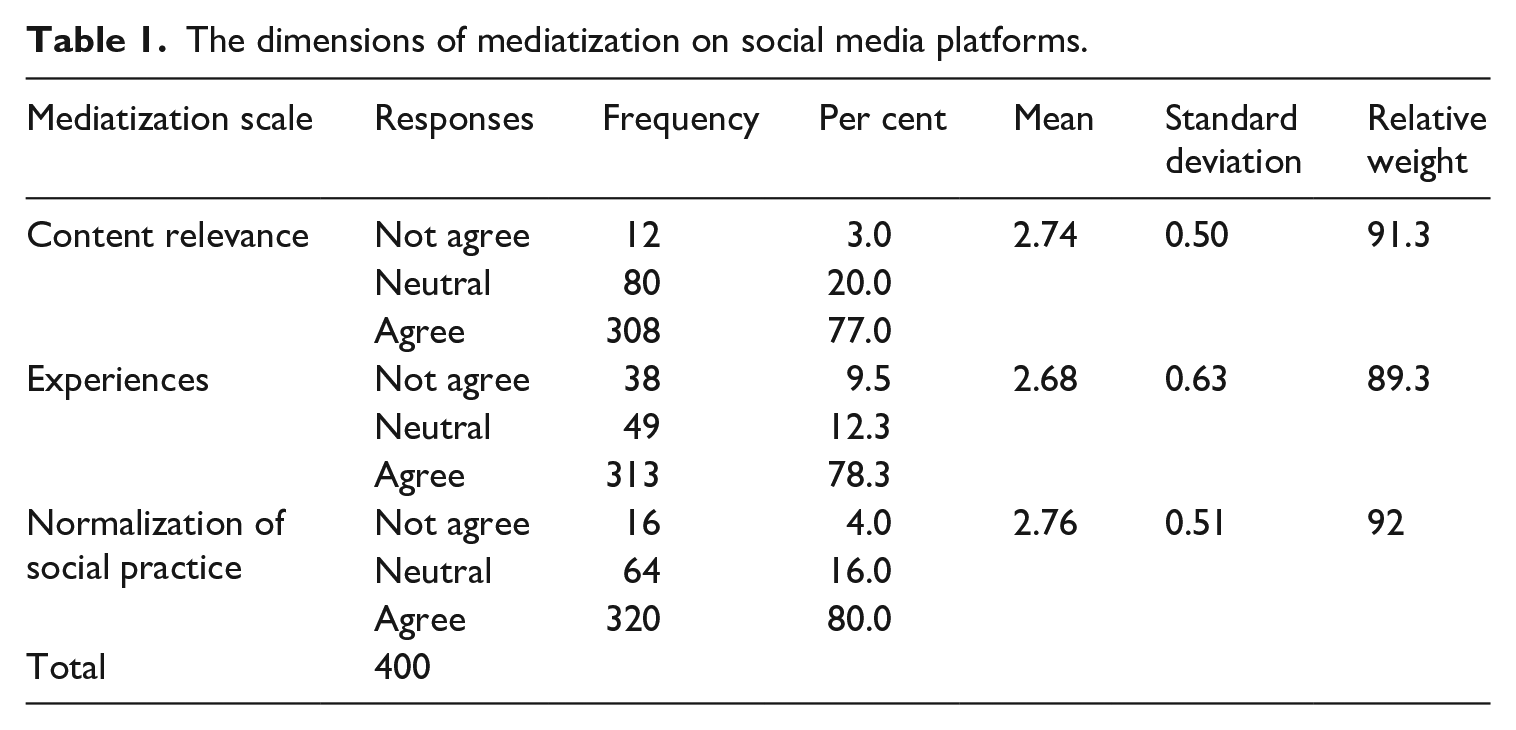
It is evident that the use of social media platforms is correlated with inducing familiarity with the diverse content and bringing in different types of experiences that affect interactions among users with the available content.
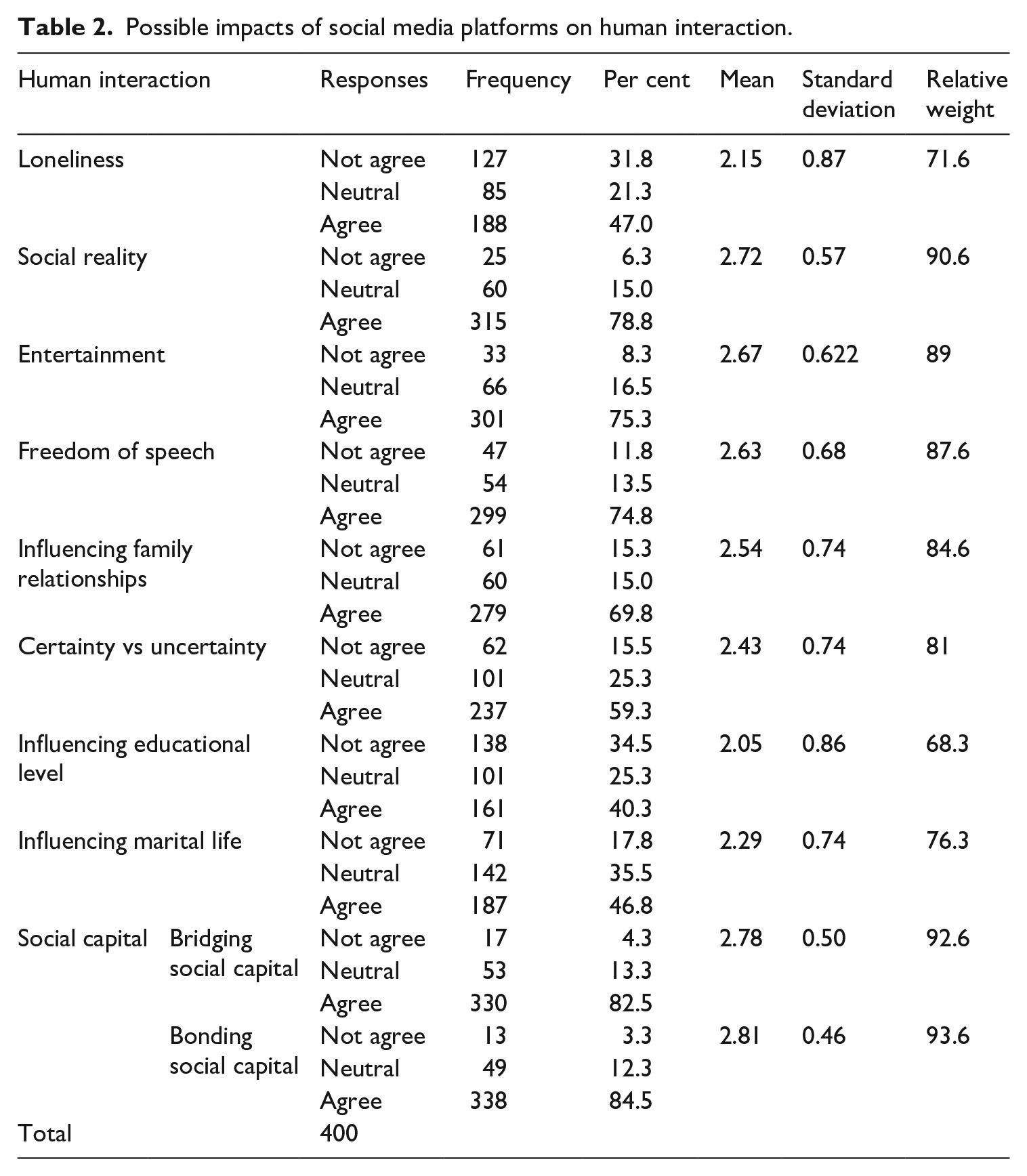
Table 2 indicates the various possible impacts of social media platforms. The peculiarity of these outcomes matches the findings in other studies that mention the mediatizing effect of social media. For instance, the variable of human interaction was discussed in detail by scaling it up to several sets of concepts such as loneliness, social reality, freedom of speech, openness, affecting relationships, certainty, education, influencing marital life and social capital.
Possible impacts of social media platforms on human interaction.
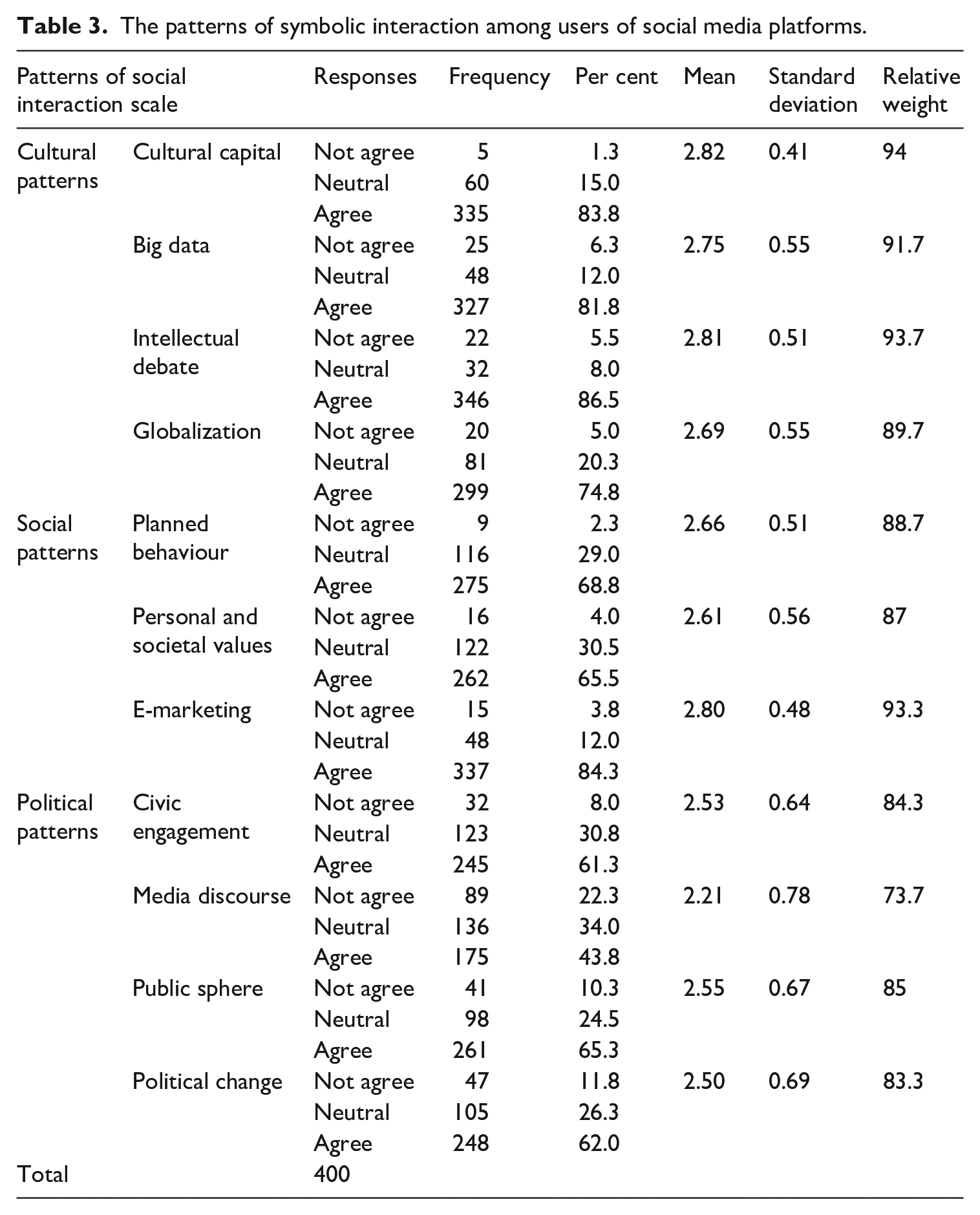
In Table 3, a detailed account of the patterns of symbolic interaction is listed. These patterns deal with cultural capital, big data, global media effect, behavioural aspects of users, value system, civic engagement, media discourse, public sphere and political change. In sum, symbolic interaction has been examined in the light of three core variables, namely the socio-cultural and political ones.
The patterns of symbolic interaction among users of social media platforms.
Discussion
The expansive diffusion of social media platforms has created an interactive global impact. Penni (2017) maintained that billions of users connect with each other on these platforms, and this has led communication scholars to explore the factors that help define the long-term implications of social media. Demographics play a substantial role in the use of social media. One important aspect of social media diffusion is the ‘sharing’ of online activities. To this effect, Ngai et al. (2015) contended that people can create, share and exchange information in virtual communities. They concluded that social media led to shaping people’s connections with others. Their findings coincide with the findings of the current study. In Table 4, the first hypothesis was proven.
Correlation between the dimensions of mediatization on social media platforms and the patterns of symbolic interaction among users.
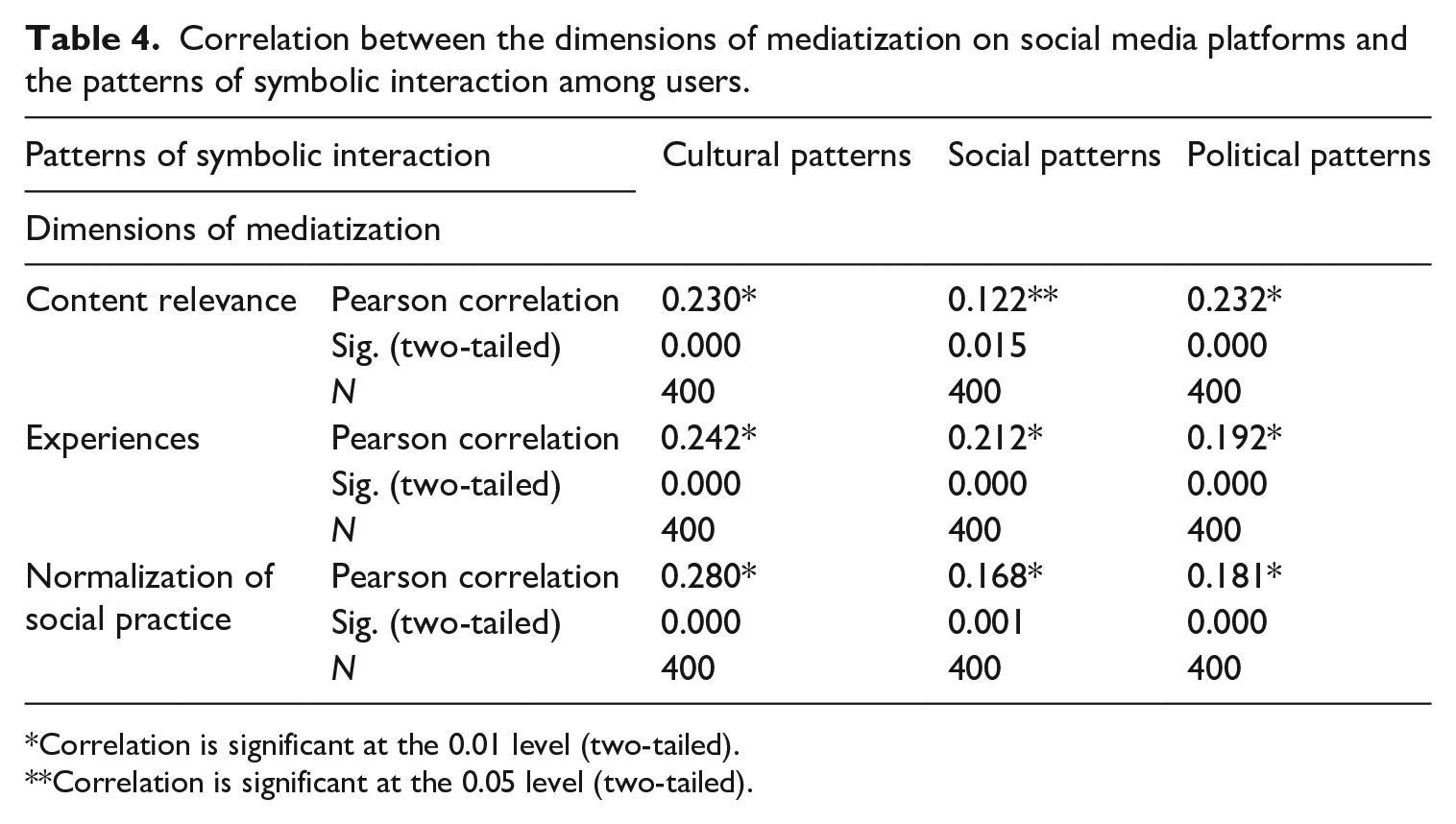
Correlation is significant at the 0.01 level (two-tailed).
Correlation is significant at the 0.05 level (two-tailed).
H1: There is a positive correlation between the dimensions of mediatization on social media platforms and the patterns of symbolic interaction among users.
Greenwood et al. (2016) provided empirical evidence that social media has a persuasive effect that emanates from the sharing of content. The ANOVA test affirmed this in the current study to examine the relationship between mediatization and patterns of social interaction (Table 5).
ANOVA a of Regression Model between the dimensions of mediatization over social media platforms and the patterns of symbolic interaction among users.
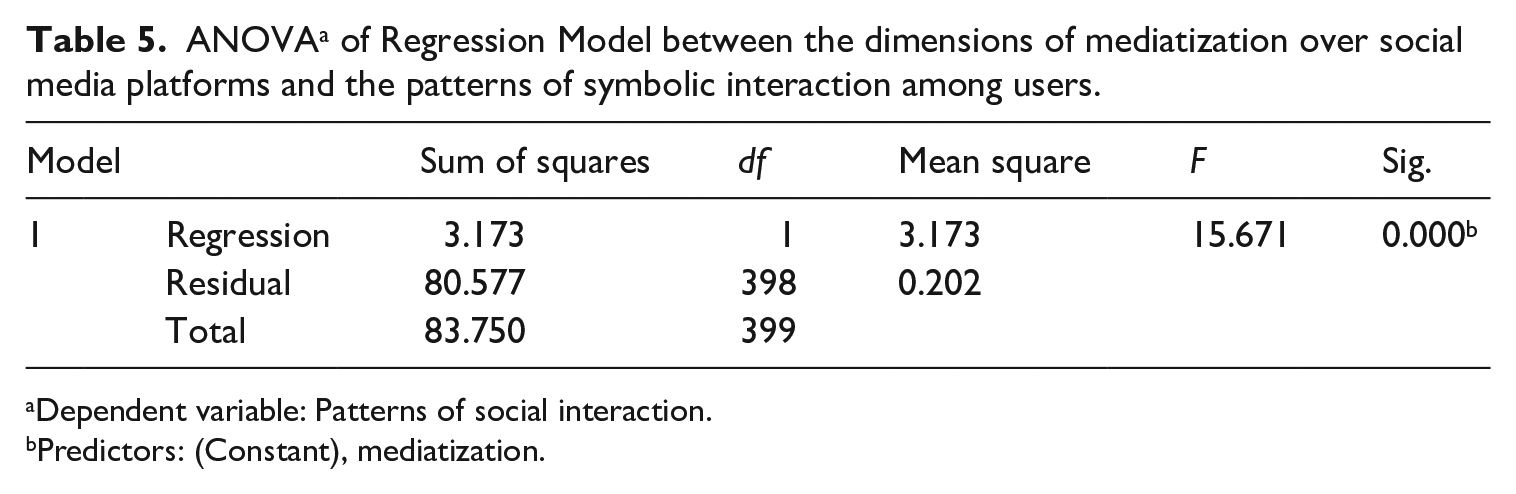
Dependent variable: Patterns of social interaction.
Predictors: (Constant), mediatization.
Social capital is a major outcome of social media use. Hwang and Kim (2015) also found this in their study. They said that social media moderated the process of social movements and maintained that social capital has a significant effect on the intention to participate. Social media users are highly engaged in social participation. Coincidentally, this finding matches that of Kapoor et al. (2018), in which the research team found a causal relationship between the mediatizing effect of social media and the symbolic interactive feedback of users represented in the emerging effect of social capital.
In this study, we identified the major features of using social media platforms. These features included socio-cultural and political patterns. Furthermore, the findings revealed certain issues that appear important enough to be considered. These issues include loneliness, social reality, freedom of expression, civic engagement and social capital. Other studies came up with several similar outcomes. Wakefield and Wakefield (2016), Lindgren and Cocq (2017), Skoric et al. (2016) and Shang et al. (2017) conceived of three impacts of social media use: technological, informational and social. This is why there is a need to examine and analyse the effect of social media on communities because of their impact on their audiences. This is evident because social media has a positive relationship with social capital, civic engagement and political participation. This has been cited in Tables 2 and 3.
H2: There is a positive correlation between the patterns of social interaction among social media users and certain variables of social capital (Tables 6 and 7).
Testing the significance of regression coefficients a between the dimensions of mediatization over social media platforms and the patterns of symbolic interaction among users.
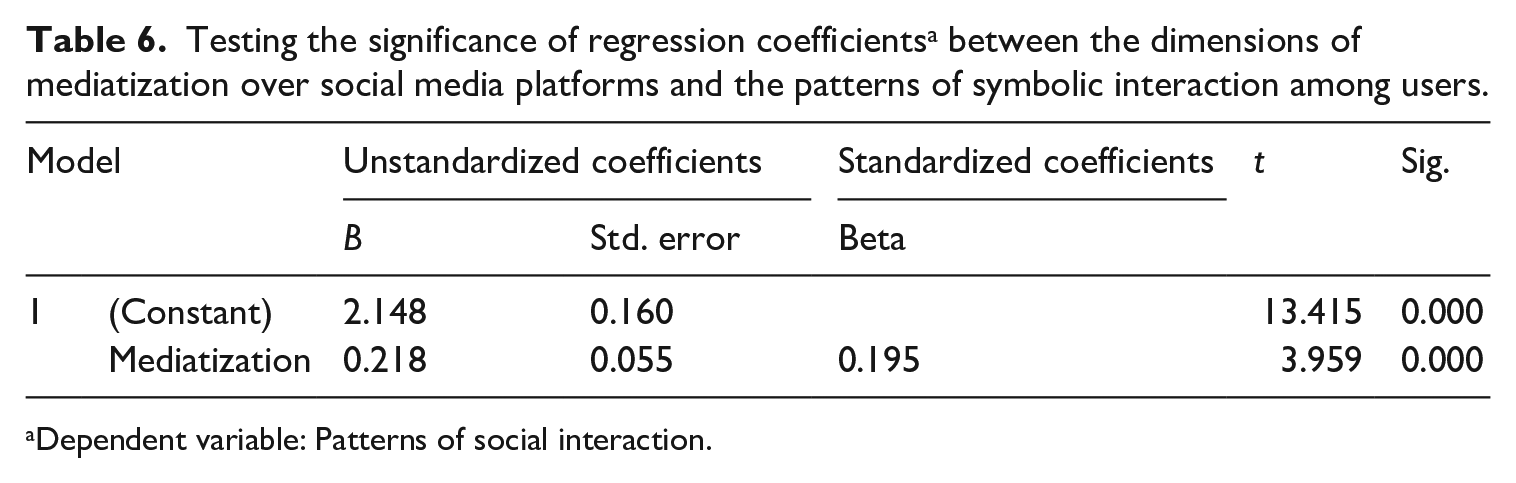
Dependent variable: Patterns of social interaction.
Correlation between the patterns of social interaction among social media users and certain variables of social capital.
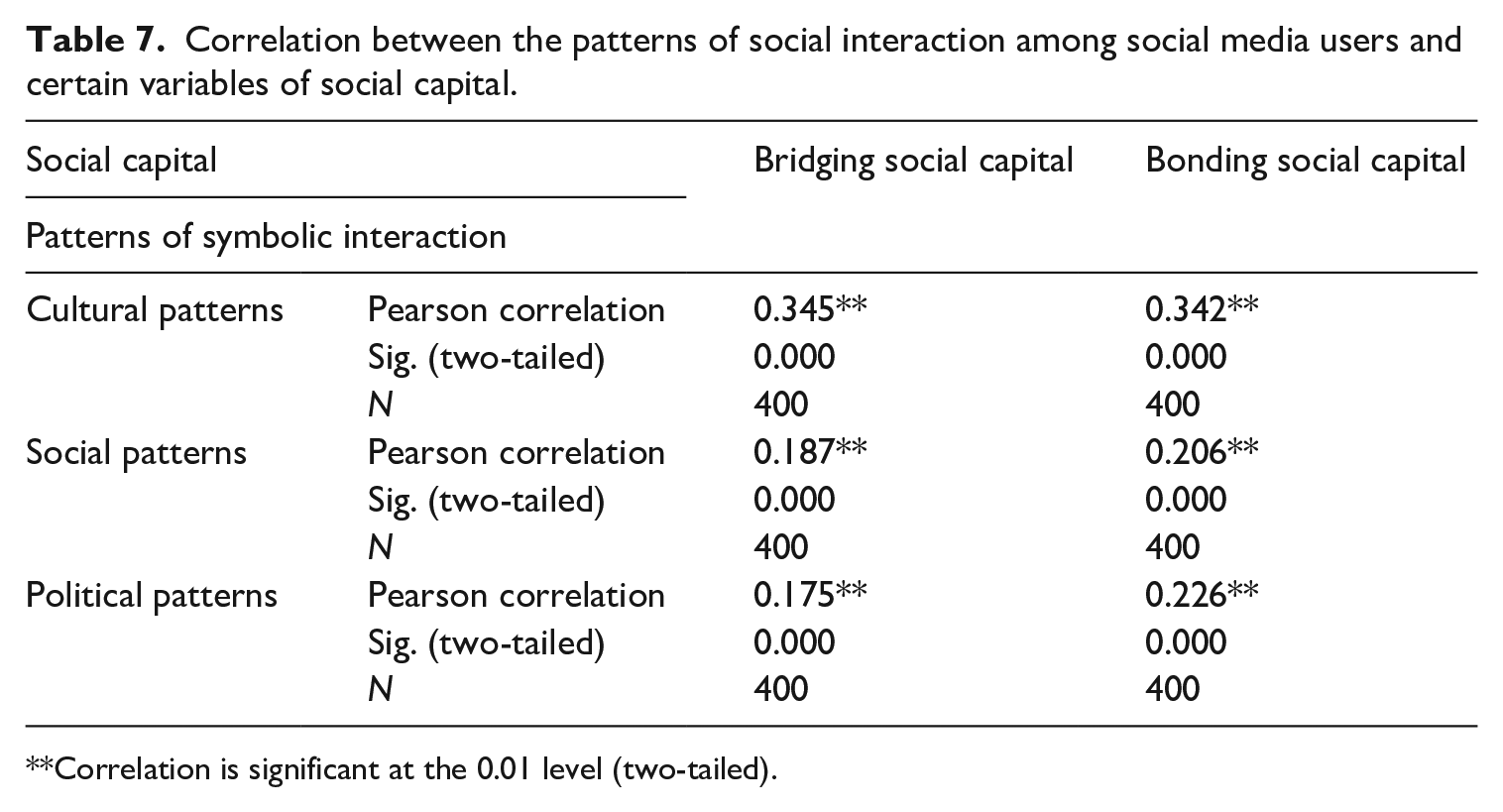
Correlation is significant at the 0.01 level (two-tailed).
The socio-cultural and political patterns were tested and revealed a valid correlation with the idea of social interaction. This coincides with what Hynes and Wilson (2016) found. They argued that social media users have both personal- and social-driven values that affect their choices. This is why there is a need to study the norms, values and beliefs that reflect the behaviour of users. This can be explained within the boundaries of the ‘public sphere’ concept.
In this study, the authors identified three core variables: cultural, social and political. The first addressed the cultural capital and the global effect of social media. The second dealt with behaviour and societal values. The third addressed issues of civic engagement, media discourse and the public sphere. Rauchfleisch (2017) argued that the public sphere as a concept has gone through a process of evolution over the last 20 years. Couldry and Dreher (2007) maintained that multiple networks and spaces created multiple publics. Chen (2016) considered YouTube as a consumer narrative in which multiple users form a kind of relationship and said that YouTube was a social media platform that creates digital self-construction, digital self-presentation and para-social relationships. All these outcomes match the findings of the current study and also represent the importance of the ‘public sphere’, which is characterized by civil discourse, as stated by Adut (2012), who linked social structure, social norms and political action with the idea of the public sphere.
The second hypothesis highlights the relationship between social media use and the induction of social capital. Tables 8 and 9 reveal the correlative relationship. Brännback et al. (2017) indicated that social media focuses on perceptions, behavioural intentions and usage. Social capital refers to resources in social relationships. Social media also has an impact on social capital, which is why scholars need to analyse both the individual consumption of media and the effects of media systems (Geber et al., 2016). Critically, the various impacts of social media have led communication scholars to consider several aspects. For instance, Lomborg (2015) maintained that social media research addresses a communicative phenomenon that requires a historical analysis because social media offers several directions for future research on communication. Lomborg (2017) identified several impacts of social media use on society such as the creation of new communicative patterns, sociality and privacy. All these impacts have been listed and addressed in the current study. These impacts have also been statistically examined and tabulated in both the previous and following tables.
ANOVA a of regression model between the patterns of social interaction among social media users and certain variables of social capital.
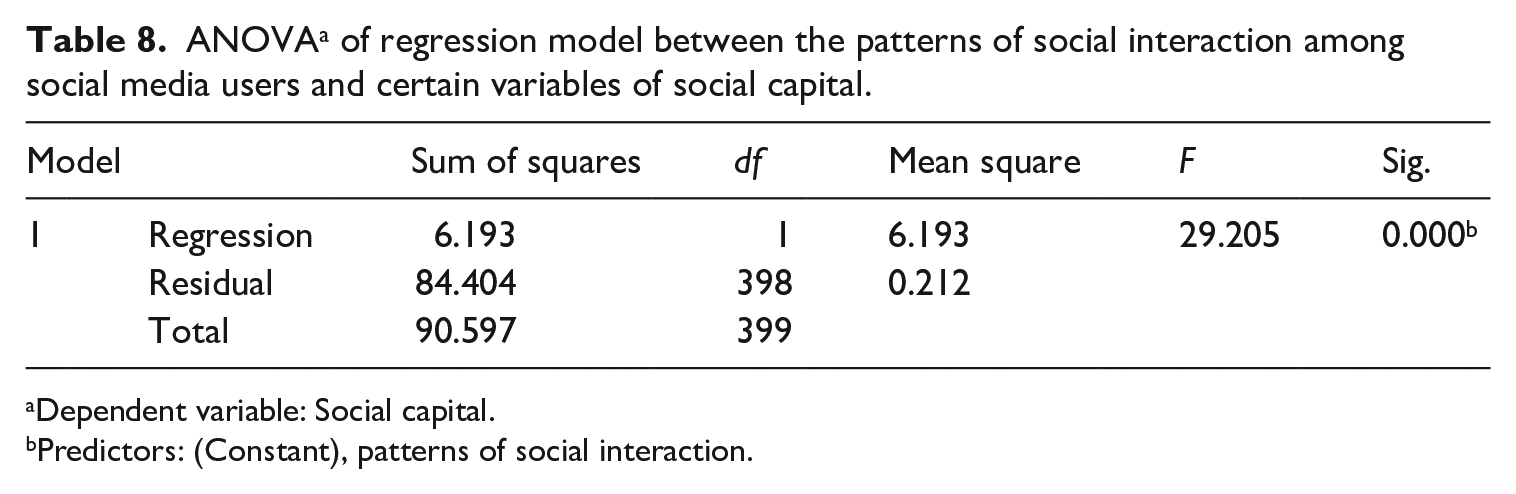
Dependent variable: Social capital.
Predictors: (Constant), patterns of social interaction.
Testing the significance of regression coefficients a between the patterns of social interaction among social media users and certain variables of social capital.
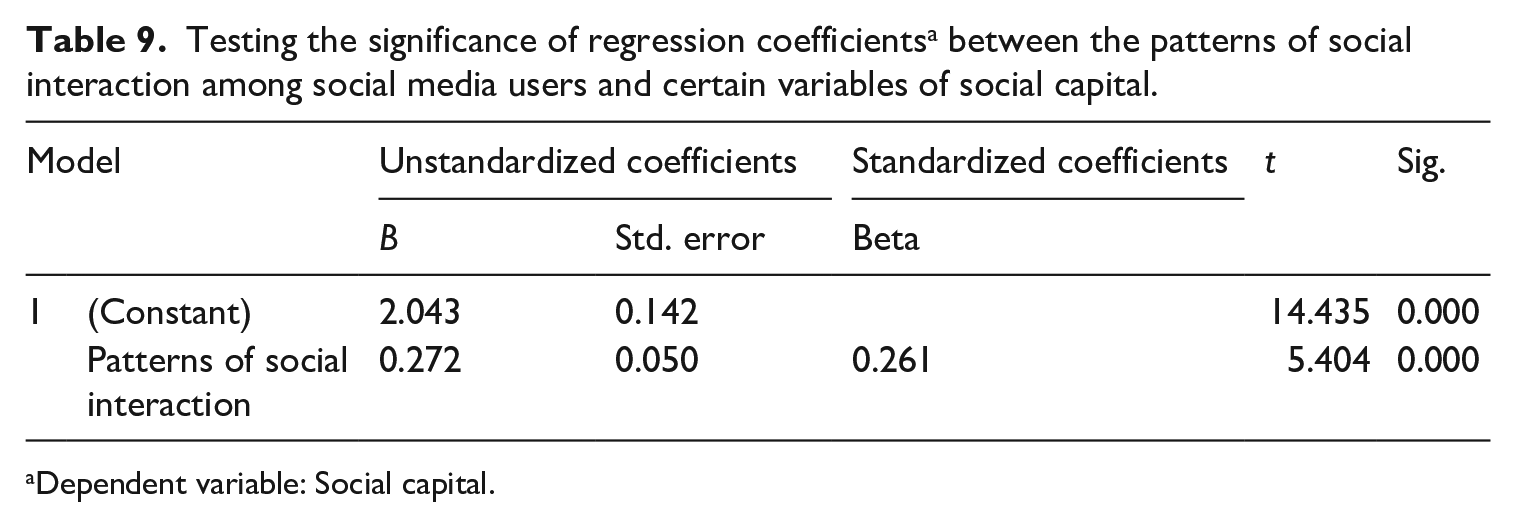
Dependent variable: Social capital.
Conclusion
The regression analysis revealed the correlative relationship between mediatization and the induction of patterns of interaction on social media. The value of ‘r’ in the first hypothesis is 0.195, and in the second hypothesis, 0.261. The findings prove that mediatization variables are closely related to certain patterns of symbolic interaction. The duality of the theoretical framework helped reveal such a relationship. We utilized both social capital and symbolic interaction theories. Certain key resulting variables appear substantial such as the integration and access of the content, users’ experience and social practices. The patterns of symbolic interaction included socio-cultural and political variables. These variables were closely related to the concept of social capital.
Communication scholars are currently confronted with the implications of the diffusion of social media platforms and their impact on societies at large. However, one should consider the effect on communication research critically. Reich (2015) explored how online communications and social networking sites raise new ethical and methodological questions for scholars. Snelson (2016) considered the importance of reviewing research methods used currently in studying social media. She found that most research approaches that are commonly used include survey methodologies, focus group discussions and content analysis. This study also has its limitations. Depending on a purposive sample does not offer an in-depth analysis of the current phenomenon of spreading mediatization on a very large scale. However, we managed to examine the wider dimensions of the concept itself. Both hypotheses were proven. The tables answered the research questions by identifying the relationship between mediatization and social capital. Furthermore, the patterns of social interaction have been traced and tabulated in detail.
Research implications
The relationship between mediatization and social interaction offers various types of communication questions that need to be addressed. Social media platforms have plenty of resources that are full of data. Felt (2016) argued that social media provide new challenges for social scientists who seek to analyse human interaction. Virtanen (2017) drew scholars’ attention to a newly coined concept called ‘adaptability’ that was introduced to the literature as an outcome of the use of new media. Adaptability can be both micro and macro. The peculiarity of the notion reflects the importance of interdisciplinary studies that can explain current contemporary phenomena. Felemban and Sicilia (2016) also discussed the impacts of social media. They studied the motivations of people who use and join social networking sites. Oh and Syn (2015) addressed the motivations for sharing information and social support on social media. They argued that the success or failure of social media is highly dependent on the active participation of its users. Talpau (2014) dealt with social media as a new means of communication that can provide new opportunities for its users. However, she maintained that there are some disadvantages. This is why research is very important to address social media platforms. Volkmer (2008) said that the advances in technology create new spheres in the way that direct broadcast satellites did in the past. Both Poell and Borra (2012) and Sakr (2013) discussed the impacts of social media on society. They addressed the issue of interaction, which seems a substantial direction for future research.
Footnotes
Funding
The author(s) received no financial support for the research, authorship, and/or publication of this article.
