







Abstract
As codes and standards evolve toward low- or net zero–energy buildings, the practicality of achieving these targets in high-rise concrete construction gets increasingly challenging. High-rise residential buildings are becoming more common as cities redevelop and add density. Current design and construction practice for high-rise multi-unit residential buildings present a number of constraints with regard to achieving high levels of energy performance. These practice issues typically include (a) the desire to maximize glass to enhance marketability, daylight, and views; (b) the desire to provide access to the outdoors via extended balconies; (c) the need for Code-mandated non-combustibility and life safety requirements; (d) a preference for building systems that minimize exterior construction access and streamlines construction sequencing; (e) the adoption of increased structural load requirements; and/or (f) the drive to minimize initial capital costs. The outcome of these combined constraints is often poor energy efficiency, with the burden of higher operating costs deferred to future owners. There has been significant industry discussion on the poor energy performance of this class of building, but there is very little guidance or long-term factual strategic information beyond broad principles of minimizing glazing areas, maximizing glazing performance, increasing airtightness, and adding more insulation to opaque areas. This article explores the prospect of energy use becoming a primary consideration in high-rise residential buildings and what that will likely mean for the typical competing constraints mentioned earlier. This article utilizes the current common construction practices for concrete-framed, high-rise residential buildings in heating dominated climates (ASHRAE Zones 4 to 7) as a baseline to evaluate the impact of the interconnected variables related to reducing overall heating energy use. The objective is to weigh the impact of individual improvements against integrated bundles of measures to develop a roadmap and a better understanding of a practical path toward low-energy, high-rise residential buildings. The article focuses on solutions related to building envelope performance but from a holistic perspective that recognizes the interaction and contribution of mechanical systems typical of this construction type. The building envelope parameters covered includes glazing performance (for both conventional and innovative technologies) and opaque wall performance (with a focus on specific details to reduce thermal bridging rather than increasing insulation levels). The analysis presented draws upon three-dimensional thermal modeling, whole building energy analysis, field testing and monitoring, and typical construction costs. The goal is to develop realistic targets for high-rise buildings and identify improvements that can be arrived at by market forces rather than those that can only be realized through more stringent and enforceable codes and standards.
Introduction
The fundamental principles for reducing energy loads and improving energy efficiency in buildings are well known:
Minimize glazing areas;
Improve glazing and opaque thermal performance;
Reduce air leakage;
Install higher efficiency mechanical and electrical systems.
However, the practicality and applicability of these principles can be challenging for high-rise multi-unit residential buildings (MURBs). Conflicting constraints include the following:
The desire to maximize glass to enhance marketability, daylight, and views;
The desire to provide access to the outdoors via extended balconies;
The need for Code-mandated non-combustibility and life safety requirements;
A preference for building systems that minimize exterior construction access and streamlines construction sequencing;
The adoption of increased structural load requirements;
The drive to minimize initial capital costs.
This article explores a roadmap toward achieving low-energy MURBs, focusing in on solutions that are practical and achievable, prioritizing the largest and most cost-effective energy reductions. Energy reductions will be in the context of the often-cited goal of 100 ekW h/m2 (Finch et al., 2010). The article then explores further improvements that could be achieved by overcoming some of the constraints mentioned earlier. The article will focus on a typical MURB common to many markets across North America; however, the analysis presented is for the Vancouver, Canada, climate only. Nevertheless, the framework can be extended to other North American cold climates in terms of this article’s applicability and potential for additional opportunities.
The MURB baseline
The characteristics of what defines a typical MURB can vary by market, but North American, high-rise residential buildings also have many similarities. Although building codes are changing by requiring compliance with more stringent energy standards, the major design and construction features of the typical MURBs have remained relatively constant. Table 1 outlines the key building system characteristics of the typical MURB, which will form the “baseline” for the analysis. The energy use breakdown for the baseline MURB for a Vancouver, BC, climate is shown in Figure 1.
Baseline MURB characteristics.
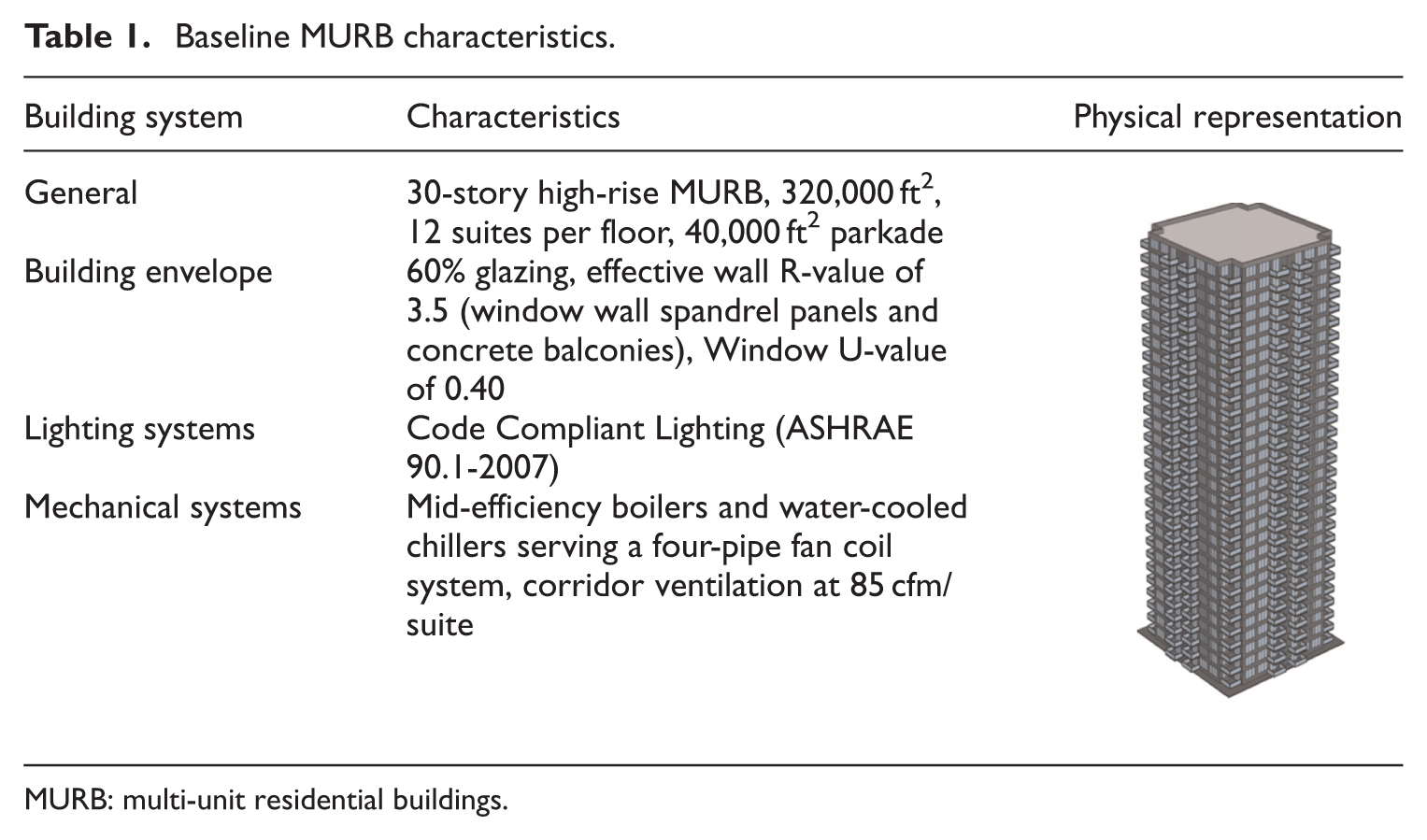
MURB: multi-unit residential buildings.
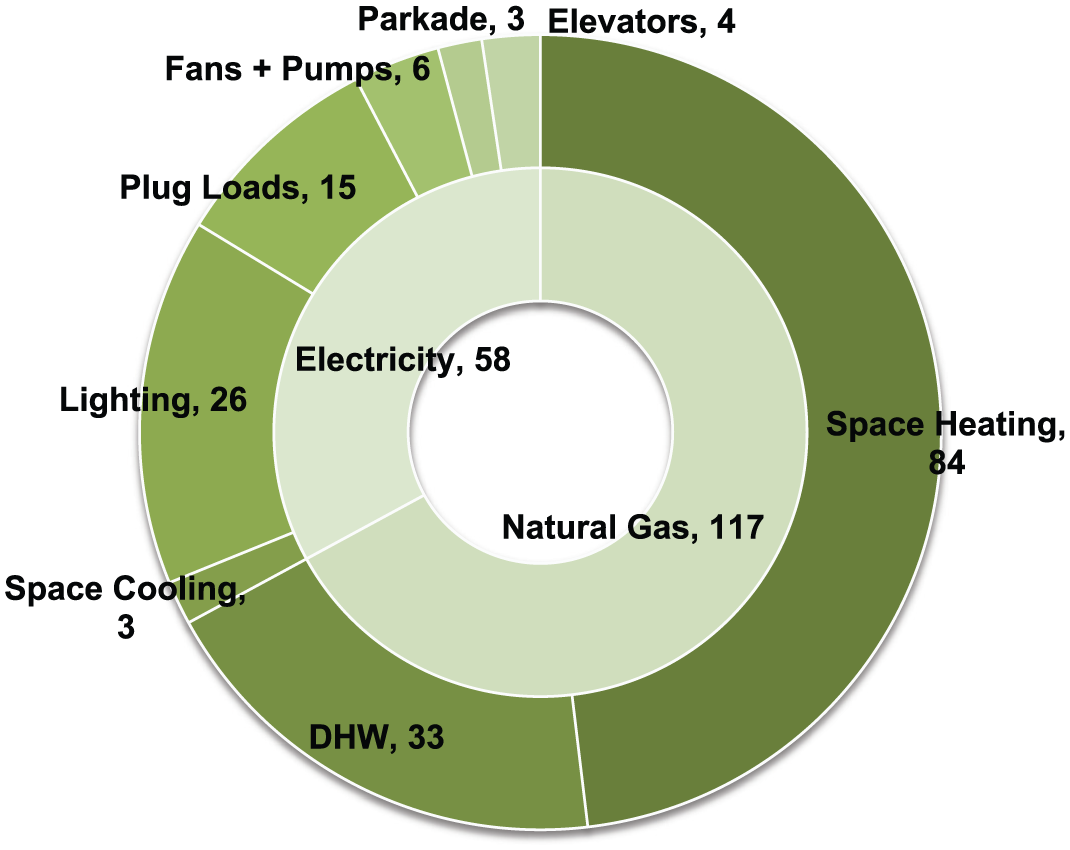
Energy use breakdown of baseline MURB in Vancouver, BC (ekW h/m2).
In order to validate the baseline model energy use, a comparison was made with available measured data. The largest single published data set for British Columbia MURBs included measured data of 39 non-combustible MURBs located in Lower Mainland and Victoria, BC (RDH Building Engineering, 2012). The results presented include pre- and post-retrofit performance and are shown in Table 2.
Energy use intensity comparison between baseline model and measured data.
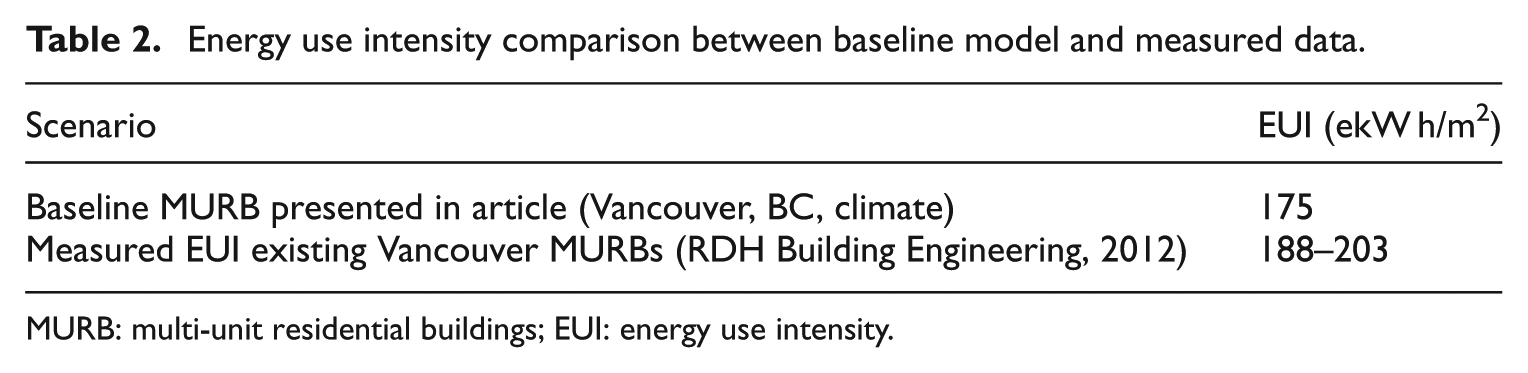
MURB: multi-unit residential buildings; EUI: energy use intensity.
Methodology
In order to determine the relative impact of discrete and combined energy efficiency measures, a parametric analysis covering over 100,000 simulations was run using the whole building energy simulation software EnergyPlus 8.1. All permutations of the 11 common energy efficiency measures were undertaken, with each measure having between two and four values. Some of the variables modeled are outside the range of what is typical due to the constraints mentioned earlier (i.e. marketability, constructability, and combustibility). However, they were considered nonetheless to establish end points. A summary of the variables modeled is shown in Table 3, with the bold values representative of the characteristics of the typical Vancouver MURB, which becomes the evaluation “baseline” model.
List of energy efficiency measures modeled.
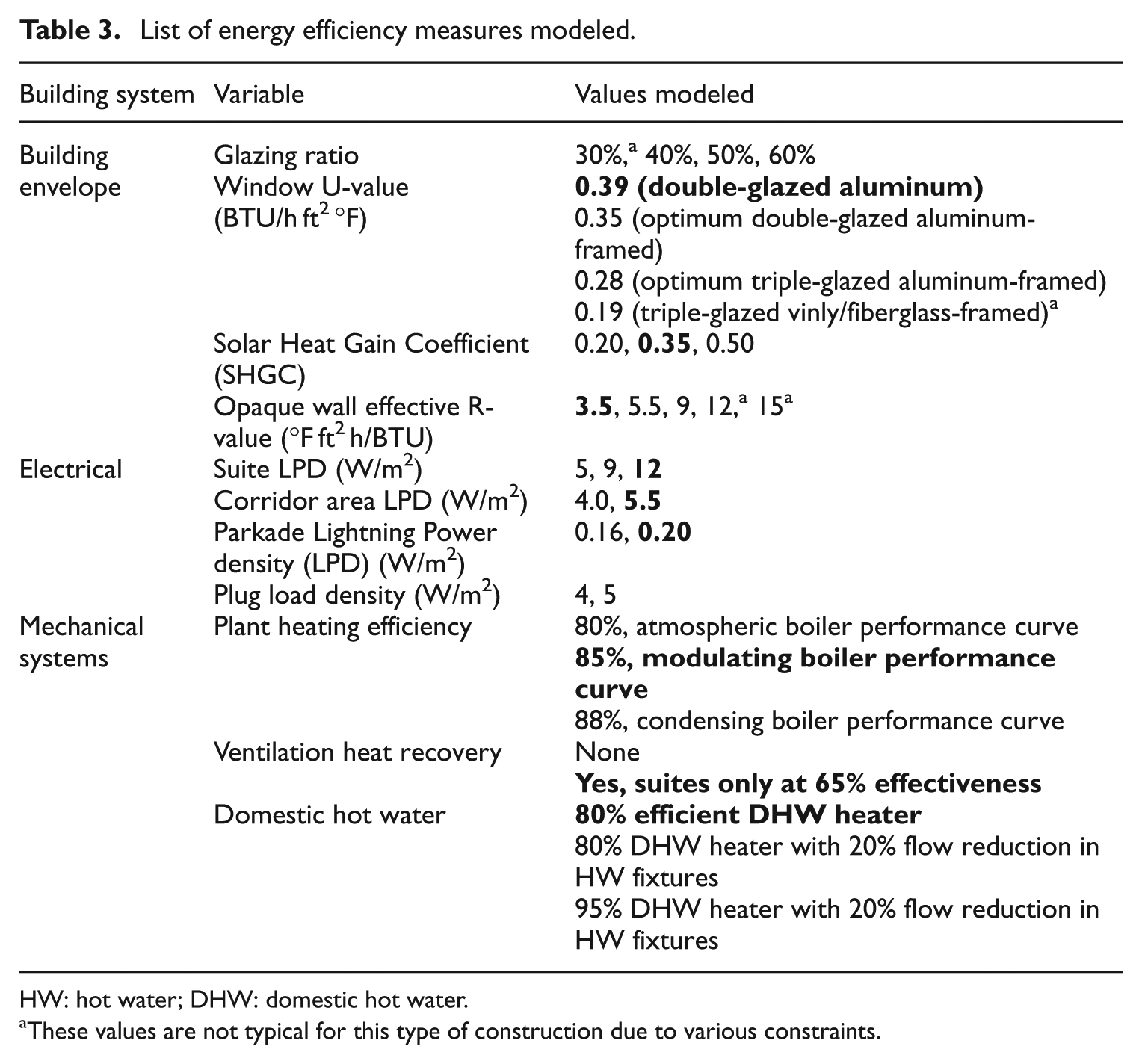
HW: hot water; DHW: domestic hot water.
These values are not typical for this type of construction due to various constraints.
The results of the simulation were amalgamated using a parallel coordinate graphical display, which allows for multivariable visualization. The use of this tool allows the user to visualize the interconnectedness of each of the variables and it provides a simplified medium to filter multiple variables and discover the resultant energy performance. Alternately, energy performance can be filtered to see what remaining variables lead to that performance. A sample screenshot of the parallel coordinates interface is shown in Figure 2. The highlighted solution represents the typical baseline MURB characteristics identified in Table 3.
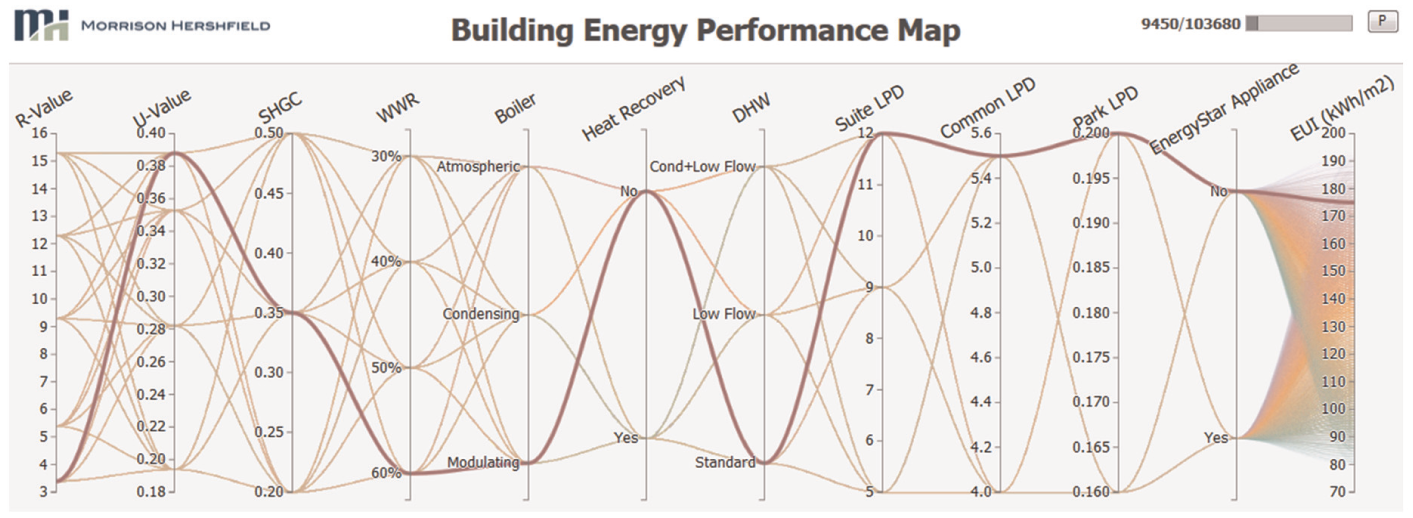
Multi-variable visualization using parallel coordinates.
Analysis of energy efficiency measures
As a starting point for the analysis, we first assessed two important energy efficiency measures that are purely mechanical in nature, for example, ventilation heat recovery and domestic hot water (DHW). These two measures are known to have significant energy saving opportunities from the author’s experience with MURB whole building energy models in Vancouver. Once these measures were assessed, we then reviewed the various building envelope/enclosure issues in further detail. This approach allowed for the development of rational “bundles” of energy efficiency measures that could then be effectively compared in terms of performance and cost.
Ventilation heat recovery
The use of heat recovery on ventilation air is becoming more common in MURBs for certain markets. The most common methods are through the use of individual suite energy or heat recovery ventilators. Since ventilation air is provided continuously, 24 h a day, the energy impact of reducing ventilation heating energy is significant.
In the analysis conducted, the range of results between the highest and lowest energy values is from around 200 ekW h/m2 down to 80 ekW h/m2. At values of 120 ekW h/m2 and below, there are no solutions that do not include ventilation heat recovery; that is, lower levels of energy use are not possible without the use of ventilation heat recovery. Also, there are no solutions above 140 ekW h/m2 when ventilation heat recovery is used. It is clear that the impact to this measure is significant.
When specifically looking at the baseline, the use of ventilation heat recovery alone brings the energy use from 175 to 130 ekW h/m2, a reduction in 45 ekW h/m2 or 25% of total energy. Without ventilation heat recovery, similar levels of energy performance are only possible through the implementation of almost all other measures combined. This is highlighted in Figure 3.
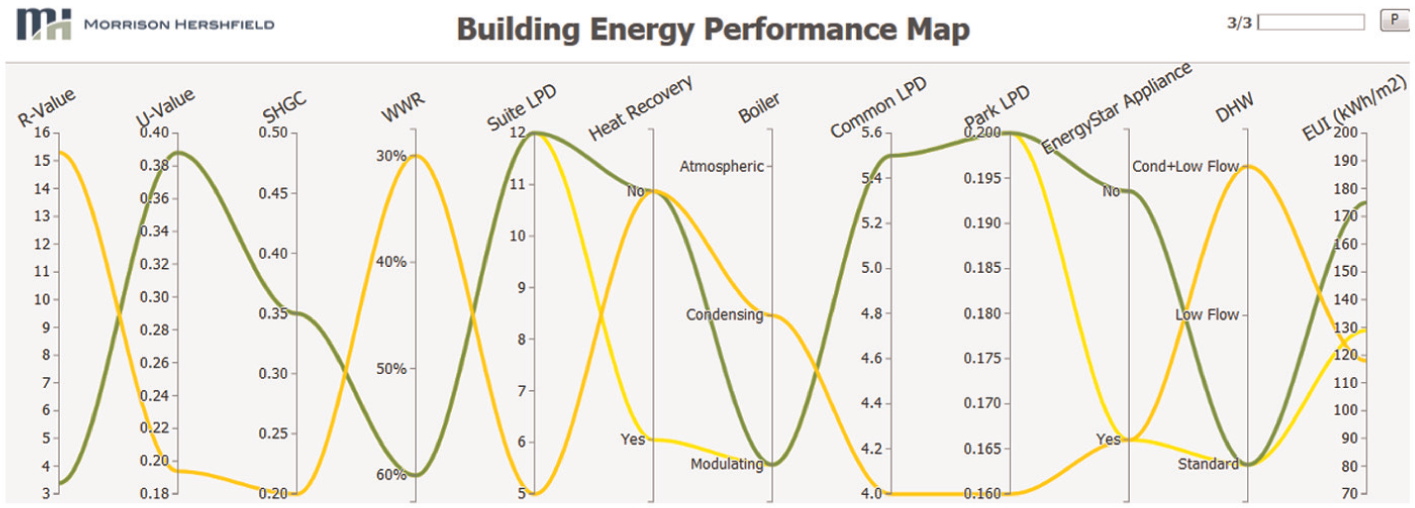
Comparison of EUI for baseline with (130 ekW h/m2) and without (175 ekW h/m2) ventilation heat recovery and best case MURB without heat recovery (120 ekW h/m2).
Ventilation heat recovery is predominantly a parallel path energy flow, meaning that it has little impact on other measures. The absolute energy savings of implementing ventilation heat recovery will be relatively similar whether it is implemented in a poor- or high-performing MURB. Therefore, consideration of this measure should be made in all cases.
Although good indoor air quality is not exclusive to ventilation heat recovery systems, the use of ventilation heat recovery usually lends itself to a more effective delivery of outdoor air to occupants. This is achieved through the use of suite heat recovery ventilators, direct ducted to the occupied areas rather than conventional corridor pressurization, where air is expected to travel from the corridors to the suite, but often bypasses the suite via other means such as elevator shafts.
DHW
DHW is also a parallel path energy flow, and as shown in Figure 1, makes up about 18% of the total energy use in a MURB. Energy efficiency improvements to the DHW system are straightforward to implement and typically involve the use of high-efficiency water heaters and/or the use of low-flow plumbing fixtures. This is becoming more common as many projects pursue “green building” rating systems that also address water efficiency. A reduction in up to 12 ekW h/m2 is possible for DHW systems, a reduction in almost 7% of the total energy use in the baseline MURB, as shown in Figure 4.
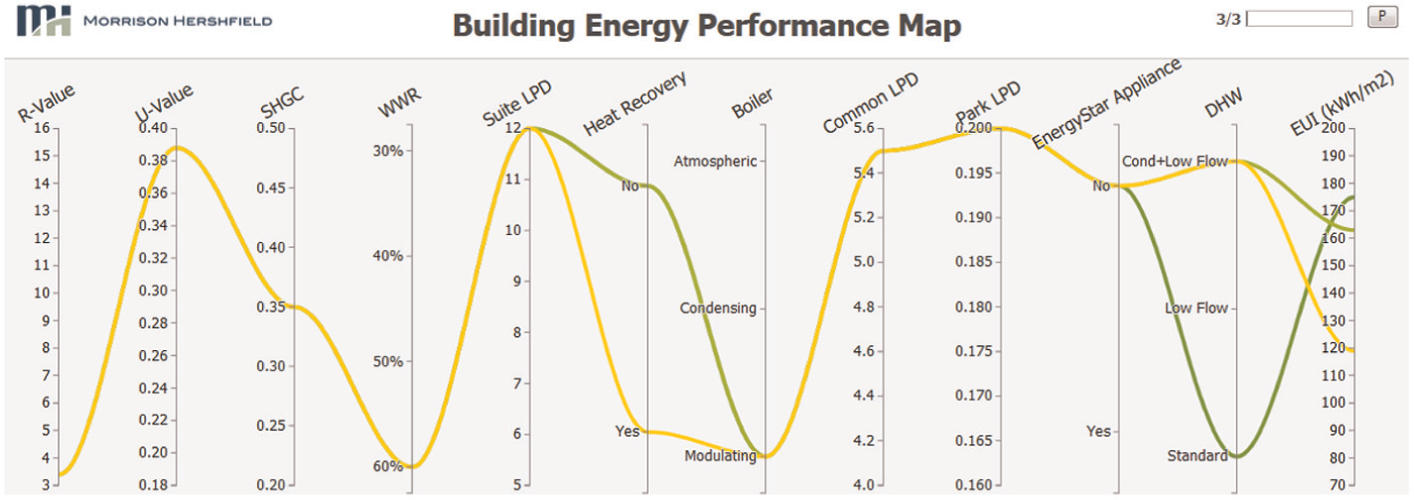
Comparison of EUI of baseline (175 ekW h/m2) with DHW savings (163 ekW h/m2) and with DHW savings and ventilation heat recovery combined (118 ekW h/m2).
Bundle 1
As shown in Figure 4, the cumulative impact of both ventilation heat recovery and DHW savings brings the energy use intensity (EUI) value down to 118 ekW h/m2 or a 32% improvement over the baseline MURB. Since these two items are parallel path energy efficiency measures, DHW and ventilation heat recovery will be termed “Bundle 1” moving forward.
Building envelope
The building envelope has long been seen as the first line of defense toward achieving more energy-efficient buildings. The authors are not in disagreement with this principle. Improvements to the building envelope are energy efficiency measures with a long service life and impact peak heating and cooling loads, which may reduce the initial cost of mechanical equipment. However, it is important to recognize the constraints that make high levels of building envelope performance challenging as well as the relative impact of the envelope over other energy efficiency measures in MURBs.
Recently published studies such as ASHRAE 1365-RP and the Building Envelope Thermal Bridging Guide; Analysis, Applications, and Insights (Morrison Hershfield Ltd, 2011, 2014) have shed light on the significant impact that thermal bridging can have on envelope thermal performance. The Building Envelope Thermal Bridging Guide highlights the minimal thermal performance of common high-rise MURBs when all thermal bridging is quantified and outlines options for improving building envelope thermal performance. The guide provides a sobering discussion on the overall “effective” R-value when no attention is paid to thermal bridging at interface details during design. Interface details and related thermal bridging occur at the intersection of building envelope assemblies and/or structural components. The Thermal Bridging Guide outlines how the opaque building envelope “effective” R-value can cost-effectively go from a low of R-3.5 to as high as R-9.5 for MURBs by mitigating thermal bridging at interface details rather than simply adding more insulation. An “effective” R-value of R-9.5 might not seem as a high benchmark since values of R-20 to R-30 are often targeted in the pursuit of high-performance buildings. However, one should question such lofty targets for market high-rise buildings by asking a few questions:
Are these targets actually ever achieved in practice when all thermal bridging is quantified?
Are these targets realistic for high-rise MURBs?
And most importantly, are they necessary?
Building envelope diminishing returns and the impact of thermal bridging
Using Vancouver as an example market with many high-rise residential buildings, the collective industry wisdom is that building envelope performance is important and that there are a lot of rooms for improvement. However, it is important that we analyze the data to understand where improvements to the building envelope are most significant, and the point at which further improvements show diminishing returns.
For example, let us consider a building that achieves a “high-performance” building envelope (R-15 walls, triple-glazed vinyl/fiberglass-framed windows, 30% window-to-wall or glazing ratio), which has a modeled energy performance of 154 ekW h/m2, assuming all other characteristics as per the baseline reference. This is an improvement of 12% over the baseline. When this “high-performance” building envelope is applied to Bundle 1, the annual energy results are 96 ekW h/m2, or an improvement of 18% over Bundle 1 alone. Together, the high-performance building envelope, combined with Bundle 1, is a 45% improvement over the baseline MURB.
However, an opaque building envelope with an “effective” R-value of R-15 is challenging to attain and not commonly achieved in practice because of the constraints and realities of market-driven, non-combustible, high-rise buildings. Current realities are that glazing ratios below 40% are rarely seen due to marketability, “small” or “efficient” floor plans where more glazing make units feel larger, and the necessity for access to views. The thermal performance of the building envelope is often further compromised as a result of balconies that are an extension of concrete floor slabs and an predisposition to thermally inefficient assemblies that are installed as modules and minimizes work from the exterior to caulking and painting. Finally, achieving low-glazing U-values with fiberglass- or vinyl-framed windows is restrained by Code provisions for fire and life safety. The use of combustible window framing is uncommon when the fire protection requirements are added to the desire for modular construction and glazing ratios greater than 40%.
The constraints on the building envelope thermal performance for high-rise MURBs do not have to lead to an “effective” R-value of R-3.5. Industry can do much better, and changes are required to achieve low-energy buildings. With regard to the building envelope, significant changes can be realized if more attention is paid to thermal bridging at interface details concurrently with more thermally efficient wall and glazing assemblies.
The difference in energy consumption between the “high-performance” building envelope and one that is more readily achievable considering the above-mentioned constraints is not significant, as shown in Figure 5. A discussion of the assumptions for the two building envelope scenarios, “high performance” versus “readily achievable,” follows.
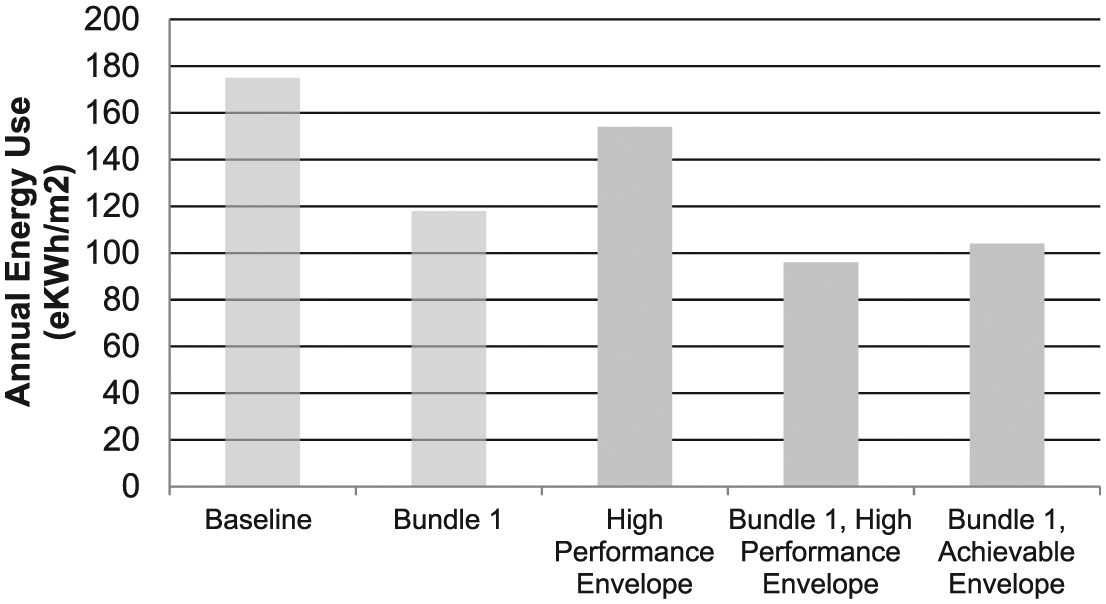
Comparison of EUI with envelope improvements, DHW savings and ventilation heat recovery.
An “effective” R-value of R-9 for the opaque building envelope was deemed a reasonable target envelope when all thermal bridging is considered. An “effective” R-value of R-9.5 can be achieved for the opaque building envelope with a clear field “effective” R-value of approximately R-16, thermally broken balconies and parapets, and attention paid to the continuity of the insulation at interface details. An “effective” R-value is realistically achievable for market buildings with exterior insulated steel-stud assemblies, exterior insulated concrete assemblies, and/or enhanced modular window-wall spandrel sections. 1 An example calculation of the “effective” R-value calculation is summarized in Table 4 for with an exterior insulated steel-stud assembly following the Building Envelope Thermal Analysis (BETA) approach and data put forward by the Building Envelope Thermal Bridging Guide (Morrison Hershfield Ltd, 2014). The quantities are based on the quantities for the archetype MURB summarized earlier.
Effective R-value calculation for the opaque envelope using the BETA approach.
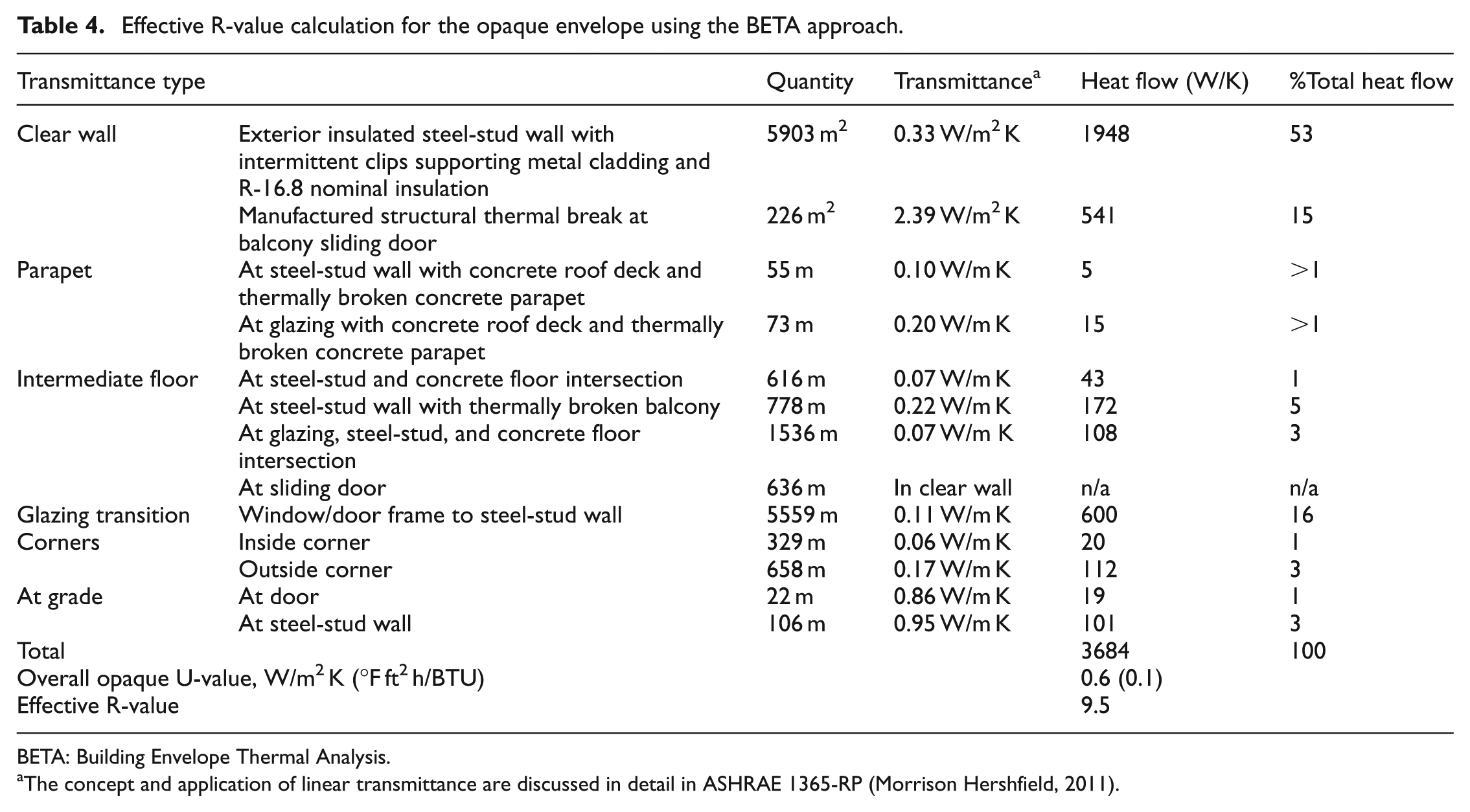
BETA: Building Envelope Thermal Analysis.
The concept and application of linear transmittance are discussed in detail in ASHRAE 1365-RP (Morrison Hershfield, 2011).
An opaque “effective” R-value of R-9.5 coupled with aluminum-framed glazing with a U-value of 0.28 °F ft2 h/BTU (triple-glazed units with double low-E) and 40% glazing ratio was also deemed a reasonable target for the overall vertical envelope performance for the high-rise MURB market. 2
Figures 5 and 6 clearly show diminishing energy saving returns at higher effective R-values. Additionally, from a design and construction perspective, as more insulation is added to the exterior of walls, the energy savings are almost non-existent if lateral heat flow paths caused by thermal bridging at interface details are not addressed. For MURBs in our example Vancouver climate, most of the gains, approximately 75% of the theoretical maximum, will be achieved if the building envelope met an “effective” R-value of R-9.5 as shown in Figure 6. An extra 17.5% gain can be achieved with an envelope meeting an “effective” R-value of R-15 and it will take an infinite amount of extra thermal resistance to fully get the last 7.5% improvement.
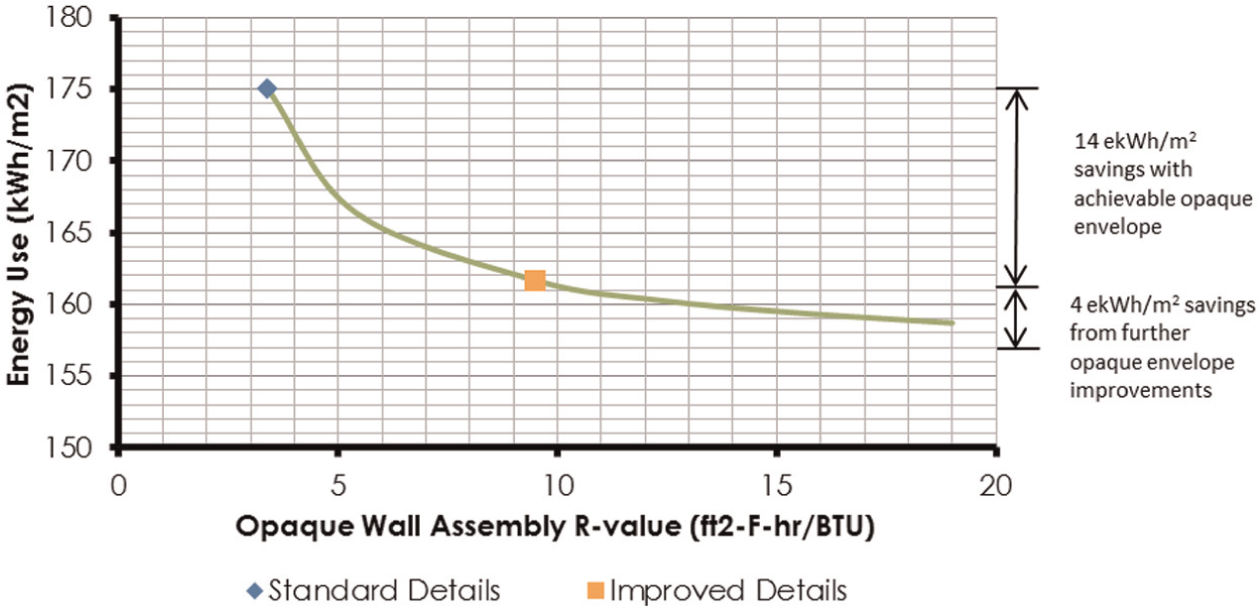
Electrical savings for only envelope improvements for the Vancouver baseline MURB.
Glazing interface details
The impact of the heat flow at glazing interfaces can be significant, sometimes even exceeding the heat flow through the clear field of the well-insulated walls. The interface between the window and framing of the wall assembly and placement of windows in relation to the thermal insulation can make a big difference. This become particularly evident when quantifies of glazing interfaces are considered for MURBs, particularly for punched window openings. In some cases, this may contradict conventional energy efficiency wisdom where small window openings are seen as an obvious advantage. For example, Figure 7 illustrates three ways that 40% glazing can be achieved in a building with three different quantities of the glazing to wall interface. For a high-rise MURB, these quantities multiply and can result in differing quantities in the range of several thousand meters between scenarios. Multiply these differences to the range of possible linear transmittances 3 and the significance of the impact becomes apparent. Figure 8 illustrates the impact of introducing a wood liner, moving the window position, and insulating the window opening for an aluminum-framed window in a punched steel-stud opening with exterior insulation. For this analysis, only the sill was considered and the impact for a whole window is discussed in the following.
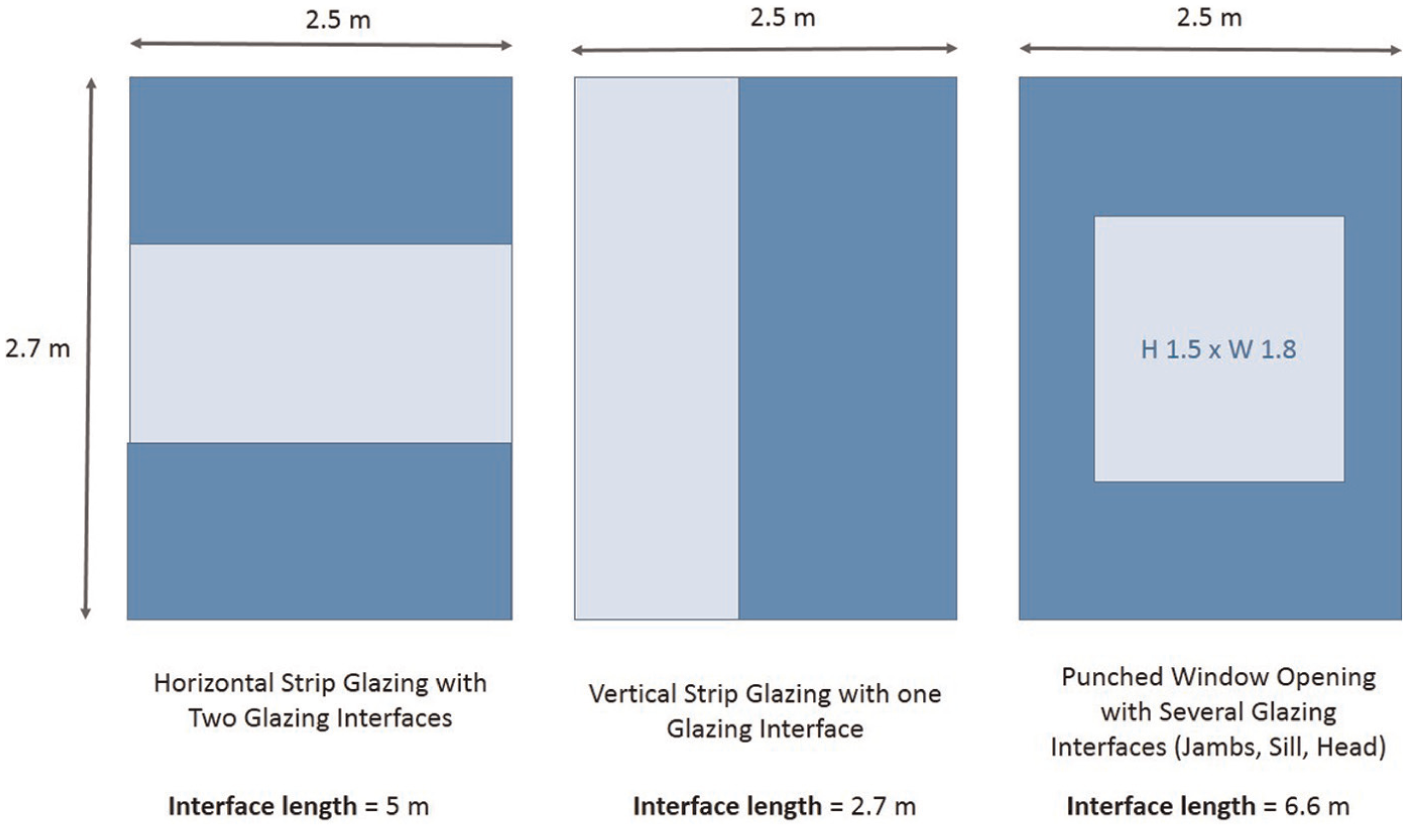
Quantity of glazing interfaces for three glazing orientations with 40% glazing.
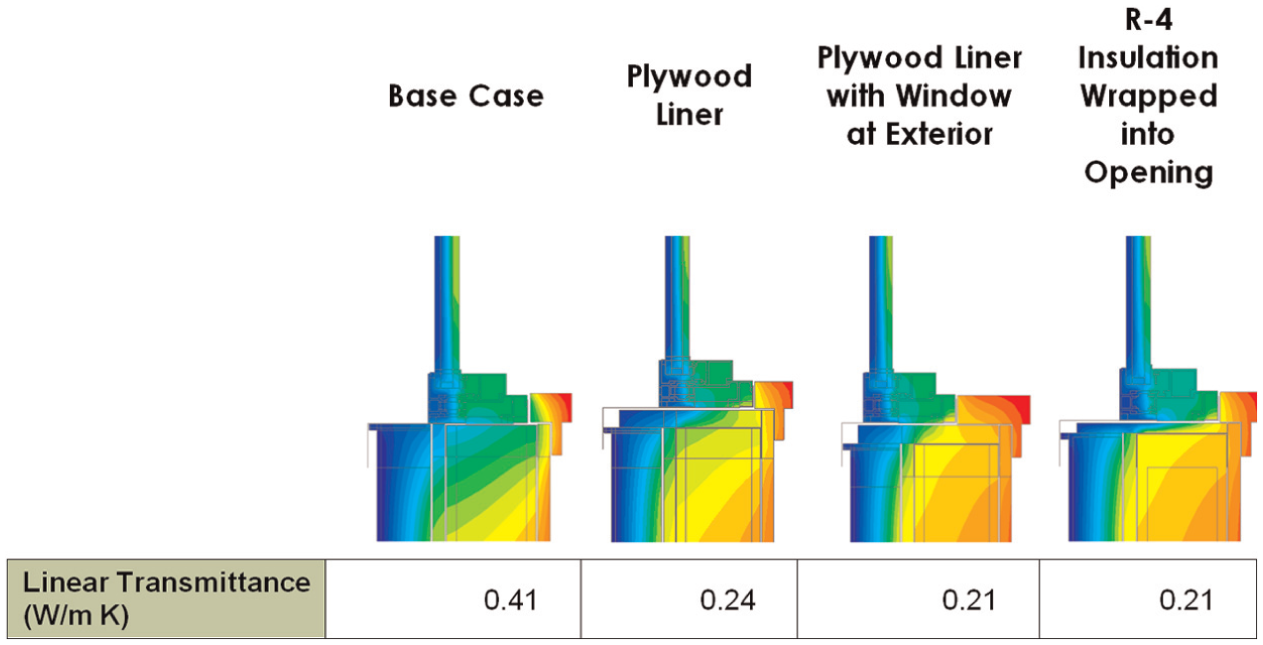
Glazing interfaces transmittance values for different details.
The linear transmittance between the base case and in Figure 8 and the value presented in Table 4, for the entire window interface, is 0.30 W/m K. For the high-rise MURB presented in Table 4, the “effective” R-value would drop to R-7.1 if the base case window interface detail was used. In terms of energy use, this difference is similar to trying to get the extra gain by going from R-9.5 to R-15 in effective R-value of the entire wall assembly. However, it makes more sense to pay attention to efficient detailing because it is more cost-effective to add a plywood liner, align the windows properly, and/or ensure insulation is brought into the opening. Accordingly, improvements to the selection, design, and installation of windows become increasingly more critical and cost-effective than adding more exterior installation to reach the goal of low-energy buildings.
Reducing thermal bridging using technology
Mitigating thermal bridging at interface details matters and there are many ways to minimize the impact of thermal bridging. Sometimes, ensuring that the continuity of insulation makes the most sense, and in other cases, it makes more sense to introduce new technologies that provide effective thermal breaks. These concepts are elaborated below.
Structural thermal breaks can be more cost-effective than wrapping insulation around parapets and balconies. Furthermore, despite manufactured thermal breaks not being free of thermal bridging, these technologies can be more effective in reducing thermal bridging than wrapping parapets or balconies in insulation.
For example, heat loss is reduced by more than 85% compared to common practice for a thermally broken parapet. This compares favorably with the approximately 60% reduction for wrapping insulation around the parapet. The parapet with wrapped insulation does not deal with the geometric thermal bridge, additional heat flow due to geometry, which is a result of heat flowing to the parapet and the increased surface area exposed to the exterior. The following graphics illustrate the difference between a thermally broken concrete parapet and a fully insulated parapet. Note that the clear wall assemblies are slightly different, but the insulation levels are identical and the clear field thermal transmittances are essentially the same (Figures 9 and 10).
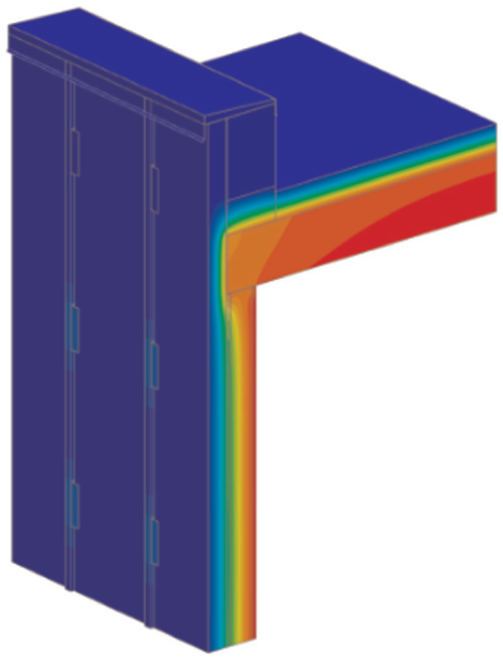
A thermally broken parapet where the roof insulation is carried to the exterior insulation at the same level via a manufactured thermal break. The parapet is cold (blue), indicating less heat flow and a more efficient system.
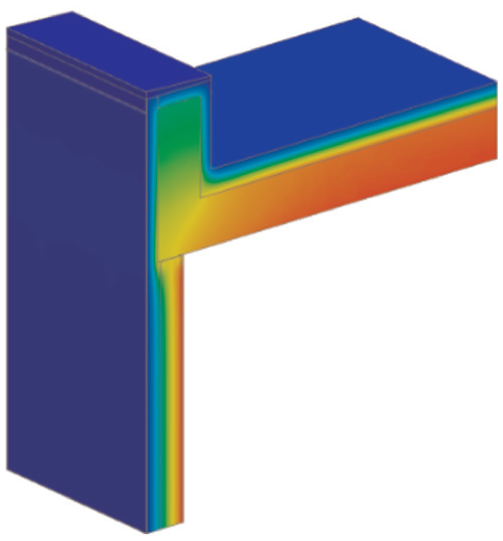
A parapet with the insulation wrapped around the parapet structure. The parapet is warm (green), indicating more heat flow and a less efficient system.
This example highlights a scenario where a new and innovative technology is more cost-effective than the prescriptive requirements that energy standards might adopt if thermal bridging will be thoroughly addressed. If energy standards assume insulation wrapped around a parapet as the baseline, then there will be a significant incentive for designers to consider cost-effective solutions such as structural thermally broken parapets.
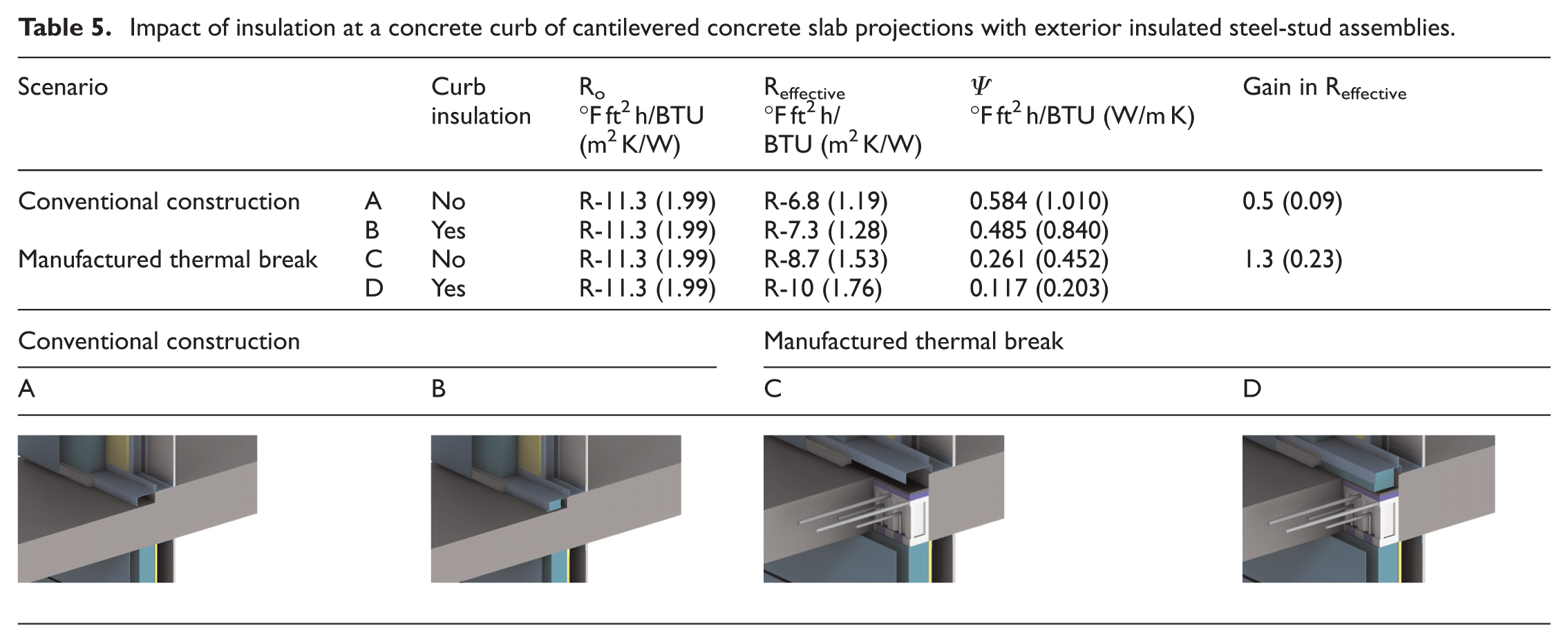
The continuity of the thermal performance of the building envelope becomes increasingly more important as major thermal bridges are mitigated. For example, a small gap in the insulation at a concrete balcony does not make much of a difference when the heat is freely flowing through a concrete slab. However, when a structural thermal break is introduced then only a little bit of insulation makes a difference to stop heat flowing around the thermal break. This concept is quantified in Table 5. Graphics of the scenarios follow.
Impact of insulation at a concrete curb of cantilevered concrete slab projections with exterior insulated steel-stud assemblies.
Other measures
The analysis above shows a realistic path to achieve 104 ekW h/m2 without pushing the boundaries too far on the major constraints identified. The remaining variables not yet discussed provide less impact than those identified earlier; however, modest improvements to lighting, plug loads, heating efficiencies, and so forth, are required to get below the target of 100 ekW h/m2. There are several different combinations of lighting, heating efficiency, and plug load improvements that will lead to a building with an energy consumption below 100 ekW h/m2. An example of three scenarios is highlighted in Figure 11.
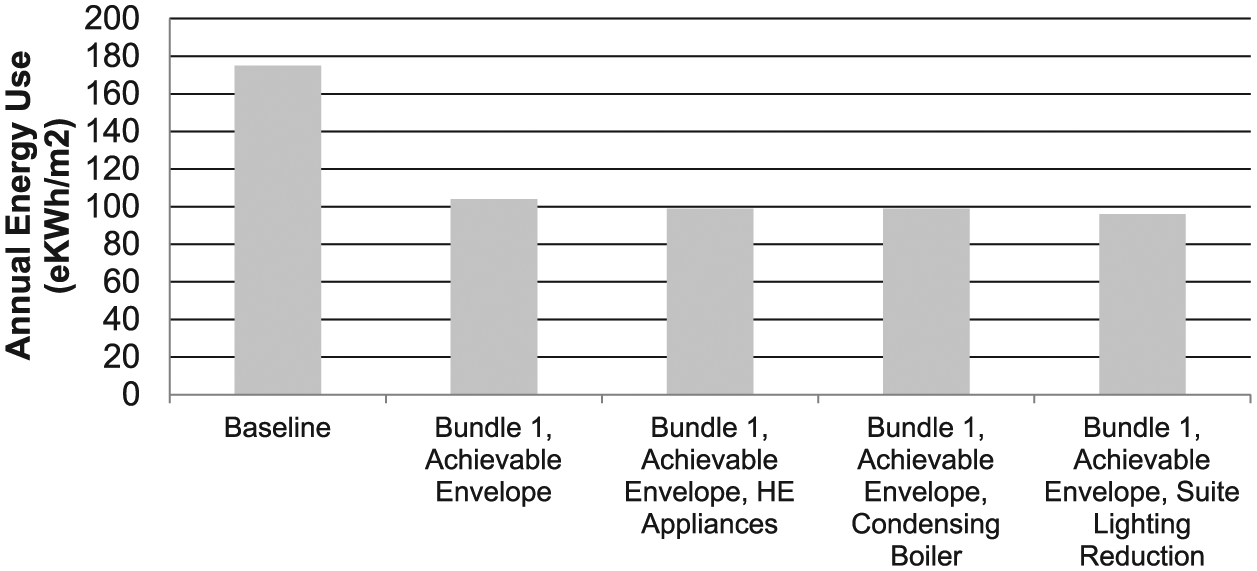
Comparison of EUI with multiple measures to achieve <100 ekW h/m2.
Cost–benefit analysis
Up to now, we have discussed energy efficiency measures in terms of their relative energy impact, but have not yet introduced costs implications. A cost–benefit analysis with respect to the considered measures has been done using broad cost projections (±50%) and is based on generic cost estimates not specific to any project. The analysis also uses local utility rates for Vancouver, BC, to complement the climatic loads for the energy analysis. While the costs will vary for specific projects in different markets, the relative cost-effectiveness of each measure can be useful in determining priority for each energy efficiency measure. A summary of the capital costs used for the energy efficiency measures under discussion are listed in Table 6.
Incremental capital costs of energy efficiency measures.
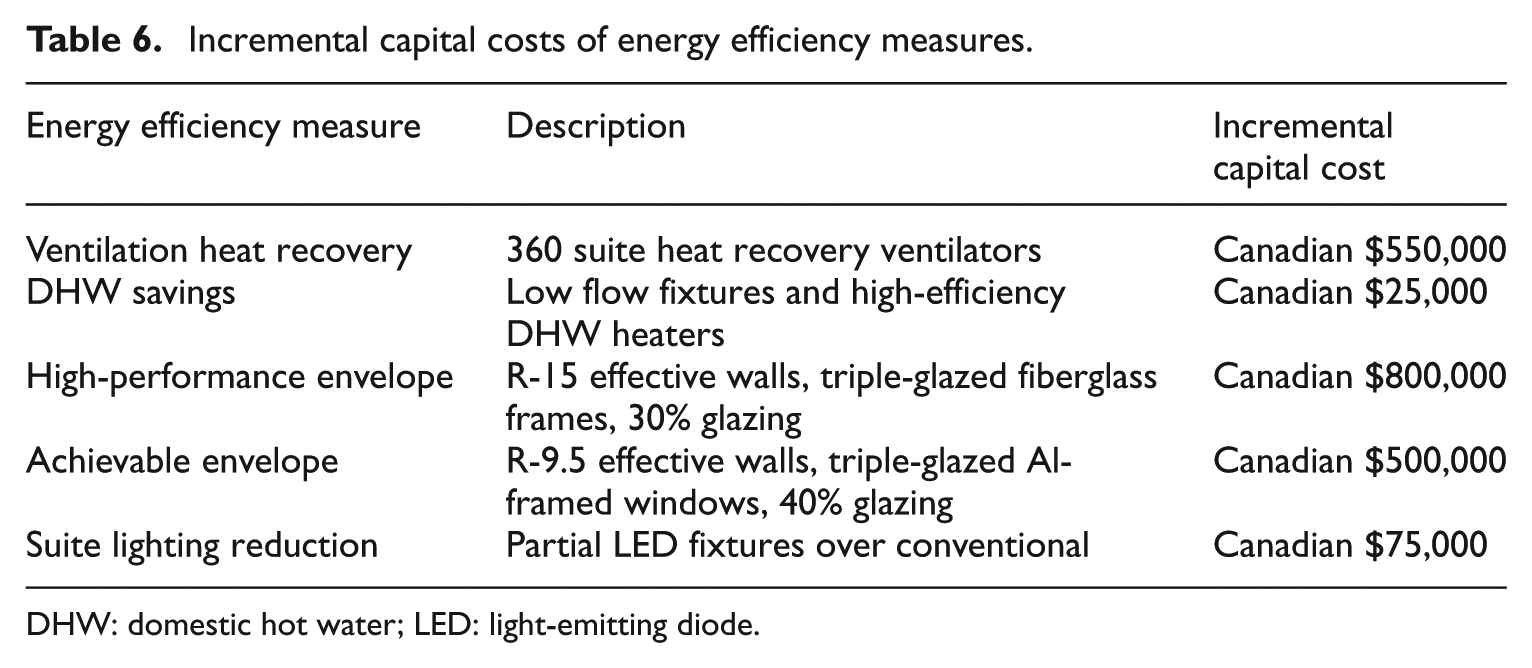
DHW: domestic hot water; LED: light-emitting diode.
Generally, the cost–benefit analysis supports the same conclusions as the energy analysis. That is, the simplest and largest energy impacts tend to have the shortest paybacks. Measures that push performance improvements past the point of diminishing returns, such as the high-performance building envelope, show much longer paybacks. Also, as discussed earlier, the high-performance envelope has constraints other than cost that limit available solutions and widespread implementation.
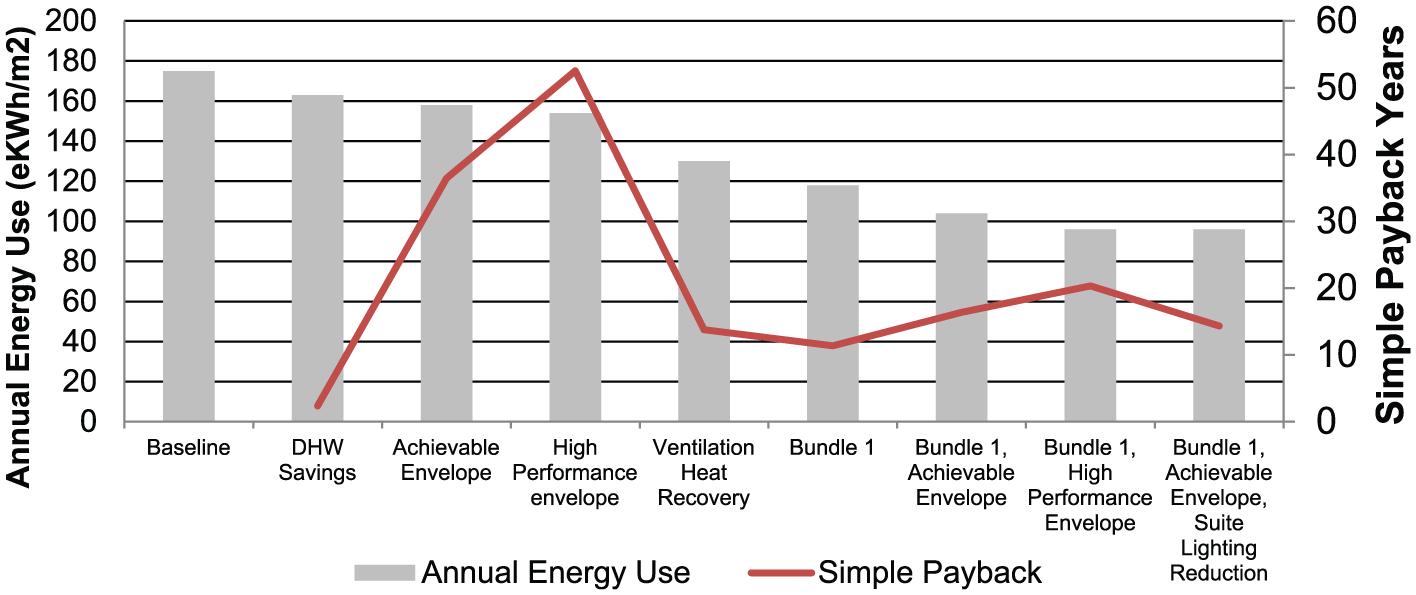
Comparison of EUI with multiple measures to achieve <100 ekW h/m2.
The results show that for this particular Vancouver example, a MURB can achieve less than 100 eKW h/m2 with paybacks less than 15 years at current market conditions and utility pricing.
Discussion
A large-scale parametric analysis coupled with a multiple variable visualization technique is useful for identifying the interdependencies (or lack thereof) of several variables on energy efficiency. For this particular study, where the focus was on a high-rise MURB, we were able to identify the relative importance of various energy efficiency measures. From both energy and cost-effectiveness perspectives, predominantly parallel path energy flows, such as ventilation and DHW ranked highest. And because they are not strongly linked to other variables, energy efficiency measures that address these energy flows are highly recommended in all cases.
The roadmap for the best approach to energy savings through envelope improvements is more complex. The different building envelope measures, such as opaque R-values, glazing U-values, and glazing ratios, are interrelated and there are a number of solutions that could yield the same final performance. As an example, of the scenarios modeled, there are 50 separate possibilities of these three building envelope variables that yield whole building energy use values between 100 and 110 ekW h/m2. This illustrates two points:
First is that there are many paths to achieve a similar level of building envelope energy performance.
Second is that improvements to the building envelope have diminishing energy saving returns.
Many scenarios are nevertheless promising because they provide flexibility for designers to achieve the same result while being able to meet other, non-energy related, project goals.
There is no direct answer to identifying where diminishing returns occur for any one variable, as it depends on the performance of the other interrelated variables, emphasizing the notion that there are many roads that lead to the same performance. This also highlights the importance of conducting a project-specific energy analysis to quantify the impact of the building envelope, the interdependence of the different envelope variables, and the cost-effectiveness of achieving a specific energy target.
Finally, the analysis shows us that regardless of the order in which we implement energy efficiency measures, a multitude of measures are required to achieve high overall levels of performance. One cannot focus on the envelope or ventilation or DHW or lighting alone; improvements to all major building systems are necessary.
Next steps and further consideration
One of the key takeaways from this analysis is the concept of diminishing energy saving returns related to both increasing levels of building envelope performance and/or neglecting heat transfer through building envelope interface details. This concept is important for informing future codes and standards. Changes in energy codes over the previous two decades have seen significant performance requirement increases to the building envelope. For many building types, these requirements have exceeded what is practical, and project teams are forced to make liberal interpretations in order to assume compliance.
For example, ASHRAE 90.1-2010 Zone 5 minimum requirements for residential building wall R-value is R-15.6 for steel-framed walls (typical wall type for a MURB with window wall). This value is extremely difficult to achieve in high-rise residential construction, leading many practitioners to ignore and exclude thermal bridging at interface details, including balcony slabs, parapets, shelf angles, and so on. Improvements to these details would have a significant improvement on the overall “effective” R-value, but still not meet the standard requirements. A shift by energy code development bodies toward realistic R-value requirements, coupled with acknowledgment of the impact of interface details, would result in better energy outcomes for buildings that reflect practical and achievable changes in design and construction, with a resulting industry alignment with standard interpretations.
In addition to better addressing the building envelope, energy codes should also consider more significant improvements to mechanical and electrical systems. With so much energy savings being easily achieved with mechanical systems, such as the use of ventilation heat recovery in a MURB, there is little incentive to improve building envelope performance, which has a higher payback. Until the cost-effective, “low-hanging fruit” becomes a baseline standard in energy codes, building envelope performance will continue to get little attention in the MURB market.
The analysis also provides an initial data set for one climate, but mostly a framework for using EUI values as a basis for potential code compliance moving forward.
Footnotes
Declaration of Conflicting Interest
The author(s) declared no potential conflicts of interest with respect to the research, authorship, and/or publication of this article.
Funding
The author(s) received no financial support for the research, authorship, and/or publication of this article.