







Abstract
This study examines hollow brick geometry as a thermal metamaterial with shape-dependent insulation performance. Independently of normative constraints, it aims to examine the effect of internal geometry on the thermal behavior of 15 hollow bricks of different internal structures designed from the reference hollow clay brick with eight holes (HCB8), in order to select a configuration that offers the best thermal insulation performance under the conditions studied. Various operating parameters are taken into account, including outside temperature, thermal conductivity of the solid material, emissivity, and filling material. Three types of insulation (polyurethane foam [PUF], expanded polystyrene [EPS], and cardboard powder) are used as filling material inside the cavities of the bricks in order to compare their thermal behavior with air. The findings highlight that how the solid parts and air cavities are arranged inside the brick has a real impact on its thermal resistance. They also show that the performance of each configuration can shift depending on the operating parameters. Configurations with elongated cavities incorporating protuberances (D4 and D2) provide the best thermal insulation in most situations studied (outdoor temperature, emissivity, and thermal conductivity). The only exception is the case without radiation, where configuration with three elongated cavities without protuberances (C2) becomes the most effective. For filled bricks, configuration with three or four elongated cavities, delivers the best thermal performance for all three insulation materials tested (EPS, PUF, and cardboard powder). In contrast, configuration with four cavities arranged in a 2 × 2 pattern (B1), generally the least efficient, shows a noticeable improvement once an insulating material is added. These results highlight the importance of taking external conditions and material properties into account in thermal analysis, as they can significantly alter the performance order of geometries and guide the design of more sustainable building materials.
Introduction
The building sector accounts for approximately 36% of the world’s final energy consumption (and nearly 40% of energy-related CO2 emissions) (Elmzughi and Alghoul, 2021; González-Torres et al., 2022; Santamouris and Vasilakopoulou, 2021; Stations and Commissioning, 2000), due to growing demand for heating, ventilation, air conditioning, and hot water production, particularly during periods of extreme climate variability. This situation represents a major challenge in the broader effort toward energy transition and sustainable development (Belussi et al., 2019; Huang et al., 2022; Pohoryles et al., 2020). As a result, enhancing building energy performance has become a priority area of current scientific research aimed at minimizing energy consumption and improving indoor thermal comfort. Optimizing the building envelope, particularly through the selection and development of construction materials such as bricks, has been the focus of increasing attention in recent years (Elmzughi and Alghoul, 2021; Guermat et al., 2023; Madhusudanan and Nallusamy, 2022; Saravanan and Rao, 2023).
In general, two main strategies are adopted to improve the energy performance of buildings: active approaches, which rely on mechanical and electrotechnical systems such as heating, ventilation, and air conditioning, and passive approaches, which use the intrinsic thermal properties of materials, additive component, and architectural design (Hughes et al., 2021).
In this context, a wide variety of passive strategies aimed at improving the thermal efficiency of buildings has been examined. In brick buildings, recent research has shown that integrating phase change materials (PCMs) into bricks makes it possible to exploit their latent heat storage capacity, minimizing temperature fluctuations indoors and improving thermal comfort (Ajah et al., 2022; Babaharra et al., 2022a, 2023; Gao and Meng, 2023; Lachheb et al., 2024; Mukram and Daniel., 2022; Reddy et al., 2024; T and Daniel, 2022). The use of bio-based insulation materials in wall assemblies has also emerged as a sustainable option, significantly improving thermal performance while reducing environmental impact (Jonnala et al., 2024; Nasimi et al., 2024). Yuan (Yuan, 2018) conducted a numerical investigation to examine the impact of insulation type and thickness on the thermal resistance of an external wall structure in terms of thermal transmittance. The results showed that when the insulation thickness was increased from 0 to 0.2 m, the thermal transmittance decreased by 0.67, 0.63, and 0.42 W/m2K for EPS (expanded polystyrene), glass wool, and wood cement board, respectively.
In addition, the optimization of glazing systems, whether single, double, triple, or selective, has been the subject of intensive research in order to adapt thermal loads to specific climatic conditions (Nasimi et al., 2024). Finally, hybrid methods, such as combining underfloor heating with solar energy systems, have shown encouraging results in reducing the total energy consumption of buildings (Babaharra et al., 2018, 2022b; Simou et al., 2024).
Furthermore, optimizing the internal geometry of bricks has proven to be a sustainable approach to improving thermal performance without changing the composition of the material. In this regard, several recent studies have particularly emphasized the influence of the shape, size, and distribution of cavities on the overall thermal behavior of bricks (Bouchair, 2008; Cuce et al., 2022; del Coz Díaz, 2007; del Coz Díaz et al., 2011; Osman et al., 2024).
The study of heat transfer in building materials, particularly bricks, represents a major challenge in enhancing the energy performance of buildings. Understanding the mechanisms of conduction, convection, and radiation in hollow brick enables the prediction of heat losses and the optimization of thermal insulation. Several studies have investigated and analyzed the thermal behavior of hollow brick buildings (Ait-taleb et al., 2008; Ait-Taleb et al., 2015; Baig and Antar, 2008; Basak et al., 2006; Costa, 2012; Jamal et al., 2020). The findings highlight the combined effects of conduction, convection, and radiation in determining overall heat transfer. As the temperature difference increases, conduction’s relative contribution decreases while those of radiation and convection increase, with conduction remaining dominant, followed by radiation and convection (Ait-taleb et al., 2008; Jamal et al., 2023). Consequently, an in-depth understanding of these mechanisms is crucial for optimizing the thermal efficiency of building envelopes and promoting sustainable design.
According to these investigations, several researchers have focused on modifying the internal geometry of hollow bricks, in order to reduce heat transfer, which improve their overall thermal resistance, contributing to the development of more energy-efficient and sustainable building designs. Costa (Costa, 2014). realized a numerical study to improve the thermal performance of hollow red clay bricks by introducing internal protuberances into the horizontal holes and reducing overall heat transfer. Combined heat transfer modes between conduction through the clay, natural convection in the air cavities, and radiation between the internal surfaces were investigated using a two-dimensional model. The protuberances are made of clay and are the same thickness as the walls. They are fixed within the holes to prevent convection and radiation. A parametric analysis was conducted on temperature differences ranging from 5°C to 20°C, and Nusselt numbers were used to determine the optimal length and position of the protuberances. Their results show that the integration of protuberances decreases convection and radiative losses, resulting in an overall heat transfer reduction of up to 23% while manufacturing costs rise by 31%–33 %. Li et al. (Li et al., 2008) investigated the effect of hole arrangement on the equivalent conductivity of bricks. They developed 50 configurations with different numbers of holes, from 1 to 12 holes along the length (L) and from 1 to 5 along the width. They used the finite volume method to simulate conduction, natural convection, and surface radiation in bricks subjected to convective flux at the extremities. Their study is focused on the number of holes and their arrangement, the effect of radiation between internal surfaces, and the differences in hot and cold temperatures, which varied from 20°C to 50°C. The results indicated that the thermal conductivity increased by up to 23.7% in certain configurations when radiation was considered. The L5W4H1 with five holes along the length, four holes along the width, and one hole along the height presented the lowest effective thermal conductivity of 0.419 W/m K, corresponding to only 53.1% of that of solid brick. The influence of temperature difference between interior and exterior surfaces on conductivity is still below 5%. This is consistent with the findings of (Bouchair, 2008; Chen and Liu, 2023; Cuce et al., 2020), who reported that the best thermal performances were achieved for geometries with relatively large aspect ratios. Henrique dos Santos et al. (2017) studied the influence of the internal geometry of hollow concrete blocks on their thermal transmittance. Using CFD simulations, they showed that blocks with large cavities have higher transmittance values due to more intense internal convection, while thermal radiation also plays a significant role in overall heat transfer. Finally, the authors compared different configurations and proposed several strategies for reducing the thermal transmittance of hollow blocks.
Additionally, Arendt et al. (Arendt et al., 2011) investigated the effect of cavity density and solid material distribution on the transient thermal response of hollow bricks. The results indicate that both the size and distribution of cavities are decisive parameters governing the global thermal behavior of hollow bricks, affecting the relative contributions of conduction, convection, and radiation Reducing the volume of the solid part improves the equivalent thermal conductivity. However, dynamic properties such as diffusivity, Lag time, and decrement factor are optimal for a cavity ratio of between 30% and 45% in the case of low-conductivity materials. As the conductivity of the material increases, this balance becomes more complex to achieve from a technological standpoint.
Regarding the cavity shape, it is found that Vera et al. (2024) enhanced the thermal performance of hollow clay brick structural masonry walls without compromising their mechanical strength in order to conform to Chilean and international energy efficiency standards. The produced bricks varied in geometry (rectangular and rhombic) and in width, ranging from 120 to 264 mm. A three-dimensional model was developed to simulate heat transfer within the brick units and across the entire wall assembly, including joints and mortar. The results indicated that bricks with rectangular cavities of 12 mm displayed optimum thermal performance.
Although the internal shape and porosity of bricks have a decisive influence on heat transfer, the choice of the constituent material plays an equally crucial role. Consequently, many researchers have focused, alongside geometric considerations, on investigating the impact of the thermophysical properties of the base material particularly its thermal conductivity on the overall thermal performance of bricks (Arendt et al., 2011; del Coz Díaz et al., 2007; Vera et al., 2024). Shuai et al. (Shuai et al., 2024) showed that the increase in the thermal conductivity of concrete deteriorates the insulation performance of interlocking blocks developed. Indeed, as conductivity rises, heat flows more easily through the material, leading to an increase in the overall thermal conductivity and a decrease in the thermal resistance of the block.
In addition to thermal conductivity, the internal emissivity of cavity surfaces also plays a significant role. Bouchair (Bouchair, 2008) demonstrated that reducing the emissivity of the internal cavity surfaces from 0.9 to 0.3 enhances the overall thermal resistance of brick walls. This improvement remains moderate for simple configurations as small bricks with eight equal recesses (SB8CE), big brick with 12 equal recesses (BB12CE), small brick with four horizontal cavities (SB4CH), and big brick with four horizontal cavities (BB4CH). The effect becomes much more pronounced as the cavity height increases, reaching up to 72%–78% for brick with two vertical cavities (SB2CV) and three vertical cavities (BB3CV). Therefore, low surface emissivity combined with deeper cavities markedly improves the thermal insulation performance of brick walls.
It is also feasible to improve the thermal insulation of bricks by combining internal geometric modifications with the addition of insulation materials. Martínez et al. (Martínez et al., 2018) investigated the self-insulation approach in detail, designing 24 different concrete unit configurations and classifying them based on geometry (6 unit shapes) and internal insulation type (air, cardboard, rigid polystyrene, injected foam). The experimental and numerical results show that the foam-injected H-shaped unit provides the greatest improvement in R-values and the medium-weight concrete unit has a 42% higher R-value than a normal-weight concrete unit. Al-Tamimi et al. (Al-Tamimi et al., 2020) identified the optimal configuration for reducing the temperature inside the brick, accounting for pore arrangement, pore number, and cavity dimensions. They integrated it with different insulating materials. The results indicate that the optimal brick design, with a porosity of 29% and a shape aspect ranging from 1.72% to 1.12 %, reduced the inside surface temperature by 4°C compared with commercially available bricks and 7°C compared with a solid brick. Furthermore, the integration of perlite led to a 33% increase in the equivalent thermal conductivity.
Recent studies aimed at characterizing the thermal behavior of cellular masonry have shown the value of combining experimental measurements (particularly using hot-box devices) with advanced three-dimensional modeling based on CFD coupled with heat transfer. This dual approach has made it possible, in the literature, to compare numerical predictions with experimental data and thus establish reliable models capable of reproducing the mechanisms of conduction, internal convection, and radiation present in the cavities. Based on this validated work, numerical analysis is now a robust tool for exploring a wide range of scenarios that are not accessible experimentally. In particular, it allows for parametric evaluation of the influence of the internal geometry of the cells, the thermophysical properties of the materials, the possible introduction of insulating materials into the cavities, and the radiative characteristics of the internal surfaces (Al-Tamimi et al., 2020; Martínez et al., 2018).
This study is based on a passive approach, specifically focused on evaluating the impact of the internal structure on the thermal behavior of hollow bricks, and consequently on their thermal performance independently of any external system. Recent studies indicate that most research focuses on improving the thermal performance of bricks with passive techniques. However, few studies have specifically addressed to evaluate the effect of the internal structure, which has a decisive influence on overall thermal behavior that can act as a passive thermal improvement solution. The efficiency of heat transfer inside a hollow brick depends mainly on three interdependent parameters, which are the amount of air it contains, and its distribution in the brick, and the thermal properties of the solid material in contact with it.
Increasing the volume of air or solid material within a hollow brick, without controlling its distribution, can lead to convective losses produced by the internal air movements, and radiative losses due to temperature gradients. These effects lead to a decrease in the thermal resistance of hollow bricks and, consequently, in their overall insulation. It is therefore essential to control the distribution of the solid material and its interaction with the caged air, as any change in this internal structure can lead to significant variations in thermal behavior. Most current studies focus on modeling bricks that are considered to be perfectly insulating, without thoroughly investigating the effect of internal geometric variations. The originality of this work lies in highlighting the strong coupling between internal geometry, overall thermal behavior, and operating conditions such as the outside temperature, the nature of the constituent solid material, or the type of cavity filling. The results show that the thermal performance of hollow bricks is governed by the interaction between these key factors rather than by a single property. In addition, each geometry can respond differently depending on the specific thermal conditions, which may lead to variations in the thermal performance of the configurations. This highlights the need for an integrated analysis of geometry, thermal behavior, and operating parameters when designing new hollow brick structures, according to their intended application.
A comparative approach that integrates these variables is therefore essential for a comprehensive and objective evaluation of the thermal performance of innovative brick designs. In this regard, the current study objective is to create and evaluate several internal structure designs of hollow brick (HCB8) in order to identify configurations that provide the optimal balance of thermal insulation and stable performance under a variety of operating conditions. The optimization aims to improve the thermal performance of bricks by effectively controlling heat transfer through conduction, convection, and radiation. Several physical indicators are used to analyze performance, including isotherm distribution, average air velocity, overall thermal resistance, solid-to-air volume ratio, and average interior temperature.
Methods and materials
Hollow bricks are a key parameter in building walls, and optimizing their internal structure can significantly improve the thermal insulation of buildings. The aim of this work is to evaluate their thermal performance by studying how heat flows through these bricks and how losses due to convection and radiation vary across different designs. For this purpose, various internal structures are proposed based on the integration of internal barriers into the cavities and variation of their aspect ratio, which is defined as the ratio of the cavity length to its width. The different geometries developed were studied under various conditions, including climate, thermal conductivity of solid material, emissivity of internal surfaces, and filling materials. A thermal analysis was conducted to analyze the thermal behavior of each configuration and evaluate the evolution of their performance according to these parameters.
Physical modeling
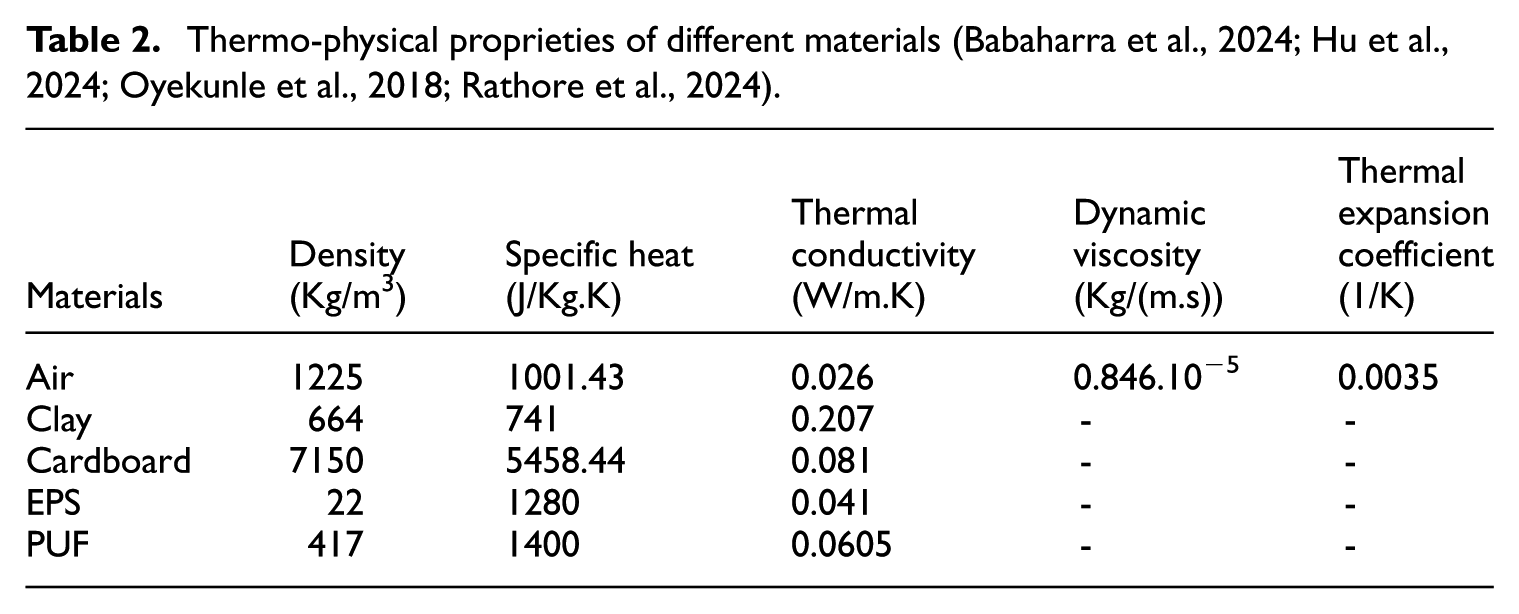
In this study, several hollow brick configurations were generated from a reference model (Figure 1) with external dimensions of 19 cm×10 cm (Hamdaoui et al., 2022). Figure 2 and Table 1 illustrate and describe in detail the different geometric structures considered, specifying in particular the shape, number, and dimensions of the internal cavities. This selection allows for a common basis for comparison, keeping the external envelope of the brick constant in order to isolate the effect of internal variations in the brick. Table 2 presents the thermophysical properties of the materials used, which are essential parameters in evaluating heat transfer performance. According to Li et al. (Li et al., 2008) and Corvaro and Paroncini (Corvaro and Paroncini, 2009), when the cavity length is large compared to its height, natural convection can fully develop and the air motion along the third direction becomes negligible. As a result, the end-wall effects are minimal, and the problem can be treated as two-dimensional.
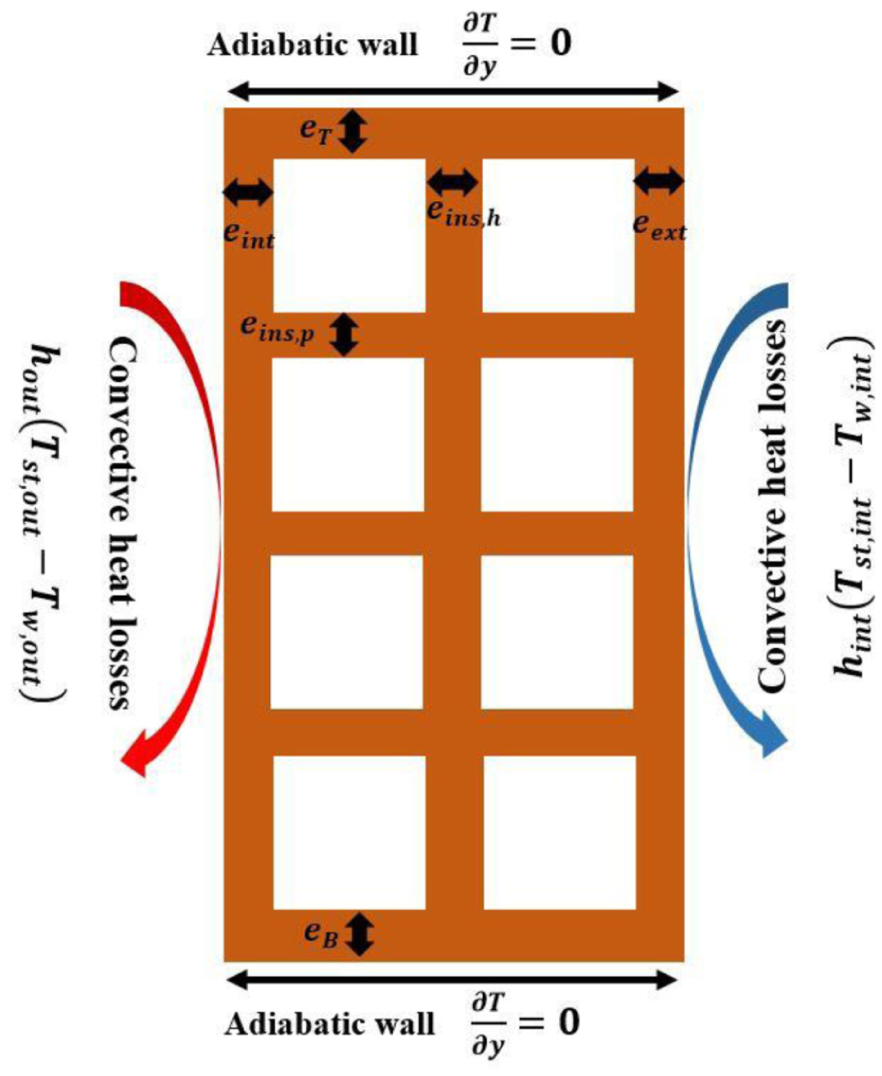
Schematic of physical model.
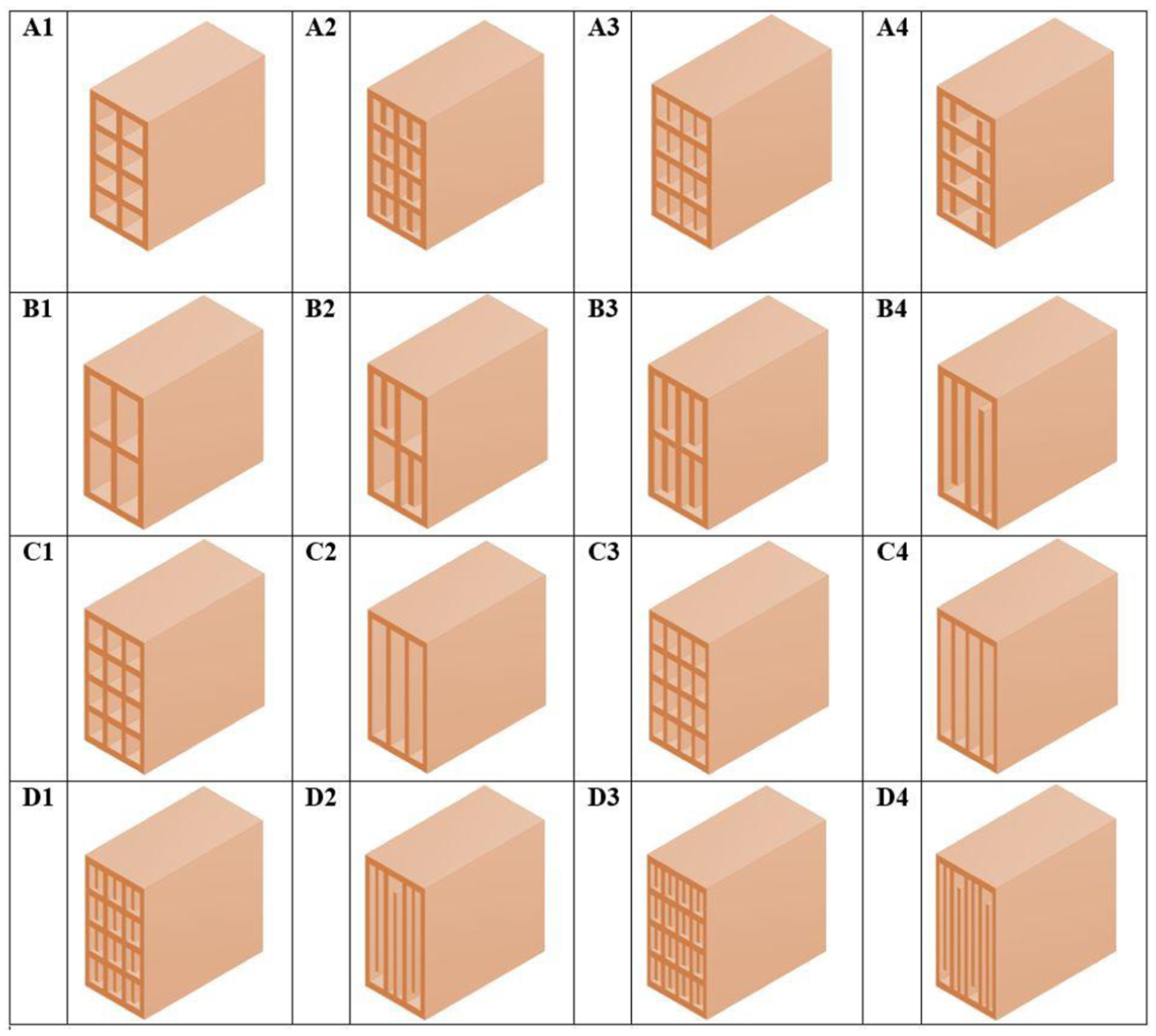
Different configurations of hollow bricks with different internal structures.
Sizing the layout of various configurations designed.
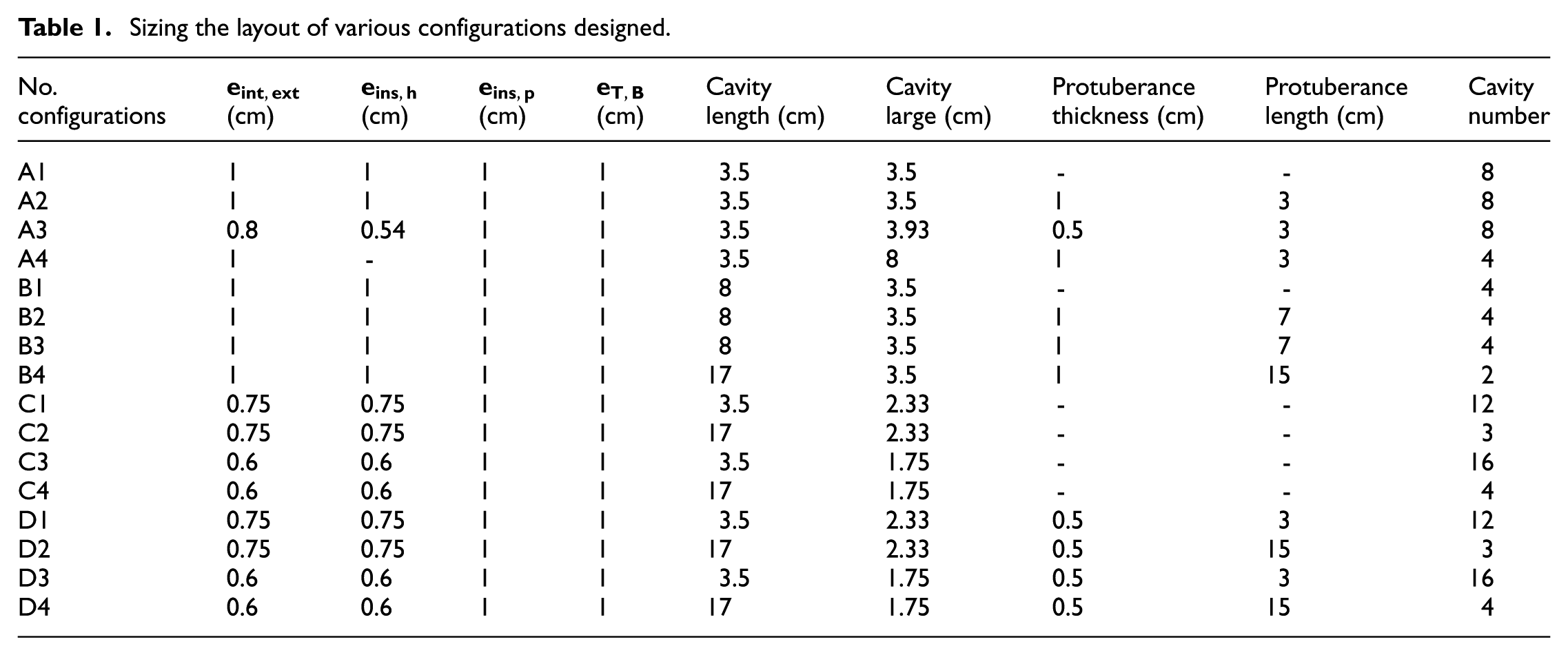
Thermo-physical proprieties of different materials (Babaharra et al., 2024; Hu et al., 2024; Oyekunle et al., 2018; Rathore et al., 2024).
Mathematical statement and boundary conditions
Assumptions
Certain assumptions have been taken into account to simplify the heat transfer analysis in the hollow brick:
The thermal properties of the solid are considered constant and independent of temperature.
The numerical simulation is conducted in two dimensions (2D).
Perfect thermal contact is assumed between the solid and the fluid.
The air flow within the pores is assumed to be laminar.
A steady-state thermal regime is considered
Solid part
In the brick, heat is transferred by conduction only, and the heat diffusion equation is given by equation (1):

Air modeling
Using the diffusion equation for heat transfer and the momentum equations for Newtonian and incompressible fluids, based on the Boussinesq approximation, as expressed in the equations below, it is possible to determine the air temperature within the holes of the bricks studied, as well as the instantaneous velocities.




The air velocity is defined by its velocity components
In the Boussinesq approximation, the air density

The reference density
Radiation modeling
To account for radiative heat exchange between the inner surface of the cavities, the net radiative heat flux on these surfaces is computed using the radiosity method, implemented as the S2S (surface-to-surface) model in ANSYS Fluent and it is calculated by equation (7).

Where
It is assumed that the fluid inside the pores does not react to the radiation, while the surfaces inside the cavities are considered diffuse-gray, with a uniform emissivity on all surfaces considered equal to 0.9 (Li et al., 2008; Martínez et al., 2018).
Boundary conditions
At outer extremity of brick, we have taken into account only the convection losses:

At inter extremity of brick, we considered the losses only by convection as presented below:

The heat transfer coefficients of the outer (
Model validation and computational solution
The credibility of any numerical model must be demonstrated by comparing its predictions with established results. We have validated our numerical model using reference results from the literature. We compare the computed isotherms and streamlines for cavity containing two protuberance subjected to a temperature difference corresponding to a Rayleigh number of 106, with the numerical results of Costa (Costa, 2012, 2014). Figure 3 shows a good agreement with numerical results. It is worth noting that the streamlines in the literature are dimensionless defined by equation (10). Figure 4 illustrates the temperature distribution along the width of a perpendicular eight (y = 0.0295 m and y = 0.1235 m) and twelve (y = 0.1705 m and y = 0.0295 m) hollow bricks. The current results are strong consistent with numerical results of Laaroussi et al. (Laaroussi et al., 2017) with a maximum relative errors (MRE) defined by equation (11) of 0.6% and 0.1% for the heat flux of eight and twelve hollow bricks, respectively. The model was also validated by comparing the predicted interior temperature with the experimental measurements reported by Royon et al. (Royon et al., 2010). The brick was heated on its front face from 21°C to 52°C and maintained at this temperature for 6 h, while the rear face remained exposed to the ambient laboratory air at approximately 21°C. The comparison shows a very good similarity between the two data sets, with a maximum relative error of 1.45% and an average deviation of 0.4°C (see Figure 5).


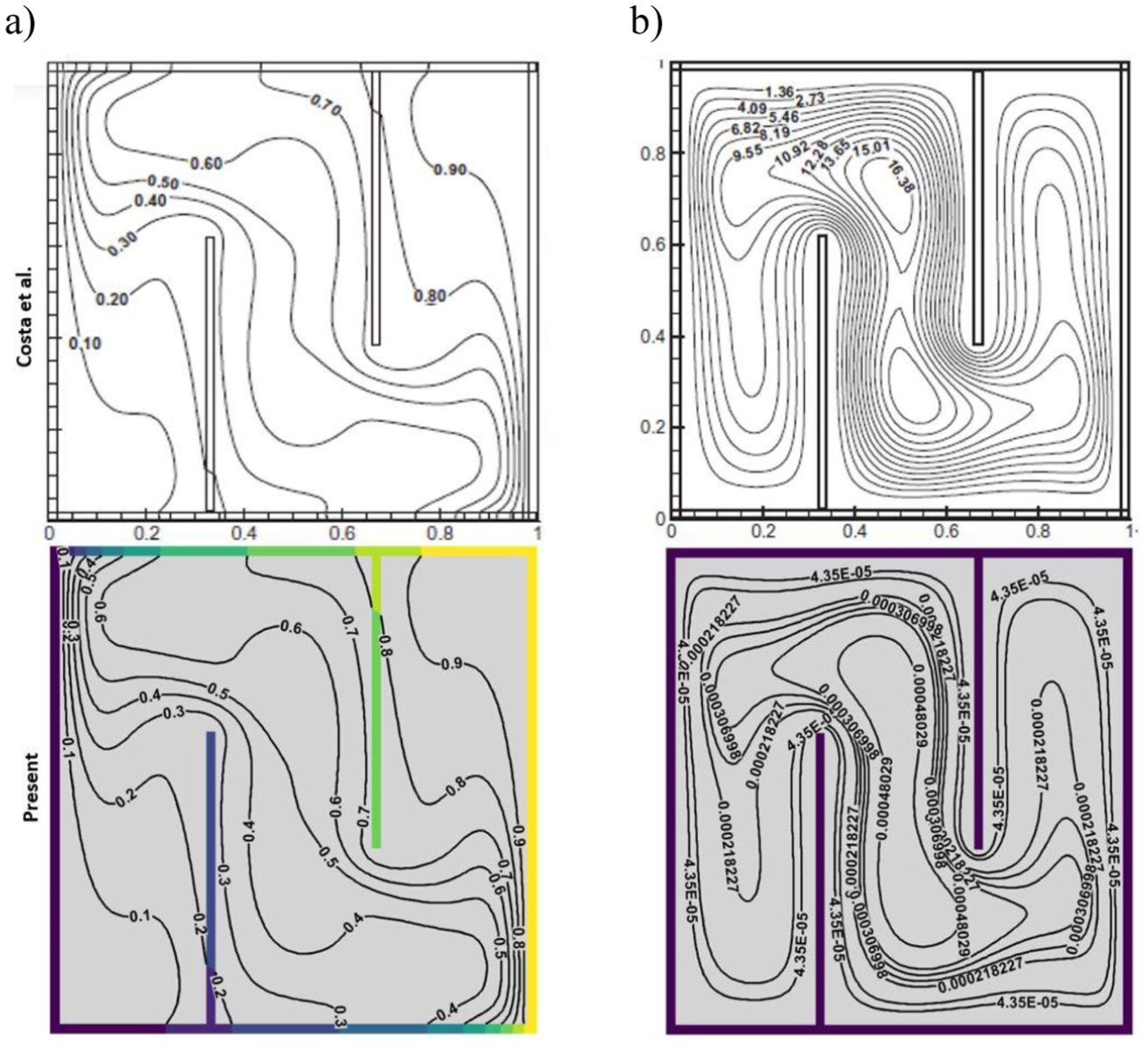
(a) Isotherms and (b) streamline for cavity with two protuberances heated in the right and cooled on left,
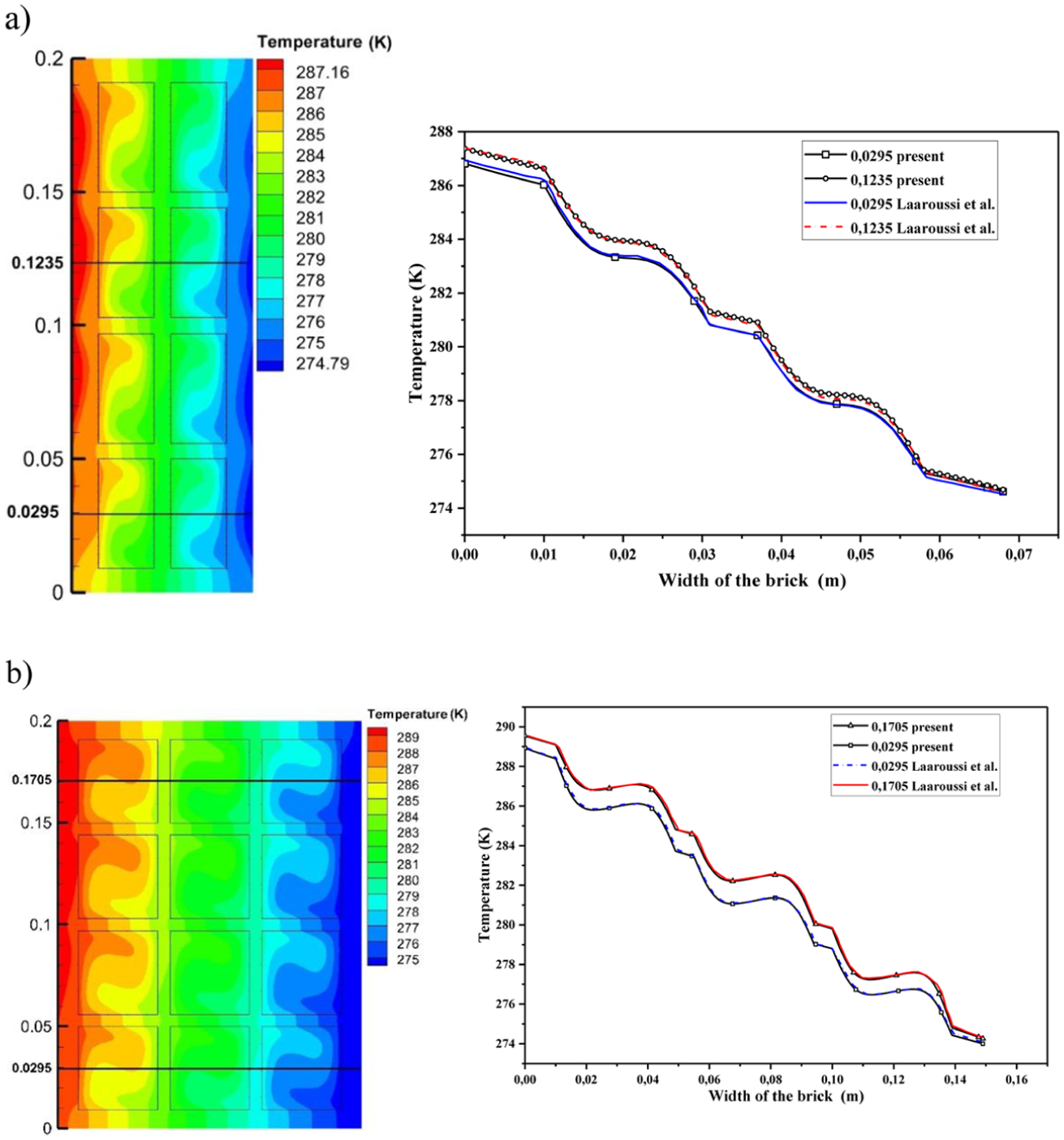
Isotherms and temperature distribution for different horizontal lines for vertical position of brick with (a) eight pores and (b) 12 pores.
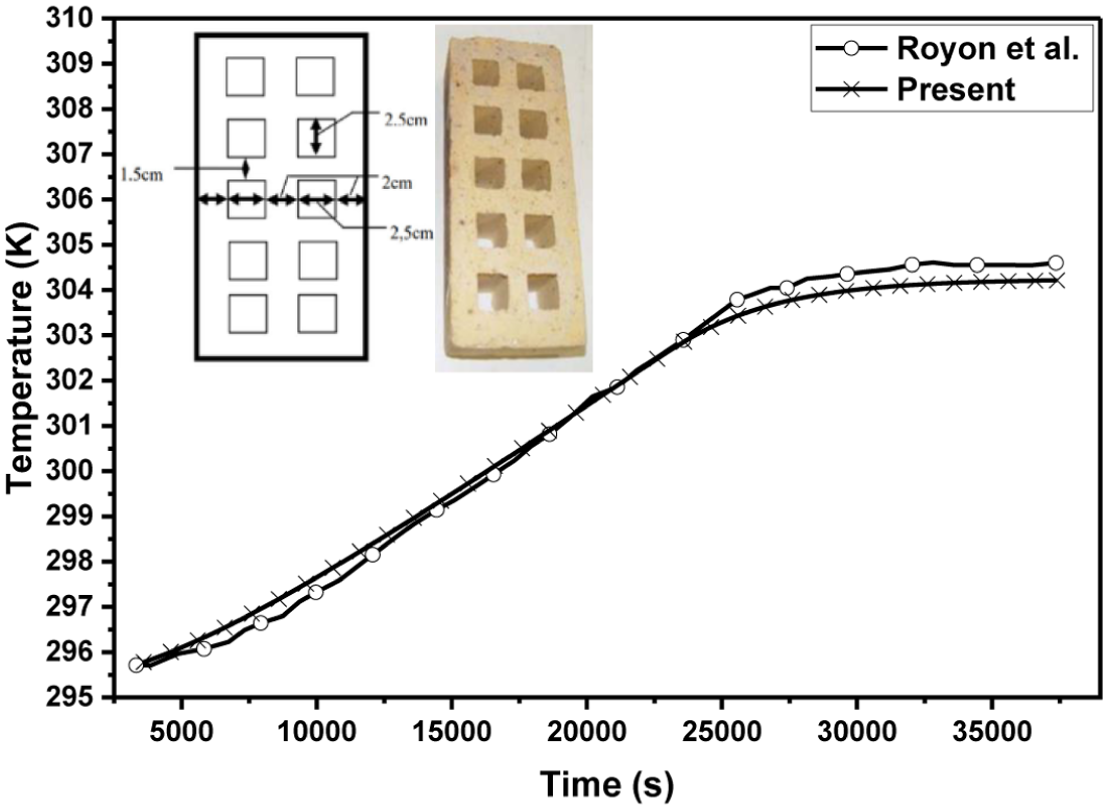
Numerical validation by comparison with experimental results of temperature on the inner surface of (Royon et al., 2010).
The numerical calculation of the differential equations was carried out using Ansys Fluent software, based on finite volume method. To carry out this numerical computation and ensure that the results is independent of grid size (mesh’s element number), various hollow brick meshes under stationary conditions were generated and compared. Table 3 reports the evolution of the heat flux
Mesh study of average heat flux.
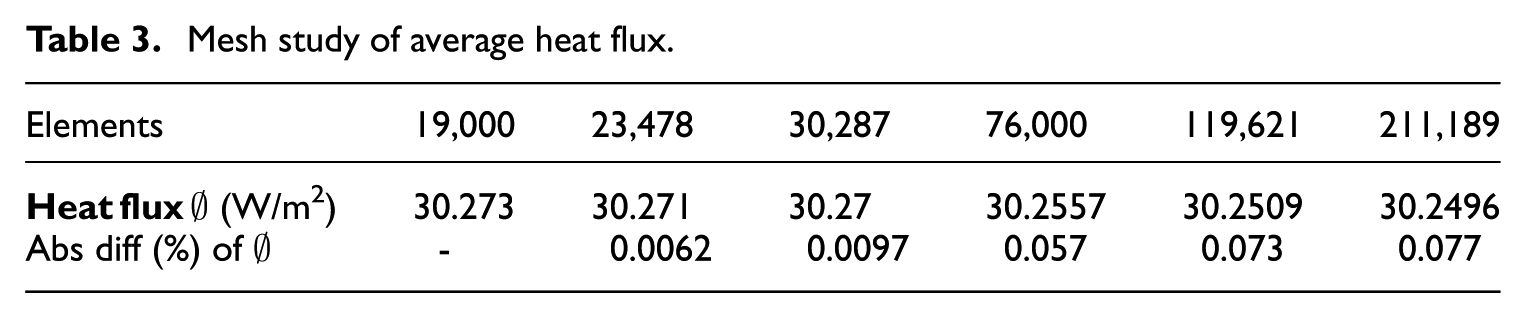
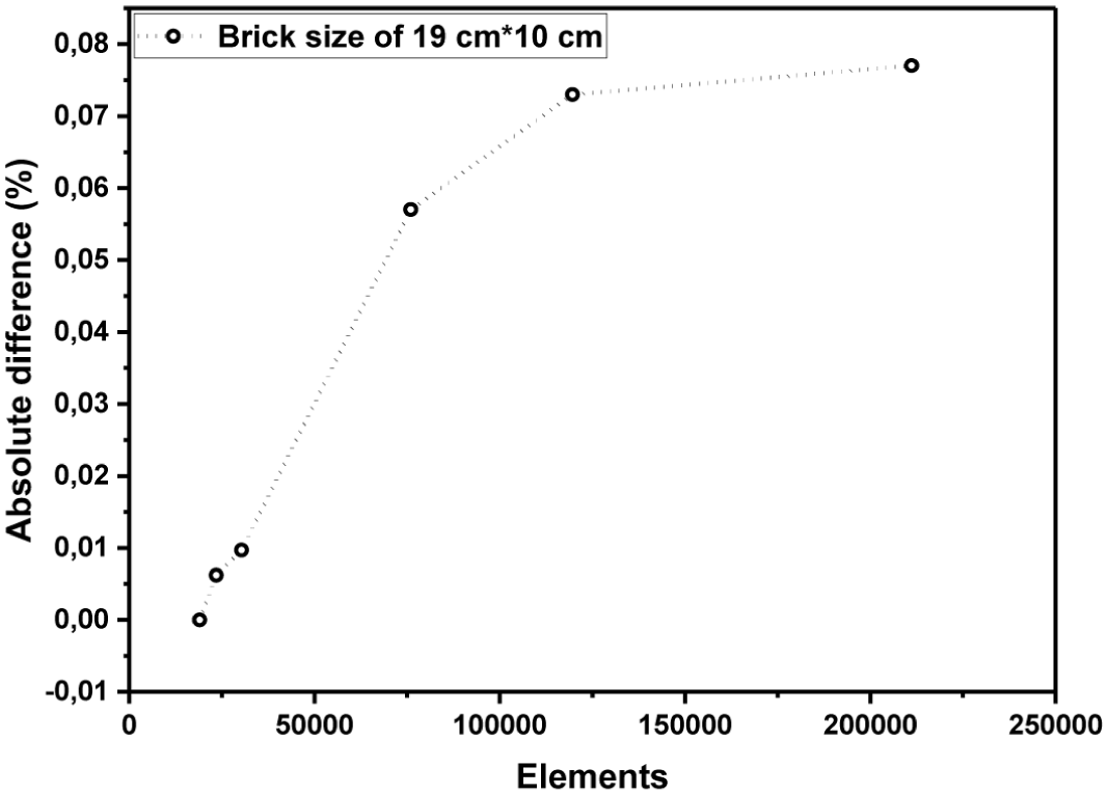
Variation of absolute difference with mesh size of hollow clay brick HCB8.
Results and discussions
This section presents and discusses the results relating to the thermal insulation performance of the different brick geometries developed from the reference brick (HCB8). The analysis focuses on six axes aimed at evaluating the influence of internal geometry on thermal insulation behavior and efficiency. The configurations are ranked according to their response to the main operating parameters, namely the outside temperature, the thermal conductivity of the solid material, the emissivity, and the type of filling. A critical evaluation of these factors makes it possible to identify the optimal conditions for thermal insulation. Finally, the study includes an economic evaluation combining thermal insulation performance and the mass of solid material.
Geometry effect
Inside all bricks, the three heat transfer modes, conduction, convection and radiation, are taken into account, with an internal emissivity set to 0.9 (Martínez et al., 2018). Table 4 shows, for each geometry, the percentage of solid matter and air volume, cavities sizing, and the presence or absence of protuberances. These parameters play a crucial role in the thermal performance of the different configurations. The thermal resistance results show considerable variation depending on the geometry. It ranges from 0.443 (poor insulation) to 0.924 K m2/W (good insulation). This is mainly due to the interaction between the distribution of the solid material and the air, as well as their respective proportions. Thermal mass, which is strongly related to the solid percentage, may be very helpful in regions with significant temperature differences between day and night. The A2 and D3, with a solid proportion of 61.05%, are more favorable to these conditions. Insulation decreases heat transfer between the interior and the exterior. Without insulation, the heat stored in thermal mass may rapidly transfer to the exterior in the winter or overheat inside in the summer. Good insulation also guarantees that the heat received by the thermal mass is maintained within the home and gradually released over time, eliminating the need for mechanical heating or cooling. To achieve the best results, thermal mass must be combined with enough insulation. The design of D3 meets this objective, with thermal resistance insulation reaching 0.805 K m2/W. However, thermal mass may be less useful in hot and humid climates or in zones with low daily temperature differences (like in Morocco). Insulation is critical to keeping heat from escaping too rapidly. It decreases the amount of heat that enters and exits the building, thus making the interior temperature more stable and providing better thermal comfort. Using D4 brick design improves thermal resistance to 0.924 K m2/W, a 0.45 K m2/W (95%) improvement over the reference brick. The performance improvement is similar to employing exterior thermal insulation layers of EPS (expanded polystyrene), glass wool, or wood cement board that are thicker than 15, 25, or 75 mm, respectively (Yuan, 2018).
Geometric characteristics and thermal resistance of different brick configurations.
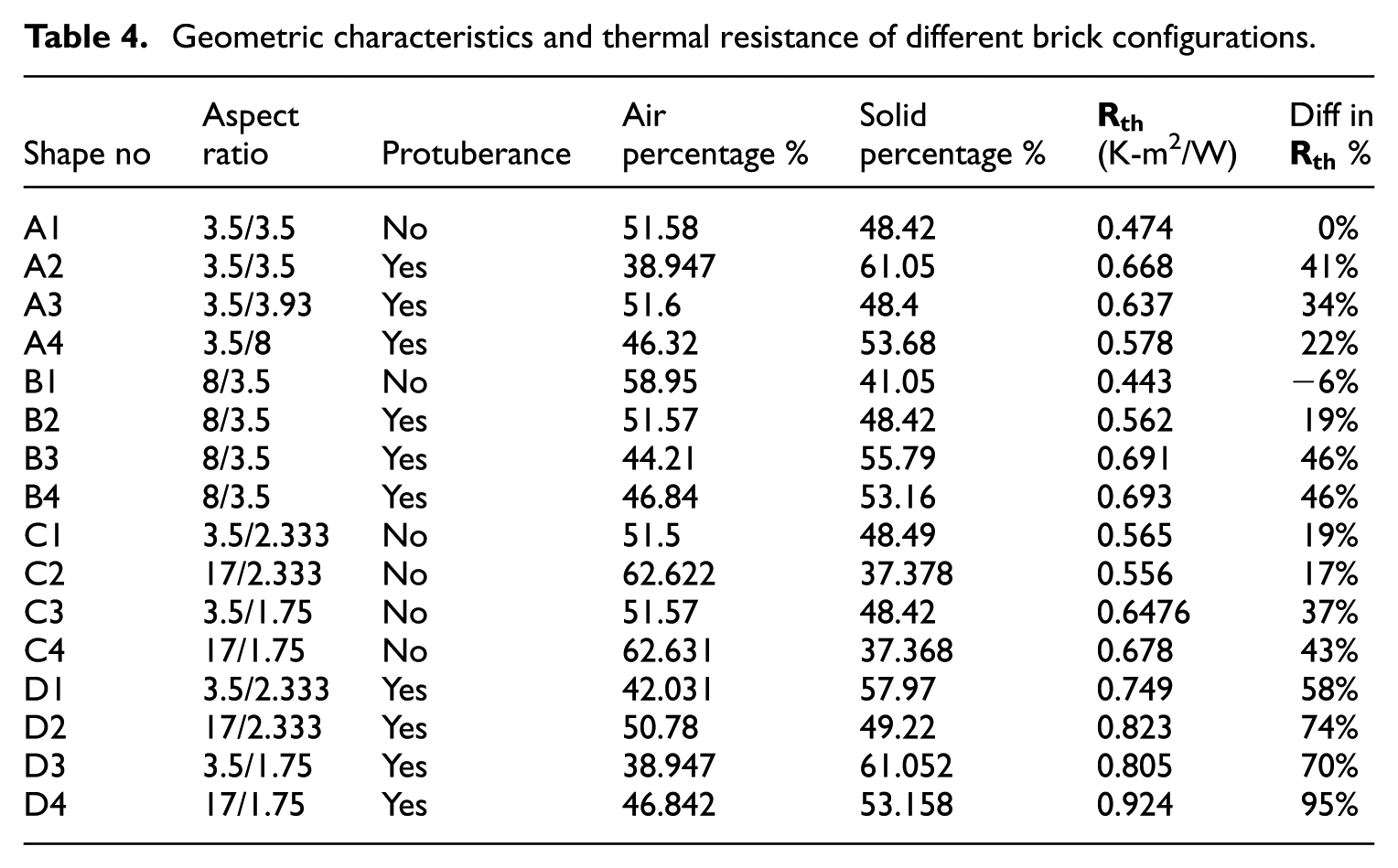
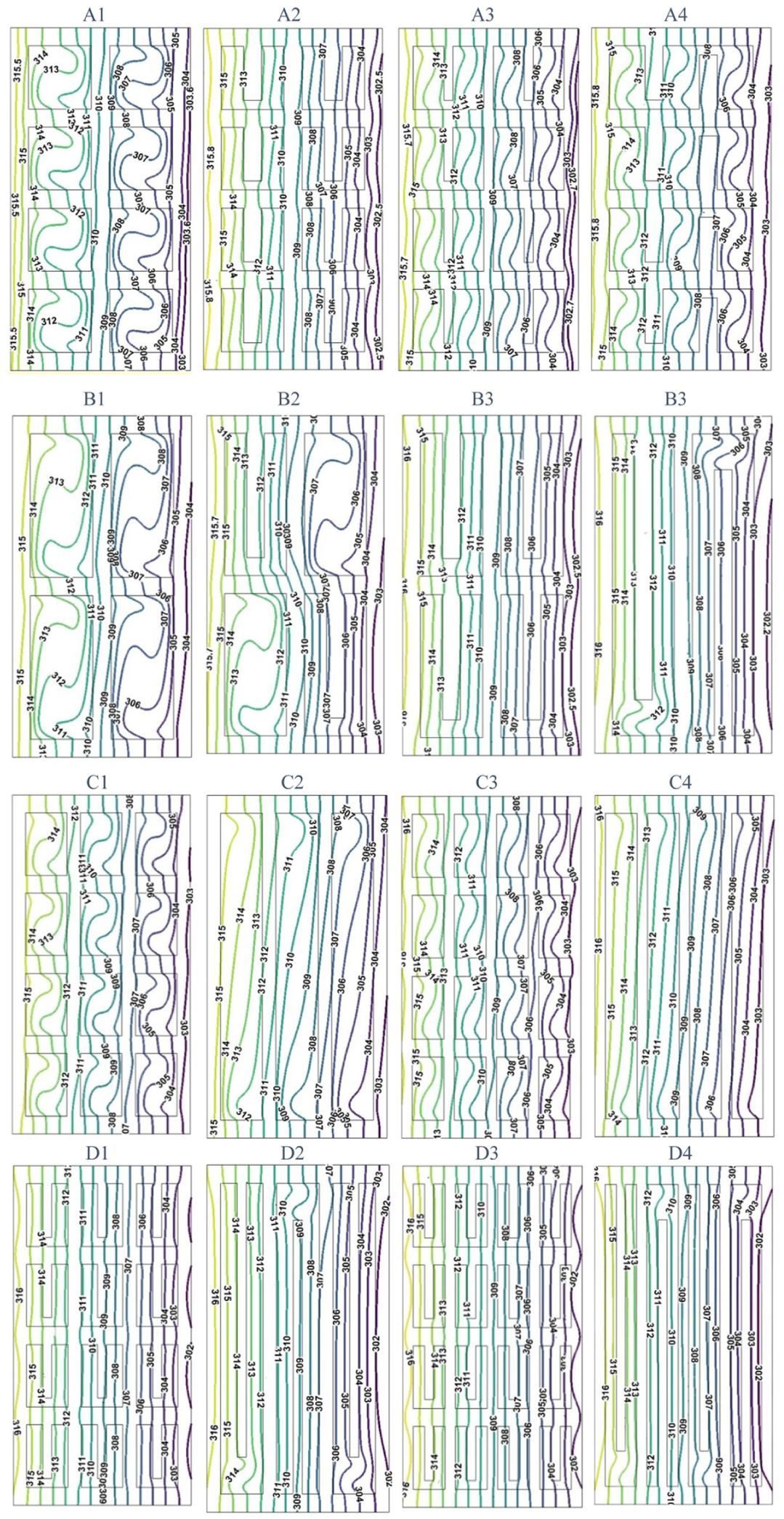
Comparative analysis of the different geometries shows that the thermal performance of bricks depends closely on three factors, which are the presence of protuberances, the aspect ratio of the cavities, and the air/solid ratio. Their combination directly modifies air circulation, radiative transfers, and isotherm distribution, which explains the variations observed in thermal resistance and heat flux percentage (Table 5). Figures 7 and 8 clearly and respectively illustrate how the internal organization of air and solids influences both thermal gradients (temperature line) and natural air circulation (stream function), confirming that geometry plays a decisive role in thermal performance.
Thermal fluxes (conductive, convective, and radiative) and relative variation in thermal resistance according to geometry.
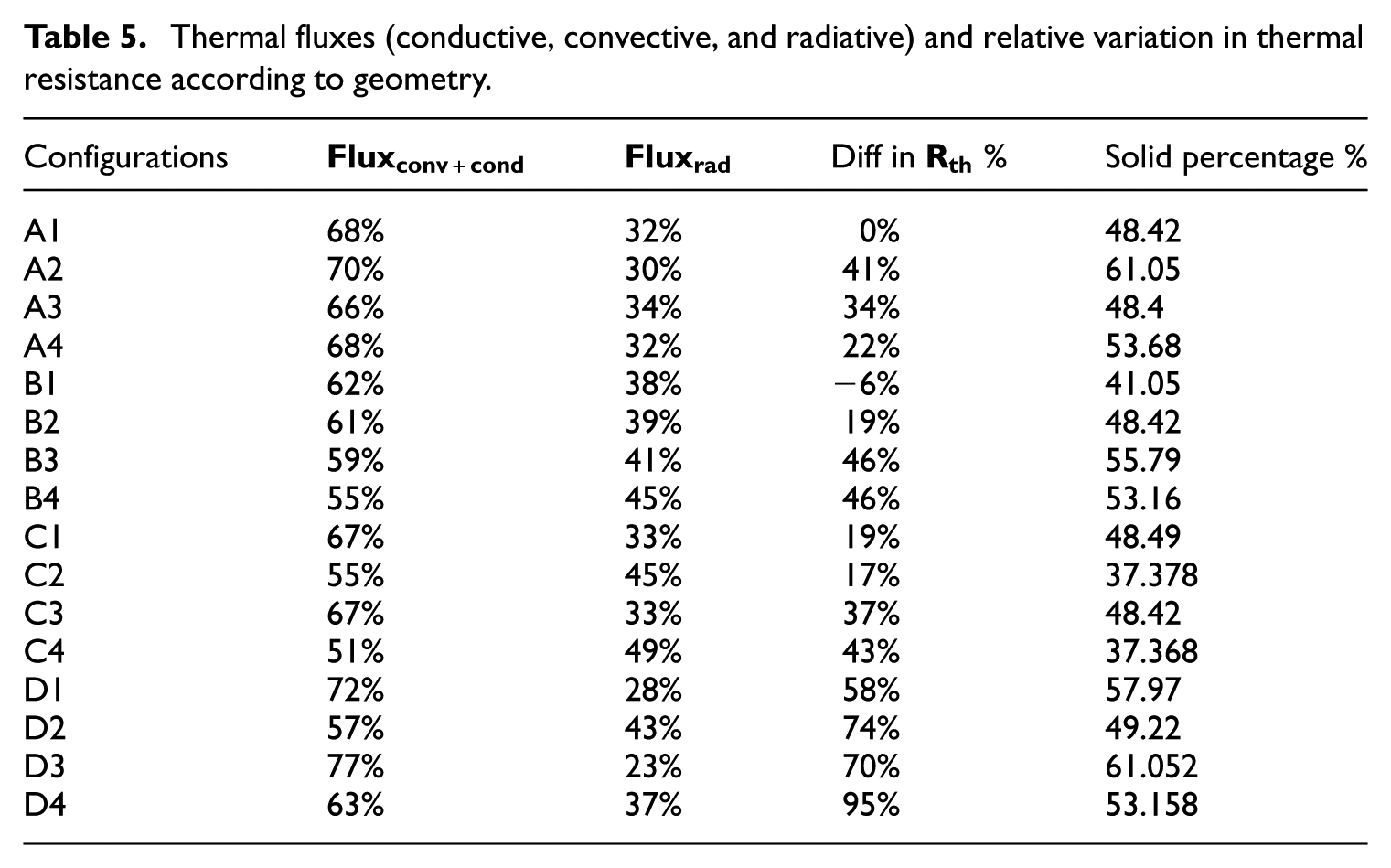
Temperature line of different configurations.
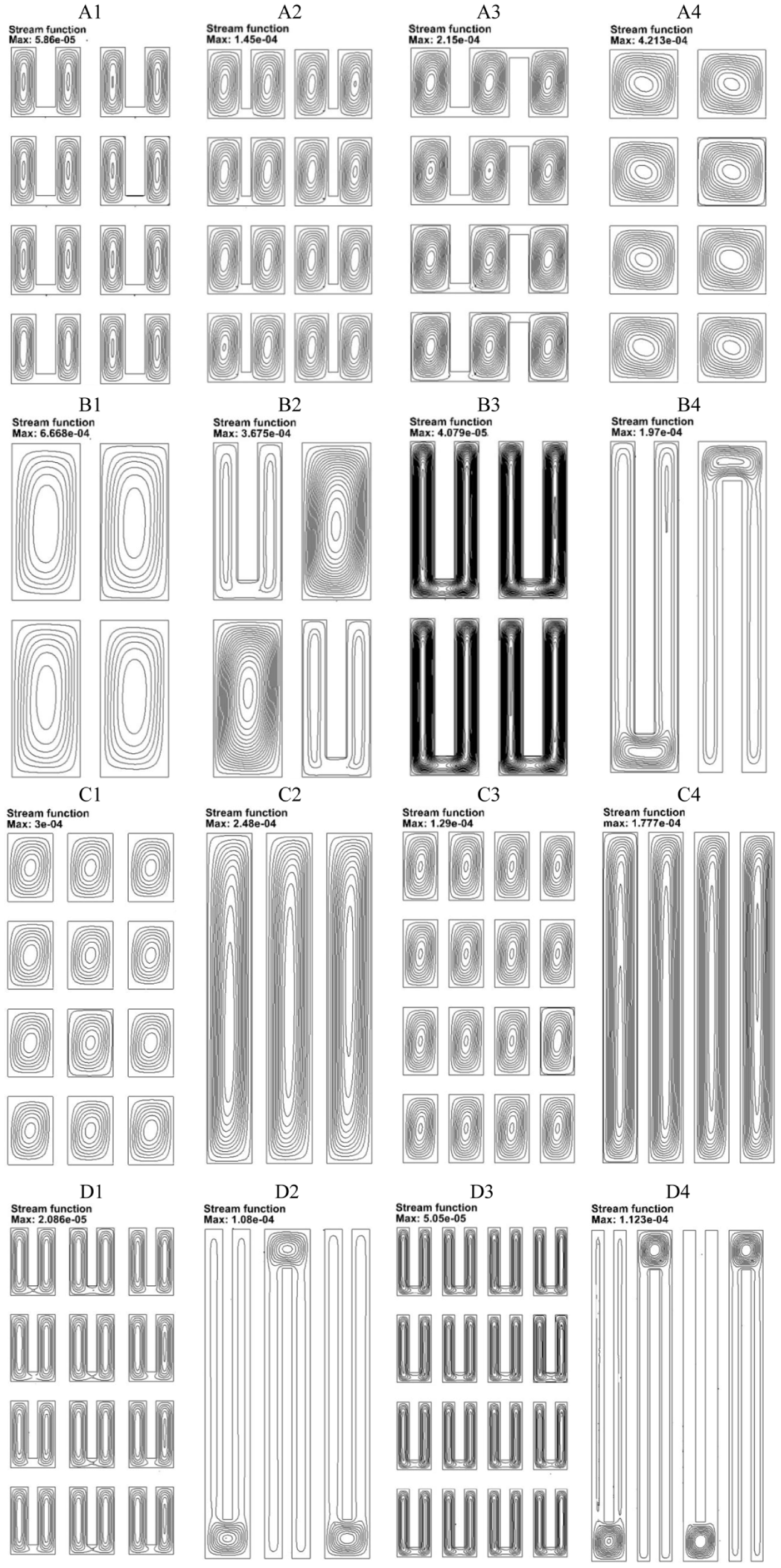
Stream function of different configurations.
Considering A1 as a reference, the addition of a central protuberance in A2 significantly improves insulation (+41%, Rth = 0.668 K·m2/W). This improvement is due to the internal barrier formed by the protuberance, which interrupts the radiative transfer between the hot wall and the cold wall, as well as a decrease in air velocity, clearly observable on the streamlines. This reduction in flow weakens convective transfer and, conversely, strengthens the conductive contribution. A3 retains the same amount of solid material as A1, but its more elongated cavities slightly favor air circulation; its performance is therefore inferior to A2 (+34%). Conversely, A4, where the solid bridge is removed, loses some of the insulating effect of the protuberances and only provides a gain of +22%.
B1 has a high aspect ratio with a lot of air (58.9%). This configuration accentuates internal convection and increases the radiative losses, which degrades performance (−6%). With the addition of two protuberances (B2), the brick partially slows down air movement, which modestly improves insulation (+19%).
B3 and B4 show that the combined effect of a high aspect ratio and correctly placed protuberances stabilizes the air better. This reduces both radiative and convective transfers, which explains their high performance (+46% each).
The results of configurations C indicate that longer cavities are only effective if their width is sufficiently restricted to prevent the occurrence of significant recirculation zones. C1 and C2 (three columns) show moderate gains (+19% and +17%). C3 and C4 (four columns) show much greater gains (+37% and +43%). Although C2 and C4 have the same cavity length (17 cm), C4 performs better because its narrower cavities (1.75 cm instead of 2.33 cm) trap more air, reduce velocities, and limit convective losses.
D configurations are the most efficient, with gains ranging from +58% to +95%. Their efficiency stems from their very elongated cavities (high aspect ratio), the presence of protuberances, and an optimal combination of stagnant air and solid material. And D4 is the best configuration (Rth = 0.924 K·m2/W; +95%).
The results from the configurations clearly show that the percentage of air or solid material present in a brick is not sufficient to predict its thermal performance. Indeed, some geometries have very similar values for solid material and air, yet display very different thermal resistances, like D3 - A2, and D4 - A4 - B4. Two bricks may contain the same amount of air, but if that air is better organized or compartmentalized, heat circulates differently. Thus, performance depends less on the amount of air or solid material than on their distribution within the brick.
This observation is confirmed by the results of Table 5, which highlights the complexity of the interactions between geometry, thermal flows, and solid distribution. Therefore, a complementary study is necessary to take into account variations in outdoor temperature, thermal conductivity, and emissivity, as these parameters can alter the balance between conductive, convective, and radiative flows, and consequently change the overall performance ranking of the configurations.
Effect of environmental temperature on configurations performance
In this section, we evaluated the effect of outdoor temperature on indoor temperature and thermal resistance for the 16 configurations studied. The cases selected cover different climatic contexts: 317 and 313 K correspond to extreme summer conditions, 303 K for a moderate summer situation, 293 K to a temperate mid-season temperature, and 275 K to a cold winter climate. The results, presented in Figures 9 and 10, show a gradual and continuous decrease in thermal resistance and increase in internal temperature respectively as the outside temperature increases. Despite these differences’ values, the performance hierarchy remains unchanged, the configurations that demonstrate high thermal resistance at low temperatures maintain their superiority at higher temperatures. In other words, although the outside temperature influences the absolute value of thermal resistance, it does not alter the relative ranking of the different bricks.
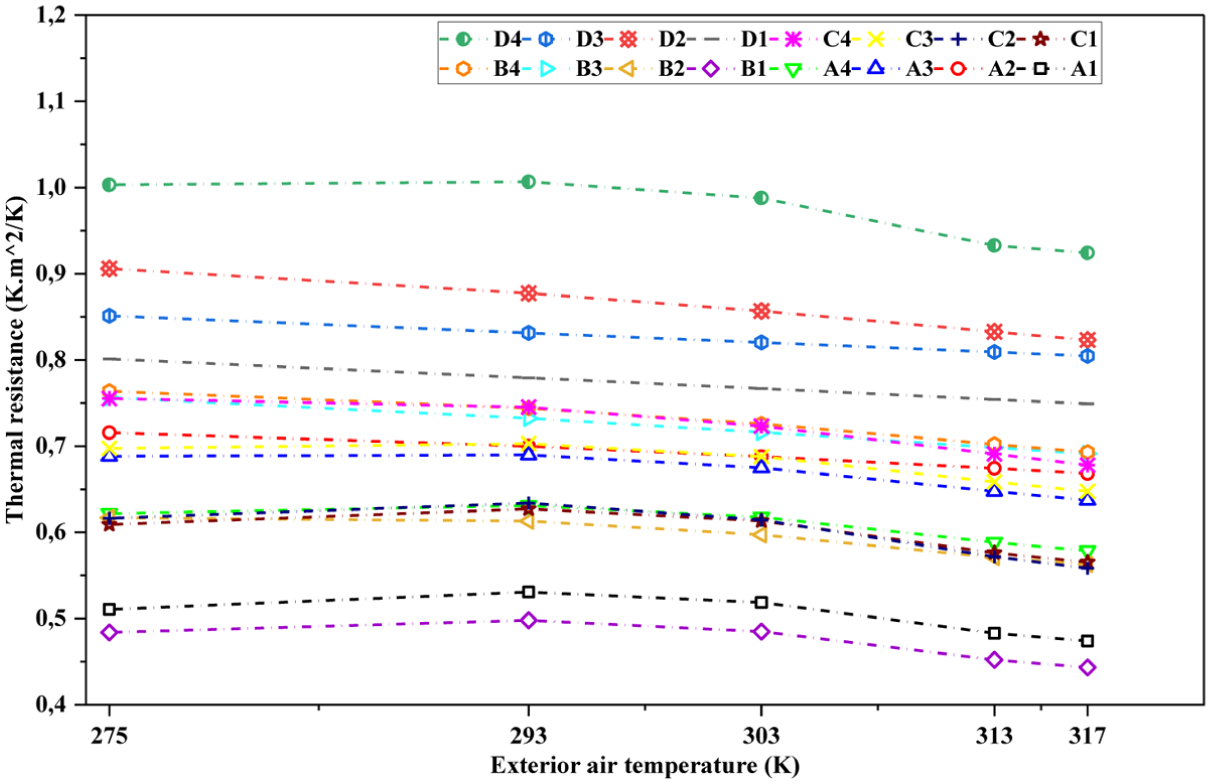
Thermal resistance evolution with external temperature for different configurations.
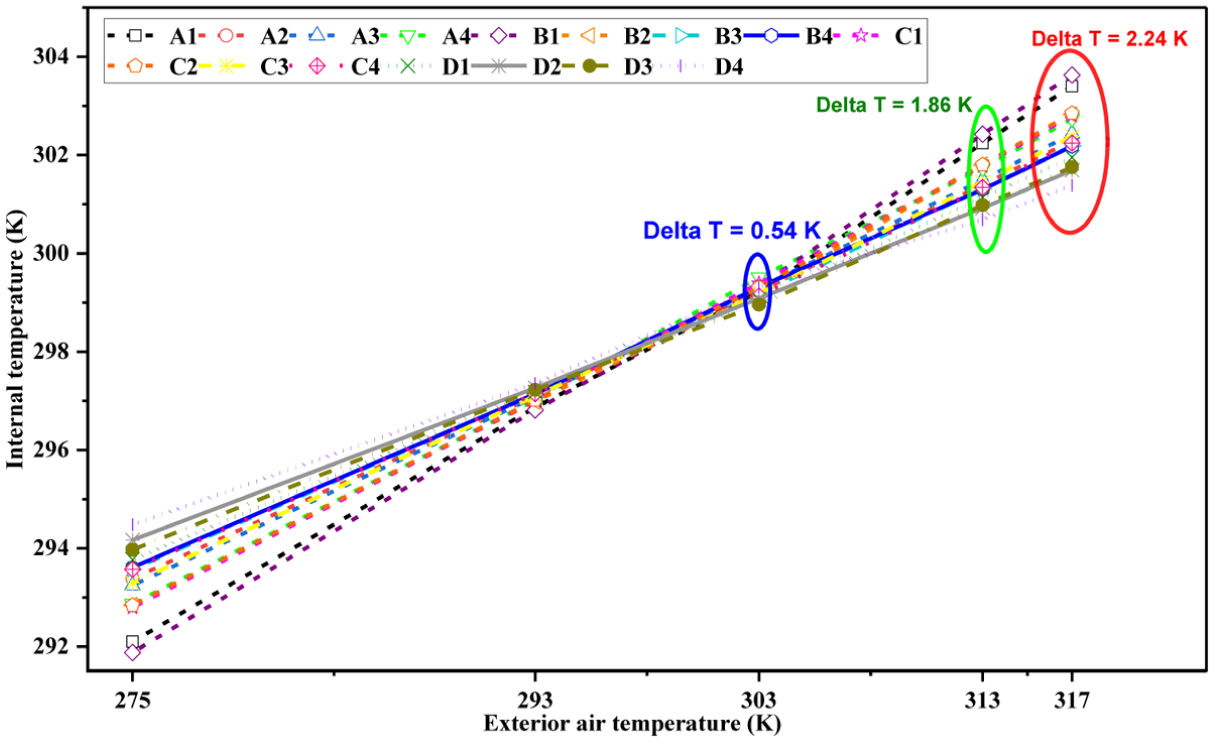
Inside temperature average evolution with external temperature for different configurations.
It is also noticeable the indoor temperature difference between configurations, as shown in Figure 10, tends to decrease as the outdoor temperature drops. For example, the difference between configurations B1 and D4 decreases from 2.24 K at Tout = 317 K to only 0.54 K at Tout = 303 K. This behavior is due to the gradual reduction in convection and radiation losses at lower outdoor temperatures, which tends to standardize the thermal performance of the different structures for a specific temperature.
It should be noted that for all configurations, the difference in indoor temperature remains low when the outdoor temperature is close to 298 K, representing a zone of equilibrium where the thermal performance of all bricks is comparable in terms of thermal comfort. However, when the outdoor temperature deviates from this value (298 K), the differences between configurations become more marked again. This indicates that the influence of the brick’s geometry and material become more decisive as soon as conditions deviate from this thermal equilibrium zone. This means that, in temperate conditions, thermal comfort is ensured regardless of the brick geometry.
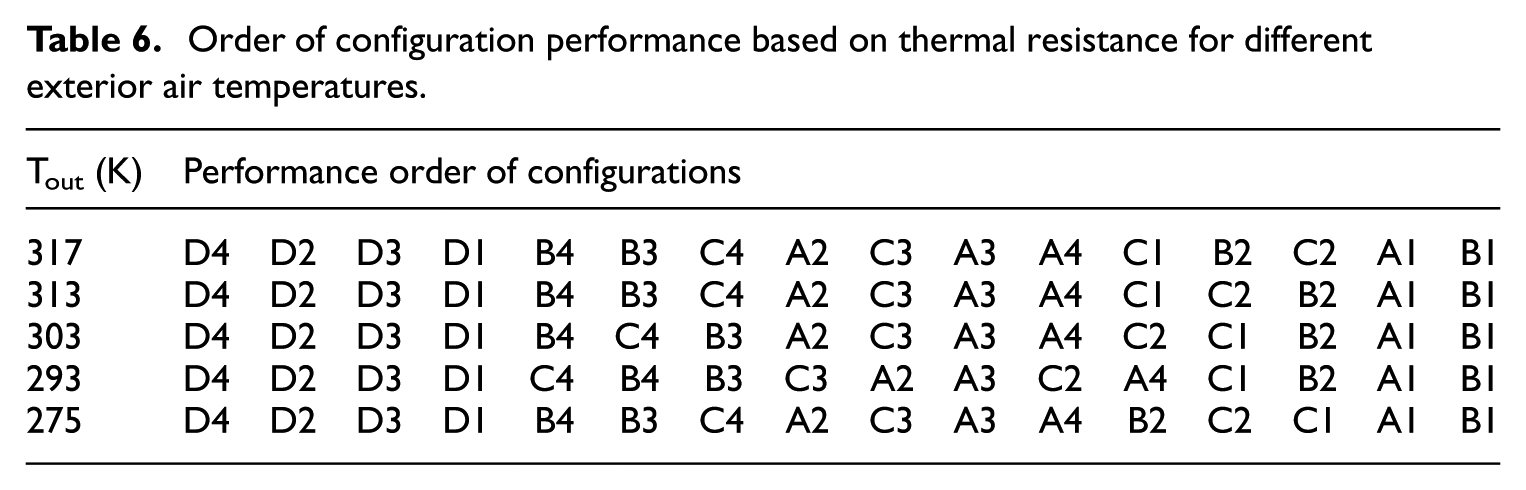
Analysis of the Table 6 shows the thermal performance ranking of the different configurations. Although the best (D4) and worst (B1) performers retain their positions, there are slight changes among the intermediate configurations this is mainly due to the distribution of conductive, convective, and radiative flows within the different geometries. In fact, as the temperature difference increases, the proportion of conductive flow tends to decrease, while convective and radiative contributions become more significant (Ait-taleb et al., 2008; Costa, 2014). Thus, depending on the structure and composition of each configuration, these three modes of transfer are distributed differently, producing specific thermal behaviors. This allows us to identify the configurations that are not so sensitive to outside temperature changes offering more robust and predictable performance.
Order of configuration performance based on thermal resistance for different exterior air temperatures.
Thermal conductivity effect
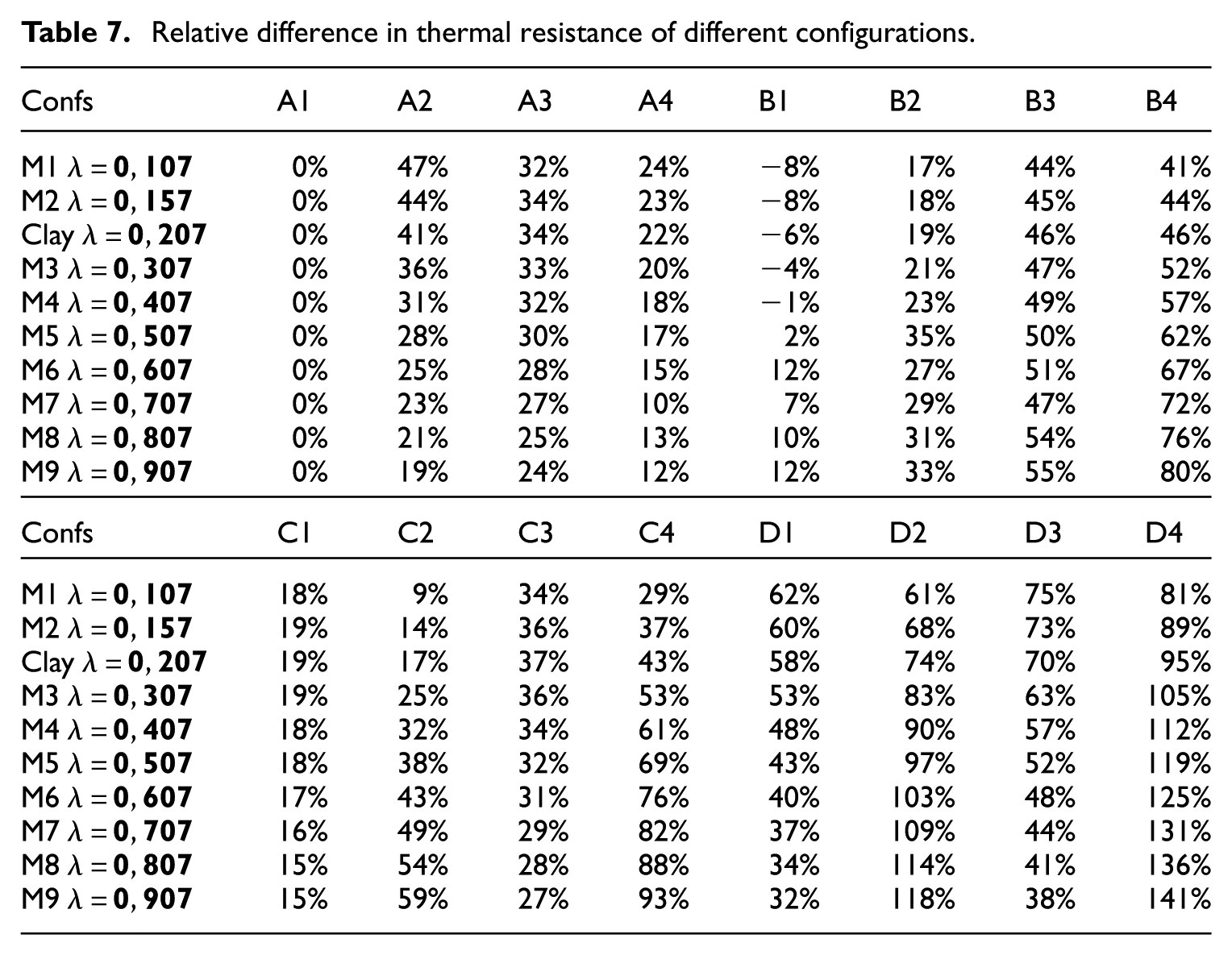
In order to examine the influence of the material’s thermal conductivity on the overall behavior of the bricks, the study was limited to varying the conductivity of the clay, while maintaining the same basic material. The thermal conductivities of bricks M1–M9 are 0.107, 0.157, 0.307, 0.407, 0.507, 0.607, 0.707, 0.807, and 0.907 W/m K, respectively (Table 7).
Relative difference in thermal resistance of different configurations.
A parametric analysis was conducted on all brick geometries, testing several thermal conductivity values for each configuration. Generally, the results show that the configurations initially designed with clay exhibit significant variations in their order of performance when thermal conductivity is modified (see Figure 11(a)), and that the thermal resistance decreases as the thermal conductivity increases (see Figure 11(b)). It is also observed, that configurations B1 and B2 also exhibit a non-monotonic variation of thermal resistance as the thermal conductivity of the solid material increases at M6 for B1 and at M5 for B2. This behavior is mainly associated with the presence of relatively large internal cavities, which influence the balance between conduction, convection, and radiation inside the brick. As the thermal conductivity increases, heat is transferred more efficiently through the solid, leading to a reduction in the temperature difference across the cavities and, consequently, in the radiative and convective contributions. However, these mechanisms do not evolve at the same rate. In configurations with large cavities, their interaction can temporarily modify the overall heat-transfer balance, resulting in the observed non-monotonic trend. A similar behavior was reported by Martínez et al. (Martínez et al., 2018), highlighting the interaction between geometry, material properties, and heat-transfer mechanisms.
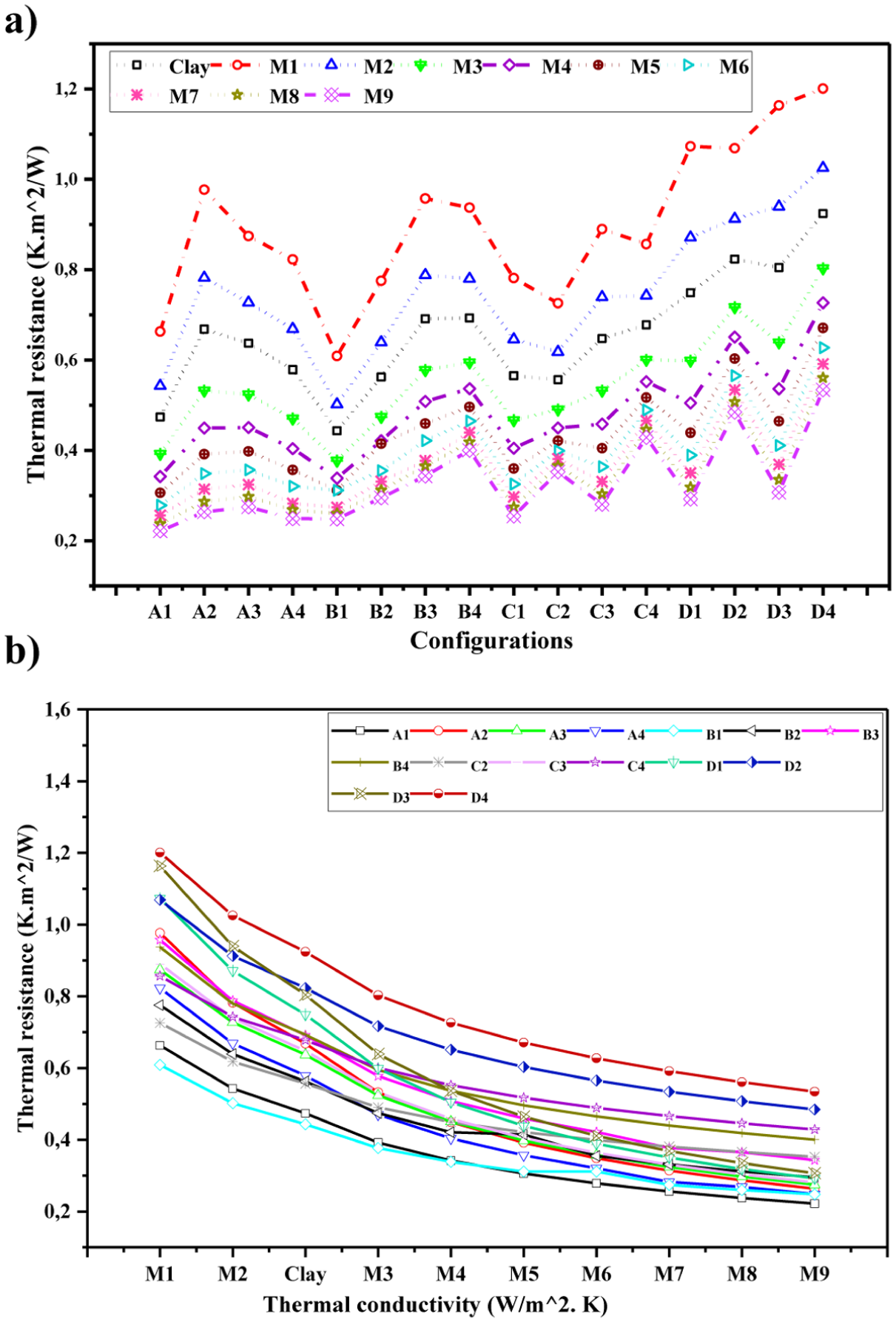
Variation of thermal resistance (a) as function of configurations with different thermal conductivities (M1–M9), (b) for various configurations as function of thermal conductivity.
Figure 12 shows the variations in thermal resistance as a function of configuration at the five outdoor temperatures considered in the Section 3.2. The results show that for all outdoor temperatures tested (275, 293, 303, 313, and 317 K), the change in thermal resistance as a function of configuration clearly differs between the two materials (Clay and M9). However, this difference in behavior remains uniform across the entire temperature range studied (275–317 K).
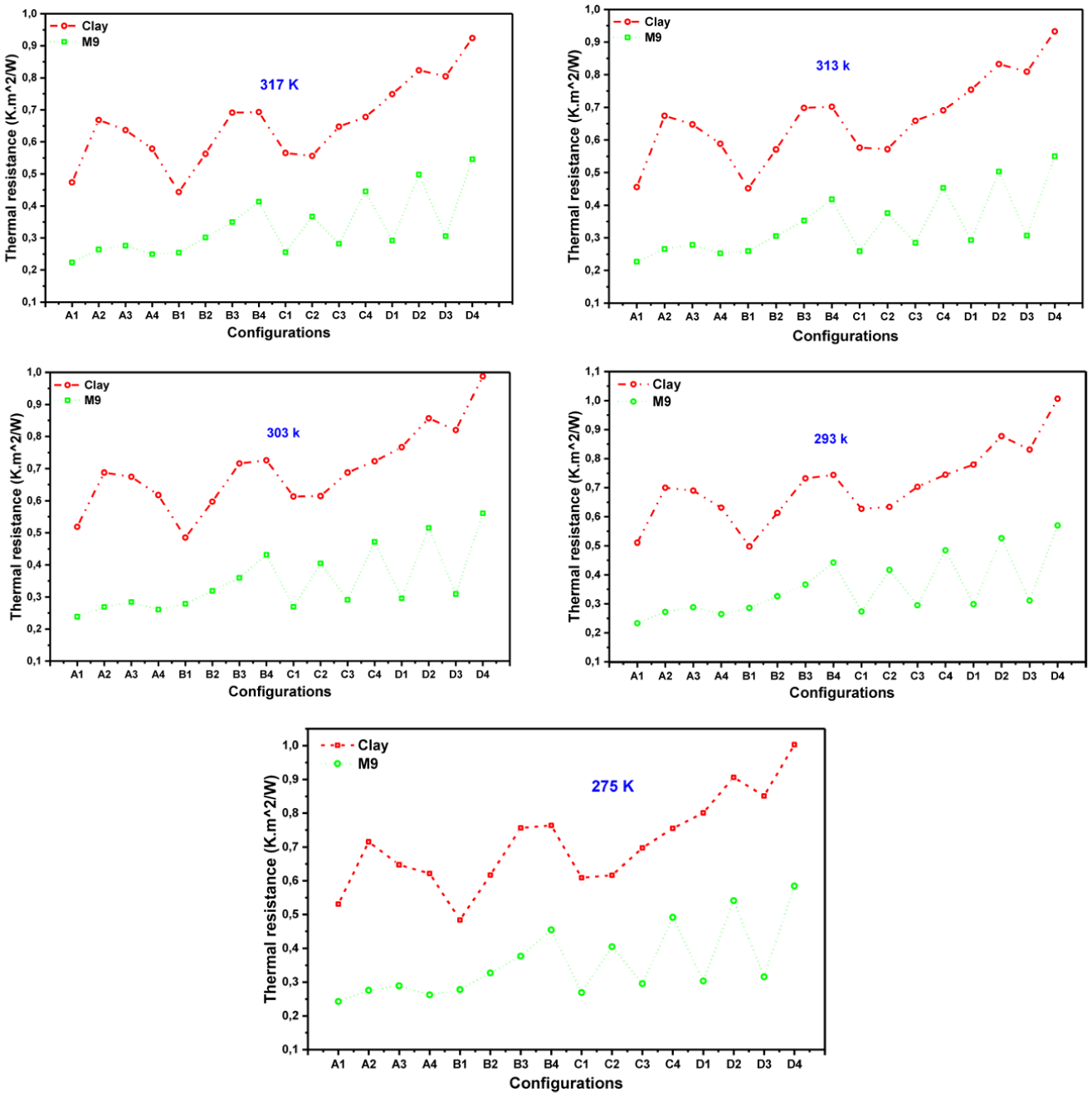
Thermal resistance of clay and M9 material bricks exposed to various external temperatures.
Table 7 illustrates the relative difference in thermal resistance for different geometric configurations based on the thermal conductivity of the solid material. It can be seen that, in general, as conductivity increases, the dispersion of thermal resistance values becomes more pronounced. For low conductivity (M2, λ = 0.107 W/m K), the relative difference in thermal resistance varies between 0% and 81%, reflecting a relatively homogeneous thermal response. On the other hand, for higher conductivities, the variability increases significantly, reaching up to 141% for the M9 material (λ = 0.925 W/m K). For certain geometries, the increase in thermal conductivity is associated with an increase in the relative difference in thermal resistance, while for others, particularly configurations in the “A” family as well as C1, C3, D1, and D3, this relative difference decreases significantly. For example, for configuration C1, the difference decreases from 18% to 14%, while for A1, it drops more significantly, from 46% to 18%. We also note that geometries with similar performance for low conductivities particularly in the case of clay show much more pronounced differences in thermal resistance at higher conductivities (C1 and B2). This reflects a stronger interaction between the material conductivity, distribution of solid material, and heat flow, particularly for configurations with a high aspect ratio. Thermal behavior varies significantly depending on the conductivity of the constituent material. For materials with high conductivity, heat is easily transmitted, which reduces radiative flux, making conduction in solids more dominant. Moreover, the effect of subtle variations in geometry becomes secondary, that is, small geometric variations do not produce a clear effect on thermal resistance. These materials perform best when the cavities have a high aspect ratio, as the heat flow follows a continuous and well-defined path through the solid material. For example, for a configuration with three elongated cavities, the improvement in thermal resistance increases from 9% to 64% when conductivity increases from 0.107 to 0.925 W/m K, and is further enhanced with the addition of longitudinal protuberances. Materials with low conductivity, such as M1, M2, and clay, exhibit stable and predictable thermal behavior. Their low heat conductivity makes the effect of geometric adjustments more gradual and consistent, each change in internal shape results in a measurable and relatively constant improvement in thermal resistance, without abrupt variations between configurations. This stability reflects good heat flow distribution throughout the structure, facilitated by the balance between solid areas and air cavities. A configuration such as B1, consisting of four cavities (2 × 2) without protuberances shows a decrease of 6% for low conductivities, but an improvement of +14% at high conductivity by comparing it with the reference one, confirming that long cavities favor conductive materials.
This trend is confirmed by statistical analysis where
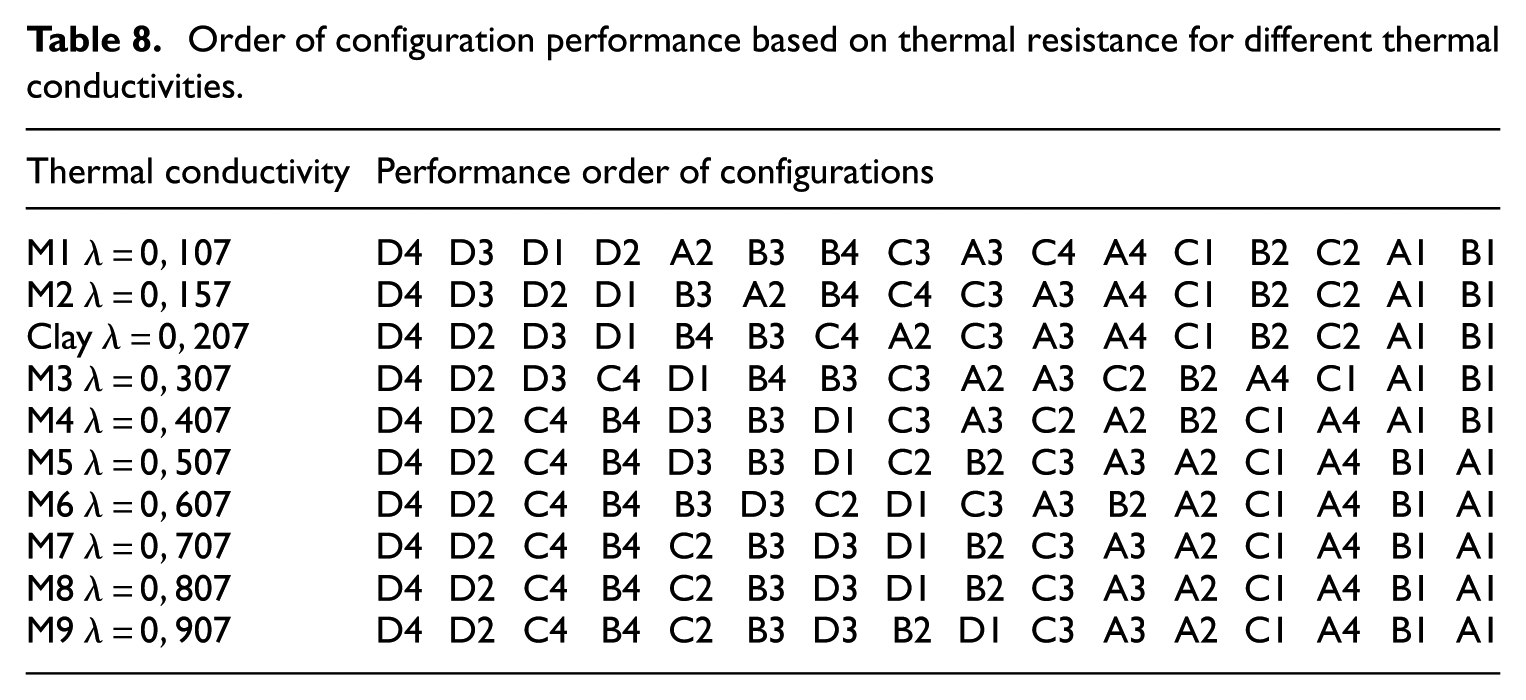
Analysis of Table 8 shows that configuration D4 remains the most efficient for all conductivities, while B1 remains the least efficient, confirming the stability of their thermal behavior. Certain configurations, such as D2 and A1, also maintain a quasi-constant order, reflecting low sensitivity to variations in conductivity. On the other hand, permutations appear between intermediate configurations as conductivity increases.



Order of configuration performance based on thermal resistance for different thermal conductivities.
Emissivity effect
In order to determine the influence of internal surface emissivity on the thermal resistance of the brick configurations, the latter was varied from 0.9 to 0.5, also considering a case without radiation. An emissivity of 0.9 corresponds to the thermal performance of standard brick.
Figure 13 presents a gradual decrease in thermal resistance as emissivity increases for all of the configurations studied. This behavior is due to the main contribution of radiative transfer between the internal walls of the cavities. When emissivity is high, the internal surfaces exchange more energy by radiation, which intensifies the overall heat transfer through the brick and reduces its thermal resistance. Conversely, when emissivity is low (or null), radiative transfer becomes negligible and convective transfer within the air cavities predominates. In this case, exchanges are governed mainly by natural convection and conduction through the brick walls.
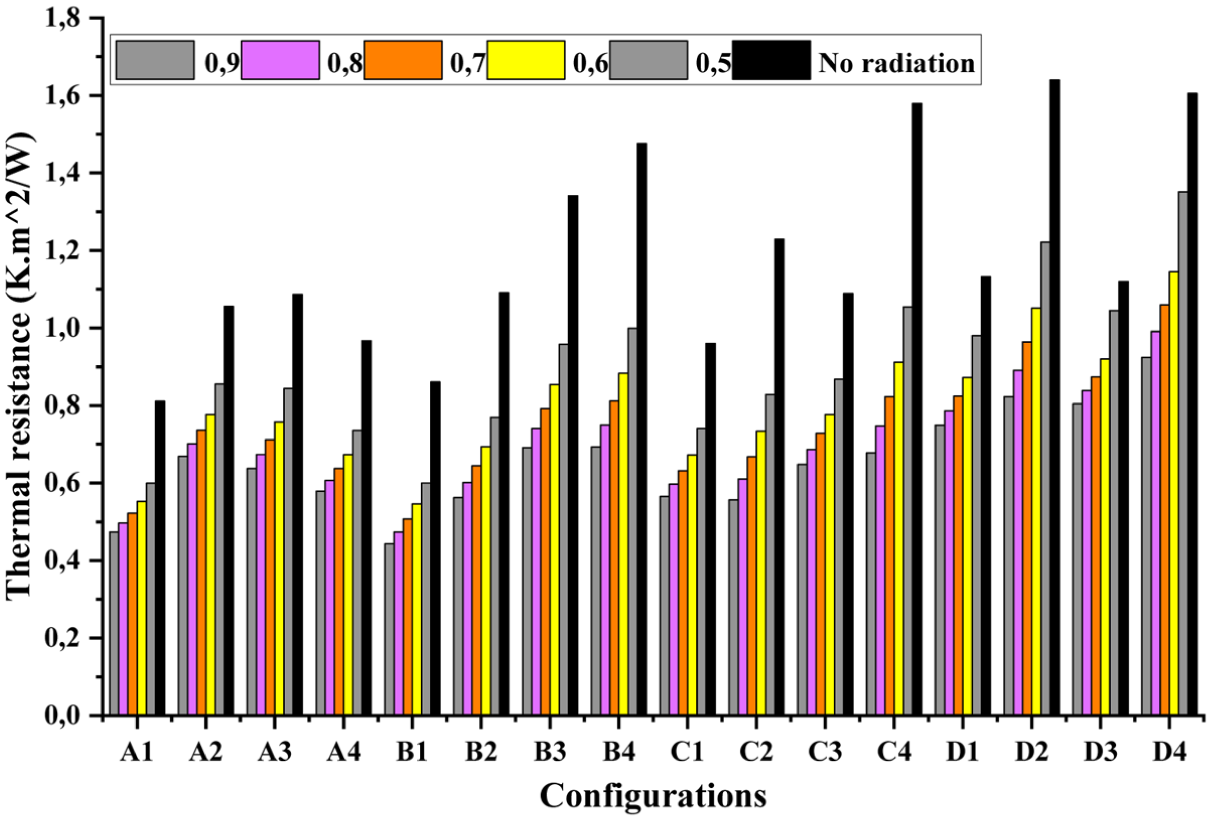
Thermal resistance evolution as a function of emissivity for different configurations.
According to Table 9, we observe that as emissivity decreases (from 0.9 to 0.5), the relative differences in thermal resistance change depending on the geometry considered. The margin for improvement does not change uniformly, for example, configurations B3 and B4 behave similarly for an emissivity of 0.9, but at ε = 0.5, configuration B4 outperforms B3. Similarly, configuration C4, which showed a 43% improvement at ε = 0.9 (compared to 46% for B3 and B4), reaches 76% at ε = 0.5, thus surpassing B3 and B4. These variations reflect a distribution of heat transfer between the different modes of transport depending on the geometry. The greater the proportion of radiative flux in a given configuration, the more marked the overall improvement in transfer when emissivity is reduced.
Relative difference in thermal resistance for different configurations and emissivities.
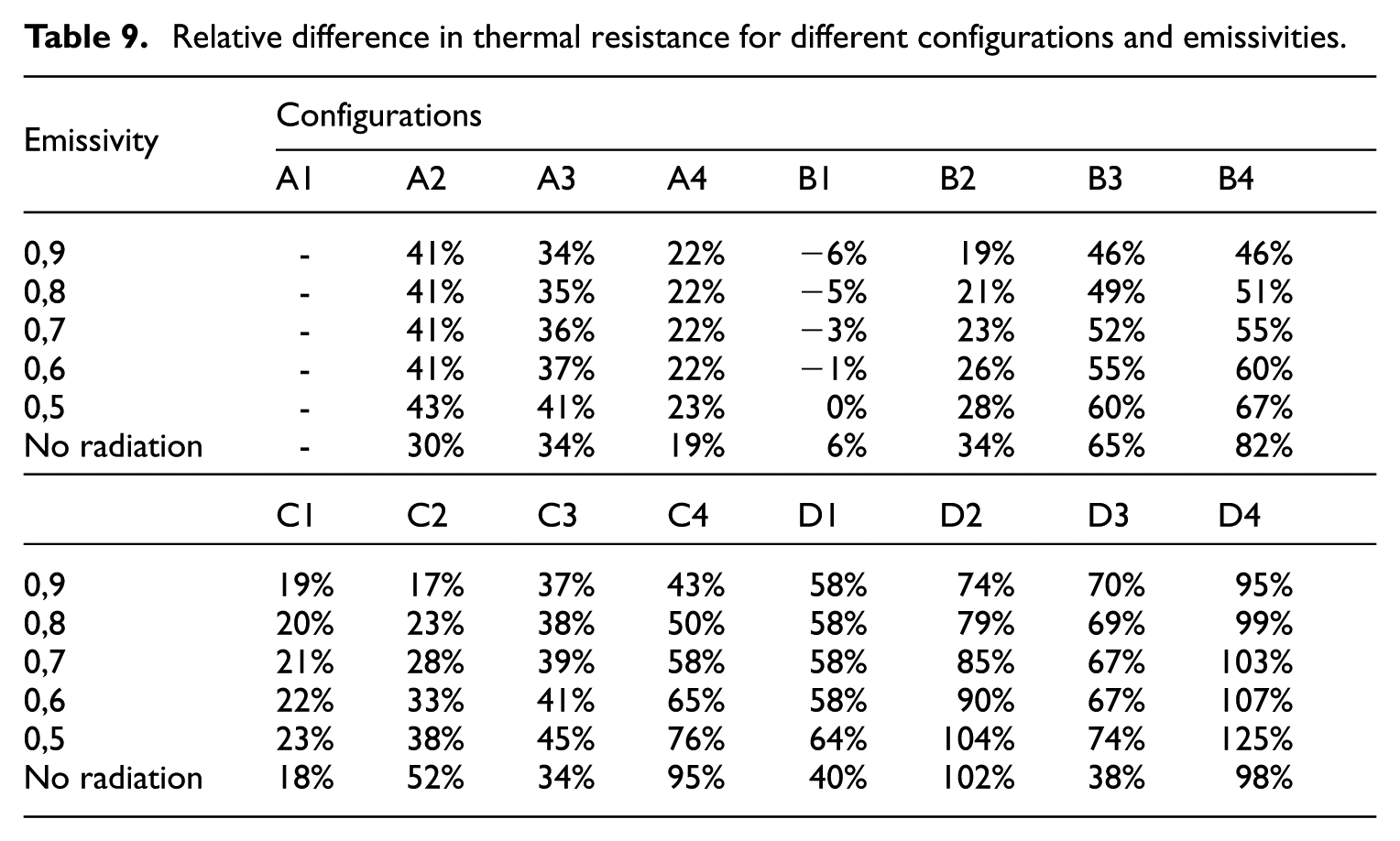
However, when the radiative effect is completely canceled out, heat transfer relies exclusively on conduction within the solid and natural convection of the air within the cavities. Under these conditions, the relative differences in thermal resistance compared to the reference configuration increase when ε = 0.5 for some configurations and decrease for others more than when ε = 0.9. Furthermore, some configurations that previously showed a marked improvement due to the radiative contribution now experience a decrease in difference when this contribution is eliminated, demonstrating that they optimize radiative fluxes more effectively (such as A2 and A4). This behavior highlights the specific ability of each geometry to manage internal heat transfer depending on the dominant heat transfer mode. This distinction allows us to identify the most efficient configurations regardless of the radiative contribution; that is, those capable of maintaining high thermal efficiency even when heat transfer relies solely on conduction and convection.
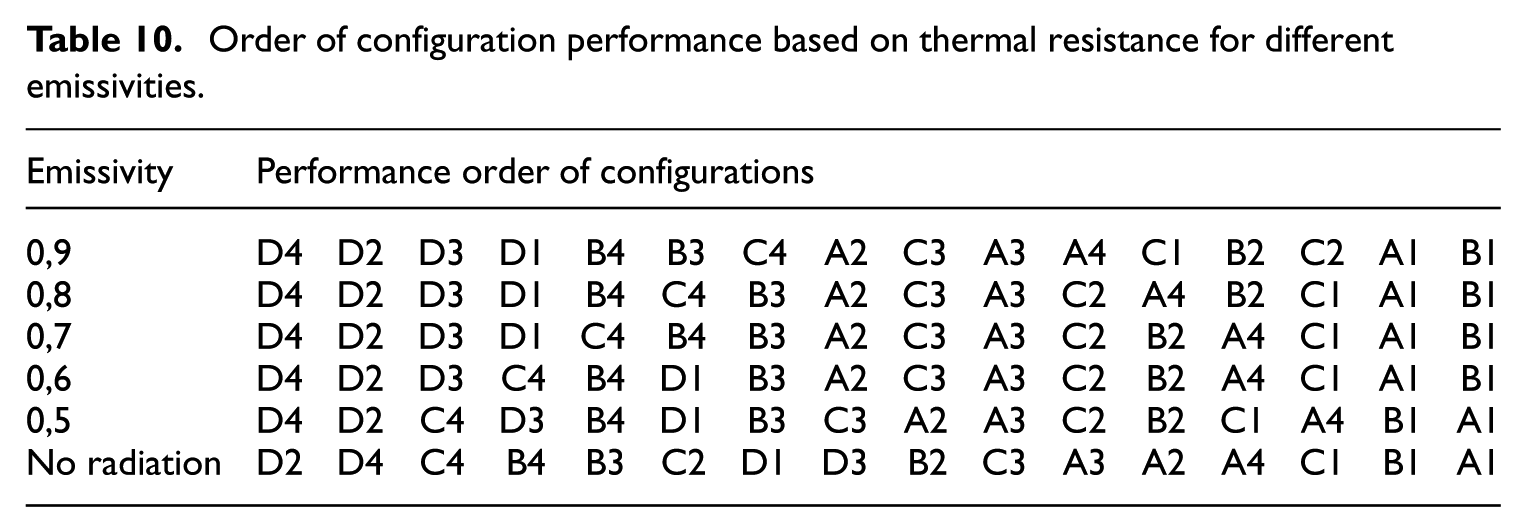
These trends are confirmed by the results in Table 10, which indicate that the thermal performance ranking of configurations varies depending on the emissivity considered. Thus, emissivity not only modifies the absolute value of thermal resistance, but also reorients the hierarchy of the most efficient geometries, highlighting the importance of taking radiative exchanges into account in the overall assessment of the thermal behavior of bricks.
Order of configuration performance based on thermal resistance for different emissivities.
Cavities filling effect
Figure 14 illustrates the variations for internal temperature and thermal resistance of different configurations developed for four different fillings ((EPS, PUF, powdered cardboard and air). The exterior and interior temperature are kept constant at 317 and 289 K, respectively; and the brick material is clay with a thermal conductivity of λ = 0.207 W/K. m. Among the filling materials analyzed, EPS stands out clearly for its superior thermal performance, as it achieves both the lowest interior temperature and the highest thermal resistance. This efficiency can be attributed to its particularly low thermal conductivity, which effectively limit heat transfer by conduction. PUF ranks second, offering satisfactory results but slightly inferior to those of EPS, followed by cardboard, which performs moderately. Air, on the other hand, proves to be the least effective material, its low insulating capacity being linked to greater mobility in the cavities, which promotes internal convective movements.
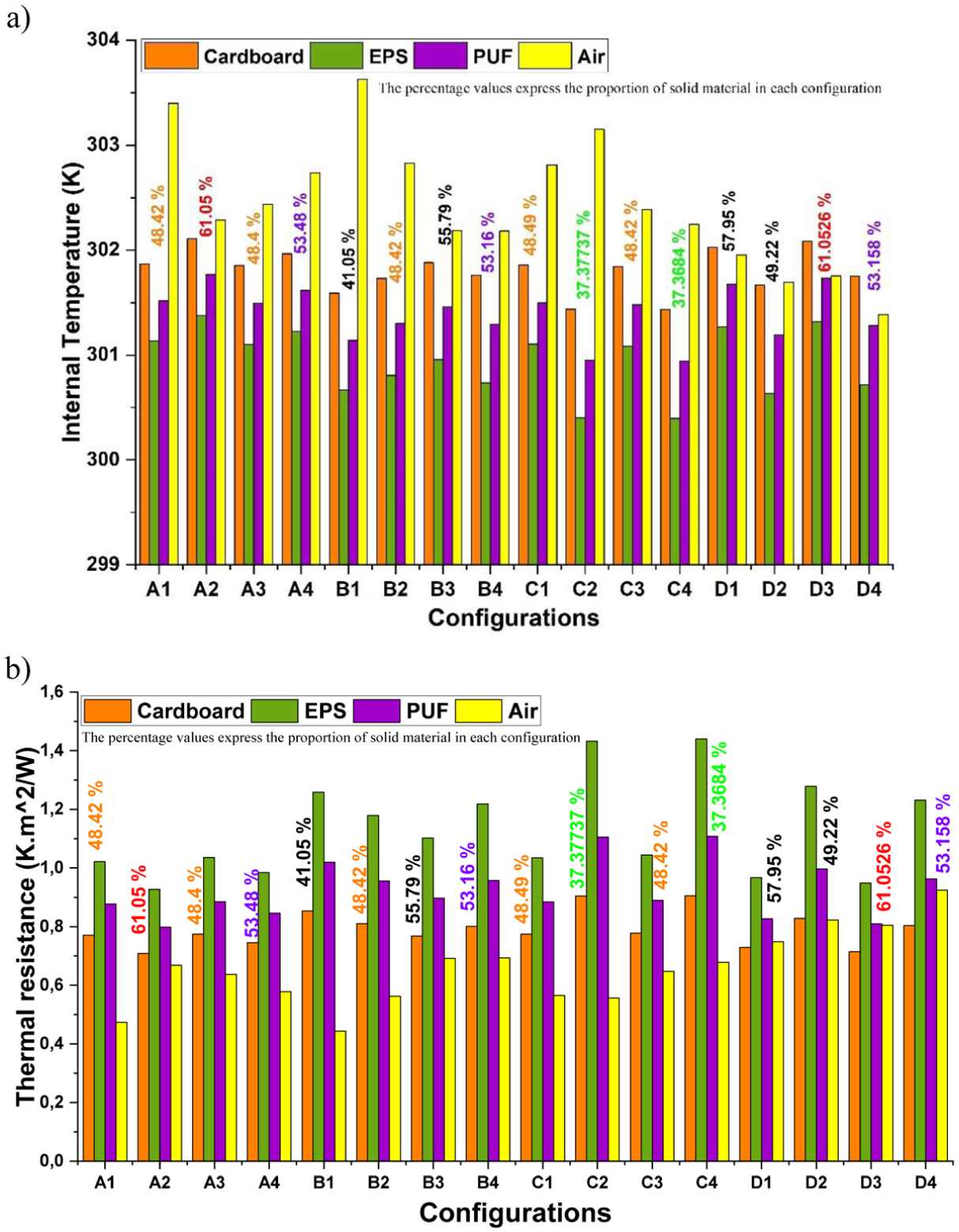
(a) Internal temperature and (b) thermal resistance for different configurations with various filling materials.
From Figure 15, the examination of the results according to the percentage of solid shows that, for the insulating materials (EPS, PUF and cardboard), the general trend shows a progressive decrease in thermal resistance as the solid fraction increases. It is noted that configurations with the same solid content tend to present similar thermal performances. The differences become almost negligible, with the exception of certain particular cases, such as around 48% with configuration B2, but which always remain very close. Furthermore, the more the thermal conductivity of the filling material increases, the more the differences between configurations fade, to the point that the results almost completely overlap. On the other hand, regarding air, the dispersion is much more marked, configurations with the same percentage of solid give significantly different thermal resistances. This behavior reflects the strong influence of the internal geometry of the cavities on convective transfers when air is used as filling, unlike solid insulators where conduction dominates and homogenizes the performances more.

Thermal resistance variation in function of solid percentage.
The statistical analysis reveals that EPS has the highest average thermal resistance, associated with a maximum coefficient of variation (CV = 14.9), reflecting a moderate variability of thermal resistance depending on the geometry. PUF occupies the second position, with a maximum coefficient of variation (CV = 9.953). Air is distinguished by a coefficient of variation (CV = 18.9), reflecting a high average dispersion of thermal resistance depending on the geometry and solid content. In contrast, cardboard remains the most stable (CV = 7.2), indicating greater homogeneity between configurations (see Table 11).
Statistical index by type of filling material.
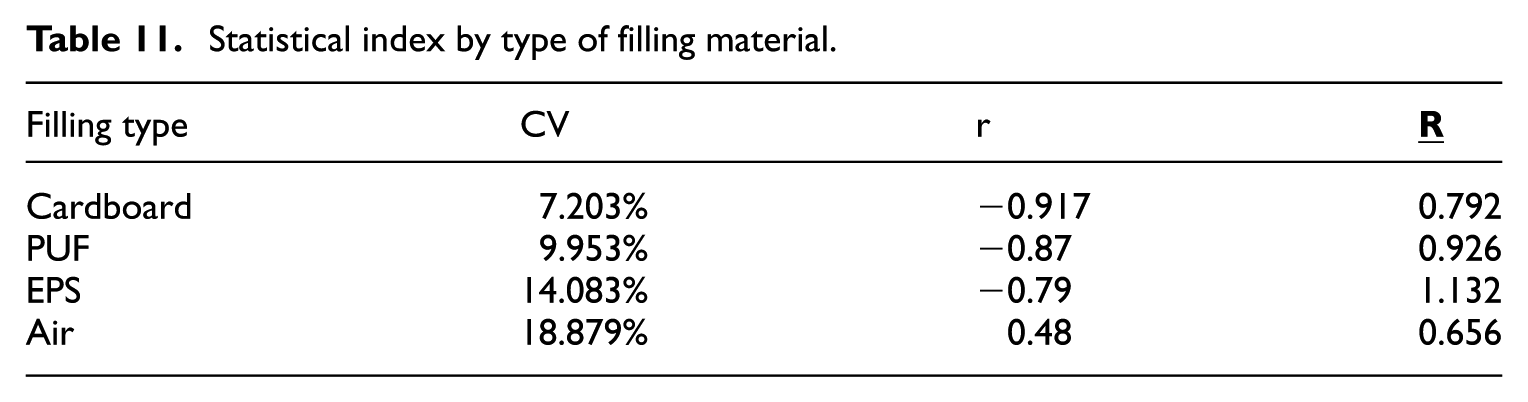
The Pearson correlation (r) confirms these observations: for cardboard (r = –0.917) and PUF (r = –0.87), a very strong negative correlation is observed, meaning that increasing the solids percentage tends to reduce thermal resistance. For EPS, this correlation remains negative but slightly weaker (r = –0.79). In contrast, air shows a positive correlation (r = 0.48), suggesting that increasing the solids fraction is, in this case, associated with a moderate improvement in thermal resistance.
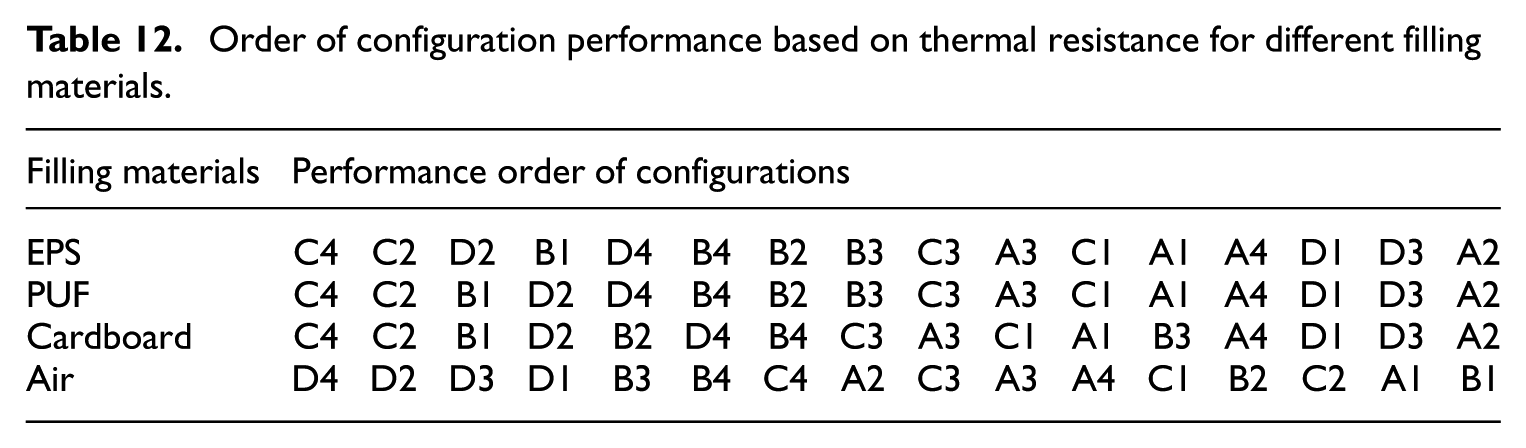
Analysis of Table 12 also highlights that the ranking of configurations is not universal but depends heavily on the filling material used. A configuration that is particularly effective with EPS can give much more modest results with PUF or air. This reflects a complex interaction between the geometry of the cavities and the intrinsic properties of the filling material, an interaction that becomes decisive for overall thermal behavior.
Order of configuration performance based on thermal resistance for different filling materials.
Economic considerations
The costs associated with the bricks studied are mainly related to the quantity of solid material used, as the mass of the brick is proportional to the volume of clay used. The reference brick (A1) has a solid content of 48.42% and serves as the basis for comparison when evaluating the different modified geometries. The introduction of internal structures, such as protuberances or cavity modifications, leads to a change in the internal distribution of the material, such as A3, B2, C1, and C3. They show a similar percentage of solid material as the reference brick, others show a reduction of around 7%–11 % for C2, C4 and B1. The rest of the configurations show an increase in solid volume of up to approximately 1%–13 % compared to the reference brick. These variations directly translate into differences in mass and, consequently, have an impact on manufacturing and transportation costs. However, increasing the amount of solid material generally results in a significant improvement in thermal resistance. This is because denser configurations limit heat transfer by conduction and help reduce the overall heat flow through the wall. This behavior highlights the trade-off between the added mass which affects initial costs and the long-term thermal benefits. Thus, even if some structures have a slight potential cost increase due to the additional material, the energy gains associated with reduced heat loss and improved thermal inertia make these configurations more advantageous for applications requiring increased insulation performance.
Conclusion
In this research, a two-dimensional numerical study was conducted to demonstrate the influence of internal geometry on the thermal behavior of bricks. Fifteen new configurations were developed based on a reference hollow brick with eight cavities, which are widespread in Morocco.
The results show that internal structure plays a decisive role in heat transfer. The distribution of solid material and the shape of the cavities directly influence conductive, convective, and radiative transfer, and consequently the thermal behavior of the bricks. Structures with internal barriers or elongated cavities, such as those in families C and D, offer the best thermal performance. While configurations with large and weakly divided cavities promote convection and radiation, which reduces thermal resistance and weakness thermal insulation.
The analysis also revealed that the performance hierarchy varies depending on operating conditions. Changes in external temperature, thermal conductivity, emissivity, and filling material can affect the performance ranking of the configurations. These results highlight the importance of simultaneously integrating geometric and functional parameters into the thermal design of bricks. This approach provides a solid basis for the development of high energy performance of bricks that can be adapted to various climatic and construction contexts. This improvement in the brick’s thermal insulation leads to a variation in the solid material volume ranging from −7% to +13% compared with the reference brick, which contains 48.42% solid. Although the increase in material results in a slightly higher cost, it provides a significant enhancement in thermal resistance, making these configurations more efficient and cost-effective in the long term.
This study opens perspectives for further research on improving the thermal, mechanical, and acoustic behavior of energy-efficient bricks, as well as to establish a technical and economic evaluation of the most promising configurations.
Footnotes
Appendix

Funding
The authors received no financial support for the research, authorship, and/or publication of this article.
Declaration of conflicting interests
The authors declared no potential conflicts of interest with respect to the research, authorship, and/or publication of this article.