







Abstract
We report on the use of a high fidelity patient simulator (SimMan) within a clinical lab setting to teach learning disability nursing students about epilepsy management. We had previously prepped the students with verbal discussions on epilepsy management and, when the simulator began to undergo a seizure, small groups of students managed the unfolding scenario. We received written feedback from the students on the experience, and with reference to this and to the wider literature we consider the benefits of this approach to patient care. We surmise that lessons learned here will be applicable to trainee professionals from other parts of the register and in other fields allied to healthcare. We anticipate that this will improve care for people with intellectual disability in line with recommendations in Health Care for All (2008).
Background
Seventeenth-century surgeons had to be creative about their teaching materials. In Holland and elsewhere it was common practice to use the body of a recently executed criminal for dissection purposes. It was just such an occasion that Rembrandt captured when, in 1632, he painted a portrait of the Amsterdam city anatomist Dr Tulp examining and dissecting a corpse before a group of student doctors (Figure 1). The practice went on in Britain too, where it lasted into the nineteenth century when Burke and Hare famously provided corpses to the medical school in Edinburgh. The trade was tacitly condoned until the first Anatomy Act was passed in 1832. But what can Dr Tulp teach us today? And are his lessons still valid for those who care for the population of people with intellectual disability?
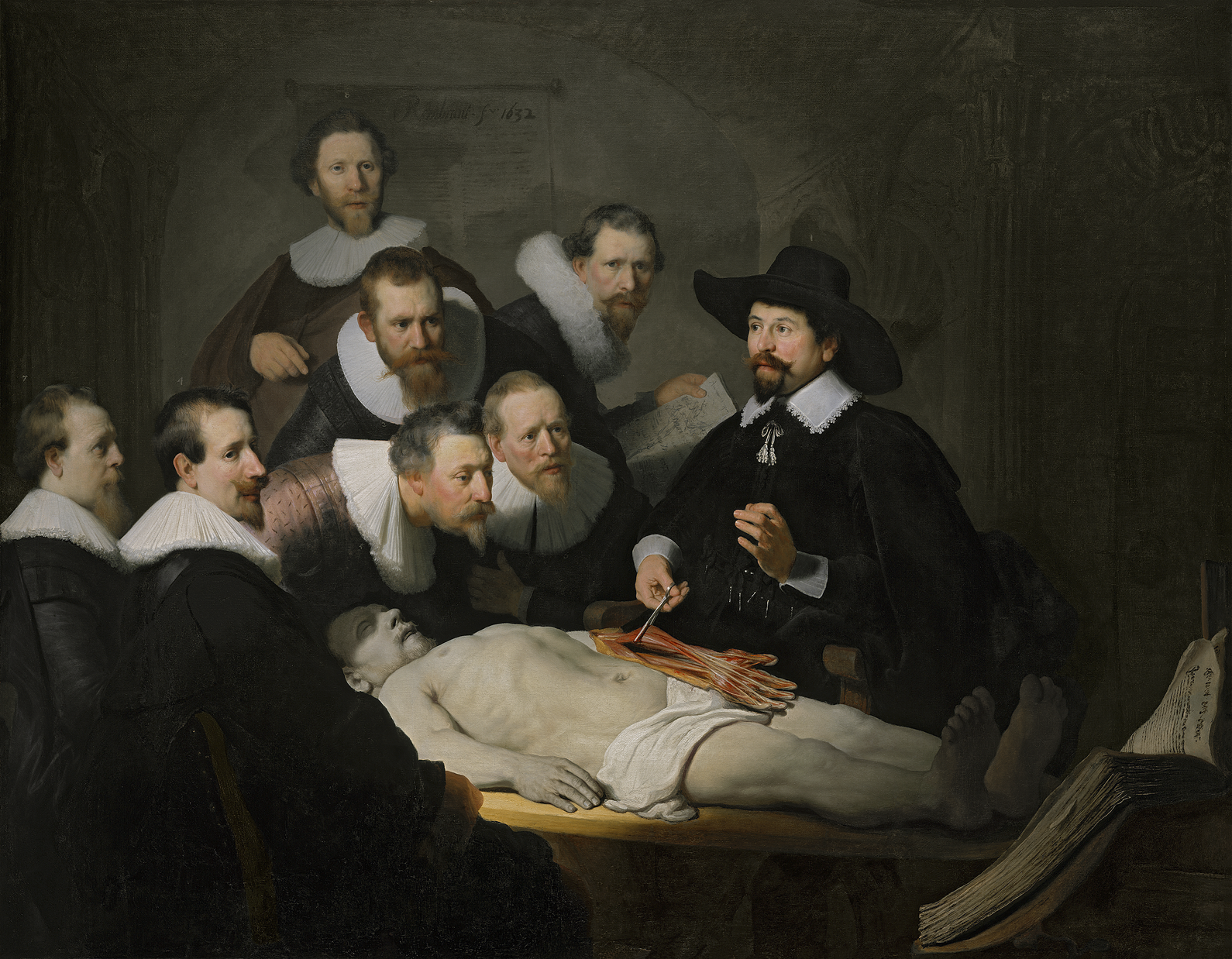
Rembrandt Harmenszoon van Rijn, The Anatomy Lesson of Dr Nicolaes Tulp, 1632. By permission of the Royal Picture Gallery Mauritshuis, The Hague.
In what follows we discuss the situation from the perspective of student nurses on a combined learning disability nursing and social work programme. We also consider the possibility that their client group may present challenges to the effectiveness of such a model and that this challenge may go beyond pedagogy and enter the realm of ideology.
If this is the case then the implications may affect us all. This is because as people with intellectual disability increasingly access primary and secondary care they will be cared for by healthcare professionals who are not necessarily familiar with the challenges that working with this cohort entails. The potential for poor care and its consequences is made apparent in Death by Indifference (Mencap, 2007).
So why use simulation?
The increasing use of technology in healthcare along with heightened public and patient expectations have both encouraged the development and use of new educational methods in healthcare education (Gaba, 2004). The government report High Quality Care for All: NHS Next Stage Review recommended the development of a ‘strategy for the appropriate use of e-learning, simulation, clinical skills facilities and other innovative approaches to healthcare education’ (Department of Health, 2008b: 42). Similarly Lord Darzi's report highlights the impact new technologies have had on the education and training of healthcare workers (2008b: 72). The use of simulation in particular has also been encouraged in a number of key documents worldwide, such as the US Institute of Medicine’s seminal report To Err is Human: Building a Safer Health System (1999).
And as Issenberg et al. (2005) note, problems associated with clinical teaching and learning at the bedside and assessing professional competence and patient safety inevitably mean changes in the organization of healthcare. It follows then that as more patients are being treated in primary care or as outpatients, there is a correspondingly higher proportion of acutely ill patients on the wards. Some of these patients will have the label of intellectual disability. In addition – and this is highly relevant to our own situation – the increased demand for clinical placements and the associated decrease in the availability of clinical learning opportunities have meant that healthcare students’ involvement with direct patient care and the opportunities to undertake learning at the bedside have been significantly reduced over the last few years. In the UK, there has now been recognition that a proportion of practice placement hours could (and indeed should) be replaced by simulation-based education to both enhance the students’ learning experience and alleviate the shortage of supervised clinical placement opportunities (Alinier et al., 2006; NMC, 2007; Lambton, 2008).
There is a growing body of evidence which suggests that the use of human patient simulation in healthcare education may help to improve the preparation of learners prior to clinical experience (Cant and Cooper, 2010). It may also be used to address the mounting ethical issues around ‘practising’ on human patients (Bremner et al., 2006). Simulation may therefore provide a way to increase patient safety, improve clinical judgement and develop successful inter-professional team working (Beamson and Wiker, 2005). Its strength as an educational strategy is that simulation provides the opportunity for student learning that is both immersive and experiential (Issenberg et al., 2005). It has the potential to recreate clinical scenarios that are only rarely experienced in real life, and may be used to test both individual health professionals and teams in challenging or crisis situations, and to help them to replay or examine their actions in a non-threatening and safe environment. It is therefore a powerful learning tool that may be used to help healthcare professionals achieve higher levels of competence and thus provide safer care in future (Henneman and Cunningham, 2005; Kneebone, 2005; Aggarwal et al., 2010).
With this in mind we devised a scenario which we believed would provide opportunities for learning using the patient simulator at our disposal.
Rationale for the scenario
Our purpose in undertaking this particular scenario was threefold:
It is a key part of placement preparation that students receive some form of basic epilepsy management training before going out on clinical placement, and this session fulfilled that requirement.
We wanted to get an idea of how well the manikin could perform as a teaching and learning tool. Epilepsy management does rely on students having knowledge of epilepsy as a clinical condition and of the range of interventions that may need to be employed. However, it remains a very hands-on task and we needed to offer the students the opportunity to engage with something approximating to ‘real life’.
We were also aware of previous research (McConkey and Truesdale, 2000) where it seems that a lack of confidence on the part of healthcare professionals in working with people with learning disability became a barrier to good treatment. We therefore wanted to know whether our experiences with a dedicated group of LD student nurses using this model of education could be extended to other professional cohorts and so go some way towards meeting the recommendations of the report Health Care for All (2008a).
The student group (N = 17) were in their first year (October 2010 intake) and were soon to go out on placement in nursing care areas for the first time. Their backgrounds varied from having no previous experience of working with people with learning disability to some who had been employed as care assistants. They spent two hours in the clinical learning suite getting acquainted with the patient simulator, receiving instruction and having some discussion on caring for people with epilepsy.
Many universities are developing and building simulation skills centres that enable the depiction of ward areas, and the simulators have been developed to look and respond to interventions with increasing realism. Since their inception in the 1980s, simulation manikins have become more and more sophisticated and now enable a wide range of invasive and non-invasive procedures to be performed on them, as well as enabling teamwork training. These higher fidelity models, such as SimMan (Laerdal©), are able to reproduce different aspects of human physiology in real time, including, for example, the patient’s response to drug administration. The focus on high fidelity simulation and realistic patient scenarios facilitates the inclusion of both clinical and communication skills, and this enables the student to view the patient in a more holistic context.
The scenario
We opted to introduce our students to human patient simulation by programming the manikin to experience an episode of status epilepsy. People with learning disabilities are 20 times more likely than the rest of the population to have epilepsy and the more severe the person’s learning disability the more likely it is that their epilepsy will be difficult to control and that they will experience complications such as status epilepticus (Department of Health, 2008b). Status epilepticus is a medical emergency which requires urgent treatment with rescue medication. It is characterized by lengthy and severe contractions (Lowenstein et al., 1999). Rectal diazepam or buccal midazolam are the medications most often used. For the simulation session we decided that the manikin would require diazepam to be administered rectally.
Although the students were aware of the use of manikins in the department, this was their first ‘hands-on’ experience with the technology. They were also the first learning disability students on our course to have the opportunity to engage with a patient simulator, and this was the prompt to include their reaction to the experience within the module evaluation.
In groups of three or four the students struggled to adjust the manikin’s clothing, to manoeuvre his limbs and to administer the medication. The sheer awkwardness of the scenario impressed on them the difficulties of balancing the need to undertake a clinical procedure quickly and safely against the broader, more conceptual concerns around privacy and dignity.
Feedback and findings
Students are aware that they may be asked to provide feedback on sessions as part of routine module evaluation, and we highlighted to them that on this occasion we wanted written comments on their reactions to the patient simulator. A questionnaire was emailed to the students who were encouraged to respond to it within two weeks while their recollections remained fresh and before placement learning took over their lives. The questionnaire is replicated in the Appendix.
All questionnaires were completed anonymously (questionnaires were numbered LDSW01, 02 etc.). Of the 17 questionnaires sent out we received 14 replies, of which 11 were complete in all sections. It is on these 11 responses that we have based our study.
We had discussed the session in the days prior to its delivery and had settled on five areas that we wanted to explore via the questionnaire. These were summarized under the following headings: keeping it real; disability; the human touch; theory and practice; and your experience. We remained open to the possibility that the students might want to discuss other issues entirely, but in the event the feedback was comprehensive and the topic guide appeared to have been effective in eliciting responses.
We were keen to find out generally about the efficacy of using the manikin as an aid to teaching and learning. In addition we wanted to explore the ethical underpinnings to find out if the obvious gap between a manikin and a human was exaggerated at all when the idea of learning disability was introduced. In considering the responses from our students we were happy to see a close fit between the reported experiences detailed here and those cited by Baillie and Curzio (2009). We report on the responses from students in the sections that follow.
Keeping it real
The scenario was enacted in the skills lab and no one was confused about the ‘reality’ of the situation. But the students were positive about the approximation of the scenario with remarks like: Although it is different to working with real people, you gain an idea of how to move people around and how their bodies will look and what positions they will be in when working with them. (LDSW03) It gives me more of an idea of how it will be when I’m actually working on a real client, therefore making me more confident in what I’m practising. (LDSW09) It’s a lot better than a classroom environment as it makes you more focused on the activities carried out as it’s a new environment which has more space and equipment similar to a working environment. (LDSW05) The body doesn’t actually move as much, it could be helpful if it was possible that the manikin actually did what the real client would do in that situation, making it more realistic. (LDSW13) It is the nearest thing to a human being in that you can learn to check all the vital signs accurately and also if you do anything wrong you are able to tell just by checking the monitors and it gives enough practice. (LDSW09)
Disability
The scenario was clearly designed around a person with a learning disability and the history of this imagined person had been discussed in previous classroom sessions. We were therefore keen to find out if the concept of ‘disability’ disappeared when the students undertook the practical session. These comments suggest that the socially constructed nature of ‘disability’ does not translate well into the clinical scenario: Clients with learning disabilities show a range of difficulties especially when in a stressful situation like a hospital, and the manikin doesn’t show this. (LDSW03) Certain disabilities that individuals have can’t be simulated, so this means you won’t actually gain experience in working with people that have learning disability but it is more general. (LDSW12) An individual with a learning disability may do more than somebody without, e.g. people with challenging behaviours or a fear of needles, etc. might not fully understand the need to sit still, which will be totally different to a manikin that is still. (LDSW13)
The human touch
We wanted to know if the artificiality of the scenario would dilute the sense of caring for another human being and so we asked specific questions about privacy, dignity and talking to the manikin. The students all recognized the need to behave in an appropriate manner but differed in their interpretation of how this could best be achieved: I found that I did not talk to the manikin, but this did not stop me from talking to real live people when using the same skills in practice. (LDSW02) It is completely different to working with somebody with no speech or communication because they are real and human, so I talk fine with people I work with who may not have communication. So even though I tried to talk to it I just felt silly. (LDSW08) I did, as I told the manikin the process in which I was going to go through when practising clinical skills. (LDSW05) [I did talk] a little bit, not as much as I would have if it was a real person. (LDSW10) No I didn’t talk to the manikin. (LDSW04)
Theory and practice
Would the scenario alter their clinical practice? The responses were favourable and the general feeling was that the benefits of engaging with the practical session were there for those who could use the experience to supplement the classroom-based learning: It allowed me to put into practice some things of what I learnt during theory, making it seem more relevant to real life situations. (LDSW13) My placement learning has definitely benefited from practising with the manikin. I have been able to apply both my theory and practice to the clinical procedures taking place and felt confident and comfortable in assisting nursing staff. (LDSW05)
I find it does help significantly to put theory into practice, because it is one thing to see a process written on paper and to try and picture it in your head, so seeing on a manikin does help me to understand more. (LDSW01)
I find it very useful when it puts theory into practice because then I don’t have to try and puzzle it out in my head how to do something, We get shown correctly so that is what I remember. (LDSW16)
Your experience
Finally we attempted to find out what the students felt as individual learners about the experience. We encouraged honesty and openness and invited criticism of the simulation model. All of the responses received were positive on this: I think the manikin is an excellent teaching/learning aid because it bridges the gap between theory and practice. The strength of the manikin is that it gives you the opportunity to practise before you go out into the community to work with people and it helps with identifying sites and positions on the human body and also monitoring the vital signs. The disadvantage is that it is not the same as working with a real human being in that it does not give the real reactions that you will get when working with people. (LDSW05) I think the manikins are a fantastic aid to learning. So far they have taught us the basics, bridging the gaps between theory and practice, I am aware they are much more capable than what we have seen of them in our 1st year and look forward to working with them in the near future to further improve my practical experience relating to my theoretical knowledge. There are limitations to the manikins, by the very nature of them there are situations they cannot replicate, and perhaps there are ways around this in the most modern versions. Also they are very good at replicating the body functions and physiological response but they do not replicate the emotional responses and the ‘human touch’ where people react in certain ways, for example, tensing muscles when given an intramuscular injection. So far the manikins have provided an invaluable practical experience. (LDSW16) As a very visual learner, using the manikin has been invaluable to me as I can be told how to do something many times, but until I have actually done it, it can be difficult to visualise how to do it. Once I have done something a few times, I find it much easier to do and more confident in my skills. As the role I will be doing is a very hands on and practical role, I think using the manikin more would be a great part of my learning experience at university. I firmly believe in the mantra ‘practice makes perfect’. (LDSW03)
Summary of feedback and findings
None of these students was discomfited by the ‘theory/practice’ gap and they were all able to accommodate the artificiality of the situation into their learning. That said, the lack of ‘realism’ was noted, and in some cases the reluctance on the part of certain students to fully engage with the process prevented any attempt to converse with the manikin. Some suggestions as to why this might be are considered below.
Discussion
The student responses from this small study indicate a strong liking for simulation as a way of learning and this is in line with the majority of the literature (Cant and Cooper, 2010). There were however a number of issues that emerged relating to the fidelity of the manikin and the realism of the scenario. While fidelity to real life has been achieved in many areas of human patient simulation, there are still aspects of patient anatomy and physiology that have yet to be fully realized. Some authors have commented on the lack of realism in some areas, including the feel of the skin, skin colour, and skin temperature (Euliano, 2001; Good, 2003; Haskvitz and Koop, 2004). The lack of realism may not just apply to the simulation device. As Morton (1997) noted, simulation is still constrained by the degree to which it can mimic what constitutes reality.
And as Greenberg et al. (2002) note, despite the obvious technological advances in replicating bio-fidelity, simulators still are not able to adequately convey ‘humanness’ to students. Manikins are cold to the touch and made of rubber and plastic. Their appearance is unnatural, and even with the capability to generate a human voice, there are limits to how real these devices can seem. This may account in some measure for any reluctance to engage in conversation.
So while the replacement of ‘blood and guts with bits and bytes’ (Gorman et al., 2000: 353) does to some extent sanitize the learning process, there are other areas that technology finds it more difficult to reach. It is along these psycho-social axes where physical and clinical conditions collide with value judgements that the limits of simulation as a technique are reached.
Administering rectal diazepam is an undignified process. It is an invasive procedure which brings the practitioner into intimate contact with their patient. The manikin, however, has no dignity and this lack of human emotion was remarked on in some feedback (see below). Using the manikin has also confronted us with a philosophical problem that cannot be reasoned away. For no matter to what degree a patient simulator replicates the physical signs and symptoms of a condition or a clinical episode, the manikin remains of a different kind. In making the conceptual leap between caring for a piece of equipment and caring for a human being, students are challenged by the obvious artificiality. This gap between the scenario and the reality it attempts to mimic is exaggerated when students are asked to believe that their ‘patient’ has a variety of global impairments.
And when we consider the responses in the feedback, it was clear that while the absence of anything that could be taken as a manifestation of ‘intellectual disability’ was noted, this did not of itself influence the care the students tried to provide. This, however, should not be taken as an indicator that the same thinking would necessarily apply if a different cohort of professionals were introduce to the same scenario. In the UK the early years of the twenty-first century have revealed several examples of poor care standards in settings where people with intellectual disability receive care. The names Orchard Hill and Winterbourne View may be familiar to some readers. It is also apparent from the content of recent reports (Mencap, 2007; Department of Health, 2008a; Parliamentary and Health Services Ombudsman, 2009) that non-disability specialist cohorts of professionals such as adult nurses have also neglected and misinterpreted the needs of individuals with intellectual disability with sometimes fatal consequences. A closer reading of the content of the Six Lives report indicates that discrimination on the basis of disability is at the core of such ‘significant and distressing failures in service’ (Parliamentary and Health Services Ombudsman, 2009: 15). It is just possible that a high-fidelity manikin with no facility for speech and pre-programmed to be unresponsive to standard communication methods might turn out to be just the right teaching and learning aid to function as a life-saver for others in future. This idea will remain speculative until we are in a position to conduct more extensive evaluation of our programmes. Meantime we will continue to use the manikins for demonstrating the application of clinical skills in scenarios. They are well received by the students and provide valuable opportunities for learning.
The responses indicate a strong liking for the scenario as a way of learning. And despite concerns for the artificiality of the setting, the students seem to have found little trouble in believing in the scenario. But although the manikin remains a highly faithful simulator – displaying the outward signs and symptoms of someone experiencing chest pains, for example – ultimately it remains a piece of kit. The fidelity of the scenario relies on the learner being able to engage in a ‘willing suspension of disbelief’ (Coleridge, 1975/1817). In adopting this position the learner must see beyond the readings on monitors and interpret these as evidence of some clinical emergency which threatens their patient and demands action on their part to avoid further deterioration in the condition.
Limitations
We must also take note that this was a small study based on one cohort of students. As such its generalizability is questionable and any claims arising from the findings should be treated with caution pending further, larger scale enquiry.
The design of the study too has the potential to compromise the anonymity of the respondents. With such a small cohort this might always be a risk, but we are aware that any future enquiry would need to safeguard against this by having the administration of the data generation instrument more independent of the researchers.
Conclusions
The principal lesson that we learn from Dr Tulp is that in the case of people living with profound and multiple intellectual disability there is only so much we can learn from a patient simulator. However, there is a clear advantage to using a manikin for practising certain clinical skills and students report confidence in the process.
Simulation-based education and training in healthcare provide students with the ability to experience caring for a patient with a condition that they have not been exposed to in the clinical setting, or to care for a patient in a potentially life-threatening situation (Abrahamson et al., 2006; Henrichs et al., 2002; Lasater, 2007). It is argued that participating in simulation will help to prevent students making errors in the future, and practice in a safe, supportive environment where it is permissible to make mistakes will help to improve clinical outcomes in the long term.
Although both the research literature and anecdotal experience agree that simulation helps to prepare students to perform in real clinical settings and that the experiences in the simulation environment do transfer to clinical practice, it is clear that research still needs to be carried out to determine how best to implement and facilitate simulation training, particularly in areas such as learning disability nursing. From the students’ perspective, if simulation is to work it must be believable. However, in spite of the apparent move towards simulation, there still remain a number of clear caveats for educationalists. As Aggarwal et al. (2010) note, the major challenge to the use of simulation in the future is the difficulty in demonstrating that it makes a difference to patient care outcomes. Our next move is to replicate this session with student cohorts from beyond the learning disability nursing intakes. This will go some way towards meeting the requirements outlined in the Health Care for All.
Footnotes
Appendix
Acknowledgements
We recognize and appreciate the contributions of the students to the findings presented here and wish them well in their future both in class and in practice.
We also need to point out that while we refer to the population of individuals who form the focus of our care as living with ‘intellectual disability’, the term ‘learning disability’ is still current within educational and policy circles. We are confident that readers will understand and not be confused by the differences in terminology as they occur here.
We need to thank the reviewers for their helpful suggestions and the editorial staff for their patience. In this case we also need to add extra thanks for we are indebted to Mariette Halkema of the Mauritshuis in The Hague for granting permission to reproduce a copy of Rembrandt's The Anatomy Lesson of Dr Nicolaes Tulp.
Thanks are also due to Mr Dave Bosworth for his correspondence and translation in securing these permissions. Vriendelijke Groet.
We are not aware of any conflict of interest that would compromise any of the parties associated with publication.
This research received no specific grant from any funding agency in the public, commercial, or not-for-profit sectors.