







Abstract
Since the inception of the Higher Education Opportunity Act in 2008, there has been an increase in the number of post-secondary education institutions in the United States that have established inclusive postsecondary programs for individuals with intellectual disabilities to attend college and achieve higher levels of employment. Previous studies have investigated the development and outcomes of these programs, however, less has been explored related to professors' experiences and perceptions regarding this unique student population, particularly within Hispanic Serving Institutions (HSI). The current study focused on professors teaching inclusive courses within a new Comprehensive Transition and Postsecondary Program at a HSI and aimed to identify their perceptions and experiences related to instructing students with intellectual disabilities. Six professors participated in pre- and post-semester in-depth interviews. Findings from applied thematic analysis included: (a) barriers to success; (b) academic supports and strategies; (c) successful outcomes and (d) considerations for future, related programming.
Inclusive education has been conceptualized as a belief, philosophy, stance, and practice, and has extended beyond high school settings into post-secondary education (PSE; Dukes & Berlingo, 2020). Attending PSE is a desirable outcome for many young adults, with and without disabilities, who are graduating or transitioning out of high school. Currently, one in five students in PSE settings report having a disability, including students with intellectual disabilities (U.S. Department of Education, 2021). Like traditional students, this population also aspires to advance their education, acquire an occupation, and live productive independent lives (Jones, et al., 2016). Recent federal legislation has targeted and supported the increased enrollment of students with intellectual disabilities in PSE institutions.
Since the inception of the Higher Education Opportunity Act (HEOA, 2008), there has been an increase in the number of PSE programs in community colleges and universities as well as the number of students with intellectual disabilities attending these programs (Berg et al., 2017). Current research on these programs has included literature reviews (Papay & Grigal, 2019), descriptions of programs (Sheppard-Jones et al., 2021), and components within PSE programming (McEathron et al., 2013). Additionally, there is an emerging literature base investigating perceptions and attitudes of the students, faculty, and staff within these programs (Gibbons, et. al., 2015), including cultural implications not considered with carrying out such a program with culturally and linguistically diverse participants with intellectual disabilities (Folk, et al., 2012).
The HEOA contains provisions targeting increased PSE opportunities for students with intellectual disabilities. One example is the creation of Comprehensive Transition and Postsecondary Programs (CTPs) designed to support students with intellectual disabilities attending PSE institutions, with goals focusing on employment preparation and independent living (Morningstar & Shoemaker, 2018). Further, the HEOA waives certain requirements for federal aid for students attending CTPs, addressing a gap in accessibility for underrepresented students in PSE, and assures programming focuses, at minimum, 50 percent of its time on academics (Madaus et al., 2012), ensuring opportunity for direct interaction with institutional faculty and staff. A call exists to continue offering these opportunities and ensure students with intellectual disabilities have a chance to achieve the same successful outcomes as their peers.
Ongoing efforts of researchers, practitioners, policymakers, and advocates have increased the availability of advanced education for young adults with intellectual disabilities; however, PSE is seldom identified as a transition goal for these students (Grigal et al., 2021). Further, the National Longitudinal Transition Study-2 (NLTS-2; Newman et al., 2011) suggests young adults with intellectual disabilities of Hispanic ethnic backgrounds and low socio-economic status are less likely to attend PSE institutions or gain full-time employment. Lack of PSE and gainful employment opportunities has detrimental, long-term effects on employment status, wages, and independent living opportunities for students with intellectual disabilities (NLTS-2; Newman et al., 2011). Therefore, there is a significant need to address the underemployment of these young individuals via effective, further PSE.
PSE has long been recognized as a pathway to employment, with higher levels of education correlating with lower rates of unemployment and higher earnings (U.S. Department of Labor, 2017). Positive relationships between PSE and employment have also been found for young adults with intellectual disabilities, achieving higher employment rates and higher wages upon program completion (Moore & Schelling, 2015; Smith et al., 2018). Further, inclusive PSE programming has shown effectiveness, with 59% of students being engaged in paid employment one year after graduation, compared to the national employment rate of 19% for this same population of individuals (Grigal et al., 2021).
Development of TPSID Programs
Transition and Postsecondary Programs for Students with Intellectual Disabilities (TPSID) are demonstration programs, funded by the U.S. Department of Education’s Office of Postsecondary Education (OPE), aimed to study the effects of PSE on employment outcomes for individuals with intellectual disabilities (ThinkCollege, 2020). These programs offer a wide range of campus-based activities such as inclusive courses, internships, trainings, clubs, and organizations, providing experiences and pathways to a higher quality of life for young adults with intellectual disabilities. Recent TPSID data indicate 62% of all enrollments were in academically inclusive courses (Grigal et al., 2021). Most students (89%) participated in at least one career development activity (e.g., work-based learning, job-seeking, career awareness, career exploration) and 45% of students had at least one paid internship position. Additionally, evidence can be shown in the 56% of the TPSID students who reported being employed while enrolled in their program for the first time in their lives (Grigal et al., 2021).
Recently, researchers have investigated PSE topics on the development of specific curricula for students with intellectual disabilities (Prendergast et al., 2017) and the difficulties of teaching specific subject matter (Pacheco et al., 2020). Emerging research includes a continual discussion surrounding students with intellectual disabilities auditing PSE coursework (Burgin et al., 2017), academic attendance and participation (Becht et al., 2020), as well as using the universal design for learning approach to support instruction (UDL; Love et al., 2019). Further, there is a need to examine professors' abilities and experiences in implementing effective instructional practices for students with intellectual disabilities in PSE, particularly within culturally diverse environments such as Hispanic Serving Institutions (HSI), where increasing accessibility, in general, is a consistent goal (Hu & Blanco, 2021).
Professors and Students with Intellectual Disabilities
Studies exploring campus personnel perceptions of college students with intellectual disabilities have included librarians (Dow et al., 2021), occupational therapists (Berg et al., 2017), and related stakeholders (Brewer & Movahedazarhouligh, 2021). Although these essential partners can support successful PSE programming for students with intellectual disabilities, it is typically professors who are the primary instructors within these programs, as academic inclusion is a key tenant. Henceforth, there is a critical need to assess and learn from the experiences and perceptions of these professors to more effectively support them in meeting the needs of this new, and possibly, unfamiliar student population.
Research has demonstrated that the beliefs, attitudes, and behaviors of faculty shape the educational experiences of PSE students with disabilities (Cook et al., 2009). A majority of existing research relates to faculty attitudes and beliefs about serving students with high-incidence disabilities (i.e., IDEA disability categories such as specific learning disability, speech or language impairment, and emotional disturbance) due to their higher rates of enrollment in PSE, but over the past decade, studies have emerged focusing on attitudes of faculty supporting students with intellectual disabilities and autism (Burgin et al., 2017; Gibbons et al., 2015; Jones et al., 2016). However, the empirical body of research on this topic remains limited, especially related to studies conducted in more diverse PSE settings, such as HSIs, which may or may not present different strengths, challenges, or barriers.
As the number of students with intellectual disabilities attending PSE increases, faculty must be prepared to effectively support this population within PSE courses to ensure post-PSE outcomes (ThinkCollege, 2020). A recent study by Spencer et al. (2021) investigated the experiences of students with intellectual disabilities in a PSE program during the pandemic. In another study, researchers conducted a study with TPSID participants to determine individual and programmatic factors associated with expectations for the students joining inclusive classes in a PSE setting (Papay et al., 2018). Emerging research using surveys (Jones et al., 2016) and qualitative interview methods (Taylor et al., 2021) have explored views from PSE faculty after they taught students with intellectual disabilities in their courses. Although research is increasing, there are still gaps that need to be addressed, specifically within the identification of effective instructional strategies and supports, as the educators’ perception of a practice’s feasibility, effectiveness, and overall student outcomes can directly influence its long-term use in the classroom (i.e., fidelity of implementation; McIntosh et al., 2018).
Purpose
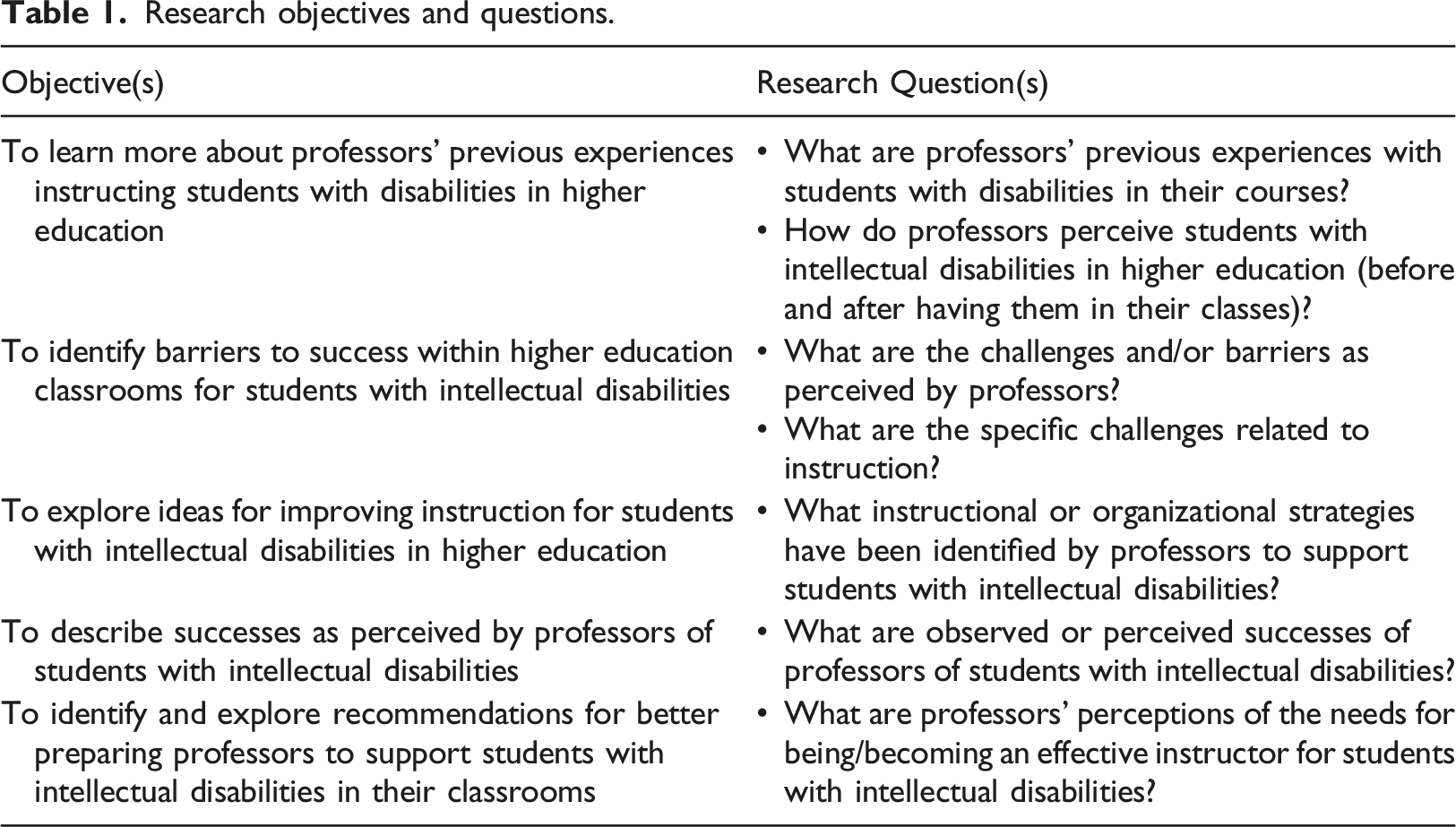
Research objectives and questions.
Method
Qualitative research designs are uniquely suited to enlighten the lived experiences of an under-researched population (Braun & Clarke, 2006). The present study implemented one-on-one in-depth interviews with professors currently teaching inclusive courses where students with intellectual disabilities were enrolled alongside their peers. The exploratory design of the study aimed to uncover new aspects within an existing area of concern (Neuman, 2014). Before implementing the participant recruitment process, the present study was reviewed and approved by the university's Institutional Review Board (IRB).
Setting, Program, and Participants
The present study took place at a public 4-year university located in south Texas. This university was created to offer PSE opportunities to a largely Hispanic community with historically low levels of educational attainment. The university is designated as a HSI and currently serves a population containing approximately 70% Hispanic students, with the majority also identifying as first-generation college students, which reflects the demographics of the student-participants in the program outlined below (Watts et al., 2022). Additionally, a large portion of the student population come from families identifying as low-socioeconomic status.
The Transition University for Career Advancement and Successful Adulthood (TU CASA) program, funded through a TPSID grant, is a comprehensive transition postsecondary program. TU CASA is an 18-month (3-semesters) program of study designed as a culturally responsive, person-centered program that results in a University and Career Experience Certificate. Students enrolled at the university, via the TU CASA program, register and attend inclusive classes with their peers without disabilities. Each of the courses attended by students enrolled in TU CASA are offered and available to the general student population and are frequently taken by incoming or freshmen-year students. The program of study includes attending two courses per semester, as well as co-curricular learning activities, and also a camp in the summer focusing on independent living skills. The courses and related experiences promote skill development in interpersonal communication, personal well-being, specific vocational domains, and practical experience around student interest areas. Students in TU CASA can currently choose one of three tracks as the focus for their PSE and practicum experiences: STEM, retail/manufacturing, and consumer service. Although the typical university supports are readily available and typically used, TU CASA also offers supplemental coaching and tutoring supports for the participating students as well as semesterly trainings for their families.
Sample and Recruitment
Purposive sampling was used to identify faculty members who would be directly interacting with TU CASA students during the semester. A purposive sampling is a non-probability technique of identifying participants based on inclusion/exclusion criteria (i.e., characteristics) that align with the focus of the research questions and objectives of the study (Charmaz, 2014). Given that professors are the most common facilitators of instruction within PSE, the participants sampled were systematically identified by the TU CASA program director based on student schedules. After IRB approval, recruitment emails were sent to all six faculty members listed on TU CASA students’ course schedules. Participants were informed of the study, eligibility criteria, and participation requirements. No incentives were provided for participation in this study.
Recruitment began prior to the start of the semester and all six of the professors contacted also agreed to take part in the study (i.e., response rate 100%). The sample included four female participants and two male participants. Each professor participated in two interviews, one at the beginning of the semester and one at the end. The professors taught the following inclusive courses (i.e., contained both TU CASA and typical college students): (a) public speaking; (b) fitness and wellness; and (c) a first-year seminar class required for all incoming freshmen. Each professor had at least two students with intellectual disabilities enrolled in their course, with no more than four enrolled in a single section of the course.
Prior to the start of the semester, TU CASA provides voluntary training on inclusive instructional practices designed around UDL approaches for teaching, engagement, and assessment, as well as hands-on practice in adapting assignments, learning activities, and/or course materials (Love et al., 2019). Whether they attend the training or not, TU CASA staff meets with each professor individually, at the start of the semester, to orientate them to the students who will be enrolled in their course(s), providing students’ background information such as interests, strengths, and areas of challenge. This time is also spent discussing and supporting any adaptations or modifications to the syllabus, if needed, to increase accessibility before the first day of class.
Procedure
Researchers conducted in-depth interviews to compile data on professors' perceptions and experiences throughout the semester. Initially, interviews were scheduled to take place on campus within the College of Education classrooms and offices, but due to COVID-19 restrictions, all interviews were conducted via an online format (e.g., Microsoft Teams, Zoom). The interview protocol contained open-ended questions that allowed participants to respond in a way that was relevant and meaningful to their own experiences. Researchers also asked follow-up questions (e.g., 'Tell me more.', 'What do you mean?', 'How come?') to obtain more details and clarify responses, when needed (Kvale & Brinkmann, 2009). Researchers interviewed participants twice, once at the start of the semester and once at the end, for a total of 12 interviews. Individual interviews lasted approximately 45-min each. Researchers facilitated all interview sessions in one-on-one virtual, recorded meetings. After each interview, the audio files were extracted from the video files, and the files were assigned identification codes to ensure participant confidentiality. The lead researcher then shared these files with a professional third-party transcription service via a secure database where the interviews were transcribed, returned, and finally, double-checked for accuracy by the same researcher.
Data Analysis, Reliability, and Validity
Three researchers conducted an applied thematic analysis on the transcribed interviews, using a formalized codebook containing definitions for structural/question-based (i.e., organizational codes to assist in locating data) and emergent theme-based codes (Guest et al., 2012). Firstly, the first author segmented the transcripts by applying “meaningful conceptual breaks” (Campbell et al., 2013, p. 304). Next, the coding process began with the authors immersing themselves in the transcribed data through intensive reading (O’Connor & Joffe, 2020). After familiarization, the researchers developed a first draft of the codebook containing both brief and comprehensive code definitions and examples of when to use and when not to use each code (where appropriate). The researchers finalized 17 codes, which is below the recommended limit of 20 codes for semi-structured interview data (Hruschka et al., 2004). Additionally, structural codes were applied to each of the questions to allow researchers to organize and extract data during the thematic analysis (Guest et al., 2012).
To determine reliability, intercoder agreement (ICA) was evaluated informally by comparing coding on a small quantity of data (e.g., one interview transcript) to identify any potential misinterpretations before formal reliability evaluation throughout the rest of the coding stages. ICA was calculated by totaling the number of codes all three coders agreed upon divided by the number of total coded sections (McAlister et al., 2017). After double-coding one transcript independently and finding the ICA to be below the desired reliability level (74.8% across coders), researchers discussed and adjusted the codebook procedures to code the same phrase with multiple codes when appropriate rather than trying to select the most salient code. This practice increases agreement across users and provides complex relationships between codes for exploration during analysis (McAlister et al., 2017). Next, researchers transcribed another transcript independently (with ICA >80% across coders) and then double-coded the remaining transcripts before reconvening to discuss emerging themes and subthemes. The thematic structure was refined iteratively with repeated refinement to the themes, subthemes, and related visual charting. Although additional themes were identified, the top five themes (i.e., most frequently coded) are presented within the findings.
Researchers conducted a member check via follow-up emails to evaluate the validity of the results (Lincoln & Guba, 1985; Walther et al., 2013). Participants reviewed the results if the identified themes and subthemes resonated with them as members of the target population of this study. All participants confirmed the accuracy of the findings.
Results
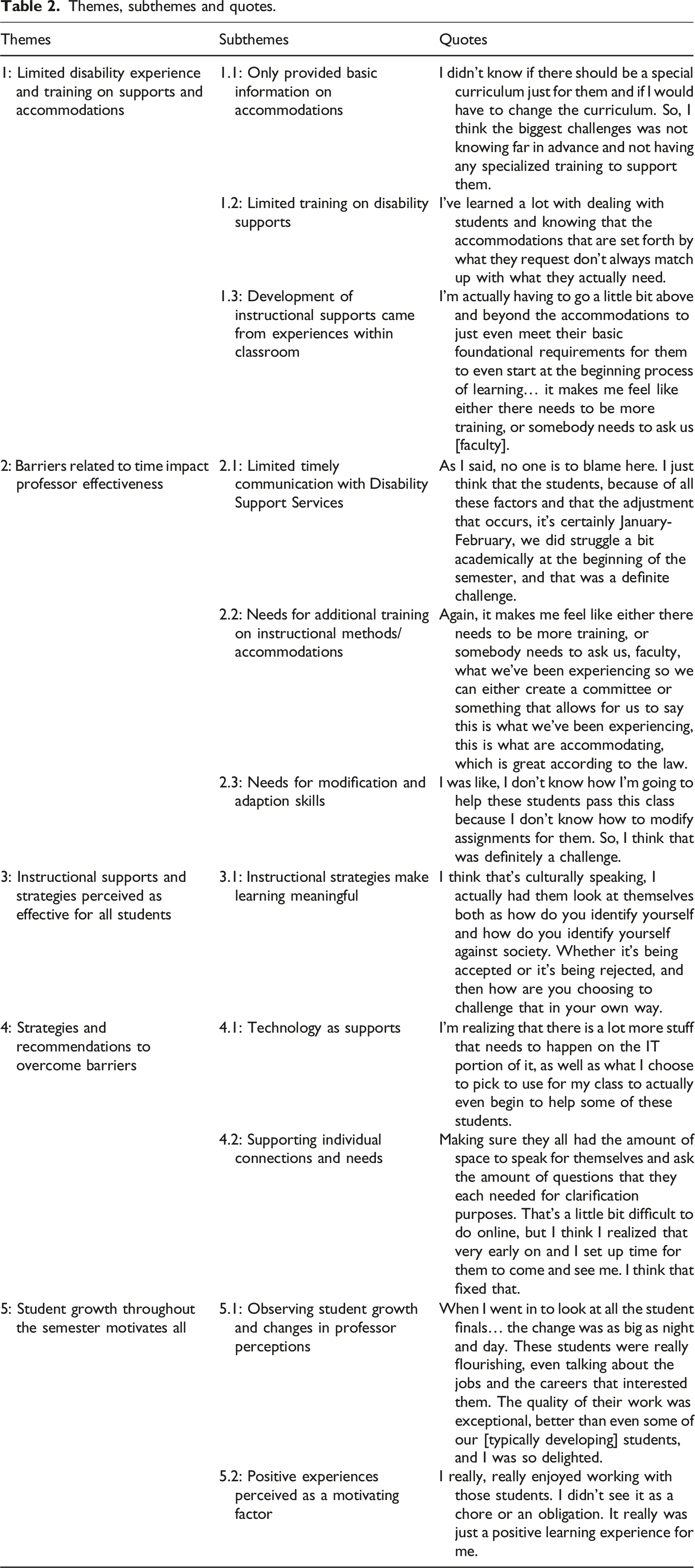
Themes, subthemes and quotes.
Theme 1: Limited Disability Experience and Training Based on Direct Experiences
All professors reported no prior experience working with students with intellectual disabilities in PSE classrooms and only limited general knowledge of supports and accommodations for students with disabilities. They also reported that the basic information about accommodations (e.g., extra time on exams, note-taking, course materials provided ahead of time) they received from the university's disability services office were non-individualized and/or ineffective for students with more significant disabilities in their classrooms. Additionally, none of the professors stated that they had received any type of formal training on effective accommodations or modifications for students with disabilities in PSE settings. Professors reported that their knowledge and skill development in these areas was primarily based on direct experiences and interactions with the students in their classrooms. Each professor provided unique examples of identifying individual student needs and then determining some supports or strategies that would be appropriate for specific students (e.g., individual check-ins; explicit/more detailed feedback on assignments), although a majority reported that they were unsure whether these supports were appropriate. All professors' experiences with students with disabilities in PSE fell within the disability categories of physical impairments, auditory processing, and/or other medical needs. None of the professors reported prior experience with teaching students with intellectual disabilities.
Theme 2: Barriers Related to Time Impacted Professor Effectiveness
Professors reported time-related barriers impacting their overall effectiveness as instructors for students with intellectual disabilities. These challenges related to limited or inadequate time for planning and preparation; effective teaching of subject matter; and developing skills and knowledge related to using new technology. Additionally, professors cited frustrations related to extended waiting time (i.e., too much time) before information on students’ abilities and needs were provided from campus partners or campus staff. Alternatively, during the post-semester interviews, time was also a factor and strategy utilized for overcoming some of the identified obstacles. Further, outside events were also cited as impacting instructional time and student engagement. Both the COVID-19 pandemic and a severe winter storm (i.e., class cancelations, schedule changes) were perceived to impact both professors’ effectiveness and student learning during the semester.
Multiple participants indicated frustrations with the timely notification of necessary student accommodations from the university’s disability support services (DSS) office. The delay in notification of student accommodations and instructional modifications had reported impacts on the appropriate, timely implementation of these supports, necessary for student success. Another subtheme, centered on the limited training on appropriate and effective accommodations and having limited time to collaborate with DSS and TU CASA staff at the start of the semester in implementing these instructional supports.
Professors reported specific modification and adaptation challenges in the organization of course content and assignments to increase student accessibility and comprehension. Related, participants indicated the need to meet with their students with intellectual disabilities outside of class in order to support the student progress they hoped to observe. This increase in interaction time between the student and professor was in addition to regularly scheduled office hours. Multiple professors also provided extra information and resources (e.g., video reminders, video examples, step-by-step instructions) on their course’s online platform to aid student learning and independence. Throughout the semester, this organization of course content hurdle, and the development of related strategies, was also observed in the use of technology.
Professors reported the use of new technology in their courses as another challenge related to time. Participants reported an increased need for time to work with, learn, and practice new instructional technology and digital tools prior to implementation. The challenge was not limited to professors, as it was also observed to be a struggle for the students with intellectual disabilities where they frequently forgot the steps to find, login, and use (e.g., record or send feedback) within the new applications. Coaching students with intellectual disabilities on using the new technologies and digital tools was a component that required additional time, direct instruction, practice in application, and increased independence. Although a cited challenge, the professors indicated the overall learning and use of new technology was essential for both students and themselves, as instructors. Further, a number of these identified barriers were overcome via the identification of effective strategies that proved to be helpful for students with intellectual disabilities as well as their typically developing peers.
Theme 3: Instructional Supports and Strategies Perceived as Effective for All Students
Professors perceived certain instructional strategies as beneficial in supporting students with intellectual disabilities in their classrooms. Professors specifically emphasized the importance of understanding their classroom audience and "knowing your student" and their backgrounds. Professors reflected on serving the Hispanic student population comprising over 70% of all students at the university and making learning relevant to culturally-diverse backgrounds. Most participants reported they utilized hands-on techniques and ensured that learning was meaningful and built on students' background knowledge and experiences. A pattern was found in the professors' decisions to embed information pertinent to real-world situations and "connecting it to their [students'] actual lives."
Most professors described cultural awareness as critical to meeting all students' needs, including students with intellectual disabilities. This is relevant as cultural considerations are often overlooked for students with intellectual disabilities (Folk, et al., 2012). The most common factors were an appreciation for diversity in the world and exposure to diversity. Professors indicated they provided opportunities for all students to reflect not only on their own culture and individual backgrounds but also on their community. Peer support, partnering, and grouping techniques were utilized when facilitating collaborative work among students. Most participants also perceived peer support strategies to be effective in meeting student needs. Responses illustrated that peer leaders and a "buddy system" with ongoing feedback were especially helpful in classroom settings.
UDL was another identified category of instructional strategies for classroom settings. UDL has been defined as a set of principles for curriculum development that gives all students opportunities to learn by providing a blueprint for instruction, materials, and assessments that work for everyone (National Center on Universal Design for Learning, 2014). In their discussions, professors emphasized supporting student learning by differentiating instruction, disseminating information, utilizing multiple formats, using multiple ways of presenting material, and assessing student learning. In addition, professors described how UDL helped them not only reach all students but also self-evaluate personal teaching outcomes and make informed decisions for future instructional planning.
Theme 4: Strategies and Recommendations to Overcome Barriers
Professors reflected on what they had learned during the semester and identified specific strategies that supported all students, including those with disabilities. Participants provided recommendations and suggestions for future professors teaching students with intellectual disabilities. Data analysis revealed patterns in approaches across instructors. In particular, professors suggested obtaining feedback from students throughout the course, scheduling follow-up interviews with students after the end of the course, linking students together beyond the current semester (e.g., in cohorts, with peers), identifying student interests for actively making connections, and increasing overall awareness and knowledge of individuals with disabilities.
Professors perceived technology, such as online communication and instructional formats (e.g., Blackboard; Zoom) and the use of visuals, such as videos and PowerPoints, as effective tools for aiding student learning. The overall accessibility of course materials was also cited as a key influencer on learner outcomes. To further support student learning, professors implemented recorded lectures, video check-ins, close captioned materials, screen-readers/apps, tools within Blackboard (e.g., journals, direct messages), and additional software and applications (e.g., GoReact). Technology was perceived as a barrier if the appropriate training was not provided, the tool was new or unfamiliar, and/or the design was not user-friendly, but overall, all participants indicated the use of technology as essential for supporting their diverse learners.
Over the course of the semester, time and hands-on experience working with students with intellectual disabilities provided professors with knowledge and strategies that informed future instructional planning. The recommendations included the necessity to supplement online instruction with interactive learning activities, the requirement to learn new technology (i.e., both students and instructors), and the need to be available beyond the scheduled instructional (i.e., class) time. All participants reported adapting previous teaching methods to include and meet the individual and group needs of students with intellectual disabilities. Professors also identified connections between their students’ increased learning and their decision to move beyond online instruction as the sole method for teaching. Professors suggested a mix of face-to-face and online instruction as well as consistent meetings with students outside of class time, as well as obtaining student feedback to inform future instructional planning.
Theme 5: Student Growth Throughout the Semester Motivates All
Most participants reported successes in growth for students with intellectual disabilities as well as overall positive experiences related to the observed developments in student achievement throughout the semester. Professors defined student growth as "flourishing" and "exceptional" with multiple notes on students' improvement in independence and communication skills. All professors also identified changes and developments in perceptions of students with intellectual disabilities, in general, after forming positive student-professor relationships and observing academic successes. Multiple participants stated the progress and improvement observed in students' quality of work (e.g., presentations, artifacts) allowed the professors to provide positive, specific praise and feedback which was motivating to both the student and the professor. Further, all professors noted increases in their expectations for this population of students as they observed students' ability to produce high-quality work, with the appropriate support.
When professors worked in collaboration with the inclusive programming staff (i.e., coaches and advisors), they observed student developments in areas of interpersonal communication, self-confidence, and overall quality of work on homework assignments and major projects/presentations. Upon reflection, professors viewed their own positive experiences with students with intellectual disabilities as successful outcomes as well. Each professor also commented on how much they enjoyed working with students from this population. They also perceived the experiences and interactions as positive influences and motivations on their own, future professional development as instructors (i.e., desired to progress or grow as inclusive instructors and/or advance their skill set to be more inclusive as educators; e.g., increase accessibility and comprehension/understanding for all students).
Discussion
Professors play a critical role when it comes to supporting their students within academic settings. It is also the professor with whom the students typically have the most communication and interaction within academic settings. While the identification of specific strategies and practices is an emerging area of research, some comparisons can be made. Figure 1 provides a path model developed from the themes identified in the analysis. The model describes relationships between themes and mechanisms identified within professors' experiences and perceptions. These components and relationships may aid the development of more effective supports and systems for both professors and their students with intellectual disabilities. Path model based on themes.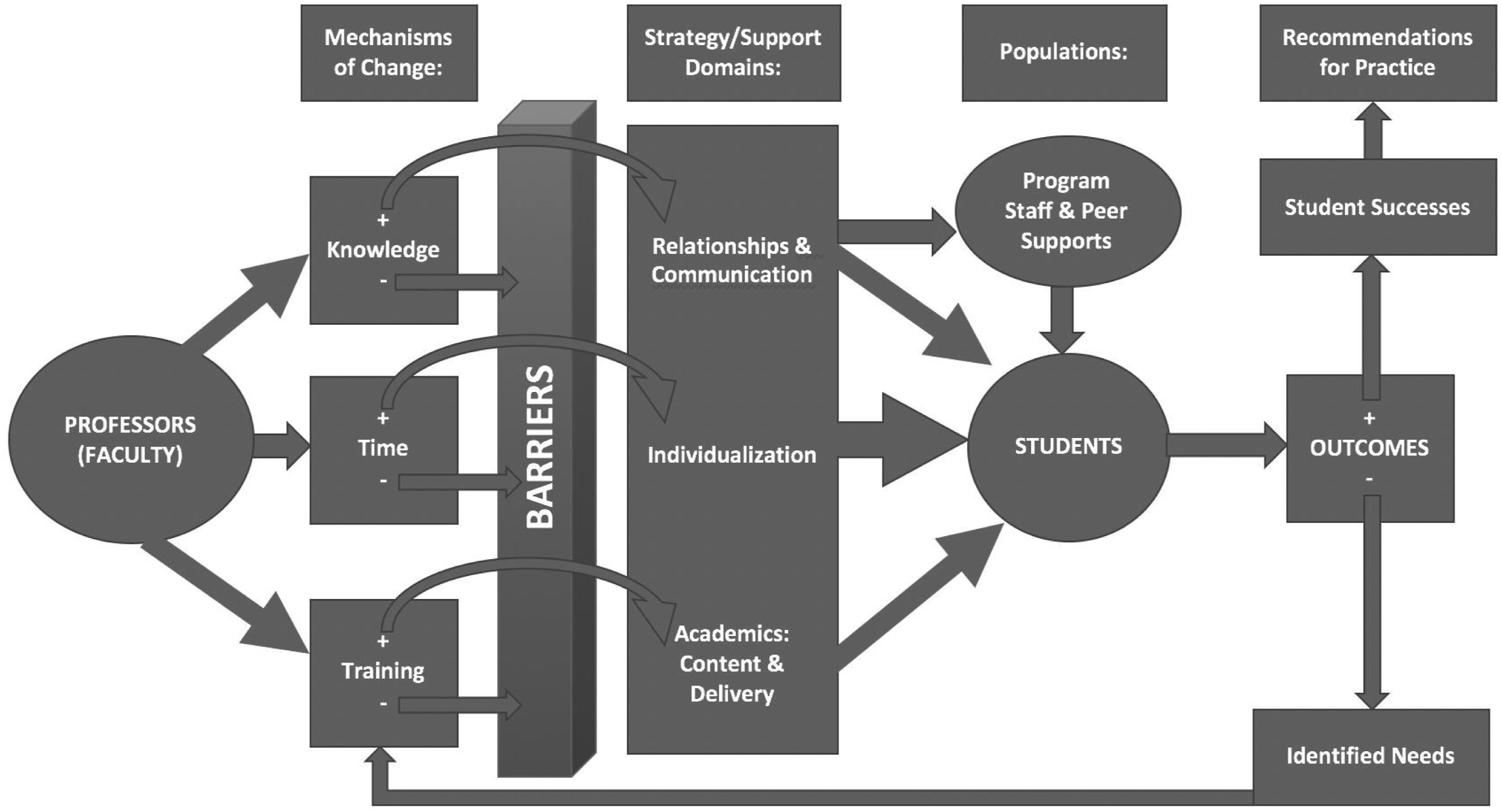
Knowledge, time, and training are interconnected to many of the themes and show potential as being key influencers in the delivery of effective instruction for students with intellectual disabilities in PSE. The path model proposes that increasing these identified mechanisms (i.e., knowledge, training, and time) may positively impact instructional effectiveness and overall student success and outcomes. Negative or limited experience related to each mechanism may impede progress through the model (i.e., overcoming barriers) and may keep professors from effectively teaching and engaging college students with intellectual disabilities. In contrast, the increase of certain ‘assisting’ mechanisms may facilitate overcoming instructional challenges or barriers, promote student learning, and/or increase faculty development and overall program outcomes (e.g., skill development, employment).
Constructive approaches to increasing instructor knowledge are similar to findings reported by Taylor and colleagues (2021), where professors sought to understand intellectual disabilities and the individual student to better serve and work with the students. Although the training change mechanism is distinct in the model proposed by the current study, it is associated with knowledge. As indicated by Burgin et al. (2017) and Jones et al. (2016), specific training in the areas of intellectual disabilities and UDL, for example, provides professors with ways to renovate the traditional academic experience as well as faculty/student interaction that can progressively impact academic success and interactions. In addition, Burgin et al. (2017) indicated experience and connection with students aided in gaining the necessary knowledge to transform the barrier into a successful experience and outcomes.
Time can impact the overall effectiveness of instruction depending on if there is an appropriate or inadequate amount. This encompasses planning, organizing, teaching, and follow-up assessment to inform instructional needs. Previous studies have found faculty become more at ease when working with students with intellectual disabilities over the course of a semester, as well as identify ways to improve their course resources (Jones et al., 2016; O’Connor et al., 2012). Participants in the current study also cited the need to "know the student" in order to inform their teaching. This knowledge and individualized approach is illustrated in the path model and directly relates to student outcomes. While understanding the student, their abilities, and their needs seem to support previous research (Stefansdottir & Bjornsdottir, 2016; Taylor et al., 2021), the findings on cultural awareness are unique to this study. Because culture is embedded in teaching on all levels, including PSE, "teaching ethnically diverse students has to be multiculturalized” (Gay, 2002, p.112). Culture has a strong influence on the instructional process through the expression of the attitudes and behaviors of professors and students. Thus, the value of cultural awareness cannot be underestimated and should be embraced in PSE.
Instructional Supports
Although the findings mainly focused on professor-student interactions, participants also cited the importance of peers as mentors or natural supports for students with intellectual disabilities. Peer leaders and “buddy systems” were especially helpful in promoting student engagement, comprehension, and learning (Watts & McKenna, 2022). These findings align with previous research indicating the importance of peer supports for students with intellectual disabilities on campus (Athamanah et al., 2020; Carter et al., 2019; Taylor et al., 2021). Peer supports in PSE, reflected in the path model, provide benefits beyond the academic realm and could be mutually beneficial to the advancement of social and interpersonal skills for both mentors and mentees (Watts et al., 2020). However, any peer-mediated instructional support requires appropriate training and supervision to be successful, especially when supporting the development of independent learning skills (Watts & Kerr, 2022).
Principles of UDL have been successfully implemented to differentiate instruction, assessment, and engagement opportunities for students in PSE. The present study's participants described how UDL helped them not only reach all students but also self-evaluate personal teaching outcomes and make informed decisions for the future. It is reasonable to assume that their positive experiences with implementing UDL have increased professors' motivation for professional development further increasing student learning outcomes. Researchers suggest that UDL has merit for reframing faculty-reported concerns and challenges. Taylor et al. (2021) reported that their participants did not discuss UDL methods; however, UDL framework could be used to address faculty concerns and help overcome the challenges they faced. Professors interested in learning how to support students with intellectual disabilities may participate in UDL training, which could broaden inclusion not only for students with intellectual disabilities, but for students with different learning styles and abilities, and students from diverse linguistic, cultural, and socio-economic backgrounds (Evmenova, 2018; Love et al., 2019).
Meeting the needs of diverse students requires careful planning and involves multiple stakeholders who bring together their expertise to enhance student learning and outcomes. Participants in the present study described a collaborative approach as one of the most successful approaches when meeting student needs. It is helpful for PSE faculty to work with the office of DSS, the library, and other stakeholders (Plotner & Marshall, 2014). Professors indicated working with university support specialists and service providers, as well as trained TU CASA personnel. Because of perceived unpreparedness and barriers, professors also emphasized the importance of receiving timely training. This might address the need for faculty to understand the inclusive PSE program structure, goals, and expectations (Taylor et al., 2021). In addition, campus resources (e.g., library, DSS) have impacted instructional decisions and individual approaches employed by professors, which resulted in increased student success. These findings suggest the need to develop a supportive infrastructure and facilitate collaborative efforts to support professors in instructing students with intellectual disabilities in PSE settings.
Consistent with recently reported research, participants described positive experiences when working with students with intellectual disabilities, noting student growth during the semester, as well as personal advancement and satisfaction (Taylor et al., 2021). Participants in the present study observed increased student development in areas of interpersonal communication, self-confidence, and overall quality of work. The reported, "flourishing" improvement in student independence and communication skills points to considerable growth and might be indicative of the effectiveness of implemented supports. In addition, participants commented on how much they enjoyed working with students with intellectual disabilities in inclusive classrooms. These positive experiences might have contributed to personal satisfaction and influenced professors' desire for professional growth. These findings are congruent with the notion of overwhelmingly positive experiences reported by Taylor et al. (2021) of teaching inclusive courses, but perceived unpreparedness to teach students with intellectual disabilities suggests the need for intentional professional development.
Recommendations and Implications for Practice
Educators’ perceptions of instructional strategies or supports are important because they can impact the fidelity of implementation, positively or negatively, based on the instructors’ perception of students’ engagement and/or outcomes related to the practice(s) (McIntosh et al., 2018). Henceforth, follow-up, post-semester interviews obtained recommendations from the participants for their colleagues who may have students with intellectual disabilities enrolled in their future, inclusive courses. The pathway model shows that when negative outcomes occur (e.g., students not showing progress), the action step(s) should be the identification of needs and the subsequent increase of knowledge, training, and/or time in the targeted area. Professors provided suggestions that fell within three broad categories for improving future instruction and programming: (a) increasing training and knowledge; (b) instructional flexibility; and (c) technology preparation.
All professors recommended increasing knowledge and training for future instructors. Recommendations included increasing knowledge of, experience with, and instructional strategies for this population; as this was deemed the most essential for facilitating student learning and addressing individual student needs. Professors stated that their ability to serve this population would be greatly supported by increasing their experiences with students with intellectual disabilities in general. Actively engaging professors in collaborative on-campus activities with students with intellectual disabilities may provide unique opportunities to 'get to know' this population before, during, and after having them in their courses.
Further, differentiation of instructional presentation, student engagement, and expression based on the UDL framework could be advantageous to meeting the needs of these learners. Intentionally embedding organizational strategies, chunking, and task analysis are effective when supporting student learning. To assist students with comprehension and task management, strategies such as using checklists, segmenting assignments, and prioritizing work requirements based on student needs could also be beneficial strategies. Using UDL principles, professors could not only broaden academic inclusion for students with intellectual and other types of disabilities, but also facilitate learning of students from diverse cultural, linguistic, and socio-economic backgrounds.
Technology is required to support students with intellectual disabilities; however, if the essential change mechanisms of knowledge, time, and training are not realistic and practical, the use of technology can become a barrier. Professors in the current study recommended that both they and the students needed time to learn and practice using technology. An additional suggestion is applying technology in the development and use of video reminders. These were related to experiences described by Pacheco et al. (2020) and provided sensible reinforcements for using these tools and for authentic and practical applications.
Limitations and Future Research
Due to the newness of the program, a small sample size could not be avoided and therefore limits the findings. Although this sample size was not robust, recent findings indicate 6–7 in-depth interviews will capture most themes in a homogenous sample and 11–12 interviews will reach a high degree of saturation (95th percentile; Guest et al., 2020). Further, each of the participating professors provided their experiences and perceptions of the same program. This study provided important data on a single TPSID program at a single university, which limits the generalization of these findings.
The identification of limitations aids in the identification of areas for future research. The current findings as well as gaps in the literature base signal specific areas for future research related to increasing knowledge and strategies for further promoting engagement, communication, technology skills, and academic supports (Burgin et al., 2017). This study’s findings provide key insights into specific programmatic components and areas that can be explored by future research to further develop and improve their effectiveness. Although these findings have been compared to previous studies focusing on different TPSID programs, it is suggested that future studies target a larger and broader sample to increase reliability.
Future research could also investigate faculty and students' knowledge, perceptions, and preferences related to the use of technology. Further study of the learning and utilization of technology by both faculty and students with intellectual disabilities would be beneficial, as the future of PSE shows an increasing trend toward online and hybrid models of delivery. This future research line could also extend investigations into the roles of faculty, program staff, and peers and how the academic outcomes of students with intellectual disabilities can be improved.
As the number of inclusive PSE programs increases, there is an ever-present need to evaluate effective approaches, at the PSE level for improving accessibility and outcomes for students with intellectual disabilities. The path model illustrates the relationships, based on professor experiences, between the multiple key components, mechanisms, and personnel populations within PSE classrooms that include students with intellectual disabilities. Currently, this model can inform existing and subsequent program and university system development, as well as potentially expand to address the needs of a broader population of PSE students with disabilities more effectively. Moving forward, this model should continue to be developed and refined based on future research findings. Overall, there is much work to be done in this emerging, inclusive PSE domain to support current and future college students with intellectual disabilities.
Footnotes
Declaration of Conflicting Interests
The author(s) declared no potential conflicts of interest with respect to the research, authorship, and/or publication of this article.
Funding
The author(s) disclosed receipt of the following financial support for the research, authorship, and/or publication of this article: The development of this program was sponsored by the Transition Programs for Students with Intellectual Disabilities into Higher Education grant from the Office of Postsecondary Education, Department of Education, United States (P407A200021).
