







Abstract
Families cannot easily identify and cope with the changing health problems and needs of children transitioning into adulthood. This pilot randomized controlled study aims to improve the family's quality of life and reduce mothers' perceived stress levels by implementing an educational program (Transition to Adulthood Training Program - TATP). A total of 33 mothers of children with intellectual disabilities were randomly assigned to the groups. Data were collected using the Personal Information Form, Beach Center Family Quality of Life (BCFQOL), and Perceived Stress Scale. The intervention group showed a significant increase in the BCFQOL mean score rather than the control group (p<.001). There was a significant decrease in the perceived stress scores of the mothers in the intervention group after the TATP training sessions (p<0.05). The TATP intervention not only increased the quality of family life for these mothers but also led to a reduction in their perceived stress levels.
Introduction
Due to advancements in health and technology, the lifespan of individuals with intellectual disabilities has increased (Coppus, 2013; Dolan et al., 2019). The responsibility of care for these individuals has also increased for family members. This is because individuals with intellectual disabilities often continue to live with their families from childhood to adulthood (McKenzie et al., 2016). Therefore, families are the primary caregivers who meet their children's changing physical and psychosocial needs in their lives (Boehm et al., 2015; Brennan et al., 2020). Although families mostly assume the caregiving role, the health problems and care needs of individuals with intellectual disabilities also change during transitional periods in their lives (Davys et al., 2017; Pryce et al., 2017). Many studies in the literature have focused on the changing care needs and health problems of individuals with intellectual disabilities during the transition to adulthood. These study results indicate an increase in the prevalence of chronic diseases as individuals with intellectual disabilities age (cardiovascular diseases, diabetes, epilepsy, thyroid diseases, obesity, etc.) (Doody and Doody, 2012; García-Domínguez et al., 2020; Sadowsky et al., 2020), the emergence of hormonal changes and sexual needs (Clatos and Asare, 2016; Tomsa et al., 2021), decreased physical activity levels, and more frequent occurrences of imbalanced nutrition and sleep disturbances (Oviedo et al., 2017; Wang et al., 2018). Additionally, it has been found that challenging behaviors that are difficult to control (aggression, stereotypical behaviors, self-injury) increase (Boehm et al., 2015; Bowring et al., 2017), social exclusion (Merrells et al., 2019), experiences of abuse (Tomsa et al., 2021), as well as mental health problems such as depression and anxiety can also occur (Hsieh et al., 2020).
Families cannot easily identify and cope with the changing health problems and needs of children transitioning into adulthood (Leonard et al., 2016; Taggart et al., 2012). Different studies report that parents have support needs regarding their children's future transitioning into adulthood (Davys et al., 2017; Inan Budak et al., 2018; Lindahl et al., 2019). The transition from childhood to adulthood can lead parents to experience feelings of worry, fear, and uncertainty (Glidden and Jobe, 2007). However, these emotions are not solely caused by health issues. Parents of children with intellectual disabilities also worry about the future of their growing children (Leonard et al., 2016). Financial limitations, the negative effects of aging on parents, fear of being unable to provide care, uncertainties about planning their children's future (employment, social life, concerns about who will take care of the child after me, etc.), and inadequacies in social policies also add to the challenges faced by parents (Leonard et al., 2016; Pryce et al., 2017; Taggart et al., 2012; Young-Southward et al., 2017). The negative emotions and caregiving burden experienced during their children's changing life processes impact the quality of life for the family (Baker et al., 2021; Leonard et al., 2016; Norlin and Broberg, 2013; Taggart et al., 2012). It has been found that parents providing long-term care for children with intellectual disabilities experience serious health issues (Ryan et al., 2014), struggle with coping with stress (Ahmad and Khanam, 2016; Feizi et al., 2014), and their quality of life is negatively affected (Boehm and Carter, 2019; Norlin and Broberg, 2013). However, families play a key role in continuing care for their children, so it is crucial to support parents in areas where they need assistance (Boehm and Carter, 2019).
Mothers typically bear a significant portion of the caregiving burden for children with intellectual disabilities within the family (Hayat and Yousaf, 2023). They are most affected by the challenges that arise from these circumstances (McConkey et al., 2008). Providing support to mothers regarding the care and future planning for their children who have recently transitioned or are transitioning into adulthood is important for maintaining family well-being and positively impacting the lives of individuals with intellectual disabilities (Boehm and Carter, 2019). However, the literature emphasizes the shortcomings in implementing and evaluating measures to meet the needs of parents in this regard (Boehm et al., 2015; Brennan et al., 2020; Engwall, 2017; Leonard et al., 2016; Young-Southward et al., 2017). This study aims to improve the family's quality of life and reduce mothers' perceived stress levels by implementing an educational program (Transition to Adulthood Training Program - TATP) that focuses on the changing care needs of individuals with intellectual disabilities who are transitioning to adulthood. This is expected to contribute to the early identification of health risks, improvement, and preservation of the health of young adults with intellectual disabilities and their families.
Methods
Research design
We conducted a pilot randomized controlled trial assessing the impact of an educational program (Transition to Adulthood Training Program - TATP) to improve the family's quality of life and reduce mothers' perceived stress levels. The study was recorded in the Clinicaltrials.gov PRS system (ID: NCT05587647).
Study design and sample
This pilot randomized controlled trial was conducted between September 2022 and January 2023 at the Center for Children with Special Needs and Families (EÇADEM) in Istanbul. The research population consists of mothers who have children with intellectual disabilities in the transition to adulthood. In calculating the effect size of our intervention study and the required sample size, we referenced the study by Roberts et al. (2011) in which the effects of the training program conducted with the parents of children with autism were examined on the quality of family life and parenting stress, and we used the G-Power program. Based on the reference study, the study power was calculated with a type 1 error of 5%, a study power of 80%, and an effect size of 0.7, with 30 participants in each group. Considering the data losses, it was planned to carry out the study with a 10% dropout, 33 mothers per group, and 66 mothers. However, seven mothers in the intervention group didn’t participate in the study because their children were sick, five could not be reached, and two had different jobs on the training day. As a result, 18 mothers participated in the training sessions. Similarly, because eight mothers in the control group gave up participating in the study, three were outside the province, and seven had another job, 15 mothers constituted the control group. Inclusion criteria were to have a child with intellectual disabilities between the ages of 18-25 registered with EÇADEM, to be able to speak and write Turkish, and not to be visually or speech impaired.
Randomization
After assessing children's records for potentially eligible participants, 66 were identified. However, 33 mothers enrolled in this study. Mothers were allocated using blocked randomization by gender and age of their children with intellectual disabilities (Figure 1). A computer-generated number table was used to ensure allocation concealment. CONSORT Flowchart.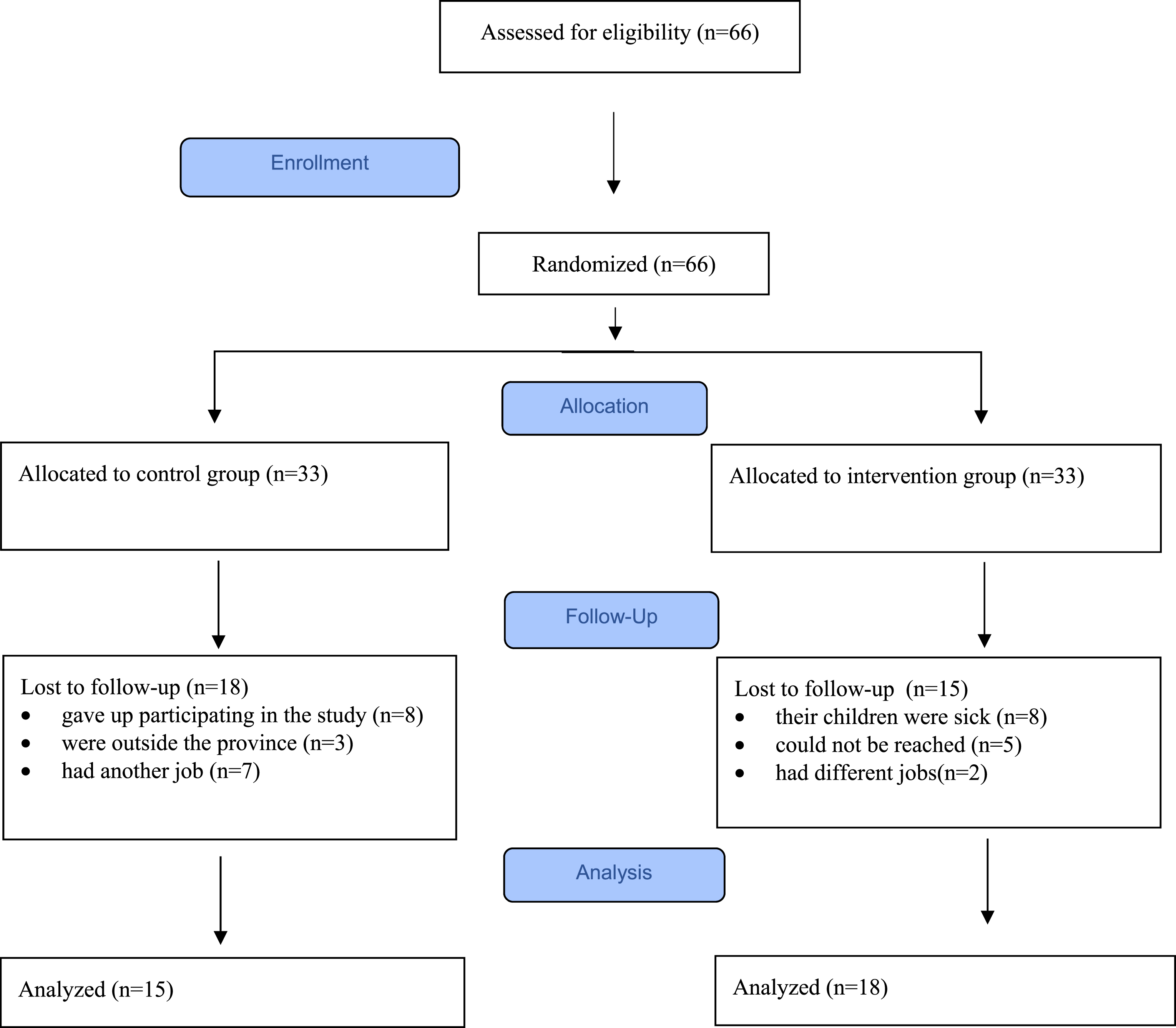
Setting
EÇADEM was established at the end of 2014 in Sarıyer, Istanbul, to contribute to the cognitive, physical, psychological, and social development of children with disabilities and to provide counseling and psycho-social support services to mothers and siblings of children with ID. This support aims to reduce the psychosocial problems of caregiver family members, such as burnout, stress, depression, and social isolation.
In this context, the parent training was conducted in the meeting hall at the EÇADEM. The hall is about 40 square meters and has a meeting table and chairs for 50 individuals. In parent training sessions, the mothers were seated to form U, and the author conducted the presentation with a projection device. The first author conducted parent training sessions. All sessions were recorded. Lastly, because all participants in the same region spoke Turkish, the interventionist conducted the training in the local language.
Data collection
The study used a personal information form and two quantitative data collection scales. To determine the socio-demographic characteristics, we used the
Procedure
Standard care
Standard care is for young adults to come to EÇADEM at least 2-3 days a week. In addition to meeting the daily care and needs of children with ID, the institution supports the development of social and emotional skills through psychological counseling, training to facilitate daily life activities and self-care, and art and sports workshops. There are two psychologists in the institution routinely, and families can contact them if necessary, but no psychological support program is routinely applied to families.
Control group
The control group continued to receive standard care throughout the intervention. However, when the research ended, the same intervention applied to the experimental group was applied to the parents who requested it.
Mother training sessions
TATP is a mother training program developed by the author to support mothers of young adults with intellectual disabilities adapt to the transformation process. It consists of three sessions, each lasting one hour, completed in one-day, supported by audio-visual and written materials. In creating the training program, many studies in the literature share the experiences of parents of children with intellectual disabilities who are transitioning to adulthood (Leonard et al., 2016; Dolan et al., 2019; Hsieh et al., 2020; Tomsa et al., 2021). In addition, one of the researchers, who has been working actively with the children and their mothers who are transitioning to adulthood, which is our target group, met with the mothers before the training was planned and interviewed them about the issues they had the most difficulty in caring for their children. As a result of these interviews, it was determined that mothers had the most difficulties in protecting and improving their health with the changing care needs of their children, and they lacked information about planning their children's future and employment.
In the beginning, we have three optional training days for mothers so that they can participate easily. Because some mothers cannot leave their children alone at home, we organized one of our training halls for activities (such as painting, crafting, or physical activities) suitable for young adults with intellectual disabilities. Most mothers’ preferred day was set for education, and each mother and her child were picked up from their home by a special shuttle arranged by the researchers. This was important for the participation of mothers whose economic situation was not favorable and who could not leave their children at home. Before starting the training sessions, we asked the mothers to fill in the specified scales. Afterward, we conducted the training sessions with 19 mothers in three separate sessions: Developmental Characteristics of Young Adults with Intellectual Disabilities, Protecting and Maintaining the Health of Young Adults with Intellectual Disabilities, and Coping with Stress. The mothers ' questions were answered with a 20-minute break between sessions, and we conducted 4 hours of training. To evaluate the impact of TATP on families' quality of life and perceived stress, the Beach Center Quality of Life and Perceived Stress Scale was administered to all mothers in the first month after training through self-administration.
In the session titled Developmental Characteristics of Young Adults with Identity Disorders, we focused on the care needs, possible mental and behavioral changes, and psychosocial needs of young adults that change with adolescence. Secondly, the session titled Protecting and Sustaining Identified Young Adult Health focused on the risks of neglect and abuse of young adults, vaccination practices, sexual protection methods, health follow-ups, early diagnosis follow-ups, and alcohol, cigarette, and substance use. Finally, in a session on coping with stress, our researcher, a clinical psychologist, explained how to cope with stress and relaxation techniques to mothers who reported difficulty providing care and coping effectively as their children grew older.
Statistical analysis
The licensed SPSS 23 package program (Statistical Package for the Social Science) was used for data evaluation. Nonparametric tests were used because the number of samples was less than thirty and the data did not show normal distribution. Compliance of the parameters with the normal distribution was tested using the Shapiro–Wilk. Mean and standard deviations, frequency, and percentage were used to analyze independent variables. The chi-square, Wilcoxon Signed Rank, and Mann–Whitney U tests were used to compare independent and dependent variables. The results were evaluated in a confidence interval of 95%, and p< .05 was considered significant.
Ethical considerations
Initially, the ethics committee's approval was obtained from the Koc University Social Sciences Ethics Committee for conducting the research (No: 2021.427.IRB3.202, Date: November 19, 2021). Written consent was obtained from EÇADEM, where the study was conducted. In addition, all participants signed a consent form stating they could withdraw from the study anytime. The same training was given to the control group after completing the study.
Result
Descriptive characteristics of mothers
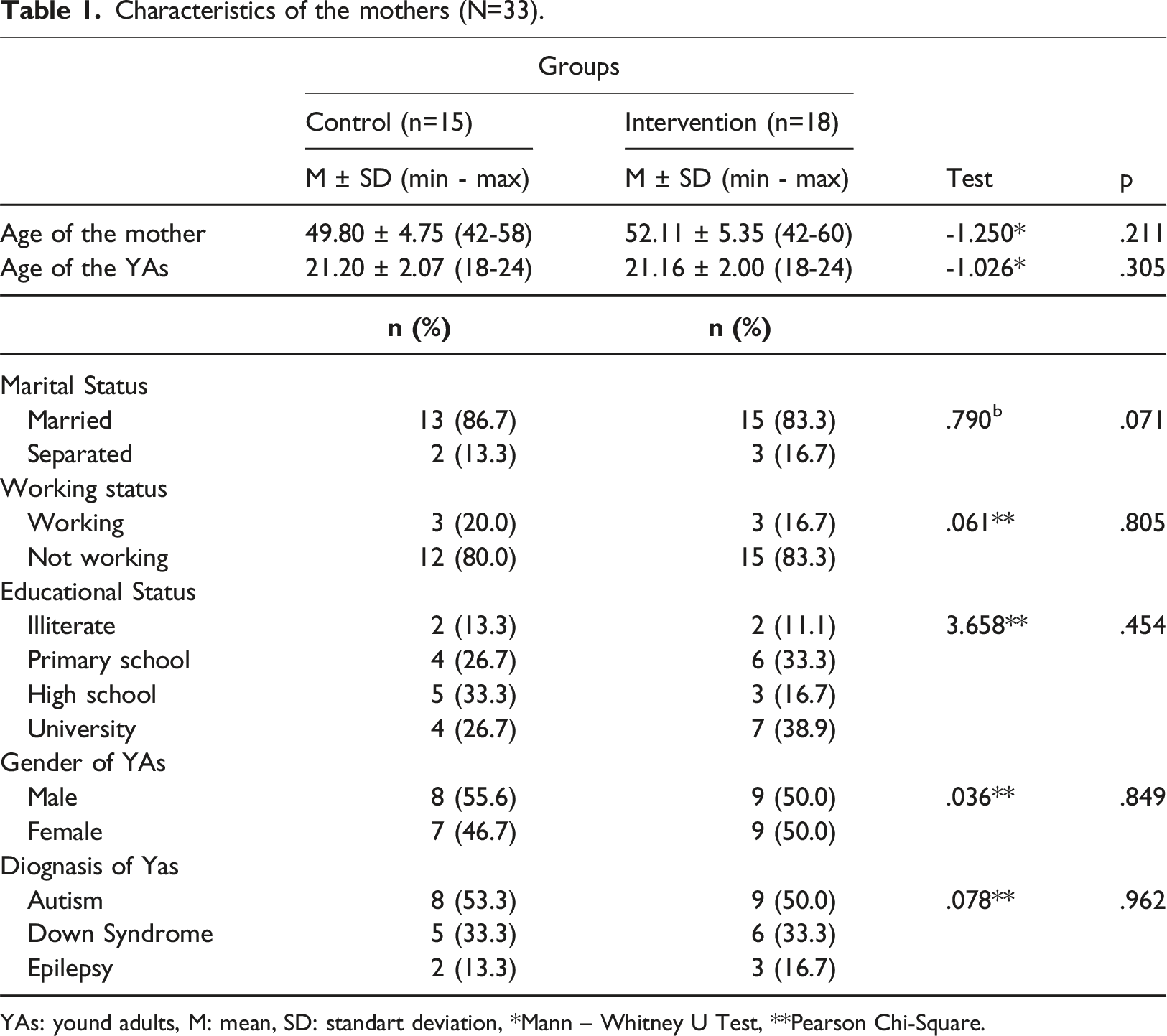
Characteristics of the mothers (N=33).
YAs: yound adults, M: mean, SD: standart deviation, *Mann – Whitney U Test, **Pearson Chi-Square.
Effectiveness of TATP
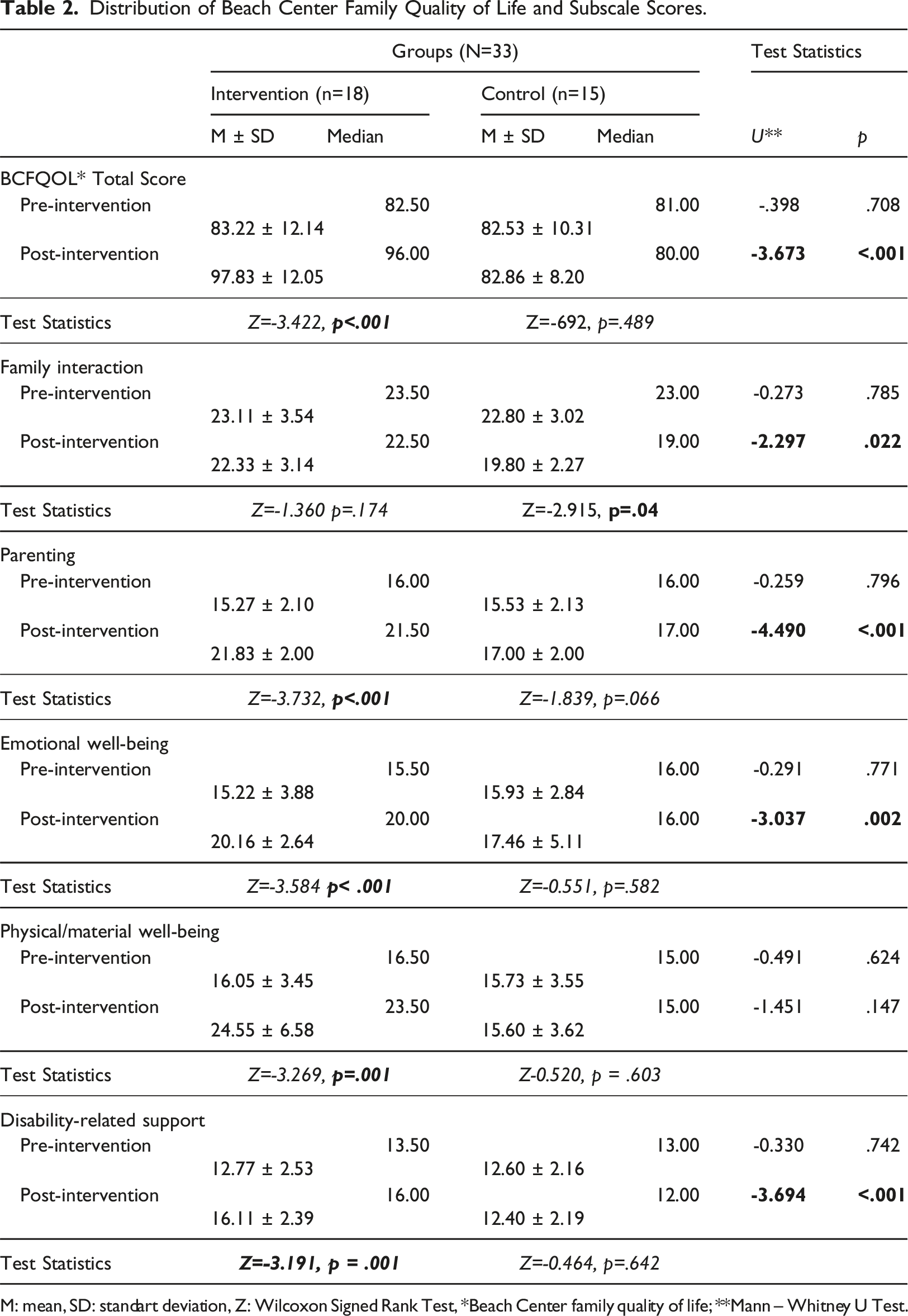
To obtain the findings on the effect of the TATP on the mothers’ family quality of life, pre-test, and post-test descriptive statistics were calculated for each group, and Mann Whitney U Test results were calculated based on the inter-group score differences.
Distribution of Beach Center Family Quality of Life and Subscale Scores.
M: mean, SD: standart deviation, Z: Wilcoxon Signed Rank Test, *Beach Center family quality of life; **Mann – Whitney U Test.
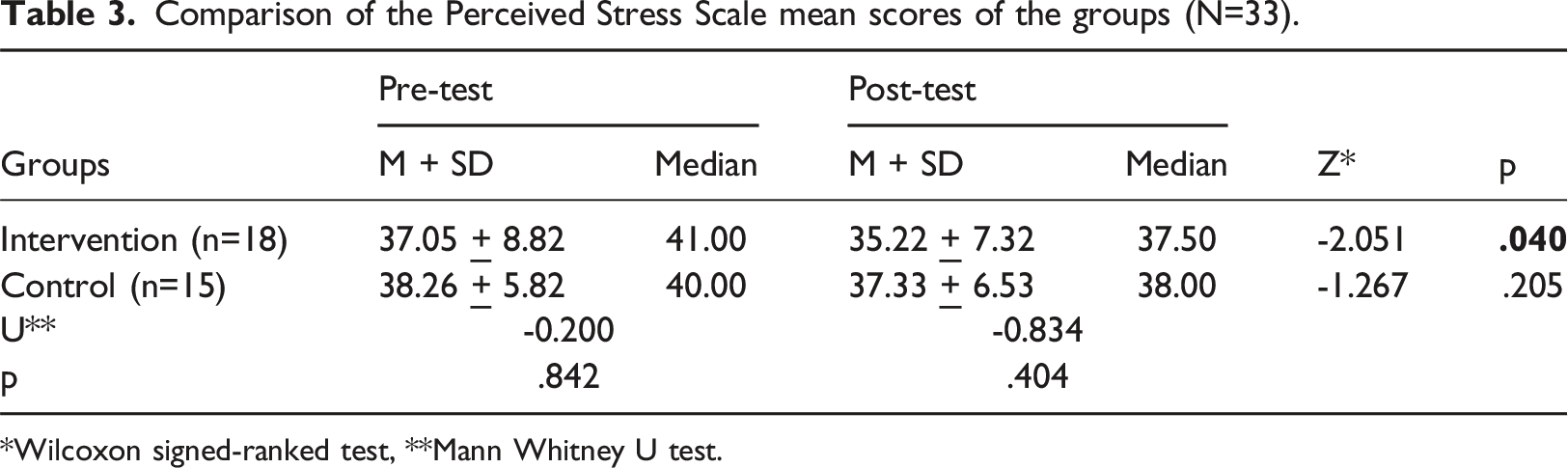
Comparison of the Perceived Stress Scale mean scores of the groups (N=33).
*Wilcoxon signed-ranked test, **Mann Whitney U test.
Discussion
This study highlights the impact of a transitional training program on family quality of life and perceived stress among mothers. Transitioning to adulthood brings significant changes and uncertainties for people with disabilities and their families (Codd and Hewitt, 2021; Lee et al., 2019; Lo and Bui, 2020). In the latest research findings, innovative solutions to meet the needs of parents in this process include meeting the information, material, intellectual, and emotional needs of parents during and after the transition period (Gauthier-Boudreault et al., 2018; Lo and Bui, 2020). This training aims to equip mothers with knowledge, skills, and resources, enabling them to more effectively overcome the challenges of their children's transition to adulthood. Our study's results are similar to those of Yıldız and Çavkaytar. They found that an education program for mothers of young adults with intellectual disabilities improved family quality of life, including parenting and emotional well-being. Our intervention, which included stress management and guidance on caring for and meeting the needs of young adults transitioning to adulthood, positively impacted mothers' family interaction and parenting. The intervention likely facilitated improved family dynamics by strengthening family members' communication, cooperation, understanding, and coping mechanisms. This may have contributed to the observed increase in mothers' emotional well-being scores. In addition, the intervention likely strengthened mothers' ability to provide disability-related support according to their children's needs, leading to significant improvements. Effective family interaction and parenting skills are key elements that influence emotional well-being and the ability to provide adequate support to a child with a disability. Consistent with our findings, several studies have shown that family education programs to prepare parents of individuals with disabilities for adulthood and future challenges increase emotional well-being and self-efficacy and offer information and support for parenting and family interaction (Coren et al., 2018; Fodstad et al., 2018; Cavkaytar et al., 2014). Findings indicate that such interventions effectively increase parenting skills, perceived support, and self-efficacy, improving the family's perception of quality of life. Young adults with disabilities need assistance changing life processes, including daily activities, social interactions, employment, health, safety, and social cohesion (Gauthier-Boudreault et al., 2018). Conversely, families may have difficulty reaching and producing solutions to meet these needs (Davys et al., 2017; Inan Budak et al., 2018; Lindahl et al., 2019). However, families play a crucial role in maintaining the care of their children, and parents must be supported in the matters they need (Boehm and Carter, 2019). Most children and young adults with intellectual disabilities continue to live with their families despite advancing age. Therefore, improving outcomes such as family quality of life is critical to the well-being of growing children and young adults with intellectual disabilities (Hassanein et al., 2021).
Difficulties and deficiencies in transition planning can have numerous negative consequences for young adults with intellectual disabilities and their families (Gauthier-Boudreault et al., 2018). For parents of young adults, the lack of support often leads to significant stress (Barron et al., 2013; Lee et al., 2019). In our study, although TATP did not show a statistically significant result in reducing the perception of stress between mothers, it decreased the perceived stress mean scores of the mothers who participated in training. Previous studies have shown that transition programs designed to prepare parents of individuals with intellectual disabilities for adulthood and the future also have significant positive effects (Lo and Bui, 2020; Martinez et al., 2012). Training programs provide mothers with valuable knowledge, skills, and resources to effectively overcome the challenges of their children's transition to adulthood (Yildiz and Cavkaytar, 2020; Yildiz and Cavkaytar, 2023). Our training had a separate psychologist session for coping with stress and relaxing the mind. This session equips mothers with goals-oriented planning, advanced communication strategies, and increased self-efficacy, helping them look to the future confidently and resiliently. The improved emotional well-being and self-efficacy may contribute to a more positive and confident parenting approach, benefiting parents and their children with intellectual disabilities (Crnic et al., 2017). In addition, specialized support networks and the opportunity to connect with professionals provide mothers with a robust social support system, reducing feelings of isolation. TATP equips mothers with coping strategies, enabling them to manage the process better; this is thought to reduce stress levels and improve general well-being. Ultimately, these positive effects on maternal stress contribute to a healthier and more harmonious family environment.
Limitations
While our pilot randomized study provided valuable insights into the effects of training sessions on family quality of life and perceived stress level, it's important to note a limitation. While our pilot randomized study provided valuable insights into the effects of training sessions on family quality of life and perceived stress level, it's important to note a limitation. The fact that the effectiveness of the intervention was assessed at a single point in time (one month after training) may limit our ability to capture long-term changes in these outcomes. Secondly, the one-day format of the training program offered practicality and accessibility, as it was completed in one day due to the mothers' varied duties and care responsibilities. However, one-day training is both a limitation and a strength of the study as it may also limit the depth of learning and potential long-term impact. Future research may better investigate interventions with long-term follow-up periods to understand enduring effects on family dynamics and caregiver well-being.
Conclusion
The findings from our study highlight the significant positive impact of the TATP on mothers of young adults with intellectual disabilities. The TATP intervention not only increased the quality of family life for these mothers but also led to a reduction in their perceived stress levels. This underscores the importance of providing comprehensive training programs that address families' unique challenges and needs during the transition to adulthood phase. The positive outcomes observed in our study have important implications for policy and practice. Firstly, there is a clear need to increase the availability and accessibility of TATP programs for mothers and families of young adults with intellectual disabilities. This may involve expanding funding and resources to support the development and implementation of such programs in both community and institutional settings. More families can benefit from the knowledge, skills, and support provided by ensuring widespread access to these training programs.
Additionally, effective collaboration between experts, institutions, and policymakers is crucial. Experts in intellectual disabilities and relevant institutions and organizations should collaborate to develop evidence-based training curricula and materials. This collaboration can facilitate the dissemination of best practices, improve program effectiveness, and ensure that training programs align with the evolving needs of families. Policy initiatives can include financial support for training programs, establishing program quality and standards guidelines, and promoting the integration of transition planning into existing disability policies and frameworks.
Footnotes
Acknowledgment
We thank the mothers who participated in the study and SANERC for their support.
Author contributions
Conceptualization: AA, EU, IB; Data curation: AA, EU, IB; Formal analysis: AA, EU; Methodology: AA, EU; Project administration: AA, EU; Writing – review: AA, EU, IB; Supervision: AA.
Declaration of conflicting interests
The author(s) declared no potential conflicts of interest with respect to the research, authorship, and/or publication of this article.
Funding
The author(s) disclosed receipt of the following financial support for the research, authorship, and/or publication of this article: This study was supported by the Koç University Semahat Arsel Nursing Education and Research Center (SANERC) Vehbi Koç Foundation Nursing Fund Project Support Program (2022.7).
Clinical Trial Registration Number
NCT05587647.
