






Abstract
This article examines collaborative workshops as a method for researching violence against persons with intellectual disability. Participants included professionals from healthcare, social services and the police, and experts by experience who took part in three workshops focused on violence against persons with intellectual disability. Eleven participants and three researchers contributed, with researchers facilitating, documenting, and journaling the workshops. Data from documentation and journals were analyzed using reflexive thematic analysis. Participants’ experiences were grouped into four themes: Expectations and mutual decisions, A learning experience, The workshop climate, and Being part of something important. Researchers’ experiences were grouped into four themes: A mosaic, Atmosphere and commitment, The examined intervention, Expectations and ideas. The findings suggest that collaborative workshops can generate practice-relevant knowledge and integrate diverse perspectives. They also provide valuable learning opportunities for all involved. Successful workshops require careful planning, openness to participant input, and a supportive, inclusive atmosphere.
Children and adults with intellectual disability are at increased risk of being exposed to various forms of violence, not least sexual abuse and exploitation, and relationship violence (Bowen and Swift, 2019; Helton et al., 2018; Tomsa et al., 2021). Violence is defined as an act directed at another person, which injures, hurts, frightens, or offends this person, or makes them do something against their will or refrain from doing something they want to do (Isdal, 2001). Violence occurs in different contexts, and victims encounter professionals across various agencies who have differing levels of knowledge about both violence and disability.
Encounters between professionals and victims
It is often difficult for persons with intellectual disability who have experienced violence to be heard by professionals, partly because of communication difficulties and partly because professionals do not always believe them when they disclose their experiences (McGilloway et al., 2020). As a result, they may choose not to report to the police, which contributes to underreporting of violence (McGilloway et al., 2020; Åker and Johnson, 2020). Communication difficulties can be mitigated through the use of Augmentative and Alternative Communication (AAC) and if such methods are employed, persons with intellectual disability can describe what happened to them (Sanyaolu et al., 2022). These persons may, however, lack knowledge of their rights and of what constitutes violence, and therefore may not recognize that what is being done to them is wrong or even a criminal act (Kahonde and Johns, 2022). They should be provided with education about violence, as increased knowledge enhances the likelihood that they report their experiences, enabling violence to be identified and hindered (De Mello et al., 2021; Hughes et al., 2020).
Professionals, on their part, may lack the ability to provide information or pose questions in ways that these clients understand, which further hinders disclosure of violence (Willott et al., 2020; Åker and Johnson, 2020). Furthermore, professionals with expertise in disabilities may lack knowledge about violence and methods for identifying it (Kildahl et al., 2020). Simultaneously, professionals with expertise in violence may lack knowledge about disability and therefore fail to identify intellectual disability (Collins and Murphy, 2022; Klint et al., 2024). Research has shown that when persons with intellectual disability who have been exposed to violence seek help from police, healthcare, and social services, their disability may go unrecognized (McCarthy et al., 2019; Olsen et al., 2017). It should also be noted that some persons may not disclose their disability because they do not want others to know, or do not identify with the diagnosis (Hollomotz, 2011).
Identifying intellectual disability enables professionals to provide appropriate support, or to make necessary referrals to ensure that the person receives such support (Klint et al., 2024). This underlines the need for collaboration and for methods that practitioners across different agencies can use to identify persons with intellectual disability (Starke et al., 2024). The Intellectual Disability Screening Questionnaire (IDSQ), which is the focus of this article, is one such method. It consists of seven questions concerning literacy, educational experiences, and the need for support in daily life. The IDSQ protocol includes instructions on how to assess whether a person should be referred for neuropsychological assessment and whether information and interviews should be adapted. The IDSQ takes approximately five minutes to administer and is used in various settings within police, healthcare and social services. Professionals report that it is easy to administer and useful for screening for intellectual disability (Majeed-Ariss et al., 2020; McKenzie et al., 2020; McKinnon et al., 2015; Silva et al., 2015).
Professional collaboration
To identify both violence and disability, professionals across different agencies must collaborate (Punzi et al., 2025). For example, police officers must collaborate with professionals with expertise in intellectual disability to be able to pose questions in ways persons with intellectual disability can understand (Namatovu et al., 2024). A lack of collaboration between healthcare, social services, and police agencies reduces the ability to identify persons with intellectual disability and respond to their needs (Iacono, 2021; Svae et al., 2023; Åker et al., 2022). Police officers, social workers, and healthcare professionals encounter persons with intellectual disability who have been exposed to violence, and are expected to provide appropriate interventions. They may however be hindered by a lack of resources and deficiencies in support systems (Strömqvist et al., 2024; Svae et al., 2023).
In Sweden, where this study was performed, the welfare system emphasizes social justice and equal rights, and the support for the welfare state is extensive (Burström, 2015). Municipal social services have a range of obligations toward persons with disabilities, including providing daily activities and housing support (Swedish Social Services Act; Swedish Act on Support and Service to Certain Disabled People).
The Swedish Police Authority is a national authority that operates under legislations such as The Swedish Criminal Code (1962:700) and is responsible for preventing, reducing, and solving crime. Both children and adults with disabilities are disproportionately exposed to violence and crime (Christoffersen, 2019; Krnjacki et al., 2016) and as first responders, the police often serve as the initial point of contact between the criminal justice system and offenders, witnesses, and victims.
Healthcare services are guided by the Health and Medical Care Act (2017:30) and managed by regions and municipalities, which are responsible for providing treatment and care on equal terms for the entire population. However, the division between national, regional, and municipal levels can make even internal collaboration difficult (Strömqvist et al., 2024). Persons with intellectual disability who have been exposed to violence may suffer from mental distress, including post-traumatic stress, depression, and self-harm (Codina and Pereda, 2021; Majeed-Ariss et al., 2020; McNally et al., 2021). Mental distress may however remain unrecognized due to diagnostic overshadowing, meaning that professionals attribute a person’s behavior to their disability without considering other factors (Royal College of Nursing Congress, 2018).
Since services are delivered at national, regional, and municipal levels and are governed by different laws and administrative systems, professionals face challenges in collaborating and providing care for disabled persons (Ahlström et al., 2021). These complexities also pose challenges for researchers. Therefore, a pragmatic approach is needed when studying violence against persons with intellectual disability, including the exploration of collaborative solutions (Iacono, 2021). Workshops have been proposed as a useful method for incorporating different perspectives on complex social problems (Schäfer et al., 2024). Such collaboration should be interdisciplinary and include both personal and professional perspectives, as this promotes research that is relevant and practically applicable (Raisio and Vartiainen, 2020; Schäfer et al., 2024). Through collaboration, practitioners, researchers, and persons with lived experience can jointly explore how practices can be improved (Hughes et al., 2020; Schäfer et al., 2024). Persons with intellectual disability and their relatives possess valuable knowledge about violence, the contexts in which it occurs, and the strengths and limitations of various professional interventions (Hollomotz, 2011). To fully utilize this knowledge and generate research findings that are applicable and contribute to reducing harm and injustice, innovative research methods must be developed (Borgström, 2025). Integrating practical professional knowledge, research results, and insights from experts by experience increases the potential to provide appropriate care for persons with intellectual disability (Hughes et al., 2020; Majid et al., 2026). This points to the need to develop new ways of involving both professionals and experts by experience in research.
We suggest that collaborative workshops (CW) is a relevant research method that should be further developed and reflected on. Accordingly, the aim of this article is to present CW, a method we developed to generate comprehensive knowledge about violence against persons with intellectual disability. An additional aim is to reflect on how CW can contribute to research that is relevant to, and applicable in, everyday professional practice. The results presented below are based on documentation of dialogues between workshop participants and on reflective journals written by the researchers during the workshops process.
Method
Recruitment and participants
At the Department of social work, at (Name) University, where the workshops took place, there are established networks for representatives from the police, healthcare services, social services, and user organizations for disabled persons and their relatives. Participants were recruited through these networks. Individuals who expressed an interest in participating were informed that the purpose of the workshops was to address violence against persons with intellectual disability, as well as to examine IDSQ and its applicability. They were also informed that professionals, persons with intellectual disability and relatives would be included, as complementary perspectives are essential for fostering comprehensive knowledge and enhancing practice.
Five social workers participated: one from a unit supporting victims of violence, two from a fieldwork unit, and two from a unit serving persons with disabilities. One senior police officer with experience of investigating sexual and domestic violence, as well as violence against persons with special needs also participated. From the healthcare services, one psychologist and one nurse who work with patients exposed to trauma and abuse, participated. In total, eleven individuals participated: eight professionals, two persons with intellectual disability, and one relative. Six participants were men and five were women, aged between 35 and 55 years. One social worker had two years of professional experience. The remaining professionals had ten or more years of experience in their respective field. All worked in Gothenburg, the second largest city in Sweden, with approximately 600,000 inhabitants.
Workshops and data collection
The data on which the article is based comprise written notes from participants’ dialogues and the researchers’ reflective journals. Not only verbal expressions, but also the interaction and the evolving workshop process were in focus (Denham and Onwuegbuzi, 2013; Hu, 2024). Below, we first describe the workshops and how data from the dialogues was collected. Subsequently, we outline how our own experiences were transformed into empirical material, and how we sought to systematically organize our reflections and present them in a transparent manner (Braun and Clarke, 2021). The data collection procedure is visually presented in Model 1. Figure presenting the data collection procedure.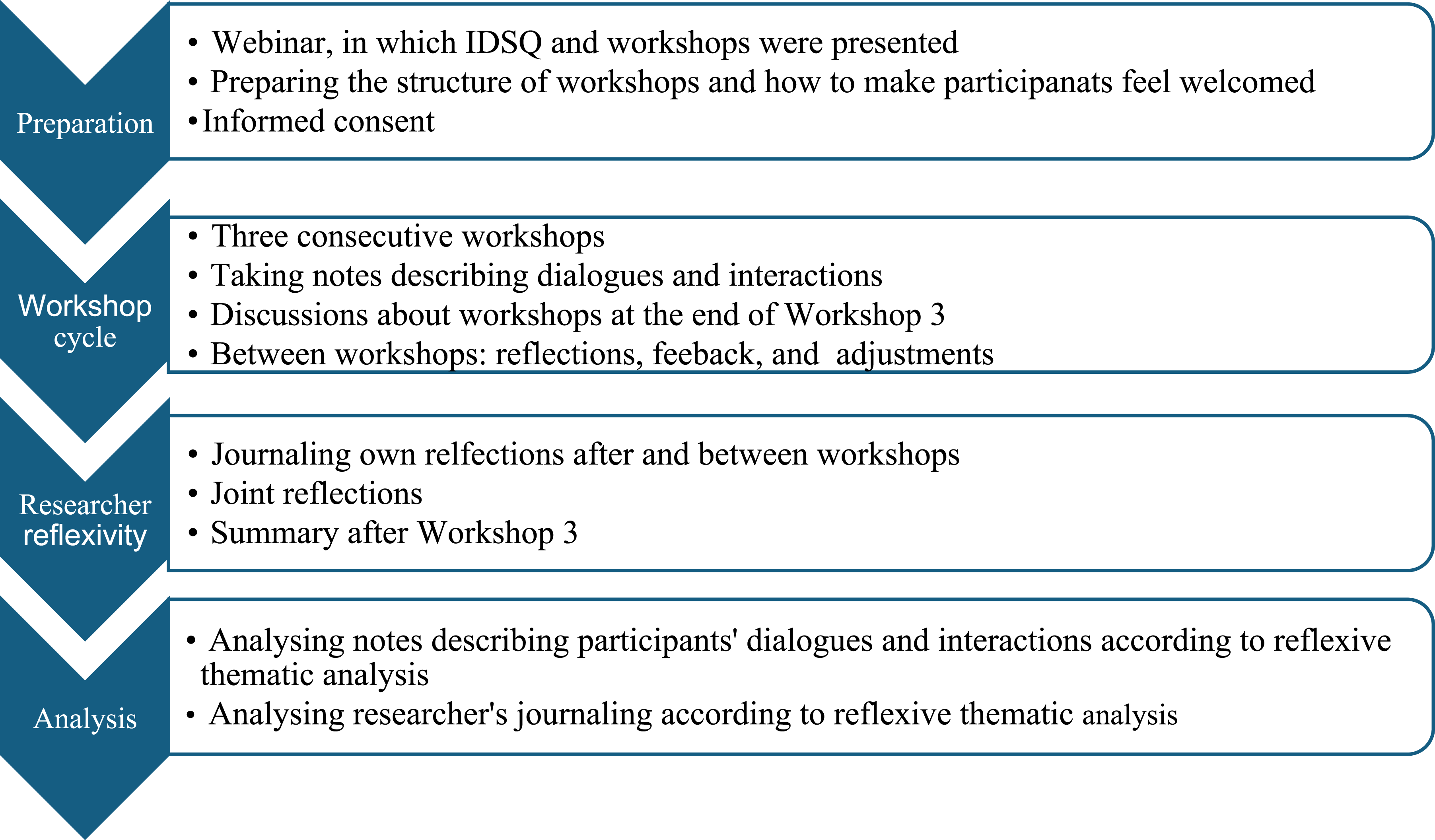
Two months prior to the workshops, participants attended a 40-minute web-based seminar in which the IDSQ and the forthcoming workshops were introduced. During the webinar, participants posed questions and shared reflections on violence against persons with intellectual disability, the IDSQ, and the forthcoming workshops.
Each of the three workshops lasted 2.5 hours, including scheduled breaks. At the beginning of each workshop, the workshop agenda was presented. During the workshops, the researchers alternated between moderating discussions and taking notes, documenting the dialogues. At the end of each workshop, (Name) summarized the discussions and invited participants to provide additional comments and correct any misunderstandings. Notes from Workshops 1 and 2 were summarized immediately after each workshop and presented at Workshops 2 and 3, respectively. This iterative process enabled findings to be further examined across successive workshops, supporting collective reflection (Sankofa, 2023). It also allowed participants to add reflections that had emerged after earlier workshops.
For most of the time, the group worked together as a whole. When specific items in the IDSQ were discussed, participants were divided into two groups to facilitate more in-depth discussions. The groups then shared reconvened to share their reflections.
Workshop 1 began with a brief recapitulation of the IDSQ, followed by participant introductions. The participants then, on their own initiative, reflected on how to work together. The agenda concerned the items in the IDSQ. Participants were provided with the IDSQ protocol, paper, and pens, and were asked to read the protocol, make individual comments, and subsequently discuss each item.
In Workshop 2, the focus was on how the IDSQ could be introduced to clients and professionals. The items were further examined, and ethical issues were discussed.
Workshop 3 addressed collaboration between service agencies and the implementation of the IDSQ. Toward the end of Workshop 3, each participant was asked to summarize their personal reflections on the workshops. Finally, participants discussed the workshop process, including the possibilities and challenges of CW and how the method could be developed.
After each workshop, we as researcher, discussed how the workshops progressed and whether any aspects, related to the content of the workshops or the process, should be addressed. After Workshop 1, we noted that the participants raised associations and topics we had not anticipated. Therefore, at the beginning of Workshop 2, we explicitly encouraged participants to move beyond the agenda and introduce their own ideas.
Following Workshop 3, the researchers engaged in a joint reflective session on their overall experiences. These reflections were conducted openly and included aspects the researchers considered significant, such as emotional responses and considerations related to the organization of the workshops. (Name) summarized these reflections in a document. Subsequently, each researcher independently reflected on the following topics: Thoughts when planning workshops; Surprises; What worked well and what could be improved; Overall impression; and Suggestions for future research. These individual reflections were each summarized in documents of approximately 600 words, resulting in three separate documents.
Ethical considerations
This study is part of a larger research project concerning violence against persons with intellectual disability. Ethical approval was sought from the Swedish Ethical Review Authority, which determined that for this study, approval was not required as it did not concern sensitive personal data or information about clients.
Before Workshop 1, the participants received both written and verbal information about the study. They were informed that their privacy would be protected and that they could withdraw at any time without providing a reason. They were also given the opportunity to ask questions about the study. Thereafter, they signed their informed consent. To ensure comprehensibility, instructions were available in simplified language. Participants also signed a form stating that the content of the workshops would remain confidential. In addition, participants were informed about the workshop schedules, including time allocated for coffee breaks. This ensured that they knew what to expect and knew that there would be opportunities for rest, casual conversation and refreshments such as coffee and sandwiches.
At times, the extent of violence against persons with intellectual disability was reflected on. During such moments, the group discussed the importance of engaging with and learning from one another, as well as the necessity of collaboration to improve practices.
Analysis
The workshop data were analyzed using reflexive thematic analysis (RTA). RTA is a method for presenting patterns in data while also acknowledging nuances and differences between participants. This was important given the diversity within the participant group.
The documentation of participants’ dialogues and interactions was analyzed first. The focus was on their experiences, while also acknowledging contextual factors and the researchers’ pre-understandings, and how these influenced the research design and analysis (Braun and Clarke, 2021).
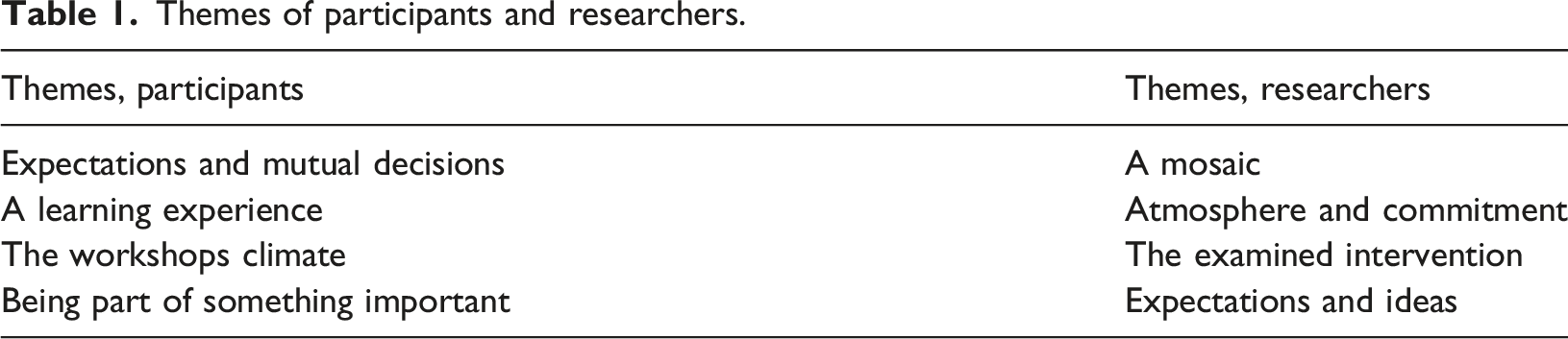
In the first phase, each document was read and re-read by (Name), who coded all statements. Next, all three authors reviewed the codes to ensure that they captured the content of the notes. In phase three, the codes from Workshop 1, 2 and 3 respectively were examined by (Name), and codes with similar content were combined into provisional themes representing each workshop. In the fourth phase, the provisional themes from all three workshops were analyzed together. Themes with similar content were grouped into four overarching themes; Expectations and mutual decisions, A learning experience, The workshop climate, and Being part of something important. The three authors reviewed the themes collaboratively and compared them with the workshop notes and codes, to ensure their validity (Braun and Clarke, 2021: p.97, 101). The themes thus represent dialogues from all three workshops and are illustrated with quotes that were noted during the workshops.
Thereafter, the researchers’ reflections were analyzed. In the first phase, (Name) read and re-read the document containing joint reflections, and the three individual reflection documents. Thereafter, (Name) coded each statement. The researchers then together reviewed the codes to ensure they accurately represented their experiences and reflections. In phase three, codes with similar content from all three authors were grouped into provisional themes. During this process, the researchers discussed the codes and provisional themes, reflected on each other’s, and their own comments, and added further reflections. They also revisited how the workshops had unfolded, supporting one another in deepening their understanding of what worked well and what could be improved. Thereafter, (Name) revised the coding and provisional themes. In the fourth phase, (Name) combined provisional themes with similar content, creating four themes; A mosaic, Atmosphere and commitment, The examined intervention, Expectations and ideas. The themes were reviewed by all three researchers before the final presentation was written.
Reflexivity
During the workshops and the analysis, we journaled our thoughts and experiences. When describing journaling, Braun and Clarke (2021, 19) note that “the process helps you push yourself deeper into reflexivity, so note your responses to things, but also interrogate those”. Accordingly, we posed questions to ourselves and each other. Our dialogues and personal notes reminded us of how our pre-understandings shaped both the design of the workshops and the analysis.
To ensure that the analysis was grounded in the participants’ dialogues, we continuously scrutinized our notes, as well as the codes and developing themes, asking ourselves whether they accurately represented the workshops and whether participants would recognize themselves in them. We also asked two participating professionals to review the findings and comment om them. They found the themes and quotes relevant and did not suggest any changes.
In line with reflexive thematic analysis, our analysis involves a substantial degree of subjectivity. Therefore, the findings should not be considered the ‘truth’ about how to conduct CW, but as our perspectives. As researchers and professionals, we represent social work and psychology. We have experience in both research and practice with persons with disabilities, persons exposed to violence and abuse, and persons living with severe mental health issues, sometimes at their intersection. This background has influenced our approach to violence against persons with intellectual disability as an inherently complex phenomenon. It has also shaped our conviction that practice should be informed by collaboration and knowledge circulation, and that research is ideally interdisciplinary and aimed at producing knowledge that is applicable across agencies and professional contexts. These perspectives have informed both the design of our study and our analysis.
We recognize that our efforts to acknowledge complexity and interdisciplinarity may result in research projects and findings that are less precise. We consider specialized studies, for example those focusing on how specific professionals implement interventions, to be important. Still, broader knowledge is our primary aim.
Themes of participants and researchers.
Findings
Participants’ experiences
Expectations and mutual decisions
At the beginning of Workshop 1, the participants spontaneously discussed their expectations. They expressed that they had been looking forward to the workshops, particularly to meeting persons representing perspectives and experiences different from their own. Some noted that colleagues had expressed interest in participating, as illustrated by the following quote, “Some in my team asked it additional workshops could be arranged so they also could listen to others from other agencies”.
Participants then took the initiative to discuss how to work together. Given their diverse backgrounds and experiences, they emphasized the importance of jointly creating a structure for collaboration during the workshops. They underlined the need to show respect for others’ perspectives and experiences and to listen to one another. They also agreed on the importance of asking questions to foster deeper understanding and prevent potential misunderstandings. Moreover, they requested that the researchers guide the discussions back to the agenda if the focus was lost.
Throughout the workshops, interactions were characterized by a listening attitude and curiosity about other’s perspectives. For example, participants discussed whether it was appropriate to ask questions about intellectual disability during the first encounter with a client, and whether such knowledge was necessary at that stage. A social worker working with persons exposed to violence said, “this can wait” whereas the police officer expressed that “one must know immediately”. The police officer further explained that such information is important when planning interrogations. Through such dialogues, participants developed and increased understanding of each other’s roles and responsibilities. The group felt that such dialogues illustrated the value of meeting each other.
Some participants were less verbally active. To engage them, others actively involve them by posing questions. On a few occasions, discussions diverged from the topic, and the researchers guided the participants back to the workshop agenda.
A learning experience
Participants described the workshops as opportunities to engage across professions, positions, and experiences, and learn collaboratively. During Workshop 2, one participant noted that the workshops helped him “identify gaps” within his agency. Some participants specifically wanted to learn how violence against persons with intellectual disability could be identified, while others focused on how victims could be supported. One participant stated that the workshops “clarify the probabilities of not reaching people with intellectual disabilities” prompting the group to discuss how knowledge is essential for identifying persons with intellectual disability, preventing violence and providing appropriate care.
Participants with intellectual disability reported gaining insight into how professionals work and noted that this knowledge could be shared with others. The group discussed the importance of including persons with intellectual disability in professional education, as they contribute knowledge that cannot be acquired through conventional education. One participant remarked that the “perspectives and reactions of persons with intellectual disability, and relatives, may be misunderstood” particularly in time-constrained situations. According to the professionals, persons with lived experiences can also remind professionals of what it means to live with an intellectual disability and how they may be overlooked across services. They thereby contribute to the development of improved interventions. Thus, the knowledge of experts by experience was perceived as irreplaceable.
Participating professionals also valued the opportunity to learn about prerequisites, responsibilities, and regulations that shape other professionals’ work. This helped to reduce misunderstandings, including assumptions that others may be unwilling to contribute to solving complex situations.
All participants said that the interactive nature of the workshops was crucial for learning. They suggested that workshops could be valuable not only in research contexts but also as a form of learning in everyday professional practice.
The workshop climate
Across the three workshops and in the final discussion, participants expressed that they appreciated being part of the workshops. One professional noted, “In many groups I’ve been part of, there are some persons who talk very much. Here, no one took over”. Participants also appreciated that coffee and sandwiches were provided, as this contributed to a pleasant and welcoming atmosphere.
The number and duration of workshops were considered appropriate. Participants felt that discussions could be consecutively deepened, and one said, “you get food for thought, not least about gaps in one’s own agency”. During the final discussion, participants were asked whether they found participation tiring, or the workshops too long. None expressed that the workshops were tiring or overly lengthy. On the contrary, they appreciated having sufficient time to discuss examples, ask questions, and deepen the dialogues.
Participants also reflected on the advantages and disadvantages of not audio recording the workshops. Some felt that recording might have been beneficial, as it could have relieved the researchers of the task of documentation, and ensured that no details were lost. However, most participants appreciated that the workshops were not recorded. One participant described the workshops format as “relaxing” and noted that recordings can create self-consciousness, which may inhibit open discussions.
Being part of something important
Participants expressed that through encountering each other and sharing perspectives, they felt they were part of something important. At the end of Workshop 3, one social worker addressed the researchers, saying, ”It’s good that you’re doing this”. For her, collaboration and dialogue provided an opportunity to recognize the everyday work of professionals across agencies. Thereby, beneficial practices could be acknowledged, and areas in need of improvement could be identified.
Relatedly, participants expressed that it felt “good to contribute”, as one put it. Yet they emphasized that many additional stakeholders could contribute valuable perspectives. For example, they mentioned the Migration agency, non-governmental organizations, and units aimed at persons exposed to honor-related violence or sexual exploitation. One participant from a healthcare agency stated, “You shouldn’t forget that stakeholders and politicians are important” and suggested organizing workshops that would include them.
Participants with lived experience emphasized that they have first-hand knowledge of what it means to be underestimated and overlooked and appreciated that these experiences could be transformed into something meaningful. In response, other participants underlined the importance of including persons with lived experience, as they can remind professionals of the need for empathy and for approaching each person with openness and respect. One participant said, “We should arrange workshops within our own teams and agencies and invite persons with intellectual disabilities who could help us approach these questions”.
Researcher’s experiences
A mosaic
As researchers, we observed that the diversity of participants’ perspectives and positions reduced the risk of important topics being overlooked, particularly regarding how encounters with professionals may be experienced by those concerned. We were struck by the participants’ ability to remain focused on the topic while simultaneously identifying new angles and insights. We were also impressed by their capacity to move fluidly between structured activities, personal reflections, and active listening. The term mosaic was chosen for this theme, as it captures how multiple pieces can come together to form something new, something greater than the sum of its parts.
At times, the dialogues were broad and relevant to all participants. On other occasions, they focused on the prerequisites and challenges faced by particular professional groups. One example of the latter arose when participants from a field work unit explained that they cannot rely on questionnaires, as they encounter young people in urban environments, including on trams or buses. Instead, they must remain attentive to the possibility that a young person may have an intellectual disability or be exposed to violence and respond as the best they can in the moment.
Adding to the mosaic, one participant with an intellectual disability expressed that individuals may conceal their disability due to previous experiences of being insulted. Avoiding the topic may serve as a form of self-protection.
Just as participants learned from listening to one another, we learned through listening to them, and through our own journaling and reflections. The extent to which the workshops became learning moments, also for us, was notable.
Atmosphere and commitment
In our individuals and joint reflections, we considered the participants’ initiative to discuss how to collaborate, as we perceived this discussion as essential for the forthcoming workshops. They emphasized the importance of listening and supporting one another, thereby co-creating an atmosphere that was both productive and empathic as well as encouraging. The atmosphere was characterized by humor alongside thoughtfulness and willingness to reflect on own mistakes.
Initially, we felt that we should have planned a structured discussion about how to collaborate and explicitly informed the participants of this. We briefly experienced this as a shortcoming and felt, in a sense, “rescued” by the participants. Upon further reflection, however, we realized that we, unintentionally, had created space for the participants the make the workshops “their own”, rather than being directed by us. Excessive prior instructions might have been experienced as restrictive or even discouraging. This led us to consider the value of trusting both the process and the participants’ capacity to work together.
There was also a sense of commitment among participants. They not only responded to questions but introduced topics and ideas themselves. Through this engagement, they became acquainted with one another. Some exchanged phone numbers and e-mail addresses and expressed a desire to stay in touch. Additionally, some professionals planned to invite participants with intellectual disability to their agencies as a part of professional education.
The examined intervention
We also reflected on how IDSQ was discussed. Participants continuously examined potential challenges in using IDSQ in practice, particularly the ethical dimensions of using screening methods for intellectual disability. They noted that some items could be perceived as offensive. They also highlighted that if IDSQ is used but clients conceal their difficulties, professionals may develop a false sense of certainty that the client does not have an intellectual disability.
At the same time, possibilities and advantages of using IDSQ were discussed. Some professionals felt that they could begin using IDSQ immediately. Others found it more difficult to apply yet considered it an important reminder that clients may have an intellectual disability. Reflecting on these differing perspectives, we were reminded that although our research aim is to contribute broad, interdisciplinary knowledge, it is equally important to examine the opportunities and challenges of using screening methods within specific organizational contexts.
Expectations and ideas
Prior to the workshops, we were enthusiastic and eager to listen to the participants. We strived to create a welcoming and relaxed environment, carefully considering how to engage with participants, and preparing coffee and sandwiches in case anyone had not had time for lunch. At the same time, we felt some uncertainty and reflected on whether participant would feel welcomed, whether discussion would take place on equal terms, and whether we had invited the “right” participants, whatever that might mean. None of these concerns were realized. On the contrary, we were surprised how smoothly the workshops unfolded.
The agendas prepared for each workshop helped maintain focus, while remaining sufficiently flexible to allow for variation. This enabled us to adapt to participants’ discussions and the evolving process. Nevertheless, we reflected on whether the workshop topics could have been more clearly defined. There is no definite answer regarding how focused such topics should be, but the issue warrants consideration.
We also reflected on what characterizes workshops, for example, where to draw the line between workshops and focus groups, and whether we should have incorporated more hands-on activities such as mapping or roleplay to further enriched the process.
Our notes also included ideas for developing research processes. Brief reflections such as “I want to work like this more” and “Trust the process” appeared alongside more extensive considerations of the workshops. The richness of the dialogues, in comparison to other methods, indicated that CW is a valuable method. We also considered ways in which CW could be further developed. One idea was to involve participants more actively in the research process, for example in data analysis or study design. Such involvement could help ensure that research remains relevant to both professionals and persons concerned.
Discussion
Researchers should, when planning and conducting studies, invite practitioners and persons with lived experience to share their perspectives, as this promotes research findings that are relevant to, and applicable in, everyday practice (Hughes et al., 2020; Schäfer et al., 2024). This is particularly important when exploring complex topics (Iacono, 2021; Raisio and Vartiainen, 2020).
In line with this, we used CW as a method to generate multifaceted knowledge about violence against persons with intellectual disability. We found that CW supports dialogues that, in turn, generate forms of knowledge that are difficult to achieve using other methods. Below, we first discuss the richness of CW, followed by an examination of how knowledge can be generated from this approach, including insights related to IDSQ. Finally, we consider how CW can be further developed and discuss limitations to the study.
The workshop format
A central feature of workshops is that they provide opportunities to talk, listen, ask questions, and encounter one another on equal terms, while focusing on a specific domain with which the participants directly engage (Hu, 2024). Thereby, understanding of other’s experiences can be developed, and misunderstandings reduced. Our study shows that CW also contributes to recognizing the valuable work carried out by professionals, while clarifying the prerequisites under which different professionals work. We hypothesize that the collaborative atmosphere fosters respectful curiosity, which in turn strengthens effective and ethical practices. Thus, when using CW as a research method, the focus can be both on identifying practices in need of improvement, and on highlighting fruitful and supportive practices, as well as how professionals and experts by experience can support one another.
We suggest that CW is particularly relevant when researching a concrete method, in this case IDSQ since dialogues and learning processes are concrete and directly connected to the method concerned. This helps to keep discussions grounded and reduces the risk of drifting into unrelated topics or overly abstract reasoning. In our study, the focus on possibilities and limitations of IDSQ generated insights into both its feasibility and its constraints. These insights were likely made possible by participants’ active engagement with the items. We also suggest that this concrete dimension distinguishes CW from traditional focus groups and makes CW particularly suitable for persons with lived experiences.
In this study, everyone involved, including the researchers, considered it essential to include persons with lived experience. They contribute perspectives that are often overlooked in research and practice, particularly by articulating what it means to live with an intellectual disability and to experience neglect in encounters with professionals. This is important, as previous research has shown that persons with intellectual disability often face challenges in making their voices heard in professional encounters (McGilloway et al., 2020; Willott et al., 2020; Åker and Johnson, 2020). Their presence also underlined the importance of ethical awareness, especially as they emphasize the need for professionals to avoid unintentionally causing harm through the way questions are posed.
However, it should be noted that simply assembling a group of individuals is not sufficient to ensure dialogue on equal terms. Participants need sufficient time to introduce themselves and to ask questions throughout the workshops, allowing dialogues to deepen and concrete examples to emerge. Hu (2024) notes that workshops involving participants with diverse roles and responsibilities contribute to rich data. In line with this, we suggest that the collaborative and non-hierarchal nature of CW contributes both to participants’ experiences of CW as a learning process and to the richness of the dialogues.
The importance of attending to both verbal and non-verbal forms of expressions has been underlined (Denham and Onwuegbuzi, 2013). In our study, participants not only expressed appreciation verbally but also demonstrated engagement by consistently attending the workshops, despite having the option to withdraw. During the workshops, they actively contributed, posing questions and making suggestion. Previous research suggests that consecutive workshops are beneficial, for example when nurses and nurse student discuss how to support patients exposed to interpersonal violence, as repeated encounters allow for reflection, skill development, and improved practice (Jack et al., 2023). We therefore assume that the same atmosphere and commitment would have been more difficult to achieve in a single-session format.
Schäfer et al. (2024) argue that the outcome of workshops depend on how they are planned and conducted. Accordingly, we made deliberate efforts to prepare how to welcome participants, introduce each workshops’ topic, and provide a clear structure, including scheduled breaks, so that the participants feel both comfortable and informed. Our aim was to create a pleasant and trusting atmosphere. While participants appreciated these efforts, they also actively contributed to creating such an atmosphere themselves, not least by initiating a discussion during the first workshop about how to collaborate.
Initially, we felt that we should have explicitly planned for such a discussion. Upon further reflection, however, we reconsidered this view. Rather than a failure, it may have provided both flexibility and predictability, which enabled participants to feel secure enough to take initiative and contribute meaningfully. We therefore propose that CW should be approached as a process that requires researchers to trust both the participants and the unfolding interaction.
In line with the need to trust the process, we note that none of our initial concerns about the workshops were realized. Nevertheless, these concerns were valuable. By reflecting on potential challenges, such as whether participants would feel welcomed and whether discussions would be on equal terms, we were able to prepare the workshops more thoroughly. These preparations may also have contributed to our own sense of calm and confidence, which likely influenced the participants. If so, preparation is important not only for participants directly but also for researchers, and thus indirectly for the participants. The atmosphere of the workshops is hence co-created. Rather than striving to be a neutral observer, researchers could perceive themselves as reflective co-creators of the process.
Knowledge from workshops
When highly complex problems are studied, collaboration and a shared commitment to counteracting harm and inequality can generate knowledge that is both relevant and applicable in everyday practice (Head and Alford, 2015; Jack et al., 2023; Raisio and Vartiainen, 2020). CW appears to be a method that can contributes to such knowledge. During the workshops, for example, it emerged that the perspectives and reactions of persons with intellectual disability, and their relatives, may be misunderstood, even by experienced professionals. This is in line with prior research (Kildahl et al., 2020) and our findings illuminate the need for continuous professional education.
Moreover, the participants experienced CW as a valuable learning process and suggested that it could be applied in daily practice. This indicates that, while formal education remains important for practitioners, it is equally important to create opportunities for sharing experiences and learning through participating in CW. Previous research has shown that collaboration between healthcare, social service, and police agencies must increase in order to improve the identification of persons with intellectual disability and respond to their needs (Iacono, 2021; Svae et al., 2023; Åker et al., 2022). Professionals with expertise in violence need to collaborate with those specializing in other areas to ensure that appropriate questions about violence are asked (Namatovu et al., 2024). CW may represent a cost-effective method for facilitating such collaboration.
The workshops also highlighted that methods must be adapted to the varying contexts in which professionals work. Conventional methods, such as IDSQ, may be less applicable for social workers who engage with clients outside office settings, for example in urban environments. While IDSQ has been reported as usable across a range of settings and professions (Majeed-Ariss et al., 2020; McKinnon et al., 2015; Silva et al., 2015), professionals often need to respond to unpredictable situations and adapt to the individual needs of each person. This need for flexibility is not always sufficiently reflected in guidelines and methodological instructions, including the IDSQ protocol.
Both professionals and persons with lived experience perceive the IDSQ protocol as complicated and expressed concern about the limited attention to ethical considerations, which together may discourage its use (Punzi et al., 2025). Based on our findings, we propose that guidelines, instructions and protocols should be flexible and adaptable to diverse circumstances and that CW can serve as a valuable approach for developing such materials. A key prerequisite is that participants bring diverse experiences and are encouraged to share their perspectives openly. This allows discussions to move beyond technical aspects of a method and include insights from persons with different forms of expertise. Such an approach contributes both to knowledge production and to the development of method that are relevant to professional practice.
Previous research has shown that persons with intellectual disability often face difficulties in reporting violence and may benefit from targeted education to strengthen their ability to do so (De Mello et al., 2021; Hughes et al., 2020; McGilloway et al., 2020). Our findings indicate that professionals, including experienced ones, also require ongoing education and support. We therefore suggest that CW can be integrated into everyday practice as a means of fostering dialogues and continuous learning.
Ideas for future collaborative workshops
Based on the findings of this study we conclude that CW is a relevant method for collecting empirical data. Simultaneously, CW is more than a data collecting method; data is also generated through the encounters and dialogues that take place. In this process, persons with lived experience are irreplaceable.
In future studies, participants could be involved at an earlier stage, as they may identify topics that researchers are unaware of. This could be achieved by establishing a reference group with professionals and experts by experience. In the discussion, we reflected on the possibility to involve participants in the analysis. However, it should be acknowledged that research is a complex process that involves challenges and uncertainties. Participants should not be exposed to potentially discouraging experiences they cannot reasonably anticipate. If they are to be involved throughout the research process, it must be ensured that they are prepared for aspects such as rejection, and the demanding process of revising academic texts. One possible approach is to involve participants in the analysis but not in the publication process. Collaborative and co-created research involving experts by experience contribute to multi-faceted knowledge (Raisio and Vartiainen, 2020) and broadens the concept of knowledge. CW may contribute to this development.
Limitations
This study has several limitations. First, the participants were interested not only in the topic but also in participating in workshops. It cannot be assumed that all professionals or experts by experiences would feel comfortable engaging in CW. Additionally, as some participants suggested, the workshops could have been audio recorded which would have allow for richer data beyond written documentation. To mitigate potential bias and issues related to recall, two participants reviewed the findings and confirmed that they reflected their experiences of the workshops. In line with Schäfer et al. (2024) we took detailed notes during the workshops. We also systematically documented and made our reflections transparent (Braun and Clarke, 2021). Nevertheless, the lack of access to verbatim data remains a limitation.
It should also be acknowledged that some participants may have held divergent views but chose not to express them, possibly due to a desire to align with the researchers’ perspectives. This might have been mitigated by involving participants earlier in the research process or by including some of them in the analysis and the writing process. Finally, an important limitation is that we documented and reflected on our own work. Future studies could benefit from involving independent researchers to evaluate the research process. Despite these limitations, we propose that CW is a relevant and promising research method. When interventions involving multiple professionals and agencies are studied, CW may even be a preferred approach.
Footnotes

Ethical considerations
According to the Swedish ethical review authority, no permission was needed for this study since it does not contain sensitive information. We have designed the study in accordance with rules on informed consent, anonymity, confidentiality and the right to withdraw.
Consent to participate
Participants received written and verbal information about the study and then signed an informed consent form.
Consent for publication
Before we obtained written informed consenst to participate, all participants were informed that the workshops would result in scientific articles. They were also informed that no personal information would be presented.
Author contributions
Punzi and Starke planned the workshops and handled the recruitment and information process. Punzi, Melander Hagborg, and Starke conducted the workshops and engaged in individual and mutual reflection. Elisabeth Punzi conducted most parts of the analysis, in collaboration with Melander Hagborg and Starke. Punzi wrote the article, in collaboration with Melander Hagborg and Starke.
Funding
This work was supported by Brottsofferfonden (Swedish crime victim authority).
Declaration of conflicting interests
The authors declared no potential conflicts of interest with respect to the research, authorship, and/or publication of this article.