






Abstract
This qualitative study examines the impact of structured theatre-based practices on classroom management, based on the experiences of special education teachers working with students with intellectual disabilities. It investigates how these practices contribute to classroom interaction, behavioral regulation, and the learning environment. Semi-structured interviews were conducted with ten teachers who observed and implemented the practices in their classrooms. Thematic analysis revealed four main themes: contributions to classroom management, individual behavioral development, changes in peer interactions, and effects on student attitudes toward teachers. The findings show that theatre-based practices enhance students’ self-regulation, behavioral adjustment, and social interaction skills, supporting effective classroom management. Moreover, they foster positive transformations in student–teacher and peer relationships, promoting an inclusive and interaction-oriented classroom climate. Structured theatre-based practices thus serve as both pedagogical tools and innovative resources for classroom management in special education settings.
Keywords
Introduction
Classroom management is a fundamental component that ensures teaching and learning activities proceed effectively and without interruption, as intended. It not only supports teachers’ instructional efforts but also directly influences students’ active engagement in the learning process. Therefore, the scope of classroom management extends far beyond the maintenance of discipline. It encompasses a range of interconnected dimensions, including the regulation of classroom interactions, the organization of the learning environment, time management, and the control of student behaviors. In this regard, classroom management constitutes a holistic process involving the arrangement of the physical environment, the effective implementation of instructional programs, the efficient use of time, the regulation of student–teacher relationships, and the application of strategies to guide student behavior. Among these elements, managing disruptive behaviors that threaten the order of the learning environment and interrupt instruction represents one of the most critical aspects of classroom management (Tuti et al., 2025).
Disruptive behaviors frequently observed in learning environments are defined as recurring patterns that hinder students’ academic development and complicate teacher interventions (Harlacher, 2022). Theoretically, these behaviors are conceptualized at three main levels: at the individual level, they involve withdrawal and impulsivity; in peer interactions, they manifest as verbal or physical aggression, teasing, and exclusion; and in relation to teachers, they appear as noncompliance with instructions, rule violations, and resistance to authority (Gordon, 2001; Kounin, 1970). Several factors play a significant role in the emergence of such behaviors, including students’ socio-emotional development, environmental conditions, and instructional methods (Scott et al., 2011; Torres, 2017).
In special education classrooms that include students with intellectual disabilities, such behaviors occur more frequently, in more diverse forms, and across multiple dimensions. This situation makes classroom management significantly more complex. These behaviors often reflect both internalizing features, such as anxiety and social withdrawal, and externalizing characteristics, such as temper outbursts and aggression. They are not limited to cases requiring individual intervention; rather, they directly influence social relationships in the classroom and the interaction between teachers and students (Oliver and Reschly, 2017; Reinke et al., 2020). In this context, the complex structure shaped by individual behavior patterns, peer relations, and student attitudes toward teachers affects all components of classroom management. Therefore, teachers must develop approaches that include not only pedagogical skills but also emotional awareness and sensitivity to interpersonal dynamics. In this regard, effective classroom management in special education settings serves not only to maintain academic continuity but also plays a critical role in promoting social cohesion, sustaining interactional balance, and preserving the integrity of the instructional environment (Chao et al., 2017; Farmer et al., 2017; Scott, 2017).
However, the literature indicates that teachers often struggle to cope with behaviors such as impulsivity, temper tantrums, and rule violations. These challenges can elevate stress levels, lead to emotional exhaustion, and undermine the quality of interpersonal relationships (Gyasi et al., 2020; Oliver and Reschly, 2017). Universal interventions have been shown to reduce such difficulties, especially when positive changes in teacher attitudes significantly influence student outcomes (Oliver and Reschly, 2017). Nevertheless, the structural and professional barriers that teachers face in transferring existing interventions into classroom settings (Kaya, 2023) have prompted them to seek more innovative and interaction-focused strategies. This growing need points to the importance of exploring alternative approaches.
Among these approaches, student-centered interventions that help learners recognize, regulate, and adapt their behaviors to appropriate social contexts have gained prominence. In particular, self-management strategies strengthen the internal control skills of individuals with intellectual disabilities, supporting autonomous behavior regulation while also reducing the teacher’s classroom management burden (Hoff and DuPaul, 1998). Within this framework, theatre-based practices have attracted attention due to their emphasis on creativity and social interaction. These practices contribute to the development of socio-emotional skills such as sustaining attention, demonstrating empathy, recognizing emotions, following rules, and acting cooperatively. In doing so, they aim to promote positive behavioral transformations in the classroom (Corbett et al., 2011; Eratay, 2012; Maas, 2019; Ünay and Erdem, 2025). Indeed, various studies involving individuals with intellectual disabilities have shown that such practices reduce behaviors including social withdrawal, aggression, and resistance to instructions (Bololia et al., 2022; Corbett et al., 2011; Ioannou et al., 2020; Mpella et al., 2019; Ünay, 2026). In conclusion, structured theatre-based practices stand out as a comprehensive intervention tool that supports both instructional processes and students’ socio-emotional development within the scope of classroom management.
This study is grounded in Bandura’s Social Cognitive Theory (1977), which posits that individual behaviors are shaped not only by internal traits but also by environmental stimuli, cognitive processes, and observational learning. Observational learning, closely linked to self-regulation and the development of self-efficacy, enables individuals to internalize behaviors by observing others. In this context, enacting social roles in the classroom contributes to students’ development of self-confidence and internal control. Structured theatre activities operationalize this theoretical framework by allowing students with intellectual disabilities to engage with social roles, explore alternative behaviors, and enhance their self-regulation skills (Cook, 2020; Fabian et al., 2022). Indeed, theatre-based interventions have emerged as creative and transformative instructional strategies that foster the development of empathy, attention span, emotional regulation, and social interaction (Ioannou et al., 2020; Maas, 2019).
The positive effects of structured theatre-based practices on behavioral development have been clearly demonstrated, particularly in studies involving individuals diagnosed with autism spectrum disorder. These practices support students in developing social awareness, self-concept, and rule-governed interaction (Corbett et al., 2011; Frydman and Mayor, 2021; Mpella et al., 2019). In Turkey, however, theatre-based interventions are mostly implemented in the form of creative drama with small groups, and the number of systematic and structured examples remains limited (Önemli et al., 2015, Özçınar, 2018). Furthermore, many existing studies rely on short-term interventions and tend to overlook contextual factors, which limits their ability to evaluate long-term behavioral outcomes (Anderson, 1992; Lenakakis and Koltsida, 2017). This situation highlights the need for qualitative research that analyzes theatre-based structured activities implemented in special education classrooms through teacher observations and takes contextual dynamics into account.
This study aims to evaluate the impact of structured theatre practices, implemented with students with intellectual disabilities as part of a TÜBİTAK-supported project, on classroom management through teacher perspectives. Within this scope, classroom management is conceptualized not merely as a process targeting the regulation of individual behaviors, but as a multilayered structure that also encompasses key classroom variables such as the quality of peer interactions and student–teacher relationships. The study seeks to analyze the contributions of theatre-based practices to this complex structure by addressing both pedagogical and social dimensions. Based on this aim, the following research questions guided the study: 1. How do teachers describe the contributions of structured theatre-based practices to classroom management processes? 2. How do teachers evaluate the changes these practices bring about in students’ individual behaviors? 3. How do teachers describe the effects of the theatre process on students’ peer interactions and social relationships? 4. How do teachers explain the changes in students’ attitudes and communication patterns toward the teacher as a result of theatre-based practices?
Method
Research design
This qualitative study employed a phenomenological approach to examine how structured theatre-based practices with students with intellectual disabilities influenced classroom management, as perceived by special education teachers. Phenomenology, which revealed how individuals experience and make sense of a phenomenon (Creswell, 2018; Özdemir and Tuti, 2023), provided a suitable framework for exploring teachers’ insights into this pedagogical process. This study adopts an interpretive (hermeneutic) phenomenological approach, focusing on understanding participants’ lived experiences through contextual and meaning-oriented analysis.
The study aimed to understand teachers’ experiences with theatre-based practices, their classroom observations, and their interpretations of behavioral changes. The research process followed phenomenological principles, using semi-structured interviews as the primary data collection method (van Manen, 2016). This enabled participants to describe their experiences and reflect within a pedagogical context.
Interview questions focused on behavioral regulation and the dynamics of student–student and student–teacher interactions in relation to classroom management. Data analysis followed a phenomenological method: all data were considered equally, and meaning clusters were identified through recurring themes in the teachers’ narratives (Moustakas, 1994). Findings were grounded in participants’ experiences and supported with direct quotations.
Participants
The participants were special education teachers who took part in a project implementing structured theatre-based practices and directly observed the sessions with students with intellectual disabilities. Participants were selected through purposive sampling (Merriam, 2009) based on three criteria: active project participation, direct observation of student behaviors, and willingness to reflect on classroom implications. Teachers were identified in collaboration with the project coordinator and school administrators. Selection emphasized not only involvement in the project but also the capacity to evaluate behavioral impacts from a pedagogical perspective. Sampling concluded upon reaching data saturation. After each interview, audio recordings and transcripts were reviewed, and new codes and themes were tracked to ensure systematic data collection (Braun and Clarke, 2021).
Demographic characteristics of participants (N=10).
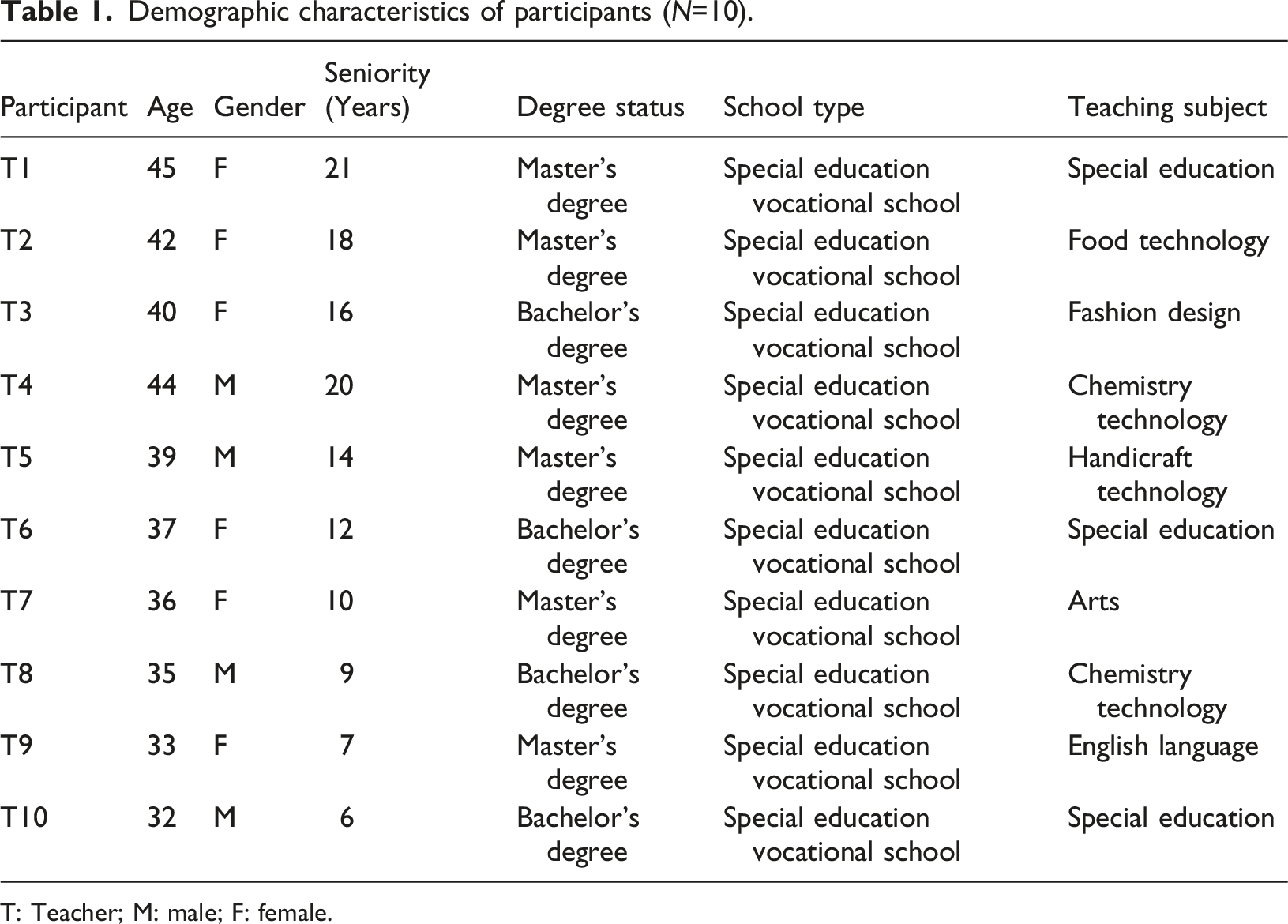
T: Teacher; M: male; F: female.
Project procedure
This study was conducted as part of a project supported by the Scientific and Technological Research Council of Turkey (TÜBİTAK) within the scope of the 4008 Inclusive Society Support Program for Individuals with Special Needs. The implementation involved 23 high school students diagnosed with developmental disabilities who were enrolled at a Special Education Vocational Training Center in Trabzon. The data for the study were collected through interviews with teachers who worked directly with these students during the project. The student group consisted of 10 females (43.5%) and 13 males (56.5%).
The project was implemented over a ten-week period under the guidance of four field experts and ten trainers. Within this framework, a structured theatre-based intervention was carried out with the participating students. This process provided a context in which teachers were able to observe students’ behaviours, interactions, and engagement patterns, and to reflect on these observations in relation to classroom management.
Ethical considerations
Ethical approval for this study was obtained from the Ethics Committee of the Faculty of Social and Behavioral Sciences at Trabzon University (Approval No: 2400037154, Date: 27 July 2024). All participants were informed about the purpose of the study, and informed consent was obtained prior to participation. Confidentiality and anonymity of the participants were maintained throughout the research process.
Theatre-based intervention process
The theatre-based intervention was designed as a structured and interactive learning process grounded in experiential learning principles, aiming to support students’ social competencies, including relationship initiation and maintenance, emotional expression, cooperation, and conflict management. The intervention was implemented over a ten-week period, including nine weeks of structured sessions and a final performance week. The intervention lasted nine weeks and consisted of ten sessions, each lasting approximately 60–75 minutes. Each session followed a consistent three-phase structure to ensure procedural continuity. The first phase involved theatre-based warm-up activities (10–15 minutes), including name games, mirroring exercises, and rhythm-based group tasks. These activities were used to facilitate engagement, increase body awareness, and promote group cohesion.
The second phase (40–45 minutes) constituted the core theatre work and was structured around the staged development of the play Delikburunlular Kabilesi (The Tribe of Hole-Nosed People) (Engindeniz, 2018). The intervention followed a script-based approach centred on rehearsal and performance preparation rather than improvisational or forum-based practices. During this phase, students engaged in role assignment, line reading and memorisation, character enactment, coordinated stage movement (blocking), and scene performance. The play consisted of six separate scenes involving different student groups, allowing all participants to be actively involved in the process.
Through repeated rehearsal cycles, students participated in structured interactions within clearly defined roles and narrative contexts. These activities required students to coordinate with peers, respond to cues, maintain attention, and participate in collective scene construction. No formal theatre game-based or forum-based techniques were employed; instead, the intervention relied on structured role enactment and guided interaction within a predefined script.
The final phase (10–15 minutes) involved reflection and group sharing. Students were invited to express their experiences and reflect on their participation through guided prompts (e.g., “How did you feel in that role?”). These discussions were used to support expression and participation within a structured format.
Attendance was monitored throughout the intervention, and a maximum of two absences was set as the inclusion criterion for analysis. In cases of absence, roles were temporarily reassigned to ensure continuity of the scenes, which also required students to adapt to changing group dynamics.
The sessions were conducted by the researcher in collaboration with a professional theatre actor affiliated with the Turkish State Theatre, who had over 25 years of experience. While the actor facilitated the theatre-related activities, the researcher monitored the process to ensure alignment with the educational aims of the study. Teachers participating in the research acted primarily as observers during the sessions. They did not take part as performers but closely followed student behaviours, interactions, and engagement throughout the intervention.
The intervention concluded with a public performance presented to an audience of approximately 500 preschool and primary school students. This performance represented the final stage of the rehearsal process and provided a context in which students enacted the scenes they had practiced. It is acknowledged that the performance itself may have contributed to students’ motivation, social confidence, and teachers’ perceptions of competence; therefore, the observed outcomes should be interpreted as reflecting the combined influence of both the rehearsal process and the performance experience. To ensure implementation fidelity, a structured checklist was developed prior to the intervention. Two independent research assistants, who were familiar with the intervention objectives but were not involved in the implementation, observed selected sessions (2nd, 4th, 7th, and 9th) and evaluated adherence to the planned session structure and activities. The checklist included 16 items assessing the implementation of session components and opportunities for student interaction. Inter-rater reliability between observers was calculated at 94%, indicating a high level of agreement and confirming that the intervention was implemented consistently.
Data collection
Before beginning the data collection process, ethical approval was obtained, and all participants provided written informed consent. The participants were informed clearly about the confidentiality of their data, the anonymity of their identities, and their right to withdraw from the study at any point (Creswell, 2018). To gain a comprehensive understanding of the teachers’ observations regarding the in-class behaviors of students with intellectual disabilities, the study employed semi-structured interviews (van Manen, 2016). This method allowed the participants to explain the behavioral changes and social interaction processes they observed in greater detail.
The interview protocol focused specifically on the effects of theatre-based practices. The responses of the teachers were examined in relation to four main areas: individual student behavior, peer relationships, student–teacher interaction, and the general classroom environment. The interview questions were reviewed by experts in special education and qualitative research. Additionally, a pilot study was conducted to ensure the clarity and consistency of the questions (Maxwell, 2009). The interviews were held individually in quiet and secure settings chosen by the participants. Each interview lasted approximately 30 to 45 minutes. Audio recordings were made with the participants’ permission and later transcribed. During the interviews, follow-up questions were used when necessary to explore the contextual dimensions of the teachers’ experiences in greater depth.
Data analysis
The qualitative data were analyzed using thematic analysis in two stages. First, vertical analysis was applied to each interview individually, focusing on behavioral patterns and experiential accounts related to theatre-based practices based on classroom observations. This stage deepened understanding of participants’ subjective experiences. Second, horizontal analysis was conducted to identify common themes, shared observations, and recurring patterns across participants (Cohen et al., 2011).
Findings from both levels were synthesized into four overarching themes: contributions to classroom management, individual behavioral developments, changes in peer relationships, and effects on students’ attitudes toward the teacher. This thematic structure provided a conceptual framework for exploring the multilayered impacts of theatre-based practices.
Semantic coherence and conceptual consistency were maintained throughout coding. Meaningful subcategories were developed, and themes were aligned with the theoretical framework. Direct quotations supported the findings, enhancing thematic clarity and preserving experiential depth.
Trustworthiness and researcher positioning
This study adopted the four criteria proposed by Lincoln and Guba (1985) to ensure the trustworthiness of the qualitative findings. These criteria include credibility, dependability, confirmability, and transferability. In order to enhance credibility, the researchers applied member checking by sharing interview transcripts and summary analyses with the participants for verification. Peer debriefing was also conducted with field experts to support the validity of the findings (Creswell, 2018).
To ensure confirmability, the research team documented the entire data collection and analysis process in a detailed and systematic manner. Analytic memos and coding decisions were archived. During the coding phase, a second researcher conducted a parallel analysis, and the coding structures were compared and harmonized to ensure consistency (Corbin and Strauss, 1990).
To promote transferability, the research context, characteristics of the participants, the structure of the theatre-based practices, and the classroom settings were described in depth. The researchers’ professional experience in special education and classroom management further enriched the contextual depth of the study. To minimize bias, the team maintained reflective journals and engaged in interpretive dialogues with academic peers. Final interpretations were verified through participant validation.
Findings
The findings were organized around four main themes based on the subjective experiences of the participating teachers after implementing the structured theatre-based activities. These themes included contributions to classroom management, improvements in individual behavioral development, changes in peer relationships, and impacts on student attitudes toward teachers. To capture the depth of teacher perspectives, the analysis includes direct quotations from the participants. The themes reflect shared patterns derived from the teachers’ common observations and highlight recurring experiential insights (Patton, 2002).
Contributions to classroom management
The findings revealed that theatre-based practices supported classroom management in multiple ways. Teacher statements highlighted positive changes in classroom organization, behavioral adjustment among students with intellectual disabilities, the quality of social relationships, and the flow of instructional processes. These results were presented under four main themes: behavior regulation in the classroom, group interaction, instructional flow and time management, and structural reflections on implementation.
Behavior regulation in the classroom
Teachers observed notable improvements in students’ ability to follow rules and regulate their behaviors after the theatre-based sessions. These improvements were particularly evident during structured rehearsals, where students followed sequences, waited their turn, and responded to cues, supporting the internalization of classroom rules. Students adapted more easily to classroom expectations and required less teacher intervention. The following statements reflect these observations: I observed that students began to understand classroom expectations more clearly, and some started to regulate their behaviors independently. This shift made the environment calmer and classroom management more manageable. (T2)
Group interaction in the classroom
Teachers reported that the theatre process enhanced social relationships and encouraged cooperative interaction among students. These developments were particularly evident during group-based rehearsals and role enactment, where students coordinated actions and responded to peers in real time, fostering empathy and collaboration. They observed growth in social skills such as helping behaviors, empathy, and a sense of responsibility. These developments positively influenced the classroom climate. Sample statements include: Theatre-based activities strengthened students’ empathy and sense of solidarity. The collaborative nature of the sessions increased their emotional sensitivity and willingness to help one another. They began to take more responsibility within the group, which reduced the need for constant teacher intervention during class. (T4)
Instructional flow and time management
Participants also highlighted indirect contributions of theatre to instructional processes. These contributions were linked to task-sharing and performance preparation, where students assumed specific roles, supporting focus, persistence, and responsibility. Improvements were noted in students’ attention span, responsibility-taking, and the efficient use of instructional time. The following teacher reflections illustrate this: I observed that students became more self-confident and embraced their responsibilities more seriously after task-sharing activities. This shift not only improved the flow of instruction but also made time management easier for me as a teacher. (T7)
Structural reflections on the implementation process
Some teachers acknowledged the positive impacts of theatre on classroom management but also noted certain limitations regarding scheduling and duration. While the structured and interactive nature of theatre activities supported classroom processes, their time-intensive character created challenges within the existing instructional schedule. Their statements reflect practical considerations observed during implementation: Although the theatre activities had clear benefits—particularly in strengthening teacher–student interaction and improving classroom management—they were time-consuming. For long-term sustainability, scheduling them outside regular class hours would be more appropriate, as they sometimes disrupted the instructional flow. (T1)
Individual behavioral developments
Teacher statements indicated that theatre-based practices made meaningful contributions to improving the classroom behaviors of students with intellectual disabilities and facilitated more effective classroom management. The data were organized into four subthemes: attention span and focus, self-confidence, responsibility and participation, and sense of school belonging.
Attention span and focus
Teachers observed notable improvements in students’ ability to sustain attention and concentrate after the theatre activities. These improvements were particularly evident during repeated rehearsals and line memorization, where students sustained attention, followed sequences, and responded to cues, supporting attention control and persistence. These changes were especially evident in students who previously struggled with distraction. They participated in sessions for longer periods and showed increased memorization abilities. Teacher comments reflected this trend: After the theatre sessions, I observed notable improvements in students’ memory and attention span. They were more focused, eager to participate, and displayed a more positive attitude toward working independently. (T10)
Self-confidence
Teachers emphasized that theatre practices supported self-confidence development, particularly in students who avoided communication or exhibited introverted behavior. This development was especially evident during role enactment and performance, where students expressed emotions in front of peers and received immediate feedback, supporting more confident self-expression. Sample statements include: Students who were previously withdrawn became more confident in expressing themselves and their emotions during the theatre sessions. Taking active roles on stage helped reduce their shyness, improved their communication with the teacher, and increased their willingness to participate in group activities. (T6)
Responsibility and participatory behavior
Teachers reported that students showed increased willingness to engage in learning activities, take on responsibilities, and focus on completing tasks during the theatre sessions. These changes were linked to task-sharing and role distribution during rehearsals, where students took responsibility for specific roles, supporting accountability and active participation. The following statements reflect these observations: I observed a clear improvement in students’ attention span and a reduction in impulsive behaviors during the workshop sessions. They became more cooperative, took greater responsibility, and showed increased enthusiasm for goal-oriented activities. (T3)
Sense of school belonging
Teachers noted that the theatre experience strengthened students’ sense of belonging to the school and encouraged higher levels of engagement. This sense of belonging was reinforced through collaborative rehearsals and the final performance, where students worked as a group and received recognition, supporting feelings of acceptance and inclusion. This impact extended beyond classroom behavior and influenced students’ overall attitudes toward school. Teacher provided the following reflections: One student who had previously avoided both school and social interaction began to attend more willingly and appeared happier after joining the theatre activities. Taking an active role on stage improved their self-expression and sense of acceptance, making them feel more connected to the classroom and school environment. (T8)
Changes in peer interactions
Participating teachers reported that the theatre activities led to positive shifts in how students with developmental differences interacted with their peers. According to the teachers, these changes can be grouped under four main themes: collaboration and mutual support, positive and supportive social behaviors, openness in communication and participation, and responsibility and harmony in group behavior.
Collaboration and mutual support
Teachers stated that the project enhanced students’ ability to work harmoniously within groups and develop cooperative relationships. These developments were particularly evident during group-based rehearsals, where students coordinated actions and timing to sustain the performance, fostering interdependence and mutual support. They emphasized an increase in helping behaviors and coordinated group efforts toward shared goals. The following excerpts illustrate this observation: Through the theatre process, students began to collaborate more effectively and demonstrated increased patience and compatibility during group tasks. Minor conflicts decreased noticeably, while supportive behaviors such as constructive feedback replaced earlier tendencies to criticize, fostering a more positive and cooperative classroom environment. (T4)
Positive and supportive social behaviors
Teachers noted that the theatre activities encouraged students to display more constructive and empathetic behaviors. This shift was particularly evident during role enactment, where students adopted different perspectives, supporting more understanding and constructive responses toward peers. They observed that mocking or exclusion in response to peers’ mistakes was replaced with supportive attitudes. Teacher reflections included the following: After the theatre sessions, students showed a marked shift in how they responded to their peers’ mistakes. Disrespect and mockery gave way to more constructive and supportive behaviors, fostering a sense of collective success and mutual understanding in the classroom. (T2)
Openness in communication and participation
Teachers reported that theatre activities helped students develop a more open and willing approach to verbal communication. These changes were particularly evident during repeated performance and expression activities, where students were encouraged to speak and interact, supporting participation and reducing communication anxiety. In particular, they noted increased confidence among introverted students in engaging with peers. The following examples reflect this: Following the theatre sessions, students became more cheerful and communicative with their peers. Even quieter students showed increased willingness to initiate interaction, speak in front of others, and take part in social activities with greater confidence and motivation. (T5)
Responsibility and harmony in group behavior
Teachers emphasized that the theatre process contributed to more responsible and harmonious behaviors in group settings. These improvements were linked to turn-taking, role distribution, and coordinated group tasks during rehearsals, promoting patience, rule adherence, and social responsibility.They observed progress in turn-taking, cooperative work, and social responsibility. Teacher comments reflected this trend: Through their involvement in theatre activities, students began to demonstrate stronger adherence to classroom norms. They showed greater patience, took turns more willingly, and offered peer support during group tasks like stage preparation. Responsibility-based behaviors—such as apologizing after mistakes—also became more common, fostering a more cooperative and balanced classroom climate. (T9)
Impact on student attitudes toward teachers
Participating teachers observed that the theatre activities led to positive changes in how students with developmental differences interacted with their teachers. These changes became evident particularly in students’ compliance with classroom rules, responses to teacher instructions, and the quality of their interactions with teachers. Teachers’ observations were grouped into three main dimensions: rule compliance, sensitivity to instructions, and student–teacher interaction.
Rule compliance
Teachers reported a noticeable improvement in students’ attitudes toward classroom rules. These changes were particularly evident during structured rehearsals, where students followed rules such as turn-taking and sequence order, supporting the internalization of classroom norms. They observed a decline in resistance to classroom regulations and an increase in rule-sensitive behavior. The following excerpts illustrate these observations: As students became more engaged in the theatre process, their compliance with classroom rules improved. Those who previously resisted or had communication difficulties began to respond more positively to teachers, showing greater responsibility and a better understanding of expectations. (T8)
Sensitivity to instructions
Teachers noted that some students became more attentive and willing to follow teacher instructions. This sensitivity was particularly evident during rehearsal and performance activities, where students followed both verbal and nonverbal cues (e.g., gestures, timing signals, stage directions), strengthening their responsiveness to instructions. They observed greater care and motivation in understanding and applying directions compared to earlier behavior. Sample reflections included: During the theatre activities, I observed that several students became more attentive to my instructions and adapted more smoothly to classroom routines. Some began following verbal directions more carefully, and one student even started responding to nonverbal cues more consistently. The structured nature of the activities appeared to support their focus on teacher guidance. (T7)
Student–teacher interaction
Teachers stated that the project facilitated more open and warm interactions between students and teachers. These developments were particularly evident during interactive and expressive activities, where students shared experiences and received feedback, fostering more open and trusting relationships with teachers. They highlighted positive signs such as improved eye contact, emotional expression, and stronger relational closeness. Teachers shared the following insights: I noticed that some students became more comfortable expressing their emotions to me and other teachers. They were more willing to engage in simple social interactions, such as greeting or maintaining eye contact. These changes contributed to building a more sincere and trust-based teacher–student relationship. (T1)
Discussion
In recent years, there has been a growing interest in holistic approaches that aim to structure classroom management in ways that support the learning and adaptation skills of students with intellectual disabilities (Corbett et al., 2011; Fabian et al., 2022; Ioannou et al., 2020). Within this context, the present study explored the effects of structured theatre-based practices on classroom management from the perspectives of special education teachers. Classroom management was conceptualized not merely as the regulation of individual behavior but as a multi-layered construct that included the quality of peer interactions and student–teacher relationships. The findings were interpreted through the theoretical lens of Bandura’s Social Cognitive Theory and were discussed in relation to the existing literature. The findings indicated that theatre-based practices provided structured social learning environments in which students developed role-based interaction skills, behavioral regulation, and peer coordination through repeated participation.
The first finding of the study revealed that theatre-based structured practices offered multidimensional contributions to classroom management. Based on teachers’ reflections, the data were categorized into four sub-themes: management of classroom behavior, student group interactions, instructional flow and time use, and structural insights into the implementation process. Teachers reported clear improvements in students’ self-regulation, rule compliance, relationship skills, engagement in lessons, and time awareness. In particular, the observed progress in behavioral regulation and adherence to classroom rules aligned with Bandura’s Social Cognitive Theory, which emphasizes the role of modeling, self-monitoring, and reinforcement in shaping behavior (Bandura, 1977), particularly in structured environments where repeated rehearsal and clearly defined roles provided ongoing opportunities for behavioral adjustment. Within this framework, such practices supported behavioral adjustment in structured social contexts, as students observed peer behaviors and adjusted their actions in line with group expectations. This finding was consistent with previous research highlighting how structured drama supports the development of empathy and the internalization of social norms (Gordon, 2001; Oliver and Reschly, 2017; Reinke et al., 2020).
Theatre activities positively influenced not only peer relations but also student–teacher interactions. Through role-enactment and collaborative rehearsals, students began to assume greater responsibility and perceived teacher authority as a form of collaborative guidance. This aligned with studies that underscore the relational benefits of artistic experiences in strengthening teacher–student connections (Fletcher et al., 2017; Frydman and Mayor, 2021). Gains in focus and instructional participation were explained by the cognitively and socially engaging nature of drama practices (Mpella et al., 2019, Özçınar, 2018). Students’ increased responsibility, ownership of roles, and heightened time awareness contributed directly to the organization of classroom routines. Overall, the findings indicated that theatre-based practices functioned as a supportive classroom management strategy by promoting behavioral adaptation, enhancing pedagogical relationships, and increasing participation among students with intellectual disabilities.
The second finding of the study highlighted significant improvements in individual behaviors among students with intellectual disabilities following theatre-based practices. According to participating teachers, these practices helped regulate students’ classroom behavior and contributed to smoother classroom management. The data were organized into four sub-themes: attention span and focus, self-confidence, responsibility and participatory behavior, and school attachment and sense of belonging. Teachers reported notable gains in students’ attention control and their ability to maintain focus, consistent with previous research on the effects of arts-based interventions on cognitive flexibility and attentional regulation (Cook, 2020; Lenakakis and Koltsida, 2017; Ünay, 2026). Such improvements could be linked to structured repetition and role-enactment embedded in theatre activities, where students engaged in attention-demanding tasks and rehearsed alternative behavioral responses within a controlled social context.
Increased self-confidence and reduced social withdrawal further supported the role of theatre in promoting social-emotional development. Teachers noted that participation in group performances and the assumption of visible roles enhanced students’ capacity for self-expression. Repeated exposure to peer audiences appeared to reduce social hesitation and supported more confident behavioral responses (Bololia et al., 2022; Ünay, 2026). In addition, students demonstrated a greater willingness to assume responsibility and engage in learning activities, suggesting that such practices fostered intrinsic motivation, as students were required to fulfil specific roles and contribute to the continuity of group performance. These outcomes were interpreted within the framework of Bandura’s Social Cognitive Theory, which emphasizes the role of self-regulation and observational learning in behavior development (Bandura, 1977). Finally, students showed a stronger sense of belonging to the school environment. This emotional shift not only influenced classroom behavior but also shaped their broader attitudes toward education. Participation in shared performances and collective rehearsal processes appeared to strengthen students’ sense of inclusion and recognition within the group. Prior studies similarly noted that collective creative processes, such as theatre, enhanced feelings of social connection and perceived value (Fletcher et al., 2017; Maas, 2019). Overall, the findings indicated that theatre-based practices functioned as an effective tool for supporting both behavioral regulation and holistic development in students with intellectual disabilities.
The third finding of the study revealed that theatre-based structured practices led to a qualitative transformation in peer relationships among students with intellectual disabilities. According to participating teachers, these practices positively influenced students’ interactions with their peers and fostered meaningful improvements in social relationships. The findings were organized into four main themes: cooperation and mutual support, positive and supportive social behaviors, openness in communication and social participation, and responsibility and compliance in group behavior. Teachers reported notable progress in social skills such as cooperation and communication, which enhanced students’ social adjustment. Students’ collective efforts toward shared goals during the theatre process reflected the collaborative nature of group-based activities, as they coordinated their actions and responded to peers within the flow of shared performances (Frydman and Mayor, 2021; Lenakakis and Koltsida, 2017). This finding aligned with existing research highlighting the potential of structured drama practices to enhance social skills (Corbett et al., 2011; Eratay, 2012; Mpella et al., 2019).
The increase in empathetic attitudes and supportive behaviors suggested that the theatre process strengthened mutual understanding among students. Role-enactment and interactive scene work fostered prosocial behaviors by allowing students to experience social situations from multiple perspectives and adjust their responses accordingly (Özçınar, 2018). Similarly, improvements in communication skills indicated gains in both self-expression and active participation in social settings (Harlacher, 2022; Hoff and DuPaul, 1998; Scott et al., 2011). Behavioral improvements in areas such as compliance with social norms, self-regulation, and responsibility were interpreted through Bandura’s Social Cognitive Theory, which emphasizes observational learning and social reinforcement (Bandura, 1977). Through observing and modeling peer behaviors, students adapted to classroom norms and engaged in more constructive interactions. Overall, the findings indicated that theatre-based practices promoted key social competencies, including communication, responsibility, and social harmony, while also supporting more inclusive classroom environments for students with intellectual disabilities.
The final finding of the study indicated that theatre-based structured practices not only enhanced peer interactions but also positively transformed student–teacher relationships. According to participating teachers, students with developmental differences became more responsive, cooperative, and willing to follow rules throughout the theatre process. This positive shift was structured around three subthemes: rule compliance, sensitivity to instructions, and student–teacher interaction. Notably, improvements in areas such as adherence to rules, responsiveness to guidance, and emotional closeness suggested that these practices enhanced the quality of pedagogical relationships. As students developed a sense of responsibility through performances and group tasks, they appeared to internalize the teacher’s authority not as external control but as collaborative guidance (Chao et al., 2017; Kaya, 2023).
The observed increase in rule compliance could be linked to theatre’s role in supporting the internalization of social norms. The rule-bound and cooperative nature of theatre practices appeared to reinforce students’ sensitivity to classroom expectations, as students were required to follow sequences, wait for their turn, and respond to shared cues within structured activities (Oliver and Reschly, 2017; Reinke et al., 2020). This finding aligned with research emphasizing the positive disciplinary effects of arts-based interventions (Cook, 2020).
Teachers also reported greater responsiveness to instructions, reflecting improvements in attention, listening, and task engagement. The structured environment of theatre, particularly through the consistent use of verbal and nonverbal cues, supported students in recognizing and responding to instructional signals more effectively (Chao et al., 2017; Hoff and DuPaul, 1998). The theatre process also contributed to stronger emotional connections between students and teachers. Indicators such as eye contact, emotional expression, and openness in communication pointed to improvements in the quality of student–teacher relationships (Farmer et al., 2017; Torres, 2017). Within the framework of Bandura’s Social Cognitive Theory, these developments were understood in terms of observational learning and social reinforcement processes facilitated by teacher modeling (Bandura, 1977).
The findings indicated that theatre-based practices functioned as structured, interaction-rich learning environments in which behavioral regulation and relational development emerged through participation in coordinated, role-based activities. The combination of repeated rehearsal, shared performance goals, and responsiveness to social and instructional cues supported observational learning, self-regulation, and perspective-taking. In this sense, classroom-based interventions operated as socially embedded processes through which students actively constructed behavioral and relational competencies, extending the application of Social Cognitive Theory to dynamic and practice-oriented classroom contexts. The observed changes reflected teachers’ evaluations collected at the end of the ten-week intervention period, based on their observations throughout the implementation process.
Limitations and directions for future research
This study presents several contextual and methodological limitations. First, it focuses exclusively on the experiences of special education teachers within a specific region. Although this focus allows for a rich and in-depth exploration, it limits the extent to which the findings can be generalized to broader geographical or cultural contexts. Second, data were collected solely through teacher interviews. While this method provided valuable pedagogical insights into classroom dynamics, including the voices of other stakeholders such as students, parents, and school administrators would offer a more comprehensive understanding of the observed outcomes. Third, the study examined only theatre-based structured practices. Future research that compares various creative arts-based interventions, such as music, visual arts, or creative writing, could enrich the literature by identifying diverse pathways to improving classroom management. Additionally, studies investigating teachers’ roles, emotional experiences, and professional support needs throughout these interventions could inform both practice and policy. Such research would offer meaningful contributions to the sustainable integration of arts-based approaches within special education systems.
Conclusion
This study examined the impact of theatre-based structured practices, implemented as part of a TÜBİTAK 4008-funded initiative, on classroom management within a pedagogically innovative model for students with intellectual disabilities. The findings highlighted that theatre-based practices could effectively support both behavioral regulation and relational dynamics in classroom settings. By integrating structured, role-based, and interactive activities into teaching processes, the intervention created meaningful opportunities for student engagement, participation, and social development. Beyond its immediate findings, this study offers practical and policy-relevant insights for the integration of arts-based approaches into special education. The results suggested that structured creative practices could serve as sustainable tools for enhancing inclusive classroom environments and supporting the holistic development of students with intellectual disabilities.
Footnotes
Acknowledgments
The author wishes to thank the project coordinator for valuable contributions to the successful implementation of the project, as well as the participating special education teachers for sharing their experiences and the school administrators who facilitated the data collection process. Appreciation is also extended to the TÜBİTAK 4008 Inclusive Community Practices Support Program for Individuals with Special Needs for its support of this study.

Ethical considerations
The study received ethical approval from the Ethics Committee of Trabzon University (Approval No: 2024–7/2.14) and formal acknowledgement of record review from the same institution.
Funding
The author disclosed receipt of the following financial support for the research, authorship, and/or publication of this article: This work was supported by TÜBİTAK (The Scientific and Technological Research Council of Türkiye) under Grant No. 125B292 through the 4008 Inclusive Science and Social Practices Support Programme. The funding body had no role in the design, implementation, analysis, or interpretation of the study.
Declaration of conflicting interests
The author declares no potential conflict of interest with respect to the research, authorship, or publication of this article.
Data Availability Statement
The datasets generated and/or analyzed during the current study are available from the corresponding author on reasonable request. Due to the qualitative and context-specific nature of the data, full transcripts are not publicly available to protect participant confidentiality.
Declaration of AI-assisted Technologies in the Writing Process
The researcher used generative artificial intelligence-based tools (e.g., ChatGPT and Grammarly) for language checking and translation support during the preparation of the manuscript. All suggestions provided by these tools were carefully evaluated by the authors, who retain full responsibility for the accuracy and integrity of the final content.