







Abstract
Global Virtual Exchange (GVE) offers significant potential for Internationalization at Home (IaH). However, its effectiveness is hindered by challenges such as student disengagement, limited university support, and faculty resistance. Despite the importance of GVE administration, especially for postgraduate students, there is a lack of research on the experiences and challenges faced by administrators. This study investigates the motivations, challenges, and strategies of GVE administrators at various levels, including headquarters, university/department, and course. Our findings not only reveal a desire to expand student opportunities and empower faculty but also highlight challenges in student engagement, faculty buy-in, and leadership support. To address these issues, administrators could employ strategies like resource sharing, training programs, and policy advocacy. These interventions provide valuable insights for future GVE practices, emphasizing the importance of strong student-faculty relationships, innovation, and institutional support.
Keywords
Background
Global Virtual Exchange (GVE) has recently emerged as a prominent trend in education, driven by the COVID-19 pandemic and technological advancements that enable students to engage in international learning experiences without physical mobility. However, GVE is not a newly coined term. Its underlying concepts have been explored for over two decades through telecollaboration and e-tandem learning (O'Dowd, 2021). GVE is a research-supported model of intercultural educational practices that emphasizes global perspectives and facilitates long-term online collaborations between students from various cultural backgrounds or geographical locations (O'Dowd, 2018). GVE programs are guided by educators and/or expert facilitators and incorporated into formal educational settings (O'Dowd, 2018). It has been recognized as an effective pedagogical activity for developing students’ foreign language skills, intercultural communication competence, and digital literacy (O'Dowd, 2021; O'Dowd and O'Rourke, 2019). Therefore, GVE has been perceived as one of the effective educational practices that contribute to the impactful implementation of Internationalization at Home (IaH), defined as “the purposeful integration of international and intercultural dimensions into the formal and informal curriculum for all students within domestic learning environments” (Knight, 2004: p.11).
Projects dealing with global virtual mobility, such as GVE, have shown that the connection between the international and virtual space already become a reality in many higher education institutions (Bruhn, 2017). A growing number of technology-supported activities have created new opportunities for university internationalization, allowing students to remain “at home” and simultaneously acquire international academic experience. Researchers argued that even in the post-COVID era, GVE should not be viewed as the “second-best” option for international and cultural learning compared to physical study abroad (Stevens Initiative, 2023). Instead, GVE has benefits that can contribute to expanding the global learning ecosystem in multiple ways.
Although virtual exchange in the field of education has gained popularity and made positive impacts among educators and students (Loranc et al., 2021), literature has been scant on the administrators’ experiences and perceptions of implementing virtual international exchange programs for postgraduate students, in particular, that might hinder the successful implementation of this modality. GVE administrators play a vital role in operating and facilitating the GVE experiences of students in the educational ecosystem. Understanding their experiences, perceptions, and recommendations is vital for providing quality GVE experiences for postgraduate students.
This qualitative study investigated the experiences of GVE administrators at a Sino-foreign cooperative university in southern China. Employing a case study approach, this study utilized in-depth, semi-structured interviews and written autoethnography with structured questions from GVE administrators at the headquarters university (macro level), facilitators who advocate GVE in their respective institutions and the case university on the university level or the department level (meso level), and those who involved in administrating GVE at the course level (micro level). GVE administrators’ perspectives on their motivations, empowering themselves and others, challenges, and lessons learned were explored. Their perceived strategies and resources for facilitating GVE and recommendations for its sustained development were examined. On the macro level, interviews with headquarters of GVE organizers provided insight into their experiences guiding and supporting participating institutions. At the meso level, the experiences and perceptions of middle managers (e.g., department heads, directors of international offices, and university GVE facilitators) were explored, focusing on their role in supporting GVE operations, student recruitment, course delivery, and postgraduate student engagement. Finally, the micro-level analysis examined the experiences and reflections of the GVE coordinator, who also served as a GVE instructor, on engaging postgraduate students at the case university. The GVE program at the case university of this study was administered for two years (four semesters) from 2021 to 2023 and suspended in the 2023 fall semester due to a downturn in student engagement and commitment.
Significance
This study holds significance for several stakeholder groups. First, GVE program administrators will find resonance in the shared experiences, motivations, challenges, and best practices explored here. These insights can inform policy development and resource allocation strategies. Collaboration and support among GVE administrators are crucial for addressing challenges and building program resilience. Second, understanding the experiences of GVE administrators is essential for practitioners working with postgraduate students. As postgraduate students face unique challenges, this study provides tailored strategies to support their needs. Third, faculty members involved in GVE instruction will benefit from insights into administrator perspectives. Finally, for institutions considering GVE implementation, this study offers valuable information for program feasibility assessments and ensuring appropriate support structures for administrators, instructors, and students. By understanding these insights, institutions can effectively foster the development of future global citizens.
Literature review
GVE as a modality
Previously recognized as a pedagogical tool designed to facilitate the learning of foreign languages by uniting groups of learners from diverse cultural backgrounds for extended periods of online intercultural collaboration and interaction (Belz and Thorne, 2006; Lewis and O’Dowd, 2016), GVE has gained increased attention due to its potential for contributing to IaH. IaH was created to solve the primary concern of the Internationalization Aboard (IA), which was that not all students had mobility opportunities and that mobility can bring additional benefits for the mobile few (Beelen and Jones, 2015).
Studies showed that students who participated in GVE reported a growing awareness of cultural diversity and becoming aware of their partners’ multiple identities and the need to avoid regarding cultures as monolithic (O’Dowd, 2021). GVE also allowed students to overcome their anxiety about communicating in a foreign language and to use the foreign language in a meaningful way (Luo and Yang, 2022). GVE fostered students’ readiness to communicate and collaborate with people from different cultures (Helm and Van der Velden, 2019). One of the primary features of GVE that promoted student development was its ability to push students out of their comfort zone, creating an environment where skills and attitudes were most likely to develop (Wood et al., 2022). In addition, GVE can help prepare students for their study abroad experience and maintain their motivation after their study abroad journey (Humphries et al., 2023). From the faculty’s perspective, GVE provided valuable opportunities for their ongoing professional development and pedagogical innovation. Specifically, it can facilitate the creation of new professional partnerships and collaborative academic initiatives, enhance teachers’ online collaboration skills, and introduce innovative approaches to their current teaching practices (Nissen and Kurek, 2020).
In the current realm of education, Information and Communication Technology (ICT) served as a supportive tool for GVE and a sturdy technological foundation for IaH (Bruhn, 2017). The introduction of ICTs in internationalization has broadened the range of institutional and academic strategies, facilitating the development of partnerships for international exchanges and involving new stakeholders in the process (Woicolesco et al., 2022). Various studies have indicated that the rapid development of ICT offers new opportunities for innovative teaching methods, such as online teaching, which facilitates the efficient transmission of information and the enrichment and dissemination of knowledge (O’Dowd and O’Rourke, 2019; Vahed, 2024; Zhang, 2018). Cheng et al.'s (2023) study explored the potential of ICT and the development of digital platforms for students’ virtual mobility after COVID-19. Their findings suggested that digital platforms can help virtually expand and stabilize students’ imagination, communication skills, and desired mobility (Cheng et al., 2023). However, ICT can be seen not only as a benefit of GVE but also as a challenge. As researchers found, synchronous virtual exchanges offered few opportunities for pre- and post-session socializing, making it challenging for students on virtual mobility programs to interact with their international peers, especially when coordinating sessions across time zones (Hampel, 2014; Luo and Yang, 2022). GVE was criticized not only for misunderstandings in computer-mediated and cross-cultural communication but also for technical problems affected by the lack of Wi-Fi connectivity and insufficient bandwidth (Sherblom, 2020).
Administrating GVE
Despite the significant attention given to GVE, it has continued to be misunderstood and undervalued, primarily carried out and promoted by a small yet dedicated group of practitioners (O’Dowd, 2021). In numerous instances, GVE was still perceived as a peripheral activity or another type of online learning with a fancy title. This was because the process of internationalizing the formal curriculum at home through GVE, like other aspects of internationalization, relies on the capacity of academic staff to develop, deliver, and assess it (Beelen and Jones, 2015; O’Dowd, 2021). As researchers highlighted, institutional practices such as scheduling and assessments, as well as the coordination of projects and international interactions through different time zones, can impact GVE sustainability (Magen-Nagar and Shonfeld, 2018).
Another significant issue in the successful implementation of GVE was student engagement as it directly impacted the effectiveness of virtual education. When students were not fully engaged, they may struggle to absorb and retain the material being taught, reducing the GVE impact (O’Dowd, 2021). Additionally, without active student participation, the interactive and collaborative aspects of GVE may not be fully realized, hindering the achievement of its intended educational outcomes.
Scholars have explored strategies to enhance GVE. For instance, the Stevens Initiative (2023), a U.S.-Middle East educational exchange program, emphasized that for GVE to succeed long-term at the institutional level, it was essential to invest in targeted marketing, foster participant inclusion, and dedicate resources to professional development, technology, and translation services. Ala-Kortesmaa and Muñoz (2023) believed that successful GVE was more than marketing and technological support; the main challenge of GVE was the communication of virtual teams, which stemmed from cultural and motivational differences. Therefore, it is necessary for team members to understand what makes teamwork meaningful for all of them so they are motivated enough to invest cognitive effort and time in the construction of team communication. Morrison-Smith and Ruiz (2020) also mentioned that the physical factors relating to distance were tightly coupled with the cognitive, social, and emotional challenges faced by virtual teams.
While numerous studies have explored the benefits, challenges, and improvement strategies for GVE, little is known about administrators’ perspectives, who play a crucial role in its implementation. Previous research has primarily focused on the benefits and challenges for student and teacher development, but there is a dearth of studies examining GVE specifically for postgraduate students. Given the unique challenges faced by postgraduate students, such as time constraints and work-life balance, understanding how GVE can enhance their development and success is essential. While postgraduate students may have clearer goals and motivations, supporting their distinctive experiences warrants further investigation. In order to enhance the quality of GVE and promote the sustainability of managing it, this study aims to answer the following research questions: RQ1: What are administrators’ motivations, fulfillment, challenges, and lessons learned in facilitating Global Virtual Exchange (GVE) programs for the development and success of postgraduate students at the individual course level, department and university level, and the program headquarters level? RQ2: Which strategies and resources do administrators perceive as most effective in supporting graduate student engagement and instructor motivation within the GVE program across individual courses, department, university, and program headquarters levels? RQ3: From the perspectives of both administrators and facilitators of GVE, what policies and practices are seen as most effective in ensuring the long-term sustainability and retaining postgraduate students of the GVE program across individual courses, departments, universities, and program headquarters levels?
Theoretical grounding
Boschma’s (2005) Dimensions of Proximity Theory has been selected as the foundation of the study. The theory highlighted the multifaceted nature of proximity and its influence on knowledge sharing, collaboration, and innovation in different spatial contexts (Boschma, 2005). It argued that the interplay between geographical, cognitive, social, organizational, and institutional dimensions of proximities profoundly influenced the outcomes of collaboration (Broekel and Boschma, 2012). Proximity along each of these dimensions facilitated interaction, which was characterized by differences in the physical distance (geographical dimension); the extent of similarity in knowledge bases (cognitive dimension), the degree of common ownership required to protect the intellectual property of the knowledge created (organizational dimension); the strength of social (personal) embeddedness of collaboration (social dimension); and the extent of shared informal (norms and habits) and formal rules and laws under the same academic incentive structure (institutional dimension). For example, the proponents of this theory argued that cognitive proximity was enhanced when collaborating partners were deeply integrated into social networks, demonstrating trust, respectful and collegial behavior, and personal and professional commitment to a community of scholarship and practice (Broekel and Boschma, 2012). Another important element of GVE that can foster the institutional dimension was technology. A technology-enhanced GVE which involved instructors and students using online collaboration tools existing on partner campuses or freely available to conduct synchronous video conferencing can help mitigate the challenges related to time zone differences and encourage sustained collaboration while cultivating a virtual learning community of engaged virtual learners (Vahed, 2024).
Methodology
Data source
GVE administrators’ experiences, perceptions, and recommendations on facilitating the GVE for postgraduate students were centralized on the GVE program at the case university. The case university is a Sino-foreign cooperative university located in South China. It administered a postgraduate-level GVE program for its students in education majors. The GVE program was organized by a university in the United States (the program headquarters mentioned in this study) and connected with several partnering universities globally over the past three years. The GVE headquarters housed nearly 50 partner universities across 33 countries globally.
Data collection and measures
To comprehensively understand administrators’ experiences and perspectives on GVE programs, we employed a qualitative methodology combining semi-structured interviews and written autoethnography with structured questions. Semi-structured interviews facilitated flexible exploration of administrators’ experiences, while written autoethnography with structured questions allowed researcher-participants to document their personal experiences and insights related to GVE introspectively and ensured greater objectivity compared to self-reflection. The research team collectively created and reviewed the semi-structured interview protocol and structured questions for written autoethnography to ensure they addressed general GVE experiences while incorporating level-specific questions to capture unique challenges and responsibilities. By combining these methods, we obtained both broad and comparable data, and detailed and role-specific insights, enhancing the rigor and depth of our study. A purposive sampling strategy ensured diverse participants encompassing headquarters, university, department, and course levels. The data collection took place in May 2024.
Semi-structured interviews
We conducted semi-structured interviews in English with five out of seven GVE administrators ranging from macro-level headquarters organizers to meso-level administrators at participating institutions within the GVE structure. Depending on the participant’s convenience, the interviews were conducted online using Zoom or face-to-face in the office setting at the case university. Each interview lasted between 45 minutes and an hour. All participants, except for Participant 4, were native English speakers, but Participant 4 spoke fluent English. All interviews were audio-recorded and transcribed verbatim. To further ensure the trustworthiness of the analysis process, we employed member checking by sharing a summary of the identified themes and codes with a subset of participants for feedback. This allowed for participant validation and refinement of the analysis.
Semi-structured interview questions were tailored to each group’s perspective of GVE. Key themes explored included motivations for participation, challenges and successes, strategies for student engagement, and recommendations for program improvement. By understanding the experiences and perspectives of these different groups on the macro and meso levels, the interviews aimed to identify areas for strengthening the GVE program and ensuring its long-term sustainability.
Written autoethnography with structured questions
Sample description.
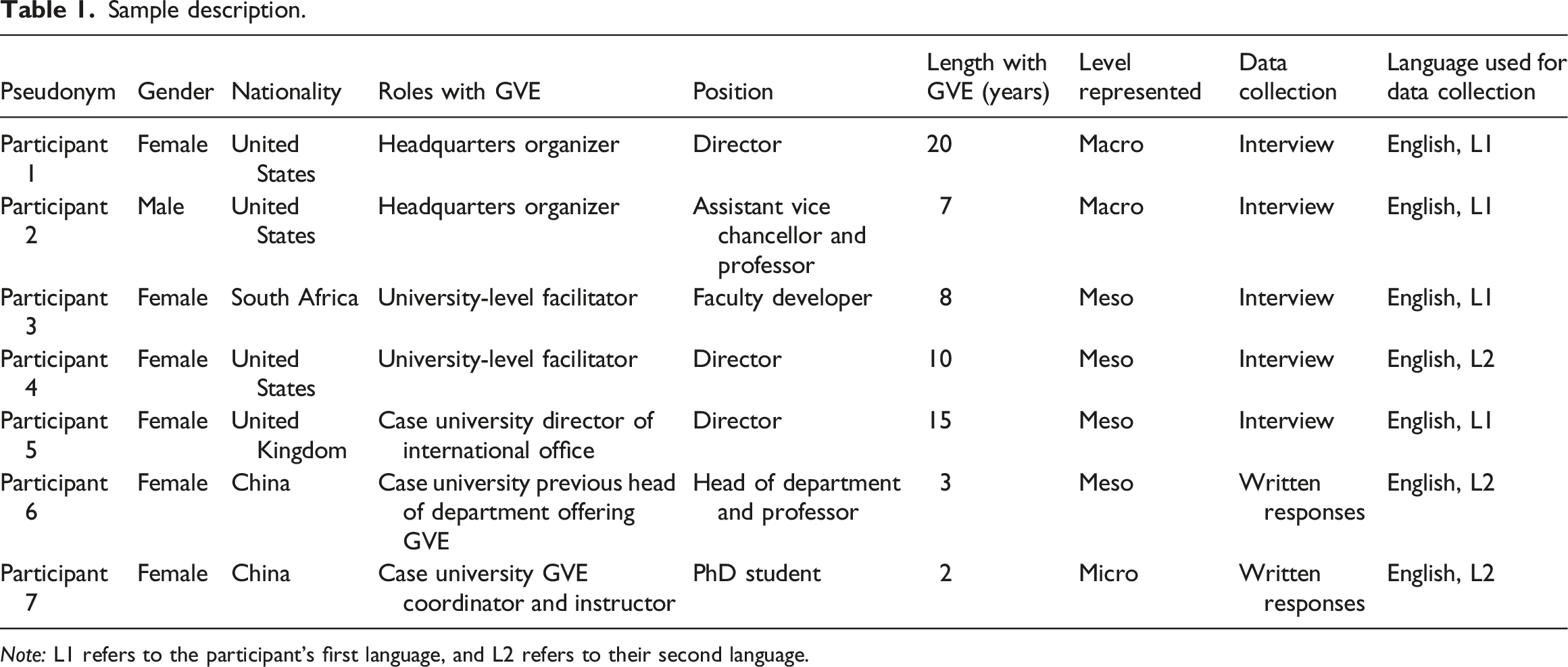
Note: L1 refers to the participant’s first language, and L2 refers to their second language.
To avoid self-indulgence in their autoethnographies, these two researcher-participants established connections between personal experiences (micro) and broader societal and cultural trends of GVE (macro). After completing their initial written responses, they cross-referenced and compared their experiences with other administrators to gain diverse perspectives and ensure shared understanding. By relating their experiences to larger social or cultural trends related to GVE, they could contextualize their narratives and avoid becoming overly self-focused.
Data saturation
Data saturation is a point in qualitative research when no new themes or insights emerge during data collection. We determined data saturation through a progressive analysis approach. After each interview, we immediately analyzed the data, coding and categorizing the transcripts. This iterative process allowed us to identify emerging themes and patterns, assess the depth of information, and make informed decisions about the need for additional interviews.
We continued interviewing until no new significant insights or themes emerged. Data saturation was achieved after collecting data from seven participants, indicating a sufficient sample size to address the research questions. This aligns with Guest, Bunce, and Johnson’s (2006) suggestion that saturation can occur within the first 12 interviews, especially for specific samples.
Samples
Our participants were composed of seven administrators involving GVE at all levels. Two participants represented the macro-level headquarters organizers facilitating the GVE among various membership universities. Four participants represented the meso-level facilitators who advocate GVE in their respective institutions and the case university on the university level or the department level. One participant represented the micro-level facilitator, who also held a dual role as the GVE coordinator in the department and the instructor at the GVE course level. The participants included one male and six females. The participants had an average of 9.3 years (SD = 6.4) of experience with GVE in their professional lives, with a median of eight years. Participants 5, 6, and 7 were the researcher-participants in this study. Another research team member interviewed Participant 5. Participants 6 and 7 conducted the written autoethnography, as described before. Detailed sample descriptions are shown in Table 1.
Data analysis
To analyze the qualitative data, we employed thematic analysis using NVivo 12 software, guided by Braun and Clarke’s (2006) six-phase framework. This systematic approach ensured a rigorous exploration of participants’ experiences and perspectives. Initially, we transcribed the recorded interviews verbatim and immersed ourselves in the data through multiple readings. This process facilitated the identification of initial codes and themes. Subsequently, we systematically coded the data, highlighting key elements relevant to the research questions.
Next, we organized these codes into potential themes, gathering relevant data extracts. We visualized these themes, identifying patterns within the data. Through iterative review and refinement, we ensured the coherence and accuracy of the themes, refining their specificities and the overall narrative.
In the final phase, we selected compelling extracts to illustrate each theme. These extracts were analyzed in-depth, relating the findings to the research questions and existing literature. The result was a scholarly report presenting the research findings clearly and rigorously.
Ethical considerations
Ethical approval for this study was obtained from the Ethics Review Panel at the authors' University (Approval No.: ER-LRR-11000009520240510085524). Informed consent was obtained from all participants, guaranteeing their confidentiality and anonymity throughout the study. Participants were informed of their right to withdraw from the study without any penalty. Additionally, the researchers were required to report any adverse events to the Ethics Committee as soon as possible to address any issues promptly.
Findings
The central themes of our findings can be found in the thematic maps in Figure 1. Thematic map of findings.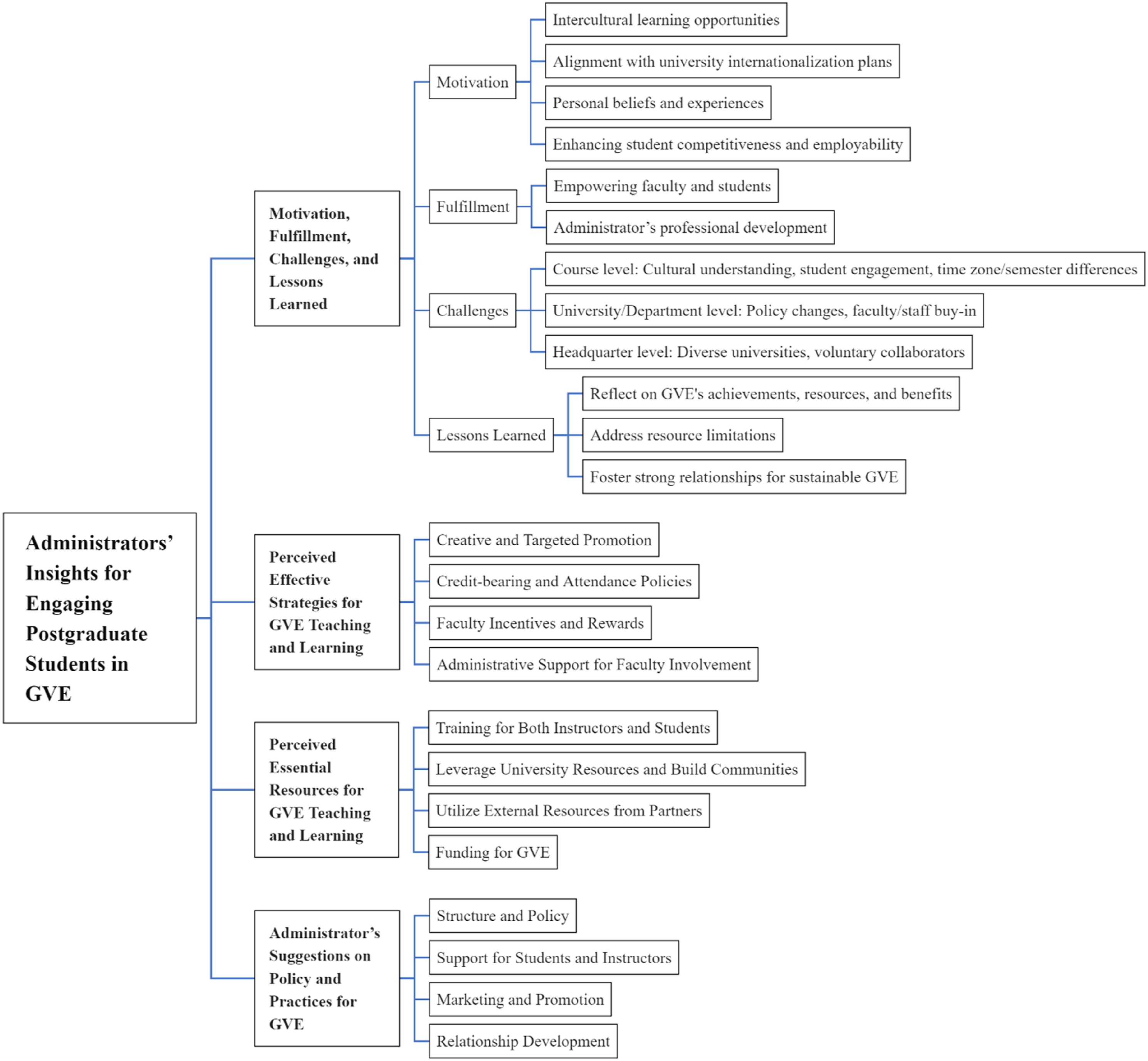
Motivation, fulfillment, challenges, and lessons learned
Motivation
Study participants reported a greater emphasis on extrinsic motivators compared to intrinsic motivators for initially engaging with GVE and sustaining their involvement over time. The extrinsic motivator included the creation of opportunities for intercultural learning experiences for all students, particularly those from underserved populations, and the desire to implement university or unit strategic plans on internationalization within the curriculum and student experiences. For instance, Participant 6 stated, “It was a good opportunity for students to obtain intercultural communication skills, expand their global understanding with global knowledge...then, I decided to bring GVE to our Department and become a member. So the original purpose was to facilitate student learning.”
Administrators from GVE headquarters, on a macro level, highlighted a shift in GVE’s approach from primarily serving their own students to successfully building a platform that benefited partner institutions. Their aim was to continue leveraging this mature platform for broader impact.
Intrinsic motivators for GVE involvement included personal beliefs and experiences within the program, as well as the potential to enhance competitiveness and employability through GVE’s innovative pedagogy. Three participants emphasized that personal commitment to GVE, either as an administrator or a faculty member, was crucial for fostering an understanding of its value and significance among colleagues. Participant 4, representing the university-level GVE facilitator, expressed, “I have learned [to grow] tremendously, personally and professionally, from interacting with different faculty, students, thinking styles, and lifestyles, so that is why I know how important it is to expose students and faculty to another culture, learning environment, and thinking style...so we can enhance the mutual communication, mutual understanding among the people in the world.”
Similarly, Participant 1, a headquarters organizer, viewed GVE as an innovative modality for the future. Her decision to become involved in GVE stemmed from a desire to “figure out how I am indispensable, but also, this was a good fit for what I was already doing and my interests in GVE.”
Fulfillment
GVE administrators’ fulfillment was reflected in empowering faculty and students in effective teaching and learning in GVE and enhancing the administrator’s own professional development. Specifically, empowering faculty and students in effective teaching and learning involved three key subthemes: fostering internationalized opportunities for all participants, enabling faculty development and benefits through GVE, and providing training on internationalization for both faculty and students. For example, Participant 7, representing the micro level, stated: “I've seen significant improvements in students’ attitudes and skills, such as increased confidence, better communication, and enhanced teamwork abilities. It's really rewarding to witness these positive changes in my classroom.”
Additionally, administrators’ professional development in GVE was represented by three components: expanding international networks and collaborations, enhancing one's teaching and modality, and advancing educational technological skills through accessing cutting-edge tools offered by partner universities. Administrators saw this as an opportunity to enhance their teaching skills by exploring and incorporating these technologies. For example, Participant 1, the headquarters organizer, described her international networks and said, “As a coordinator, I got to know all of our partners and built relationships. My ability to build those relationships and intercultural skills was developed through GVE. The enjoyment of learning from all these folks and making those relationships is rewarding.”
Other professional development included integrating one’s research with practices or vice versa in the GVE program or enhancing one’s organizational skills when connecting with partnering universities and students.
Challenges
We will present the challenges of administrating GVE from the course level, university and department level, and headquarters level, respectively. On the course level, cultural understanding, lack of student engagement, and time zone or semester differences were challenges brought up. First, cultural understanding encompasses factors like religious beliefs and holidays, popular youth culture references, and national sensitivities. For instance, Participant 7 encountered unexpected delays due to Ramadan impacting operations at a partner university. This experience highlighted the importance of considering cultural calendars when planning GVE activities. Additionally, Participant 4 reported a U.S. faculty member’s surprise at Chinese students’ use of animated avatars and emojis during online video calls, a practice he found unfamiliar among U.S. students. This underscored the administrator’s challenge in facilitating faculty understanding of cross-cultural and generational communication nuances.
Second, low student engagement emerged as a concern not only at the case university but potentially across partnering institutions. For example, Participant 4 expressed that “student engagement is a really big issue everywhere. It doesn’t matter whether it is virtual or in person, and students just don’t talk to each other.” We found that student priorities were one of the reasons for the lack of student engagement. Participant 2 indicated that postgraduate students may have family, children, or jobs, or they may have other deadlines or activities. All these reasons can lead to their disengagement from GVE.
Third, time zone and semester differences posed logistical challenges for live interactions, particularly when sessions required participants to connect outside of usual working hours. Fourth, the course-level challenge was student preparedness for GVE, which encompassed non-cognitive skills like communication and collaboration, pre-program preparation, and language proficiency. Since GVE was often conducted in English, a second language for many participants, language skills were a recurrent concern.
Two primary challenges in administrating GVE were identified at the university or the department level: policy changes impacting course requirements and limited faculty/staff buy-in. For example, a policy shift from mandatory graduation requirements to optional, interest-driven participation significantly hampered recruitment and retention efforts (Participants 6 & 7). As Participant 6 stated, “When [GVE] became optional and interest-driven, there was really nothing we could do to hold students accountable for their engagement.” In addition, building faculty and staff buy-in for GVE as an innovative pedagogical approach proved challenging. While the headquarters enjoyed external recognition as a global leader in GVE, internal recognition within their own university (a regional public institution) was lacking. This lack of recognition extended to supporting meso-level leaders who, in turn, struggled to build confidence in student engagement and cultivate strong relationships with partner institutions.
The headquarters-level challenge mainly centered on two aspects: managing a diverse range of participating universities and the inherent limitations of working with voluntary collaborators. The headquarters team faced the challenge of working with a geographically and institutionally diverse group of GVE universities across 33 countries. These institutions operated with varying levels of accountability, requiring flexible and adaptable approaches. Additionally, the headquarters organizers lacked direct control over GVE courses and student participation at partner institutions. The program’s success relied heavily on the voluntary commitment of these institutions.
A shared concern across all administrative levels was the need for stronger support from senior leadership. Participants expressed a desire for university leadership to recognize the value proposition of the GVE program and its potential vulnerability to changes in leadership (Participants 1, 2, & 4). Participant 4 bluntly described the program’s precarious position, highlighting the possibility of complete termination with a shift in leadership priorities. Another challenge across multiple levels was that faculty and students were forced to shift to online learning due to COVID-19 with disrupted education.
Lessons learned
For the longevity and sustainability of the GVE program at all levels, administrators reflected on the lessons learned from three perspectives. First, being reflective of the achievements, resources, and benefits of the GVE program. Participant 1, representing the macro level, indicated, “We need to be very reflective on what we are doing. The resources that we are investing versus what the benefits are, not just for us, but also for our partners, and be ok to say, this isn’t working as well as we wanted to. Let’s either redo it or make it something that’s less time-intensive for us so that we can keep it.”
Second, as mentioned earlier, resource limitations were a recurring challenge. Administrators acknowledged the need to streamline GVE implementation processes, focusing on essential elements to ensure program viability within existing resource constraints. Third, cultivating strong relationships across various levels emerged as a critical factor for sustainable GVE. These relationships included those between headquarters and partner universities, paired universities within course sessions, GVE facilitators and faculty, and GVE instructors and students. Participant 2 (macro level) emphasized that “It takes a lot of time and effort to maintain relationships. You have to have a strong network, but that can’t necessarily grow in an unlimited fashion to be strong.”
Perceived effective strategies for GVE teaching and learning
Administrators identified effective strategies that can be categorized into those adopted by administrators and those employed by instructors. Four strategies adopted by administrators for GVE include: • creative and targeted promotion to attract students; • credit-bearing and attendance policy for GVE; • providing awards, stipends, recognition, and incentives for course release for instructors; and • making the GVE work easier with sufficient administrative support for faculty involvement.
To leverage the promotion of GVE, both macro-level and meso-level administrators believed that creative and targeted marketing that enabled students to see the value of GVE on their development and future employability would be helpful for student recruitment. For example, Participant 6 said, “We tried to attract students’ attention and emphasize the benefits this program can have for them and highlight some interesting conversations students can anticipate.” In addition, the headquarters organizers and meso-level administrators suggested participating schools make GVE at least somewhat credit-bearing, compulsory, or create some attendance policy, if possible, to make students accountable.
Strategies utilized by faculty included the significant role of instructors, finding the fit between GVE and curriculum and course design, and rewards for students like recognition, certificates, badges, and bonus hours. For example, Participant 3, the meso-level administrator, highlighted the importance of a resilient faculty: “The biggest strategy for promoting student engagement is the teacher. You need a passionate and resilient teacher to participate in. Passionate and resilient teachers have a care mode.” Participant 6 indicated that GVE promotion needed ally instructors who bought into GVE and can promote it in their own modules. In terms of the fit between GVE and the curriculum and program, Participant 1 said, “I do think figuring out where [GVE] fits into your curriculum and where it makes the most sense will be very important.”
Other strategies utilized by faculty included that the topics and the structure of the GVE course designs were crucial for student recruitment and engagement. Additionally, the instructors showcase previous GVE learning experiences to demonstrate the modality and value of GVE, and the flexibilities in scheduling and learning mode of GVE were also perceived to be beneficial for student engagement.
Perceived essential resources for GVE teaching and learning
Administrators mentioned the essential resources from four perspectives: training for both instructors and students, utilizing the university platform for technical support and developing communities of practices, utilizing the resources provided by the headquarters and partnering universities, and funding for GVE. First, the administrator’s perceived essential training for both students and instructors includes several aspects: the online teaching and learning pedagogical mindset, technology for the virtual exchanges, and preparation for cultural sensitivity and communication in a virtual environment. For example, when talking about the abrupt interruption of education from onsite to online learning due to the pandemic, Participant 5 said: “Training is especially essential for staff who were not educated online. We don't know how to teach differently when we're teaching online, how students behave differently, and how to facilitate it. It's not just recording ourselves from the webcam…Students are better reactive than we are in terms of pedagogical mindedness and habits. They have never been given instructions about the best way to behave online.”
Tailored training can be provided to postgraduate students on language support for non-English speakers, research tools or specialized databases, or academic collaboration with international peers. Participant 7 said that doing so “would help students in their current studies and in building a global network of contacts in their field.” Meanwhile, tailored training can be provided to administrators on effectively supporting GVE instructors and students.
Second, the university platform provided essential video conferencing and dedicated technical support, making it accessible for both sides of the partners during GVE, as reported by Participants 3 and 7. In addition, instead of relying on the GVE offering department or GVE coordinator to promote GVE among students, university communication or media platforms may promote GVE among students in various disciplines, which will benefit a large scope of majors and students. Participant 6 indicated that “University can help us to create this conversation channel. At least we know what is happening and who is interested in GVE. Different disciplines/programs can participate in the course or be part of the membership since our department has already paid the membership. Then, they can utilize this platform as a bonus.”
Third, the resources provided by the headquarters organizers, such as the GVE annual research conference, were a great opportunity for networking and inspiring new ideas in implementation. Partner institutions can also utilize each other as a resource outside the topics of GVE courses. Participant 7 pointed out, “Pairing postgraduate students with mentors from partner institutions could provide valuable guidance and support. These mentors could help navigate academic challenges, provide insights into different cultural and educational systems, and offer career advice.”
Fourth, funding was an apparent source that would bring technology, support additional training, or provide stipends for GVE instructors and students. Participant 4 mentioned the course release as a reward for GVE instructors, but it also required the Department budget to hire someone to cover the teaching workload.
Administrator’s suggestions on policy and practices for GVE
GVE administrators were asked for their suggestions on GVE’s sustainability and student engagement. Their suggestions focused on four sub-categories: structure and policy, support for students and instructors, marketing and promotion, and relationship development. First, administrators particularly highlighted the significance of credit-bearing and attendance policy for GVE. Both the headquarters organizers and meso-level administrators suggested participating universities to make GVE at least somewhat credit-bearing and compulsory or create some attendance policy, if possible, to make students accountable. One option was to shift GVE, which usually did not associate with a credit-bearing course, to a credit-bearing virtual exchange embedded in particular courses in the future, as indicated by Participant 1, a headquarters organizer. In addition, from the structural perspective, administrators suggested including more partnering institutions with diverse backgrounds and integrating more interdisciplinary projects with GVE. GVE can substantially take on the role of promoting social responsibility and global citizenship.
Second, the support for GVE students centered on addressing student needs, focusing on their interests and expectations, establishing norms of behavior for students in the GVE, and helping students develop ownership of GVE and resources that would contribute to their success in GVE. For example, Participant 7, representing the micro level, highlighted that “providing additional resources such as language support, cultural workshops, and counseling services would enhance their overall experience and success in the program.”
Support for instructors includes establishing a repository of GVE teaching resources and samples and providing continuous professional development opportunities to keep them updated with the latest teaching methodologies and technologies. To enrich the instructor team, more trained Ph.D. students or returning master’s students can get involved to enhance facilitation and collaboration. Finally, the university should accommodate internationalization and diversity within GVE and encourage more instructors and students from different disciplines to participate in GVE.
Third, two suggestions on marketing and promotion were brought up: having more faculty and students realize the value of GVE, injecting new ideas, and bringing advocates who share the program's vision and can push it forward. Participant 2 mentioned an effective way to move GVE forward: identifying deans or associate deans who advocate GVE and campaigning for it in their schools or disciplines.
Fourth, almost all administrators highlighted the crucial role of frequent relationship development and maintenance for GVE, regardless of structural levels. Echoing what Participant 2 argued about commitment in relationships, Participant 6 claimed the interdependent relationship between different administrative levels, such as between partnering universities and the headquarters, between partnering universities that were paired in the same course sessions, between the GVE facilitators and GVE instructors, and between GVE instructors and students. The relationship did not necessarily mean staying within the current cohort or partners. Establishing a GVE alumni network within the participating institution or with the partnering schools will help extend the impact of GVE for long-term professional development.
Discussions
This study examined the optimal role of GVE administrators in fostering relationships for the successful implementation of GVE on campus. Currently, administrators can be considered as the primary drivers, proactively reaching out to faculty and students. However, an alternative approach positions administrators as responsive supporters, providing resources and consultations when needed. Our interviews suggest that the current practice, with administrators as primary drivers, may not be the most effective. GVE’s success hinges on collaboration between academic affairs (faculty and faculty developers) and student affairs (advisors and associations) to foster learner-centered initiatives both inside and outside the classroom (Kezar and Lester, 2009). This study proposes that GVE administrators may identify and empower “middle managers,” faculty champions, or student advisors who are enthusiastic about GVE to become unit-level advocates. By strategically leveraging such allies, GVE administrators can increase GVE’s visibility and impact across campus.
This study highlights that concerns regarding student engagement in GVE programs extend beyond the postgraduate level. According to O’Dowd (2021), poor student engagement will hinder the impact of the GVE approach, as students will have difficulties absorbing and digesting the taught materials. Administrators expressed frustration with the decline in postgraduate student engagement in GVE as the main reason for its suspension at the case university. They attributed this to the unique challenges or priorities faced by postgraduates, such as balancing family commitments or full-/part-time employment, compared to undergraduates. The university’s policy shift, moving co-curricular learning activities from mandatory to optional and interest-driven, further hindered the program’s effectiveness in fostering live connections. Our study suggests that other institutions may face similar challenges.
Our findings further highlight the significance of relationship-building at all levels within the GVE. This aligns with Boschma’s (2005) Dimensions of Proximity Theory, suggesting that proximity within a virtual learning environment can influence students’ knowledge sharing, collaboration, and innovation in various specific contexts. This study supports the notion that virtual proximity with the GVE can potentially cultivate physical proximity at GVE conferences and onsite social activities and vice versa. Such proximity fosters student development but also the professional development and accomplishments of GVE administrators. This resonates with Broekel and Boschma’s (2012) argument that their cognitive proximity is enhanced when collaborating partners are integrated within social networks and the community of scholars and practitioners.
Finally, given that lack of training, time, and incentives were the most common barriers impeding faculty pedagogical change (Henderson et al., 2010), our study highlights the importance of incentivizing faculty and students to ensure the long-term sustainability of GVE initiatives. To elaborate, on-campus partners and administrators responsible for GVE should also be included in incentive programs. These programs should not solely focus on rewarding job fulfillment but also recognize their contributions to fostering internationalization in education. Incentives for these stakeholders can extend beyond traditional stipends or awards, offering opportunities such as professional development or networking, mentorship programs, publication opportunities, and credits for career advancement.
The practices and strategies for enhancing GVE found in this study confirmed some effective practices that have been adopted, such as creative and targeted promotion to attract students and providing recognition and incentives for engaging more GVE instructors. These effective practices echoed what Stevens Initiative found about effective practices in administrating GVE, such as investing in thoughtful marketing and advertising among target stakeholders, identifying intentional ways to involve participants to make them feel included and remain engaged, and dedicating appropriate resources to professional development, technology, or translation to ensure the longevity of GVE on the institutional level (Stevens Initiative, 2023).
Limitations
Despite a rigorous design and promising findings, this study acknowledges some limitations. First, administrator reflections on managing GVE were not exclusively focused on postgraduate students but encompassed both undergraduate and postgraduate populations. While some challenges, resources, and opportunities may be specific to postgraduate students, others generally apply to GVE administration. This limits the ability to definitively isolate GVE administration experiences and perceptions specific to postgraduate students, particularly for headquarters organizers and some university-level administrators. Part of our interview questions were designed to elicit perceptions of differences in engagement between undergraduate and postgraduate students in GVE. However, administrators working with both student groups may have provided responses that were not explicitly differentiated. Future research could explicitly probe stakeholders’ attitudes toward postgraduate student engagement in GVE. Second, although data saturation was reached, the sample size of seven participants was relatively small. However, it is worth noting that these seven samples were carefully selected through purposive sampling to include the most relevant administrators directly involved in the case university’s GVE initiative at all levels or with extensive knowledge of the initiative. Future studies could benefit from expanding the scope of participants and comparing the experiences of GVE administrators across diverse countries, educational systems, and contexts. Third, employing written autoethnography with structured questions presented a potential limitation due to the inherent overlap between participants and researchers. To address this, the two researcher-participants involved in the written autoethnography implemented member checking and reflexivity during transcription and coding to bolster the validity and credibility of the findings. Future research might consider triangulation or the involvement of a third-party interviewer to mitigate this potential bias further.
Implications and recommendations
Successful delivery of GVE requires peers, facilitators, collaborative projects, and sustainable learning schemes. GVE administrators are crucial for students’ educational experiences, so addressing their needs and challenges is essential for solving problems and improving delivery effectiveness. According to the findings drawn from this study, GVE administrators believe that engaging postgraduate students effectively requires broad policies and resources, support for staff and student development, and the development and delivery of GVE programs and courses.
Policies and resource allocation
GVE programs and courses require significant resources, technological support, and dedicated faculty, which aligns with what administrators see as necessary resources. University-level policies should prioritize the development of relationships, platforms, and partnerships with partnering institutions rather than leaving the communication solely to individual teachers or program coordinators. A standardized communication scheme and resource pool should be established to allow interested administrators or faculty members to assess the feasibility of implementing GVE programs. This approach is cost-effective and reduces potential frustrations for GVE stakeholders.
In addition, postgraduate students have limited time for study and tend to prioritize credit-bearing modules. To encourage participation in GVE programs, it is recommended to offer credits or optional credits that can be used to replace other courses. Implementing this policy may lead to increased student effort, more attention from faculty, and greater support staff involvement due to its relevance to degree-awarding.
Furthermore, to ensure that GVE programs or courses are sustainable, it’s important to recognize the exceptional commitment and contributions of faculty, staff, and students. This can be achieved by giving them acknowledgment and support, such as faculty members receiving additional policy support and teaching workload adjustments.
GVE staff development and support
GVE facilitators are essential for success, but students may struggle with cross-cultural communication. Therefore, instructors need structured training before, during, and after implementing GVE programs. Faculty with expertise in their subject field in their own country may not be enough for GVE courses, which require stable technical support, exposure to foreign partners, and cultural awareness. Facilitators will need special training to improve their capacity-building abilities.
It is suggested that GVE facilitators receive extra support to help reduce their stress and frustration. GVE coordinators and instructors must dedicate substantial time and effort to coordinate synchronous and asynchronous course components for smooth cross-boundary collaborative projects. This transition involves dealing with time differences, developing module-related resources, providing IT support, and maintaining communication with partner institutions, which is time-consuming and energy-intensive.
Preparedness of students and involvement of returning students
To foster effective global collaboration within the GVE program, students should be equipped with the necessary skills and knowledge. This includes training in intercultural communication and collaborative problem-solving. A pre-departure orientation could involve group research on local approaches to global challenges, enhancing students’ understanding of the host country’s context and preparing them for meaningful international exchanges.
Moreover, involving returning students can offer dual benefits. They can provide valuable insights and support to their peers while also gaining invaluable experience in international collaboration. Academic staff should collaborate closely with returning students to explore and design personalized online and flipped teaching methods that cater to each student’s unique learning style.
Conclusion
This study explored the motivations, fulfillment, and challenges faced by GVE administrators in managing GVE programs. It further investigated their perceptions of effective strategies and essential resources for successful administration, along with their suggestions for GVE’s sustainable development. The findings revealed that administrators were motivated by a desire to expand student learning opportunities beyond traditional classrooms and empower faculty development. However, they also recognized challenges in student engagement, faculty buy-in, and leadership support. To address these challenges, administrators implemented strategies such as aggregating resources within the GVE community and university, providing training for both faculty and students, and advocating for university policy support when feasible. Reflecting on these successful interventions, the administrators propose innovative marking and promotion practices, relationship-building initiatives, and continued support for faculty and students as key drivers of GVE's future success. Our findings and suggestions offer valuable insights for peer GVE administrators, enabling them to identify resonances, reflect on lessons learned, and implement effective practices to move GVE forward and achieve a wider impact.
Footnotes
Acknowledgments
We would like to express our sincere gratitude to the Research Center for Internationalization at the Academy of Future Education, Xi'an Jiaotong-Liverpool University, and all the participants and colleagues who provided invaluable support throughout this project.
Declaration of conflicting interests
The author(s) declared the following potential conflicts of interest with respect to the research, authorship, and/or publication of this article: The study followed the standards of ethics at Xi'an Jiaotong-Liverpool University. It complies with the ethical rules applicable to this journal.
Funding
The authors received no financial support for the research, authorship, or publication of this article.
