







Abstract
This present research proposed a whole-school approach collaboration model to assess its effects on the job satisfaction of teacher educators in the United States and China. It aims to identify differences in how collaboration influences job satisfaction among American and Chinese teachers, drawing data from the 2018 Teaching and Learning International Survey (TALIS). Utilizing hierarchical linear modeling (HLM), the study constructs models that integrate variables at both stakeholder and teacher levels. The results indicated that teacher-level collaboration had positive effects on American and Chinese teachers’ job satisfaction. Interestingly, this study reveals distinct dynamics in the influence of school leadership on teachers’ job satisfaction: it plays a significant role for American teachers, while its influence on Chinese teachers is not pronounced. This finding highlights the varying cultural contexts and organizational structures within the education system of the United States and China.
Keywords
Introduction
Teacher job satisfaction in both the United States and China is influenced by a multitude of factors. It is widely acknowledged that happy teachers are more likely to provide high-quality instruction and robust support for student learning. This, in turn, fosters students’ motivation and aspirations for higher academic achievement (Collie et al., 2012; Spilt et al., 2011). Additionally, when teachers collectively exhibit high job satisfaction, it correlates with reduced stress level and a lower risk of both personal and professional burnout (Skaalvik and Skaalvik, 2011). A recent meta-analysis conducted by Madigan and Kim (2021) further underscores this point, showing that job satisfaction and burnout together account for 27% of the variation in teachers’ intentions to quit.
Recognizing the critical role of teachers’ job satisfaction in both educators’ well-being and student academic success, researchers have explored various predictors of its satisfaction. A quantitative study using 2013 TALIS data (Wang et al., 2018) showed that student characteristics such as the percentage of low achievers, student behavior issues, others with socioeconomic disadvantages, and those in a disorganized classroom climate were found to be important attributes for teachers’ job satisfaction. Regarding school-based factors, campus sites, school climates that showed mutual respect between colleagues and principals, and school autonomy were all important for enhancing teacher job satisfaction (Monk, 2007; Solomou and Pashiardis, 2016; Voon et al., 2011; Wang et al., 2018). Specific teacher characteristics—gender, teaching experience, self-efficacy, colleagues’ cooperation, and positive teacher–student relationships—were also shown to positively correlate with teacher job satisfaction (De Nobile and McCormick, 2008; Little, 2012; Menon and Athanasoula-Reppa, 2011; Mikk et al., 2016; Peng and Mao, 2015).
Previous research on the impact of collaboration on teachers’ job satisfaction has often focused on cooperation among teachers (e.g., Reeves et al., 2017). In contrast, this present study proposed a whole-school approach collaboration model, rooted in socio-ecological theory. This theory posits that an individual’s well-being is influenced by the interaction among personal factors, group/community dynamics, and broader physical, social, and political environments (Guo et al., 2018). Based on this theory, our study distinguishes between stakeholder-level and teacher-level collaboration factors, utilizing data from the 2018 Teaching and Learning International Survey (TALIS). Our objective is to explore the differential impacts of collaboration on teacher job satisfaction in the United States and China, offering new insights into how these collaborative dynamics function across diverse educational contexts.
Literature review
Teachers job satisfaction
Teacher job satisfaction is inherently complex, reflecting the multifaceted nature of the teaching profession. Evans (1997) delineated two key dimensions of this concept: “job fulfillment” and “job comfort.” Job fulfillment encompasses aspects of internal growth, such as personal achievement and self-realization, reflecting how effectively the job fulfills the teachers’ professional aspirations. In contrast, job comfort focuses on external conditions, including job security and the social environment of the workplace (Bogler and Nir, 2012). These dual dimensions imply that teacher job satisfaction can be subject to varied interpretations (Özpehlivan and Acar, 2016). For instance, a teacher might find fulfillment in the teaching profession itself but be dissatisfied with the conditions at a particular school. Alternatively, a teacher might be dissatisfied with the teaching profession in general, irrespective of the specific workplace (Torres, 2019). This nuanced understanding highlights the complexity of assessing and addressing teacher job satisfaction.
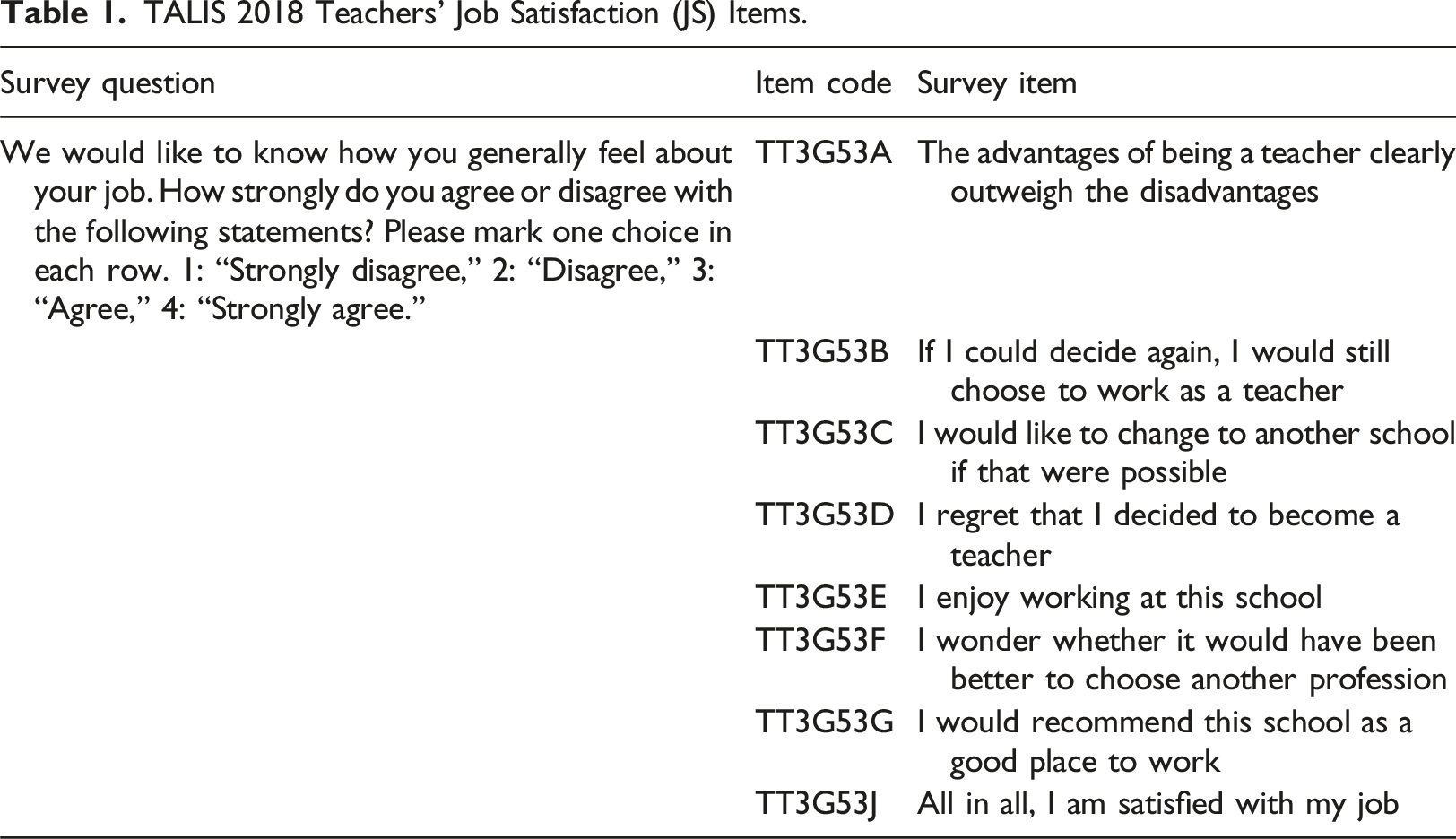
In this study, we used the TALIS definition of teacher job satisfaction, which includes both job fulfillment and job comfort. It consists of five indicators: (a) overall job satisfaction (with school and with profession); (b) teacher perception of the value of the profession; (c) teacher perception of national and local education policies; (d) satisfaction with salary and working conditions; and (e) teacher opinions about priorities for education policies and reform (OECD, 2019).
Whole-school collaboration approach and teacher job satisfaction
The traditional concept of collaboration in the context of education mainly refers to teacher cooperation/collaboration. It is defined as teacher interdependence, collaboration, and collegiality (Olsen and Huang, 2019). Teacher cooperative activities may include but are not limited to storytelling, scanning for ideas, aid and assistance, sharing, joint work, and teamwork (Little, 1990; Smith, 2009). Researchers found that when teachers, especially new teachers who are at the highest risk for turnover, displayed high levels of cooperation and collaborated with each other, their job satisfaction increased (Leithwood et al., 1998; Woods and Weasmer, 2004). Furthermore, Bickmore (2013) reported that when novice and veteran teachers formed partnerships, the benefits are mutual, as novice teachers could become more informed about their job responsibilities and veteran teachers could learn new teaching practices and strategies to implement in their classrooms. Also, collaborative activities between teachers such as visiting another classroom to learn about teaching were observed among teachers who were more enthusiastic about teaching (Reeves et al., 2017).
Teacher collaboration refers to teachers’ professional interactions in both formal and informal settings (Chen, 2022). Collaboration among teachers in the informal setting includes activities initiated by teachers spontaneously such as exchanging teaching materials or having a discussion on students’ development. Formal collaboration among teachers are organized cooperative activities such as teaching jointly as a team in the same class or participating in a collaborative professional learning. Both cooperative activities are beneficial for teachers to learn from each other and for students to learn in an ideal environment (De Jong et al., 2019; Ibrahim, 2022).
Presently, the socio-ecological model has been widely recognized to illustrate a person’s mental health and well-being. The “socio-ecological model” was developed by psychologist Urie Bronfenbrenner in the late 1970s, to recognize that individuals affect and are affected by a complex range of social influences and nested environmental interactions (Tudge et al., 2022). Based on this model, a person’s mental health and well-being was influenced by the individual, family, organization, community and societal factors (Devooght et al., 2023).
Implied by the “socio-ecological model,” this study introduced a whole-school collaboration approach, hypothesizing its strong connection with teacher job satisfaction. This approach encompasses collaboration among teachers, school leaders, parents, guardians, and the broader educational community, fostering not only enhanced student learning outcomes and increased teachers’ job satisfaction but also stronger relationships, shared accountability, and a more inclusive educational environment. Historically, the whole-school approach has been effectively utilized in addressing student-related problems such as bullying and mental issues (e.g., Brewer et al., 2018; Roberts and Webster, 2022). It fosters a partnership between senior school leaders, teachers, staff, parents, and the wider community, thereby facilitating comprehensive support for students, particularly in areas of social and emotional learning assistance (Goldberg et al., 2019). Similarly, in the context of our study, the whole-school collaboration approach pertained to the collaborative or supportive behaviors between school leaders, teachers, parents and guardians, and the whole community for students’ learning.
Previous research has shown that collaborative or supportive actions within and outside of the school are strongly associated with teachers’ job satisfaction (Lester et al., 2020; Tschannen-Moran and Hoy, 2007). When teachers report that they work in a supportive environment that encourages their perceptions of competence and ability to act, it is reasonable to expect that they will feel satisfied with their school (Wu and Short, 1996). For example, a statistically significant positive relation was found between solution-oriented leadership and teachers’ organizational commitment (Ozdem and Sezer, 2019). Also, when teachers were empowered by schools to be involved in participatory decision-making, they had a higher level of teaching competency (Bogler and Nir, 2012; Somech, 2010). Previous studies have shown the positive effects of principals’ leadership on teachers’ collaboration practice (Coban et al., 2020; Voelkel, 2019). Meyer and colleagues collected data from 630 teachers and found that when their principals were involved in teachers’ instructional and staff development, teachers would be more likely to work together (Meyer et al., 2022)
Support from parents is another indicator for evaluating teacher job satisfaction. Teachers who reported having positive interactions with parents/guardians experienced higher job satisfaction (Borman and Dowling, 2008; Simon and Johnson, 2015). For example, teachers often have a higher sense of teaching accomplishments when they receive positive comments on her teaching performance from parents (Tschannen-Moran and Hoy, 2007). Conversely, disengagement of parents in their children’s study was associated with job dissatisfaction (Kikoti, 2018).
Furthermore, community support also helps teachers have a strong sense of job contentment (Sahito and Vaisanen, 2020). Research shows that schools with high levels of community support—parental involvement and partnership programs—have increased student attendance, grades, and achievements and resulted in fewer behavioral issues and a general attitude of positivity towards school and homework. All these benefits should reduce the workload and stress for teachers and thereby decrease the possibility for teachers to quit jobs (Farinde-Wu and Fitchett, 2018).
In our whole-school collaboration approach, we included parents and guardian’s collaboration (INV), school leadership (SL), and whole community collaboration (SC) as the stakeholder-level variables, and informal collaboration between teachers (TC) and professional collaboration (PC) as the teacher-level variables. We hypothesized that the whole-school collaboration approach can predict teachers’ job satisfaction (see Figure 1). Conceptual model of whole-school collaboration approach to teachers’ job satisfaction.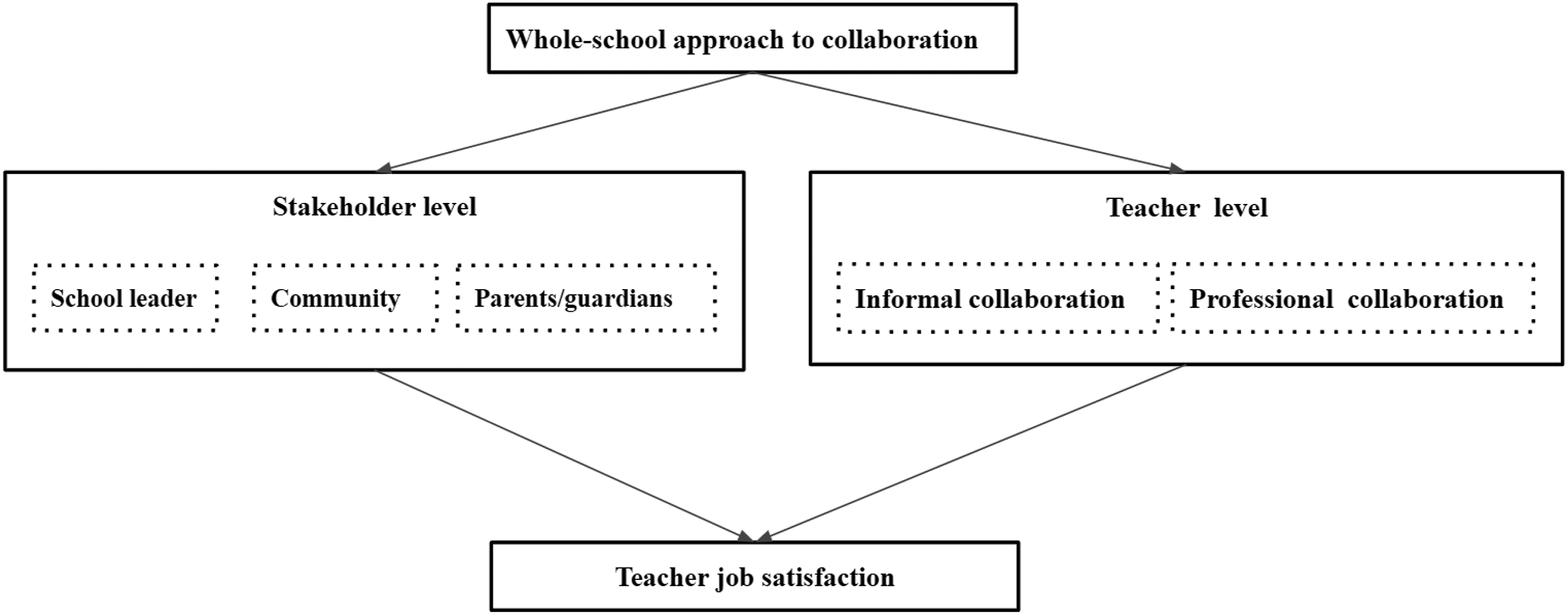
Differences between Chinese and American teachers’ job satisfaction
Previous studies have revealed how teachers’ job satisfaction was influenced by different cultural values between Eastern (e.g., Chinese and Japan) and Western (e.g., American) teachers (Klassen et al., 2010). Some interesting findings about how teacher cooperative behaviors impact teacher job satisfaction between these two different regions were found by researchers. Reeves and colleagues (2017) found that the more frequently American teachers visit another classroom to learn about teaching, the more enthusiasm they have. However, collaborative activities such as discussing with others, planning, working on new ideas, and sharing teaching experience were not statistically significant predictors for teachers’ job satisfaction in the United States nor Japan.
Similarly, although both Chinese and American teachers value collegial support (Fullan and Hargreaves, 1996), American teachers also valued autonomy in their classrooms (Marvel et al., 2007; McKenzie et al., 2008). Interestingly, the routine and very close cooperation practiced in some Chinese public schools in preparing classes together, holding meetings to discuss teaching problems, or sitting in each other’s classes on a regular basis might go beyond what most American teachers would consider as collegial collaboration. American teachers feel uncomfortable or perceive these activities as intrusions into their professional autonomy (Kwong et al., 2010). That might be explained by findings that collectivism was significantly related to teachers’ job satisfaction in China but not America (Alkhadher et al., 2020; Klassen et al., 2010).
Different attitudes towards the leadership distribution environment were also found between Chinese and American teachers (Johnson et al., 2008). For American teachers, when principals provide them with opportunities to participate in meaningful decision-making opportunities, it leads to teachers’ feeling a greater sense of ownership and commitment to their profession and school. These positive feelings may, in turn, improve teachers’ job satisfaction (Brezicha et al., 2020). However, Chinese teachers were more likely to be indifferent to decision-making opportunities. Kwong et al. (2010) found that Chinese teachers in Beijing investigated in the study did not complain about exclusion from decision-making at school, and none of these teachers expressed desire to participate more actively in school administration. Kwong and colleagues (2010) attributed this indifference to decision-making desire to the hierarchical and authoritarian social organization concept rooted in Chinese teachers.
Although the previous literature has reported much about how cultural differences resulted in teachers’ perspectives in their job satisfaction, most of their data was limited to small-scale investigations associated with certain schools or school districts. Also, we noted that even though both Chinese and American teachers appreciate a supportive teaching environment in broad strokes, what arrangements exactly constitute such an environment varied. We chose the whole-school collaboration approach to further investigate how a collaborative/supportive environment from all perspectives would impact Chinese and American teachers’ job satisfaction.
Research questions
This study utilized data from the 2018 Teaching and Learning International Survey (TALIS) to explore how a whole-school collaboration approach impacts teacher job satisfaction, with a specific focus on comparing the experiences of American and Chinese teachers. The primary objective was to ascertain if collaboration exerts differing effects on job satisfaction among teachers in these two countries. To achieve this, we framed our investigation around two research questions: 1. What are the relationships between collaboration factors and job satisfaction among American and Chinese teachers, respectively? 2. Is there a discernible difference in the relationship between collaboration factors and teacher job satisfaction when comparing the United States and China?
Methods
Data information
The data used in the present study were retrieved from the 2018 TALIS study conducted by the Organization for Economic Co-operation and Development (OECD, 2018). The 2018 TALIS data involved 48 countries and economies, including 31 OECD countries participating in the main survey at the lower secondary school level (grades 7, 8, and 9 in the United States). TALIS 2018 targeted 200 schools in each country, involving around 20 teachers and one school leader from each school. In order to ensure accurate assessments of teacher and principal characteristics, the TALIS survey required the selection of teacher samples that effectively represented the entire population of lower secondary school level teachers within each education system. The sampling approach employed for TALIS 2018 was a stratified systematic sample, wherein the likelihood of selecting a school was proportionate to the estimated count of the teachers within that school. The sampling process comprised two stages: first, a sample of schools was chosen, and then, in the second stage, a sample of teachers was selected from each of the chosen schools. The technical standards required that eligible teachers must be those teaching at least one lower secondary school level class, regardless of the subject they taught. Additionally, school principals or head administrators of each selected school were invited to participate. Importantly, the data collection for school principals and teachers was carried out independently, meaning that teacher eligibility was not contingent on principal participation, and vice versa (OECD, 2018).
TALIS consists of a pair of questionnaires, one designed for teachers and the other for their principals. These questionnaires aim to gather information regarding their backgrounds, work settings, professional growth, and their beliefs and attitudes towards the teaching profession. In our study, two regions were selected: the United States and Shanghai, China. Shanghai, often referred to as a “window to the world” in China, is a global metropolis where diverse cultures coexist, offering a degree of multiculturalism similar to that found in the United States. While the U.S. and Shanghai differ in scale and governance, they share commonalities in economic prominence and their role as cultural and educational leaders. Furthermore, Shanghai has played a pioneering role in updating the curriculum and reforming China’s education system, achieving significant outcomes (Deng and Zhao, 2014). As China’s largest business capital, Shanghai reflects national trends, including declining rural schools and efforts to adapt urban education to meet the needs of a shifting population, making it a valuable case study for understanding the country’s broader educational trajectory. Due to its educational advancements, Shanghai has frequently been used as a representative case for China in studies using TALIS data to explore teacher collaboration (Xie et al., 2023; Zeng and Day, 2019).
The data came from two questionnaires collected from school principals and teachers. Regarding the school principal’s questionnaire datasets, we ran a Missing Completely at Random (MCAR) test, and the results indicated that data in both the United States and China principal datasets were likely to be MCAR (US: p = .80; China: p = .39). Therefore, we adopted list-wise deletion and simply removed 6% of missing data in the United States principal dataset and 1% of missing data in the China principal dataset. We also ran the MCAR test to check the teacher questionnaire datasets. The results showed that the United States dataset was likely MCAR (p = .88) but the China dataset was not MCAR (p < .001). Therefore, we adopted list-wise deletion and simply removed 8% missing data in the United States teacher dataset. Regarding the China teacher dataset, we applied mean imputation for missing values in most variables except two control variables (i.e., gender and years of teaching experience). We removed 0.6% data rows which had missing values in the control variables. After merging school principal and teacher datasets for each country, the United States dataset totaled 2214 teachers across 156 schools, and the dataset of Shanghai, China, had 3907 teachers across 196 schools.
Variables and measures
Job satisfaction
TALIS 2018 Teachers’ Job Satisfaction (JS) Items.
Stakeholder-level variables
Stakeholder-Level Variables Information.
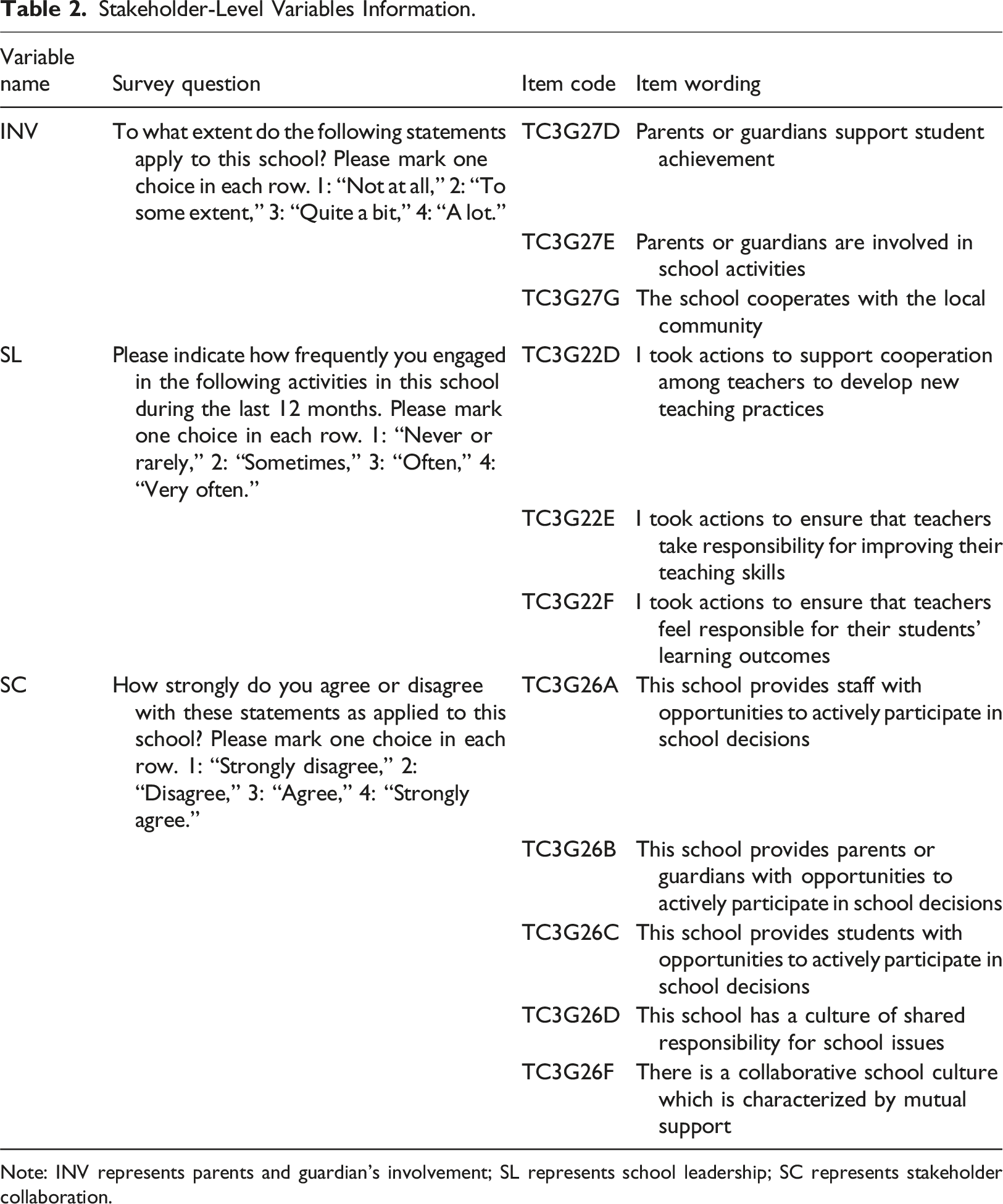
Note: INV represents parents and guardian’s involvement; SL represents school leadership; SC represents stakeholder collaboration.
Teacher-level variables
Teacher-Level Variables Information.
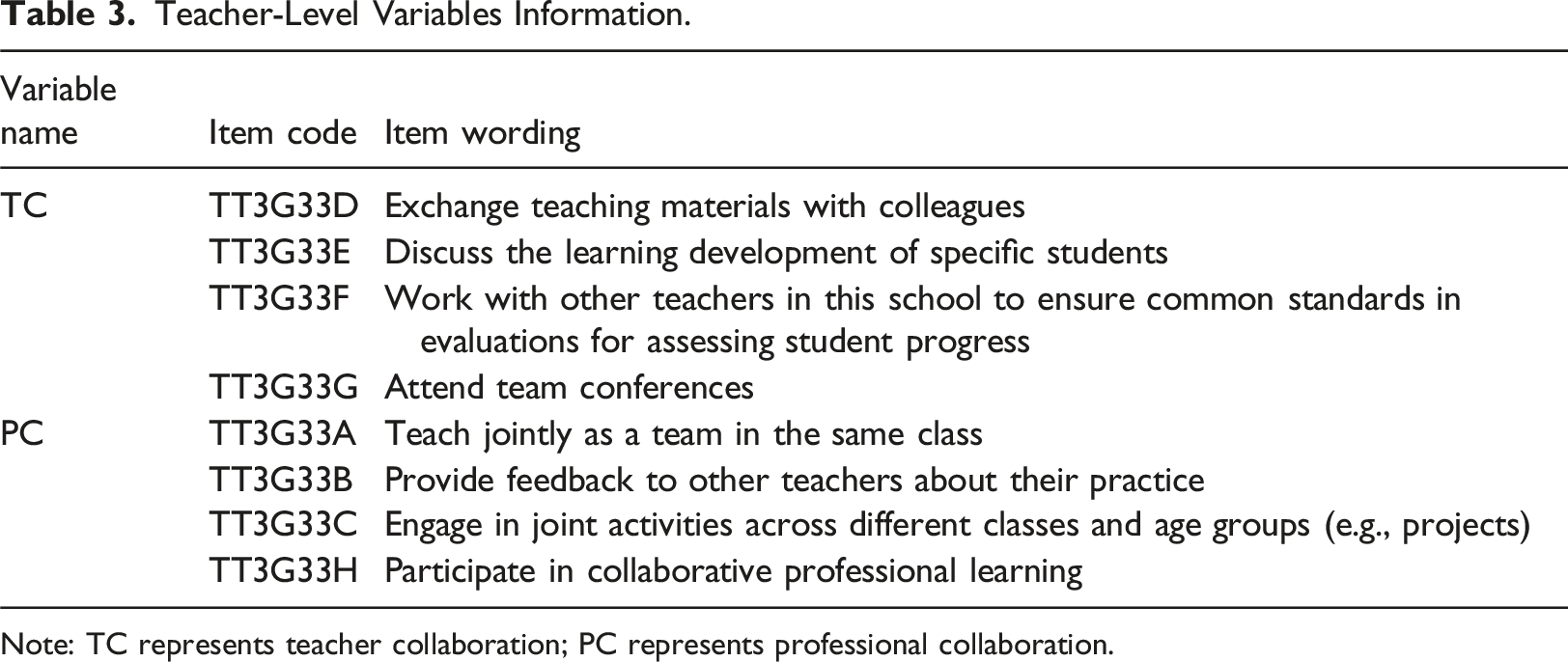
Note: TC represents teacher collaboration; PC represents professional collaboration.
Data analysis
Given the nested data structure, our study adopted the hierarchical linear modeling (HLM) method to build models with stakeholder- and teacher-level variables. HLM is a frequently employed approach for analyzing nested data in large-scale assessments. Previous studies successfully adopted HLM to investigate different level variables in TALIS data (e.g., Kouhsari et al., 2023; Liu et al., 2023). All teacher-level predictors were centered relative to the average score within each school (group-mean centering), while the stakeholder-level predictors were centered relative to the overall average score across all schools in the analysis (grand-mean centering). Group-mean centering of teacher-level variables (i.e., TC and PC) focuses on how deviations from the school’s average value of TC and PC affect teacher’s job satisfaction within the school. Grand-mean centering of stakeholder-level variables (i.e., INV, SL, and SC) examines the effect of school INV, SL, SC relative to the average INV, SL, SC across all schools. The HLM analyses were carried out using the lme4 package (Bates et al., 2015) in R (version 4.1.3).
First, the null models with random effects were built to partition the variance of the response variable in within-and between-group components (Raudenbush and Bryk, 2002). The results of the null models yielded the intra-class correlation (ICC). Then, all the variables at the teacher level were included in the models. Finally, we added all stakeholder-level variables into the models. We ran two separate HLMs focusing on the United States data and China data, respectively.
The HLM equations were written as follows:
Level-1 Model Gender and YE represented teachers’ gender and years of teaching experience.
Level-2 Model




To detect the differences in the effects of the collaboration factors between the United States and China, we merged two countries’ datasets and ran one additional HLM with interaction effects, written as follows:
Level-1 Model
Level-2 Model




Results
Descriptive statistics
Descriptive Statistics of Teacher-Level and Stakeholder-Level Variables in the United States and China.
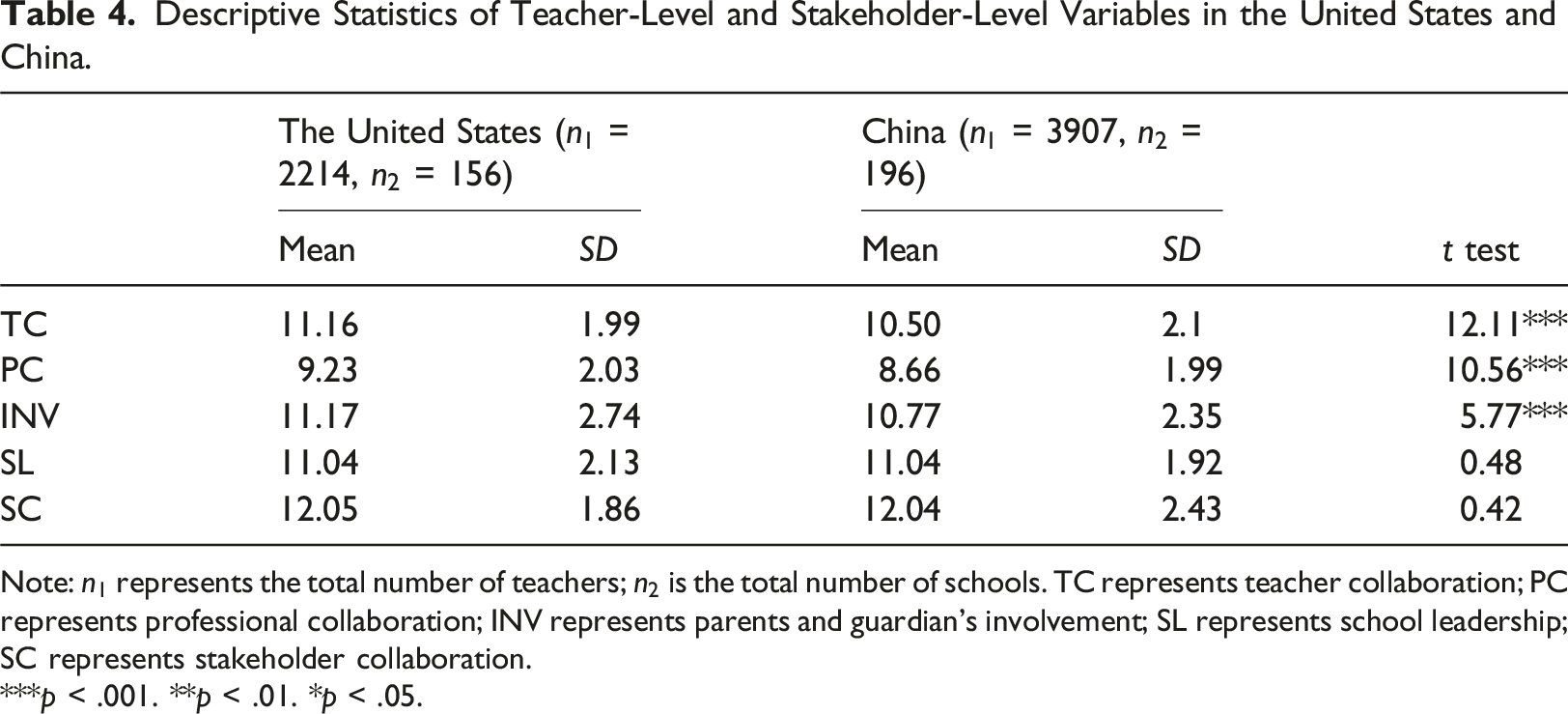
Note:
***p < .001. **p < .01. *p < .05.
Correlations Among Teacher and Stakeholder Variables and Outcomes.
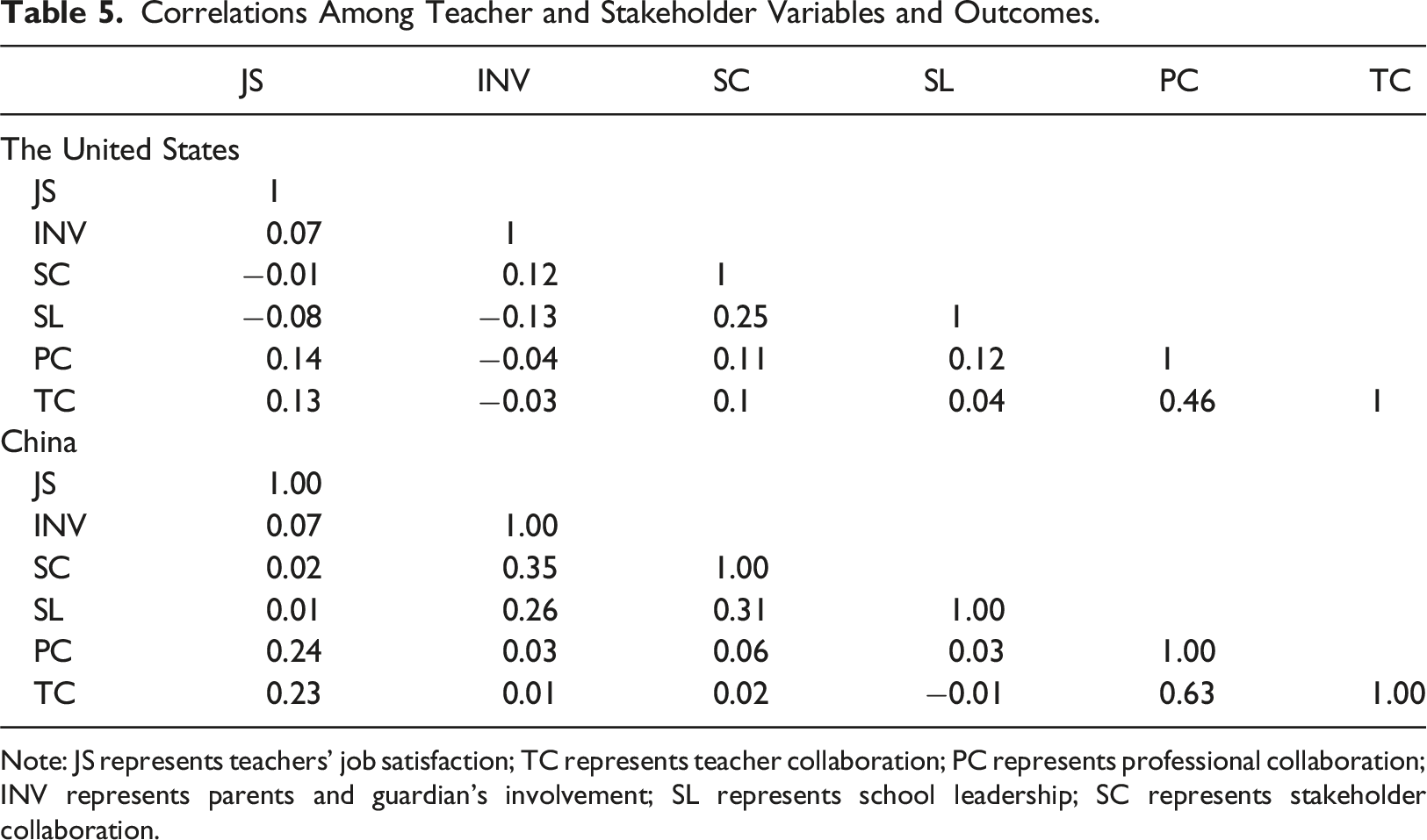
Note: JS represents teachers’ job satisfaction; TC represents teacher collaboration; PC represents professional collaboration; INV represents parents and guardian’s involvement; SL represents school leadership; SC represents stakeholder collaboration.
The results indicated that teachers’ job satisfaction had weak positive correlations with teacher collaboration (US: r = 0.13; China: r = 0.23) and professional collaboration (US: r = 0.14; China: r = 0.24) for both countries. Teacher collaboration had moderate positive correlation with professional collaboration for teachers in the United States (US: r = 0.46) but strong positive relationship for teachers in China (r = 0.63). Stakeholder collaboration had moderate positive correlation with parents and guardian’s involvement for China (r = 0.35) but weak positive correlation in the United States (r = 0.12). Stakeholder collaboration also had weak or moderate correlation with school leadership (US: r = 0.25; China: r = 0.31). However, school leadership had very weak negative correlation with parents and guardian’s involvement for the United States (r = −0.04) but weak positive correlation for China (r = 0.26).
Unconditional model
The unconditional model was used to confirm the variation in teachers’ job satisfaction existed between schools. The results indicated that 9.9% of the total variance in teachers’ job satisfaction in the United States was attributable to differences between schools (ICC = 0.099), while in China, 7.9% of the variance was due to differences between schools (ICC = 0.079). These variances indicated that teachers’ job satisfaction varied across schools; therefore, multilevel analyses were appropriate. The assumptions of HLM were examined, which included linearity, homogeneity of variance, and normality of residuals. Levene’s Test (Levene, 1961) was applied to test homogeneity of variance. All these assumptions were met for the unconditional model, as well as the conditional models and the interaction model which follow.
The effects of stakeholder-level and teacher-level variables in each country
After adjusting for predictors, the ICC decreased to 9.1% (ICC = 0.091), suggesting that these predictors explained a substantial portion of the variance previously attributed to group-level effects in the United States HLM model, while the ICC decreased to 7.6% variance (ICC = 0.076) in the China HLM model. Among three stakeholder-level variables, school leadership (SL) (β = −0.15) was significantly negatively associated with teachers’ job satisfaction in the United States (p = .03), with more frequent actions principals took decreasing teachers’ job satisfaction by 0.15 points on average. However, SL showed no significant effect on teachers’ job satisfaction in China (p = .65). Parents’ and guardians’ support (INV) showed no significant effect on teachers’ job satisfaction in the United States, yet this variable (β = 0.11) significantly positively influenced teachers’ job satisfaction in China (p < .01). More parents’ and guardians’ support can increase teachers’ job satisfaction in China by 0.11 points on average. Additionally, the whole community collaboration (SC) showed no significant effect on teachers’ job satisfaction in either the United States (p = .94) or China (p = .84).
The HLM Results for the United States and China.
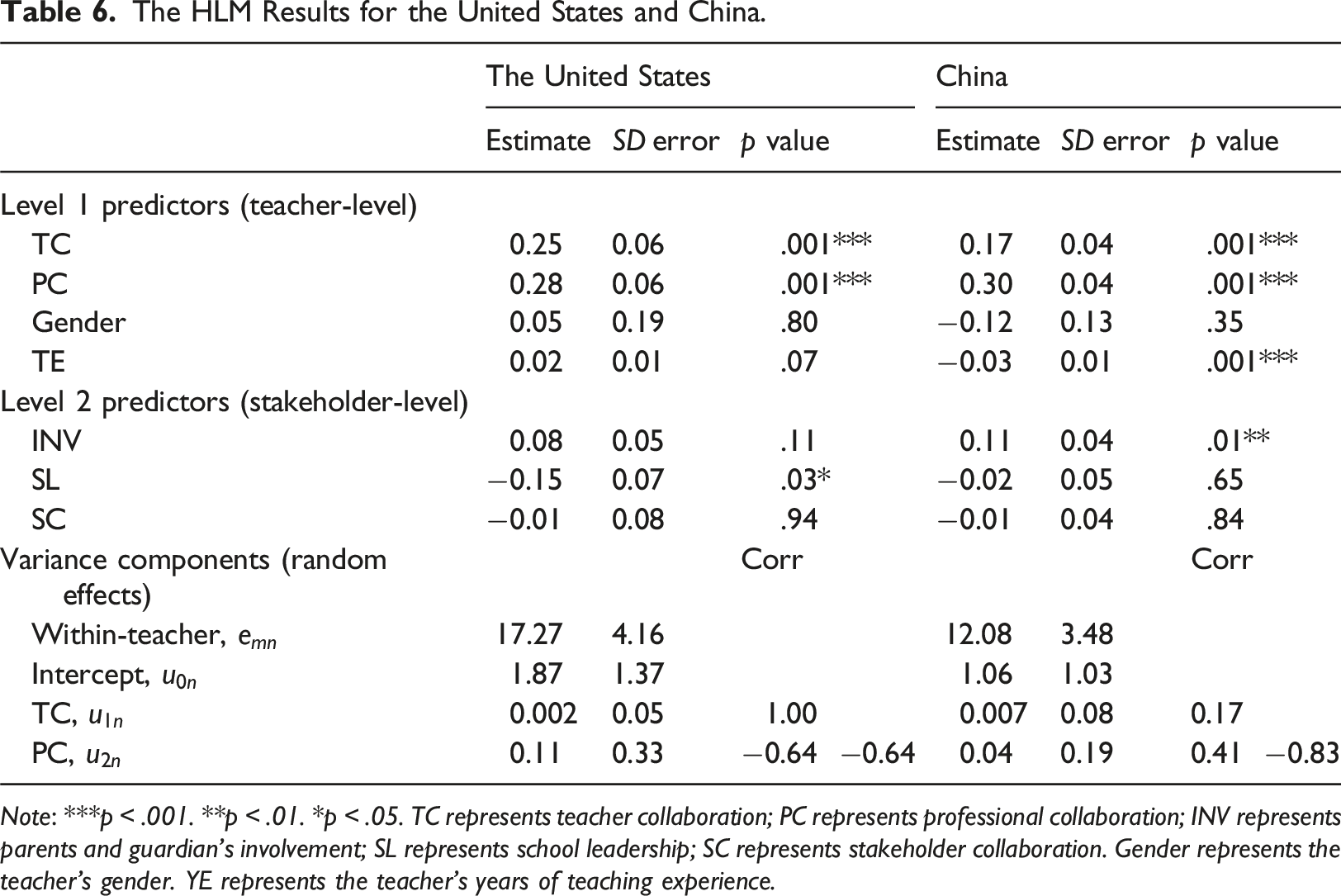
Note: ***p < .001. **p < .01. *p < .05. TC represents teacher collaboration; PC represents professional collaboration; INV represents parents and guardian’s involvement; SL represents school leadership; SC represents stakeholder collaboration. Gender represents the teacher’s gender. YE represents the teacher’s years of teaching experience.
Differences between the countries
The HLM Result Regarding Differences Between the Two Countries.
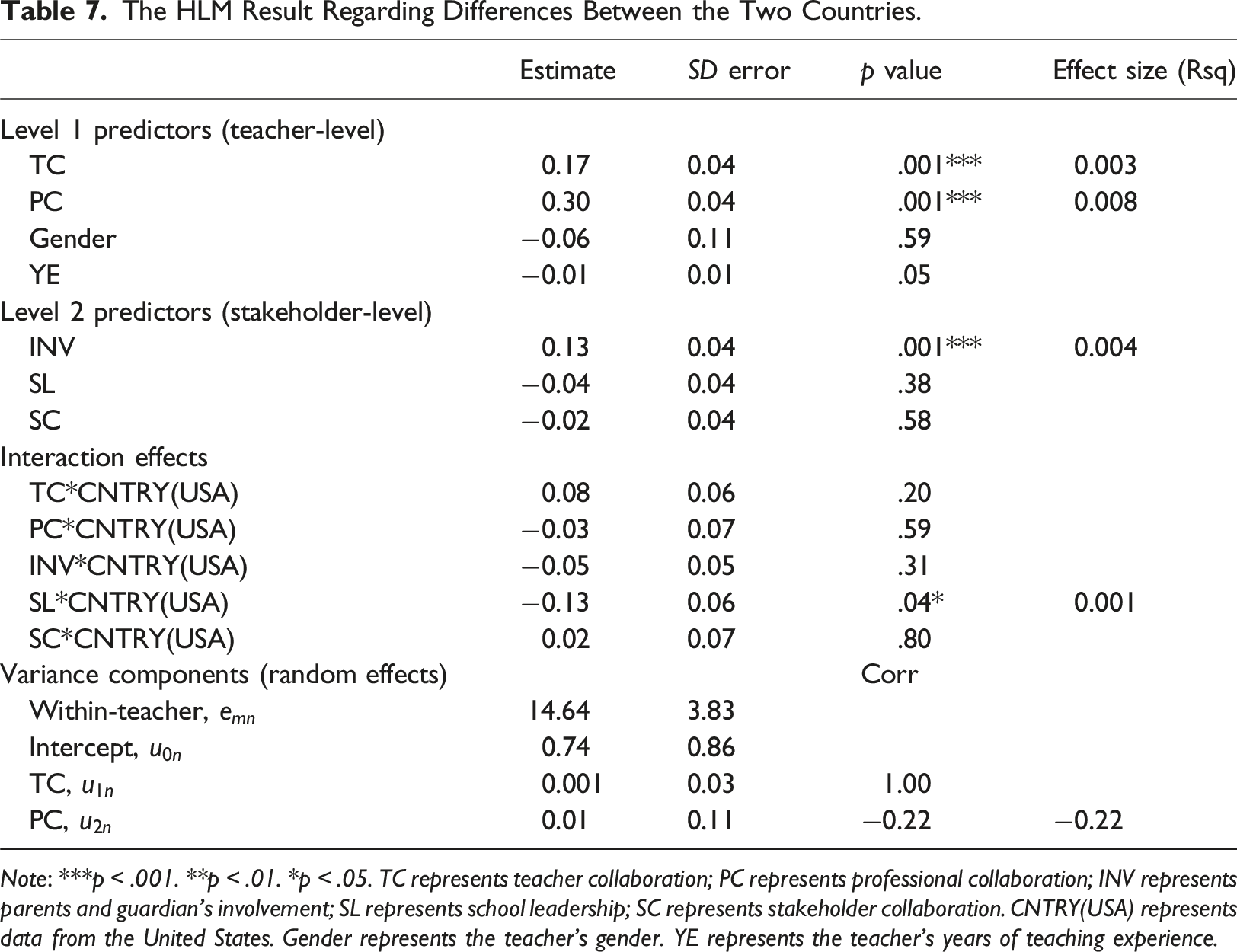
Note: ***p < .001. **p < .01. *p < .05. TC represents teacher collaboration; PC represents professional collaboration; INV represents parents and guardian’s involvement; SL represents school leadership; SC represents stakeholder collaboration. CNTRY(USA) represents data from the United States. Gender represents the teacher’s gender. YE represents the teacher’s years of teaching experience.
Discussion
Teacher-level collaboration matters for teachers’ job satisfaction
In our study, we explored the association between teacher-level collaboration and teachers’ job satisfaction, considering both informal collaboration among teachers (TC) and professional collaboration (PC) within a team. TC mainly includes collaboration activities through individual efforts, such as exchanging teaching materials with colleagues, discussing the learning development of specific students, and working with other teachers in the school to ensure common standards in evaluations for assessing students’ progress. These activities can be performed by individual teachers. If the teachers are willing to collaborate, individual teachers should be able to achieve these goals by their own efforts. On the other hand, PC is more dependent upon team efforts, which include attending team conferences, teaching jointly as a team in the same class, providing feedback to other teachers about their practice, engaging in joint activities across different classes and age groups, and participating in collaborative professional learning. This category of collaboration activities necessitates the collective efforts of a group. It is unlikely for an individual to achieve these goals by acting alone.
Our results indicated that teacher-level collaboration had positive effects on teachers’ job satisfaction both in the United States and China. Furthermore, both variables—individual collaboration and team collaboration—predicted teachers’ job satisfaction positively. This underscores the importance of teacher-level collaboration in enhancing teachers’ job satisfaction, aligning with previous research (Leithwood et al., 1998; Olsen and Huang, 2019; Woods and Weasmer, 2004). When teachers engage in collaborative efforts and perceived organizational support for such collaboration, their job satisfaction increases, fostering a greater enthusiasm for teaching (Reeves et al., 2017). Therefore, our results suggest that policymakers should prioritize creating a school culture and environment that promotes and supports teacher collaboration. To operationalize this, schools can establish a mentor program (Simpson et al., 2007), in which novice teachers can work with veteran teachers and share teaching materials. Additionally, schools can also establish a working partner program so that different subject teachers can share specific information about the students to make a more tailored teaching plan for specific students.
More importantly, schools—whether it is in the United States or in China—should build some routine activities for teachers to collaborate and work with each other. For instance, schools can provide more opportunities for joint teachers working in tandem in the same class and more team conferences can be scheduled. When teachers are required to cooperate with each other and experience the benefits of collaboration, we believe they would embrace collaboration more. Previous literature shows that both veteran and novice teachers benefited from collaboration and thereby improved their teaching (Bickmore, 2013). Teacher-level collaboration is a win-win strategy for teachers, schools, and students.
Impacts of stakeholder-level collaboration on teachers’ job satisfaction
Our study also explored the relationship between stakeholder-level collaboration—focusing on parents and guardian’s involvement (INV) and school leadership (SL), and teachers’ job satisfaction.
Parents’ involvement (INV) in China is important
If we look closely at the parents and guardians’ support variable (INV), it mainly refers to the parents’ or guardian’s support for student achievement, and parents’ and guardian’s involvement in school activities. Previous literature found that parental support can increase teachers’ job satisfaction (Borman and Dowling, 2008; Simon and Johnson, 2015). Disengagement of parents in their children’s study was associated with job dissatisfaction (Kikoti, 2018). These studies were conducted in the United States and indicated that support from parents can increase American teachers’ job satisfaction. However, our results from the subsample HLM analyses showed that parents’ and guardians’ support (INV) positively influenced teachers’ job satisfaction in China, although it had no statistically significant effect on teachers’ job satisfaction in the United States. Although the magnitude of the effect did not differ significantly between the two countries, as shown in the combined sample analysis, our findings from the subsample offered us some insights to the effects of parents and guardians’ support on Chinese teachers’ job satisfaction.
We believe there are several reasons to justify why parents’ and guardian’s support is of importance to Chinese teachers. The primary reason is the high academic pressure faced by the Chinese teachers. In China, exam-oriented educational contexts in K-12 settings place one-sided emphasis on scores. Increased pressure on teachers forces them to overwork to improve students’ examination scores. Research showed that for Chinese teachers, their job satisfaction was closely related to parents’ positive attitudes towards teachers’ work at school, and parents’ care about their kids’ education (Kwong et al., 2010; Liu and Onwuegbuzie, 2014).
While the United States also has a strong test-based education system—particularly since the No Child Left Behind Act of the early 2000s, which emphasized test-based accountability—the U.S. education system places more emphasis on holistic student development compared to China. In China, the focus remains largely on exam results, such as the entrance exams for college admission, whereas in the U.S., multiple aspects beyond test scores are considered important for students’ overall growth and success.
Another possible interpretation of our results is that cultural values and priorities may influence how parents perceive the importance of academic achievement, with some evidence suggesting that Chinese parents may place a stronger emphasis on academic success compared to their counterparts in certain Western contexts (Stevenson et al., 1990). However, this interpretation should be considered within the broader socio-cultural and educational frameworks that shape parental attitudes. In the United States, examination scores are just one requirement for college entrance. In China, the national college entrance examination is the most important requirement for entrance into almost all higher education institutions. Differing requirements for college entrance led to parents’ different levels of support attached to children’s academic scores in the two countries. Conversely, parents are more often expected to care about their children’s academic performance from Chinese teachers rather than American teachers (Kwong et al., 2010). When Chinese parents or guardians are more active in participating in the school activities and supporting teachers for their children’s academic achievement, teachers felt supported by the parents, shared common goals with the parents for students’ achievement outcomes, and therefore enhanced their job satisfaction.
Even though American teachers also appreciate the support from the parents, Chinese teachers might expect more involvement from the parents and guardians and anticipate the parents and guardians will devote more time and effort to help with their children’s academic achievement.
American teachers might prefer bottom-to-top approach
Our results indicated that school leadership (SL) was significantly negatively associated with teachers’ job satisfaction in the United States, while no significant association was found for Chinese teachers. Additionally, the interaction model confirmed that the negative relationship between school leadership and job satisfaction was stronger for American teachers compared to Chinese teachers.
The school leadership variable (SL) mainly focuses on school principals’ activities to support cooperation among teachers. For example, the principals took actions to support cooperation among teachers to develop new teaching practices; or the principals took actions to ensure that teachers take responsibility for improving their teaching skills, or the principals took actions to ensure that teachers feel responsible for their students’ learning outcome.
Our findings suggest that American teachers tend to prefer autonomy in managing their classrooms and deciding how to collaborate with their colleagues in teaching practices (Kwong et al., 2010; Marvel et al., 2007; McKenzie et al., 2008). When collaboration is directed primarily from the management level without sufficient teacher input, it could lead to resistance and negatively impact their job satisfaction. In contrast, Chinese teachers appear to be less affected by such approaches. The divergence highlights the importance of considering management perspectives when implementing collaboration initiatives in schools.
American teachers may prefer a more bottom-to-top approach, allowing them greater involvement in decision-making processes and collaboration strategies (Kwong et al., 2010; Marvel et al., 2007; McKenzie et al., 2008). Therefore, American education policymakers should carefully consider the methods used to encourage collaboration within schools. While fostering a culture of collaboration is essential, policymakers should be cautious about imposing formal routines or measures that may lead to resistance and negatively impact job satisfaction among American educators. Our study underscores the significance of alignment management strategies with teachers’ preferences and cultural contexts to enhance job satisfaction and promote effective collaboration within educational institutions.
Conclusion
Through a cross-country comparison of the effect of collaboration factors on teachers’ job satisfaction, our study identified important common collaboration factors that contribute to teachers’ job satisfaction in both the United States and China, as well as distinct factors that have different effects across the two countries. Our study has two unique contributions. First, by adopting a whole-school collaboration approach that is grounded in socio-ecological theory, this study provides important insights into how various aspects of collaboration involving teachers, leaders, and communities, affect teachers’ job satisfaction. This integrative framework enables researchers to examine the unique contributions of each facet of collaboration as well as their collective impact. Second, this is the first study that used large-scale data to compare the relationship between collaboration and teachers’ job satisfaction across the United States and China. The findings are more robust given the large sample sizes.
Our findings have several implications. First, schools should foster a collaborative culture in which teachers have rich opportunities to learn from and provide feedback to each other. However, this should not be done with a top-down approach. Collaborations should be initiated from teachers themselves driven by their own needs rather than being initiated by principals, especially for American teachers. Second, schools should engage parents in students’ learning because strong parental support signifies that parents value and appreciate teachers’ work, which could enhance teachers’ job satisfaction. This is particularly evident in the Chinese context, where strong parental support is culturally ingrained and closely tied to student outcomes. In the U.S., while parental support has also been shown to positively impact teachers’ job satisfaction (Kikoti, 2018), the dynamics may differ due to varying cultural and systemic factors, such as the role of parental involvement in educational practices and expectations.
Limitations and future directions
The findings of the study should be interpreted considering the limitations. Although TALIS is a large-scale international survey, the Chinese sample was drawn from the metropolitan area of Shanghai, which is not a nationally representative sample. Hence, we should be cautious when generalizing the findings to other areas in China. In addition, our analytical framework did not account for potential covariates such as age. Further research could benefit from a more nuanced analysis that incorporates these demographic variables as predictors, thereby enhancing the applicability and validity of the study’s conclusions.
Footnotes
Author contributions
Zhihong Xu: Conceptualization, Data curation, Methodology, Project administration, Supervision, Writing-original draft, Writing- review & editing. Wenting Weng: Methodology, Formal analysis, Investigation, Visualization, Writing-original draft, Writing- review & editing. Xueyan Hu: Writing-original draft, Writing- review & editing. Wen Luo: Methodology, Writing-original draft, Writing- review & editing
Declaration of conflicting interests
The author(s) declared no potential conflicts of interest with respect to the research, authorship, and/or publication of this article.
Funding
The author(s) received no financial support for the research, authorship, and/or publication of this article.
