







Abstract
As reflected in the Sustainable Development Goal 4.6, reading literacy is a cornerstone of education, which makes it essential to understand factors affecting this educational goal. With reading literacy as the educational outcome and the educational prosperity framework as the basis, three related hypotheses (H1–H3) are tested with data from the Southeast Asia Primary Learning Metrics (SEA-PLM), the first cross-country student assessment in that region. In line with current regional priorities, the study focusses on three key variables: how parental attitudes towards learning (H2) and preschool attendance (H3) mediate the effects of socio-economic status (SES, H1) on reading literacy. Moreover, other influencing variables such as gender, literacy resources at home, grade repetition, outside school activities, learning time at school, teacher absenteeism, and student interest at school are included in consideration of the complexity of factors affecting reading literacy. SmartPLS (Partial Least Squares) analyses of data from more than 31,000 primary school students (Grade 5) in over 1000 schools reveal positive effects of both, parental attitudes towards learning and preschool attendance, on primary students’ reading literacy in the six participating countries: Cambodia, Laos, Malaysia, Myanmar, the Philippines, and Viet Nam. These results indicate that – over and above the strong effects of SES – policy support of interventions for improving parental attitudes towards their children’s education and preschool attendance are effective investments to benefit the reading literacy skills of students near the end of their basic education.
Introduction
The importance of reading in research and policy
The importance of children’s literacy and numeracy skills during the foundational years is reflected by the Sustainable Development Goal 4.6, which states that ‘all young people […] should have achieved relevant and recognized proficiency levels in functional literacy and numeracy skills that are equivalent to levels achieved at successful completion of basic education’ (United Nations, 2015).
Many studies have examined the effects of socio-economic status (SES) and two or three other factors such as gender and reading interest on student performance in reading (e.g. Duncan and Seymour, 2000; Hanushek et al., 2019; Jehangir et al., 2015; Lietz, 2006; Shera, 2014), mainly with data from Western countries and high-income contexts (Graham et al., 2018). Since SES itself is known to be hard to change (e.g. Hoff and Laursen, 2019; Roubinov and Boyce, 2017), various countries in the Asia-Pacific have developed regional policy foci on parental attitudes to schooling as well as universal preschool (Pereira, 2016; Rodriguez and Chua, 2021) to help reach the Sustainable Development Goal 4.6 (United Nations, 2015). The theoretical prosperity framework (Willms, 2018; Willms and Tramonte, 2015) offers a conceptual framework for low- and middle-income countries to analyse the complex network of factors affecting educational prosperity.
Within this framework, the current study focuses on three key variables, also reflected in the hypotheses: 1. SES – because it has been shown repeatedly as having the strongest effect on educational outcomes. 2. Parental attitudes towards schooling; and 3. Preschool attendance.
The latter two are currently the regional policy foci – because of the countries’ collective commitment towards the Sustainable Development Goals (Adriany et al., 2022; World Health Organization, 2023).
This study explores these variables by using data from the Southeast Asia Primary Learning Metrics Assessment (SEA-PLM), which was undertaken in 2019 and – for the first time – provided comparable data from representative samples of Grade 5 students in six Southeast Asian countries, namely, Cambodia, Laos, Malaysia, Myanmar, the Philippines, and Viet Nam. Other variables known to influence reading literacy which were also collected in SEA-PLM included gender, literacy resources at home, grade repetition, outside school activities, learning time at school, teacher absenteeism, and student interest at school. As they illustrate different components of the prosperity framework, the ‘other influencers’ have also been included in this study to arrive at a more complete picture of what affects reading literacy.
Analyses are undertaken by fitting the data from the six countries to a path model which organises these key and other background variables in terms of the educational prosperity framework. Results of the analyses are compared in terms of similarities, differences and uniqueness of effects across the six countries.
As such, the study provides evidence regarding the current regional policy foci – parental attitudes and universal preschooling – while holding the well-researched impact of SES on academic performance constant and considering the complexity of the other influencers of educational outcomes.
Background
The Southeast Asia primary learning metrics (SEA-PLM) assessment
Key demographic and economic data of the countries participating in SEA-PLM.
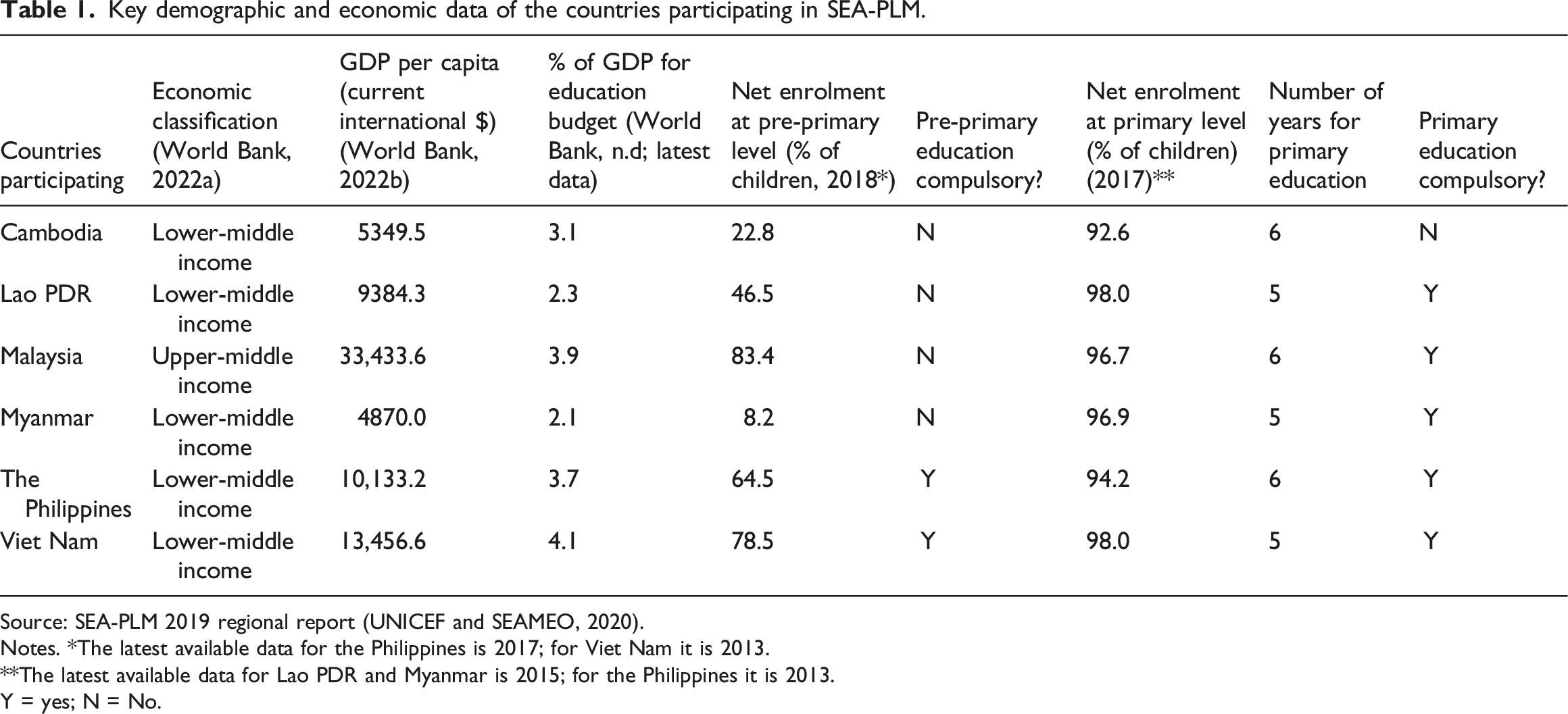
Source: SEA-PLM 2019 regional report (UNICEF and SEAMEO, 2020).
Notes. *The latest available data for the Philippines is 2017; for Viet Nam it is 2013.
**The latest available data for Lao PDR and Myanmar is 2015; for the Philippines it is 2013.
Y = yes; N = No.
As illustrated by the information in Table 1 the six participating countries are different yet similar on some key characteristics. For instance, all but one, are lower-middle income countries, with Malaysia being an upper-middle income country (World Bank, 2022a). Lao PDR, Myanmar, and Viet Nam have 5 years of compulsory primary schooling, whilst the other three countries (Cambodia, Malaysia, and the Philippines) have 6 years of primary schooling (UNICEF and SEAMEO, 2020). Cambodia is the only SEA-PLM country where primary education is not compulsory. In the Philippines and Viet Nam, pre-primary education is compulsory; however, the net enrolment figures (64.5% and 78.5%, respectively, based on the available data at the time of the SEA-PLM 2019 data collection) suggests that this policy was not yet fully implemented.
The educational prosperity framework
The education prosperity framework developed by Willms and Tramonte (2015) has been used as the theoretical foundation in this study. The framework was designed for PISA for development and thus aligns to the education contexts in less affluent countries like those participating in SEA-PLM. Illustrated in the form of a prosperity tree (Willms, 2018; see Figure 1), the ‘Foundations for Success’ are the roots of the tree which form the inputs required for children and young people to thrive and cover these five components: resources, family and community support, quality instruction, learning time, and inclusive environments (OECD, 2018; OECD and Willms, 2019; Willms, 2018). The ‘Prosperity Outcomes’ are the foliage illustrated by indicators of children thriving at each stage of development (OECD and Willms, 2019). Outcome indicators are grouped into four components, namely, educational attainment, academic performance, health, well-being, as well as attitudes towards school and learning. Thus, the framework specifies a total of nine theoretical components, seven of which can be aligned to concepts measured through the SEA-PLM 2019 background questionnaires (i.e. resources, family and community support, quality instruction, learning time, inclusive environments, attitudes towards school and learning, and academic performance). For the current analysis, family socio-economic status (SES) and literacy resources at home were mapped to the ‘resource’ component of the framework, as both provide resources for children’s literacy growth. Parental attitudes towards learning and homework were mapped to ‘family and community support’. While the ‘learning time’ component covered the factors preschool attendance, outside of school activities – inside and outside the home – and literacy time at school. Teacher absenteeism was categorised under ‘quality instruction’. Gender was mapped to the ‘inclusive environments’ component, student interest in school to ‘attitudes towards school and learning’ and finally the component ‘academic performance’ covered the remaining factors, that is, grade repetition and reading literacy. Visualisation of Willms’ educational prosperity model (Auld et al., 2020: 13).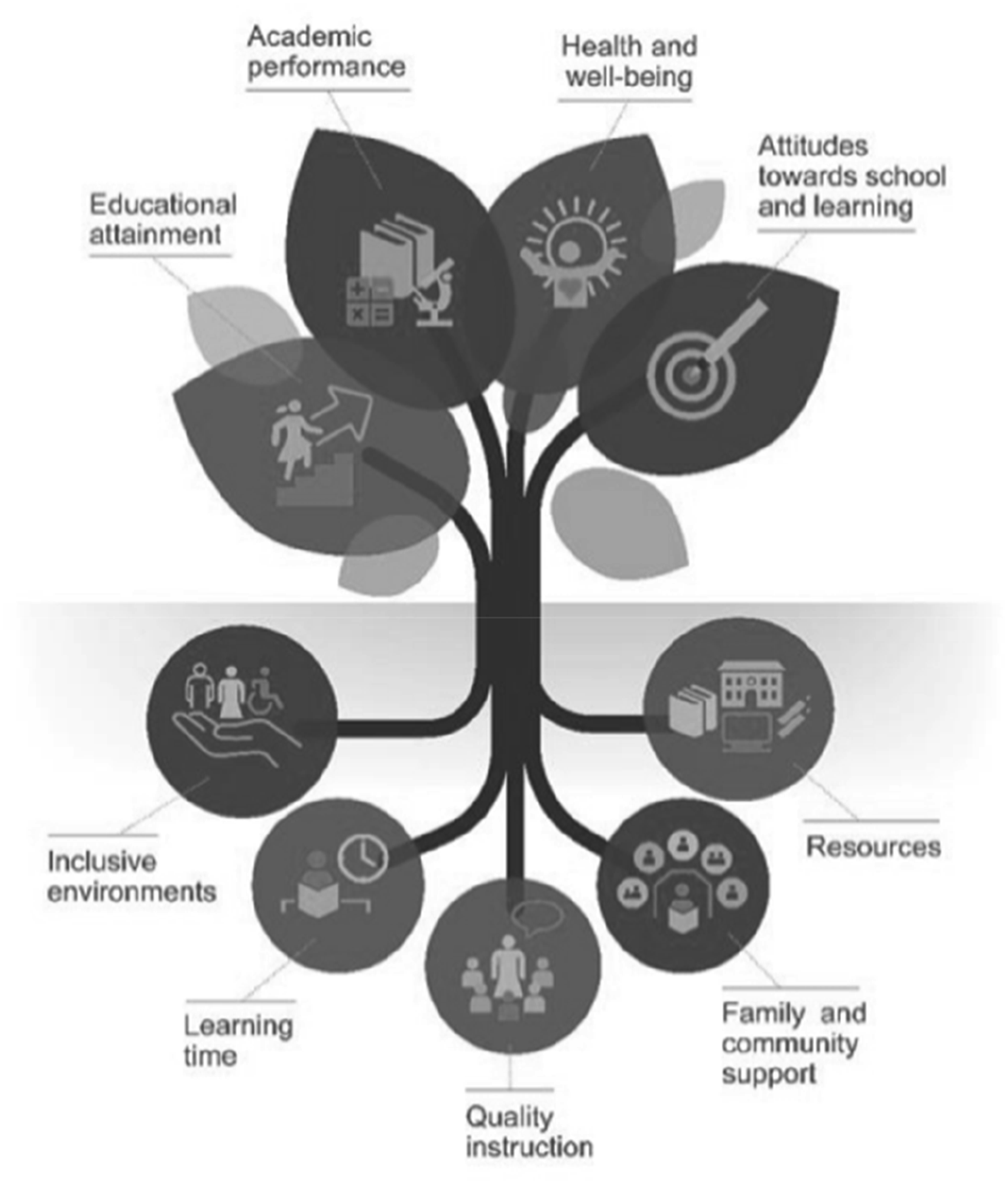
The next section discusses how each of the three variables of interest relates to students’ reading literacy, followed by a more general discussion about the influence of the other factors included in these analyses. 1
Family socio-economic status (SES)
A family’s SES is the relative social position the family holds in relation to their resources – such as economic, cultural, and social resources (Brese and Mirazchiyski, 2013; Diemer et al., 2013; Sandoval-Hernandez et al., 2022). These resources manifest themselves through family and household income, parental education, and parental occupation (Brese and Mirazchiyski, 2010; Saegert et al., 2007). Theoretically, better educated parents are more likely to pay attention to the quality of their children’s learning at school and engage more frequently with their children’s teachers (Egalite, 2016; Hanushek et al., 2019), while parents with lower levels of education may feel alienated in school settings, as seen from evidence in the Philippines (Alampay and Garcia, 2019; David et al., 2018). Lower parental education also leads to lower parental involvement in literacy activities (Feinstein and Sabates, 2006; Hemmerechts et al., 2017), and teachers may have reduced expectations of students from a lower SES background (Janssen et al., 2012), which can influence students’ reading literacy (Schofield, 1980).
Parental attitudes towards learning and homework
Parental involvement is the level of engagement a parent has in their child’s schooling observed through their attitudes towards learning and commitment to their child’s education (Bakker and Denessen, 2007; Borgonovi and Montt, 2012). Research suggests that parental involvement positively influences children’s learning outcomes (Fan and Chen, 2001; Harris and Goodall, 2008). Additionally, the parents own cultural values affect their attitudes towards learning and the level of support they provide to their children (Alampay and Garcia, 2019; Castro et al., 2015; Garcia, 2018; Yulianti et al., 2018).
Preschool attendance
During the early years (i.e. for the 3 to 5 year olds) attending a preschool program is deemed to be highly beneficial to ensure that the children are ready for school (Bakken et al., 2017; Trawick-Smith, 2014). This is because most early learning programs work to improve children’s pre-academic skills, self- regulation, and social and emotional behaviours, which, in turn, support learning and development well beyond the early years (Bakken et al., 2017; Egalite, 2016; Trawick-Smith, 2014; UNICEF and SEAMEO, 2020). Particularly early literacy skills developed during the time spent at preschool, can impact reading scores at the higher primary grades (Goldfeld et al., 2021; Mwoma, 2018). Also, exposure to extra literacy sessions can improve students reading literacy (Holmes et al., 2012).
Other influencers
In addition to the three variables which form part of the hypotheses, several other factors were also included in the path analysis. The aim is to understand their influence on the key variables of interest and their relationship to reading literacy.
The availability of
How school-aged students spend their time outside of school hours can influence their attitudes towards school and academic outcomes (Emerson et al., 2017; Lee et al., 2021). For example, participating in
Research focus
The main research focus of the current study was to operationalise as many aspects of the theoretical prosperity framework as possible and to test their relationships using data from Southeast Asian low- and middle-income countries. More specifically, the study examined whether the effects of positive parental attitudes and attending preschools during the students’ early years (i.e. selected foundational elements in the prosperity framework) influences Grade 5 students’ reading literacy (i.e. the key outcome for this study) in Cambodia, Lao PDF, Malaysia, Myanmar, the Philippines, and Viet Nam while holding other effects (e.g. of SES) constant.
Therefore, the following hypotheses were proposed:
Figure 2 illustrates the proposed path model. Here, the latent variables (influencing factors) are shown in boxes with rounded corners with their constituent manifest variables in rectangles (see also Table 3). The boxes at the bottom of the figure show how the latent variables fit into the prosperity framework (Willms and Tramonte, 2015). While the main hypotheses have been foregrounded it should be noted that the analyses considered all possible paths. This illustrates the strength of the analyses as it means that if a hypothesis is confirmed, the effect is significant while all other effects – and thus much of the complexity of factors influencing educational outcomes – are being controlled for.
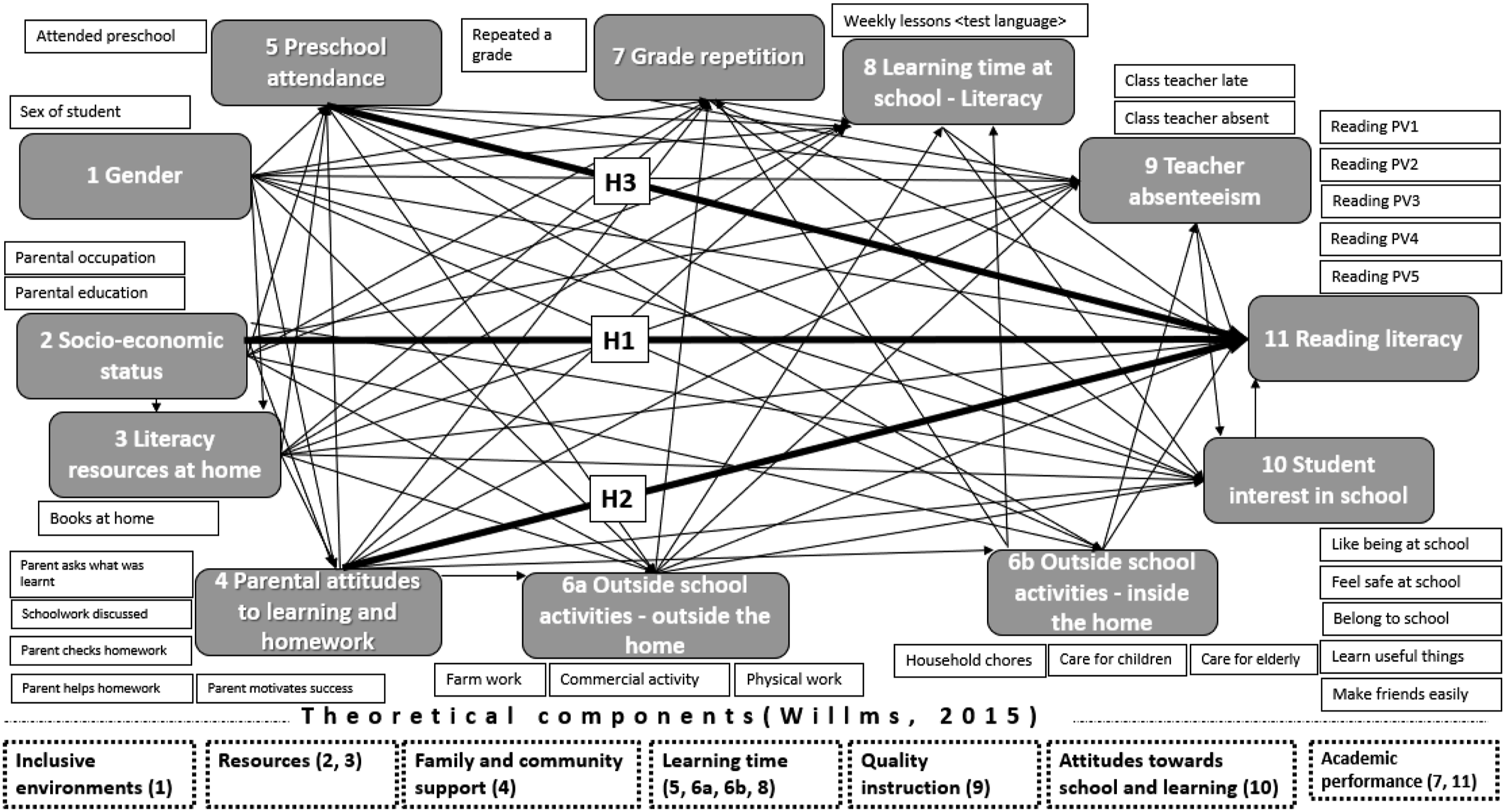
Proposed path model.
Method
The SEA-PLM 2019 dataset
Manifest, latent, and theoretical components of the proposed path model.
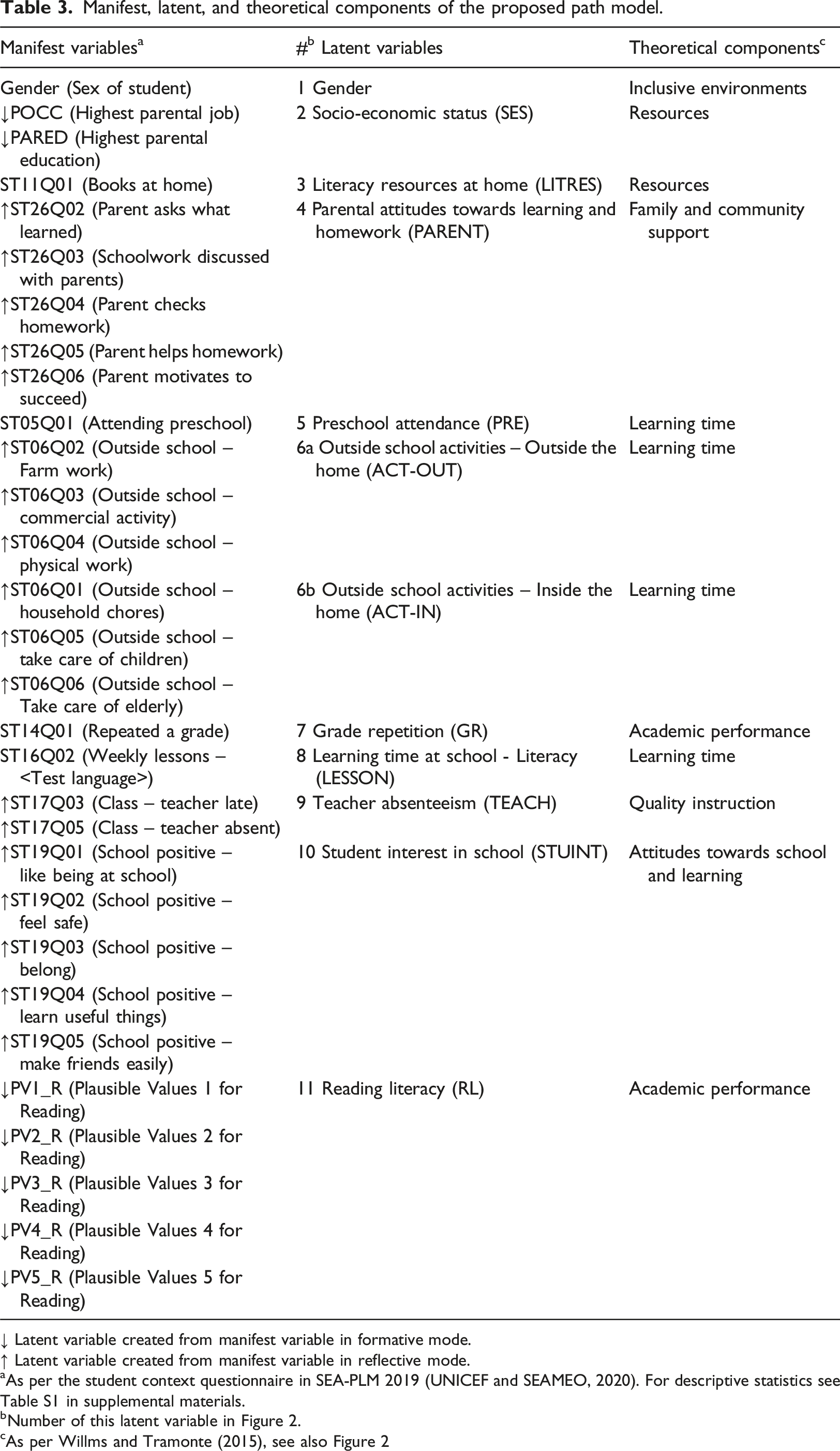
↓ Latent variable created from manifest variable in formative mode.
↑ Latent variable created from manifest variable in reflective mode.
aAs per the student context questionnaire in SEA-PLM 2019 (UNICEF and SEAMEO, 2020). For descriptive statistics see Table S1 in supplemental materials.
bNumber of this latent variable in Figure 2.
cAs per Willms and Tramonte (2015), see also Figure 2
Measures
Number of schools and students participating in SEA-PLM 2019.
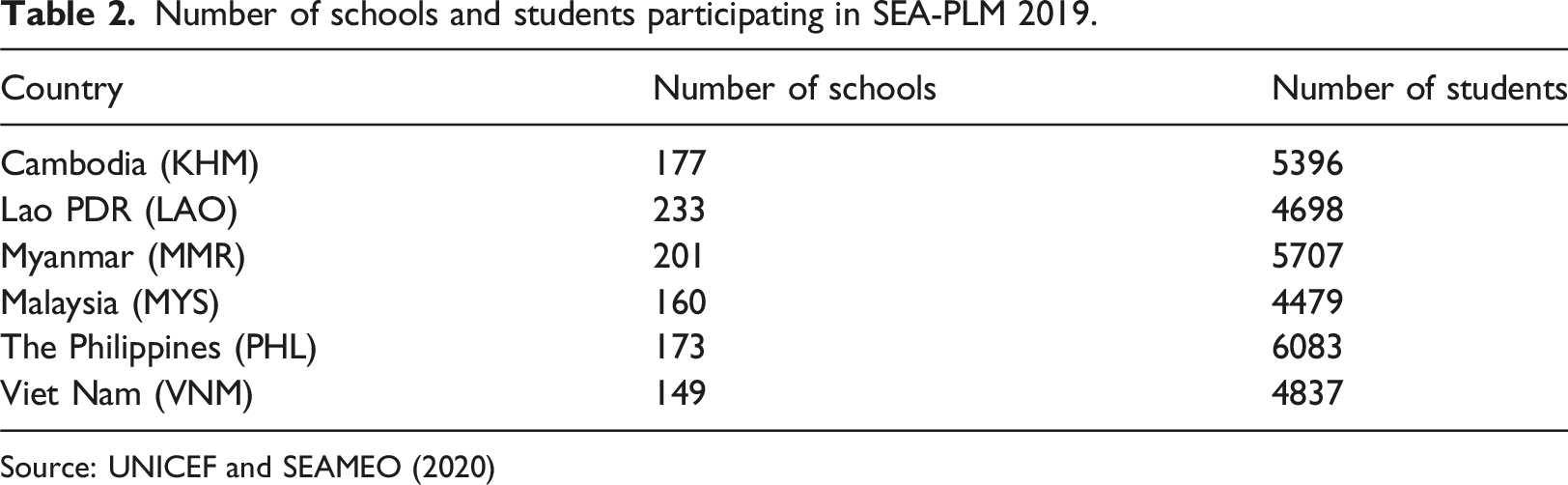
Source: UNICEF and SEAMEO (2020)
Outer loadings of manifest variables per country.
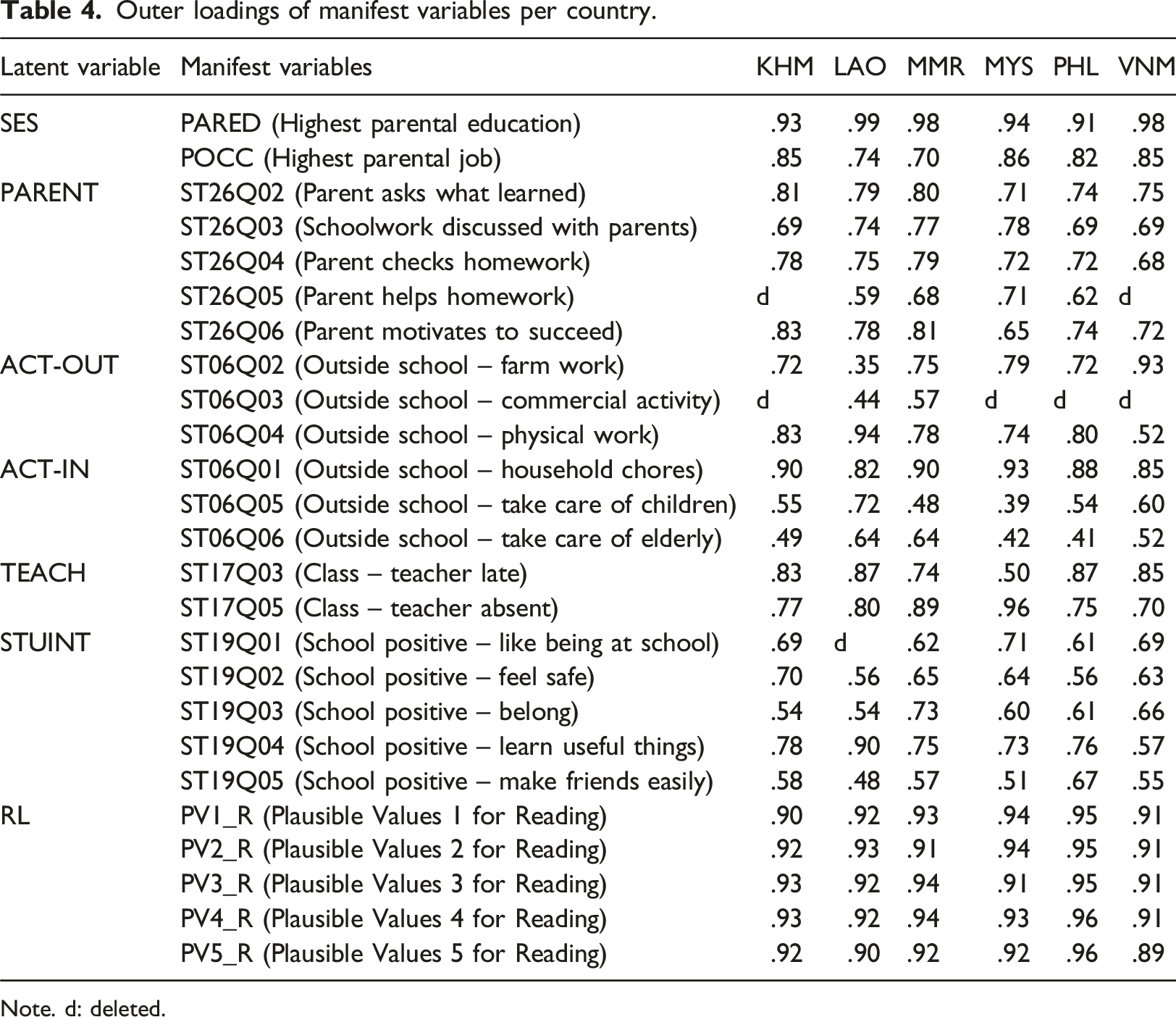
Note. d: deleted.
Analyses
Various ways to estimate structural equation or path models and associated hypotheses (Sinharay, 2010) as the one proposed in Figure 2 have been developed (e.g. Golan et al., 1996; Jöreskog, 1993; McDonald, 1996; Tenenhaus et al., 2005; Wold, 1974) and implemented in different software applications (e.g. Hair et al., 2021; Muthén and Muthén, 2017).
The partial least squares method approach (PLS) was chosen as the aim of this study is to investigate the effects of parental support and preschool attendance on reading literacy – while allowing SES with its known impact as well as other influencing variables to exercise their effects on reading literacy. The PLS approach is also particularly appropriate as it generally does not make distributional assumptions (Hair et al., 2021) and the data collected in SEA-PLM 2019 were mainly nominal and ordinal in nature.
The analyses were carried out using SmartPLS 3.3.5 (Ringle and Sarstedt, 2016). Bootstrapping analyses were undertaken with 4000 re-samples and 95% bias-corrected, while accelerated (BCa) was applied to investigate the significance of structural path coefficients and the coefficient of determination (R2 also known as the ‘explained variance’).
Results
Direct effects of latent variables on reading literacy per country.
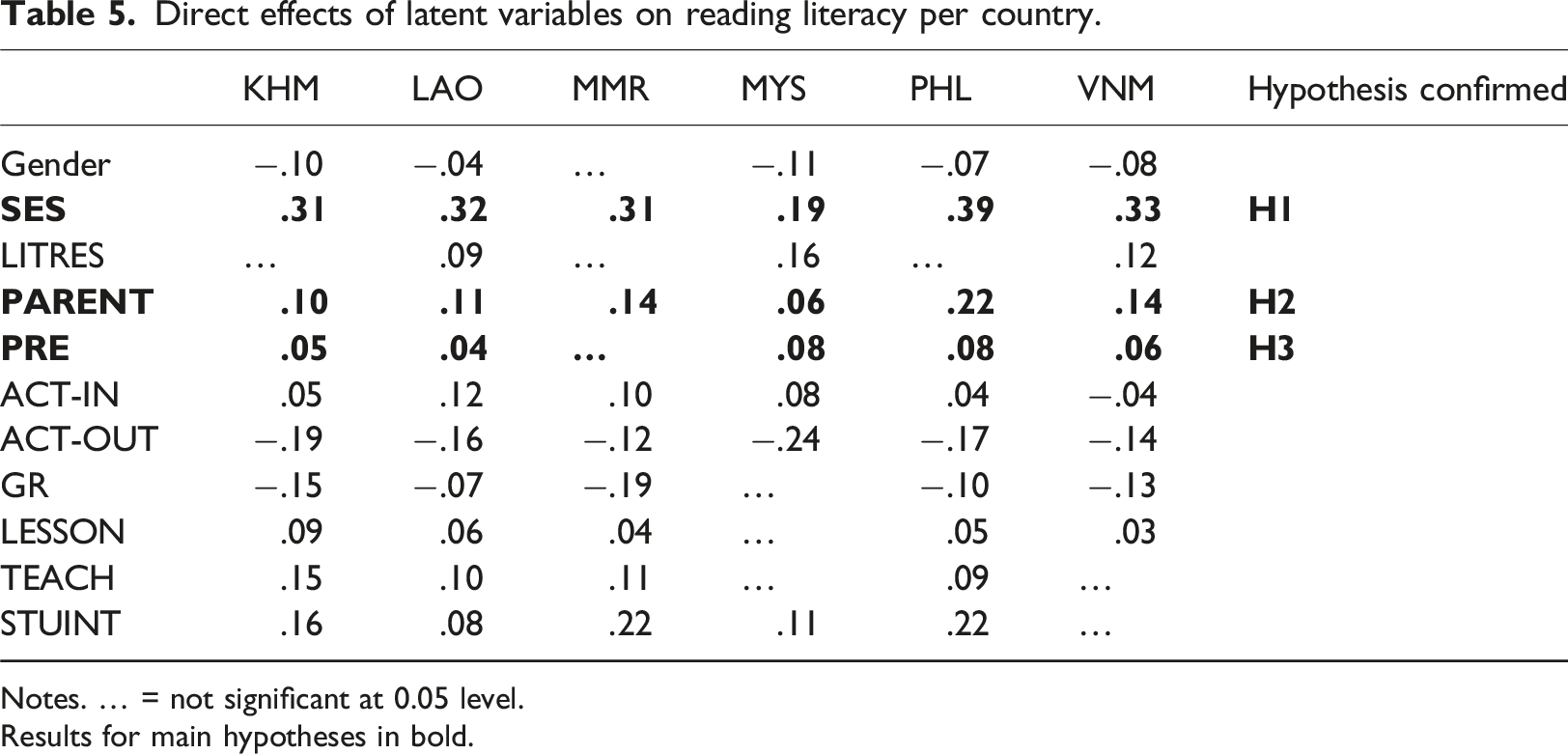
Notes. … = not significant at 0.05 level.
Results for main hypotheses in bold.
As can be seen,
The path from parental attitudes towards learning and homework to reading literacy was positive and significant in all six countries, ranging from 0.06 in Malaysia, 0.10 in Cambodia, 0.11 in Laos, 0.14 in Viet Nam, 0.14 in Myanmar to 0.22 in the Philippines. These results supported H2, as the effects were significant after all other factors in the model and their effects on reading literacy were considered.
The effect of
In terms of the other direct effects on reading literacy, amongst the variables which, mainly in Western contexts, have been shown to influence reading literacy, similar patterns emerge across the six SEA-PLM 2019 countries. Thus, activities inside the home have a positive effect on reading literacy as does more learning time dedicated to mother-tongue instruction at school, less teacher absenteeism and greater student interest in school. Negative effects on reading literacy across all countries emerge for activities outside the home, grade repetition and gender indicating that girls perform at a higher level in reading than boys.
Some interesting differences also emerge. For example, the effect of parental attitudes towards learning and homework on reading literacy in the Philippines (0.22) is about two-thirds of the effect of SES on reading literacy (0.39), whereas it is about one-third in the other countries. In other words, differences in whether parents discuss or check their children’s homework or ask what was learnt at school have greater impact in the Philippines than in the other five countries. In Malaysia, the effect of outside school activities outside the home (−0.24) is higher than SES (0.19), whereas the reverse is found in the other countries. This indicates that farm and physical work have a much greater (negative) effect on reading literacy there compared with the other countries. Literacy resources in the home only influence reading literacy in Laos, Malaysia, and Viet Nam, suggesting that having books at home makes a greater difference to students’ reading performance there than in Cambodia, Myanmar, and the Philippines.
While not the primary focus in terms of the research hypotheses, these analyses of a complex path model strengthen the findings of previous studies which often have focused on a much smaller set of variables. They emphasise that the effects of SES, parental attitudes and preschool attendance on reading literacy occur even after considering other influential factors such as gender, grade repetition, learning time, and students outside school activities. The structural models for each of the six countries are provided in the supplemental material (Figures S1 to S6).
Given the study’s explanatory nature, the structural model is assessed mainly through the explained variance (R2) in the outcome of interest, that is, reading literacy, instead of the goodness-of-fit indicators (Henseler, 2018). In addition, the Stone–Geisser’s Q2 (Geisser, 1974; Stone, 1974) is used to examine the model’s predictive relevance, computed with a cross-validated redundancy approach, with Q2 values larger than zero indicating the existence of predictive relevance (Hair et al., 2021).
Adjusted R2 values for reading literacy.

Q2 values for reading literacy.

Discussions and conclusions
The results presented in this study support existing evidence that parental attitude towards children’s learning and homework, as well as past preschool attendance, positively influence reading literacy even after other strong predictors, such as SES, have been considered. Findings also suggest the pattern in which these factors influence reading literacy of Grade 5 students was similar across the six Southeast Asian countries.
Overall, SES has the largest total effect on reading literacy in all countries across all latent variables in the model, especially in the Philippines. This result corroborates earlier research (Alampay and Garcia, 2019; Darmawan and Dharmapatni, 2024; David et al., 2018) which reported that low-SES families felt alienated by the school system due to the lack of understanding, resources, or flexibility, leading to a stronger effect of SES on reading achievement. As demonstrated by their outer model loadings (see Table 4) parental education was consistently more important than parental occupation for the SES construct in all six countries. This result supports many earlier studies which found that more highly educated parents were more likely to focus on their children’s academic achievement (Egalite, 2016), engage with school, and create engaging learning environment for literacy development (Al-Matalka, 2014; Feinstein and Sabates, 2006). This result also confirms the findings derived from the analyses of datasets such as PISA (Prudencio, 2020) or PIRLS (Chen et al., 2011), showing a consistent relationship between SES and reading achievement in most countries across the world.
The positive effect of parental attitudes on reading achievement was significant in the six countries. Its magnitude was greater in the lower-middle income economies (see Table 1), with the strongest effect emerging in the Philippines, while in Malaysia (the only upper-middle income country) this effect was relatively lower. This aligns with findings of Alampay and Garcia (2019), and Garcia (2018) regarding the importance of education for families as an integral part of the cultural value system across the Southeast Asian countries. As indicated by the outer model loadings, motivations, and encouragement to succeed contributed the most to the latent variable of parental attitude in Cambodia, Laos, Myanmar, and the Philippines. In Viet Nam, the highest contributor was parents asking students about what they learned at school; this factor also ranked high in other countries. Together, this emphasised the importance of parental attitude and interest in children’s learning outcomes, supporting existing research findings (Fan and Chen, 2001; Harris and Goodall, 2008).
Although smaller than the effects of parental attitudes and SES, the effect of preschool attendance on reading literacy was significant in all countries, except for Myanmar. An explanation may be the relatively low enrolment rate at pre-primary level in Myanmar (8.2%) compared with the other countries (ASEAN, 2019, see Table 1), leading to a relatively small proportion of students in the Myanmar sample who previously attended a preschool.
The reason for this relatively small effect of preschool attendance on reading literacy may be that the only preschool related information available in the SEA-PLM 2019 student dataset was about students’ attendance at a nursery school / kindergarten / preschool during their early years, and the duration (1 year or more) (UNICEF and SEAMEO, 2017). A note was included in the SEA-PLM 2019 main regional report, stating that ‘the type of preschool education could vary considerably across countries’ (UNICEF and SEAMEO, 2020: 69). Hence, the lower effect on reading literacy compared with those of SES and parental attitudes could be explained by the potential variance in quality or format across these early childhood institutions (Bakken et al., 2017; Egalite, 2016; Trawick-Smith, 2014; UNICEF and SEAMEO, 2020) which was not captured in the SEA-PLM 2019 data collection. Nonetheless, the significance of attending a preschool confirmed the finding reported in the SEA-PLM 2019 main regional report (UNICEF and SEAMEO, 2020: 19), which states that ‘children with at least 1 year of preschool education consistently performed better than those who had none’. The current analysis adds to this finding by confirming the positive effect of preschool on reading literacy, holding all other influencing factors constant.
Implications
Theoretical implications
The current analysis provides evidence in support of the prosperity framework based on which the proposed path model was developed. Overall, the path model explains between one quarter and half of the variance in reading literacy across the six countries. The results also reaffirm the importance of parental involvement and quality preschool in children’s literacy learning progress. In terms of effect sizes of the three main hypotheses tested, SES has the largest effect, followed by parental attitude and preschool attendance.
The use of PLS-SEM in this study has made it possible to test the effects of various home and school factors on reading literacy not only separately but all together. In essence, this study highlights the usefulness of the education prosperity framework by exploring the framework’s constructs and factors, which aim for holistic child development.
Future research should aim to study in-depth the impact of starting preschool earlier and the effects of early-structured learning on children’s growth and development in the Southeast Asian context.
Practical implications
Evidence from this study supports policies aimed at increasing parental involvement in their children’s schooling to improve students’ reading literacy. Such policies can support the development of programs for educating parents on how to be more involved in their children’s learning and schooling. As the results also indicate the positive influence of supporting strategies which limit the amount of time children help their families outside the home – on the farm, or on other commercial activities – parents can also be encouraged to keep their children engaged in activities at home. Parents can be taught the benefits of involving their children in activities at home such as helping younger children or assisting with household chores or taking care of the elderly. Such engagements are also beneficial for building familial bonds and therefore can reinforce parental engagement in learning and homework.
The findings also support the push towards universal preschool for targeted learning from an early age, which, so far, is compulsory in only two of the six countries, namely, the Philippines and Viet Nam. Policymakers can support the implementation of these policies by creating promotional campaigns that discuss the benefits of preschool attendance, both for children and the parents – as it frees up time for mothers and allows them to participate in the labour market. Additionally, policymakers should work to ensure that the preschool programs are adequately resourced and adheres to the broader SDG 4.2 target for providing quality pre-primary education (United Nations, 2015) so that children are ready for school and enter primary education in a timely manner.
Moreover, while not the focus of this study, a review of policies around grade repetition would seem appropriate, given its negative impact on reading literacy in all six countries and the variability of this policy across the Southeast Asian countries. In Malaysia, for example, less than 1% of children reported to have repeated a grade while in Viet Nam, this affected nearly 10% of children enrolled at Grade 5 in 2019 (UNICEF and SEAMEO, 2020).
Finally, this study highlights the importance of improving reading literacy in classrooms by raising student interest in school, maximising student learning time by timely arrivals and by reducing teacher absenteeism.
Limitations and future research directions
Due to this study being a secondary data analysis, the choice of manifest variables was limited to the information obtained through the SEA-PLM 2019 questionnaires. Also, validity and reliability testing were not possible for some latent variables which consisted of one manifest variable. In addition, the available information was sometimes too general to capture other details that are known to make a difference to outcomes, such as the quality of the preschool which the children in the study had attended. Future data collection efforts could seek to collect more in-depth contextual information to understand even better the specific relationships between influencing variables among each other and with the outcomes.
Furthermore, future research could aim to explore the mathematical or writing components of students’ learning outcomes enabling a comparison with the effects found here for reading literacy. Finally, other information from the SEA-PLM assessment, such as the teacher or parent dataset, could be introduced into the analyses alongside the student data. This would allow for a multi-level analysis and thus provide an even more refined understanding of the complex network of factors influencing children’s educational outcomes in the Southeast Asian region.
Supplemental Material
Supplemental Material - Parental support and preschool: Do they matter for primary students’ reading literacy? Evidence from six Southeast Asian countries
Parental support and preschool: Do they matter for primary students’ reading literacy? Evidence from six Southeast Asian countries by Syeda Kashfee Ahmed, Chuyue (Angela) Qin, and Petra Lietz in Research in Comparative and International Education
Footnotes
Author’s note
The Global Education Monitoring (GEM) Centre drives improvements in learning by supporting the monitoring of educational outcomes worldwide. The GEM Centre collaborates with education stakeholders around the world, providing expertise and technical support for initiatives to improve education policies, practices and investments.
Acknowledgements
The authors acknowledge the support provided by colleagues from the Global Education Monitoring (GEM) Centre, particularly the expert advice from Ursula Schwantner, Jeaniene Spink, and Katherine Dix, and technical assistance from ACER colleagues, Tim Friedman, Jacqueline Cheng, Dulce Lay and Juliet Young-Thornton. The authors also express their gratitude to the UNICEF SEA-PLM team for making the datasets available for secondary data analyses.
Declaration of conflicting interests
The author(s) declared the following potential conflicts of interest with respect to the research, authorship, and/or publication of this article: The authors authored the article within the scope of employment for their employer, the Australian Council for Educational Research (ACER).
Funding
The author(s) disclosed receipt of the following financial support for the research, authorship, and/or publication of this article: This publication has been funded by the Australian Government through the Department of Foreign Affairs and Trade, and the Australian Council for Educational Research Ltd. The views expressed in this publication are the author’s alone and are not necessarily the views of the Australian Government.

Supplemental Material
Supplemental material for this article is available online.
Note
Author biographies
References
Supplementary Material
Please find the following supplemental material available below.
For Open Access articles published under a Creative Commons License, all supplemental material carries the same license as the article it is associated with.
For non-Open Access articles published, all supplemental material carries a non-exclusive license, and permission requests for re-use of supplemental material or any part of supplemental material shall be sent directly to the copyright owner as specified in the copyright notice associated with the article.
