







Abstract
The present study employed a two-phase exploratory mixed methods design in English as a foreign language (EFL) classes at two private Japanese universities to gain a deeper understanding of students’ perceptions of AoA and its influence on their perceived global competence (GC) awareness. The qualitative data revealed that students developed enhanced intercultural adaptability, respect, and tolerance, and cross-cultural knowledge, while demonstrating improved communicative practices in production, reception, interaction, and mediation. Subsequently, in Study 2, participants completed online surveys using adapted versions of Mohammed-Ismail and Prasantha-Kumar (2023) AoA scale and Coffey et al. (2013) GC scale after a semester-long exposure to AoA activities (N = 201). Both the linear regression analysis and the subsequent structural equation model indicated that AoA was positively associated with students’ perceived GC, suggesting a possible link between AoA and GC. Further research is warranted to validate these findings across diverse educational and cultural contexts.
Keywords
Introduction
Research has shown that integrating the outside world into the language classroom creates a conducive environment for developing critical thinking, creativity, resilience, intercultural competence, autonomy, and global competence (GC) (Byram, 2020; Egitim and Harumi, 2025; Deardorff, 2006; Hörnqvist, 2022). Despite these benefits, a structured approach to incorporating real-world experiences into EFL classroom environments remains underexplored in Japanese educational settings.
Japan presents a unique context for examining the relationship between action-oriented approaches (AoA) and GC development. The Japanese government has prioritized internationalization in higher education, with MEXT emphasizing English language education as critical for enhancing global competitiveness (Hofmeyr, 2023; Sakamoto and Roger, 2023). However, traditional Japanese educational approaches tend to emphasize grammar-translation and rote memorization rather than communicative, student-oriented approaches (Egitim, 2022; Thompson and Yanagita, 2015). This instructional model, known as Juken Eigo (Exam-focused instruction) promotes passive learning behaviors and creates challenges when students transition to communicative language learning at the university level (Egitim and Harumi, 2025; Loucky and Ware, 2016).
Furthermore, Confucian-oriented learning traditions emphasize hierarchical teacher-student relationships, making students passive recipients of knowledge rather than active participants in intercultural learning (Egitim, 2021; Richter, 2022; Zhang and Bournot-Trites, 2021). These educational norms may limit students’ development of critical thinking, creativity, and intercultural awareness necessary for GC (Egitim, 2022). Thus, there appears to be a gap between government internationalization policies and the realities of classroom practices (Egitim and Umemiya, 2023; Fritz and Sandu, 2020).
While AoA offers a structured pedagogical framework for linking classroom learning with real-world engagement, it does not prescribe a single fixed methodology (Jaleniauskiene, 2021; Picardo and North, 2019). More importantly, few studies have systematically explored the relationship between AoA implementation and GC development, particularly in contexts where traditional pedagogical approaches predominate.
The existing literature on AoA in Japan focuses primarily on classroom participation and language acquisition (Yamamoto and Nitta, 2021), yet studies lack a comprehensive investigation of how AoA’s real-world components may contribute to intercultural understanding and GC awareness. Furthermore, limited research has employed mixed methods approaches to understand both student perceptions of AoA and quantitative measures of its effectiveness in developing GC.
To address these gaps, this mixed methods study investigated EFL students’ experiences with AoA at two private universities in Japan. More specifically, the study focused on the relationship between AoA and students’ perceived GC in Japanese university EFL contexts, while also drawing on qualitative data to explore how students experienced AoA and the communicative and intercultural practices they associated with it. To examine these issues in greater depth, the study was organized into two sequential phases. Phase one explored students’ lived experiences and perceptions, whereas phase two examined the relationship between AoA and students’ perceived GC across a larger sample. The research questions were as follows:
How do EFL students in Japanese universities perceive and experience the action-oriented approach, and what specific aspects do they identify as contributing to their intercultural understanding and global competence awareness?
To what extent is participation in action-oriented approach activities associated with students’ perceived global competence scores in Japanese university EFL contexts?
Literature review
Japanese EFL context and pedagogical challenges
In recent years, promoting GC has become a key objective of English language education in Japan. The Ministry of Education, Culture, Sports, Science and Technology (MEXT) has placed significant emphasis on English language education as a critical component of internationalization strategies at the tertiary level (Hofmeyr, 2023; Sakamoto and Roger, 2023). These efforts include the expansion of international faculty, study abroad initiatives for domestic students, and international student exchange programs (Kubota and Takeda, 2021). Furthermore, an English education reform plan aligned with globalization goals was implemented (MEXT, 2014), integrating cultural and intercultural elements along with affective and behavioral components into EFL classes to foster global citizenship in line with UNESCO’s sustainable development goals (Egitim and Harumi, 2025).
Despite these initiatives, how these policies are implemented in EFL classrooms remains unclear (Fritz and Sandu, 2020; Hofmeyr, 2023; Sakamoto and Roger, 2023). This reveals a persistent gap between the expectations for educators and students and the realities of classroom practices (Egitim and Umemiya, 2023). One of the challenges is the perception of intercultural communication as a distinct academic subject at the tertiary level, despite most intercultural interactions in Japan involving the use of English. These challenges are compounded by cultural and historical learning traditions in Japan.
Confucian-oriented learning based on rote memorization and exam performance is still deep-rooted in Japan (Egitim, 2021; Richter, 2022; Zhang and Bournot-Trites, 2021). Confucian heritage education emphasizes implicit communication, collective identity, harmony, and consensus-building (Matsuyama et al., 2019; Richter, 2022; Zhang and Bournot-Trites, 2021). These norms impose a hierarchical relationship between the teacher and students in the classroom, which makes the teacher the ultimate knowledge source, while students settle into their follower roles as passive recipients (Egitim, 2021). This style of education can be effective in completing fixed tasks, maintaining consistency, productivity, and precision as in the case of machines, yet it may fall short of addressing students’ critical thinking, creativity, and intercultural awareness. Therefore, a structured pedagogical model in EFL classrooms is needed to bridge the gap between policy and practice (Egitim, 2022). Within this policy and pedagogical context, it is important to clarify what GC entails and why it has become a central goal in Japanese EFL education.
Developing global competence within the Japanese context
GC is defined as “the capacity to examine local, global and intercultural issues, to understand and appreciate the perspectives and world views of others, to engage in open, appropriate and effective interactions with people from different cultures, and to act for collective well-being and sustainable development” (OECD, 2018: p. 7). While GC and intercultural competence are related concepts, they serve distinct but complementary roles in preparing learners for global citizenship. Intercultural competence, as defined by Deardorff (2006), refers to “the ability to communicate effectively and appropriately in intercultural situations based on one’s cross-cultural knowledge, skills, and attitudes” (p. 247). This competence primarily focuses on pair or small-group interactions between individuals from different cultural backgrounds. GC, in contrast, involves a broader scope that includes intercultural competence as one of its components while extending to systemic thinking about global issues, collective action for sustainable development, and the ability to navigate complex global challenges (Egitim and Harumi, 2025; OECD, 2018).
Research on pedagogical approaches to GC development has identified several effective strategies across different educational contexts. Studies in the Asia-Pacific region have particularly emphasized the need for structured approaches that can bridge traditional pedagogical methods with contemporary global citizenship education goals (Hofmeyr, 2023; Sakamoto and Roger, 2023).
Communicative and task-based approaches have shown promise in developing GC through authentic use of language and real-world problem-solving (Byram, 2020; Deardorff, 2006). However, these approaches often lack the systematic integration of classroom learning with external environments that characterizes globally competent individuals (Egitim and Harumi, 2025).
Study abroad programs and international exchange initiatives have demonstrated effectiveness in fostering GC, particularly in developing cross-cultural understanding and adaptability (Egitim and Harumi, 2025; Fantini, 2018). However, these experiences are not accessible to all students and may not provide the sustained, systematic development needed for GC. In response to these challenges, the AoA provides a theoretically grounded framework with the potential to promote GC development within EFL education in Japanese universities.
While communicative and task-based approaches emphasize meaningful language use and task completion, AoA places greater emphasis on the learner as a social agent who acts with others in socially situated contexts. In this sense, AoA extends beyond classroom interaction by promoting collaboration, mediation, and action that could connect classroom learning to the broader social environment.
Action-oriented approach
The AoA is a pedagogical approach to language teaching and learning that links classroom activity with external environments through communicative and socially situated tasks while remaining compatible with task-based learning (Picardo and North, 2019). The AoA views language learners as “social agents” who accomplish tasks in specific contexts (Council of Europe, 2020; Picardo and North, 2019: p. 177).
It positions language learning as a tool for active participation in diverse societal contexts to promote GC development, intercultural awareness, and problem-solving skills. Moreover, AoA fosters collaborative meaning-making, shifts curriculum planning from forward design to backward design (Richards, 2013), and prioritizes action-oriented tasks grounded in real-life scenarios (Picardo and North, 2019). However, the operational definition of “real-life scenarios” varies considerably across AoA implementations, creating challenges for consistency in research comparisons.
In practice, “real-life scenarios” range from classroom role-plays simulating service encounters, to campus interviews with international students, to off-campus community projects and virtual exchanges. Their implementations differ in terms of authenticity (simulated vs direct contact), stakes (graded classroom task vs community deliverable), duration (single lesson vs semester-long project), and degree of out-of-class engagement. Such heterogeneity complicates cross-study comparisons.
Nevertheless, AoA rests on core principles described by Picardo and North (2019), who emphasize that “Tasks serve as the backbone of the curriculum, integrating formal, informal, and non-formal learning through meaningful, iterative action” (p. 18). Moreover, the AoA highlights mediation and plurilingual/pluricultural competencies in interactive learning (Council of Europe, 2020: p. 21). The conceptual alignment between AoA principles and GC development becomes apparent when examining the “social agent” framework. The four key implications identified by Picardo and North (2019) directly correspond to OECD (2018) GC dimensions: acting in society relates to local-global awareness; authentic social interaction aligns with intercultural communication skills; collaborative action connects to perspective-taking abilities; and project-based engagement aligns with collective action for sustainable development.
The theoretical alignment between AoA and GC is further supported by empirical studies that emphasize authentic interaction and collaborative meaning-making as key drivers of intercultural learning. Byram and Feng (2004) study showed that authentic cultural interaction enhanced intercultural competence, a core component of GC. Chen and Starosta (2019) found that collaborative, project-based language learning strengthened global perspective-taking abilities. Furthermore, Jackson (2018) meta-analysis found that approaches combining authentic cultural contact and collaborative meaning-making, both central to AoA were associated with large positive effects on intercultural outcomes.
The language learner as a social agent comes with several implications as stated by Picardo and North (2019): • The learner acts in society, be it in class or outside. • Action is what characterizes learning in the same way as it characterizes everyday life in society. • The class is an authentic social milieu where different individuals act together. • Acting together is what learners are increasingly preoccupied with when involved in projects because project work is core in AoA (pp. 245-246).
Despite its growing influence in language education, the AoA has received limited scholarly attention in Japan. Yamamoto and Nitta (2021) found that AoA emphasized active participation in the classroom as a learning community, suggesting that language acquisition requires more than knowledge construction. It requires engaging in situated experiences. Their study concluded that incorporating real-world experiences increases student interest and active participation.
AoA conceptualizes learners as social agents who exercise agency through collaboration, negotiation of meaning, and engagement in purposeful action. However, many Japanese students enter university from educational backgrounds shaped by teacher-centered instruction, exam-oriented learning, and limited experience with interactive classroom practices. In this study, we approached AoA through a global competence development lens and treated learner agency as an ongoing process that can be developed through structure and scaffolding provided by teachers.
By conceptualizing learners as social agents engaged in meaningful action, we utilized AoA in a way that brought together the linguistic, intercultural, and reflective aspects of learning. Authentic tasks, mediation, and collaboration within AoA allowed us to connect theory with classroom practice and address the gap between policy goals and teaching realities in Japan’s EFL context.
Methods
Study 1: Qualitative analysis
We collected our first set of data through in-person interviews and open-ended survey questions with nine Japanese university students who engaged in AoA during a fifteen-week semester. Interviews were conducted at the end of the semester to capture students’ reflective perspectives on the implementation of the AoA. One member of the research team conducted the interviews and managed the qualitative data. Although participants were recruited from two private universities in the Kanto region, all interviews were conducted at a single site.
Participants
Demographics of study participants.
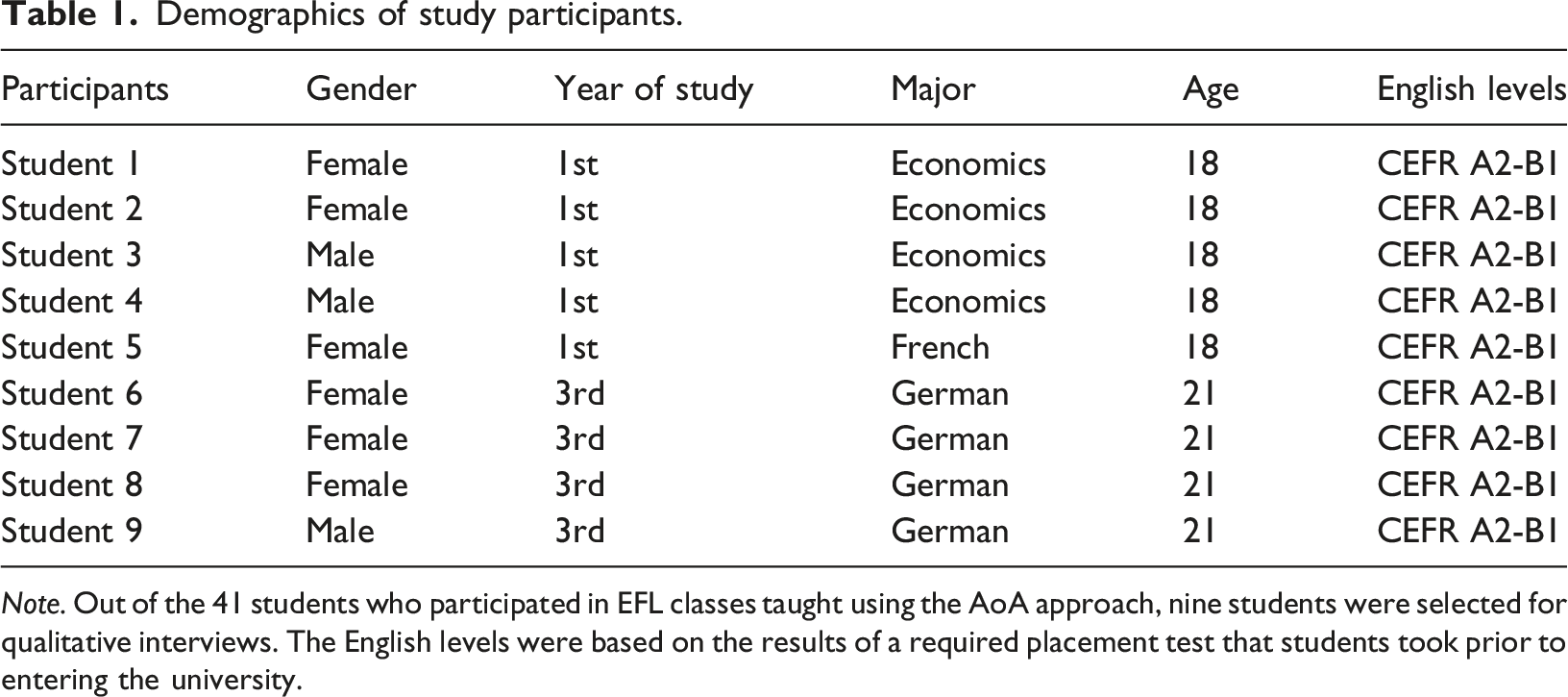
Note. Out of the 41 students who participated in EFL classes taught using the AoA approach, nine students were selected for qualitative interviews. The English levels were based on the results of a required placement test that students took prior to entering the university.
Regarding participant selection, a purposive sampling strategy was employed. Students were selected based on sustained participation in AoA-based tasks, demonstrated engagement throughout the semester, and their ability to provide reflective and substantive insights into their learning experiences. Our judgment was guided by the study’s aim to gather information-rich cases for the qualitative phase (Denzin, 2012). We identified students who could provide the most relevant and valuable information to address the first research question. First, we approached each student and had a preliminary discussion on the interview to determine their suitability. The number of students was determined by data saturation, which, consistent with Hennink et al. (2017), was reached after nine interviews when no new themes emerged. Therefore, our decision to conclude data collection after interviewing nine participants is grounded in this evidence, suggesting that additional interviews were unlikely to generate significantly new insights, thus satisfying the principle of saturation as outlined by Hennink et al. (2017).
The nine students were invited to complete open-ended survey questions on Google Forms. The interview and Google Forms survey contained 13 questions, which were designed to: • Assess students’ perceptions of the AoA in understanding cultural norms, customs, and differences in communication. • Evaluate their experiences of learning about other cultures in the course. • Examine how AoA influences their ability to adapt communication styles and resolve cultural misunderstandings. • Measure their sensitivity to nonverbal cues and communication patterns in diverse cultural contexts. • Explore their attitudes toward interacting with individuals from different backgrounds.
Written informed consent was obtained from all participants before data collection. Participation was voluntary, and students were informed that their decision to participate or withdraw would have no impact on their course evaluation. The study was conducted within a regular classroom setting and involved minimal risk to participants. In accordance with institutional practices for low-risk pedagogical research, formal ethics review board approval was not sought. We provided both Japanese and English translations of the interview questions. Although students could respond in either language, all chose to respond in English. As the interviews were conducted within an EFL course that emphasized authentic language use, all participants provided their responses in English. The quoted excerpts are presented in their original form, and no translation was required.
Qualitative analysis
We analyzed the qualitative data using Braun and Clarke (2006) thematic analysis. After transcribing the interviews, two researchers independently coded the dataset in MAXQDA using an initial deductive coding framework aligned with the study’s theoretical model, while remaining open to additional patterns emerging from the data. Initial codes were iteratively reviewed, grouped into broader categories, and refined into overarching themes through discussion. Coding discrepancies were resolved through documented analytic meetings, and an audit trail was maintained throughout the analytic process. The final analysis yielded two overarching themes with four and three subthemes, respectively.
Given AoA’s conceptual relationship with the CEFR, it is important to clarify how AoA was operationalized in this study. Although AoA in EFL contexts is often linked to learning objectives and evaluation criteria based on Can-Do statements of CEFR, the present study did not adopt formal Can-Do statements as a primary analytical framework. Instead, participants’ CEFR levels (A2–B1), based on the university placement test, were used to describe the sample. AoA was implemented through the task designs described above, and students’ perceptions of these learning experiences were examined qualitatively through interviews and open-ended survey responses focusing on intercultural understanding and communication-related development.
In implementing the AoA, we designed tasks such as group presentations, country research reports, role-plays, and problem-solving activities. Students engaged in activities such as researching another country and presenting its cultural practices to classmates, completing group presentations and written reports on intercultural topics, participating in role-plays based on intercultural encounters, and working on problem-solving tasks in English that required collaborative discussion and decision-making. In some cases, these activities also involved gathering information beyond the textbook, such as asking questions to peers or people outside the classroom and bringing that information back into classroom discussion. These tasks were followed by reflection, peer interaction, and teacher guidance, thereby linking classroom language use with social interaction and intercultural meaning-making.
In adapting these activities to the Japanese context, we considered Hofstede (2001) cultural dimensions, particularly Japan’s collectivist orientation. We utilized this as a contextual and pedagogical lens for task design at the class level (e.g., collaboration structures and group-based participation), while we remained attentive to individual differences and variation in students’ responses. Tasks therefore emphasized collaborative problem-solving and group-based engagement rather than individual competition, supporting group harmony as a valued cultural norm. This alignment with local cultural factors aimed to foster GC in ways that were both authentic and culturally appropriate, reducing resistance and promoting active engagement with intercultural content.
This study is situated within a pragmatic research paradigm, which underpins the two-phase exploratory mixed methods design. Pragmatism supports the integration of qualitative interpretation and quantitative measurement and aligns with the study’s aim to examine the AoA-GC relationship from two connected phases (Creswell and Plano Clark, 2018). In the present study, integration between phases was primarily interpretive, as the qualitative findings informed the overall conceptual framing and interpretation of the quantitative results rather than the direct development of the survey measures.
Positionality statement
As researchers, we recognize that our professional and personal backgrounds shaped our engagement with this study. With over a decade of experience as English language educators in contexts where English is not the primary language, as well as our own experiences as language learners, we are acutely aware of the challenges students face in acquiring English. These experiences informed our interest in examining the AoA and its potential relationship to GC. At the same time, we acknowledge that our perspectives may differ from those of Japanese students operating within a distinct cultural and educational context. As practitioner-researchers, we also recognize that our pedagogical authority and established relationships with participants may have influenced the implementation of the task, participants’ responses, and data interpretation. To address these positionalities, we adopted a reflexive stance that prioritized participants’ experiences over our assumptions. This involved maintaining analytic memos and engaging in ongoing dialogic reflection throughout the research process to mitigate potential bias and situate interpretations within participants’ perspectives.
By acknowledging our positionality and engaging in reflexive practice, we sought to approach the study with openness and humility, ensuring that the findings authentically represent the voices and experiences of EFL learners in Japan.
Qualitative findings
Communicative practices
The first theme identified was communicative practices, reflected in students’ engagement with authentic, task-based activities. This theme included four subthemes: production, interaction, reception, and mediation (Council of Europe, 2020). These categories helped us organize how students perceived their classroom experiences under AoA.
To strengthen the qualitative analysis in Phase 1, the frequency of instances for each subtheme identified in participants’ responses is reported alongside their description. A total of 9 instances of production were identified across participants, reflecting learners’ active use of language to produce spoken or written texts. Interaction was more prominent, with 11 instances reported by the 9 participants, highlighting learners’ ability to listen, interpret, and respond appropriately to others’ input. In contrast, reception was less frequently mentioned, with 4 instances across the 9 participants, primarily involving reading and listening as sources of input. Mediation, although less frequent, was still evident, with 3 instances reported across participants, involving learners supporting others through simplification, interpretation, or facilitation of understanding. • Production (9 instances across 9 participants) involved learners’ active use of language to create written or spoken texts. • Interaction (11 instances across 9 participants) involved students’ listening, understanding, and responding appropriately to other students’ input. • Reception (4 instances across 9 participants) referred mainly to reading and listening as core sources of input. • Mediation (3 instances across 9 participants) involved helping others bridge gaps in understanding through simplification, interpretation, or facilitation.
Student 3 explained: In this class I feel some chance of group discussion and presentation. And other classes I took is a little bit less or only learning the topic of the other countries. So, I think there’s good things that we have many chances of presentation and speaking. (In-Person Interview, Pos. 101-103)
Student 5 commented, “In other class, we study only textbook but, in this class, I have many chances for discussion, for presentation, so I can present my opinion correctly” (In-Person Interview, Pos. 114-115).. The Theme of Communicative Practices with Sample Quotes. Note. Figure 1 presents the student responses gathered from our focus-group interviews. Production involved learners actively using language to create written or spoken texts.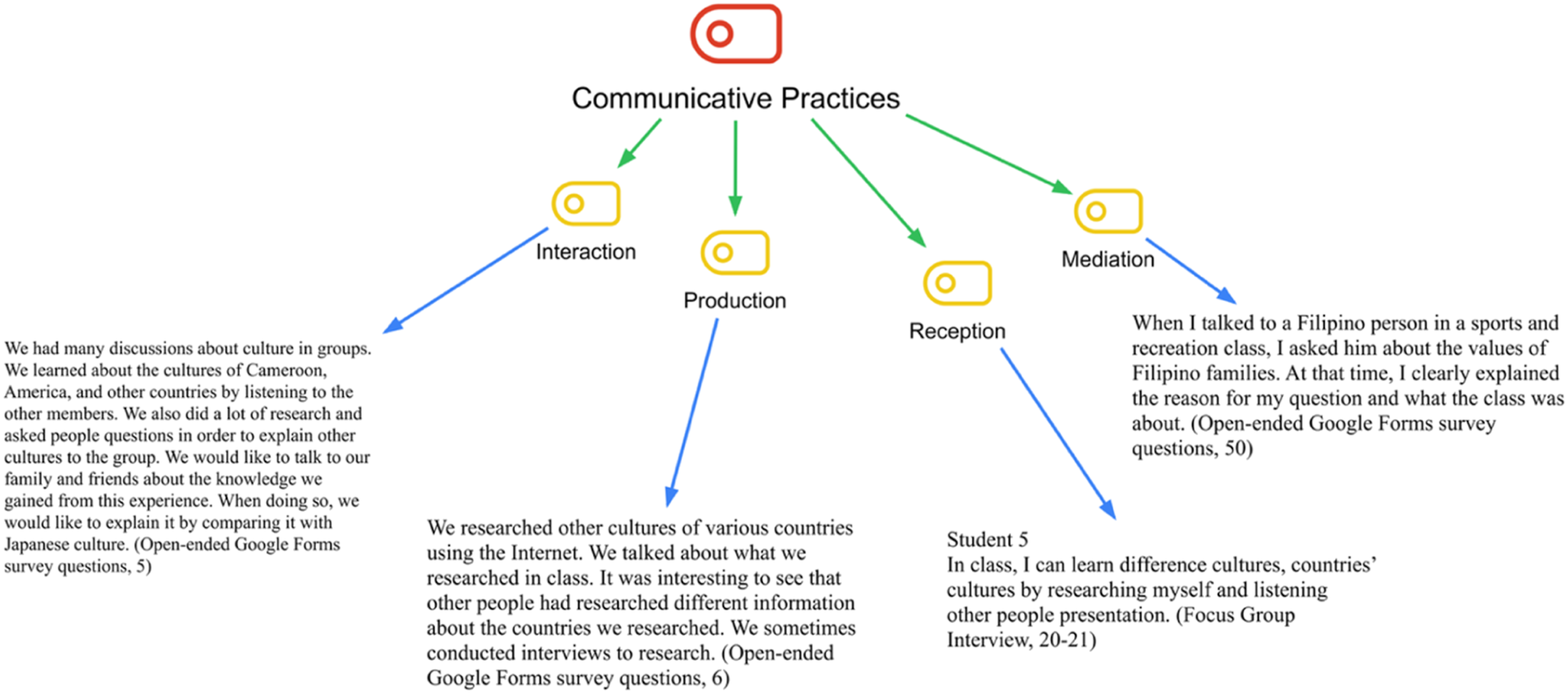
The code of interaction involved students’ listening, understanding, and responding appropriately to other students’ input. The CEFR has stated that the AoA “puts the co-construction of meaning (through interaction) at the centre of the learning and teaching process” (Council of Europe 2020: p. 30). Student 7 in the online survey elaborated on the co-construction of meaning through interaction following our Speaking classes where we adopted the AoA: We had many discussions about culture in groups. We learned about the cultures of Cameroon, America, and other countries by listening to the other members. We also did a lot of research and asked people questions in order to explain other cultures to the group. We would like to talk to our family and friends about the knowledge we gained from this experience. When doing so, we would like to explain it by comparing it with Japanese culture. (Online Survey, Pos. 5)
The learning approach described by the student emphasizes learner-centeredness where students operated as researchers and content gatherers with peers in class. This is evident in the following excerpt from Student 2, “I think other English class is just studying by teacher who teach me, and teachers teach me one way. So, speaking with friends and teacher is important for me” (In-Person Interview, Pos. 130-131).
The balance between teacher-centered instruction and collaborative peer interactions in small groups is central to the AoA in improving learners’ communicative competencies. Regarding reception, reading and listening appeared to be the core skills as they provide essential input for students, which was evident in the following responses. Student 4 noted, “I can learn about some country another culture from searching or from listening other students’ opinion. So, I think that this class can make me more intelligence about culture” (In-person Interview, Pos. 16-18).
The last code pertaining to the theme of communicative practices was mediation. Mediation involves helping students bridge gaps in understanding, whether by simplifying language, interpreting meaning, or facilitating communication. Here is an example of how student 3 mediated concepts to facilitate understanding in interaction: When I spoke to a Filipino person in a sports and recreation class, I asked him about the values of Filipino families. At that time, I clearly explained the reason for my question and what the class was about. I was able to understand each other while talking to someone who was in trouble on the train, etc. (Online Survey, Pos. 50-51)
“Even if I can’t get my point across, I don’t get annoyed but try to change the way I say things and smile when I speak.” (Online Survey, Pos. 33-34).
In this case, the student simplified her expression using mediation to achieve mutual understanding. The nonverbal cue of smiling facilitated this process during her interaction with the Filipino student. The activities implemented in the AoA such as engaging with the outside world, equipped students with mediation strategies. As stated in the CEFR Companion Volume with New Descriptors, these strategies help learners “construct or convey meaning.”
Intercultural practices
The second major theme identified was intercultural practices, which reflected how students understood, interpreted, and responded to cultural differences through AoA-based activities. Cultural knowledge was reflected in 12 instances across 9 participants, indicating awareness and understanding of cultural differences and practices. Respect and tolerance emerged as the most salient subtheme, with 17 instances reported, highlighting learners’ openness toward and acceptance of diverse perspectives. Finally, adaptability was identified in 9 instances across 9 participants, demonstrating learners’ ability to adjust communication and expectations in intercultural contexts. • Cultural knowledge (12 instances across 9 participants) referred to students’ awareness and understanding of cultural differences and practices. • Respect and tolerance (17 instances across 9 participants) referred to students’ openness toward and acceptance of different cultural perspectives. • Adaptability (9 instances across 9 participants) referred to students’ ability to adjust their communication and expectations in intercultural situations.
The major theme of intercultural practices as represented in Figure 2 aligns with Byram (2020) model of intercultural communicative competence. The model highlights students’ ability to recognize, appreciate, and respect cultural differences and similarities, while navigating these differences in ways that promote positive interactions and relationships. Based on student responses, we identified the secondary themes of cultural knowledge, respect and tolerance, and adaptability under intercultural practices. These themes reflect key aspects of intercultural understanding, which can contribute to GC development and EFL learning. The following extracts show students’ understanding of cultural knowledge, rooted in Byram’s broader model of intercultural communicative competence. The Theme of intercultural practices with Sample Quotes.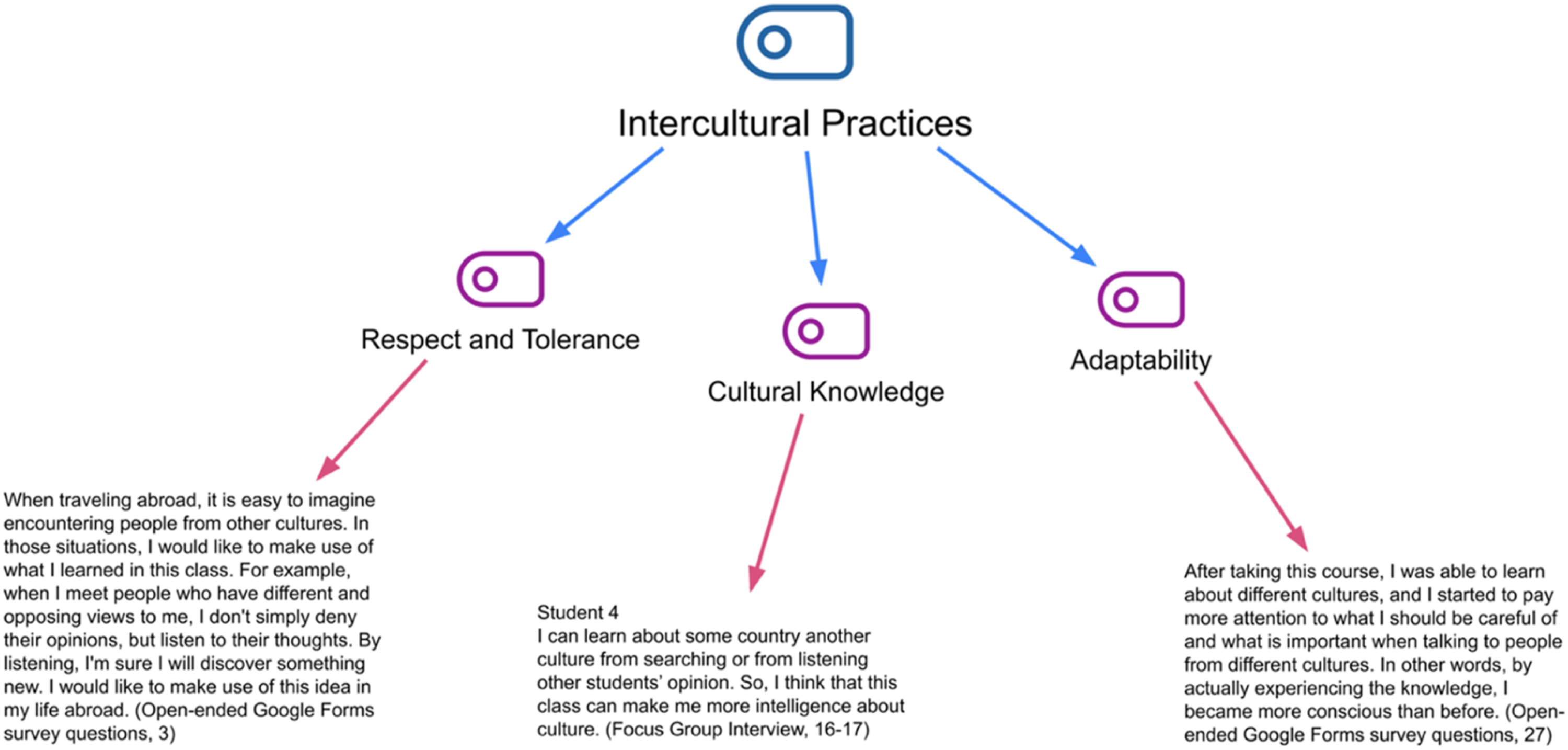
Student 5: The experience of learning about other cultures in this course required me to change the country in which I was studying, so I was able to learn beyond the country I am usually familiar with. It was a good experience for me to focus on Africa in particular. (Online Survey, Pos. 9)
Student 8: It was the first time for me to research the cultures of so many different countries in the past three months. And it was interesting to learn about those differences. So, after taking this course, I have become more proactive in learning about cultural differences than before. (Online Survey, Pos. 40-41)
Student 5 noted, “In class, I can learn difference cultures, countries’ cultures by researching myself and listening other people presentation. I can… learning other countries’ cultures is important to understand other values, so it’s interesting for me” (In-Person Interview, Pos. 20-21).
Based on the above excerpts, student interactions with the outside world help them gain cultural knowledge, as seen in statements like “I learn beyond the country I am usually familiar with and focus on studying Africa.” (Online Survey, Participant 6, Pos. 9).
Respect and tolerance, another secondary theme identified in the data, entailed being receptive to different cultural beliefs and practices, refraining from judging other cultures based on one’s own cultural standards and valuing the unique contributions of various cultures. The following excerpts from student 8’s response further highlights this theme: When talking to people from different cultures, I want to accept them without getting upset even if the interpersonal distance is different. I tend to think that it is difficult to get others to understand my culture, so I sometimes give up on mutual understanding, but from this class I felt that it is important to have the attitude of trying to understand cultural differences, even if not completely, as much as possible. (Online Survey, Pos. 41) In my interactions with the other person, I first listened to their opinion to understand the problem, and did not deny their identity because it was cultural, but instead sought a compromise with my own identity, proposed it, and solved it. (Online Survey, Student 7, Pos. 52)
The secondary theme of adaptability suggests that students adjust their behaviors and expectations when they encountered cultural differences, while recognizing and respecting different cultural norms, values, and expectations (Deardorff, 2006). The AoA-based activities incorporated into speaking classes also fostered adaptability, as shown in the following exchange: Student 3 noted, “I become more careful than before when I talk with other country’s people. So, I learned …For example… I learned pet peeves with some countries, so I am careful about the pet peeves that the country people have” (In-Person Interview, Pos. 24-26).
Student 3’s awareness of different communication styles while interacting with people from diverse cultural backgrounds suggests that they are adapting, which is an essential aspect of most intercultural interactions. Similarly, student 5 observed, “I started to pay more attention to what I should be mindful of and what is important when talking to people from different cultures. In other words, by experiencing this knowledge, I became more conscious than before” (Online Survey, Pos. 27).
In line with our two-phase mixed methods design, we conducted Study 2 to examine whether the AoA-related experiences identified in Study 1 were associated with students’ GC in a larger sample. In the qualitative phase, we identified recurring themes in students’ accounts of communicative practices (production, interaction, reception, and mediation) and intercultural practices (cultural knowledge, respect/tolerance, and adaptability). These themes informed our conceptual framing of the AoA-GC relationship and guided our interpretation of the quantitative findings, although Study 2 did not test each qualitative subtheme as a separate variable.
Study 2: Quantitative analysis
Sample and procedure
To examine the relationship between AoA and GC, we performed linear regression to understand the extent to which participation in AoA activities is associated with students’ GC. Data were collected from 201 Japanese university students at two private universities across both authors’ teaching contexts. These EFL class contexts were the same general instructional settings represented in Study 1, which included students from majors such as Regional Development, Economics, French, and German. The sample included a nearly equal distribution of female and male participants (53.9% and 46.1%, respectively), with an average age of 19.5 years. The participants’ English proficiency levels varied from CEFR A2 to B1.
We utilized a purposive sampling strategy to select participants who were actively engaged in an educational setting designed to enhance GC through interactive and AoA activities. Over the course of a 15-week semester, students in both authors’ teaching contexts engaged in various AoA-based activities, including discussions, debates, presentations, and collaborative writing tasks in English. These activities were designed to foster students’ intercultural understanding, enhance their communication skills, and encourage them to take initiative in decision-making, goal setting, progress monitoring, and peer feedback. By engaging in these structured learning experiences, students were given opportunities to use English for collaboration, intercultural comparison, reflection, and information sharing within and beyond the classroom. Given the research objective, the selected participants represented a suitable population for examining the association between AoA and students’ perceived GC.
Data collection took place during the 15th week of the semester using an online questionnaire administered via Google Forms. At the time of the survey, students had consistently participated in AoA activities throughout the semester. Prior to completing the survey, students were provided with an informed consent form explaining the purpose of the study, their rights as respondents, and measures taken to ensure anonymity. No personally identifiable information was collected. Participation was voluntary, and students were free to withdraw at any point without consequence. The survey questionnaire, available in both English and Japanese, was distributed via email, allowing them to complete it within a designated timeframe. The full questionnaire, including exact item wording and response options, is provided here: https://forms.gle/jDYQjyCMNxp7CGxE8.
Measures
We assessed AoA using a survey based on Mohammed-Ismail and Prasantha-Kumar (2023) AoA scale. This scale was designed to evaluate the extent to which students engage in active, experiential learning processes that encourage critical thinking, collaboration, and problem-solving. Since no existing scales directly measured the specific aspects of AoA within the context of this study, we adapted questionnaire items to align with our research objectives. The items assessed students’ perceptions of AoA and GC in their English language education. Specifically, they measured the extent to which students engaged in real-world communication, developed intercultural understanding, participated in interactive and goal-oriented tasks, and applied language skills in social contexts. The scale also examined the role of collaboration, mediation, and teacher guidance in fostering meaningful language use and social interaction.
All items were translated into Japanese to ensure clarity and comprehension, with both English and Japanese versions provided to respondents. The translations were reviewed by a native Japanese speaker before administering the survey. Participants rated their level of engagement on a 7-point Likert scale (1 = strongly disagree, 7 = strongly agree) (e.g., “Speaking activities in my classes required real-world interaction in English,” “I was encouraged to practice English speaking skills outside the classroom,” or “The teacher guided us to operate simultaneously at both the social and individual levels”). AoA and GC scores were calculated as mean item scores; thus, higher values indicate greater perceived engagement in AoA-aligned learning activities and higher self-reported GC. The AoA scale demonstrated high reliability (Cronbach’s alpha = 0.885).
GC was measured using an adapted version of Coffey et al. (2013) GC scale. Items included (a) knowledge of global issues and cultural understanding (Items 1–13), (b) language proficiency and ability to interact with other cultures (Items 16–19), (c) engagement/motivation to participate in intercultural and international contexts (Items 20–27), and (d) cultural sensitivity and identity (Items 28–31). All items were available in English and Japanese; translations were reviewed by a native Japanese speaker. Internal consistency was high (Cronbach’s α = .929). The inclusion of both English and Japanese translations aimed to minimize potential misinterpretations and enhance the accuracy of responses.
Analysis
The data analysis was conducted using the Statistical Package for the Social Sciences (SPSS; version 27.0) for regression analysis and R software with the Lavaan package (Rosseel, 2012) for structural equation modeling (SEM). All variables in the study showed normal distribution, and no missing data was present as all respondents completed the full survey. We first conducted linear regression analysis to examine the relationship between AoA and GC. Subsequently, to address potential limitations of regression with latent constructs and provide a more robust examination, we performed SEM using item parceling approaches.
Descriptive statistics (N = 201).
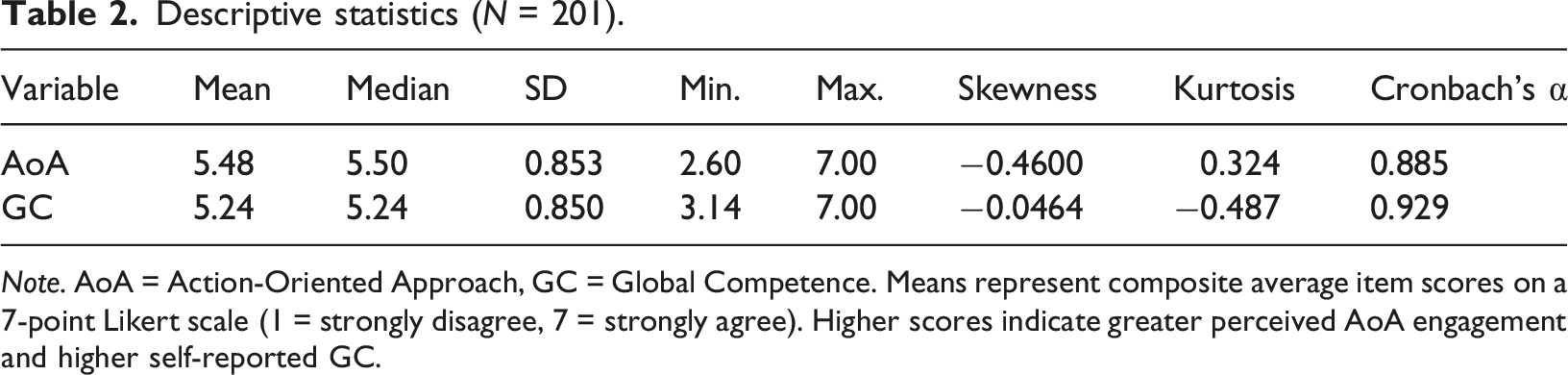
Note. AoA = Action-Oriented Approach, GC = Global Competence. Means represent composite average item scores on a 7-point Likert scale (1 = strongly disagree, 7 = strongly agree). Higher scores indicate greater perceived AoA engagement and higher self-reported GC.
Results
We performed a linear regression analysis to examine the relationship between AoA and GC.
Linear regression fit indices.

Model coefficients – global competence.

To address the limitations of linear regression and provide a more robust examination of the AoA-GC relationship, we conducted SEM. Unlike linear regression analysis, SEM accounts for measurement error in both predictor and outcome variables, represents constructs as latent variables with multiple indicators, and provides fit indices to assess how well the model matches the data. This approach provided a more precise estimate of the relationship of our variables.
SEM model specification
Given the complexity of our measures and to ensure model parsimony with our sample size (N = 201), we employed an item parceling approach following Little et al. (2002). Items were grouped into theoretically meaningful parcels based on content similarity and factor structure.
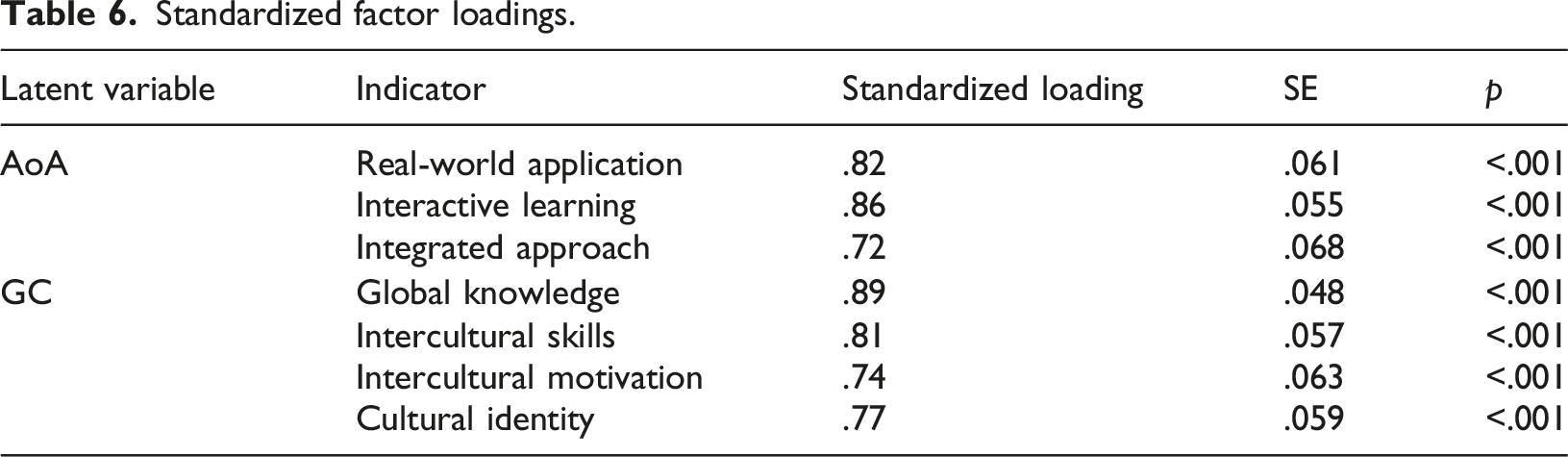
AoA Latent Variable was indicated by three parcels: • Real-world Application (Items 1, 4, 9): capturing authentic interaction and practical application • Interactive Learning (Items 3, 7, 8): measuring collaborative and goal-oriented communication • Integrated Approach (Items 2, 5, 6, 10): assessing cultural integration and social learning contexts GC Latent Variable was indicated by four parcels: • Global Knowledge (Items 11, 12, 13, 14, 15): measuring awareness of global issues and cultural understanding • Intercultural Skills (Items 16, 17, 18, 19): assessing ability to communicate and function across cultures • Intercultural Motivation (Items 20, 21, 22, 23, 24, 25, 26): capturing willingness to engage with different cultures • Cultural Identity (Items 27, 28, 29, 30, 31): measuring communication competence and cultural self-awareness
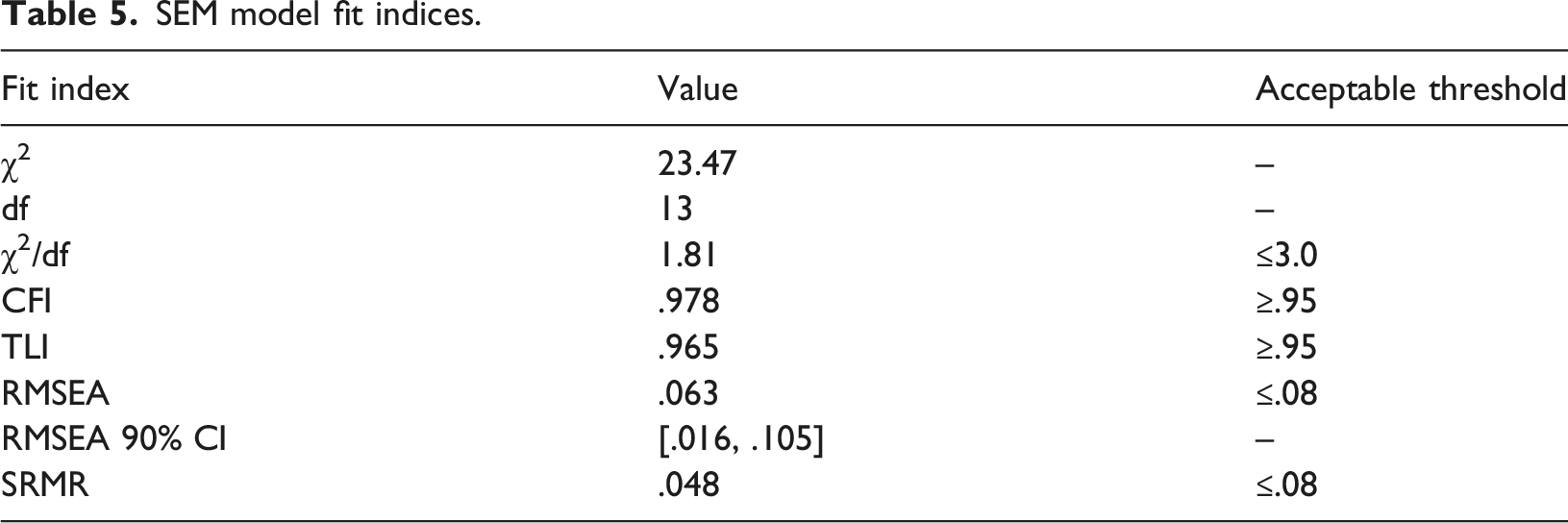
The SEM specified a direct path from the AoA latent variable to the GC latent variable. Model fit was evaluated using multiple indices following Hu and Bentler (1999) recommendations: χ2/df ratio (≤3.0), Comparative Fit Index (CFI ≥.95), Tucker-Lewis Index (TLI ≥.95), Root Mean Square Error of Approximation (RMSEA) .06–.08 close to acceptable range interpreted alongside other indices.
Results
Model fit and parameter estimates
SEM model fit indices.
Standardized factor loadings.
Structural model
Structural path coefficients.

The quantitative analysis provided evidence for a significant positive relationship between AoA and GC across two analytical approaches. Linear regression showed a significant positive association between AoA and GC (β = .606, p < .001, R2 = .367), while SEM analysis supported this pattern with a standardized path coefficient of β = .642 (p < .001, R2 = .412). The SEM measurement model showed adequate construct validity with all factor loadings exceeding .70 and achieving statistical significance (p < .001). Model fit indices met established criteria for acceptable fit (CFI = .978, TLI = .965, RMSEA = .063, SRMR = .048), supporting the theoretical specification of AoA and GC as distinct but related latent constructs (see Figure 3). Structural Equation Model of Action-Oriented Approach and Global Competence. Note. p < .001.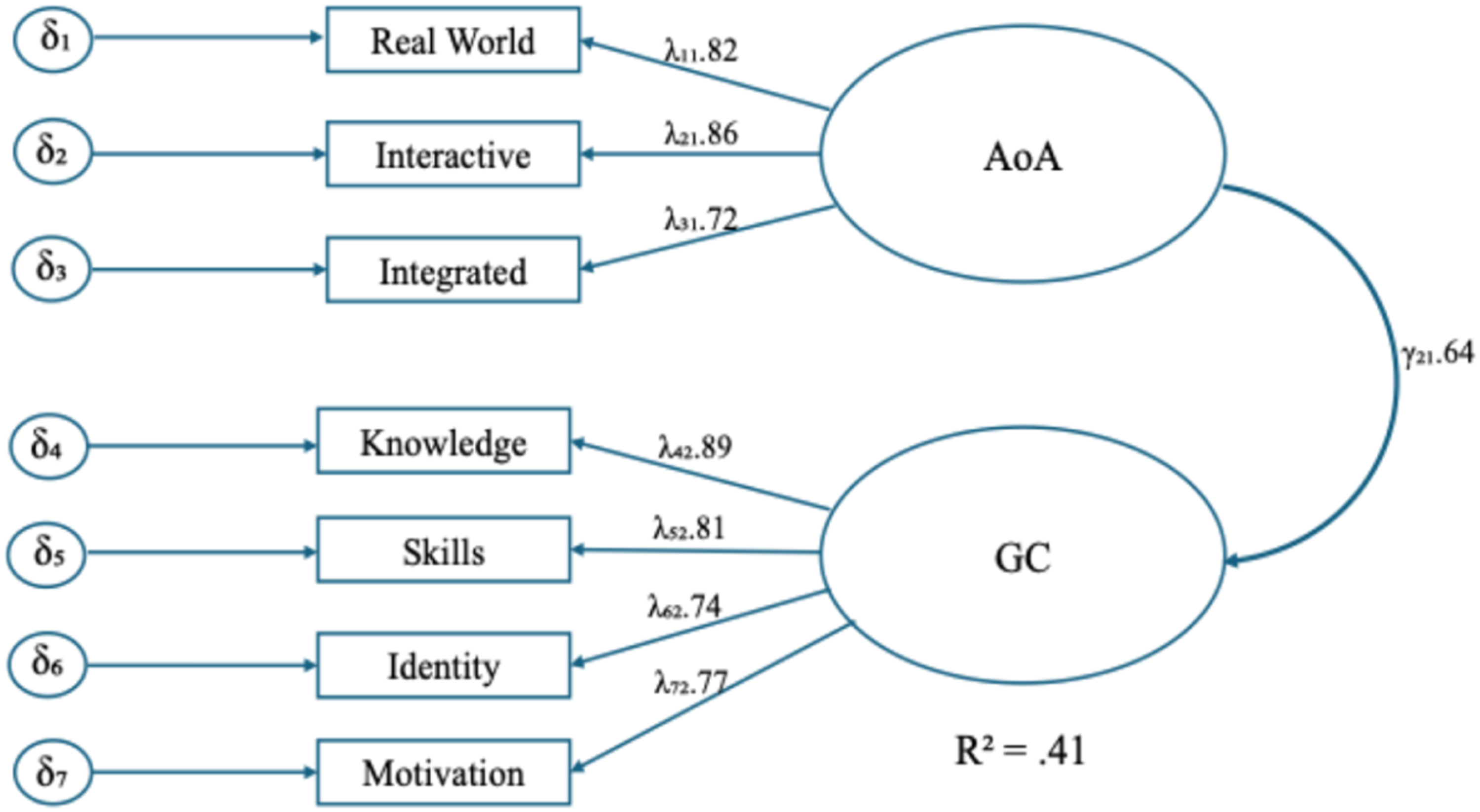
Discussion
The present two-phase exploratory mixed methods study examined the association between long-term exposure to AoA and students’ perceived GC in Japanese university EFL settings through quantitative analysis, while also using qualitative data to explore how students experienced AoA and the communicative and intercultural practices they associated with it.
Findings from Study 1 suggest that the semester-long AoA-based learning experience appeared to support students’ perceived GC awareness and intercultural learning by enhancing their intercultural adaptability, respect and tolerance, cultural knowledge, and communicative skills in production, reception, interaction, and mediation (N = 9). Study 2 further supported this association (N = 201). Our linear regression analysis showed a significant positive association between AoA and GC (b = 0.606; p < .001), while the SEM revealed a slightly stronger relationship (β = .642, p < .001).
These findings carry meaningful implications for practice, policy, and research. In the present study, AoA was implemented through structured, semester-long classroom activities across both authors’ teaching contexts, including discussions, debates, presentations, collaborative writing tasks, country research, role-plays, and problem-solving activities in English. These activities emphasized group-based participation, peer interaction, and teacher guidance, and in some cases extended to information gathering and communication beyond the classroom. These classroom practices align with the AoA measure used in Study 2, which emphasized real-world communication, collaboration, mediation, and teacher-supported participation. They also correspond to the qualitative findings in Study 1, where students described communicative practices (production, interaction, reception, and mediation) and intercultural practices (cultural knowledge, respect/tolerance, and adaptability), thereby providing a clearer pedagogical basis for the observed AoA-GC association.
Incorporating intercultural learning based on a structured approach in EFL classes allows students to critically engage with diverse cultural perspectives, enhancing their intercultural awareness and adaptability (Jaleniauskiene, 2021; Picardo and North, 2019). By learning cultural practices alongside the target language, students can compare these practices with their own, fostering further intercultural learning (Byram, 2020; Egitim and Harumi, 2025). Moreover, when pedagogical interventions are implemented through the AoA, students develop a greater sense of agency as language users and take initiative in group activities (Council of Europe, 2020; Picardo and North, 2019).
Building on the AoA-aligned practices implemented in this study (e.g., discussions, debates, presentations, collaborative writing, role-plays, and problem-solving tasks), we recommend incorporating hands-on activities both inside and outside of EFL classes, such as collaborative group projects (e.g., presentations on intercultural topics, organizing language exchange and networking events on campus), cultural simulations (e.g., role-playing job interviews with international companies, simulating study abroad scenarios), peer learning opportunities, and real-world interactions, all of which can encourage active participation in diverse cultural perspectives in a structured way. Beyond the practices implemented in this study, creating collaborative learning opportunities through tele-tandem learning and field trips with students from different cultural backgrounds can offer genuine intercultural experiences that foster mutual understanding and respect.
After each activity, incorporating reflective practices, using journaling or guided discussions, allows students to analyze and document their thoughts and intercultural experiences. This process not only raises their self-awareness but also enhances their understanding of intercultural issues (Hooper et al., 2025). Furthermore, intercultural competence should be assessed alongside language proficiency. We recommend self-assessment tools based on the ability to engage in intercultural dialogue and demonstrate an awareness and recognition of cultural differences so that reflective practices align with the assessment tools.
During these pedagogical interventions, teachers play a facilitative role in helping students navigate the challenges of engaging with diverse cultural perspectives (Mohammed-Ismail & Prasantha-Kumar, 2023). Teachers are responsible for creating a safe and supportive environment, which encourages open dialogue and critical reflection. When students feel psychologically safe, they can critically examine their own cultural assumptions and engage thoughtfully in intercultural interactions (Egitim and Harumi, 2025).
Since school administrators play a key role in curriculum design, it is essential to systematically integrate cultural activities both within and beyond the school environment. Doing so allows schools to promote cultural elements from diverse global contexts, such as customs, values, traditions, and societal norms throughout the English language curriculum (Picardo and North, 2019). For instance, an activity involving a visit to a mosque in Tokyo, accompanied by pre- and post-visit reflections, could help students deepen their understanding of cultural diversity and intercultural awareness while also promoting linguistic proficiency.
From a policy perspective, these findings support prioritizing evidence-based approaches like AoA in internationalization strategies, as the demonstrated relationship between structured intercultural learning and GC development aligns with Japan’s Global Jinzai objectives. While a semester-long exposure to the AoA can provide a foundation, GC development requires continuous exposure to diverse cultural contexts, sustained engagement with international perspectives, and reflective practices (Byram et al., 2003; Deardorff, 2006). We recommend that MEXT implement reforms to raise awareness of pluricultural and multicultural communities in academic institutions. By creating an educational environment in which students regularly engage with different cultures, institutions can support the ongoing development of GC and prepare students with the skills and mindset necessary to navigate the complexities of a globalized world.
Limitations
Only the perspectives of intermediate-level students (CEFR A2-B1) were represented in Study 1. A future study involving more advanced learners (e.g., CEFR C1-C2) could fully capture how the AoA approach impacts learners across all proficiency levels. Furthermore, our measures relied on self-reported data, which may be subject to bias or inaccurate self-assessment of GC development. Since Study 2 employed cross-sectional designs for both regression and SEM analyses, it was not possible to establish causality. While SEM provides advantages over regression by accounting for measurement error and modeling latent constructs, it does not address the fundamental limitation of cross-sectional data in establishing temporal precedence. Longitudinal studies may be more appropriate for tracking changes in GC over time, or experimental designs such as randomized controlled trials could be employed to examine the causal impact of AoA.
Furthermore, we did not conduct item-level factor analysis (EFA/CFA) before parceling the adapted AoA scale in this sample. As parceling assumes unidimensionality within parcels, the SEM results should be interpreted as providing preliminary construct-level support, while item-level validation remains for future research. To address potential omitted variable bias, factors such as prior intercultural experiences, socioeconomic status, language proficiency, and institutional differences in education should be considered in future research. The absence of these controls in both regression and SEM models may have inflated the observed associations between AoA and GC, making it difficult to isolate AoA’s unique contribution to student outcomes. While SEM provided a more accurate estimate of the relationship by correcting for measurement error, a more comprehensive model incorporating additional predictor variables would provide a clearer understanding of the factors influencing GC development. Finally, expanding the sample size and diversity by including participants from different universities, cultural contexts, and educational levels could enhance the generalizability of the findings and thus provide a more comprehensive understanding of how AoA influences GC across varied learning environments.
In this two-phase exploratory mixed methods study, we provide qualitative and quantitative evidence of a positive association between AoA-based EFL learning and students’ perceived GC in Japanese university contexts. Study 1 indicated positive outcomes in communicative and intercultural practices, and Study 2 supported this relationship through regression and SEM analyses. While acknowledging the study’s limitations, our findings suggest that AoA is a promising structured approach for linking language learning with intercultural and global competence development. Future research should use longitudinal designs and further validate AoA measures across diverse contexts.
Footnotes

Funding
The authors received no financial support for the research, authorship, and/or publication of this article.
Declaration of conflicting interests
The authors declared no potential conflicts of interest with respect to the research, authorship, and/or publication of this article.