






Abstract
We examined the wrecked-by-success hypothesis. Initially formalized by Sigmund Freud, this hypothesis has become pervasive throughout the humanities, popular press, and modern scientific literature. The hypothesis implies that truly outstanding occupational success often exacts a heavy toll on psychological, interpersonal, and physical well-being. Study 1 tested this hypothesis in three cohorts of 1,826 high-potential, intellectually gifted individuals. Participants with exceptionally successful careers were compared with those of their gender-equivalent intellectual peers with more typical careers on well-known measures of psychological well-being, flourishing, core self-evaluations, and medical maladies. Family relationships, comfort with aging, and life satisfaction were also assessed. Across all three cohorts, those deemed occupationally outstanding individuals were similar to or healthier than their intellectual peers across these metrics. Study 2 served as a constructive replication of Study 1 but used a different high-potential sample: 496 elite science/technology/engineering/mathematics (STEM) doctoral students identified in 1992 and longitudinally tracked for 25 years. Study 2 replicated the findings from Study 1 in all important respects. Both studies found that exceptionally successful careers were not associated with medical frailty, psychological maladjustment, and compromised interpersonal and family relationships; if anything, overall, people with exceptionally successful careers were medically and psychologically better off.
Security is a kind of death, I think, and it can come to you in a storm of royalty checks beside a kidney-shaped pool in Beverly Hills. . . . Ask anyone who has experienced the kind of success I’m talking about—What good is it?
Achieving career success is an important aspect of many people’s lives around the world, but it is particularly so in the United States. A 2013 Gallup poll revealed that advancing in their careers over time was “extremely important” or “very important” to 54% of all Americans—and 67% of Americans aged 18 to 49 (Newport, 2013). An earlier 2012 Pew report gave a similar result: More than 60% of 18- to 34-year-olds indicated that being successful in a high-paying career was “one of the most important things in their lives” or “very important” (Patten & Parker, 2012). Indeed, it is often claimed that career success is an important aspect of the American Dream (e.g., Hochschild, 1996; Samuel, 2012). The quest for success is not limited to contemporary Americans, as evidenced by the careers of Alexander the Great, Saladin, Julius Caesar, Genghis Khan, Lorenzo de’ Medici, Hernán Cortés, Elizabeth I, Catherine the Great, Marie Curie, Tecumseh, Napoleon Bonaparte, and Shaka Zulu, to name a few.
There may be a dark side to this emphasis on career success, however. The term “rat race” is often used to describe the modern world of work, and it implies that the pursuit of career success is exhausting, endless, and meaningless. Recent popular books and articles (Mainiero & Sullivan, 2006; Tahmincioglu, 2007), along with quotes and anecdotes from historians, writers, and philosophers dating back thousands of years, warn of the dangers of too much ambition. Sigmund Freud (1916/1957) coined the phrase “wrecked by success,” asserting that the downside of success often outweighs the upside—particularly for those who reach the pinnacle of their careers. Although the topic is well trodden in lay theory and in the psychoanalytic literature (Berglas, 1986; Levy et al., 1995), as well as high-impact psychological outlets (Schafer, 1984; Simonton, 2014b, 2014c), to date there has been no rigorous empirical test of this theory. This investigation quantitatively tests the hypothesis that exceptionally successful people are wrecked by their success. Were Freud and countless other scholars and writers correct in their intuition that success is frequently accompanied by misfortune? Or were they misled—as humans so often are—by personal experience and anecdotal evidence (Kahneman, 2011)?
Wrecked by Success
Freud (1916/1957) wrote that success sometimes comes at a high—even ruinous—cost when he introduced the character type “Those Wrecked by Success”: People occasionally fall ill precisely when a deeply-rooted and long-cherished wish has come to fulfillment. It seems then as though they were not able to tolerate their happiness; for there can be no question that there is a causal connection between their success and their falling ill. (p. 316)
Freud offered several examples of this character type, two of which were his patients. The first patient was a woman who, after many years of struggle, was granted permission to become her partner’s legal wife. Yet, immediately after, she became wrecked by jealousy and mental illness, destroying her relationship. The second was an academic who, after many years of anticipation, was chosen to succeed to his mentor’s post after the latter’s retirement. After being informed of this decision, the patient lost confidence in his abilities, told colleagues he was unworthy of the position, and fell into a years-long depression. Freud completed his explication of the wrecked-by-success character type through in-depth analyses of the fictional characters of Lady Macbeth in Shakespeare’s Macbeth and Rebecca Gamvik of Ibsen’s Rosmersholm.
Freud (1937/1941) felt that he might have had a passing experience of being wrecked by success. He recounted that, before boarding a ship to Greece to see the Acropolis, he fell into a depression. This was a strange reaction because Freud had been a lover of history and antiquities since childhood (Levy et al., 1995). He interpreted his depression to be the result of an unconscious sense that actually being able to view the Acropolis was something “too good to be true” and that he was unworthy of the joy doing so would surely provide him.
Psychoanalysts have explored Freud’s character designation conceptually and through case histories. Several historical figures have been proposed as people who were wrecked by success, including Richard Nixon, Howard Hughes, Vincent van Gogh, and Winston Churchill. Literary characters identified as suffering from it range from Shakespeare’s Richard III to Joseph Conrad’s Lord Jim (Allen, 1979; Blum, 2009; Marill & Siegel, 2004). Subtler manifestations of this more general “success neurosis” have been explored, such as “those who either pay too great a price in terms of anxiety for their accomplishments or who find that the fruits of their efforts turn to ashes in their mouths” (Schuster, 1955, p. 413). Indeed, René Laforgue believed that Freud had not afforded the concept adequate attention; thus, he expanded it to “failure neurosis” to include both individuals who cannot enjoy their success and those who actively destroy their own success (de Mijolla, 2005; Laplanche & Pontalis, 1973).
Perhaps the most sustained analysis of the phenomenon is The Success Syndrome: Hitting Bottom When You Reach the Top (Berglas, 1986). Steven Berglas rechristened the wrecked-by-success phenomenon the “success syndrome.” He defined it as the condition that develops when the rewards of success expose an individual to a variety of psychologically stressful situations; these render him vulnerable to disorders ranging from depression and drug abuse to self-inflicted failures and even suicide. (p. xviii)
He draws from many anecdotal examples (Buzz Aldrin, Jimmy Carter, Connie Chung, Joe DiMaggio, and Orson Welles) and the executives, athletes, and other high achievers in his clinical practice. Physical manifestations of the syndrome he details include loneliness, alcoholism, coronary heart disease, schizophrenia, anxiety, depression, nervous breakdowns, lethargy, disrupted sleep, loss of appetite, and low self-esteem. Consider the fate of musicians Jimi Hendrix, Janis Joplin, and Jim Morrison—all dead from drug and alcohol abuse at the age of 27.
The wrecked-by-success phenomenon is also referred to as “failure neurosis,” “success neurosis,” and the “success syndrome,” underscoring the fact that, in both psychoanalytic theory and lay theory, the concept has both broad applicability and is also subject to subtle variations. Throughout Berglas’s (1986) book, a variety of synonyms for, and slight variants of, the hypothesized disorder are given—“executive stress,” “lonely at the top,” “success depression,” and “moral masochism.” This single book contained many different labels for what is essentially the same core idea, which shows that being wrecked by success can be expressed in many different ways and appear in many different guises. Even a cursory review of major works of literature (e.g., Aesop’s fables, Goethe’s Faust, Grimms’s fairy tales, Shakespeare’s plays), academic catalogs of themes in the arts and humanities (e.g., Aarne, 1961; Garry, 2017; Hall, 1974), and popular crowd-sourced dictionaries and encyclopedias (e.g., Urban Dictionary, Wikipedia) reveals the deep-rooted prevalence of the many guises of being wrecked by success.
Common idioms and allusions show the prevalence of this concept. For example, the term “Pyrrhic victory” dates back to approximately 280 B.C.E., when King Pyrrhus of Epirus defeated the Romans in battle with heavy losses; as such, it denotes a situation in which success takes such a heavy toll on the victor that it essentially constitutes defeat (Lefkowitz, 1959). “Wanting is better than having” suggests that the outcome of a journey, trial, or desire often does not live up to a person’s expectations, leaving the individual unsatisfied. That concept is embodied in the (possibly apocryphal) Chinese curse “May you find what you are looking for.” The trope “heavy lies the crown” (a corruption of “uneasy lies the head that wears a crown”; Shakespeare, 1600/2009, 3.1.31) refers to the strain of the responsibility of having great power and links it to the development of physical, mental, and emotional ailments. The term “rat race,” which originated in the United States in the 1930s, is defined as “a fiercely competitive race or contest; spec. urban working life regarded as an unremitting struggle for wealth, status, etc.” (Oxford English Dictionary, 1989). Another allusion features individuals selling their soul for worldly success (e.g., “deal with the devil” or “Faustian bargain”; Gardner, 1993). A paradigmatic example is the “temptation in the wilderness” from the New Testament: “For what shall it profit a man, if he shall gain the whole world, and lose his own soul?” (King James Bible, 1769/2017, Mark 8:36).
Wrecked by Success in Art and Culture
Clearly, the wrecked-by-success concept, in its many manifestations, has been recognized for thousands of years and across many different fields, media, and cultures. In this section we document a small sample of notable instances of its recognition and application, underscoring the widespread belief in the ubiquity and importance of being wrecked by success.
History and fine art
Several noteworthy historical episodes suggest that ambivalence about success is far-reaching. Alexander the Great was said to have wept after he had conquered the known world—having nothing left to accomplish (Baldwin, 1905). Others have studied the social isolation that Alexander’s achievements and status brought him (Badian, 1962). Such sentiments were not limited to Western political and military leaders: Ancient Chinese emperors referred to themselves as guaren—“the lonely one” (Abrahamsen, 2011)—and Abd-er-Rahman, conqueror of much of Spain in the 8th century, stated that in a 50-year reign he experienced only 14 days of happiness (Chambers, 1849).
Some U.S. presidents shared similar sentiments. James Garfield referred to the presidency as a “bleak mountain” (Leuchtenburg, 2015, p. 16). Grover Cleveland told a young Franklin Roosevelt that he hoped the boy would never become president (Leuchtenburg, 2015). On James Buchanan’s final day as president, he remarked to the incoming Abraham Lincoln, “If you are as happy in entering the White House as I shall feel on returning to Wheatland, you are a happy man” (Baker, 2004, p. 140). Additional non-U.S. historical examples include a legend that Tsar Alexander I faked his death to become a religious hermit to avoid the pressures associated with ruling Russia (Troubetzkoy, 2002). Jascha Heifetz, often considered one of the greatest violinists of all time, was described by an associate as “lonely and unhappy” (Schoenbaum, 2001, p. A36).
There are numerous literary characters that exemplify being wrecked by success. They include Ebenezer Scrooge (A Christmas Carol), Jay Gatsby (The Great Gatsby), Pope Adrian V (The Divine Comedy), and the title characters of Shakespeare’s Hamlet, Macbeth, and Othello. Edwin Arlington Robinson’s (1897) poem “Richard Cory” describes a man who outwardly “has it all” but who is internally tormented. That the cost of success can sometimes be death is expressed in the folktale about John Henry, who wins a steel-driving contest against a steam-powered jackhammer, only to die as a result of his exertions (Keats, 1965). Moreover, individuals selling their soul for worldly success is a common motif in fairy tales (e.g., the Brothers Grimm’s “Bearskin”), literary works (e.g., Goethe’s Faust, Washington Irving’s “The Devil and Tom Walker”), and urban legends about famous musicians (e.g., Niccolo Paganini; Kawabata, 2007).
Popular art and culture
The wrecked-by-success phenomenon remains a pervasive lay theory in modern pop culture. “Heavy lies the crown” reappears in a comic book as “With great power comes great responsibility” (Lee & Ditko, 1962, p. 11), the central motivation for superhero Spider-Man’s virtuous career. Songs from artists as diverse as AC/DC (“It’s a Long Way to the Top”; 1975), Pink Floyd (“Dogs”; 1977), The Notorious B.I.G. (“Mo Money Mo Problems”; 1997), and Coldplay (“Viva la Vida”; 2008) reflect the supposed emptiness or negative stress of exceptional success. In film and television, many characters fit the wrecked-by-success archetype, including Charles Foster Kane (Citizen Kane; Welles, 1941), Michael Corleone (The Godfather: Part II; Coppola, 1974), Daniel Plainview (There Will Be Blood; Anderson, 2007), Don Draper (Mad Men; Weiner et al., 2007–2015), Tony Soprano (The Sopranos; Chase et al., 1999–2007), Patty Hewes (Damages; Kessler et al., 2007–2012), and Walter White (Breaking Bad; Gilligan et al., 2008–2013). Direct references to the phenomenon have been made in Avengers: Infinity War (Russo & Russo, 2018) and The Dark Knight Rises (Nolan, 2012), the fifth and 30th highest-grossing films of all time, respectively (“List of Highest-Grossing Films,” 2021).
The wrecked-by-success concept is also the currency of many recent nonfiction books and articles. 30 Something and Over It (Edwards, 2011) portrayed the disillusionment of an exceptionally successful woman after “winning the rat race.” Nine to Five Escape Plan: How to Escape the Rat Race (Beck, 2017) and From the Rat Race to Financial Freedom: A Common Man’s Journey (Arora, 2013) incorporated the notion of the rat race directly into their titles. Prominent magazines and websites commonly reported on this theme, including The Wall Street Journal (“Five Reasons Why It’s Lonely at the Top”; Inesi & Galinsky, 2012), The Guardian (“Success Comes at a Cost: I Put Work First and My Friendships Suffer”; Valenti, 2015), CNN (“Should You Sacrifice Love for Work?”; Zupek, 2009), The Atlantic (“When Success Leads to Failure: The Pressure to Achieve Academically Is a Crime Against Learning”; Lahey, 2015), and Forbes (“It Really Is Lonely at the Top”; Trapp, 2013).
The world of sports also offers many examples of being wrecked by success. When professional fighter Rose Namajunas lost her championship, she alluded to the strain of the high expectations that come with being successful, saying only minutes after her defeat: “It’s just a huge pressure off my shoulders” (Campbell, 2019, para. 9). Soccer star Thierry Henry’s biography is called Lonely at the Top (Auclair, 2012), and former Major League Baseball star and National Football League Hall of Fame inductee Deion Sanders subtitled his autobiography “How Success Almost Ruined My Life” (Sanders & Black, 1998). An exemplary case of being wrecked by success is Ronnie Coleman, one of the greatest bodybuilders of all time (Robson, 2019). His rigorous training with extreme amounts of weight allowed Coleman to sculpt a physique that won him eight Mr. Olympia titles. But this training destroyed his body, requiring surgeries that left him wheelchair-bound and dependent on opioids for chronic pain (Schrodt & Crosbie, 2018).
Modern headlines frequently feature reports of celebrities’ deaths from suicide or drug abuse, which often (although not always) occurred at the height of their careers. Only a partial list of such deaths since 2000 includes Anthony Bourdain, Chris Cornell, Philip Seymour Hoffman, Whitney Houston, Michael Jackson, Heath Ledger, Kate Spade, and Amy Winehouse. Another example is the 1994 suicide of Kurt Cobain, widely reputed to have been caused by Cobain’s hatred of his newfound fame (Cosgrove, 2014).
Scientific Literature
Given these lay theories’ ubiquitous presence in history, art, and culture, scientists have made some claims about being wrecked by success. Menninger (1938) noted that a “large number of people . . . succeed in everything but succeeding” (p. 9), and an article in American Psychologist described the wrecked-by-success phenomenon as being “widespread” (Schafer, 1984, p. 399). However, a review of the scientific literature revealed findings that are related only indirectly—and inconclusively—to the possible link between extraordinary career success and personal failure. This shows a clear disconnect between its roots in psychoanalytic and lay theories and the lack scientific evidence that tests it.
Some of these limited scientific sources support the wrecked-by-success hypothesis. Wolman (1973) cited evidence from his psychotherapy sessions with high-powered clients. Joiner (2011) discussed the loneliness and isolation of high-achieving men. A 9-year ethnographic study documented the toll on investment bankers’ bodies of working long hours in a stressful environment (Michel, 2012). Management scholars have periodically devoted attention to the downsides of success in Harvard Business Review (e.g., Bartolomé & Evans, 1980; de Vries, 2014). In studying eminence, Simonton (1994) explored the apparent life-shortening effects of extreme stress on U.S. presidents, hereditary monarchs, and chess grandmasters and mused, “Is psychopathology the cost of greatness?” (p. 311). The belief that creative genius is linked to mental illness has been examined repeatedly (e.g., Eysenck, 1995; Jamison, 1996; Simonton, 1999; Simonton & Song, 2009), although it remains controversial. The term “Sylvia Plath effect” was coined to describe the apparent high incidence of mental illness among eminent female poets (Kaufman, 2001).
Current Investigation
Our review of the psychological literature revealed that, despite its long-standing historical, artistic, and popular notoriety, definitive empirical evidence for (or against) the wrecked-by-success conjecture among extraordinary performers is lacking. Moreover, although many nonpsychoanalytic studies have investigated topics relevant to the concept (e.g., career success → health, income → longevity), their authors did not discuss the implications of their findings or test them beyond case histories or theoretical speculation. In this study, our goal was to conduct a comprehensive empirical investigation directly into the existence of the wrecked-by-success premise among those individuals who are performing at the outer edge of the envelope of occupational accomplishment. Because there was a lack of consensus as to the specific negative consequences of being wrecked by success for health and well-being, we assessed well-being on a wide variety of physical-, mental-, and psychological-health measures as well as health behaviors and family relationships. We compared these exceptionally successful people with age-matched peers assessed by the same instruments who were equally able but less successful.
Addressing this research question in a quantitatively and substantively compelling way requires a sample that contains a large subset of individuals that can reasonably be deemed truly outstanding in their careers. High-potential populations are thus ideal. Moreover, as in all high-potential populations—however their talents are defined—only a subset of participants become truly outstanding in the world of work. Therefore, this approach also affords an opportunity to contrast those deemed extraordinary in their careers with those less successful but comparable in their potential.
Given that health outcomes are related to intellectual ability (Deary, 2009; Deary, Harris, & Hill, 2009; Deary, Whalley, & Starr, 2009; Geary, 2018, 2019; Gottfredson & Deary, 2004; Hagenaars et al., 2016; Lubinski & Humphreys, 1992, 1997; Underwood, 2014) and that general intelligence is likely the focal construct underlying the socioeconomic status–health gradient (Deary et al., 2021; Gottfredson, 2004; Hill et al., 2019; Lubinski, 2009; Lubinski & Humphreys, 1992), selecting samples with exceptional cognitive ability controls for those associations. Therefore, the influence of intellectual ability would not overly influence health-outcome assessments (Meehl, 1970, 1990). In Study 1, we used data from the first three cohorts of the Study of Mathematically Precocious Youth (SMPY; Lubinski & Benbow, 2006). These participants all scored in the top 1% on measures of cognitive ability by age 13 and were studied longitudinally over 35 years.
For decades, cognitive ability has been linked to career success (Gottfredson, 1997, 2003; Judge et al., 1999, 2010; Schmidt & Hunter, 1998, 2004; Wilk et al., 1995; Wilk & Sackett, 1996), and extraordinary accomplishments among intellectually precocious youthsare well documented (Benbow et al., 2000; Eysenck, 1995; Holahan et al., 1995; Kell et al., 2013; Lubinski, 2016; Lubinski et al., 2014; Makel et al., 2016; Simonton, 2014a). Three cohorts of intellectually talented participants have the attractive feature of containing a subset of participants deemed truly outstanding—at the cutting edge of their disciplines and professions—along with many others equally brilliant but less accomplished. Using these cohorts enhanced the likelihood of identifying individuals who are “exceptionally successful,” and it minimized how intelligence might influence health outcomes between exceptionally successful participants and their less successful intellectual peers. Our focus is specifically on how their divergent paths covary with interpersonal, physical, and psychological well-being relative to their less successful intellectual peers.
Among these high-potential cohorts, how do we identify who is exceptionally successful? Career success 1 can be defined and measured in many different ways (Baruch & Bozionelos, 2010), but consistent across nearly all conceptualizations and assessments is the link with income (Judge et al., 1999, 2010; Judge & Kammeyer-Mueller, 2012; Ng et al., 2005). Although individual income is an imperfect indicator of career success, it summarizes both an individual’s current productivity and human capital (including that acquired through prior experience), in addition to anticipated future career contributions (cf. Goldin, 2014). Moreover, individuals in intellectually prodigious populations have diverse careers (a strength of this approach), which makes it difficult to use alternate metrics to classify success in different career paths. By using an outlying standard for individual income, within intellectually prodigious populations, a heterogeneous collection of diverse careers is isolated at the outer edge of the envelope of occupational accomplishment. Individuals within these roles are highly impactful and are typically entrusted with vast economic capital and human resources (see Appendix A).
Like extraordinary “career success,” health and well-being—physical and psychological—can be assessed at age 50 in a variety of ways. The same is true for interpersonal relationships with family members. We drew on a broad collection of indicators used in epidemiological studies of medical maladies and cross-cultural investigations of psychological well-being (Diener et al., 2018; Judge et al., 2003; U.S. Bureau of Labor Statistics, 2012). We also examined relationship status as well as satisfaction with career, family, and life (e.g., Diener et al., 1985, 2010).
Finally, in a second study, we conducted robustness and generalizability appraisals using a different type of high-potential sample, one comprising elite science/technology/engineering/mathematics (STEM) doctoral students (Lubinski et al., 2001). This sample is important for studying extraordinary careers in STEM longitudinally and serves as a replication sample for SMPY’s talent-search cohorts (Bernstein et al., 2019, 2021; Lubinski & Benbow, 2006; McCabe et al., 2020). The high-power careers that elite STEM doctoral students ultimately end up in are quite heterogeneous (Appendix B). Study 2 is a constructive replication (Lykken, 1968, 1991) because the samples’ selection criteria and time frame differed, but participants completed the same assessments used in Study 1. We examined whether there was a similar pattern of health outcomes among elite STEM doctoral students deemed extraordinarily successful compared with their classmates with more modest occupational accomplishments.
Study 1
Method
Participants and procedure
Participants are from SMPY’s first three talent-search cohorts (Lubinski & Benbow, 2006). Academic talent searches are conducted every year in the United States. Young adolescents qualify for the talent search by scoring in the top 3% on conventional achievement tests routinely administered in their schools. Young adolescents who score at the very top of their within-grade standardized achievement tests have compromised assessments of their intellectual abilities because of ceiling effects; therefore, such assessments are not psychometrically appropriate for capturing the full scope of their abilities. Thus, a typical talent search uses above-level testing (i.e., administering assessments designed for older individuals to younger individuals who are intellectually precocious) to measure the full scope of their intellectual capabilities (Keating & Stanley, 1972; Stanley, 1990; Warne, 2012). The above-level test used for SMPY was the SAT, a college entrance exam designed for high school seniors that was administered to participants age 13 or younger.
SMPY’s first three cohorts consisted of successively more able participants (Lubinski & Benbow, 2006): Cohort 1, identified between 1972 and 1974 as gifted (top 1% in ability; SAT-Math [SAT-M] ≥ 390 or SAT-Verbal [SAT-V] ≥ 370 before age 13); Cohort 2, identified between 1976 and 1978 as highly gifted (top 0.5% in ability; SAT-M ≥ 500 or SAT-V ≥ 430 before age 13); and Cohort 3, identified between 1980 and 1983 as profoundly gifted (top 0.01% in ability; SAT-M ≥ 700 or SAT-V ≥ 630 before age 13). For the current study, all cohorts completed a follow-up longitudinal survey online with the same comprehensive instrument. Participants chose their compensation for completing the survey: (a) a $20 Amazon gift card or (b) a $20 donation to summer residential academic programs for intellectually precocious youths from economically challenged homes. The great majority of participants chose to donate their $20.
Cohorts 1 and 2 of SMPY completed their surveys between 2012 and 2013 (Lubinski et al., 2014); Cohort 3 completed their surveys between 2017 and 2018. Participant characteristics (of those with sufficient survey data for analysis) were as follows: Cohort 1 (N = 1,059; mean age = 51.4 years; SD = 1.0 years; 40% women; 95.1% White; 0.9% Black or African American; 1.7% Asian, Asian American, or Pacific Islander; 0.5% Mexican American or Hispanic; and 1.9% multiracial or other ethnicities); Cohort 2 (N = 456; mean age = 46.5 years; SD = 0.9 years; 33% women; 88.4% White; 0.4% Black or African American; 7.0% Asian, Asian American, or Pacific Islander; 0.9% Mexican American or Hispanic; and 3.3% multiracial or other ethnicities); and Cohort 3 (N = 311; mean age = 46.8 years; SD = 1.4 years; 23% women; 76.1% White; 0.6% Black or African American; 18.7% Asian, Asian American, or Pacific Islander; 0.3% Mexican American or Hispanic; and 4.2% multiracial or other ethnicities).
This work received ethics approval from the institutional review board at Vanderbilt University (approval numbers 030396 and 101678).
Measures
This investigation studied family relationships, health behaviors, physical health, and psychological well-being that participants reported in their age-50 survey. All cohorts completed the same measures used in this study. Our age-50 surveys, reliability analyses for specific measures, and summary data 2 are available at OSF (https://osf.io/5u27m/), and we detail these measures below.
Income
SMPY participants reported three income measures: individual, spousal, and total household. For this study, we used only their individual income.
Physical- and mental-health conditions
We adapted items from multiple scales of physical and mental health from the National Longitudinal Study of Youth’s 1979 cohort survey (U.S. Bureau of Labor Statistics, 2012). Participants completed a 44-item inventory of health conditions (Appendix C). Most items concerned past and present physical conditions and ailments (e.g., high cholesterol, ulcers), although several items concerned mental health (e.g., anxiety, depression). Participants responded either “yes” or “no” to each item. Participants who responded “no” to all 44 health-condition questions (without skipping an item) were classified as having “no health problems.”
Participants also responded to a question about their overall health in general on a 5-point scale ranging from 1 (poor) to 5 (excellent).
Psychological adjustment and health
We measured participants’ psychological health using four well-established measures of subjective well-being:
Other elements of psychological health
Participants completed two psychological health scales from the National Longitudinal Study of Youth’s 1979 cohort survey (U.S. Bureau of Labor Statistics, 2012). They measured respondents’ psychological distress 4 weeks preceding their survey completion. For the first measure, “recent work disruption/disturbance,” participants received the following prompt before answering two items: “During the past 4 weeks, to what extent have you had any of the following problems with your work or other regular daily activities as a result of any emotional problems (such as feeling depressed or anxious)?” Participants responded to two items using a Likert-type scale ranging from 1 (not at all) to 5 (extremely): “accomplished less than you would like” and “didn’t do work or other activities as carefully as usual.” This measure was reliable across the three cohorts (α = .82, .81, and .87).
For the second measure, “recent lethargy or lack of vitality,” participants received the following prompt before answering three items: “Thinking only of the past 4 weeks, please give the one answer that comes closest to the way you have been feeling. How often during the past 4 weeks . . . ?” Participants responded to the following items using a 6-point Likert-type scale ranging from 1 (none of the time) to 6 (all the time): (a) “have you felt calm and peaceful” (reverse-scored), (b) “did you have a lot of energy” (reverse-scored), and (c) “have you felt downhearted and blue.” This measure was somewhat less reliable than the others across the three cohorts (α = .70, .66, and .67) but still acceptable for research purposes.
Attitudes toward aging
We assessed one’s attitude to the aging process with the following question: “On the whole has growing older been a positive or negative experience?” Participants responded using a Likert-type scale ranging from 1 (very negative) to 5 (very positive).
Relationships and family
Participants completed several questions about their relationships and family status. Because certain conceptualizations of wrecked by success embody struggles with interpersonal relationships, we included these measures. These questions included participants’ relationship history, current marital status, and number of biological children. We also included two questions answered on a 7-point Likert-type scale. The first was about satisfaction with their romantic relationship, for which answers ranged from 1 (very dissatisfied) to 7 (very satisfied), and the second was about the extent to which being in a committed, long-term relationship contributed to their overall life satisfaction, for which answers ranged from 1 (very negatively) to 7 (very positively).
Health behaviors
Participants completed items describing healthy and unhealthy behaviors beyond the specific conditions reported:
Sleep. There were two questions regarding sleep: how many hours of sleep they get per night on average and how many hours of sleep per night they need to function optimally.
Alcohol use. We asked participants whether they drank alcohol in the last 30 days. If “yes,” respondents received the following questions: how many days during the last 30 they had imbibed an alcoholic beverage; the average number of drinks they had on the days they did drink; and how often they had consumed six or more drinks on a single occasion during the preceding 30 days. The final item is roughly equivalent to the National Institute on Alcohol Abuse and Alcoholism’s (2004) definition of binge drinking and presented respondents with six response options ranging from 0 (never) to 5 (every day) in the last 30 days.
Smoking. Respondents answered to questions related to smoking: whether they had ever smoked and whether they currently smoke. Participants were classified as “ever smoked” if they responded “yes” to the following item: “Have you smoked at least 100 cigarettes in your entire life?”
Exercise. Respondents answered three questions about their exercise activities: whether they were capable of performing vigorous activities that last at least 10 min; the number of times they exercised per week; and the average number of minutes they exercised per week. Participants listed their three favorite leisure activities separately. We coded their activity level as either “active” or “passive.” Finally, we calculated each respondent’s body mass index (BMI) using self-reported height and weight and the standard formula: weight (lb)/[height (in.)] 2 × 703 (U.S. Centers for Disease Control and Prevention, n.d.).
Analytic approach
Success groups
We implemented a uniform metric to identify individuals with outstanding career success among high-potential cohorts. We wanted selection to be stringent enough to isolate participants at the outer envelope of occupational success and to have enough people in each group for sufficient statistical power. Using a uniform top-quartile cut score met these criteria reasonably well. We divided participants into either the upper quartile of their cohort or the lower 75% on the basis of their individual income. Classification was conducted within each cohort by gender. 3 To account for gender differences in pay (Blau & Kahn, 2017), including those observed in these samples (e.g., Lubinski et al., 2014), we separated women and men when making success classifications. We denoted individuals whose incomes placed them in the top 25% as “exceptionally successful” and those in the remaining 75% as “less successful.” Table 1 summarizes the income characteristics of these groups. Appendix A provides idiographic data on the occupational diversity and professional stature of all exceptionally successful participants. They hold an inordinate number of consequential leadership and occupational roles, and they are entrusted with vast amounts of economic capital and human resources.
Talent-Search Cohort’s Income Statistics at Age 50: Exceptionally Successful Versus Less Successful by Gender
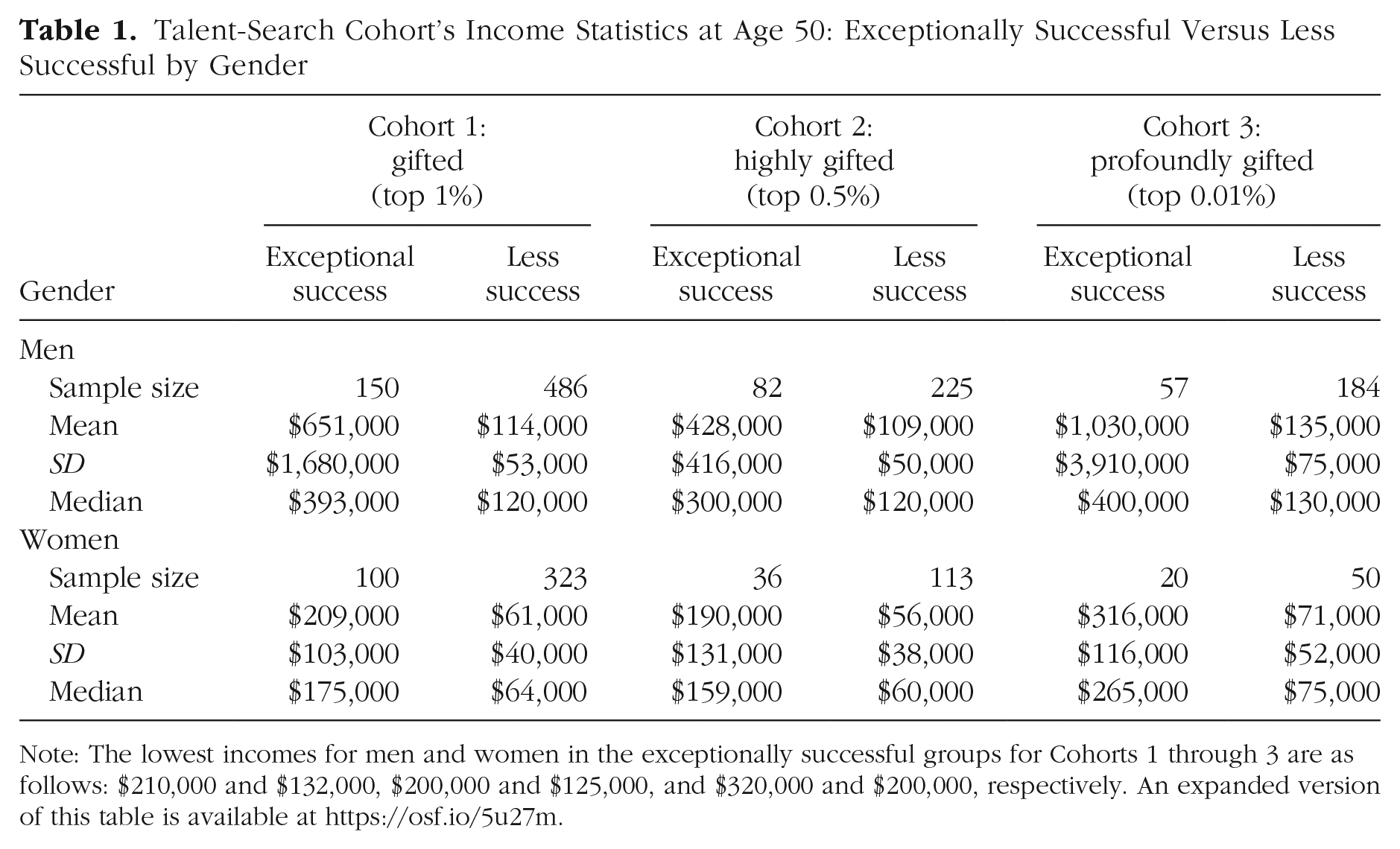
Note: The lowest incomes for men and women in the exceptionally successful groups for Cohorts 1 through 3 are as follows: $210,000 and $132,000, $200,000 and $125,000, and $320,000 and $200,000, respectively. An expanded version of this table is available at https://osf.io/5u27m.
This approach—depicting the top quartile as exceptionally successful and contrasting them with their intellectual peers who were less successful—was reasonable and appropriate for three reasons. First, this binary classification was sufficient because we sought meaningful, informative patterns (or the lack thereof) across all indicators to explore the wrecked-by-success hypothesis (Lubinski & Humphreys, 1992, 1997; Meehl, 1978, 1990; Steen, 1988). Our focus was not on precise point estimates of the covariance between any given indicator for the exceptionally successful versus the less successful groups. Second, this approach captured the statistical resolution of income data. Income data are often positively skewed and extend over a large range; this is particularly true for highly able populations. Although there are many possible function forms that may be posited to characterize the wrecked-by-success hypothesis, all constitute monotonic relationships, which this approach efficiently captures. Third, these groups are clearly different in their occupational success (see Table 1). Being wrecked by success is usually invoked only for individuals who manifested extreme accomplishments, such as top executives, entrepreneurs, celebrities, political or military leaders, eminent artists, and distinguished professors (Appendix A). By grouping respondents whose incomes placed them in the top quartile (among these high potential cohorts), we aligned our exceptionally successful samples with the larger implied population of individuals who are “eligible” or “at risk” for being wrecked by success while simultaneously controlling for their intellectual capability quasi-experimentally.
This approach clearly captured those who are occupationally outstanding. Across the three cohorts, men’s median incomes for the top quartile ranged between $300,000 and $400,000; for women’s median incomes in the top quartile, the range was $159,000 to $265,000. Importantly, Cohort 2 was more able than Cohort 1, yet they earned less. This difference is due mainly to age differences between Cohorts 1 and 2 at the time they were surveyed: Cohort 1 averaged 51.4 years in age, and Cohort 2 averaged 46.5 years. This preserved a uniform sociocultural context for their mid-career follow-up. For the within-cohorts comparisons of the hypothesis under analysis, this difference also did not compromise our design statistically or substantively. We also included supplemental analyses that show the intercorrelations with the measured variables with income at OSF (https://osf.io/5u27m).
Throughout this article, we do not refer to individuals in the lower 75% as “unsuccessful.” Instead, we refer to them as “less successful” because they were well above average in their earnings relative to the normative population (Guzman, 2019).
Statistical approach
Our analyses used both parametric and nonparametric comparisons using a significance level of α = .05 throughout. However, it is important to “justify our alpha” (Lakens et al., 2018). The issues with multiple testing are well-documented, and we ran many analyses to test the range of definitions for the wrecked-by-success hypotheses. However, our focus was on the overall pattern of findings rather than any particular statistical comparison (Lubinski, 2016; Lubinski & Benbow, 2021; Makel et al., 2016; Meehl, 1978, 1990; Steen, 1988). Thus, we used graphic and tabular displays of our age-50 data to appraise and illuminate their profile differences for evaluating the wrecked-by-success hypothesis. These displays show the physical and psychological health profiles of exceptionally successful participants relative to their less successful intellectual peers. We reported effect sizes throughout but emphasized the broader patterns within and between cohorts.
Results
Health conditions and family relationships
Physical and medical health
We computed the frequency of the 44 health conditions (listed in Appendix C) within each cohort and by gender in the most successful groups and their less successful intellectual peers. Data derived from these comparisons were aggregated to present findings in a manageable tabular form. Extensive details on item outcomes and accompanying statistics are at OSF (https://osf.io/5u27m). We calculated whether the prevalence was lower for the most successful or for the less successful groups across each of the 44 items. Ties were split evenly across both groups. We summed the tallies and divided these values by 44, which allowed us to derive the proportion of conditions in which the exceptionally successful groups were healthier than the less successful groups. Again, we are not particularly concerned with any given item; rather, we are investigating the overall pattern of health and well-being across all three cohorts as a test of the wrecked-by-success hypothesis.
Table 2 shows that the exceptionally successful groups were healthier across all three cohorts and genders (with full details at https://osf.io/5u27m). A sign test found these differences were statistically significant for Cohorts 1 and 2 (but not for Cohort 3). We computed a second index of “no health problems.” Once again, exceptionally successful individuals were healthier across all three cohorts and genders. A proportion z test found these differences to be statistically significant for Cohort 2 men only (z = 2.68, p < .01, h = 0.35), but none of the other comparisons were statistically significant. Collectively, these significant differences favoring the exceptionally successful groups and the null findings failed to support the wrecked-by-success hypothesis. If anything, better health (rather than ill health) characterizes the exceptionally successful groups.
Health-Conditions Analyses for Talent-Search Cohorts: Exceptionally Successful Versus Less Successful by Gender
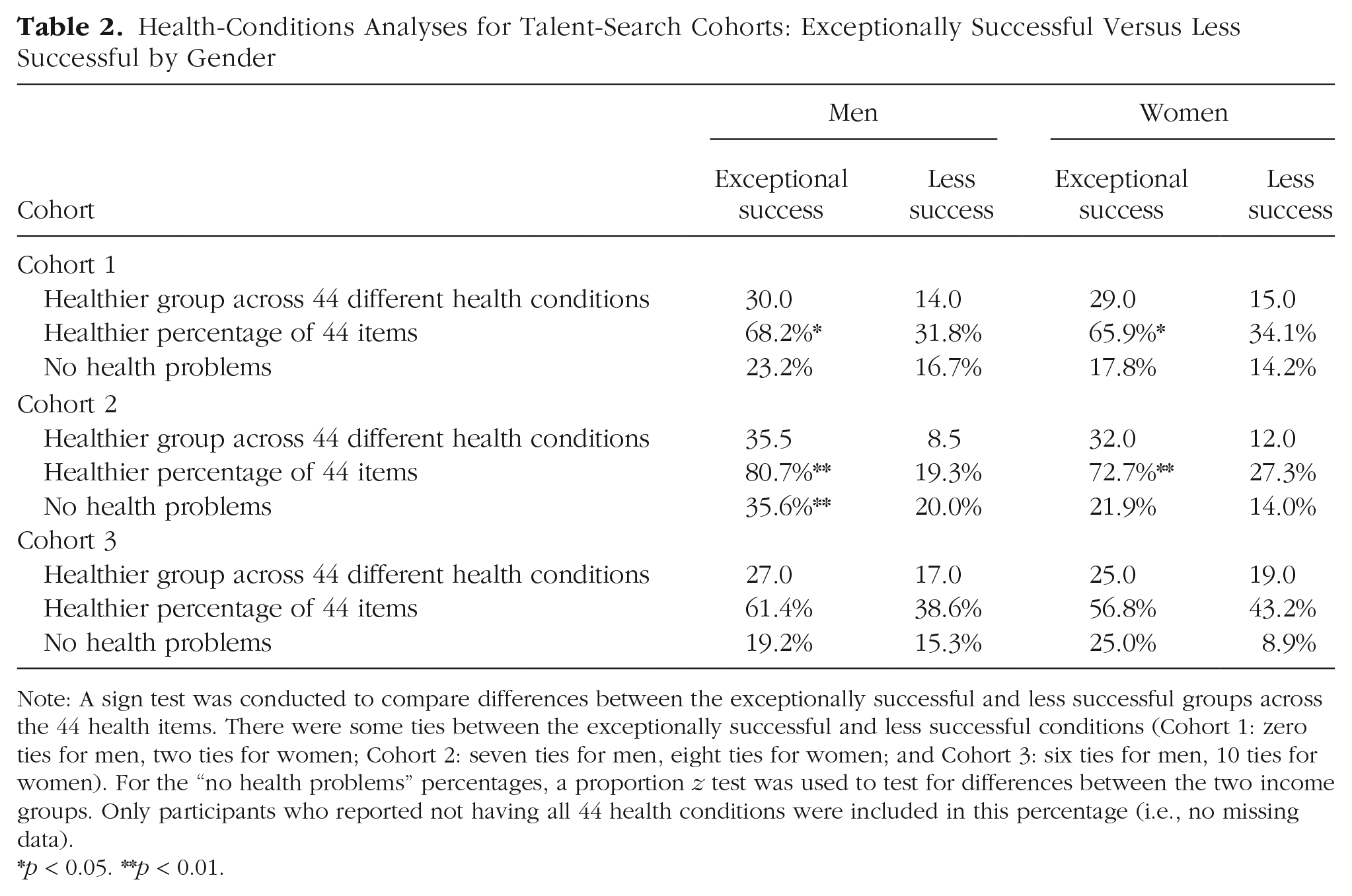
Note: A sign test was conducted to compare differences between the exceptionally successful and less successful groups across the 44 health items. There were some ties between the exceptionally successful and less successful conditions (Cohort 1: zero ties for men, two ties for women; Cohort 2: seven ties for men, eight ties for women; and Cohort 3: six ties for men, 10 ties for women). For the “no health problems” percentages, a proportion z test was used to test for differences between the two income groups. Only participants who reported not having all 44 health conditions were included in this percentage (i.e., no missing data).
p < 0.05. **p < 0.01.
Psychological health
Figure 1 depicts the differences between the exceptionally successful and less successful groups for four measures of psychological health in z-score units. For all variables, the exceptionally successful groups scored higher on these indices than the less successful groups did. Across these differences, all favor the exceptionally successful groups; 38% of the contrasts were statistically significant. Finally, for benchmarking the similarities of subjective views of psychological well-being and physical health, the fifth variable graphed in Figure 1 is subjective views of overall physical health. Across all three cohorts and genders, the exceptionally successful groups perceived their physical health to be more favorable (Cohen’s d ranged from 0.20 to 0.37 for women and 0.20 to 0.55 for men).
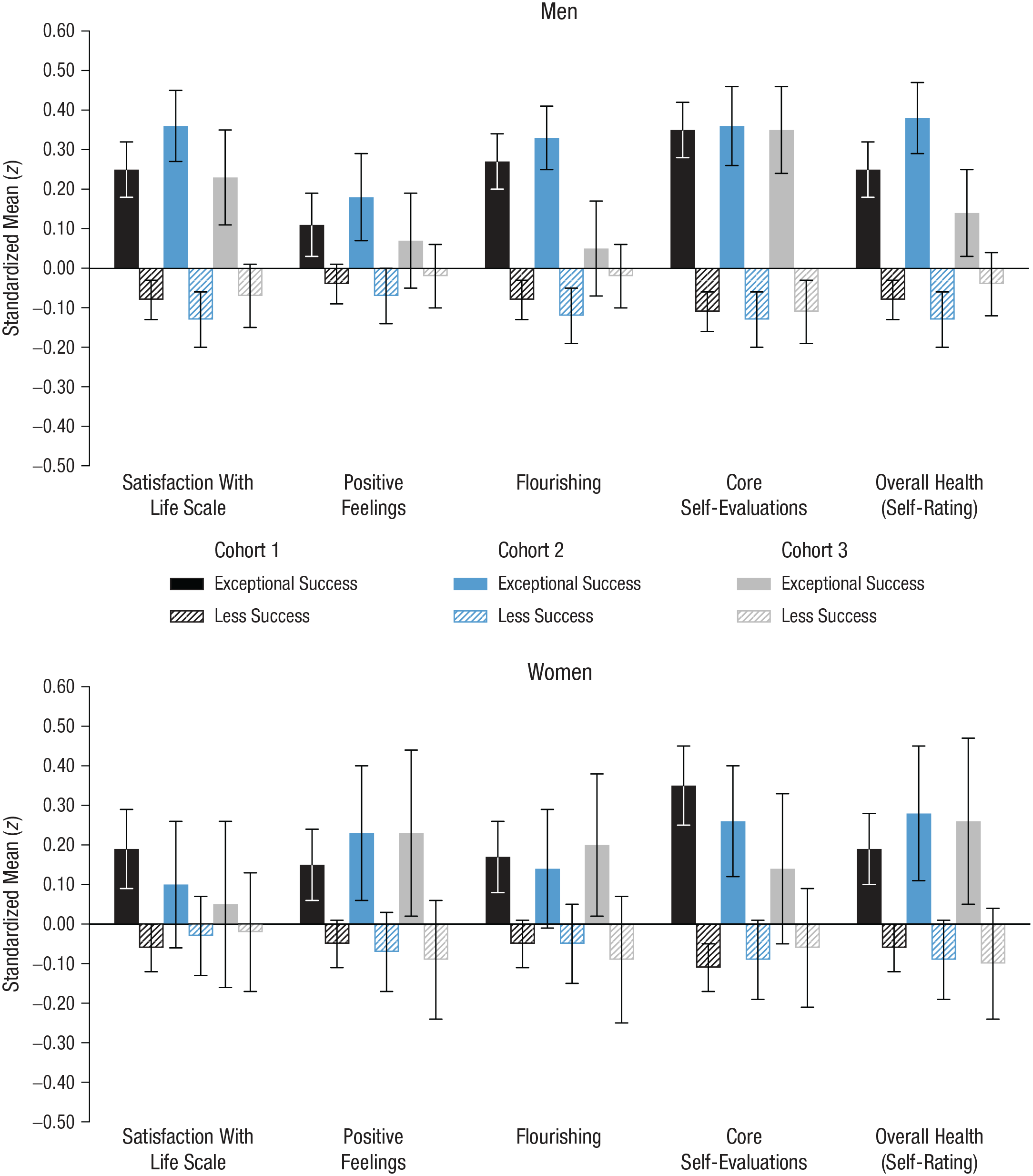
Psychological health and overall physical health. Standardized mean scores for the exceptionally successful and less successful groups of Cohorts 1 through 3 for four psychological health measures, along with overall health. More details of these analyses are available at https://osf.io/5u27m.
Recent states of psychological health and adjustment to aging
Figure 2 shows gender-by-cohort findings across three additional measures of psychological health in z-score units. Scores on the “recent work disruption/disturbance” measure were lower in all cases for both women and men in the exceptionally successful groups. These differences were significant among Cohort 2 men (d = 0.37), Cohort 3 men (d = 0.46), and Cohort 3 women (d = 0.60). Conversely, for the “recent lethargy or lack of vitality” measure, members of the exceptionally successful groups across cohorts scored lower than members of the less successful groups did, although the difference was significant only for Cohort 2 men (d = 0.31). When asked whether growing older was a positive or a negative experience, there was a trend for the exceptionally successful men and women to view aging more positively than did less successful men and women. However, the difference reached significance only for Cohort 2 men (d = 0.27).
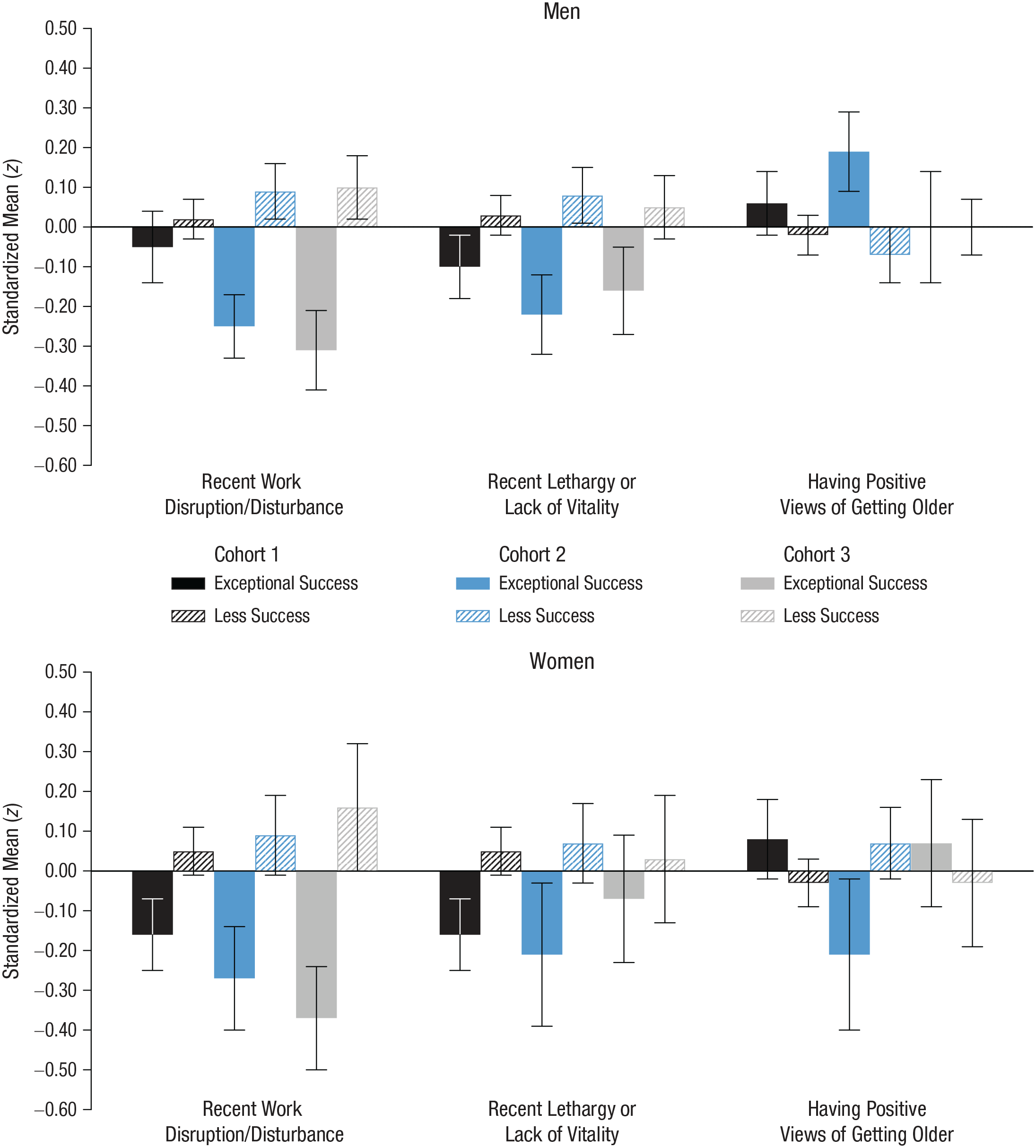
Recent states of psychological health and adjustment to aging. Standardized mean scores are shown for the exceptionally successful and less successful groups of Cohorts 1 through 3 for measures of recent psychological distress and the extent to which individuals have positive views of getting older. More details of these analyses are available at https://osf.io/5u27m.
Relationships and family
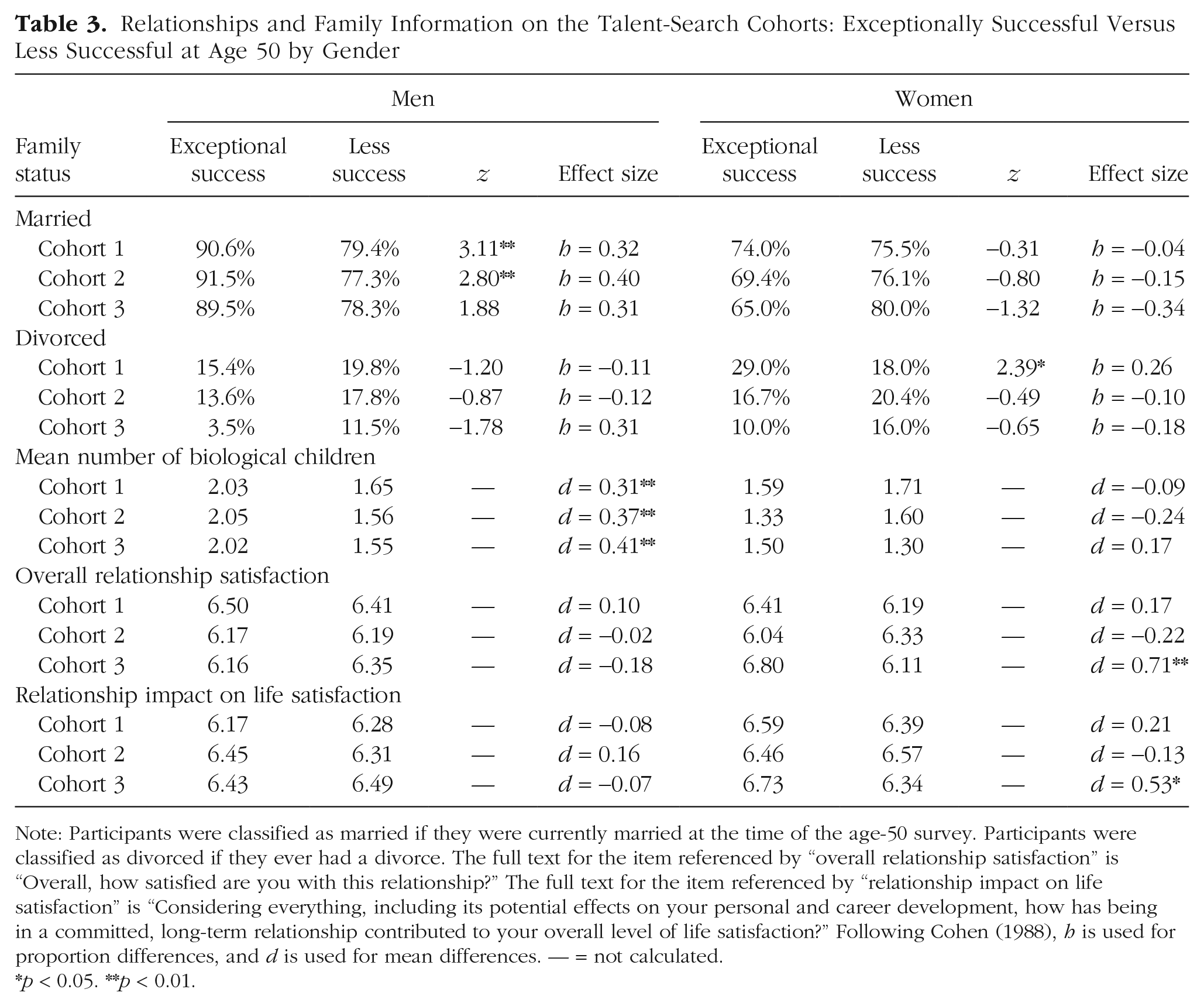
Table 3 reports family and interpersonal relationship findings on the exceptionally successful and the less successful groups by gender. In all three cohorts, exceptionally successful men were more likely to be married than less successful men were. This pattern was reversed for women—fewer women were married in the successful relative to the less successful groups. In addition, exceptionally successful men in all three cohorts had significantly more children than less successful men had. Again, this pattern was reversed for women, except for Cohort 3. However, all differences were insignificant. There was a consistent but insignificant trend for the exceptionally successful groups to have never divorced. The sole exception to this trend was a significant difference among the successful women in Cohort 1, who were more likely to have experienced a divorce.
Relationships and Family Information on the Talent-Search Cohorts: Exceptionally Successful Versus Less Successful at Age 50 by Gender
Note: Participants were classified as married if they were currently married at the time of the age-50 survey. Participants were classified as divorced if they ever had a divorce. The full text for the item referenced by “overall relationship satisfaction” is “Overall, how satisfied are you with this relationship?” The full text for the item referenced by “relationship impact on life satisfaction” is “Considering everything, including its potential effects on your personal and career development, how has being in a committed, long-term relationship contributed to your overall level of life satisfaction?” Following Cohen (1988), h is used for proportion differences, and d is used for mean differences. — = not calculated.
p < 0.05. **p < 0.01.
The last two variables in Table 3 included all participants who were in a committed long-term relationship or those who were legally married. Both variables were measured with a single item on a 7-point scale, and the means for all the groups were well over 6.0. These results show that most participants were quite satisfied in “overall relationship satisfaction” and in their “relationship’s impact on their life satisfaction.” There was not a consistent pattern of differences between successful and less successful groups on these two variables, and the observed differences were trivial.
Health behaviors
Below we provide an overview of findings regarding health-related behaviors. Results of more detailed analyses are available at https://osf.io/5u27m.
Sleep
We indexed the discrepancy between the amount of sleep participants got on average and the amount of time they needed for optimal functioning (i.e., a difference score for sleep). The magnitude of any one of these differences never exceeded 1 hr, and they were statistically insignificant, ranging from (“amount of typical sleep” minus “amount of sleep needed”): 7.2 − 6.8 = 0.4 hr to 8.0 − 7.0 = 1.0 hr. We also singled out one question from the set of 44 items on various health conditions that asked respondents whether they frequently had trouble sleeping. Across all groups, except Cohort 1 women, a smaller percentage of exceptionally successful individuals replied “yes” to this question. In this exception, the difference was insignificant and trivial (21.4% vs. 21.3%). Interestingly, and perhaps counterintuitively, both the number of hours of sleep that the exceptionally successful individuals got and the number they said they needed to function optimally differed only slightly and nonsignificantly from those of the less successful individuals.
Alcohol use
Most participants reported drinking alcohol during the 30 days before completing the survey. Percentages for successful/less successful groups across successive cohorts were as follows: men = 87%/80%, 84%/83%, and 90%/78%; women = 86%/75%, 86%/74%, and 70%/77%. Except for Cohort 3 women, the drinking rates were higher among the exceptionally successful participants. Proportion z tests showed only one significant difference in drinking: Cohort 1 women (z = 2.28, p = .02, h = .28); the rest were insignificant.
We also analyzed drinking behavior by the average number of drinks imbibed per month. Except for Cohort 3 men (13.3 vs. 14.4) and women (7.4 vs. 14.5), exceptionally successful groups drank more on average than did less successful groups. However, the only significant difference between groups was Cohort 2 women (20.2 vs. 12.6; d = 0.37). A minority engaged in binge drinking—exceptionally successful women in Cohort 2 had the highest rate among all groups at 14%, whereas less successful women in Cohort 1 had the lowest rate among all groups at 3%. Differences were insignificant across all comparisons.
Smoking
A smaller percentage of successful participants indicated they smoked at least 100 cigarettes in their life compared with less successful participants. Across successive cohorts, percentages for exceptionally successful/less successful groups were as follows: men = 15%/21%, 10%/18%, and 9%/13%; women = 22%/25%, 15%/18%, and 20%/10%. All proportion z tests were insignificant. Results were similar for current smokers. The exceptionally successful groups had fewer current smokers than the less successful groups did, but these differences were insignificant. Cohort 1’s less successful men had the highest rate of current smokers at 7%, whereas the exceptionally successful women of Cohorts 2 and 3 had the lowest rates of current smokers at 0%.
Exercise
Nearly all individuals could perform vigorous activities for at least 10 min. Percentages for successful/less successful groups across successive cohorts were as follows: men = 97%/96%, 95%/97%, and 100%/95%; women = 94%/93%, 94%/98%, and 90%/94%. All group differences were insignificant. Exceptionally successful individuals exercised more times per week compared with those in the less successful groups, with the trivial exception of Cohort 3 men (3.07 times vs. 3.12 times). However, none of these differences were significant. There were similar results for the average minutes of exercise a participant performed per week. Exceptionally successful participants exercised longer compared with the less successful participants (although there was a tie for Cohort 2 women: 134 min). However, the only significant difference was in Cohort 2, in which successful men exercised longer than their less successful counterparts did (d = 0.37).
We obtained additional information about respondents’ exercise activities from three open-ended questions about their leisure activities. We coded these responses and identified activities that could be reasonably considered vigorous enough to be considered exercise. The rationale was that these questions would provide a check on the latter results because they were in a separate section of the survey from the health questions. The findings largely mirrored those of the close-ended questions about exercise. Exceptionally successful participants engaged in dynamic recreational activities more than the less successful participants did. Percentages for exceptionally successful/less successful groups across successive cohorts were as follows: men = 46%/39%, 46%/29%, and 40%/23%; women = 38%/30%, 31%/29%, and 30%/17%. There was only one case in which the difference was significant: Cohort 2 men (z = 2.63, p = .01, h = .34). When coding whether any of the three leisure activities reported involved exercise, we found the same trend—exceptionally successful participants had more active leisure activities than the less successful participants did. Again, only Cohort 2 men were significantly different: 82% vs. 62% (z = 3.17, p = .002, h = .45).
We examined differences in participants’ BMIs. Exceptionally successful groups had lower BMIs than the less successful groups did. Means for successful/less successful groups across successive cohorts were as follows: men = 26.6/26.7, 25.4/26.5, and 27.2/27.7; women = 25.5/26.1, 23.4/25.0, and 25.2/25.4. As before, only one group difference was significant: Cohort 2 men, 25.36 vs. 26.47, d = 0.29, p < .05.
With few exceptions, the trend in these health behaviors showed that the exceptionally successful groups exhibited either higher or similar rates of healthy behaviors compared with the less successful groups. One clear exception is in the rates of drinking, but those differences were mostly insignificant.
Discussion
Overall, findings in Study 1 did not suggest that individuals who are exceptionally successful in their careers tend to suffer from physical or psychological deficits. Indeed, most of the health-item comparisons showed that exceptionally successful individuals were healthier than their less successful intellectual peers were. Further, these findings minimized the positive health outcomes associated with general intelligence (Belsky et al., 2020; Gottfredson, 2004; Gottfredson & Deary, 2004) because the intellectual abilities of all three cohorts were in the top 1%. Moreover, exceptionally successful participants viewed the aging process more positively than did less successful participants. Further, they did not report being compromised in their family and interpersonal relationships. Jointly, these findings are opposite the pattern that would be predicted if being wrecked by success were a widespread phenomenon.
Following Lykken’s (1968, 1991) three-tiered nomenclature for conducting replications with ascending degrees of scientific force (literal → operational → constructive), Study 1 constituted a series of operational replications. Three successively more able cohorts of intellectually talented youths, identified at different time points using the same procedure, were longitudinally tracked for more than 3 decades. Findings consistently disconfirmed the wrecked-by-success hypothesis. Given that the wrecked-by-success hypothesis could be falsified by robust empirical findings documenting no relationship between extraordinary success and medical/psychological health, the three-cohort replication observed in Study 1 casts doubt on its tenability. In our findings, if anything, the opposite appeared to be the case. Nevertheless, intellectually prodigious adolescents are but one type of high-potential human capital with extraordinary promise for career success. For the purpose of a more compelling replication, Study 2 examined another type of high-potential population identified in young adulthood and tracked longitudinally for 25 years.
Study 2
Study 2 served as a constructive replication (Lykken, 1968, 1991) of Study 1’s results using a distinct high-potential sample. Constructive replications are conceptually analogous to systematic heterogeneity in test construction (Humphreys, 1962, 1985; Hulin & Humphreys, 1980) and construct validation (Cronbach, 1989; Meehl, 1999). Constructive replications seek to vary as many nonrelevant design features as possible when replicating earlier empirical findings while maintaining the integrity of the focal constructs under analysis (Bernstein et al., 2019, 2021; Wai et al., 2009). Here, the critical constructs were extraordinary career success and how it relates to psychological adjustment and well-being. These elite STEM doctoral students were identified in young adulthood by a distinct procedure (i.e., using different selection criteria), during a different decade, and tracked longitudinally for 25 years. These students clearly constitute a high-potential sample, and they allowed us to test the robustness (or lack thereof) of the wrecked-by-success hypothesis. Moreover, they experienced unique educational histories and differ in salient characteristics of their individuality relative to intellectually prodigious populations in general (Lubinski et al., 2001), thus allowing us to test the generalizability of Study 1’s findings.
Method
Participants and procedure
SMPY identified 714 elite STEM doctoral students in 1992 (Lubinski & Benbow, 2006; Lubinski et al., 2001). They were enrolled as first- or second-year students in STEM doctoral programs ranked in the top 15 in the United States (Gourman, 1989; National Research Council, 1987). These programs were mainly inorganic disciplines, although two disciplines with an organic component were included (biochemistry and bioengineering). Women were oversampled to achieve proportional representation within each discipline and department (368 men, 346 women). All individuals received $15 for their participation in the Time 1 survey.
Between 2017 and 2018, this cohort completed the age-50 survey—the same survey used in Study 1. Participants chose on completion to receive either a $20 Amazon gift card or to make a $20 donation to summer residential academic programs for intellectually precocious youths from economically challenged homes. Most participants chose to donate their $20.
Characteristics of the 496 elite STEM doctoral students who participated in this study include the following: mean age = 48.9 years, SD = 1.9 years; 49% women; 84.4% White; 1.2% Black or African American; 8.1% Asian, Asian American, or Pacific Islander; 1.6% Mexican American or Hispanic; and 4.6% multiracial or other ethnicities.
This work received ethics approval from the institutional review board at Vanderbilt University (approval number 020469).
Measures and analysis
The income and physical- and psychological-health measures completed by the STEM doctoral students were identical to those used in Study 1. The reliabilities of all measures were commensurate with those reported in Study 1 (for exact values, expanded analyses, supplemental analyses, and summary data, see Table S1 at https://osf.io/5u27m).
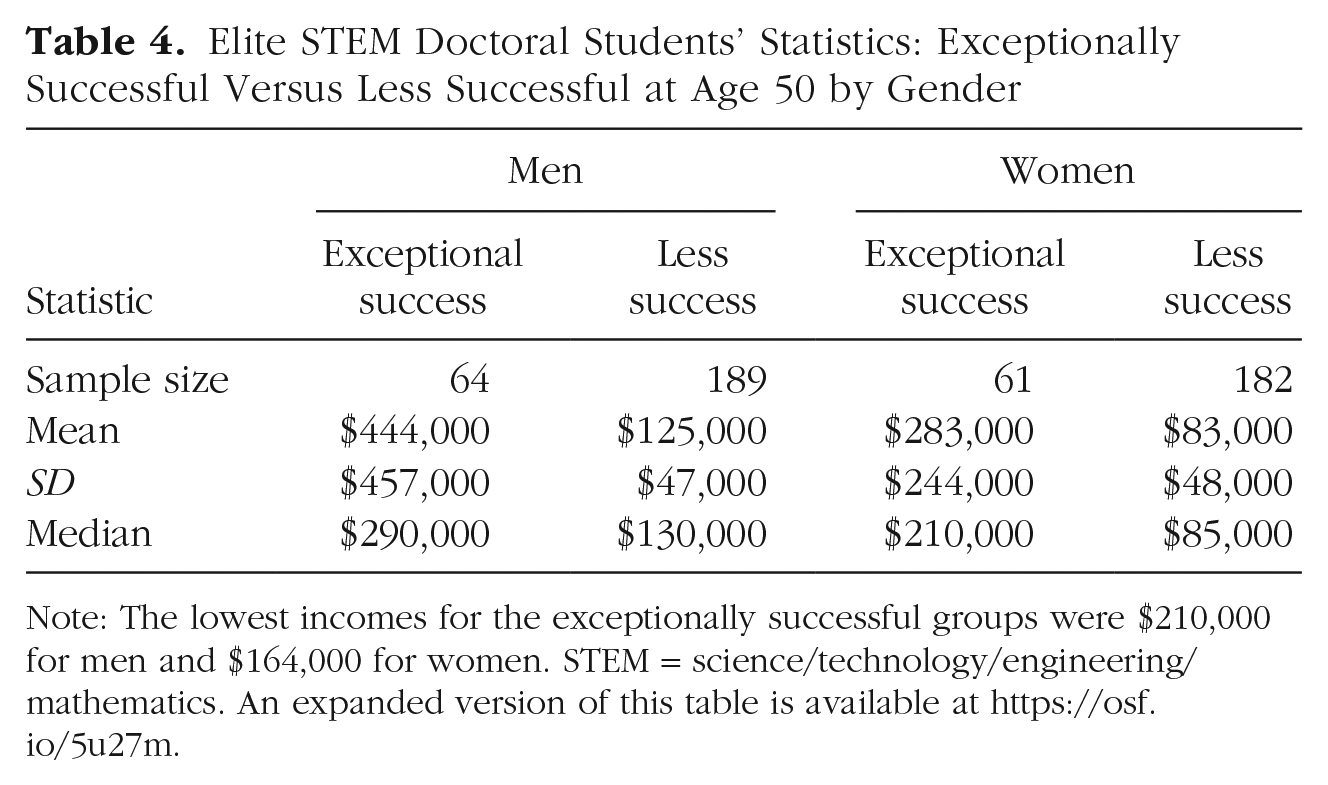
Our data-analytic approach and procedures paralleled Study 1. We divided men and women’s individual incomes into two groups: the top quartile of exceptionally successful participants and the remaining less successful participants (see Table 4). As in Study 1, the within-gender personal income differences showed that the exceptionally successful groups earned more than twice as much as the less successful groups. By any standard, members of the exceptionally successful groups of each gender were impressive (e.g., men’s/women’s medians = $290,000/$210,000 vs. their respective counterparts’ medians = $130,000/$85,000). Even among elite STEM doctoral students, the diversity of their occupational roles is impressive, as are their professional statures and occupational responsibilities (Appendix B). In high-tech cultures, the versatility of their STEM expertise was expressed in multiple ways.
Elite STEM Doctoral Students’ Statistics: Exceptionally Successful Versus Less Successful at Age 50 by Gender
Note: The lowest incomes for the exceptionally successful groups were $210,000 for men and $164,000 for women. STEM = science/technology/engineering/mathematics. An expanded version of this table is available at https://osf.io/5u27m.
As in Study 1, we focused on overall trends (Frank, 2009; Lubinski & Humphreys, 1992; Meehl, 1978; Steen, 1988) rather than specific point estimates of the statistical significance on individual items.
Results
Health conditions and family relationships
Physical and medical health
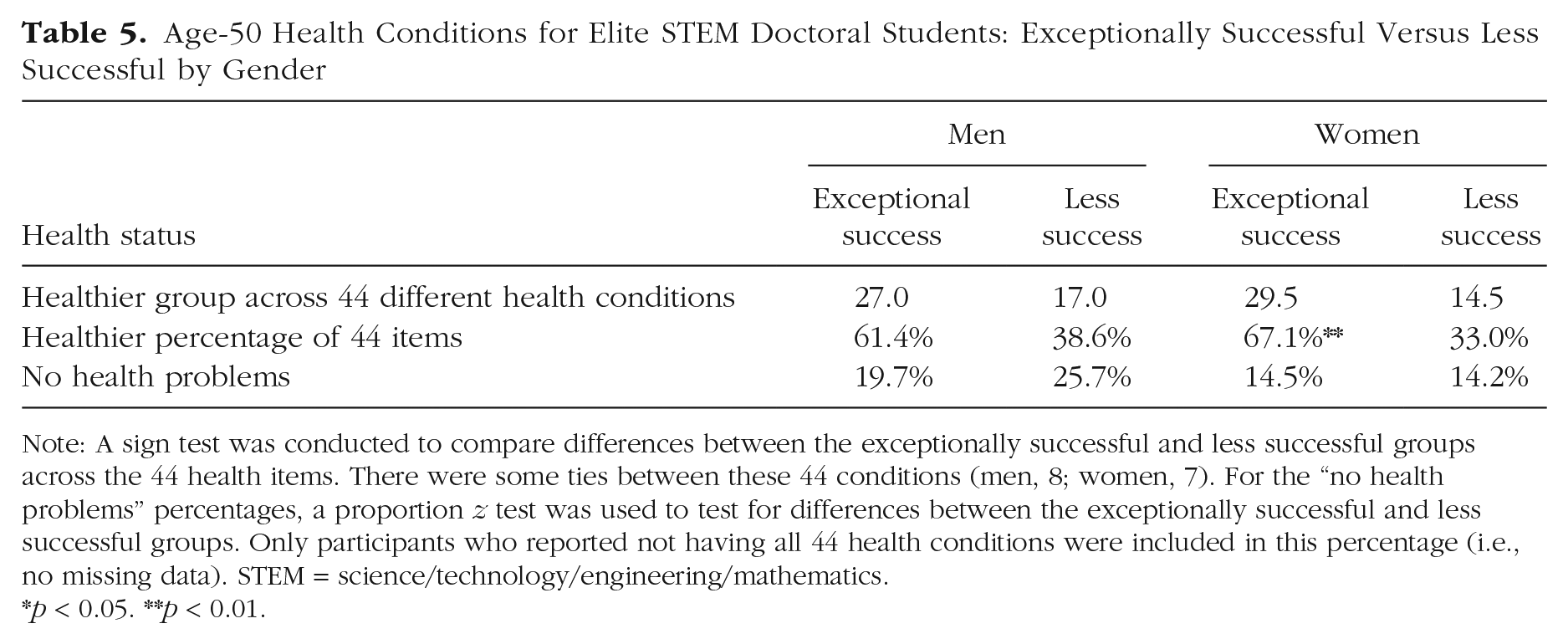
We compared the groups across the 44 items of physical and medical health, and our aggregated findings appear in Table 5. Extensive details on item outcomes and accompanying statistics are at https://osf.io/5u27m. Exceptionally successful participants reported better health compared with the less successful participants, and this difference was significant for women but not men. In contrast to Study 1, a greater percentage of less successful men than exceptionally successful men experienced no health problems across the 44 items; for women, the proportions were nearly identical across income groups. However, these differences were insignificant.
Age-50 Health Conditions for Elite STEM Doctoral Students: Exceptionally Successful Versus Less Successful by Gender
Note: A sign test was conducted to compare differences between the exceptionally successful and less successful groups across the 44 health items. There were some ties between these 44 conditions (men, 8; women, 7). For the “no health problems” percentages, a proportion z test was used to test for differences between the exceptionally successful and less successful groups. Only participants who reported not having all 44 health conditions were included in this percentage (i.e., no missing data). STEM = science/technology/engineering/mathematics.
p < 0.05. **p < 0.01.
Psychological health
Standardized differences in psychological well-being appear in Figure 3 (top). Men and women in the exceptionally successful groups scored higher than did those in the less successful groups across satisfaction with life, positive feelings, flourishing, and core self-evaluations. Eighty-eight percent of these differences were statistically significant. In the specific item measuring overall health (self-rating), the exceptionally successful groups perceived their physical health to be more favorable; however, both were statistically insignificant.
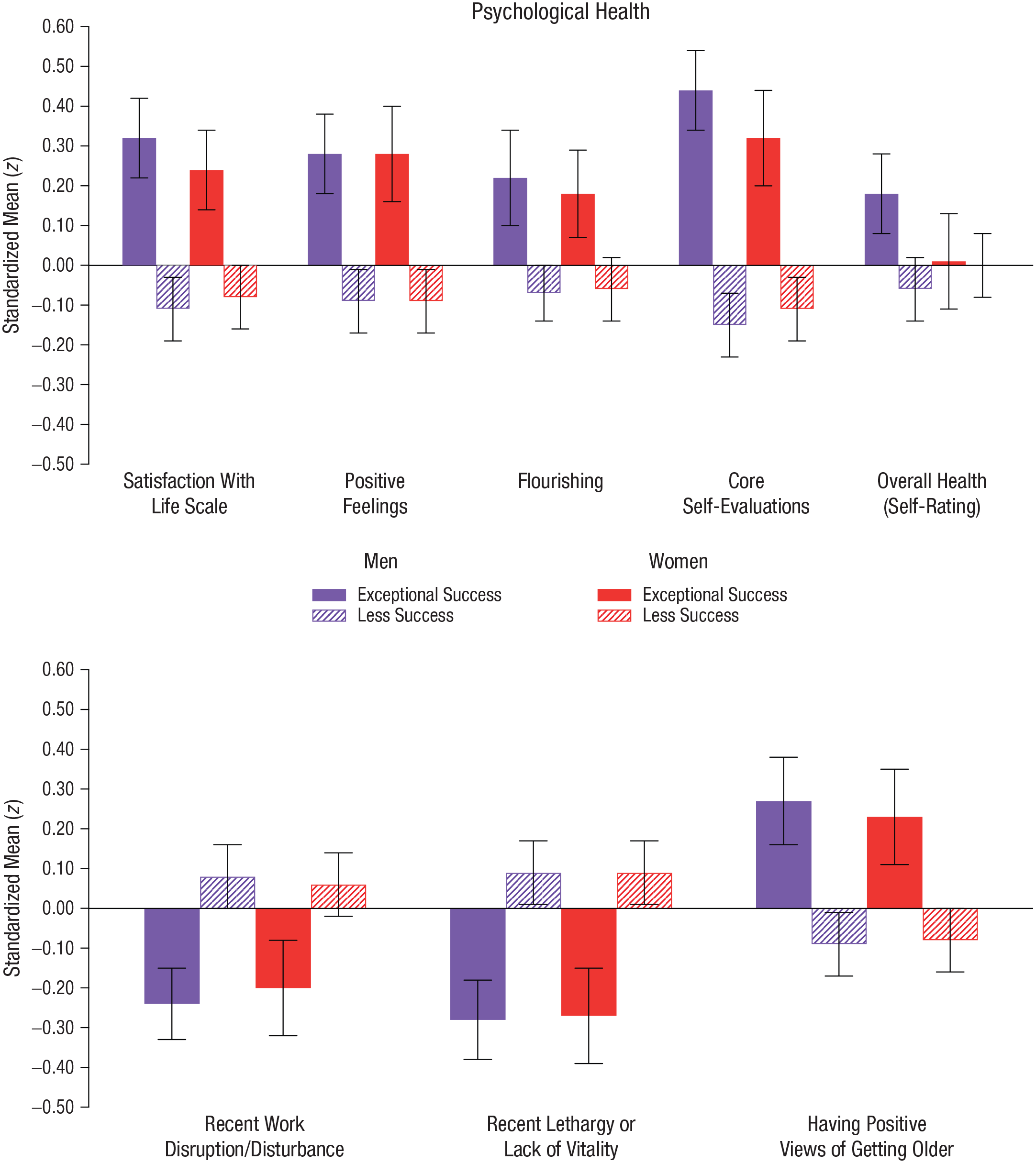
Elite STEM doctoral students’ psychological health, physical health, and attitudes toward aging.
Recent states of psychological health and adjustment to aging
Figure 3 (bottom) shows that exceptionally successful men scored significantly lower on both “recent work disruption/disturbance” (d = −0.35) and “recent lethargy or lack of vitality” measures (d = −0.40). Exceptionally successful women also scored lower on both measures, although the difference was significant only for the latter measure (d = −0.37). Exceptionally successful men and women found aging to be a significantly more positive experience than did those in the less successful group (men: d = 0.38; women: d = 0.32).
Relationships and family
Table 6 contains results for family and interpersonal relationships. We observed the same pattern observed in Study 1. Exceptionally successful men were married at higher rates compared with less successful men, whereas the inverse was true for exceptionally successful women versus less successful women. The average number of biological children was significantly larger among successful relative to less successful men, replicating the pattern observed in Study 1. Conversely, the average number of biological children was significantly smaller for exceptionally successful than for less successful women, thus mirroring the pattern found for two of the three cohorts of women in Study 1.
Relationships and Family Information for Elite STEM Doctoral Students at Age 50: Exceptionally Successful Versus Less Successful by Gender
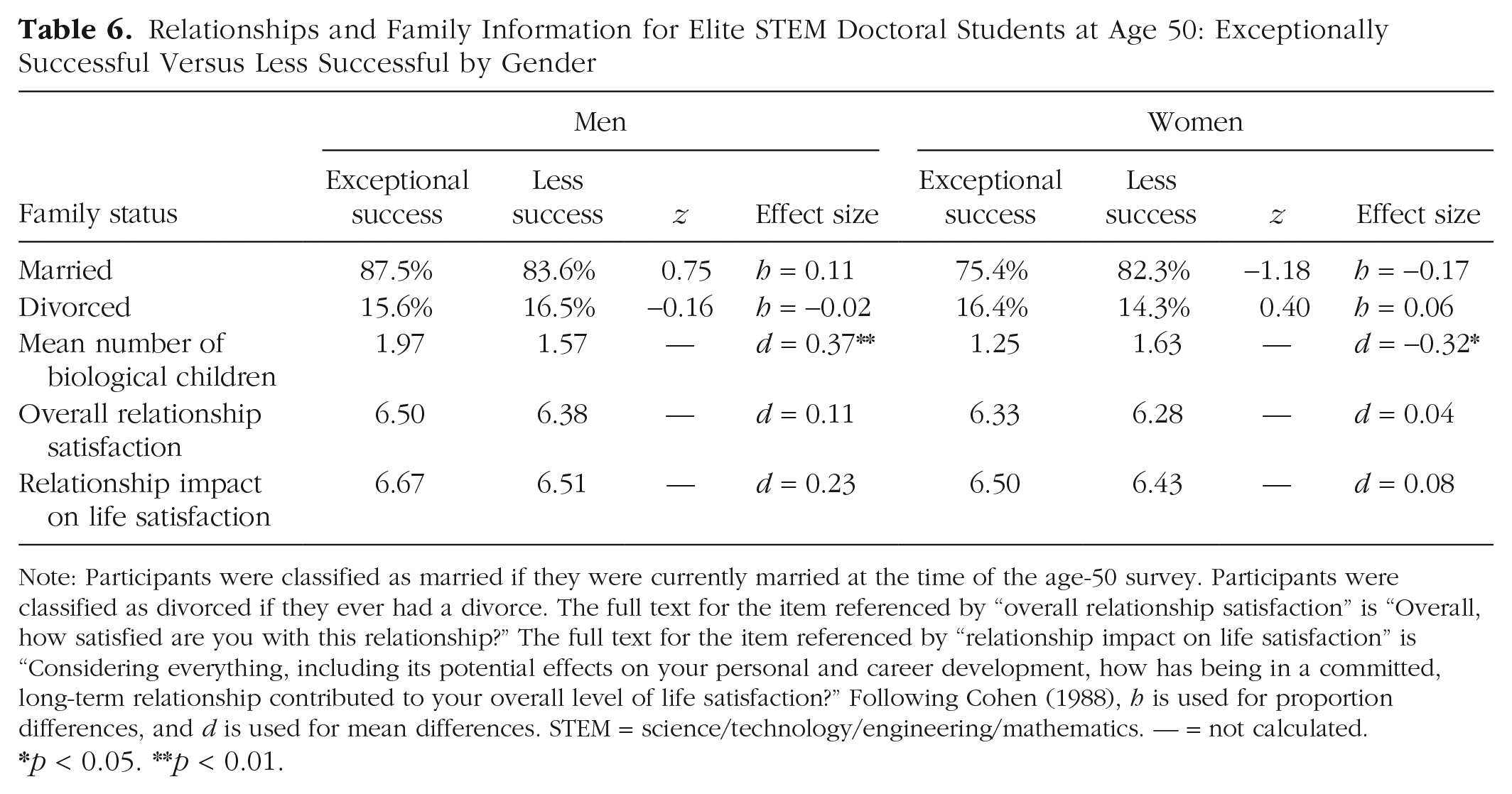
Note: Participants were classified as married if they were currently married at the time of the age-50 survey. Participants were classified as divorced if they ever had a divorce. The full text for the item referenced by “overall relationship satisfaction” is “Overall, how satisfied are you with this relationship?” The full text for the item referenced by “relationship impact on life satisfaction” is “Considering everything, including its potential effects on your personal and career development, how has being in a committed, long-term relationship contributed to your overall level of life satisfaction?” Following Cohen (1988), h is used for proportion differences, and d is used for mean differences. STEM = science/technology/engineering/mathematics. — = not calculated.
p < 0.05. **p < 0.01.
The last two variables in Table 6 included all participants who were in a committed, long-term relationship, as well as married individuals. We used a single item on a 7-point scale, and, as in Study 1, the means for all groups were well over 6.0. Most participants thus seemed to be appreciably satisfied in their “overall relationship satisfaction” and their “relationship’s impact on their life satisfaction.” Although the exceptionally successful men and women scored a bit higher on these two variables relative to their less successful gender-equivalent counterparts, these differences were trivial and nonsignificant.
Health behaviors
Sleep
As in Study 1, differences in the sleeping patterns between the exceptionally successful and the less successful groups were minor and insignificant. However, a smaller percentage of exceptionally successful men (16%) and women (21%) reported frequent trouble sleeping relative to their less successful men (18%) and women (24%) peers.
Alcohol use
Most participants reported drinking in the past 30 days. The drinking rates were similar for the less successful women (73%) and the exceptionally successful women (72%). There was more of a disparity for men: The exceptionally successful men (80%) drank less than the less successful men did (87%). However, this difference was insignificant. There were trivial differences (i.e., effect sizes close to zero) between the groups in the average number of drinks consumed. Binge drinking was rare, and these low rates were similar between groups: exceptionally successful men (14%), less successful men (13%), exceptionally successful women (5%), and less successful women (4%).
Smoking
As in Study 1, participants’ overall incidence of ever having smoked at least 100 cigarettes in their life was rare. Exceptionally successful men (5%) reported lower rates of ever smoking than the less successful men did (8%). The pattern reversed for women, in which exceptionally successful women (9%) reported higher rates of ever smoking than the less successful women did (6%). Current smokers were rare but displayed a similar trend. The highest level for any group was 2%, and none of the differences were significant.
Exercise
Nearly all Study 2 men (94%–96%) and women (94%–95%) reported being able to perform at least 10 min of vigorous physical activity per week. Following the trend from Study 1, exceptionally successful groups exercised more than less successful groups both in frequency and total minutes per week; however, these differences were insignificant. As in Study 1, we coded the activity level of participants’ leisure activities. For men, the exceptionally successful group (51%) reported a top-ranked active leisure activity more than the less successful group (44%). However, for women, the less successful group (35%) reported a top-ranked active leisure activity more than the exceptionally successful women (30%). This pattern held when any of the three reported leisure activities were coded as active: exceptionally successful men (85%) versus less successful men (70%) and exceptionally successful women (63%) versus less successful women (75%). However, the only statistically significant difference was that between men when any leisure activity was coded (z = 2.30, p = .02, h = .36). Finally, and contrary to the results found in Study 1, both exceptionally successful men (26.28) and women (25.91) had higher BMIs than their less successful counterparts (26.04 and 24.80, respectively); however, these differences were insignificant.
Discussion
In all critical respects, Study 2 replicated the findings of Study 1. Following Lykken (1968, 1991), Study 2 constituted a constructive replication of Study 1. Study 2 documented the lack of a relation between extraordinary career success and either physical or psychological maladaptivity among a different “type” of high-potential sample, identified during a different decade, and by using entirely different selection procedures. Using the same assessment criteria used in Study 1, Study 2 found no empirical evidence that exceptional career success was related to medical concerns, psychological maladjustment, or health-risk behaviors. If anything, participants with more lucrative, high-powered careers were better adjusted and experienced more positive psychological states.
General Discussion
In his autobiography, Paul E. Meehl (1989) remarked that his election to the American Psychological Association presidency coincided with a bout of depression, and he considered whether this “might exemplify Freud’s ‘those wrecked by success’” (p. 358). He ultimately rejected this interpretation, and his conclusion is consistent with the results of the current investigation: Most individuals who are exceptionally successful in their careers are not ruined or even damaged in any way by their accomplishments. Our results, largely replicated across three cohorts of intellectually prodigious individuals and a sample of elite STEM doctoral students, suggested, if anything, that the opposite is true—those who were exceptionally successful in their careers had more positive outcomes in their physical and psychological health. They also approached life with more positive views toward aging. These findings may imply—as proposed by Friedman and Martin (2011; but see also Arnett, 2018)—that many of the high achievers in SMPY samples experienced “positive” stress rather than negative stress. As such, this may challenge them to develop their expertise, knowledge, and skills more fully. If so, this might exemplify Pressey’s (1955) speculations on furtherance, a term Pressey coined. It holds that people with exceptional abilities experience psychosomatic vigor and resilience as they strive to actualize their potential by developing extraordinary expertise and creative products. This idea is similar to Robert White’s (1959) original formulation of “effectance motivation,” whereby acquired motives and positive psychological states develop through the persistent application of effort directed toward the acquisition of elaborate skill sets. Both concepts suggest that positive psychological states emerge from highly competent performances that result from striving for and the repeated display of extraordinary expertise (Lubinski & Benbow, 2000).
Going back in time, other data that counter the wrecked-by-success narrative exist as well. The results of Lewis Terman’s landmark study spanning 1925 to 1959 of intellectually precocious youths (Burks et al., 1930; Terman, 1925; Terman & Cox, 1926; Terman & Oden, 1947, 1959) are relevant to this topic and disconfirm the conjecture that outstanding career success commonly takes a heavy toll on individuals personally, psychologically, and physically. At midlife, Terman’s (1954a, 1954b) participants were generally much more successful in their careers than average. In addition, they were satisfied with their romantic relationships, and they reported being physically and mentally healthy (Oden, 1968). In their continued study of the Terman sample, Friedman and colleagues (Friedman & Martin, 2011; Kern et al., 2009) discovered that those participants with more successful careers lived longer than those who had less successful careers. Overall, our investigation more systematically tested the wrecked-by-success hypothesis and yielded disconfirming findings, but this previous work also casts doubt on the verisimilitude of the omnipresent assumption—both in science and in society at large—that exceptional career success comes at the cost of physical and psychological health.
Our findings also reinforce Rozin’s (2001, 2009) cogent observation that in the social sciences, empirical investigations are frequently launched to validate purported mechanisms causing certain phenomena, even when the phenomena in question have not been empirically confirmed. Early in the gifted-child movement, “early to ripe, early to rot” was a common theme. Terman (1925–1959) eschewed the theoretical speculation of his time and “simply” asked medical and psychological professionals to evaluate the psychological and physical well-being of the top 1% of his participants. Both medically and psychologically, they tended to be better off (Terman, 1925–1959). This work planted the seeds for modern-day cognitive epidemiological inquiry (Deary et al., 2021; Deary, Harris, & Hill, 2009; Deary, Whalley, & Starr, 2009; Geary, 2018, 2019; Gottfredson, 2004; Lubinski & Humphreys, 1992, 1997). Not long ago, intellectually precocious children were thought to have “multipotentiality” (i.e., they could be anything they wanted to be). When assessed properly, however, their individuality emerged along with salient strengths and relative weaknesses (Achter et al., 1996). From this, the gifted field folded empirical findings into the broader multidimensional space of human individuality with no discrete boundaries (Lubinski & Benbow, 2021).
In the words of Rozin (2009): In spite of the example of better developed natural sciences, psychology has demeaned description of phenomena and assessment of their generality and moved directly into hypothesis testing. But, of course, an hypothesis or theory is ultimately only as good as the importance and reliability of the events the theory proposes to explain. (p. 435)
Perhaps, as was the case for “early to ripe, early to rot” and “multipotentiality,” theoretical speculations about being wrecked by success may encounter the same scientific fate: “It was never there and already it’s vanishing” (Achter et al., 1996, p. 65).
Limitations and future directions
Our investigation could be expanded in future research to include a broader range of criteria for defining outstanding success. The participants studied here were successful in their careers because they excelled in intellectually demanding occupations (Appendices A and B), those that former Secretary of Labor Robert Reich (1991) referred to as “symbol analysts.” Obviously, there are other forms of career excellence, and there are many other forms of high potential that are not intellectually distinguished (Epstein, 2011; Simonton, 2014a; Worrell et al., 2019). For example, there are many demanding, stressful careers in which people achieve a great deal of notoriety and success, but they are not necessarily highly intellectual or compensated. SMPY’s talent-search cohorts scored in the top 1% of cognitive ability and, although elite STEM doctoral students were not explicitly selected on their cognitive ability, exceptional ability—mathematical reasoning in particular—was nonetheless a virtual prerequisite for admission into those highly select programs. Although cognitive ability and career success are clearly associated (Judge et al., 1999; Ng et al., 2005; Schmidt & Hunter, 1998, 2004), not all successful and highly paid individuals possess prodigious intellectual abilities. Determining how generalizable our findings are to occupations with more relaxed intellectual demands calls for further research.
In addition, our quasi-experimental longitudinal approach precludes firm causal inferences. Correlation does not equal causation. However, when covariation is not present and, as in the current circumstances, the statistically significant covariation observed is inversely related to the hypothesis in question (and replicated across multiple cohorts), the wrecked-by-success hypothesis loses scientific credibility—despite its long-standing popularity. Relatedly, we did not have a baseline of health conditions prior to our age-50 survey. Our single set of cross-sectional physical/psychological health measures was limiting in that we did not assess the health of our participants at prior time points. 4 Therefore, we cannot rule out the possibility that the participants who became highly successful were extraordinarily healthy earlier in their lives and the process of achieving success led to a reduction in their health and well-being. Their exceptional success could have attenuated their psychological well-being from its initial standing, even while they typically remained healthier than their less accomplished intellectual peers. Future research on this topic is needed to test this and other empirical possibilities. For example, more complex longitudinal designs that incorporated assessments of health and success at multiple time points could capture individuals’ baseline standing on, and temporal changes in, these constructs. Utilization of designs that allowed charting more nuanced, dynamic relations between occupational achievement and health status would also make it possible to take into account the fact that different types of ailments routinely arise at different points across the life span (e.g., some forms of psychopathology emerge relatively early in life, whereas heart disease tends to manifest relatively later). Furthermore, in future research, better measurement of health—and other measures beyond self-report—would be beneficial. Finally, our sample is based on the majority population in the United States and predominantly White; as such, testing whether our findings would generalize both within and between cultures would be valuable. The wrecked-by-success hypothesis is common across many cultures and nations. Using more diverse samples would test the generalizability of our findings.
Conclusion
Our results do not support the idea that exceptionally accomplished individuals are wrecked by their career success. Although some individuals may experience substantial hardships from their career successes, our findings suggest that this is not the norm. Being wrecked by success is neither a fait accompli nor nearly as widespread as is depicted in art, culture, and history. Perhaps the persistence of the “high price of success” and related concepts such as the Faustian bargain (Gardner, 1993) is due to how conspicuous it is when it does occur—causing individuals to overestimate its prevalence through a representativeness heuristic or by committing the base-rate fallacy (Kahneman, 2011; Kahneman & Tversky, 1972). Regardless of its origin, according to our empirical findings, the age-old assumption that outstanding career success and compromised physical and psychological well-being are inextricably linked appears to be in ill health.
Footnotes
Appendix
Health-condition items
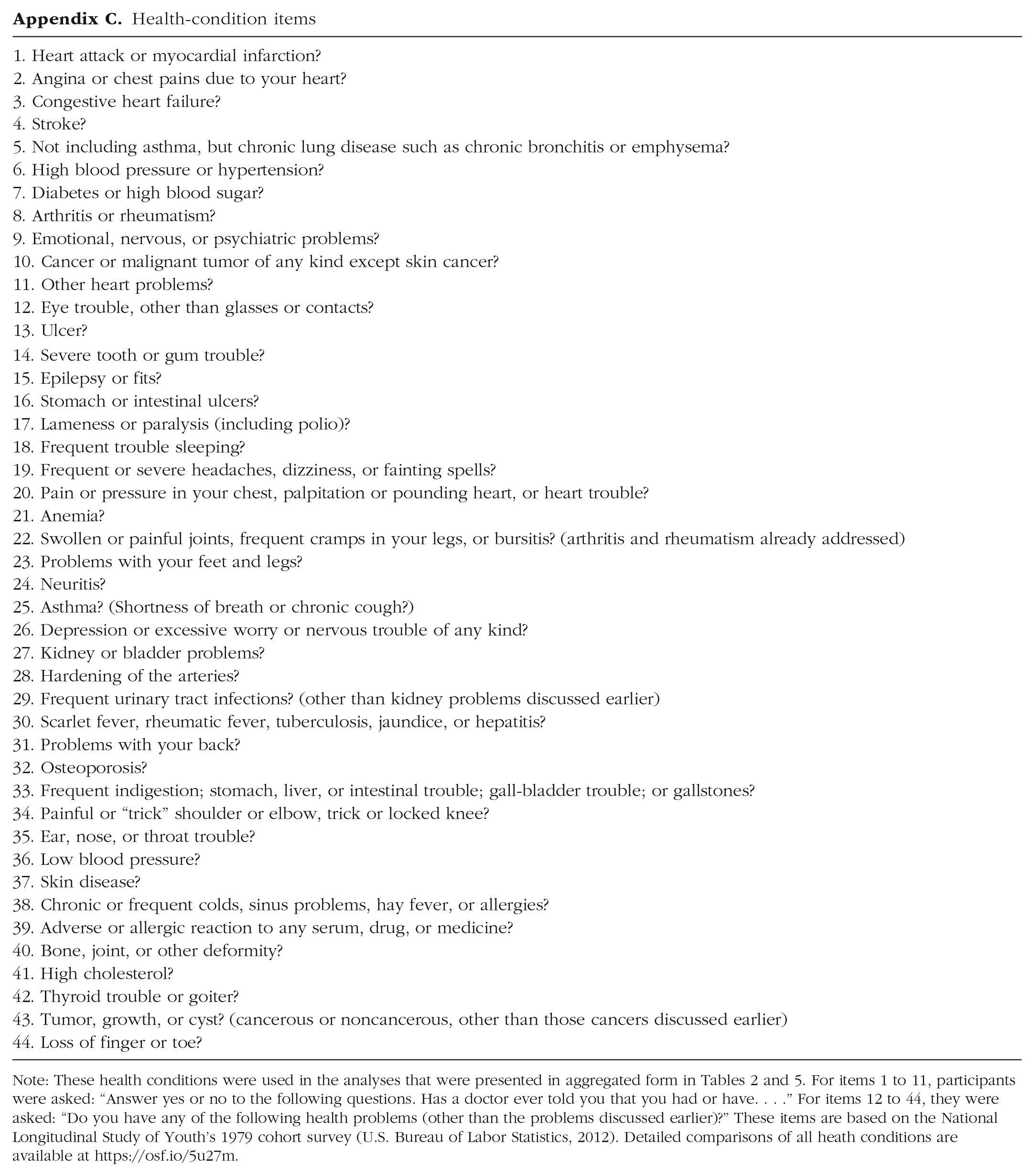
| 1. Heart attack or myocardial infarction? |
| 2. Angina or chest pains due to your heart? |
| 3. Congestive heart failure? |
| 4. Stroke? |
| 5. Not including asthma, but chronic lung disease such as chronic bronchitis or emphysema? |
| 6. High blood pressure or hypertension? |
| 7. Diabetes or high blood sugar? |
| 8. Arthritis or rheumatism? |
| 9. Emotional, nervous, or psychiatric problems? |
| 10. Cancer or malignant tumor of any kind except skin cancer? |
| 11. Other heart problems? |
| 12. Eye trouble, other than glasses or contacts? |
| 13. Ulcer? |
| 14. Severe tooth or gum trouble? |
| 15. Epilepsy or fits? |
| 16. Stomach or intestinal ulcers? |
| 17. Lameness or paralysis (including polio)? |
| 18. Frequent trouble sleeping? |
| 19. Frequent or severe headaches, dizziness, or fainting spells? |
| 20. Pain or pressure in your chest, palpitation or pounding heart, or heart trouble? |
| 21. Anemia? |
| 22. Swollen or painful joints, frequent cramps in your legs, or bursitis? (arthritis and rheumatism already addressed) |
| 23. Problems with your feet and legs? |
| 24. Neuritis? |
| 25. Asthma? (Shortness of breath or chronic cough?) |
| 26. Depression or excessive worry or nervous trouble of any kind? |
| 27. Kidney or bladder problems? |
| 28. Hardening of the arteries? |
| 29. Frequent urinary tract infections? (other than kidney problems discussed earlier) |
| 30. Scarlet fever, rheumatic fever, tuberculosis, jaundice, or hepatitis? |
| 31. Problems with your back? |
| 32. Osteoporosis? |
| 33. Frequent indigestion; stomach, liver, or intestinal trouble; gall-bladder trouble; or gallstones? |
| 34. Painful or “trick” shoulder or elbow, trick or locked knee? |
| 35. Ear, nose, or throat trouble? |
| 36. Low blood pressure? |
| 37. Skin disease? |
| 38. Chronic or frequent colds, sinus problems, hay fever, or allergies? |
| 39. Adverse or allergic reaction to any serum, drug, or medicine? |
| 40. Bone, joint, or other deformity? |
| 41. High cholesterol? |
| 42. Thyroid trouble or goiter? |
| 43. Tumor, growth, or cyst? (cancerous or noncancerous, other than those cancers discussed earlier) |
| 44. Loss of finger or toe? |
Note: These health conditions were used in the analyses that were presented in aggregated form in Tables 2 and 5. For items 1 to 11, participants were asked: “Answer yes or no to the following questions. Has a doctor ever told you that you had or have. . . .” For items 12 to 44, they were asked: “Do you have any of the following health problems (other than the problems discussed earlier)?” These items are based on the National Longitudinal Study of Youth’s 1979 cohort survey (U.S. Bureau of Labor Statistics, 2012). Detailed comparisons of all heath conditions are available at https://osf.io/5u27m.
Acknowledgements
We thank Frank Miele and Gabriella Noreen for their comments on a prepublication version of the manuscript.
Transparency
Action Editor: Matthew Rhodes
Editor: Laura A. King
