







Abstract
The present study empirically investigates how much pharmacists’ recommendations and consumer decisions influence the marketing of drugs to price-sensitive consumers. The results indicate that consumers rely on physicians and their own decisions than pharmacists' recommendations in choosing prescription drugs. Consumers rely more on pharmacists' recommendations in purchasing over-the-counter drugs. To reveal the relationships among physicians, pharmacists, and consumers, pharmacists and consumers were surveyed using existing questionnaires. The findings indicate recommendations from pharmacists' that patients consult with physicians about the choice of lower priced, though acceptable, prescription and over-the-counter drugs have a significant effect on consumer decisions. Pharmacists indicated that they were willing to recommend low-cost alternative drugs. Consumers were willing to follow pharmacists' recommendations. The behavior of both pharmacists and consumers had significant impact on cost reduction.
Introduction
Price sensitivity is an important cause of low adherence to prescribed medication. By self-medicating with lower cost over-the-counter (OTC) drugs, customers may experience negative health consequences including hospitalization. The reports of the Commonwealth Fund indicate that 58% of US physicians stated that their patients often have difficulty paying for medications and care. 1 Pharmacists can play important roles in optimizing therapeutic outcomes and promoting safe, cost-effective, medication usage for patients in medical homes. 2
Whether or not physicians have asked consumers their opinions on prescribed drugs, consumers are interested in purchasing lower cost prescription and OTC drugs that have about the same medical effect. Pharmacists can help consumers in choosing effective drugs that treat diseases just as well as higher priced prescription drugs and those that are cost-effective for consumers. Consumer–pharmacist relationships are important in achieving patient goals.
The Relationship Marketing Paradigm focuses on adding value through collaboration, co-production, and interdependence between buyers and sellers. 3 In studying relationship marketing, the expected behaviors of the parties involved, buyers and sellers, are evaluated.
Rao 4 ascertained how valuable pharmaceutical marketing firms consider customer input. They realize and utilize customer insight and ideas for product development. The firms use custom call planning tools, based on information and research that uses integrated data regarding various segments of the market. They primarily utilize physician-generated data. Research regarding diabetic drugs revolved around value driver predictions interacting with customer evaluations. Pharmacists should be an additional research focus of drug marketers because of their role in the consumer’s word-of-mouth environment. Pharmacists are a vital part of the consumer’s word-of-mouth environment.
Much research has been done concerning pharmacists’ counseling related to prescription, OTC drug safety and drug facts, 5 – 10 but not enough research has been completed on consumer price sensitivity and determinants of cost reduction. 11
Dinkins 12 found that self-care in the United States is a growing trend. Purchases of OTC products have steadily risen for many reasons. Patients in the information age have increased awareness of various brands and some prefer to diagnose and treat themselves. Retail sales of OTC products in the United States in 2008 totaled $16.8 billion, excluding Wal-Mart. While wide distribution of OTC products has a positive impact on the market, 13 it also presents an information overload problem. Products containing multiple active ingredients, along with line extensions of popular brands, make the OTC marketplace confusing for patients. The pharmacist is well-positioned to help direct much of this market if on site. Every dollar spent on self-medication saves about $2.47 in health care system costs. In the National Council of Patient Information and Education (NCPIE), 12 it was reported that 80% of respondents stated that they would buy a particular OTC product based on their pharmacist’s recommendation. A total of 82% indicated that they would not purchase a specific OTC drug if their pharmacist advised against it. In order for the benefits to outweigh the risks of OTC product use, the patients must be informed primarily by the pharmacist.
Do pharmacists influence the sale of prescription and OTC drugs? How significant is their influence with consumers: are they willing to help consumers reduce costs of drugs with their recommendations? Physicians direct the sale of prescription drugs and in many cases OTC products. Is this influence countered or ameliorated by the pharmacist? These issues are developed in this study.
For this purpose, we developed hypotheses that reflect pharmacists' willingness to help consumers choose effective and low-cost drugs and customers’ willingness to listen. The authors analyzed the effect of pharmacists' recommendations requesting that customers ask physicians for less-expensive drugs alternatives. Within alternative solutions to high-priced drugs were included the use of pill cutters, senior discounts, coupons, and prescription drugs by mail.
The findings should indicate that pharmacists have significant impact on marketing drugs and consumers follow pharmacists' recommendations in purchasing and using both OTC 14 and prescription drugs.
Theoretical framework and hypotheses
Hughes and Hanna 15 conducted qualitative research among pharmacists to explore their concerns with regard to OTC drugs. They found that safety of consumers was the over-arching consideration of pharmacists. The subordinate concerns were product quality, professional factors, and patient issues. In relation to patients, it emerged that pharmacists were influenced by patient demand for the particular OTC product and wanted to meet patient demand expectations, provided the product was deemed safe. This would support the efficacy of advertising OTC products to increase demand. However, pharmacists had cognitive conflicts between professional requirements to practice according to evidence-based principles and patient demands.
It is noteworthy that product evidence is an issue among pharmacists. It is difficult to find evidence-based information for OTC and other drugs. 16 For example, users of menopause products thought that government testing of low-level claims ensured the efficacy of the products. In three western nations, the USA, Canada, and the UK, the public frequently self-medicate with little guidance or knowledge of the safety of products falsely assuming that they are effective. Canadian women using certain products for menopausal symptoms would prefer to have evidence-based information gathered from independent sources. The reason for women so frequently self-medicate without professional medical advice is reduced access to medical professionals, fear of side effects from prescription drugs, and a desire to be in control of one’s own health. These results indicate the value an on-location pharmacist could provide the shoppers of OTC products. 17
Currently, patient demands are not limited to safety and evidence but also include lower cost alternatives. These factors make pharmacists' work even more complicated. Are they willing to devote the additional time? 18
Skyrocketing drug prices and costs of medical care, including doctor visits, force many in the United States to practice self-care. This is a growing trend even if consumers are not able to clearly understand the features of drugs, their efficacy, and side-effects. Purchases of OTC products have risen for such reasons. A new phenomenon is occurring in the United States. Physicians, pharmacists, and consumers create medical homes in order to provide safe drugs and efficient patient care. 19 These programs address the challenges of medication therapy management at lower costs.
Pharmacists are interested in generating revenues selling more expensive drugs. However, their main purpose is to help their customers. For this reason, they are willing to consider alternative medicines and treatment recommendations.
Hypothesis 1: The pharmacists' are encouraging clients to ask physician for different cheaper drugs.
In Canada, many online sellers of drugs offer medicine produced by the same major pharmaceutical firms based in both the USA and around the world.
Hypothesis 2: The pharmacists' are encouraging clients to check web sites to reduce the cost of drugs.
In many cases, consumers that are seeking lower cost drugs do not hesitate to ask pharmacists for less costly prescription and/or OTC drugs. Depending on the brand name, the same drugs may have varying prices. For price-sensitive consumers, pharmacists are helpful in analyzing drugs and recommending cheaper generic drugs.
Hypothesis 3: Consumers seeking low-cost drugs usually ask pharmacists for a cheaper version of the prescription drug.
To help customers, pharmacists usually advise them to ask their doctors to prescribe, alternative or cheaper, substitute drugs. In many cases, consumers follow pharmacists' recommendations to save money on drugs. In turn, physicians should allow for alternative drugs if available. Sometimes, the sample of the drug will be enough to cure the disease or condition. Pharmacists often recommend doing so.
Hypothesis 4a: The pharmacist's recommendation of a different lower cost drug is positively related to the consumer's purchasing decisions.
Hypothesis 4b: The pharmacist's recommendation of a lower priced drug is positively related to the consumer's decision to ask physician for a cheaper drug or generic, especially in patients who take high priced antibiotics, acid reflux medications, anti-inflammatory medications and blood pressure medicine.
Hypothesis 4c: The pharmacist's recommendation for a lower priced drug is positively related to the consumer's decision to ask the physician for free samples of expensive drugs, before spending a lot on an uncertain prescription.
In some cases, pharmacists advise using pill cutters to reduce costs and at the same time maintain effective treatment. An accurate pill-cutter or pill-splitter20,21 has become a necessity for many people who use high-priced prescription drugs to maintain health. Cutting or splitting pills is particularly appropriate for Lipitor, Viagra, Crestor, Diovan, and many other prescription drugs that have a flat pricing structure. Consumers that are willing to use pill cutters should make sure that a reduced dosage of the pill would be effective. Some pharmacists also recommend the use of formularies—approved list of drugs that insurance companies cover. When consumers are using both pill cutters and coupons, they are less likely to ask pharmacists for assistance in drug cost cutting.
Hypothesis 5a: The pharmacist's recommendation of a different prescription drug is positively related to the pharmacist's recommendation to buy a pill cutter.
Hypothesis 5b: The consumers' decision to use a pill cutter when it could help to cut costs is positively related to finding out about formularies—an approved list of drugs an insurance company will cover for enrollees.
Hypothesis 5c: The consumers' willingness to use a pill cutter when it could help to cut costs is positively related to his/her decision to use coupons.
Hypothesis 5d: The consumers' willingness to use a pill cutter when it could help to cut costs is positively related to his/her decision to use mail-order programs when available.
Consumers also use mail-order programs when available. Many consumers can substitute OTC drugs that were formerly only available by prescription. Overall, pharmacists are always willing to be helpful in finding ways to reduce consumer costs in purchasing drugs.
Hypothesis 6a: Consumers seeking low-cost drugs usually use mail-order program when available.
Hypotheses 6b: Consumers almost always buy an over-the-counter lower cost alternative for prescription drugs.
Hypothesis 6c: Pharmacists almost always help find ways to reduce consumer costs of drugs.
Many consumers are unaware that pharmacists have a deep understanding of symptoms and treatments for illnesses and diseases. They feel that doctors must make their decisions about treatment options. However, there are many instances where customers and pharmacists are united on their drug options based on the symptoms. Pharmacists have a wide knowledge of drugs and can be exceptionally helpful to customers.
Hypothesis 7: Regarding effective drugs to treat common illnesses, pharmacists and consumers have significant differences in their recommendations/decisions in purchasing drugs.
Methods
The survey questionnaires that were utilized had been developed by the Canadian Kriger Research Center Inc., 22 and were used in a three state portion of the Midwest. The goal of the research was to study the influence of pharmacists upon the marketing of drugs. This includes both OTC drugs and prescription drugs. We collected data from 27 professional pharmacists and 148 patients on the two-point scale where 2 = “YES” and 1 = “NO”. We also surveyed the professional pharmacists on their opinions regarding all the major disease symptoms. They were questioned as to whether, if asked, would they advise the customer or send them to the medical doctor for each symptom.
Correlations among pharmacist-related variables
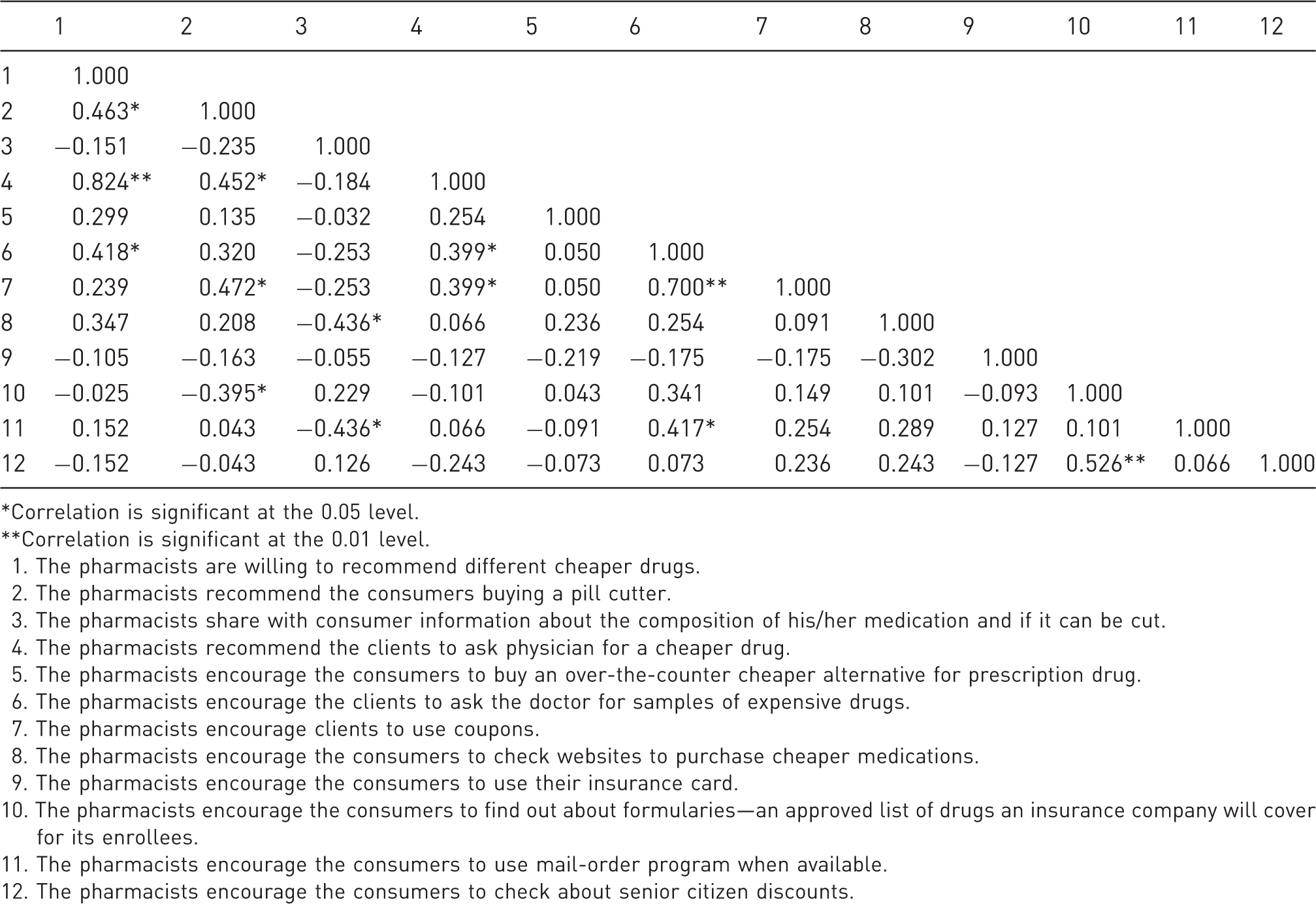
Correlation is significant at the 0.05 level.
Correlation is significant at the 0.01 level.
1. The pharmacists are willing to recommend different cheaper drugs.
2. The pharmacists recommend the consumers buying a pill cutter.
3. The pharmacists share with consumer information about the composition of his/her medication and if it can be cut.
4. The pharmacists recommend the clients to ask physician for a cheaper drug.
5. The pharmacists encourage the consumers to buy an over-the-counter cheaper alternative for prescription drug.
6. The pharmacists encourage the clients to ask the doctor for samples of expensive drugs.
7. The pharmacists encourage clients to use coupons.
8. The pharmacists encourage the consumers to check websites to purchase cheaper medications.
9. The pharmacists encourage the consumers to use their insurance card.
10. The pharmacists encourage the consumers to find out about formularies—an approved list of drugs an insurance company will cover for its enrollees.
11. The pharmacists encourage the consumers to use mail-order program when available.
12. The pharmacists encourage the consumers to check about senior citizen discounts.
Correlations among consumer-related variables
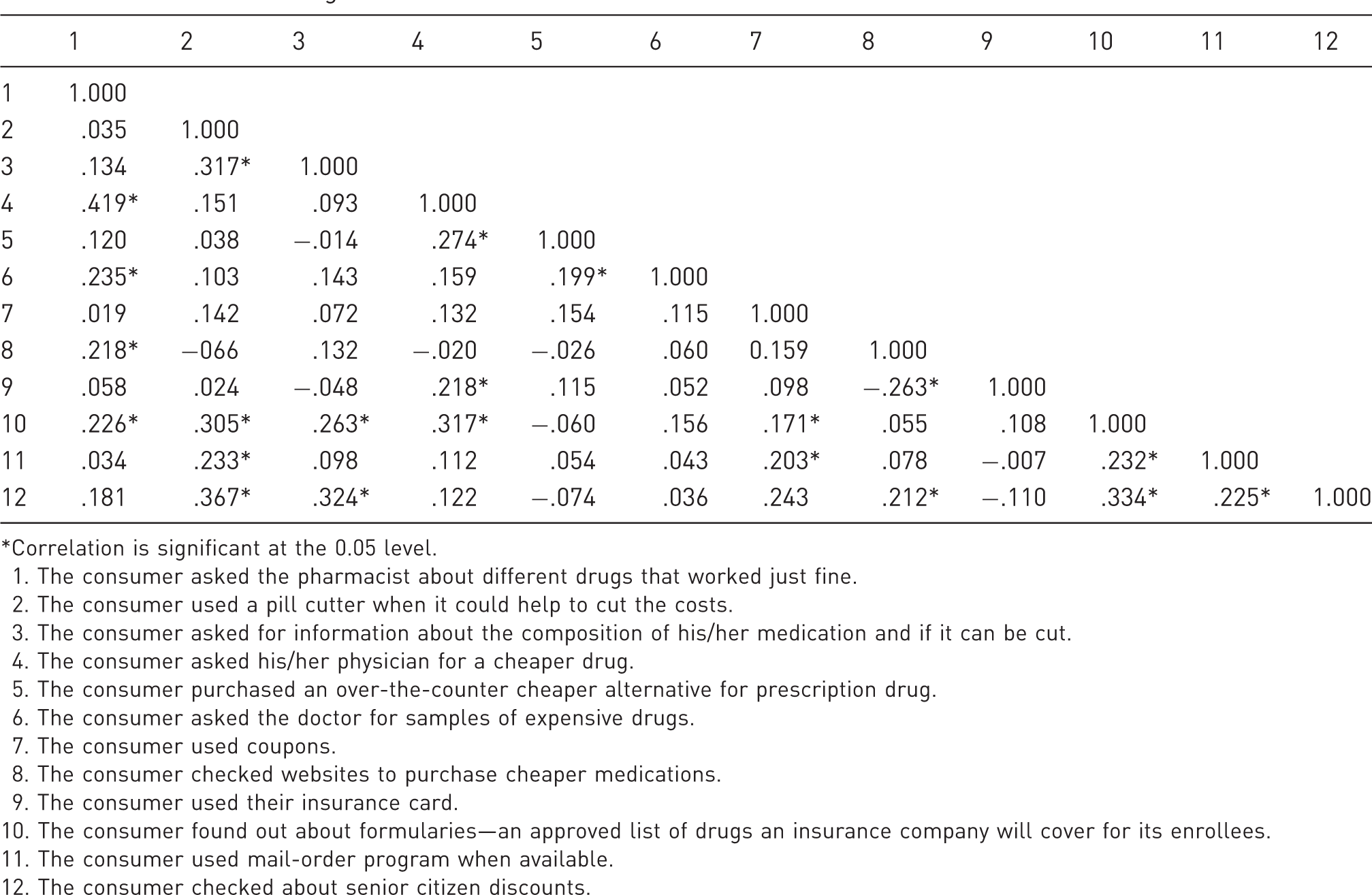
Correlation is significant at the 0.05 level.
1. The consumer asked the pharmacist about different drugs that worked just fine.
2. The consumer used a pill cutter when it could help to cut the costs.
3. The consumer asked for information about the composition of his/her medication and if it can be cut.
4. The consumer asked his/her physician for a cheaper drug.
5. The consumer purchased an over-the-counter cheaper alternative for prescription drug.
6. The consumer asked the doctor for samples of expensive drugs.
7. The consumer used coupons.
8. The consumer checked websites to purchase cheaper medications.
9. The consumer used their insurance card.
10. The consumer found out about formularies—an approved list of drugs an insurance company will cover for its enrollees.
11. The consumer used mail-order program when available.
12. The consumer checked about senior citizen discounts.
Analyses
The survey conducted in this study on cost reduction for drugs conducted among pharmacists and consumers indicates that most pharmacists are willing to help price-sensitive consumers reduce their costs in buying drugs. On the two-point scale, where 1 is “NO” and 2 is “YES,” consumers (mean = 1.44) and pharmacists (m = 1.93) have significant differences (mean differences in the independent two samples t-test) in their views asking and sharing information about the composition of his/her medication and if pills can be cut. The same situation is present in the case of the pharmacist recommending the consumer to ask the physician (m = 1.70). Consumers are more interested in asking physicians for less-expensive prescription drugs than pharmacists. However, the mean score of the pharmacists is really high indicating that they are interested that consumers asked physicians for lower priced drugs. Overall, pharmacists are less interested than consumers in obtaining prescriptions for less-expensive drugs.
There is a significant difference between the pharmacists (m = 1.44) and consumers (m = 1.93) on encouraging/buying an OTC alternative for prescription drugs in the case where it contributes to cost reduction. Pharmacists (m = 1.81) and consumers (m = 1.41) have significantly different views on the issue of finding information about formularies—an approved list of drugs an insurance company will cover for its enrollees. This indicates that consumers are not interested in getting into details of formularies or they have no time to do so.
Pharmacists (m = 1.70) and consumers (m = 1.37) have significantly different views on the encouragement/checking into senior citizen discounts. Among the interviewed consumers, the number of senior citizens was therefore small.
Correlations among the variables (Table 1) that reflect the survey questions conducted among pharmacists indicate the following. The pharmacists’ recommendation of a lower cost drug is positively correlated with his/her recommendation to (1) buy a pill cutter, when it could help to cut the costs; (2) ask physician for a less costly drug or generic, especially in patients who take high-price antibiotics, acid reflux medications, anti-inflammatory medications, and blood pressure medicine; and (3) ask physician for samples of expensive drugs, before spending excessively on a prescription, because the consumer does not know if it would be effective before he tries.
The pharmacist's recommendation of buying a pill cutter, when it could help cut the costs is positively correlated with his/her recommendation that consumer would: (1) ask physician for a cheaper drug or generic, especially in patients who take high-price antibiotics, acid reflux medications, anti-inflammatory medications, and blood pressure medicine and (2) use coupons. 23 The pharmacist's recommendation of buying a pill cutter, when it could help cut the costs is negatively correlated with his/her recommendation that consumer would find formularies.
The pharmacist's willingness to share with consumer information, about the composition of his/her medication, and if it can be cut is negatively correlated with the pharmacist's encouragement of the consumers to: (1) check web sites to purchase medications in cases when it can contribute significantly to cost reduction and (2) use mail-order programs when available.
The pharmacist's recommendation to ask physician for a cheaper drug or generic, especially in patients who take high-price antibiotics, acid reflux medications, anti-inflammatory medications, and blood pressure medicine is positively correlated with the pharmacist's encouragement of the consumer to (1) ask physician for samples of expensive drugs, before spending excessively on a prescription, because the consumer does not know would it work before he tries and (2) use coupons.
The pharmacist's recommendation to ask physician for samples of expensive drugs, before spending excessively on a prescription, because the consumer does not know if it would be effective is positively correlated with the pharmacist's encouragement of the consumer to use coupons. The pharmacist's encouragement of the consumers to find information about formularies is positively correlated with the pharmacist's encouragement of the consumers to check senior citizen and other discounts.
The correlations among the variables that reflect the survey questions conducted among consumers indicate the following (Table 2). The consumer's willingness to ask the pharmacist about different drugs that are just as effective and call the doctor and ask whether the cheaper drug could be prescribed instead is negatively correlated with the pharmacist's encouragement to use mail-order programs when available. The consumer's willingness to use a pill cutter when it could help to cut costs is positively correlated with his/her decision to: (1) use coupons when they purchase pharmaceutical products; (2) try to find out about formularies; and (3) use mail-order programs when available.
The consumer’s decision to buy an OTC alternative for a prescriptive drug in the case where it contributes to cost reduction is negatively correlated with his/her willingness to search and purchase drugs online when it contributes to reducing consumer costs. The consumer's willingness to use coupons is positively correlated with his/her decision to: (1) find out about formularies and (2) check senior citizen and other discounts. The consumer's decision to find out about formularies is positively correlated with his/her decision to investigate senior citizen and other discounts.
Pharmacists’ efforts to reduce consumers’ costs in purchasing drugs
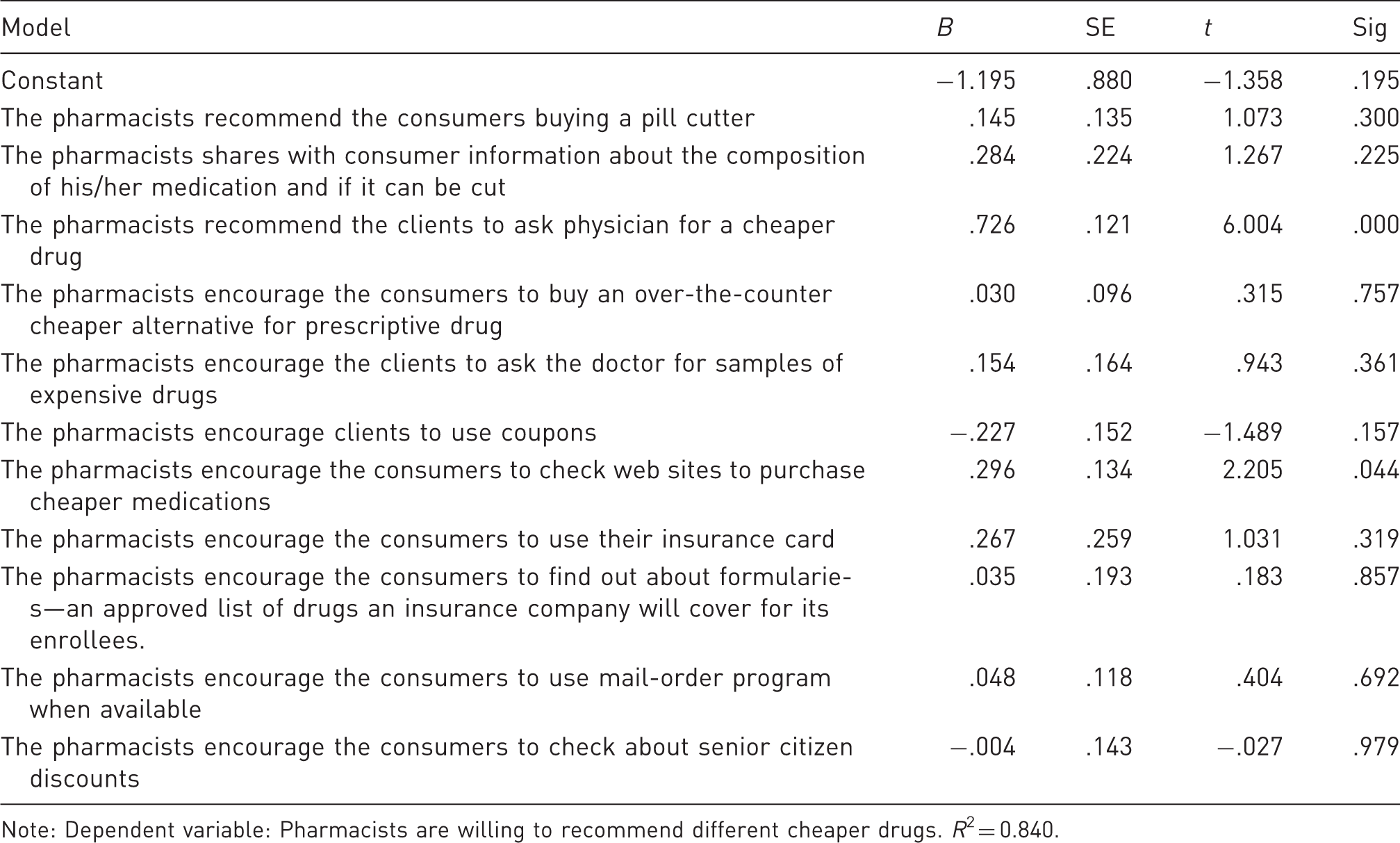
Note: Dependent variable: Pharmacists are willing to recommend different cheaper drugs. R2 = 0.840.
Regression for prediction indicates that only 12 (44%) out of 27 pharmacists will be willing to recommend different drugs that work as well and call a doctor to ask if the less costly drug could be prescribed.
Consumers’ efforts to reduce costs in purchasing drugs
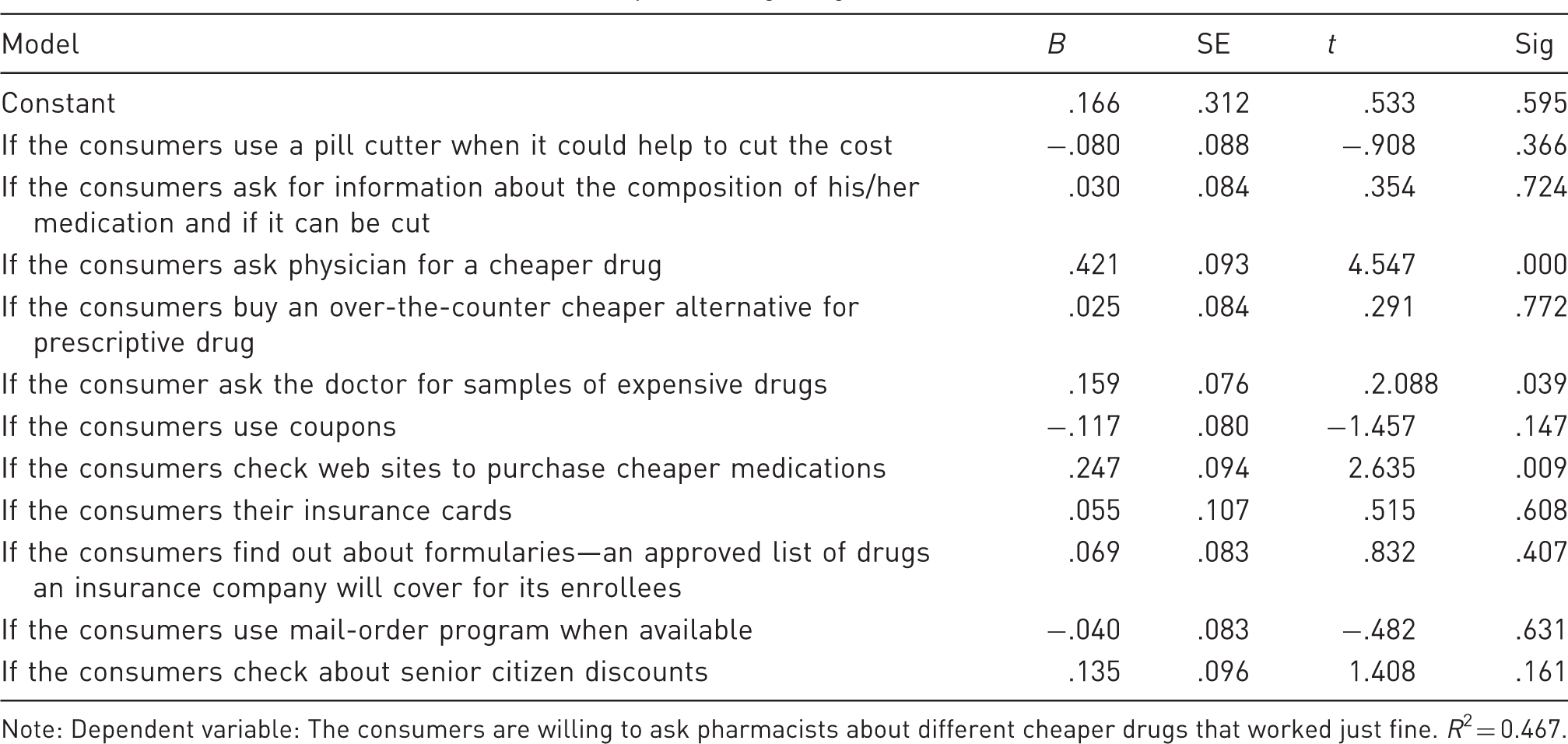
Note: Dependent variable: The consumers are willing to ask pharmacists about different cheaper drugs that worked just fine. R2 = 0.467.
Regression for prediction indicates that 62 (97%) respondents of 64 who indicated that they would not ask their pharmacist about more cost-effective drugs that worked effectively would change their mind in the future and ask pharmacists for cheaper drugs. Remaining 84 respondents still will ask their pharmacists for cheaper drugs and ask the pharmacists to call their physicians to prescribe cheaper drugs (mean = 1.59 on the two-point scale). Most consumers would ask their doctors to prescribe lower cost drugs and use insurance cards when they purchase drugs (mean = 1.74 on the two point scale). Least of these is that consumers like to use mail-order programs (mean = 1.30).
Between group differences (pharmacists and consumers’ opinion whether to see a doctor or not)
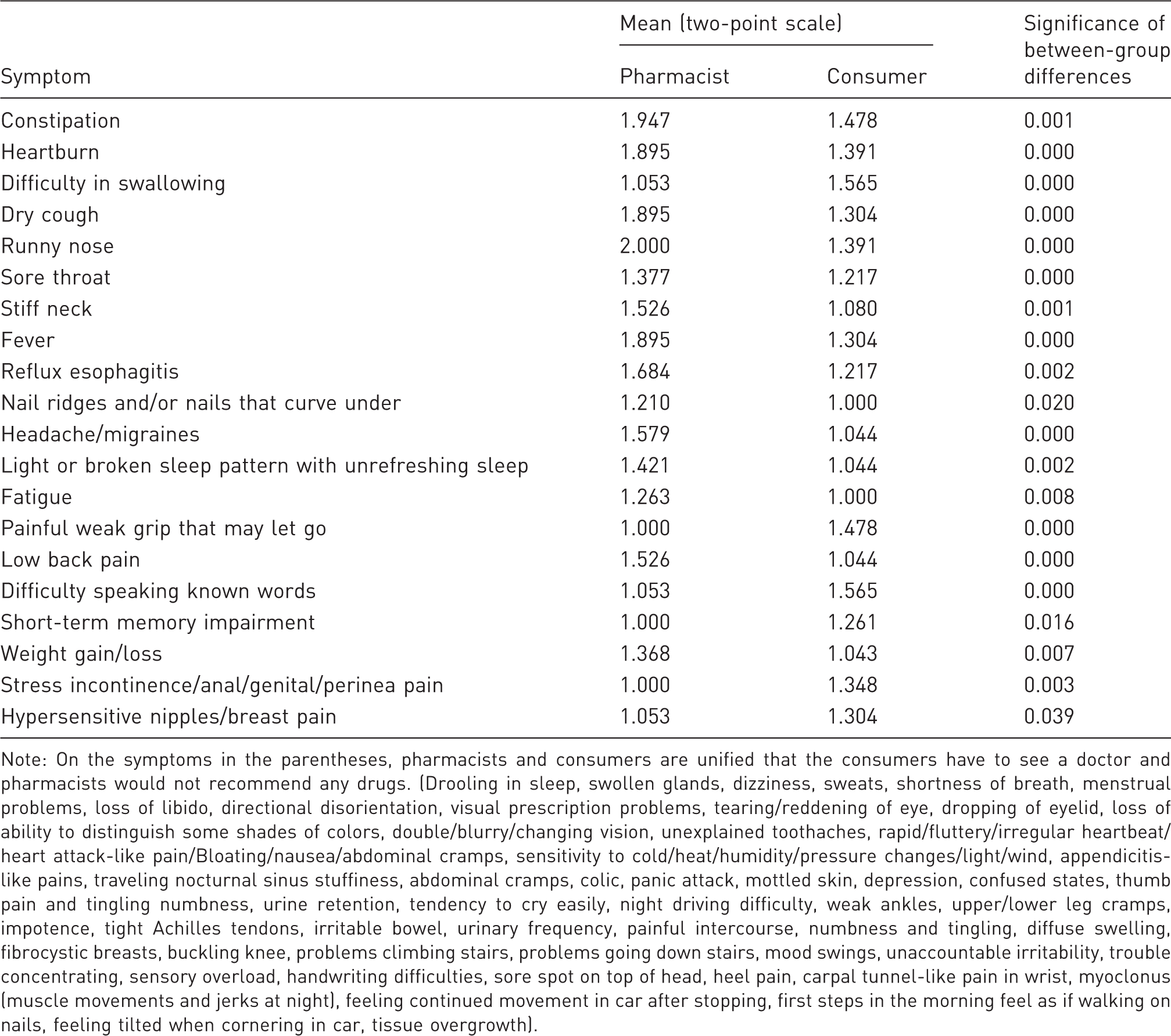
Note: On the symptoms in the parentheses, pharmacists and consumers are unified that the consumers have to see a doctor and pharmacists would not recommend any drugs. (Drooling in sleep, swollen glands, dizziness, sweats, shortness of breath, menstrual problems, loss of libido, directional disorientation, visual prescription problems, tearing/reddening of eye, dropping of eyelid, loss of ability to distinguish some shades of colors, double/blurry/changing vision, unexplained toothaches, rapid/fluttery/irregular heartbeat/heart attack-like pain/Bloating/nausea/abdominal cramps, sensitivity to cold/heat/humidity/pressure changes/light/wind, appendicitis-like pains, traveling nocturnal sinus stuffiness, abdominal cramps, colic, panic attack, mottled skin, depression, confused states, thumb pain and tingling numbness, urine retention, tendency to cry easily, night driving difficulty, weak ankles, upper/lower leg cramps, impotence, tight Achilles tendons, irritable bowel, urinary frequency, painful intercourse, numbness and tingling, diffuse swelling, fibrocystic breasts, buckling knee, problems climbing stairs, problems going down stairs, mood swings, unaccountable irritability, trouble concentrating, sensory overload, handwriting difficulties, sore spot on top of head, heel pain, carpal tunnel-like pain in wrist, myoclonus (muscle movements and jerks at night), feeling continued movement in car after stopping, first steps in the morning feel as if walking on nails, feeling tilted when cornering in car, tissue overgrowth).
That the symptoms of allergies, diarrhea, morning stiffness, muscle twitching, pressure of eyeglasses, or headbands are painful, pharmacists and consumers are unified that the consumers do not have to see a doctor. Most pharmacists recommend avoiding a doctor concerning only 18 symptoms out of 78. However, most consumers will avoid a doctor because of 10 symptoms out of the 78.
Results
The main concern of price-sensitive consumers is to purchase low-cost prescription and OTC drugs. Therefore, they ask pharmacists to help in making right choices in purchasing and using drugs. Overall, pharmacists are helpful so consumers do not make mistakes in their intentions to reduce costs. In the vast majority of cases, consumers follow pharmacists' recommendations if they help reduce costs. Some consumers are proactive and prior to coming to the pharmacy, they ask their doctors about all possible options that reduce the cost of drugs.
When pharmacists encourage their customers to ask physicians for less-expensive drugs, they are indicating their willingness and concern for their customers and a pro consumer outlook. The correlation between the pharmacist's encouragement and pharmacist's willingness to help is very high at 0.824 at p < 0.01 (Table 1) and the coefficient of the variable “pharmacist's encouragement” is significant at p < 0.01 and R2 = 0.840 (Table 3). Pharmacists' encouragement of clients to check web sites is also evidence of the willingness of the pharmacists to help consumers in finding cheaper drugs. Hypothesis 2 is also supported at p < 0.05 and R2 = 0.840 (Table 3).
It is evident that consumers that are seeking low-cost drugs consult pharmacists (m = 1.6 on the two-point scale). This data supports Hypothesis 3.
Consumers' willingness to ask pharmacists about lower priced drugs is positively and significantly (p < 0.05) correlated (Table 2) with their other actions (Table 1) such as asking a physician for a cheaper drug and samples of expensive drugs, checking web sites to purchase cheaper medications, and asking about formularies—an approved list of drugs an insurance company will cover for its enrollees. This data supports Hypothesis 4a at p < 0.05; R2 = 0.467 (Table 4). The pharmacist's recommendation is positively related to the consumer's decisions to ask the physician for a cheaper drug and samples of expensive drugs. This data supports Hypotheses 4b and 4c at p < 0.001 and p < 0.05, respectively (Table 4).
The pharmacist's recommendation of a different prescription drug is positively and significantly (p < 0.05) correlated with the pharmacist's recommendation to buy a pill cutter supporting Hypothesis 5a (Table 1). The consumers' decision to use a pill cutter when it could help to cut costs is positively related (p < 0.05) to finding out about formularies—an approved list of drugs an insurance company will cover for enrollees supporting Hypothesis 5b (Table 2). The consumers' willingness to use a pill cutter when it could help to cut costs is positively correlated to his/her decision to use coupons. However, this correlation is insignificant at p > 0.01. Therefore Hypothesis 5c is not supported. Hypothesis 5d stating that the consumers' willingness to use a pill cutter when it could help to cut costs is positively related to his/her decision to use mail-order programs when available is supported at p < 0.05 (Table 2).
Hypothesis 6a is supported at p < 0.05 because consumers use mail-order programs when they are available (m = 1.23). Hypothesis 6b is supported because consumers (25 to 2) almost always buy OTC, cheaper alternatives (m = 1.69). Hypothesis 6c is also supported because most pharmacists (21 to 6) help consumers find methods to reduce their costs in purchasing drugs.
Concerning drugs that can be effective in treating common illnesses, pharmacists and consumers have significant differences in their recommendations/decisions in purchasing drugs. Hypothesis 7 is supported at p < 0.01–0.05 for 20 symptoms (Table 5).
Discussion
Currently, the US health system, which is market-based, is changing. 24 Unfortunately, this change would not reduce growing costs of drugs because the latter do not depend on the drug companies, insurance agencies, and pharmacies only. The high costs depend on many other material factors: energy, production infrastructure, distribution, and so forth. Meanwhile, consumers are becoming more and more price sensitive because of diminishing income and rising costs of drugs. The analysis indicates that consumers seek low-prescription and OTC drugs or alternatives that do not pressure their budgets and yet effectively treat their diseases. 25 Pharmacists trying to help consumers, recommend the use of pill cutters, ask physicians to prescribe lower-cost drugs and to give samples of expensive drugs. Consumers pressure their doctors for cheaper prescription drugs and samples of expensive drugs. Further, they check web sites to purchase cheaper drugs and are willing to investigate formularies.
Pharmacists' recommendations to use pill cutters are negatively related to their willingness to encourage the consumers to find out about formularies. They recommend using pill cutters in combination with coupons as well as asking doctors for cheaper drugs. Pharmacists were unlikely to share with consumers’ information about the composition of his/her medication if they recommend checking web sites to purchase cheaper medication and using mail-order programs. Pharmacists recommend asking for samples of expensive drugs and at the same time encourage using coupons and mail-order programs. When pharmacists recommend finding out about formularies, they also encourage checking senior citizen discounts.
Do consumers follow these recommendations or act differently? They act slightly differently. While consumers ask the pharmacist about different effective drugs, they also asked doctors for less-expensive prescriptions drugs, samples of expensive prescription drugs. Consumers also checked web sites to purchase cheaper drugs and found out about formularies. While consumers used pill cutters, they also find out about formularies, used mail-order programs, and checked into senior discounts. When consumers found out about formularies, they also checked senior discounts. While consumers asked the physician for a less costly drug, they also purchased an OTC alternative for a prescription drug, used their insurance cards, and found out about formularies.
When consumers decided to use coupons, they also found out about formularies and used mail-order programs. While consumers check web sites to purchase inexpensive drugs, they were not able to use their insurance cards. However, many used mail-order programs. When consumers used mail-order programs, they used senior citizen discounts.
Overall, consumers made proactive efforts to reduce their costs following doctors' and pharmacists' recommendations as well as acting on their own. However, pharmacists and consumers have significantly different opinion about seeing a doctor if consumers have certain symptoms. If patients have constipation, heartburn, dry cough, runny nose, sore throat, stiff neck, fever, reflux esophagitis, nail ridges and/or nails that curve under, headache/migraines, light or broken sleep, pattern with poor sleep, fatigue, low back pain, and weight loss/gain, pharmacists recommend they see a doctor while consumers disagree regarding the above symptoms. If patients have difficulty of swallowing, painful weak grip that may let go, difficulty in speaking known words, short-term memory impairment, stress incontinence/and/genital/perinea pain, as well as hypersensitive nipples/breast pain, consumers are willing to see a doctor and pharmacists would not strongly recommend doing so.
Limitations
The present study involves sufficient information from pharmacists and consumers to make solid research conclusions. However, the database could be more. It was derived from a single region of the Midwest of the United States. The scope of the research could be wider. Additionally, the study relies on one scale to test the hypotheses. In the future, a new scale determining pharmacists' helpfulness could be developed or the existing scale extended. There are no control variables to determine gender, race, and age contributions to respondent perceptions.
Applications of the research
Consumers are willing to rely on pharmacists' recommendations. Pharmacists can form a list of drugs that are marketable by the pharmaceutical industry to offset some expensive drugs that are not cost-effective for certain market segments and customer groups. To do so, pharmacists have to communicate well with consumers. Drug marketers need to develop a stronger relationship with pharmacists.
The theoretical basis of the present study regarding dimensions of price-sensitive consumer-focused marketing of pharmaceutical should be replicated and developed further. There are many ways to study customer needs and satisfaction. Specifically, it is important not only to investigate what customers want but also how they are satisfied with and guided by the services of pharmacists and drug stores and pharmaceutical products.
Future research should be done to incorporate the concept of “The Medical Home” 26 and involving world-wide regions. Physicians could be involved in the process and larger numbers of diseases could be analyzed. New scales can be developed, tested for reliability, construct validity, and used to do cost-benefit analysis for pharmaceutical companies, pharmacies, physicians, and most importantly, consumers. It is evident that health care costs are climbing because of increasing drug prices. Therefore, this is a vital marketing and economic topic for the present time.
Conclusion
To successfully market pharmaceutical products, pharmacies and physicians who prescribe drugs have to focus on customer needs. 27 Price-sensitive consumers always seek ways to purchase low-cost drugs that work effectively. Knowing this fact helps pharmaceutical companies produce appropriate drugs and marketing stratagems. The authors empirically tested the impact of the pharmacists' actions regarding their willingness to recommend low-cost alternative drugs. They also tested the effect of consumers' actions on their search for low-cost drugs. Results indicate that consumers ask pharmacists and doctors for less-expensive drugs and trust and follow their recommendations in choosing alternative drugs.
Consumers more rely on physicians' decisions than pharmacists' recommendations and their own decisions in choosing prescription drugs and rely more on pharmacists' recommendations in purchasing OTC drugs. Research and pharmacies 28 should do more in order to investigate this serious issue on the national level to determine customer groups and market segments that have demand for different types of drugs in terms of effectiveness and cost. 29
Footnotes
Funding
This research received no specific grant from any funding agency in the public, commercial, or not-for-profit sectors.
Conflict of Interest
The authors declare that they do not have any conflicts of interest.
Author's Biographies
James Ricks, Professor: PhD from the University of Texas Austin, DBA from Southern Illinois University, MS from the Steven F. Austin State University, and BS from the University of Cincinnati. He does research in the area of pharmaceutical drug markets, consumer behavior, marketing management, information technologies, distribution, and sales. He teaches undergraduate and graduate courses: Distribution Management, Professional Selling, Principles of Marketing, Business Policy and Strategy, and Marketing Management.
Ismatilla Mardanov, Associate Professor: PhD from Mississippi State University, MS and BS from Moscow State University. He does research in pharmaceutical drug marketing, leader-member exchange, workplace bullying, and international business. He teaches undergraduate and graduate courses: Strategic Decision Making, Business Policy and Strategy, Organizational Theory, International Management, Principles of Management, Human Resource Management, and Management Systems.