







Abstract
Due to their transformative potential, student-teacher partnerships offer exceptional opportunities for student participation at school. However, partnering is also found to be troublesome as participants face considerable challenges associated with change processes in complex and hegemonic organizations such as schools. With this study, we aim to understand how students and teachers cope with these challenges by mapping the micropolitical strategies they adopt. Five teachers and 14 students from three cases were interviewed about their experiences with partnering. Three domains were identified in which respondents, based on various interests, adopt more or less constructive micropolitical strategies: (1) common goals that are relevant to both participants and the school, (2) responsibilities to achieve these goals, and (3) emotions. The paper concludes by raising implications for schools, for example, the need for a school-wide approach to clearly position and support future partnership initiatives, and for micropolitical literacy within the partnership to articulate and align unspoken expectations.
Keywords
Introduction
Preparing students for civic participation has invariably been a core responsibility of education. An important means of achieving this is through students’ active participation in school life. Rooted in the democratic, transformative narrative of student voice, student-teacher partnerships are advanced as an interesting means of participation (Fielding, 2011). They have been studied in a variety of contexts, both outside (e.g. in higher education or in community-based youth organizations) and in compulsory education, relying on students’ voluntary participation or organized as classroom activities, and with different loci of student influences. Despite the differences, student-teacher partnerships share characteristics that Cook-Sather define as ‘collaborative, reciprocal processes through which all participants have the opportunity to contribute equally, although not necessarily in the same ways, to curricular or pedagogical conceptualization, decision-making, implementation, investigation, or analysis’ (Cook-Sather, 2014: 6–7). In student-teacher partnerships, the locus of student influence moves from the periphery to the core of activities and developments in a school (Nelson, 2022). They therefore carry the transformative potential to both empower students and improve the educational context. Nevertheless, research has revealed that the transformative potential is not automatically reflected in educational practice (Nelson, 2022). An explanation is that partnering itself, which entails profound and multiple processes of change, might elicit troublesome emotional experiences for both students and teachers, to which they respond by employing strategies that reinforce or counteract these emotions (Black and Mayes, 2020; Leach and Crisp, 2016; Mitra and Gross, 2009; Nelson, 2022). In this study, we seek to gain in-depth insight into the origin and nature of the strategies that participants adopt when partnering in the context of secondary school classroom activities (Nelson, 2022) and in which teachers take a participating role (Fielding, 2011) as well as a facilitative one (e.g. Ozer, 2017; Lac et al., 2022; York and Kirshner, 2015).
Theoretical perspectives
Student-teacher partnerships
In recent decades, considerable research attention has been paid to student-teacher partnerships as a means of increasing students’ influence in educational practice and development (e.g. Bovill et al., 2009; Cook-Sather et al., 2014; Fielding, 2011; Matthews et al., 2018; Mitra, 2018). A multitude of studies on student-teacher partnerships denote their potential positive effects, both in terms of student empowerment and improvement of the educational context. Most notably, the partnerships provide unique opportunities to foster students’ personal and collective identities, to bring more trust and respect into the relationships between students and teachers, to develop a shared responsibility for learning and teaching, to strengthen students’ agency with the school community, and to increase students’ empowerment and their influence on school practice (Camino, 2000; Cook-Sather et al., 2014; Deeley and Bovill, 2017; Mitra, 2018; Walsh et al., 2019). To attain this transformative potential, the design of student-teacher partnerships must meet four characteristics: (1) the dialogic nature, emphasizing that the relation must be free from domination, strengthened by training for all participants to gain insight into power processes and to become competent in resisting them, (2) the intergenerational design, with adults providing opportunities for their students to participate, (3) the collective and inclusive school culture, capturing the views of all participants in the partnership, supported by school leaders, and (4) the transgressive goal, for students learning to resist, escape from, or transform systems that foster inequality (Pearce and Wood, 2019). Both Ahmadi (2023) and Bovill (2014) advocated a gradual shift, in which these cultural changes and responsibilities evolve in small steps.
The troublesome nature of student-teacher partnerships
Apart from its transformative potential, partnering is found to be troublesome in nature. The issues are rooted in the processes of change that accompany partnering, disrupting the established situation, and consequently carrying considerable challenges (e.g. Ahmadi, 2023; Bergmark and Westman, 2018; Bovill, 2014; Matthews et al., 2018; McVeety and Farren, 2020; Nelson, 2022). Mitra (2018: 479) gets to the heart of the problem when she states that partnerships are about the ‘restructuring of relationships, pushing against the expected power dynamics, creating counter-normative ways of acting between young people and adults’. Depending on the participants and the school context, disruptions are experienced as more or less productive: constructive or obstructive. Constructive disruptions open opportunities for growth or solutions to problems. Obstructive disruptions manifest as fear or resistance, hindering the underlying processes of change (Cook-Sather, 2014; Mitra and Gross, 2009; Nelson, 2015).
Three main concerns accompany changing dynamics (Nelson, 2015). The first focuses on the emotional experiences of teachers and students, associated with the practice of partnering (Ahmadi, 2023; Black and Mayes, 2020; Mitra and Gross, 2009). While partnering, shifts in power relations prompt participants to redefine their role or identity in the collaboration, provoking emotions (Black and Mayes, 2020; Cook-Sather, 2014; Cook-Sather and Alter, 2011). For example, due to the inconsistency of what is usually expected of them, students may struggle to suddenly be taken seriously during the partnership. Black and Mayes (2020) added that the emotions associated with partnering are complex and quasi-intangible due to the underlying unspoken beliefs of the participants. Second, scholars warn against partnerships in which students are not authentic participants in a transformative process but rather symbols for the school. For example, Lodge (2005: 133) observed that some teachers ‘manipulate children’s voices to carry their own message and deny or disguise their own involvement’. Tokenism occurs when expectations regarding new roles or power relationships are inconsistently or unclearly defined (Mitra, 2018). Tokenistic partnerships, while well-intentioned, risk consolidating existing inequalities rather than overcoming them and thereby generate counterproductive effects (Matthews et al., 2018; Mitra and Gross, 2009). Students may feel disempowered or incompetent (Charteris and Smardon, 2019), and teachers might hold back (Mitra, 2018). The last concern involves exclusion. Although the empowering ideals of student-teacher partnerships assume that all students should have the opportunity to participate, Keddie (2015: 230) stated that in practice not all students ‘buy into the invitation to participate and speak about schooling issues and many do not possess the skills or language to articulate their views in ways that can be heard in schools’. It has proven especially challenging to include students whose perspectives are still unknown, especially when they belong to a minority, are difficult to reach, are silenced inside and outside the school, or represent dissident voices (Cook-Sather, 2014; Taylor and Robinson, 2009). Pearce and Wood (2019) added that even when students are members of a partnership, they cannot automatically be considered as active partners as they might use their agency or power either to challenge the current situation and bring about the improvement of school practices, or to regulate their own behavior in such a way that they adapt to the existing situation.
While a significant number of studies draw attention to the above concerns, there is still a lack of understanding of how individual participants cope with them (Ahmadi, 2023; Black and Mayes, 2020; Leach and Crisp, 2016; Nelson, 2022). Both Santos (2012) and Webb (2008) envisioned micropolitical analysis as a means of understanding the underlying, often panoptic, and complex dynamics of partnering.
Micropolitical strategies in student-teacher partnerships
Micropolitics are understood as ‘strategies by which individuals and groups in organizational contexts seek to use their resources of power and influence to further their interests’ (Hoyle, 1982: 88). Micropolitical processes occur, often implicitly, in any form of collaboration in the school organization (Eilertsen et al., 2008; Kelchtermans and Ballet, 2002a) and are, thus, to be expected in student-teacher partnerships. Micropolitics are found to be responsible for both stability and change in schools. This is explained by the fact that school actors hold ideas about desirable or necessary conditions for achieving educational outcomes or experiencing satisfaction. These conditions reflect the actors’ interests. When these are put under pressure, due to processes of change, the actors will take micropolitical actions aimed at securing or restoring the situation (Kelchtermans and Ballet, 2002a). Initiatives for educational change must thus compete with these internal dynamics among participants that either seek to maintain the status quo by adopting reactive strategies or to promote change through proactive strategies (Ball, 2012; Björk and Blase, 2009). Whether or not the transformative intent of student-teacher partnerships is achieved (Matthews et al., 2018; Nelson, 2022) can thus be explained from a micropolitical perspective. This perspective focuses primarily on the different interests of the participants (Ball, 2012; Kelchtermans and Ballet, 2002a) and examines how these influence them in (1) pursuing retention or change and (2) engaging in policy conflicts (Blase and Blase, 2002). However, research on relational dynamics in student-teacher partnerships has only recently been conducted with a micropolitical lens.
Examples are the studies by Nelson (2022) and Welton et al. (2017) that examined, respectively, what prevents teachers and school leaders from integrating students’ recommendations into their classroom and school practices. Recurring issues are conflicting loyalties to different partners, expectations regarding adult authority or control, and vulnerability of students when partnering with adults. Other critical levers for the acceptance of students’ voices include the positioning of students as capable participants in the partnership (York and Kirshner, 2015) and teachers’ recognition of and responses to students’ (high) emotions (Biddle and Hufnagel, 2019). Furthermore, Lac et al. (2022) found that student-teacher partnerships, due to underlying (hegemonic) tensions, impose an emotional toll on participants. They conclude that adults should act primarily as students’ allies, offering affective care and acting ‘as the buffers, the barriers, and the protectors’ (p. 161).
Objectives of the present study
The above review of literature indicates that numerous partnering initiatives fail in their transformative intentions (Pearce and Wood, 2019). This is primarily explained by the participants’ reactions to the emotional experiences associated with partnering. It has, therefore, been suggested that the micropolitical strategies within student-teacher partnerships could be explored to reveal the underlying, invisible dynamics (Nelson, 2022). This study builds on this suggestion by retrospectively surveying participants of three recent student-teacher partnership interventions in the classroom context of secondary education. The research questions in this study are twofold:
What proactive and reactive micropolitical strategies do students and teachers adopt in student-teacher partnerships?
Why and under what circumstances do participants adopt micropolitical strategies that support or hamper student-teacher partnerships?
Method
Research design
This study was established as a multiple case study with an explanatory focus (Yin, 2018), allowing for a deep level of understanding of how the real-life event of partnering affects participants and their school environment (Patnaik and Pandey, 2019; Yin, 2018). Comparison of multiple cases reveals which findings occur consistently across all cases as patterns, and which are idiosyncratic in nature (Eisenhardt and Graebner, 2007).
Three secondary schools in Brussels were selected as a case on the basis of their diverse school characteristics in terms of curricula, school size, and organizational authority, as a means of exploring potentially distinctive influences for partnership in urban schools (Eisenhardt and Graebner, 2007). Table 1 provides an overview of the school characteristics for each case.
School characteristics.
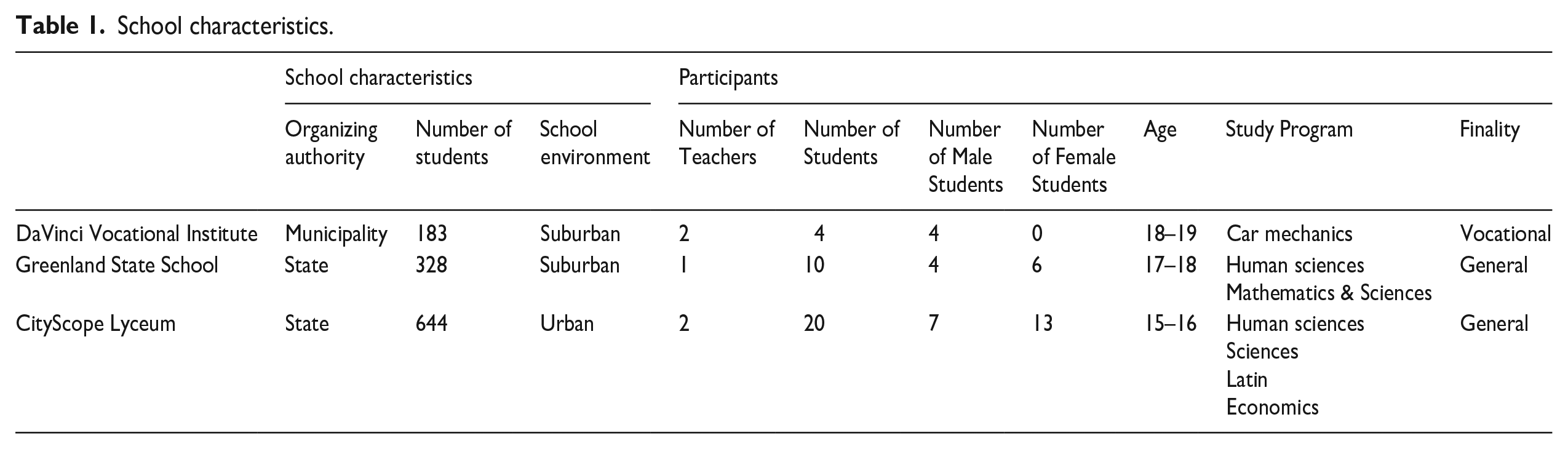
In each case an intervention program of student-teacher partnerships was conducted, incorporating wherever possible Pearce and Wood’s (2019) conditions (discussed above). During at least seven team meetings, spanning a period of one or two semesters in the school year 2020–2021, a group of students and teachers intended to collaborate as equal partners (intergenerational and dialogic design) to examine a school-related problem relevant to the participants and the school community (collective and inclusive school culture), to improve school practice on this issue (transgressive goal) (Mitra, 2018). Despite the intent, in practice the cases did not always meet all these conditions. Furthermore, in each case the intervention was integrated in the students’ curriculum and associated with educational goals of inquiry and critical thinking. All teachers were invited to a 4-day flanking training, supporting just-in-time the collaborative inquiry process. However, no teacher participated due to no experienced need.
DaVinci Vocational Institute: The purpose of the collaborative inquiry, introduced by the school principal, was to gain insight into the teachers’ and students’ experiences with blended learning and to derive conditions for further implementation. The process resulted in a poster with conditions for implementation of blended learning, which was presented and discussed with the school principal.
Greenland State School: This team chose, by mutual agreement, to collaborate on the transition from secondary to higher education. The team analyzed what information students in the transition phase need to make deliberate choices for higher education. The project was completed with an interactive seminar for all graduating students of the general programs of the school.
CityScope Lyceum: The CityScope team worked, as suggested by the teachers in the team, on students’ well-being at school. They mapped the situation at school regarding student workload, and formulated actions for improvement. These results were presented to and discussed with the research team, the school principal, and parents.
Participants
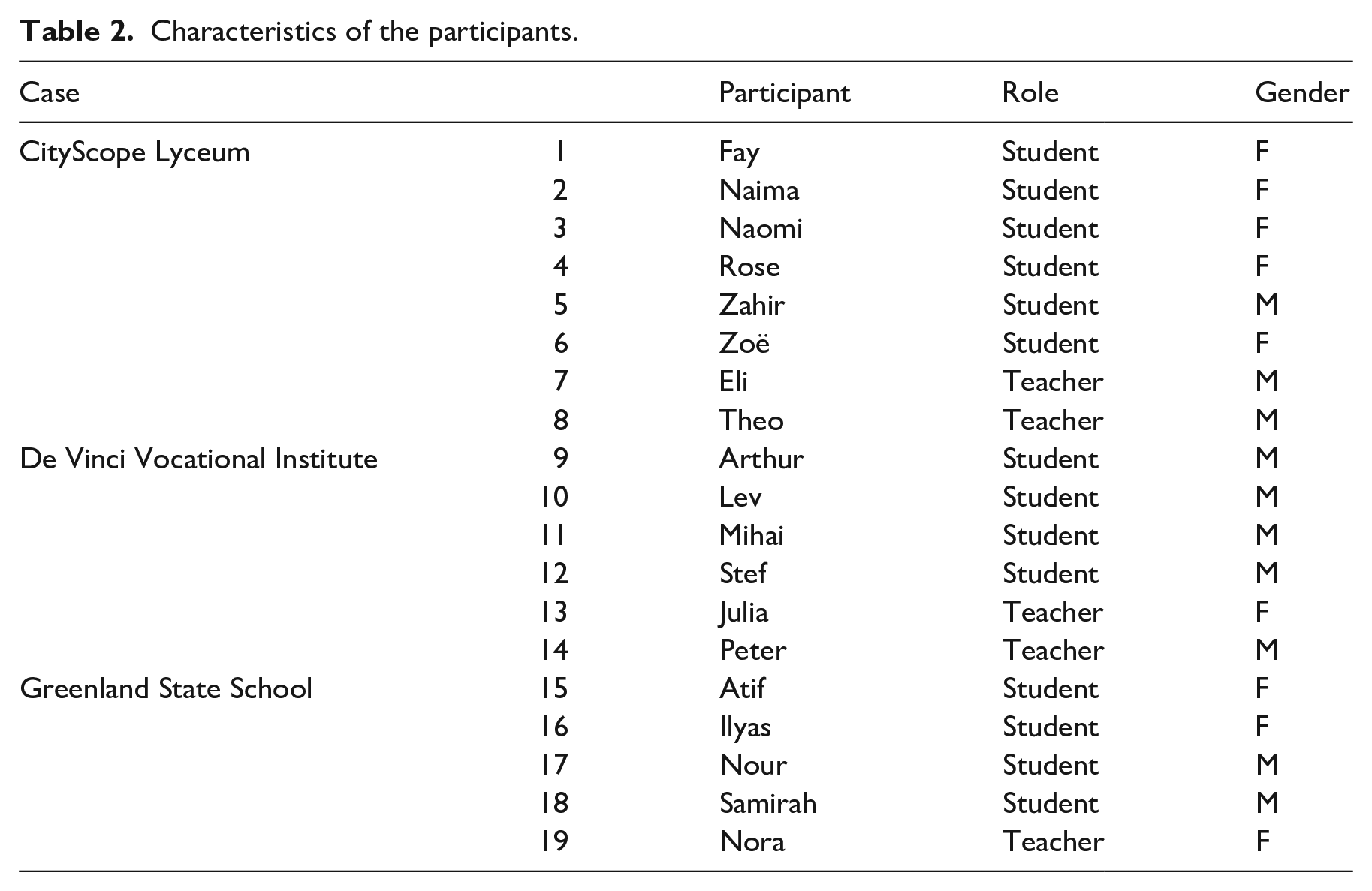
The participants of this study were 14 students (aged 16–19) and five teachers, from one of the three cases. To obtain the broadest possible coverage of micropolitical strategies used, students with diverse experiences of partnering were selected from each case as participants of this study. For this purpose, after each meeting, students were asked to rate their perceived opportunities for participation against 15 items, derived from theoretical conceptualizations of participatory learning environments (Broom, 2017; Carr and Thésée, 2017; Shyman, 2011). Subsequently, the ratings were used to map each individual student’s participatory experience throughout the intervention. At least four students with distinct profiles were selected per case, of generally high or low, varying, increasing, or decreasing participation opportunities (Figure 1). Additionally, all the teachers involved participated in the study. Table 2 presents an overview of the participants. To all cases and participants, a pseudonym was assigned.
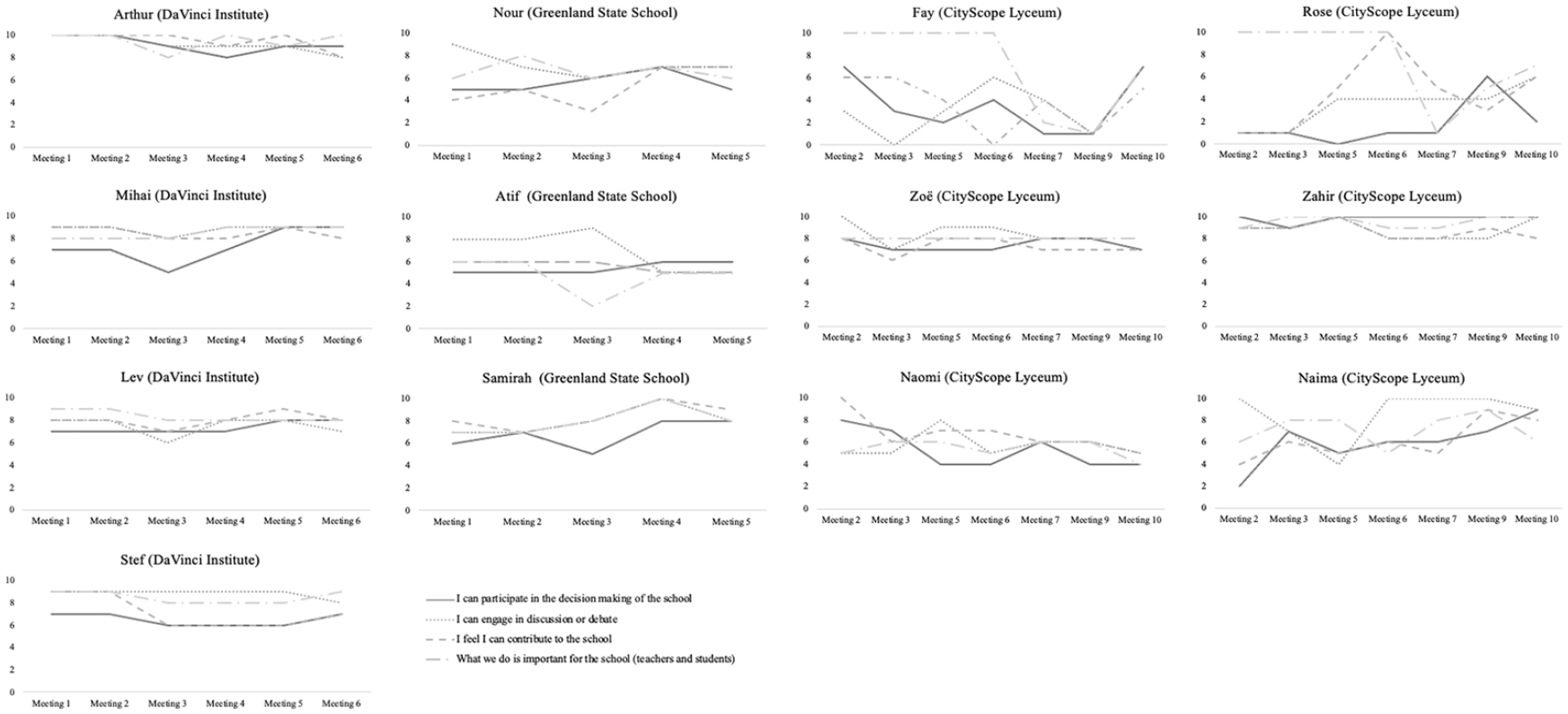
Individual scores of from the students on a selection of items, indicating the perceived opportunities for participation.
Characteristics of the participants.
Data collection
In this study, data from students and teachers were collected through narrative interviews (Schütze, 1983). Respondents are invited to narrate their experiences gained during the experimental period (Nohl, 2010). Typically, the interviewer adopts a listening stance to encourage respondents to construct a coherent and concise storyline with turning points, important characters, and relevant context information (Jovchelovitch and Bauer, 2000; Schütze, 1983).
The narrative interviews were conducted by the first author, following four phases (Jovchelovitch and Bauer, 2000): (1) initiation, when the researcher explained the focus of the interview, (2) narration, when the respondents described their experiences without being interrupted, (3) questioning, when the researcher addressed additional questions, as closely as possible to the narratives and vocabulary used by the participant, and (4) conclusion, when no new information emerged, the researcher and respondent concluded with an informal talk. All interviews were conducted shortly after the last meeting of the research teams at the schools, in the period between February and May 2021. Student narratives spanned 20–40 minutes. Interviews with teachers lasted between 35 and 75 minutes. The dataset, thus, consists of 19 audio-recorded interviews with students (n = 14) and teachers (n = 5) about their experiences with the student-teacher partnership.
Data analysis
The interviews were transcribed verbatim. A software supported (MAXQDA2020) two-phased thematic analysis of the interviews followed. In the first phase of within-case analysis (Miles et al., 2014), teacher and student interviews within the same case served as the unit of analysis. For each unit, all relevant text fragments in the interviews were coded deductively according to the basic components of the micropolitical perspective: interests and strategies (Hoyle, 1982). Then, an inductive, thematic analysis based on Braun and Clarke’s (2006) framework was conducted. Within each component (code), the text fragments were given descriptive sub-codes, expressing the essence of the extract. After analyzing all the interviews, overlapping or related sub-codes were detected and merged into themes, or eliminated. Together, the three themes and 10 sub-codes constituted the codebook. On this basis, a micropolitical scheme was elaborated for each case visualizing the meaning of and relationships among the interest, and the reactive and proactive use of strategies, both for students and teachers. A summary of this within-case analysis is presented in Supplemental Appendix 1. In the second phase of cross-case analysis, the schemes of the three cases were iteratively compared for similarities and differences in order to reveal patterns and determine context factors (Miles et al., 2014).
Results
From the cross-case analysis, three recurring themes emerged: (1) common goals, (2) responsibilities, and (3) emotions. All themes appear in each of the cases; usually multiple themes are addressed in the same interview. In the results section below, the interests and proactive strategies are presented in detail, illustrated with the typical experiences, thoughts, and reflections of individual respondents. The interests and proactive strategies are discussed across the cases. In order to gain in-depth insight into the circumstances under which they are deployed, the reactive strategies are presented in detail in the context of one typical case.
Common goals
Personal and collective interests
A core activity in partnering is collaboratively moving toward relevant and common goals. Both students and teachers appeared willing to engage when they presume or perceive that the goals of the partnership align with their personal needs or with those of the school. Participants mentioned a wide range of personal needs: to meet educational objectives, to solve problems in the learning environment, to strengthen professional identity, or to contribute to the collective interest of the school. Along with the individual assessment of the relevance of the goals, the importance of commonality emerges. Participants pointed out that various stakeholders preferably pursue the same objectives, thereby ensuring that the efforts made yield a return for all. The more aligned personal and collective goals are, the more likely participants are to support the partnership.
Strategies of listening and discussing
Respondents reported that listening and speaking to each other in an open way, prompted by curiosity about the perspectives of the other actors in the partnership, enables the development of common goals. However, listening and speaking will not suffice to achieve common goals, as they do not automatically unite the different perspectives into (1) acceptance of dissent, (2) a shared opinion or understanding, or (3) a joint action. This, participants agreed, requires discussion or dialog. Dialogs that support the democratic goals of partnering invite participants to share their individual experiences and opinions, as well as to reflectively compare them with other participants’ perspectives (Cook-Sather, 2007; Mitra, 2006). As this may cause friction, it deters participants from unnecessary engagement in dialogs, especially when they do not (yet) feel secure in the team or about the topic. In the three cases, dialogs occurred only as a matter of necessity when the differences in perspectives hindered the achievement of the partnership’s ambitions. In Greenland State School, for example, the participants engaged in extensive and frank discussions when they disagreed on the proposed theme at the beginning of the project. Samirah (S) recalled, ‘We discussed how to find out what was possible to change in our school and what was not. We all took the opportunity to give our opinion’. These dialogical interactions drew on participants’ previous experiences with participatory projects, which then, according to the participants, did not lead to the intended change due to a lack of support from the headmaster. They culminated in fundamental questions at the systemic level (Mitra, 2006), that is, distrust in the support for the partnership at school level. Although this hegemonic issue underlay most of the prior student contributions, it was only after its articulation and explanation that these arguments were no longer refuted by the adults in the team. Samirah (S) confirmed that it was only at this critical moment that ‘a consensus could be reached’, that is, a new theme supported by all team members. In this case, the students’ voices were not heard until the discrepancy between perspectives appeared substantial, the topic of discussion was critical to the partnership, and students felt secure enough to reveal their genuine concerns.
Strategy of pretending (DaVinci Vocational Institute)
The vocational teacher Peter (T) was designated by the school principal as a member of the DaVinci team. From the outset of the intervention, he disagreed on the importance of the topic of blended learning, as he did not want to teach online classes, nor did he believe his students were capable of attending them successfully. Being unable to reconcile the project goals with his own interests or beliefs, he searched for ways to shape his forced participation while protecting his professional identity (Black and Mayes, 2020). This resulted in him supporting the partnership benevolently on a logistical level but withdrawing from any substantive activity. He said, ‘I added a few words, but I mainly made my class and hours available for the project’, and accordingly took on a remarkably distinct, elusive role in the partnership. When, at the end of the project, the team could not identify actions for improvement that addressed the underlying personal interests of all the team members, most of them regretted this. Peter, however, not engaging in the common goal, concluded that the limited output confirmed his beliefs:
‘Is the result proportionate to the hours spent? I’m wondering about that. There will be a poster with some tips. That’s the outcome: some tips! But, honestly, I think every teacher has come this far: we need to communicate well, we need to use tools. Albeit I don’t think it was possible to do much more with that theme’.
Responsibilities
School cultural interests
A second domain in partnering concerns the responsibilities that must be taken to succeed in the intended processes of change. The allocation of responsibilities is part of the school culture. Based on an interest in being good members of the school community, participants assimilated these cultural habits and, in this sense, often implicitly, assigned responsibilities to themselves and others.
Strategy of expecting
Participants reported that by assigning expectations, the responsible person will meet them and thereby quasi-automatically achieve the desired outcome. Two patterns of expectations consistently emerged from the data: students’ expectations that adults guide them, and teachers’ and students’ expectations that school principals recognize their efforts.
Although partnerships allow all participants to occupy equal positions (Cook-Sather, 2014), students in all cases expected their teachers to take on a supportive and, to some extent, guiding role. On the one hand, they relied on their teachers to manage the design and progress of the collaborative inquiry process. On the other hand, students expected their teachers to support them beyond the safe environment of the partnership by acting as their ambassadors within the broader school community. This ambivalent expectations toward teachers, of both empowering and representing their students, is experienced as a challenging and delicate mandate especially in terms of authority (Lundy, 2007). Theo (T) explained this:
‘Teachers are used to hold tight to everything, but in a partnership, you must let go of things. You give much more responsibility to students. That brings uncertainty, and as a teacher you must be able to deal with that. For example, the inquiry process might result in an outcome that may not be quite what you want”’.
That is why students stressed that partnerships should involve the ‘right teachers’. Students in the CityScope team experienced Eli (T) and Theo (T) as ‘easy-going and open minded’ teachers, who are well qualified as members of a partnership.
Furthermore, teachers and students both expected their principals to recognize them for their commitment. After all, by experiencing support for their work from the school community, participants feel less intimidated or burdened to convince others of their ideas (Kehoe, 2015). Although a collective approach by the school and its staff is recommended (Pearce and Wood, 2019), respondents in this study primarily assigned this expectation to the school principals. They can yield recognition by showcasing the results of the partnership, resulting in a sense of ‘being taken seriously’. Another means of recognition is the actual or intentional follow-up. Zahir (S) explained, ‘We don’t have the power to change the situation ourselves, therefore we make suggestions on which the principal can build’, indicating that following up on outcomes should not be an individual responsibility (Bragg, 2007). Eli (T) even identified a certain danger in ‘making teachers responsible for solving one of the school’s problems’. More than their teachers, the students appeared confident that the school principal would use their input to achieve an appropriate and achievable change of practice, inducing feelings of ‘pride’.
Although it appears a core element for transformative partnerships (Cook-Sather, 2014; Nelson, 2022), teachers in the intervention program do not set high expectations for their students. They do hope for students’ active participation, yet they justify reverting to their comfortable, familiar passive roles (Bragg, 2007; Lundy, 2007), as if teachers feel responsible for their students’ efforts or achievements. Their comments, first, question their students’ motivation and abilities. Consequently, in the partnership teachers tend to take over from the students, which Mihai (S) expressed as, ‘the teachers did things for us, so we didn’t really take responsibility’. A school culture rooted in performativity may underlie low expectations toward students, particularly of non-performative goals such as those related to authentic and democratic participation (Bragg, 2007). Theo (T) and Eli (T) confirmed that their low expectations were related to the limited opportunities to practice student participation at school: ‘In the first years of secondary education, students get following message: “I’m the teacher and I’m here [pointing up], and you’re down below”. It’s not easy to rectify this, which has been the blueprint of education for two years, in the following period”’. Students likewise acknowledged that partnering was new to them and that they would have been more active and responsible, if they, at the outset, had fully been aware of its potential impact.
Strategy of delineating (Greenland State School)
Based on previous conversations with her students, Nora (T) suggested using the intervention program to improve the school’s outdoor space. During the first two meetings, students discussed this proposal extensively, as they considered this theme ‘not feasible’, ‘useless’, and ‘a waste of time’. This reaction appears to be rooted in a prior negative experience. In the previous school year, the students had studied school-wide themes and presented them to the school principal to collaboratively determine actions for improvement. According to Nora (T), the principal’s response, due to bad timing, rattled the students:
‘She told them immediately, without discussion: “I must disappoint you. There is no budget and there is not this and there is not that.” . . . I think this was a tipping point, the moment when the students concluded that they were absolutely not being taken seriously and were wasting their time”’.
After this experience, the students noted that school-wide support for transformative initiatives was lacking (Kehoe, 2015), concluding that they cannot assign any expectations in this regard to their school principal. To respect this boundary, the students, like Nora (T), opted for a small-scale partnership, narrowing the scope to the direct authority of the team members. Not assigning expectations to the school principal avoided team dependency: no approval is needed, no accountability is required, no external expectations can be imposed on the team. The strategy of delineating responsibilities, having rather less impact than a potentially failed project, bypasses collectivism as a prerequisite for transformative partnerships (Pearce and Wood, 2019).
Emotions
Social interests
The final theme pointed out by the participants concerned the regulation of a variety of negative emotions that emerged throughout the partnering process, such as, ‘disappointment’ when students were not mentioned as authors, or confusion when teachers outside the partnership responded ‘aggressively’ to a questionnaire. This ‘emotional cost’ (Black and Mayes, 2020) was primarily elicited when participants experienced that their contribution was not correctly interpreted by others. Prompted by the social interest in gaining recognition from others, participants tended to redirect, to regulate, the perceptions of others in the face of such mismatch.
Strategy of substantiating
A prevalent strategy of regulation reported by the participants was substantiation. When participants became aware that they would potentially contribute to changes in school practice, influencing stakeholders outside the team, they became overwhelmed by a sense of responsibility. Recognizing that other perspectives beyond their team may prevail, several participants questioned whether they were authorized to represent an entire peer group based on their teams’ perspectives. For example, Mihai (S) asserted that he appreciates knowing the perspectives of Julia (T) and Peter (T), but he is convinced that the opinions and ideas ‘of other teachers are yet different’. The need to further substantiate the topic, through third-party input or inquiry, was compelling for most participants. Accordingly, at the end of the partnership, Zoë (S) felt sufficiently confident to make statements about the well-being of students at CityScope Lyceum, having ‘taken surveys from over 100 other students’. Consequently, participants indicated that the intervention program should incorporate methods that yield valid outcomes. When the participants considered that substantiation did not yield a satisfactory reaction from others or improvement of the context, they preferred to adjust their own emotions and expectations rather than further investing in others or in the situation, as exemplified in the CityScope case.
Strategy of withdrawing (CityScope Ly ceum)
The participants of this team concurred that the intervention program turned out to be positive and yielded substantial results, including an analysis of well-being at school and a set of suggestions for improvement. To complete the process, the team members organized a showcase moment where the results were presented to the school principal and some parents and discussed. Although the students were cautious in their expectations in terms of implementation, ‘if they [adults] want to, they will find arguments against us for not doing things’, they stressed that the primary success would be that they are listened to. This appears to be different for the teachers in this team. Theo (T) indicated that throughout the partnering he repeatedly ‘feared the huge phantom: we are going to do cool things, but nothing will follow’. This fear was echoed when, immediately after the showcase moment, the school principal stated that (1) the results confirmed what he already knew, (2) he intended a follow-up, and (3) that follow-up should be carried out by a team of teachers. This conclusion caused highly emotional reactions of ‘frustration and cynicism’, in both Theo (T) and Eli (T). After all, when teachers, who pioneer student participation averse to the prevailing school culture, are expected to deliver the transformation, the emotional burden of responsibility is likely to escalate (Black, 2015). Both CityScope teachers ascribed a mix of origins to their emotional reactions, including not feeling understood or supported as teachers and repeatedly not feeling recognized for their (voluntary) efforts. Eli’s (T) testimony reflects these feelings:
‘First, he [school principal] doesn’t listen to these students. How seriously is he taking them? He is not asking them anything, still he immediately concludes: “I already knew”. Hence, he is not being authentic to those students, saying: “work a little bit on that, but we already know”. Secondly, “the teachers are to blame”. . . . I am concerned that the answer is always more work for students or more work for teachers. That’s not how you solve a problem”’.
In particular, the repetition of such experience, recalling a similar experience in the previous school year, and the lack of a decisive approach to improved school well-being, in other words, the perceived structural deficiency of genuine institutional encouragement (Black, 2015; Black and Mayes, 2020), amplified emotions of frustration on the part of Eli (T) and Theo (T). They both decided to regulate these emotions by withdrawing from any engagement at the school level. Eli (T) stated, ‘I must turn my back on it, or it will damage me’. Theo (T) added, ‘I confine myself to doing the things that are in my power and I’m going to do those well, even if it turns me a little less idealistic’. Consequently, Theo (T) decided to only teach, and Eli (T) will take a 6 months’ leave, and then, besides his teaching assignments, he confined his activities to developing the school’s vegetable garden together with students and carrying out a cross-curricular project with some colleagues.
Discussion and conclusions
The purpose of this study was to examine what micropolitical strategies students and teachers adopt in student-teacher partnerships and under what circumstances they support or hamper it. Results show that partners deploy strategies in three domains: (1) goals, when participants based on personal and collective interests, move toward common goals that are relevant to both the individual participants and the school community, (2) responsibilities, when participants, driven by social interests (recognition by others), attribute responsibilities to themselves and others, and (3) emotions, when participants, motivated from school cultural interests (assimilation to the school community), seek to regulate negative feelings, like frustration.
Consistent with findings from early micropolitical research (Björk and Blase, 2009; Blase, 1987; Blase and Blase, 2002), we identify an arsenal of strategies used in student-teacher partnerships. Supportive strategies include listening, discussing, expecting, or substantiating. In addition, several reactive strategies are found, such as withdrawing, delineating, or pretending. Contrary to previous findings (e.g. Blase, 1987; O’Boyle, 2004), confrontation is not observed, but rather a variety of reactive strategies aimed at avoiding conflict. For students, this may be explained by the internalization of hegemonic ideas (Lac et al., 2022), manifested in the habit of accepting assignments that are imposed on them. Teachers appear to mostly employ these strategies when they are expected to facilitate students’ influence in school, a key element of student voice (Lundy, 2007). This prompts the question whether the conditions for student-teacher partnerships are properly met, especially whether teachers are equipped to resist, along with or on behalf of their students, existing power dynamics in schools (Pearce and Wood, 2019), an assumption bolstered by the fact that teachers did not attend the proposed training. When teachers feel incapable of fulfilling the role of ally (Lac et al., 2022), they seem to adopt the above-mentioned reactive strategies to evade the responsibilities assigned to this role.
Within the domain of responsibilities, it is notable that all actors deploy strategies to delineate their role in the partnership and delegate it to others. The demarcation is based on school cultural interests, for example what power and responsibility a participant thinks has been assigned to him by others. Activities beyond that boundary are then implicitly attributed to others. In our findings, the receiver of the expectations is mostly someone with more power in the traditional hierarchy. This ultimately places considerable responsibility on the school principal, who might be unaware of this. It seems, then, that although a partnership should be free of domination (Pearce and Wood, 2019), both students and teachers exploit established hierarchical structures themselves to avoid increasing their impact. This finding can be explained by the inexperienced or absent way participants deal with their own and each other’s emotions in the partnership, which should enable participants to accept and broadly carry out the outcomes (Biddle and Hufnagel, 2019; Nelson, 2022; Welton et al., 2017). Similarly, we find that the expectations imposed on students were low in some respects or that limited commitment was tolerated or even condoned by the teachers, which is contrary to the reciprocity that should characterize a partnership (Cook-Sather, 2014). The lack of recognition of students as capable participants impedes the implementation of the students’ work (York and Kirshner, 2015). It can be questioned whether the participants themselves, with this pattern of expectations, can imagine, an equal partnership. We conclude that, if individual intentions are not expressed, there is a risk of conflicting expectations of participants toward others in and around the partnership. On the one hand, a skepticism about their possible contribution and, on the other hand, attributing omnipotence to them. This confirms earlier research by Eilertsen et al. (2008) who called this contradiction in the transformative context of action research the expectation dilemma.
Furthermore, this study sheds light on how the goals of the partnership shape the micropolitical strategies. The study reveals that most participants actively seek to reconcile their personal and collective goals for the partnership. The collective goals are often construed with hope or promise for improved educational practice. Consequently, participants tend to associate their personal goals with them. It proves difficult, however, to uncover and align the genuine perspectives and interpretations of all participants into collective goals of the partnership. As such, respondents retrospectively reported unspoken goals. This confirms concerns raised in previous research, particularly that perspectives of some, often the least empowered participants or participants with dissident voices, are not always known or included, despite the intentionally threshold-lowering context of a partnership (Cook-Sather, 2014; Taylor and Robinson, 2009; Thomson and Gunter, 2006). Nevertheless, common goal setting is crucial for achieving the desired outcome as a team, as well as to avoid participants using their energy and power to regulate their own behavior and expectations rather than to improve school practices.
Finally, this study provides insight into the emotional regulating strategies. Participants associate partnering with a variety of positive emotions, such as pride, curiosity, or enthusiasm, as well as disappointment, uncertainty, or resistance. A primary elicitor of positive or negative emotions is whether or not recognition by others is experienced. Consistent with Black (2015), participants consider a poor participatory school culture, preventing the partnership initiative from being structurally positioned or recognized, to be a primary source of negative emotions. By compensating or by adjusting their own expectations and behavior, participants try to regulate these negative emotions. However, when an accumulated lack of recognition is experienced, regulatory strategies appear insufficient, leading to withdrawal. Mitra and Gross (2009) explained that too much turbulence might lead to such disappointment that it becomes unregulatable.
Limitations and further research
While this study contributes to a better micropolitical understanding of the dynamics of student-teacher partnerships, several limitations and suggestions for future research should be considered. The first limitation refers to the research design. The narrative interviews of students and teachers provide a comprehensive picture of micropolitical strategies adopted during partnering. However, the partner experiences are solely retrospectively illuminated, which may narrow the respondents’ narratives. Our suggestion for future research would be to interview the same respondents at multiple times during the process of partnering to yield a broader and more nuanced picture of micropolitical processes. Interviews may as well be accompanied by observations to confirm, nuance or explain the self-reported micropolitical strategies. Second, only partners were part of the sample. Since both students and teachers emphasize the importance of being recognized for the initiative by others outside the team, it seems relevant for subsequent research to not only include the partners, but also the school principal, other students or teachers. This would allow researchers to better explore how partnerships are perceived by other school members and how they could be optimally embedded in the school.
Implications for practice
This study demonstrates that student-teacher partnerships initiate new dynamics in various domains with which participants cope by deploying diverse micropolitical strategies. This turns partnerships, despite their noble transformative intent, into complex interpersonal, often emotionally charged, contexts. We therefore suggest that more attention should be paid to the micropolitical literacy of the participants in a partnership (Kelchtermans and Ballet, 2002b). After all, when participants are more aware of the situation and learn how to deal with the micropolitical realities, transformation will potentially be more expedient, for example, with less reactive strategies (Eilertsen et al., 2008). Moreover, the interviews show that participants develop goals and expectations throughout the partnering process, often remaining implicit. We therefore suggest, beyond developing micropolitical awareness, that the partners find ways to systematically facilitate an open, vigorous, and relentless communication about their goals, expectations, and associated emotions. Only in this way, underlying, hidden aspects of partnering can become tangible and truly anticipated. Training for teachers in this sense appears to be relevant.
Next, based on the results of this study, we endorse the argument for collectivism (Pearce and Wood, 2019). Participants are found to see partnerships as a hopeful means of improving educational practice. When these expectations are not met, disappointment follows. To avoid this, we advocate that prior to a partnership, a realistic and school-wide assessment of the implementation capacity for delivered outcomes and other transformations is conducted. This will allow members to feel more confident that their efforts will be valorized into significant and sustainable outcomes for the school. Furthermore, committed support and explicit recognition from school principals throughout the entire partnering process can, in our view, add significant value. It would be useful to find ways for principals to take an active role in the partnership, either as full team members who are equally involved in decision-making and implementation, or as facilitators to motivate team members, to provide levers for team members to surpass themselves, or to mandate them to achieve the goals appropriately. In this regard, we have formulated two concerns, each of which calls for finding the right balance. Principals should consciously deal with their natural position of power by allowing members to experience both freedom and support during the process. It is also important to anchor the partnering team solidly and correctly in the school community, acknowledging their efforts, on the one hand, but without tokenism or assigning them an exaggerated, uncomfortably large role, on the other. These suggestions contribute, in our opinion, to establishing broad support from the school community for the initiative of partnering and its potential outcome.
Supplemental Material
sj-xlsx-1-esj-10.1177_17461979231206915 – Supplemental material for Micropolitical strategies in student-teacher partnerships: Students’ and teachers’ perspectives on student voice experiences
Supplemental material, sj-xlsx-1-esj-10.1177_17461979231206915 for Micropolitical strategies in student-teacher partnerships: Students’ and teachers’ perspectives on student voice experiences by Jetske Strijbos and Nadine Engels in Education, Citizenship and Social Justice
Footnotes
Declaration of conflicting interests
The author(s) declared no potential conflicts of interest with respect to the research, authorship, and/or publication of this article.
Funding
The author(s) disclosed receipt of the following financial support for the research, authorship, and/or publication of this article: This work was supported by the Fonds Wetenschappelijk Onderzoek, grant 1900822N.

Supplemental material
Supplemental material for this article is available online.
References
Supplementary Material
Please find the following supplemental material available below.
For Open Access articles published under a Creative Commons License, all supplemental material carries the same license as the article it is associated with.
For non-Open Access articles published, all supplemental material carries a non-exclusive license, and permission requests for re-use of supplemental material or any part of supplemental material shall be sent directly to the copyright owner as specified in the copyright notice associated with the article.
