







Abstract
Previous work has examined the effect of specificity and temporal focus (i.e., memory vs. imagination) on people’s cognition and associated affect. Here, using experience sampling methods, we take these previously addressed questions out of the laboratory into daily-life settings. Participants (N = 228) were randomly assigned to a specificity or control condition, and recorded imagined or recalled scenarios twice a day for 1 week. Results revealed a main effect of specificity where specificity prompts resulted in written scenarios that were rated by independent judges as more creative, more positive, less negative, more coherent, and incorporated more sensory content. Specificity had few direct influences on affect, though an interaction showed that imagined scenarios with specificity prompts resulted in reduced self-reported anxiety. Implications and future directions are discussed.
Introduction
Specificity versus generality of thought
Accumulating evidence suggests that engaging in contextually specific, concrete, and perceptually detailed thinking, compared to thinking more abstractly, is linked with a number of beneficial outcomes for both cognition and affective processes. In both experimental and correlational studies, thought specificity has been associated with enhanced problem-solving and creative thinking (Madore et al., 2015; McFarland et al., 2017), increased positive affect (Nelis et al., 2015), and decreased feelings of worry, rumination, and depressive symptoms (Brown et al., 2002; Hetherington & Moulds, 2013; Holmes et al., 2008; Williams et al., 2007).
One way to manipulate specificity of thought is via an episodic specificity induction (ESI; for review, Schacter & Madore, 2016). The ESI instructs participants to watch a short video of adults doing various activities, after which participants are either asked questions about the specific contents of the video (ESI), or are asked to reflect on their opinions about the video, or complete math problems (control conditions). Empirical evidence shows that the ESI, compared with control inductions, enhances episodic detail in solving means-end problem tasks (Madore & Schacter, 2014), increases details during episodic reappraisal (Jing et al., 2016), and enhances fluency and flexibility on a divergent thinking task measuring creative cognition (Madore et al., 2016). Furthermore, the number of generated episodic details when imagining one’s future is correlated with performance on a divergent thinking task in both young and older adults (Addis et al., 2016).
Some work shows that ESI selectively boosts episodic, but not semantic detail (Madore et al., 2014). These findings suggest that the specificity of thought may increase attention to sensory details and thus heighten visual imagery in the mind, which in turn may influence affect. Indeed, one study reported that the ESI increased details such as sensory descriptions and thoughts and emotions when participants were asked to engage in scene construction (Madore et al., 2019a).
Memory Specificity Training (MeST) is another way to enhance thought specificity, although this programme is designed to enhance the specificity of people’s personal autobiographical memories. Studies using the MeST find that it successfully increases the specificity of people’s retrieval style (Raes et al., 2009). A recent review shows that MeST improves depression symptoms in patients compared with control participants (for review, see Barry et al., 2019). The MeST is considerably longer than the ESI (4 weeks of 1 hr sessions), and includes psychoeducation, homework assignments, practice in repeatedly recalling autobiographical memories, and work with both positive and negative cues.
Yet another way to manipulate thought specificity is to simply instruct people to remember or imagine various scenarios with more detail, and reinforce these instructions with questions that focus on concrete, sensory details of the event (Moberley & Watkins, 2006; Nelis et al., 2015). This approach is efficient in its methodology and has shown to be quite effective. For example, this technique reveals that inducing a concrete (vs. abstract) processing style tends to result in higher positive mood (Moberly & Watkins, 2006), and may be particularly helpful for people with mood disorders (Werner-Seidler & Moulds, 2012). Related work found that a concrete (vs. abstract) processing induction resulted in a larger increase in positive affect when processing personal memories (Nelis et al., 2015).
Overall, with regards to affect, literature has shown bidirectional relationships between thought specificity and affective processes. For example, inducing participants to worry (i.e., increased anxiety) has been associated with increased abstractness of thoughts and decreased mental imagery activity (Goldwin & Behar, 2012; McGowan et al., 2017). Another study found that asking healthy participants to focus on the specific details of disturbing film clips resulted in reduced intrusive memories of the clips 1 week later compared with participants who were instructed to think more abstractly about the causes and implications of each clip (White & Wild, 2016). These studies highlight that specificity tends to go along with lower emotional symptomatology.
Imagination versus memory
A separate line of literature has examined cognition and affect as a function of temporal focus (i.e., memory vs. imagination). Using ESI, one study gave young adults picture cues and asked them to recall past events related to the cue, imagine future events related to the cue, or describe the picture (control condition). Findings indicated that the ESI resulted in increased episodic detail in both the memory and in the imagination conditions (Madore et al., 2019b).
Memory and imagination are similar in a way that they both serve as simulations, projecting oneself from the current state into the past or into the future (Schacter, 2012). Neurophysiological evidence shows that memory and imagination share a common “core” brain network (Schacter et al., 2012). People with brain damage to this “core network” have difficulty both recalling events from their past and projecting themselves into the future (Klein et al., 2002). Furthermore, because the ESI increases episodic details of both remembered and imagined events suggests that it affects processes involved in both episodic memory and episodic imagination (Madore et al., 2015; Madore et al., 2019b). Other work has similarly found that remembering past events and projecting oneself into the future relies on similar mechanisms (D’Argembeau & Van der Linden, 2006).
This study
This study aimed to take the specificity manipulation from the typical laboratory setting into the real world by using experience sampling, also known as ecological momentary assessment (EMA; Shiffman et al., 2008). With EMA, people complete data collection on a mobile device repeatedly (e.g., several times per day) as they live their daily lives. Considering that affect and cognition experienced in the lab may not generalize to affect and cognition experienced during daily life because contextual features influence both affective and cognitive processes (Wyer & Srull, 1989), using EMA to evaluate specificity manipulation and emotion is a valuable next step.
In this study, we examined the effects of a specificity manipulation (versus control) on both content of thought and affect. We originally conducted one study, which asked people to imagine hypothetical scenarios, where participants were randomized to specificity versus control conditions. After beginning this study, however, we realised that we could not separate imagination for hypothetical situations from memory of past situations, and thus conducted another identical study that prompted for memory instead of imagination.
In both studies, participants were randomized to specificity or control conditions. Because the two studies used the same recruitment process and sample pool and the same specificity prompts, and were intended to be compared to one another, we consider the overall project a 2 × 2 between-subjects design with one manipulated variable (specificity vs. control) and one quasi-experimental variable of temporal focus (imagination vs. memory).
We had two primary predictions for the study focused on the influence of the specificity manipulation and the temporal focus condition on (1) the content of thought and (2) post-response affect (controlling for pre-response affect). In line with laboratory work (e.g., Adler et al., 2018; D’Argembeau & Van der Linden, 2006; Nelis et al., 2015), we expected that the content of thought for participants who received specificity prompts (vs. control) would be rated as more positive and less negative in valence, and would include more references to the senses. Because previous work showed that ESI significantly boosted new ideas (Madore et al., 2016), we expected our specificity manipulation to result in increased novelty (i.e., creativity) over control condition. Furthermore, because some work shows that temporal details are one of the three components of coherent narratives (Adler et al., 2018), we reasoned that manipulating detail/specificity of narratives should result in enhanced coherence. We also expected a greater change in affect for participants who wrote out scenarios with vs. without specificity prompts. Finally, because imagining the future and remembering the past rely on similar mechanisms (D’Argembeau & Van der Linden, 2006), we did not expect the effects to differ between imagination and memory conditions.
Method
Participants
In total, 228 students participated in the study (n = 91 in imagination study, n = 137 memory study). This was a convenience sample (note that the sample size is significantly greater for the memory study because more participants were available during the time of the memory study data collection, which occurred one semester after the imagination data collection). We excluded 32 participants who had fewer than six daily responses (i.e., responded to fewer than 50% of the daily text messages; 11 from imagination and 21 from memory), because people who show low response rates tend to bias results (Shiffman et al., 2008). Of the remaining 196 participants, 128 were female, 65 were male, and 1 non-binary (mean age = 19.18, SD = 2.13, 82% White or Caucasian). Age, percentage women, and percentage minority did not differ between the two groups, p > .63.
Procedure
The study was approved by the local Institutional Review Board (IRB, approval #1709071793). At the start of the study, participants provided written informed consent. Participants then provided the experimenter with their cell phone number, as the study employed an experience sampling procedure, where participants received daily text messages on their cellular phones. Text messages were sent via Gmail account, using a Boomerang plugin. Participants received two text messages per day for 6 days (at randomly assigned times, between 9 a.m. and 9 p.m.), for the total of 12 text messages per participant. Each text message included a link to the Qualtrics platform. Participants were asked to submit their responses within 2 hr of receiving the text message.
Participants first completed pre-response affect questions, where they were asked to rate on a scale from 1 = not at all to 7 = very much regarding how they felt at that exact moment. Questions included “How happy do you feel? How sad do you feel? How anxious do you feel?”
Participants were then non-randomly asked to either imagine or recall scenarios. Within each of these conditions, participants were randomly assigned to one of the two experimental manipulations: They were asked to imagine or recall a given scenario with prompts for specificity (experimental condition N = 100), or with no prompts for specificity (control condition N = 96). This experimental condition was consistent across all 12 texts, i.e., participants always saw either specificity or control prompts. Scenarios were all previously piloted to ensure that they were neutral in nature. 1
Participants in the imagination condition were asked to imagine being at a new place (e.g., new lake) or having a new experience (e.g., meeting a new person). Modelled on previous work (Moberly & Watkins, 2006; Nelis et al., 2015), within the imagination condition, participants randomly assigned to the specificity condition were given prompts to be as detailed as they could in their description of the imagined scenarios. For example, in the specificity condition, the following instructions were given for the “lake” scenario: “Imagine you are at a new lake—a lake where you’ve never been before. What is the color of the water? What are you doing?” and so on. Participants randomly assigned to the control condition were not given any prompts, and simply saw a statement asking them to imagine a scenario (e.g., “Imagine you are at a new lake—a lake where you’ve never been before”; see the online Supplementary Material A for the full set of instructions for the imagination condition).
In the memory condition, participants were asked to recall being at a place (e.g., lake) or having an experience (e.g., interacting with a familiar person). Here instructions were exactly the same as in the imagination condition, with the exception of the temporal focus. Within the memory condition, participants randomly assigned to the specificity condition were given prompts to be as detailed as they could in their description of the recalled scenarios. For example, in the specificity condition, the following instructions were given for the “lake” scenario: “Recall being at a lake. What was the color of the water? What were you doing?” and so on. Participants in the control condition were not given any prompts, and simply saw a statement asking them to recall a scenario (e.g., “Recall being at a new lake”; see Supplementary Material B for the full set of instructions for the memory condition).
Participants were asked to type out on their smartphones their scenarios using at least 150 words (see examples of participants’ responses in the Supplementary Material C). After typing out the scenario, participants were asked to rate their post-response affective states with the same three items assessing happiness, sadness, and anxiety as they completed pre-response. After the 6 days of text messages, participants received four units of research credit for participation.
Data analysis
Content of cognition coding
Participants’ imagined scenarios were coded by independent raters blind to the condition and to all experimental hypotheses. Raters coded each scenario using a Likert-type scale (1 = not at all, 5 = extremely) on the following categories: creative, positive, negative, and coherent. Creativity was defined as scenarios that are original, novel, and appropriate (Sternberg & Lubart, 1999). Positive and negative affect was defined as the generally positive or negative tone of each scenario. Coherency was defined as the writing that is logically ordered and flows well. Raters also indicated whether or not each scenario referenced the five senses: Vision, taste, smell, touch, and sound (0 = sense not referenced, 1 = sense referenced). All five senses were averaged to form a total score for the referenced senses. Raters were asked to not spend too much time deliberating each rating, but instead to give quick and instinctual judgements, as is suggested by the Consensual Assessment Technique (CAT; Amabile, 1983). See examples of scenarios in the Supplementary Material B.
Two raters (two females, mean age = 20.25, SD = 1.5) initially coded 10% (n = 273) of all scenarios—a procedure that has been employed in previous literature (Heinen & Johnson, 2018). Inter-rater reliability for the two raters was: creative (α = .71), positive (α = .90), negative (α = .94), coherent (α = .68), and reference to senses (α = .92). Considering acceptable inter-rater reliabilities, the two raters coded all remaining scenarios independently (50% of the responses each).
Quantitative analyses
The remainder of the analyses were all multilevel models and were conducted in R using the “lmer” package. Multilevel modelling was important due to the nested nature of the data with multiple prompt responses over time (Level 1) nested within person (Level 2). Because the manipulations occurred at the person level, we could have elected to analyze these data with a more traditional 2 x 2 ANOVA approach by calculating averages of the momentary data for each person over time. However, EMA is consistent with intensive longitudinal methods of which multilevel models are the gold standard analytic approach (Bolger & Laurenceau, 2013), and multilevel modelling is particularly important when including momentary (Level 1) predictors such as in our analyses predicting affect (see below).
The first set of models predicted each of the five categories of the content of cognition (creativity, positivity, negativity, coherence, and sensory information). In each model, where the five content variables were each modelled separately as an outcome, predictors included the specificity manipulation (0 = control, 1 = specific), temporal focus (0 = imagination, 1 = memory), and their interaction. In each of these models, random intercepts were included, but not random slopes as both predictors were at the person level (Level 2). Notably, although the imagination and memory studies were run separately, the memory study was designed to address a potential alternative explanation for the imagination study, with exactly the same methods other than the temporal focus. We thus planned to analyze these data to intentionally compare memory and imagination processes and thus combined the data into one overall dataset to examine temporal focus differences in our outcomes.
Second, we conducted three additional models using the same predictors (specificity, temporal focus, and their interaction) on the affective outcomes of post-response happiness, post-response sadness, and post-response anxiety. In these models, the associated time-varying pre-response affect was entered as a covariate (i.e., pre-response sadness was entered in the model predicting post-response sadness) at Level 1. In addition, we examined how pre-response affect interacted with specificity and temporal focus by including cross-level interaction terms. All of these models included random intercepts and random slopes.
Results
Content of cognition
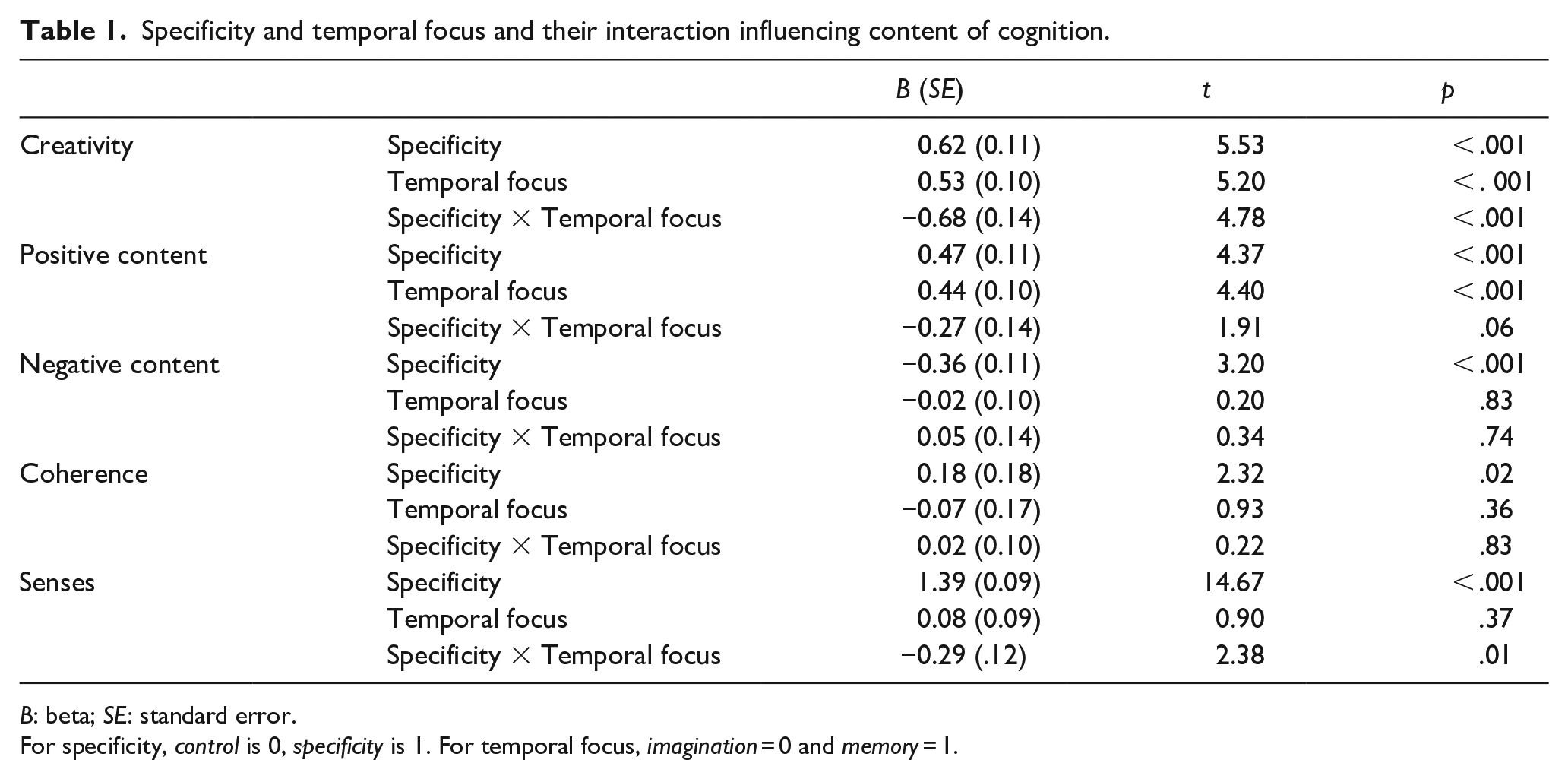
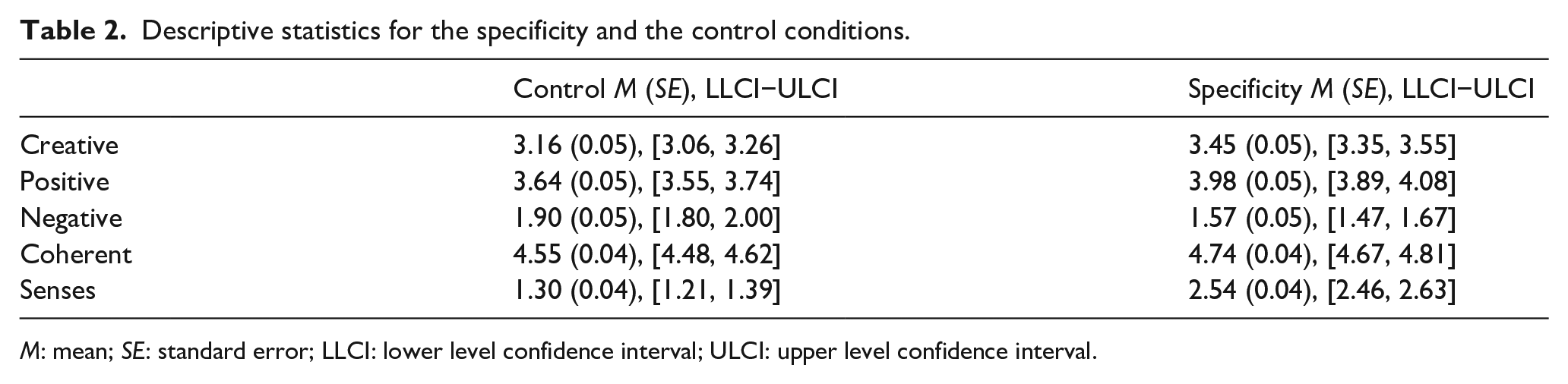
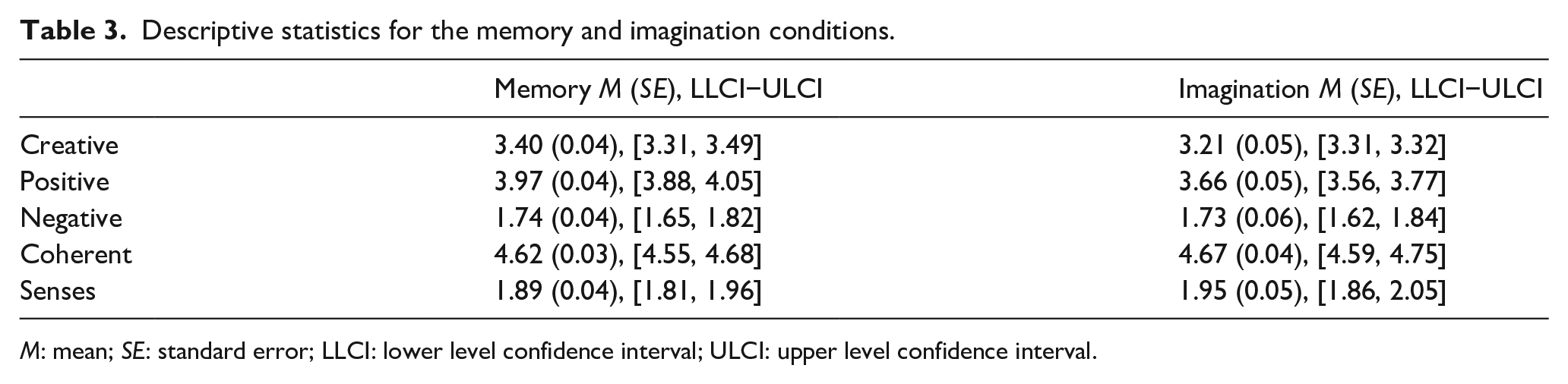
Table 1 shows results of the multilevel models analyzing experimental specificity (specificity versus control), temporal focus (imagination versus memory), and their interactions on the content of cognition. There were main effects of specificity for all variables. That is, compared with the control condition, people in the specificity condition generated scenarios that were rated as greater in creativity, greater in positive affect, lower in negative affect, were more coherent, and included greater sensory detail (see Table 2 for means). In terms of main effects of temporal focus, those in the memory condition demonstrated higher positive content than those in the imagination condition. Similarly, those in the memory condition also demonstrated more creativity compared with the imagination condition (see Table 3 for means).
Specificity and temporal focus and their interaction influencing content of cognition.
B: beta; SE: standard error.
For specificity, control is 0, specificity is 1. For temporal focus, imagination = 0 and memory = 1.
Descriptive statistics for the specificity and the control conditions.
M: mean; SE: standard error; LLCI: lower level confidence interval; ULCI: upper level confidence interval.
Descriptive statistics for the memory and imagination conditions.
M: mean; SE: standard error; LLCI: lower level confidence interval; ULCI: upper level confidence interval.
In addition, for creativity, these main effects were superseded by a significant interaction (Estimate = −0.68, SE = 0.14, t = 4.78, p < .001). For people in the imagination condition, creativity was lower when no specificity was requested in the control condition (M = 2.90, SE = 0.08; 95% CI [2.74, 3.06], compared with specificity prompts (M = 3.52, SE = 0.08, 95% CI [3.37, 3.67], p < .001). However, there were no differences in specificity versus control for those in the memory condition (Figure 1).
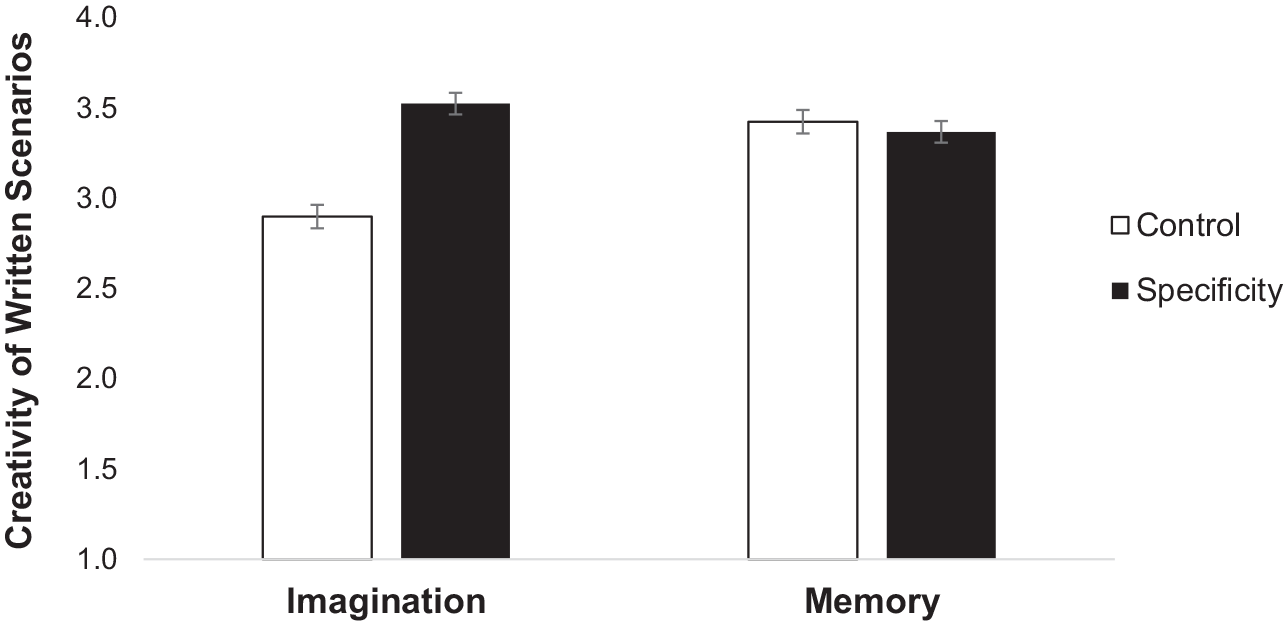
Creativity of written responses as a function of imagination versus episodic and specificity manipulation.
In addition, results indicated a significant interaction between specificity and temporal focus for sensory content (Table 1; Figure 2). The effect of specificity versus control was stronger in the imagination condition (B = −1.39, SE = 0.09) than in the memory condition (B = −1.10, SE = 0.08).
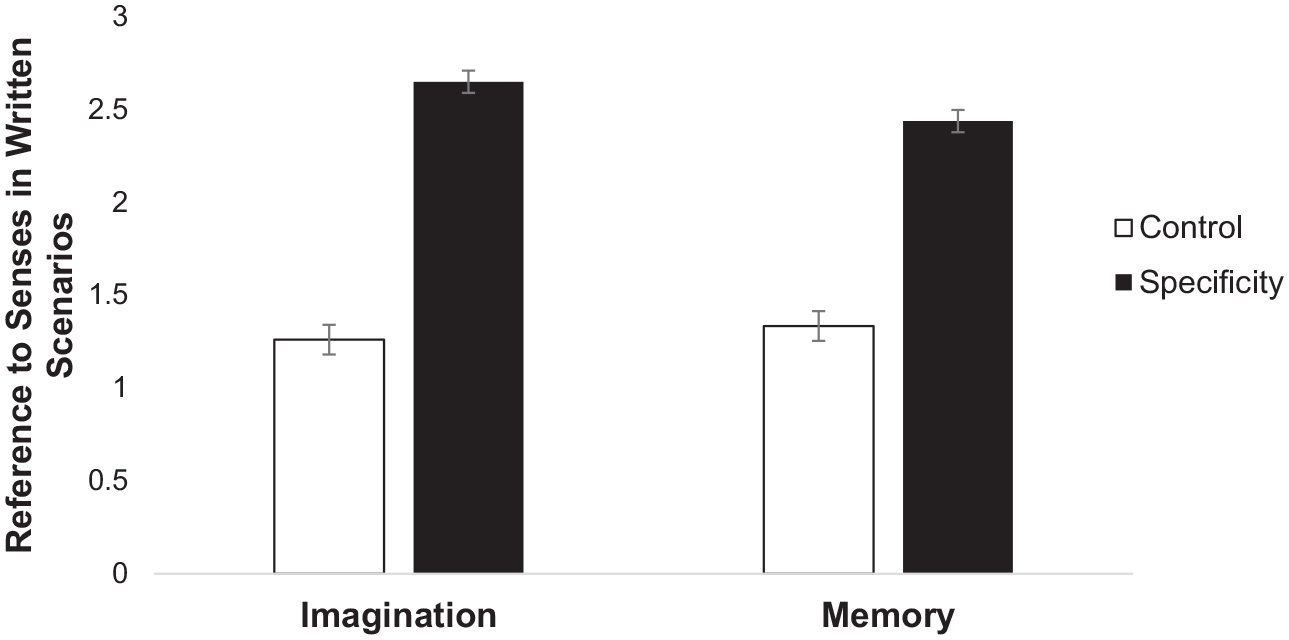
Reference to senses in written responses as a function of imagination versus memory and specificity manipulation.
Post-response affect
Results reported in Table 4 revealed that neither specificity nor temporal focus directly influenced post-response happiness or sadness after controlling for pre-response happiness or sadness, respectively. A main effect of specificity on post-response anxiety was qualified by a significant interaction with pre-response anxiety (see Figure 3). Specifically, specificity decreased the influence of pre-response anxiety on post-response anxiety, particularly notable when pre-response anxiety was high. Stated differently, specificity decreased anxiety compared with control when pre-response anxiety was high.
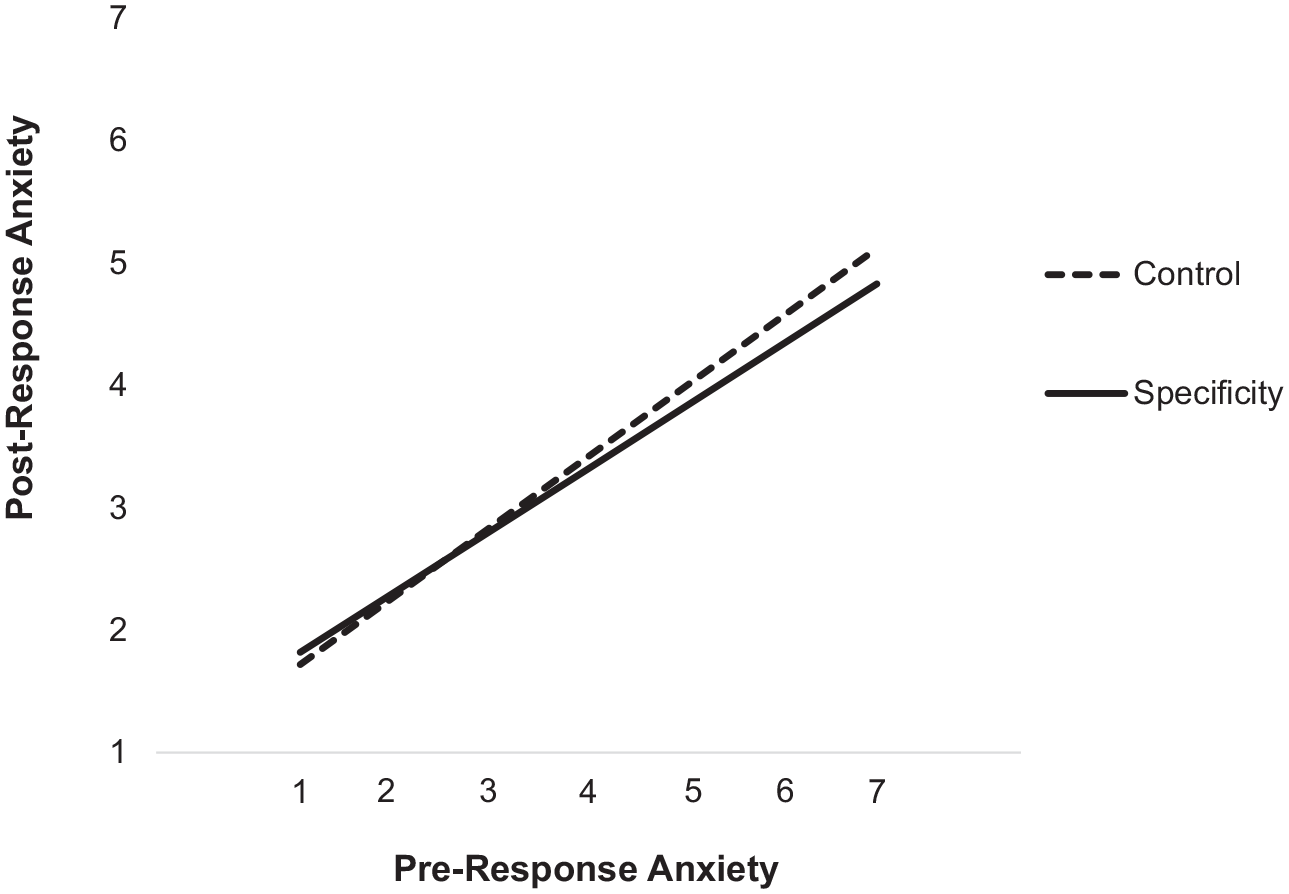
Pre-anxiety predicting post-anxiety, moderated by specificity manipulation.
Effect of specificity and temporal focus on post-response affective states, controlling for pre-response affective states.
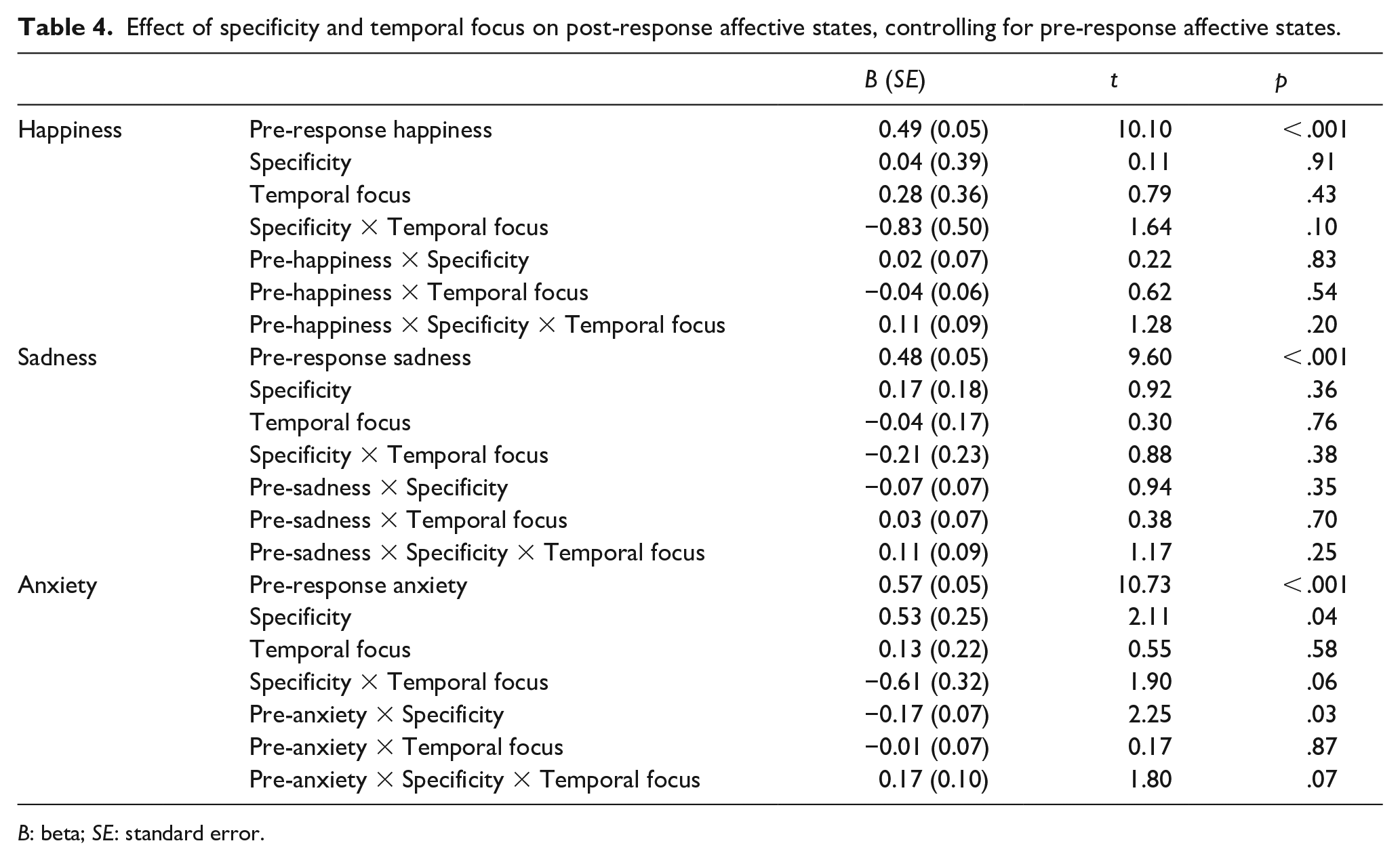
B: beta; SE: standard error.
Discussion
This study examined the effect of specificity manipulation on people’s content of thought and associated mood states. Consistent with predictions, we found that people who received specificity instructions (vs. control) over 1 week wrote scenarios that were more creative, more positive, less negative, more coherent, and included greater sensory detail. These results are in line with prior literature reporting that a single specificity induction resulted in increased internal episodic detail, higher creativity and problem solving, and more positive mood states (Adler et al., 2018; D’Argembeau & Van der Linden, 2006; Madore et al., 2015; McFarland et al., 2017; Nelis et al., 2015). Here, we extend on this previous literature by showing that the specificity manipulation that takes place over 1 week in real-life situations has a significant effect on the content of people’s thoughts.
We also found that people in the imagination condition who did not have prompts for specificity came up with the least creative scenarios compared with all other conditions. These results were somewhat surprising, as past work using ESI has found that specificity increased creative thinking abilities (Madore et al., 2014, 2019), where we would have expected people in the specificity conditions to exhibit greater creativity than the control conditions. Instead, people in the specificity conditions and the memory control conditions displayed more creativity than people in the imagination control condition. There are several possible explanations for these results. First, this study did not use ESI in the classic sense (e.g., inducing specificity and examining objective performance a few minutes later) as the manipulations were administered via experience sampling and creativity was rated by independent judges. In addition, this work used both imagination and memory. The specificity induction appeared to be effective in boosting creativity for those asked to imagine, but specificity did not boost creativity in the memory condition because the control group already exhibited fairly high creativity when asked to remember. It may be that people automatically provide more creative details when accessing memories, potentially because memories were rated as more positive and creativity tends to accompany positive affect (De Dreu et al., 2008), and memories (compared with imagination) likely evoke more mental imagery. Essentially, it may be that in terms of creativity, specificity prompts are not as helpful when asking about memories than when asking about imaginative scenarios. Future research should evaluate this idea further, including understanding the effect of how different types of memories (e.g., positive, stressful) intersect with specificity on creativity in daily life.
Although a large body of literature reported that remembering past events and projecting oneself into the future may rely on similar mechanisms (D’Argembeau & Van der Linden, 2006; Madore et al., 2015, 2019), some studies reported that imagining future events resulted in events that were more positive and idyllic than recalling past events (Rasmussen & Berntsen, 2014). Here we found that people in the memory (vs. imagination) condition were more positive and more creative in their responses. Creative responses in the memory condition may reflect the ease with which participants can describe and elaborate on previous events compared with conjuring up new ones. This is an interesting question that will need to be examined in future studies.
As for the influence of the manipulation on affect, writing out imagined scenarios with specificity prompts resulted in lower levels of post-response anxiety, controlling for pre-response anxiety. These results are in line with previous work (Jing et al., 2016), and further demonstrate that brief repeated prompts for specificity can result in decreased anxiety without the effect wearing out over time. This effect was quite small, possibly due to the anchoring effect where people made similar affect judgements before and after writing out scenarios, and further replication is warranted.
Limitations and future directions
This experiment examined the effect of specificity prompts on the content of people’s cognition and affective states as a function of memory versus imagination in real-life settings. We used standard experience sampling methodology while also incorporating an experimental manipulation of specificity manipulation prompts, essentially adopting ecological momentary intervention kind of approach (Heron & Smyth, 2010; Smith & Juarascio, 2019). Although the results are novel in that they show differential effects of the specificity manipulation over an extended period of time (6 days), they present short-term effects without a full breadth of affective states. Future studies will need to investigate long-term effects of prompting people to think in a more specific and detailed manner, incorporating other affective states, such as anger. This article focused on relatively neutral scenarios, and future investigations will need to address negative content, which is particularly important for depression and anxiety. Furthermore, imagining everyday scenarios versus imagining fantastical scenarios (e.g., going to a lake on a planet in Star Wars) may involve different mechanisms, and is warranted of further examination.
The control condition in this study may be improved in future work by incorporating prompts for abstract thinking. This study was thus more conservative in nature, because the control condition may have included people who tend towards the specific thinking style, allowing them to go on in their preferred style of thought. Future studies should also examine the effects of specificity prompts on memory and imagination in people with a history of anxiety and/or depression, or people high in repetitive negative thinking, similar to studies that recruited people or examined rumination as a moderator (Liao & Wei, 2011).
Instructions in the specificity condition contained more scaffolding than the instructions in the control condition, thus the ability to use the instructions to generate content in the specificity condition may have been higher for this reason. Future studies will need to examine the effects of specificity instructions with the matching number of prompts in the control condition. Finally, data were collected from two samples at two separate time points, thus results should be interpreted with caution. The strengths of this investigation are warranted, however, considering the employed methods of multiple reports from participants over time across multiple scenarios in real-life settings.
Supplemental Material
sj-docx-1-qjp-10.1177_17470218221078869 – Supplemental material for Cognition and affect in imagined and recalled scenarios as a function of a specificity manipulation: An experience sampling study
Supplemental material, sj-docx-1-qjp-10.1177_17470218221078869 for Cognition and affect in imagined and recalled scenarios as a function of a specificity manipulation: An experience sampling study by Darya L Zabelina, Peyton E Jennings and Jennifer C Veilleux in Quarterly Journal of Experimental Psychology
Footnotes
Declaration of conflicting interests
The authors declared no potential conflicts of interest with respect to the research, authorship, and/or publication of this article.
Funding
The authors received no financial support for the research, authorship, and/or publication of this article.

Notes
References
Supplementary Material
Please find the following supplemental material available below.
For Open Access articles published under a Creative Commons License, all supplemental material carries the same license as the article it is associated with.
For non-Open Access articles published, all supplemental material carries a non-exclusive license, and permission requests for re-use of supplemental material or any part of supplemental material shall be sent directly to the copyright owner as specified in the copyright notice associated with the article.
