







Abstract
Introduction
There is an urgent need to identify patients at high risk during the ongoing coronavirus disease (COVID-19) pandemic. Whether a history of stroke is associated with increased severity of disease or mortality is unknown.
Method
We pooled studies from published literature to assess the association of a history of stroke with outcomes in patients with COVID-19.
Results
A pooled analysis of 4 studies showed a ∼2.5-fold increase in odds of severe COVID-19. While a trend was observed, there was no statistically significant association of stroke with mortality in patients with COVID-19 infection.
Discussion
Our findings are limited by a small number of studies and sample size.
Conclusion
There is a ∼2.5-fold increase in odds of severe COVID-19 illness with a history of cerebrovascular disease.
Introduction
Coronavirus Disease 2019 (COVID-19) infection is an ongoing pandemic, characterized by high morbidity and mortality. There is an urgent need to identify clinical and biological predictors of severity and mortality associated with COVID-19 infection for judicious use of limited resources. Data are scant about the risk factors and therapies for COVID-19, and most of the predictions are currently based on prior experience with severe acute respiratory syndrome (SARS) and Middle East respiratory syndrome (MERS). A history of cerebrovascular disease in patients with SARS and MERS was shown to be associated with worse outcomes and increased healthcare resource utilization.1,2 Moreover, cerebrovascular disease was found to be associated with increased 90-day mortality in community acquired pneumonia. 3 Whether cerebrovascular disease predicts outcomes in patients with COVID-19 is unknown. Few studies have been published with varying results, further limited by the small sample size number of patients with cerebrovascular disease. As such, in this article, we aim to carry out a pooled analysis of current studies.
Methods
We conducted PUBMED, EMBASE, and Cochrane Central Register of Controlled Trials searches, using the terms “Coronavirus” OR “COVID-19” AND “stroke”, OR “cerebrovascular disease” and their various combinations, until 31 March 2020. We then searched major journals reporting articles about COVID-19 infection for additional studies. We also hand-searched the bibliography of original studies and review articles to find other potentially eligible studies.
Studies that fulfilled the following criteria were included: (1) studies reporting history of cerebrovascular disease in patients with COVID-19 and (2) reporting outcomes of interest. Studies were independently assessed for eligibility and bias risk by two authors (GA and BMH). Data were then extracted by the same authors. Disagreements were resolved by consensus.
A clinically validated definition of “severe disease” (i.e. patients requiring mechanical ventilation, vital life support, intensive care unit admission, death) was required. As the number of studies was limited, no evaluation of bias or publication bias was performed. A pooled analysis was performed to estimate the odds ratio (OR) and 95% confidence interval (CI) of cerebrovascular disease in COVID-19 patients with or without severe disease and in non-survivors versus survivors. The statistical analysis was carried out using MetaXL, software Version 5.3 (EpiGear International Pty Ltd, Sunrise Beach, Australia), with inverse variance model. A leave-one-out sensitivity analysis was performed to probe sources of heterogeneity. Moreover, to evaluate the impact of mean age among severe patients on the association of cerebrovascular disease with severity of COVID-19, a random effects meta-regression using log OR was employed. The study was performed in compliance with the Declaration of Helsinki and local legislation.
Results
Characteristics of included studies
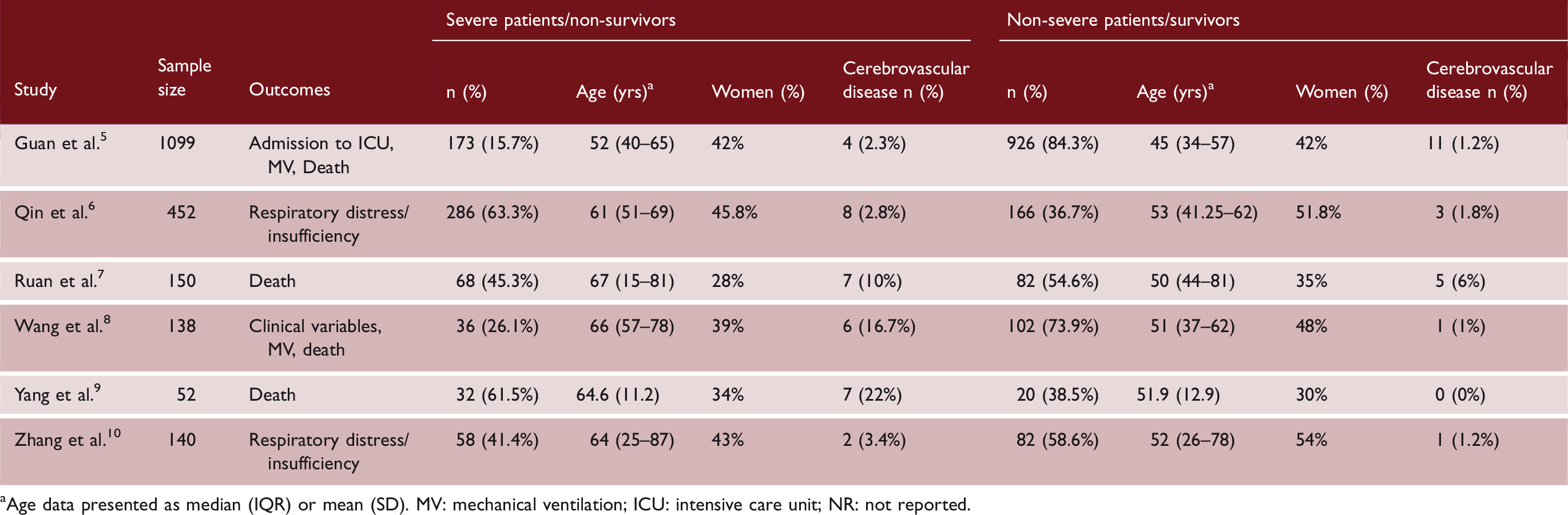
Age data presented as median (IQR) or mean (SD). MV: mechanical ventilation; ICU: intensive care unit; NR: not reported.
The results of pooled analysis are presented in Figure 1. In the four studies on severity, only one study by Wang et al. individually had a significant OR for cerebrovascular disease and COVID-19 severity.
8
However, in pooled analysis, cerebrovascular disease was found to be associated with a statistically significant increased risk of a severe form of COVID-19 (OR: 2.55 (95% CI: 1.18 to 5.51), I2 = 29%, Cochran’s Q, p = 0.24). Although heterogeneity was low, a leave-one-out sensitivity analysis was still performed. Only excluding the study by Wang et al. significantly altered the results of the analysis and appeared to be the source of heterogeneity (OR: 1.88 (95% CI: 0.828 to 4.29), I2 = 0%, Cochran’s Q, p = 0.90).
8
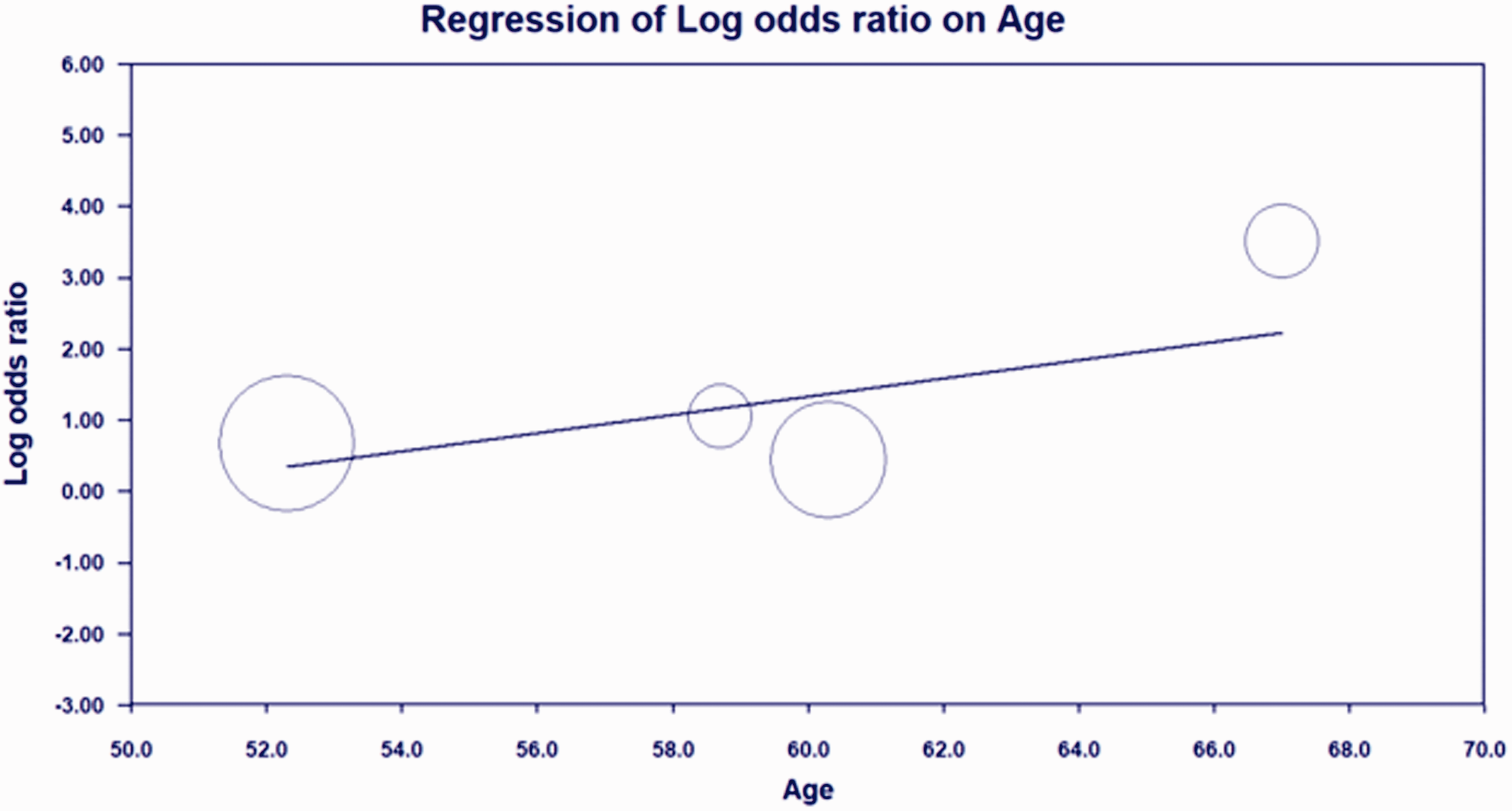
In the limited pooled analysis of mortality studies, a non-significant trend was found when evaluating association of cerebrovascular disease and enhanced risk of mortality in COVID-19 patients (OR: 2.33 (95% CI: 0.77 to 7.04), I2 = 30%, Cochran’s Q, p = 0.23). In the meta-regression analysis, a non-significant trend was observed between mean age of patients with severe COVID-19 and log odds of cerebrovascular disease and COVID-19 severity (correlation coefficient 0.1582, 95% CI: −0.0575 to 0.3740, p = 0.15) (Figure 2). Limited studies prevented a meta-regression for mortality.
Results of meta-analysis showing association of cerebrovascular disease with severity of disease and mortality in patients with COVID-1. Meta-regression plot for impact of age on association of cerebrovascular disease on disease severity in COVID-19.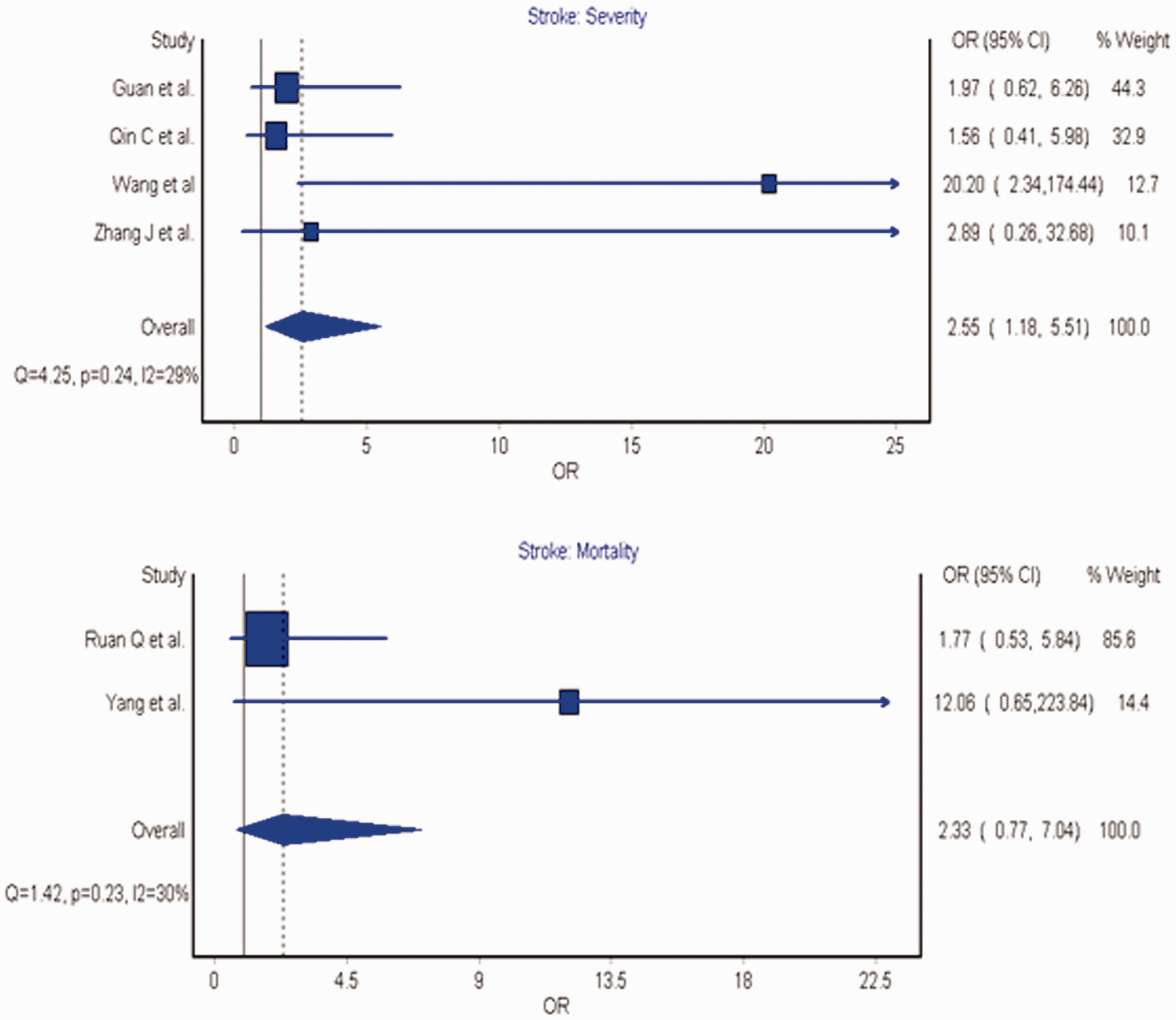
Discussion
In our pooled analysis of published studies to date, cerebrovascular disease was found to be associated with a ∼2.5-fold increased odds of severe disease in patients with COVID-19 infection. There was also a non-significant trend with cerebrovascular disease and odds of mortality in COVID-19 patients.
Studies in patients with SARS have previously found higher risk of critical illness and multiorgan dysfunction in patients with cerebrovascular disease. 11 Cerebrovascular disease is associated with high morbidity, mortality, and financial burden in the United States. 12 In the current COVID-19 pandemic situation, healthcare resources are a limitation, so that predicting which patients are at higher risk could be helpful in optimizing allocation of human and technical resources. 13
The main limitation of this pooled analysis is the limited number of studies with small sample size. However, at this stage with the ongoing pandemic, our findings may provide early insights into building models for risk stratification and help in judicious use of limited healthcare resources. Due to the small number of studies, we did not use any exclusion criteria and we also did not perform analysis for risk of bias. Sensitivity analysis was performed which showed the results for disease severity were mainly driven by the study by Wang et al. Age may be a confounding variable in our analysis. We did perform a meta-regression to assess the impact of mean age of severe patients on association of cerebrovascular disease with severity of COVID-19, which suggested the association is more pronounced in older individuals. However, there were not enough studies to perform a meta-regression on the mortality endpoint. Hence, studies with larger sample size and number of events are needed to confirm our findings. Nonetheless, we encourage physicians to advise patients with a history of cerebrovascular disorders to take enhanced precautions during the ongoing pandemic.
Conclusion
In our pooled analysis, cerebrovascular disease was found to be associated with a ∼2.5-fold increased disease severity in patients with COVID-19. However, larger studies are needed to confirm these findings.
Declaration of conflicting interests
The author(s) declared no potential conflicts of interest with respect to the research, authorship, and/or publication of this article.
Funding
The author(s) received no financial support for the research, authorship, and/or publication of this article.
ORCID iD
Gaurav Aggarwal https://orcid.org/0000-0002-8180-9287
Supplemental material
Supplemental material for this article is available online.
Supplemental Material
sj-zip-1-wso-10.1177_1747493020921664 - Supplemental material for Cerebrovascular disease is associated with an increased disease severity in patients with Coronavirus Disease 2019 (COVID-19): A pooled analysis of published literature
Supplemental material, sj-zip-1-wso-10.1177_1747493020921664 for Cerebrovascular disease is associated with an increased disease severity in patients with Coronavirus Disease 2019 (COVID-19): A pooled analysis of published literature by Gaurav Aggarwal Giuseppe Lippi and Brandon Michael Henry in International Journal of Stroke
References
Supplementary Material
Please find the following supplemental material available below.
For Open Access articles published under a Creative Commons License, all supplemental material carries the same license as the article it is associated with.
For non-Open Access articles published, all supplemental material carries a non-exclusive license, and permission requests for re-use of supplemental material or any part of supplemental material shall be sent directly to the copyright owner as specified in the copyright notice associated with the article.
