







Abstract
Globally, over 200 million tons of chemical fertilizers are applied annually, yet sub-Saharan Africa accounts for less than 2% of this usage, leaving vast areas nutrient-depleted. In Tanzania, over 70% of arable land suffers from potassium deficiency, severely limiting crop productivity and contributing to food insecurity. Meanwhile, an estimated 1.2 million urban Tanzanian infants use disposable diapers, generating significant waste that is commonly discarded via landfilling and open dumping. This study introduces the recovery of potassium from used disposable diapers as a novel dual-purpose strategy to address both nutrient scarcity and waste accumulation, advancing principles of circular agriculture. Through pre-treatment in 70% ethanol followed by solvent extraction using distilled water, 0.1 M HCl, and 0.1 M NaOH, potassium concentrations were quantified via flame photometry. 0.1 M HCl achieved the highest potassium recovery (40.21 ± 0.28 mg/L) from 20 g of disposable diapers, confirming its superior solubilizing capacity. These findings underscore the untapped potential of disposable diapers as a renewable nutrient source, particularly in regions like Tanzania that face high fertilizer import costs and mounting environmental challenges. This approach presents a sustainable and innovative solution for enhancing soil fertility, reducing waste, and promoting circular economy practices in low-resource settings.
Introduction
Globally, the increasing demand for food driven by population growth, urbanization, and climate change has led to intensive agricultural practices that rely heavily on synthetic fertilizers. 1 According to the International Fertilizer Association (IFA), global fertilizer consumption reached approximately 202.5 million metric tons of nutrients (N, P₂O₅, and K₂O) in 2021, with potassium-based fertilizers accounting for nearly 40 million metric tons, representing around 20% of total consumption.2,3 Among the essential plant macronutrients, potassium plays a critical role in maintaining plant physiological functions, including water regulation, enzyme activation, photosynthesis, and resistance to abiotic and biotic stresses.4,5 Despite its crucial importance, potassium availability and affordability remain a significant challenge, particularly in low-income and developing regions. With the global population projected to reach 10 billion by 2050, food production must increase substantially, driving the need for greater fertilizer use to sustain and enhance crop yields. 6 This increasing reliance on external nutrient inputs is exerting greater strain on the sustainability of current agricultural systems. 7 In sub-Saharan Africa, the average fertilizer use is less than 20 kg per hectare, in stark contrast to the global average of 135 kg per hectare. 8 This limited application is partly due to high costs, weak distribution systems, and heavy dependence on imported fertilizers, especially potassium-based ones. 9 As a result, soil nutrient depletion, particularly of potassium, is widespread across many African countries. The African Union’s Comprehensive Africa Agriculture Development Programme (CAADP) and AGRA’s Soil Health Initiative have both identified potassium as one of the least replenished yet most needed nutrients for sustaining agricultural productivity in the region.10,11
In Tanzania, agriculture contributes about 28% of the national gross domestic product (GDP) and supports over 70% of the population. 12 However, declining soil fertility is a growing concern, particularly in semi-arid regions such as Dodoma, where potassium depletion has been documented as a major constraint to crop production. 13 According to recent data from the Tanzania Agricultural Research Institute (TARI) and the Ministry of Agriculture, potassium deficiency affects large expanses of land, with available soil potassium often falling below 80 mg/kg, far below the optimum range for most staple crops. 14 The country’s fertilizer production sector remains underdeveloped, with domestic facilities like the Minjingu Mines and Fertilizer Ltd focusing mainly on phosphate and nitrogen-based formulations. 15 Potassium-based fertilizers are largely imported and expensive, making them inaccessible to many smallholder farmers, who constitute the majority of the agricultural workforce. 16
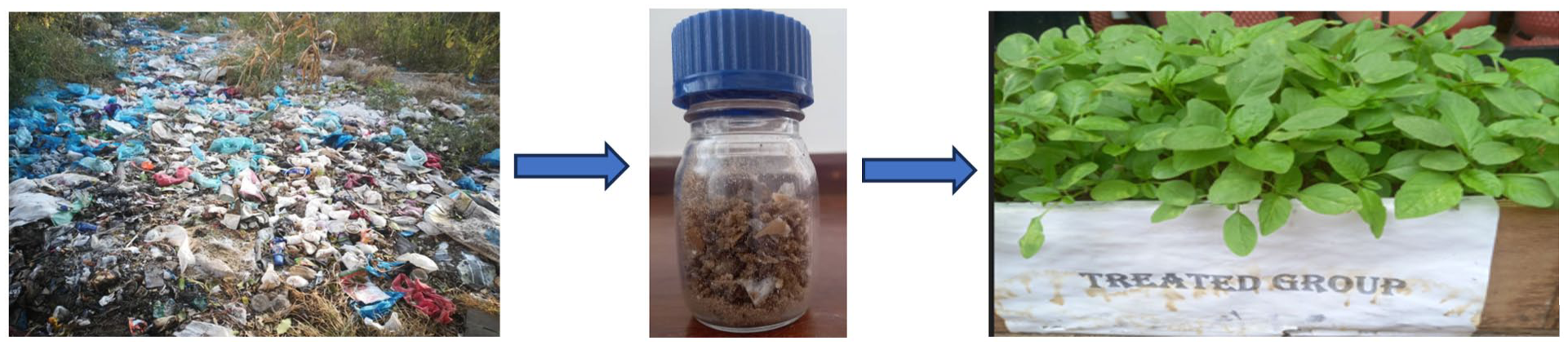
Addressing the potassium deficiency challenge while reducing the environmental burden of synthetic fertilizers requires innovative and sustainable approaches. One such approach is the recovery of essential plant nutrients from unconventional waste materials. Used disposable diapers (DDs) are one of the fastest-growing solid waste streams worldwide, with an estimated 300 billion DDs discarded annually.17,18 Composed of absorbent polymers, cellulose, and urine residues, used DDs contain potentially valuable macronutrients, including nitrogen (as urea), phosphorus, and potassium, which are retained within the DD’s superabsorbent layers. 19 The urine fraction, which comprises approximately 90%–95% water and dissolved ions, is a natural carrier of potassium in the form of K+ ions. 20 Yet this source remains grossly underutilized in both global and Tanzanian waste management systems.
In rapidly growing urban areas, rising birth rates and improved healthcare have led to increased use of DDs. 21 These used DDs are typically discarded via open dumping or landfilling, contributing to environmental degradation and public health risks due to their non-biodegradable nature and potential to carry pathogens. 22 However, used DDs also represent an underutilized source of nutrients, particularly potassium, a critical element for plant growth. Transforming this waste stream into a resource aligns with circular economic principles, which aim to reduce environmental pollution and reliance on virgin inputs.
Although nutrient recovery from waste has been explored through composting and pyrolysis, these methods often involve high energy demands, extended processing times, or inefficiencies in recovering soluble nutrients such as potassium.23,24 This study pioneers a solvent-based extraction method, using ethanol pre-treatment to sanitize and break down organic matter, followed by acid/base extraction to isolate potassium effectively. Compared to mechanical and biological methods, solvent extraction offers a rapid, targeted, and environmentally friendly approach to recover K+ ions.
Despite growing interest in resource recovery, limited attention has been given to potassium recovery from used DDs, particularly in sub-Saharan Africa, where fertilizer costs are high and waste management systems are weak. Most existing studies on biodegradable waste have primarily focused on composting or mechanical treatment with relatively limited attention given to solvent-based chemical extraction for potassium recovery.25–27 This gap is especially evident in developing nations where limited local data and few practical strategies exist to guide the efficient recovery of nutrients from biodegradable waste, highlighting the need for targeted research and context-appropriate interventions. The literature indicates that nutrient recovery from used DDs has primarily focused on general nutrient extraction with limited evaluation of solvent-specific potassium recovery and its implications for sustainable agriculture in developing regions. 25 This study addresses this gap by systematically evaluating potassium extraction from used DDs using distilled water, hydrochloric acid, and sodium hydroxide, and investigates the effect of diaper mass on recovery efficiency, thereby offering novel insights into optimizing nutrient recovery for sustainable applications. Furthermore, the study situates nutrient recovery within the context of circular agriculture and the growing DDs waste challenge in Tanzania, where fertilizer access is limited. By demonstrating that used DDs can serve as a renewable potassium source, this work contributes to improving soil fertility, reducing reliance on imported fertilizers, and enhancing local waste management practices. It provides insights for policymakers and environmental agencies in urban areas facing diaper waste challenges and supports the United Nations Sustainable Development Goals, particularly SDG 2 (Zero Hunger), SDG 6 (Clean Water and Sanitation), and SDG 12 (Responsible Consumption and Production), by linking waste recovery with sustainable food production and resource management.
Materials and methods
Sample size and study area map
The use DDs (Pampers® brand) were collected from households with infants aged 0–12 months, a demographic characterized by high diaper usage in Dodoma City. A total of 500 samples were obtained from households across five wards, Msalato, Choanosome, Miyuji, Makole, and Nkuhungu, to ensure representation of areas with dense infant populations and frequent DDs usage. These wards were selected based on population statistics and accessibility, providing a comprehensive overview of DDs usage patterns within Dodoma City, the capital of Tanzania. According to the National Bureau of Statistics (NBS), Dodoma’s population exceeds 765,000, with over 100,000 children under five, leading to significant DDs usage.28,29 The city lacks an organized used DDs waste collection system, relying heavily on open dumping and landfilling, which contributes to both environmental pollution and public health risks. 18 These demographic and infrastructural factors make Dodoma a representative case for evaluating nutrient recovery from used DDs as a waste valorization strategy. Sample analyses were performed in Iringa Water Quality Control Laboratory, IWQL), while sample pre-treatment and nutrient extraction were performed in the Chemistry Laboratory, Department of Chemistry, Mkwawa University College of Education (MUCE). A map of the study area highlighting the sampling wards is included as Figure 1 to illustrate the geographical distribution of the sampling locations.
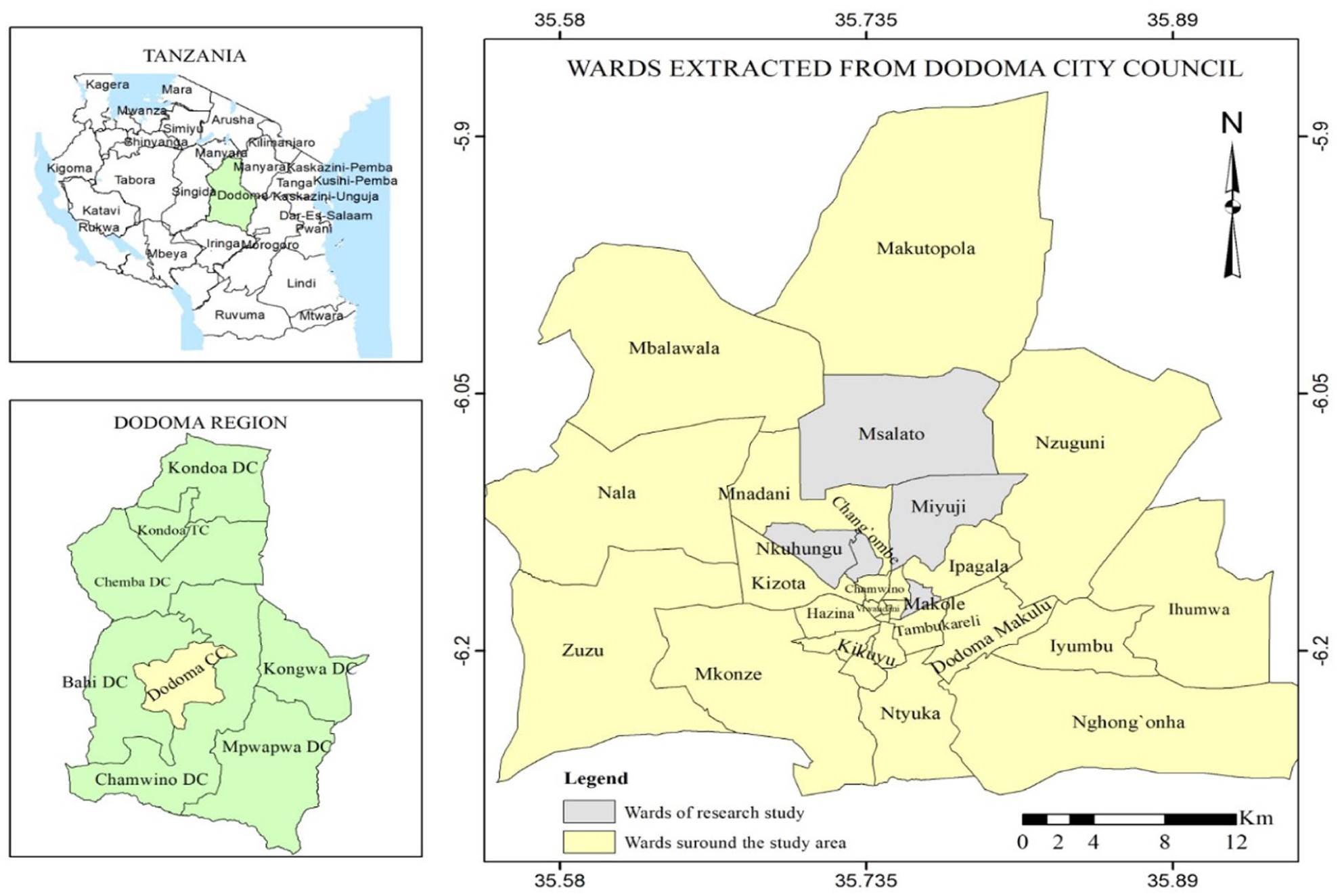
Sampling locations of disposable diapers across five wards in Dodoma City.
Sample collection and processing
Used DDs were randomly collected from consenting households. Immediately after collection, samples were sealed in sterile polyethylene bags and transported. Upon arrival at the laboratory, samples were stored at room temperature 25 ± 1°C and processed within 24 h to preserve chemical integrity. Verbal consent was obtained from caregivers during sample collection, and no personal or identifying information was recorded. The DDs were mechanically shredded into uniform pieces and divided into three sample weights: 5, 10, and 20 g, to assess the effect of sample mass on potassium recovery efficiency. Before extraction, all samples underwent a 60-min pre-treatment in 70% ethanol to disinfect the material and enhance nutrient release. A solid-to-liquid ratio of 1:5 (w/v) was maintained during pre-treatment, whereby 100 mL of 70% ethanol was added to every 20 g of shredded used DDs to facilitate effective solvent penetration and microbial inactivation. This pre-treatment was optimized to balance pathogen inactivation with preservation of the DDs matrix integrity, based on methods described by Yadav et al. 30 in optimizing to balance pathogen inactivation. All extractions were performed at ambient room temperature (25 ± 2°C). Each treatment was conducted in triplicate using independently collected samples to ensure reproducibility.
Solvent optimization for potassium extraction
The extraction of potassium from DD matrices is influenced by the interaction between the solvent and the absorbent polymer network within the diaper core, with the process occurring mainly via ion-exchange and matrix dissolution mechanisms. Under acidic conditions, hydrochloric acid (HCl) provides a high concentration of protons (H+) that promote ion-exchange reactions with potassium ions associated with negatively charged functional groups within the superabsorbent polymer (SAP) matrix. 31 This protonation can weaken electrostatic interactions between potassium ions and the polymer structure, thereby facilitating their release into the extraction solution. Under alkaline conditions, sodium hydroxide (NaOH) promotes partial hydrolysis of certain organic components such as cellulose fibers and polymeric materials, which can enhance the release of potassium that may be physically retained within the absorbent structure. 32 In contrast, distilled water primarily extracts readily soluble or weakly bound potassium ions without significantly altering the structural integrity of the polymer matrix. 33
A preliminary optimization experiment using 0.05, 0.1, and 1.0 M HCl and NaOH was conducted to determine the most suitable solvent concentration for potassium extraction. The 0.1 M concentration was selected, and a 1:5 w/v solid-to-liquid ratio was applied in all extraction experiments. For this test, 20 g of shredded used DD material was mixed with 100 mL of each solvent, maintaining a constant 1:5 w/v solid-to-liquid ratio. The mixtures were agitated for 60 min at room temperature to allow sufficient interaction between the solvent and the diaper matrix. After extraction, the suspensions were filtered and the potassium concentration in the filtrate was determined using a flame photometer (JENWAY PFP7).
The preliminary optimization results indicated that the 0.1 M solvent concentration provided the most effective potassium recovery among the tested conditions. Lower concentrations (0.05 M) likely provided insufficient proton or hydroxide activity to effectively promote ion exchange or matrix interaction, whereas higher concentrations (1.0 M) did not significantly improve potassium recovery and may have caused unnecessary degradation of the DDs matrix. Based on these findings, 0.1 M solutions of HCl and NaOH were selected as the optimal solvent concentration for the subsequent potassium extraction experiments.
Nutrient extraction in the main experiments was therefore performed using three solvents: DW, 0.1 M HCl, and 0.1 M NaOH, as summarized in Table 1. All chemicals were of analytical grade and obtained from Sigma-Aldrich. A constant solid-to-liquid ratio of 1:5 (w/v) was maintained to ensure adequate solvent availability for potassium dissolution while minimizing excessive dilution of the extract solutions. All treatments were conducted in triplicate using independently collected diaper samples to ensure experimental reproducibility. Besides experimental procedures, including sample collection, ethanol pre-treatment, and sample preparation, were performed as described in sections “Sample size and study area map” and “Sample collection and processing.”
Physicochemical properties and actions of extraction solvents on the disposable diaper matrix.

Experimental controls and comparative analysis
To evaluate the contribution of infant urine to the potassium content of DDs, unused DDs were processed under the same experimental conditions as the used samples and served as negative controls. These control samples underwent identical procedures, including shredding, solvent extraction, filtration, and potassium quantification. The use of unused DDs allowed for the determination of baseline potassium levels originating from the diaper material itself. By comparing potassium concentrations obtained from unused and used DDs, it was possible to assess the extent of potassium enrichment resulting from urine absorption during use. This comparative approach ensured that the measured potassium in the extracts primarily reflected nutrients derived from infant urine rather than the intrinsic composition of the DDs materials, thereby improving the accuracy and reliability of the nutrient recovery assessment.
Potassium quantification and instrument calibration
Following solvent extraction, the mixtures were filtered using a clean sieve to separate liquid extracts from solid residues as illustrated in Figure 2. The extraction process involved three main steps: (A) shredding used DDs waste and immersion in different solvents, (B) sieve filtration of the mixtures, and (C) collection of the resulting liquid extracts. The collected extracts were further clarified by passing them through Whatman qualitative grade No. 1 filter paper to remove fine particulates.
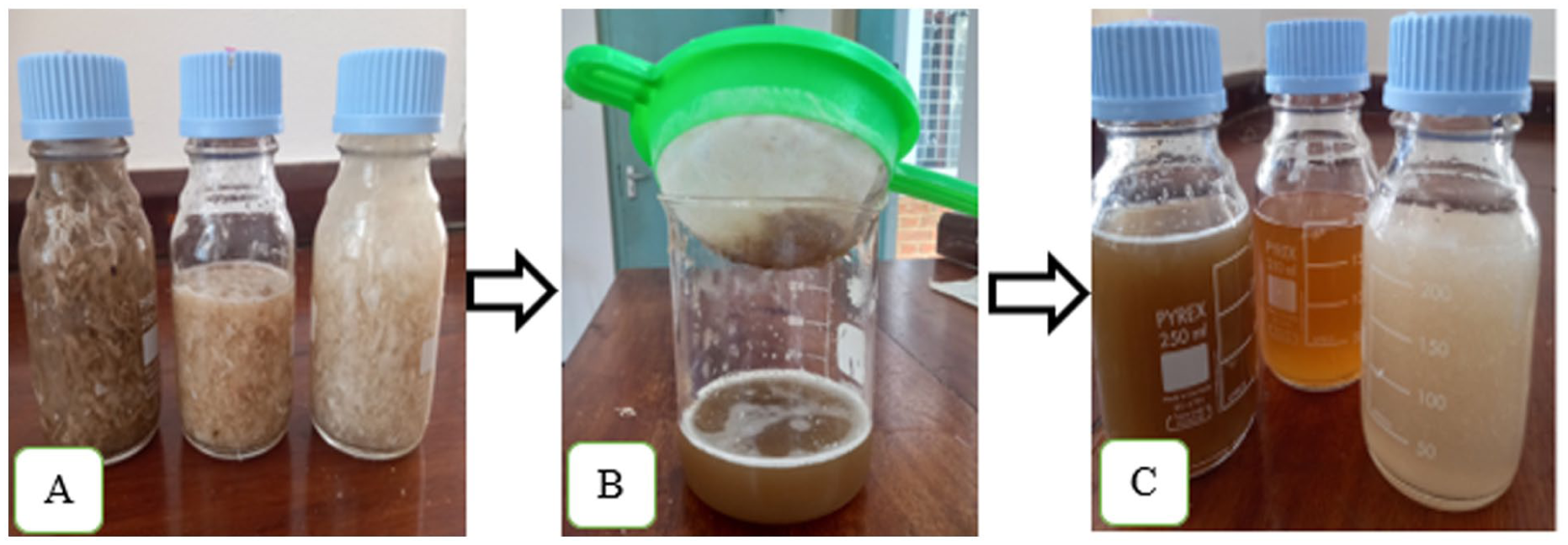
Nutrient recovery from shredded disposable diapers: (a) solvent soaking, (b) filtration, (c) liquid extract.
Potassium levels were determined using a flame photometer (JENWAY PFP7), calibrated with 5 and 10 mg/L potassium standard solutions to ensure accuracy, reliability, and sensitivity. The photometer was set to the optimal emission wavelength for potassium using an air-propane flame, with gain and sensitivity established from the calibration standards. Recalibration was performed at the start of each experiment and after every five samples. A 5 mg/L control solution and blank samples were analyzed alongside the extracts to monitor accuracy and detect any background contamination. All samples were analyzed in triplicate (n = 3), and select samples were run in duplicate to verify precision. Results are expressed as mean ± standard deviation, with relative standard deviation values below 5% confirming high analytical precision. Statistical analysis was performed using R software (version 4.3.2), applying one-way analysis of variance (ANOVA) to assess significant differences among treatments at p < 0.05. Figure 3 presents a schematic diagram of the sample preparation and potassium analysis workflow, summarizing the key steps from used DDs shredding to extract measurement.
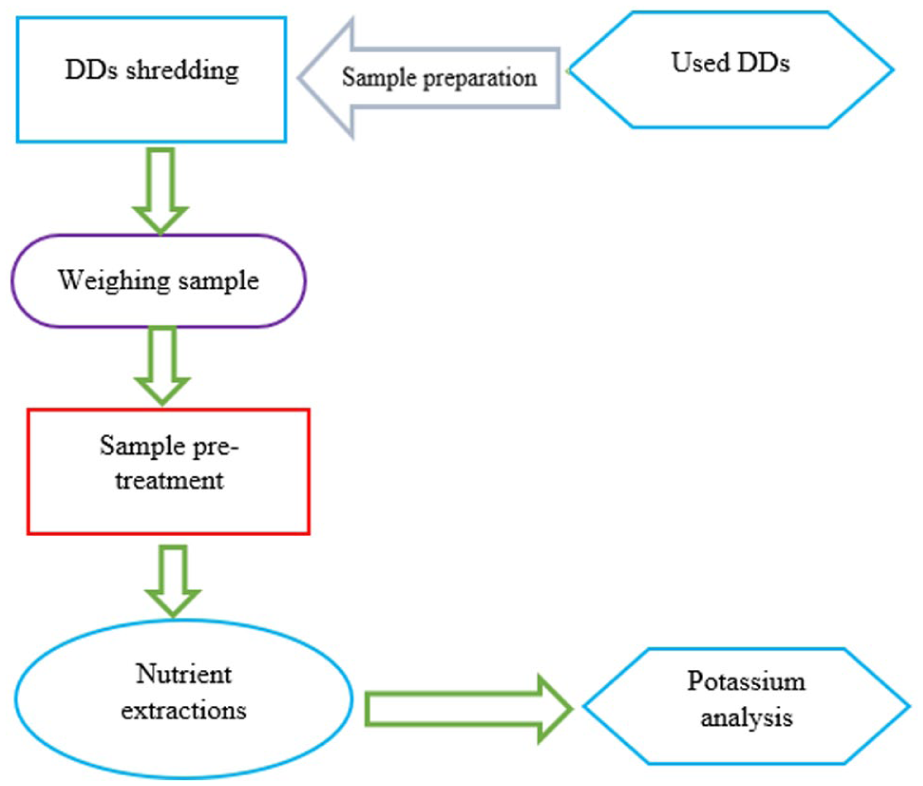
Schematic diagram of the disposable diaper sample preparation process.
Results and discussion
Optimization of solvent concentration
Preliminary tests using 0.05 M, 0.1 M, and 1.0 M solutions of HCl and NaOH indicated that 0.1 M was the optimal concentration for potassium extraction from used disposable DDs. As shown in Table 2, potassium recovery at 0.05 M was significantly lower (HCl: 16.83 ± 0.72 mg/L; NaOH: 9.42 ± 0.55 mg/L), likely due to insufficient proton or hydroxide availability to disrupt the polymeric DDs matrix. At 1.0 M, potassium recovery was slightly reduced compared to 0.1 M (HCl: 39.84 ± 1.34 mg/L; NaOH: 20.43 ± 1.19 mg/L), possibly due to observed softening of the DDs matrix, which may have limited ion diffusion.
Preliminary optimization of HCl and NaOH concentrations for potassium recovery from used disposable diapers.
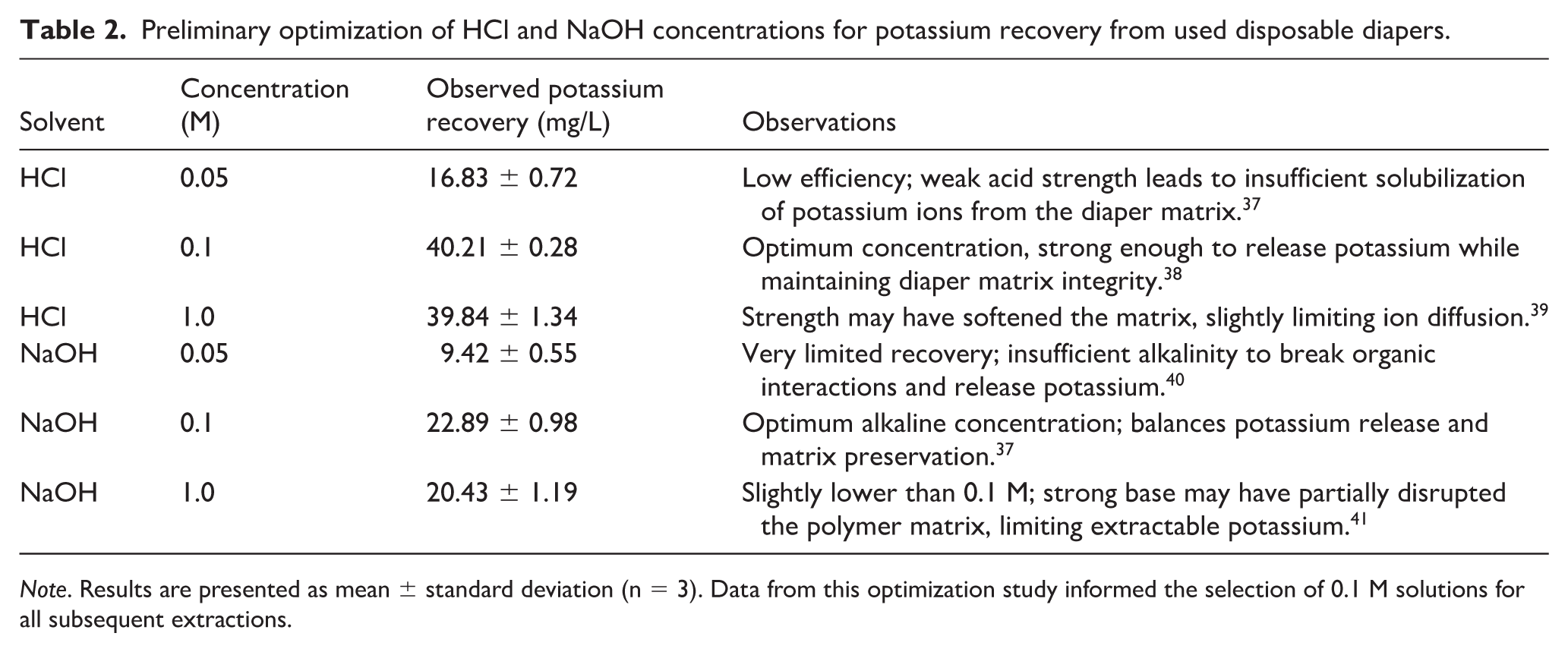
Note. Results are presented as mean ± standard deviation (n = 3). Data from this optimization study informed the selection of 0.1 M solutions for all subsequent extractions.
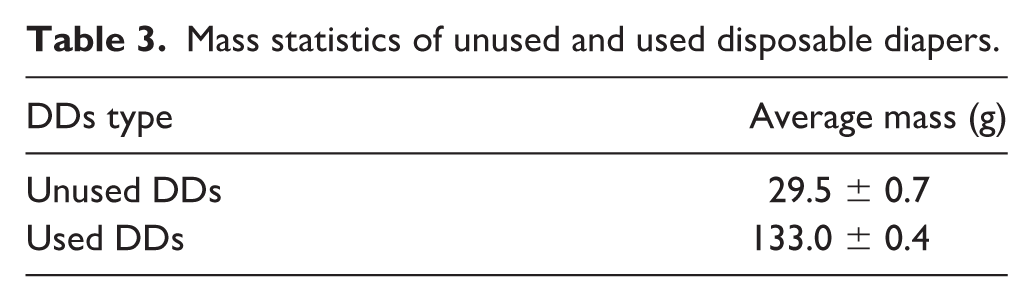
These results justify the selection of 0.1 M solutions for the main extraction experiments as it provides a balance between effective potassium solubilization and preservation of the DDs structure. Similar observations regarding moderate solvent concentrations optimizing nutrient recovery have been reported in previous studies on organic waste. 39 Characterization of the DDs matrix before and after ethanol pre-treatment focused on mass and visual observations. The average mass of used DDs before pre-treatment was 133.0 ± 0.4 g, and no significant mass loss was observed following ethanol treatment, indicating that the DDs matrix remained largely intact. Excessive swelling was observed visually but did not compromise the overall structure, confirming the suitability of ethanol pre-treatment for enhancing nutrient accessibility without substantial degradation. Following optimization, all main experiments utilized 0.1 M HCl and NaOH solutions as well as distilled water for comparative potassium extraction across different DDs sample masses (5, 10, and 20 g).
Characterization of DDs
DDs are composed of multiple layers, consisting of cellulose fibers, SAPs, and plastic components that contribute to their absorbent and structural properties. Commercial DDs typically consist of a multilayer composite structure comprising an outer polyethylene back sheet, an inner polypropylene nonwoven layer, cellulose fluff pulp, and SAP, commonly sodium polyacrylate. These materials play different functional roles within the diaper matrix. The cellulose fibers provide structural support and liquid distribution, while the SAP forms a hydrogel capable of retaining large volumes of urine which contain dissolved nutrients including potassium ions (K+). This absorbent matrix therefore acts as a temporary reservoir for nutrient-rich fluids, making used DDs a potential secondary source of plant nutrients. Physical characteristics of unused and used DDs were investigated before nutrient extraction. Table 3 presents the starting weight of used and unused DDs before ethanol pre-treatment. While unused DDs were still in their initial dry weight, used DDs contained more moisture content, representing significant urine absorption. After pre-treatment with 70% ethanol, the integrity of the structure was ascertained, and used DDs showed excessive swelling and degradation of the polymer. The weight of used DDs (133.0 ± 0.4 g) in this study falls within the reported range in the previous study, which averaged at 123 to 225 g. 25
Mass statistics of unused and used disposable diapers.
Comparison of used and unused diapers in potassium concentration
The results presented in Figure 4 show that used DDs had greater concentration of potassium compared to unused DDs when the solvents used for extraction were DW, HCl, and NaOH. This is due to the used DDs containing urine, which are rich in potassium trapped in the absorbent core of the DDs. However, unused DDs contain potassium only as a component of their raw material, namely potassium polyacrylate, and this contributes relatively less potassium. 42 Among the solvents that were investigated, HCl yielded the highest recovery of potassium from used DDs at 40.21 ± 0.28 mg/L. This can be attributed to the acidic nature of HCl to enhanced solubilization of potassium ions by dissolving complex matrices and releasing sequestered potassium efficiently. 43 Sodium hydroxide followed by the extraction rate of 22.89 ± 0.98 mg/L, possibly because of its capability of degrading organic material and liberating potassium from the matrix of DDs. 40 DW recovered the smallest amount of potassium content at 12.42 ± 0.68 mg/L, possibly because of the limited ability in the degradation of complex structures inside the DDs but still with activity in the dissolution of aqueous-soluble potassium ions. 44 These findings align with previous studies that acidic environment preferentially produces the dissolution of potassium, but alkaline conditions also enhance potassium release, but to a less extent.45,46
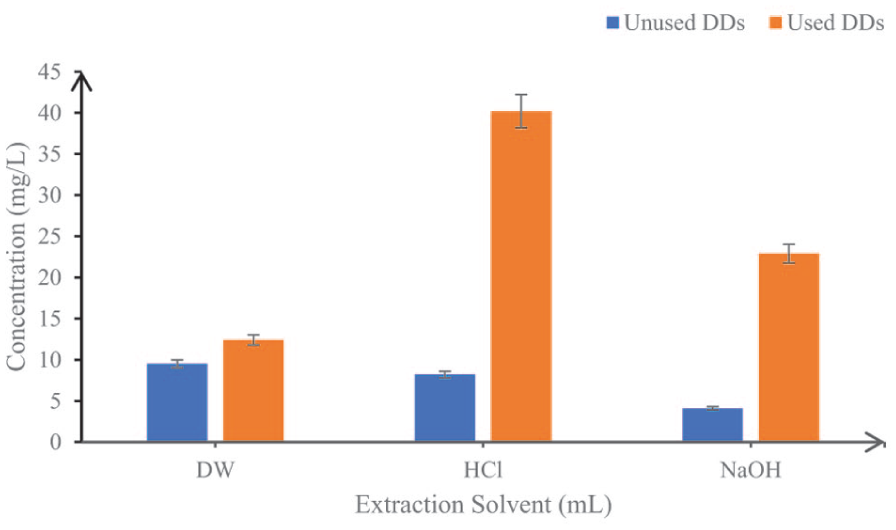
Potassium recovery from used and unused disposable diapers.
Potassium recovery in unused DDs was lower in all solvents as it is depicted in Figure 5. DW recovered concentration of 9.5 ± 1.1 mg/L, suggesting that there is some water-soluble potassium even before DDs use, though at much lower levels than in used DDs. HCl recovered potassium concentration of 8.2 ± 1.1 mg/L, indicating moderate potassium release due to absence of urine-sourced potassium and stronger binding of potassium in the raw DDs material. 47 NaOH recovered the lower potassium concentration of 4.1 ± 0.6 mg/L, presumably due to having minimal contact with the form of potassium polyacrylate in the absence of urine. 48 The findings align with existing studies suggest that reported that the raw DDs materials tend to retain potassium in less extractable forms by alkaline solvents. 25
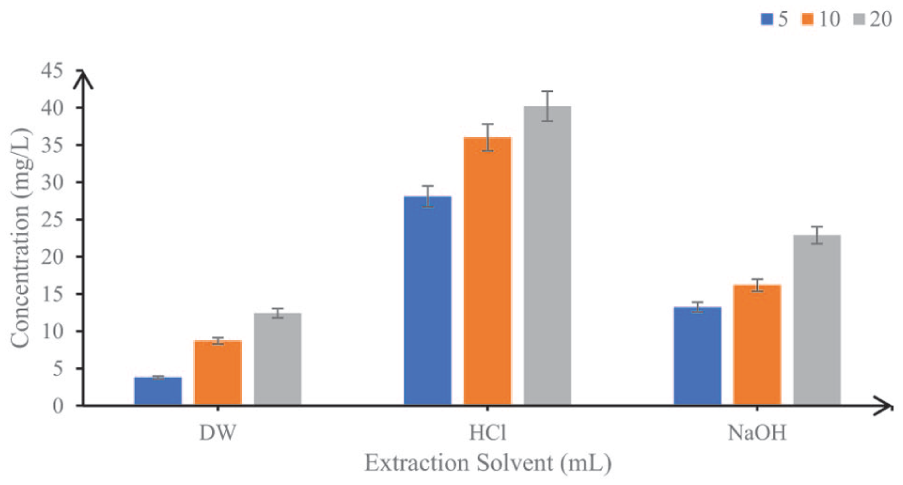
Effect of extraction solvent on potassium recovery from used disposable diapers.
The significantly higher recovery of potassium from used DDs by HCl proves it to be an effective strong extraction solvent. NaOH was also effective in potassium recovery, while DW recovered a lower quantity of potassium, is nevertheless an environmentally friendly and cheap solvent. The observed results confirm that the largest proportion of recoverable potassium in DDs is due to post-use retention rather than to initial content. Recovery of potassium in used DDs is thus a viable opportunity for plant nutrient recovery, sustainable agricultural production, and environmentally responsible waste management systems.
Potassium recovery efficiency of different solvents
The findings suggest that HCl was most effective in the extraction of potassium with 5, 10, and 20 g sample values of 28.1 ± 0.4, 36.01 ± 0.4, and 40.21 ± 0.3 mg/L, respectively, as it is illustrated in Figure 4. This indicates that potassium is efficiently dissolved from the DDs matrix under acidic conditions, likely owing to the powerful ion-exchange capability of HCl, which breaks the bonds separating potassium from the polymeric units. 49 The current observed result aligns with previous studies that have reported the effectiveness of acid solvents in the extraction of potassium from organic waste. 50 Hydrochloric acid was reported to significantly enhance leaching of potassium from composted food waste.51,52 Similarly, NaOH reported to promote potassium recovery from agricultural residues, supporting the findings observed in this study. 53 This study also aligns with previous studies that reported the limitations of using DW, citing its reduced solubilization capacity compared to acid- and alkali-based extractions. 54 This study differs from existing research studies that mainly focused on food waste, crop residues, and municipal solid waste and wastewater as sources of nutrients.55–57 This study introduces used DDs as a novel resource, thus expanding the scope of sustainable nutrient recovery. 58
The recovery of potassium with NaOH as solvent was moderate with concentrations 13.23 ± 0.3, 16.19 ± 0.7, and 22.89 ± 0.9 mg/L, based on the quantity of shredded used DDs waste utilized. Since alkaline conditions would promote the degradation of organic matter rather than the release of potassium ions directly, the lower efficiency relative to HCl can be explained by differences in solubility mechanisms. 59 Earlier studies on biomass processing have indicated that while NaOH is efficient in breaking down organic structures, it is less than acids at facilitating potassium extraction. 60 While NaOH can contribute to the disintegration of materials, it is not the optimal solvent to achieve the highest release of potassium from used DDs, considering the modest recovery obtained here.
Distilled water had the lowest extraction efficiency with the following values: 3.80 ± 0.1, 8.71 ± 0.8, and 12.4 ± 0.7 mg/L. Probably because DW does not have any reactive ions to dissolve the DDs matrix and trigger a mild release of potassium, the poor solubilization effect is anticipated. 38 Similar results are found in the experiments of leaching nutrients from organic wastes and that water as a solvent by itself is inadequate to provide enough chemical interaction for leaching considerable amounts of potassium. 61 Regarding the efficient recovery of potassium, this work points toward the necessity for more chemically active solvents due to low recovery.
Influence of diaper mass on potassium recovery
There was a steep increase in potassium recovery in all solvents, with an increase in DDs mass indicating an association between sample volume and the recoverability of nutrients. As shown in Figure 4, the 20 g sample exhibited the highest potassium recovery across all solvents. Besides, the increase in potassium concentration was not strictly linear, suggesting partial mass transfer limitations at higher solid loading. Increased viscosity of the extract solution at higher solid content may reduce mixing efficiency and diffusion rates. 62 Similar non-linear extraction responses at elevated solid-to-liquid ratios have been reported in nutrient recovery from composted materials and sewage sludge. 63
Potassium concentration in HCl solutions exhibited a strong positive correlation of mass and recovery from 28.1 ± 0.4 mg/L for 5 g to 36.01 ± 0.4 mg/L for 10 g, and 40.21 ± 0.3 mg/L for 20 g. NaOH, an alkaline solvent, interacts with the DDs absorbent material and releases potassium ions, but it has a moderate ability to dissociate the interactions between potassium and polyacrylate. This implies that while increasing mass, NaOH performance in potassium extraction is limited by the strength of such interactions. The steady increase (from 13.23 ± 0.3 mg/L at 5 g to 22.89 ± 0.9 mg/L at 20 g) is a sign that while there is increasing material that produces increasing extractable potassium, the alkaline medium is not maximizing its release as effectively as that of the acid medium.
Distilled water is a non-reacting solvent and lacks chemical reactivity to break ionic bonds between potassium and the polyacrylate within the DDs. Hence, it elutes loosely bound potassium only, which yielded the lowest recovery values (3.80 ± 0.1 mg/L at 5 g to 12.4 ± 0.7 mg/L at 20 g). This limited extraction capacity, as shown in Figure 4, indicates that without a reactive agent, only a minor fraction of the potassium is mobilized from the DDs matrix. The rate of increase, however, differed between solvents, indicating that the strength of the solvent and saturation effects also have important roles to play, though mass influences recovery. Diffusion constraints would most likely be the cause of the non-linear rise, reflecting decreasing returns for higher masses, especially in distilled water. 64 The steady increase from 13.23 ± 0.3 mg/L at 5 g to 22.89 ± 0.9 mg/L at 20 g is a sign that while there is increasing material that produces increasing extractable potassium, the alkaline medium is not maximizing release as well as the acidic one.
This study confirms that potassium is effectively recovered from used DDs using acid-based solvent extraction, with HCl yielding the highest recovery (40.21 ± 0.28 mg/L). The method provides a novel alternative to conventional composting or thermal treatment approaches, offering faster, chemically targeted recovery of plant nutrients. In regions like Tanzania, where potassium deficiency and fertilizer costs limit crop productivity, the recovery of potassium from widely available DD waste presents a low-cost and locally adaptable solution. Beyond nutrient recycling, this process addresses pressing solid waste management challenges and aligns with circular economic principles. The findings hold practical implications for improving soil fertility, reducing fertilizer import dependency, and supporting sustainable agriculture and environmental health in urbanizing areas.
Environmental and circular economy implications
After nutrient extraction, the residual solids from used DDs are mainly composed of plastic back sheets, degraded cellulose fibers, and partially depleted SAPs. 27 These residual materials may be directed at several downstream waste management pathways. Mechanical separation can enable recovery of plastic components for recycling while the cellulose-rich fraction could potentially be processed through controlled composting or waste-to-energy systems. 65 Integrating nutrient recovery with existing municipal waste management infrastructure would therefore reduce the volume of untreated DDs waste entering landfills while maximizing resource recovery. Such integration supports circular waste management strategies by converting hygiene waste into valuable secondary resources.
To illustrate the potential contribution of this approach to nutrient recycling, a conceptual recovery scenario was developed based on the experimental potassium concentrations obtained in this study. The results indicate that approximately 40 mg/L of potassium could be recovered from 20 g of used DDs material under optimized extraction conditions. A report show that in average, an infant uses 4–6 DDs per day, 66 and considering the large number of infants in urban areas, the cumulative amount of recoverable potassium could become substantial when scaled to the municipal level. For example, if only 10,000 infants in a city generate approximately 50,000 used DDs daily, and each DDs contributes a recoverable potassium fraction under similar extraction conditions, the resulting nutrient-rich extract could represent a meaningful supplementary potassium source for agricultural use.
Such recovery has important implications for sustainable agriculture, particularly in regions where soils are potassium-deficient. In Tanzania, many agricultural soils suffer from declining fertility due to limited fertilizer application and high fertilizer import costs. Recovering potassium from urban hygiene waste could therefore contribute to local nutrient recycling while reducing dependence on imported potassium fertilizers. The recovered nutrient solution could potentially be processed into diluted liquid fertilizers or incorporated into integrated nutrient management systems for crops with moderate potassium requirements. This integrated approach ensures that the proposed potassium recovery strategy contributes not only to nutrient recycling but also to improved urban waste management practices.
Conclusion and outlook
This study confirms the feasibility of recovering potassium from used DDs through solvent extraction, with HCl proving to be the most efficient solvent. Potassium recovery increased consistently with sample mass, reaching up to 40.21 mg/L using HCl. Distilled water offered a more environmentally sustainable, though less efficient, alternative, while NaOH demonstrated moderate extraction efficiency. The recovered potassium has the potential to serve as low-cost fertilizer, providing an affordable alternative to potash, commonly mined from evaporite deposits, thus supporting more sustainable agricultural practices and reducing environmental pollution from excessive chemical fertilizer use.
Scaling up this method could involve integrating potassium recovery processes into urban waste management systems, particularly in rapidly growing cities like Dodoma. This would create a circular economy model that simultaneously tackles waste management challenges and nutrient scarcity. Smallholder farmers could benefit directly through access to affordable, locally sourced potassium fertilizers, enhancing soil fertility and crop yields.
Future work should include agronomic testing, such as controlled greenhouse trials, to evaluate the bioavailability and effectiveness of recovered potassium when applied to crops. Such studies would validate the practical benefits and inform optimized application rates. Also, data modeling to evaluate broader sustainability scenarios and waste management impacts could further strengthen the discussion and expand the implications of this study and will be considered in future research.
From a policy perspective, these findings could support the development of national waste reuse strategies and fertilizer subsidy programs targeted at potassium-deficient regions. Promoting nutrient recovery from DDs aligns with Tanzania’s sustainability goals and offers a pathway to reducing dependency on imported fertilizers while addressing environmental health concerns.
Footnotes
Acknowledgements
The authors acknowledge Mkwawa University College of Education for financial support through Grant Agreement No. MUCE-HPD23047. Also, Dr Shakila Mteti, Dr Chakupewa Mpambije and Dr Ashura Jackson are recognized for their potential support during sample collection and funding acquisition.

Ethical considerations
The authors confirm that all ethical considerations have been addressed in accordance with international and institutional guidelines.
Consent to participate
All authors have provided their consent for publication of this work.
Author contributions
All listed authors contributed significantly to the preparation of this manuscript. Their specific roles are as follows:
Funding
The authors disclosed receipt of the following financial support for the research, authorship, and/or publication of this article: The study leading to these results received funding from University of Dar es Salaam through Mkwawa University College of Education under grant agreement no. MUCE-HPD23047.
Declaration of conflicting interests
The authors declared no potential conflicts of interest with respect to the research, authorship, and/or publication of this article.
Data availability statement
This study did not generate publicly available datasets; however, the data supporting the findings of this study are available from the authors upon reasonable request.
Clinical trial
Not applicable for this study.
Clinical trial number
Not applicable for this study.