







Abstract
The concern with the performance of football referees has opened lines of investigation in areas such as technical and physical performance. Theoretical and analytical gaps regarding the causes of their performances in a holistic perspective are scarce. The purpose of this study is to understand how various processes of personal, career development and contextual nature influences the classification of football referees. The literature review on excellence and the performance of the referees allowed to define a model that contemplates three distinct areas: 1) personal experience; 2) sports course; 3) surrounding context. The model to understand the causes of the performance of the Portuguese referees was obtained by comparing the classification of referees for national boards between the periods of 2009-10 and 2018-19 with the relative data to their age, experience as a federated player and referee, region density and proximity to peers of national board. The results show that the performance of the referees is influenced by a set of processes such as individual experience, sporting background and the context. This article opens a new perspective on the referees' training process. Its content may constitute an important insight for the implementation of referee training programs, namely at the base.
Introduction
The analysis of excellence is a research topic that has been addressed for a long time ago in sport, but remains actual in several domains and particularly in football referees. 1
Previous research in the sports domain revealed that the development of talent corresponded to a process, characterized by a constant involvement, in which there is a growing identification with the area of performance and a progressive increase in pleasure. 2 Subsequent investigations demonstrated the importance of engagement in highly structured activities with a view to progressive performance improvement. 3 Simultaneously they gave rise to a debate on which the most appropriate way to reach the level of excellence: deliberate game of deliberate practice. 4 , 5 In between, the role of family, coaches, and peers in the development of expertise was emphasized, 6 not only in the introduction to sports practice but also in support during the transition moments experienced, which are not restricted to the sports plan. These moments can relate to a set of specific requirements in one or several domains, such as relationships, lifestyle, career, or professional situation. 7 The way the individual faces them will always have potentially positive or negative consequences 8 hence the relevance of family or peer support.
Thus, the process of acquiring expertise is dynamic and comprises a series of transitions related to the function and life in general. In these moments of transition the referees seek to support significant elements. 9 Accordingly, Mack et al. 10 identified four key stages of referee career development, ranging from previous experience as a federated player to the performance of referee functions in higher categories, and characterized by the existence of a mentoring process. 11 Recent research on sports talent has shown that the population size of the athletes' birthplace is assumed to be a predictive element for success in certain modalities. 12 , 13
In the analysis of excellence and career development of referees, previous research has revealed that referees’ expertise results from the confluence of the following factors: mastery experience; knowledge/training as a referee; support from other significant people; physical/mental preparation and perceived anxiety and environmental comfort. 14 Also, the achievement of physical (e.g., superior physical components), psychological (e.g., attributes of mental resistance; seeking to improve the performance level; game management qualities; multifaceted pre-game preparation), and environmental (e.g., support networks and services; opportunities to thrive) conditions were considered key aspects for the development of expertise in football referees. 15 In sum, the various studies point out that the career development for the excellence of a referee can be defined as a dynamic and continuous learning process that evolves according to personal experiences, the achievements in sport development stages, and the opportunities afforded by the context. 16
In many cases, it is started even before attending an initial training course through a federated sport.10,11,17 The attainment of a higher level of proficiency is the result of the combination of a set of personal characteristics with the contextual aspects. The former includes physical and psychological attributes when these are enhanced through adequate preparation and accumulated experience.18,19 The social support network, proximity to models 20 or integration in positive learning environments 21 are the aspects of the environment most referred to in the literature as fundamental to obtain a good performance. However, there is a lack of knowledge regarding the influence of different aspects on referees’ performance. Thus, further research is required to understand the relationship between personal experiences, sports stages of development, the context to explain expertise, and the performance of football referees. Based on previous findings the present study aims to understand how personal experience, the sports career development stages and the surrounding context influenced the performance of football referees.
Method
Participants
Data was collected on the official constitution of referees on the three main Portuguese national categories between the 2009/10 and 2018/19 seasons. From a population of 520 referees, 52 elements belonged to the 1st category, 196 to the 2nd category and 486 to the 3rd category. Participants were part of the national board for 1 to 10 seasons. The population was born between 1964 and 1997 and, on average, was 32 years old at the time of data collection.
Data collection
The classification of the referees at the end of each season (CR) between 2009-10 and 2018-19 were collected from the Official Announcements issued by the Portuguese Football Federation (FPF). Personal experience of referees was analysed through the variables age and referee experience in Portuguese Football Federation (REPFF). The referees age was registered considering the age until 31 December of the year in which the season ends. The experience of the referee was considered as the number of seasons spent in the national football boards (Note: the number of seasons of the referee in the regional boards were not considered for analysis due to the difficulty to do the track of their formation. Usually, each referee needs at least three years to achieve the national level board).
The sport development stages were analysed through the variables number of years as football player (NYFP) and previous ranking as referee (PR). The NYFP was retrieved from the official base of the FPF https://www.fpf.pt/Players as the number of years that the referee was registered as a football player. The PR was obtained from Official Announcements issued by the FPF being considered the referee's rating in the previous season.
The surrounding context was evaluated through the variables number of referees in national level (NRNL), number of referees in the first league (NRFL) and region density (RD). The first and second variables were registered from the FPF database. The values of RD of each Regional Football Association (AF) were registered from the 2011 Census, the last one carried out in Portugal. The AF with the lowest population in the region under its tutelage has a total of 33,337 inhabitants, while the one with the highest is 2 250 533.
Data analysis
Means, standard deviation and Pearson bivariate correlation among all studied variables were analysed. The classification of the referees at the end of each season (CR) was considered as the dependent variable. To standardize the positions obtained by the referees at different seasons and between the three categories, each classification was converted into a ranking, per season, from 1 to 250. As such, the higher the number, the worse the ranking.
Then, it was performed a path analysis through structural equation modelling (SEM) via maximum likelihood estimator in AMOS 23.0 to test the model fit and direct and indirect paths among all variables under analysis.22,23 SEM was performed according to the traditional goodness-of-fit indexes: comparative fit index (CFI), Tucker-Lewis index (TLI), standard root mean residual (SRMR), root means square error of approximation (RMSEA) and its confidence interval of 90% (CI: 90%). For the mentioned indexes, suggestions from several authors22,23 were followed: CFI and TLI greater than or equal to .90; SRMR and RMSEA less than or equal to .80. In addition, the standardized direct and indirect effects were analysed among all studied variables. Bootstrap resampling (1000 samples), via bias corrected 95% confidence intervals' (CI) was performed to evaluate the significance of direct and indirect effects. Based on Hayes 24 and Williams and Mackinnon 25 recommendations, an effect is considered significant (at ≤.05) if its CI – 95% does not include zero, trivial (0–0.19), small (0.20–0.49), medium (0.50–0.79) and large (0.80 and greater).
Results
Preliminary analysis
Before data analysis, a several preliminary procedures were considered: (1) the required sample size, was determined via G * Power 3.1, 26 and following input parameters were considered: f2 = .10; α = .05; statistical power = .95; and 9 predictors). Results revealed that 245 is a minimum required sample size, and therefore was respected in the present study; (2) a preliminary analysis revealed that missing values is less than 0.1%, and consequently the Full Information Maximum Likelihood estimation (FIML) were considered for analysis 27 ; (3) no violations from univariate data distribution were founded since all skewness and kurtosis values were comprised into + 7/−7 and + 2/−2, respectively 23 and no outliers both univariate and multivariate; (4) the multivariate data distribution indicated that the Mardia coefficient of multivariate kurtosis exceeds the recommended value (>5). Consequently, the bollen-stine bootstrap (2000 samples) was performed in further analysis 28 ; (6) finally, the tolerance and variance inflation factor (VIF) tests were used to check the collinearity diagnosis. Results from the previous mentioned tests, revealed that the cut-off values of both tests were meet (Tolerance> .01; VIF <10) demonstrating acceptable conditions for regression analysis. The tolerance and variance inflation factor (VIF) tests were used to check the collinearity diagnosis. Results from the previous mentioned tests revealed that the cut-off values of both tests were meet (Tolerance >.01; VIF <10) demonstrating acceptable conditions for regression analysis.22,23
Descriptive statistics and bivariate correlations
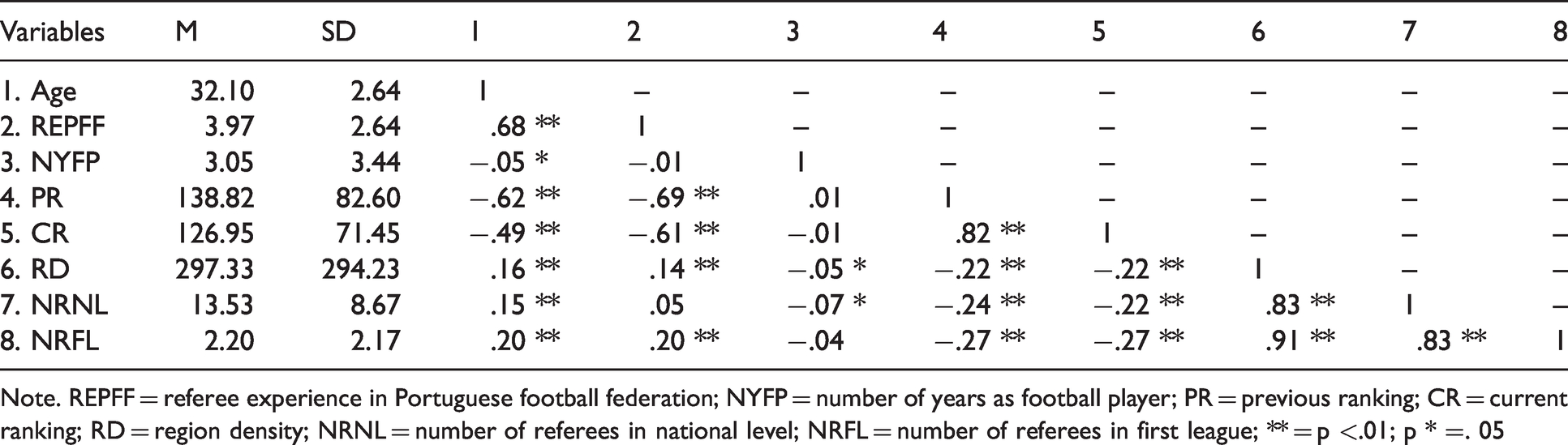
Table 1 shows descriptive statistics and bivariate correlations among variables under analysis. In general, results from bivariate correlations revealed a significant association among all studied variables, with the exceptions between NYFP vs REPFF, vs PR, vs CR and vs NRFL, and between REPFF and NRNL. That is, NYFP was the variable that demonstrated lower correlation with the other variables.
Descriptive statistics and bivariate correlations across variables under analysis.
Note. REPFF = referee experience in Portuguese football federation; NYFP = number of years as football player; PR = previous ranking; CR = current ranking; RD = region density; NRNL = number of referees in national level; NRFL = number of referees in first league; ** = p <.01; p * =. 05
Structural model
The structural model defined in Figure 1 represents the association across variables from personal experience, sport development and surrounding context to explain the current ranking of referees. Each row represents the direction of the relationship between the considered variables for the definition of the current ranking (see Figure 1). Based on the links between variables direct and indirect effects were calculated to understand the contribution of its variable to explain the referees’ current ranking
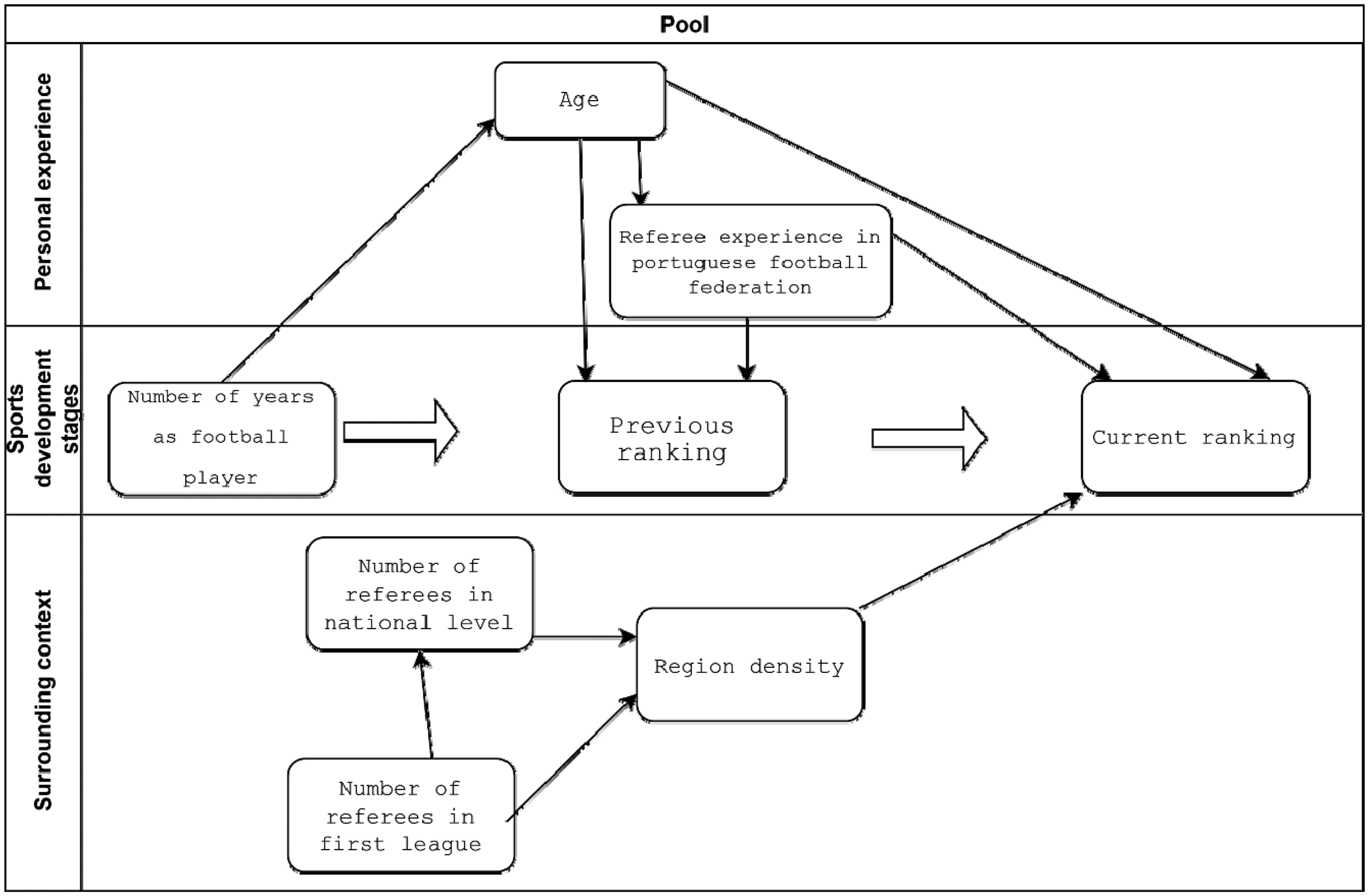
The referee performance model.
The hypothesized model shows a good fit to the data (χ2 = 326.27 (16); SRMR = .080; B-Sp = <.001; RMSEA = .079 [90% CI = .074, .083]; TLI =. 938; CFI = .965).
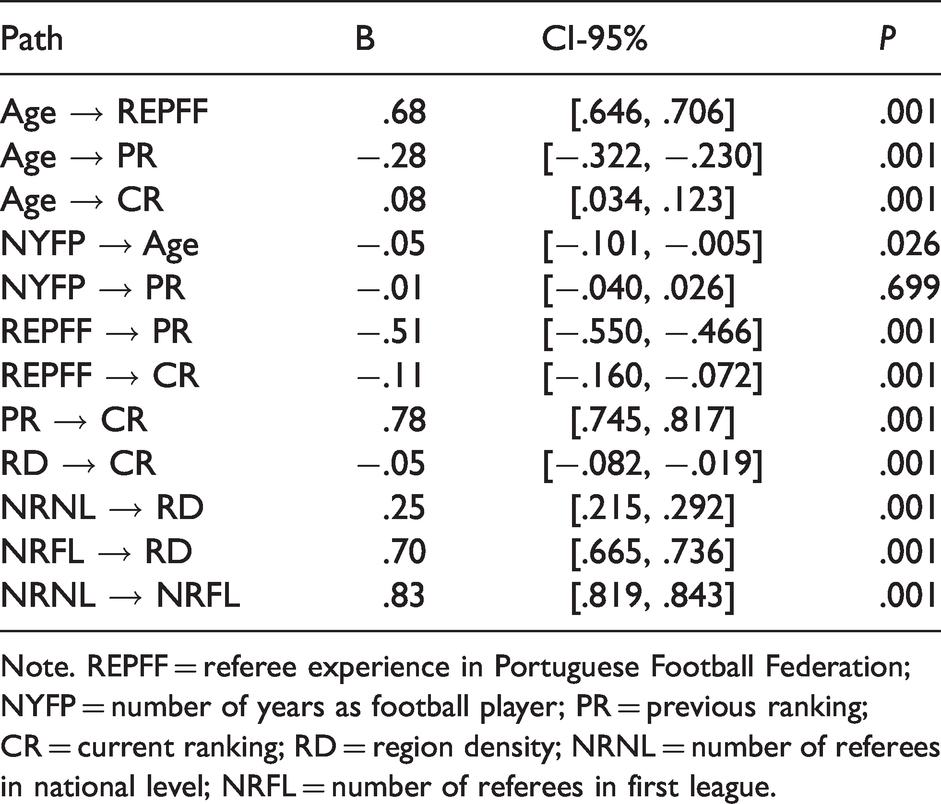
Standardized direct effects (see Table 2) revealed that all paths present a significant effect, expect the number of years as football player and previous ranking. In total the model explains 67% of the dependent variable current ranking.
Standardized direct effects across studied variables.
Note. REPFF = referee experience in Portuguese Football Federation; NYFP = number of years as football player; PR = previous ranking; CR = current ranking; RD = region density; NRNL = number of referees in national level; NRFL = number of referees in first league.
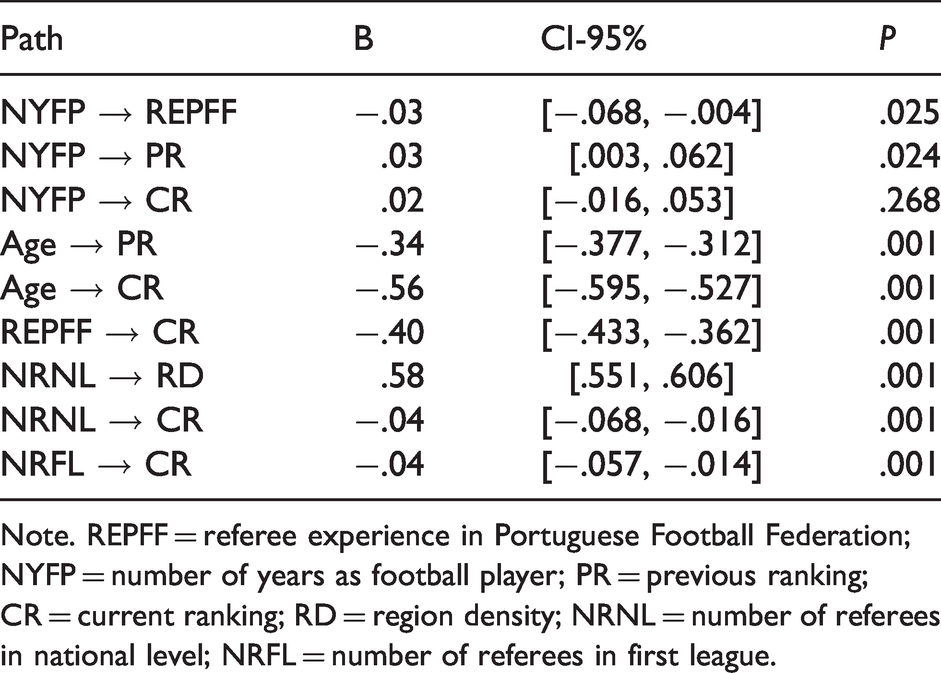
The standardized indirect effects (see Table 3) indicated the following: the number of years of football player negatively predicted referee experience in Portuguese Football Federation via age; and positively predicted the previous ranking via age and current ranking through previous ranking, but not significantly. In its turn, age negatively predicted both previous and current ranking via referee experience in Portuguese Football Federation and previous ranking, respectively; and referee experience in Portuguese Football Federation negatively predicted current ranking through the previous ranking. In addition, the number of referees at national level positively predicted region density via number of referees in the first league and negatively predicted current ranking through density. Finally, the number of referees in the first league negatively predicted current rank via region density.
Standardized indirect effects across studied variables.
Note. REPFF = referee experience in Portuguese Football Federation; NYFP = number of years as football player; PR = previous ranking; CR = current ranking; RD = region density; NRNL = number of referees in national level; NRFL = number of referees in first league.
Discussion
The aim of this study was to understand how personal experience, the sports career development stages, and the surrounding context influenced the performance of football referees. Overall, the results revealed that referees' classification performance is conditioned by the individual's sporting path, which includes various personal experiences, and by the surrounding context. The first includes experience acquired through the practice of refereeing and acquired wisdom. Population density, physical proximity to models and other elements with whom they compete for places are part of the contextual aspects.
Sports development stages
The diversified sports practice before specializing in a particular modality or function has been recognized as advantageous in several sports and, in particular, in football refereeing. 10 A diverse sporting practice – gymnastics, judo, handball, basketball or other sports – before specializing in a sport such as football, or being a goalkeeper, defenseman, striker, coach or referee before specializing in a particular role, such as refereeing, has been recognized as advantageous in several sports and, in particular, football arbitration. The results now presented give consistency to this line of investigation.
The past as a player positively influences the definition of the referees' rankings and confirms that a wide initial exposure to the practice of other non-specific modalities or activities 29 practiced for pleasure and with flexible rules, it contributes to the development of cognitive and motor skills fundamental to the exercise of other functions.4,30
The past as an athlete, however, ends up negatively influencing the length of his career as a referee for the national board. Considering that this relationship is established indirectly by age, it is pertinent to suggest that this fact is related to the age limits imposed in the referee regulation for an individual to join or rise in the category.
Therefore, a long-federated sports practice will delay the start of the course as a referee and, at the same time, limit the possibilities of progress or a long career in the national board. This is only due to the imposition of referee regulations and not by physical limitations arising from the advancing of age by the referees. The literature has provided evidence that older elite referees are able to achieve the levels of physical fitness necessary to meet the demands of matches. 31 Thus, it is suggested for the future that referees’ career should end when they demonstrate not having the functional performance capacities, instead of the age limitation.
The negative effect of the last known ranking in the current ranking of individuals indicates how competitive the competition is for the levels of excellence only accessible to a very restricted group. 32 This effect may also be an indirect reflection of the age limits imposed by referee regulation. The impossibility of progressing in the career is one of the elements that influence the motivation of the referees, 9 a psychological element identified in the literature as fundamental for the exercise of the function, mainly in levels of excellence.33,34
Personal experience
The “personal experience” has a positive predictive effect on the referee's rating performance. It includes a whole set of information that results from personal experiences in refereeing (REPFF) and in different life plans (age). These experiences, which are often related to each other,11,17 contribute individuals to modify behaviour and assumptions about themselves and the surrounding reality throughout life. 35
The age variable is related to the concept of wisdom, as a personal action in favour of the “Common Good” defined through accumulated experience, maturity and affective, cognitive and reflective integration.36,37 Although it seems to be no data demonstrating a significant relationship between wisdom and age, 38 it is expected that a 40-year-old individual will have a more numerous and diverse set of experiences than a 20-year-old who is going through a similar life path, in an area that occupies a large part of his time. 17 It is in this context that intervention programs have emerged in some football clubs which seek to promote a balance between the demands of athletes, inside and outside the sport, through the prioritization of lifestyles and the search for transferable skills. 39 In parallel empirical studies that have been developed on dual careers, the results suggest that a period of withdrawal from competitive sporting requirements provides mental and physical rejuvenation for athletes, in the same way, that the challenges faced during the experience as an elite athlete allow the development of transferable skills dual career and to other fields throughout life. 40
It is the referee experience in Portuguese football federation that has the greatest positive predictive correlation with the individuals' classification performance. The number of years accumulated in the national board is related to the experience in the practice and reflection about refereeing, since it covers the entire period in which the individual has undergone a diverse set of evaluations directed by specialists, from whom he obtained the necessary feedback to initiate efforts with a view to improving his performance.41,42 In this domain we can include all the hours dedicated to physical and technical preparation in training centres or theoretical preparation in the referees' clubs where participants discuss, informally, laws and game situations experienced by the referees and reported in the performance evaluation reports.43,44
Surrounding context
The results point to the existence of an inversely proportional relationship between the population density of the football association's geographic area where individuals are affiliated and their position in the ranking. In this sense, a referee presents a better classification performance when he belongs to a larger demographic cluster. This fact is in agreement with the reference literature, that points to the existence of a relationship between contextual factors associated with the place of birth and the achievement of a high level of proficiency in sports.12,13,45 The influence of the geographical origin begins to be perceived by the referees 17 but also by those responsible for the sector. Thus, the institutional support created to minimize constraints caused by geographical dispersion, such as distance physical training programs, is justified 21 or the use of new technologies in technical training.46,47
In line with that, the indirect effects revealed that the regions with high density were the regions with a high number of referees at the national level, and a number of referees in the first league, and both negatively predicted current ranking through density. It means that regions with a higher population density, increase the possibility of an individual establishing a close relationship with peers from the national board and, especially, from the first division. In this sense, it is justified that the number of referees in the national board and in the 1st division has an indirect effect on the classification of referees.
The literature has highlighted the importance of social interactions in the informal learning development process, namely the relationships established permanently and spontaneously with parents, friends, peers, and mentors.10,48–50 This fact is more relevant if we consider that the referees restrict their relations to the family core and to the peers as they progress in their careers. 17
Research has recognized the importance of proximity to models and significant people directly linked to the sector.10,11,20 They guarantee emotional support in times of transition,9,51 informal monitoring and advice.14,15 In the case of Portuguese referees, the most categorized peers are integrated with the learning process that occurs in a more formal and structured way. The National Training Plan foresees that the elements that conclude the Level 2 Advanced Training Course for Referees, which allows them to ascend to the ranks of national referees, are able to collaborate in the tutorial process of learning and development of other young referees. 45 The referees' clubs promote actions that contribute to the development of other referee agents, filling the lack of organizational support felt by the referees of the lowest categories.9,17,52 The activities promoted here are often mediated by other referees, better categorized, and not by official referee technicians with whom there is a hierarchical relationship. 50 This procedure facilitate: i) a greater contextualization to the specificities of the group 53 ; ii) valuing and developing the participants' self-esteem; iii) the formation of a collective identity.54,55contrast, the proximity between peers, which are not necessarily those in the first division, has another relevance: it contributes to increasing competitiveness. The dispute for the same positions can increase the intrinsic motivation of individuals to train more and more efficiently, 56 somewhat similar to what was seen when two brothers are practicing the same sport. 57
Conclusions
Concluding, this study revealed that referees' performance classification is conditioned by the individual's sporting path, which includes several personal experiences, and by the surrounding context. The first includes experience acquired through the practice of refereeing and acquired wisdom. Belonging to regions of greater population density and the high number of experienced referees seems to promote contact with referee models and favourable learning environments, which positively reflected in the referees' performance classification. The results of this investigation demonstrated the importance of several processes of a contextual nature in the performance of a referee, something that has deserved little attention from the literature.1,11
This study presents a limitation to the fact that it does not include predictive elements and/or aspects related to the physical capacity or psychological skills of referees. On the other hand, from an exogenous point of view, the importance of variables related to the family, school, professional and organizational context should also be considered for the future. Research has already alluded to the difficulties that individuals have in reconciling the academic and/or professional path with career progression as football referees resulting from the greater demand of the latter. 17
The insight provided may influence future interventions in the training and development of referees, which may involve the reformulation of specific tutoring programs for Portuguese referees in a more holistic perspective 58 and not so focused only on aspects sports such as one conceived in the national active referee training plan. 45 On the other hand, the recognition of the advantages of a previous federated practice can contribute to a later structuring of the referee's career, which, at this moment, is conditioned by the age limits and the requirement to remain in each category for a minimum period before the ascent. If organizations recognize advantages of a previous federated practice, such as being a football player before being a referee, they can reduce the minimum length of stay in the basic categories to these elements that have already had prior contact with the game. Not doing so, is conditioning the careers of these individuals who enter the referee career late because they were players before. This is because the career progression is dependent, according to the legislation, on the age of each element, in addition to its performance.
Footnotes
Declaration of Conflicting Interests
The author(s) declared no potential conflicts of interest with respect to the research, authorship, and/or publication of this article.
Funding
The author(s) disclosed receipt of the following financial support for the research, authorship, and/or publication of this article: This research was partially supported by Portuguese Foundation for Science and Technology, I.P., grant number UID04045/2020, Portugal.
