







Abstract
This systematic review and meta-analysis aimed to assess the effect of using weightlifting movement and their derivatives in training on vertical jump, sprint times, and maximal strength performance. Thirty-four studies were used for meta-analysis with a moderate quality on the PEDro scale. Meta-analysis showed positive effects of weightlifting training, especially when combined with traditional resistance training on countermovement jump performance, sprint times, and one-repetition maximum squat (ES = 0.41, ES = −0.44, and ES = 0.81, respectively). In conclusion, results revealed the usefulness of weightlifting combined with traditional resistance training in improving sprint, countermovement jump and maximal strength performance.
Introduction
Weightlifting movements are ballistic resistance exercises that involve great acceleration of the segments through the entire movement resulting in mobilization of the barbell at high velocities. 1 There are two kinds of exercises, the snatch (SN) and the clean & jerk (C&J), which are performed in the sport of weightlifting. 2 Outside of weightlifting competitions, weightlifting derivatives such as hang snatch, clean pull, and push jerk exercises are commonly used during strength and power training programs.3–8
The use of weightlifting is popular in both fitness and sports fields. In particular, weightlifting exercises have been suggested as a useful tool to improve jump height and muscular strength 9 due to the biomechanical, neural, and muscular characteristics of these movements. According to the literature, several reasons could be argued in favor of weightlifting exercises. From a neuromuscular perspective, compared with traditional exercises such as the squat or deadlift, weightlifting exercises show decreases in muscles’ coactivation. 1 These differences in the neuromuscular pattern are linked to improvements in muscle-tendon unit stiffness,10,11 resulting in an optimization of the stretch-shortening cycle. 12 Another important advantage of weightlifting exercises is not only the great number of muscle groups recruited during these movements 13 but also the substantial levels of muscle activation achieved, 14 similar to isolated traditional exercise. 15 Compared to traditional resistance exercises, weightlifting movements show greater velocity and power values. 16 This can be potentially explained by the ballistic component and the nature of the weightlifting exercises, since they allow to apply force during a greater range of movement than traditional exercises.17–20 Besides, the second pull of weightlifting is characterized by an explosive triple extension action of the ankle, knee, and hip joints, 21 which is similar to main sports actions such as a vertical jump22–26 and a sprint. 26 Thus, the inclusion of weightlifting movements within strength training programs is meaningful, due to the potential transfer to many sports actions’ performance.27–29
Despite the widely reported usefulness of weightlifting movements in improving sprint and jumping performance,3,30,31 their superiority to other resistance training methods is controversial. 32 However, from a practical point of view, most athletes’ training programs use a combination of traditional and weightlifting exercises. Thus, the present review and meta-analysis aimed to assess the effectiveness of isolated weightlifting training, isolated traditional resistance training, and a combination of them in improving one repetition maximum (1RM), jumping and sprinting performance.
Methods
A systematic review of the literature and meta-analysis were conducted and reported following the Preferred Reporting Items for Systematic Reviews and Meta-analyses (PRISMA) guidelines. 33
Data search and sources
Potential studies were identified via a comprehensive strategy. The electronic database search was carried out in PubMed, Scopus and Google Scholar database (restricted to the first 1000 citations) from the inception up to 12 December 2020. The search strategy included the terms “Weightlifting”, “Snatch”, “Power clean”, “Hang clean”, “Clean and jerk”, “Split jerk”, “Push jerk”, “High pull”, “1RM”, “Jump”, and “Sprint”. References from the original studies included were searched for further relevant investigations. Besides, the authors of the included articles were contacted to identify possible additional published and unpublished studies.
Study selection
Eligibility criteria were established according to PIO (participants, intervention, and outcomes) guidelines. We selected studies performed with healthy male or female participants regardless of age. All studies should have weightlifting exercise included in the experimental group or compared weightlifting with other training methodologies. In this sense, we sorted the intervention groups as weightlifting in isolation (WL group), traditional training (TD group) and combined training (CB group). The classification was made according to the training volume (i.e. sets × repetitions) of lower-limb exercises because output analysis in this meta-analysis refers to lower-limb performance. Interventions were allocated in the WL group if athletes performed weightlifting (SN or C&J) exercise or its derivatives from catching (exercises that include catch phase) and pulling (exercises that exclude catch phase) in isolation or training volume of weightlifting exercises were more than 50% of total training volume. If weightlifting exercises were performed with other strength exercises and weightlifting training volume was less than 50% of total training volume, they were included in the CB group. Strength training that did not meet the criteria for being included in the CB or WL group, was allocated to the TD group. Each selected study had to assess 1RM squat, sprinting -up to 40-yards, and/or jump performance and agree with a single and multi-intervention study. Only articles published in English were selected. For studies with more than one article based on the same sample, inclusion was limited to just one of them.
Three reviewers (R.S., J.L.H., A.G.) independently analyzed the titles and abstracts of the articles retrieved from the literature search and reviewed the full text of the selected articles. Any disagreement between the reviewers regarding study inclusion was resolved by a fourth investigator (A.M.).
Methodological quality
Reviewers classified articles according to PEDro scale for reporting on the methodological quality. 34
Computation of effect sizes and statistical analysis
The literature search revealed studies that included a control group (CG) and studies without a CG. To not discard studies without a CG, we included all of them and, as a consequence, our analysis unit was the group, not the study. Thus, for each group, the standard mean difference (SMD) was used as the effect size (ES) index. SMD was defined as the difference between pretest and post-test means divided by the standard deviation at baseline, then corrected by the factor for small samples (dfE,C). 35 Although between-group ES exhibits better internal validity than within-group ones, using one-group pretest–post-test ES is recommended in the meta-analytic arena when there are many studies without a CG. 36 To perform statistical analysis, a random-effects model was applied using the restricted maximum likelihood (REML) estimator for calculating within-study variance estimated, which has been proved to be reasonably robust even in the absence of normal data distribution. 37 A first analysis consisted of calculating the mean ES with its 95% confidence interval (CI), the heterogeneity test, Chi2, and the I2 index.38,39 Statistical analyses were considered significant at p < .05. The practical relevance of each ES was interpreted with the Cohen's criterion (trivial: < 0.2; small: 0.2–0.49; moderate: 0.5–0.79; large: ≥ 0.8). 40 The heterogeneity was interpreted depending on I2 magnitude as no heterogeneity (< 25%), low (25–49.9%), moderate (50–74.9%), and large heterogeneity (> 75%).38,41
In case of substantial heterogeneity (Chi2 < 0.05 and/or I2 > 50%), random-effects meta-regression for continuous moderator variables (i.e. participant age, total training session, and publication year) and subgroup analysis for categorical moderator variables (i.e., training frequency [≤ 2, 3, and ≥ 4 days a week], length [≤ 8, 8–12, and >12 weeks], and performance level) were carried out to explain the heterogeneity. The performance level was sorted by 1RM squat lift according to the strengthlevel.com database. Nevertheless, studies that did not provide strength values were sorted by comparing height CMJ to Hoffmann et al. 42 In both cases, the cut-off value was determined to percentile 5, 20, 50, 80, and 95 for beginner, novice, intermediate, advanced, and elite category, respectively.
To investigate the robustness of our results, sensitivity analyses were carried out. We assessed the impact of including or excluding outliers. To assess outliers, we used the outlier-labelling rule. 43 Besides, publication bias analyses were carried out through the Egger test 44 and the nonparametric trim-and-fill method. 45
Statistical analyses were performed using RStudio (version 4.0.2) with the “meta” package (version 4.14), “dmetar” package (version 0.0.9000), and “metafor” package (version 2.4).
Results
Literature search
The literature search process resulted in a total of 2350 articles. Initially, all duplicate articles were removed (122 articles dismissed). A total of 2228 remained, and a further 2157 were removed after screening using the title and abstract. The full text of the remaining 71 articles were reviewed for more detailed evaluation and resulted in the exclusion of 37 articles. Based on the eligibility criteria, 34 articles were included in the final analysis (Figure 1).
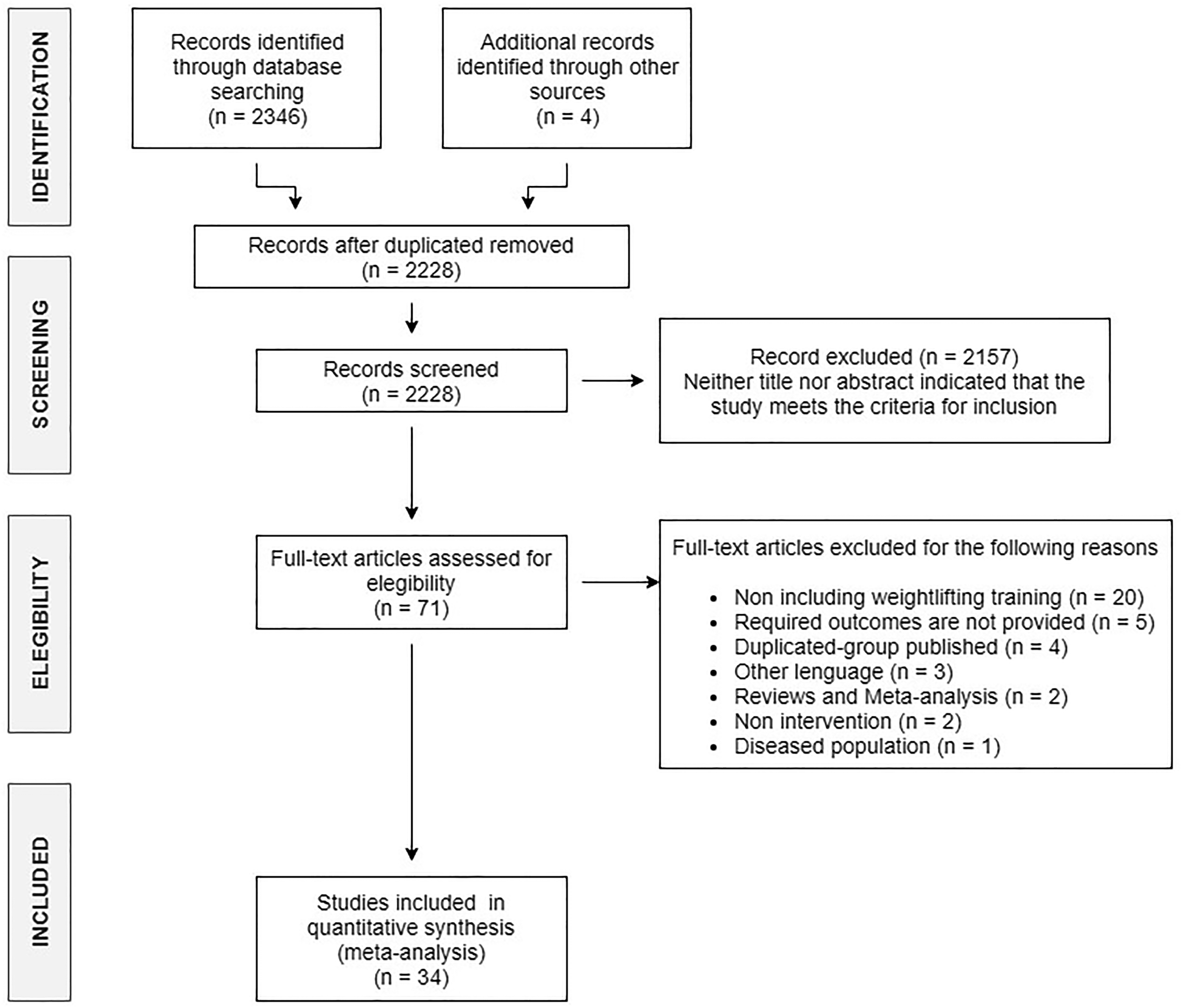
Selection of studies included in the meta-analysis. PRISMA flowchart.
Methodological quality
All studies included in the meta-analysis were classified by the PEDro scale and had a range of 4–7 points. Thus, they were considered to be of moderate quality. The 34 studies included along with the result of the PEDro scale are described in Table 1.
Characteristics of studies.

y: Years; rep: Repetition; d: Days; wk: Week; CMJ: Countermovement Jump; SJ: Squat Jump; DJ: Drop Jump; NA: Not an available; WL: Weightlifting and its derived; TD: Traditional Weightlifting; C: Control; PL: Plyometric Training; IK: Isokinetic; HC: Hang Clean; HS: Hang Snatch; Catch: Power Clean with Catch phase; Pull: Power Clean without Catch phase; KBG: Kettlebell Training; EDLG: Explosive Deadlift Training; RDL: Romanian deadlift; RPE10: 0–10 rate of perceived exertion scale.
Outcomes
Pooled analysis showed a statistically significant improvement after training in all analyzed variables (p < .05), and the ES magnitudes showed a small to moderate change for SJ (number of analysis units [k] = 34; n = 372; SMD+ = 0.31 [95% CI = 0.22, 0.40]; Figure 2), CMJ (k = 43; n = 536; SMD+ = 0.33 [95% CI = 0.21, 0.46]; Figure 3), sprint (k = 23; n = 304; SMD+ = −0.38 [95% CI = −0.55, −0.21]; Figure 4), and 1RM squat (k = 28; n = 345; SMD+ = 0.58 [95% CI = 0.38, 0.79]; Figure 5).
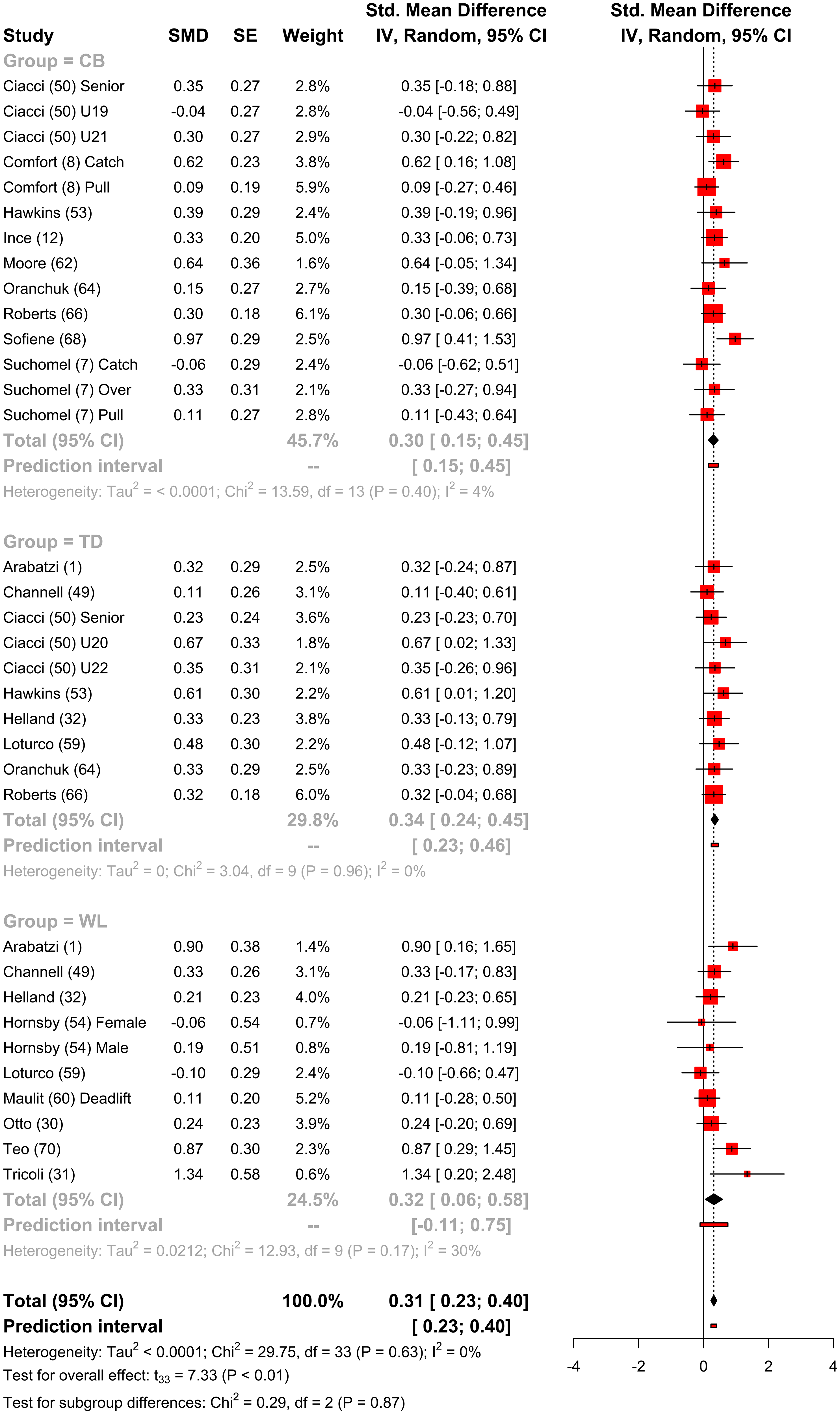
Meta-analysis of the effect of three type of exercises (CB = weightlifting and derivatives combine with traditional exercises; TD = only traditional exercises; WL = only weightlifting and derivatives exercises) on squat jump performance. Values on x-axis denote standarised mean differences (SMD). Random effects model with predictive interval. The predictive interval indicates the range within which we expect the effects of 95% of future studies will be. For studies that had multiple study group, the effect are presented independently and are marked as it is called on original paper.
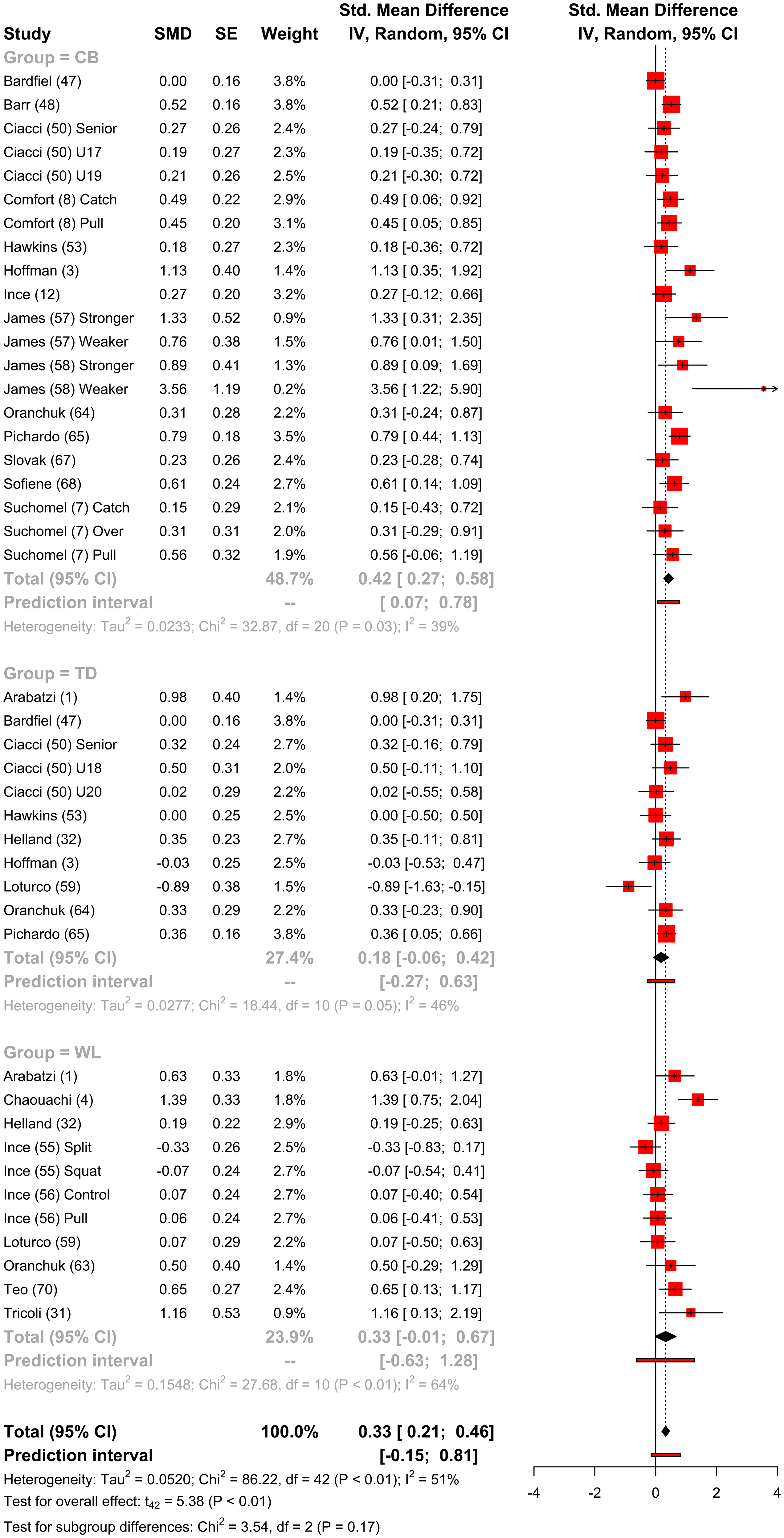
Meta-analysis of the effect of three type of exercises (CB = weightlifting and derivatives combine with traditional exercises; TD = only traditional exercises; WL = only weightlifting and derivatives exercises) on countermovement jump performance. Values on x-axis denote standarised mean differences (SMD). Random effects model with predictive interval. The predictive interval indicates the range within which we expect the effects of 95% of future studies will be. For studies that had multiple study group, the effect are presented independently and are marked as it is called on original paper.
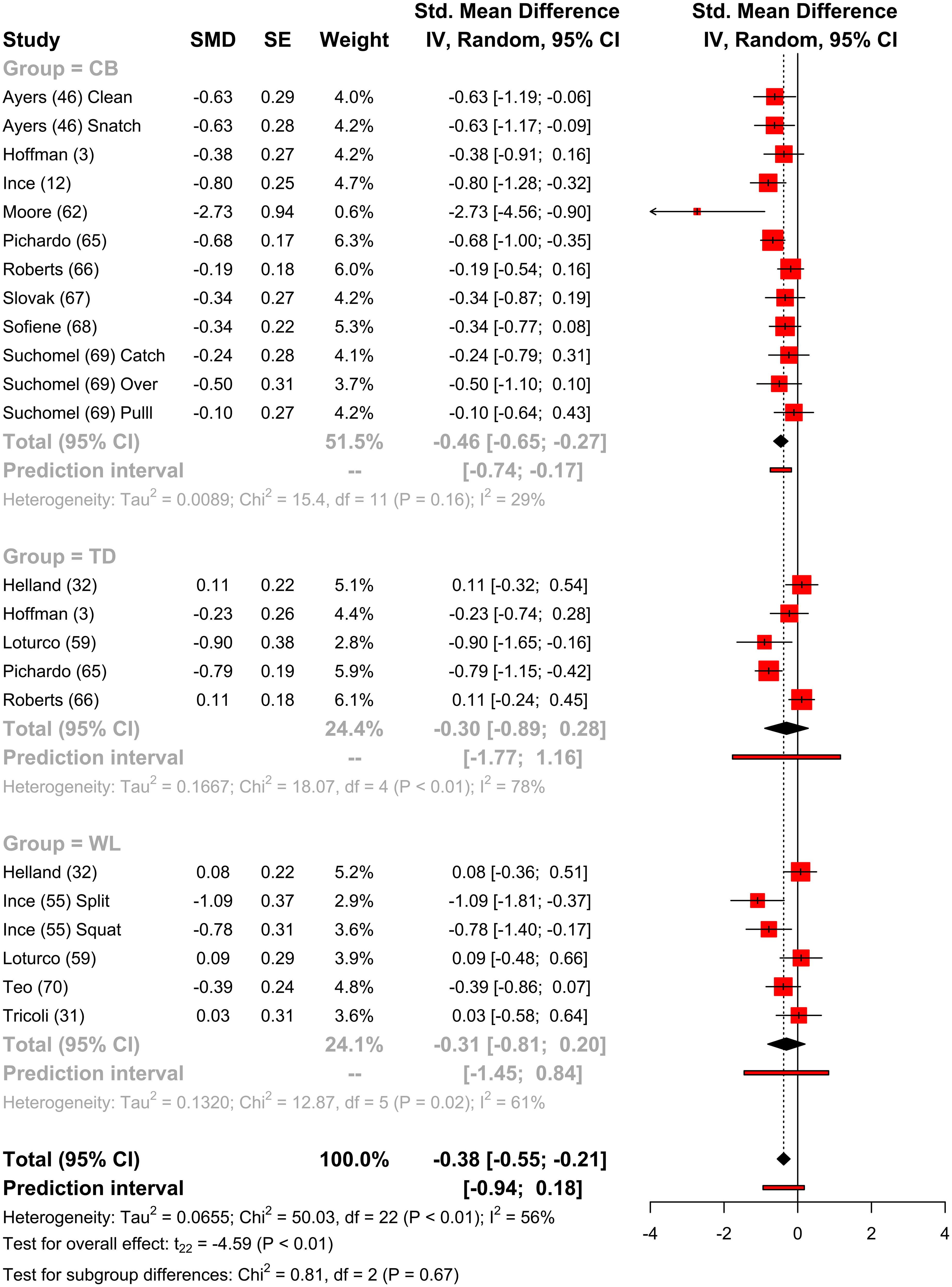
Meta-analysis of the effect of three type of exercises (CB = weightlifting and derivatives combine with traditional exercises; TD = only traditional exercises; WL = only weightlifting and derivatives exercises) on sprinting performance. Values on x-axis denote standarised mean differences (SMD). Random effects model with predictive interval. The predictive interval indicates the range within which we expect the effects of 95% of future studies will be. For studies that had multiple study group, the effect are presented independently and are marked as it is called on original paper.
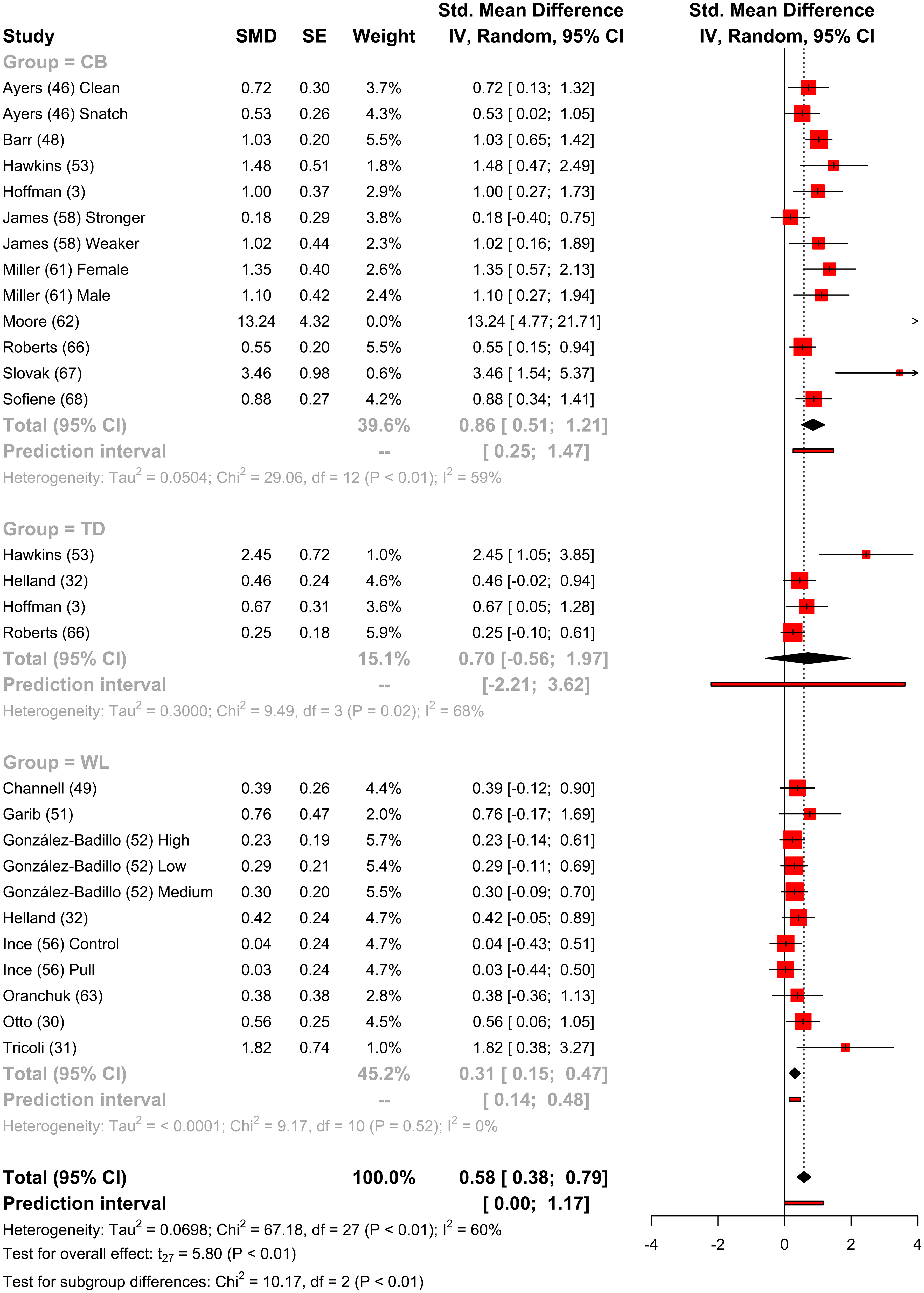
Meta-analysis of the effect of three type of exercises (CB = weightlifting and derivatives combine with traditional exercises; TD = only traditional exercises; WL = only weightlifting and derivatives exercises) on squat strength. Values on x-axis denote standarised mean differences (SMD). Random effects model with predictive interval. The predictive interval indicates the range within which we expect the effects of 95% of future studies will be. For studies that had multiple study group, the effect are presented independently and are marked as it is called on original paper.
Subgroup analyses showed no statistically significant differences between training methods (i.e. CB, WL, and TD) for SJ (QM = 0.29; p = 0.866), CMJ (QM = 3.54, p = 0.171) or sprint (QM = 0.81, p = 0.666), but for 1RM (QM = 10.17, p = 0.006). However, heterogeneity analyses of the overall SMD reached statistical significance with moderate inconsistency for CMJ (I2 = 51%, p < 0.01), sprint (I2 = 56%, p < 0.01), and 1RM (I2 = 60%, p < 0.01), while no inconsistency was found for SJ (I2 = 0%, p < 0.630). Therefore, moderator analyses were performed for CMJ, sprint, and 1RM.
Analysis of moderator variables on the ESs of CMJ, sprint, and 1RM squat
Meta-regression analysis did not show results influenced by continuous moderators’ variables described before. However, several categorical variables showed an influence on the training-induced effect on CMJ (Table 2), sprint (Table 3), and 1RM (Table 4) results. Regarding moderator effect in CMJ, the higher frequency of training showed a higher ES (SMD+ = 0.51) than the lower frequency (SMD+ = 0.21). For the sprint, the performance level influenced the result, since the inexperienced participants (SMD+ = −0.71) achieved better results than the experienced (SMD+ = −0.38). On the other hand, for 1RM, the length of the intervention was positive for 1RM squat (SMD+ = 0.94) regardless of increasing frequency (SMD+ = 0.53).
Results of analysing the influence of categorical moderatos variables on effect for CMJ.
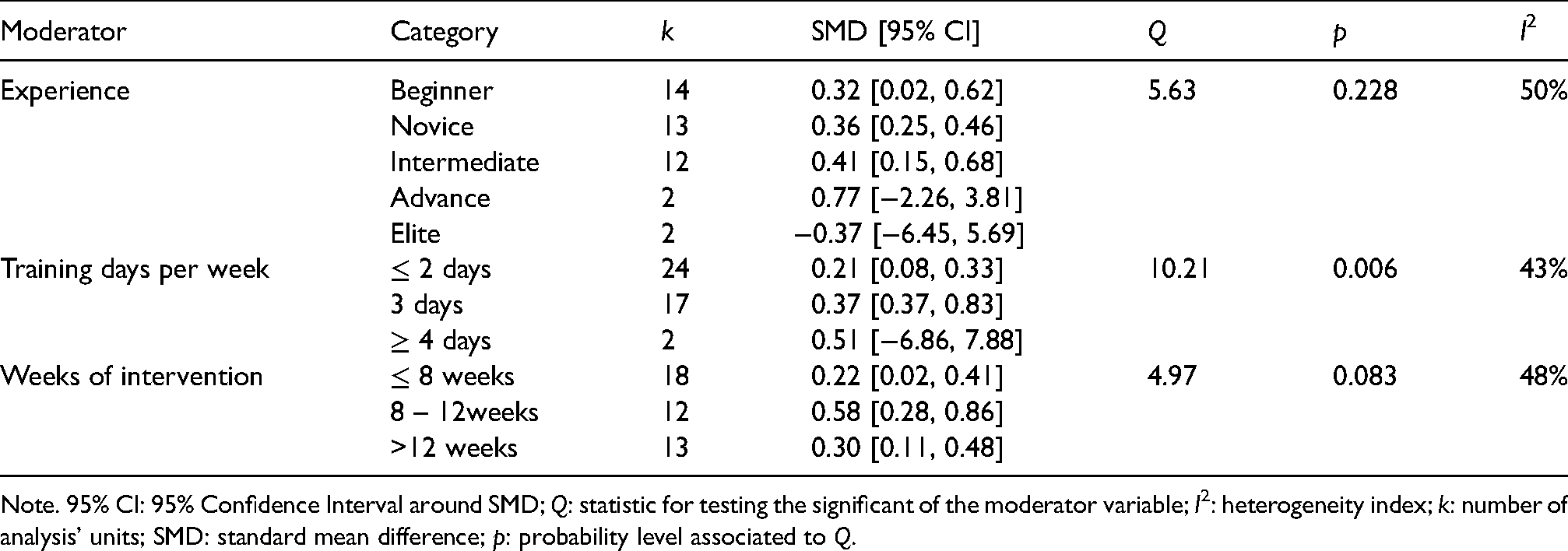
Note. 95% CI: 95% Confidence Interval around SMD; Q: statistic for testing the significant of the moderator variable; I2: heterogeneity index; k: number of analysis’ units; SMD: standard mean difference; p: probability level associated to Q.
Results of analyzing the influence of categorical moderatos variables on effect for sprint.
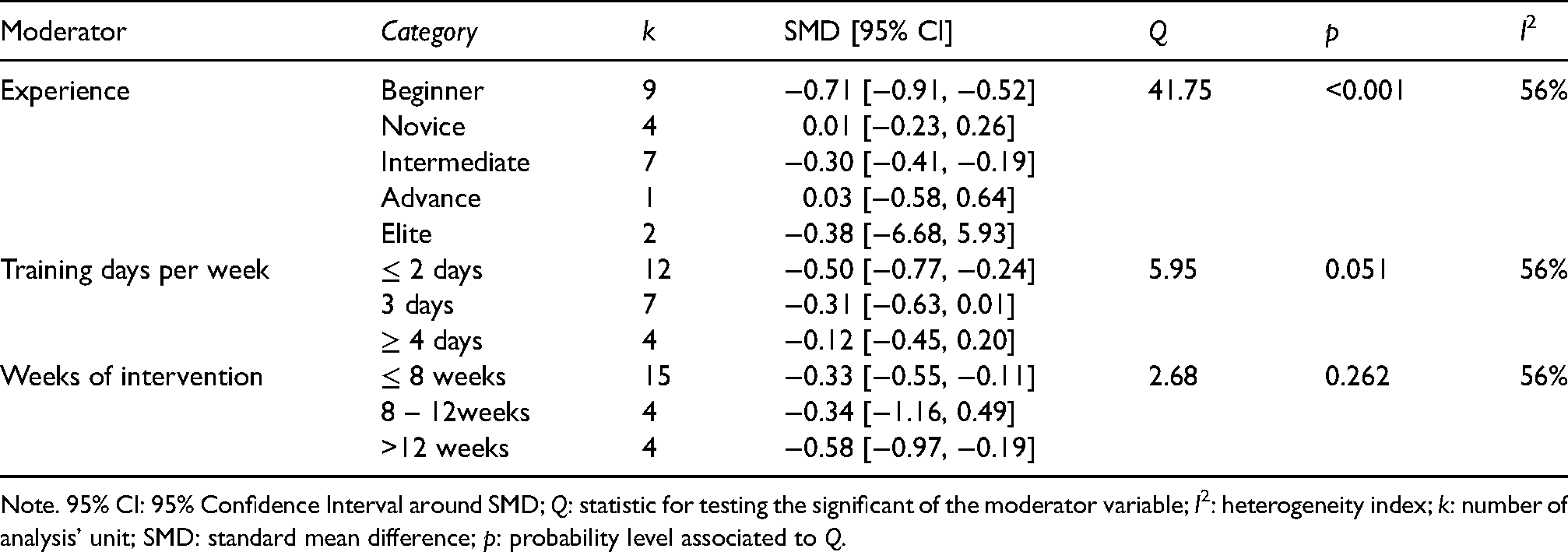
Note. 95% CI: 95% Confidence Interval around SMD; Q: statistic for testing the significant of the moderator variable; I2: heterogeneity index; k: number of analysis’ unit; SMD: standard mean difference; p: probability level associated to Q.
Results of analyzing the influence of categorical moderatos variables on effect for 1RM squat.
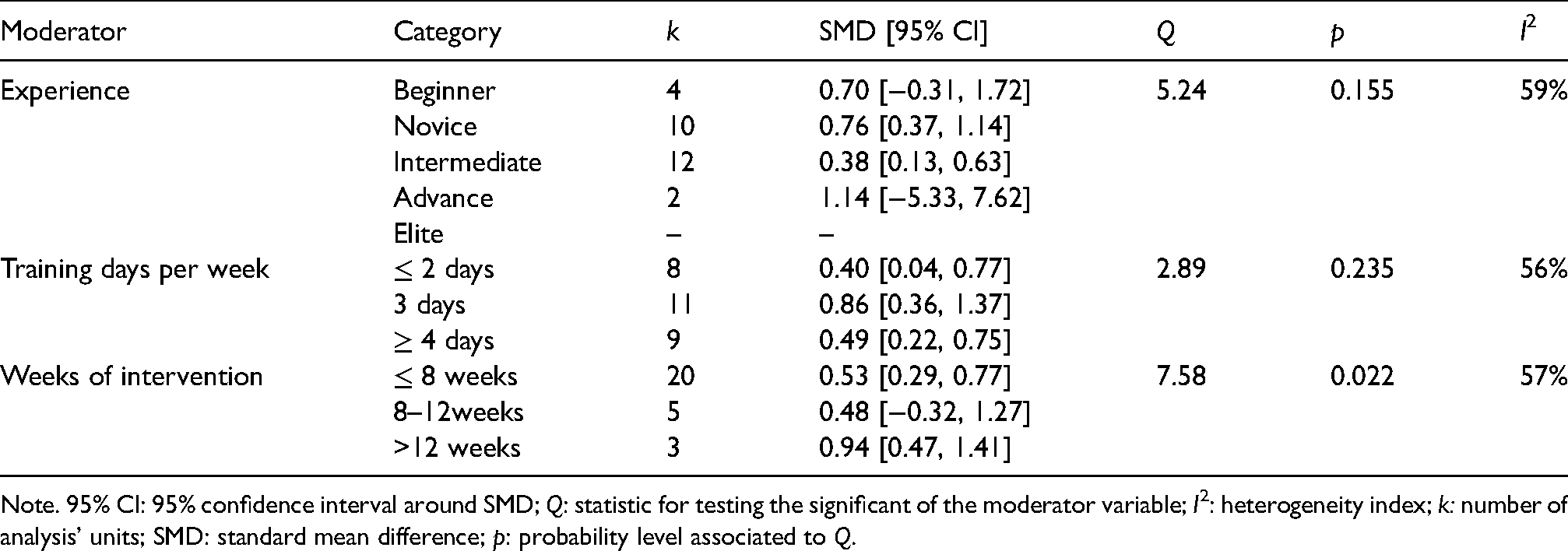
Note. 95% CI: 95% confidence interval around SMD; Q: statistic for testing the significant of the moderator variable; I2: heterogeneity index; k: number of analysis’ units; SMD: standard mean difference; p: probability level associated to Q.
Sensitivity analysis
Outliers were found for the SJ, CMJ, sprint, and 1RM sensitivity analysis. Thus, for SJ with a lower critical value (SMD = 0.22) and an upper critical value (SMD = 0.40), the outlier was Sofiene et al. 68 (SMD = 0.97). For CMJ, with a lower critical value (SD = 0.21) and an upper critical value (SMD = 0.46), the outliers were Chaouachi et al. 4 (SMD = 1.39), İnce 55 for the split group (SMD = −0.33) James et al. 58 for weaker group (SMD = 3.56), and Loturco et al. 59 (SMD = −0.89). For sprint, with a lower critical value (SMD = −0.55) and an upper critical value (SMD = −0.21), the outlier was Moore et al. 62 (SMD = −2.73). For 1RM squat, with a lower critical value (SMD = 0.38) and an upper critical value (SMD = 0.79), the outliers were Hawkins et al. 53 (SMD = 2.45), Moore et al. 62 (SMD = 13.24), and Slovak et al. 67 (SMD = 3.46).
The analysis was carried out after removing the outlier. The conclusion was similar to before removing the outliers in all variables (Table 5). In contrast, the heterogeneity showed a stronger decrease for CMJ (from I2 = 51% to I2 = 26%, p = 0.07) and 1RM (from 60% to 43%, p < 0.05).
Results of meta-analysis after removing outliers.
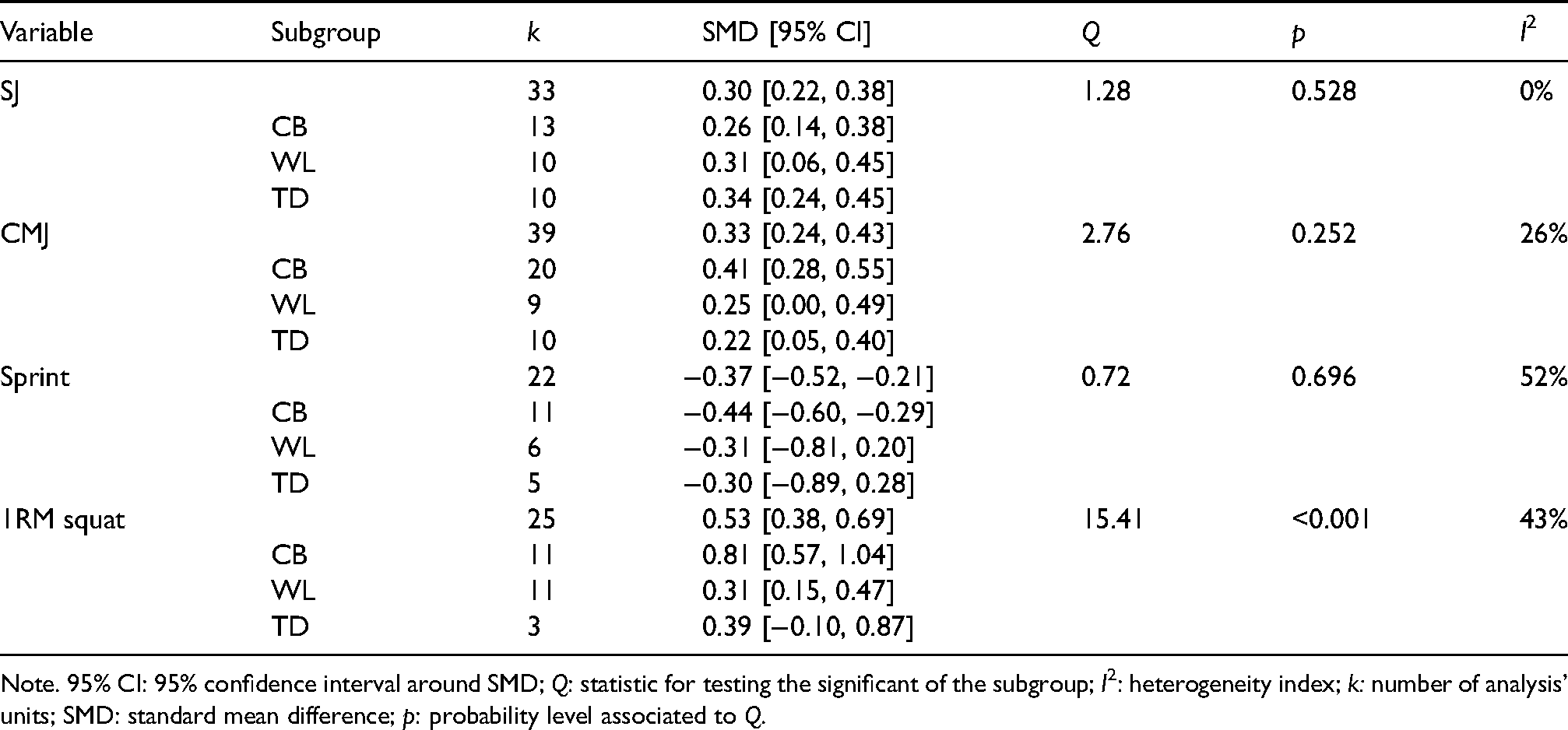
Note. 95% CI: 95% confidence interval around SMD; Q: statistic for testing the significant of the subgroup; I2: heterogeneity index; k: number of analysis’ units; SMD: standard mean difference; p: probability level associated to Q.
Publication bias
The Egger tests were statistically significant for SJ (t[33] = 2.06, p = 0.047), CMJ (t[42] = 2.38, p = 0.022), and 1RM squat (t[27] = 5.76, p < 0.001). Therefore, the trim-and-fill method was used for imputing missed ESs. Three ESs were imputed for SJ (Figure 6(a)), six for CMJ (Figure 6(b)), and nine for 1RM (Figure 6(c)). After imputing missed ESs, the ES magnitudes were diminished for SJ (from 0.31 [95% CI = 0.23, 0.40] to 0.28 [95% CI = 0.18, 0.38]), for CMJ (from 0.33 [95% CI = 0.21, 0.46] to 0.26 (95% CI = 0.12, 0.41]) and for 1RM (from 0.58 [95% CI = 0.38, 0.79] to 0.42 [95% CI = 0.13, 0.71]). Therefore, publication bias cannot be disregarded as a possible threat to the validity of the current findings for SJ, CMJ, and 1RM.
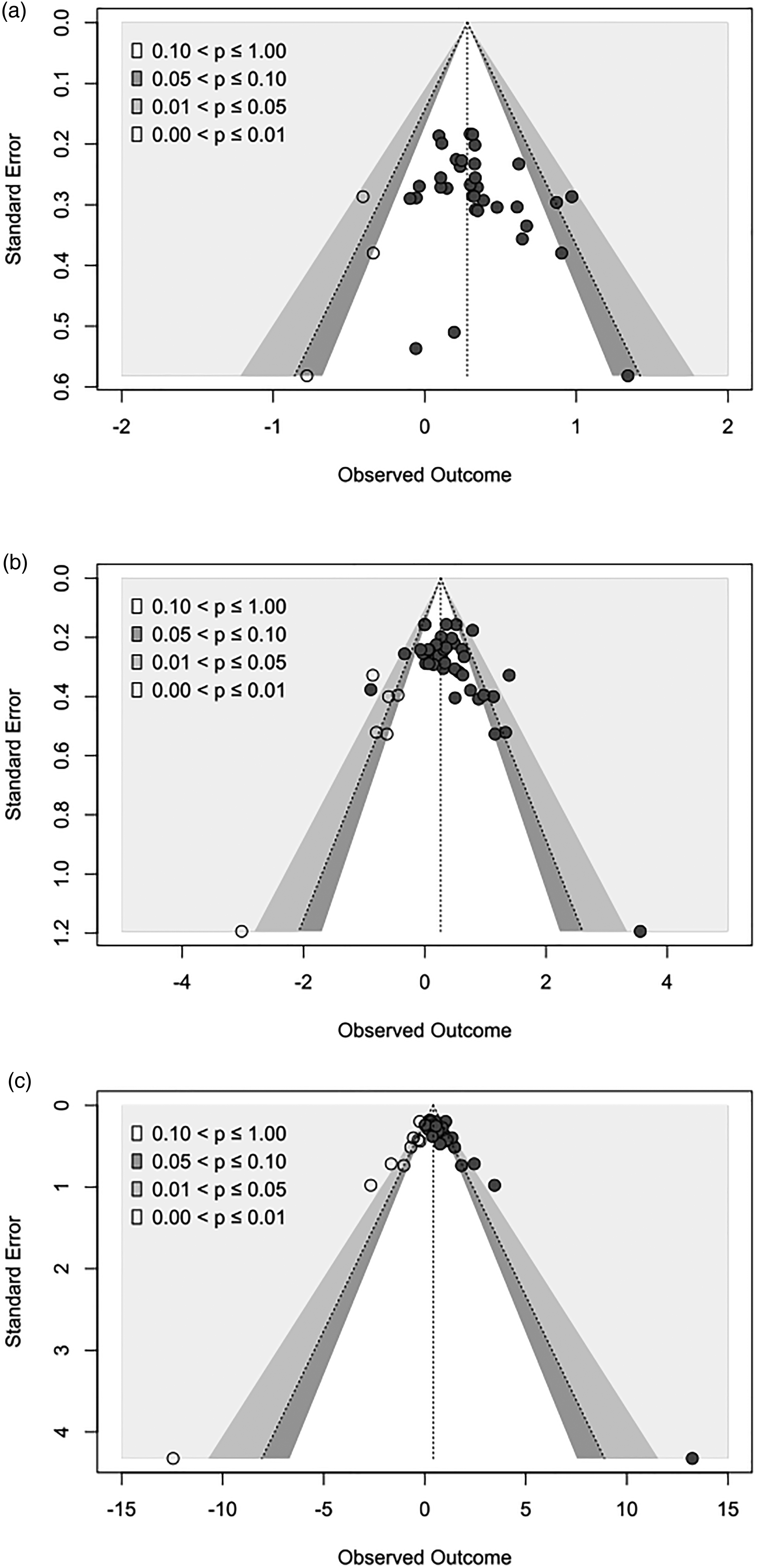
Analysis of publication bias for SJ (a), CMJ (b), and 1RM squat (c). Results of trim-and-fill method are drawn (empty dot are imputed missed effect size). Funnel plot, using data from studies included in meta-analysis.
Discussion
The aim of this meta-analysis was to analyze the effect of isolated weightlifting training, combined weightlifting and traditional resistance training on squat strength, jumping and sprinting performance improvements. Our analysis did not find a significant difference between training groups. However, weightlifting exercises combined with traditional resistance training exercises caused a greater magnitude of changes in CMJ, sprint, and 1RM.
The benefits of including weightlifting movements in training sessions compared to traditional resistance training to improve jumping performance could be dependent on the jump type. Thus, while TD showed a higher magnitude of changes on SJ performance, the groups including weightlifting exercises (WL and CB) showed a greater magnitude of changes in CMJ height. Nevertheless, all groups showed a small effect in both jump types. A reason for the higher magnitude of change in CMJ when weightlifting exercises are used in training sessions could be attributed to changes in muscle-tendon stiffness, 12 which optimize the stretch-shorting cycle required in CMJ. Also, neuromuscular adaptations may explain the greater ES found in CMJ, since they have been linked to the ability to produce higher force levels during explosive movements after weightlifting training.22–26,71 Although there are differences between movements (e.g. weightlifting exercises involve bar acceleration, while the jump involves body mass acceleration), several authors have reported comparable values for peak force and rate of force development between weightlifting and jump tasks.22,25,72 In this sense, several authors22–26 have shown that weightlifting movement patterns are similar to vertical jump. So, the benefits on CMJ performance after WL and CB training found in our analysis may be related to changes in peak force and rate of force development. 73 Since plyometric exercise could increase the effect on vertical jump, the CB group effect could have been influenced by type training. So, a higher SMD was shown for training that combined weightlifting movements and plyometric exercise as in James’ studies.57,58
Another important variable to interpret the results from studies can be the training load. There are differences in the total training load employed in weightlifting training to improve jump performance. For example, in Hawkins et al.'s 53 protocol participants have to complete repetition until muscle failure during training sessions. These authors showed benefits for SJ, but not for CMJ, so training with repetitions until failure may not be a good strategy to improve explosive movements that include the stretch-shortening cycle such as CMJ, but could be a possibility to improve concentric-only movements like SJ, as shown in the TD group. Nevertheless, another variable was confirmed—frequency of training—which is a moderator for improving CMJ performance. In this sense, the present meta-analysis showed that higher frequency (≥ 4 days per week) in studies such as that by Hoffman et al. 3 achieved a higher effect compared with studies with lower training days per week, such as that by Ciacci and Bartolomei 50 (≤ 2 days per week).
Concerning sprinting time, results obtained from meta-analysis showed an unusual result in the Moore et al.'s 62 study, with a very high SMD according to other studies. We repeated the analysis without that study, and the new analysis showed a lower SMD for the CB group (ES = −0.48) and lower heterogeneity (I2 = 34%).
Sprinting performance improvements may be related to changes in the stretch-shortening cycle pattern and increases in the muscle-tendon unit's stiffness, which has been reported after weightlifting training. 1 In this context, some authors have linked muscle-tendon unit stiffness to lower-limb performance, 74 which explains the higher leg stiffness values found in power athletes compared with endurance athletes or untrained populations.75–77 According to the result of moderator analysis, the benefits of weightlifting on sprinting performance are mediated by participants’ level. For example, Pichardo et al. 65 included participants aged between 9 and 14 years old and showed a moderate increase in sprinting performance (ES = −0.68), while Helland et al. 32 measured high-level athletes, showing a lower effect (ES = −0.08) after weightlifting training. Another explanation for heterogeneity between studies may be related to exercises included in the training program. In Loturco et al.'s 59 study, one group carried out weightlifting through the push press exercise, and another group performed jump squat. Push press could not be a specific task compared to jump squat to improve sprinting performance, despite Comfort et al. 78 have shown some similarities between squat jump and push press executions. This might partially explain the greater effects found in the TD group compared with the CB and WL groups.
The last variable analyzed was the effect of weightlifting training on 1RM in the squat exercise. This variable initially showed higher values of SMD in the CB and TD groups, but with an important influence of two studies. The unusual 1RM changes reported by Moore et al.'s 62 (from 70 to 212 kg) and Hawkins et al.'s 53 (from 112.25 to 147.75) studies, made us contact the authors to ask for the original data. Unfortunately, no responses were obtained. For these reasons, we decided to repeat the analysis for this variable without data from those studies. As a result, SMD showed a moderate effect for CB (ES = 0.78) and small effect for TD (ES = 0.39).
The moderate effect on maximal strength after weightlifting training could be explained by the high relative loads used in weightlifting exercises. Loads above 80% of 1RM are required to maximize power output in weightlifting exercises like the SN or the C&J. 79 Therefore, the concomitant factor of the load that maximized power output and a heavy load can be postulated as an optimal stimulus to increase 1RM strength. In this line, Schoenfeld et al. 80 suggested that heavy load training is more effective than lower loads for improving maximal strength. Also, resistance training performed at higher movement velocity is a greater stimulus for enhancing cross-sectional area, force, and power than training at lower movement velocities. 81 In this sense, weightlifting exercises require movements to be performed at maximal intended velocity and usually show higher velocities than traditional resistance exercises such as squat. 82 Velocity is a key point during weightlifting performance and could be an important advantage to improve maximal strength through these movements. A final variable that could take in account, is the training program duration, where longer studies have shown a bigger effect on 1RM than shorter studies.3,48 Despite the usefulness of training programs based on weightlifting exercises in improving explosive actions, the current meta-analysis presents some limitations. An important limitation is the high variability found in participants’ characteristics, including a wide range of ages and, in particular, differences in resistance training experience. Further, the diversity in training program variables (i.e. intensity, volume, program duration) is an important limitation to obtain more solid conclusions. Altogether, these limitations highlight the necessity for more studies, which will allow the detection of any qualitative moderator variable.
Practical application
The main finding in this meta-analysis is that weightlifting and their derivatives are effective for improving sprinting, jumping performance, and squat strength, as long as they are combined with other traditional resistance exercises. Based on the magnitude of changes, it should be highlighted that the combination of weightlifting with traditional resistance training appears to be the most useful strategy to improve 1RM squat, jumping and sprinting performance. Based on the present results, strength and conditioning coaches are encouraged to prescribe combined weightlifting training from 2 to 4 days per week for 8–12 weeks. According to prescription characteristics from studies on this meta-analysis, we can suggest that weightlifting exercises would be carried out over two to six series, with an intensity higher than 75% of 1RM. The use of specific exercises and intensities depending on the periodization phase remains understudied, although research is showing promising results. 83 In this sense, derivatives such as clean/snatch pull from floor, thigh, or knee are strongly recommended for several training phases.
Footnotes
Author contribution
The screening and writing of the manuscript were carried out by R.S., J.L., A.M. and A.G.; the data analysis was performed by A.G. with support from A.M.; the methodology was supervised by J.L. and A.M.; and, the original idea was conceived by R.S. who supervised the project.
Declaration of conflicting interests
The authors declared no potential conflicts of interest with respect to the research, authorship, and/or publication of this article.
Funding
The authors received no financial support for the research, authorship and/or publication of this article.
