







Abstract
In volleyball outside hitters have wide participation in the offensive game. This study aims to analyze the variables that predict attack effectiveness in top-level volleyball depending on gender. Inferential statistics, multinomial logistic regression and multiple correspondence analysis were applied to analyze 1931 attacks (1154 for women and 777 for men) from the six top-ranked teams in the Men and Women World Championships 2018. The analysis revealed that the two genders vary in some aspects of the game at the top level. In order to increase the odds for a winning attack, male volleyball teams must pass the ball to the setter accurately, setting in 2nd fast tempo to zones 4 and 6, enriching offensive options across all the net to avoid attack against an organized block. On the other hand, female teams must set in 2nd fast tempo to the offensive zone (positions 4 & 2), to avoid off-speed attacks, to spike primarily parallel and to take advantage of no block situations. A similarity between genders is that attack against a single block is more difficult and causes lower effectiveness than spike versus open double block.
Introduction
One of the volleyball characteristics that differentiate it from other team games is the rule that requires players to rotate through all positions on the court. 1 This fact and the evolution of the game created the conditions for the specialization of the players depending on the motor tasks that have been assigned to them. This initially resulted in players being categorized as attackers and setters. Thereafter, due to the constantly emerging tactical demands, attackers are distinguished into outside hitters, middle hitters and opposites of the setter. 2 Outside hitters are the players with the higher efficiency after the opposite of the setter in the actions that bring points to their team. 3 The position they have in their team's line-up distinguishes them between outside hitters who play next to the setter (OH1) and outside hitters who play next to the setter's opposite (OH2). 4 When outside hitters are on the offensive line, they play mainly on the left side of the court, in zone 4, which in terms of attack is considered a “safety zone”. This characterization is because it is the dominant setting zone for both men 3 and women setters5,6 given limited setting choices which are often imposed on them by the quality of the previous actions in a volleyball rally. On the other hand, when the rules of the game force outside hitters to play in the defensive zone, they do not limit themselves to their defensive duties, but also participate in the offensive game of their teams. 3
However, this does not seem to be in line for both genders. Indeed, in men, outside hitters’ attacks from the defensive line are part of a strategic offensive plan which is applied mainly in conditions of excellent or very good previous actions. In contrast to this, in women, the attacks of the outside hitters from the defensive line do not seem to be a result of the application of a similar plan since they are used mainly as a necessity in rallies where the quality of the previous action is poor or moderate.5,6
In addition, this difference between genders is not the only one. As it has been found, independently of the in-game role of the players, men attack in faster tempo,7–10 using stronger and more effective aggressive spikes, compared to women.11–14 Besides, it has been shown that the spike ball's speed for men is greater than for women.15,16 Moreover, it has already been found that under the same conditions the absolute muscular strength of the lower part of the female body corresponds to 72% of the strength of the male while of the upper part only 55%. 17 As a result, male attackers perform higher power values than females when spiking 18 and men's game is characterized as more aggressive compared to women's.11,19
In fact, regarding the complexes of the game, it was found that in Complex I (CI: including serve reception-setting and attack) men are riskier in their spikes compared to women,5,20 while in complex II (CII: consists of the serve, block, defence, setting and counterattack) female outside hitters, after “moderate” defensive action, attack from the defensive zone more often than the male ones. 6 Contrary to this, under exceptional conditions of organization of the attack, women outside hitters carry out from defensive zone and within the complex III (CIII: counterattack to a previous counterattack) only 31% of the spikes performed by men. 6 This may be since women tend to avoid risky offensive actions, thus creating favourable conditions for a balance between attack and defence. 12
Although it has been established that outside hitters have a critical role in the game of volleyball 21 and that genders respond differently to some of the game functions, there is no detailed understanding of the variation of technical actions and the performance of the offensive actions for the outside hitters according to their gender. The research hypothesis was that, by analyzing the technical actions of the outside hitters, a detailed determination of the variations between genders would de be established. Therefore, this study aimed to analyze the associations between passing performance, spatiotemporal characteristics of offensive actions and opponents’ block type in terms of each one of the game complexes, in addition to revealing how these affect the performance of the outside hitter concerning attack efficacy for both genders in top-level volleyball.
Methods
Twenty matches (10 for men and 10 for women) of the six top-ranked teams in the third (2 pools of three teams) and the final phase (semifinals, final 1st - 2nd, final 3rd -4th positions) of Men and Women 2018 World Championship were analyzed, which amounted to 79 sets (42 for women, 37 for men). The analysis embraced 1931 attacks from the outside hitters (1154 attacks for women and 777 for men). The dependent variable considered in this research was the attack performance of the outside hitter. The FIVB system criteria were used, as in preceding studies. 22 According to this system, differentiation was made between win attack (win point for the offensive team), lost attack (lost point for the offensive team, attack out of the bounds, on the net or attack stuffed by opponent's block), and neutral attack (continuation of the action with the ball to the offensive or defensive team).
For the identification and selection of independent variables and in order to represent important aspects of attack performance, the independent variables in this study were in line with previous research in volleyball:
Complex of the game. The categories are: side out complex (CI), Complex II or side-out transition (CII), defined as the situation when the team performs the actions of serve, block, floor defence, setting and counter-attack in sequential order, and Complex III or transition of transitions (CIII), defined as the situation when the team performs the actions of a block, floor defence, setting and attack in sequential order.
23
Pass type, defined as the technical criteria related to passing. The categorization was basic forearm pass, side forearm pass, overhead pass, diving pass. Previous action of the attacker, in two categories: when the attacker has passed the ball to the setter or not. Pass performance, defined as the effect obtained during the previous pass (reception, free ball or dig) before setting for the attack. For the evaluation of the grade of the pass quality, a 4-level tactical rating scale (moderate-good-very good-perfect pass) proposed by Eom and Schutz
24
was used. Setting position, defined as the area of the court where the ball was set to the attacker. The categories were: positions 1, 6, 5, 4, 3, and 2 according to the court diagram. Function of the outside hitter,
21
defined as the in-game role of outside hitter according to team's line-up categorized as outside hitter near the setter (OH1) and away from the setter (OH2). Attack type, defined as the technical criteria related to the attack. The categorization proposed by Costa et al.
25
was a strong attack in Parallel (SAP), a strong attack in Diagonal (SAD) and an off-speed attack (OFA) performed with less force. Attack tempo, defined as the interaction between the moment when the setter contacted the ball and the start of the opposite player approach. According to the categorization of Afonso et al.,
26
the categories were: tempo 1 (the attacker jumps simultaneously or before the setter touches the ball), tempo 2 fast (the attacker starts the approach when the ball leaves the setter's hands), tempo 2 slow (the attacker starts the approach when the ball reaches the first half of its upward trajectory after leaving the setter's hands), tempo 3 (the attacker starts the approach when the ball reaches the higher point of trajectory after leaving the setter's hands). Block composition of the opponent, defined as the number of players who participated in a block. Categories were single block (one player), double block (two players), triple block (three players), open block (two players without synchronization and/or open space between them), and no block (zero players).
A three-member group of experienced coaches, with professional coaching experience over 15 years, who hold a PhD and served as junior and senior national team coaches assessed attacks’ characteristics. The reliability of the observations was assured by the inter-observer and intra-observer agreement within four weeks interval to avoid any possible adverse learning effects established. Ten per cent (10%) of the total observations were analysed, according to the minimum value given in the literature.
27
Inter-rater and intra-rater reliability coefficients were estimated using Cohen's kappa coefficient. The intra-rater reliability coefficient Adjusted K Cohen was >0.912 for each one of the three observers which showed very good values.
28
The inter-rater reliability was evaluated in three randomly selected matches, which were analysed by the observers. The inter-rater reliability coefficient Adjusted K Cohen was 0.813, showing a very good value.
28
Before any analysis, data were checked for missing values, and characteristics of independent variables that had frequency <1% were excluded from the analysis.
The objective of the analysis was to determine which variables were significantly associated with attack performance for an outside hitter. Initially, the descriptive analysis of the variables was performed to discover the frequencies of each variable under study. Afterwards, an inferential analysis was conducted to examine the relationships between the studied variables and attack efficacy. This analysis is conducted through contingency tables including Chi-square, Cramer's V values and standardized residuals for each cell in the design. The statistical significance level considered was p<0.05, while Cramer's V interpenetration according to Cohen 29 guidelines was: >0.05 weak, >0.1 moderate, >0.15 strong, >0.25 very strong association. Standardized residuals beyond the range of ±2 (is used by convention instead of 1.96) mean that the specific cell can be considered a major contributor if it is >2, or a very weak contributor if it is beyond -2, to the overall chi-square value.
Furthermore, a multinomial logistic regression was applied to construct models, one for each gender that could determine which of the independent variables are more relevant to the attack performance of an outside hitter in top-level volleyball.
The use of this regression model allows to obtain the regression coefficients reflecting the changes in the explanatory variable (dependent variable) due to the independent variables. 30 The Odds Ratios (OR) and their 95% confidence intervals (C.I.) were calculated.
Finally, a multiple correspondence analysis to represent graphically the information contained in a multiway contingency table 31 was carried out on skills’ data for both genders. All the statistical analyses were performed using IBM SPSS Statistics for Windows 32 and statistical significance was set at p < 0.05.
Results
The first aim of this study was to examine whether attack performance for an outside hitter player was associated with reported frequencies of volleyball characteristics. Within this frame, the categories of first tempo attack, attack positions 3, 1 and 5 have been removed from the Chi-square analysis due to the small proportion (<1%) of responses for these options.
Inferential analysis per gender
The frequencies of reported data of independent variables as well as Chi-square analyses are presented in Table 1 and Table 2.
Descriptive data concerning variables under analysis.
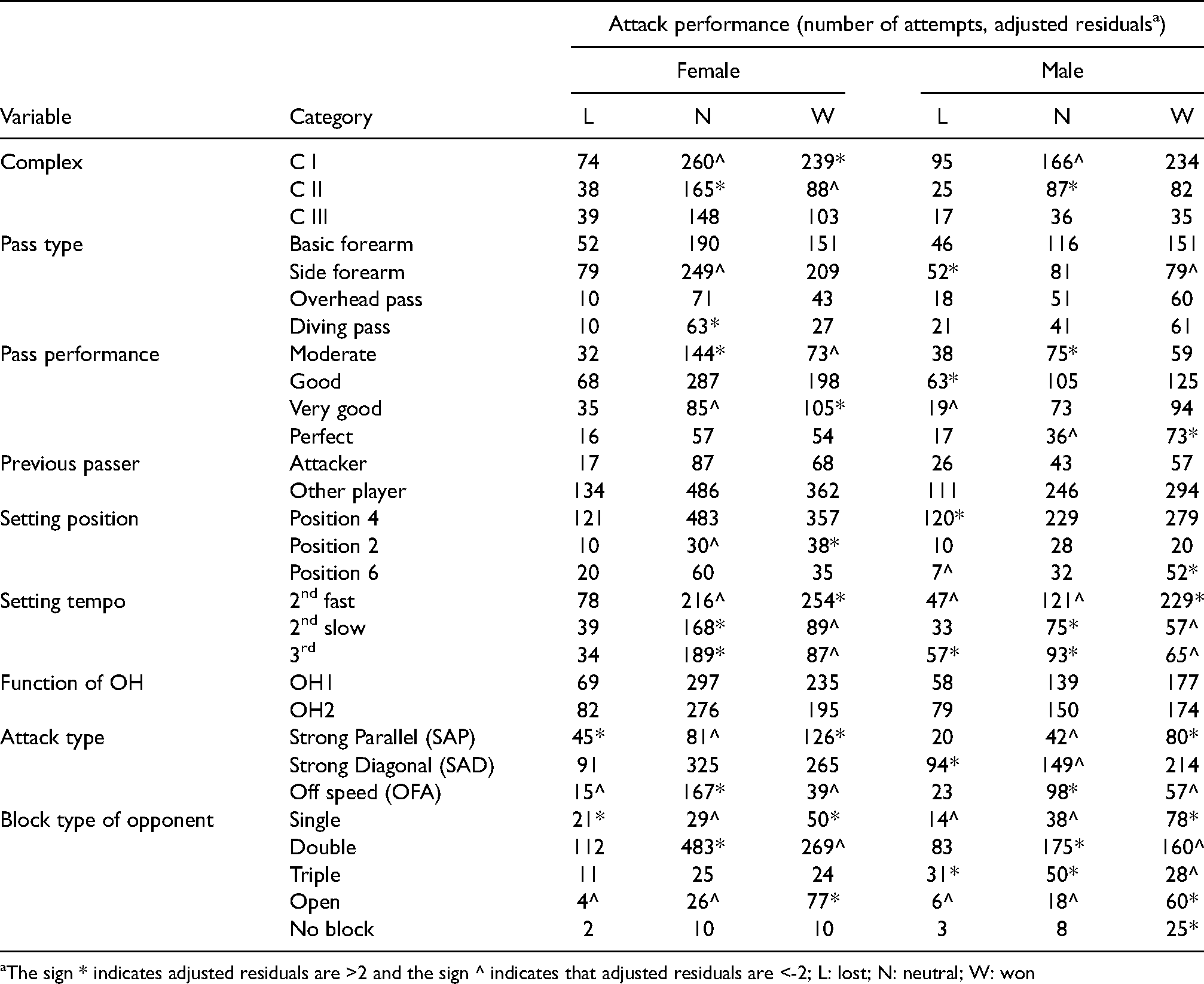
The sign * indicates adjusted residuals are >2 and the sign ^ indicates that adjusted residuals are <-2; L: lost; N: neutral; W: won
Relationships between independent variables and the dependent variable (attack quality) in the female and male gender.
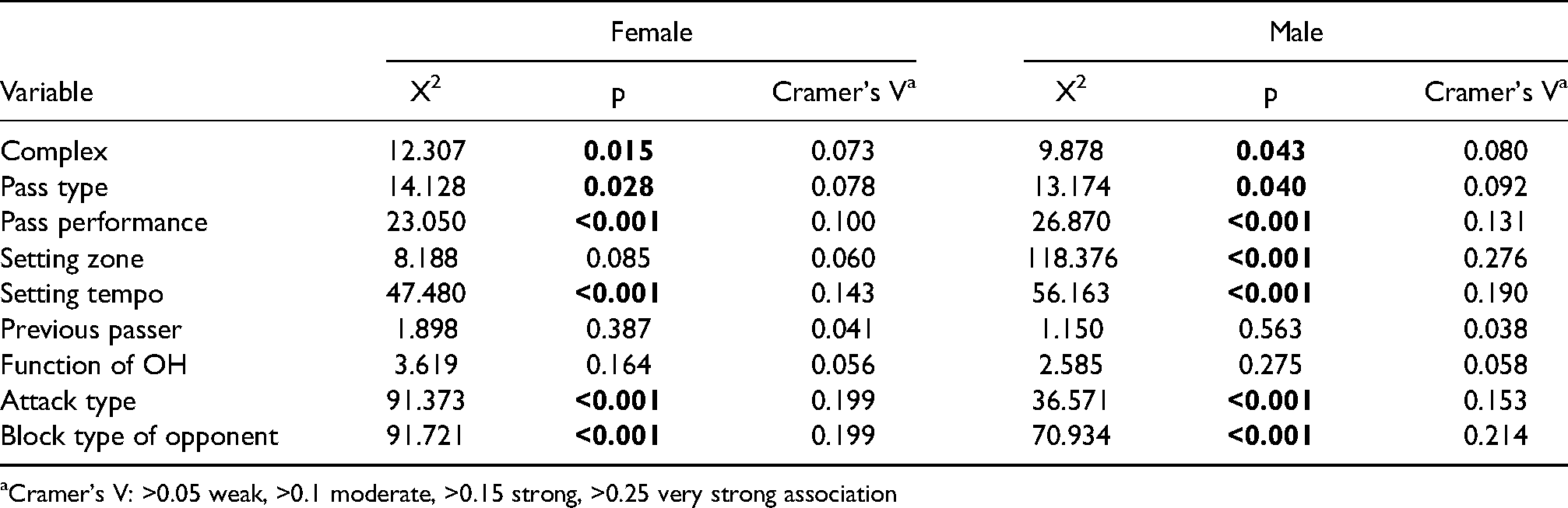
Cramer's V: >0.05 weak, >0.1 moderate, >0.15 strong, >0.25 very strong association
In the male category there was a significant relationship between the attack performance and the following independent variables: complex, pass type, pass performance, setting zone, setting tempo, type of attack and block composition. On the other hand, there was no significant relationship between attack performance and the following independent variables: previous passer and function of the OH. So, these variables could not be included in the multinomial logistic regression model.
In the female category there was a significant relationship between the attack performance and the following independent variables: complex, pass type, pass performance, setting tempo, type of attack and block composition. On the other hand, there was no significant relationship between attack performance and the following independent variables: setting zone, previous passer and function of the OH. So, these variables could not be included in the multinomial logistic regression model.
Multinomial logistic analysis per gender
Table 3 summarizes all the model fitting information of multinomial logistic regression for both genders. In addition to the predictors of the model that contained only the intercept, the fit between the final model and the data improved significantly, for the female gender χ2 (28, N=1154) = 207.041, p < 0.001 and for the male gender χ2 (32, N=777) = 162.336, p < 0.001.
Model fitting information for female and male gender.
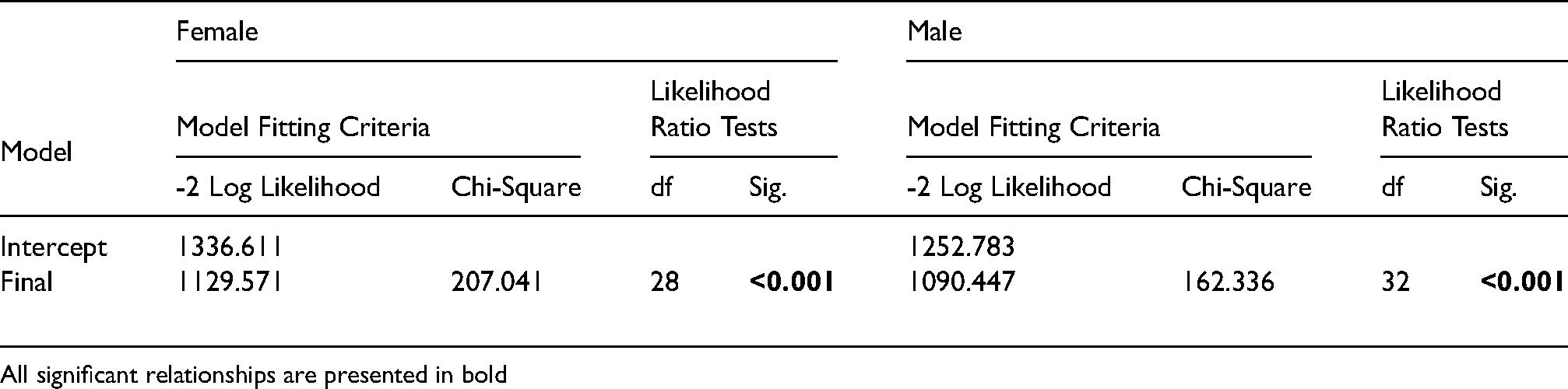
All significant relationships are presented in bold
There was a good model fit (discrimination among levels of attack performance) for both genders based on the relevant performance indicators. Thus, the next step was to examine which of the parameter estimates could affect the final model.
As shown in Table 4, significant unique contributions (in bold) were made for the male gender concerning complex, pass performance, setting position, setting tempo, attack type and block composition of the opponent. On the other hand, for the female gender, the statistically significant independent variables were setting tempo, attack type and block composition of the opponent. So, from an initial point of view, the only common predictors for both genders are setting tempo, attack type and block composition of the opponent.
Predictor's unique contribution in the multinomial logistic regression for the female and male gender.
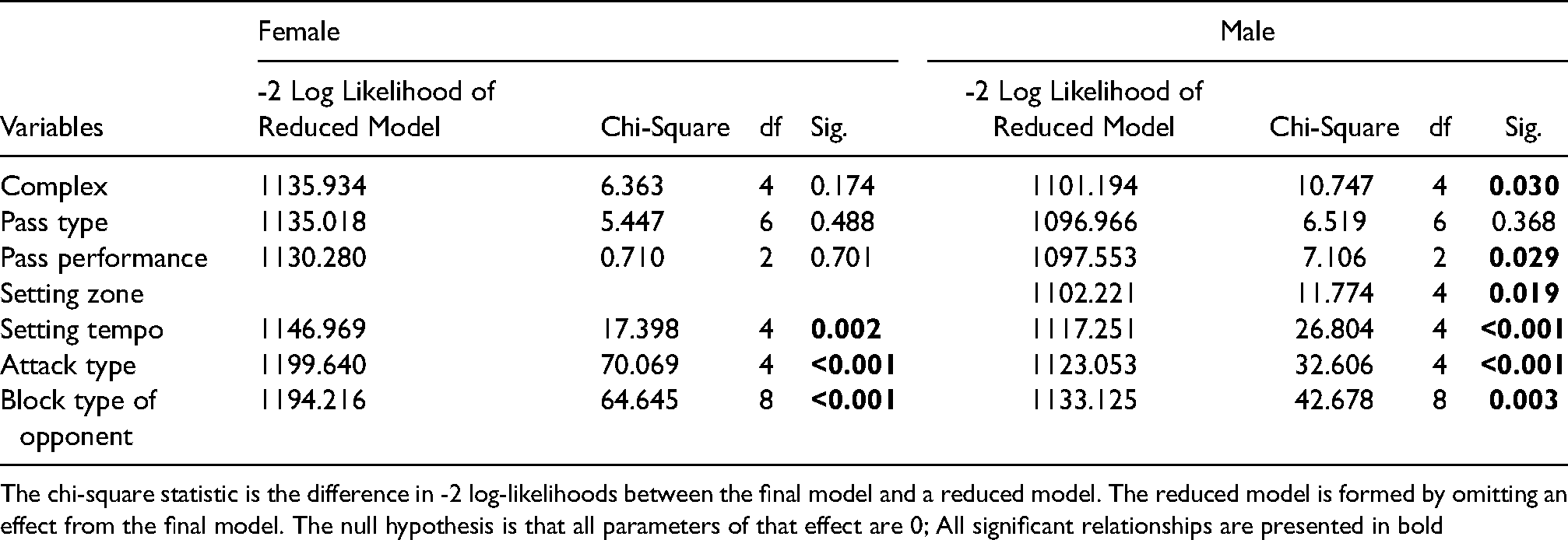
The chi-square statistic is the difference in -2 log-likelihoods between the final model and a reduced model. The reduced model is formed by omitting an effect from the final model. The null hypothesis is that all parameters of that effect are 0; All significant relationships are presented in bold
Female gender
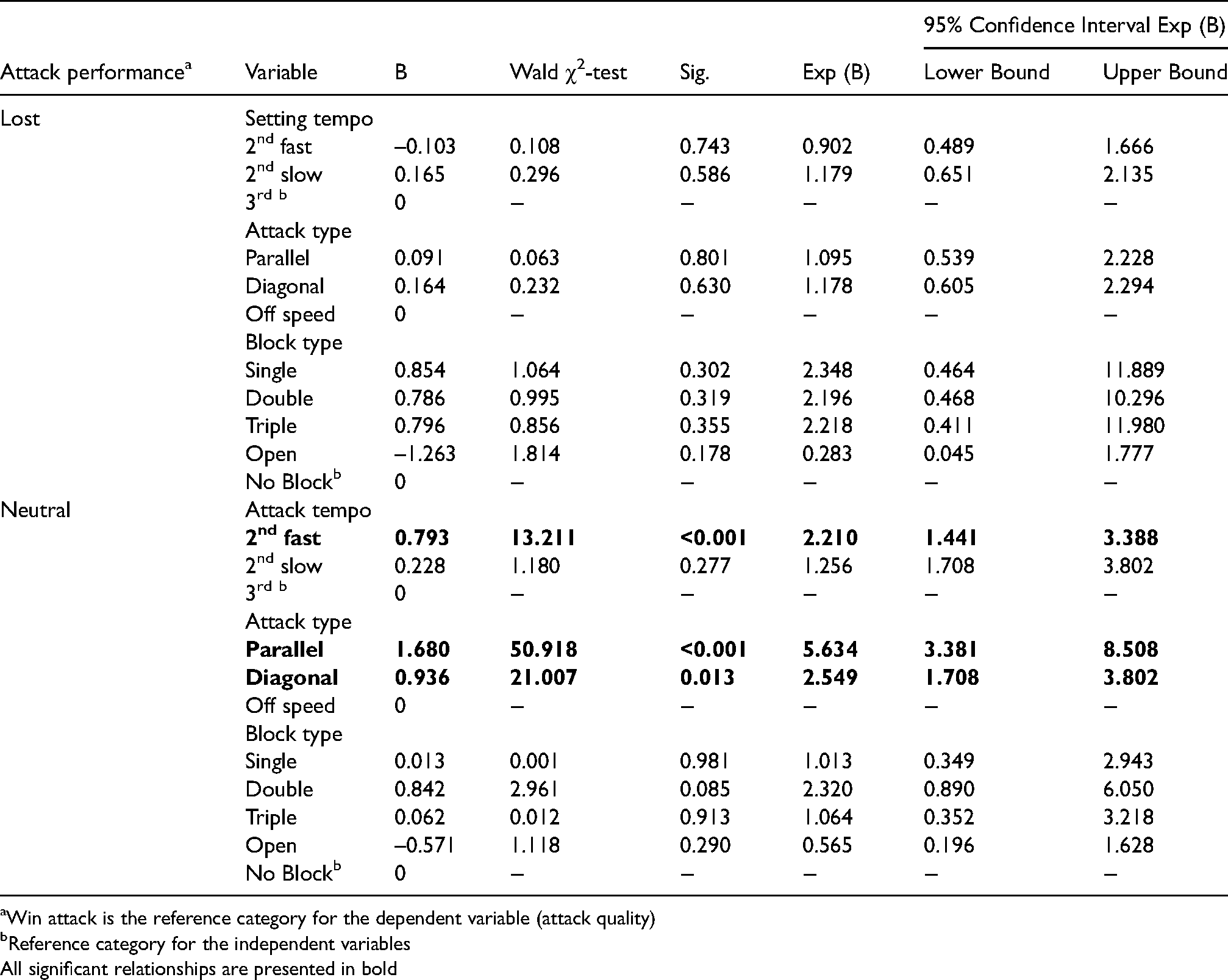
Parameters estimates and odds ratios with their 95% confidence limits for the female gender are presented in Table 5. It should be noticed that the confidence interval is asymmetric, i.e. the point estimate of OR (Odds Ratio) does not lie in the exact centre of the confidence interval, because the log transformation was used to compute OR and then the antilog was taken to compute the lower and upper limits of the confidence interval. None of the predictors had a significant parameter for comparing lost versus winning attacks.
Parameters estimate contrasting attack quality versus each other level and variable for the female gender
Win attack is the reference category for the dependent variable (attack quality)
Reference category for the independent variables
All significant relationships are presented in bold
Setting tempo and attack type predictors had significant parameters for comparing neutral (continued) to winning attacks. About setting tempo, if a female outside hitter were to attack 2nd fast tempo instead of 3rd tempo, the odds of a neutral instead of a winning attack would be expected to increase by e.793= 2.210 (C.I. 95%, 1.441-3.388). About attack type, if a female outside hitter attacks in parallel or diagonally instead of an off-speed offensive option, the odds of a neutral instead of a winning attack would be expected to increase by 5.634 (C.I. 95%, 3.381-8.508) for a parallel spike and by 2.549 (C.I. 95%, 1.708-3.802) for a diagonal spike.
Figure 1 displays the two-dimensional map resulting from the multiple correspondence analysis applied to the contingency table of female skills’ data. The first two dimensions, namely those represented in the map, accounted for 69.71% of the total variance. The first (horizontal) dimension, explaining 41.16% of the total variance, may be considered to reflect the trend of setting tempo concerning the attack type and the outcome of the rally. Attacks that involve outcome (won or lost point) connect with strong spikes (parallel or diagonal), settings in 2nd fast tempo versus single or open block. Attacks that involve continuation of the rally, such as neutral attacks, connect with 2nd slow or 3rd tempo settings, off-speed spikes versus triple or surprisingly no block. The second dimension (vertical, 28.56% of the explained variance) may instead reflect the type of attack in respect to the setting tempo and the attack outcome. Diagonal attacks connect with 3rd tempo settings and win points, while parallel and off-speed attacks connect with 2nd (fast or slow) tempo settings versus single or double block and non-scoring outcome (lost point or neutral).
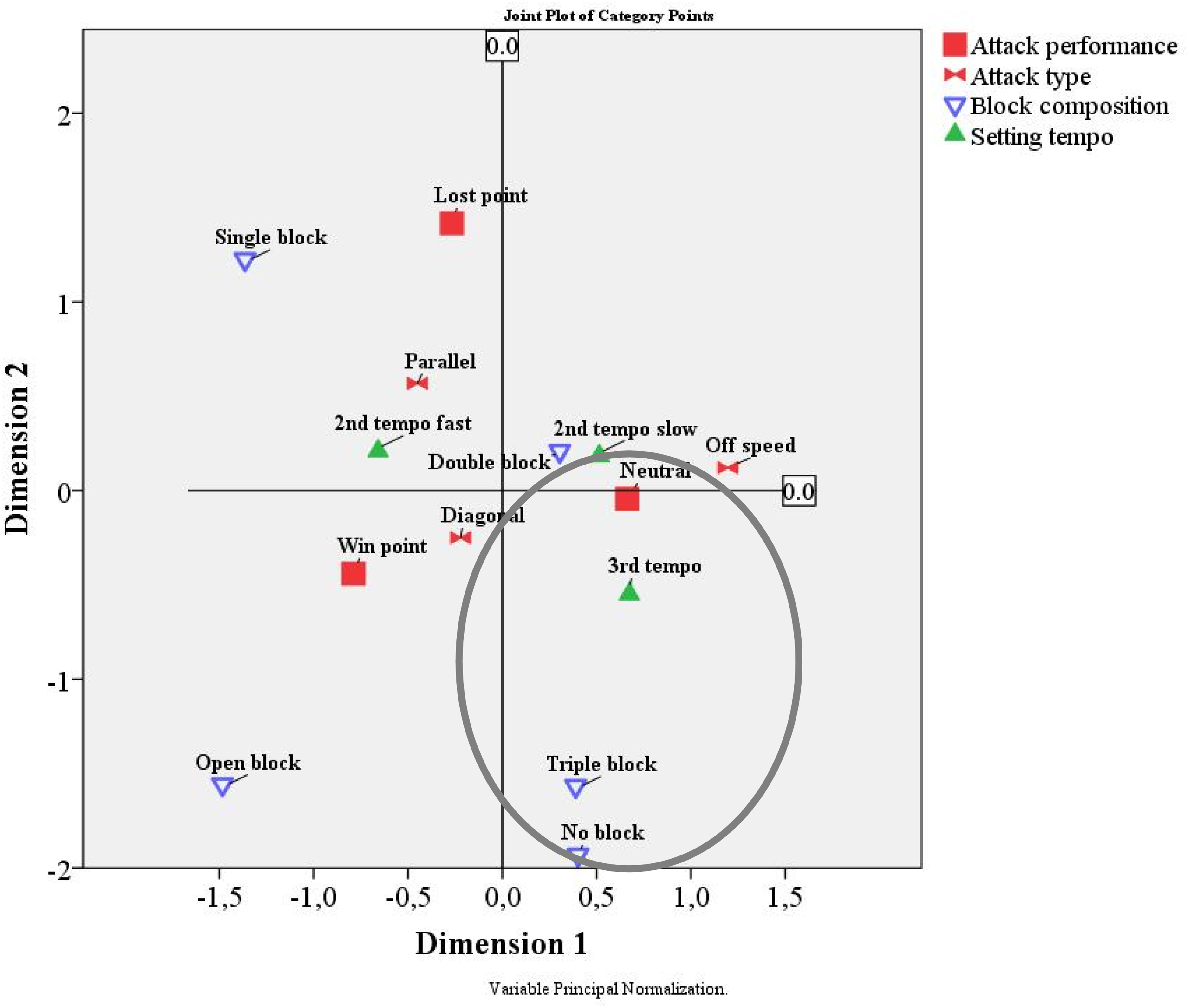
Map obtained by the multiple correspondence analysis performed on the contingency table formed by setting tempo, block composition and attack type and performance. The map displays the coordinates of categories of all variables in the two dimensions that capture the highest fraction of the total variable.
Male gender
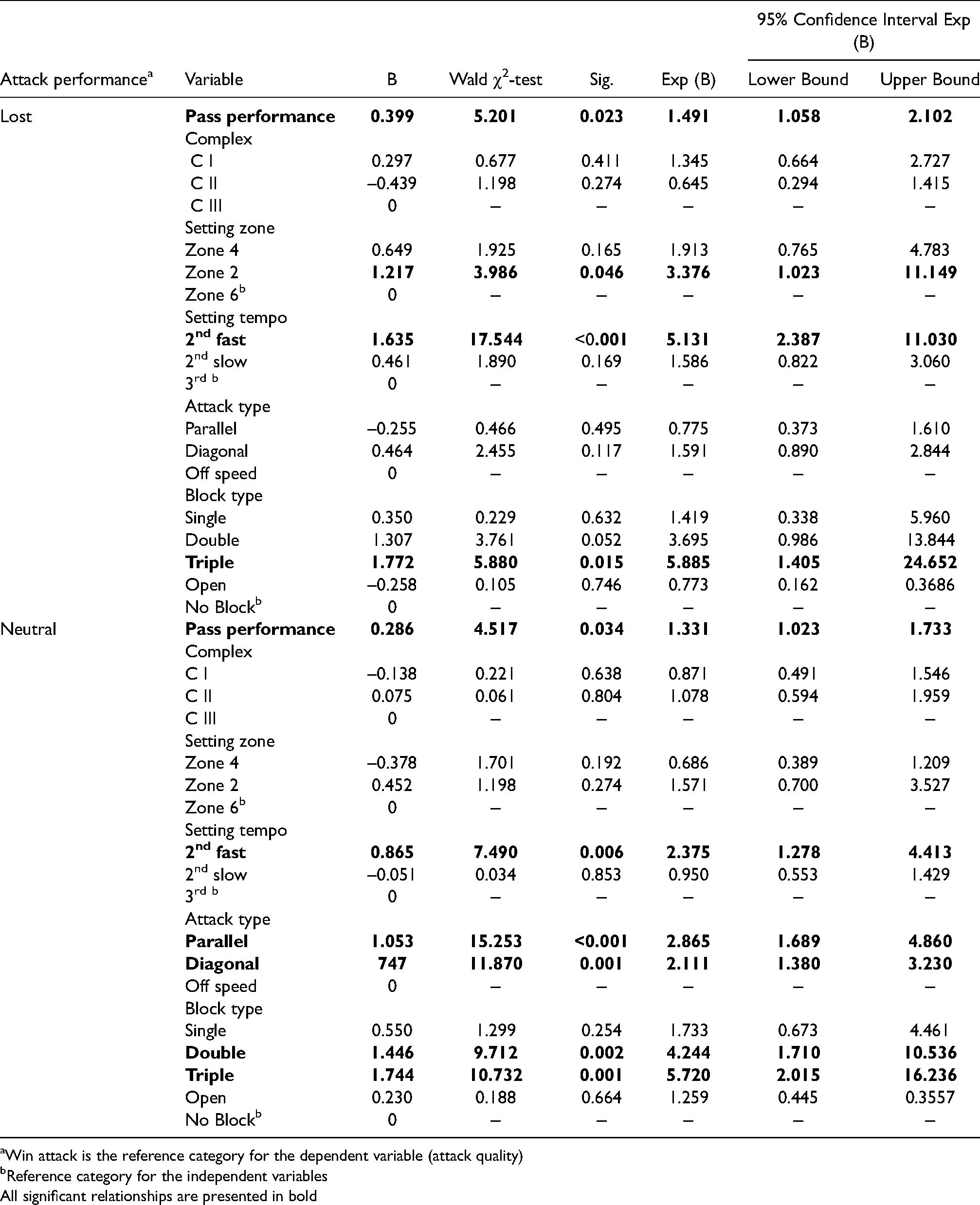
In Table 6 parameters estimates and odds ratios with their 95% confidence limits for the male gender are presented. The predictors pass performance, setting tempo and block composition had significant parameters for comparing lost or neutral to winning attacks, while the predictor type of attack had significant parameters comparing neutral to winning attacks. When pass performance is increased by one unit, the multinomial log-odds of having a winning versus a lost or a neutral attack would be expected to increase by e.399= 1.491 (C.I. 95%, 1.058-2.102) or by e.286= 1.331 (C.I. 95%, 1.023-1.733). About setting tempo, if an outside hitter were to attack 2nd fast tempo instead of 3rd tempo, the odds of winning would be expected to increase by 5.131 (C.I. 95%, 2.387-11.030) instead of a lost attack and or by 2.375 (C.I. 95%, 1.278-4.413) instead of a neutral attack. About block composition of the opponent, if an outside hitter were to attack against triple block instead of no block, the odds for lost or neutral than a winning attack would be expected to increase by 5.885 (C.I. 95%, 1.405-24.52) or 5.720 (C.I. 95%, 2.015-16.236), while if he attacks against double block instead of no block the odds for a neutral than a winning attack would be expected to increase by 4.244 (C.I. 95%, 1.710-10.536). About attack type, if a male outside hitter attacks in parallel or diagonally instead of an off-speed offensive option, the odds of a winning instead of a neutral attack would be expected to increase by 2.865 (C.I. 95%, 1.689-4.860) for a parallel spike and by 2.111 (C.I. 95%, 1.380-3.230) for a diagonal spike.
Parameters estimate contrasting attack performance versus each other level and variable for the male gender
Win attack is the reference category for the dependent variable (attack quality)
Reference category for the independent variables
All significant relationships are presented in bold
Figure 2 displays the two-dimensional map resulting from the multiple correspondence analysis applied to the contingency table of male skills’ data. The first two dimensions, namely those represented in the map, accounted for 66.12% of the total variance. The first (horizontal) dimension, explaining 37.72% of the total variance, may be considered to reflect the trend of setting selection in respect to the tempo, position of attack and type of opponent block. Won points connect with settings in 2nd fast tempo to positions 6 (mainly) and 2, side-out complex, high quality of pass (perfect or very good pass), strong spikes (parallel or diagonal) versus unorganized opponent block (single, open or no block), whereas neutral and lost attacks connect with settings in 2nd slow and 3rd tempo to position 4, breakpoint and transition complex, non-accurate (good or moderate) pass, off-speed attacks versus organized (double or triple) block. Attacks that involve a positive outcome, lying on the left lower part of the plot, are connected with an accurate pass, 2nd fast tempo settings to position 6. On the contrary, settings in the 3rd tempo, lying in the right lower part of the plot, are connected with a moderate pass, off-speed attack versus triple block. The second dimension (vertical, 23.41% of the explained variance) may instead reflect the type of attack in respect to the type of block. Parallel and diagonal attacks connect with setting position (position 4 and 2) in offensive zone versus double block (compact or open).
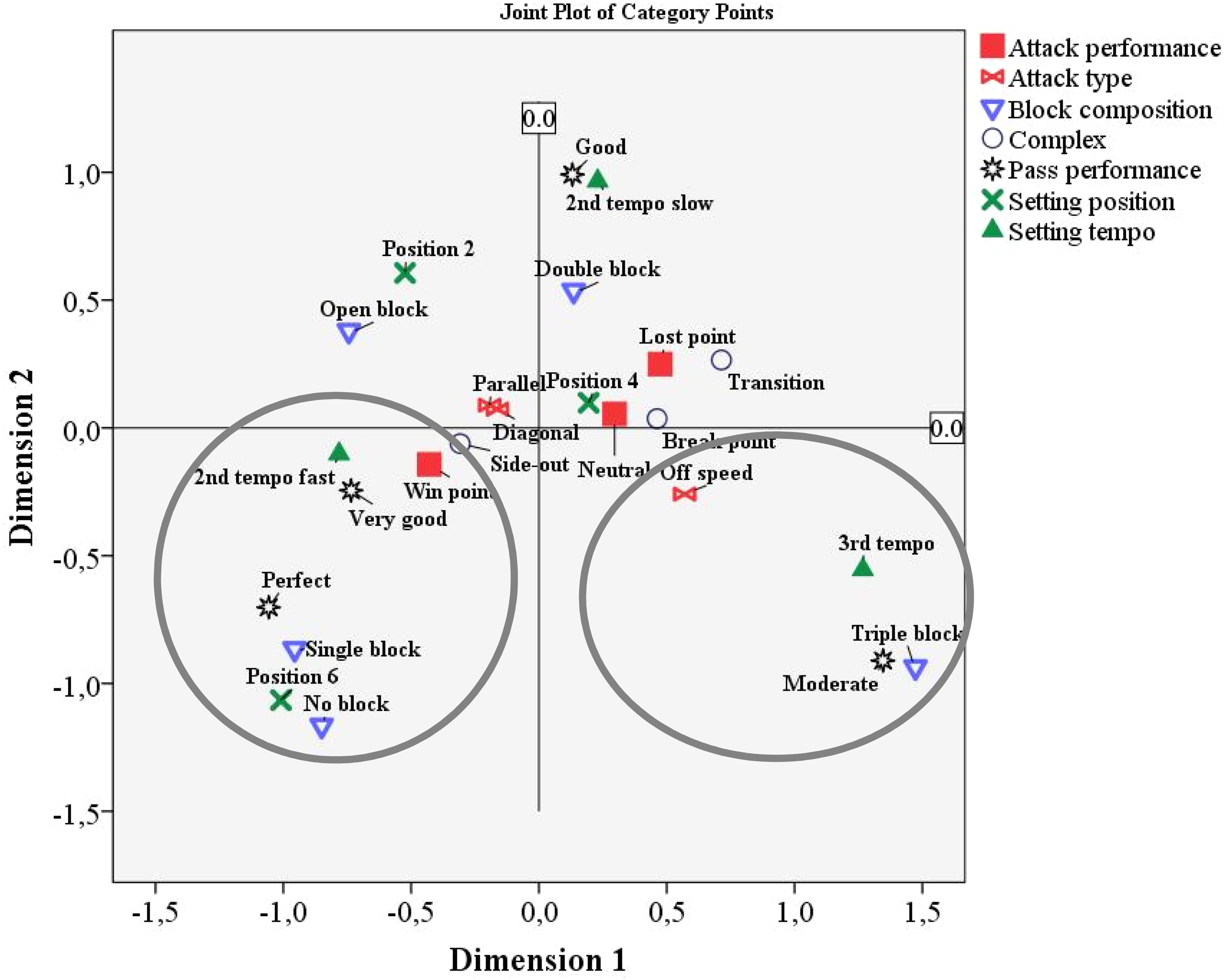
Map obtained by the multiple correspondence analysis performed on the contingency table formed by complex, pass performance setting position and tempo, block composition and attack type and performance. The map displays the coordinates of categories of all variables in the two dimensions that capture the highest fraction of the total variable.
Discussion
The purpose of this study was to investigate and compare the performance of outside hitters of both genders in terms of the pass, setting and attack parameters, the type of opponent block and the function of their in-game role. Initially, the data showed that for both genders outside hitters’ offensive performance was not affected either by the type of preceded pass or by additional individual previous actions of the attacker, such as serve's reception or pass. Also, the function of the outside hitter (OH1 or OH2) was not associated with the performance of the attack. The top-level of the players under study may explain these findings as their skills are at a high level and they are well prepared for any game high-pressure scenario established by the opponents.
On the other hand, the performance of attack depends on parameters such as the game complexes and the spatiotemporal characteristics of the setting, 33 while pass performance is important only in men's games.5,6,20
Regarding the complexes of the game in the present study, it appeared that most of the attacks took place in the CI for both genders. 5 This may be because CI conditions often allow the implementation of organized offensive tactics given the predictable way (serve), the long-distance from which the opponent hits the ball and the sufficient time for the setters to communicate with the attackers. 9 Probably due to this reason offence is more effective in CI over CII and CIII. Between genders, it appeared that in the CI and CII men outside hitters were more effective than women, who more often allowed the opposing team to organize transition. Men's better performance compared to women in the CI may be due to their better reception which seems to create more favourable conditions for the attack. 34 The previous finding in combination with the fact that the vast majority of serves performed by women are directed to the left lane of the court in the area of responsibility of the outside hitter 35 partially explains this difference between genders. Other parameters that may be responsible for the dominance of men in the CI are the ability of male setters to turn moderate to good previous actions into favourable ones for their attackers 36 but also the setting in faster tempo which has been found to contribute to fewer compact blocks. 37 Additionally, it seems that the higher risk men are willing to take compared to women also contributes, as evidenced by the higher percentage of errors that men made in the 2nd and 3rd tempo spikes. After all, it has already been established that the trend of women to avoid offensive risk20,23 is partially responsible for the prolonged rallies and the greater number of actions that characterizes female volleyball. 12
As far as men's game is concerned, using multinomial logistic regression this study associated attack performance with the preceding action of pass. About the pass performance, in male volleyball, a dependence between pass and attack was confirmed. The quality of pass affects the attack performance from the outside hitter as it allows a faster tempo offensive tactic scoring more points.26,38–40 Contrarywise, in female volleyball, the multinomial logistic analysis revealed that the quality of pass does not affect the attack performance of outside hitters. It seems that female outside hitters are the main offensive players when a lower quality (moderate or good) pass is preceded and they are preferred from their setter than the opposite player. 41
Regarding the setting zones for outside hitters, the results of the present study showed that the predominant zone for both genders was zone 4 confirming the findings of previous studies.5,6,33,42,43 This seems to be due to the ability of the outside hitters to attack effectively 21 and the fact that under difficult conditions setters very often set the ball to position 4 44 in a slow tempo, especially when they must move outside the ideal position of receiving the ball 37 or another player has to set the ball to the attacker, in an off-system offensive situation. At the same time, it is noteworthy that the percentage of attacks carried out from zones 2 and 6 (hierarchically the next zone in the frequency of spikes) does not differ between genders. Regarding zone 2, men had lower scoring attacks than women. As only in rotation 1 the OH1 hits from the right side of the court (position 2), this might be problematic only for men even if the opponent block is not compact as displayed in Figure 2. Women outside hitters when spike from position 2 (mainly in CI) have higher attack effectiveness than from positions 4 and 6. This is a remarkable finding and coaches of male teams could follow possible tactical solutions provided by coaches of female teams targeting to balance the inequality in attack effectiveness depending on the attack zone of outside hitter.
Regarding zone 6, in the present study, it was found that men are more effective than women in attacks carried out by outside hitters from position 6. This is explained by the integration of these actions in the offensive tactic of the top men's teams 45 as a result of better pass14,19,46 and, consequently, to the availability of the middle hitters who move and threat for a 1st tempo attack mainly in the middle lane of the offensive zone 2 reducing the possibility of creating compact blocks from the opponents and by releasing the attackers of the defensive line.33,47 As an attack from position 6 is of great effectiveness and tactical importance, it would be an advantage for the offensive game strategy if both outside hitters (OH1 & OH2) can execute it successfully independently from their in-game function. On the other hand, it seems that when female outside hitters attack from position 6, they face more often than men organized double and triple block 33 because in women's volleyball attacks from the defensive zone are more a solution of necessity than a tactical option. 48
Regardless of the setting tempo, the present study showed that both genders performed mainly 2nd fast tempo attacks, while especially women showed a tendency to use it more often than in the recent past. 49 However, men were more effective in 2nd tempo attacks, probably due to the greater experience they have in fast tempo offence 49 or due to the difficulty that women seem to face in managing it. 23 This is also confirmed by the percentage of neutral 2nd tempo attacks performed by women, which was almost 10% higher than that of men. Regarding the 3rd tempo attack, it was found that men made more errors since they faced organized blocks more frequently compared to women 33 but also because women tend to avoid risk during the offence.19,23,50
Concerning the type of attack, women use off-speed attacks more frequently because of the lower absolute power compared to men 15 and their tendency to reduce risk during the offence. 23 Off speed attacks increase the ball's net crossings and consequently create favourable conditions for a balance between attack and defence. 12 Female outside hitters, especially under non perfectly located settings have to adapt their approach keeping the chance of a powerful spike instead of an off-speed attack. About the attack direction, the success probabilities are almost doubled when women players hit in parallel than diagonally. The latter may be explained by the longer trajectory of the ball in the opponents’ court which gives more time for a reaction to the defenders, of the presence of a defence specialist player (libero) in the main diagonal direction (position 5) and of the blocking tactic followed by female teams, which more often would like to create a compact double block against diagonal attack direction by decreasing the running distance for the middle blocker.
Regarding off-speed attacks, they are more rarely used in male than female volleyball but with higher effectiveness, while there is not a great difference between the parallel or diagonal direction of attack, although parallel direction seems to be more effective.
As for the block composition of the opponents, there is an important variation between genders. In female volleyball, the type of block is not highlighted as an important parameter, while in male volleyball the existence of a well-organized team (double or triple) block is an asset for the defensive team and a problem for the offensive team, as the attack effectiveness of male outside hitters gets lower and the percentage of errors increases. However, there is a similarity between genders, as for both genders attack against a single block is more difficult and causes lower effectiveness than spike versus open double block.
As a limitation, the fact that this study analyzed the attack options of top-level players should be highlighted. Perhaps the results and the discussion achieved may not be extrapolated to another level of players. Additionally, the high level of the opponent and the match status are factors that may influence the distribution of the offensive game and the attack movement of the player. Moreover, future research should extend to youth age categories and national level games aiming to compare the present results. In terms of practical application, this study provides useful insights to male teams coaches of creating favourable conditions for an outside hitter when attacks from position 2 during side-out complex in rotation 1, while female teams’ coaches should upgrade the design of practice tasks and should suggest to the outside hitters be attuned with the tempo of setting to increase powerful attacks, especially in side-out complex.
Conclusions
In conclusion, concerning the outside hitter, the two genders vary in some aspects of the game at the top level. Male volleyball teams to increase the odds for a winning attack must pass the ball to the setter accurately, setting in 2nd fast tempo to zones 4 and 6, enriching offensive options across all the net to avoid attack against an organized block. In contrast, female teams must set in 2nd fast tempo to the offensive zone (positions 4&2), to avoid off-speed attacks, to spike primarily in parallel and take advantage of no block situations.
