







Abstract
In rink hockey, it is not usual to find proposals of mini-hockey in early competition. This study aimed to analyse the effect of the manipulation of court dimensions and the number of participants on the motor behavior of players. Twenty-four rink hockey players (three girls and 21 boys; age: 7.1 ± 0.4 years) U8 category participated in this study. Three types of 3-min games were played twice, with 3-min breaks, following a random order: i) Four versus four (plus goalkeeper) on an official pitch (40 × 20 m); ii) Four versus four (plus goalkeeper) on a rink measuring 20 × 13 m, and iii) Two versus two (plus goalkeeper) on a court measuring 20 × 10 m. All games were video-recorded and a systematic observation instrument was used to register the actions using the Lince PLUS observation tool (v.1.2.0-2020). The individual technical-tactical behavioral variables of the court players were analysed, considering: (a) actions without the ball; (b) actions with the ball; and (c) final phase of ball possession. Statistical analysis was performed based on the Generalized Mixed Poisson Model. The results revealed that total actions were increased in both scaling situations compared to situation 1 in which young rink hockey players officially compete (S1 vs. S3; p <.001; Odds Ratio (OR) = 2,12) (S1 vs. S2; p <.001; Odds Ratio (OR) = 1,48). The results revealed that in small-sided games more affordances emerge concerning the official rules. The data obtained suggest that competition at this age on an official court (40 × 20 m) is not recommended for development of the variety of the set of individual technical-tactical behaviors.
Keywords
Introduction
Rink hockey is a form of hockey played on a dry surface using quad skates and a stick (similar to the ones used in other forms of hockey). It can be played on both quad skates and inline skates, although in this paper we will only refer to form played on quad skates. These skates allow the player greater manoeuvrability, resulting in a very fast and dynamic game, demanding quick technical and tactical behaviors, direction changes, lots of accelerations and decelerations 1 and high physiological demands.2–4 The official matches last for two periods of 25 min, although the real playing time (including rest times) can be 70 or 80 min. 4 Each team is composed of four players and the goalkeepers.
Many international Federations of different sports scale the equipment and field dimension to adapt them for children.5,6 Literature has shown that reducing pitch dimension, the adaptation of the equipment or practicing Small-Sided Games (SSG) have clear benefits in teaching-learning sport processes.7–10 Nevertheless, official Spanish rules of rink hockey do not propose any scaling of the pitch or the equipment for young players. For this reason, children compete playing on a pitch of 40 × 20 m, using a stick weighing 500 gr, 90–115 cm in length and with a ball weighing 155 gr and 23 cm in diameter. Undoubtedly, the logistical difficulties that come with playing in a fenced enclosure have contributed to the fact that mini-hockey does not officially exist Some adaptations have been proposed in Spain and Portugal. Ok-XS aims to be one of those proposals in the Catalan Skating Federation. This is already being tested in the format of specific meetings to analyse the feasibility of its implementation and it is the focus of this paper. The name of the proposal is Ok-XS Project, and it proposes a new game for young players based on the scaling of the equipment (stick and ball) and court, reduction of number of players (1 × 1, 2 × 3, 3 × 3 and 4 × 4 with or without goalkeeper) and playing time (different parts of 2 or 3 min). The effects of the manipulation of these task constraints on the players’ behavior when playing to this scaled game remain unknown.
Reductionist and decontextualized models are often used in the learning process of team sports trying to teach technical elements separately according to their complexity (i.e. the task of driving the ball between cones to improve the sliding action with skates). Nevertheless, it has been shown that representative proposals based on variability contribute to fostering adaptive behaviors. 11
A Coordination Dynamics approach, based on Complex Systems theories and Synergetics, proposes the understanding of both individuals and teams as complex adaptive systems, whose behavior evolves in response to physical and informational constraints. 12 Functional patterns of coordinated behavior emerge from on-going interactions between systems components and the environment through a process of self-organization. 13 After the application of this approach to motor learning, the constraints-led approach was proposed to apply it to sport settings 14 suggesting that the manipulation of constraints is the way to create perceptual-movement couplings. Constraints can be divided into organismic or personal, environmental, and task-related, 15 task constraints being relational variables distributed between the person or organism and the environment. 16 When imposing constraints on the system (i.e. the player or the team), the coupled components change together, rather than independently, due to the nestedness and relatedness of all the constraints acting on the system. 17 For this reason, the manipulation of task constraints leads to transformations of all the training processes. Moreover, in team sports, the stability and reproducibility of game situations are rare, and teams and players have to deal with a highly unstable environment. In that scenario, as happens in any other context of biological evolution, the fittest are not necessarily the strongest, nor the fastest, but the most diverse. 17 Thus, the manipulation of constraints should focus on increasing the diversity and unpredictability of the behaviors of players, but also of teams, instead of reducing the training unit to individual players or to subsystems of those players. Team collaborative properties can be developed through challenging and varied environments and playing in collective contexts. 18 In this paper only the effect of the modification of the task constraints related with the manipulation of the task, by scaling game elements, was studied.
This study focused on observational variables, specifically on individual motor skills, named technical-tactical actions in the literature. Nevertheless, these variables cannot be considered isolated when training, as motor skill training is based on nested dependence and circular causality of constraints, rather than based on prescription.
In team sports, the manipulation of task constraints is used for training at all levels, especially with the so-called Small-Sided Games, a training task widely described in the literature.19,20 SSG exploit inherent self-organizing tendencies and, due to the nestedness of constraints, can simultaneously develop technical or tactical skills (whatever this differentiation may mean), as well as physiological adaptations. SSG are grounded in the use of task constraints as a strategy to limit or allow multiple behaviors while maintaining the basic characteristics of the real game. 21 The manipulation of task constraints related with scaling elements of the game, such as space, ball or stick, is of utmost importance when training children for its multiple benefits in their learning process. 5 These benefits are not only related to physical adaptations, 22 but also in their participation and commitment, 23 motivation, performance, 24 decision-making, 25 enhancing creativity26,27 or even for safety reasons. 28
The aim of this study was to analyse the effects of manipulating the number of players as well as the scaling of pitch in three different situations on young players’ technical-tactical behavior in Rink Hockey. Results of this study will be helpful to analyse the possible effects of the Ok-XS proposal for the learning process of young players. The scaling of the equipment was not studied because some children had never trained using the regulation stick and ball. We hypothesized that the reduction of the number of players and the scaling of pitch dimension would lead to more technical-tactical actions performed by young players, fostering as a result more diverse players and teams.
Materials and methods
Participants
24 hockey players (three female and 21 males) from two different clubs (M = 7.1 years, SD = 0.4) participated in the study. They had two years’ experience playing rink hockey and trained twice a week (approximately 75 min per training session). Goalkeepers also participated in the protocol, but were excluded from the data analysis due to their different game dynamics to field players. The players performed 4733 offensive and defensive technic-tactical actions in 24 SSGs. All participants were informed of the investigation procedures, and a parent or legally authorized representative provided prior informed consent. The study protocol was adjusted to the recommendations of the Declaration of Helsinki and was approved by the Ethics Committee of clinical investigations of the Sports Administration of Catalonia (09-2018-CEICGC).
Study design
To determine the effect of the manipulations, different games were played in one single training session (on three different days, eight players per day plus two goalkeepers). Goalkeepers participated in the protocol but were excluded from the data analysis. They started with a rink hockey 15-min warm-up exercise as usually worked by the club. In each session, players were divided into two balanced teams (A and B) of 4 outfield players and a goalkeeper. According to the coach's subjective (physical, technical and tactical) criteria players were distributed to ensure that the teams’ performance were comparable. Three different game situations were played twice in the same session by each player, and consisted of: situation 1 (S1): Four field players from team A against four field players from team B (plus goalkeepers) in an official field size (40 × 20 m; 800 m2, playing area of 100 m2 per player); Situation 2 (S2): Four field players from team A against four field players from team B (plus goalkeepers) on a field of 20 m × 13 m (260 m2, playing area of 32.5 m2 per player); and situation 3 (S3): Two field players from team A against two field players from team B (plus goalkeepers) in a field size of 20 m × 10 m (200 m2, playing area of 50 m2 per player) (see Figure 1). That is, the S2 is the one that will be more demanding regarding the space-player relationship. Each situation lasted three minutes with three-minute rest periods between them. Considering that S3 was played by 2vs2 players, instead of 4vs4, this situation was repeated four times to ensure that every player was tested twice in the three situations. The order in which these situations were played was random for each session.
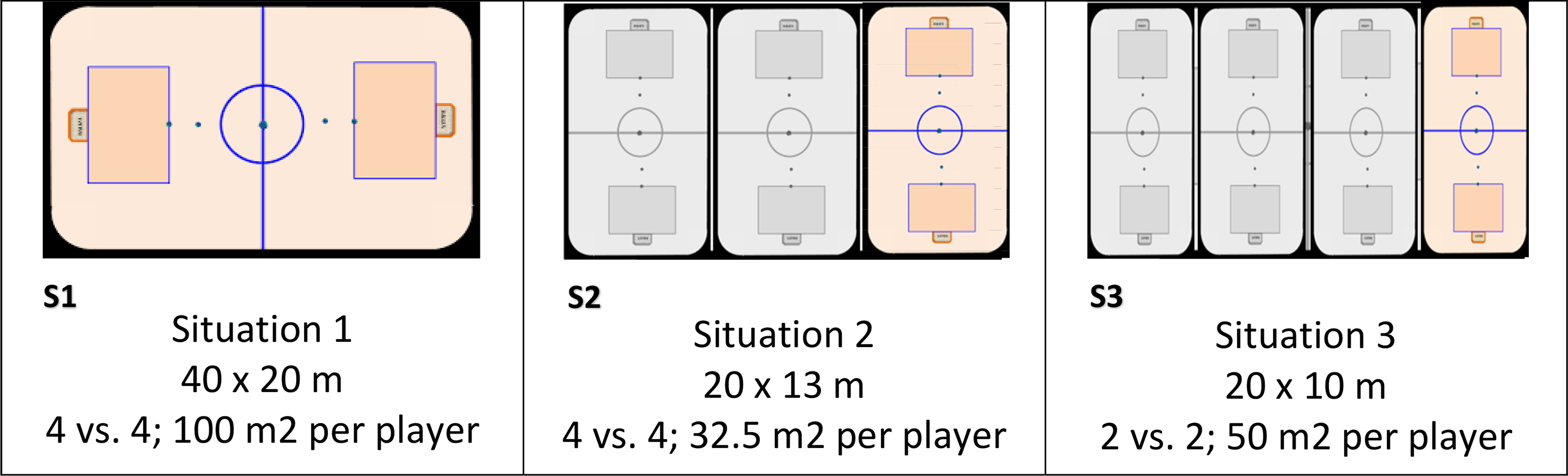
Distribution of the pitch dimensions and the players in S1, S2 and S3
The coach and the assistants of the data collection activities never gave feedback or interceded providing any instruction, motivation or feedback during the game. They only acted as a referee if there was a very clear foul or clear necessity.
Instruments
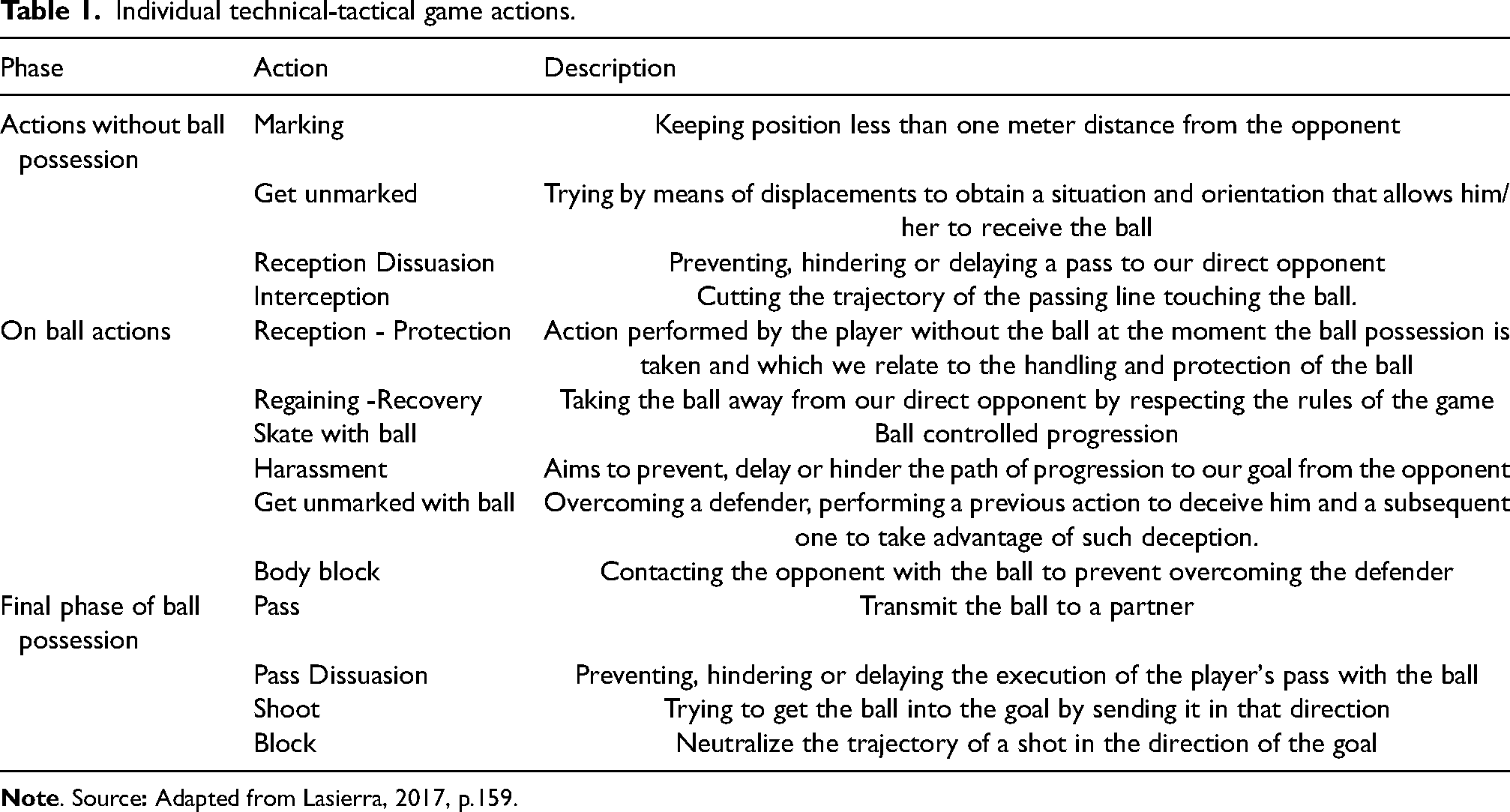
All SSG were recorded using a Panasonic HC-V180 video camera Full HD. The video recordings were processed and analysed using the Lince PLUS software–v.1.2.0-2020- 29 with an instrument adapted to note offensive and defensive game actions 30 (see Table 1). The observer was trained for 6 h under the expertise of a coach from the technical school of the Catalan Federation of Roller Hockey. The intra-observer reliability was calculated, in the form of concordance, by means of Cohen's kappa coefficient, exceeding the value of 0.80, which is considered an adequate agreement. 31
Individual technical-tactical game actions.
Statistical analysis
The inferential statistical analysis was applied after a descriptive analysis of the individual technical-tactical actions of the hockey game and involved a Generalized Mixed Poisson Model analysis for each dependent variable. This analysis was chosen to count the frequency of occurrence of game actions during a defined time interval because the data could show a higher frequency for some values (i.e. marking) or a rarity of others (i.e. pass dissuasion). Hypothesis testing for each dependent variable, and respective effect sizes -Odds Ratios (expB)- were obtained through the jamovi statistical software (v.1.6.15).
Results
The results (see Table 2 and Figure 2) revealed that the total number of actions were significantly increased in S3 compared to S2 (OR = 1.43; < .001), and also compared to S1 (OR = 2.11; < .001). S2 yielded higher frequencies of individual technical-tactical behaviors than S1 (OR = 1.48; < .001).
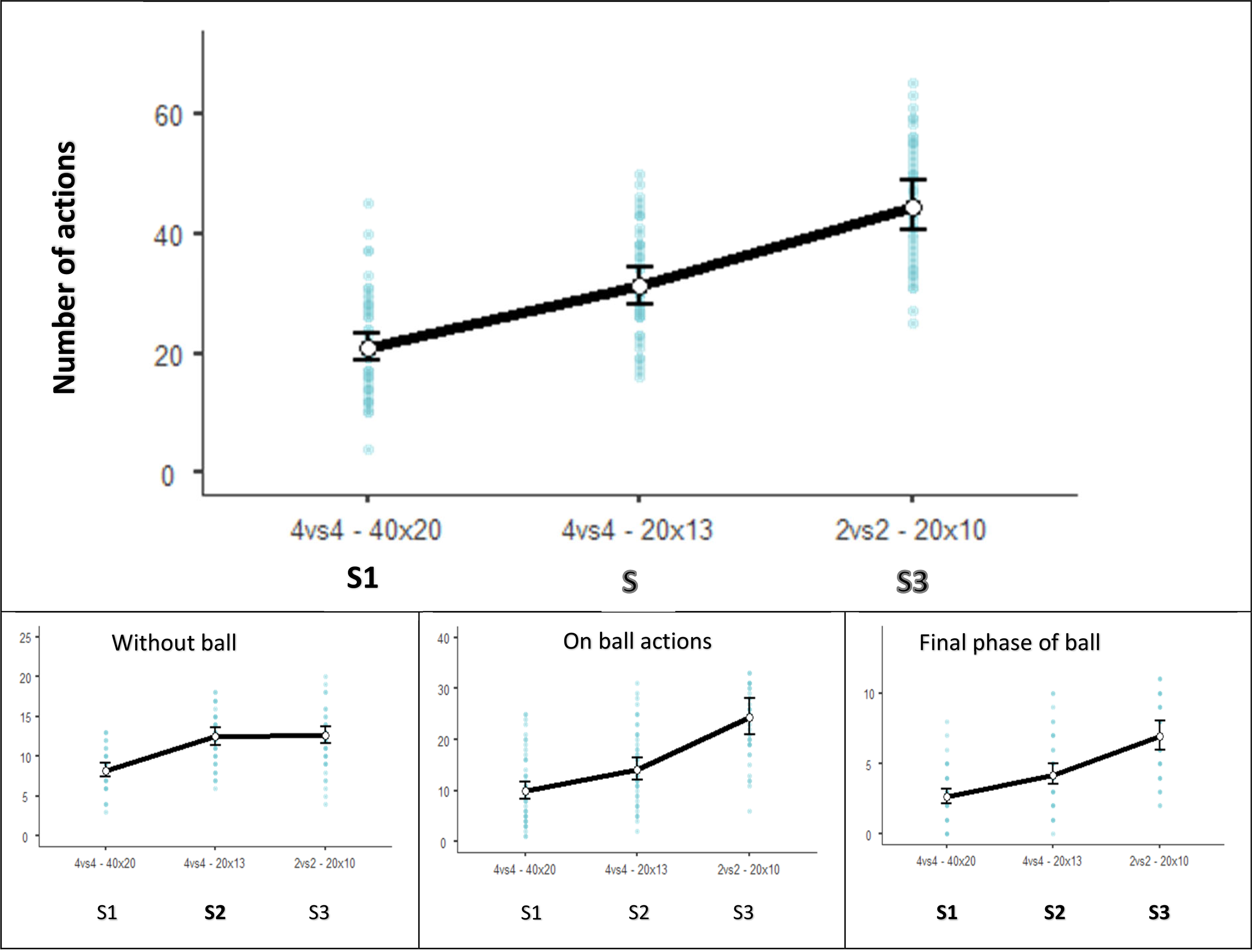
Mean Count and 95% Confidence Interval of the total number of actions recorded in the game situations analyzed. Detail of the actions registered into the different phases: actions without ball possession, on-ball actions and final phase of ball possession.
Post hoc comparisons - situation.
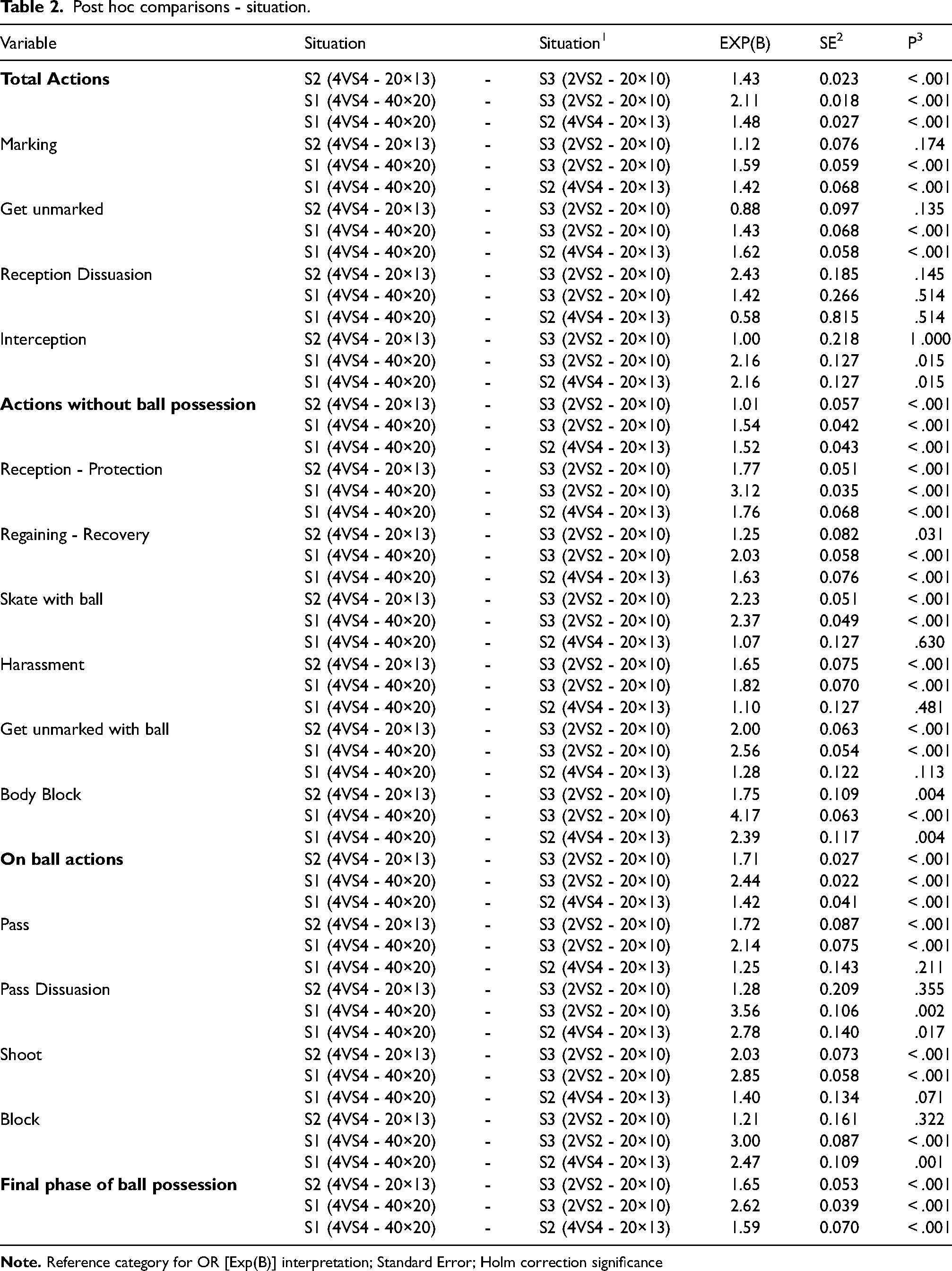
If we focus on the technical-tactical actions of the players without the ball, the total number of actions were also significantly increased in S2 (OR = 1.52; < .001) and S3 (OR = 1.54; < .001) maintaining the tendency to enable a greater number of opportunities for action compared to S1, respectively. A more detailed situational analysis (see Figure 3) reveals that the behavior related to reception dissuasion does not follow the trend expressed by the set of actions without the ball.
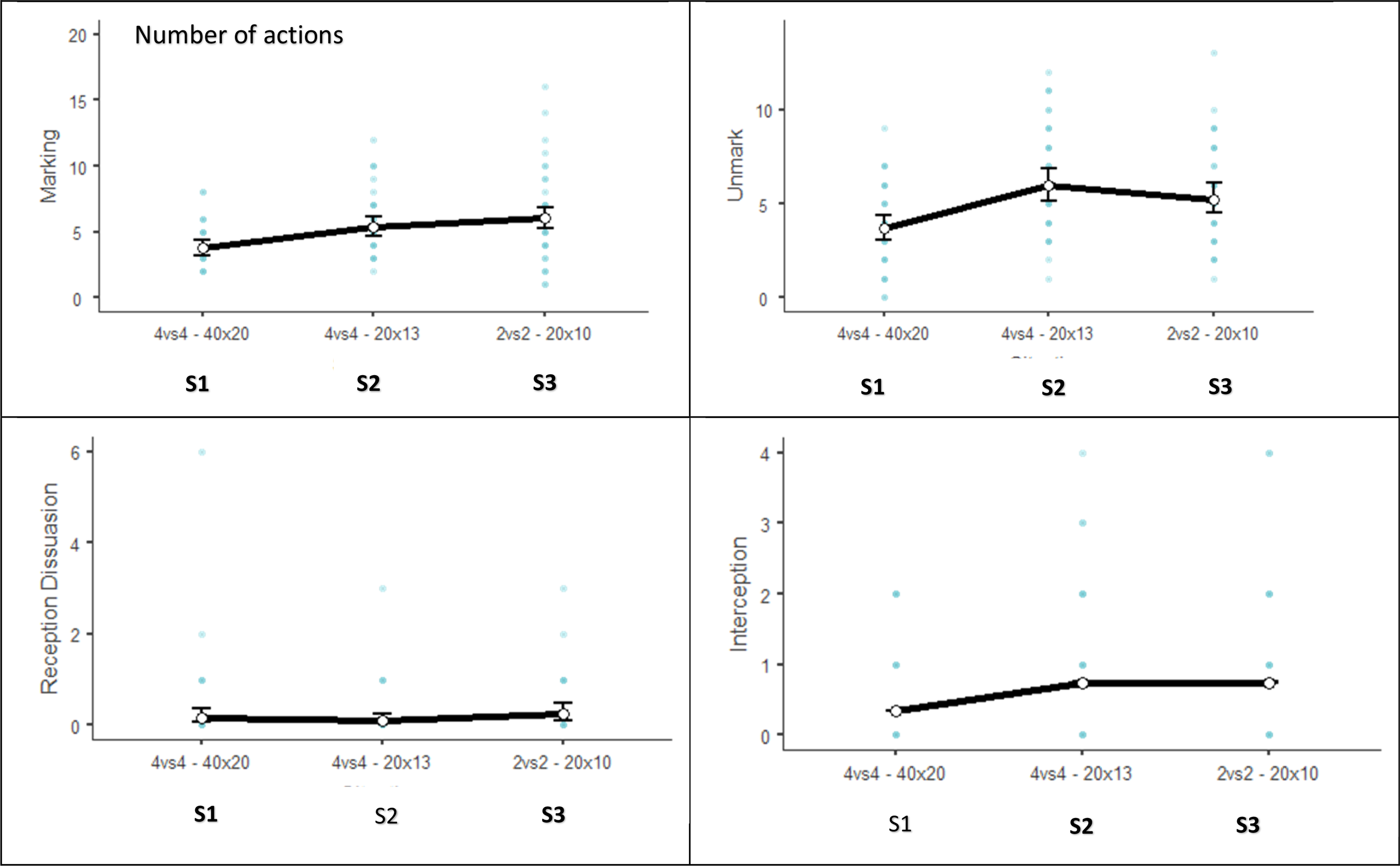
Mean Count and 95% Confidence Interval of the technical-tactical actions without ball possession recorded in the game situations analyzed: marking, unmark, reception dissuasion and interception
In the analysis of the actions of the on-ball players (see Figure 4), we highlight the fact that, in the six actions studied, when comparing S1 with S3 (OR = 1.42; < .001), the scaling of the space and reduction of players has a substantial influence. On the other hand, in the case of the relationship between S2 and S3 (OR = 1.71; < .001), this tendency is maintained only in the reception and dispossession actions and especially when skating with the ball. Harassment, unmarking with the ball and controlling body block actions do not follow the trend expressed by the situational analysis as a whole as shown in Figure 4.
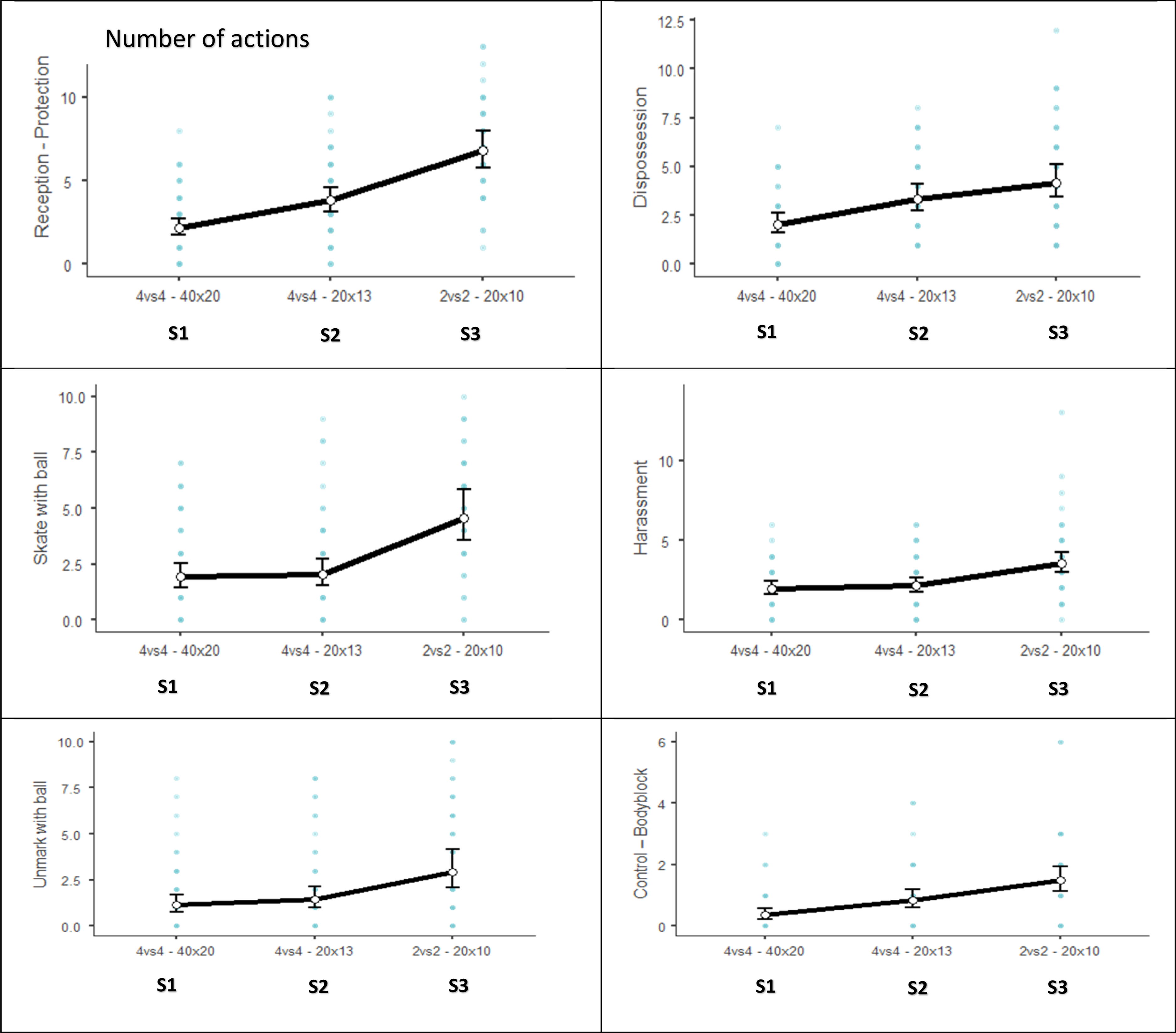
Mean Count and 95% Confidence Interval of the technical-tactical on-ball actions recorded in the game situations analyzed: reception-protection, dispossession, skate with ball, harassment, unmark with ball and control-body block.
Finally, the results of the analysis of the final ball possession phase (see Figure 5) show results in line with those obtained for the actions of the players without the ball, reporting more than twice the number of actions in the case of S3 (OR = 2.62; <.001) compared with S1.
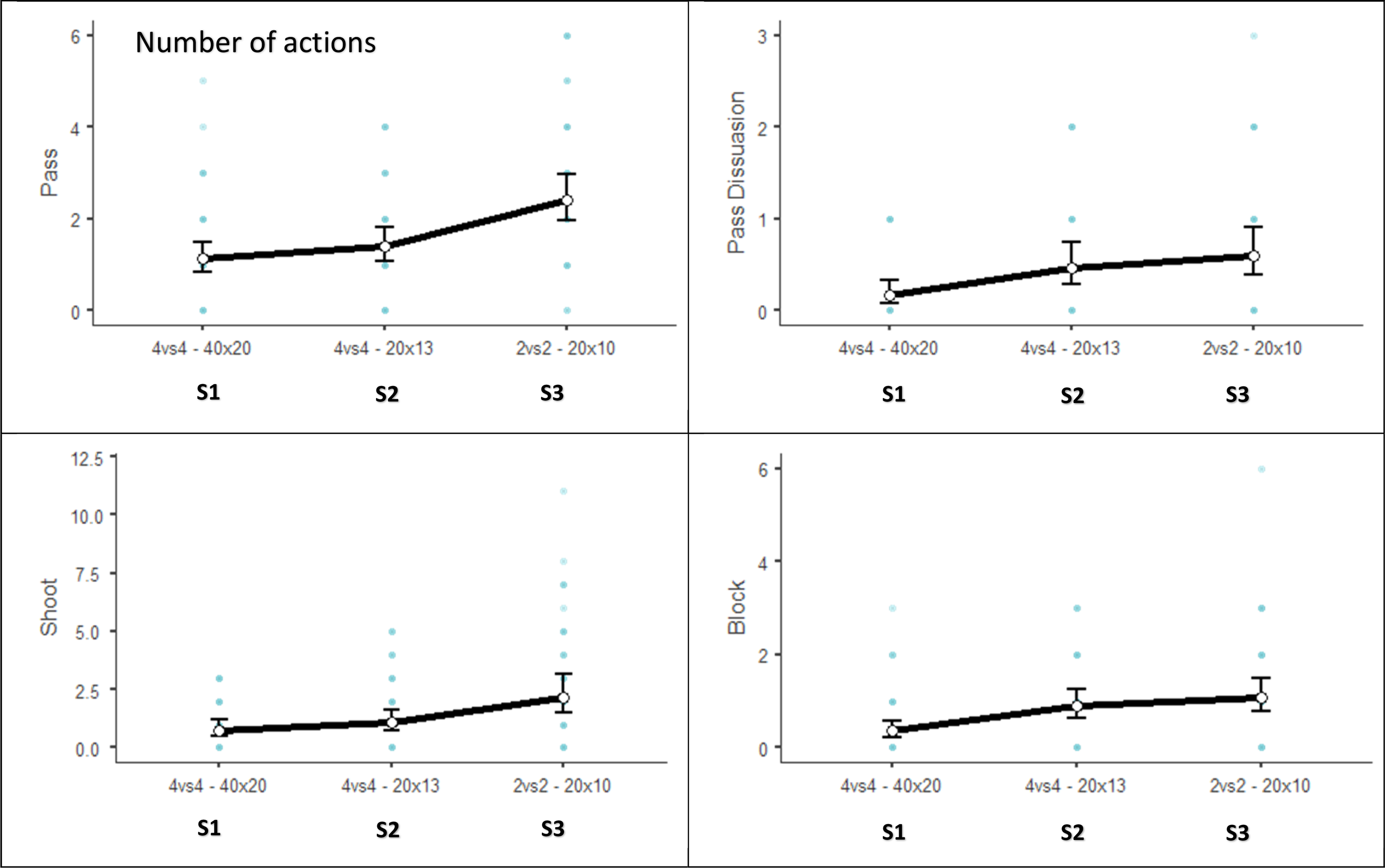
Mean Count and 95% Confidence Interval of the technical-tactical actions of the final phase of ball possession recorded in the game situations analyzed: pass, pass dissuasion, shoot and block.
Discussion
The aim of the study was to evaluate the effects of the manipulation of the size of the pitch and the number of players on the technical-tactical actions in young U8 rink hockey players. Results showed that both SSGs provided a greater number of opportunities for action than playing following the official rules.
Moreover, the analysis of total frequencies of actions revealed that S3 is shown to be the most stimulating design of the three situations analysed. It was observed that players practiced more than twice some of the actions studied in situation 3 (21, [18.9–23.3] vs. 44.4, [40.4–48.9]; mean count & 95% confidence interval) than in situation 1 (S1 = 40 × 20 m; 100 m2 /player). These findings suggest that the reduced spaces and the smaller number of players were effective in improving the opportunities to develop technical-tactical actions during the game. Furthermore, we speculate that learning would occur under a similar demand of perception-action relationships in the SSG to those required by the real game situation. 21
It could seem obvious that the reduction of the number of players from 4 versus 4 to 2 versus 2 players and the playing space from 100 m2 to 50 m2 will increase the number of opportunities for action and therefore the possibilities for learning. 32 However, even the proposal of 4 versus 4 in a reduced space (20 × 13 m; 32.5 m2) also yielded higher values of total actions than those observed in S1. With the same number of players, the density with respect to the usual playing space may be the outstanding factor to explain that in only three minutes players performed 50% more actions (21, [18.9–23.3] in S1 vs. 31.1, [28.1–34.3] in S2; mean count & 95% confidence interval). This proposal can help the athletes to become more autonomous to perceive more and better information, adapt and solve the intrinsic problems that the competition will continuously and dynamically present to them. 33
It should be noted that when we refer to the concept of action, we do not differentiate the infinite ways in which we can carry out each of them. The interaction with the context is the one that will constrain the what, the how and the when, promoting the exploration and creativity of diverse functional solutions. 34
Actions without ball possession
Regarding the situational analysis of the player's actions when they are not in possession of the ball, both S2 and S3 proposals yield very similar values of (12.49 & 12.64), to the order of 30% more than in the full-field situation (S1 = 8.22) in mean values of frequency of actions of the players. Less space facilitated the emergence of marking actions. Despite the difference in the number of players, the smaller the space, the higher the mean values of frequency of marking behaviors [S1 = 3.80; S2 = 5.38; S3 = 6.04]. The same did not occur with respect to reception dissuasion and interception actions. Less space did not constrain enough for the emergence of these defensive behaviors. Probably some instructional restrictions (i.e. requiring a nominal individual defence without opponent changes or float marking) would influence more effectively the learning possibilities of these tactical game intentions. The use of the exaggeration principle (by modifying game rules to provoke the exploration of certain player solutions) is part of the application of SSG programs based on nonlinear pedagogy in terms of ecological dynamics. 35 An individual defence is difficult to assume in a space of 40 × 20 m. and 25 min of play as it must be accompanied by limitations of space and playing time to be effective. Even without this rule, the values of reception dissuasion and especially of interceptions were higher in situations S2 and S3 than in S1.
On ball actions
S3 also facilitated greater opportunities for action with the ball, but with two differences in relation to actions without the ball: a) the difference is significantly greater than before (in the order of three times more in the SSG than in the usual playing space -S1-); b) although in S2, the density of players is higher (32.5 m2 /player) compared to S1 (100 m2 /player) or S3 (50 m2 /player), S2 yielded values closer to S1 than to S3.
Reducing space and reducing the number of players had the effect of requiring a greater number of interventions with the ball in the reception, handling and protection of the ball, almost three times more than in S1(see Figure 4). These findings should encourage coaches to use those task constraints, such as reducing the number of players, playing in continuous imbalance of players or with a dynamically changing numerical advantage. Without the need to decompose the tasks, the difficulty of the task can be managed while maintaining informational demands of representative contexts using SSGs. 21
Sliding can be coordinatively more demanding than running, and the handling of an implement increases this difficulty even more. It is probably due to this that a greater number of dispossessions in both SSG games were observed. Even with fewer players, in a more reduced space, there were a greater number of defensive ball recovery actions in S3.
With large spaces, harassment appeared to be a functional solution to drive the faster skating opponent into lateral spaces away from the goal. In fact, the data revealed that tight spaces stimulated the defensive actions of harassment.
We were surprised, regarding the body block action, that the highest density proposal (S2; 32.5 m2 /player) was not the one that most facilitated the occurrence of using the body as a tool to slow down the player's progression to the target. The data showed that the reduction of space and number of players (S3) continued to be more effective than S2, which still had higher values than S1 (see Figure 4).
Final phase of ball possession
Also, in this phase of the game, the small-sided games offered more affordances for passing, shooting or blocking, up to three times more of S3 or two times more of S2 than S1. At least at these ages, having much more space, like when they play in S1, was not related to generating more throwing opportunities. 1
Pass dissuasion obtained similarly low values as dissuasion of reception. The rules of Ok-XS determine that the goalkeeper initiates the play after the goal, not from the middle of the field. Even so, the children tended to go down to defend their own goal, instead of pressuring the ball out of the box with actions of pass dissuasion or reception dissuasion. This behavior can be a result of the coaches' instructions and the habit of playing following the official rules.
Finally, regarding the shot blocking action, the two Small Sided Games showed similar tendencies.
These results suggest that small-sided games can be an effective tool to be included in the learning process in the initiation of U8 rink hockey. Different configurations of games generated some different tactical behaviors while adapting the physical workload of the young players, too. 23
The Ok-XS Project aims to use a methodological progression based on different SSG in formative stages that prioritize long-term learning over immediate performance. More research is needed to study the effects of manipulating constraints in the long term with longitudinal studies and contribute to narrow the gap between the scientist and the trainers.
The data obtained in the study will be useful in training courses for rink hockey sport Catalan technicians, with the final objective of promoting a revision of the organization of sport initiation in the clubs. Some specific experiences have already been developed with a good reception by parents and players, and we hope that in the future the competition of school sports will use the Ok-XS as an element of training of players. Although this study did not use interviews as an evaluation instrument, some of the comments of the parents of the children involved suggested the positive effects of the intervention. For instance, one of them explained to the main researcher that his son had played the whole year without scoring a goal, while on that day, playing Ok-XS, he scored 5 just in the first period.
As limitations of the study, we consider that it would have been interesting to also analyse the behavior of each single player in each situation, instead of comparing the mean all the players in the situations studied. We hypothesize that SSG can be useful for the more and the less skillful players, but this hypothesis remains understudied. Future research should explore these paths. The difference between the number of girls and boys participating could also be considered a limitation to be taken into account, although this difference represents the reality of young teams of rink hockey clubs.
Conclusions
This study has shown evidence that small-sided games are an appropriate methodological tool to improve the affordances of action in young (U8) rink hockey players. The manipulation of task constraints, reducing the game space and number of players yielded a higher number of actions performed and, therefore, of learning opportunities, with respect to the official competition space.
The situations proposed in this study provides the trainees with opportunities to act based on informational aspects of the game, without the intervention of the coach in decision making or reducing the learning of game actions in a reductionist and decontextualized way. It promotes adaptive behaviors of players to the constant, uncertain and dynamic changes that a game like rink hockey will propose.
This design is oriented to the development of players with great diversity potential to finding creative and functional solutions to the problems of a sport that combines the difficulties of sliding, handling the implement, coordinating with teammates and surprising the opponents.
Footnotes
Acknowledgements
We would like to express our deep gratitude to the young rink hockey players, to Llista Blava and Club Hockey Juneda coaches and managing staff. We are also grateful to the help of Axel Novelles, Carlos Romero, Roger Crusellas and Roger Tarragó for their technical assistance with the video records and the URW setup and first data validation, and of Marc Gisbert from London Rink Hockey Club for reviewing technical terms from instrument collecting data. This work was supported by the National Institute of Physical Education of Catalonia (INEFC), Generalitat de Catalunya.
Declaration of conflicting interests
The authors declare no conflict of interest.
Funding
The author(s) received no financial support for the research, authorship, and/or publication of this article.
